It looks like you're using an Ad Blocker.
Please white-list or disable AboveTopSecret.com in your ad-blocking tool.
Thank you.
Some features of ATS will be disabled while you continue to use an ad-blocker.

Why mocking intelligent design believers scientifically is not fair
page: 1share:
The greatest minds that have ever walked the planet in terms of science also resorted to a 'higher intelligence' at the limits of their knowledge.
Our ignorance is God; what we know is science. To surrender to ignorance and call it God has always been premature, and it remains premature today.
There is a degree of commonality between a religious scientist that sees investigating nature as a way to get closer to his 'god' of choice and a scientist that wants to get closer to nature by simply examining it as an atheist.
It's only when people are so content with the answer "god did it" that they stop researching that intelligent design starts to become an issue.
In that context, the intelligent designer is an ever present chasm of ignorance and magic, whereas it should be an ever reseeding ocean of ignorance that science is illuminating.
If taught scientifically literately then 'intelligent design' does not have to be anti science; it in fact could be a good way to engage religious people in the way the scientific method works. And their religiosity will tend to drop off the more they understand about the world.
Tyson gives a very good talk about this here.
[Tyson quotes Ptolemy]
“I know that I am mortal by nature, and ephemeral; but when I trace at my pleasure the windings to and fro of the heavenly bodies I no longer touch the earth with my feet: I stand in the presence of Zeus himself and take my fill of ambrosia”
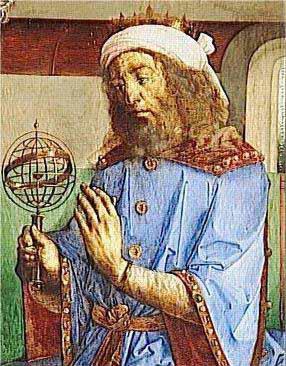
- Ptolemy, 450 AD.
Brief background: Claudius Ptolemy was a Greek-Roman citizen of Egypt who wrote in Greek. He was a mathematician, astronomer, geographer, astrologer, and poet of a single epigram in the Greek Anthology. He lived in Egypt under Roman rule. Ptolemy was the author of several scientific treatises, at least three of which were of continuing importance to later Islamic and European science. The first is the astronomical treatise now known as the Almagest "Mathematical Treatise".
Tyson:
Tyson goes through Ptolemy, Galileo, Newton and other great minds in this history of science and what happened when they reached the limits of their knowledge. He outlines where and how these men reached the limits of their knowledge, and how they pretty regularly invoked the concept of intelligent design and a creator in order to explain it.
He also talks about the religiosity of the population and scientists.
He also goes through the history of scientific discovery in different parts of the world. He speaks of the period of great discovery in the Islamic world from 800 - 1000 AD, and then how it was cut off and never recovered. Then of Europe during the scientific revolution, and of the USA during this century and how we may be on the edge of a shift, where "revelation replaces investigation."
I love the way Tyson speaks and thinks. He has the same passion that Sagan did, and the same sort of open, genuine interest in the mystery and the humanity in these discoveries and the understanding of our universe.
To quote a bit more from the talk:
Intelligent design, whilst real historically in the history of science, is still a philosophy of ignorance diametrically opposed to the spirit of science.
Religion is a culture of faith; science is a culture of doubt - Richard Feynman
How can you expect the general population to do any better at not resorting to ID as an explanation for complex things they do not understand, when we also have the best scientists to have ever walked the Earth doing exactly the same thing in the past?
It's a deeper issue than simple eduction and teaching facts.
Tyson sums it up succinctly in this clip in the following quote. He actually has a go at the JREF forum skeptics at the end! He seems genuinely pissed off at them.
Some still use science to argue against religion or God when 35% of scientists believe in a personal god or are religious, and over 7% of the elite top scientists at the national academy also believe in a personal god.
The talk is about eight minutes and is here:
I sceptic, The Amazing Meeting 6
(alternative)
57:10 Religion and Science
1:02:50 Intelligent Design
1:03:30 Stupid Design (classic)
1:05:10 Birth of Atheism
1:07:30 Religion among scientist
1:12:26 Bible in the Classroom
"The current atheist fervour that has taken on over the past seven years is highly unfair. It's dis-respectful. Until that number is 0 atheists have NOTHING to say to the general public about god or religion. These 7% are elite scientists among us in the national academy of sciences, who are religious and pray to a personal god.
There is no tradition of scientists picketing outside the sunday school door. Likewise there should be no emergent tradition of religion being introduced into the science classroom
"I want to put on the table, not why 85% of the members of the National Academy of Sciences reject God, I want to know why 15% of the National Academy don’t."
— Neil deGrasse Tyson —
Comments?
Thanks
Our ignorance is God; what we know is science. To surrender to ignorance and call it God has always been premature, and it remains premature today.
There is a degree of commonality between a religious scientist that sees investigating nature as a way to get closer to his 'god' of choice and a scientist that wants to get closer to nature by simply examining it as an atheist.
It's only when people are so content with the answer "god did it" that they stop researching that intelligent design starts to become an issue.
In that context, the intelligent designer is an ever present chasm of ignorance and magic, whereas it should be an ever reseeding ocean of ignorance that science is illuminating.
If taught scientifically literately then 'intelligent design' does not have to be anti science; it in fact could be a good way to engage religious people in the way the scientific method works. And their religiosity will tend to drop off the more they understand about the world.
Tyson gives a very good talk about this here.
[Tyson quotes Ptolemy]
“I know that I am mortal by nature, and ephemeral; but when I trace at my pleasure the windings to and fro of the heavenly bodies I no longer touch the earth with my feet: I stand in the presence of Zeus himself and take my fill of ambrosia”
- Ptolemy, 450 AD.
Brief background: Claudius Ptolemy was a Greek-Roman citizen of Egypt who wrote in Greek. He was a mathematician, astronomer, geographer, astrologer, and poet of a single epigram in the Greek Anthology. He lived in Egypt under Roman rule. Ptolemy was the author of several scientific treatises, at least three of which were of continuing importance to later Islamic and European science. The first is the astronomical treatise now known as the Almagest "Mathematical Treatise".
Tyson:
He's got this sort of religious feeling at the limits of his knowledge, and this is a trend that will continue for thousands of years to follow this...[and] this quote I just read to you is Ptolemy invoking intelligent design.
Tyson goes through Ptolemy, Galileo, Newton and other great minds in this history of science and what happened when they reached the limits of their knowledge. He outlines where and how these men reached the limits of their knowledge, and how they pretty regularly invoked the concept of intelligent design and a creator in order to explain it.
"Intelligent design is basically a god of the gaps."
He also talks about the religiosity of the population and scientists.
"...As you become more scientific, yes, you're religiosity drops off, but it asymptotes, but not at zero, to some other level."
He also goes through the history of scientific discovery in different parts of the world. He speaks of the period of great discovery in the Islamic world from 800 - 1000 AD, and then how it was cut off and never recovered. Then of Europe during the scientific revolution, and of the USA during this century and how we may be on the edge of a shift, where "revelation replaces investigation."
I love the way Tyson speaks and thinks. He has the same passion that Sagan did, and the same sort of open, genuine interest in the mystery and the humanity in these discoveries and the understanding of our universe.
To quote a bit more from the talk:
I don't know what you know about Issac Newton, but from what I have read of his, it tells me there is no greater genius to ever have walked this earth. I don't know if you've ever felt this about someone, but if you just read what he wrote, line by line by line, this guy was deeply plugged into the machinery of the universe. He is un-impeachably brilliant.
Let me read some of Newtons writings. And he did this all before he was 26. When he talks about motion, there is no reference to god. When he talks about his two body force that he deduced, this universal law of gravitation there is no mention of god. As he understood it. He was on top of it. He was there. Even though, before that the understanding of the motions of the planets was given unto god, as no one could explain it. So what you have is Isaac Newton abandoning all reference to god. Until he realized if all you do is calculate the two body problem, the sun and earth, the moon and earth, etc, then the sun and earth are closer to mars, and then closer to the sun again, then here, and there, and all these mini tugs get way too complex.
And he realizes that applying these simple explanations to the solar system can not explain it. So what does he say? He's at his limits. He can not account for how we have stayed this way. God is no where until you get to the general showroom, later in his work, I quote "But it is not to be conceived that mere mechanical causes could give birth to so many regular motions. This most beautiful system of the sun, planets, and comets, could only proceed from the counsel and dominion of an intelligent and powerful Being."
So there we have one of the greatest scientists of the millennium invoking intelligent design, at the limits of his knowledge. And I want to put on the table that you have people that want to put intelligent design into the classrooms, and yet you also have the most brilliant people that ever walked this earth doing the same thing. So it's a deeper challenge than simply educating the public [...]
Intelligent design, whilst real historically in the history of science, is still a philosophy of ignorance diametrically opposed to the spirit of science.
Religion is a culture of faith; science is a culture of doubt - Richard Feynman
How can you expect the general population to do any better at not resorting to ID as an explanation for complex things they do not understand, when we also have the best scientists to have ever walked the Earth doing exactly the same thing in the past?
It's a deeper issue than simple eduction and teaching facts.
Tyson sums it up succinctly in this clip in the following quote. He actually has a go at the JREF forum skeptics at the end! He seems genuinely pissed off at them.
Some still use science to argue against religion or God when 35% of scientists believe in a personal god or are religious, and over 7% of the elite top scientists at the national academy also believe in a personal god.
The talk is about eight minutes and is here:
I sceptic, The Amazing Meeting 6
(alternative)
57:10 Religion and Science
1:02:50 Intelligent Design
1:03:30 Stupid Design (classic)
1:05:10 Birth of Atheism
1:07:30 Religion among scientist
1:12:26 Bible in the Classroom
"The current atheist fervour that has taken on over the past seven years is highly unfair. It's dis-respectful. Until that number is 0 atheists have NOTHING to say to the general public about god or religion. These 7% are elite scientists among us in the national academy of sciences, who are religious and pray to a personal god.
There is no tradition of scientists picketing outside the sunday school door. Likewise there should be no emergent tradition of religion being introduced into the science classroom
"I want to put on the table, not why 85% of the members of the National Academy of Sciences reject God, I want to know why 15% of the National Academy don’t."
— Neil deGrasse Tyson —
Comments?
Thanks
edit on 8-10-2012 by ZeuZZ because: (no reason given)
reply to post by ZeuZZ
Great write up and some great questions outlining some great problems in regard to this issue.
I agree that mocking intelligent design believers might be unfair. It is indeed telling that a certain percentage of elite scientists still believe in a God, although I would argue that percentage is dropping.
I think these numbers tell us more about ourselves than they do about the possibility of an intelligent design or otherwise. The scientists all look at the same observations but arrive at different implications. I agree with Tyson that we should be asking Why we arrive at different conclusions when looking at the same evidence, rather than mocking the ones who believe a certain conclusion or not.
Great post and some interesting problems to ponder.
Great write up and some great questions outlining some great problems in regard to this issue.
I agree that mocking intelligent design believers might be unfair. It is indeed telling that a certain percentage of elite scientists still believe in a God, although I would argue that percentage is dropping.
I think these numbers tell us more about ourselves than they do about the possibility of an intelligent design or otherwise. The scientists all look at the same observations but arrive at different implications. I agree with Tyson that we should be asking Why we arrive at different conclusions when looking at the same evidence, rather than mocking the ones who believe a certain conclusion or not.
Great post and some interesting problems to ponder.
What would the prerequisites of intelligent design invoke?
I think the laws of physics and the establishment, size, function, and potential of the universe is quite intelligent.,,.
i think a sphere ( planets,, stars) and all geometry,, is quite intelligent.,i know it is part optical illusion,,, but when i look at a full moon it is a more perfect circle then i can draw,,, and im intelligent.,,.,. then again a computer could draw a more perfect circle then i can as well.,..,
what would have to happen for the universe to not be intelligently designed ? what does intelligence mean? logic? order? sense? function?
what would have to happen for the universe to be intelligently designed/what does that mean?
I think the laws of physics and the establishment, size, function, and potential of the universe is quite intelligent.,,.
i think a sphere ( planets,, stars) and all geometry,, is quite intelligent.,i know it is part optical illusion,,, but when i look at a full moon it is a more perfect circle then i can draw,,, and im intelligent.,,.,. then again a computer could draw a more perfect circle then i can as well.,..,
what would have to happen for the universe to not be intelligently designed ? what does intelligence mean? logic? order? sense? function?
what would have to happen for the universe to be intelligently designed/what does that mean?
Originally posted by ImaFungi
What would the prerequisites of intelligent design invoke?
I think the laws of physics and the establishment, size, function, and potential of the universe is quite intelligent.,,.
i think a sphere ( planets,, stars) and all geometry,, is quite intelligent.,i know it is part optical illusion,,, but when i look at a full moon it is a more perfect circle then i can draw,,, and im intelligent.,,.,. then again a computer could draw a more perfect circle then i can as well.,..,
what would have to happen for the universe to not be intelligently designed ? what does intelligence mean? logic? order? sense? function?
what would have to happen for the universe to be intelligently designed/what does that mean?
It means nothing.
It just means there are some things we can't explain at the moment; which is the brilliance of science.
you can look at this as a form of higher intelligence that created these unexplainable things, or just assume that reality is complex and we are just too stupid to work it all out yet.
I think the latter is more likely.
A fool thinks he's wise, but a wise man knows himself to be a fool.
Originally posted by ZeuZZ
Originally posted by ImaFungi
What would the prerequisites of intelligent design invoke?
I think the laws of physics and the establishment, size, function, and potential of the universe is quite intelligent.,,.
i think a sphere ( planets,, stars) and all geometry,, is quite intelligent.,i know it is part optical illusion,,, but when i look at a full moon it is a more perfect circle then i can draw,,, and im intelligent.,,.,. then again a computer could draw a more perfect circle then i can as well.,..,
what would have to happen for the universe to not be intelligently designed ? what does intelligence mean? logic? order? sense? function?
what would have to happen for the universe to be intelligently designed/what does that mean?
It means nothing.
It just means there are some things we can't explain at the moment; which is the brilliance of science.
you can look at this as a form of higher intelligence that created these unexplainable things, or just assume that reality is complex and we are just too stupid to work it all out yet.
I think the latter is more likely.
A fool thinks he's wise, but a wise man knows himself to be a fool.
what is the deffinition of intelligence?
is it not extremely complex network,, making sense?
"or just assume that reality is complex and we are just too stupid to work it all out yet."
the extremely complex reality that is unintelligent,,, created extremely complex creatures that are intelligent,,, and the extremely complex creatures that are intelligent,, dont understand a fraction of a fraction of the complex network of reality and all of is magnificent unintelligence?
reply to post by ZeuZZ
"A fool thinks he's wise, but a wise man knows himself to be a fool."
you think wisdom does not exist?
you think knowing you are a fool is the only requisite of wisdom?
p.s. i know what the quote means and implies.,,.,.
"A fool thinks he's wise, but a wise man knows himself to be a fool."
you think wisdom does not exist?
you think knowing you are a fool is the only requisite of wisdom?
p.s. i know what the quote means and implies.,,.,.
reply to post by ZeuZZ
you saying the universe is not intelligent,,, is like a small child telling its father it is stupid,.,.,.
there may not be a god,,, and the universe may not contain intelligence in its design, function, and potential,.,.,.
but according to my observation,, and the fact that the universe was around way before me,, and has accomplished all we see, all we are, and all we may know and do,, there is some part of my intellect, which concludes that i ought to in some fashion respect its authority,.,..,
this is not a sign of weakness as you may think,,, this is my logical conclusion,,,
nor is it an extra sign of strength that you may be able to ignore these potential truths,, or fail to do the internal calculations it takes to realize them,,, it may not be anything,, it does not matter at all really,,
what created the absolute concept of mathematics... the potential and ability for math to exist?
you saying the universe is not intelligent,,, is like a small child telling its father it is stupid,.,.,.
there may not be a god,,, and the universe may not contain intelligence in its design, function, and potential,.,.,.
but according to my observation,, and the fact that the universe was around way before me,, and has accomplished all we see, all we are, and all we may know and do,, there is some part of my intellect, which concludes that i ought to in some fashion respect its authority,.,..,
this is not a sign of weakness as you may think,,, this is my logical conclusion,,,
nor is it an extra sign of strength that you may be able to ignore these potential truths,, or fail to do the internal calculations it takes to realize them,,, it may not be anything,, it does not matter at all really,,
what created the absolute concept of mathematics... the potential and ability for math to exist?
Great post.
I was surprised he didn't have Einstein on the list.
I was surprised he didn't have Einstein on the list.
Originally posted by ZeuZZ
The greatest minds that have ever walked the planet in terms of science also resorted to a 'higher intelligence' at the limits of their knowledge.
That's a very, very long appeal to authority.
Originally posted by lucidclouds
Great post.
I was surprised he didn't have Einstein on the list.
No, he wouldn't. Einstein did not believe in God.
In a March 24, 1954 letter, he is quoted as writing, "It was, of course, a lie what you read about my religious convictions, a lie which is being systematically repeated. I do not believe in a personal God and I have never denied this but have expressed it clearly. If something is in me which can be called religious then it is the unbounded admiration for the structure of the world so far as our science can reveal it."
However, in the letter to Gutkind, Einstein wrote the word God was "nothing more than the expression and product of human weaknesses, the Bible a collection of honorable, but still primitive legends which are nevertheless pretty childish."
www.cbsnews.com...$3-million-bid/
Originally posted by HappyBunny
No, he wouldn't. Einstein did not believe in God.
Correct.
Einstein often mentioned 'God' In a joking way, and has been claimed as believing in a personal god by many religious people. Which is simply not true. He did say God does not roll dice or something similar (turns out he was wrong, quantum mechanics showed us in that there is in fact quantum indeterminacy), but his views on the matter were far more complex, and some maybe surprising, but these five quotes give the more complete picture.
"Science without religion is lame, religion without science is blind."
-Einstein, Albert (1930). "Religion and Science" New York Times Magazine (Nov. 9): 1-4.
"The bigotry of the nonbeliever is for me nearly as funny as the bigotry of the believer."
- Albert Einstein, quoted in: Einstein's God - Albert Einstein's Quest as a Scientist and as a Jew to Replace a Forsaken God (1997)
"I have repeatedly said that in my opinion the idea of a personal God is a childlike one. You may call me an agnostic, but I do not share the crusading spirit of the professional atheist whose fervor is mostly due to a painful act of liberation from the fetters of religious indoctrination received in youth. I prefer an attitude of humility corresponding to the weakness of our intellectual understanding of nature and of our own being."
- Albert Einstein, letter to Guy H. Raner Jr., Sept. 28, 1949, quoted by Michael R. Gilmore in Skeptic, Vol. 5, No. 2
"But there is a third stage of religious experience which belongs to all of them, even though it is rarely found in a pure form: I shall call it cosmic religious feeling. It is very difficult to elucidate this feeling to anyone who is entirely without it, especially as there is no anthropomorphic conception of God corresponding to it."
-Einstein, Albert (1930). "Religion and Science" New York Times Magazine (Nov. 9): 1-4.
"How can cosmic religious feeling be communicated from one person to another, if it can give rise to no definite notion of a God and no theology? In my view, it is the most important function of art and science to awaken this feeling and keep it alive in those who are receptive to it."
-Einstein, Albert (1930). "Religion and Science" New York Times Magazine (Nov. 9): 1-4.
These pictures I created for an 'Einstein Wisdom' Album sums up his views very nicely (I was FED UP of people claiming he believed in god!)
Einstein1
Einstein2
Originally posted by ImaFungi
reply to post by ZeuZZ
you saying the universe is not intelligent,,, is like a small child telling its father it is stupid,.,.,.
Nature and the universe are likely unbelievably more intelligent than us. Just in totally different ways that we can not fathom yet.
Just because we lack the skill set and can not speak the same language as nature does not impune the fact that nature is intelligent.
I am constantly humbled by the elegance, complexity, diversity and beauty of reality and the universe.
edit on 9-10-2012 by ZeuZZ because: (no
reason given)
Militant skeptics can be annoying.
Believers can be annoying.
I speak at least for myself in saying that most of the arguments or debates I get in that end up being science vs religion are the ones when people begin stating that evolution is completely wrong, or that the world is flat or a less than 5000 years old.
I think it's unfair to dismiss a persons views if they are well thought out and respectful ... that's just me.
Believers can be annoying.
I speak at least for myself in saying that most of the arguments or debates I get in that end up being science vs religion are the ones when people begin stating that evolution is completely wrong, or that the world is flat or a less than 5000 years old.
I think it's unfair to dismiss a persons views if they are well thought out and respectful ... that's just me.
Originally posted by ZeuZZ
Originally posted by ImaFungi
reply to post by ZeuZZ
you saying the universe is not intelligent,,, is like a small child telling its father it is stupid,.,.,.
Nature and the universe are likely unbelievably more intelligent than us. Just in totally different ways that we can not fathom yet.
Just because we lack the skill set and can not speak the same language as nature does not impune the fact that nature is intelligent.
I am constantly humbled by the elegance, complexity, diversity and beauty of reality and the universe.edit on 9-10-2012 by ZeuZZ because: (no reason given)
nature and the universe is inseparable to what humans are and do...
reply to post by HappyBunny
"In view of such harmony in the cosmos which I, with my limited human mind, am able to recognize, there are yet people who say there is no God. But what really makes me angry is that they quote me for the support of such views."
"I believe in Spinoza's God who reveals himself in the orderly harmony of what exists, not in a God who concerns himself with fates and actions of human beings."
He didn't believe in a personal God. He was agnostic.
"In view of such harmony in the cosmos which I, with my limited human mind, am able to recognize, there are yet people who say there is no God. But what really makes me angry is that they quote me for the support of such views."
"I believe in Spinoza's God who reveals himself in the orderly harmony of what exists, not in a God who concerns himself with fates and actions of human beings."
He didn't believe in a personal God. He was agnostic.
Originally posted by lucidclouds
reply to post by HappyBunny
"In view of such harmony in the cosmos which I, with my limited human mind, am able to recognize, there are yet people who say there is no God. But what really makes me angry is that they quote me for the support of such views."
"I believe in Spinoza's God who reveals himself in the orderly harmony of what exists, not in a God who concerns himself with fates and actions of human beings."
He didn't believe in a personal God. He was agnostic.
In order to not be an agnostic... one must know.......
can you direct me towards a human who has been born in complete ignorance and in less then a 120 revolutions around the sun,, has gained complete knowledge of reality and truth?
Edited because...
Sorry ImaFung, I misread your post, had me puzzled for a bit. Will put my specs on next time. Carry on...
Sorry ImaFung, I misread your post, had me puzzled for a bit. Will put my specs on next time. Carry on...
edit on 9-10-2012 by Cogito, Ergo Sum because: for the heck of it.
Originally posted by lucidclouds
reply to post by HappyBunny
"In view of such harmony in the cosmos which I, with my limited human mind, am able to recognize, there are yet people who say there is no God. But what really makes me angry is that they quote me for the support of such views."
"I believe in Spinoza's God who reveals himself in the orderly harmony of what exists, not in a God who concerns himself with fates and actions of human beings."
He didn't believe in a personal God. He was agnostic.
Oh, so we're going to split hairs, are we?
Creationists believe that a supernatural deity created the universe and everything in it. Clearly Einstein did not believe that.
People mock ID believers because they promote a lot of guesswork as facts and twist scientific facts to promote their agenda. There's nothing wrong
with believing that the universe was created. It's just when you go against known science and make ridiculous claims without objective evidence, that
people ridicule. People seem to have difficulty acknowledging their faith based beliefs as exactly that. They can't just admit they don't know the
answer or that they simply believe it. They try to bring science into it and claim its fact, and that's usually where they fail.
edit on
11-10-2012 by Barcs because: (no reason given)
Originally posted by Barcs
People mock ID believers because they promote a lot of guesswork as facts and twist scientific facts to promote their agenda. There's nothing wrong with believing that the universe was created. It's just when you go against known science and make ridiculous claims without objective evidence, that people ridicule. People seem to have difficulty acknowledging their faith based beliefs as exactly that. They can't just admit they don't know the answer or that they simply believe it. They try to bring science into it and claim its fact, and that's usually where they fail.edit on 11-10-2012 by Barcs because: (no reason given)
As a curious and skeptical entity,,, I hold the reservation that this universe might have been created by some type of intelligence... How is this proposition going against science,,,, when science itself is the study and comprehension of this potential intelligences work?
new topics
-
BIDEN Admin Begins Planning For January 2025 Transition to a New President - Today is 4.26.2024.
2024 Elections: 3 hours ago -
Big Storms
Fragile Earth: 4 hours ago -
Where should Trump hold his next rally
2024 Elections: 7 hours ago -
Shocking Number of Voters are Open to Committing Election Fraud
US Political Madness: 8 hours ago -
Gov Kristi Noem Shot and Killed "Less Than Worthless Dog" and a 'Smelly Goat
2024 Elections: 9 hours ago -
Falkville Robot-Man
Aliens and UFOs: 9 hours ago -
James O’Keefe: I have evidence that exposes the CIA, and it’s on camera.
Whistle Blowers and Leaked Documents: 9 hours ago -
Australian PM says the quiet part out loud - "free speech is a threat to democratic dicourse"...?!
New World Order: 10 hours ago -
Ireland VS Globalists
Social Issues and Civil Unrest: 11 hours ago -
Biden "Happy To Debate Trump"
2024 Elections: 11 hours ago
top topics
-
James O’Keefe: I have evidence that exposes the CIA, and it’s on camera.
Whistle Blowers and Leaked Documents: 9 hours ago, 17 flags -
Australian PM says the quiet part out loud - "free speech is a threat to democratic dicourse"...?!
New World Order: 10 hours ago, 15 flags -
Blast from the past: ATS Review Podcast, 2006: With All Three Amigos
Member PODcasts: 14 hours ago, 13 flags -
Biden "Happy To Debate Trump"
2024 Elections: 11 hours ago, 13 flags -
Ireland VS Globalists
Social Issues and Civil Unrest: 11 hours ago, 9 flags -
Mike Pinder The Moody Blues R.I.P.
Music: 14 hours ago, 8 flags -
BIDEN Admin Begins Planning For January 2025 Transition to a New President - Today is 4.26.2024.
2024 Elections: 3 hours ago, 7 flags -
What is the white pill?
Philosophy and Metaphysics: 13 hours ago, 6 flags -
Shocking Number of Voters are Open to Committing Election Fraud
US Political Madness: 8 hours ago, 6 flags -
Big Storms
Fragile Earth: 4 hours ago, 6 flags
active topics
-
Gov Kristi Noem Shot and Killed "Less Than Worthless Dog" and a 'Smelly Goat
2024 Elections • 61 • : cherokeetroy -
President BIDEN's FBI Raided Donald Trump's Florida Home for OBAMA-NORTH KOREA Documents.
Political Conspiracies • 40 • : BingoMcGoof -
BIDEN Admin Begins Planning For January 2025 Transition to a New President - Today is 4.26.2024.
2024 Elections • 19 • : Vermilion -
Australian PM says the quiet part out loud - "free speech is a threat to democratic dicourse"...?!
New World Order • 7 • : 19Bones79 -
It takes One to Be; Two to Tango; Three to Create.
Philosophy and Metaphysics • 8 • : Compendium -
Big Storms
Fragile Earth • 16 • : rickymouse -
James O’Keefe: I have evidence that exposes the CIA, and it’s on camera.
Whistle Blowers and Leaked Documents • 14 • : 19Bones79 -
RAAF airbase in Roswell, New Mexico is on fire
Aliens and UFOs • 12 • : pianopraze -
A Warning to America: 25 Ways the US is Being Destroyed
New World Order • 29 • : 19Bones79 -
What is the white pill?
Philosophy and Metaphysics • 22 • : AlexandrosOMegas