It looks like you're using an Ad Blocker.
Please white-list or disable AboveTopSecret.com in your ad-blocking tool.
Thank you.
Some features of ATS will be disabled while you continue to use an ad-blocker.

Alien Moon Base in a Photo on the Desk of NASA Ames Research Center!
page: 6share:
Here is the other end of the paper.....
With an arrow that points towards the rectangle (at least it seems to)
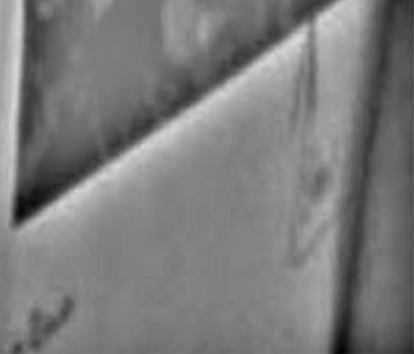
With an arrow that points towards the rectangle (at least it seems to)
reply to post by Arken
Nope just a DUMB on the moon, one of ours and theirs. Curse them for selling us for slaves and livestock!
Nope just a DUMB on the moon, one of ours and theirs. Curse them for selling us for slaves and livestock!
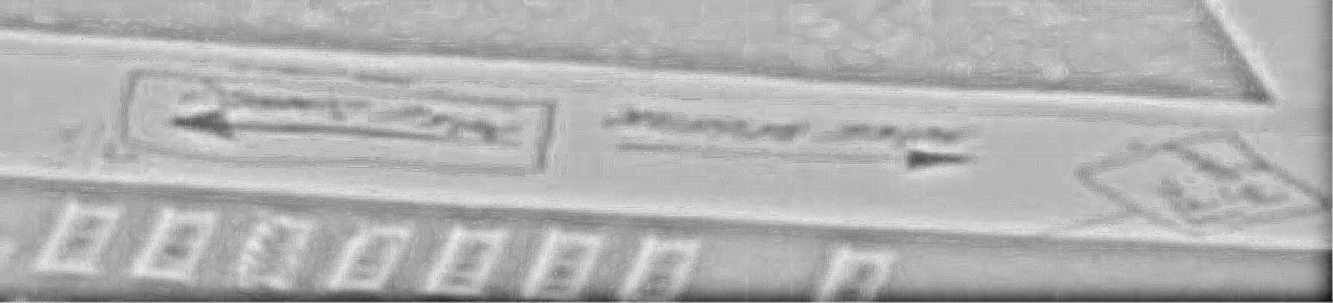
The writing on the paper that overlays the one with the rectange, Possibly related, but who knows.....
Originally posted by Phage
It seems to be a marking on a hard copy which indicates the exact location of the impact. A visual aid for the scientists examining data from the LCROSS impacts a few days afterwards.
www.archive.org...
blogs.airspacemag.com...
www.youtube.com...edit on 3/15/2012 by Phage because: (no reason given)
Either That or this is a Before Photo ? not an After
now to Pin Point where this Bomb hit Why this ?
For One why a Rectangle Square ? why not a Big Circle Around the Area
and Why a Fill in as it Shows with in it something Structural
Or Could it be this Bomb is to Blast it all Away ? This Moon Base
as Something Happened to the Base and had to be Destroyed ?
But the Big Question Phage is
They can Control the Movement of this Bomb any Where on the Lunar Surface !!!!
at the Poles the Equator etc.. Why at that Location ? for what Reason just for Water Ice ?
That's the 64,000 Dollar Question as they Would Say in the 70s
edit on 15-3-2012 by Wolfenz because: (no reason given)
Full 17 min video
LCROSS Impact on the moon!
well no moon base i could see but it doesn't mean that it Couldn't be be There ! a Live Brush Out ?
Plausible tho here something
searching for Water Ice and the South Pole !! no Less and this Would be a Perfect place for a Moon base as Buzz Aldrin has Said on his Website,.. Now the South Pole on the moon be a Perfect place for Helium 3 ?
Well not to long ago....
This Moon was Made for Mining (Helium-3)
analysis by Jennifer Ouellette
Mon Feb 21, 2011 10:47 PM ET
news.discovery.com...
Mining The Moon
An Apollo astronaut argues that with its vast stores of nonpolluting nuclear fuel, our lunar neighbor holds the key to Earth's future. However, before we mine it, we'll need to determine who owns the moon?
Read more: Mining The Moon - Rare Minerals - Helium 3 - Popular Mechanics
www.popularmechanics.com...
Former astronaut, Apollo moonwalker, geologist and former Senator Harrison Schmitt has a modest plan to solve the world’s energy problems. All we need is $15 billion over 15 years and some fusion reactors that have yet to be invented. And we’ll need a moon base.
Former Apollo Astronaut and Senator Says Mining Helium on the Moon Could Solve The Global Energy Crisis
By Clay Dillow Posted 05.05.2011 at 2:39 pm
www.popsci.com...
as some websites ive read a Perfect place to Mine Helium 3 is at the Pole's of the Moon If theirs Water
Makes Sense
Now was it Possible to build a Lunar Base in the 80s 90s 2000's behind the scene's !! well
with International Help that is ? well I can Picture when we had the Cold War the USA & USSR were building a Base together we did put Our Spaceships together in Space right ?
I guess I Will look Towards Russian Site's for USSR Planned Lunar Bases Next
edit on 15-3-2012 by Wolfenz because: (no reason given)
Originally posted by InsideYourMind
Well, i have no idea what this is;
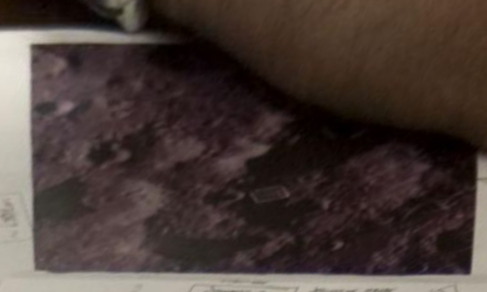
I've adjusted the perspective to get a better view, the shape becomes easier to look at:
As a logical guess, i would guess it "could be" a small piece of sellotape, simply by the fact that the edges of the rectangular object don't differ in brightness, if you look closely the shadow of the ditch the object appears to be in isn't affecting the outline shadow. Also that the center of the rectangle is transparent (you can see the purple tint to the right side of the area).
The triangular structure shape seems to dissapear when the perspective is changed, and looks more like a generic crater.
Also, on the left side of the sheet, there appears to be a piece of what i would assume to be sellotape also. It seems to have the same characteristics around the edges as the "thing" in the center of the paper also. Although i can't be sure if it's simply a box drawn with a pen.
I could be entirely wrong however, just a guess.
edit on 14/3/2012 by InsideYourMind because: (no reason given)edit on 14/3/2012 by InsideYourMind because: (no reason given)
Yeah,...you may be right, it's probably sellotape. I wonder what they would be covering up in the middle of a moon picture with sellotape? ....I had to.
Does anybody else remember what a weird mission LCROSS was? Ostensibly it was to find water, which could then be extracted and used to support future
missions involving astronauts . In a crater where the temperature was -238C, that's colder than liquid nitrogen and close to Absolute Zero. NASA
offered no proposals for how to extract it let alone how to prevent the astronauts from freezing solid in seconds.
What's more, they had already found water on the Moon in far less inhospitable regions. There was no explanation for not surveying them further. Nor has there ever been an explanation for the 50 square mile cloud of water vapour that drifted over the ALSEP instruments left by Apollo 12, on 7th March 1971. Liquid water, atmosphere, no comment.
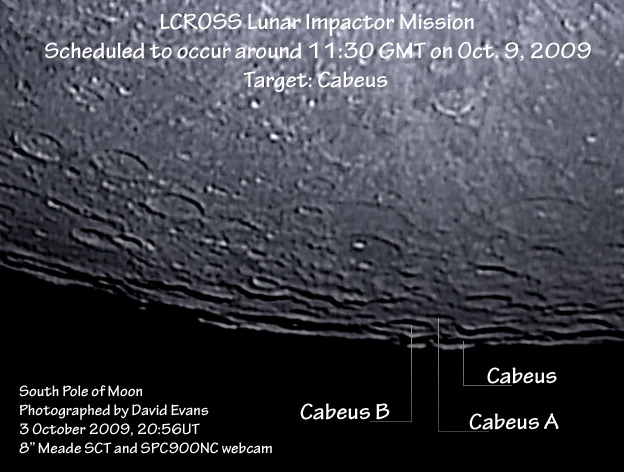
Only 6 weeks before impact NASA changed the location from Cabeus A to Cabeus, again no explanation. Weirdest of all was the 'live' coverage of the Centaur impact :- viewers were supposed to be looking at Cabeus as Centaur closed in, but instead got what looked like a rostrum camera closing in on a 2D still, not unlike the one Colaprete's arm is resting on, only without the rectangle. The closer Centaur/the camera got, the more blurred the image and crucially the perspective didn't change, until suddenly the screen went blank.
At the time NASA watchers suspected the intention was to destroy evidence of structures. Perhaps this is their target.
What's more, they had already found water on the Moon in far less inhospitable regions. There was no explanation for not surveying them further. Nor has there ever been an explanation for the 50 square mile cloud of water vapour that drifted over the ALSEP instruments left by Apollo 12, on 7th March 1971. Liquid water, atmosphere, no comment.
Only 6 weeks before impact NASA changed the location from Cabeus A to Cabeus, again no explanation. Weirdest of all was the 'live' coverage of the Centaur impact :- viewers were supposed to be looking at Cabeus as Centaur closed in, but instead got what looked like a rostrum camera closing in on a 2D still, not unlike the one Colaprete's arm is resting on, only without the rectangle. The closer Centaur/the camera got, the more blurred the image and crucially the perspective didn't change, until suddenly the screen went blank.
At the time NASA watchers suspected the intention was to destroy evidence of structures. Perhaps this is their target.
Originally posted by eluzhun
Wow, my thoughts about lunar bases are irrelevant to what im going to say, from a purely social observational perspective I would easily make an argument that the "true believer" phenotype belongs, surprisingly, to the debunkers, and not the ones proposing a moon base, or ufos, or chem trails, etc etc. Had to read enough comments on this site to finally come to that conclusion but it's staring me in the face. Most people on here engage in a well reasoned exchange of ideas, but then the zealot debunkers show up and circlejerk one another until everyone else gives up and leaves. Who'da thunk it.
/shrug
My thoughts exactly. You can tell when we have a really good post by the amount of 'debunking' happening early on. Something like this deserves attention completely devoid of negativity.
And thank you, yes. this is my first post.
Please don't feed the "debunkers"...
well we will never know what is going on security is really hard core if they think you are doing to much they will investigate you to see if you are
talking about top secret data and what not cgi anybody ? and why are they so stuck on mars and nnot going to the moon anymore what happend im tired
and going to bed
I've always kinda thought what NASA doesn't want us seeing on the moon is actually our militarization of it during the cold war. If I recall the
U.S. refused to sign that treaty that said we wouldn't use for military reasons or something to that effect. I'm not sure if the moon would have
proved a strategic platform for nuclear weapons being 200,000 miles away, but we've managed to place nukes everywhere else so why not the moon. I
always thought all the covering up was of our own stuff.
Originally posted by Narcissous
reply to post by Arken
Now I think I can figure a few things out of the writings next to it.
maybe someone who is good at this can triangulate with the information.
so:
Top rectangular box:
MR1 MR2
1.002 0.1158(something like that)
two lines below that:
13 616.24(with a line below 24)
Below is a rectangular box again:
1708 08210
besides the rect. box is an arrow pointing towards it, next to it is a word:
alive(or at least it's my closest guess(since clike and elike doesn't make sense)
sorry, but that's the best I can make out of it. hope it helps
p.s.: I am still working on it, if I have anything new, I'll edit it into this replyedit on 12/3/14 by Narcissous because: adding post scriptum
Good Job, these are the same the codes heard in the video too "MIR1 MIR2 0.1 Hz"
Originally posted by Phage
It seems to be a marking on a hard copy which indicates the exact location of the impact. A visual aid for the scientists examining data from the LCROSS impacts a few days afterwards.
www.archive.org...
blogs.airspacemag.com...
www.youtube.com...edit on 3/15/2012 by Phage because: (no reason given)
Wow, that's an awesome mark!! It totally looks like it's INSIDE the crater. I could swear it's a huge building in the Cabeus. It's so realistic that the shadows of the mark perfectly melt with the shadows of the crater, but naaah... I must be suffering another outbreak of Pareidolia...
edit on 3/15/2012 by 1AnunnakiBastard because: (no reason given)
edit on 3/15/2012 by 1AnunnakiBastard because: (no
reason given)
reply to post by Wolfenz
Yes.
www.spaceflightnow.com...
Why at that Location ? for what Reason just for Water Ice ?
Yes.
www.spaceflightnow.com...
reply to post by 1AnunnakiBastard
No.
Just a case of overzooming.
Overzooming an image is never a good idea.
Here's what a straight pixel resize shows, a lot of jpg artifacting.
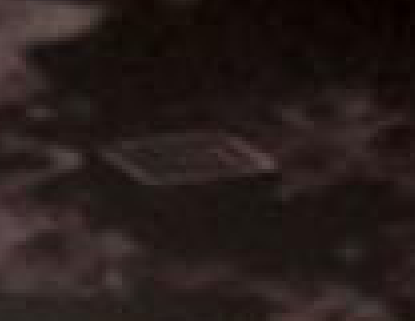
Over zoom those artifacts with a typical zooming algorithm and you end up with garbage.
I must be suffering another outbreak of Pareidolia.
No.
Just a case of overzooming.
Overzooming an image is never a good idea.
Here's what a straight pixel resize shows, a lot of jpg artifacting.
Over zoom those artifacts with a typical zooming algorithm and you end up with garbage.
edit on 3/15/2012 by Phage because: (no reason given)
Originally posted by Phage
reply to post by Wolfenz
Why at that Location ? for what Reason just for Water Ice ?
Yes.
www.spaceflightnow.com...
& Why
Come On Phage Say it !!
A Possible Moon BASE & Helium 3 !! in that Region you Know it and I Know it
that the Possible Explanation ! Buzz Aldrin has Been Defiantly Saying it
Former Astronaut Harrison Schmitt Has been Saying it !! Among Others has Been
They Knew Beforehand ! the Bomb wasn't Necessary...
and you just Put Yes !
Not a Explanation as to Why that Particular Spot
You Don't Know the Answer ! I Defiantly Dont !! It was Planned by them (NASA) !!
Indulge ME !
Well Below is Interesting Phage !
Back in 2009 NASA’s Lunar Crater Observation and Sensing Satellite (LCROSS) found water ice. After it crashed into the lunar surface at a predetermined spot, analysis of the probe’s plume estimated water content of about 200 pounds. The October 22nd issue of “Science” has revised the amount recorded upwards. A scientific paper claims the actual amount of water vapor and ice lies somewhere between 320 to 367 pounds. Scientists are elated. They estimate that as much as 5.6 of the lunar soil blown out from the impact of LCROSS is water ice. Previously speculation centered about a much lower figure. As little as 1 percent water was thought to be contained in lunar soil. That hypothesis was primarily based on the samples of moon soil returned for laboratory analysis by the Apollo astronauts. Yet, even a lunar soil that contained as little as 1 percent water ice would be sufficient to support the plans to construct lunar bases.
Support plans of a Construct Lunar Bases!
NASA: Moon swimming in water - moon bases could be next
www.helium.com...
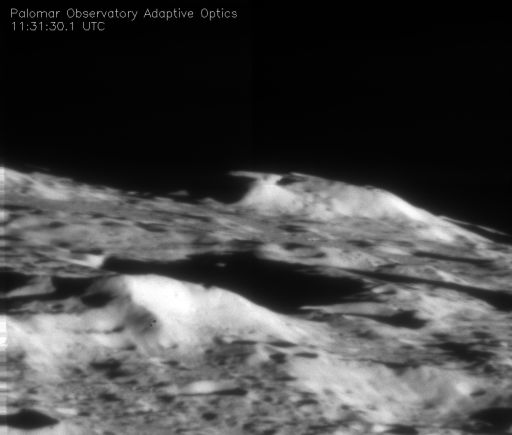
MYSTERY OF THE MISSING PLUMES: NASA scientists are grappling with a mystery. Where did the debris go? Last Friday morning, Oct. 9th, the water-seeking LCROSS spacecraft and its Centaur booster rocket crashed into the floor of crater Cabeus near the Moon's south pole, on time and on target. But the debris plumes that were supposed to issue from the impacts failed to materialize. Consider this image recorded 15 seconds after the Centaur impact by the Palomar Observatory's 200-inch Hale telescope:
This image was taken by the Palomar Observatory at the time of impact. Credit: Palomar Observatory
The Video From the Real deal Source Astro Caltech.edu Palomar
lcross_palomar.mpg
www.astro.caltech.edu...
Cabeus crater is located in the center, behind the large bright mountain. Plumes of shattered spacecraft and lunar soil should have emerged into sunlight from the shadows, but even Palomar's sensitive adaptive optics system registered nothing. The absence of debris plumes does not mean LCROSS was a failure.
Source::
Great Dreams Moon/2009/atlas 5
www.greatdreams.com...
Well Thanks NASA for Telling US !!
Just like on Earth, water will be a crucial resource on the moon. Transporting water and other goods from Earth to the moon’s surface is expensive. Finding natural resources, such as water ice, on the moon could help expedite lunar exploration. The LCROSS mission will search for water, using information learned from the Clementine and Lunar Prospector missions. By going to the moon for extended periods of time, a new generation of explorers will learn how to work safely in a harsh environment. A lunar outpost is a stepping stone to future exploration of other bodies in our solar system. The moon also offers many clues about when the planets were formed.
as I said already Known there's water on the Moon from the Clementine Mission and Lunar Prospector Mission
NASA's Just Checking Out Just How Much!! to make the Go ( Plans) to place a Resource Base On !
New Generation of Explorers Check, LUNAR OUTPOST Check .
as the USA says Blast and Rebuild ! hell there was Probably was one ( Base) There and Maybe Not ..
edit on 15-3-2012 by Wolfenz because: (no reason given)
reply to post by Wolfenz
Saying what?
They had a pretty good idea there was water there but they didn't know how much.
It wasn't a bomb. It an empty upper stage. A bomb would have contaminated the results unnecessarily.
You didn't read the link?
The spot was chosen because it was most likely to yield usable data. Yes it was planned. Of course it was. If it wasn't planned it would not have been possible to observe it.
Indulge you how? If a different location had been chosen would you feel differently?
Buzz Aldrin has Been Defiantly Saying it
Former Astronaut Harrison Schmitt Has been Saying it
Saying what?
They Knew Beforehand ! the Bomb wasn't Necessary...
They had a pretty good idea there was water there but they didn't know how much.
It wasn't a bomb. It an empty upper stage. A bomb would have contaminated the results unnecessarily.
Not a Explanation as to Why that Particular Spot
You Don't Know the Answer ! I Defiantly Dont !! It was Planned by them (NASA) !!
You didn't read the link?
The spot was chosen because it was most likely to yield usable data. Yes it was planned. Of course it was. If it wasn't planned it would not have been possible to observe it.
Indulge you how? If a different location had been chosen would you feel differently?
edit on 3/15/2012 by Phage because: (no reason given)
U.S. Department of Defense
Office of the Assistant Secretary of Defense (Public Affairs)
News Transcript
Presenter: Dr. Dwight Duston, Assistant Deputy for Technology, Ballistic Missile Defense Organization; December 04, 1996 1:45 PM EST
Subject: Discovery of Ice on the Moon
www.defense.gov...
Office of the Assistant Secretary of Defense (Public Affairs)
News Transcript
Presenter: Dr. Dwight Duston, Assistant Deputy for Technology, Ballistic Missile Defense Organization; December 04, 1996 1:45 PM EST
Subject: Discovery of Ice on the Moon
A: We were very conservative in the press release, but if you take basically 100 square kilometers by roughly 50 feet deep, you get a volume of something like a quarter of a cubic mile, I think it's on that order. It's a considerable amount, but it's not a huge glacier or anything like that.
Q: Can you compare that with something you know?
A: It's a lake. A small lake.
www.defense.gov...
Originally posted by Phage
It wasn't a bomb. It an empty upper stage. A bomb would have contaminated the results unnecessarily.
Scientific American says...
NASA's mission to bomb the Moon
www.scientificamerican.com...
NASA LOVES blowing things up Did the same with that comet Temple 1 too
KABOOOOOMMMM!!!! and they didn't even know why they got that big flash so are sending a second mission to find out

Originally posted by Phage
reply to post by 1AnunnakiBastard
I must be suffering another outbreak of Pareidolia.
No.
Just a case of overzooming.
Overzooming an image is never a good idea.
Here's what a straight pixel resize shows, a lot of jpg artifacting.
Over zoom those artifacts with a typical zooming algorithm and you end up with garbage.
edit on 3/15/2012 by Phage because: (no reason given)
"overzooming".... riiiight. As if photoshop and a bunch of denoise plugins for removing bad pixels and artifacts, hadn't been invented yet...
Originally posted by Phage
Yes it was planned. Of course it was. If it wasn't planned it would not have been possible to observe it.
Well we didn't get to observe too much did we? In fact it was a miserable FLOP Even the guy at NASA was fed up after the miserable no show, packs up his laptop and can't WAIT to get out of there
Some guy gets left hanging after Nasa bombed the moon
Must be all those budget cuts... having to work out of a trailer :shk:
reply to post by 1AnunnakiBastard
You cannot recover information lost by jpg compression. It's gone.
Take away a "bad pixel" and what do you get? No pixel?
You cannot remove jpg artifacts. You can blur them.
The more you fiddle with an image the further you get from the original information. All you can do is prettify it.
As if photoshop and a bunch of denoise plugins for removing bad pixels and artifacts, hadn't been invented yet.
You cannot recover information lost by jpg compression. It's gone.
Take away a "bad pixel" and what do you get? No pixel?
You cannot remove jpg artifacts. You can blur them.
The more you fiddle with an image the further you get from the original information. All you can do is prettify it.
new topics
-
Shocking moment four men 'try to force Jewish pedestrian into car boot' in North London
Breaking Alternative News: 2 hours ago -
The 'Censorship-Industrial Complex'. It is coming to a nation state near you, any time now...
New World Order: 2 hours ago -
BREAKING: Astrazeneca admits for the first time its vaccine can cause deaths and serious injuries
Medical Issues & Conspiracies: 6 hours ago -
New Bombshell Evidence Strongly Suggests Trump was Set Up in Classified Docs Saga
US Political Madness: 11 hours ago
top topics
-
New Bombshell Evidence Strongly Suggests Trump was Set Up in Classified Docs Saga
US Political Madness: 11 hours ago, 28 flags -
Expert Says Parents Should Ask Babies Permission to Change Nappies.
General Chit Chat: 15 hours ago, 10 flags -
BREAKING: Astrazeneca admits for the first time its vaccine can cause deaths and serious injuries
Medical Issues & Conspiracies: 6 hours ago, 9 flags -
One More Night at the Pig and Blanket (Time 2024)
Short Stories: 14 hours ago, 5 flags -
Shocking moment four men 'try to force Jewish pedestrian into car boot' in North London
Breaking Alternative News: 2 hours ago, 5 flags -
Do you name your cars ?
General Chit Chat: 17 hours ago, 4 flags -
Hard evidence of a Royal plot on the US....if only i had proof.
ATS Skunk Works: 16 hours ago, 2 flags -
The 'Censorship-Industrial Complex'. It is coming to a nation state near you, any time now...
New World Order: 2 hours ago, 1 flags
active topics
-
New Bombshell Evidence Strongly Suggests Trump was Set Up in Classified Docs Saga
US Political Madness • 42 • : 5thHead -
Say his name
US Political Madness • 44 • : VariedcodeSole -
Shocking moment four men 'try to force Jewish pedestrian into car boot' in North London
Breaking Alternative News • 19 • : andy06shake -
Hard evidence of a Royal plot on the US....if only i had proof.
ATS Skunk Works • 35 • : angelchemuel -
Fast Moving Disc Shaped UFO Captured on Camera During Flight from Florida to New York City
Aliens and UFOs • 23 • : Mythain -
Hate makes for strange bedfellows
US Political Madness • 65 • : network dude -
The 'Censorship-Industrial Complex'. It is coming to a nation state near you, any time now...
New World Order • 3 • : Lochid -
Biden Banning Menthol Cigarettes - Good Health Move or Government Overreach?
US Political Madness • 93 • : annonentity -
BREAKING: Astrazeneca admits for the first time its vaccine can cause deaths and serious injuries
Medical Issues & Conspiracies • 4 • : Lochid -
Gov Kristi Noem Shot and Killed "Less Than Worthless Dog" and a 'Smelly Goat
2024 Elections • 133 • : FlyersFan