It looks like you're using an Ad Blocker.
Please white-list or disable AboveTopSecret.com in your ad-blocking tool.
Thank you.
Some features of ATS will be disabled while you continue to use an ad-blocker.

Ben Breedlove Passed Away Christmas Day, But Not Before Sharing His NDE With The World
page: 11share:
I see that others are in their own paradigms, and maybe they're necessary for their spirit growths.
I was just reading this thread, Journey Through an NDE.
www.abovetopsecret.com...
Very good thread.
I made a post here, sharing something of some experiences, they were just lucid meditations, and the thing is, when 2 people can share an experience, like my son and I did. Just like my family sharing a siting in the sky, and no it wasnt a bird, lantern, satellite, they flew 50-150 feet and a little higher, but lower than most planes by a long shot, directly over the roof soundlessly. And someone else must have picked that up on radar because my son called me out for the chopper chases too. So, shared experiences, are really very interesting. You do know that anything psi shared opens the whole rabbit hole up for everything in this thread, for the thread I linked above as well. How do you share a psi experience? How do 2 people share a guide?
You cannot! Your dmt trip would be unique.
www.abovetopsecret.com...
Reminds me of the countless thousands of studies they've done in universities throughout the world with psi and telepathy, where they had overall findings. Shown 4 objects 25% was expected to be norm. The average left hemisphered student in the university studies showed an 8% or so increase statistically and that was huge. They recalled breast implants on a stat of less than 1% and promote aspirin for heart attack victims on miniscule results too. When they selected only the students who were artistic or had some psi in their lives, they had around 60%, so over 35% higher than the average.
I would suggest for those who just accept answers, ignore data, and don't research, to actually explore, seek, and try to find, because that is the actual reason we're here.
I was just reading this thread, Journey Through an NDE.
www.abovetopsecret.com...
Very good thread.
I made a post here, sharing something of some experiences, they were just lucid meditations, and the thing is, when 2 people can share an experience, like my son and I did. Just like my family sharing a siting in the sky, and no it wasnt a bird, lantern, satellite, they flew 50-150 feet and a little higher, but lower than most planes by a long shot, directly over the roof soundlessly. And someone else must have picked that up on radar because my son called me out for the chopper chases too. So, shared experiences, are really very interesting. You do know that anything psi shared opens the whole rabbit hole up for everything in this thread, for the thread I linked above as well. How do you share a psi experience? How do 2 people share a guide?
You cannot! Your dmt trip would be unique.
www.abovetopsecret.com...
Reminds me of the countless thousands of studies they've done in universities throughout the world with psi and telepathy, where they had overall findings. Shown 4 objects 25% was expected to be norm. The average left hemisphered student in the university studies showed an 8% or so increase statistically and that was huge. They recalled breast implants on a stat of less than 1% and promote aspirin for heart attack victims on miniscule results too. When they selected only the students who were artistic or had some psi in their lives, they had around 60%, so over 35% higher than the average.
I would suggest for those who just accept answers, ignore data, and don't research, to actually explore, seek, and try to find, because that is the actual reason we're here.
I'm not sure if anyone else has noticed this and I have no clue what it is but in the last 16 seconds of the 2nd video when he holds up the paper
that say he wishes he never woke up there is something white that kind of flutters in the left corner. It made me think of some wings, but I'm not
saying that's what it is.
reply to post by Xtraeme
I think it's far simpler just to assume that the reason Atheists think the way they do is because they're basing what they think on current evidence, not on hocus pocus. To think that there is nothing after death is just to acknowledge that everything dies and doesn't come back. When a dog dies, it doesn't come back. When a fly dies, it doesn't come back. When a whale dies, it doesn't come back. We have many millions of identified species on earth, with many more yet to be found (and some never to be found that got destroyed by being pushed deep into the earth??). Do you honestly think that all of this life goes on after death in another dimension or phase of existence? All of the evidence we have suggests that when things die, it's over. Nothing else. So an atheist simply goes with that. This doesn't mean an atheist can go on a shooting rampage because there's nothing after death. it doesn't excuse wrongdoing. If you think that's why atheists are the way they're then you have a warped understanding of what drives them. They're driven by pure rationale perception. They don't use intuition to stretch out beyond observable or understandable limits. They just go with what's around them and is measured.
My opinion is that when we die we have a spiritual experience in a dying body. That doesn't mean we survive death. In fact, i don't think we do. But I think dying is not as bad as life can be! Think of all the things that happen in life. Then think of your dreams. Dreams, by and large, are much better, more peaceful, more expansive, and so on. Dying in a dream is not so bad. I mean, really think about it. A lot of our problems in life are connected to our body and ego. Now imagine that for a few moments all of these connections are released. Suddenly, you're no longer connected to your body or your ego. You're free. This is, I think, how we will all die.
We will die in peace. Without the stresses of this world attached to us.
Please watch this video:
I think it's far simpler just to assume that the reason Atheists think the way they do is because they're basing what they think on current evidence, not on hocus pocus. To think that there is nothing after death is just to acknowledge that everything dies and doesn't come back. When a dog dies, it doesn't come back. When a fly dies, it doesn't come back. When a whale dies, it doesn't come back. We have many millions of identified species on earth, with many more yet to be found (and some never to be found that got destroyed by being pushed deep into the earth??). Do you honestly think that all of this life goes on after death in another dimension or phase of existence? All of the evidence we have suggests that when things die, it's over. Nothing else. So an atheist simply goes with that. This doesn't mean an atheist can go on a shooting rampage because there's nothing after death. it doesn't excuse wrongdoing. If you think that's why atheists are the way they're then you have a warped understanding of what drives them. They're driven by pure rationale perception. They don't use intuition to stretch out beyond observable or understandable limits. They just go with what's around them and is measured.
My opinion is that when we die we have a spiritual experience in a dying body. That doesn't mean we survive death. In fact, i don't think we do. But I think dying is not as bad as life can be! Think of all the things that happen in life. Then think of your dreams. Dreams, by and large, are much better, more peaceful, more expansive, and so on. Dying in a dream is not so bad. I mean, really think about it. A lot of our problems in life are connected to our body and ego. Now imagine that for a few moments all of these connections are released. Suddenly, you're no longer connected to your body or your ego. You're free. This is, I think, how we will all die.
We will die in peace. Without the stresses of this world attached to us.
Please watch this video:
edit on 7-1-2012 by jonnywhite because: (no reason given)
Perhaps he saw his own afterlife. A lot of people who have died and came back have had different things to say. I am a Wiccan and have stared death in
the eye. I would say for a millisecond I had lost touch with human reality and got a glimpse of what came after death for me. I was taken to a snowy
mountain. Beside me was my boyfriend. It was so beautiful that to this day, 2 years later, it still brings a tear to my eye.
My boyfriend has also been through a different scenario but nonetheless an encounter with death. He cheated death as a child by getting a corrective surgery for his pectus excavatum, which would have crushed his heart and lungs by puberty without the surgery. 2 years go, he had a dream where he was sitting with death, drinking tea, just staring at each other. Then death turned to him and told him "Now that you have cheated me, Andrew, I have something to tell you that is very important. He doesn't remember what death told him but he did hear it.
I understand how it's easy to integrate these as dreams. And they may very well be. But each man to his own, I believe we each have our own heavens and our own post-life journeys to get to our final resting place.
My boyfriend has also been through a different scenario but nonetheless an encounter with death. He cheated death as a child by getting a corrective surgery for his pectus excavatum, which would have crushed his heart and lungs by puberty without the surgery. 2 years go, he had a dream where he was sitting with death, drinking tea, just staring at each other. Then death turned to him and told him "Now that you have cheated me, Andrew, I have something to tell you that is very important. He doesn't remember what death told him but he did hear it.
I understand how it's easy to integrate these as dreams. And they may very well be. But each man to his own, I believe we each have our own heavens and our own post-life journeys to get to our final resting place.
edit on 1/7/12 by Avalessa because: Typo
reply to post by jonnywhite
So it sounds like you're basically in agreement with my original assessment, where I said, "Isn't it just as comforting from the atheistic position to imagine that upon death there's nothing? And because nothing else exists therefore all pain, anguish, and responsibility ceases." This is an expectation as much as it is an emotional motivation.
Isn't it far simpler to imagine that life should have never came in to existence? Isn't it far simpler to imagine that nothing should exist rather than something? Isn't it far simpler to imagine that life should be sustained by anything other than a flaming ball of plasma that we circle about on a daily basis? What is "simpler" is a value judgment based on familiarity (unless of course it's merely cancellation in the presence of a tautology).
This is a category mistake. You're outlining assumptions not evidence (i.e. Locke's "tabula rasa" implies upon death the return to nothingness). At present, unfortunately, there is no known way to demonstrate whether this is also true of consciousness. Cognitive researchers like S. Blackmoore and D. Dennett refer to this as the "original sin of cognitivism" or the "Cartesian Theatre." Both hold that mind should not be viewed as a dualistic object where consciousness is separate from the brain. This is their foundational assumption.
Depending on the belief system that you draw from determines whether or not this is accepted as a foundational truth. If you were Hindi and lived in Delhi the default societal position would be reincarnation. Do we know whether or not this is factually true? Absolutely not. Do we know it's factually true that when something passes on it's gone from not only physical existence but every other possible scenario? Nope, it's just a best guess because the vast majority of people don't report any further contact. So that appears to be it.
Due to the ambiguity it's best to look at all data points (possibilianism) and until we can say something in a definitive manner, hold our tongue, and keep our hypotheses separate from our facts. What we can say for certain, is that the physical body perishes and there appears to be little to no contact afterwards. Obviously, the acceptance of the idea of "contact" depends upon whether you can buy the idea of nonphysical exploration and shared experience verified by identifying an initially unknown object. Unless we can form a testable hypothesis, extending the argument beyond this point is to engage in conjecture and supposition.
Now that your assumptions have been stated, what evidence would you point to support your viewpoint? A theist derives from the idea of out of body and near death experiences that there's something more. An atheist sees the death of a loved one and concludes since there's no further contact everything comes to an end. There's no data upon death (unless you go looking for it in odd places). So there's little to no evidence for either viewpoint. This is why earlier I had said, "Each group has a rather inconclusive series of facts to support their argument."
Seeing as how I've been agnostic for most of my life (now omnitheistic), with a fairly low opinion of theists, I think you're speaking out of a sense being slighted. The vast majority of people who have a Western mindset accept the idea of death as "final" due to philosophy that is grounded in physicality. This is perfectly reasonable. It's what we observe. So it seems perfectly obvious that's as far as we should extend our argument.
However where this starts to break down is when we get to living sapient creatures (namely us). Humans primarily live a private life that's "conceptual." What's out there in the real world is external, what's in the head is "ideation."
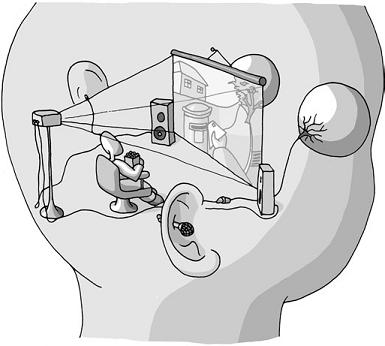
That doesn't mean we survive death. In fact, i don't think we do. But I think dying is not as bad as life can be! ... We will die in peace. Without the stresses of this world attached to us.
So it sounds like you're basically in agreement with my original assessment, where I said, "Isn't it just as comforting from the atheistic position to imagine that upon death there's nothing? And because nothing else exists therefore all pain, anguish, and responsibility ceases." This is an expectation as much as it is an emotional motivation.
I think it's far simpler ...
Isn't it far simpler to imagine that life should have never came in to existence? Isn't it far simpler to imagine that nothing should exist rather than something? Isn't it far simpler to imagine that life should be sustained by anything other than a flaming ball of plasma that we circle about on a daily basis? What is "simpler" is a value judgment based on familiarity (unless of course it's merely cancellation in the presence of a tautology).
All of the evidence we have suggests that when things die, it's over.
This is a category mistake. You're outlining assumptions not evidence (i.e. Locke's "tabula rasa" implies upon death the return to nothingness). At present, unfortunately, there is no known way to demonstrate whether this is also true of consciousness. Cognitive researchers like S. Blackmoore and D. Dennett refer to this as the "original sin of cognitivism" or the "Cartesian Theatre." Both hold that mind should not be viewed as a dualistic object where consciousness is separate from the brain. This is their foundational assumption.
Depending on the belief system that you draw from determines whether or not this is accepted as a foundational truth. If you were Hindi and lived in Delhi the default societal position would be reincarnation. Do we know whether or not this is factually true? Absolutely not. Do we know it's factually true that when something passes on it's gone from not only physical existence but every other possible scenario? Nope, it's just a best guess because the vast majority of people don't report any further contact. So that appears to be it.
Due to the ambiguity it's best to look at all data points (possibilianism) and until we can say something in a definitive manner, hold our tongue, and keep our hypotheses separate from our facts. What we can say for certain, is that the physical body perishes and there appears to be little to no contact afterwards. Obviously, the acceptance of the idea of "contact" depends upon whether you can buy the idea of nonphysical exploration and shared experience verified by identifying an initially unknown object. Unless we can form a testable hypothesis, extending the argument beyond this point is to engage in conjecture and supposition.
I think it's far simpler just to assume that the reason Atheists think the way they do is because they're basing what they think on current evidence ...
Now that your assumptions have been stated, what evidence would you point to support your viewpoint? A theist derives from the idea of out of body and near death experiences that there's something more. An atheist sees the death of a loved one and concludes since there's no further contact everything comes to an end. There's no data upon death (unless you go looking for it in odd places). So there's little to no evidence for either viewpoint. This is why earlier I had said, "Each group has a rather inconclusive series of facts to support their argument."
If you think that's why atheists are the way they're then you have a warped understanding of what drives them. They're driven by pure rationale perception.
Seeing as how I've been agnostic for most of my life (now omnitheistic), with a fairly low opinion of theists, I think you're speaking out of a sense being slighted. The vast majority of people who have a Western mindset accept the idea of death as "final" due to philosophy that is grounded in physicality. This is perfectly reasonable. It's what we observe. So it seems perfectly obvious that's as far as we should extend our argument.
However where this starts to break down is when we get to living sapient creatures (namely us). Humans primarily live a private life that's "conceptual." What's out there in the real world is external, what's in the head is "ideation."
edit on 8-1-2012 by Xtraeme because: (no reason given)
This is bizarre because everything that we know anything about is physical. Yet the mind which conjures up all these measurements about physicality is
very difficult to fit into the same model. This has resulted in areas of study as diverse as philosophy, neuroscience, behavioral science, psychology,
to more out there research at UCLA for OBEs,[1] flotation tanks, Timothy Leary psychedelic
approach to studying states of consciousness, Stanford's SRI studies into remote viewing, and so on.
This idea of information versus physicality is an extremely important topic because even in physical theory for an object to exist it must possess information. Plato's allegory of the cave was probably the first time anyone expressed on paper the notion of ideas (or "forms") as contrasted against physicality. Leading to the whole question of essentialness. Is physical reality more essential than platonic reality? Or is information as a foundational building block (i.e. numbers which need no physical form) more essential than physicality? Or is there some sort of codependence? Mathematical physicist Dr. Tegmark makes a good case for the Mathematical Universe Hypothesis. If this sort of theory turns out to be true then information precedes manifestation (i.e. meaning that dimensionless physical constants have to be set in advance), which would indicate physical reality isn't as real as we imagine it to be because it's actually the effect not the cause.
This changes the foundational bedrock depending on which viewpoint we accept. So, which is more rational and why? Also how can a rational universe which we live in support irrational creatures (humanity) which are capable of contradictions? How does the mind at night freely create whole true-to-life fully interactive environments that would take scores of 3D artists months to generate and hundreds of man hours for programmers and designers to script? The only honest answer I can come up with is: I don't know.
We don't make advancement without looking for new things. Imagine if 1000 years ago someone had said, "I wonder if there are more stars up there in the sky than the ones we can see?" A skeptical mindset that only works with current data would argue, "If we can't see it how would it be there? We see the stars that are there and we don't see things that aren't there." Hundreds of years later we would invent the telescope. As our ancestors looked through the eyepiece they learned there were innumerable stars and whole galaxies they hadn't seen before. Imagine if we had never bothered looking, because "why look for something that isn't there?" So what method should we use to sort out bad data when dealing with edge-science? That's the real question. There's an answer to this question and it doesn't require arbitrarily shooting down ideas that don't fit our collective intuition of what's tenable.
I'm not entirely sure what you hope to show with the video. I've seen it before and from my earlier research I remember Dr. Taylor was criticized by a number of her colleagues for failing to keep up with contemporary neuroscience because the left brain and right brain dichotomy was long ago proven false. So I'm not sure what, if anything, we can derive from her experience. Perhaps it's just a brain going haywire due to the stroke. Maybe it was something else and she was treading the boundary between nonphysicality and physicality. I'm inclined to say her experience was physical in nature, since the experience directly corresponded to the stroke. Obviously she interpreted it as a spiritual experience. If I'm remembering correctly the main thrust of her talk was focused on conveying the importance of the feeling or "sensuous" side of existence over pure rationality. The "feeling" dimension of existence certainly has experiential value, but I find this less than ideal because it's not something which can be conveyed easily in words like rational thought. So sadly it's subjective and lost on the rest of us.
This idea of information versus physicality is an extremely important topic because even in physical theory for an object to exist it must possess information. Plato's allegory of the cave was probably the first time anyone expressed on paper the notion of ideas (or "forms") as contrasted against physicality. Leading to the whole question of essentialness. Is physical reality more essential than platonic reality? Or is information as a foundational building block (i.e. numbers which need no physical form) more essential than physicality? Or is there some sort of codependence? Mathematical physicist Dr. Tegmark makes a good case for the Mathematical Universe Hypothesis. If this sort of theory turns out to be true then information precedes manifestation (i.e. meaning that dimensionless physical constants have to be set in advance), which would indicate physical reality isn't as real as we imagine it to be because it's actually the effect not the cause.
This changes the foundational bedrock depending on which viewpoint we accept. So, which is more rational and why? Also how can a rational universe which we live in support irrational creatures (humanity) which are capable of contradictions? How does the mind at night freely create whole true-to-life fully interactive environments that would take scores of 3D artists months to generate and hundreds of man hours for programmers and designers to script? The only honest answer I can come up with is: I don't know.
They don't use intuition to stretch out beyond observable or understandable limits. They just go with what's around them and is measured.
We don't make advancement without looking for new things. Imagine if 1000 years ago someone had said, "I wonder if there are more stars up there in the sky than the ones we can see?" A skeptical mindset that only works with current data would argue, "If we can't see it how would it be there? We see the stars that are there and we don't see things that aren't there." Hundreds of years later we would invent the telescope. As our ancestors looked through the eyepiece they learned there were innumerable stars and whole galaxies they hadn't seen before. Imagine if we had never bothered looking, because "why look for something that isn't there?" So what method should we use to sort out bad data when dealing with edge-science? That's the real question. There's an answer to this question and it doesn't require arbitrarily shooting down ideas that don't fit our collective intuition of what's tenable.
Please watch this video:
I'm not entirely sure what you hope to show with the video. I've seen it before and from my earlier research I remember Dr. Taylor was criticized by a number of her colleagues for failing to keep up with contemporary neuroscience because the left brain and right brain dichotomy was long ago proven false. So I'm not sure what, if anything, we can derive from her experience. Perhaps it's just a brain going haywire due to the stroke. Maybe it was something else and she was treading the boundary between nonphysicality and physicality. I'm inclined to say her experience was physical in nature, since the experience directly corresponded to the stroke. Obviously she interpreted it as a spiritual experience. If I'm remembering correctly the main thrust of her talk was focused on conveying the importance of the feeling or "sensuous" side of existence over pure rationality. The "feeling" dimension of existence certainly has experiential value, but I find this less than ideal because it's not something which can be conveyed easily in words like rational thought. So sadly it's subjective and lost on the rest of us.
edit on 8-1-2012 by Xtraeme because: (no reason
given)
reply to post by hapablab
Hi Hap,
Absolutely and completely agree with you -- where's the compassion? I was shocked when I read that comment. Where on Earth is this person's heart? Or brain, for that matter?
Certainly not in this cold and dismissive post.
These vids made me cry. But they also inspired me and confirmed (yet again) my own lack of fear when it comes to death, which I have always viewed as a natural and connected (and even desirable) part of birth. This young man came here to teach us all something...and his message about being 'proud of me' is one more energy should be spent on cultivating in our own kids.
Namaste.
GI
Hi Hap,
Absolutely and completely agree with you -- where's the compassion? I was shocked when I read that comment. Where on Earth is this person's heart? Or brain, for that matter?
Certainly not in this cold and dismissive post.
These vids made me cry. But they also inspired me and confirmed (yet again) my own lack of fear when it comes to death, which I have always viewed as a natural and connected (and even desirable) part of birth. This young man came here to teach us all something...and his message about being 'proud of me' is one more energy should be spent on cultivating in our own kids.
Namaste.
GI
I wonder, how would scientists (materialists) tackle emotions. Basically the argument is "there is no ghost/spirit/whatever because I can't detect
it and these are stories. Stories are not science. I wonder, are emotions real or fake?
I had an interesting discussion with a colleague of mine the other day. To materialists, emotions are nothing more then chemicals/electrical signals interacting with the brain. Thus we do not "love" nor do "hate". These are basically chemicals affecting our brains.
in other words, do I "love" my wife or is it because my brain is haywire that way? interesting question
I had an interesting discussion with a colleague of mine the other day. To materialists, emotions are nothing more then chemicals/electrical signals interacting with the brain. Thus we do not "love" nor do "hate". These are basically chemicals affecting our brains.
in other words, do I "love" my wife or is it because my brain is haywire that way? interesting question
Perhaps writing a reply to this thread is a bit late of me by now but
I just had to.
The feelings that boy had right there coursed into me, we are truly one
people, there is nothing NOTHING different between you and me. I love you
all whether you are poor, rich, greedy, giving, righteous, self-righteous, proud, bashful.
This is not because I feel everybody is a part of me it's because I am a part of everyone.
For those who require an explanation to understand the context of my message I will
tell you of my experience in which I had a dream. I am sure you must have had a dream
that was more of a message to you in your waking life.
I had a handful, some showed me the actions I was to take in the future, others was
where I was going to be. But 2 of them showed me I was made of spirit, we are all
part of a collective consciousness that is bound by unbreakable forces. One who
is enlighted I'd say is the one aware of being more than him/herself.
I feel that the kid is back with us sometime soon, in another body where he can
live the life he hoped for, death is not the end but is something we must prepare
ourselves to because we have forgotten our ways.
I just had to.
The feelings that boy had right there coursed into me, we are truly one
people, there is nothing NOTHING different between you and me. I love you
all whether you are poor, rich, greedy, giving, righteous, self-righteous, proud, bashful.
This is not because I feel everybody is a part of me it's because I am a part of everyone.
For those who require an explanation to understand the context of my message I will
tell you of my experience in which I had a dream. I am sure you must have had a dream
that was more of a message to you in your waking life.
I had a handful, some showed me the actions I was to take in the future, others was
where I was going to be. But 2 of them showed me I was made of spirit, we are all
part of a collective consciousness that is bound by unbreakable forces. One who
is enlighted I'd say is the one aware of being more than him/herself.
I feel that the kid is back with us sometime soon, in another body where he can
live the life he hoped for, death is not the end but is something we must prepare
ourselves to because we have forgotten our ways.
Originally posted by JanJamboree
'___' hallucinations provoked by physical distress. Next...
That's hardly an explanation. Next... onto to what? Yeah, his experience probably was due to '___'. But what is '___' and why does everyone on this giant planet who experiences a '___' trip, be it from a NDE or from ingesting '___' drugs, ALL report a distinct and vivid spiritual experience detailing interactions with a realm (and sometimes even intelligent entities) beyond our own?
Coincidence? You probably think so given your dismissive attitude of this topic.
Does the fact that '___' is involved mean that what he experienced was fake and meaningless? Just a conjuration of an intoxicated mind on the edge of letting go? If so, why did our biological ancestors maintain such a useless brain function over a millenia of evolution and adaptation? Why do all ancient mysterious cultures who obtained knowledge far beyond their Earthly capabilities blame '___' for their insights?
One example; the Mayans literally created the most accurate calendar on earth without so much as the naked human eye, a clear night and maybe a looking glass. They mapped the orbits of planets that we've only recently re-discovered with all our sophisticated technology. And where do they claim they learned of this impossible cosmic information? Not from hundreds of years of hard work or mysterious ancient technology. From intense '___'-induced meditation. Another coincidence, perhaps? Maybe they were just good guessers who enjoyed tripping out.
The fact remains; '___', although a hallucinogenic chemical, is as important to human spirituality and understanding as anything else in the human body. It should not, and does not, discredit anything.
This post was interesting and your disrespectful dismissal of it is offensive at best. So what, you know the "how". But no body knows the "why".
edit on 16-1-2012 by refused because: because I felt like it
Originally posted by Unity_99
He was in something he called the White Room, and when looking in a mirror at his life review that showed he'd passed`
I am very sad that this young man passed away, so young, but he shows that he was ready.
I quoted the sentence because a personal experience I had when in 2003, I had major surgery, I was under general anesthesia, but I remember very clearly that I had what looked like a dream, as I woke up after surgery still in the operation room my doctor bend over and said to me "is over everything went OK" I responded to him still groggy "doctor I had the most incredible dream" he just looked at me like I was some oddity.
Why I said that to him is very simple, I dreamed or felt like a dream, I spend the entire surgery in the most incredible white room I ever seen, so bright that the walls didn't have definition of beginning or end, and next to me was a male figure in an incredible white outfit as the walls.
We tall about life, death and purpose, then he just looked at me and said, "is time" then I just woke up in the operation room with my doctor bending to talk to me.
Whatever it was, it was incredible and the peace that I felt in that room can no be describe.
Just to add two cents on this amazing story of the young men in the video.
I believe that what he experienced was real.
Originally posted by FOXMULDER147
Originally posted by JanJamboree
'___' hallucinations provoked by physical distress. Next...
Brain chemicals or a true vision of heaven...
If it eases your end, does it matter?
Yes. Because one means you expire - the other means you don't. That matters to me.
When we clone a human and it is fully developed,does it animate,I mean when it reaches a specific age as a cloned embryo say 21 days,does it attract
the spark of life,or not?We know Dolly the sheep attracted the spark of life.
This is important because religons aside we do not have a lot of data on where we go after we leave the physical body,learing how we get in will teach us how we get out,where we come from shows us where we will go.
So did the clone autonomously animate to life on its own,or did it not come to life at all?Was god the one who decided on life??Or was it the scientist that decided on life when he combined the chemicals in the testtubes??Or was it Nature seperate from god or man that decided on life?
Is life like a raindrop falling until it touches someone??Is there a constant rain of life just waiting for a seed to nourish??
And if it is like this then are our life sparks raindrops that return to the source in an endless beautiful cycle??Nature is selfrenewing,so are we also selfrenewing?
Water-raindrops seeking lifeseeds to nourish-return to the sky-raindrops again.
Life energy-lifedrops seeking lifeseeds to nourish-return to the sky-lifedrops again.
Each time the raindrop returns from the sky back to the ocean it adds its memory to the ocean in a constant symphony.The ocean holds the memory of each raindrop.
Each time the life- drop returns from the sky back to the ocean of life-energy it adds its memory to the life-energy in a constant symphony,the life-energy holds the memory of each life-drop/lifeseed.
We are all one as much as the raindrop or babys breath or mist in the air is an experience or memory on its way back to the ocean it comes from.Carrying with it each one its own precious cargo.All for One and One4All.
I can only work hard to make my own life a better experience because this incredible lifeseed showed me the importance of my cargo,I am humbled by this message,and I am a changed person for it.
I can only hope that somewhere along my journey I can add such beauty and poise to my own special cargo I am returning with--this young man has shown me the true value of my own lifeseed journey and he has reminded me of the beautiful destination I am journeying towards.I dont believe I have had the experience of the smiles I saw him show us,I can only yearn for the knowledge of what catalysed that beautiful message.His cargo is crystaline and pure,that man has made the universe a better place.
This is important because religons aside we do not have a lot of data on where we go after we leave the physical body,learing how we get in will teach us how we get out,where we come from shows us where we will go.
So did the clone autonomously animate to life on its own,or did it not come to life at all?Was god the one who decided on life??Or was it the scientist that decided on life when he combined the chemicals in the testtubes??Or was it Nature seperate from god or man that decided on life?
Is life like a raindrop falling until it touches someone??Is there a constant rain of life just waiting for a seed to nourish??
And if it is like this then are our life sparks raindrops that return to the source in an endless beautiful cycle??Nature is selfrenewing,so are we also selfrenewing?
Water-raindrops seeking lifeseeds to nourish-return to the sky-raindrops again.
Life energy-lifedrops seeking lifeseeds to nourish-return to the sky-lifedrops again.
Each time the raindrop returns from the sky back to the ocean it adds its memory to the ocean in a constant symphony.The ocean holds the memory of each raindrop.
Each time the life- drop returns from the sky back to the ocean of life-energy it adds its memory to the life-energy in a constant symphony,the life-energy holds the memory of each life-drop/lifeseed.
We are all one as much as the raindrop or babys breath or mist in the air is an experience or memory on its way back to the ocean it comes from.Carrying with it each one its own precious cargo.All for One and One4All.
I can only work hard to make my own life a better experience because this incredible lifeseed showed me the importance of my cargo,I am humbled by this message,and I am a changed person for it.
I can only hope that somewhere along my journey I can add such beauty and poise to my own special cargo I am returning with--this young man has shown me the true value of my own lifeseed journey and he has reminded me of the beautiful destination I am journeying towards.I dont believe I have had the experience of the smiles I saw him show us,I can only yearn for the knowledge of what catalysed that beautiful message.His cargo is crystaline and pure,that man has made the universe a better place.
reply to post by one4all
Higher Ups are the ones who put the souls. Some have more choice, while others are put against their will, depending on what is happening with them.
Higher Ups are the ones who put the souls. Some have more choice, while others are put against their will, depending on what is happening with them.
reply to post by Unity_99
We may also interfere with nature,but in a free natural evolutionary dynamic without a humanitarian decisionmaking external factor how would nature delegate lifeforce?
I mean sure maybe we can overrule nature on a level through imitation with technology ,but everything any sentient being might manifest technologicly will be based on nature 100%--I guess I was referencing the naturally unimpeded distribution of lifeforce.
I am sure we can trap anything we choose with technology,unduobtably because this is simply a refinement of the physical manifestations through tech of nature and its processes that we undertake.Includeing souls,but the mere fact that a sentient force controls this delegation begs the question of who exactly handles their delegation??
Nice to hear from you Unity,I hope things are well.Please note the recent media coverage of the rat problems in Alberta,if you can visualise a sinking ship and integrate this issue,and you are so inclined please u2u me,I have a few recent developments to share.
We may also interfere with nature,but in a free natural evolutionary dynamic without a humanitarian decisionmaking external factor how would nature delegate lifeforce?
I mean sure maybe we can overrule nature on a level through imitation with technology ,but everything any sentient being might manifest technologicly will be based on nature 100%--I guess I was referencing the naturally unimpeded distribution of lifeforce.
I am sure we can trap anything we choose with technology,unduobtably because this is simply a refinement of the physical manifestations through tech of nature and its processes that we undertake.Includeing souls,but the mere fact that a sentient force controls this delegation begs the question of who exactly handles their delegation??
Nice to hear from you Unity,I hope things are well.Please note the recent media coverage of the rat problems in Alberta,if you can visualise a sinking ship and integrate this issue,and you are so inclined please u2u me,I have a few recent developments to share.
reply to post by one4all
Thank you for re-animating this thread. I was just thinking of Ben yesterday or the day before. I hope it serves to remind those who see it that there is hope. This young man gave the world a wonderful gift when he made that video.. There was no malice in Ben Breedlove, a young man with an unforgettable smile.
This is a lovely thing to see on my birthday.
Thank you for re-animating this thread. I was just thinking of Ben yesterday or the day before. I hope it serves to remind those who see it that there is hope. This young man gave the world a wonderful gift when he made that video.. There was no malice in Ben Breedlove, a young man with an unforgettable smile.
This is a lovely thing to see on my birthday.
reply to post by sad_eyed_lady
I must thank Ben ,as things stand I will be forever caught somewhere between thank you and goodbye when my thoughts turn to this man.
I must thank Ben ,as things stand I will be forever caught somewhere between thank you and goodbye when my thoughts turn to this man.
new topics
-
BIDEN Admin Begins Planning For January 2025 Transition to a New President - Today is 4.26.2024.
2024 Elections: 3 hours ago -
Big Storms
Fragile Earth: 5 hours ago -
Where should Trump hold his next rally
2024 Elections: 8 hours ago -
Shocking Number of Voters are Open to Committing Election Fraud
US Political Madness: 8 hours ago -
Gov Kristi Noem Shot and Killed "Less Than Worthless Dog" and a 'Smelly Goat
2024 Elections: 9 hours ago -
Falkville Robot-Man
Aliens and UFOs: 9 hours ago -
James O’Keefe: I have evidence that exposes the CIA, and it’s on camera.
Whistle Blowers and Leaked Documents: 10 hours ago -
Australian PM says the quiet part out loud - "free speech is a threat to democratic dicourse"...?!
New World Order: 11 hours ago -
Ireland VS Globalists
Social Issues and Civil Unrest: 11 hours ago
top topics
-
James O’Keefe: I have evidence that exposes the CIA, and it’s on camera.
Whistle Blowers and Leaked Documents: 10 hours ago, 17 flags -
Australian PM says the quiet part out loud - "free speech is a threat to democratic dicourse"...?!
New World Order: 11 hours ago, 15 flags -
Blast from the past: ATS Review Podcast, 2006: With All Three Amigos
Member PODcasts: 14 hours ago, 13 flags -
Biden "Happy To Debate Trump"
2024 Elections: 12 hours ago, 13 flags -
Ireland VS Globalists
Social Issues and Civil Unrest: 11 hours ago, 10 flags -
Mike Pinder The Moody Blues R.I.P.
Music: 14 hours ago, 8 flags -
BIDEN Admin Begins Planning For January 2025 Transition to a New President - Today is 4.26.2024.
2024 Elections: 3 hours ago, 7 flags -
What is the white pill?
Philosophy and Metaphysics: 14 hours ago, 6 flags -
Shocking Number of Voters are Open to Committing Election Fraud
US Political Madness: 8 hours ago, 6 flags -
Big Storms
Fragile Earth: 5 hours ago, 6 flags
active topics
-
-@TH3WH17ERABB17- -Q- ---TIME TO SHOW THE WORLD--- -Part- --44--
Dissecting Disinformation • 703 • : 777Vader -
University of Texas Instantly Shuts Down Anti Israel Protests
Education and Media • 316 • : Schmoe3755 -
Gov Kristi Noem Shot and Killed "Less Than Worthless Dog" and a 'Smelly Goat
2024 Elections • 63 • : GENERAL EYES -
Mood Music Part VI
Music • 3113 • : MRTrismegistus -
BIDEN Admin Begins Planning For January 2025 Transition to a New President - Today is 4.26.2024.
2024 Elections • 20 • : BustedBoomer -
One Flame Throwing Robot Dog for Christmas Please!
Weaponry • 12 • : worldstarcountry -
RAAF airbase in Roswell, New Mexico is on fire
Aliens and UFOs • 13 • : Ophiuchus1 -
President BIDEN's FBI Raided Donald Trump's Florida Home for OBAMA-NORTH KOREA Documents.
Political Conspiracies • 40 • : BingoMcGoof -
Australian PM says the quiet part out loud - "free speech is a threat to democratic dicourse"...?!
New World Order • 7 • : 19Bones79 -
It takes One to Be; Two to Tango; Three to Create.
Philosophy and Metaphysics • 8 • : Compendium