It looks like you're using an Ad Blocker.
Please white-list or disable AboveTopSecret.com in your ad-blocking tool.
Thank you.
Some features of ATS will be disabled while you continue to use an ad-blocker.

Boeing returns to drawing board on portion of 787 wing fix
page: 3share:
reply to post by ecoparity
You're not alone ecoparity. I posted on another thread about my problems with the two Airbus aircraft that went down recently and I was quickly shown the door and then told about how many Boeing Aircraft have crashed.
The fact is the crashes are blamed on poorly designed pitot tubes, but the reality is that the software shouldn't crash an aircraft because of a sensor failure. As a computer engineer I blame the problem on software design and implementation because sensors will always fail sooner or later, but they should have foreseen such a possiblilty. I bet in addition to the pitot replacements there will quietly be a software redesign - otherwise they would only be a couple sensors away from a similar crash in the future.
Boeing clearly has problems both in it's workforce and it's aircraft designs and I for one wont be flying a 787 at least until they've flown a few years.
Problem here is nobody minds if I bash bash the lazy B, but don't you dare point out Airbus failures.
You're not alone ecoparity. I posted on another thread about my problems with the two Airbus aircraft that went down recently and I was quickly shown the door and then told about how many Boeing Aircraft have crashed.
The fact is the crashes are blamed on poorly designed pitot tubes, but the reality is that the software shouldn't crash an aircraft because of a sensor failure. As a computer engineer I blame the problem on software design and implementation because sensors will always fail sooner or later, but they should have foreseen such a possiblilty. I bet in addition to the pitot replacements there will quietly be a software redesign - otherwise they would only be a couple sensors away from a similar crash in the future.
Boeing clearly has problems both in it's workforce and it's aircraft designs and I for one wont be flying a 787 at least until they've flown a few years.
Problem here is nobody minds if I bash bash the lazy B, but don't you dare point out Airbus failures.
Which aircraft exactly crashed due to poor pitot tubes? The one with an incomplete investigation is the only one I can think of. In the computer world
that is known as FUD.
It's not that they are bashing Boeing, but merely providing a baseline.
Bash either and you usually get banned from most aviation forums. here, however, if you bash B you'll get exactly the same thing back.
[edit on 22/10/2009 by C0bzz]
It's not that they are bashing Boeing, but merely providing a baseline.
Problem here is nobody minds if I bash bash the lazy B, but don't you dare point out Airbus failures.
Bash either and you usually get banned from most aviation forums. here, however, if you bash B you'll get exactly the same thing back.
[edit on 22/10/2009 by C0bzz]
reply to post by verylowfrequency
so a computer starts getting faulty inputs and reacts to them - but you say the computer can`t crash the aircraft when the inputs recieved are faulty?
rubbish
so a computer starts getting faulty inputs and reacts to them - but you say the computer can`t crash the aircraft when the inputs recieved are faulty?
rubbish
Originally posted by Harlequin
reply to post by verylowfrequency
so a computer starts getting faulty inputs and reacts to them - but you say the computer can`t crash the aircraft when the inputs recieved are faulty?
rubbish
He actually expects aircraft to fly without sensors.
Aeroperú Flight 603
[edit on 22/10/2009 by C0bzz]
Originally posted by verylowfrequency
As a computer engineer I blame the problem on software design and implementation because sensors will always fail sooner or later, but they should have foreseen such a possiblilty.
You've obviously never actually done any programming for aircaft then.
I'd advise you STFU before making yourself look stupid.
Typically, over 99% of code in aircraft software exists solely for failure events.
Originally posted by ecoparity
Perceptions are based on individual experiences, history and preferences. They cannot be "right" or "wrong" and cannot be changed by argument.
Indeed.
But assuming the localised experiences that build those perceptions apply globally is bad practice.
Which is why people are saying your posts are largely bull.
Originally posted by C0bzz
Originally posted by Harlequin
reply to post by verylowfrequency
so a computer starts getting faulty inputs and reacts to them - but you say the computer can`t crash the aircraft when the inputs recieved are faulty?
rubbish
He actually expects aircraft to fly without sensors.
Aeroperú Flight 603
[edit on 22/10/2009 by C0bzz]
Wasn't that the flight that crashed because a ground crew member put tape over the pitot tube inlets for washing the plane and forgot to remove it? I seem to remember the wrong color tape being used and being harder to see was missed during the walk around.
The pilots reacted badly to the disparate and erratic sensor readings, they were getting overspeed and stall warnings concurrently if I remember correctly.
Originally posted by ecoparity
Wasn't that the flight that crashed because a ground crew member put tape over the pitot tube inlets for washing the plane and forgot to remove it? I seem to remember the wrong color tape being used and being harder to see was missed during the walk around.
The pilots reacted badly to the disparate and erratic sensor readings, they were getting overspeed and stall warnings concurrently if I remember correctly.
You "seem to remember" whatever wikipedia told you.
reply to post by kilcoo316
You'd be surprised to hear I've found a great deal of those reactions to be completely full of crap, then. I fail to see where I've applied my perceptions "globally", any chance you can enlighten me on that one?
I suspect displaying the levels of hostility and rudeness I've seen here would also result in bans on "airplane forums".
I guess we can all be grateful ATS is not one of those. . .
At least we don't have to put up with people telling posters to STFU because they lack professional experience in the field being discussed. (Since ATS is not a specialized forum dedicated to members of any particular trade or industry).
Oh, wait - maybe I missed something and wandered into the "aerospace engineers and designers only forum".
You'd be surprised to hear I've found a great deal of those reactions to be completely full of crap, then. I fail to see where I've applied my perceptions "globally", any chance you can enlighten me on that one?
I suspect displaying the levels of hostility and rudeness I've seen here would also result in bans on "airplane forums".
I guess we can all be grateful ATS is not one of those. . .
At least we don't have to put up with people telling posters to STFU because they lack professional experience in the field being discussed. (Since ATS is not a specialized forum dedicated to members of any particular trade or industry).
Oh, wait - maybe I missed something and wandered into the "aerospace engineers and designers only forum".
reply to post by kilcoo316
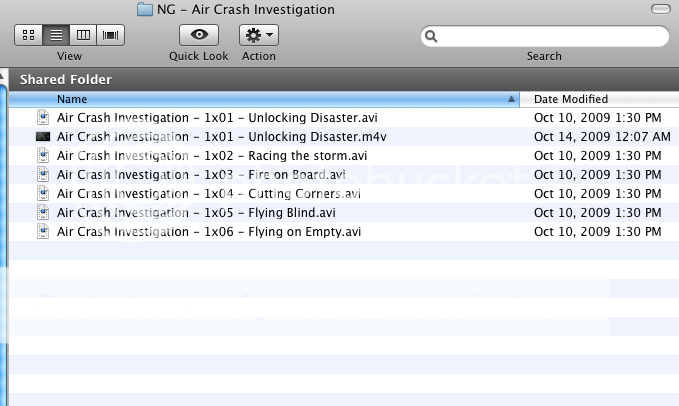
No, it would probably be due to watching National Geographic "Air Crash Investigation", season 1, episode 5 "Flying Blind" a week ago.
You go right ahead and keep making those assumptions and using them to accuse people of dishonesty without factual reason to do so though. It makes you look oh so clever and all that.
[edit on 22-10-2009 by ecoparity]
[edit on 22-10-2009 by ecoparity]
No, it would probably be due to watching National Geographic "Air Crash Investigation", season 1, episode 5 "Flying Blind" a week ago.
You go right ahead and keep making those assumptions and using them to accuse people of dishonesty without factual reason to do so though. It makes you look oh so clever and all that.
[edit on 22-10-2009 by ecoparity]
[edit on 22-10-2009 by ecoparity]
reply to post by ecoparity
This is essentially correct.
Making it harder for them was the fact it occured at night, with no natural horizon to assist them...what's more, the First Officer's side WAS showing correct pitot/static information. Thing is, the OverSpeed Warnings are triggered by the Captain's ADC (Air Data Computer)...there is an selector switch, to switch between ADCs...it's in the checklist, IF they had every gotten that far.
In any event, it was lack of experience/poor training because, in a situation like that, withunreliable airspeed information, (despite all the distracting warnings) simply holding a pitch/power setting combination would stablize the airplane.
I think there was the "Macho" aspect, like the Captain is always right..."don't question the Captain"...that sort of thing. That's why the philosophy is better now, the crew co-ordination concept...."question assumptions" is another term used to describe it sometimes.
The pilots reacted badly to the disparate and erratic sensor readings, they were getting overspeed and stall warnings concurrently if I remember correctly.
This is essentially correct.
Making it harder for them was the fact it occured at night, with no natural horizon to assist them...what's more, the First Officer's side WAS showing correct pitot/static information. Thing is, the OverSpeed Warnings are triggered by the Captain's ADC (Air Data Computer)...there is an selector switch, to switch between ADCs...it's in the checklist, IF they had every gotten that far.
In any event, it was lack of experience/poor training because, in a situation like that, withunreliable airspeed information, (despite all the distracting warnings) simply holding a pitch/power setting combination would stablize the airplane.
I think there was the "Macho" aspect, like the Captain is always right..."don't question the Captain"...that sort of thing. That's why the philosophy is better now, the crew co-ordination concept...."question assumptions" is another term used to describe it sometimes.
reply to post by weedwhacker
On the NG episode the instructor they had on as the technical expert stopped just short of calling the pilot an idiot. He had that "look" on his face while he said something like "normally the thing to do would be to concentrate on just flying the plane, elevate the nose and set the throttles accordingly".
Did they not have GPS units in the cockpit back then capable of displaying altitude?
Wasn't there something about the ATC reading transponder altitude back to them which was incorrect? I might be thinking of another case.
I found that one really sad, its easy to sit back and watch the cases and think "if only they'd done this or that" because most crashes are a chain of events and at some point in the chain a mistake could have been prevented but we'd be talking about a close call as opposed to a crash
then. I found that one especially sad for some reason though.
On the NG episode the instructor they had on as the technical expert stopped just short of calling the pilot an idiot. He had that "look" on his face while he said something like "normally the thing to do would be to concentrate on just flying the plane, elevate the nose and set the throttles accordingly".
Did they not have GPS units in the cockpit back then capable of displaying altitude?
Wasn't there something about the ATC reading transponder altitude back to them which was incorrect? I might be thinking of another case.
I found that one really sad, its easy to sit back and watch the cases and think "if only they'd done this or that" because most crashes are a chain of events and at some point in the chain a mistake could have been prevented but we'd be talking about a close call as opposed to a crash
then. I found that one especially sad for some reason though.
Originally posted by ecoparity
I fail to see where I've applied my perceptions "globally", any chance you can enlighten me on that one?
I once spent a summer flying on a certain Phoenix based carrier twice per week on nothing but Airbus jets and I have to say, the quality was not impressive. A value carrier might have more maintenance issues than most but almost every flight was delayed for mechanical problems and the interior of the planes was trashed.
Is that not a localised experience?
Are you not in this thread saying Airbus are more unreliable than Boeing?
Pretty much closed case.
Originally posted by ecoparity
No, it would probably be due to watching National Geographic "Air Crash Investigation", season 1, episode 5 "Flying Blind" a week ago.
You go right ahead and keep making those assumptions and using them to accuse people of dishonesty without factual reason to do so though. It makes you look oh so clever and all that.
Ahh...
I see. A few programs on NG, and now you've acquired in-depth knowledge of how and why aircraft crash.
Originally posted by ecoparity
At least we don't have to put up with people telling posters to STFU because they lack professional experience in the field being discussed.
If someone comes in here, and basically accuses engineers of being stupid f**kers by not considering the seemingly obvious (when of course, the engineers have considered the bleeding obvious) - then unless they are a complete newbie or there are other mitigating circumstances, they will get both barrels from me everytime.
reply to post by kilcoo316
Yes and I've framed it as such the entire time. Only when one of your fellow Airbus-sensitive types demanded I "justify my perception with data" did I submit the crash statistics.
I get it, I insulted your favorite airplane and because of that you and a few others want to pick a fight. Unfortunately you're just making yourselves look really, really bad not to mention a bit foolish.
I'd like to reiterate my advice to spend some time researching the difference between personal perception and proclamations of fact. Your continued insistence in debating perceptions shows an incredible arrogance and lack of maturity.
Yes and I've framed it as such the entire time. Only when one of your fellow Airbus-sensitive types demanded I "justify my perception with data" did I submit the crash statistics.
I get it, I insulted your favorite airplane and because of that you and a few others want to pick a fight. Unfortunately you're just making yourselves look really, really bad not to mention a bit foolish.
I'd like to reiterate my advice to spend some time researching the difference between personal perception and proclamations of fact. Your continued insistence in debating perceptions shows an incredible arrogance and lack of maturity.
Originally posted by kilcoo316
Originally posted by ecoparity
No, it would probably be due to watching National Geographic "Air Crash Investigation", season 1, episode 5 "Flying Blind" a week ago.
You go right ahead and keep making those assumptions and using them to accuse people of dishonesty without factual reason to do so though. It makes you look oh so clever and all that.
Ahh...
I see. A few programs on NG, and now you've acquired in-depth knowledge of how and why aircraft crash.
I must have made the post claiming to be a crash expert in my sleep or something, I don't recall making it.
Thanks for advising me about the ATS requirement that someone needs to be an expert in a subject in order to discuss it. I wasn't aware that was a requirement.
For some reason I get the feeling you aren't familiar with the concept of "when you find yourself in a deeper and deeper hole it might be a good time to stop digging".
reply to post by C0bzz
Instead of being such smart ass by telling me what I expect how about a civil discussion, instead of your automatic dismissal of anything I have to say? If you're not interested that's fine, but I'll speak up as I like regardless of how you try to piss all over anyone who has a different point of view.
I am not an aviation expert, but I've been around aircraft all my life at least enough to know some of the basics and I am an expert on computers.
First off - obviously, since they have never recovered the black boxes everything is just speculation - however the information released to the public was that the pitot tubes were suspect and thus they were all replaced. That much we do know.
Again I'm no aviation expert, but I do know how computers work - they do exactly what you tell them to do - except in this case they were provided with the wrong information which caused the software to do exactly what it had been programed to do and thus it was not the sensor failure that caused the crash.
It was the sensor failure that exposed a flaw in the software design, because that scenario was not planned for when it was designed. Had it had the ability to check another source of sensor data, another words it could of cross checked other sources of data before the fatal action was taken.
The software should of had the ability to pull other sources of data so that it could predict the likely simultaneous sensor failures - at least to the point that it would of given the pilots better information so that they were able to take corrective action.
Perhaps the flaw would of never been exposed had the crashes not occurred, that I do consider. Still once a flaw is exposed it seems in the aviation industry liability is more important than admitting a poor design and immediately fixing it.
[edit on 23-10-2009 by verylowfrequency]
Instead of being such smart ass by telling me what I expect how about a civil discussion, instead of your automatic dismissal of anything I have to say? If you're not interested that's fine, but I'll speak up as I like regardless of how you try to piss all over anyone who has a different point of view.
I am not an aviation expert, but I've been around aircraft all my life at least enough to know some of the basics and I am an expert on computers.
First off - obviously, since they have never recovered the black boxes everything is just speculation - however the information released to the public was that the pitot tubes were suspect and thus they were all replaced. That much we do know.
Again I'm no aviation expert, but I do know how computers work - they do exactly what you tell them to do - except in this case they were provided with the wrong information which caused the software to do exactly what it had been programed to do and thus it was not the sensor failure that caused the crash.
It was the sensor failure that exposed a flaw in the software design, because that scenario was not planned for when it was designed. Had it had the ability to check another source of sensor data, another words it could of cross checked other sources of data before the fatal action was taken.
The software should of had the ability to pull other sources of data so that it could predict the likely simultaneous sensor failures - at least to the point that it would of given the pilots better information so that they were able to take corrective action.
Perhaps the flaw would of never been exposed had the crashes not occurred, that I do consider. Still once a flaw is exposed it seems in the aviation industry liability is more important than admitting a poor design and immediately fixing it.
[edit on 23-10-2009 by verylowfrequency]
both boeing 757 crtashes have been mentioned
i say `both` these are 2 that are directly related to pitot probes
In the one of accidents, a pitot tube on an Aeroperú Flight 603 was blocked by mud dauber wasps.
Birgenair Flight 301, an external static port, which is part of the pitot-static system, was found covered with tape. A maintenance man had taped over the port before washing the aircraft, and the tape wasn't removed before the next flight. The pilot did a visual check but didn't spot the tape because it was night time.
so do these 2 incidents make boeing 757`s unreliable and `poor quality penny pinching` aircraft?
no
it shows how the pitot active and static systems can be effected , and when not detected can cause fatal accidents.
i say `both` these are 2 that are directly related to pitot probes
In the one of accidents, a pitot tube on an Aeroperú Flight 603 was blocked by mud dauber wasps.
Birgenair Flight 301, an external static port, which is part of the pitot-static system, was found covered with tape. A maintenance man had taped over the port before washing the aircraft, and the tape wasn't removed before the next flight. The pilot did a visual check but didn't spot the tape because it was night time.
so do these 2 incidents make boeing 757`s unreliable and `poor quality penny pinching` aircraft?
no
it shows how the pitot active and static systems can be effected , and when not detected can cause fatal accidents.
Originally posted by verylowfrequency
reply to post by C0bzz
Again I'm no aviation expert, but I do know how computers work - they do exactly what you tell them to do - except in this case they were provided with the wrong information which caused the software to do exactly what it had been programed to do and thus it was not the sensor failure that caused the crash.
It was the sensor failure that exposed a flaw in the software design, because that scenario was not planned for when it was designed. Had it had the ability to check another source of sensor data, another words it could of cross checked other sources of data before the fatal action was taken.
The software should of had the ability to pull other sources of data so that it could predict the likely simultaneous sensor failures - at least to the point that it would of given the pilots better information so that they were able to take corrective action.
Perhaps the flaw would of never been exposed had the crashes not occurred, that I do consider. Still once a flaw is exposed it seems in the aviation industry liability is more important than admitting a poor design and immediately fixing it.
[edit on 23-10-2009 by verylowfrequency]
Firstly, you are assuming that the computer systems crashed, or were put into an error mode - that is not clear, the only errors received by the maintenance base were of a cascade failure which is almost certainly the result of the breakup of the aircraft.
Secondly, Pitot Static ports are at the core of aviation instrumentation, and failure of either will result in an emergency situation regardless of whether the aircraft is fly by wire, has digital instrumentation or not.
Without those instruments, you have no airspeed, vertical speed, altitude and other details with which to fly the aircraft, and no indication of whether the aircraft is in a safe situation or not.
With regard to your 'cross check', there are at least two sets of pitot static ports on each aircraft, and the data is cross checked - but if the ports are subjected to the same conditions, then they can fail in the same fashion (as is assumed with the Air France crash, the ports iced up due to inadequet deicing systems, and that would have happened to both ports - hence the requirement to change at least one of the ports).
But the other issue is, if the ports failed in certain ways there would be no indication to either pilot or flight systems that the data is erronous, resulting in a dire situation.
Software is not magic, there is no way it can take a bad or unknown situation and make sense of it - and yes, I am a software engineer in the aviation industry, working on aviation systems. You go up to a point, and after that point you make the best of a bad situation - if you know or suspect you are in a bad situation, you inform the pilots but if you don't know or can't suspect (as is the case in a lot of possibilities) then there is nothing to be done as to all intent and purpose you are still in normal flight mode as you cant know otherwise.
new topics
-
President BIDEN's FBI Raided Donald Trump's Florida Home for OBAMA-NORTH KOREA Documents.
Political Conspiracies: 3 hours ago -
Maestro Benedetto
Literature: 4 hours ago -
Is AI Better Than the Hollywood Elite?
Movies: 5 hours ago -
Las Vegas UFO Spotting Teen Traumatized by Demon Creature in Backyard
Aliens and UFOs: 8 hours ago -
2024 Pigeon Forge Rod Run - On the Strip (Video made for you)
Automotive Discussion: 9 hours ago -
Gaza Terrorists Attack US Humanitarian Pier During Construction
Middle East Issues: 9 hours ago -
The functionality of boldening and italics is clunky and no post char limit warning?
ATS Freshman's Forum: 10 hours ago -
Meadows, Giuliani Among 11 Indicted in Arizona in Latest 2020 Election Subversion Case
Mainstream News: 11 hours ago -
Massachusetts Drag Queen Leads Young Kids in Free Palestine Chant
Social Issues and Civil Unrest: 11 hours ago
top topics
-
President BIDEN's FBI Raided Donald Trump's Florida Home for OBAMA-NORTH KOREA Documents.
Political Conspiracies: 3 hours ago, 23 flags -
Krystalnacht on today's most elite Universities?
Social Issues and Civil Unrest: 14 hours ago, 9 flags -
University of Texas Instantly Shuts Down Anti Israel Protests
Education and Media: 17 hours ago, 8 flags -
Weinstein's conviction overturned
Mainstream News: 13 hours ago, 8 flags -
Supreme Court Oral Arguments 4.25.2024 - Are PRESIDENTS IMMUNE From Later Being Prosecuted.
Above Politics: 14 hours ago, 8 flags -
Massachusetts Drag Queen Leads Young Kids in Free Palestine Chant
Social Issues and Civil Unrest: 11 hours ago, 7 flags -
Gaza Terrorists Attack US Humanitarian Pier During Construction
Middle East Issues: 9 hours ago, 7 flags -
Las Vegas UFO Spotting Teen Traumatized by Demon Creature in Backyard
Aliens and UFOs: 8 hours ago, 6 flags -
Meadows, Giuliani Among 11 Indicted in Arizona in Latest 2020 Election Subversion Case
Mainstream News: 11 hours ago, 5 flags -
2024 Pigeon Forge Rod Run - On the Strip (Video made for you)
Automotive Discussion: 9 hours ago, 4 flags
active topics
-
President BIDEN's FBI Raided Donald Trump's Florida Home for OBAMA-NORTH KOREA Documents.
Political Conspiracies • 11 • : WeMustCare -
Hate makes for strange bedfellows
US Political Madness • 47 • : 19Bones79 -
-@TH3WH17ERABB17- -Q- ---TIME TO SHOW THE WORLD--- -Part- --44--
Dissecting Disinformation • 689 • : daskakik -
University of Texas Instantly Shuts Down Anti Israel Protests
Education and Media • 265 • : Astrocometus -
Gaza Terrorists Attack US Humanitarian Pier During Construction
Middle East Issues • 27 • : ToneD -
Reason of the Existence
The Gray Area • 21 • : BingoMcGoof -
Supreme Court Oral Arguments 4.25.2024 - Are PRESIDENTS IMMUNE From Later Being Prosecuted.
Above Politics • 85 • : Sookiechacha -
Chris Christie Wishes Death Upon Trump and Ramaswamy
Politicians & People • 24 • : nugget1 -
New whistleblower Jason Sands speaks on Twitter Spaces last night.
Aliens and UFOs • 63 • : pianopraze -
SETI chief says US has no evidence for alien technology. 'And we never have'
Aliens and UFOs • 74 • : Justoneman