It looks like you're using an Ad Blocker.
Please white-list or disable AboveTopSecret.com in your ad-blocking tool.
Thank you.
Some features of ATS will be disabled while you continue to use an ad-blocker.

Oldest Americans 1.3 millon years???
page: 6share:
reply to post by Byrd
Thank you for that link, it is all new to me. I just discovered the kow swamp people today, as well as a whole lot of australasian history.
very interesting but head binding does not acount for the whole range of differences between the kow swamp people and the modern austrailian.
The kow swamp people more resemble robust people from levant 100k years ago than they do modern australasians.
One thing that caught my eye was a reference to northern and southern proto-mongoloids, and how the two populations had density maximums at different times that corresponded to different times before or after the the glacial maximun.
Apperantly the northern proto-mongoloids reached a population density maximun before and into the glacial maximum. This correlates to a population that was adapted to a meat intensive diet of a mega fauna hunter. Conversely southern proto-mongoloids reached their zenith in the warming period after the glacial maximum and were adapted to a plant based diet.
The differences show in the teeth with the norther population being sinodonts and the spouthern population being sundadonts.
Africans and caucasians are all sundadonts as well which indicates that the sundadonts are the older population.
At this point my argument turns in on itself, if australasians were the fore runners of some of the people who populated the americas why is it that the native americans tend towards sinodonty, the younger dental pattern?
The key lies earlier in the history, in my opinion, when modern man developed in central asia he split into two populations.
The northern population was adapted both culturaley and physicaly to a cold climate and meat intensive diet.
While their southern cousins lived in a milder climate that fostered a gatherer /hunter lifestyle that predominately subsisted on a diet rich in plants. this lifestyle in turn led the development of agriculture in some areas of the world.
Another intersting foot note is that the people of the adaman islands and the small populations in tibet are closely related to the ainu and people of the rykuyus.
Both of whom are linked with the early modern aboriginal people of aus.
For those who dont know who the adaman islanders are a population of tribal oceanic boat dwellers in the adaman sea west of myranmar and thialand.
Some of the adaman islander live most of their lives at sea only putting in to solid land when in need.
They have been living a boat based lifestyle for thousands of years in the eastern indian ocean.
Could they be the descendants of the boat people who populated aus and the coastal areas of the new world.
Thank you for that link, it is all new to me. I just discovered the kow swamp people today, as well as a whole lot of australasian history.
very interesting but head binding does not acount for the whole range of differences between the kow swamp people and the modern austrailian.
The kow swamp people more resemble robust people from levant 100k years ago than they do modern australasians.
One thing that caught my eye was a reference to northern and southern proto-mongoloids, and how the two populations had density maximums at different times that corresponded to different times before or after the the glacial maximun.
Apperantly the northern proto-mongoloids reached a population density maximun before and into the glacial maximum. This correlates to a population that was adapted to a meat intensive diet of a mega fauna hunter. Conversely southern proto-mongoloids reached their zenith in the warming period after the glacial maximum and were adapted to a plant based diet.
The differences show in the teeth with the norther population being sinodonts and the spouthern population being sundadonts.
Anthropologist Christy Turner identified two patterns, Sinodonty and Sundadonty, for East Asia, within the "Mongoloid dental complex"[1]. The latter is regarded as having a more generalised, Australoid morphology and having a longer ancestry than its offspring, Sinodonty.
Sino and Sunda refer to China and Sundaland, while 'dont' refers to teeth.
He found the Sundadont pattern in the Jōmon of Japan, Taiwanese aborigines, Filipinos, Indonesians, Thais, Borneans, Laotians, and Malaysians, and the Sinodont pattern in the inhabitants of China, Mongolia, eastern Siberia, Native Americans, and the Yayoi.
Sinodonty is a particular pattern of teeth common among Native Americans and some peoples in Asia, in particular the northern Han Chinese and some Japanese populations. The upper first two incisors are not aligned with the other teeth, but rotated a few degrees inward, and, moreover, they are shovel-shaped; the upper first premolar has one root (whereas the upper first premolar in Caucasians has normally two roots). The lower first molar in Sinodonts has three roots (whereas it has two roots in Caucasians).
In the 1990s, Turner's dental measurements were frequently mentioned as one of three new tools for studying origins and migrations of human populations. The other two were linguistic methods like Joseph Greenberg's mass comparison of vocabulary or Johanna Nichols's statistical study of language typology and its evolution, and genetic studies pioneered by Cavalli-Sforza.
Today, the largest number of references on the web to Turner's work are from discussions of the origin of Paleo-Indians and modern Native Americans, including the Kennewick Man controversy. Turner found that the dental remains of both ancient and modern Indians are more similar to each other than they are to dental complexes from other continents, but that the Sinodont patterns of the Paleoindians identify their ancestral homeland as north-east Asia. Some later studies have questioned this and found Sundadont features in some American peoples.
Africans and caucasians are all sundadonts as well which indicates that the sundadonts are the older population.
At this point my argument turns in on itself, if australasians were the fore runners of some of the people who populated the americas why is it that the native americans tend towards sinodonty, the younger dental pattern?
The key lies earlier in the history, in my opinion, when modern man developed in central asia he split into two populations.
The northern population was adapted both culturaley and physicaly to a cold climate and meat intensive diet.
While their southern cousins lived in a milder climate that fostered a gatherer /hunter lifestyle that predominately subsisted on a diet rich in plants. this lifestyle in turn led the development of agriculture in some areas of the world.
Another intersting foot note is that the people of the adaman islands and the small populations in tibet are closely related to the ainu and people of the rykuyus.
Both of whom are linked with the early modern aboriginal people of aus.
For those who dont know who the adaman islanders are a population of tribal oceanic boat dwellers in the adaman sea west of myranmar and thialand.
Some of the adaman islander live most of their lives at sea only putting in to solid land when in need.
They have been living a boat based lifestyle for thousands of years in the eastern indian ocean.
Could they be the descendants of the boat people who populated aus and the coastal areas of the new world.
Ok heres my composite model of the population of the americas.
A) Homo erectus makes it to north and central america in very small numbers very early on.
Their numbers were small and restricted by the distance and severe change in lifestyle on the way. These "lost Homo Erectus" are the source for the 3 or 4 anomoulsly old sites in north america, 2 in the US and another in mexico, that is not related to the site already mentioned in this thread.
At all of these sites there is distinctive evidence of human occupation, bones of animals that have been processed for meat, fire hearths and or stone tools.
All of these sites seem to have corroborating evidence of ages up to 200k years ago.
That would explain how there could have been tool users in north and central america 170k years before modern humans arrived.
These populations were so small to start with that they never really took hold.
In places they might have survived in very small numbers into the near past, as is attested to by the discovery of homo florensis.
Hf's ancestors had to cross at least 3 areas of deep open water, that have never been bridged,ever, and take a foothold on flores until at least 10k years ago, or maybe as late the 16th century if the local tales are to believed.
It is believed that HE lived on till up to 20k years ago in places in asia.
If Homo erectus can walk from africa to south east asia, build boats or canoes and sail to indonesia, malaysia and the island of flores, then why not walk and or sail to the americas as well.
I remeber watching a documentary many years ago, 30 at least, on PBS where an anthropologist had discovered partial human remains at a site high in the rocky mnts. The remains consisted of a few ribs and an arm bone that dated to 80K+ years old.
to be finished later
A) Homo erectus makes it to north and central america in very small numbers very early on.
Their numbers were small and restricted by the distance and severe change in lifestyle on the way. These "lost Homo Erectus" are the source for the 3 or 4 anomoulsly old sites in north america, 2 in the US and another in mexico, that is not related to the site already mentioned in this thread.
At all of these sites there is distinctive evidence of human occupation, bones of animals that have been processed for meat, fire hearths and or stone tools.
All of these sites seem to have corroborating evidence of ages up to 200k years ago.
That would explain how there could have been tool users in north and central america 170k years before modern humans arrived.
These populations were so small to start with that they never really took hold.
In places they might have survived in very small numbers into the near past, as is attested to by the discovery of homo florensis.
Hf's ancestors had to cross at least 3 areas of deep open water, that have never been bridged,ever, and take a foothold on flores until at least 10k years ago, or maybe as late the 16th century if the local tales are to believed.
It is believed that HE lived on till up to 20k years ago in places in asia.
If Homo erectus can walk from africa to south east asia, build boats or canoes and sail to indonesia, malaysia and the island of flores, then why not walk and or sail to the americas as well.
I remeber watching a documentary many years ago, 30 at least, on PBS where an anthropologist had discovered partial human remains at a site high in the rocky mnts. The remains consisted of a few ribs and an arm bone that dated to 80K+ years old.
to be finished later
reply to post by Scott Creighton
Hello Scott,
I think that the evidence points directly to the fact that any early occupation of the americas came from the outside and not from any new world developed species.
A) homo erectus made it to indonesia by 780k years ago, in the processs they crossed several sections of open water that could only have been crossed by boat.
B) There is absolutly no evidence of any developmental forms in the fossil record of the new world, any where at all.
Granted there are the previously mentioned anomoulously old sites of human activity.
I can accept those, but there is absoutely history of any kind that would indicate a seperately evolved primate originateing in the new world.
The differences between new world monkeys and old world monkeys are pretty striking.
If a humanoid variant of a new world strain evolved, Id imagine that it would be radicaly different from us and not nescesaryily sapient. But the fossil record does not support it at all.
The part that proves it is that in the old world, europe and africa and asia, you get a staedy gradient of development at some sites.
In a place in georgia(the country) homo erectus settled in about 1 million years ago. This place has been inhabited by humanoids ever since, with the latest layer being a 13th century castle.
Imagine that a million years of continuous habitation.
There is nothing to support any primate line of that length and development in the new world.
But thats not to say that early african descended homo erectus didnt make early but fruitless penetrations into the new world.
The timelines also dont support any modern humans being in the new world 200K+ years ago, we were barely modern.
Hello Scott,
I think that the evidence points directly to the fact that any early occupation of the americas came from the outside and not from any new world developed species.
A) homo erectus made it to indonesia by 780k years ago, in the processs they crossed several sections of open water that could only have been crossed by boat.
B) There is absolutly no evidence of any developmental forms in the fossil record of the new world, any where at all.
Granted there are the previously mentioned anomoulously old sites of human activity.
I can accept those, but there is absoutely history of any kind that would indicate a seperately evolved primate originateing in the new world.
The differences between new world monkeys and old world monkeys are pretty striking.
If a humanoid variant of a new world strain evolved, Id imagine that it would be radicaly different from us and not nescesaryily sapient. But the fossil record does not support it at all.
The part that proves it is that in the old world, europe and africa and asia, you get a staedy gradient of development at some sites.
In a place in georgia(the country) homo erectus settled in about 1 million years ago. This place has been inhabited by humanoids ever since, with the latest layer being a 13th century castle.
Imagine that a million years of continuous habitation.
There is nothing to support any primate line of that length and development in the new world.
But thats not to say that early african descended homo erectus didnt make early but fruitless penetrations into the new world.
The timelines also dont support any modern humans being in the new world 200K+ years ago, we were barely modern.
reply to post by punkinworks09
Hello PW,
SC: And yet the artefacts in Mexico are there. My view is that the picture of evolution is much more complicated than we have hitherto imagined.
My central question remains: are we to accept that only ONE single-celled organism in the Precambrian seas evolved into a multi-celled organism that went on to produce all animal, plant and bacterial life?
Of the trillions upon trillions upon trillions of such organisms in the Precambriabn oceans, is it reasonable or even logical to assume that only ONE cell "took root" to spawn all life on Earth?
If one such cell could "take root" then why not two, or three....or a million such cells "taking root" and spawning their own "root trees" of life?
This remains my central question.
Regards,
Scott Creighton
[edit on 30/5/2009 by Scott Creighton]
Hello PW,
PW: I think that the evidence points directly to the fact that any early occupation of the americas came from the outside and not from any new world developed species.
SC: And yet the artefacts in Mexico are there. My view is that the picture of evolution is much more complicated than we have hitherto imagined.
My central question remains: are we to accept that only ONE single-celled organism in the Precambrian seas evolved into a multi-celled organism that went on to produce all animal, plant and bacterial life?
Of the trillions upon trillions upon trillions of such organisms in the Precambriabn oceans, is it reasonable or even logical to assume that only ONE cell "took root" to spawn all life on Earth?
If one such cell could "take root" then why not two, or three....or a million such cells "taking root" and spawning their own "root trees" of life?
This remains my central question.
Regards,
Scott Creighton
[edit on 30/5/2009 by Scott Creighton]
reply to post by Scott Creighton
Hello Scott,
I’d like to congratulate you for not only opening a link, but reading some of it too. Did you read the other links? One is a very lengthy (and technical) discussion about alternative explanations. Also, as mentioned before, new research is due to be released early next year with a provisional view to linking the date of the footprints (that was 40ka) with the Valsequillo site. They share the same basin, so it’s no surprise that folk are trying to make sense of the numbers. 250ka~40ka?! Big job to accomplish that! Just have to wait and see, I guess.
Several international institutions are deeply interested in the timeline of human populations in the Americas. Between them, not withstanding Steen-McIntyre’s presence, they cover a few disciplines...
(This was my University so I'm fairly proud of what they're doing. It's not the best Uni in the country, but some departments are cutting edge )
None of whom are entertaining a Pre-Cambrian parallel evolution hypothesis. They are working in and around the timelines and evidence available at this point. It’s fairly clear that the earliest presence of humans (or maybe Homo Erectus as suggested by Punkin) is soon to be extended by several thousand years and a new or improved model of migration will be needed to support it. Even if the tools do date to a difficult 250ka, accepted models will be altered. This is because it’s more prosaic to work with what we already know. The people above won’t be thinking about zebras or their parallel cousins, they’ll be thinking of horses…maybe ponies…I’m not sure…you’ll have to ask an expert...
Not at all. The chronology of human migration may need to be altered and extended. Evolution will be just fine. The coastal entry, Solutrean hypothesis (mentioned earlier) or further investigation into dates of Beringia migration routes would have to be readdressed. The reference (picked up by Punkin) to a haplogroup already being present near Beringia around the period of 20ka might just suggest (more knowledgeable members can shoot me if they please!) a random migration of small groups. Maybe these disparate groups or families continued South due to the environment of interglacial N America? I'm guessing! Hunter gatherers must follow the food supply…Parallel evolution isn’t seriously considered due to the holes in the reasoning. There’s no doubting your intelligence Scott (or bloody-minded tenacity), but have you wondered WHY nobody else is applying the idea to large mammals or most other complex lifeforms?
Lack of evidence to support the idea on the scale you propose in the fossil record or in living species of America. In a previous thread (in your section) you ‘considered’ the possibility that the Sphinx was in fact a million years old.. When I pointed out that Homo Erectus was unlikely to have been carving limestone monuments, you introduced the polyphylogenetic argument (since rebranded as the Pre-Cambrian Parallel Evolution Defense). Due to it being your own section you were a little clearer in your ideas of ‘animarts’ and unknown or lost civilisations. A corner stone of your beliefs is that the Giza Complex is based on a plan from some unknown source and that ‘animarts’ represent evidence of an advanced lost civilization…
...and then this...
This is why I’ve fallen short of my usual regard for respecting others’ opinions and I apologize. My contention is that you believe in a lost civilization and possibly ID and/or alien intervention (I ruled Scientology out). It’s the lack of transparency in these beliefs that I call into question. We’re all entitled to such beliefs but it helps if we know where someone is coming from. In your case it amounts to a vested interest that should be declared. For example, think of some Creationists? They can’t believe God created the Universe within the last 10ky and accept human evolution at the same time. They are apparently deemed mutually exclusive, hence the arguments to undermine human evolution. Equally, atheists need to undermine the existence of God to support their position. Now, if somebody begins to point out the flaws in evolution (it does have some flaws), I’d be interested in their beliefs to add balance to their views. If an evolutionary biologist pointed out the flaws I’d want to know that as well.
I’m happy to state my interests. If the evidence points to a much earlier human presence (I’m talking way earlier than 40ka), it’ll be fascinating. A favorite website ( Genographic Project: Atlas of the Human Journey ) will need a trip to the mechanics, whatever, it’ll be great. I can think of 2 or 3 members in this thread that take a professional interest who’ll also be cheering. If a lost advanced civilization is discovered? I’d love that too; a childhood dream come true
I’d like to congratulate you for not only opening a link, but reading some of it too. Did you read the other links? One is a very lengthy (and technical) discussion about alternative explanations. Also, as mentioned before, new research is due to be released early next year with a provisional view to linking the date of the footprints (that was 40ka) with the Valsequillo site. They share the same basin, so it’s no surprise that folk are trying to make sense of the numbers. 250ka~40ka?! Big job to accomplish that! Just have to wait and see, I guess.
Several international institutions are deeply interested in the timeline of human populations in the Americas. Between them, not withstanding Steen-McIntyre’s presence, they cover a few disciplines...
The ‘Peopling of the Americas’ research programme
With Dr Silvia Gonzalez and Prof. David Huddart from Liverpool John Moores University, together with Dr Rhiannon Stevens, Prof. Melanie Leng (NERC Isotope Geosciences Laboratory and University of Nottingham), Prof. Sarah Metcalfe (University of Nottingham) and Dr Angela Lamb (NERC Isotope Geosciences Laboratory). Specialist dating of the Pre-Ceramic human and Pericues collection using radiocarbon dating with Drs Tom Higham and Chris Bronk Ramsey of Oxford University and Uranium series dating in collaboration with Dr Alistair Pike, Bristol University.
(This was my University so I'm fairly proud of what they're doing. It's not the best Uni in the country, but some departments are cutting edge )
None of whom are entertaining a Pre-Cambrian parallel evolution hypothesis. They are working in and around the timelines and evidence available at this point. It’s fairly clear that the earliest presence of humans (or maybe Homo Erectus as suggested by Punkin) is soon to be extended by several thousand years and a new or improved model of migration will be needed to support it. Even if the tools do date to a difficult 250ka, accepted models will be altered. This is because it’s more prosaic to work with what we already know. The people above won’t be thinking about zebras or their parallel cousins, they’ll be thinking of horses…maybe ponies…I’m not sure…you’ll have to ask an expert...
SC: If a date of 250,000BP is accepted then the chronology of evolution is wrong or there has to be another explanation e.g. Parallel Evolution
Not at all. The chronology of human migration may need to be altered and extended. Evolution will be just fine. The coastal entry, Solutrean hypothesis (mentioned earlier) or further investigation into dates of Beringia migration routes would have to be readdressed. The reference (picked up by Punkin) to a haplogroup already being present near Beringia around the period of 20ka might just suggest (more knowledgeable members can shoot me if they please!) a random migration of small groups. Maybe these disparate groups or families continued South due to the environment of interglacial N America? I'm guessing! Hunter gatherers must follow the food supply…Parallel evolution isn’t seriously considered due to the holes in the reasoning. There’s no doubting your intelligence Scott (or bloody-minded tenacity), but have you wondered WHY nobody else is applying the idea to large mammals or most other complex lifeforms?
SC: Evolution is evolution, Kandinsky. It cares nothing for my use of words. If you accept that parallel evolution is fact then there is no reason why it hasn't always been so. You can't just accept the fact from when it suits you.
Lack of evidence to support the idea on the scale you propose in the fossil record or in living species of America. In a previous thread (in your section) you ‘considered’ the possibility that the Sphinx was in fact a million years old.. When I pointed out that Homo Erectus was unlikely to have been carving limestone monuments, you introduced the polyphylogenetic argument (since rebranded as the Pre-Cambrian Parallel Evolution Defense). Due to it being your own section you were a little clearer in your ideas of ‘animarts’ and unknown or lost civilisations. A corner stone of your beliefs is that the Giza Complex is based on a plan from some unknown source and that ‘animarts’ represent evidence of an advanced lost civilization…
Could the Great Sphinx be a million years old?
Kandinsky: I await the theory that explains how this advanced technology wiped out it's entire record of existence. Modesty?
SC: No, much of the evidence of their existence is languishing on unseen shelves, gathering dust in university broom cupboards, hidden from view for no other reason than our current model of history cannot explain it.
...and then this...
SC: I have told you - I accept that evolution has been sufficiently proven. However, the current model of evolution has some shortcomings that make it problematic for me which is why I am seeking ways to resolve those issues. The concept of parallel evolution helps me in this regard. My purpose is to seek out the truth in all scientific/historical research. Nothing more, nothing less.
This is why I’ve fallen short of my usual regard for respecting others’ opinions and I apologize. My contention is that you believe in a lost civilization and possibly ID and/or alien intervention (I ruled Scientology out). It’s the lack of transparency in these beliefs that I call into question. We’re all entitled to such beliefs but it helps if we know where someone is coming from. In your case it amounts to a vested interest that should be declared. For example, think of some Creationists? They can’t believe God created the Universe within the last 10ky and accept human evolution at the same time. They are apparently deemed mutually exclusive, hence the arguments to undermine human evolution. Equally, atheists need to undermine the existence of God to support their position. Now, if somebody begins to point out the flaws in evolution (it does have some flaws), I’d be interested in their beliefs to add balance to their views. If an evolutionary biologist pointed out the flaws I’d want to know that as well.
I’m happy to state my interests. If the evidence points to a much earlier human presence (I’m talking way earlier than 40ka), it’ll be fascinating. A favorite website ( Genographic Project: Atlas of the Human Journey ) will need a trip to the mechanics, whatever, it’ll be great. I can think of 2 or 3 members in this thread that take a professional interest who’ll also be cheering. If a lost advanced civilization is discovered? I’d love that too; a childhood dream come true
reply to post by punkinworks09
Not sure about Mungo Man, but this was new to me and very interesting. I checked out the Bradshaw website. They definitely appear different to other styles in Australia. One problem though? I can't find a picture of these boats. I can find people 'talking' about boats, but no boats. In fairness, it wasn't the most detailed search. If you have a link, please share. I did find this Legless Lizard site as I searched. It's got superb pictures and one shows some later aboriginal art painted over the Bradshaw art.
The best thing about looking for the boat images is that I found out about The Cave of Chauvet. Deserves a thread all it's own (if not done already).
More on early australians.
The bradshaws paintings are evidence that there was well developed culture in northern australia.
The paintings depict people with hair styles and clothing amongst other things in a style very different from that of the later aboriginals.
Not sure about Mungo Man, but this was new to me and very interesting. I checked out the Bradshaw website. They definitely appear different to other styles in Australia. One problem though? I can't find a picture of these boats. I can find people 'talking' about boats, but no boats. In fairness, it wasn't the most detailed search. If you have a link, please share. I did find this Legless Lizard site as I searched. It's got superb pictures and one shows some later aboriginal art painted over the Bradshaw art.
The best thing about looking for the boat images is that I found out about The Cave of Chauvet. Deserves a thread all it's own (if not done already).
Howdy Kandinsky
For myself I welcome the concept of people (HE) in the Americas prior to what we believe and have evidence for. We'll have to wait awhile while the HV site is gone over again while they try to understand the geology and find more evidence.
The problem with a second evolution (not impossible of course) is that these people didn't leave much for us to find. If HV proves correct then searches for more ancient peoples will begin anew.
I hope to be pleasantly surprized.
SC believes that Atlantis was the ancient civilization that decided it was a good idea to leave a message for the future that says XXXX. They left a message for the ancient Egyptians to build the pyramids to show a complex message - which not even he understands.
Now when he presented that idea it was rejected by the kind folks over at Hall of Ma'at. He dropped the idea that it was Atlantis (and humorously denies ever having made that connection despite a full blown literary effort at several sites) and now says it was an 'unknown' civilization.
SC is now trying to prove that science is seriously flawed (why else would it reject his theory?).
Oh SC before I became very busy a few months ago we were having a discussion on the early dating of the Sphinx. I cannot find that thread here where was that?
Hanslune
For myself I welcome the concept of people (HE) in the Americas prior to what we believe and have evidence for. We'll have to wait awhile while the HV site is gone over again while they try to understand the geology and find more evidence.
The problem with a second evolution (not impossible of course) is that these people didn't leave much for us to find. If HV proves correct then searches for more ancient peoples will begin anew.
I hope to be pleasantly surprized.
SC believes that Atlantis was the ancient civilization that decided it was a good idea to leave a message for the future that says XXXX. They left a message for the ancient Egyptians to build the pyramids to show a complex message - which not even he understands.
Now when he presented that idea it was rejected by the kind folks over at Hall of Ma'at. He dropped the idea that it was Atlantis (and humorously denies ever having made that connection despite a full blown literary effort at several sites) and now says it was an 'unknown' civilization.
SC is now trying to prove that science is seriously flawed (why else would it reject his theory?).
Oh SC before I became very busy a few months ago we were having a discussion on the early dating of the Sphinx. I cannot find that thread here where was that?
Hanslune
reply to post by Kandinsky
Hi there K.
I havent found any other pics either, I really wanted bto find one of the boats.
From what Ive gathered the bradshaws havent been fully documented or rigorously studied, for internal austrailain socio-political reasons. It seems that just who the early austrailans were is a very hot button amongst austrailians.
Evidently an austrailian court ruled that modern aboriginals have a right to the land because they have had cultural continuity since ,man arrived in austrailia.
But recent work show at least 3 waves of modern humans coming into austrailia two having died out or were assimilated and the last surviving to today as the aboriginals.
There are , shall we say, white supremicists, that argue since there is not cultural continuity to they the present aboriginal peoples do not have a right to the land. And they use the archeological evidence to support their racist agenda, so the issue is just sidestepped.
And then there seems to be people who claim that the scientists working on multi migration ideas are racists themselves and are trying to undermine the aboriginal rights movment.
I hate politics.
But there are 100,000 + paintings covering 30k square miles of remote northern austrailia.
Whit that many images over such a large area of isolated terrritory I can see how they havent been fully documented.
I would welcome any insight that could be shared by our brothers from down under.
Hi there K.
I havent found any other pics either, I really wanted bto find one of the boats.
From what Ive gathered the bradshaws havent been fully documented or rigorously studied, for internal austrailain socio-political reasons. It seems that just who the early austrailans were is a very hot button amongst austrailians.
Evidently an austrailian court ruled that modern aboriginals have a right to the land because they have had cultural continuity since ,man arrived in austrailia.
But recent work show at least 3 waves of modern humans coming into austrailia two having died out or were assimilated and the last surviving to today as the aboriginals.
There are , shall we say, white supremicists, that argue since there is not cultural continuity to they the present aboriginal peoples do not have a right to the land. And they use the archeological evidence to support their racist agenda, so the issue is just sidestepped.
And then there seems to be people who claim that the scientists working on multi migration ideas are racists themselves and are trying to undermine the aboriginal rights movment.
I hate politics.
But there are 100,000 + paintings covering 30k square miles of remote northern austrailia.
Whit that many images over such a large area of isolated terrritory I can see how they havent been fully documented.
I would welcome any insight that could be shared by our brothers from down under.
The idea that there is a completely separate tree of life that lead from one celled organisms to a parralell line of homonid like creatures, is just
not supported by any of the science.
One of the problems with this idea is that we have to lose a whole tree of life to condider it.
We have to discount the long and documented progression through numerous evolutionary stages to arrive a comepletely separate advanced lineage.
To start with a single celled organism and arrive at a primate means that you have to through all of the stages of development separately. From single celled to multicelled, through the divergence of plant and animal, and on to a dizzying array incraesingly complex invertabrates.
Then from the worms through all those crazy pre fish animals then fishes and amphibians and on to reptiles and finally on to a warm blooded primate like creature, without any of the literalyhundreds of thousands of different species branching off from this process along the way.
And so where is this separte 600 million year old line represented in the fossil record. No where absolutely no where.
And for much of the time in question the continents were connected in some fashion eliminating the possibilty of the long term isolation required for a completely divergent path of evolution.
to the notion that a a tool and fire using primate evolved separately independant of any african of asian homonids.
One of the problems with this idea is that we have to lose a whole tree of life to condider it.
We have to discount the long and documented progression through numerous evolutionary stages to arrive a comepletely separate advanced lineage.
To start with a single celled organism and arrive at a primate means that you have to through all of the stages of development separately. From single celled to multicelled, through the divergence of plant and animal, and on to a dizzying array incraesingly complex invertabrates.
Then from the worms through all those crazy pre fish animals then fishes and amphibians and on to reptiles and finally on to a warm blooded primate like creature, without any of the literalyhundreds of thousands of different species branching off from this process along the way.
And so where is this separte 600 million year old line represented in the fossil record. No where absolutely no where.
And for much of the time in question the continents were connected in some fashion eliminating the possibilty of the long term isolation required for a completely divergent path of evolution.
to the notion that a a tool and fire using primate evolved separately independant of any african of asian homonids.
Originally posted by Scott Creighton
Can you explain why this "picture" (below) of evolution (polyphylogenetic) isn't possible:
For one thing, it ignores environment. We don't live in a climate and food controlled petri dish and not everything and everyone gets the same diseases at the same time. Environmental changes are one of the major pressures that drive evolution. Disease, parasites, predators are other things that drive evolution... and determine how successful something is within a particular environmental niche.
It also ignores changes in species caused by mountain building, land subsidance, climate, local plant evolution, and continental plate crust movements (like splitting up Pangaea and the formation of the Atlantic Ocean which separated the primates into New World and Old World species.)
For a third thing, it ignores the fact that if something appears in two places that doesn't mean they evolved there separately. I'm in Dallas. You're not. That doesn't mean that all your ancestors evolved in the place where you live and all of mine evolved in Dallas.
For a fourth thing, it requires organisms to de-evolve and then re-evolve until they match the other tree in spite of the fact that this may actually cause their extinction within that niche... while ignoring the impacts of environment. That doesn't work.
You can't (for example) evolve tree-swinging lemurs in the middle of a broad grassy plain. They don't walk THAT well and they won't have access to the same foods as lemurs living in Madagascar. You don't get homo sapiens from evolving the heck out of wolves. You might eventually end up with a smart and fuzzy biped and might even get it to walk plantigrade instead of digitigrade and even (if you selectively bred over a very long time) change mouth and tooth shape to make it an ominvore and create hands capable of making technology. But it's still not going to be a hominid, whatever it becomes.
I could go on... but that's probably enough for you to get the idea.
Originally posted by punkinworks09
reply to post by Byrd
Thank you for that link, it is all new to me. I just discovered the kow swamp people today, as well as a whole lot of australasian history.
very interesting but head binding does not acount for the whole range of differences between the kow swamp people and the modern austrailian.
Actually, the reference I gave said they weren't that much different. Some of the physical changes are due to their practicing head binding on their infants.
One thing that caught my eye was a reference to northern and southern proto-mongoloids, and how the two populations had density maximums at different times that corresponded to different times before or after the the glacial maximun.
Where was this? I think I lost track.
[quote[ Apperantly the northern proto-mongoloids reached a population density maximun before and into the glacial maximum. This correlates to a population that was adapted to a meat intensive diet of a mega fauna hunter. Conversely southern proto-mongoloids reached their zenith in the warming period after the glacial maximum and were adapted to a plant based diet.
Is there a link? This is very much at odds with what I've read, but I will admit I haven't done a lot of reading on this in the past decade or so. When I was studying it, there was no such thing as a "proto-mongoloid."
Anthropologist Christy Turner identified two patterns, Sinodonty and Sundadonty, for East Asia, within the "Mongoloid dental complex"[1]. The latter is regarded as having a more generalised, Australoid morphology and having a longer ancestry than its offspring, Sinodonty.
Sino and Sunda refer to China and Sundaland, while 'dont' refers to teeth.
(etc)
Africans and caucasians are all sundadonts as well which indicates that the sundadonts are the older population.
Perhaps.
At this point my argument turns in on itself, if australasians were the fore runners of some of the people who populated the americas why is it that the native americans tend towards sinodonty, the younger dental pattern?
Well, their tooth pattern (including the shovel shape of certain teeth) is a very close match to the teeth of the Siberian people. This has been known for quite some time. I haven't studied dental evolution, so I don't know when these features arise (and they probably didn't spring into being all at once.)
Another intersting foot note is that the people of the adaman islands and the small populations in tibet are closely related to the ainu and people of the rykuyus. Both of whom are linked with the early modern aboriginal people of aus.
Got a link to a source? The last information I had didn't indicate a close link to the Australians, but I'm willing to look at new info.
reply to post by Byrd
hi byrd,
It was late as I was digesting what i have been reading and learning. I actually overwhelmed my browser i had so many links open at one time.
I'll try to adress your questions as best I can.
Bryd;
No you didnt lose track I wasnt leaveing a very good trail to follow.
From the wikki article of "the mongoloid race", I actualy dont like the term mongoloid, but its what weve got.
and again from the same article, more on proto mongoloids
a photo of a group of ainu circa 1900
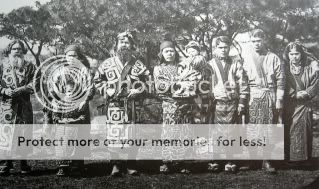
a ainu man

and from the wikki article on the ainu,
If you look at the faces of the adults in the prevoius photographs you can see the aboriginal australian faces in them, they are just lighter skined due to the climate.
bryd;
agian from the wiki on the ainu,
and im trying to find the article on the australasian/rykyu/ainu genetic relation ship.
But just from the physical look of the ainu compaired to that for the aboriginal australian you have to admit the ainu look like aboriginies in japanese robes.
The wiki page on the mongoloid race
and
The ainu
And from the wiki on the ainu speculation about the jomon north america connection.
[edit on 30-5-2009 by punkinworks09]
[edit on 30-5-2009 by punkinworks09]
hi byrd,
It was late as I was digesting what i have been reading and learning. I actually overwhelmed my browser i had so many links open at one time.
I'll try to adress your questions as best I can.
Bryd;
Where was this? I think I lost track.
[quote[ Apperantly the northern proto-mongoloids reached a population density maximun before and into the glacial maximum. This correlates to a population that was adapted to a meat intensive diet of a mega fauna hunter. Conversely southern proto-mongoloids reached their zenith in the warming period after the glacial maximum and were adapted to a plant based diet.
Is there a link? This is very much at odds with what I've read, but I will admit I haven't done a lot of reading on this in the past decade or so. When I was studying it, there was no such thing as a "proto-mongoloid."
No you didnt lose track I wasnt leaveing a very good trail to follow.
From the wikki article of "the mongoloid race", I actualy dont like the term mongoloid, but its what weve got.
2006 study of linkage disequilibrium finds that northern populations in East Asia started to expand in number between 34 and 22 thousand years ago (KYA), before the last glacial maximum at 21–18 KYA, while southern populations started to expand between 18 and 12 KYA, but then grew faster, and suggests that the northern populations expanded earlier because they could exploit the abundant megafauna of the ‘‘Mammoth Steppe,’’ while the southern populations could increase in number only when a warmer and more stable climate led to more plentiful plant resources such as tubers.[21]
and again from the same article, more on proto mongoloids
Proto Mongoloids
The physical features of the "Proto-Mongoloid" were characterized as, "a straight-haired type, medium in complexion, jaw protrusion, nose-breadth, and inclining probably to round-headedness".[34] Kanzō Umehara considers the Ainu and Ryukyuans to have "preserved their proto-Mongoloid traits". [35]
a photo of a group of ainu circa 1900
a ainu man
and from the wikki article on the ainu,
Some have speculated that the Ainu may be descendants of a prehistoric group of humans that also produced indigenous Australian peoples. In Steve Olson's book Mapping Human History, page 133, he describes the discovery of fossils dating back 10,000 years, representing the remains of the Jōmon, a group whose facial features more closely resemble those of the indigenous peoples of New Guinea and Australia. After a new wave of immigration, probably from the Korean Peninsula some 2,300 years ago, of the Yayoi people, the Jōmon were pushed into northern Japan. Genetic data suggest that modern Japanese are descended from both the Yayoi and the Jōmon.
If you look at the faces of the adults in the prevoius photographs you can see the aboriginal australian faces in them, they are just lighter skined due to the climate.
bryd;
Another intersting foot note is that the people of the adaman islands and the small populations in tibet are closely related to the ainu and people of the rykuyus. Both of whom are linked with the early modern aboriginal people of aus.
Got a link to a source? The last information I had didn't indicate a close link to the Australians, but I'm willing to look at new info.
agian from the wiki on the ainu,
Genetic testing of the Ainu people has shown them to belong mainly to Y-haplogroup D.[7] The only places outside of Japan in which Y-haplogroup D is common are Tibet and the Andaman Islands in the Indian Ocean.[8]
and im trying to find the article on the australasian/rykyu/ainu genetic relation ship.
But just from the physical look of the ainu compaired to that for the aboriginal australian you have to admit the ainu look like aboriginies in japanese robes.
The wiki page on the mongoloid race
and
The ainu
And from the wiki on the ainu speculation about the jomon north america connection.
In the late 20th century, much speculation arose that people of the group related to the Jomon may have been one of the first to settle North America. This theory is based largely on skeletal and cultural evidence among tribes living in the western part of North America and certain parts of South America. It is possible that North America had several peoples among its early settlers – these relatives of the Jomon being one of them. The best-known evidence that may support this theory is probably Kennewick Man.[15][16]
Groundbreaking genetic mapping studies by Cavalli-Sforza have shown a sharp gradient in gene frequencies centered in the area around the Sea of Japan, and particularly in the Japanese Archipelago, that distinguishes these populations from others in the rest of eastern Asia and most of the American continent. This gradient appears as the third most important genetic movement (in other words, the third principal component of genetic variation) in Eurasia (after the "Great expansion" from the African continent, which has a cline centered in Arabia and adjacent parts of the Middle East, and a second cline that distinguishes the northern regions of Eurasia and particularly Siberia from regions to the south), which would make it consistent with the early Jōmon period, or possibly even the pre-Jōmon period.[17]
[edit on 30-5-2009 by punkinworks09]
[edit on 30-5-2009 by punkinworks09]
reply to post by Byrd
Hiya Byrd,
It also appears that early primates followed a similar route into what would one day be the Americas as we did. They arose in Africa, spread throughout Asia and Europe and finally crossed over to the Americas some 55mya. The most interesting fact (to me) is that evidence seems to show that these early primates spread throughout northern continents in a period of 25 000 years! A favorable climate is thought to have maintained a tree canopy that remained largely unbroken across thousands of miles. The findings are in this paper...Rapid Asia–Europe–North America geographic dispersal of earliest Eocene primate Teilhardina during the Paleocene–Eocene Thermal Maximum
We can't completely rule out the possibility that some form of life developed on one of the proto-American land masses from pre-Cambrian times. Of course, it's a possibility. That conditions led to a series of evolutionary steps that followed our own development from protosimians and onwards to becoming hominids appears very unlikely. As you point out so clearly, environmental factors (predators, food, climate, geology) and other drivers of natural selection would need to be closely mirrored to reproduce a 'bipedal hominid.' A more reasoned explanation is that they simply didn't. There's evidence aplenty to support the migratory process mentioned above. There's a growing fossil record of protosimians and other mammals in the Americas that still fall within accepted models of the evolution of life on Earth. They are fully explained and those theories supported by numerous other areas of science (tectonics, climate etc). Sadly, the pre-Cambrian parallel evolutionary alternative appears unsupported in any context other than imagination.
reply to post by Hanslune
Good to see you on the boards Hans Always a pleasure.
[edit on 31-5-2009 by Kandinsky]
It also appears that early primates followed a similar route into what would one day be the Americas as we did. They arose in Africa, spread throughout Asia and Europe and finally crossed over to the Americas some 55mya. The most interesting fact (to me) is that evidence seems to show that these early primates spread throughout northern continents in a period of 25 000 years! A favorable climate is thought to have maintained a tree canopy that remained largely unbroken across thousands of miles. The findings are in this paper...Rapid Asia–Europe–North America geographic dispersal of earliest Eocene primate Teilhardina during the Paleocene–Eocene Thermal Maximum
We can't completely rule out the possibility that some form of life developed on one of the proto-American land masses from pre-Cambrian times. Of course, it's a possibility. That conditions led to a series of evolutionary steps that followed our own development from protosimians and onwards to becoming hominids appears very unlikely. As you point out so clearly, environmental factors (predators, food, climate, geology) and other drivers of natural selection would need to be closely mirrored to reproduce a 'bipedal hominid.' A more reasoned explanation is that they simply didn't. There's evidence aplenty to support the migratory process mentioned above. There's a growing fossil record of protosimians and other mammals in the Americas that still fall within accepted models of the evolution of life on Earth. They are fully explained and those theories supported by numerous other areas of science (tectonics, climate etc). Sadly, the pre-Cambrian parallel evolutionary alternative appears unsupported in any context other than imagination.
reply to post by Hanslune
Good to see you on the boards Hans Always a pleasure.
[edit on 31-5-2009 by Kandinsky]
Howdy Punkinworks and K-man
If said had occurred you would have probably seen more than just men evolve a second time. Not absolutely impossible just highly implausible - we await the confirming evidence.
Punkinworks yep I'd say the Ainu and the Australians had a common ancestor ~ about 60,000 or more years ago. I studied the Ainu some time ago especially their wars and treatment by the Nippons.
As you go back farther in time the 19th century classifications of 'race' and ethnicity become more and more useless.
[edit on 31/5/09 by Hanslune]
Sadly, the pre-Cambrian parallel evolutionary alternative appears unsupported in any context other than imagination
If said had occurred you would have probably seen more than just men evolve a second time. Not absolutely impossible just highly implausible - we await the confirming evidence.
Punkinworks yep I'd say the Ainu and the Australians had a common ancestor ~ about 60,000 or more years ago. I studied the Ainu some time ago especially their wars and treatment by the Nippons.
As you go back farther in time the 19th century classifications of 'race' and ethnicity become more and more useless.
[edit on 31/5/09 by Hanslune]
reply to post by Byrd
Hello Byrd,
SC: Sorry but I fail to see how - as an example - two independent root phylo-trees developing different life forms in parallel would not be subject to the same environmental pressures you have outlined above. If anything all you have done here is to underline the absolute importance of having as many such root-phylo trees as possible taking root and developing life forms in order for life - in whatever form - to continue; i.e. to be successful against the environmental odds. So, once more it makes far more sense from an evolution perspective to have as many root phylo-trees developing as possible. You restrict the chances of life evolving if you have but ONE root phylo-tree "taking root". That's not good odds at all.
SC: It does not ignore changes in species at all caused by anything! Evolution will carry on as evolution does - doing its worst and its best - to the various life-forms that have evolved within the various root phylo-trees.
SC: It ignores nothing of the sort - of course this is possible. But what YOU are ignoring is the possibilty (IMV probability) that similar kinds of life forms HAVE indeed evolved independently in different locations around the world.
SC Which is, actually, all part of the evolutionary cycle. Different root phylo-trees will develop different life-forms according to their various external pressures and they will do so at different rates - some will have longer timescales, others shorter. This will explain how some similar-appearing species found in rock strata appear "out of sequence". We are looking at them puzzled, thinking that they evolved from a single root tree not realizing that there are perhaps a number of root trees involved, all developing at different rates and depositing their various marker traits within the fossil record.
SC: I am not arguing that you can. I am arguing that there may be more than one root-phylo tree involved in the evolution of all life on Earth, including primates. Regardless, however, of the root phylo-tree each life form evolved from, each and every one would still be subject to the same normal evolutionary pressures of natural selection.
As I am sure you will know, there are thousands of (if not much more) missing links between species and yes, the fossil record is incomplete. Whilst this may be true for a large part of the evolutionary puzzle the truth of the matter might simply be that there is NO MSSING LINK between certain species. As I have highlighted before in this thread - non-flowering plants may simply have evolved from their own (separate) root-phylo tree whilst flowering plants developed from their own completely separate root phylo tree. Yes, we observe them all as "plants" and think there has to be a link when, in fact, one might not actually exist at all.
Regards,
Scott Creighton
[edit on 31/5/2009 by Scott Creighton]
Hello Byrd,
SC: Can you explain why this "picture" (below) of evolution (polyphylogenetic) isn't possible:
Byrd: For one thing, it ignores environment. We don't live in a climate and food controlled petri dish and not everything and everyone gets the same diseases at the same time. Environmental changes are one of the major pressures that drive evolution. Disease, parasites, predators are other things that drive evolution... and determine how successful something is within a particular environmental niche.
SC: Sorry but I fail to see how - as an example - two independent root phylo-trees developing different life forms in parallel would not be subject to the same environmental pressures you have outlined above. If anything all you have done here is to underline the absolute importance of having as many such root-phylo trees as possible taking root and developing life forms in order for life - in whatever form - to continue; i.e. to be successful against the environmental odds. So, once more it makes far more sense from an evolution perspective to have as many root phylo-trees developing as possible. You restrict the chances of life evolving if you have but ONE root phylo-tree "taking root". That's not good odds at all.
Byrd: It also ignores changes in species caused by mountain building, land subsidance, climate, local plant evolution, and continental plate crust movements (like splitting up Pangaea and the formation of the Atlantic Ocean which separated the primates into New World and Old World species.)
SC: It does not ignore changes in species at all caused by anything! Evolution will carry on as evolution does - doing its worst and its best - to the various life-forms that have evolved within the various root phylo-trees.
Byrd: For a third thing, it ignores the fact that if something appears in two places that doesn't mean they evolved there separately.
SC: It ignores nothing of the sort - of course this is possible. But what YOU are ignoring is the possibilty (IMV probability) that similar kinds of life forms HAVE indeed evolved independently in different locations around the world.
Byrd: For a fourth thing, it requires organisms to de-evolve and then re-evolve until they match the other tree in spite of the fact that this may actually cause their extinction within that niche... while ignoring the impacts of environment. That doesn't work.
SC Which is, actually, all part of the evolutionary cycle. Different root phylo-trees will develop different life-forms according to their various external pressures and they will do so at different rates - some will have longer timescales, others shorter. This will explain how some similar-appearing species found in rock strata appear "out of sequence". We are looking at them puzzled, thinking that they evolved from a single root tree not realizing that there are perhaps a number of root trees involved, all developing at different rates and depositing their various marker traits within the fossil record.
Byrd: You can't (for example) evolve tree-swinging lemurs in the middle of a broad grassy plain.
SC: I am not arguing that you can. I am arguing that there may be more than one root-phylo tree involved in the evolution of all life on Earth, including primates. Regardless, however, of the root phylo-tree each life form evolved from, each and every one would still be subject to the same normal evolutionary pressures of natural selection.
As I am sure you will know, there are thousands of (if not much more) missing links between species and yes, the fossil record is incomplete. Whilst this may be true for a large part of the evolutionary puzzle the truth of the matter might simply be that there is NO MSSING LINK between certain species. As I have highlighted before in this thread - non-flowering plants may simply have evolved from their own (separate) root-phylo tree whilst flowering plants developed from their own completely separate root phylo tree. Yes, we observe them all as "plants" and think there has to be a link when, in fact, one might not actually exist at all.
Regards,
Scott Creighton
[edit on 31/5/2009 by Scott Creighton]
reply to post by Scott Creighton
Hello Scott,
I made a number of requests for you to be clearer in your views of our history. They were summarily evaded or ignored. I asked if you believed in ID, ancient lost civilizations, Creationism or alien intervention? You were clear that you don't subscribe to Creationism and were emphatic that you trust only the science (when it can be trusted). The reasons I asked were made clear that by understanding your perspective, it would make your position more transparent. Nevertheless, repeated evasions always feed suspicions...
It appears the suspicions were correct. You believe in a possible alien intervention, Atlantis and a lost advanced civilization. As an outcome of those beliefs, it's imperative for you to dismiss the science that fails to support them. Some of the science conflicts with these beliefs entirely. For these reasons, it becomes apparent why you insist in offering 'possibilities' and questioning the validity of science.
For the beliefs to stand, science has to be undermined, evidence ignored and new theories created to allow for the 'possibilities.'
The Giza Codex: Time of the Gods By Scott Creighton
Re: That Codex Which Descended From The Sky?
I can understand why you were reluctant to share these ideas; I'm interested in UFOs and carry the interest like a dirty secret In essence, you think Atlanteans seeded some knowledge and built a global system of monuments and left ooparts. The Giza Pyramids were built to a template that 'fell from the sky' (alien intervention?) and warns of cyclical catastrophes. Where could such extensive knowledge come from?
Now the reasons for you refusing to believ the footprints are 40ka becomes clearer. Your insistence on science's inherent dishonesty and choosing evidence that suits it becomes ironic.
You'll be aware, having read so many science papers that a caveat is present at the foot of each one...
By failing to make your interest clear, you've effectively committed the same intellectual dishonesty that offends you in the world of science. Very naughty Scott
(This isn't a personal attack. It's a fair point pertaining to the OP and several issues raised by you throughout the thread. You are as entitled to those beliefs as much as anyone else )
I made a number of requests for you to be clearer in your views of our history. They were summarily evaded or ignored. I asked if you believed in ID, ancient lost civilizations, Creationism or alien intervention? You were clear that you don't subscribe to Creationism and were emphatic that you trust only the science (when it can be trusted). The reasons I asked were made clear that by understanding your perspective, it would make your position more transparent. Nevertheless, repeated evasions always feed suspicions...
It appears the suspicions were correct. You believe in a possible alien intervention, Atlantis and a lost advanced civilization. As an outcome of those beliefs, it's imperative for you to dismiss the science that fails to support them. Some of the science conflicts with these beliefs entirely. For these reasons, it becomes apparent why you insist in offering 'possibilities' and questioning the validity of science.
For the beliefs to stand, science has to be undermined, evidence ignored and new theories created to allow for the 'possibilities.'
The Giza Codex: Time of the Gods By Scott Creighton
Re: That Codex Which Descended From The Sky?
The 'Lost Civilisation' - Compelling Evidence
The ancient ‘lost civilisation’ I am describing would have been masters of mathematics, astronomy, agriculture and geodesy. They would be able to navigate the globe and work massive stone blocks using ‘primitive’ techniques with an ease that continues to baffle us even today. This remarkable ‘lost civilisation’ would leave their ‘intellectual artefacts' all over the globe but I suspect many of these will have been lost to the rising seas at the end of the Younger Dryas period. The ‘artefacts’ the survivors of this once great civilisation have left us is the KNOWLEDGE they have passed down to us; knowledge that is so obviously out of time and place and of which the prevailing paradigm of historical thought struggles to find an answer to.
I can understand why you were reluctant to share these ideas; I'm interested in UFOs and carry the interest like a dirty secret In essence, you think Atlanteans seeded some knowledge and built a global system of monuments and left ooparts. The Giza Pyramids were built to a template that 'fell from the sky' (alien intervention?) and warns of cyclical catastrophes. Where could such extensive knowledge come from?
Now the reasons for you refusing to believ the footprints are 40ka becomes clearer. Your insistence on science's inherent dishonesty and choosing evidence that suits it becomes ironic.
You'll be aware, having read so many science papers that a caveat is present at the foot of each one...
Conflict of interest statement: No conflicts declared.
By failing to make your interest clear, you've effectively committed the same intellectual dishonesty that offends you in the world of science. Very naughty Scott
(This isn't a personal attack. It's a fair point pertaining to the OP and several issues raised by you throughout the thread. You are as entitled to those beliefs as much as anyone else )
reply to post by Scott Creighton
Hello Scott,
It's interesting that you mention the processes of natural selection...
The theory of evolution, as of today, is based on the understanding that life evolves from the simple to the more complex dictated by natural selection. Your reference to flowering and non-flowering plants is one used by a variety of people seeking to undermine the validity of evolution. You aren't one of those of people, but a point can still be made.
Non-flowering plants are visible in the fossil record; I grew up near a quarry and have several fern fossils. The transition to flowering plants is not so clearly represented however it seems reasonable to allow that flowering plants developed from them. Pollination would be a strong driver of natural selection due to wind, animals and insects. The success of the gene mutation that resulted in formative flowers is evidenced by their abundance today.
Despite the limited evidence of transitional fossils, it is still accepted that they evolved from non-flowering plants. 'Parallel evolution' can't explain the sudden appearance of a flowering plant that has no precedents. The accepted model can....
Insight Into Evolution Of First Flowers
Edit to add this paper...Transcriptional signatures of ancient floral
developmental genetics in avocado (Persea americana; Lauraceae)
Not cited yet as it's only been released in the past couple of weeks. It offers interesting support to the contention that flowering plants evolved from non-flowering plants.
[edit on 31-5-2009 by Kandinsky]
It's interesting that you mention the processes of natural selection...
Regardless, however, of the root phylo-tree each life form evolved from, each and every one would still be subject to the same normal evolutionary pressures of natural selection.
The theory of evolution, as of today, is based on the understanding that life evolves from the simple to the more complex dictated by natural selection. Your reference to flowering and non-flowering plants is one used by a variety of people seeking to undermine the validity of evolution. You aren't one of those of people, but a point can still be made.
Non-flowering plants are visible in the fossil record; I grew up near a quarry and have several fern fossils. The transition to flowering plants is not so clearly represented however it seems reasonable to allow that flowering plants developed from them. Pollination would be a strong driver of natural selection due to wind, animals and insects. The success of the gene mutation that resulted in formative flowers is evidenced by their abundance today.
Despite the limited evidence of transitional fossils, it is still accepted that they evolved from non-flowering plants. 'Parallel evolution' can't explain the sudden appearance of a flowering plant that has no precedents. The accepted model can....
Insight Into Evolution Of First Flowers
Edit to add this paper...Transcriptional signatures of ancient floral
developmental genetics in avocado (Persea americana; Lauraceae)
Not cited yet as it's only been released in the past couple of weeks. It offers interesting support to the contention that flowering plants evolved from non-flowering plants.
[edit on 31-5-2009 by Kandinsky]
Welll....
Because the world isn't a giant climate-controlled Petri dish.
It is a vast system of micro-ecological niches. The ecological system under a tree in my front yard is very different from the ecological system that develops 2 feet away on my front lawn. If you took just my lawn, stuffed it in a huge glass jar, and let the system run for a million years, things that grow in the shade would end up being very different from the lawn things.
Things that thrive in equatorial rain forests can't actually live on coral atolls. Because of this, slight variations in local conditions affect what eats there, what sleeps there, what lives there... and those variations affect what develops and evolves there.
During times of rapid phylogenic expansion, we find lifeforms adapting to new environmental niches and exploiting them. These are usually times of great climate change as well. It's "adapt or die."
...not "get as many species going as possible."
Erm... I am not sure we're talking about the same thing. If you have something develop and it has a gene pattern of xx-yy-zz... then if it shows up somewhere else and has the same gene pattern, this isn't two phylogenic trees. It's the same species. It's not a brand new tree.
Things from a common ancestor have common genes. You can get convergent evolution (where we have a lot of saber-toothed cats, but only one of them is Smilodon. Some of them aren't actually Felis, but that's another story.)
You don't get Smilodon cropping up in (say) Norway unless it has a climate and food sources favorable to Smilodon... AND you have either a migrant population of Smilodons OR you have the previous ancestor of Smilodon there AND the climate and conditions EXACTLY match California.
And even then, differences in who lives and who survives means the two populations will eventually turn out quite differently.
Evolution is adaptation. I think you're perhaps anthropomorphizing it; attributing "logic" and "sense" and "carrying on" to it. Climate changes means plants change (move from the area or die off) and this affects what lives there (plant eaters) which affects how many predators survive and which types survive... and that in turn affects how many of the prey get eaten by what in a huge and complicated web.
No I'm not, actually. I am familiar (as I've said) with convergent evolution. The wikipedia article had a list of a whole bunch of examples of convergent evolution... in species that are actually not that closely related to each other. The gazillion "saber toothed cats" are one of the most noted and spectacular and solidly documented examples of this.
Well, no.
Things don't de-evolve. They may reacquire an occasional older trait but they don't actually de-evolve back to that previous form.
Could you give me an example? Since I have a pack of paleontologists around who know this stuff better than I do, we can take a closer look at these "out of sequence" fossils.
I'm afraid modern genetics would disagree with you, Scott.
If it has different genes, it has different responses to natural selection and environmental changes.
Multigene analysis of basal angiosperms shows that this is not true; that they didn't just spring from some alien lifeform or some source that's not within the Plant Kingdom lineage.
I can point you to some pretty unreadable (long and boring scientific detail that's so technical it's obscure) papers on this. This one (for the curious) is a typical example of a somewhat more readable paper on the evolution of angiosperms:
tolweb.org...
And for those who are curious, yes, there IS some debate over exactly how flowers formed but this "okay... just for once I'm going to feed the stupid troll" by a biologist on the subject goes into great detail how we are narrowing down the "suspects" and how greater understanding of genetics gives us a better insight into the situation:
catalogue-of-organisms.blogspot.com...
It's a lot more readable than most of the works on this topic.
Sorry, Scott, the theory really isn't tenable. In fact, it's not even workable if you should theorize that the first life was actually started from "bacteria from Mars" while on the other side of the world a new phylogenic tree starts with "bacteria from Jupiter"... or even "a different group of bacteria from Mars." If we had two phylogenic trees, they would have evolved in different ways, and the genetics would rather clearly show this.
Originally posted by Scott Creighton
SC: Sorry but I fail to see how - as an example - two independent root phylo-trees developing different life forms in parallel would not be subject to the same environmental pressures you have outlined above.
Because the world isn't a giant climate-controlled Petri dish.
It is a vast system of micro-ecological niches. The ecological system under a tree in my front yard is very different from the ecological system that develops 2 feet away on my front lawn. If you took just my lawn, stuffed it in a huge glass jar, and let the system run for a million years, things that grow in the shade would end up being very different from the lawn things.
Things that thrive in equatorial rain forests can't actually live on coral atolls. Because of this, slight variations in local conditions affect what eats there, what sleeps there, what lives there... and those variations affect what develops and evolves there.
If anything all you have done here is to underline the absolute importance of having as many such root-phylo trees as possible taking root and developing life forms in order for life - in whatever form - to continue; i.e. to be successful against the environmental odds.
During times of rapid phylogenic expansion, we find lifeforms adapting to new environmental niches and exploiting them. These are usually times of great climate change as well. It's "adapt or die."
...not "get as many species going as possible."
So, once more it makes far more sense from an evolution perspective to have as many root phylo-trees developing as possible. You restrict the chances of life evolving if you have but ONE root phylo-tree "taking root". That's not good odds at all.
Erm... I am not sure we're talking about the same thing. If you have something develop and it has a gene pattern of xx-yy-zz... then if it shows up somewhere else and has the same gene pattern, this isn't two phylogenic trees. It's the same species. It's not a brand new tree.
Things from a common ancestor have common genes. You can get convergent evolution (where we have a lot of saber-toothed cats, but only one of them is Smilodon. Some of them aren't actually Felis, but that's another story.)
You don't get Smilodon cropping up in (say) Norway unless it has a climate and food sources favorable to Smilodon... AND you have either a migrant population of Smilodons OR you have the previous ancestor of Smilodon there AND the climate and conditions EXACTLY match California.
And even then, differences in who lives and who survives means the two populations will eventually turn out quite differently.
SC: It does not ignore changes in species at all caused by anything! Evolution will carry on as evolution does - doing its worst and its best - to the various life-forms that have evolved within the various root phylo-trees.
Evolution is adaptation. I think you're perhaps anthropomorphizing it; attributing "logic" and "sense" and "carrying on" to it. Climate changes means plants change (move from the area or die off) and this affects what lives there (plant eaters) which affects how many predators survive and which types survive... and that in turn affects how many of the prey get eaten by what in a huge and complicated web.
But what YOU are ignoring is the possibilty (IMV probability) that similar kinds of life forms HAVE indeed evolved independently in different locations around the world.
No I'm not, actually. I am familiar (as I've said) with convergent evolution. The wikipedia article had a list of a whole bunch of examples of convergent evolution... in species that are actually not that closely related to each other. The gazillion "saber toothed cats" are one of the most noted and spectacular and solidly documented examples of this.
Byrd: For a fourth thing, it requires organisms to de-evolve and then re-evolve until they match the other tree in spite of the fact that this may actually cause their extinction within that niche... while ignoring the impacts of environment. That doesn't work.
SC Which is, actually, all part of the evolutionary cycle.
Well, no.
Things don't de-evolve. They may reacquire an occasional older trait but they don't actually de-evolve back to that previous form.
This will explain how some similar-appearing species found in rock strata appear "out of sequence".
Could you give me an example? Since I have a pack of paleontologists around who know this stuff better than I do, we can take a closer look at these "out of sequence" fossils.
Regardless, however, of the root phylo-tree each life form evolved from, each and every one would still be subject to the same normal evolutionary pressures of natural selection.
I'm afraid modern genetics would disagree with you, Scott.
If it has different genes, it has different responses to natural selection and environmental changes.
As I have highlighted before in this thread - non-flowering plants may simply have evolved from their own (separate) root-phylo tree whilst flowering plants developed from their own completely separate root phylo tree.
Multigene analysis of basal angiosperms shows that this is not true; that they didn't just spring from some alien lifeform or some source that's not within the Plant Kingdom lineage.
I can point you to some pretty unreadable (long and boring scientific detail that's so technical it's obscure) papers on this. This one (for the curious) is a typical example of a somewhat more readable paper on the evolution of angiosperms:
tolweb.org...
And for those who are curious, yes, there IS some debate over exactly how flowers formed but this "okay... just for once I'm going to feed the stupid troll" by a biologist on the subject goes into great detail how we are narrowing down the "suspects" and how greater understanding of genetics gives us a better insight into the situation:
catalogue-of-organisms.blogspot.com...
It's a lot more readable than most of the works on this topic.
Sorry, Scott, the theory really isn't tenable. In fact, it's not even workable if you should theorize that the first life was actually started from "bacteria from Mars" while on the other side of the world a new phylogenic tree starts with "bacteria from Jupiter"... or even "a different group of bacteria from Mars." If we had two phylogenic trees, they would have evolved in different ways, and the genetics would rather clearly show this.
It's a pretty complex topic, Punkin. And thanks for clarifying the source.
Originally posted by punkinworks09
From the wikki article of "the mongoloid race", I actualy dont like the term mongoloid, but its what weve got.
2006 study of linkage disequilibrium finds that northern populations in East Asia started to expand in number between 34 and 22 thousand years ago (KYA), before the last glacial maximum at 21–18 KYA, while southern populations started to expand between 18 and 12 KYA, but then grew faster, and suggests that the northern populations expanded earlier because they could exploit the abundant megafauna of the ‘‘Mammoth Steppe,’’ while the southern populations could increase in number only when a warmer and more stable climate led to more plentiful plant resources such as tubers.
MMmmkay... that still matches with the Native Americans being descendants of the Siberians.
Proto Mongoloids
The physical features of the "Proto-Mongoloid" were characterized as, "a straight-haired type, medium in complexion, jaw protrusion, nose-breadth, and inclining probably to round-headedness".[34] Kanzō Umehara considers the Ainu and Ryukyuans to have "preserved their proto-Mongoloid traits".
Okay. I see where they're going with this. But the Ainu actually don't look like Australian aborigines. There's differences in facial shape, nostrils, brow ridges, and so on and so forth.
Genetic testing of the Ainu people has shown them to belong mainly to Y-haplogroup D.[7] The only places outside of Japan in which Y-haplogroup D is common are Tibet and the Andaman Islands in the Indian Ocean.
Interesting. I wonder when the groups diverged and isolated themselves.
In the late 20th century, much speculation arose that people of the group related to the Jomon may have been one of the first to settle North America...
Groundbreaking genetic mapping studies by Cavalli-Sforza have shown a sharp gradient in gene frequencies centered in the area around the Sea of Japan, and particularly in the Japanese Archipelago, that distinguishes these populations from others in the rest of eastern Asia and most of the American continent...
I'll look up those papers when I am a little less sleepy and see what rebuttals exist on them (if any.) I'm sure some scientist somewhere howled with outrage and fired off a letter to an editor, even if it was a totally wrong-headed letter to the editor.
reply to post by Byrd
Hello Byrd,
SC: That’s correct. But you would not say a blade of grass or a kangaroo were the same species and yet ultimately science tells us they both evolved from the same common ancestor – a single cell in the Precambrian ocean. So – to be clearer - I am not talking about the very beginnings of life here (that’s a whole other issue) and – admittedly – the diagrams I posted do not make this clear. Apologies for that.
I am talking about the evolutionary point before any plants or animals had evolved from that single cell in the Precambrian oceans; a Precambrian ocean that would have been brimming with innumerable single-celled organisms with identical DNA. So, does it remain your view that only ONE of these cells in the Precambrian ocean managed to evolve, eventually resulting in all past and present plant and animal species on Earth?
Do you still consider it impossible for more than one such Precambrian cell to have evolved (in parallel)?
Regards,
Scott Creighton
Hello Byrd,
Byrd: Erm... I am not sure we're talking about the same thing. If you have something develop and it has a gene pattern of xx-yy-zz... then if it shows up somewhere else and has the same gene pattern, this isn't two phylogenic trees. It's the same species. It's not a brand new tree.
SC: That’s correct. But you would not say a blade of grass or a kangaroo were the same species and yet ultimately science tells us they both evolved from the same common ancestor – a single cell in the Precambrian ocean. So – to be clearer - I am not talking about the very beginnings of life here (that’s a whole other issue) and – admittedly – the diagrams I posted do not make this clear. Apologies for that.
I am talking about the evolutionary point before any plants or animals had evolved from that single cell in the Precambrian oceans; a Precambrian ocean that would have been brimming with innumerable single-celled organisms with identical DNA. So, does it remain your view that only ONE of these cells in the Precambrian ocean managed to evolve, eventually resulting in all past and present plant and animal species on Earth?
Do you still consider it impossible for more than one such Precambrian cell to have evolved (in parallel)?
Regards,
Scott Creighton
new topics
-
Shocking Number of Voters are Open to Committing Election Fraud
US Political Madness: 27 minutes ago -
Gov Kristi Noem Shot and Killed "Less Than Worthless Dog" and a 'Smelly Goat
2024 Elections: 1 hours ago -
Falkville Robot-Man
Aliens and UFOs: 1 hours ago -
James O’Keefe: I have evidence that exposes the CIA, and it’s on camera.
Whistle Blowers and Leaked Documents: 2 hours ago -
Australian PM says the quiet part out loud - "free speech is a threat to democratic dicourse"...?!
New World Order: 2 hours ago -
Ireland VS Globalists
Social Issues and Civil Unrest: 3 hours ago -
Biden "Happy To Debate Trump"
Mainstream News: 3 hours ago -
RAAF airbase in Roswell, New Mexico is on fire
Aliens and UFOs: 4 hours ago -
What is the white pill?
Philosophy and Metaphysics: 5 hours ago -
Blast from the past: ATS Review Podcast, 2006: With All Three Amigos
Member PODcasts: 6 hours ago
top topics
-
A Warning to America: 25 Ways the US is Being Destroyed
New World Order: 13 hours ago, 21 flags -
Biden "Happy To Debate Trump"
Mainstream News: 3 hours ago, 8 flags -
Mike Pinder The Moody Blues R.I.P.
Music: 6 hours ago, 7 flags -
Blast from the past: ATS Review Podcast, 2006: With All Three Amigos
Member PODcasts: 6 hours ago, 7 flags -
What is the white pill?
Philosophy and Metaphysics: 5 hours ago, 5 flags -
James O’Keefe: I have evidence that exposes the CIA, and it’s on camera.
Whistle Blowers and Leaked Documents: 2 hours ago, 5 flags -
Australian PM says the quiet part out loud - "free speech is a threat to democratic dicourse"...?!
New World Order: 2 hours ago, 5 flags -
Ireland VS Globalists
Social Issues and Civil Unrest: 3 hours ago, 4 flags -
RAAF airbase in Roswell, New Mexico is on fire
Aliens and UFOs: 4 hours ago, 4 flags -
Putin, Russia and the Great Architects of the Universe
ATS Skunk Works: 9 hours ago, 3 flags
active topics
-
Gov Kristi Noem Shot and Killed "Less Than Worthless Dog" and a 'Smelly Goat
2024 Elections • 24 • : TimBurr -
Falkville Robot-Man
Aliens and UFOs • 4 • : Kurokage -
The functionality of boldening and italics is clunky and no post char limit warning?
ATS Freshman's Forum • 13 • : JonnyC555 -
Candidate TRUMP Now Has Crazy Judge JUAN MERCHAN After Him - The Stormy Daniels Hush-Money Case.
Political Conspiracies • 805 • : Vermilion -
Shocking Number of Voters are Open to Committing Election Fraud
US Political Madness • 1 • : YourFaceAgain -
-@TH3WH17ERABB17- -Q- ---TIME TO SHOW THE WORLD--- -Part- --44--
Dissecting Disinformation • 700 • : Thoughtful3 -
Putin, Russia and the Great Architects of the Universe
ATS Skunk Works • 26 • : RussianTroll -
Re-election Tactic - JOE BIDEN Hints He May Put Books in the Homes of Black People.
2024 Elections • 30 • : WeMustCare -
Australian PM says the quiet part out loud - "free speech is a threat to democratic dicourse"...?!
New World Order • 3 • : Athetos -
Biden "Happy To Debate Trump"
Mainstream News • 35 • : WeMustCare