It looks like you're using an Ad Blocker.
Please white-list or disable AboveTopSecret.com in your ad-blocking tool.
Thank you.
Some features of ATS will be disabled while you continue to use an ad-blocker.

ECON: Surviving the greatest Depression of the 21st Century
page: 1share:
[pressimg]http://files.abovetopsecret.com/images/member/d4a3cb886dfa.jpg[/pressimg] If we can learn from history some of the techniques passed down
from the greatest economic advisers, then we stand a chance of surviving anything the global economic crash can throw our way.
When we look only to the leaders of our country for advice and reassurance in these turbulent times, then we are destined to fall and succumb to the failures of our leaders.
This thread will take an in depth look at the people who not only survived the first economic crash the historic Great Depression of 1929, but of their ageless wisdom which can be a guide stone for how to survive in the coming years.
If you are reading this you have probably already made up your mind that an economic depression/recession is well under way and now you want concrete answers as to what to do to make the impact less difficult for yourself and your loved ones.
Let us first start by defining who our most respected economic leaders and advisers are today, I will start with one who is as trustworthy as she is wise.
My Grandmother grew up in Lockhart Texas on a farm east of town. Shortly after the crash of 29 she clearly remembers the events even though she was only 10 years old at the beginning.
She recalls the swift closing of all the little stores in her town. The vacant and boarded up windows are a memory she holds to this day of her once booming little town. Lockhart was a little town with a courthouse in the center as many towns were back then and still are to this day.

The local grocery store did manage to remain open due to the diligence and intelligence of the owner operator. He did not allow hoarding but instead allowed those with excellent credit to make their usual purchases and the rest of the town to barter and trade for their basic necessities.
Lockhart was a typical agricultural community, a small farming town where the usual groups of people lived and worked to raised families. The first year was the hardest after the economic collapse, and it was not even possible to survive without the community effort as a whole. In Lockhart not a single person was lost even after a bout of Typhoid fever polluted the water ways. The word spread fast to every single person and family in the community and measures were taken to supply all the water needs of the towns people until the disease ended without casualties.

After 29 no one had money. What they did have was a strong sense of community strength. grandma told me about the colored family that lived close to her home and how during the depression even prejudice was set aside and for the first time people saw one another as human beings. Baptist and Protestants laid aside their religious differences and worked in unison to survive and live in harmony.
Grandmas Daddy and Granddaddy, owned a farm on the outskirts of town and two rentals in town, one of which she lived in during those difficult and challenging years.
Her father used mules and plow to work the enormous fields and grew corn and cotton as staples and for barter and sale. Everyone grew gardens if they intended to eat and all of the good people of Lockhart liked to eat.
They would take the cotton to the Gin and then save the seeds to be pressed into a cake to feed livestock. They used part of the cotton to make clothes and would barter for cloth to be made by the person with the loom.
The Government then stepped in and told the people of Lockhart to cut down production, start skipping a row for every 2 they planted. That they did not want them to grow more than what they could use. That it was fine for them to grow for their own community, but that selling outside was not permitted, unless it was to the Government approved markets.
They did not question this move, as the Government convinced them that if they had too much, that the thieves would surely come to steal it from the fields, they trusted and that was that.
Grandma told me that there was a sense of caring for each other that was one of the most positive things to come out of those dark days, and even though people learned fast to be independent and how to live off the grid, that they made life enjoyable with simple pleasures like sitting out on her porch in the early evening and listening to the colored people sitting out on theirs as well playing instruments and singing. or taking pictures of dolls from catalogs and making paper dolls to play with.
People would share what they had, if you had chickens and your neighbor had hogs, you would share. And if there was an elderly person in the town unable to care for themselves the whole community shared of what they had, no one starved or was neglected.
There was a deep respect for your neighbor, and when you would go to visit and check up on an elderly person, you would never address them by their first name, you would say Hi Aunt Bess, Mama sent some eggs for you. This created a feeling of extended family within the community.
Edit: grandma was raised in the day and age when using the word colored was the proper way to address an Afro American in this day and age and I an not even certain of that being politically correct.
They did have segregation signs that said Do not let the sun go down on you Here. What this meant was that if a crime happened in town and a Black man was walking around h would be blamed. They did not want this kind of prejudice to happen in their community. They did not make Black People get off the sidewalks, and they were not treated as subordinates. grandma used to play with the little children up the street from her and was not raised in Lockhart to see them as anything but Gods creatures the same as any child. The Blacks would work side by side for even pay to anyone who would come to the farm to work the fields.
People survived and thrived because they set aside their differences, they worked together as a community with the family as the corner stone of their reality.
To be continued...
When we look only to the leaders of our country for advice and reassurance in these turbulent times, then we are destined to fall and succumb to the failures of our leaders.
This thread will take an in depth look at the people who not only survived the first economic crash the historic Great Depression of 1929, but of their ageless wisdom which can be a guide stone for how to survive in the coming years.
If you are reading this you have probably already made up your mind that an economic depression/recession is well under way and now you want concrete answers as to what to do to make the impact less difficult for yourself and your loved ones.
Let us first start by defining who our most respected economic leaders and advisers are today, I will start with one who is as trustworthy as she is wise.
My Grandmother grew up in Lockhart Texas on a farm east of town. Shortly after the crash of 29 she clearly remembers the events even though she was only 10 years old at the beginning.
She recalls the swift closing of all the little stores in her town. The vacant and boarded up windows are a memory she holds to this day of her once booming little town. Lockhart was a little town with a courthouse in the center as many towns were back then and still are to this day.
The local grocery store did manage to remain open due to the diligence and intelligence of the owner operator. He did not allow hoarding but instead allowed those with excellent credit to make their usual purchases and the rest of the town to barter and trade for their basic necessities.
Lockhart was a typical agricultural community, a small farming town where the usual groups of people lived and worked to raised families. The first year was the hardest after the economic collapse, and it was not even possible to survive without the community effort as a whole. In Lockhart not a single person was lost even after a bout of Typhoid fever polluted the water ways. The word spread fast to every single person and family in the community and measures were taken to supply all the water needs of the towns people until the disease ended without casualties.
After 29 no one had money. What they did have was a strong sense of community strength. grandma told me about the colored family that lived close to her home and how during the depression even prejudice was set aside and for the first time people saw one another as human beings. Baptist and Protestants laid aside their religious differences and worked in unison to survive and live in harmony.
Grandmas Daddy and Granddaddy, owned a farm on the outskirts of town and two rentals in town, one of which she lived in during those difficult and challenging years.
Her father used mules and plow to work the enormous fields and grew corn and cotton as staples and for barter and sale. Everyone grew gardens if they intended to eat and all of the good people of Lockhart liked to eat.
They would take the cotton to the Gin and then save the seeds to be pressed into a cake to feed livestock. They used part of the cotton to make clothes and would barter for cloth to be made by the person with the loom.
The Government then stepped in and told the people of Lockhart to cut down production, start skipping a row for every 2 they planted. That they did not want them to grow more than what they could use. That it was fine for them to grow for their own community, but that selling outside was not permitted, unless it was to the Government approved markets.
They did not question this move, as the Government convinced them that if they had too much, that the thieves would surely come to steal it from the fields, they trusted and that was that.
Grandma told me that there was a sense of caring for each other that was one of the most positive things to come out of those dark days, and even though people learned fast to be independent and how to live off the grid, that they made life enjoyable with simple pleasures like sitting out on her porch in the early evening and listening to the colored people sitting out on theirs as well playing instruments and singing. or taking pictures of dolls from catalogs and making paper dolls to play with.
People would share what they had, if you had chickens and your neighbor had hogs, you would share. And if there was an elderly person in the town unable to care for themselves the whole community shared of what they had, no one starved or was neglected.
There was a deep respect for your neighbor, and when you would go to visit and check up on an elderly person, you would never address them by their first name, you would say Hi Aunt Bess, Mama sent some eggs for you. This created a feeling of extended family within the community.
Edit: grandma was raised in the day and age when using the word colored was the proper way to address an Afro American in this day and age and I an not even certain of that being politically correct.
They did have segregation signs that said Do not let the sun go down on you Here. What this meant was that if a crime happened in town and a Black man was walking around h would be blamed. They did not want this kind of prejudice to happen in their community. They did not make Black People get off the sidewalks, and they were not treated as subordinates. grandma used to play with the little children up the street from her and was not raised in Lockhart to see them as anything but Gods creatures the same as any child. The Blacks would work side by side for even pay to anyone who would come to the farm to work the fields.
People survived and thrived because they set aside their differences, they worked together as a community with the family as the corner stone of their reality.
To be continued...
Shucks. I fear Grandma's been overdosing on her Prozac again.
No offence, Antar, but you'd have to be an incurable optimist to expect communities nowadays to pull together in the way your little lemonade sipping rosey tinted Grandma tells it. It'd be nice if it happened that way, but it didn't, did it ? It's just some fantasy story told from the relative safety & comfort of her maximum security twilight home.
Crops failed, unemployment skyrocketed, folks went hungry, businesses collapsed, blacks were lynched, Jews were despised, "No Irish Please". The only thing which halted the worst of the Great Depression was World War Two. Happy Days indeed.
What did Grandma do on 7th December 1941 ? Sit in a circle with her negro friends singing Kumbaya ? Her story is just some wee girls selective memory with a double dose dunt of fanciful nonsense. But it's nice of you to humour her in her dotage, I guess.
No offence, Antar, but you'd have to be an incurable optimist to expect communities nowadays to pull together in the way your little lemonade sipping rosey tinted Grandma tells it. It'd be nice if it happened that way, but it didn't, did it ? It's just some fantasy story told from the relative safety & comfort of her maximum security twilight home.
Crops failed, unemployment skyrocketed, folks went hungry, businesses collapsed, blacks were lynched, Jews were despised, "No Irish Please". The only thing which halted the worst of the Great Depression was World War Two. Happy Days indeed.
What did Grandma do on 7th December 1941 ? Sit in a circle with her negro friends singing Kumbaya ? Her story is just some wee girls selective memory with a double dose dunt of fanciful nonsense. But it's nice of you to humour her in her dotage, I guess.
Well, I thank you for sharing your story. I find it inspiring!
However, I dont see people giving a hoot about their neighbor in this age. Just in the past 30 years, we have seen that neighbor and neighbor - rarely share a glance, much less a cup of sugar or a BBQ. No- people will be like animals when this comes. And I for one- am prepared for it- and so should they. We cant pity the ignorant. There is too much information out there now. It was their choice. Dont get me wrong- i love people and help people as a profession, but i wont risk my life for theirs because they didnt prepare.
[edit on 29-1-2009 by xynephadyn]
However, I dont see people giving a hoot about their neighbor in this age. Just in the past 30 years, we have seen that neighbor and neighbor - rarely share a glance, much less a cup of sugar or a BBQ. No- people will be like animals when this comes. And I for one- am prepared for it- and so should they. We cant pity the ignorant. There is too much information out there now. It was their choice. Dont get me wrong- i love people and help people as a profession, but i wont risk my life for theirs because they didnt prepare.
[edit on 29-1-2009 by xynephadyn]
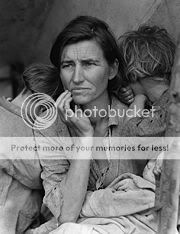
Great Depression
The Great Depression was a worldwide economic downturn starting in most places in 1929 and ending at different times in the 1930s or early 1940s for different countries. It was the largest and most important economic depression in modern history, and is used in the 21st century as an example of how far the world's economy can fall.[1] The Great Depression originated in the United States; historians most often use as a starting date the stock market crash on October 29, 1929, known as Black Tuesday. The end of the depression in the U.S is associated with the onset of the war economy of World War II, beginning around 1939.[2]
en.wikipedia.org...
It took 10 years to begin to reverse the effects which began officially October 29th 1929, however when did the trouble really begin and what if any signs were present which could have enabled people to become prepared for the collapse? What steps could have been made to aid people in the first years as they began to pick up the pieces and rebuild their prospective countries? Were the signs present only people chose to see reality as something fixed and unshakable?
Have we progressed from those earlier times and with the remarkable advent of the WWW, radio and Television now able to help people to learn from the mistakes of the fall and enable them to be prepared this time around?
For many the signs are already present
Government deficits
When the expenditures of a government (its purchases of goods and services, plus its transfers (grants) to individuals and corporations) are greater than its tax revenues, it creates a deficit in the government budget; such a deficit is known as deficit spending. This therefore causes the government to borrow capital from the 'world market', increasing further debt, debt service (interest) and interest rates (See: "crowding out" below).
Sound familiar?
"Crowding out"
Main article: Crowding out
When a government borrows, generally it accepts bids, which are measured in terms of their interest rate. When a government borrows, it captures as bids exactly as much funds as it needs.
To other borrowers, be they corporate, state or smaller, after the central government borrows at the bid interest rate, that interest rate has become the base for the prevailing interest rate.
When a government borrows, it must borrow. To the corporate borrower who must see the possibility of profit from borrowing, the interest rate becomes a limbo stick, and a time comes when they can no longer afford to borrow. They are then said to be "crowded out".
This aspect of deficit spending puts the death knell on economic recovery and sends an economy into a deep downward spiral.
en.wikipedia.org...
Ok so in all reality we are in grave danger of being "Crowded Out". So what do we do? we can sit on our keesters and wait for the government to come up with a plan, to provide you and your loved ones the basics of survival necessities or we can begin now to make preparations to become independent, of the poverty and dependent vulnerability which comes with the economic spiral.
So, if you are like 95% of the rest of the world and do not have stores of these...

Then the next thing you need to think about is food. Where to get food when the shelves are empty?

During the Great depression many people grew what became known as "Victory Gardens"

Even people within the cities began to grow in containers and could use roof tops of apartment complexes to grow enough food for the occupants to supplement what they could not purchase, barter or trade.
Yes, even the Government advocated the idea of growing your own food to stave off starvation until the country got back up and running...

Excellent post antar
Though we live in very different times, It's nice to know there is a gleam of hope in the madness that is our inevitable fate.
Though we live in very different times, It's nice to know there is a gleam of hope in the madness that is our inevitable fate.
I truly appreciate both of your responses, however it may not be quite as rosey as you would imagine when I tell you Grandma is well protected and is
almost positive that that was then and this is now. She in no way is delusional about what lies ahead, her story is one of hope and confidence that no
matter how terrible the future will be, there is only one way to pick yourself back up and dust your self off and that is by the spirit of communities
when they come together for a common cause.
I think you are the delusional one if you think that the all out anarchy will rule the day here in America. It most certainly will rear its ugly head, and we will have a time to make our stand, to fight off the leeches and the welfare parasites, the drug addicts both legal and illegal, the inner city gang members with their ak47's, we are locked and loaded. We know that there will be a time. And that is going to be short lived. We don't need to brag, we are country folk, and when all is said and done, we will again share what we have, what we work our buts off to create and to raise and to grow. But
After the dust settles we will again turn to what is left and that will be the community, the Family and the arduous task of picking up the pieces and surviving.
The intent of this thread is to bring together the knowledge we have available to show just cause for being prepared in every respect, mentally, physically, Spiritually and materially.
I think you are the delusional one if you think that the all out anarchy will rule the day here in America. It most certainly will rear its ugly head, and we will have a time to make our stand, to fight off the leeches and the welfare parasites, the drug addicts both legal and illegal, the inner city gang members with their ak47's, we are locked and loaded. We know that there will be a time. And that is going to be short lived. We don't need to brag, we are country folk, and when all is said and done, we will again share what we have, what we work our buts off to create and to raise and to grow. But
After the dust settles we will again turn to what is left and that will be the community, the Family and the arduous task of picking up the pieces and surviving.
The intent of this thread is to bring together the knowledge we have available to show just cause for being prepared in every respect, mentally, physically, Spiritually and materially.
First thanks for the post it was great!
I say buy gold and bring back the barter system.
Now about the title
ummm... We are only into it like 9 years thats 93 more years to have an even worst one.
I say buy gold and bring back the barter system.
Now about the title
Surviving the greatest Depression of the 21st Century
ummm... We are only into it like 9 years thats 93 more years to have an even worst one.
JPMorgan chief says worst of the crisis still to come: FT
Jan 14, 2009
LONDON (AFP) — The chief executive of US bank JPMorgan Chase, Jamie Dimon, told the Financial Times on Thursday that the worst of the economic crisis still lay ahead as hard-hit consumers default on their loans.
"The worst of the economic situation is not yet behind us. It looks as if it will continue to deteriorate for most of 2009," he told the business daily.
www.google.com...
Economists described the US economy as “in absolute free fall”. Nigel Gault, chief US economist at Global Insight, said: “Confidence has collapsed.”
The Labour Department reported that 533,000 workers had been laid off in November, 183,000 more than expected. It also said that almost 200,000 more people than originally thought had been dismissed in September and October. There are now 10.3 million Americans out of work, two million more than the population of New York City.
And this was 2 months ago... You cannot trust the reports because they only include the people who have lost the jobs visible and accounted for. Not everyone who applies for unemployment gets it, not by far, these numbers do not come close, and instead should reflect the number of people filing for unemployment not just the lucky ones who received the supplement.
So when joblessness hits records which far exceed any known numbers, it is time to begin creating jobs which will reflect the economic crash which will certainly follow as the last bailouts to the privileged few to make their 5 star retirements a luxury hidden from the starving masses, or so they think.
I believe it most of it anyways, do I think it is slightly tainted on the positive side? Sure...
Here it is... This would only apply if you lived in a rural area where you had the abaility to plant crops! Many, many parts of the country where most of the people actually live would be unable to support this! People are only willing to get together to work IF it allows thier family to eat/live it is a delicate balancing act! If people started to starve or REALLY suffer then believe me while there may be the heroic compassionant people out there there are many many many more who will only play along while things are working once the tide starts turning they are running poor, minority, less fortunate, out of town!
Not to mention the vast majority of people today have NO IDEA how to grow anything or even change thier own oil! What good would most people REALLY be if the poo really hit the fan? Great so "you manage a convience store" or "wow you sure are a great IT guy" what are these skill sets going to do for you if your family is starving? I can say many of my friends and family are NOT going to have a leg to stand on if anything really goes down!
My crazy brother who is a red neck with lots of fire arms, hunting and gardening (if pot and mushrooms count) experiance who is at the fringe of our society will be the one who has skill sets needed to get by if the economy gets as bad (and I believe it will) as it did in the great depression!
Here it is... This would only apply if you lived in a rural area where you had the abaility to plant crops! Many, many parts of the country where most of the people actually live would be unable to support this! People are only willing to get together to work IF it allows thier family to eat/live it is a delicate balancing act! If people started to starve or REALLY suffer then believe me while there may be the heroic compassionant people out there there are many many many more who will only play along while things are working once the tide starts turning they are running poor, minority, less fortunate, out of town!
Not to mention the vast majority of people today have NO IDEA how to grow anything or even change thier own oil! What good would most people REALLY be if the poo really hit the fan? Great so "you manage a convience store" or "wow you sure are a great IT guy" what are these skill sets going to do for you if your family is starving? I can say many of my friends and family are NOT going to have a leg to stand on if anything really goes down!
My crazy brother who is a red neck with lots of fire arms, hunting and gardening (if pot and mushrooms count) experiance who is at the fringe of our society will be the one who has skill sets needed to get by if the economy gets as bad (and I believe it will) as it did in the great depression!
Is today really all that different?
Are people when they are hungry and desperate all that different than 70 years ago or even 700 years ago?
Have humans devolved to the point that there is no hope for the future regardless of what the keepers of humanity throw at us?
Veterans against the Iraq War
www.commondreams.org...
Farm Aid
www.farmaid.org...
www.codepink4peace.org...
Over the past year, hunger strikers have fasted to protest the militarization of the U.S. border, water privatization and much more.
Meanwhile various explanations for the Depression were voiced. Some in the U.S. blamed the Soviet Union for dumping goods on the world market. Henry Ford, who considered himself an expert on just about everything, blamed the Depression on what he called an era of laziness. Many blamed the Depression on high tariffs having caused a decline in world trade. President Hoover saw the Depression as caused by attitude - which had somehow gone awry. And, of course, a few in the United States saw the Depression as the fulfillment of Biblical prophecy.
China 'dumping' goods and services worldwide causing cost to ...
www.fas.org...
Lazy America, Fat americans
www.deafdc.com...
High Tariffs cause recessionwww.isquaredrelement.com...
Signs of the times, biblical prophecy revealed
en.wikipedia.org...
Putin blames US for world recession
www.presstv.ir...
Euro banks scramble to protect loans
www.usatoday.com...
US cutting back imports imposing tariffs
www.iht.com...
Production outracing consumption
sbvor.blogspot.com...
As the United States economy was sinking deeper into depression, many believed that a sound recovery would come only by government leaving the economy alone. They believed in a natural process of liquidation - the ruination of the weak and the survival of the efficient. And, indeed, the U.S. economy bottomed in 1932. Things could only get so bad in a society not engaged in a civil or international war or not suffering from some great catastrophe such as plague, widespread draught or the kind of catastrophe the dinosaurs had suffered.
Leave it alone and it will correct itself, the weak will be assimilated...
en.wikipedia.org...
In the United States, hitting bottom meant that manufacturing was down 48 percent from what it had been in 1929, and that the prices farmers received for their products was down 44 percent. The stock market was down 80 percent from what it had been in 1929, and 25 percent of the work force was still unemployed. Recovery started around the same time that it did in other countries. With the interconnectedness of economies in the world, it was more than a coincidence that economies in Europe also bottomed in 1932. And with economies having hit bottom, the issue became the speed of recovery - a matter affected by government policy.
The reason farming does not pay
www.gao.gov...
Stock Market plunges to all time low
www.usatoday.com...
Does history repeat itself? Yes it does, and until we decide to be proactive in our countries and their established societal order, we will continue to be ruled by the same failures which inevitably thrust us time and again into starvation and chaos when the rug gets pulled out from under our feet like a flash of lightning.
The storm is upon us and it is time we take measures to protect ourselves and our families, our neighbors and communities. It does not have to be a destructive time, it is a reinventing of our future. yet our mindsets must rise to the next level and in doing so, we all rise to the next level of our shared human growth potential.
Solar power, wind turbine, community farms, converting your cars engine to run on soy and corn based fuel, byproducts of food, not the type that gets wasted... the solutions are right under our noses, and we are the many, we always have been.
Are people when they are hungry and desperate all that different than 70 years ago or even 700 years ago?
Have humans devolved to the point that there is no hope for the future regardless of what the keepers of humanity throw at us?
Many banks experiencing shortages of cash were forced to liquidate assets at fallen price levels and were thus driven to insolvency. The federal government was not offering bailouts, believing that in every case it would be throwing good money after bad. Those banks that were sound enough to have benefited everyone from a bailout were allowed to fail. Depositors lost confidence in the financial system. They didn't know which banks were sounder than others and pulled their money out of all banks, good and bad, indiscriminately. People across the nation were putting their money into safe deposit boxes or stuffing it into mattresses. In 1931, 2,294 banks in the U.S. failed.
When House members today approved the $700 billion financial-industry bailout bill, they also voted to approve dozens of so-called "tax extenders." Fiscal watchdogs have another word for these "tax extenders"--pork.
Tucked into pages 262 and 263 of the bill, for example, are provisions that will aid the manufacturers of "certain wooden arrows designed for use by children." The bill will exempt the arrows from an excise tax of 39 cents. There are also tax breaks for race-track owners, for rum imported from Puerto Rico, for worsted wool makers, Hollywood film and television production companies and on and on.
In Washington D.C., 3,000 Communists staged a "hunger march." In rural America farmers were joining together to prevent insurance companies from foreclosing their neighbors' farms. In the spring of 1932, 15 to 20,000 unemployed veterans camped out in a park in Washington D.C. demanding full payment of the bonus promised them for serving in World War I, and they were dispersed by the U.S. army.
Veterans against the Iraq War
www.commondreams.org...
Farm Aid
www.farmaid.org...
www.codepink4peace.org...
Over the past year, hunger strikers have fasted to protest the militarization of the U.S. border, water privatization and much more.
Meanwhile various explanations for the Depression were voiced. Some in the U.S. blamed the Soviet Union for dumping goods on the world market. Henry Ford, who considered himself an expert on just about everything, blamed the Depression on what he called an era of laziness. Many blamed the Depression on high tariffs having caused a decline in world trade. President Hoover saw the Depression as caused by attitude - which had somehow gone awry. And, of course, a few in the United States saw the Depression as the fulfillment of Biblical prophecy.
China 'dumping' goods and services worldwide causing cost to ...
www.fas.org...
Lazy America, Fat americans
www.deafdc.com...
High Tariffs cause recessionwww.isquaredrelement.com...
Signs of the times, biblical prophecy revealed
en.wikipedia.org...
In Europe, on the other hand, many were blaming the Depression on the United States. They blamed the collapse in Europe on the U.S. withdrawing loans even to sound enterprises. And people blamed the United States for cutting back on imports and for failing as the world's leading creditor nation.
Putin blames US for world recession
www.presstv.ir...
Euro banks scramble to protect loans
www.usatoday.com...
US cutting back imports imposing tariffs
www.iht.com...
Marxists had their own analysis of what was causing the economic crisis. In 1928 the Communist International (Comintern) claimed that capitalism was entering its third stage since the Great War: stage-one being the crises just after the war; stage-two the recovery that followed in the mid-twenties; and stage-three being a crisis created by the old problem of production out-racing consumption. By 1932, rank and file Communists were impressed by the Comintern's analysis. With Karl Marx having predicted the fall of capitalism, they saw capitalism as having entered its final crisis. The failure of capitalism, they believed, would bring the discontented masses falling in behind Communist Party leadership and then they would be able to overthrow the capitalist system - matching economic inevitability with human activity.
Decades after the Depression, "bourgeois" economists would argue that the Depression was more than just production out-racing consumption. Monetary stability after World War I had not returned to what it had been before the war. Before World War I, Great Britain had been the world's creditor nation, the world's lender of last resort and the world's champion of free trade. This had been destroyed by the war, and, according some economists, the United States had not adequately taken Britain's place as the world's leader in finance.
Production outracing consumption
sbvor.blogspot.com...
As the United States economy was sinking deeper into depression, many believed that a sound recovery would come only by government leaving the economy alone. They believed in a natural process of liquidation - the ruination of the weak and the survival of the efficient. And, indeed, the U.S. economy bottomed in 1932. Things could only get so bad in a society not engaged in a civil or international war or not suffering from some great catastrophe such as plague, widespread draught or the kind of catastrophe the dinosaurs had suffered.
Leave it alone and it will correct itself, the weak will be assimilated...
en.wikipedia.org...
In the United States, hitting bottom meant that manufacturing was down 48 percent from what it had been in 1929, and that the prices farmers received for their products was down 44 percent. The stock market was down 80 percent from what it had been in 1929, and 25 percent of the work force was still unemployed. Recovery started around the same time that it did in other countries. With the interconnectedness of economies in the world, it was more than a coincidence that economies in Europe also bottomed in 1932. And with economies having hit bottom, the issue became the speed of recovery - a matter affected by government policy.
The reason farming does not pay
www.gao.gov...
Stock Market plunges to all time low
www.usatoday.com...
Does history repeat itself? Yes it does, and until we decide to be proactive in our countries and their established societal order, we will continue to be ruled by the same failures which inevitably thrust us time and again into starvation and chaos when the rug gets pulled out from under our feet like a flash of lightning.
The storm is upon us and it is time we take measures to protect ourselves and our families, our neighbors and communities. It does not have to be a destructive time, it is a reinventing of our future. yet our mindsets must rise to the next level and in doing so, we all rise to the next level of our shared human growth potential.
Solar power, wind turbine, community farms, converting your cars engine to run on soy and corn based fuel, byproducts of food, not the type that gets wasted... the solutions are right under our noses, and we are the many, we always have been.
I understand your valid concerns, but imagine for just a moment:
During 911, The Oklahoma City bombing, the London Bombings and all the other natural catastrophes which have happened world wide, people and communities gathered together for the betterment of their communities, not against it, if that had happened then I would say you are right to be a pessimist, to see no hope for the coming global shut down. Sure there are always going to be the ones who freak and the criminals going wild, but they are not the majority.
However I know people in a disaster can and will pull together if given the support to do so, it doesn't take any more energy to get people to rally around in the spirit of cooperation than anarchy. It IS the same energy, just the focus is redirected.
Imagine community gardens going in in Atlanta, or in the Park in NYC. Think of all the roof tops and balconies, the way people would pull together would surprise everyone if it is given even the slightest spark of opportunity.
Start a seed bank in your neighborhood. Have people begin to donate money to a clergy that everyone trusts or a fire department that is connected to its community. Start a community betterment association now and get an interest in growing and supplementing the rising cost of food. Have it to where it benefits every man woman and child in your area, your town your block, even just your apartment.
Get solar power for back up, pitch in for wind turbine power in case of rolling blackouts, be independent even in the inner city. Teach the children, be an example to your neighbors. Have hand pump water spickets put in, that do not rely on electricity to run. Learn how to show people the basics of solar cooking from a homemade cooker. Everyone is tuned in everyone knows what is coming, everyone wants to survive.
During 911, The Oklahoma City bombing, the London Bombings and all the other natural catastrophes which have happened world wide, people and communities gathered together for the betterment of their communities, not against it, if that had happened then I would say you are right to be a pessimist, to see no hope for the coming global shut down. Sure there are always going to be the ones who freak and the criminals going wild, but they are not the majority.
However I know people in a disaster can and will pull together if given the support to do so, it doesn't take any more energy to get people to rally around in the spirit of cooperation than anarchy. It IS the same energy, just the focus is redirected.
Imagine community gardens going in in Atlanta, or in the Park in NYC. Think of all the roof tops and balconies, the way people would pull together would surprise everyone if it is given even the slightest spark of opportunity.
Start a seed bank in your neighborhood. Have people begin to donate money to a clergy that everyone trusts or a fire department that is connected to its community. Start a community betterment association now and get an interest in growing and supplementing the rising cost of food. Have it to where it benefits every man woman and child in your area, your town your block, even just your apartment.
Get solar power for back up, pitch in for wind turbine power in case of rolling blackouts, be independent even in the inner city. Teach the children, be an example to your neighbors. Have hand pump water spickets put in, that do not rely on electricity to run. Learn how to show people the basics of solar cooking from a homemade cooker. Everyone is tuned in everyone knows what is coming, everyone wants to survive.
reply to post by xynephadyn
I am not trying to put you down as your choice is absolutely your choice to exercise your unalienable right to free will. However, I ask you the question...WHY? Why would you not be willing to help your neighbor?
Is it because you felt that they weren't prepared? Is that their fault? They might not be as inquisitive as you are. When TSHTF, I for one will not blame, or sacrifice, my neighbor for it. We are fed, DAILY, the BS lie that everything that we see on the almighty BOOB TOOB is the absolute truth. They wouldn't lie to us in a dire situation, or at all, would they?
It isn't the sheep's fault. It will be your fault, as the Sheppard of Truth, when, and if, you value your life over your neighbors. We are all the same, but for a different skin pigment. Do not get me wrong, I'm really not attacking you. Put yourself on the other side though. Would you want your neighbor to fight for you? I know I expect mine too.
Love each other damn it! WE ARE ONE!
We are all subject to this unbelieva
I am not trying to put you down as your choice is absolutely your choice to exercise your unalienable right to free will. However, I ask you the question...WHY? Why would you not be willing to help your neighbor?
Is it because you felt that they weren't prepared? Is that their fault? They might not be as inquisitive as you are. When TSHTF, I for one will not blame, or sacrifice, my neighbor for it. We are fed, DAILY, the BS lie that everything that we see on the almighty BOOB TOOB is the absolute truth. They wouldn't lie to us in a dire situation, or at all, would they?
It isn't the sheep's fault. It will be your fault, as the Sheppard of Truth, when, and if, you value your life over your neighbors. We are all the same, but for a different skin pigment. Do not get me wrong, I'm really not attacking you. Put yourself on the other side though. Would you want your neighbor to fight for you? I know I expect mine too.
Love each other damn it! WE ARE ONE!
We are all subject to this unbelieva
I cannot urge you enough to take advantage of talking to the ones you respect who still remember the depression. Ask them as many questions as you
can and then really listen. Video tape if you can.
In our fast paced society with all of our high gadgetry and technological advancements, stop for just a minute to think of how it must feel to the elders who are not comfortable with the changes and feel lost in our current lifestyles. The only technology they attempt to struggle with is figuring out how to operate a remote control, or a microwave oven and I for one am proud they can.
Think about it, the only clue they have is from the msm and the horrific banter they have to gleam through on the networks for what is happening in the world today. It is beyond confusing and down right scary, not for them but for us, because they know that we are the ones most vulnerable to what the future will become.
They sit back at home ignored because we are too controlled, convinced that our generation is so much more advanced, knowledgeable, too advanced and smart to realize that the greatest honor we can experience is to allow them to share their extensive knowledge with us if only we will ask. In turn it honors them to be respected for the keys to their experience to help solve the challenges of today.
In the next few years we will continue to watch some of the greatest lights leave our vulnerable little planet and with them secrets and gems that will never again be reclaimed.
Jeezy they walked and rode horses, and watched as the first cars hit the dirt roads, they lived during a time after the great depression when a man could make a living from hard work to raise a family and send them to college to have a better life.
They remember how it felt to get a fresh orange and some nuts in their Christmas stocking and a handmade toy.
They have fought in wars and came home never to mention it again. They sent money home as they walked from NY to Cali. when no work was available, they loved and they partied and they celebrated.
They made many garden to feed large families with nothing but a rake shovel and hoe. They know how to kill a chicken and cow, they knew how to survive the last depression and they know how to survive the coming one too, and if you ask them if it coming again, they will tell you yes.
And as scary as that may seem to them, they still have hope, they have hope when you look in their eyes and ask for guidance and wisdom.
It does not matter which continent you are on, or which faith, or color, because when and if the economy does collapse it will happen to us all.
In our fast paced society with all of our high gadgetry and technological advancements, stop for just a minute to think of how it must feel to the elders who are not comfortable with the changes and feel lost in our current lifestyles. The only technology they attempt to struggle with is figuring out how to operate a remote control, or a microwave oven and I for one am proud they can.
Think about it, the only clue they have is from the msm and the horrific banter they have to gleam through on the networks for what is happening in the world today. It is beyond confusing and down right scary, not for them but for us, because they know that we are the ones most vulnerable to what the future will become.
They sit back at home ignored because we are too controlled, convinced that our generation is so much more advanced, knowledgeable, too advanced and smart to realize that the greatest honor we can experience is to allow them to share their extensive knowledge with us if only we will ask. In turn it honors them to be respected for the keys to their experience to help solve the challenges of today.
In the next few years we will continue to watch some of the greatest lights leave our vulnerable little planet and with them secrets and gems that will never again be reclaimed.
Jeezy they walked and rode horses, and watched as the first cars hit the dirt roads, they lived during a time after the great depression when a man could make a living from hard work to raise a family and send them to college to have a better life.
They remember how it felt to get a fresh orange and some nuts in their Christmas stocking and a handmade toy.
They have fought in wars and came home never to mention it again. They sent money home as they walked from NY to Cali. when no work was available, they loved and they partied and they celebrated.
They made many garden to feed large families with nothing but a rake shovel and hoe. They know how to kill a chicken and cow, they knew how to survive the last depression and they know how to survive the coming one too, and if you ask them if it coming again, they will tell you yes.
And as scary as that may seem to them, they still have hope, they have hope when you look in their eyes and ask for guidance and wisdom.
It does not matter which continent you are on, or which faith, or color, because when and if the economy does collapse it will happen to us all.
I hate to be the optimistic-pessimist in this entire debate. But I think visualizing a second version of the Great Depression is a dream world
compared to what I foresee.
What I see happening is a little more like Mad Max.
What I see happening is a little more like Mad Max.
Many of us take for granted that people in general are in the know, that they have opened their eyes to the spin being placed on them by the powers
that be. That is just not so, and because we have stepped a bit further than some only means that we have that much more work to do to not only
prepare for ourselves, but to be the gentle teachers many people need for us to be as they awaken and begin without fear and become as prepared as
they can be for the coming times.
There really is nothing to fear, there really is hope even in the darkest hour, and we can assist this new paradigm to grow into a golden future instead of the nightmare hell it is slated to become.
There really is nothing to fear, there really is hope even in the darkest hour, and we can assist this new paradigm to grow into a golden future instead of the nightmare hell it is slated to become.
reply to post by traderjack
And I understand, but what you visualize is only one possibility. If you really feel that way, then before it comes to that reality, go out and buy a bunch of seeds, place the seeds in Tupperware boxes and hand them out to everyone you love. Tell them about your vision and then help them to know that the only alternative to starvation will be to grow their own, to prepare for the coming times with dignity and strength.
Help them know that in the beginning there may chaos, but even in the darkest times on earth there have always been survivors, people who through good sense and perseverance have made it through. Of course that is true or we would not be here now.
You cannot make change through fear, your awareness gets blocked when you allow dark energy and negativity to control your intuition. It takes very little to feel the switch, just a little awareness and yes a ray of hope to create something that even a pitch black night cannot disperse. Your light in the darkness, your little flame can join with other flames to spark a fire so immense it will be like a beacon in the night for all to see and feel.
Never give into despair my friend because that is the gate to hell.
And I understand, but what you visualize is only one possibility. If you really feel that way, then before it comes to that reality, go out and buy a bunch of seeds, place the seeds in Tupperware boxes and hand them out to everyone you love. Tell them about your vision and then help them to know that the only alternative to starvation will be to grow their own, to prepare for the coming times with dignity and strength.
Help them know that in the beginning there may chaos, but even in the darkest times on earth there have always been survivors, people who through good sense and perseverance have made it through. Of course that is true or we would not be here now.
You cannot make change through fear, your awareness gets blocked when you allow dark energy and negativity to control your intuition. It takes very little to feel the switch, just a little awareness and yes a ray of hope to create something that even a pitch black night cannot disperse. Your light in the darkness, your little flame can join with other flames to spark a fire so immense it will be like a beacon in the night for all to see and feel.
Never give into despair my friend because that is the gate to hell.
Worldwatcher has started a thread with easy steps to make container gardens in limited space, oh the feeling of accomplishment once you complete a
project like this cannot be beat! Well next to eating your first homegrown organic meal.
*Applause Worldwatcher*
www.abovetopsecret.com...&flagit=432411
*Applause Worldwatcher*
www.abovetopsecret.com...&flagit=432411
Here is a video from the Telivision show "The Victory Garden" Althought I have never watched it, this video shows how apartment dwellers can make a
victory garden on patios with window planter boxes. A cute idea, and in the video I see that there is still plenty of room underneath for many more
boxes to be placed.
www.move.com...
www.move.com...
Originally posted by xynephadyn
However, I dont see people giving a hoot about their neighbor in this age. Just in the past 30 years, we have seen that neighbor and neighbor - rarely share a glance, much less a cup of sugar or a BBQ. No- people will be like animals when this comes. And I for one- am prepared for it- and so should they. We cant pity the ignorant. There is too much information out there now. It was their choice. Dont get me wrong- i love people and help people as a profession, but i wont risk my life for theirs because they didnt prepare.
My experience has been a little different. My husband and I try to help our neighbors, and they try to help us.
During this recent severe ice and snow storm, my husband and I helped one of our neighbors we hadn't met clear the snow and ice off her car. She didn't have an ice scraper and was using a CD jewel case. I also used our shovel to dig her car out. She was very appreciative, told us where she lived, and told us if we ever needed anything to knock on her door.
I also spent a great deal of time outside clearing several parking spots so our neighbors would have a place to park when they got home from work. It was so cold and freezing rain and I worked as long as I could.
The next day when a huge tree limb fell on our car, another neighbor offered to drive us to the store so we could get groceries.
This summer when our apartment complex lost power for nearly two weeks, a neighbor went to a store with power to get ice and offered some to us so we could keep some of our food from going back.
We had a lot of food that we were grilling when the power went out. It was either use it or lose it, and we offered some to our neighbors. We also helped some neighbors who were upset because they didn't know how to deal with being without power.
We offered to help install an air conditioner for a neighbor lady we had, and we've had neighbors who offered to help us move large pieces of furniture that we couldn't handle ourselves.
These are just a few examples of my experience of neighbors helping neighbors.
While I'm sure that in times of crisis there will be those people who will behave like "animals," there will also be those who will lend a helping hand.
[edit on 30-1-2009 by cornblossom]
reply to post by cornblossom
What you describe is the reality of how civilized people respond to an emergency situation. And you do mention the fact that you are not living in a false reality in that you do not expect trouble if the bottom falls out of the dollar and commerce halts.
What is key in your post is the experience which you have in pulling together in crisis for the betterment beyond the small family.
You have already set the stage for cooperation among your neighbors. This does not mean that from now on it is expected or even desired, it does not mean that you have to become bosom buddies and help them pay their rent to make life easier from now on, no.
But what it has done is set the stage for responsibility on all the neighbors parts to see that they are a vital part of the concerted efforts to help in crisis.
The door has been opened and in your neighborhood people responed rather than reacted to the emergency. So follow up with a warm batch of chocolate chip cookies, just a few on a plate to thank those that you were able to help as well as those who helped you. Because in crisis it is always a balance of give and recieve.
Excellent addition to the thread, and I am glad to know you are safe and survived the icestorm.
What you describe is the reality of how civilized people respond to an emergency situation. And you do mention the fact that you are not living in a false reality in that you do not expect trouble if the bottom falls out of the dollar and commerce halts.
What is key in your post is the experience which you have in pulling together in crisis for the betterment beyond the small family.
You have already set the stage for cooperation among your neighbors. This does not mean that from now on it is expected or even desired, it does not mean that you have to become bosom buddies and help them pay their rent to make life easier from now on, no.
But what it has done is set the stage for responsibility on all the neighbors parts to see that they are a vital part of the concerted efforts to help in crisis.
The door has been opened and in your neighborhood people responed rather than reacted to the emergency. So follow up with a warm batch of chocolate chip cookies, just a few on a plate to thank those that you were able to help as well as those who helped you. Because in crisis it is always a balance of give and recieve.
Excellent addition to the thread, and I am glad to know you are safe and survived the icestorm.
new topics
-
Big Storms
Fragile Earth: 2 minutes ago -
Where should Trump hold his next rally
2024 Elections: 2 hours ago -
Shocking Number of Voters are Open to Committing Election Fraud
US Political Madness: 3 hours ago -
Gov Kristi Noem Shot and Killed "Less Than Worthless Dog" and a 'Smelly Goat
2024 Elections: 4 hours ago -
Falkville Robot-Man
Aliens and UFOs: 4 hours ago -
James O’Keefe: I have evidence that exposes the CIA, and it’s on camera.
Whistle Blowers and Leaked Documents: 5 hours ago -
Australian PM says the quiet part out loud - "free speech is a threat to democratic dicourse"...?!
New World Order: 5 hours ago -
Ireland VS Globalists
Social Issues and Civil Unrest: 6 hours ago -
Biden "Happy To Debate Trump"
2024 Elections: 6 hours ago -
RAAF airbase in Roswell, New Mexico is on fire
Aliens and UFOs: 7 hours ago
top topics
-
A Warning to America: 25 Ways the US is Being Destroyed
New World Order: 16 hours ago, 21 flags -
Blast from the past: ATS Review Podcast, 2006: With All Three Amigos
Member PODcasts: 9 hours ago, 13 flags -
James O’Keefe: I have evidence that exposes the CIA, and it’s on camera.
Whistle Blowers and Leaked Documents: 5 hours ago, 12 flags -
Australian PM says the quiet part out loud - "free speech is a threat to democratic dicourse"...?!
New World Order: 5 hours ago, 11 flags -
Biden "Happy To Debate Trump"
2024 Elections: 6 hours ago, 10 flags -
Mike Pinder The Moody Blues R.I.P.
Music: 9 hours ago, 8 flags -
What is the white pill?
Philosophy and Metaphysics: 8 hours ago, 6 flags -
Ireland VS Globalists
Social Issues and Civil Unrest: 6 hours ago, 5 flags -
RAAF airbase in Roswell, New Mexico is on fire
Aliens and UFOs: 7 hours ago, 5 flags -
Putin, Russia and the Great Architects of the Universe
ATS Skunk Works: 12 hours ago, 4 flags
active topics
-
Big Storms
Fragile Earth • 1 • : lilzazz -
Biden "Happy To Debate Trump"
2024 Elections • 46 • : Annee -
University of Texas Instantly Shuts Down Anti Israel Protests
Education and Media • 311 • : cherokeetroy -
President BIDEN's FBI Raided Donald Trump's Florida Home for OBAMA-NORTH KOREA Documents.
Political Conspiracies • 36 • : BingoMcGoof -
ALERT - U.S. President JOE BIDEN Examined and Found NOT OF SOUND MIND.
2024 Elections • 64 • : WeMustCare -
What is the white pill?
Philosophy and Metaphysics • 19 • : TheDiscoKing -
Gov Kristi Noem Shot and Killed "Less Than Worthless Dog" and a 'Smelly Goat
2024 Elections • 29 • : lincolnriley -
Krystalnacht on today's most elite Universities?
Social Issues and Civil Unrest • 11 • : TheWoker -
Remember These Attacks When President Trump 2.0 Retribution-Justice Commences.
2024 Elections • 59 • : TzarChasm -
Salvador Dali's Moustaches
People • 29 • : GENERAL EYES