It looks like you're using an Ad Blocker.
Please white-list or disable AboveTopSecret.com in your ad-blocking tool.
Thank you.
Some features of ATS will be disabled while you continue to use an ad-blocker.

Forbidden Egyptology
page: 69share:
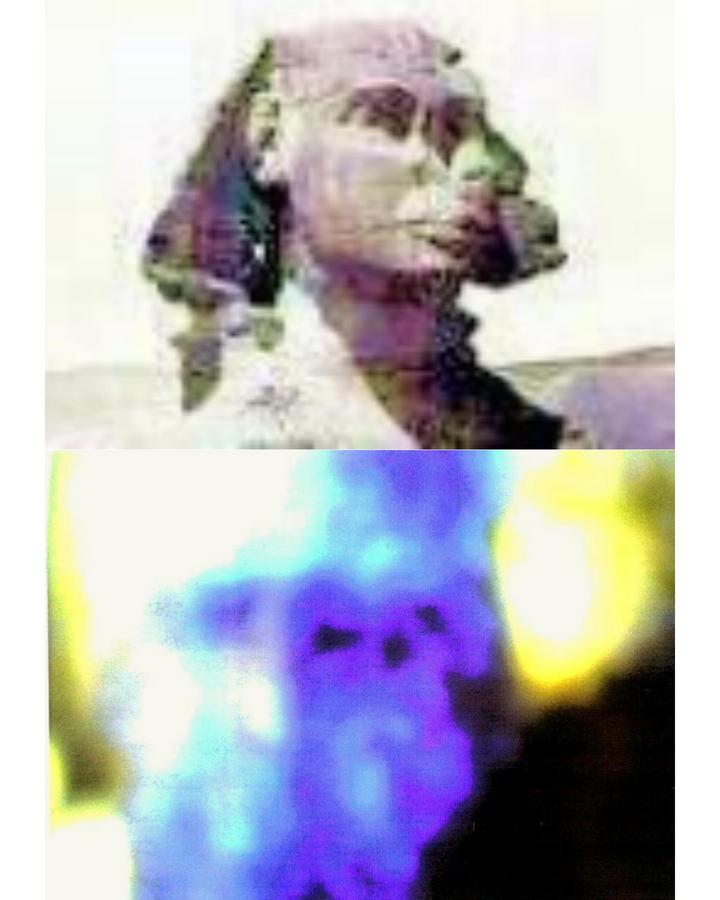 "What God has joined together, let not man put asunder". All of
you mistakenly think the old world has passed away, it hasn't. You just can't see it, that has always been the problem of mankind, spiritual
blindness. To claim a work that is not your own is known as plagiarism, to claim to have created world class work with uneducated farmers is
sacreligious. The world is rapidly changing, the sands of time are shifting and the old Gods return. Anyway, just wanted to show you the sphinx as
he/she really is........
"What God has joined together, let not man put asunder". All of
you mistakenly think the old world has passed away, it hasn't. You just can't see it, that has always been the problem of mankind, spiritual
blindness. To claim a work that is not your own is known as plagiarism, to claim to have created world class work with uneducated farmers is
sacreligious. The world is rapidly changing, the sands of time are shifting and the old Gods return. Anyway, just wanted to show you the sphinx as
he/she really is........ Mod Note: Image Size – Please Review This Link.
[edit on 20-5-2008 by Jbird]
reply to post by debris765nju
Show the Sphinx as it really is? I have no idea what that bottom picture is supposed to be.
Explain please
Show the Sphinx as it really is? I have no idea what that bottom picture is supposed to be.
Explain please
reply to post by debris765nju
Oh, I see. Are you thinking of cross-breeding or cross-genetic-engineering too?
Oh, I see. Are you thinking of cross-breeding or cross-genetic-engineering too?
First they tried to proclaim hoax. The "hoax" tag was all over the press.
Hans: Whose "they" Sky?
When they realized that its not actually a hoax they tried to explain it in terms of coincidence.
Hans: Ah Sky that inscription was known well before the UFO interpretation was applied to it. You're trying the old classic believer tactic of taking various explanation by outsiders and non-experts and trying to make them SOUND like it was part of disorganized but 'secretly' directed campaign by "them", it wasn't.
When they realized that its not actually a coincidence they tried to explain it in terms of certain hieroglyphs laid on top of each other.
Hans: Okay, Sky give us the name of the Professional organization or Egyptogolist and examples of them doing what you claim above. Examples with dates please from non-fringe sources.
When they realized its not that either they attacked the messenger.
Hans: None of this true. Egyptologists and other knowledgeable people just pointed out that the famous picture had been deliberately faked to look more "interesting" and noted that the believers refused to acknowledge what the inscription said. (just like you do!)
Yes...those pictures really are there.
Hans: Yep and only those who cannot read Ancient Egyptian are fooled by them (or more correctedly the "enhanced" version). Those who can read it are just amused.....
reply to post by Hanslune
Hans,
I believe what Skyfloating is referring to in the third quote from your last post is from here:
www.catchpenny.org...
cormac
Hans,
I believe what Skyfloating is referring to in the third quote from your last post is from here:
www.catchpenny.org...
cormac
Originally posted by cormac mac airt
reply to post by Hanslune
Hans,
I believe what Skyfloating is referring to in the third quote from your last post is from here:
www.catchpenny.org...
cormac
Yep that is right! I was referring to his idea of cascading explanations!
Originally posted by Skyfloating
reply to post by cormac mac airt
Yes, thats what I meant.
Sorry Skyfloating that isn't what you meant, said or implied. You said "they" tried one explanation, then another, then another to explain away Abydos.
Please explain who "they" are, then show examples of this cascade of incorrect explanation from the same source. The one Cormac noted is the correct explanation-along with the use of an "enhanced" picture of the inscriptions.
Please answer my questions.
Oh and here is another one. To the left of the inscription you think are pictures of advanced technology are more Egyptian inscriptions - what do they say.
Now the hard part.
Context
What is the room for in which this inscription occurs?
What is the next inscription to the right of the one you think is so interesting? You cannot see it in most photos of inscriptions - but here is a thought, why is the next inscriptions never mentioned?
You do know what these inscriptions are talking about don't you? Please tell us what the inscriptions in the room in which a single panel (you claim are pictures of high technology) say.
reply to post by Hanslune
Ive discussed this on so many threads over the years I have no desire to do it again.
If you arent aware of the discussions on this, use the ATS-search function.
Suffice it to say that when the word went round you could see internet-articles saying that the pictures dont exist. So I lost interest.
Then one day I saw them with my own eyes.
[edit on 24-5-2008 by Skyfloating]
Ive discussed this on so many threads over the years I have no desire to do it again.
If you arent aware of the discussions on this, use the ATS-search function.
Suffice it to say that when the word went round you could see internet-articles saying that the pictures dont exist. So I lost interest.
Then one day I saw them with my own eyes.
[edit on 24-5-2008 by Skyfloating]
Howdy Skyfloating
You keep making "statements" implying conspiracy - but consistently, when challenged, you dodge away.
That is your perogative - and it is my perogative to challenge you on your unsubstantiated beliefs which you like to state as fact on a public board.
This is a public board, when you make wild statements they will be challenged, then the concept as I understand it is we are suppose to discuss them.
You don't seem to grasp this.
LOL
You keep making "statements" implying conspiracy - but consistently, when challenged, you dodge away.
That is your perogative - and it is my perogative to challenge you on your unsubstantiated beliefs which you like to state as fact on a public board.
This is a public board, when you make wild statements they will be challenged, then the concept as I understand it is we are suppose to discuss them.
You don't seem to grasp this.
LOL
reply to post by Hanslune
Interestingly enough you dont challenge stuff like posted above as offered by member debris.
Why is that? Maybe because its nonsense?
Interestingly enough you dont challenge stuff like posted above as offered by member debris.
Why is that? Maybe because its nonsense?
Hans- if you want concensus, try a discussion with the authors of the books and papers you use as hard evidence, when none exists.
Even the greatest expert on Egypt artifacts and History can't agree with geologists studying the same evidence. What is up with that?
Even the greatest expert on Egypt artifacts and History can't agree with geologists studying the same evidence. What is up with that?
Howdy Win
There is lots of hard evidence, it is the interpretation of that data by humans that varies!
Its called science - wonderful isn't it? Somethings we know with great certainty, some are mere speculation.
Until some of the geologists can come up with an accurate measure of rainfall in Egypt in X period of time and the amount of erosion that would cause to a Y type of limestone. Questions will remain.
There is lots of hard evidence, it is the interpretation of that data by humans that varies!
Even the greatest expert on Egypt artifacts and History can't agree with geologists studying the same evidence. What is up with that?
Its called science - wonderful isn't it? Somethings we know with great certainty, some are mere speculation.
Until some of the geologists can come up with an accurate measure of rainfall in Egypt in X period of time and the amount of erosion that would cause to a Y type of limestone. Questions will remain.
reply to post by Hanslune
I looked at your batch of recent postings. While interesting, they reveal that you are more interested in what is known, while the visitors of this website are more interested in what is unknown.
So...Id sure love to participate in one of your expert threads if you move the goalposts into a bit more foggy and mysterious areas.
I looked at your batch of recent postings. While interesting, they reveal that you are more interested in what is known, while the visitors of this website are more interested in what is unknown.
So...Id sure love to participate in one of your expert threads if you move the goalposts into a bit more foggy and mysterious areas.
Howdy Skyfloating
The section of ATS is ancient and lost civilizations
Its hard to post about things were no evidence exists. One can speculate or fantasize but then it just a baseless opinion.
I usually just post interesting info that is informative
Example: Sometime ago people were bubbling over about a possible trade route between Egypt and South America. Arkimedu in India gives a good picture what an ancient trading city looks like in the archie record. It also shows how much evidence can be found by archaeological techniques.
It gives a milestone on which to base claims of SA to Egyptian trade.
What you want speculation? Okay I'll do a speculation tread next.
The section of ATS is ancient and lost civilizations
Its hard to post about things were no evidence exists. One can speculate or fantasize but then it just a baseless opinion.
I usually just post interesting info that is informative
Example: Sometime ago people were bubbling over about a possible trade route between Egypt and South America. Arkimedu in India gives a good picture what an ancient trading city looks like in the archie record. It also shows how much evidence can be found by archaeological techniques.
It gives a milestone on which to base claims of SA to Egyptian trade.
What you want speculation? Okay I'll do a speculation tread next.
Originally posted by Hanslune
What you want speculation? Okay I'll do a speculation tread next.
Yes, I look forward to it.
Originally posted by Hanslune
Originally posted by PhotonEffect
Unless they've tested EVERY (and I mean every) piece of organic material that could be found in and around those pyramids, then how are we to know that they are testing an equally distributed sampling?
Go to the Hall of Ma'at and ask them that question....
Why don't you just answer the question Hanslune, it was directed to you in response to you?
You've decided to engage me in this discussion to try to prove me wrong or crazy for even questioning the dating, so before you dismiss my last point to the Hall, why not answer it?
Or am I still not making sense with what I'm asking here?
Or am I still not making sense with what I'm asking here?
You want to test every piece of carbon.......
You might want to read up on the reasoning behind random sampling as part of statistics.
Here is a question for you, how do we know who wins elections from only tiny amounts of returns?
reply to post by Hanslune
You're still not understanding my point, and I'm still not sure if that's deliberate or not...
I'm familiar with random sampling and am not sure that even this argument of yours will work here...
Variables which would seemingly prevent the arrival of an accurate dating of the pyramids from a random sampling within an unknown population would include but are not limited to these two:
1) Again, sampling taken from an unknown population. You're analogy about who wins elections confuses me a little because a) you're saying that it's "tiny amounts of returns" and b) this is a sampling within a known population. But lets take a look then at the 2004 voting numbers, for the sake of this argument. Basically (according to that site) of the 216 million people in the US who are of age to vote, 142 million are registered, and of those, 126 million voted. So essentially we have a sampling from a known population which shows that 89% of the registered population voted; point being, that hardly seems like tiny returns. So what did you mean by this?
I believe the question I presented regarding the testing (or non-testing) of all samples is related to sampling bias. Please read: taken from HERE.
bold mine
So it seems we have a matter of selection bias to contend with when looking at the samples taken for the radiocarbon testing of the pyramids.
2) The dating of the pyramids, particularly that ascribed to Khufu, focused on matter found on the outer most layers without any (AFAIK) testing from matter within the pyramid itself. Now taking matter from within the pyramid would require some tunneling or slight dismantling which of course (and understandably so) the Egyptian authorities would not allow given the destructive nature of this scientific investigation.
So again what we have here with regards to the dating of the pyramids is incomplete and should not be used as hard evidence. And regardless most of the dates arrived from the first 2 tests of Khufu's pyramid are older than Khufu himself.
Could the results from both tests, which were from samples taken off the outer layers and not the inner, but also having shown some dates within Khufu's reign, if used in conjunction with what the inventory stele says, be indicative of Khufu having actually made repairs to the GP and not necessarily having built it?
But again, I have yet to find all the results from both tests. Mainly I want to see from where exactly the samples were taken and how many.
Even having gone back to read THIS it sounds to me to be very wishy-washy. I mean even they say on the site:
Doesn't sound too confident to me.
[edit on 26-5-2008 by PhotonEffect]
Originally posted by Hanslune
You want to test every piece of carbon.......
You might want to read up on the reasoning behind random sampling as part of statistics.
Here is a question for you, how do we know who wins elections from only tiny amounts of returns?
You're still not understanding my point, and I'm still not sure if that's deliberate or not...
I'm familiar with random sampling and am not sure that even this argument of yours will work here...
Variables which would seemingly prevent the arrival of an accurate dating of the pyramids from a random sampling within an unknown population would include but are not limited to these two:
1) Again, sampling taken from an unknown population. You're analogy about who wins elections confuses me a little because a) you're saying that it's "tiny amounts of returns" and b) this is a sampling within a known population. But lets take a look then at the 2004 voting numbers, for the sake of this argument. Basically (according to that site) of the 216 million people in the US who are of age to vote, 142 million are registered, and of those, 126 million voted. So essentially we have a sampling from a known population which shows that 89% of the registered population voted; point being, that hardly seems like tiny returns. So what did you mean by this?
I believe the question I presented regarding the testing (or non-testing) of all samples is related to sampling bias. Please read: taken from HERE.
Validity and Sources of Error
The distribution of values in any sample, no matter how it is selected, will differ from the distribution in sample chosen by chance alone. The larger the sample, the more likely it is that the sample reflects the characteristic of interest in the target population. However, there are sources of error not related to sampling that may bias comparisons between the sampled units and the target population. First, coverage error (selection bias) may arise when the sampling frame does not fully cover the target population.
bold mine
So it seems we have a matter of selection bias to contend with when looking at the samples taken for the radiocarbon testing of the pyramids.
2) The dating of the pyramids, particularly that ascribed to Khufu, focused on matter found on the outer most layers without any (AFAIK) testing from matter within the pyramid itself. Now taking matter from within the pyramid would require some tunneling or slight dismantling which of course (and understandably so) the Egyptian authorities would not allow given the destructive nature of this scientific investigation.
So again what we have here with regards to the dating of the pyramids is incomplete and should not be used as hard evidence. And regardless most of the dates arrived from the first 2 tests of Khufu's pyramid are older than Khufu himself.
Could the results from both tests, which were from samples taken off the outer layers and not the inner, but also having shown some dates within Khufu's reign, if used in conjunction with what the inventory stele says, be indicative of Khufu having actually made repairs to the GP and not necessarily having built it?
But again, I have yet to find all the results from both tests. Mainly I want to see from where exactly the samples were taken and how many.
Even having gone back to read THIS it sounds to me to be very wishy-washy. I mean even they say on the site:
In other words, it is the old-wood effect that haunts our dates and creates a kind of shadow chronology to the historical dating of the pyramids. It is the shadow cast by a thousand fires burning old wood.
Doesn't sound too confident to me.
[edit on 26-5-2008 by PhotonEffect]
new topics
-
BIDEN Admin Begins Planning For January 2025 Transition to a New President - Today is 4.26.2024.
2024 Elections: 2 hours ago -
Big Storms
Fragile Earth: 3 hours ago -
Where should Trump hold his next rally
2024 Elections: 6 hours ago -
Shocking Number of Voters are Open to Committing Election Fraud
US Political Madness: 7 hours ago -
Gov Kristi Noem Shot and Killed "Less Than Worthless Dog" and a 'Smelly Goat
2024 Elections: 8 hours ago -
Falkville Robot-Man
Aliens and UFOs: 8 hours ago -
James O’Keefe: I have evidence that exposes the CIA, and it’s on camera.
Whistle Blowers and Leaked Documents: 9 hours ago -
Australian PM says the quiet part out loud - "free speech is a threat to democratic dicourse"...?!
New World Order: 9 hours ago -
Ireland VS Globalists
Social Issues and Civil Unrest: 10 hours ago -
Biden "Happy To Debate Trump"
2024 Elections: 10 hours ago
top topics
-
James O’Keefe: I have evidence that exposes the CIA, and it’s on camera.
Whistle Blowers and Leaked Documents: 9 hours ago, 17 flags -
Australian PM says the quiet part out loud - "free speech is a threat to democratic dicourse"...?!
New World Order: 9 hours ago, 15 flags -
Blast from the past: ATS Review Podcast, 2006: With All Three Amigos
Member PODcasts: 13 hours ago, 13 flags -
Biden "Happy To Debate Trump"
2024 Elections: 10 hours ago, 12 flags -
Ireland VS Globalists
Social Issues and Civil Unrest: 10 hours ago, 9 flags -
Mike Pinder The Moody Blues R.I.P.
Music: 13 hours ago, 8 flags -
What is the white pill?
Philosophy and Metaphysics: 12 hours ago, 6 flags -
Shocking Number of Voters are Open to Committing Election Fraud
US Political Madness: 7 hours ago, 6 flags -
Where should Trump hold his next rally
2024 Elections: 6 hours ago, 5 flags -
Gov Kristi Noem Shot and Killed "Less Than Worthless Dog" and a 'Smelly Goat
2024 Elections: 8 hours ago, 5 flags
active topics
-
Gov Kristi Noem Shot and Killed "Less Than Worthless Dog" and a 'Smelly Goat
2024 Elections • 56 • : GENERAL EYES -
What is the white pill?
Philosophy and Metaphysics • 21 • : Albone -
Hate makes for strange bedfellows
US Political Madness • 53 • : 19Bones79 -
BIDEN Admin Begins Planning For January 2025 Transition to a New President - Today is 4.26.2024.
2024 Elections • 11 • : Euronymous2625 -
RAAF airbase in Roswell, New Mexico is on fire
Aliens and UFOs • 11 • : Ophiuchus1 -
SETI chief says US has no evidence for alien technology. 'And we never have'
Aliens and UFOs • 79 • : SchrodingersRat -
Gold and silver prices....woo hoo
History • 88 • : SchrodingersRat -
University of Texas Instantly Shuts Down Anti Israel Protests
Education and Media • 314 • : Schmoe3755 -
President BIDEN's FBI Raided Donald Trump's Florida Home for OBAMA-NORTH KOREA Documents.
Political Conspiracies • 39 • : AwakeNotWoke -
Big Storms
Fragile Earth • 13 • : AwakeNotWoke