It looks like you're using an Ad Blocker.
Please white-list or disable AboveTopSecret.com in your ad-blocking tool.
Thank you.
Some features of ATS will be disabled while you continue to use an ad-blocker.

Rare Aircraft Pictures
page: 7share:
Originally posted by Now_Then
Something fishy bout this one.
An inverted B-52?
Where did you get this? No sane US Air Force pilot would dare try that stunt. It would surely cost a pilot in our military his carrer to pull that stunt. Bombers aren't built to fly inverted.
Tim
Originally posted by Ghost01
An inverted B-52?
Where did you get this? No sane US Air Force pilot would dare try that stunt. It would surely cost a pilot in our military his carrer to pull that stunt. Bombers aren't built to fly inverted.
Tim
Ok stay calm, yes yes yes stay calm it is only yes only a photoshop
The original photo has that same bomber but upright.
But yeah it is stil a very dangerous thing to do.
Here a TU 144 Soviet "Concorde"
enjoy the view
sorry for all the postings of c-135 reconnaissance photos....but i live near offutt....and i'm a big fan....
check this out....i was driving by today...and i was like...this looks like a combat sent...then i looked again and noticed no pod under the nose....and i was like...in my couple years here...i've never seen it....turns out it's wc-135...used for picking up traces of nuclear elements in the air....
it's never here...in fact the site where i found the foto of the exact plane...(1 there's only 1, 2 the tail number is almost distinctive)...was written in japanese or chinese...i'm not sure which....
www004.upp.so-net.ne.jp...

check this out....i was driving by today...and i was like...this looks like a combat sent...then i looked again and noticed no pod under the nose....and i was like...in my couple years here...i've never seen it....turns out it's wc-135...used for picking up traces of nuclear elements in the air....
it's never here...in fact the site where i found the foto of the exact plane...(1 there's only 1, 2 the tail number is almost distinctive)...was written in japanese or chinese...i'm not sure which....
www004.upp.so-net.ne.jp...
wenfieldsecret - where a bouts are you? UK, USA or other?
Just asking cos I was reading about the wc-135 just call me paranoid but they would want one of those handy in the event of a dirty bomb right?
Mind you, seems to be fairly routine to test.
Just asking cos I was reading about the wc-135 just call me paranoid but they would want one of those handy in the event of a dirty bomb right?
Mind you, seems to be fairly routine to test.
Air sampling missions were routinely conducted over the Far East, Indian Ocean, Bay of Bengal, Mediterranean Sea, the Polar regions, and off the coasts of South America and Africa. The WC-135W played a major role in tracking radioactive debris from the Soviet Union’s Chernobyl nuclear plant disaster. Currently the air-sampling mission supports the Limited Nuclear Test Ban Treaty of 1963, which prohibits any nation from above ground nuclear weapons testing. The WC-135W is currently the only aircraft in the inventory conducting air-sampling operations.
i live in omaha NE which is just north of offutt afb, home to the 55 wing...which is where almost all reconnaisence c-135's are stationed to...tho
they do have two other bases, one in england and another in japan...
i was thinking they were just home for visiting....
i'm not a complete scientist so some terms will be substituted for stuff things and what nots....
dirty bombs are packed with radioactive material...not like a nuclear or atomic bomb...which actually creates radiation and causes things to be radioactive......so i dont know how well the air sampling would work.... the major damage from a dirty bomb is either from the primary blast...or prolonged exposure to the material....
science.howstuffworks.com...
i was thinking they were just home for visiting....
i'm not a complete scientist so some terms will be substituted for stuff things and what nots....
dirty bombs are packed with radioactive material...not like a nuclear or atomic bomb...which actually creates radiation and causes things to be radioactive......so i dont know how well the air sampling would work.... the major damage from a dirty bomb is either from the primary blast...or prolonged exposure to the material....
science.howstuffworks.com...
Originally posted by waynos
This is what a Spitfire looks like after exceeding mach 0.9 - yes, it landed like this.
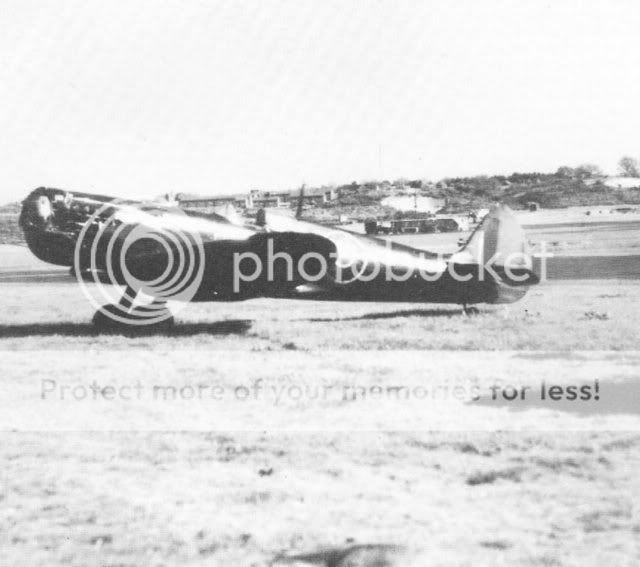
More information Waynos?
SteveR, I actually asked this question of waynos earlier his answer is on page 6. However here it is.
Hope this helps.
LEE.
There is indeed a story to that pic, here's what I wrote about it some time ago on another thread;
some opinions I put here may have since changed
In RAE trials during 1943-46 various fighters were dived at full power from 40,000ft in what the test pilots desctibed as 'an attempt to break the world air speed record vertically downwards'
As part of these trials, once the terminal velocity was reached the guns were fired, and I quote, 'to see if the wings came off'. Nice work if you can get it!
It is recorded that in these trials the highest mach number ever recorded on a piston engined aircraft in flight was obtained when Sqn Leader A Martindale, in 1946, dived Spitfire XI 'EN409' to a speed of mach 0.92. However the photo below shows both what that speed did to the Spitfire and what a skillful pilot Sqn Ldr Martindale was! The propeller was ripped clean off and the fron end looks like its been repeatedly bashed with a lump hammer. And yet it appears to have landed perfectly.
external image
The account goes on to note that several other types were tested in this way, including the P-47 Thunderbolt and P-51 Mustang and none of them were able to reach the speed of the Spitfire because their high speed drag increased more rapidly. The major reason was in RJ Mitchells choice of a thin wing tapering to 9% thickness chord ratio, this was thinner than all other wings (even the P-51!) and against all aerodynamic advice of the time.
They alsdo found that NACA work oN laminar flow (NACA pioneered this work, not the RAE) was basically sound but that the promised advantages were not being obtained in practice. This was traced to surface roughness of the wing finish leading to skin friction which was cancelling out the benefits of laminar flow. This led to a change in the way the P-51 wing was manufactured and to the design of a laminar flow wing for the Spitfire, which led to the Spiteful.
Hope this helps.
LEE.
Has this one been posted yet?
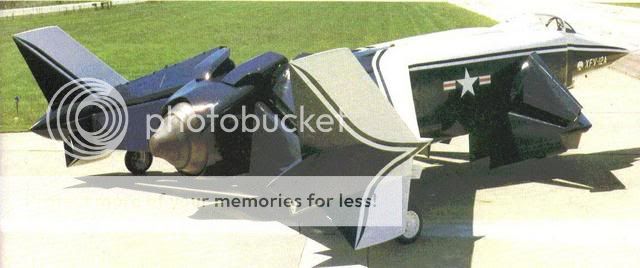
Rockwell XFV12A
It never got past the devolopment stage, in fact only one was completed, it was supposed to be a mach 2 VTOL for use of ships mainly. Shame really, looks real sci-fi.
Rockwell XFV12A
It never got past the devolopment stage, in fact only one was completed, it was supposed to be a mach 2 VTOL for use of ships mainly. Shame really, looks real sci-fi.
It's been a while since this thread got an airing and I have some shots here that are a little mysterious. Now I took these myself at a technical
college in Sydney. I expect that the ever resourceful waynos will explain at least part of the mystery, ie: exactly WHAT it is, but as to how it made
it's way to Australia 30+ years ago will probably remain a mystery. I have asked the oldest teacher who has been there since the early 70's and he
cannot recall, except to say that it was around in the old college in Ultimo in inner Sydney all those years ago.
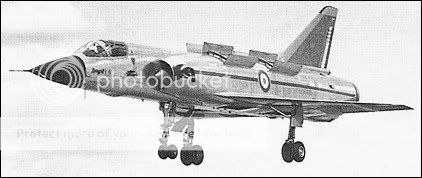
At first glance it appears to just be a display model of the Dassault Balzac STOVL/VSTOL demonstrator of the 1960's. And so did I think until I looked carefully at my photos with those of the real thing, notice the air intakes, they are completely different. I assume that this may be an early display model that was doing the airshow circuit in the early 60's and may have been originally intended for Farnborough or Paris. This would explain the differences in air intakes. One thing that I will try and confirm when I am back there week after next is what the model is made from. At first glance it appears to be made from metal (steel or Aluminium) if so this might suggest that it started life as a wind tunnel model before conversion to display.
Note: the display pedestal is fitted with Rolls Royce logos, so presumably it may have been used by them as well.
Hope somone can figure out exactly what it is, and maybe even how the hell it ended up at a technical colllege in Australia.
LEE.



And for comparison.
[edit on 5-1-2008 by thebozeian]
At first glance it appears to just be a display model of the Dassault Balzac STOVL/VSTOL demonstrator of the 1960's. And so did I think until I looked carefully at my photos with those of the real thing, notice the air intakes, they are completely different. I assume that this may be an early display model that was doing the airshow circuit in the early 60's and may have been originally intended for Farnborough or Paris. This would explain the differences in air intakes. One thing that I will try and confirm when I am back there week after next is what the model is made from. At first glance it appears to be made from metal (steel or Aluminium) if so this might suggest that it started life as a wind tunnel model before conversion to display.
Note: the display pedestal is fitted with Rolls Royce logos, so presumably it may have been used by them as well.
Hope somone can figure out exactly what it is, and maybe even how the hell it ended up at a technical colllege in Australia.
LEE.
And for comparison.
[edit on 5-1-2008 by thebozeian]
the buried plane - isnt that how saddam tried to hide a lot of his military machines?
see how its covered in thick tarps before being buried? obviously intended for retrieval.
a couple of my favourites.
Parafield airport, Adelaide. South Oz.
its not a rare plane, but a good laugh none the less.
"note to self: before hand starting prop planes please ensure wheel chocks are in place.
breaking sound barrier (user "griff" has this as his avatar)
oooohhh! that explains the sparks + grinding noises.
i thought we were landing a tail dragger
see how its covered in thick tarps before being buried? obviously intended for retrieval.
a couple of my favourites.
Parafield airport, Adelaide. South Oz.
its not a rare plane, but a good laugh none the less.
"note to self: before hand starting prop planes please ensure wheel chocks are in place.
breaking sound barrier (user "griff" has this as his avatar)
oooohhh! that explains the sparks + grinding noises.
i thought we were landing a tail dragger
The picture of the F18 is not of it going supersonic - that cloud effect is called the Prandtl-Glauert singularity , and many aircraft have seen this
- including a B2 bomber and a light aircraft on landing! its all to do with humidity.
en.wikipedia.org...
the 747 picture is a fake - they took the explosive decrompression tests done by DERA in 1988 and overlayed them on the air canada picture
www.aerospaceweb.org...
en.wikipedia.org...
the 747 picture is a fake - they took the explosive decrompression tests done by DERA in 1988 and overlayed them on the air canada picture
www.aerospaceweb.org...
reply to post by Obliv_au
Also the image of the 747 from aircanada is faked. It was taken from a static explosive test on another 747 airframe and then put over top of the original. one clue of course is the colour change in the airframe. The sign below the No. 1 engine and the one below the tail indicate that the airplane (B747-200) is on a taxiway.
Any doubt just check out this thread on the third page.
www.abovetopsecret.com...
[edit on 22/08/06 by Canada_EH]
[edit on 22/08/06 by Canada_EH]
Also the image of the 747 from aircanada is faked. It was taken from a static explosive test on another 747 airframe and then put over top of the original. one clue of course is the colour change in the airframe. The sign below the No. 1 engine and the one below the tail indicate that the airplane (B747-200) is on a taxiway.
Any doubt just check out this thread on the third page.
www.abovetopsecret.com...
[edit on 22/08/06 by Canada_EH]
[edit on 22/08/06 by Canada_EH]

Some beautful pictures Guy's, many thanks to all as I really enjoyed seeing the weird & wonderful .. & please do continue
reply to post by thebozeian
really nice pictures, thanks for posting them. I don't recall seeing this before but it definitely rings a bell.
In the 1960's there was fierce rivalry between Rolls Royce and Bristol in the VTOL field which everyone at the time believed to be the future of aviation. Bristol were pushing applications of the Pegasus vectored thrust engine which they had developed while Rolls were firmly in the camp of separate lift engines, not least because even the Balzac required four of them.
Apart from the Harrier, Bristol got their engine into the Do 31 transport and the bigger HS 681, while Rolls had the Short SC.1, Balzac, Mirage IIIV and HS 141 airliner projects on their side.
Rolls also weren't beyond proposing lift engine equipped versions of existing aircraft and even whole designs of their own and I believe the model is part of that promotion, later on they even designed a V/STOL mach 2 three nozzle, canard F-14 replacement for the US Navy, which was a tad optimistic.
really nice pictures, thanks for posting them. I don't recall seeing this before but it definitely rings a bell.
In the 1960's there was fierce rivalry between Rolls Royce and Bristol in the VTOL field which everyone at the time believed to be the future of aviation. Bristol were pushing applications of the Pegasus vectored thrust engine which they had developed while Rolls were firmly in the camp of separate lift engines, not least because even the Balzac required four of them.
Apart from the Harrier, Bristol got their engine into the Do 31 transport and the bigger HS 681, while Rolls had the Short SC.1, Balzac, Mirage IIIV and HS 141 airliner projects on their side.
Rolls also weren't beyond proposing lift engine equipped versions of existing aircraft and even whole designs of their own and I believe the model is part of that promotion, later on they even designed a V/STOL mach 2 three nozzle, canard F-14 replacement for the US Navy, which was a tad optimistic.
cheers, I thought the Gauntlet was long extinct. that was a pleasant surprise. I wonder how many other planes out there are the last of their kind?
For a long time there was only one Lancaster but now there are two. By contrast I read recently that there are now more Spitfires flying than at any
time since the end of WW2.
reply to post by waynos
very true point but I don't understand the Lanc point of only 1 for a long time. The hamilton warplane museum has had their example for at least 20 years that I can remember.
Also there is only one true surviving airframe of the halifax and its located in Trenton Canada.
very true point but I don't understand the Lanc point of only 1 for a long time. The hamilton warplane museum has had their example for at least 20 years that I can remember.
Also there is only one true surviving airframe of the halifax and its located in Trenton Canada.
new topics
-
US food sources declining becoming non edible .
Social Issues and Civil Unrest: 1 hours ago -
Journalism Against Judaism
Middle East Issues: 7 hours ago -
Bibi’s Dilemma
Middle East Issues: 11 hours ago
top topics
-
Bibi’s Dilemma
Middle East Issues: 11 hours ago, 11 flags -
Proof of Cleptocracy
US Political Madness: 15 hours ago, 10 flags -
Journalism Against Judaism
Middle East Issues: 7 hours ago, 4 flags -
US food sources declining becoming non edible .
Social Issues and Civil Unrest: 1 hours ago, 1 flags
active topics
-
US food sources declining becoming non edible .
Social Issues and Civil Unrest • 13 • : JadedGhost -
President Biden Tells America He is Not Senile and He Knows What The Hell He is Doing.
2024 Elections • 38 • : charlyv -
Murder Suicide Investigation Still Active 4 months later?
Other Current Events • 3 • : worldstarcountry -
Israeli strikes on southern Gaza city of Rafah kill 22, mostly children, as US advances aid package
Middle East Issues • 202 • : AlongCameaSpider -
New House GOP Bill To Send Pro Hamas College Law Breakers to Gaza for 6 Months
Social Issues and Civil Unrest • 124 • : CriticalStinker -
Boy Scouts to be renamed next year
Other Current Events • 185 • : AlongCameaSpider -
Time Traveler Caught on Camera?
Paranormal Studies • 39 • : AlongCameaSpider -
-@TH3WH17ERABB17- -Q- ---TIME TO SHOW THE WORLD--- -Part- --44--
Dissecting Disinformation • 912 • : daskakik -
Marjorie Taylor Greene Files Motion to Vacate Speaker Mike Johnson
US Political Madness • 77 • : Zanti Misfit -
Gov Kristi Noem Shot and Killed "Less Than Worthless Dog" and a 'Smelly Goat
2024 Elections • 179 • : AlongCameaSpider