It looks like you're using an Ad Blocker.
Please white-list or disable AboveTopSecret.com in your ad-blocking tool.
Thank you.
Some features of ATS will be disabled while you continue to use an ad-blocker.

The Connection Between the Maya, Olmecs and other Ancient Civilizations Could All Be A Game?
page: 2share:
Yes, Indians, that is always interesting topic, but, a little neglected...
fandalism.com...
fandalism.com...
edit on 23-12-2012 by dragnik because: adding video
This is all very interesting, nice thread.
I found a website that explains the game quite thoroughly and has lots of photos. You might check it out.
Source
I found a website that explains the game quite thoroughly and has lots of photos. You might check it out.
The ancient Chinese game of Liùbó 六博 or 六簙 (Old Chinese *lĭə̆uk *păk — but see Amritas for more modern reconstructions of these characters), meaning 'six sticks', was immensely popular during the latter part of the Warring States period (476–221 BCE) and throughout the Han dynasty (206 BCE – 220 CE), but later faded into oblivion.
However in recent years there have been a considerable number of archaeological discoveries of the remains of Liubo boards and game equipment in tombs dating to the Warring States and Han dynasty periods, as well as a number of funerary statuettes of Liubo players, and very many depictions of Liubo players in tomb decorations from these periods.
I am going to present this archaeological evidence in a series of five (or maybe more) posts :
•Part 1 : Funerary Statuettes of Liubo Players
•Part 2 : Pictures of People playing Liubo
•Part 3 : Pictures of Immortals playing Liubo
•Part 4 : Liubo Boards and Game Equipment
•Part 5 : Liubo Divination
•Part 6 : Liubo Patterns on Mirrors and Coins
•Appendix : Eighteen-Sided Dice
:
Source
The connection: the Polynesians. One of the true great civilizations that are seldom recognized, and I don't think we can ever appreciate how much of
a role they played in the spread of civilization throughout the Pacific. The other player in this "game" were the Chinese.
At the time the Olmec first arose the Shang Dynasty was nearing 400 years of age, and was very advanced, more so than anything in Europe. Did the Polynesians and the Shang have a sea-going trade relationship? Did the influence of the Shang extend as far as India?
The Olmec culture is broken into two phases by scholars, phase 1 appears entirely Polynesian mixed with native Amerindians, while phase 2 shows a distinct Chinese art influence - although it may be more accurate to say the Olmec were manufacturing art objects out of jade for trade with the Shang Dynasty, and using their sea-faring skills along with their long-range, open-ocean double-hulled catamarans. Academics will say it's a stretch that the Olmecs or Polynesians reached as far as China, or that the Olmecs even share a culture with the Polynesians, but given the incredible similarity of jade objects found in the Olmec Phase 2 civilizations, it seems likely they did indeed have a trade relationship with China and it's always possible they brought back from the edges of the Shang Dynasty 'foreign' influences like Indian board games.
At the time the Olmec first arose the Shang Dynasty was nearing 400 years of age, and was very advanced, more so than anything in Europe. Did the Polynesians and the Shang have a sea-going trade relationship? Did the influence of the Shang extend as far as India?
The Olmec culture is broken into two phases by scholars, phase 1 appears entirely Polynesian mixed with native Amerindians, while phase 2 shows a distinct Chinese art influence - although it may be more accurate to say the Olmec were manufacturing art objects out of jade for trade with the Shang Dynasty, and using their sea-faring skills along with their long-range, open-ocean double-hulled catamarans. Academics will say it's a stretch that the Olmecs or Polynesians reached as far as China, or that the Olmecs even share a culture with the Polynesians, but given the incredible similarity of jade objects found in the Olmec Phase 2 civilizations, it seems likely they did indeed have a trade relationship with China and it's always possible they brought back from the edges of the Shang Dynasty 'foreign' influences like Indian board games.
Interesting. That Liubo board diagram on wikipedia looks a lot like a simple circuit diagram.
And the rules of the game sound peculiar. Players roll dice to get to the center of the board, whoever
gets there first gets a fish, as there are 2 fish in a pond at the center. A fish is worth 2 tokens.
Sounds like a simple input output to me.
There are 4 hooked lines arranged around the center square, I wonder if those could represent connections
that can open and close. Are there any simple circuit designs like this now with this sort of arrangement?
Check out that board.
en.wikipedia.org...
And the rules of the game sound peculiar. Players roll dice to get to the center of the board, whoever
gets there first gets a fish, as there are 2 fish in a pond at the center. A fish is worth 2 tokens.
Sounds like a simple input output to me.
There are 4 hooked lines arranged around the center square, I wonder if those could represent connections
that can open and close. Are there any simple circuit designs like this now with this sort of arrangement?
Check out that board.
en.wikipedia.org...
Its pretty clear we are a world recovering from a major disaster.
Possibly the Flood. And before this Flood, humans travelled all over this planet
just like we do now sharing information and mixing cultures.
We need to throw out the western version of history and start over.
But this will not happen because of too many egos, to much money,
and too many reputations will be on the line.
Possibly the Flood. And before this Flood, humans travelled all over this planet
just like we do now sharing information and mixing cultures.
We need to throw out the western version of history and start over.
But this will not happen because of too many egos, to much money,
and too many reputations will be on the line.
reply to post by Quadrivium
OP- thank you for sharing your work. I too feel there are connections between these cultures and several consistencies can tie them together. In the case of the Sumerians & Mayan- simply put you have two cultures that were so evolved, introduced so many standards of civilization and they simply disappear. Are connecting these dots the first step to developing a smoking gun for the earliest unrecorded transatlantic voyagers? I think so and am also feeling the elongated skull phenomenon will relate to this theory as well.
OP- thank you for sharing your work. I too feel there are connections between these cultures and several consistencies can tie them together. In the case of the Sumerians & Mayan- simply put you have two cultures that were so evolved, introduced so many standards of civilization and they simply disappear. Are connecting these dots the first step to developing a smoking gun for the earliest unrecorded transatlantic voyagers? I think so and am also feeling the elongated skull phenomenon will relate to this theory as well.
reply to post by FoosM
Couldn't agree more. Throwing out western ideas of history would open many minds to what the past may have been like rather than trying to shoe-horn the past into current "theories" and sensationalist ideas of an idyllic past.
I see the Olmec heads looking more like they came from Africa, but this should not dispell the proposed notion that world trade of materials and ideas was commonplace in the past.
We need to throw out the western version of history and start over. But this will not happen because of too many egos, to much money, and too many reputations will be on the line.
Couldn't agree more. Throwing out western ideas of history would open many minds to what the past may have been like rather than trying to shoe-horn the past into current "theories" and sensationalist ideas of an idyllic past.
I see the Olmec heads looking more like they came from Africa, but this should not dispell the proposed notion that world trade of materials and ideas was commonplace in the past.
Thank you for all of the well thought out responses so far!
I will look through the links provided as well as the post and respond accordingly.
Glad so many have enjoyed the thread!
Quad
I will look through the links provided as well as the post and respond accordingly.
Glad so many have enjoyed the thread!
Quad
reply to post by Blackmarketeer
Nice info. Starred, Could you link to your sources?
There's just one big problem with the connections, which is that the Olmec could not possibly have got this genre of board games from the Shang. Liubo was only the prototype chaupur and pachisi, which wouldn't be invented for another millenium. Chaupur and pachisi seem to be the first board games of this category to have been developed in Asia. Might it be that there's another board game independent of ashtapada developed from liubo?
By the way, these kind of games are called 'cross and circle games'.
en.wikipedia.org...
Nice info. Starred, Could you link to your sources?
There's just one big problem with the connections, which is that the Olmec could not possibly have got this genre of board games from the Shang. Liubo was only the prototype chaupur and pachisi, which wouldn't be invented for another millenium. Chaupur and pachisi seem to be the first board games of this category to have been developed in Asia. Might it be that there's another board game independent of ashtapada developed from liubo?
By the way, these kind of games are called 'cross and circle games'.
Although these board game designs may be of considerable antiquity, firm evidence is sparse. For cruciform boards, the monumental Pachisi or Chaupat boards of the Moghul ruler Akbar (1542–1605), designed to accommodate humans as playing pieces, "still represent the earliest secure evidence for the existence of the game in India."[1] Culin found evidence for a Nyout-like game existing in China in the 3rd century AD,[2] though this does not seem to be accepted by Murray.[3] Mayan cross and circle boards have been found on stones from the 7th century AD.[4] Although frequently encountered among the native tribes of North America (particularly as a "quartered circle" design) these boards were not made of durable materials, so generally the writings and collections of European-Americans constitute their earliest attestations.
en.wikipedia.org...
really...speaking of uncanny resemblanceisn't "maya" the hindu word for illusion?
Originally posted by Quadrivium
It has been claimed that the Olmecs may have had Chinese ancestry. I find an uncanny resemblance in the Liubo mirror, the Olmec calendar and the Mayan calendar,
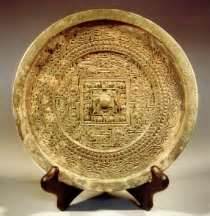
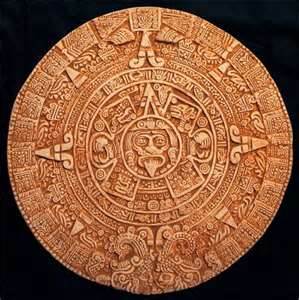

reply to post by Blackmarketeer
Hi blackmarketeer,
I would have to strongly dissagre with a" polynesian" connection to the olmec, as polynesians as we know them did not yet exist. But that's not to say there isn't an amerind influence in Polynesia.
I've recently read a very good work that posited that modern polynesians have their roots in British Columbia.
You see there is a 6000 year period where the polynesians can't be accounted for since their divergence from other austronesian people.
They weren't in western Polynesia or melanesia the archeology is pretty clear on that
They fled flooding in their homeland near Taiwan and ended drifting to British Colombia and interbred with the local people and became the Haida Gwaii tribe.
Later around 200 bc they sailed to Hawaii and founded the Hawaiian royal line. They later sailed west into Polynesia and colonized the other islands, and south to Easter island.
It's a really big story so I only hit on the high points,
Here's an excerpt
users.on.net...
It's a bit of a read that wanders a little on some points, but he brings up some interesting ideas that have gained some support recently through genetics. One of his ideas is that caucasoid people have their origins in the new world and the legendary red head giants are those people and they formed the basis of the elite ruling classes of early American civilizations.
Hi blackmarketeer,
I would have to strongly dissagre with a" polynesian" connection to the olmec, as polynesians as we know them did not yet exist. But that's not to say there isn't an amerind influence in Polynesia.
I've recently read a very good work that posited that modern polynesians have their roots in British Columbia.
You see there is a 6000 year period where the polynesians can't be accounted for since their divergence from other austronesian people.
They weren't in western Polynesia or melanesia the archeology is pretty clear on that
They fled flooding in their homeland near Taiwan and ended drifting to British Colombia and interbred with the local people and became the Haida Gwaii tribe.
Later around 200 bc they sailed to Hawaii and founded the Hawaiian royal line. They later sailed west into Polynesia and colonized the other islands, and south to Easter island.
It's a really big story so I only hit on the high points,
Here's an excerpt
Text For the past 100 years, scientists have been trying to establish the route which Polynesians used to enter the Central Pacific, which according to geneticists such as Kayser, Bing Su and Mark Stoneking, their time of arrival was about 2,200 years ago into an isolated Pacific archepelago where rapid population expansion occurred, (possibly Hawai'i - Polynesians do assert that their homeland was Hawai'i - maybe we should have listened to them in the first place). These geneticists also determined that Polynesians departed from East Asia (Taiwan, Japan and China) about 6,000 years ago, before Mongoloid expansion in East Asia 5,000 years ago. Linguists also confirm that the time of separation of the Polynesian language from East Asia was about 6,000 years ago. The absence of similarities between Polynesian and Indonesian/Phillippine/Micronesian/Melanesian genes do not suggest that any of these island Archipelagos were interim homelands for Polynesians during this time. Their wherabouts for 3,800 years is therefore a mystery, unless of course the West Coast of America is considered as their interim homeland. There is a great deal of cultural, artefact and genetic evidence that seems to suggest that this possibility has not been given the consideration it deserves. For example; Polynesians used calabashes made from a Native American species of Gourd instead of pottery; they used mats for trade exchange - similar to native tribes of the Canadian coast; they made polished tanged adzes, stone pounders, two piece fish hooks and harpoon heads - none of which have ever been found at Lapita sites, but instead are characteristic of cultures along the West Coast of Canada and North America. It is no coincidence that the people of New Zealand and Coastal Canada share the same unusual custom of rubbing noses together as a form of greeting. Despite this, Canada has never been seriously considered as an interim homeland for Polynesians after leaving Taiwan 6,000 years ago. The map below shows the mtDNA of the Pacific region. It appears that Polynesian females have more in common with Native Americans than any other group on the Pacific rim.
users.on.net...
It's a bit of a read that wanders a little on some points, but he brings up some interesting ideas that have gained some support recently through genetics. One of his ideas is that caucasoid people have their origins in the new world and the legendary red head giants are those people and they formed the basis of the elite ruling classes of early American civilizations.
reply to post by punkinworks10
Evidence is starting to accumulate that indicates that certain areas of the new world were multiethnic in the past. And there is circumstantial evidence of a transpacific trade economy that had contacts as far as Europe.
From a post in another thread,
This is attested to by a piece of jade from baja California turning up a a lapita site in new guinea.
www.livescience.com...
Evidence is starting to accumulate that indicates that certain areas of the new world were multiethnic in the past. And there is circumstantial evidence of a transpacific trade economy that had contacts as far as Europe.
From a post in another thread,
Spondylus was traded by the people of coastal ecuador to the people of further south along the coast to Peru. Spondylus trade is also associated with the obsidian trade in the eastern med. The obsidian trade in the med is also associated with the maritime traders the beaker folk. The beaker folk are associated with Mediterranean megaliths and the beaker culture replaces earlier British cultures and unified Britain around the time of the starting of the henges. Beaker pottery is very similar to the pottery of the lapita people of melanesia. A lapita pot
The lapita people were also obsidian traders and buried thier dead in large burial urns as did the Urnfield culture of Europe, which was a precursor to the beaker culture. The lapita made coil built sand tempered pottery as did the ecuadorians that traded Spondylus shells with the Peruvians that erected that standing stone.
This is attested to by a piece of jade from baja California turning up a a lapita site in new guinea.
www.livescience.com...
Originally posted by Quadrivium
: Mr. Subash Bose displays an ancient Tamil Pachesi board kept as a relic in the temple of his area. The Tamils and all the tribes of Meso-America, from Mexico to Panama, played the same board game: Pachesi.
: The Meso-Americans called it by a linguistically similar name: Patolli. (Note: CH and T are linguistically similar. LL was the only way the Renaissance Spaniards could approximate the sounds of Z and J. This proves that Patolli derived from Pachesi.) I myself saw a Patolli board game at the National Museum of Costa Rica, in San Jose.
The linguistic analysis is not correct. The post and research you've put together here is interesting and this one issue does not invalidate your whole post. But, I would not include it as what he has said here does not have empirical strength.
Pachisi comes from a Sanskrit word for 25...based on the word for 5 "paanch" (consider Greek "penta-" or "pięć" if you speak polish - the little "e deally" makes an "en" sound).
Patolli is from Nahuatl, the language of the Aztecs (and others), and it either has to do with ollin (oilcloth) or tolli (a type of native reed). It has come to just mean "dice" in the modern language.
The biggest issue is the part I put in bold...
While it is true that "t" and "ch" are related in language change (consider Modern American pronunciations of "what (are) you doing?" or "got you! (Gotcha!) ...or even "tree" (chree) for example). But just because something can doesnt mean it will change. Ch is also related to K and Sh, as well.
The other comment about LL is out of left field. Today, most people who take any basic Spanish class are taught to pronounce this as "y". when the Spanish arrived in Mexico, they were still pronouncing it as a double L, like saying "wall lamp" clearly. Later as "ly" like "gli" in modern Italian. After several centuries, the sound started to change into a "y"-like sound except in isolated pockets of Spain that keep the LY sound and parts of Latin America, where it kept changing, such as in Buenos Aires, where it is pronounced like SH in English.
I think he or she had cursory knowledge of these changes, but did not fully understand. The whole "z" thing from "LL" in this argument must come from another unrelated change in Spanish from the late 1500s and early 1600s that effected the "LY" sound. To date, LL is still pronounced as double L by Nahuatl speakers.
edit on 25-12-2012 by Sphota because: Apparently I did not put in bold...
reply to post by randyvs
Sorry to neglect the thread, I have been away for about a week for Christmas.
Thanks Randy, You're right we have seen an up flow of Maya threads. Wish there were more!
Sorry to neglect the thread, I have been away for about a week for Christmas.
Thanks Randy, You're right we have seen an up flow of Maya threads. Wish there were more!
Originally posted by Julie Washington
This is all very interesting, nice thread.
I found a website that explains the game quite thoroughly and has lots of photos. You might check it out.
The ancient Chinese game of Liùbó 六博 or 六簙 (Old Chinese *lĭə̆uk *păk — but see Amritas for more modern reconstructions of these characters), meaning 'six sticks', was immensely popular during the latter part of the Warring States period (476–221 BCE) and throughout the Han dynasty (206 BCE – 220 CE), but later faded into oblivion.
However in recent years there have been a considerable number of archaeological discoveries of the remains of Liubo boards and game equipment in tombs dating to the Warring States and Han dynasty periods, as well as a number of funerary statuettes of Liubo players, and very many depictions of Liubo players in tomb decorations from these periods.
I am going to present this archaeological evidence in a series of five (or maybe more) posts :
•Part 1 : Funerary Statuettes of Liubo Players
•Part 2 : Pictures of People playing Liubo
•Part 3 : Pictures of Immortals playing Liubo
•Part 4 : Liubo Boards and Game Equipment
•Part 5 : Liubo Divination
•Part 6 : Liubo Patterns on Mirrors and Coins
•Appendix : Eighteen-Sided Dice
:
Source
Thanks Julie
I read somewhere that they may have all so used the mirrors as maps and calendersds
Thanks for adding to the thread.
Quad
Originally posted by Blackmarketeer
The connection: the Polynesians. One of the true great civilizations that are seldom recognized, and I don't think we can ever appreciate how much of a role they played in the spread of civilization throughout the Pacific. The other player in this "game" were the Chinese.
At the time the Olmec first arose the Shang Dynasty was nearing 400 years of age, and was very advanced, more so than anything in Europe. Did the Polynesians and the Shang have a sea-going trade relationship? Did the influence of the Shang extend as far as India?
The Olmec culture is broken into two phases by scholars, phase 1 appears entirely Polynesian mixed with native Amerindians, while phase 2 shows a distinct Chinese art influence - although it may be more accurate to say the Olmec were manufacturing art objects out of jade for trade with the Shang Dynasty, and using their sea-faring skills along with their long-range, open-ocean double-hulled catamarans. Academics will say it's a stretch that the Olmecs or Polynesians reached as far as China, or that the Olmecs even share a culture with the Polynesians, but given the incredible similarity of jade objects found in the Olmec Phase 2 civilizations, it seems likely they did indeed have a trade relationship with China and it's always possible they brought back from the edges of the Shang Dynasty 'foreign' influences like Indian board games.
This is what gets to me.
Many "archeologist" say that there is no way these ancient people could have been trans-continental.
They could build things back then that we can only dream of. Why would a sea worthy ship be much different?
I agree and I think there was an ancient trade route between the east and the west.
reply to post by CAPT PROTON
Never thought about it. You're right it does resemble a simple circuit
But for what???
But for what???
Originally posted by FoosM
Its pretty clear we are a world recovering from a major disaster.
Possibly the Flood. And before this Flood, humans travelled all over this planet
just like we do now sharing information and mixing cultures.
We need to throw out the western version of history and start over.
But this will not happen because of too many egos, to much money,
and too many reputations will be on the line.
Wow you said a mouthful that time.
Pride is a terrible thing and sometimes it can hinder the truth.
I agree with you that this is probably what is happening with the mesoamerican connection.
edit on 27-12-2012 by Quadrivium because: (no reason given)
I did not know that the Mayans created the oreo too!!
Originally posted by reject
really...speaking of uncanny resemblanceisn't "maya" the hindu word for illusion?
Originally posted by Quadrivium
It has been claimed that the Olmecs may have had Chinese ancestry. I find an uncanny resemblance in the Liubo mirror, the Olmec calendar and the Mayan calendar,
new topics
-
Where should Trump hold his next rally
2024 Elections: 2 hours ago -
Shocking Number of Voters are Open to Committing Election Fraud
US Political Madness: 3 hours ago -
Gov Kristi Noem Shot and Killed "Less Than Worthless Dog" and a 'Smelly Goat
2024 Elections: 4 hours ago -
Falkville Robot-Man
Aliens and UFOs: 4 hours ago -
James O’Keefe: I have evidence that exposes the CIA, and it’s on camera.
Whistle Blowers and Leaked Documents: 5 hours ago -
Australian PM says the quiet part out loud - "free speech is a threat to democratic dicourse"...?!
New World Order: 5 hours ago -
Ireland VS Globalists
Social Issues and Civil Unrest: 6 hours ago -
Biden "Happy To Debate Trump"
2024 Elections: 6 hours ago -
RAAF airbase in Roswell, New Mexico is on fire
Aliens and UFOs: 6 hours ago -
What is the white pill?
Philosophy and Metaphysics: 8 hours ago
top topics
-
A Warning to America: 25 Ways the US is Being Destroyed
New World Order: 16 hours ago, 21 flags -
Blast from the past: ATS Review Podcast, 2006: With All Three Amigos
Member PODcasts: 9 hours ago, 13 flags -
James O’Keefe: I have evidence that exposes the CIA, and it’s on camera.
Whistle Blowers and Leaked Documents: 5 hours ago, 12 flags -
Australian PM says the quiet part out loud - "free speech is a threat to democratic dicourse"...?!
New World Order: 5 hours ago, 11 flags -
Biden "Happy To Debate Trump"
2024 Elections: 6 hours ago, 10 flags -
Mike Pinder The Moody Blues R.I.P.
Music: 9 hours ago, 8 flags -
What is the white pill?
Philosophy and Metaphysics: 8 hours ago, 6 flags -
Ireland VS Globalists
Social Issues and Civil Unrest: 6 hours ago, 5 flags -
RAAF airbase in Roswell, New Mexico is on fire
Aliens and UFOs: 6 hours ago, 5 flags -
Putin, Russia and the Great Architects of the Universe
ATS Skunk Works: 12 hours ago, 4 flags
active topics
-
What is the white pill?
Philosophy and Metaphysics • 19 • : TheDiscoKing -
Biden "Happy To Debate Trump"
2024 Elections • 43 • : WeMustCare -
Gov Kristi Noem Shot and Killed "Less Than Worthless Dog" and a 'Smelly Goat
2024 Elections • 29 • : lincolnriley -
Krystalnacht on today's most elite Universities?
Social Issues and Civil Unrest • 11 • : TheWoker -
Remember These Attacks When President Trump 2.0 Retribution-Justice Commences.
2024 Elections • 59 • : TzarChasm -
Salvador Dali's Moustaches
People • 29 • : GENERAL EYES -
Mood Music Part VI
Music • 3111 • : TheWoker -
Where should Trump hold his next rally
2024 Elections • 12 • : StudioNada -
University of Texas Instantly Shuts Down Anti Israel Protests
Education and Media • 310 • : SchrodingersRat -
Candidate TRUMP Now Has Crazy Judge JUAN MERCHAN After Him - The Stormy Daniels Hush-Money Case.
Political Conspiracies • 815 • : Annee