It looks like you're using an Ad Blocker.
Please white-list or disable AboveTopSecret.com in your ad-blocking tool.
Thank you.
Some features of ATS will be disabled while you continue to use an ad-blocker.

Trade Professional (RE: Ancient Monuments): "I can not build even one wall. Here's a theory."
page: 1share:
[ * As of today, the Ancient Aliens/Astronaut Theory is unfalsifiable. Though it is plausible, I am not a proponent of the A.A. theory. This thread
will illustrate my favored theory as best as possible, while attempting to refute some common A.A. rationalizations. I will be relying on my trade
profession as a starting point * ]

These are the tools of my trade. I am a precision machinist. I machine a multitude of steel, iron, and aluminum alloys to precision specifications for various customers in the automotive and aviation industries, mining and excavating companies, alternative energy companies, and the U.S. Government, to name a few. I've made molds and parts ranging in size from a piece of candy up to the size of a standard vehicle.
Precision Measurements:
An average sheet of paper is 0.004 inches or 0.1016 millimeters thick, and an average human hair is about 0.003 inches or 0.0762 millimeters thick.
I regularly machine metal to a precision measurement of 0.001 inches or 0.0254 millimeters according to blueprint and drawing dimensions. In rare circumstances, I can machine to a precision measurement of 0.0001 inches or 0.00254 millimeters.
Tooling:

The tools used to machine metals are pretty intense. You need tools that are harder and stronger than the material you are cutting, drilling, or milling. Some of the cutters I use are made of tungsten carbide and some even have a super hard titanium nitride coating. The tools are so tough that I need a diamond grindstone wheel to sharpen them. And even with these super tough tools, I still encounter tool wear, chips, and breaks.

Machinery:
The tools can't work on their own. You need machinery capable of moving and bearing the material's weight. You need machinery to create cutting movements, either by spinning the tool at high revolutions (rpm) or by spinning the material at a high rpm. You need the accurate movements of machinery to create consistent and perfect to near-perfect flat surfaces, finishes, lines, grooves, angles, arcs, radii, spheres, etching/engraving, etc.

(Note the orange coffee cup for scale)
The block you see on this table is roughly the size of a shoe-box. Notice the work-area table. Nothing larger than the table can be put on the machine. Notice the size of the machine in proportion to what can actually be made with the machine.

(Note the 2 forklifts/tow-motors to the left for scale)
The white part is the piece being made. The piece is actually taking up the maximum area of the work-area table. The length you see under the work-area table is only the range the table can travel and move. Notice the size of the machine in proportion to what can actually be made with the machine.
You also need the power of machinery to lift, move, and assemble.

This is a 15 ton capacity overhead crane. Notice the fact that the crane is supported by huge rails running the length of the building. This is what is needed to lift and move objects no larger than 15 tons.
Mathematics:

To accomplish the complexities of this trade, thorough knowledge of trigonometry, calculus, geometry, algebra, conversions, and computer programming are needed. We either calculate by hand with graphing calculators and mathematical formulas, or the work is calculated by state-of-the-art computing and software programs.

These are the tools of my trade. I am a precision machinist. I machine a multitude of steel, iron, and aluminum alloys to precision specifications for various customers in the automotive and aviation industries, mining and excavating companies, alternative energy companies, and the U.S. Government, to name a few. I've made molds and parts ranging in size from a piece of candy up to the size of a standard vehicle.
Precision Measurements:
An average sheet of paper is 0.004 inches or 0.1016 millimeters thick, and an average human hair is about 0.003 inches or 0.0762 millimeters thick.
I regularly machine metal to a precision measurement of 0.001 inches or 0.0254 millimeters according to blueprint and drawing dimensions. In rare circumstances, I can machine to a precision measurement of 0.0001 inches or 0.00254 millimeters.
Tooling:
The tools used to machine metals are pretty intense. You need tools that are harder and stronger than the material you are cutting, drilling, or milling. Some of the cutters I use are made of tungsten carbide and some even have a super hard titanium nitride coating. The tools are so tough that I need a diamond grindstone wheel to sharpen them. And even with these super tough tools, I still encounter tool wear, chips, and breaks.
Tungsten Carbide:
An inorganic chemical compound containing equal parts of tungsten and carbon atoms. Tungsten carbide is approximately three times stiffer than steel, with a Young's modulus of approximately 550 GPa, and is much denser than steel or titanium. It is comparable with corundum or sapphire in hardness and can only be polished and finished with abrasives of superior hardness such as cubic boron nitride and diamond amongst others, in the form of powder, wheels, and compounds.
Titanium Nitride:
An extremely hard ceramic material, often used as a coating on titanium alloys, steel, carbide, and aluminium components to improve the substrate's surface properties. Applied as a thin coating, it is used to harden and protect cutting surfaces.
Diamond Grindstone:
A grinding stone consisting of a mixture of diamond abrasive grains and metal powder.
Machinery:
The tools can't work on their own. You need machinery capable of moving and bearing the material's weight. You need machinery to create cutting movements, either by spinning the tool at high revolutions (rpm) or by spinning the material at a high rpm. You need the accurate movements of machinery to create consistent and perfect to near-perfect flat surfaces, finishes, lines, grooves, angles, arcs, radii, spheres, etching/engraving, etc.
(Note the orange coffee cup for scale)
The block you see on this table is roughly the size of a shoe-box. Notice the work-area table. Nothing larger than the table can be put on the machine. Notice the size of the machine in proportion to what can actually be made with the machine.
(Note the 2 forklifts/tow-motors to the left for scale)
The white part is the piece being made. The piece is actually taking up the maximum area of the work-area table. The length you see under the work-area table is only the range the table can travel and move. Notice the size of the machine in proportion to what can actually be made with the machine.
You also need the power of machinery to lift, move, and assemble.
This is a 15 ton capacity overhead crane. Notice the fact that the crane is supported by huge rails running the length of the building. This is what is needed to lift and move objects no larger than 15 tons.
Mathematics:
To accomplish the complexities of this trade, thorough knowledge of trigonometry, calculus, geometry, algebra, conversions, and computer programming are needed. We either calculate by hand with graphing calculators and mathematical formulas, or the work is calculated by state-of-the-art computing and software programs.
Baalbek Foundation Stones - Lebanon
Yangshan Quarry - China
Stonehenge - England
Great Pyramid - Giza Plateau Egypt
Diquis Spheres - Costa Rica
Teotihuacan - Mexico
Chichen Itza - Yucatan Peninsula
Machu Picchu - Peru
Tiahuanacu (Tiwanaku) - Bolivia
Puma Punku - Bolivia

Limestone, Granite, Andesite, and Diorite stones weighing hundreds, thousands, and tens of thousand of tons... cut, quarried, fashioned, transported, and assembled!
Monuments built to advanced mathematical understandings. Structures built beyond modern day precision specifications.
__________________________________________
Slaves built not a thing
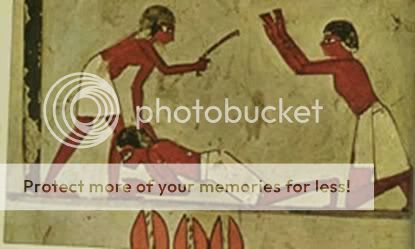
I'm no stone mason, but if I were given the task of building any of these awesome structures, I would have to humbly refuse. Even if I were given the proper training to build such remarkable works, I would still refuse. I'm serious.
Many times while pondering at work, I become completely baffled at how these ancient structures were created. With my mathematical understandings, machine experience, and metal-working skills... I can not even fathom how these sites were made.
I told you guys what I'm capable of doing in the beginning of this thread. These ancient sites were built with even more precision than I can accomplish, with even larger and tougher buildings materials.
Sometimes it is very difficult to get a piece perfect. Sometimes a machinist will face hour upon hour of frustration to reach the required precision measurements. It is very difficult to machine separate parts that I interlock with another part. It is a headache to make something perfectly flat, or perfectly squared, or perfectly round. Sometimes we mess up and manage to save the piece by welding on new material and recutting. You can't weld stone. If we accidentally drop or bump a part, we can polish and fix it. Stone will crack and break...
I can not stress enough that even on the scale that I work with, it is extremely difficult to machine separate parts that fit together so precise that there are no gaps, and all edges are running parallel and true. It is not impossible, however, it takes much skill and is extremely difficult to fashion separate pieces that assemble with complete precision.
Not everyone can be a precision machinist. I have witnessed many people come into this trade and totally flake out. Either they have problems learning and operating the machinery, or they have problems with math, or they have problems reading blueprints or program language, or they do not have the proper feel to measure accurately. Some people just can't make a good or accurate part to save their life!
No way were any of these ancient structures built by forced slave labor! It would have taken advanced education, proper training, prior experience, and most importantly... the workers must have taken great pride in their work. If they do not pride themselves as craftsmen, the precision will be lacking. Trust me, it is honestly a labor of love to make an entire modern assembly to + or - 0.001 precision... and these monuments are bigger and more precise than that!
Yangshan Quarry - China
Stonehenge - England
Great Pyramid - Giza Plateau Egypt
Diquis Spheres - Costa Rica
Teotihuacan - Mexico
Chichen Itza - Yucatan Peninsula
Machu Picchu - Peru
Tiahuanacu (Tiwanaku) - Bolivia
Puma Punku - Bolivia
Limestone, Granite, Andesite, and Diorite stones weighing hundreds, thousands, and tens of thousand of tons... cut, quarried, fashioned, transported, and assembled!
Monuments built to advanced mathematical understandings. Structures built beyond modern day precision specifications.
__________________________________________
Slaves built not a thing
I'm no stone mason, but if I were given the task of building any of these awesome structures, I would have to humbly refuse. Even if I were given the proper training to build such remarkable works, I would still refuse. I'm serious.
Many times while pondering at work, I become completely baffled at how these ancient structures were created. With my mathematical understandings, machine experience, and metal-working skills... I can not even fathom how these sites were made.
I told you guys what I'm capable of doing in the beginning of this thread. These ancient sites were built with even more precision than I can accomplish, with even larger and tougher buildings materials.
Sometimes it is very difficult to get a piece perfect. Sometimes a machinist will face hour upon hour of frustration to reach the required precision measurements. It is very difficult to machine separate parts that I interlock with another part. It is a headache to make something perfectly flat, or perfectly squared, or perfectly round. Sometimes we mess up and manage to save the piece by welding on new material and recutting. You can't weld stone. If we accidentally drop or bump a part, we can polish and fix it. Stone will crack and break...
I can not stress enough that even on the scale that I work with, it is extremely difficult to machine separate parts that fit together so precise that there are no gaps, and all edges are running parallel and true. It is not impossible, however, it takes much skill and is extremely difficult to fashion separate pieces that assemble with complete precision.
Not everyone can be a precision machinist. I have witnessed many people come into this trade and totally flake out. Either they have problems learning and operating the machinery, or they have problems with math, or they have problems reading blueprints or program language, or they do not have the proper feel to measure accurately. Some people just can't make a good or accurate part to save their life!
No way were any of these ancient structures built by forced slave labor! It would have taken advanced education, proper training, prior experience, and most importantly... the workers must have taken great pride in their work. If they do not pride themselves as craftsmen, the precision will be lacking. Trust me, it is honestly a labor of love to make an entire modern assembly to + or - 0.001 precision... and these monuments are bigger and more precise than that!
The Theory:
We, modern humans, are the product of a collective and global amnesia. We have faced near annihilation one or more times in the ancient past. We develop, we learn, we grow, we face global cataclysm, and we start over. We've had more than one stone age, more than one technological age, more than one aviation age, and more than one nuclear age.

Great Floods, Ice Ages, Volcanic Eruptions and Meteorite Impacts, Great Earthquakes, Nuclear War, and stories of past worlds and destroyed civilizations as described in the various religious texts and in the Homeric, Mayan, Hopi, Aztec, Incan, and Indian-Vedic traditions were influenced by true catastrophes in my opinion. Near human extinction and annihilation wiped out our history and caused our great knowledge to be lost.
Remarkably, the Human Genome Project supports the near extinction of mankind. Scientists and researchers have discovered a few genetic bottlenecks in our gene-pool, such as the Toba Catastrophe Event. This means that on more than one occasion, humans were driven to near extinction, only very few mating pairs survived. And what's even more astounding, is that Mitochondrial Eve and Y-Chromosomal Adam date to different time periods! Meaning, even at our earliest beginnings, there were severe survival problems.

Consider the submerged structures and megaliths along the oceanic coastlines and under lakes and seas. These date beyond Giza, Stonehenge, or Baalbek. All logic points toward advanced civilization BEFORE this planet's last ice age!

The age of "Modern" man is now estimated at over 400,000 years... hominids and other non-modern humans date back millions of years. Our current academic knowledge of human history only accounts for mankind's last 10,000-12,000 years... that is a LOT of history unaccounted for!!!
If we are 400,000 years old and it took us 12,000 years to crawl out of the last stone age and into the space age... let's do some simple math: (400,000 divided by 12,000) That means we could have potentially risen and fallen 33 times! With enough time duration for 33 potential cycles, is it so far fetched to believe that there was at least one such cycle before our current one?
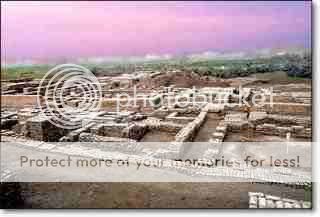
A city dated to be 9,500 years old was found submerged 120 feet beneath the waters of the Gulf of Khambhat (Cambay) in India. This is long before the Egyptians or Sumerians. To me, this is definitive evidence of our advanced ancient past before the last age of ignorance.
What is mankind? It consists of different kinds of men. Different humans. Different related species. Neanderthals are now known to have created artwork on cave walls, wore jewelry and clothing, ceremoniously buried their dead, created tools, weapons, and even made glue! It is now known that Neanderthals and Denisovans interbred with our ancestors and contributed to our human gene pool. I'm just allowing your mind to consider that our history extends even further back than the modern Homo Sapien Sapien. We belong to a legacy of millions of years worth of history and development.
I feel this is the reason for secret societies. They may have the secrets... ancient records, technology, or knowledge that this all has happened. Imagine if the entire world faced global cataclysm. A small handful of people retain or rediscover advanced knowledge while the rest of the population bottle-necks with near extinction and starts over. These individuals that held and hid the knowledge would now be far more advanced than the other people starting over. They would be Elite and become "TPTB."
Neanderthals and Denisovans our Genetic cousins
What ! Another Human Species found in Siberian Cave?
New species of Hominids discovered in China
Hello, Homo floresiensis: Studies prove "hobbits a new species"
Oldest hominid skull in Australia found near Bega
New Age For Mungo Man, New Human History
Origins of Atlantis/Lemuria Myths Part-1
Origins of Atlantis/Lemuria Myths Part-2
Mankind's Lost and Forgotten history. A Perspective
The sunken Continent of the Tamil
Who Were the Ancient Megalithic Builders?
We, modern humans, are the product of a collective and global amnesia. We have faced near annihilation one or more times in the ancient past. We develop, we learn, we grow, we face global cataclysm, and we start over. We've had more than one stone age, more than one technological age, more than one aviation age, and more than one nuclear age.
Great Floods, Ice Ages, Volcanic Eruptions and Meteorite Impacts, Great Earthquakes, Nuclear War, and stories of past worlds and destroyed civilizations as described in the various religious texts and in the Homeric, Mayan, Hopi, Aztec, Incan, and Indian-Vedic traditions were influenced by true catastrophes in my opinion. Near human extinction and annihilation wiped out our history and caused our great knowledge to be lost.
Remarkably, the Human Genome Project supports the near extinction of mankind. Scientists and researchers have discovered a few genetic bottlenecks in our gene-pool, such as the Toba Catastrophe Event. This means that on more than one occasion, humans were driven to near extinction, only very few mating pairs survived. And what's even more astounding, is that Mitochondrial Eve and Y-Chromosomal Adam date to different time periods! Meaning, even at our earliest beginnings, there were severe survival problems.
Consider the submerged structures and megaliths along the oceanic coastlines and under lakes and seas. These date beyond Giza, Stonehenge, or Baalbek. All logic points toward advanced civilization BEFORE this planet's last ice age!
The age of "Modern" man is now estimated at over 400,000 years... hominids and other non-modern humans date back millions of years. Our current academic knowledge of human history only accounts for mankind's last 10,000-12,000 years... that is a LOT of history unaccounted for!!!
If we are 400,000 years old and it took us 12,000 years to crawl out of the last stone age and into the space age... let's do some simple math: (400,000 divided by 12,000) That means we could have potentially risen and fallen 33 times! With enough time duration for 33 potential cycles, is it so far fetched to believe that there was at least one such cycle before our current one?
A city dated to be 9,500 years old was found submerged 120 feet beneath the waters of the Gulf of Khambhat (Cambay) in India. This is long before the Egyptians or Sumerians. To me, this is definitive evidence of our advanced ancient past before the last age of ignorance.
What is mankind? It consists of different kinds of men. Different humans. Different related species. Neanderthals are now known to have created artwork on cave walls, wore jewelry and clothing, ceremoniously buried their dead, created tools, weapons, and even made glue! It is now known that Neanderthals and Denisovans interbred with our ancestors and contributed to our human gene pool. I'm just allowing your mind to consider that our history extends even further back than the modern Homo Sapien Sapien. We belong to a legacy of millions of years worth of history and development.
I feel this is the reason for secret societies. They may have the secrets... ancient records, technology, or knowledge that this all has happened. Imagine if the entire world faced global cataclysm. A small handful of people retain or rediscover advanced knowledge while the rest of the population bottle-necks with near extinction and starts over. These individuals that held and hid the knowledge would now be far more advanced than the other people starting over. They would be Elite and become "TPTB."
Neanderthals and Denisovans our Genetic cousins
What ! Another Human Species found in Siberian Cave?
New species of Hominids discovered in China
Hello, Homo floresiensis: Studies prove "hobbits a new species"
Oldest hominid skull in Australia found near Bega
New Age For Mungo Man, New Human History
Origins of Atlantis/Lemuria Myths Part-1
Origins of Atlantis/Lemuria Myths Part-2
Mankind's Lost and Forgotten history. A Perspective
The sunken Continent of the Tamil
Who Were the Ancient Megalithic Builders?
edit on 3/21/12 by Sahabi because: Add links
Knowledge Lost
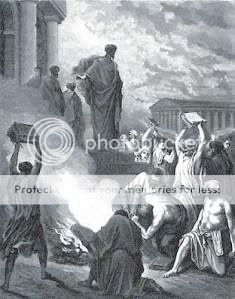
All of the ancient libraries such as Alexandria and Timbuktu have been targeted, burned, destroyed, stolen, or hidden. This campaign even continued in the Americas with the destruction of texts belonging to the Maya and other natives. Entire oral traditions were lost by the forced conversion to colonial languages and Christianity. In my opinion, all of those books, writings, records, documents, and traditions around the world were targeted specifically for the purpose of creating a world-wide illness of amnesia.
Any small fragments of ancient writings that survived are quickly and aggressively labeled myths, legends, and fairy tales containing absolutely no factual basis. In our modern times we are discovering archaeological evidences for some events and locations mentioned in those "fairy tales." Our "modern" sciences have only recently shed light on the extremely accurate and complex mathematics, cosmology, and knowledge of the ancients. But we should still disregard it as 100% myth?!
Almost all of our ancient documents are gone. Combine this with disinformation, flooding the world with too much information, and media propaganda, and what do you get? Historical uncertainty, speculation, and half-truths at best.
Proof Of Ancient Knowledge:
The knowledge of advanced mathematics, physics, engineering, and cosmology is obvious and evident in the construction of these ancients sites. Concepts such as Pi, the Golden Mean, as well as solar, planetary, and stellar positions and movements are well illustrated in these megalithic monuments. Let us continue...
Antikythera Mechanism
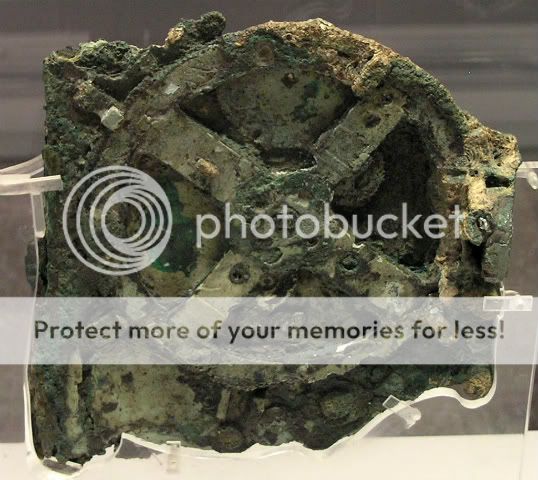
The Antikythera Mechanism is an ancient analog computer estimated to have been made during the first century, over 2,000 years ago! It was found by sponge-divers, submerged off the coast of Antikythera, Greece. The Antikythera Mechanism is able to calculate a multitude of astronomical positions.

Ancient Knowledge of Antarctica
Antarctica was officially discovered in the 1800's. It was not until the advent of sonar and ground penetrating radar that academia knew what the land underneath the Antarctic ice looks like. However, there are maps depicting Antarctica and its pre-glacial features before its modern discovery and before any modern expeditions or geographical surveys were undertaken.
• Piri Reis Map
• Oronteus Finaeus Map
• Mercator Projection Map
• Philippe Buache Map
• Theatrum Orbis Terrarum Map
Two very nice threads about those maps:
On the Origins of Unexplained Maps
Antarctica And The Discovery Of A 2,000-Year-Old Map
These maps were made before the 1820 discovery of Antarctica. How do these maps contain such detail about Antarctica before any official exploration of the continent began? How do these maps contain such pre-glacial features before the invention of planes, satellites, sonar, or ground-penetrating radar?
Quasicrystals, Penrose Tiles, and Girih Tiles

Penrose Tiling, discovered in the 1970's, is a mathematical concept and method by which geometric, symmetric, self-similar shapes can form an infinite non-repeating tiling. Penrose tiling may even be expanded multi-dimensionally.
A quasicrystal is a type of atomic structure consisting of geometric shapes and symmetry, that can be expanded infinitely without ever repeating the same pattern. Quasicrystalline structures were first recorded in the 1980's with the use of the electron microscope.
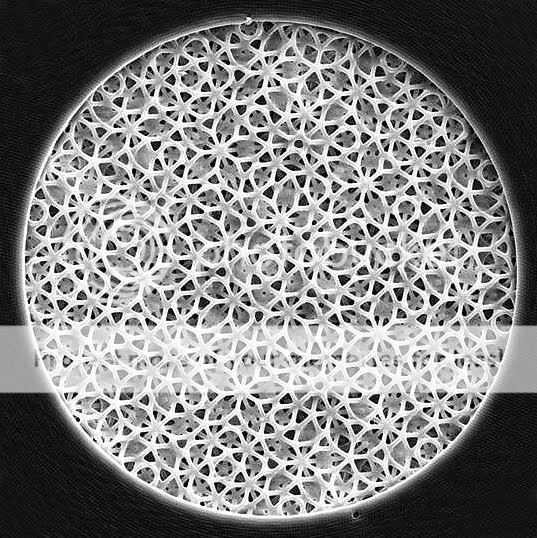

Girih Tiling consists of 5 geometric shapes, which are tiled by the concept of Penrose Tiling. Girih Tiles were being used by Islamic engineers, architects, and artists as far back as the 13th Century. Penrose Tiling was not observable in nature until the advent of the electron microscope, which means the raw mathematical conceptualizations were understood long before our "modern" era.
Cymatics and Chladni Patterns
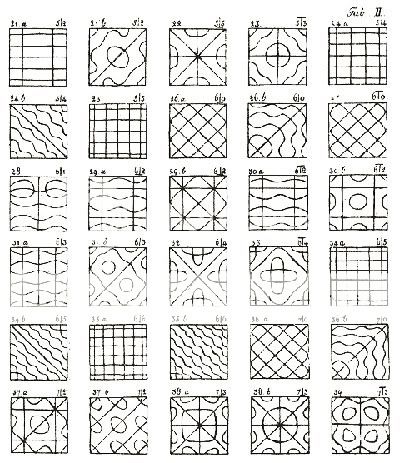
Cymatics is the study of visible sound and vibration.
Robert Hooke (1635-1703) and Ernst Chladni (1756-1827) are the modern founders of cymatics. Chladni Patterns are shapes created by sound which are formed by directing sound vibrations onto a surface medium that has been thinly coated with liquid, particles, or pastes.
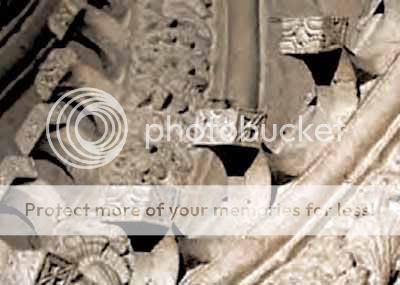
Rossyln Chapel in Scotland was built during the mid-1400's, long before the ground-breaking work on cymatics by Robert Hooke and Ernst Chladni.
Thomas Mitchell and his son Stuart Mitchell have uncovered a link to cymatics within Rosslyn Chapel. 213 cubes with various symmetrical shapes carved into them adorn the chapel.
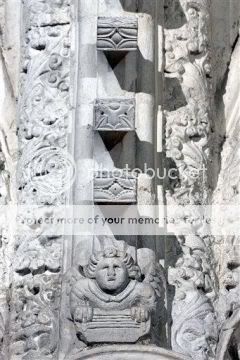
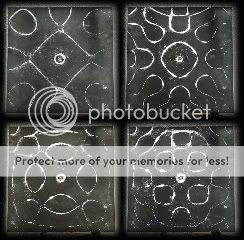
Father and son Mitchell believe they have successfully deciphered the patterns on the cubes using the science of cymatics. Using the 213 encrypted cubes of Rosslyn Chapel they have created a musical score entitled "Rosslyn Motet".
With Rosslyn's alleged history to secret societies, is it likely that the 213 cubes are indeed cymatic patterns? Is this proof of an ancient, passed-down knowledge that sounds are vibrational waves that have specific shapes?
Here are a few ATS threads with more info:
• Rosslyn Chapel code cracked?
• Rosslyn's Frozen Music
• Rosslyn Chapel (ala Davinci Code) Mystery Code Unlocked
All of the ancient libraries such as Alexandria and Timbuktu have been targeted, burned, destroyed, stolen, or hidden. This campaign even continued in the Americas with the destruction of texts belonging to the Maya and other natives. Entire oral traditions were lost by the forced conversion to colonial languages and Christianity. In my opinion, all of those books, writings, records, documents, and traditions around the world were targeted specifically for the purpose of creating a world-wide illness of amnesia.
Any small fragments of ancient writings that survived are quickly and aggressively labeled myths, legends, and fairy tales containing absolutely no factual basis. In our modern times we are discovering archaeological evidences for some events and locations mentioned in those "fairy tales." Our "modern" sciences have only recently shed light on the extremely accurate and complex mathematics, cosmology, and knowledge of the ancients. But we should still disregard it as 100% myth?!
Almost all of our ancient documents are gone. Combine this with disinformation, flooding the world with too much information, and media propaganda, and what do you get? Historical uncertainty, speculation, and half-truths at best.
Proof Of Ancient Knowledge:
The knowledge of advanced mathematics, physics, engineering, and cosmology is obvious and evident in the construction of these ancients sites. Concepts such as Pi, the Golden Mean, as well as solar, planetary, and stellar positions and movements are well illustrated in these megalithic monuments. Let us continue...
Antikythera Mechanism
The Antikythera Mechanism is an ancient analog computer estimated to have been made during the first century, over 2,000 years ago! It was found by sponge-divers, submerged off the coast of Antikythera, Greece. The Antikythera Mechanism is able to calculate a multitude of astronomical positions.
Ancient Knowledge of Antarctica
Antarctica was officially discovered in the 1800's. It was not until the advent of sonar and ground penetrating radar that academia knew what the land underneath the Antarctic ice looks like. However, there are maps depicting Antarctica and its pre-glacial features before its modern discovery and before any modern expeditions or geographical surveys were undertaken.
• Piri Reis Map
• Oronteus Finaeus Map
• Mercator Projection Map
• Philippe Buache Map
• Theatrum Orbis Terrarum Map
Two very nice threads about those maps:
On the Origins of Unexplained Maps
Antarctica And The Discovery Of A 2,000-Year-Old Map
These maps were made before the 1820 discovery of Antarctica. How do these maps contain such detail about Antarctica before any official exploration of the continent began? How do these maps contain such pre-glacial features before the invention of planes, satellites, sonar, or ground-penetrating radar?
Quasicrystals, Penrose Tiles, and Girih Tiles
Penrose Tiling, discovered in the 1970's, is a mathematical concept and method by which geometric, symmetric, self-similar shapes can form an infinite non-repeating tiling. Penrose tiling may even be expanded multi-dimensionally.
A quasicrystal is a type of atomic structure consisting of geometric shapes and symmetry, that can be expanded infinitely without ever repeating the same pattern. Quasicrystalline structures were first recorded in the 1980's with the use of the electron microscope.
Girih Tiling consists of 5 geometric shapes, which are tiled by the concept of Penrose Tiling. Girih Tiles were being used by Islamic engineers, architects, and artists as far back as the 13th Century. Penrose Tiling was not observable in nature until the advent of the electron microscope, which means the raw mathematical conceptualizations were understood long before our "modern" era.
Cymatics and Chladni Patterns
Cymatics is the study of visible sound and vibration.
sound:
mechanical radiant energy that is transmitted by longitudinal pressure waves in a material medium (as air) and is the objective cause of hearing
Robert Hooke (1635-1703) and Ernst Chladni (1756-1827) are the modern founders of cymatics. Chladni Patterns are shapes created by sound which are formed by directing sound vibrations onto a surface medium that has been thinly coated with liquid, particles, or pastes.
Rossyln Chapel in Scotland was built during the mid-1400's, long before the ground-breaking work on cymatics by Robert Hooke and Ernst Chladni.
Thomas Mitchell and his son Stuart Mitchell have uncovered a link to cymatics within Rosslyn Chapel. 213 cubes with various symmetrical shapes carved into them adorn the chapel.
Father and son Mitchell believe they have successfully deciphered the patterns on the cubes using the science of cymatics. Using the 213 encrypted cubes of Rosslyn Chapel they have created a musical score entitled "Rosslyn Motet".
With Rosslyn's alleged history to secret societies, is it likely that the 213 cubes are indeed cymatic patterns? Is this proof of an ancient, passed-down knowledge that sounds are vibrational waves that have specific shapes?
Here are a few ATS threads with more info:
• Rosslyn Chapel code cracked?
• Rosslyn's Frozen Music
• Rosslyn Chapel (ala Davinci Code) Mystery Code Unlocked
Addressing Common Points of A.A. Theory:
Where Are The Ancient Machines?
Modern machines weigh several tons all on their own. The ancients would have needed accurate and precise methods to engineer, construct, move, and assemble their machines. The construction of precision machines requires precision. The machinery on its own is impressive.
If the ancients did have large-scale machinery, let me assure you that it would have long since vanished. Though the colossal machines I use look impressive, they break, rust, and decay just as easily and quickly as a soda can or old car.
Fill a modern house with plasma televisions, computers, and all of our electronic gadgetry... park a car in the driveway and fill the garage with all types of our modern tools. How long do you think these objects will last before completely decaying or being buried beneath vegetation, soil, water, ice, or destruction?
The stone work of the ancient megaliths will out last metal work and machinery.
Starchild Skull...

Ok... so it looks like an alien grey, so it must be extraterrestrial! Well, using this type of logic, we can conclude that lycans and werewolves exist, as well as all of their associated mythology.

Sorry, no werewolves. This is a rare genetic disorder know as Hypertrichosis. Although no known medical condition or cultural practice has been identified that can explain the Starchild Skull, on the contrary, it can not yet be ruled out that the Starchild was the result of some unknown genetic mutation or deformity.
Genes:
A.A. theorists say that genetic research proves the Starchild is an alien. Genetic tests have indeed been done that conclude the Starchild has a different mitochondrial DNA sequence than modern humans. Yes, I do admit that this is huge news if true! However, this only means that Starchild is a new species of hominid, not an extraterrestrial. With this logic, we could say that Neanderthals and Denisovas are also extraterrestrial. DNA research has determined that Neanderthals and Denisovans also have different mitochondrial DNA sequences than modern humans. There is nothing extraterestrial about it. Starchild may be a new species of hominid, just like Neanderthal, Denisova, Homo floresiensis, Bega Man, Mundo Man, the Red Deer Cave People, etc., etc., etc.
Ancient stories and artwork referencing extraterrestrials and flying machines...

Consider the global destruction and suppression of knowledge that I previously elaborated on. Consider how minuscule the amount of ancient history and knowledge we actually have. Are you really willing to conclude the origins of our entire species based on a few mere fragments of ancient stories and art?
Say our present era ends abruptly by a destructive global cataclysm. Once again our species faces near extinction and is forced into another stone age and age of ignorance. What will humans thousands of years in the future believe if they find fragments of our civilization?
If future humans find the movies "Air Force One" and "Deep Impact", will they think that Harrison Ford and Morgan Freeman were actual U.S. Presidents? Will they think that Elvis Presley and Michael Jackson were real kings?
What will they believe about our civilization if they find X-Men, Fantastic 4, Lord of the Rings, Harry Potter, Star Wars, or Star Trek memorabilia?

Will they think dinosaurs destroyed our cities like Godzilla does in the films?
A.A. theorists are making assumptions about our ancient past based on a small amount of sparse fragments.
We are slowly being conditioned to handle extraterrestrial truth...
We have accounts of "Sky Gods" in our ancient traditions... there are depictions of alleged E.T.s and U.F.O.s on ancient cave walls and in medieval paintings... there have been accounts of unknown airships since the 1800's... there were Foo Fighters during WWII... and we have had Flying Saucers and U.F.O.s since the 1940's.
More than 60 years has passed since WWII and the Roswell incident. The medieval paintings are hundreds of years old, and the prehistoric cave art are thousands of years old. How slow is slow disclosure? What is taking so long?
Where Are The Ancient Machines?
Modern machines weigh several tons all on their own. The ancients would have needed accurate and precise methods to engineer, construct, move, and assemble their machines. The construction of precision machines requires precision. The machinery on its own is impressive.
If the ancients did have large-scale machinery, let me assure you that it would have long since vanished. Though the colossal machines I use look impressive, they break, rust, and decay just as easily and quickly as a soda can or old car.
Fill a modern house with plasma televisions, computers, and all of our electronic gadgetry... park a car in the driveway and fill the garage with all types of our modern tools. How long do you think these objects will last before completely decaying or being buried beneath vegetation, soil, water, ice, or destruction?
The stone work of the ancient megaliths will out last metal work and machinery.
Starchild Skull...
Ok... so it looks like an alien grey, so it must be extraterrestrial! Well, using this type of logic, we can conclude that lycans and werewolves exist, as well as all of their associated mythology.
Sorry, no werewolves. This is a rare genetic disorder know as Hypertrichosis. Although no known medical condition or cultural practice has been identified that can explain the Starchild Skull, on the contrary, it can not yet be ruled out that the Starchild was the result of some unknown genetic mutation or deformity.
Genes:
A.A. theorists say that genetic research proves the Starchild is an alien. Genetic tests have indeed been done that conclude the Starchild has a different mitochondrial DNA sequence than modern humans. Yes, I do admit that this is huge news if true! However, this only means that Starchild is a new species of hominid, not an extraterrestrial. With this logic, we could say that Neanderthals and Denisovas are also extraterrestrial. DNA research has determined that Neanderthals and Denisovans also have different mitochondrial DNA sequences than modern humans. There is nothing extraterestrial about it. Starchild may be a new species of hominid, just like Neanderthal, Denisova, Homo floresiensis, Bega Man, Mundo Man, the Red Deer Cave People, etc., etc., etc.
Ancient stories and artwork referencing extraterrestrials and flying machines...
Consider the global destruction and suppression of knowledge that I previously elaborated on. Consider how minuscule the amount of ancient history and knowledge we actually have. Are you really willing to conclude the origins of our entire species based on a few mere fragments of ancient stories and art?
Say our present era ends abruptly by a destructive global cataclysm. Once again our species faces near extinction and is forced into another stone age and age of ignorance. What will humans thousands of years in the future believe if they find fragments of our civilization?
If future humans find the movies "Air Force One" and "Deep Impact", will they think that Harrison Ford and Morgan Freeman were actual U.S. Presidents? Will they think that Elvis Presley and Michael Jackson were real kings?
What will they believe about our civilization if they find X-Men, Fantastic 4, Lord of the Rings, Harry Potter, Star Wars, or Star Trek memorabilia?
Will they think dinosaurs destroyed our cities like Godzilla does in the films?
A.A. theorists are making assumptions about our ancient past based on a small amount of sparse fragments.
We are slowly being conditioned to handle extraterrestrial truth...
We have accounts of "Sky Gods" in our ancient traditions... there are depictions of alleged E.T.s and U.F.O.s on ancient cave walls and in medieval paintings... there have been accounts of unknown airships since the 1800's... there were Foo Fighters during WWII... and we have had Flying Saucers and U.F.O.s since the 1940's.
More than 60 years has passed since WWII and the Roswell incident. The medieval paintings are hundreds of years old, and the prehistoric cave art are thousands of years old. How slow is slow disclosure? What is taking so long?
Are Humans "Different" Than Animals?
Is Language, Architecture, Agriculture, Farming, and Civilization Proof of an Alien Intervention or Genetic Manipulation?
Architecture:
Ants and termites build huge subterranean cities. They construct the angles and lengths of shafts to maximize air circulation and to maintain their desired temperature within the city. Bees create hives using geometric patterns. Beavers build dams, and along with a multitude of other animals, they also build dens. Spiders create intricate webs and dens.
Agriculture and Farming:
Ants have mastered agricultural and livestock farming! Ants have domesticated herds of aphids for their sugary secretions, much like we do with dairy cows. Ants even grow, fertilize, and cultivate a species of fungal mushroom. Bees manufacture wax and honey.
Civilization:
Ants and Bees have built dynastic empires ruled by the royal elite. All members of these civilizations are born to fulfill specific responsibilities, much like our societal caste systems. Wolves, lions, elephants, primates, and a host of other animals have created tribes and societies built upon patriarchal and matriarchal hierarchies.
Language and Communication:
Dolphins and Bonobos speak highly complex languages that we have yet to understand. Many pack and social creatures accomplish amazing feats, the likes of which could only have taken place with premeditation, coordination, and communication.
Miscellaneous Points:
Some primates have demonstrated a learned and shared behavior of washing their fruits and vegetables before consumption.
Captive primates have learned to communicate with us using sign language to express their thoughts, wants, and desires.
Primates have learned to create and utilize many stone and wooden tools. Sea otters use stone tools to open shellfish.

Some primates build bedding nests to sleep on.
Primates, birds, octopi, and other animals have illustrated memory, intelligence, and problem-solving capabilities when tested with various puzzles.
Several animals are capable of mimicking and articulating human languages and vocalizations.
Our domesticated animals are able to learn and understand our commands and orders.
Many animals have shown emotional longing and mourning for their dead and separated companions. Many animals have even illustrated cooperation, kindness, compassion, helping, and sacrifice for others.
Is Language, Architecture, Agriculture, Farming, and Civilization Proof of an Alien Intervention or Genetic Manipulation?
Architecture:
Ants and termites build huge subterranean cities. They construct the angles and lengths of shafts to maximize air circulation and to maintain their desired temperature within the city. Bees create hives using geometric patterns. Beavers build dams, and along with a multitude of other animals, they also build dens. Spiders create intricate webs and dens.
Agriculture and Farming:
Ants have mastered agricultural and livestock farming! Ants have domesticated herds of aphids for their sugary secretions, much like we do with dairy cows. Ants even grow, fertilize, and cultivate a species of fungal mushroom. Bees manufacture wax and honey.
Civilization:
Ants and Bees have built dynastic empires ruled by the royal elite. All members of these civilizations are born to fulfill specific responsibilities, much like our societal caste systems. Wolves, lions, elephants, primates, and a host of other animals have created tribes and societies built upon patriarchal and matriarchal hierarchies.
Language and Communication:
Dolphins and Bonobos speak highly complex languages that we have yet to understand. Many pack and social creatures accomplish amazing feats, the likes of which could only have taken place with premeditation, coordination, and communication.
Miscellaneous Points:
Some primates have demonstrated a learned and shared behavior of washing their fruits and vegetables before consumption.
Captive primates have learned to communicate with us using sign language to express their thoughts, wants, and desires.
Primates have learned to create and utilize many stone and wooden tools. Sea otters use stone tools to open shellfish.
Some primates build bedding nests to sleep on.
Primates, birds, octopi, and other animals have illustrated memory, intelligence, and problem-solving capabilities when tested with various puzzles.
Several animals are capable of mimicking and articulating human languages and vocalizations.
Our domesticated animals are able to learn and understand our commands and orders.
Many animals have shown emotional longing and mourning for their dead and separated companions. Many animals have even illustrated cooperation, kindness, compassion, helping, and sacrifice for others.
edit on 1-18-2013 by Springer because: Image removed per copyright owner's
reuqest
False-Flag Alien Invasion Theory

Lately, the Ancient Aliens/Astronaut Theory has been widespread in the media. I am some-what suspicious of any back-ground agendas regarding the media. For example, if our governments are engaged in an E.T. cover-up, then why allow full-production television shows, movies, and conferences at the National Press Club to occur? The same "PTB" own the government by influence, infiltration, and money... also own the media... also engage in alien cover-ups.... but then allow extraterrestrial propaganda to air on their media outlets? The theories and facts don't corroborate well.
• Television = Tell Lies Vision
• Television Programming = Programing Minds
• Hollywood = Holy Wood = The Magi's wand (holy wood) used to disillusion the masses
Alien invasion... if one occurs, I will be highly skeptical of its authenticity. We've got 20+ years worth of warnings of a False Flag Alien Invasion. With the secret advances in aeronautics, holographic tech, and gene manipulation... for all we know an "extraterrestrial" could be some genetically modified humans or advanced A.I. wielding highly advanced HUMAN technology. Real aliens or government ploys... no way to be fully certain.
Here is a quick reference to sources that point towards false-flag extraterrestrial agendas:
• Ronald Reagan (Former U.S. President);
"Perhaps we need some outside, universal threat to make us recognize this common bond. I occasionally think how quickly our differences worldwide would vanish if we were facing an alien threat from outside this world." [Address to U.N. General Assembly 1987]
• William Cooper; (Former U.S. Naval Intelligence Briefing Team)
"There has been a plan in existence since about 1917, and probably before that, to create an artificial, extraterrestrial threat to this earth in order to create a one world, totalitarian, socialist government."
• Dr. Carol Rosin; The Disclosure Project
"The last card... the last card... the last card would be the extraterrestrial threat."
• Roger Morneau (Former Elite Luciferian);
"It’s the master's (Lucifer) grand plan for harvesting the multitudes of the earth into his cause, just before the close of the great controversy between the forces of good and evil. It’s going to be done in an unique manner. The spirits will declare themselves to be the inhabitants of far distant planets of the galaxies. They will claim that they have come to warn the inhabitants of planet earth of the impending destruction of earth, unless certain things are done to avoid it. Spirits will show themselves willing to give valuable guidance that will not only help people avoid the destruction of the planet, but it will also promise humanity a higher state of existence." [A Trip Into The Supernatural (Interview 1991)]
A Trip Into The Supernatural [PDF]
Lately, the Ancient Aliens/Astronaut Theory has been widespread in the media. I am some-what suspicious of any back-ground agendas regarding the media. For example, if our governments are engaged in an E.T. cover-up, then why allow full-production television shows, movies, and conferences at the National Press Club to occur? The same "PTB" own the government by influence, infiltration, and money... also own the media... also engage in alien cover-ups.... but then allow extraterrestrial propaganda to air on their media outlets? The theories and facts don't corroborate well.
• Television = Tell Lies Vision
• Television Programming = Programing Minds
• Hollywood = Holy Wood = The Magi's wand (holy wood) used to disillusion the masses
Alien invasion... if one occurs, I will be highly skeptical of its authenticity. We've got 20+ years worth of warnings of a False Flag Alien Invasion. With the secret advances in aeronautics, holographic tech, and gene manipulation... for all we know an "extraterrestrial" could be some genetically modified humans or advanced A.I. wielding highly advanced HUMAN technology. Real aliens or government ploys... no way to be fully certain.
Here is a quick reference to sources that point towards false-flag extraterrestrial agendas:
• Ronald Reagan (Former U.S. President);
"Perhaps we need some outside, universal threat to make us recognize this common bond. I occasionally think how quickly our differences worldwide would vanish if we were facing an alien threat from outside this world." [Address to U.N. General Assembly 1987]
• William Cooper; (Former U.S. Naval Intelligence Briefing Team)
"There has been a plan in existence since about 1917, and probably before that, to create an artificial, extraterrestrial threat to this earth in order to create a one world, totalitarian, socialist government."
• Dr. Carol Rosin; The Disclosure Project
"The last card... the last card... the last card would be the extraterrestrial threat."
• Roger Morneau (Former Elite Luciferian);
"It’s the master's (Lucifer) grand plan for harvesting the multitudes of the earth into his cause, just before the close of the great controversy between the forces of good and evil. It’s going to be done in an unique manner. The spirits will declare themselves to be the inhabitants of far distant planets of the galaxies. They will claim that they have come to warn the inhabitants of planet earth of the impending destruction of earth, unless certain things are done to avoid it. Spirits will show themselves willing to give valuable guidance that will not only help people avoid the destruction of the planet, but it will also promise humanity a higher state of existence." [A Trip Into The Supernatural (Interview 1991)]
A Trip Into The Supernatural [PDF]
Nicely well done.
I would say that,yes we as humans could have done and accomplished the task of building all these monolithic buildings,but something has been lost with history.
Past knowledge that I feel is known by few,but not allow access to the many.
I work on elevators,by trade,and I can move very heavy equipment with ease manually with out breaking my back with the simple basic knowledge of leverages and balances.
Give me a long 2x4 and a 1500lb object,I can move it.
The over exposure of what has been shown on tv is a demand for what people want to see.
But not all people,just a small percentage,but the number is growing.
A false flag attempt or a conditioning of the populous?
I think not.
But if so,we on here and the many other conspiracy sites will be one up on everyone else,don't you think?
I would say that,yes we as humans could have done and accomplished the task of building all these monolithic buildings,but something has been lost with history.
Past knowledge that I feel is known by few,but not allow access to the many.
I work on elevators,by trade,and I can move very heavy equipment with ease manually with out breaking my back with the simple basic knowledge of leverages and balances.
Give me a long 2x4 and a 1500lb object,I can move it.
The over exposure of what has been shown on tv is a demand for what people want to see.
But not all people,just a small percentage,but the number is growing.
A false flag attempt or a conditioning of the populous?
I think not.
But if so,we on here and the many other conspiracy sites will be one up on everyone else,don't you think?
Excellent thread.
And while I do not have your background, I have often thought similar possibilities myself. Not all of it, but some of it.
Nonetheless, great read!!! Thank you for that.
And while I do not have your background, I have often thought similar possibilities myself. Not all of it, but some of it.
Nonetheless, great read!!! Thank you for that.
edit on 21-3-2012 by loam because: (no reason given)
Great job!
I have a friend who is a machinist and he learned "old school" (before the age of computers). More than once he's said he doesn't see how they did many of the things they did.
I have a friend who is a machinist and he learned "old school" (before the age of computers). More than once he's said he doesn't see how they did many of the things they did.
Great thread....
I still believe in the AA theory. Especially considering if previous advanced human civ's existed it is quite possible they had space technology.
As for why you think it isn't aliens. I am under the impression that a blanket ban on any UFO discussion would raise OBVIOUS flags. Also, a ban on any show that depicts it would ALSO raise many flags. Our history has been hidden from us for this PRECISE reason but they have to allow certain things to happen in order to maintain the status quo. What they CAN do, and DO do, is slander the absolute crap out of it until people just assume it's ALL fake.
There is no slow disclosure. They quite simply DO NOT WANT US TO LEARN THE TRUTH. Threads like these are great though because even though you are of the opinion no aliens were involved it doesn't quite dispel the fact.
Thanks for your effort in making a top thread.
I still believe in the AA theory. Especially considering if previous advanced human civ's existed it is quite possible they had space technology.
As for why you think it isn't aliens. I am under the impression that a blanket ban on any UFO discussion would raise OBVIOUS flags. Also, a ban on any show that depicts it would ALSO raise many flags. Our history has been hidden from us for this PRECISE reason but they have to allow certain things to happen in order to maintain the status quo. What they CAN do, and DO do, is slander the absolute crap out of it until people just assume it's ALL fake.
There is no slow disclosure. They quite simply DO NOT WANT US TO LEARN THE TRUTH. Threads like these are great though because even though you are of the opinion no aliens were involved it doesn't quite dispel the fact.
Thanks for your effort in making a top thread.
You have done your homework op, very nicely done.
Hard to argue anything you put down, however the downfall will be that this thread will lost in the wash on ATS, and the time that you spent will be forgotten.
Again, nicely done
Hard to argue anything you put down, however the downfall will be that this thread will lost in the wash on ATS, and the time that you spent will be forgotten.
Again, nicely done
Fantastic
So templars had the secrets of cymatics encoded on rosslyn
So templars had the secrets of cymatics encoded on rosslyn
Originally posted by allprowolfy
You have done your homework op, very nicely done.
Hard to argue anything you put down, however the downfall will be that this thread will lost in the wash on ATS, and the time that you spent will be forgotten.
Again, nicely done
Hopefully it won't get lost in the wash if people like you could keep it going.
And many others.
What say you,ATS do you want to see more of threads like this,or wham bam thank you mam threads with a youtube vid and three lines.
Man was as intelligent 10,000 years ago as he is today. There are many levels and modes of civilizations. Many civilizations lived in equilibrium
with the earth like the other earthlings (animals) leaving no trace of their existence such as the tribes found in modern south america and Africa.
Today we have 'lost' tribes in brazil that have been living in that mode for thousands and thousands of years with little change. Oblivious that there is a mega city with cars, computers, cell phones, shopping hundreds of miles away.
I had to make this picture for it sums up what happened in the past as well.
When I watch this video I can help but think we are looking through a time warp into our distant past and we are the aliens to the,/
Become aware that super primitive and 'super advanced' civilizations can coexists without ever knowing about eachother for thousands of years. North america can rises and fall these tribes would barely feel a rumble.
What would happen if these people wrote and kept records and in 10000 years after a great destruction of the modern world, these are the only records found? Would they tell a story of sky people that were giants, Gods,
Today we have 'lost' tribes in brazil that have been living in that mode for thousands and thousands of years with little change. Oblivious that there is a mega city with cars, computers, cell phones, shopping hundreds of miles away.
I had to make this picture for it sums up what happened in the past as well.

When I watch this video I can help but think we are looking through a time warp into our distant past and we are the aliens to the,/
Become aware that super primitive and 'super advanced' civilizations can coexists without ever knowing about eachother for thousands of years. North america can rises and fall these tribes would barely feel a rumble.
What would happen if these people wrote and kept records and in 10000 years after a great destruction of the modern world, these are the only records found? Would they tell a story of sky people that were giants, Gods,
edit on 21-3-2012 by Shadow Herder because: (no reason
given)
Threads like these, are why I am on here.
I haven't read through all of this yet, but I surely will. You obviously did your homework, I'm actually pretty excited.
Cheers.
I haven't read through all of this yet, but I surely will. You obviously did your homework, I'm actually pretty excited.
Cheers.
reply to post by Sahabi
Sahabi,
Regarding Mr. Rogers statement:
The master's are 4th density reptilian beings. They harvest our negative emotions and are trying to ensure this planets people are negatively orientated so when we all transform into 4th density beings we'll be what is called 4th density STS and we will be enslaved by these beings. These beings are the same beings who built ALL these ancient megalithic structures and have been trying to alter perception of humanity for the past 309,000 years, and these structures were built for the Nephilim. Not the original Nephilim but the attempted genetic manipulated ones the 4th density lizzies tried to build in advance of their success of their genetic program.
These are the same giants that appear in the Bible during Moses' and Davids times.
All those statements actually fortified my feelings and beliefs.
Sahabi,
Regarding Mr. Rogers statement:
The master's are 4th density reptilian beings. They harvest our negative emotions and are trying to ensure this planets people are negatively orientated so when we all transform into 4th density beings we'll be what is called 4th density STS and we will be enslaved by these beings. These beings are the same beings who built ALL these ancient megalithic structures and have been trying to alter perception of humanity for the past 309,000 years, and these structures were built for the Nephilim. Not the original Nephilim but the attempted genetic manipulated ones the 4th density lizzies tried to build in advance of their success of their genetic program.
These are the same giants that appear in the Bible during Moses' and Davids times.
All those statements actually fortified my feelings and beliefs.
Wow! So much precision here...
I major in Mathematics, and I can completely understand your topic on precision very well. There needs to be more people like you, having this kind of approach to the topic of Ancient Alien/Astronauts! I applaud you for a meticulously done topic, and hope to see more in the future. Stars and Flag for you!
On a side note: I would have to say that cycles may not happen about 33 times, but it IS plausible that history has repeated itself. The real question is, how many times has it repeated itself assuming it does. We have seen that history does repeat itself one too many times. We have only seen the rise and the fall of civilizations, but we have not seen the rise and the fall of man (minus TPTB?). Interesting stuff!
I major in Mathematics, and I can completely understand your topic on precision very well. There needs to be more people like you, having this kind of approach to the topic of Ancient Alien/Astronauts! I applaud you for a meticulously done topic, and hope to see more in the future. Stars and Flag for you!
On a side note: I would have to say that cycles may not happen about 33 times, but it IS plausible that history has repeated itself. The real question is, how many times has it repeated itself assuming it does. We have seen that history does repeat itself one too many times. We have only seen the rise and the fall of civilizations, but we have not seen the rise and the fall of man (minus TPTB?). Interesting stuff!
reply to post by Sahabi
First off, awesome thread! one of the best ive seen on ATS in my time here!
in regards to this post specifically and what you said.
I would reply. Theres always special circumstances when theres a profit to be made IMO!
And it may play along with their plan.
Remember, theres always power in HOW the truth is presented and in what manner they choose.
First off, awesome thread! one of the best ive seen on ATS in my time here!
in regards to this post specifically and what you said.
I would reply. Theres always special circumstances when theres a profit to be made IMO!
And it may play along with their plan.
Remember, theres always power in HOW the truth is presented and in what manner they choose.
good compilation you did your homework but I still believe in the AA theory because it's the only theory that explains us our species

new topics
-
4/27/24 New Jersey Earthquake
Fragile Earth: 2 hours ago -
Fun with extreme paints
Interesting Websites: 3 hours ago -
CIA is alleged to be operat social media troll frms in Kyiv
ATS Skunk Works: 4 hours ago -
Rainbow : Stargazer
Music: 5 hours ago -
I sleep no more.
Philosophy and Metaphysics: 8 hours ago -
Canada caught red-handed manipulating live weather data and make it warmer
Fragile Earth: 8 hours ago -
Why Files Our Alien Overlords | How We Secretly Serve The Tall Whites
Aliens and UFOs: 9 hours ago -
Curse of King Tuts Tomb Solved
Ancient & Lost Civilizations: 10 hours ago -
What allies does Trump have in the world?
ATS Skunk Works: 10 hours ago
top topics
-
Canada caught red-handed manipulating live weather data and make it warmer
Fragile Earth: 8 hours ago, 16 flags -
Why Files Our Alien Overlords | How We Secretly Serve The Tall Whites
Aliens and UFOs: 9 hours ago, 10 flags -
Curse of King Tuts Tomb Solved
Ancient & Lost Civilizations: 10 hours ago, 8 flags -
What allies does Trump have in the world?
ATS Skunk Works: 10 hours ago, 4 flags -
I sleep no more.
Philosophy and Metaphysics: 8 hours ago, 4 flags -
CIA is alleged to be operat social media troll frms in Kyiv
ATS Skunk Works: 4 hours ago, 4 flags -
4/27/24 New Jersey Earthquake
Fragile Earth: 2 hours ago, 4 flags -
Rainbow : Stargazer
Music: 5 hours ago, 1 flags -
Fun with extreme paints
Interesting Websites: 3 hours ago, 1 flags
active topics
-
Fun with extreme paints
Interesting Websites • 3 • : Hakaiju -
CIA is alleged to be operat social media troll frms in Kyiv
ATS Skunk Works • 19 • : KrustyKrab -
What is the white pill?
Philosophy and Metaphysics • 24 • : lilzazz -
Do you ever just get "bored" of everything?
Rant • 25 • : FlyersFan -
University of Texas Instantly Shuts Down Anti Israel Protests
Education and Media • 352 • : FlyersFan -
Remember These Attacks When President Trump 2.0 Retribution-Justice Commences.
2024 Elections • 62 • : Irishhaf -
-@TH3WH17ERABB17- -Q- ---TIME TO SHOW THE WORLD--- -Part- --44--
Dissecting Disinformation • 712 • : cherokeetroy -
Shocking Number of Voters are Open to Committing Election Fraud
US Political Madness • 14 • : StudioNada -
I sleep no more.
Philosophy and Metaphysics • 11 • : lilzazz -
James O’Keefe: I have evidence that exposes the CIA, and it’s on camera.
Whistle Blowers and Leaked Documents • 25 • : fringeofthefringe