It looks like you're using an Ad Blocker.
Please white-list or disable AboveTopSecret.com in your ad-blocking tool.
Thank you.
Some features of ATS will be disabled while you continue to use an ad-blocker.

The Generator-trailer its cabin roof-gouge is made by a NoC flying AA 77.
page: 1share:
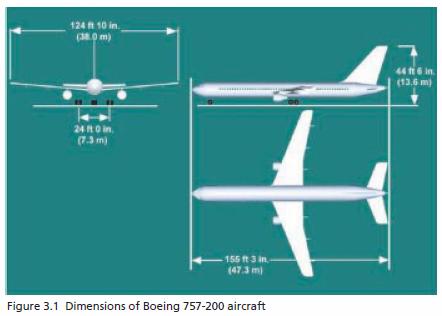
First a few drawings of the dimensions of a Boeing 757-200, especially the right wing part of it.
On a 757-200, each wing has 4 outboard flap guiding rails, 2 inboard flap guiding rails and 1 wingtip aileron.
Both most inward guiding rails are set just beside the fuselage its body. That's why you see only three of them as thin lines on each wing in above Figure 3.1 out of the ASCE report.
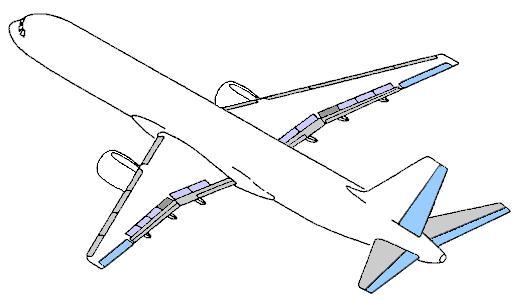
A 757-200 its Flight Control Surfaces are :
Pitch control, is provided by:
two Elevators and
a movable horizontal Stabilizer
Roll control, is provided by:
two wingtip Ailerons and
Ten Spoilers
( 2x5 Symmetric Spoilers are also used as Speedbrakes.
The two extra (pink) spoilers left and right are only used on the ground.)
Yaw control, is provided by a single Rudder.
Slats and Flaps provide high lift for takeoff, approach, and landing.
They consist of the leading edge SLATS, and the trailing edge FLAPS.
The flaps (and slats) are guided by guiding rails on both sides of each flap, they extend about 0.8 yard / 80 cm from under the wings, their undersides are quite sharp.
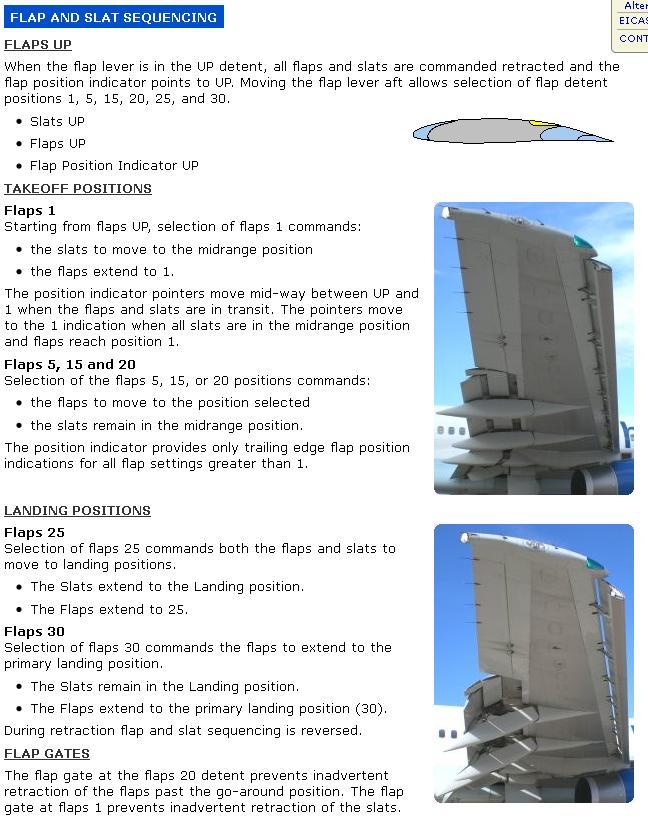
Here below you can see a bit better how far the outer guide-rail housing of the outer flap on the right wing of a 757-200 is positioned from the right jet engine :
I would appreciate it if anyone with a better picture, taken from straight behind that right wing, would post such a picture. That way we can construct the right dimensions for the distance between that out-most guide rail housing, and the right side of the right jet engine.
And then we can see if that right jet engine could have caused that hole in the wire mesh of the trailer park fence, near the corner of that fence, on 9/11. The ASCE report came up with that explanation. I do not believe them. My reasons will follow further up in this post.
Thank you in advance when one of you can post such a right wing photo with clear positions of those 4 guide rail housings. The fourth one is so close to the fuselage, you can't see them in the Biggles drawings. Only difficult to find in the one screenshot by me, above. Its the one with a greater angle downwards, tightly fit near the outer hull of the fuselage.
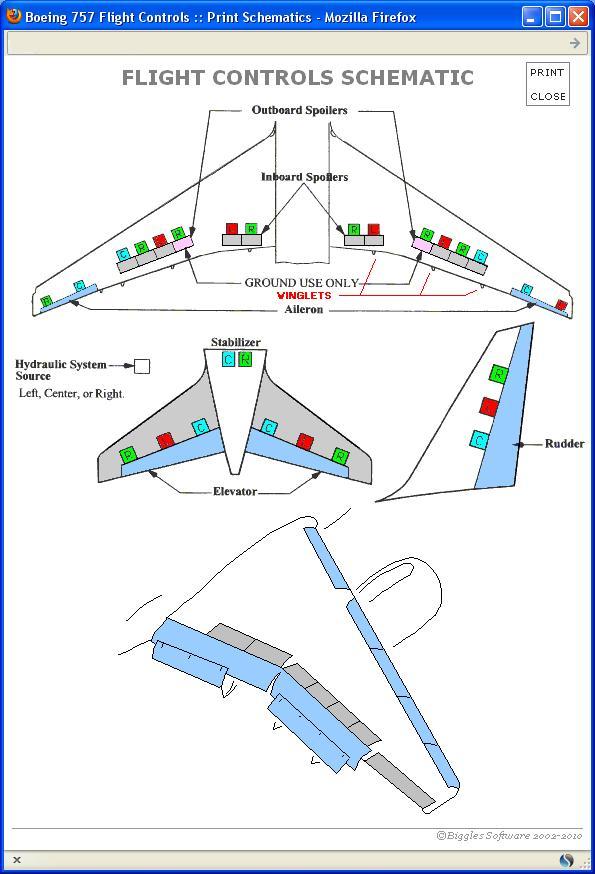
These are more Boeing 757-200 specifications :
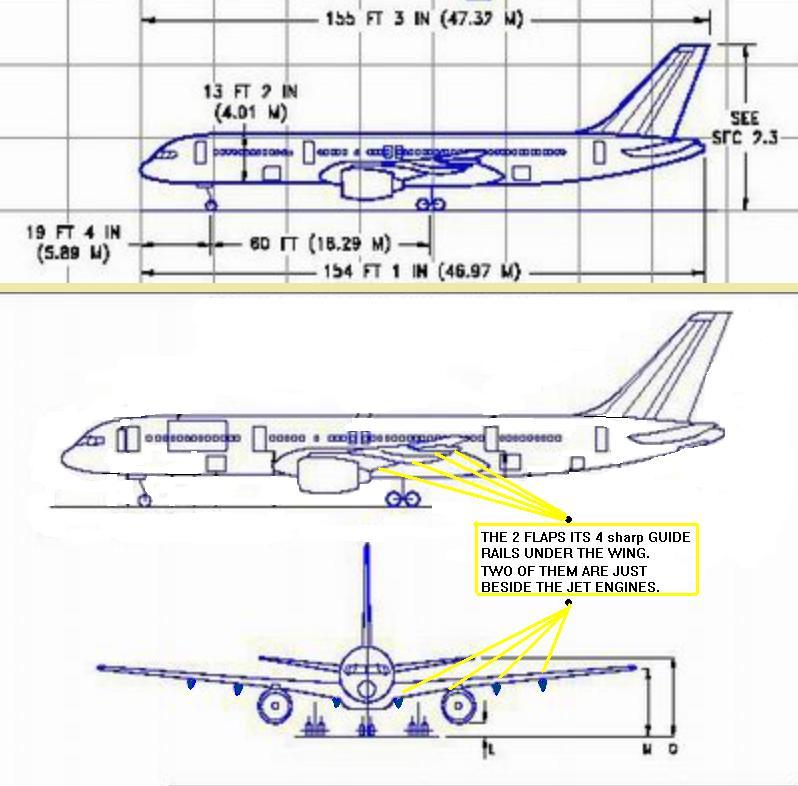
I added some text, to show the positions of the outer guide rail housings, sticking out from under the wings, up to about 0.8 meter/yard deep.
On a 757-200, each wing has 4 outboard flap guiding rails, 2 inboard flap guiding rails and 1 wingtip aileron.
Both most inward guiding rails are set just beside the fuselage its body. That's why you see only three of them as thin lines on each wing in above Figure 3.1 out of the ASCE report.
A 757-200 its Flight Control Surfaces are :
Pitch control, is provided by:
two Elevators and
a movable horizontal Stabilizer
Roll control, is provided by:
two wingtip Ailerons and
Ten Spoilers
( 2x5 Symmetric Spoilers are also used as Speedbrakes.
The two extra (pink) spoilers left and right are only used on the ground.)
Yaw control, is provided by a single Rudder.
Slats and Flaps provide high lift for takeoff, approach, and landing.
They consist of the leading edge SLATS, and the trailing edge FLAPS.
The flaps (and slats) are guided by guiding rails on both sides of each flap, they extend about 0.8 yard / 80 cm from under the wings, their undersides are quite sharp.
Here below you can see a bit better how far the outer guide-rail housing of the outer flap on the right wing of a 757-200 is positioned from the right jet engine :
I would appreciate it if anyone with a better picture, taken from straight behind that right wing, would post such a picture. That way we can construct the right dimensions for the distance between that out-most guide rail housing, and the right side of the right jet engine.
And then we can see if that right jet engine could have caused that hole in the wire mesh of the trailer park fence, near the corner of that fence, on 9/11. The ASCE report came up with that explanation. I do not believe them. My reasons will follow further up in this post.
Thank you in advance when one of you can post such a right wing photo with clear positions of those 4 guide rail housings. The fourth one is so close to the fuselage, you can't see them in the Biggles drawings. Only difficult to find in the one screenshot by me, above. Its the one with a greater angle downwards, tightly fit near the outer hull of the fuselage.
These are more Boeing 757-200 specifications :
I added some text, to show the positions of the outer guide rail housings, sticking out from under the wings, up to about 0.8 meter/yard deep.
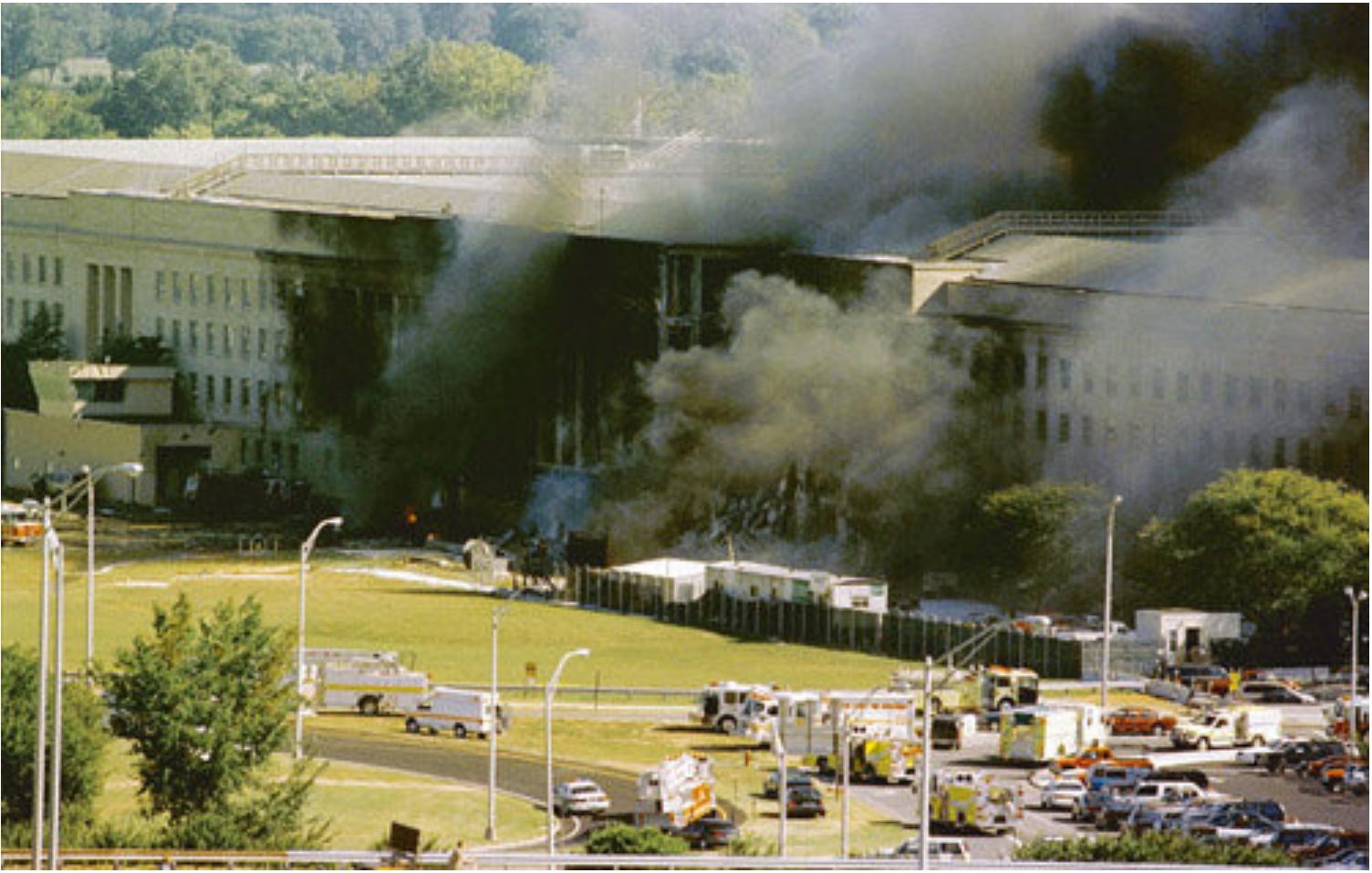
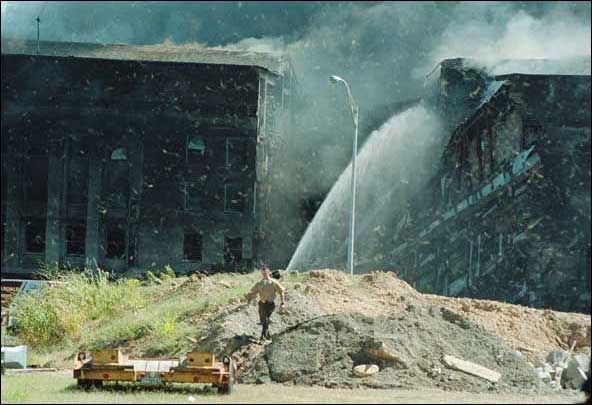
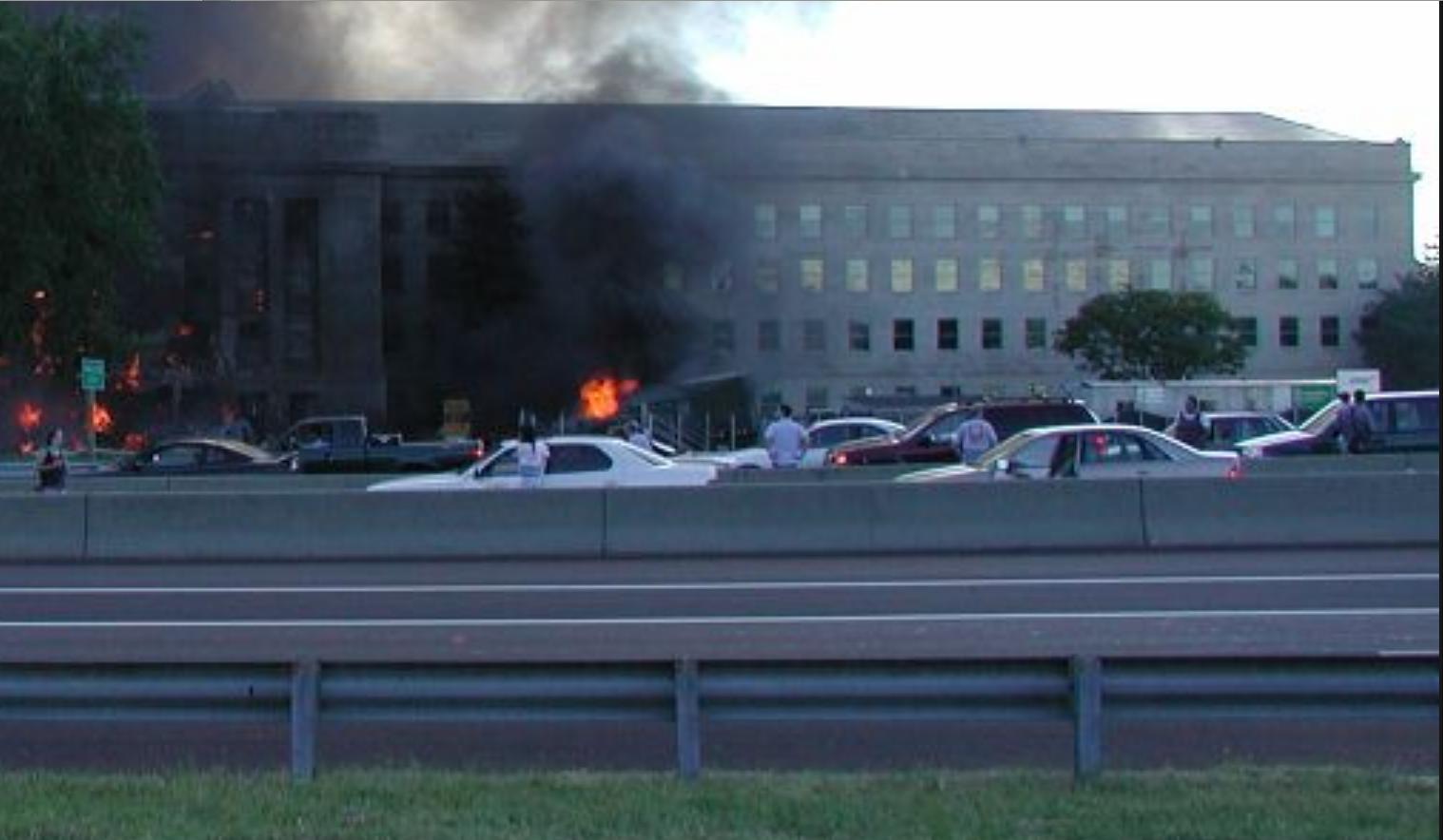
This is a photo obviously taken from inside a helicopter, so to see during the first pull-out of all rescue workers caused by a warning by radio, that
a second plane was entering Washington DC airspace. All people were pulled back under the Pike overpass, for about 15 minutes long. The Wedge 1 part
with the impact hole in its wall has not collapsed yet.
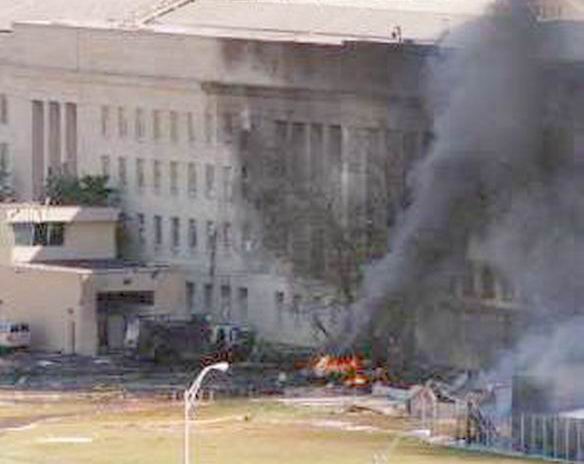
The trailer is so to see pushed around its rear double wheels axle and came to rest at an angle of about 45° to the long fence, and the long west wall's foundation line.
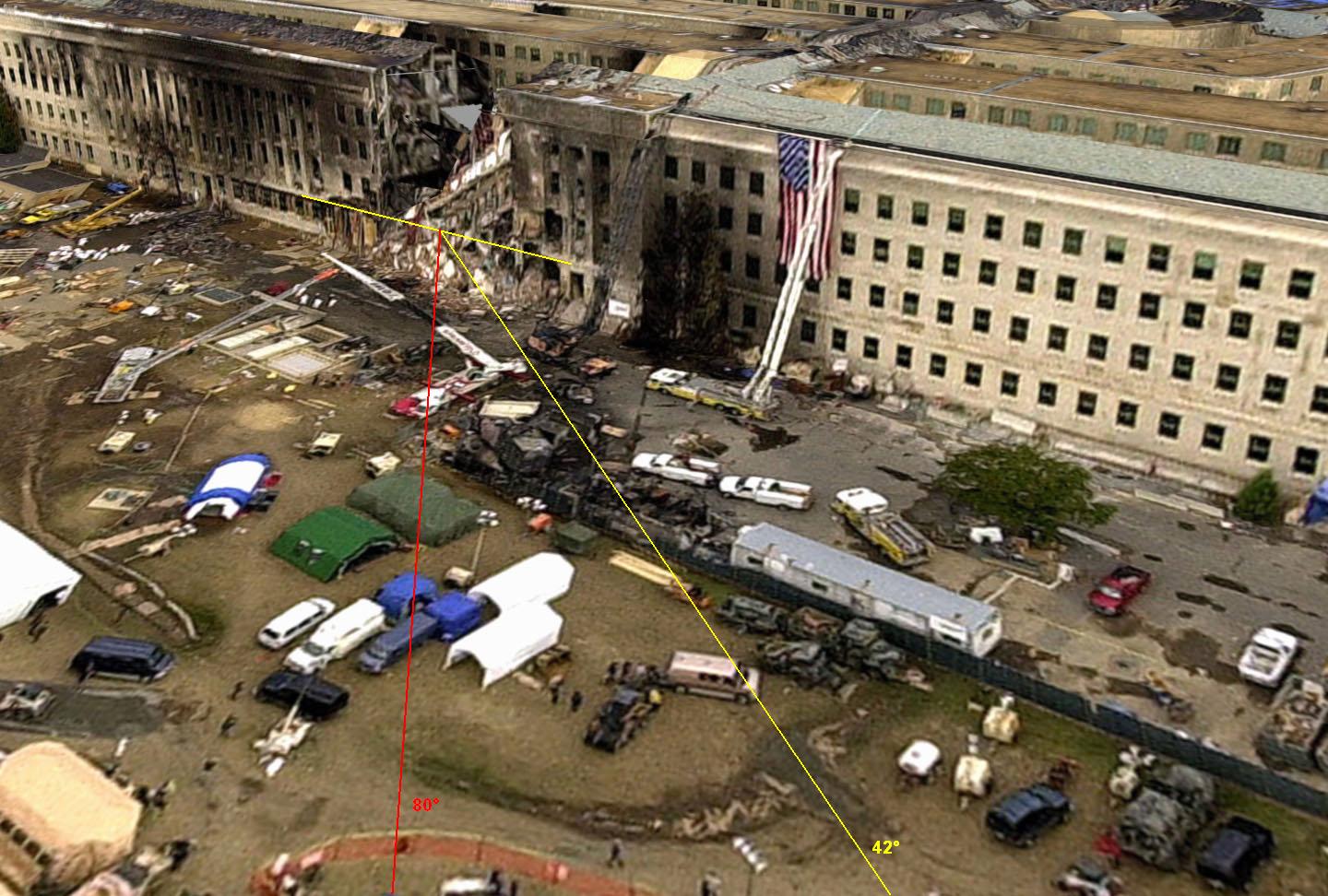
This position is much more in concordance with a hit over the generator cabin roof by the wing its out-most flap-guide-rail housing, under an attack angle of about 75° to 80°, which is the real angle as can be seen in that photo of it, which will smash the whole trailer about that 45° angle aside and backwards because of its much stronger pushing vector force in the sidewards direction along the latitudinal, smallest side axis of that trailer. The wing had already milliseconds passed that trailer, when the mass of the trailer started to shift and moved backwards under influence of that huge impact.
If that wing its outer guide-rail housing however had really smashed through that generator cabin's roof under an attack angle of 42° as proposed by the ASCE report, that's thus about half as big an angle as what the cabin's roof gouge shows as the real angle it was hit and gouged, then the whole trailer would have been dragged more forwards than aside, more along the attack path, under influence of the much sharper and thus stronger resulting vector force in the forwards direction along the trailers longitudinal longest length axis :
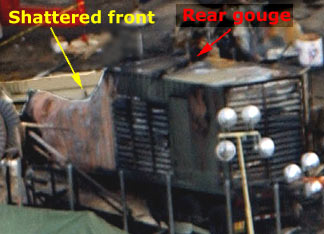
This is the famous gouge photo, one thing is curious, it looks as if the whole trailer has been pushed back towards the fence again, it seems not the originally recorded by photograph 45° angle anymore with the long fence line, it's much less, about half of that after-impact angle. It is obviously shot much later than the impact hour, so to see even one or more days after, according to the lights and tents set up along the fence.
Luckily I have photos much shorter after the impact, where you clearly can see the onset of that gouge, in the top side of the generator cabin's side panel. So the gouge was there, in the same spot, already just after the impact time :
In the below picture from 05 September 2001 you can see that the diesel tank plus attached generator trailer was originally positioned in the north corner of the fenced off renovation trailers space. That trailer was put there in a parallel position to that fence, with its diesel tank attached on the same trailer, crammed against that wire mesh of the corner of the fence, at the far north end of that trailers space, in the northernmost corner portion of the fence. The fence made there a 90° angle towards the about 2 meters protruding-out part of the west wall north-south line, it was a hundred meters long portion of the west wall facade that stuck out.
You can also see the green leafed tree behind the long white conference (or another generator) trailer, that was the spot where the nose of the plane hit the west wall, after having obliterated both the conference trailer and that tree :
Source : www.stooorage.com...
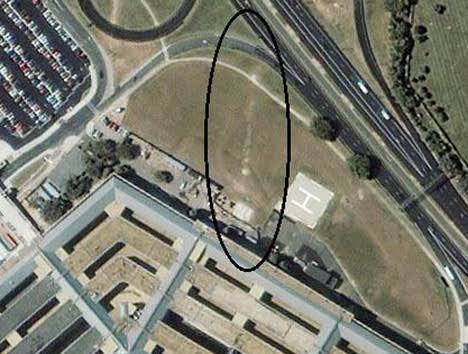
Only a 1.5 meter high stump of that impact point, green leafed tree was left to be seen after impact, with two thin side-stick pieces sticking out from the left side of the roots portion, and can be seen in this part of a Riskus hires photo, shot by him within three minutes after the impact :
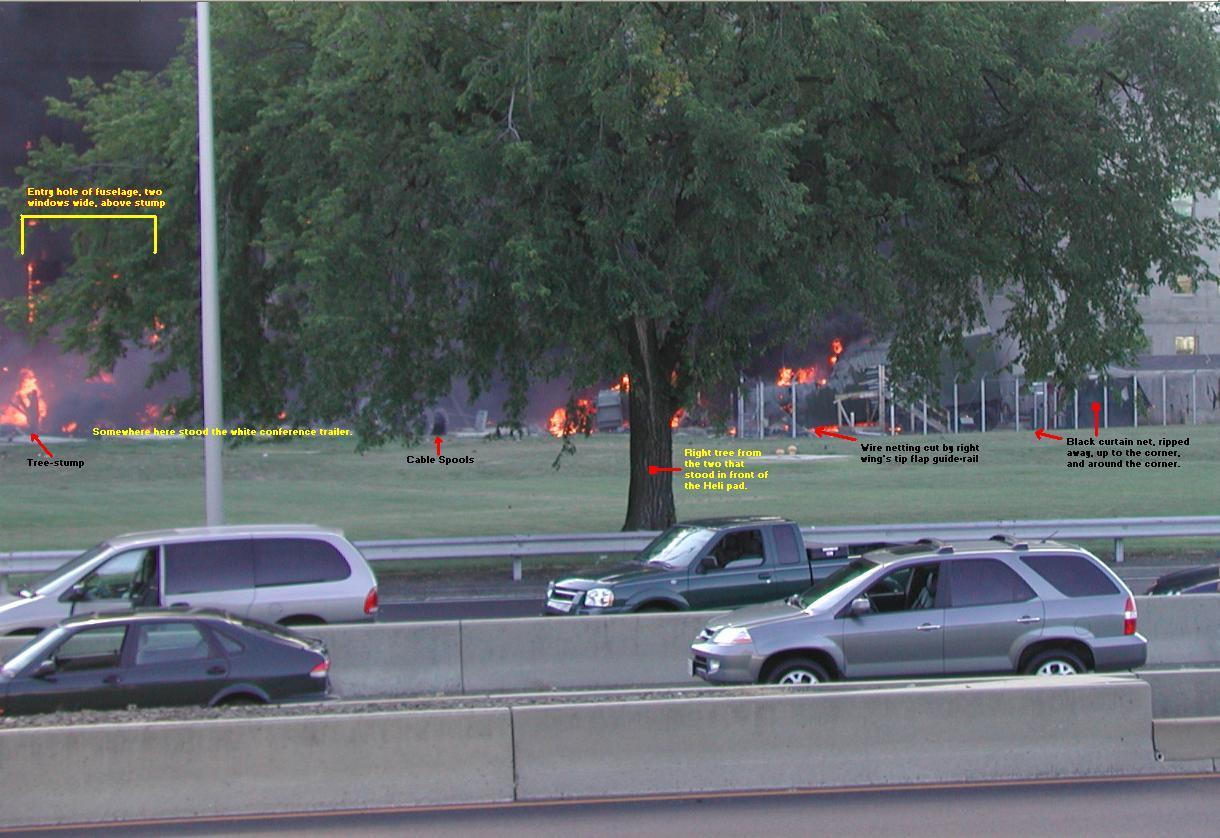
In the below photo, you can see that the diesel tank + generator trailer (both on the same undercarriage) had been impacted by the right wing its outer flap guide rail sticking out from under the right wing, making a deep gouge in the roof of the generator part (shown later), with such tremendous force, that the whole trailer was pushed around its back wheels axle to an about 45° angle with the fence, while its original position was parallel with that fence, and with just enough room between the trailer and the fence that a wooden access stair with wooden platform fitted in between. You could also see in other sharper pictures that that stair's platform now stood about 1.5 meter further north (probably still in its original place) than the whole pushed away generator trailer, while the access door in the west side-panel of that generator housing space was that same distance pushed back by the impact of the right wing's tip.
Just as Probst reported in the ASCE report to have witnessed when he dove to the ground while the plane flew over his head. He was walking on the small foot path along the safety rail beside Route 27, just a few meters away from the Heli pad, according to him, when AA 77 came diving towards the west wall. That's a spot on that foot path a few meters away from the southern one of the two trees that grew in front of that Heli pad, along Route 27.
The plane has thus crossed over Route 27 with its left wing tip just a few meters beside that southern tree.
Source : www.stooorage.com...
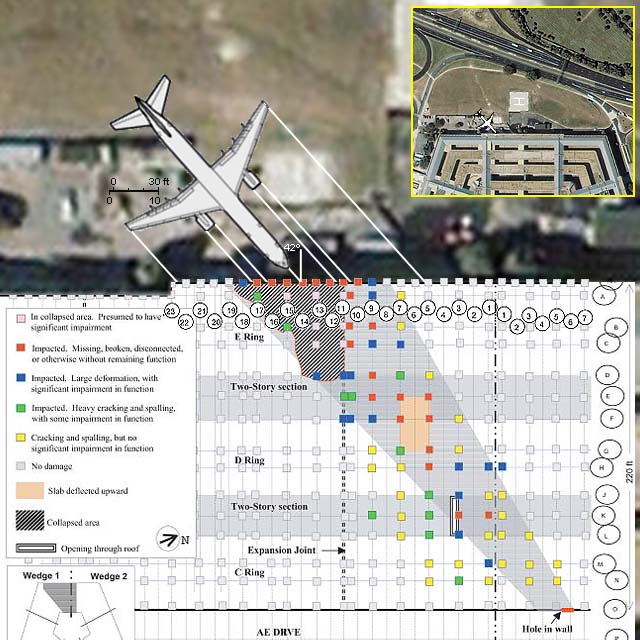
When AA 77 really would have taken the SoC 52° attack angle shown in this ASCE report drawing (instead of the even sharper ASCE angle of 42°, according to the ASCE Pentagon Performance Report its own printed words, real impact angle, which I do not believe in), it's right jet engine would have impacted and straight smashed through the generator's left side, and we would have seen nothing back from that trailer. It would have been obliterated.
Instead however, in reality the right wing tip (according to renovation worker Probst) scratched the top of the roof of that generator trailer and made a 75° to 80° gouge in it.
When you look at the side of that diesel tank, it does not show a sign of an eventual hit by a huge 3 ton heavy jet engine. It has the looks of a sagged-in container, scorched by an intense longterm hot fire, and looks as a strongly oxidized metal plating, red rust colored.
When a huge jet engine, with the end-speed proposed by the found FDR data, would have ripped through its top part, the whole diesel tank would not exist anymore, and the jet engine would have broken off and cartwheeled into the soil and then impacted the west wall, and remained visible in front of that west wall's first floor's bottom line. It did nothing of that all, it must have straight gone into the wall and its columns, and partly penetrated it and blown to a thousand pieces somewhere shortly inside, where its remaining parts collided with the rest of those sturdy massively steel bar reinforced columns, and/or the vast thick second floor slab :
The above gouge is probably caused by one of the far right-side flap guiding rails, that stick out under each wing, about 80 cm down (0.8 yard). These are sharp keel-formed extensions under the wings, which are about the only things that could have caused that 70° to 80° gouge in that trailer's roof. Since the flaps were not extended according to all witnesses, the plane attacked in a clean configuration, no flaps, and wheels up.
Since these flaps their guide-rails are fixed-fit under each wing, in a fashion that's perfectly parallel to the plane's body (no extra enormous air resistance at cruise speeds), the resulting gouge from the cut that one of these rails seems to have made in the generator trailer's roof top, also indicates perfectly the attack angle of the plane on its impact path towards the Pentagon's west wall.
Thus, this is another grave indication that the whole official South of CITGO gas station flight path for AA 77 is a full blown lie.
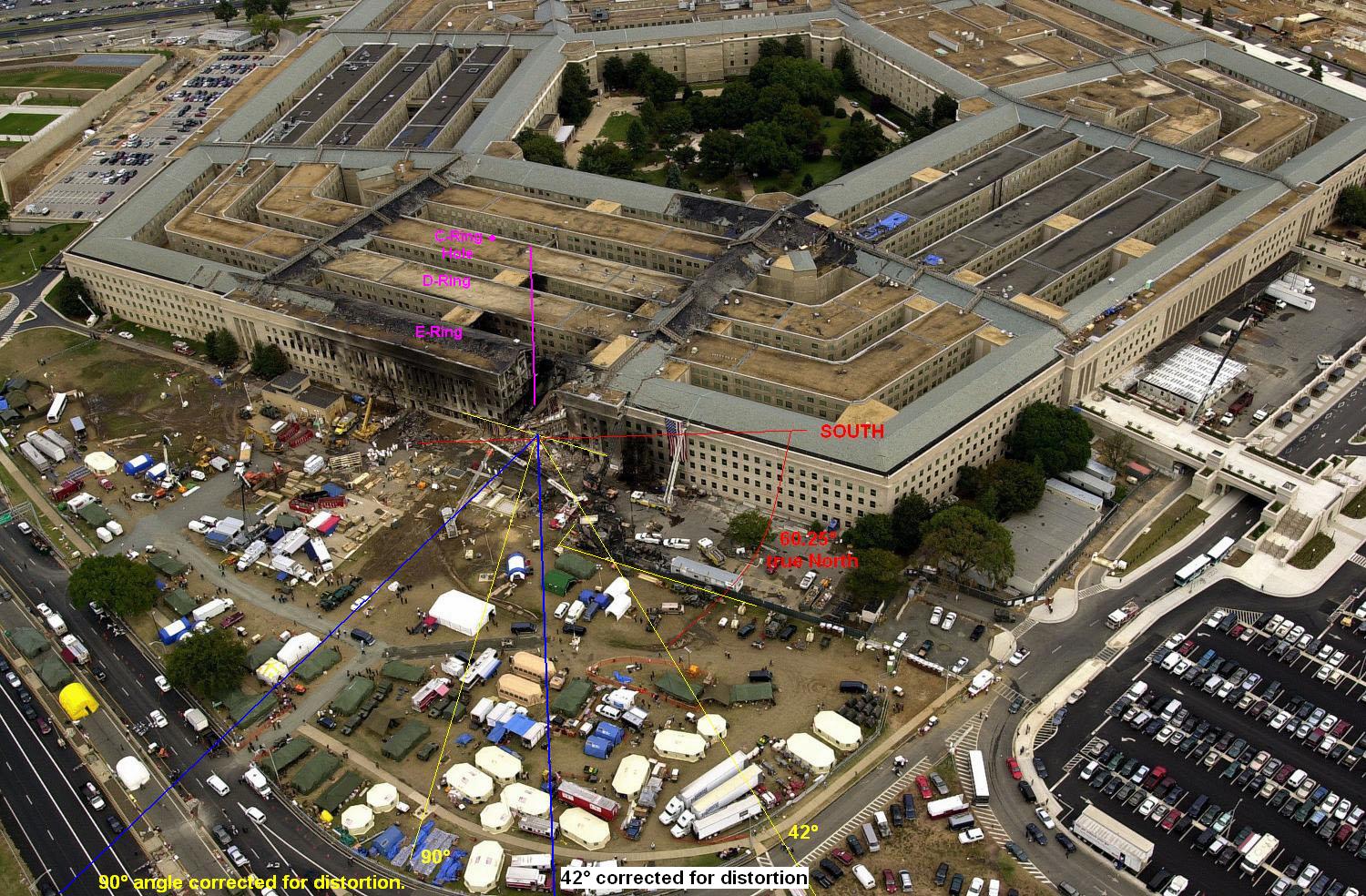
It is more obvious a lie, when you study this ASCE report drawing and the plane's angle of attack of 46° to a perpendicular line drawn on the west wall longitudinal north-south line. In my opinion, the angle with that west wall its longitudinal line should be taken as the angle of attack, not this depiction. In that case the same angle of 46° instead of 42° is shown in this picture, and a line through the fuselage would not end up in the red "Hole in wall" in the AE-Drive space, and that fuselage line is again depicting not a 42° angle, but a 46° angle.
When you draw a real 42° angle through the red line and extend it towards the trailer area, that line depicting the planes center line in its body, will go through the second trailer to the left. Not through the generator trailer at all. The right wing its jet engine would go straight through that second trailer. All these ASCE report drawings are all meant to confuse the reader, and to plant the wrong conclusion in his mind.
When you hold a plastic ruler at a circa 80° angle to the nose of that tiny plane in the inserted photo in the upper right corner, you will see the real attack angle, and that the whole plane in fact ended up under the later "collapsed" portion of Wedge 1. It did not further get inside than the inner wall of the E-Ring, where the collapsed portion ended.
All the other internal damage must have been caused by explosives, there is no other explanation, when you see through the ASCE report its pile of hogwash :
The trailer is so to see pushed around its rear double wheels axle and came to rest at an angle of about 45° to the long fence, and the long west wall's foundation line.
This position is much more in concordance with a hit over the generator cabin roof by the wing its out-most flap-guide-rail housing, under an attack angle of about 75° to 80°, which is the real angle as can be seen in that photo of it, which will smash the whole trailer about that 45° angle aside and backwards because of its much stronger pushing vector force in the sidewards direction along the latitudinal, smallest side axis of that trailer. The wing had already milliseconds passed that trailer, when the mass of the trailer started to shift and moved backwards under influence of that huge impact.
If that wing its outer guide-rail housing however had really smashed through that generator cabin's roof under an attack angle of 42° as proposed by the ASCE report, that's thus about half as big an angle as what the cabin's roof gouge shows as the real angle it was hit and gouged, then the whole trailer would have been dragged more forwards than aside, more along the attack path, under influence of the much sharper and thus stronger resulting vector force in the forwards direction along the trailers longitudinal longest length axis :
This is the famous gouge photo, one thing is curious, it looks as if the whole trailer has been pushed back towards the fence again, it seems not the originally recorded by photograph 45° angle anymore with the long fence line, it's much less, about half of that after-impact angle. It is obviously shot much later than the impact hour, so to see even one or more days after, according to the lights and tents set up along the fence.
Luckily I have photos much shorter after the impact, where you clearly can see the onset of that gouge, in the top side of the generator cabin's side panel. So the gouge was there, in the same spot, already just after the impact time :
In the below picture from 05 September 2001 you can see that the diesel tank plus attached generator trailer was originally positioned in the north corner of the fenced off renovation trailers space. That trailer was put there in a parallel position to that fence, with its diesel tank attached on the same trailer, crammed against that wire mesh of the corner of the fence, at the far north end of that trailers space, in the northernmost corner portion of the fence. The fence made there a 90° angle towards the about 2 meters protruding-out part of the west wall north-south line, it was a hundred meters long portion of the west wall facade that stuck out.
You can also see the green leafed tree behind the long white conference (or another generator) trailer, that was the spot where the nose of the plane hit the west wall, after having obliterated both the conference trailer and that tree :
Source : www.stooorage.com...
Only a 1.5 meter high stump of that impact point, green leafed tree was left to be seen after impact, with two thin side-stick pieces sticking out from the left side of the roots portion, and can be seen in this part of a Riskus hires photo, shot by him within three minutes after the impact :
In the below photo, you can see that the diesel tank + generator trailer (both on the same undercarriage) had been impacted by the right wing its outer flap guide rail sticking out from under the right wing, making a deep gouge in the roof of the generator part (shown later), with such tremendous force, that the whole trailer was pushed around its back wheels axle to an about 45° angle with the fence, while its original position was parallel with that fence, and with just enough room between the trailer and the fence that a wooden access stair with wooden platform fitted in between. You could also see in other sharper pictures that that stair's platform now stood about 1.5 meter further north (probably still in its original place) than the whole pushed away generator trailer, while the access door in the west side-panel of that generator housing space was that same distance pushed back by the impact of the right wing's tip.
Just as Probst reported in the ASCE report to have witnessed when he dove to the ground while the plane flew over his head. He was walking on the small foot path along the safety rail beside Route 27, just a few meters away from the Heli pad, according to him, when AA 77 came diving towards the west wall. That's a spot on that foot path a few meters away from the southern one of the two trees that grew in front of that Heli pad, along Route 27.
The plane has thus crossed over Route 27 with its left wing tip just a few meters beside that southern tree.
Source : www.stooorage.com...
When AA 77 really would have taken the SoC 52° attack angle shown in this ASCE report drawing (instead of the even sharper ASCE angle of 42°, according to the ASCE Pentagon Performance Report its own printed words, real impact angle, which I do not believe in), it's right jet engine would have impacted and straight smashed through the generator's left side, and we would have seen nothing back from that trailer. It would have been obliterated.
Instead however, in reality the right wing tip (according to renovation worker Probst) scratched the top of the roof of that generator trailer and made a 75° to 80° gouge in it.
When you look at the side of that diesel tank, it does not show a sign of an eventual hit by a huge 3 ton heavy jet engine. It has the looks of a sagged-in container, scorched by an intense longterm hot fire, and looks as a strongly oxidized metal plating, red rust colored.
When a huge jet engine, with the end-speed proposed by the found FDR data, would have ripped through its top part, the whole diesel tank would not exist anymore, and the jet engine would have broken off and cartwheeled into the soil and then impacted the west wall, and remained visible in front of that west wall's first floor's bottom line. It did nothing of that all, it must have straight gone into the wall and its columns, and partly penetrated it and blown to a thousand pieces somewhere shortly inside, where its remaining parts collided with the rest of those sturdy massively steel bar reinforced columns, and/or the vast thick second floor slab :
The above gouge is probably caused by one of the far right-side flap guiding rails, that stick out under each wing, about 80 cm down (0.8 yard). These are sharp keel-formed extensions under the wings, which are about the only things that could have caused that 70° to 80° gouge in that trailer's roof. Since the flaps were not extended according to all witnesses, the plane attacked in a clean configuration, no flaps, and wheels up.
Since these flaps their guide-rails are fixed-fit under each wing, in a fashion that's perfectly parallel to the plane's body (no extra enormous air resistance at cruise speeds), the resulting gouge from the cut that one of these rails seems to have made in the generator trailer's roof top, also indicates perfectly the attack angle of the plane on its impact path towards the Pentagon's west wall.
Thus, this is another grave indication that the whole official South of CITGO gas station flight path for AA 77 is a full blown lie.
It is more obvious a lie, when you study this ASCE report drawing and the plane's angle of attack of 46° to a perpendicular line drawn on the west wall longitudinal north-south line. In my opinion, the angle with that west wall its longitudinal line should be taken as the angle of attack, not this depiction. In that case the same angle of 46° instead of 42° is shown in this picture, and a line through the fuselage would not end up in the red "Hole in wall" in the AE-Drive space, and that fuselage line is again depicting not a 42° angle, but a 46° angle.
When you draw a real 42° angle through the red line and extend it towards the trailer area, that line depicting the planes center line in its body, will go through the second trailer to the left. Not through the generator trailer at all. The right wing its jet engine would go straight through that second trailer. All these ASCE report drawings are all meant to confuse the reader, and to plant the wrong conclusion in his mind.
When you hold a plastic ruler at a circa 80° angle to the nose of that tiny plane in the inserted photo in the upper right corner, you will see the real attack angle, and that the whole plane in fact ended up under the later "collapsed" portion of Wedge 1. It did not further get inside than the inner wall of the E-Ring, where the collapsed portion ended.
All the other internal damage must have been caused by explosives, there is no other explanation, when you see through the ASCE report its pile of hogwash :
edit on 6/3/12 by LaBTop because: (no reason given)
edit on 6/3/12 by LaBTop because: (no reason given)
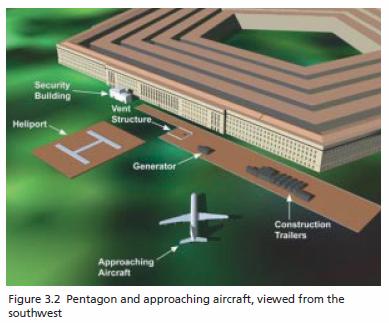
This below figure is Figure 3.2 out of the ASCE report.
As you can see, it is not a 42°, but much greater attack angle which they show, and the right wing tip is far out and away from the generator housing on its trailer when it passes through or over that trailer. The right jet engine would slam through that housing, while impacting it head on.
When the plane would have come in like that, the right wing its lower than the wing hanging jet engine, would have gone through the back of the generator trailer housing :
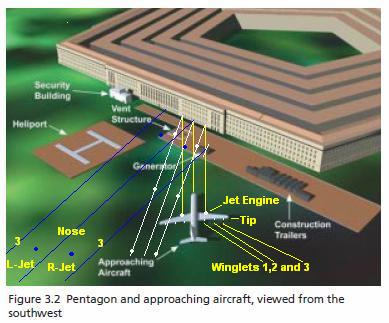
Here below I used the same figure 3.2 and drew my own wingtip and nose-cone lines in it, and the two jet engines as blue dots. Those blue lines by me depict a plane coming in at about a 75° angle.
The right wing tip's guide-rail, nr 3 on my two blue lines, which is its furthest out flap guide rail ("winglet" called here by me, to keep its description short) would then make that gouge in the roof of the generator housing build on top of that trailer's undercarriage.
With an angle to its roof of about 75° with its longest side, that stood parallel to the fence, that stood parallel to the west wall's facade bottom line.
The white lines depict another angle of attack, the white dots in them depict both the jet engines.
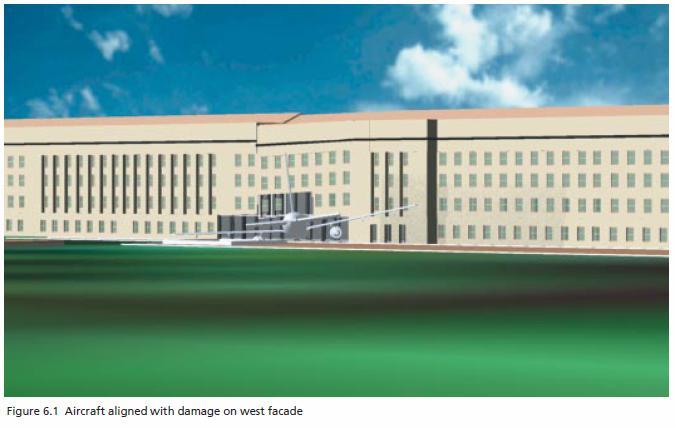
Another drawing from the ASCE report, the plane is flying too low, the left jet engine is plowing under the soil, the left wing is too low to fit the second floor its outer bottom line damage seen in the Riskus and Ingersoll photos, and other pictures taken within an hour after impact. The fuselage body must have flown into that two windows wide hole above the drawn by the ASCE artist body, so, the whole plane must have flown at least 2 meter higher :
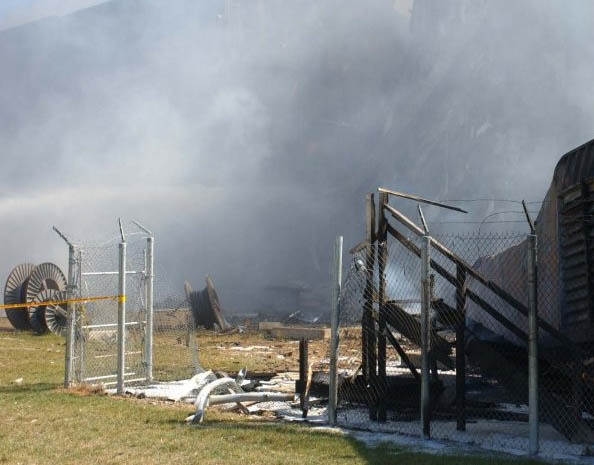
This is a sharp photo taken after the partial collapse at the Pentagon.
There is something intriguing me in this photo.
The wooden stairs end much higher than the underside of the metal entrance door in the side panel of the generator housing. It would suggest that the whole generator trailer stood on some kind of blocks, originally thus in an about 1 meter higher position.
That could explain the ease with which the impact of the right wing its out-most flap guide rail its sharp edged housing lowest part, could have dislocated that whole heavy trailer, and has pushed its north end where the diesel tank stood, towards the west wall, and at the same time pushed the whole trailer off its blocks, which caused it to also fall backwards, in a southernly direction. That's why the generator trailer its maintenance cabin door now is lower than the wooden stair, and about 1.5 meter backwards located.
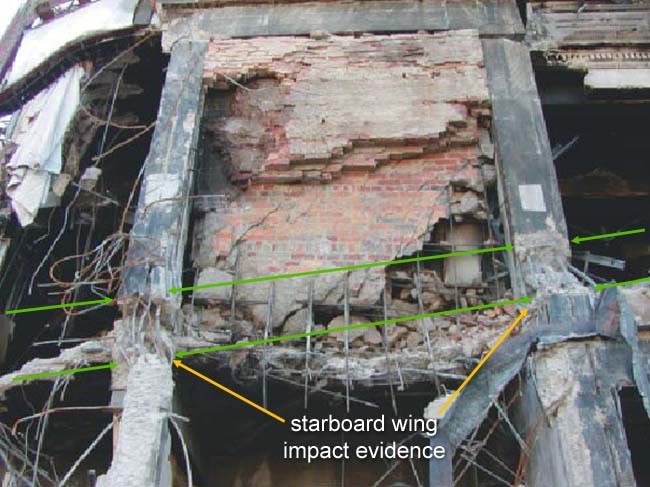
Below is a much sharper and wider photo that shows the onset of the gouge, in the top of the side panel, just 20 cm to the left of the generator housing's maintenance door. And here you can see that the wooden stair its platform must have been level with the metal door's bottom.
The impression is also planted by the way this photo is taken, that the right jet engine must have cut through the top part of the diesel tank container, the dull red colored front part, with a dent in its top part. This dent however looks much more like a sagging-in from the material, caused by the prolonged heavy burning of that diesel in that tank.
The bended poles from the fence are also curiously bended outward, not towards the west wall, but outwards, away from it. The former sheets blocking sight into the renovation trailers space area, is laying on the ground, beside the bottom of the wire mesh from that fence. It is not dragged away by any part of the wing, it is neatly piled up along and at the bottom of that fence as white colored sheets. The strange thing is that on pre-9/11 photos, that sheet material looks black colored. Perhaps it had two differently colored sides, a black outside, and a white inside. The White side then pointing inwards, towards the trailer area.
Later on I will show with some Purdue simulation screen shots, and some ASCE report drawings, that the officially proposed 42° attack angle would be in fact devastating to this ASCE proposal that the right jet engine has gone through this part of the disappeared fence material. It does not fit into the 42° internal damage path anymore then, and neither does it fit a line through the 5 "downed" light poles and through the 42° internal damage path inside the Pentagon. In nearly all ASCE report drawings they depict a totally different attack angle, from 50 to 58 to even 70° angles, just as in the Purdue simulation report.
You will not find any drawings by them, that really show a precise 42° attack angle.
And the wing tip that according to Mr Probst in that ASCE report went through that roof, would be sticking about twenty meters out from the southern rim of the generator cabin's roof.
When you believe Mr Probst report, the right jet engine would pass the corner of the fence within a wide margin of many meters. Which it in fact did, when you accept at last that the plane came from a north of the CITGO gas station direction, under an angle to the west wall of about 75° to 80°. And its wing tip will then pass over that roof, and will be able to make that gouge imprint in that roof with its out-most guide rail housing.
And the other, more inward guide rail will then rip that wire mesh away, together with its two missing pole-top-parts. And thus making that two poles wide hole in that fence.
And no further immense damage to the diesel tank or the generator cabin. Because they were already pushed out of the way by the first impact on the roof by the out-most guide rail. thus the second guide rail could rip away the wire mesh, the sheets and rip the two light poles off their bottom parts.
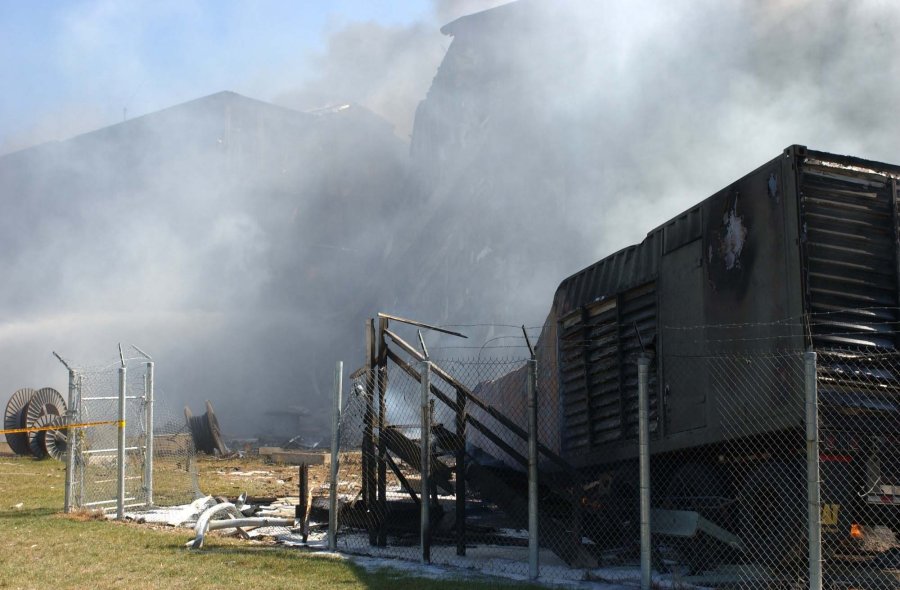
The hole in the fence, explained away by the ASCE report as caused by the right wing its jet engine, must have been caused by another wing structure.
Why? Because Probst said he saw the wing-tip impact the generator trailer. And then the jet engine is so far away from that hole, it must have passed to the left side of the corner edge of that fence.
Another reason : my explanation above. The trailer stood, also according to aerial photos taken on September 5, 2001, tightly fit in the corner part of that fence. And parallel to that fence its north to south length.
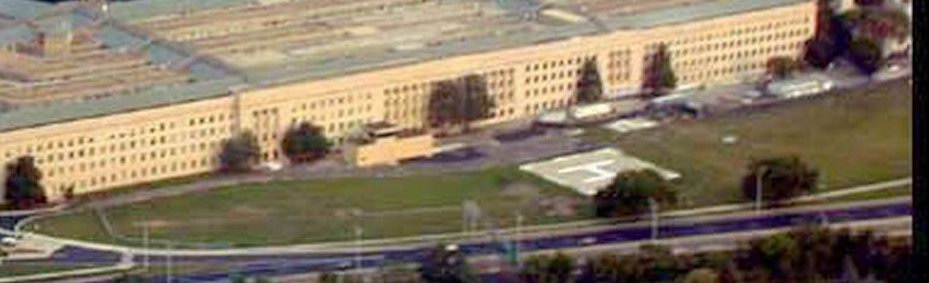
When the right wing jet engine of AA 77 would have caused that hole, the whole diesel tank plus generator and the trailer both stood on would have been blown to hundreds of pieces by the enormous impact of that tons heavy jet engine, impacting with that speed.
There would not have been much left of that whole trailer. And about hundred meter of that fence would have been totally ripped out of the ground.
The impact repercussions of such heavy parts at such speeds are very grave, and not a t all what we can see here.
That's why I believe Probst his ASCE eyewitness report, that perfectly fits the damage we see in this above photo, and the generator cabin's roof gouge photo :
That rear gouge makes an angle of about 75° with the roofs longitudinal rim line.
Thus, that SoC attack flight path by AA 77 is just an official bunch of hogwash, and a flat out, obvious lie.
As you can see, it is not a 42°, but much greater attack angle which they show, and the right wing tip is far out and away from the generator housing on its trailer when it passes through or over that trailer. The right jet engine would slam through that housing, while impacting it head on.
When the plane would have come in like that, the right wing its lower than the wing hanging jet engine, would have gone through the back of the generator trailer housing :
Here below I used the same figure 3.2 and drew my own wingtip and nose-cone lines in it, and the two jet engines as blue dots. Those blue lines by me depict a plane coming in at about a 75° angle.
The right wing tip's guide-rail, nr 3 on my two blue lines, which is its furthest out flap guide rail ("winglet" called here by me, to keep its description short) would then make that gouge in the roof of the generator housing build on top of that trailer's undercarriage.
With an angle to its roof of about 75° with its longest side, that stood parallel to the fence, that stood parallel to the west wall's facade bottom line.
The white lines depict another angle of attack, the white dots in them depict both the jet engines.
Another drawing from the ASCE report, the plane is flying too low, the left jet engine is plowing under the soil, the left wing is too low to fit the second floor its outer bottom line damage seen in the Riskus and Ingersoll photos, and other pictures taken within an hour after impact. The fuselage body must have flown into that two windows wide hole above the drawn by the ASCE artist body, so, the whole plane must have flown at least 2 meter higher :
This is a sharp photo taken after the partial collapse at the Pentagon.
There is something intriguing me in this photo.
The wooden stairs end much higher than the underside of the metal entrance door in the side panel of the generator housing. It would suggest that the whole generator trailer stood on some kind of blocks, originally thus in an about 1 meter higher position.
That could explain the ease with which the impact of the right wing its out-most flap guide rail its sharp edged housing lowest part, could have dislocated that whole heavy trailer, and has pushed its north end where the diesel tank stood, towards the west wall, and at the same time pushed the whole trailer off its blocks, which caused it to also fall backwards, in a southernly direction. That's why the generator trailer its maintenance cabin door now is lower than the wooden stair, and about 1.5 meter backwards located.
Below is a much sharper and wider photo that shows the onset of the gouge, in the top of the side panel, just 20 cm to the left of the generator housing's maintenance door. And here you can see that the wooden stair its platform must have been level with the metal door's bottom.
The impression is also planted by the way this photo is taken, that the right jet engine must have cut through the top part of the diesel tank container, the dull red colored front part, with a dent in its top part. This dent however looks much more like a sagging-in from the material, caused by the prolonged heavy burning of that diesel in that tank.
The bended poles from the fence are also curiously bended outward, not towards the west wall, but outwards, away from it. The former sheets blocking sight into the renovation trailers space area, is laying on the ground, beside the bottom of the wire mesh from that fence. It is not dragged away by any part of the wing, it is neatly piled up along and at the bottom of that fence as white colored sheets. The strange thing is that on pre-9/11 photos, that sheet material looks black colored. Perhaps it had two differently colored sides, a black outside, and a white inside. The White side then pointing inwards, towards the trailer area.
Later on I will show with some Purdue simulation screen shots, and some ASCE report drawings, that the officially proposed 42° attack angle would be in fact devastating to this ASCE proposal that the right jet engine has gone through this part of the disappeared fence material. It does not fit into the 42° internal damage path anymore then, and neither does it fit a line through the 5 "downed" light poles and through the 42° internal damage path inside the Pentagon. In nearly all ASCE report drawings they depict a totally different attack angle, from 50 to 58 to even 70° angles, just as in the Purdue simulation report.
You will not find any drawings by them, that really show a precise 42° attack angle.
And the wing tip that according to Mr Probst in that ASCE report went through that roof, would be sticking about twenty meters out from the southern rim of the generator cabin's roof.
When you believe Mr Probst report, the right jet engine would pass the corner of the fence within a wide margin of many meters. Which it in fact did, when you accept at last that the plane came from a north of the CITGO gas station direction, under an angle to the west wall of about 75° to 80°. And its wing tip will then pass over that roof, and will be able to make that gouge imprint in that roof with its out-most guide rail housing.
And the other, more inward guide rail will then rip that wire mesh away, together with its two missing pole-top-parts. And thus making that two poles wide hole in that fence.
And no further immense damage to the diesel tank or the generator cabin. Because they were already pushed out of the way by the first impact on the roof by the out-most guide rail. thus the second guide rail could rip away the wire mesh, the sheets and rip the two light poles off their bottom parts.
The hole in the fence, explained away by the ASCE report as caused by the right wing its jet engine, must have been caused by another wing structure.
Why? Because Probst said he saw the wing-tip impact the generator trailer. And then the jet engine is so far away from that hole, it must have passed to the left side of the corner edge of that fence.
Another reason : my explanation above. The trailer stood, also according to aerial photos taken on September 5, 2001, tightly fit in the corner part of that fence. And parallel to that fence its north to south length.
When the right wing jet engine of AA 77 would have caused that hole, the whole diesel tank plus generator and the trailer both stood on would have been blown to hundreds of pieces by the enormous impact of that tons heavy jet engine, impacting with that speed.
There would not have been much left of that whole trailer. And about hundred meter of that fence would have been totally ripped out of the ground.
The impact repercussions of such heavy parts at such speeds are very grave, and not a t all what we can see here.
That's why I believe Probst his ASCE eyewitness report, that perfectly fits the damage we see in this above photo, and the generator cabin's roof gouge photo :
That rear gouge makes an angle of about 75° with the roofs longitudinal rim line.
Thus, that SoC attack flight path by AA 77 is just an official bunch of hogwash, and a flat out, obvious lie.
This is another ASCE report drawing, showing a logical angle of attack by AA 77.
And I added a few of the newly found NoC flight path witness positions to it :
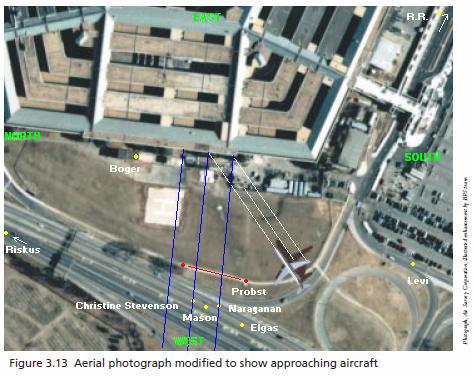
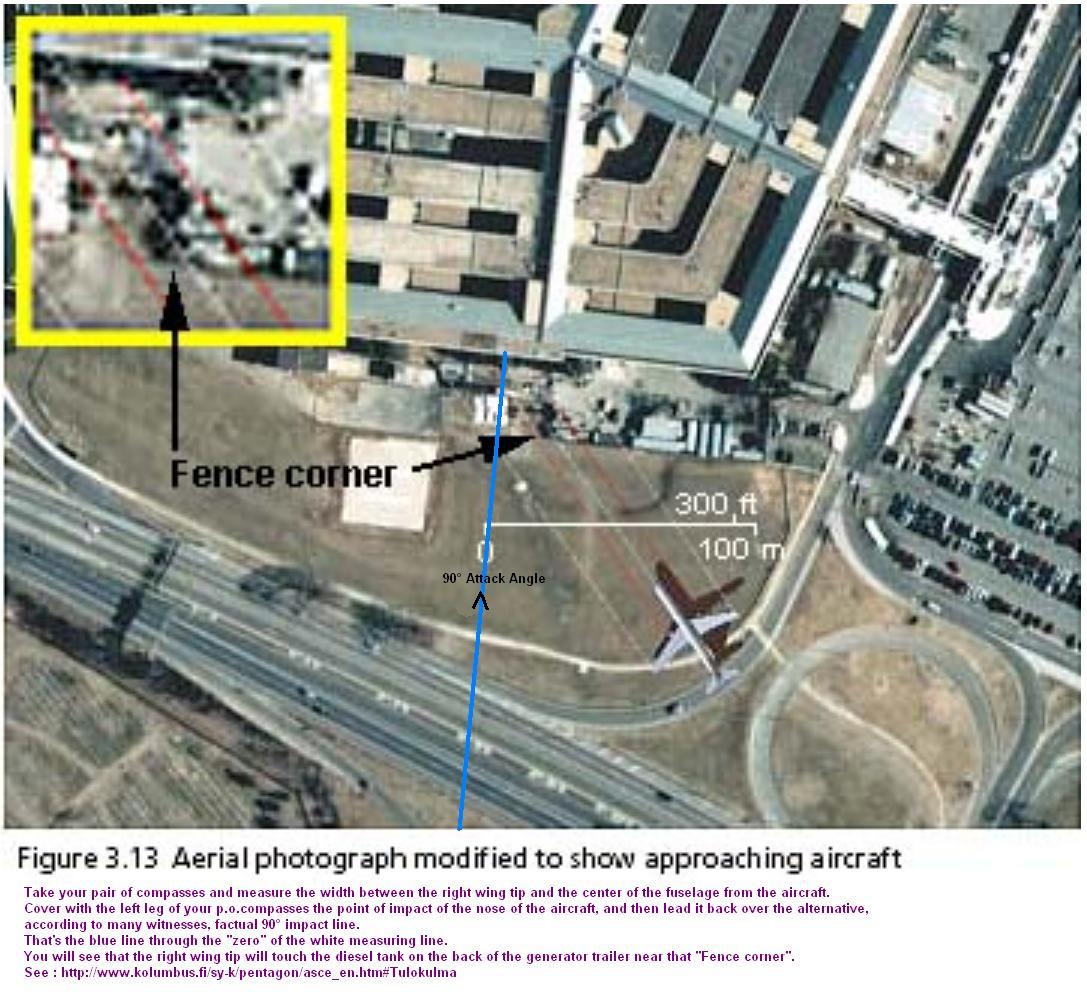
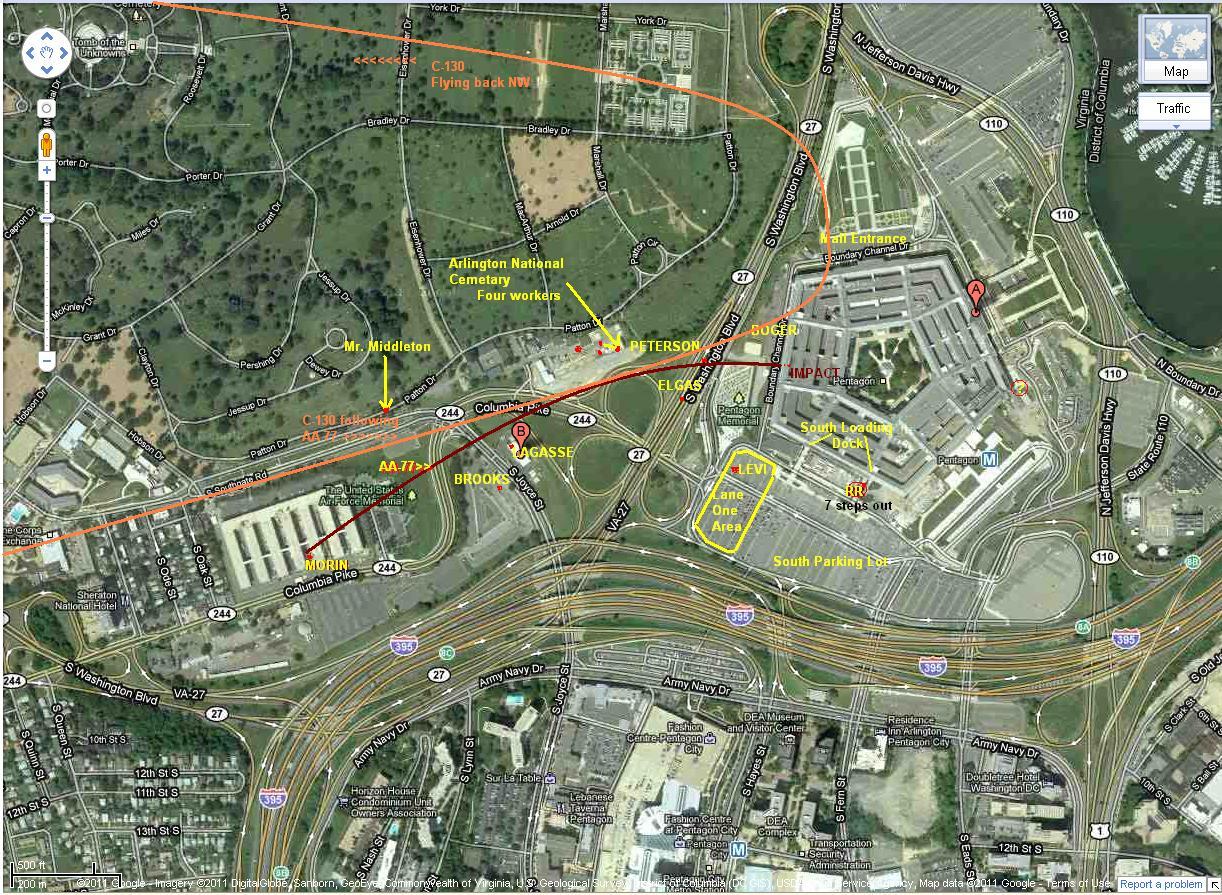
Probst was standing somewhere along the red line I drew in that Figure 3.13 out of the ASCE report. Don Mason (ASCE report), Penny Elgas, Vin Narayanan and Christine Peterson's positions are yellow dotted in by me too. Mr Levi stood in the Lane One area of the South Parking Lot and had a perfect view to the plane's starboard wing side and the point of impact.
And Roosevelt Roberts (white R.R.+ arrow), the CIT/PfT "witness" for a fly-over, stood at the rim of the east loading dock area of South Loading (that's the most eastern part of it) :
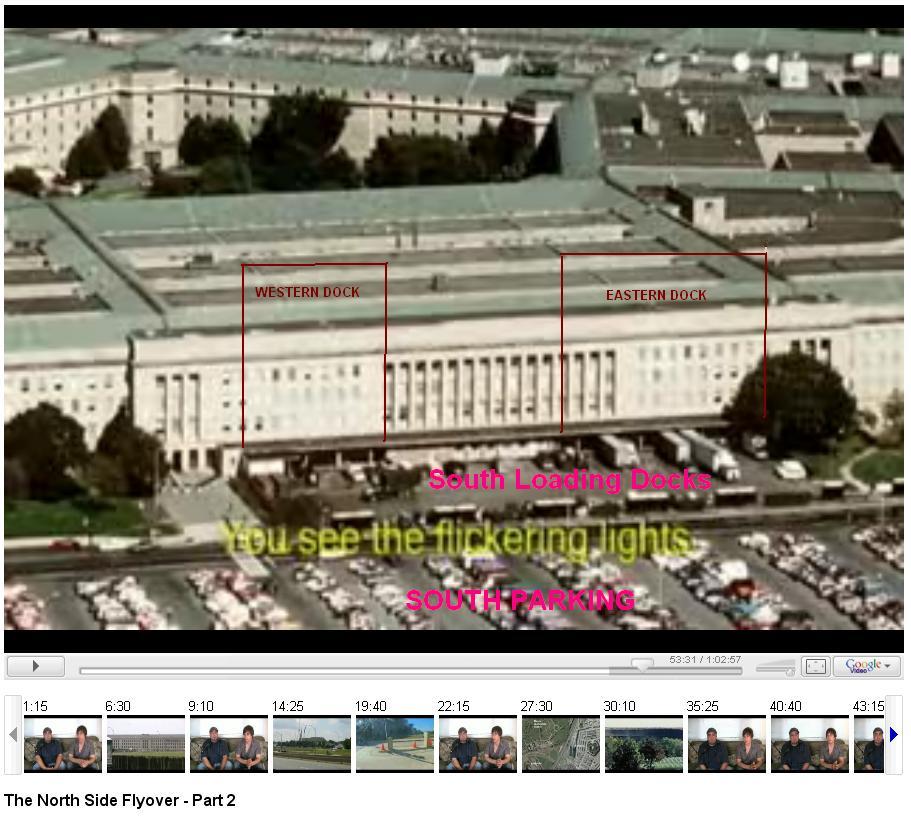
And when you listen to Roosevelt's two telephone interviews with CIT, and read his Army History Units interview, and his Library of Congress interview, and you are not hell bend to use him as a possible "fly-over" witness, it becomes crystal clear that he describes first the diving down from over the Annex towards Route 27, from his point of view out, nearing the Pentagon in an airspace above the Lane One area of the South Parking Lot, and then disappearing out of his sight, and then he describes later, the sound and affects of the impact in the west wall, just as all other witnesses described the same impact.
Later he talks about the C-130 higher in the sky above Route 27, nearing him on an eastwards course, then making a turn northwest wards above Route 27 but in front of the smoke column. CIT however really wants to make it true, that he still describes AA 77, when in reality he switched over to his description of the C-130.
If Roosevelt ever gives another interview, I bet you he will tell the same story as I just explained above. He saw two planes, within a three minutes interval.
Sean Boger stood together with his female colleague in the Heli Pad tower, and saw the plane heading toward a spot about 60 meter to his left in the west wall, coming from a flight path northernly of the CITGO gas station. He looked straight at that gas station from his position on the top floor of that tower. If you don't believe what he saw, look up his online testimonies (interviewed by CIT and the Army History Units, and some newspapers).
As you can see, the plane must have crossed Route 27 over that dirt mound with the yellow VDOTtrailer used for lamp-post transportation, photographed on 9/11, behind it.
I have two more photos near each one of some of the downed 5 poles, with another yellow VDOT trailer in it, photographed on 9/11. That's three trailers, positioned in places where people could have carried, already prepared as broken, lamp pole pieces to Route 27.
This one would have been placed in an ideal spot to prepare for the taxi windshield spearing story a hundred meters further on Route 27, above the Pike overpass bridge.
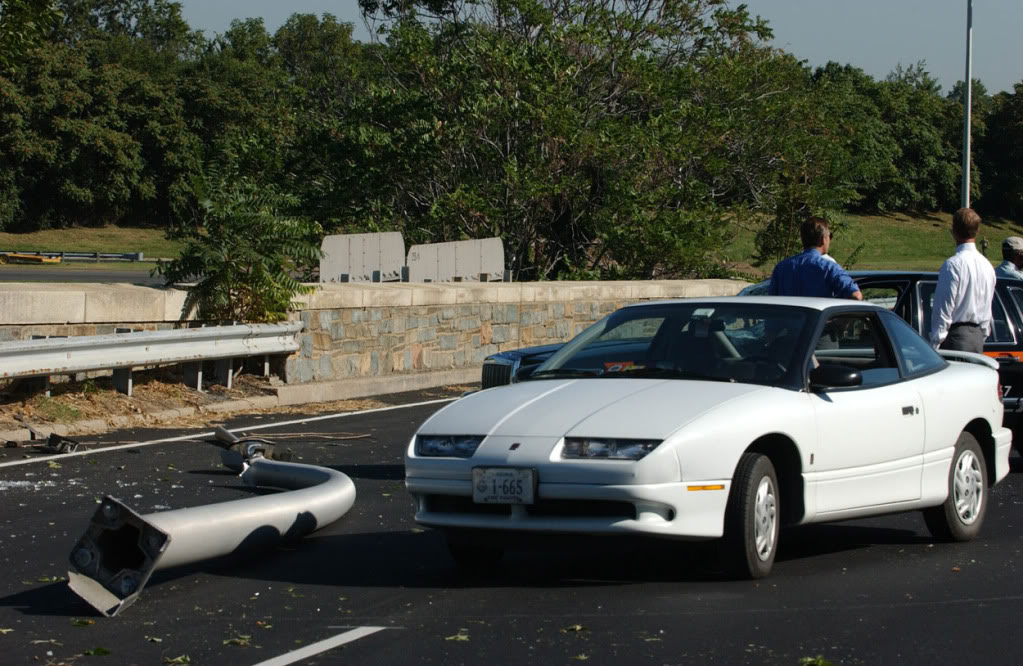
I can easily imagine those pole pieces waiting there on top of this VDOT trailer, to be picked up by one or more of the three guys in the Ingersoll pictures where we saw these guys blocking the south going lane of Route 27 with their vehicles, around the taxi cab with the hole in the front windshield, and the piece of curved light pole laying on the tarmac in front of it :
Mystery test : find the second VDOT trailer in this hires picture of the three cars surrounding the speared taxi cab plus curved pole.(remember, there's a third VDOT trailer in another 9/11 hires picture ! ).
"Members who would seek to refute conspiracy theories should be mindful of AboveTopSecret.com's TRADITION of focusing on conspiracy theories, cover-ups, and scandals" :
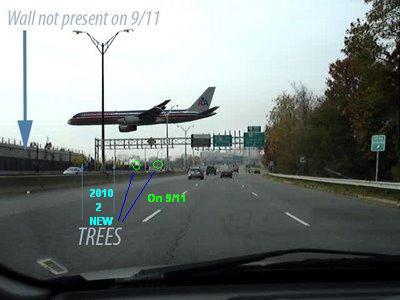
Steve Riskus saw AA 77 cross over Route 27 in the position and manner as depicted in the below photo, of Route 27 at the spot where Riskus was driving on 9/11, when he saw the plane passing over the road, just as depicted below. He admitted in email to the Italian blogger that made this composition photo-drawing below, that it showed EXACTLY what he saw on 9/11/2001. If he would have seen the official SoC flight path, he would have seen a much smaller plane (to his eyes) crossing Route 27 in the far distance in the same photo below, just passing in front of that second traffic signs board you can just vaguely see (green signs) spanning the road, in the far distance (under the huge board you see under the tail of the plane. The position of the two trees that stood in front of the Helipad on 9/11 are drawn in by me depicted by my 2 blue lines and my 2 green circles :
This is what Steve Riskus would have seen through his rear window when he would have driven down southwards, a few hundred meter further, and AA 77 would have really crossed Route 27 at the officially promoted point, just north of the overpass of Route 27 over the last part of Columbia Pike, leading to the Pentagon's South Parking Lot :
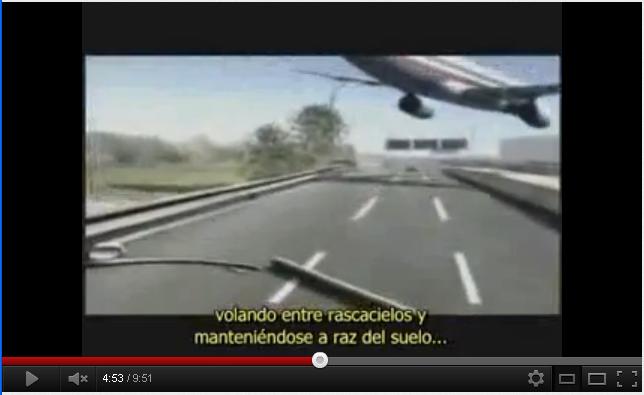
Steve Riskus did not see an airplane in this above or below configuration, the below one with its nose slightly up, to pass over the roofs of the Pentagon's west wing, thus negating the CIT and PfTruth fly-over theory. He keeps repeating that he definitely saw a plane in a downward configuration, nose down and tail slightly up, and that he saw that same plane slamming in the west wall of the Pentagon. Have a look at old 2001 aerial photos, there were no obstacles except the two trees in his field of view towards the impacted portion of the west wall. And he could easily look under the foliage of those two trees, since the nose cone's impact point was only 2.40 meters/yards high, at the level of the second floor's concrete slab :
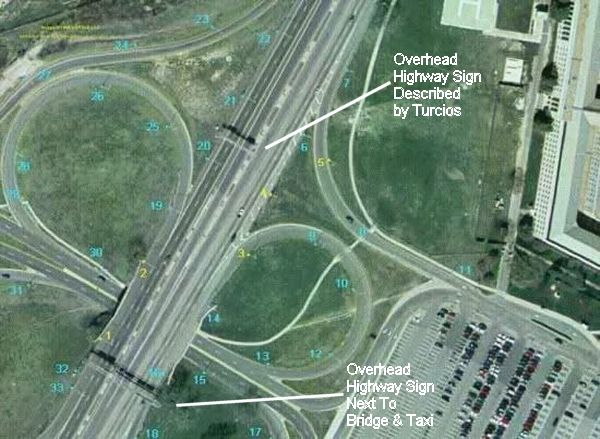
This is an aerial photo of the Pentagon and Route 27 about 110 yards / meters in front of it. The spot where Steve Riskus drove in the south going lanes, is further north of the half of 27 spanning road signs board. He says he saw that huge plane passing low, just behind that board.
Not the two times wider board, much further south, that spans the whole Route 27 lanes space. And he saw it cross over perpendicular to Route 27, not at a 42° angle, as the ASCE report wants us to believe :
As a closing note, I gave enough pointers and names and places to make good use of the local ATS Search function to unearth by yourself, much more relevant material to this discussion from former and later ATS posts. And much more can be found while using the same search terms with Google's world wide search engine.
And I added a few of the newly found NoC flight path witness positions to it :
Probst was standing somewhere along the red line I drew in that Figure 3.13 out of the ASCE report. Don Mason (ASCE report), Penny Elgas, Vin Narayanan and Christine Peterson's positions are yellow dotted in by me too. Mr Levi stood in the Lane One area of the South Parking Lot and had a perfect view to the plane's starboard wing side and the point of impact.
And Roosevelt Roberts (white R.R.+ arrow), the CIT/PfT "witness" for a fly-over, stood at the rim of the east loading dock area of South Loading (that's the most eastern part of it) :
And when you listen to Roosevelt's two telephone interviews with CIT, and read his Army History Units interview, and his Library of Congress interview, and you are not hell bend to use him as a possible "fly-over" witness, it becomes crystal clear that he describes first the diving down from over the Annex towards Route 27, from his point of view out, nearing the Pentagon in an airspace above the Lane One area of the South Parking Lot, and then disappearing out of his sight, and then he describes later, the sound and affects of the impact in the west wall, just as all other witnesses described the same impact.
Later he talks about the C-130 higher in the sky above Route 27, nearing him on an eastwards course, then making a turn northwest wards above Route 27 but in front of the smoke column. CIT however really wants to make it true, that he still describes AA 77, when in reality he switched over to his description of the C-130.
If Roosevelt ever gives another interview, I bet you he will tell the same story as I just explained above. He saw two planes, within a three minutes interval.
Sean Boger stood together with his female colleague in the Heli Pad tower, and saw the plane heading toward a spot about 60 meter to his left in the west wall, coming from a flight path northernly of the CITGO gas station. He looked straight at that gas station from his position on the top floor of that tower. If you don't believe what he saw, look up his online testimonies (interviewed by CIT and the Army History Units, and some newspapers).
As you can see, the plane must have crossed Route 27 over that dirt mound with the yellow VDOTtrailer used for lamp-post transportation, photographed on 9/11, behind it.
I have two more photos near each one of some of the downed 5 poles, with another yellow VDOT trailer in it, photographed on 9/11. That's three trailers, positioned in places where people could have carried, already prepared as broken, lamp pole pieces to Route 27.
This one would have been placed in an ideal spot to prepare for the taxi windshield spearing story a hundred meters further on Route 27, above the Pike overpass bridge.
I can easily imagine those pole pieces waiting there on top of this VDOT trailer, to be picked up by one or more of the three guys in the Ingersoll pictures where we saw these guys blocking the south going lane of Route 27 with their vehicles, around the taxi cab with the hole in the front windshield, and the piece of curved light pole laying on the tarmac in front of it :
Mystery test : find the second VDOT trailer in this hires picture of the three cars surrounding the speared taxi cab plus curved pole.(remember, there's a third VDOT trailer in another 9/11 hires picture ! ).
"Members who would seek to refute conspiracy theories should be mindful of AboveTopSecret.com's TRADITION of focusing on conspiracy theories, cover-ups, and scandals" :
Steve Riskus saw AA 77 cross over Route 27 in the position and manner as depicted in the below photo, of Route 27 at the spot where Riskus was driving on 9/11, when he saw the plane passing over the road, just as depicted below. He admitted in email to the Italian blogger that made this composition photo-drawing below, that it showed EXACTLY what he saw on 9/11/2001. If he would have seen the official SoC flight path, he would have seen a much smaller plane (to his eyes) crossing Route 27 in the far distance in the same photo below, just passing in front of that second traffic signs board you can just vaguely see (green signs) spanning the road, in the far distance (under the huge board you see under the tail of the plane. The position of the two trees that stood in front of the Helipad on 9/11 are drawn in by me depicted by my 2 blue lines and my 2 green circles :
This is what Steve Riskus would have seen through his rear window when he would have driven down southwards, a few hundred meter further, and AA 77 would have really crossed Route 27 at the officially promoted point, just north of the overpass of Route 27 over the last part of Columbia Pike, leading to the Pentagon's South Parking Lot :
Steve Riskus did not see an airplane in this above or below configuration, the below one with its nose slightly up, to pass over the roofs of the Pentagon's west wing, thus negating the CIT and PfTruth fly-over theory. He keeps repeating that he definitely saw a plane in a downward configuration, nose down and tail slightly up, and that he saw that same plane slamming in the west wall of the Pentagon. Have a look at old 2001 aerial photos, there were no obstacles except the two trees in his field of view towards the impacted portion of the west wall. And he could easily look under the foliage of those two trees, since the nose cone's impact point was only 2.40 meters/yards high, at the level of the second floor's concrete slab :
This is an aerial photo of the Pentagon and Route 27 about 110 yards / meters in front of it. The spot where Steve Riskus drove in the south going lanes, is further north of the half of 27 spanning road signs board. He says he saw that huge plane passing low, just behind that board.
Not the two times wider board, much further south, that spans the whole Route 27 lanes space. And he saw it cross over perpendicular to Route 27, not at a 42° angle, as the ASCE report wants us to believe :
As a closing note, I gave enough pointers and names and places to make good use of the local ATS Search function to unearth by yourself, much more relevant material to this discussion from former and later ATS posts. And much more can be found while using the same search terms with Google's world wide search engine.
REFERENCES LIST.
Just a few more pictures and drawings to use as relevant discussion material :
A visualization by me, of the possible height above the Annex buildings, and the slightly right banking dive towards the west wall's impact point, passing the CITGO gas station just north of its canopy
:
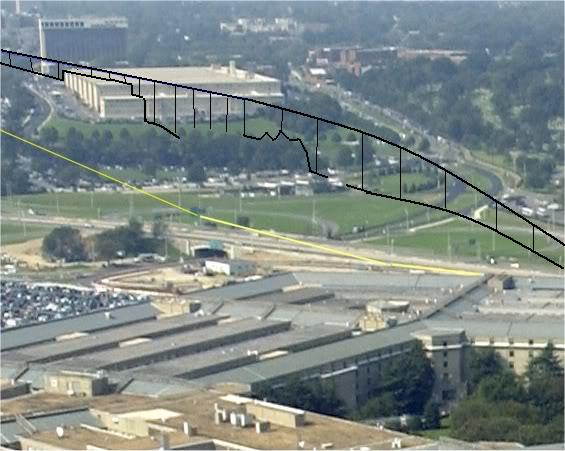
Pilots for Truth depicted the height of the attacking plane wrong :
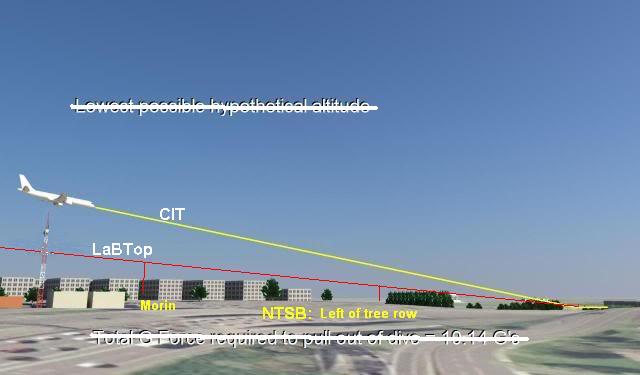
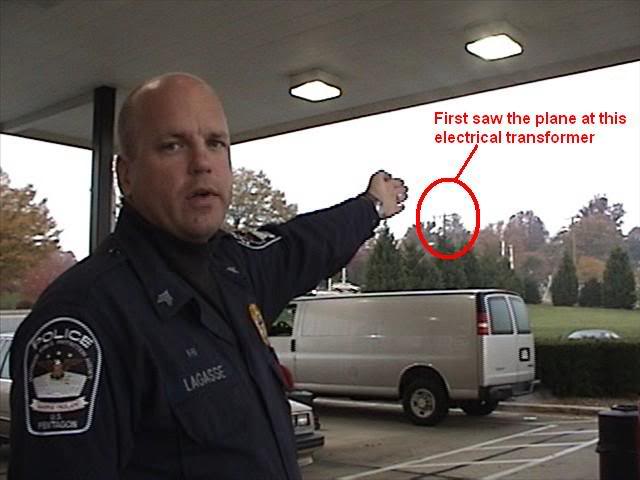
This is sergeant William Lagasse pointing at the space where he saw for the first time AA 77 turn up in his field of view, while he was filling up his Pentagon Police cruiser at the filling unit under the most northernly part of the CITGO gas station canopy roof :
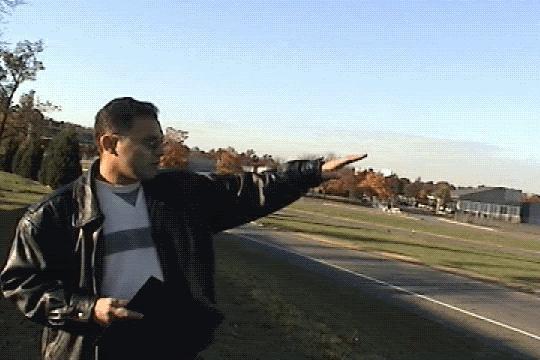
Robert Turcios, manager of the CITGO gas station on 9/11, who points at Route 27, where a few hundred meters in front of it the plane leveled off from his dive along and above the hillside behind Wing 8 of the Navy Annex, as Robert indicates with his hand going slightly up. He also said that the right wing tip of the plane passed over the quite big tree that stood just left of the north wall of the payment store under the CITGO roof :
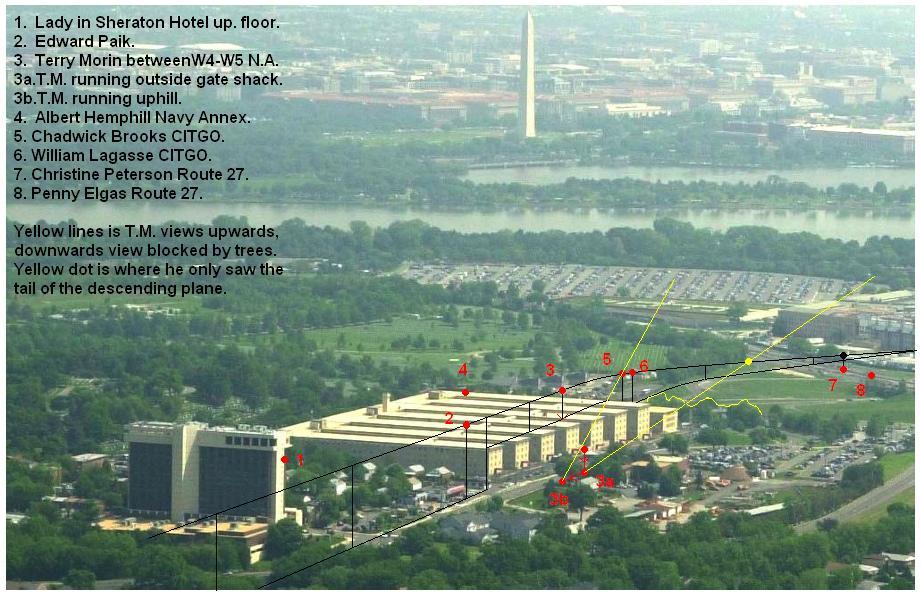
Two depictions of a possible flight path of AA 77, first aside the Sheraton Hotel, over the car repair garage of Mr Paik, over the head of Terry Morin in between the Wings 4 and 5 of the Navy Annex buildings, and slightly to the north of pentagon Police officers sergeant Brooks and then sergeant Lagasse at the CITGO gas station, and then towards the 4 ANC workers at the ANC Maintenance buildings at the far south rim of the Arlington National Cemetery grounds, to turn to the right over the parking space just south of the ANC buildings, towards Route 27 and then the impact point in the west wall, and towards the Heli Pad Tower with Sean Boger in it, who saw it impact about 60 meters to his left, while he was looking at it diving towards him in a slightly right banking turn :
This one is corrected for the only way Mr Paik could have viewed up from his desk inside his office, just in front of his office window, alongside Columbia Pike, thus he could have seen while looking high up, as he described, only the belly of the plane and its right wing, over the Pike :
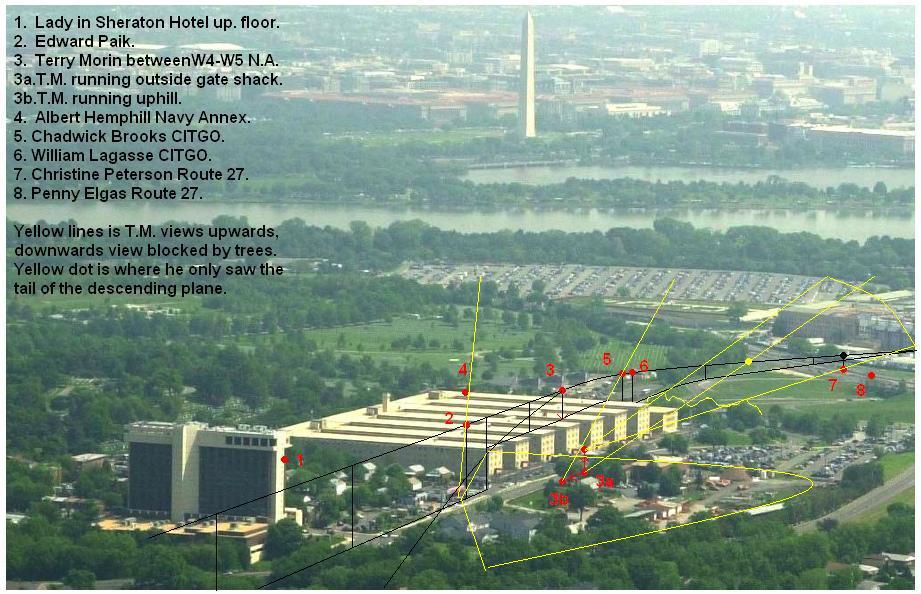
These are two proposals for what Terry Morin saw, while standing in between the Navy Annex Wings 4 and 5, just 10 feet / 3 meter inside the space between them. he said the plane he saw would have flown through the space that the later Air Force Monument takes in :
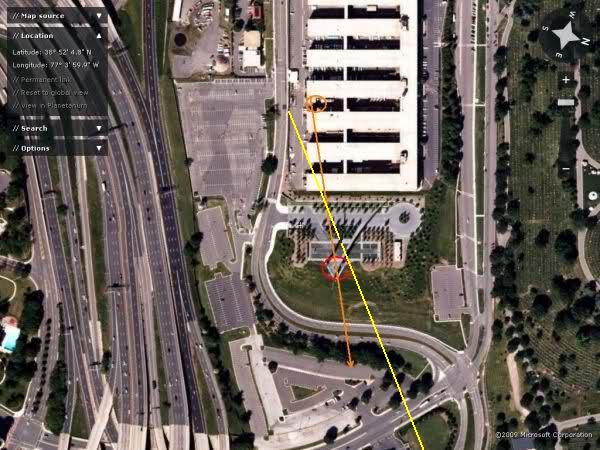
A few roughly composed viable NoC flight paths (any slightly different other path is possible), covering all NoC witness positions, and compared to a SoC official attack angle of 42° to the west wall facade bottom line. They also described the SoC attack angle as 60.25° to true north :
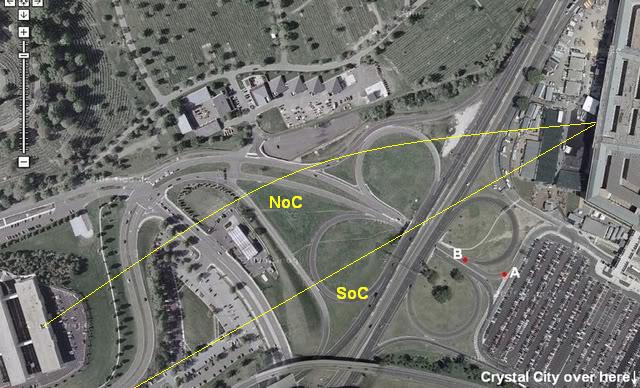
All the NoC CIT witnesses positions drawn in by me, and a few Route 27 witnesses found by me :
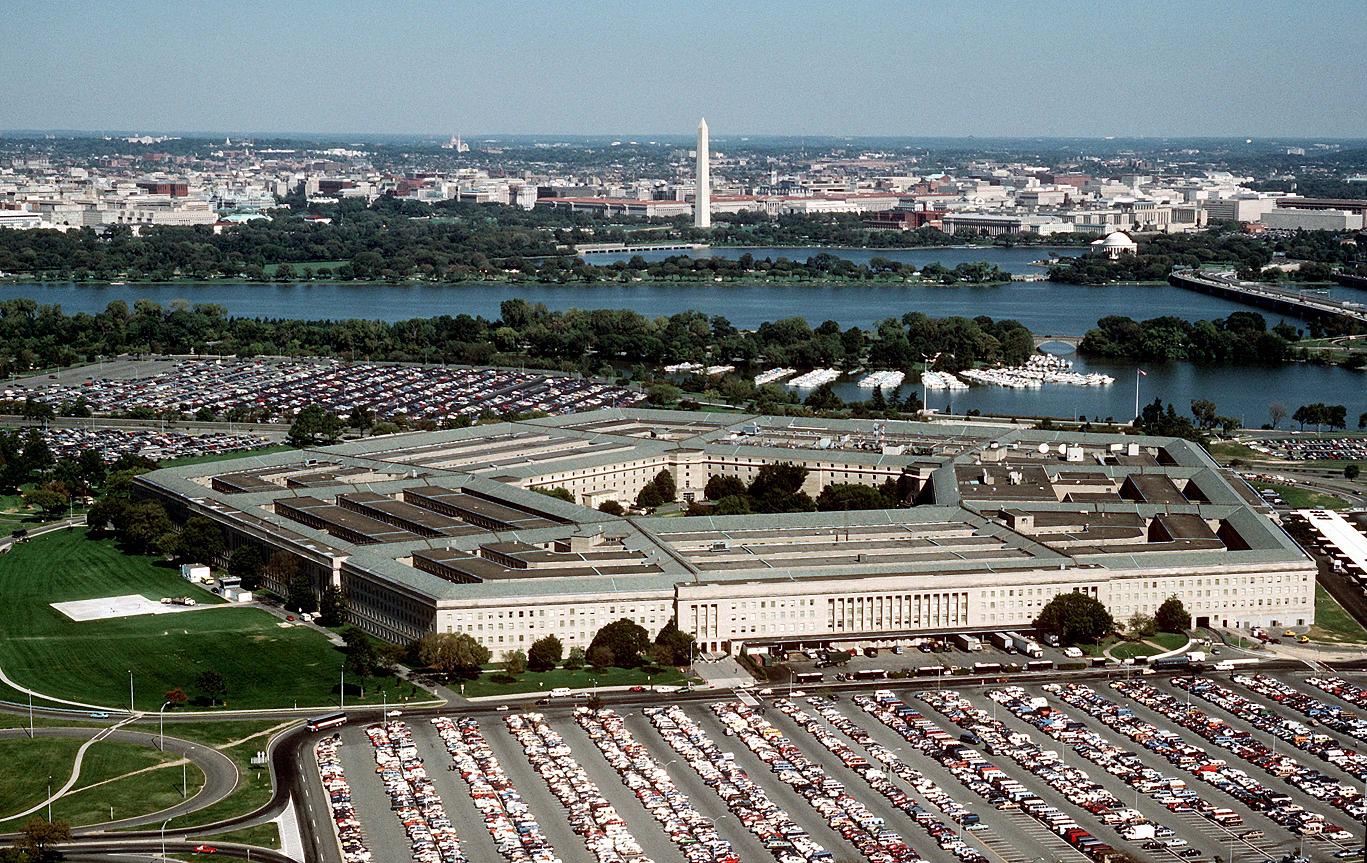
In my opinion, the only eventually a bit viable possibility for the CIT/PfTruth fly-over theory.
Since there are no witnesses at all that describe a huge plane leaving the Pentagon area north, east or southwards, this could be a means of landing the plane after it passed low over the roofs of the Pentagon, without impacting at all.
Sorry, but that is such a ridiculous theory, that it has no merit to discuss it further here, the plane would have had to have crossed Route 27 under an idiotic huge right bank, that NOBODY reported. Everybody reported a slight right bank, and some a last moment very slight left correctional bank, and that's why the right wing made a circa 8° angled imprint on the southern side of the impact in the facade :
The 8° wing imprint at the right of the fuselage impact point :
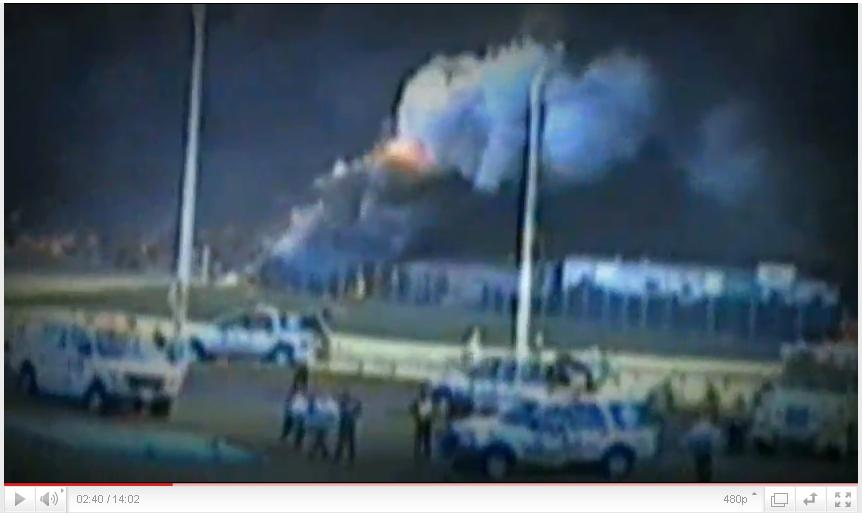
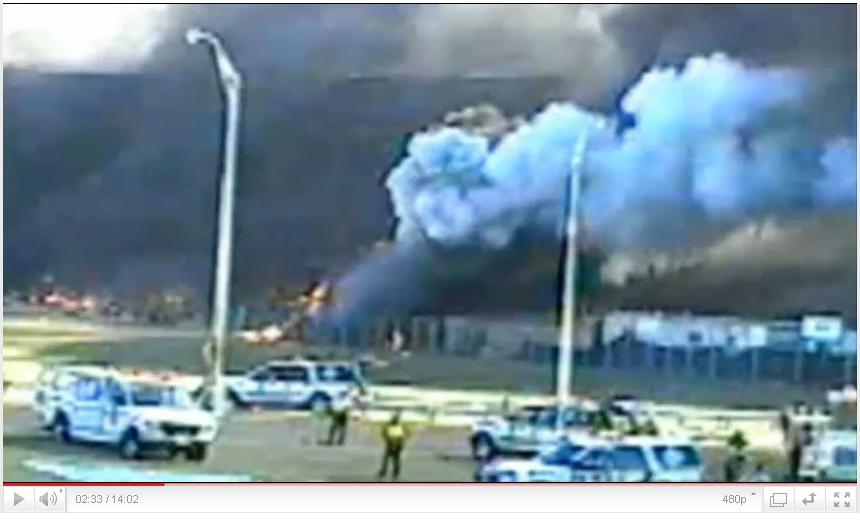
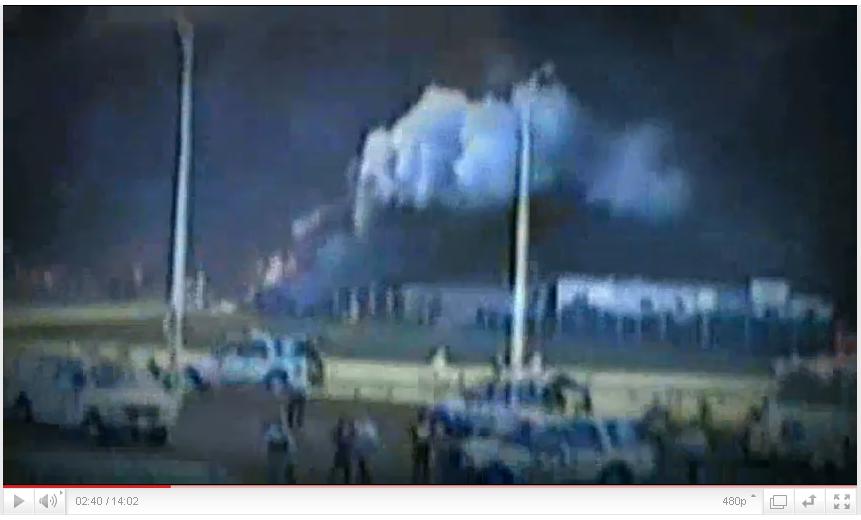
Three pictures in an early stage of the ignition of the diesel tank attached to the generator trailer. Note the first white smoke, as if it was ignited by a small HE explosive :
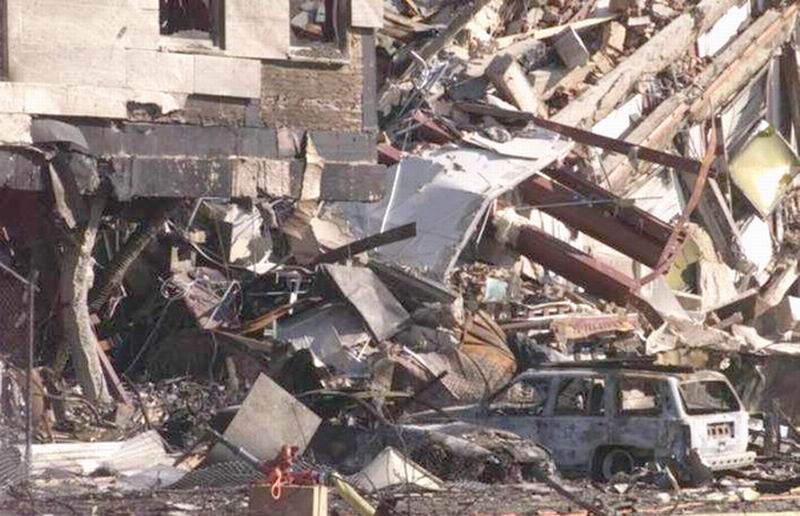
The mess at the left side of the impact point. Looks like a generator trailer undercarriage with axle and wheel :
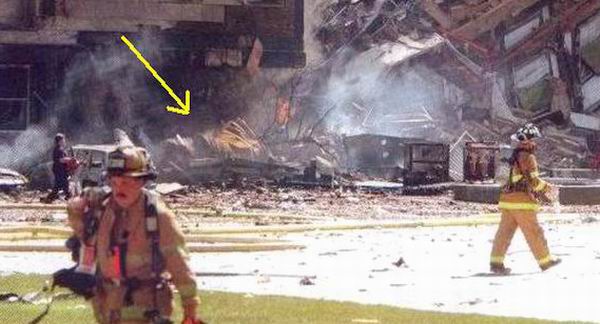
This could be the remains of the long white trailer to be seen in the September 5 photo parked in front of the West wall and the impact-tree, and it even looks as if this was also a generator trailer, with the connector cover from generator to dynamo to be seen at the yellow arrow :
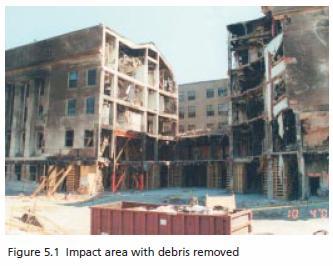
Below is a picture such as the ASCE research team encountered when they for the first ever and only time were allowed in the impacted Pentagon area, for a whopping FOUR HOURS only. After that, they were never allowed in anymore. Not a single shed of evidence to be found by them of a single piece of an airplane, the Engineers arm of the military had the site meticulously cleaned up, before the ASCE team was shown around a clean area, on October the 4th 2001. Read the last pages of the ASCE report, and it will be instantly clear to anybody who ever read multiple research reports, that this report was meant to deliver just one thing : the view of the military and Pentagon top bras and the US government in Washington, they all concluded that their report lacked a great deal of withheld evidence :
Below is a wide angled picture of the fenced-in renovation trailers area space :
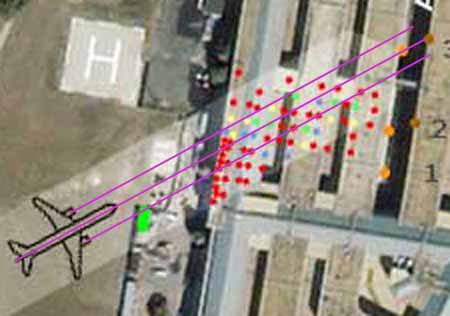
The below picture is where the 42° impact theory proposed by the ASCE report is based on.
One huge problem anyone with a graduated plastic circle will immediately see :
That is a 55° impact/attack angle ! When you draw a real 42° attack angle in, it is even more obvious than in this one, that the right jet engine will smash through the whole trailer's side panels, if there would be any possibility to create a gouge in the roof by an out-most flap guide rail housing which bottom part is sharp as a knife, sharp enough to cut that gouge in the roof of that generator cabin's roof that is shown in one of my earlier picture links :
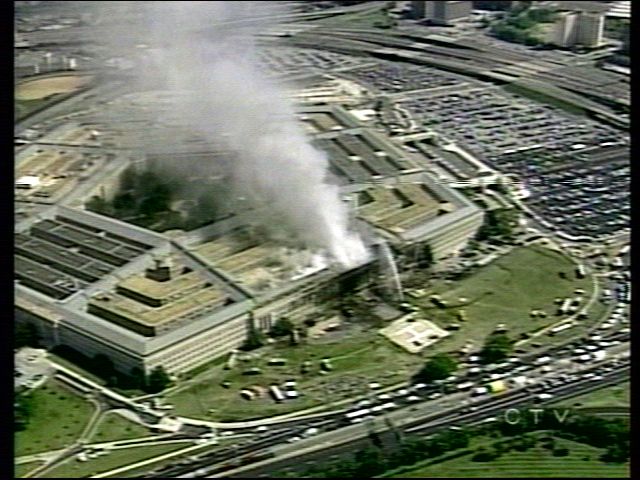
Aerial photo of the impact area, so to see after collapse of the Wedge 1 part :
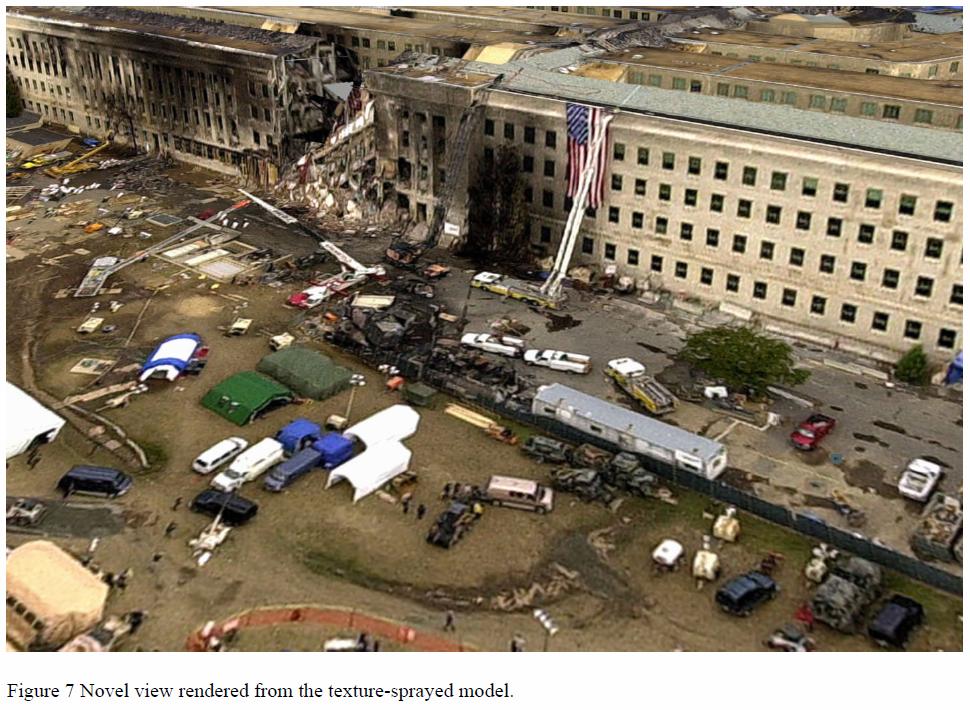
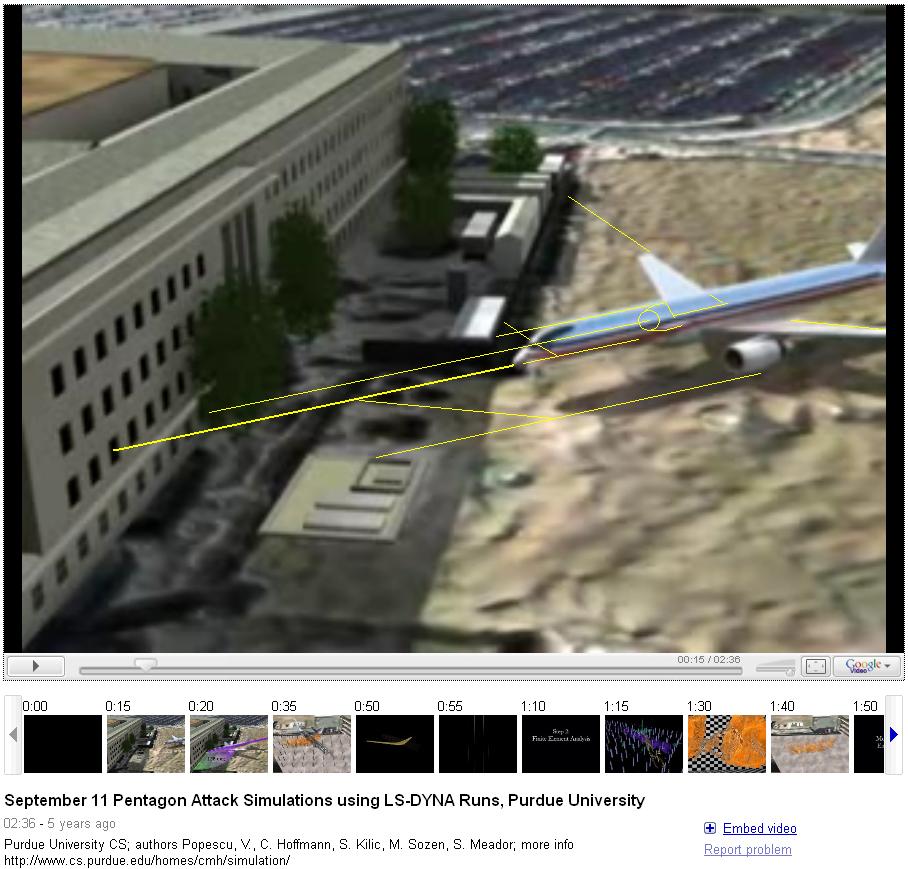
Three screen shots by me from the 3D drawings made by a Purdue computer, from the Purdue University animation attempt, which is not very convincing, even worse in fact than the ASCE report drawings :
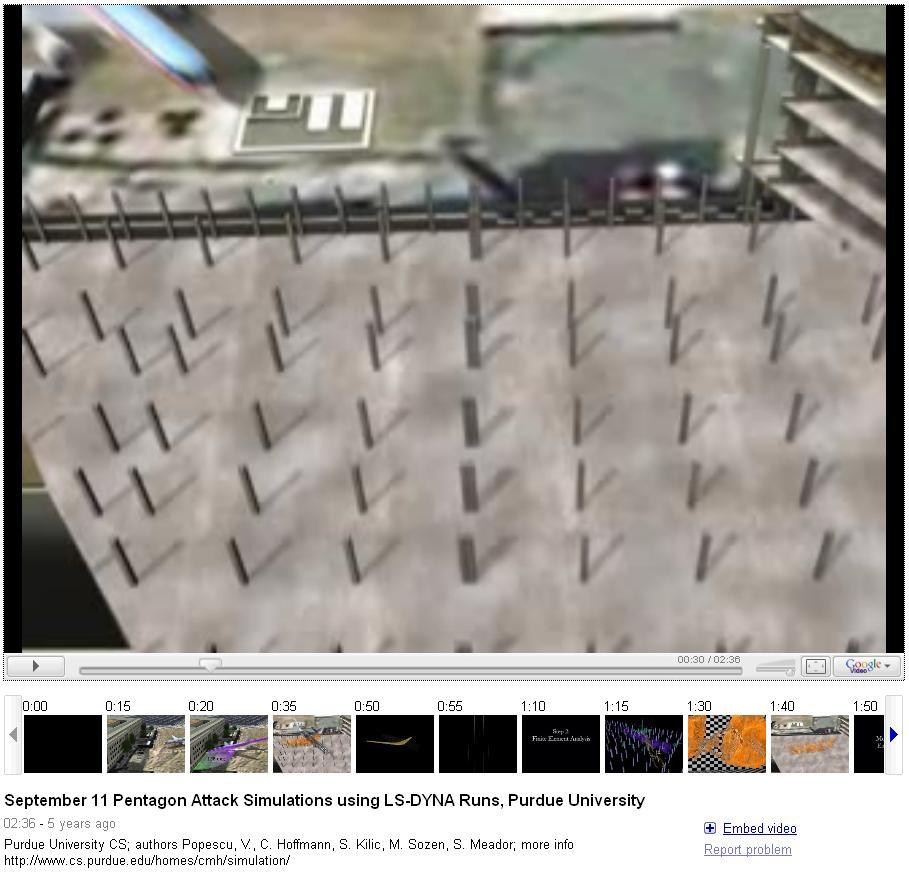
Two screen shots by me from the Purdue animation, link can be read in the bottom text.
It's obvious that also this proposed flight path ends with the right wing tip far away over the trailer, and the right engine impacting the side of the diesel tank attached to the generator cabin, both build on the same trailer undercarriage :
This last screenshot even more clearly shows that the right jet engine misses the whole fence corner by a meter, so it can never make a hole in the wire mesh a meter to the left of that fence corner. It is also not depicting a 42° attack angle, as the internal damage path combined with the officially proposed flight path through the 5 downed light poles predicts, according to those ASCE report end-editors.
So what is wrong with that whole story of those 5 downed light poles, the internal damage path as described in the ASCE report, and that stupid "exit" hole in the C-ring wall, which was of course an entry hole, any demolition expert will see what it is, a wall-breach unit's entry hole, blasted through from the outside, attached to that C-Ring wall in the corridor between Ring B and C, to get as fast as could be to the new Navy ONI offices and their Main Frames, with all their top secret secrets in them, that had to be erased, at all costs, and they apparently succeeded also to erase all years long accounting efforts to bring the 6.9 Trillion dollars missing funds above water. A massive 2.3 trillion dollars are to this day unaccounted for, since the back-ups were saved in WTC 7, enough black money to fund hundreds of 9/11 false flag operations, so you know what is coming at you in the near future :
Just a few more pictures and drawings to use as relevant discussion material :
A visualization by me, of the possible height above the Annex buildings, and the slightly right banking dive towards the west wall's impact point, passing the CITGO gas station just north of its canopy
:
Pilots for Truth depicted the height of the attacking plane wrong :
This is sergeant William Lagasse pointing at the space where he saw for the first time AA 77 turn up in his field of view, while he was filling up his Pentagon Police cruiser at the filling unit under the most northernly part of the CITGO gas station canopy roof :
Robert Turcios, manager of the CITGO gas station on 9/11, who points at Route 27, where a few hundred meters in front of it the plane leveled off from his dive along and above the hillside behind Wing 8 of the Navy Annex, as Robert indicates with his hand going slightly up. He also said that the right wing tip of the plane passed over the quite big tree that stood just left of the north wall of the payment store under the CITGO roof :
Two depictions of a possible flight path of AA 77, first aside the Sheraton Hotel, over the car repair garage of Mr Paik, over the head of Terry Morin in between the Wings 4 and 5 of the Navy Annex buildings, and slightly to the north of pentagon Police officers sergeant Brooks and then sergeant Lagasse at the CITGO gas station, and then towards the 4 ANC workers at the ANC Maintenance buildings at the far south rim of the Arlington National Cemetery grounds, to turn to the right over the parking space just south of the ANC buildings, towards Route 27 and then the impact point in the west wall, and towards the Heli Pad Tower with Sean Boger in it, who saw it impact about 60 meters to his left, while he was looking at it diving towards him in a slightly right banking turn :
This one is corrected for the only way Mr Paik could have viewed up from his desk inside his office, just in front of his office window, alongside Columbia Pike, thus he could have seen while looking high up, as he described, only the belly of the plane and its right wing, over the Pike :
These are two proposals for what Terry Morin saw, while standing in between the Navy Annex Wings 4 and 5, just 10 feet / 3 meter inside the space between them. he said the plane he saw would have flown through the space that the later Air Force Monument takes in :
A few roughly composed viable NoC flight paths (any slightly different other path is possible), covering all NoC witness positions, and compared to a SoC official attack angle of 42° to the west wall facade bottom line. They also described the SoC attack angle as 60.25° to true north :
All the NoC CIT witnesses positions drawn in by me, and a few Route 27 witnesses found by me :
In my opinion, the only eventually a bit viable possibility for the CIT/PfTruth fly-over theory.
Since there are no witnesses at all that describe a huge plane leaving the Pentagon area north, east or southwards, this could be a means of landing the plane after it passed low over the roofs of the Pentagon, without impacting at all.
Sorry, but that is such a ridiculous theory, that it has no merit to discuss it further here, the plane would have had to have crossed Route 27 under an idiotic huge right bank, that NOBODY reported. Everybody reported a slight right bank, and some a last moment very slight left correctional bank, and that's why the right wing made a circa 8° angled imprint on the southern side of the impact in the facade :
The 8° wing imprint at the right of the fuselage impact point :
Three pictures in an early stage of the ignition of the diesel tank attached to the generator trailer. Note the first white smoke, as if it was ignited by a small HE explosive :
The mess at the left side of the impact point. Looks like a generator trailer undercarriage with axle and wheel :
This could be the remains of the long white trailer to be seen in the September 5 photo parked in front of the West wall and the impact-tree, and it even looks as if this was also a generator trailer, with the connector cover from generator to dynamo to be seen at the yellow arrow :
Below is a picture such as the ASCE research team encountered when they for the first ever and only time were allowed in the impacted Pentagon area, for a whopping FOUR HOURS only. After that, they were never allowed in anymore. Not a single shed of evidence to be found by them of a single piece of an airplane, the Engineers arm of the military had the site meticulously cleaned up, before the ASCE team was shown around a clean area, on October the 4th 2001. Read the last pages of the ASCE report, and it will be instantly clear to anybody who ever read multiple research reports, that this report was meant to deliver just one thing : the view of the military and Pentagon top bras and the US government in Washington, they all concluded that their report lacked a great deal of withheld evidence :
Below is a wide angled picture of the fenced-in renovation trailers area space :
The below picture is where the 42° impact theory proposed by the ASCE report is based on.
One huge problem anyone with a graduated plastic circle will immediately see :
That is a 55° impact/attack angle ! When you draw a real 42° attack angle in, it is even more obvious than in this one, that the right jet engine will smash through the whole trailer's side panels, if there would be any possibility to create a gouge in the roof by an out-most flap guide rail housing which bottom part is sharp as a knife, sharp enough to cut that gouge in the roof of that generator cabin's roof that is shown in one of my earlier picture links :
Aerial photo of the impact area, so to see after collapse of the Wedge 1 part :
Three screen shots by me from the 3D drawings made by a Purdue computer, from the Purdue University animation attempt, which is not very convincing, even worse in fact than the ASCE report drawings :
Two screen shots by me from the Purdue animation, link can be read in the bottom text.
It's obvious that also this proposed flight path ends with the right wing tip far away over the trailer, and the right engine impacting the side of the diesel tank attached to the generator cabin, both build on the same trailer undercarriage :
This last screenshot even more clearly shows that the right jet engine misses the whole fence corner by a meter, so it can never make a hole in the wire mesh a meter to the left of that fence corner. It is also not depicting a 42° attack angle, as the internal damage path combined with the officially proposed flight path through the 5 downed light poles predicts, according to those ASCE report end-editors.
So what is wrong with that whole story of those 5 downed light poles, the internal damage path as described in the ASCE report, and that stupid "exit" hole in the C-ring wall, which was of course an entry hole, any demolition expert will see what it is, a wall-breach unit's entry hole, blasted through from the outside, attached to that C-Ring wall in the corridor between Ring B and C, to get as fast as could be to the new Navy ONI offices and their Main Frames, with all their top secret secrets in them, that had to be erased, at all costs, and they apparently succeeded also to erase all years long accounting efforts to bring the 6.9 Trillion dollars missing funds above water. A massive 2.3 trillion dollars are to this day unaccounted for, since the back-ups were saved in WTC 7, enough black money to fund hundreds of 9/11 false flag operations, so you know what is coming at you in the near future :
edit on 6/3/12 by LaBTop because: Changed right to left in one text.
This is what really was the reason and what happened at the Pentagon on 9/11 :



Copied long ago I believe, from this site : The Wisdom Fund. (Google its link.) They were screen shots I made from a video there.
Copied long ago I believe, from this site : The Wisdom Fund. (Google its link.) They were screen shots I made from a video there.
edit on
6/3/12 by LaBTop because: Added copy right.
The 1.5 GB file I had prepared on these subjects had many more photos and much more text and links to relevant stories, but a dumb hacker found it
necessary to wreck it, delete it.
So be it. I will continue to find and publish relevant facts and my own theories based on logical factual-backed conclusions, to prove that 9/11 was a huge psychological false flag operation, in which those hijackers, duped as devout Muslims, played just a minor patsy part. They were lied to, just as all of us. They were CIA or Mossad, or another deep secret agency's, assets.
I do not believe they really intended to hit those targets, they were told another story, just to get them in those cockpits. It even could be so crooked, that also the pilots thought they all were part of a war game operation, and that's perhaps why they were so easily leaving their seats. If they ever did so.... Then just a few seconds before the impacts, the remote steering took over, and someone in one of the controller planes, possibly a C-130 like the one from Lt Col O'Brien, or the Doomsday planes active all day and near the victim planes, flipped a switch and sent those planes into their targets. It could be just one person, equipped with the right strong sender and manipulative switches.
And a life video feed from the planes their nose cones, the planes he took over in the last crucial seconds.That is also the utter simple scenario.
Always cut your conspiracy scenarios down to the bare minimum, that way the risk for planners and executors is evenly brought back to the bare minimum.
There are also many black-ops business type FAA-unregistered planes used by the deep cover agencies, perhaps like the totally white plane reported near Flight 93, before it was downed.
And the totally white one, without identification marks, flying at 35,000 feet, the one I reported on at page 200 of the longest thread ever at ATS ( "A Boeing 757 did hit the Pentagon", now 300 pages long), the Lear Jet type business plane that turned out to have been in the air all day long on 9/11 (all non-military/agency planes were ordered to land already in the late morning, this one thus must have been refueled in the air, since it had not landed yet) and got chased away by one of the jet fighters that protected Air-force One when it was near its landing position at Washington, DC, to bring G.W. Bush back to where he belonged. The White House.
The eyewitness story-link of that purely white plane, by the jet fighter pilot in an Air Force official online publication or such, is probably, just as all my former dangerous to the establishment links, now a defunct link. I will check it out later.
I suspect that specific white plane that got chased away to have been the plane for the few in crowd-invited spectators for the "movie" that 9/11 must have been for these kind of sick people.
The white one near Flight 93 was effectively owned by one of Warren Buffet's many owned by proxy, firms.
It must have been full with planners of 9/11. And their backers, the ones who later raked in the immense profits, and distributed it back to all the in crowd-members, all the rest of them sick people.
9/11 was an enormous money making scam, on global scale.
And it must have all been atheists, since a real believer will doubt, and be afraid of the last ordeal. These people are convinced that there is one life, and one chance to rake in as much money as you can get. The only thing they are concerned with, is the well being of their offspring. Because they "know" that when their life ends, the next generation will profit from their accumulated wealth.
Endanger their offspring, their heirs, and you have a small chance to change their plots.
They will not plot further, when the outcome is in the end, an atomic fire that will consume their heirs, or/and themselves.
That's why this conspiracy-'spiel' is so creepy, it seems that they thought that 9/11 and its aftermath, will never fail.
One of the main goals of 9/11 was to prepare Americans for a full out war on Muslims, and many of their countries. Good old Holy Wars. Pushing gullible Christians through the idiot-savant borderline. How stupid can you be when you can't feel the difference anymore between propaganda and reality? Not all Muslims are radicals, only very few are, the rest are just as normal as all of us, Christians, Buddhists, Jews or whatever you belief in.
Thus, after 9/11, the Pentagon could push their aggressive operations through the throats of unaware and full blown by then patriots, US based and global based citizens alike, and get their unlimited funding back, that got taken away from them after the Iron Curtain fell, and Russia abandoned the hard-line communist doctrine. During the Clinton era.
They have planned for years, together with those heartless AIPAC members, how to regain their grip on those unlimited funds from before the Clinton years.
The Reagan doctrine and Iran-contra years. God, they must have adored that misguided poor man, those utterly greedy and utterly cruel upper-brass men and women in the Pentagon.
The Pentagon brass at that time had their second field day during the Reagan era, which came after the Vietnam Johnson era. Now they had their third field day, during the Bush-family Iraq/Afghanistan era, and its aftermath, the road to overthrow the Iran Ayatollahs, and the enduring all-out war on "global terrorism", created and held alive by the CIA and the likes.
Which means simply put, an all out war on Islam.
Any attack on Iran will be blocked by the (not so) secret (anymore) alliance of Russia, China, India, Brazil and possibly now, secretly also Pakistan and Japan. And who knows which countries more.
These economies need OIL or ENERGY. That's what it comes down to, in the end.
Who gets most of it.
And the main reason of course for 9/11, was the oldest habit of inherently crooked men and women :
Pure and unconditional, unadulterated GREED !
For power, or for the Mammon.
So be it. I will continue to find and publish relevant facts and my own theories based on logical factual-backed conclusions, to prove that 9/11 was a huge psychological false flag operation, in which those hijackers, duped as devout Muslims, played just a minor patsy part. They were lied to, just as all of us. They were CIA or Mossad, or another deep secret agency's, assets.
I do not believe they really intended to hit those targets, they were told another story, just to get them in those cockpits. It even could be so crooked, that also the pilots thought they all were part of a war game operation, and that's perhaps why they were so easily leaving their seats. If they ever did so.... Then just a few seconds before the impacts, the remote steering took over, and someone in one of the controller planes, possibly a C-130 like the one from Lt Col O'Brien, or the Doomsday planes active all day and near the victim planes, flipped a switch and sent those planes into their targets. It could be just one person, equipped with the right strong sender and manipulative switches.
And a life video feed from the planes their nose cones, the planes he took over in the last crucial seconds.That is also the utter simple scenario.
Always cut your conspiracy scenarios down to the bare minimum, that way the risk for planners and executors is evenly brought back to the bare minimum.
There are also many black-ops business type FAA-unregistered planes used by the deep cover agencies, perhaps like the totally white plane reported near Flight 93, before it was downed.
And the totally white one, without identification marks, flying at 35,000 feet, the one I reported on at page 200 of the longest thread ever at ATS ( "A Boeing 757 did hit the Pentagon", now 300 pages long), the Lear Jet type business plane that turned out to have been in the air all day long on 9/11 (all non-military/agency planes were ordered to land already in the late morning, this one thus must have been refueled in the air, since it had not landed yet) and got chased away by one of the jet fighters that protected Air-force One when it was near its landing position at Washington, DC, to bring G.W. Bush back to where he belonged. The White House.
The eyewitness story-link of that purely white plane, by the jet fighter pilot in an Air Force official online publication or such, is probably, just as all my former dangerous to the establishment links, now a defunct link. I will check it out later.
I suspect that specific white plane that got chased away to have been the plane for the few in crowd-invited spectators for the "movie" that 9/11 must have been for these kind of sick people.
The white one near Flight 93 was effectively owned by one of Warren Buffet's many owned by proxy, firms.
It must have been full with planners of 9/11. And their backers, the ones who later raked in the immense profits, and distributed it back to all the in crowd-members, all the rest of them sick people.
9/11 was an enormous money making scam, on global scale.
And it must have all been atheists, since a real believer will doubt, and be afraid of the last ordeal. These people are convinced that there is one life, and one chance to rake in as much money as you can get. The only thing they are concerned with, is the well being of their offspring. Because they "know" that when their life ends, the next generation will profit from their accumulated wealth.
Endanger their offspring, their heirs, and you have a small chance to change their plots.
They will not plot further, when the outcome is in the end, an atomic fire that will consume their heirs, or/and themselves.
That's why this conspiracy-'spiel' is so creepy, it seems that they thought that 9/11 and its aftermath, will never fail.
One of the main goals of 9/11 was to prepare Americans for a full out war on Muslims, and many of their countries. Good old Holy Wars. Pushing gullible Christians through the idiot-savant borderline. How stupid can you be when you can't feel the difference anymore between propaganda and reality? Not all Muslims are radicals, only very few are, the rest are just as normal as all of us, Christians, Buddhists, Jews or whatever you belief in.
Thus, after 9/11, the Pentagon could push their aggressive operations through the throats of unaware and full blown by then patriots, US based and global based citizens alike, and get their unlimited funding back, that got taken away from them after the Iron Curtain fell, and Russia abandoned the hard-line communist doctrine. During the Clinton era.
They have planned for years, together with those heartless AIPAC members, how to regain their grip on those unlimited funds from before the Clinton years.
The Reagan doctrine and Iran-contra years. God, they must have adored that misguided poor man, those utterly greedy and utterly cruel upper-brass men and women in the Pentagon.
The Pentagon brass at that time had their second field day during the Reagan era, which came after the Vietnam Johnson era. Now they had their third field day, during the Bush-family Iraq/Afghanistan era, and its aftermath, the road to overthrow the Iran Ayatollahs, and the enduring all-out war on "global terrorism", created and held alive by the CIA and the likes.
Which means simply put, an all out war on Islam.
Any attack on Iran will be blocked by the (not so) secret (anymore) alliance of Russia, China, India, Brazil and possibly now, secretly also Pakistan and Japan. And who knows which countries more.
These economies need OIL or ENERGY. That's what it comes down to, in the end.
Who gets most of it.
And the main reason of course for 9/11, was the oldest habit of inherently crooked men and women :
Pure and unconditional, unadulterated GREED !
For power, or for the Mammon.
9/11: ATTACK ON THE PENTAGON - Official Release by johndoeXLC on YouTube, 50:08 minutes long :
www.youtube.com...
Half of it covers the FDR discrepancies, and the other half the NoC witnesses.
It is a work made by PilotsFor911Truth.org and has some pretty good animations in it that shows the officially promoted South of CITGO gas station (SoC) 42° flight path, and also the contradicting, in reality flown NoC 70° to 80° flight path.
The real NoC flight path, according to 13 eyewitnesses interviewed by the CIT team, and some 10 more I found by analyzing their already known and unknown records. Most of mine were Route 27 drivers who were stuck in the rush hour traffic at the moment AA 77 came crossing very low over that road its lamp poles, just 110 yards/meters away from the impact.
Crossing just right of the two trees along the footpath that followed a line along the east side of Route 27, at that time planted in front of the Heli pad. Probst said he followed that foot path, when the plane came diving just over his head and he saw its right wing tip impact the roof of the generator trailer (see his witness-report in the ASCE Pentagon Performance Report), just before it impacted the west wall and obliterated the long white conference trailer and the tree that stood behind it, just in front of the point of impact in the west wall.
You can see the 1.5 meter stump left of it in the Steve Riskus HD photos,
A few Riskus photo's in HD
www.criticalthrash.com..." target="_blank" class="postlink">All 13 Steve Riskus HD photo's
(Add these two above link-parts together in your browser window's address line, to let this become a clickable and working link to the Riskus photos again)
And the Ingersoll HD photos. The stump stood right under the 2 windows wide entry hole of the plane's fuselage.
The above video is part 7 of the by CIT made video, and accompanying pages named "The Pentacon", and its page 7 shows all the Ingersoll high resolution photos on that page :
All Ingersoll photo's
Jason Ingersoll was a Navy photographer who took 18 of the most famous high resolution photos of the Pentagon attack that exist; the other famous ones are the 13 Steve Riskus hi-res photo's.
Please note in the first Ingersoll photo, DSC_0404, 9:45 a.m., the second DSC_0405, 9:45 a.m., and the fourth DSC_0407, 9:46 a.m. photo, you can see on the corner of the roof of the 8th Wing of the Navy Annex building, the well known by now same black glass half-dome shaped, hanging down security camera, as also one identical one can be seen on top of and along the roof rim of the Pentagon's west wall in the fifth photo DSC_0408, 9:47 a.m., which must be still intact and working after the impact. Both cameras would have a high probability of having recorded the flight path of AA 77 as mentioned by Terry Morin who saw the plane fly about 50 feet above the roofs, low over the Annex building's wings 4 and 5, where he stood in between, still about 10 feet inside the footpath between them. Then he ran to the fence along Columbia Pike to see the rest of AA 77's NoC flight path.
There must have been more of these cameras on the east Pentagon-over-looking side of that same 8th Wing roof, the side that overlooked the CITGO station and the Pentagon. To watch and secure the whole parking lot that was situated around the whole Annex its 8th Wing building.
Those cameras must have had even a better chance to have captured AA 77, while it descended down towards the north side of the CITGO gas station where Sgt Brooks and Sgt Lagasse observed it crossing over the row of trees at the bottom of the hill where Columbia Pike winded just behind those trees for about 200 meters northwards.
The plane then passed by on the north side of these two Pentagon Security Police officers who were in and near the CITGO gas station.
And the 4 ANC workers in the yard of the maintenance buildings on the ANC grounds saw it also coming, first right at them, and then it made a slight right bank and turn to after that, impact at the west wall, after it crossed over Route 27 (Washington Boulevard).
The road with all the lately found by me, stuck or still moving car drivers, the other 10 +, new NoC witnesses.
I am curious, if the list of 85 camera footage videos confiscated by the FBI also holds footage of these at least two cameras at the Navy Annex and the Pentagon.
I bet they are not on that FBI list.
And the lady of the FOIA department of the FBI that wrote the accompanying letter to the FOIA requester has for sure not seen those, and the others that we have no photos from.
The ones on top of both buildings, Annex 8th Wing and the Pentagon's west wall's parapet roof line, both with a great view on the AA 77 flight path.
And with opposite view angles.
Ask at the same time the footage from the biggest one visible, attached under the double lamp fixture on that black pole in the far right of picture DSC_0412, it's time taken at 9:48 a.m., and picture DSC_0413, it's time taken: 9:49 that morning. It was perhaps a VDOT owned camera. That's a third one.
But I expect the footage of all the VDOT cameras all to have been deleted/disappeared,
Reason for that suspicion is that the nervous young man with 2 children that oversaw all footage of these cameras told the CIT team that there was nothing on those cameras to see of a plane (he gave them the Ingersoll 18 photo shoot! ), but took his own life one week after CIT collected all the CITGO station evidence for a NoC flight path.(see CIT Topic 7 page, linked above.)
Anybody with a shimmer of faith in the US justice system left, could file a new FOIA request at the FBI and Pentagon offices, requesting copies of the footage of all these easily identifiable cameras. Because you can show them these, and other photos shot at the day of 9/11/2001 where you can see the position of these specific cameras.
I do not possess that kind of faith. I am convinced that all relevant military security camera footage is long gone, erased by the 9/11 executors.
However, somebody could become lucky, and get his/her hand on those footages.
Perhaps they forgot to erase one or more of these cameras footages and is it filed somewhere safe by an honest and concerned military man or woman.
Or honest and careful operating VDOT employee, who all know how to anonymously post dangerous info on the Internet. Use a library its computers. Do not enter that library undisguised, or they will find you through the video cameras surveillance data.
Use gloves on the keyboard, wash yourself thoroughly to leave no DNA sample on the desk or keyboard.
In other words, be damn careful.
www.youtube.com...
Half of it covers the FDR discrepancies, and the other half the NoC witnesses.
It is a work made by PilotsFor911Truth.org and has some pretty good animations in it that shows the officially promoted South of CITGO gas station (SoC) 42° flight path, and also the contradicting, in reality flown NoC 70° to 80° flight path.
The real NoC flight path, according to 13 eyewitnesses interviewed by the CIT team, and some 10 more I found by analyzing their already known and unknown records. Most of mine were Route 27 drivers who were stuck in the rush hour traffic at the moment AA 77 came crossing very low over that road its lamp poles, just 110 yards/meters away from the impact.
Crossing just right of the two trees along the footpath that followed a line along the east side of Route 27, at that time planted in front of the Heli pad. Probst said he followed that foot path, when the plane came diving just over his head and he saw its right wing tip impact the roof of the generator trailer (see his witness-report in the ASCE Pentagon Performance Report), just before it impacted the west wall and obliterated the long white conference trailer and the tree that stood behind it, just in front of the point of impact in the west wall.
You can see the 1.5 meter stump left of it in the Steve Riskus HD photos,
A few Riskus photo's in HD
www.criticalthrash.com..." target="_blank" class="postlink">All 13 Steve Riskus HD photo's
(Add these two above link-parts together in your browser window's address line, to let this become a clickable and working link to the Riskus photos again)
And the Ingersoll HD photos. The stump stood right under the 2 windows wide entry hole of the plane's fuselage.
The above video is part 7 of the by CIT made video, and accompanying pages named "The Pentacon", and its page 7 shows all the Ingersoll high resolution photos on that page :
All Ingersoll photo's
Jason Ingersoll was a Navy photographer who took 18 of the most famous high resolution photos of the Pentagon attack that exist; the other famous ones are the 13 Steve Riskus hi-res photo's.
Please note in the first Ingersoll photo, DSC_0404, 9:45 a.m., the second DSC_0405, 9:45 a.m., and the fourth DSC_0407, 9:46 a.m. photo, you can see on the corner of the roof of the 8th Wing of the Navy Annex building, the well known by now same black glass half-dome shaped, hanging down security camera, as also one identical one can be seen on top of and along the roof rim of the Pentagon's west wall in the fifth photo DSC_0408, 9:47 a.m., which must be still intact and working after the impact. Both cameras would have a high probability of having recorded the flight path of AA 77 as mentioned by Terry Morin who saw the plane fly about 50 feet above the roofs, low over the Annex building's wings 4 and 5, where he stood in between, still about 10 feet inside the footpath between them. Then he ran to the fence along Columbia Pike to see the rest of AA 77's NoC flight path.
There must have been more of these cameras on the east Pentagon-over-looking side of that same 8th Wing roof, the side that overlooked the CITGO station and the Pentagon. To watch and secure the whole parking lot that was situated around the whole Annex its 8th Wing building.
Those cameras must have had even a better chance to have captured AA 77, while it descended down towards the north side of the CITGO gas station where Sgt Brooks and Sgt Lagasse observed it crossing over the row of trees at the bottom of the hill where Columbia Pike winded just behind those trees for about 200 meters northwards.
The plane then passed by on the north side of these two Pentagon Security Police officers who were in and near the CITGO gas station.
And the 4 ANC workers in the yard of the maintenance buildings on the ANC grounds saw it also coming, first right at them, and then it made a slight right bank and turn to after that, impact at the west wall, after it crossed over Route 27 (Washington Boulevard).
The road with all the lately found by me, stuck or still moving car drivers, the other 10 +, new NoC witnesses.
I am curious, if the list of 85 camera footage videos confiscated by the FBI also holds footage of these at least two cameras at the Navy Annex and the Pentagon.
I bet they are not on that FBI list.
And the lady of the FOIA department of the FBI that wrote the accompanying letter to the FOIA requester has for sure not seen those, and the others that we have no photos from.
The ones on top of both buildings, Annex 8th Wing and the Pentagon's west wall's parapet roof line, both with a great view on the AA 77 flight path.
And with opposite view angles.
Ask at the same time the footage from the biggest one visible, attached under the double lamp fixture on that black pole in the far right of picture DSC_0412, it's time taken at 9:48 a.m., and picture DSC_0413, it's time taken: 9:49 that morning. It was perhaps a VDOT owned camera. That's a third one.
But I expect the footage of all the VDOT cameras all to have been deleted/disappeared,
Reason for that suspicion is that the nervous young man with 2 children that oversaw all footage of these cameras told the CIT team that there was nothing on those cameras to see of a plane (he gave them the Ingersoll 18 photo shoot! ), but took his own life one week after CIT collected all the CITGO station evidence for a NoC flight path.(see CIT Topic 7 page, linked above.)
Anybody with a shimmer of faith in the US justice system left, could file a new FOIA request at the FBI and Pentagon offices, requesting copies of the footage of all these easily identifiable cameras. Because you can show them these, and other photos shot at the day of 9/11/2001 where you can see the position of these specific cameras.
I do not possess that kind of faith. I am convinced that all relevant military security camera footage is long gone, erased by the 9/11 executors.
However, somebody could become lucky, and get his/her hand on those footages.
Perhaps they forgot to erase one or more of these cameras footages and is it filed somewhere safe by an honest and concerned military man or woman.
Or honest and careful operating VDOT employee, who all know how to anonymously post dangerous info on the Internet. Use a library its computers. Do not enter that library undisguised, or they will find you through the video cameras surveillance data.
Use gloves on the keyboard, wash yourself thoroughly to leave no DNA sample on the desk or keyboard.
In other words, be damn careful.
Damn, forgot how to link to Web Archived links.
Another try :
First half to be copy/pasted in your browser's address line, and add a small letter "h" in front of it first :
ttp://web.archive.org/web/20041026123129/
Second part to be copy/pasted directly behind the first part, and add a small letter "h" in front of the below text line first ,again :
ttp://www.criticalthrash.com/terror/crashthumbnails.html
Then you have a long line of text, of which both half's begin with http, and then you can push enter, or click that long link its now combined text line in your address bar, to go to the former but now defunct, old thumbnail page of the Steve Riskus HiRes photo's from the first minutes after impact of AA 77 in the West wall of the Pentagon.
You can then click each thumbnail, and a High Resolution photo will load in your next browser tab page.
EDIT : I'm sure there is a better way to forum-link to Web Archived pages, but it's damn late and I need some rest.
One last very good tip/advice for the sight-impaired elderly and the youngsters alike :
Use your keyboard's "CTRL" and "+" key-combination several times to blow up this threads pages more and more, it will give you a much better resolution to view all these interesting photo's and drawings.
Another try :
First half to be copy/pasted in your browser's address line, and add a small letter "h" in front of it first :
ttp://web.archive.org/web/20041026123129/
Second part to be copy/pasted directly behind the first part, and add a small letter "h" in front of the below text line first ,again :
ttp://www.criticalthrash.com/terror/crashthumbnails.html
Then you have a long line of text, of which both half's begin with http, and then you can push enter, or click that long link its now combined text line in your address bar, to go to the former but now defunct, old thumbnail page of the Steve Riskus HiRes photo's from the first minutes after impact of AA 77 in the West wall of the Pentagon.
You can then click each thumbnail, and a High Resolution photo will load in your next browser tab page.
EDIT : I'm sure there is a better way to forum-link to Web Archived pages, but it's damn late and I need some rest.
One last very good tip/advice for the sight-impaired elderly and the youngsters alike :
Use your keyboard's "CTRL" and "+" key-combination several times to blow up this threads pages more and more, it will give you a much better resolution to view all these interesting photo's and drawings.
edit on 6/3/12 by LaBTop because: SLEEPY.
edit on 6/3/12 by LaBTop because: (no reason given)
Let me be the first to flag you.
I do not have time to read all of the info right now, but wow man
This is a massive amount of info to pour over.
Good work.
I do not have time to read all of the info right now, but wow man
This is a massive amount of info to pour over.
Good work.
reply to post by LaBTop
You are probably not aware of this:
"JohnDoeXLC" is very likely none other than Rob Balsamo.....yeah, that Balsamo, the very discredited individual who is the chief honcho at so-called "pilots" for "truth". Also, completely without any validity whatsoever....
You are probably not aware of this:
9/11: ATTACK ON THE PENTAGON - Official Release by johndoeXLC on YouTube, 50:08 minutes long
"JohnDoeXLC" is very likely none other than Rob Balsamo.....yeah, that Balsamo, the very discredited individual who is the chief honcho at so-called "pilots" for "truth". Also, completely without any validity whatsoever....
reply to post by ProudBird
Yes, i do know its done by Pilots for Truth and partly CIT. It was probably a concerted effort by several members.
There are a lot of animations in it, helpful to understand the "cartographic" features of the Annex and Pentagon area, it's a hilly area, and Balsamo tried to push his notion through my throat that that hillside is an obstacle that forced AA 77 to fly over the Pentagon roofs.
As you know by now, I do not like him at all, since our confrontation in my only allowed personal thread there, up till the moment that that megalomaniac closed it and banned me.
Because I gave too many hints and facts that AA 77 did certainly not fly over the Pentagon.
Still, you can use their public material to make a point, as I did above.
I also am strongly convinced that the CIT recorded witness accounts of for example Brooks and Lagasse are the strongest indicators that the whole SoC line of reasoning is false and a blunt lie, only backed by institutions because otherwise they loose their immense government funds capital.
Not all of CIT and PfT work is false or biased. They have done some good jobs too.
But some of these guys really need some prolonged shrink sessions.
Yes, i do know its done by Pilots for Truth and partly CIT. It was probably a concerted effort by several members.
There are a lot of animations in it, helpful to understand the "cartographic" features of the Annex and Pentagon area, it's a hilly area, and Balsamo tried to push his notion through my throat that that hillside is an obstacle that forced AA 77 to fly over the Pentagon roofs.
As you know by now, I do not like him at all, since our confrontation in my only allowed personal thread there, up till the moment that that megalomaniac closed it and banned me.
Because I gave too many hints and facts that AA 77 did certainly not fly over the Pentagon.
Still, you can use their public material to make a point, as I did above.
I also am strongly convinced that the CIT recorded witness accounts of for example Brooks and Lagasse are the strongest indicators that the whole SoC line of reasoning is false and a blunt lie, only backed by institutions because otherwise they loose their immense government funds capital.
Not all of CIT and PfT work is false or biased. They have done some good jobs too.
But some of these guys really need some prolonged shrink sessions.
reply to post by LaBTop
LaBTop, you have obviously gone to a lot of trouble compiling all this stuff but if you acknowledge that AA 77 hit the generator-trailer immediately before crashing into the Pentagon does any of it matter ?
LaBTop, you have obviously gone to a lot of trouble compiling all this stuff but if you acknowledge that AA 77 hit the generator-trailer immediately before crashing into the Pentagon does any of it matter ?
God the OPs posts are long. Can't you shorten it up a bit so we can get a feel about the exact thing you are trying to say. I'll admit I didn't
read 90% of it. It has lots of pretty pictures but that's about all I looked at.
Alfie said it best with very few words.
If you admit the generator was hit by a wing the rest is wasted effort.
And that's the way 99% of Americans see the whole thing.
Alfie said it best with very few words.
If you admit the generator was hit by a wing the rest is wasted effort.
And that's the way 99% of Americans see the whole thing.
More made up trivial **** by a poseur who obviously has nothing better to do than post reams of crap that's wrong on an obscure internet site.
No one needs to go through the punishment of reading all of that tripe. The OP has been told numerous times that the aircraft can not get from point A via his point B without a horrendous bank angle. Who of their "cherry picked" witnesses reported an airshow type bank angle on the way to the Pentagon crash. Answer = none.
Then he looks at low res photos in an attempt to make precise measurements. Photos that exhibit foreshortening are deceptive, so he has no idea about the accuracy of his measurements in the first place.
This is called looking up a goat's butt with one eyeball while ignoring the rest of the goat... What about all of the other evidence proving an SOC flight path both prior to and after the crash into the building?
As if that's not enough he then posts walls of text in a non standard style typical of his prose making for extremely difficult reading... Labtop, your time would be better spent taking an English writing course. Then with all of yout knowledge and intelligence you might then get a Pulitzer for your efforts. Of course, it would be in the category of FICTION!
No one needs to go through the punishment of reading all of that tripe. The OP has been told numerous times that the aircraft can not get from point A via his point B without a horrendous bank angle. Who of their "cherry picked" witnesses reported an airshow type bank angle on the way to the Pentagon crash. Answer = none.
Then he looks at low res photos in an attempt to make precise measurements. Photos that exhibit foreshortening are deceptive, so he has no idea about the accuracy of his measurements in the first place.
This is called looking up a goat's butt with one eyeball while ignoring the rest of the goat... What about all of the other evidence proving an SOC flight path both prior to and after the crash into the building?
As if that's not enough he then posts walls of text in a non standard style typical of his prose making for extremely difficult reading... Labtop, your time would be better spent taking an English writing course. Then with all of yout knowledge and intelligence you might then get a Pulitzer for your efforts. Of course, it would be in the category of FICTION!
edit on 7-3-2012 by Reheat because: (no reason given)
This is the photo from a page at the 911review.org website, which shows another angle, from above, of the gouge in the generator cabin roof, and the
stain on the cabin panel side beside the metal entrance door is bigger. The diesel tank seems to be plated with corrugated iron plating, that is
oxidized by intense heat, which burned off the paint first and then rusted the exposed to air iron plating (hot iron plus air with 20% oxigen in it
forms rust). As you can see, the plating covers a square metal diesel tank inside :
Source: 911review.org...
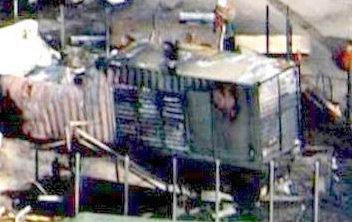
Below is a photo at a page at the Jack White website, where he shows a photo of a similar trailer combination, however, the double door is not to be found in the 9/11 pictures, and the front part of that 9/11 trailer housed a diesel tank container. Which seemed to be 2/3 of the height of the back end generator cabin part.
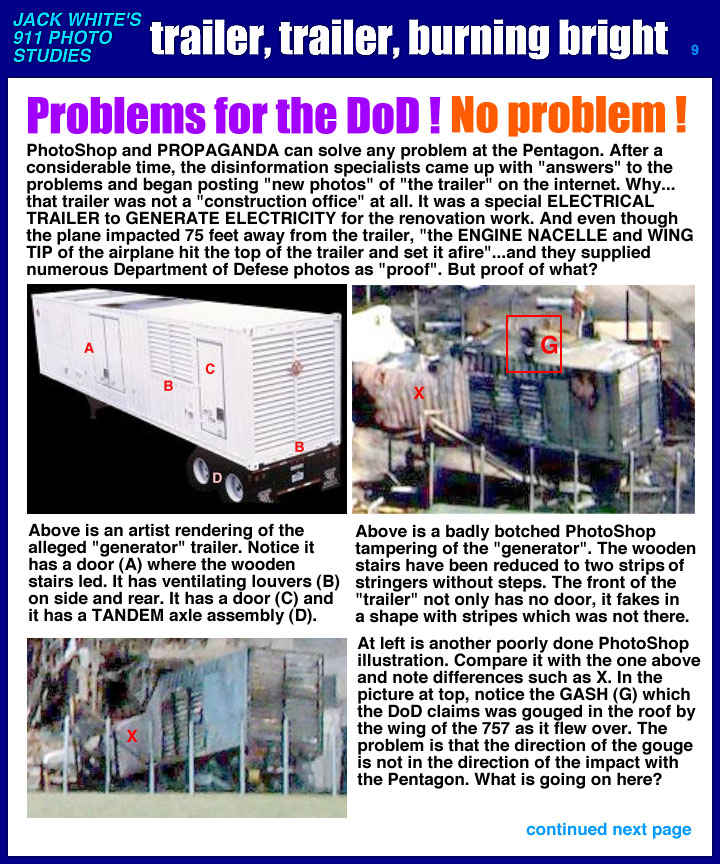
This is Jack White's next page, he only forgot or didn't know at the time of his posting it, that the trailer had been pushed back south for about 1 meter, and at the same time pushed aside towards the west wall with its diesel tank end :
Source: www.911studies.com...
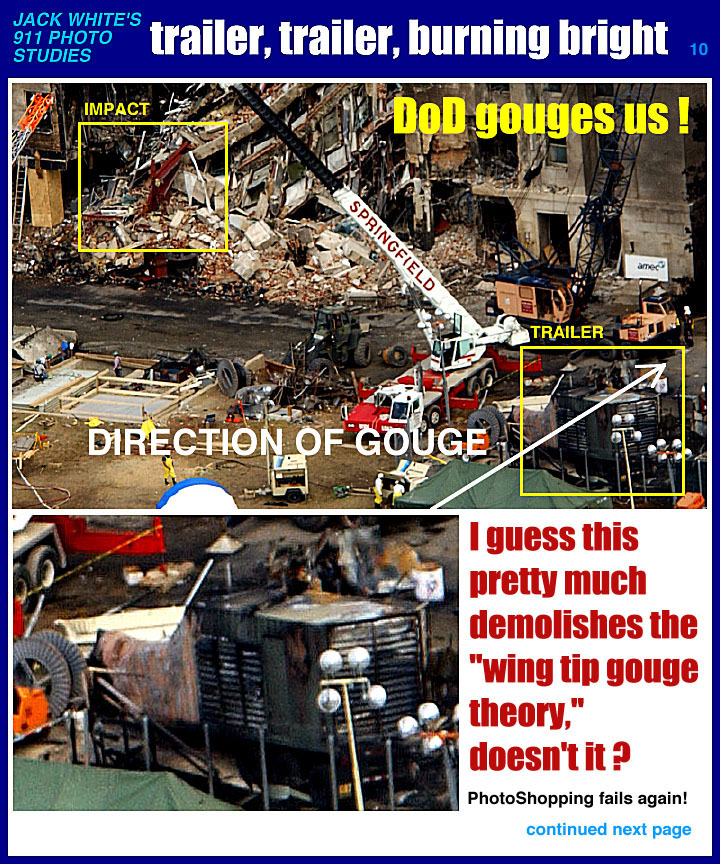
Since we know from pre 9/11 photos, that the fence poles ran parallel to the west wall's foundations bottom line, from north to south, and that the part of it after the corner pole ran towards the protruding part of the West wall facade, under a 90° angle with the long end of the fence, and that the whole trailer long side was parked parallel along the long fence line, and with its diesel front end parallel to the small west-east line, it is obvious that the trailer has been pushed back and around his back axle, to end up in an angle with the long fence and the west wall of about 45°.
The photos also show that the gouge gets deeper over the roof's width. Which is concurrent with a downwards dive into the west wall by the attack plane its wings.
To Alfie1 : the meat of the matter is laid out in the title of this thread. Did you miss that?
The gouge angle, when caused by a right wing fixture, indicates that the plane flew an attack path with an angle of attack of about 75° to 80° compared to the west wall longitudinal north-south going foundation line.
And not the 42° angle the ASCE report, the Purdue university report, the 911 Commission report etc. etc. all proposed. The official story line.
Such a big angle immediately nullifies the 5 downed light poles as evidence for the official flight path angle of 42° or i.o.w. 60.25° true north. Thus the SoC flight path is bunk.
And the generator roof gouge is thus another piece of evidence for the real flight path angle, the NoC flight path, as seen by so many
To Reheat : your signature link its text is a piece of hogwash, and you know it. You feed on the gullible.
And I showed you in many posts that a downward attack angle from over the center of the ANNEX roofs, leading north of the CITGO gas station, in a very normal and low 23° bank angle and then after passing north of CITGO, a slight right turn by AA 77, a hundred meters or so before it would continue to fly straight over the 4 ANC workers standing between their maintenance buildings compound on the south rim of the Arlington National Cemetery grounds, continuing in its very low slightly downwards banking turn to cross over the Washington Boulevard (Route 27) and slam into the west wall. Some say it made a slight left banking correction when over the Pentagon lawn.
You keep insulting me, and about everybody else, without any form of moderator warning, so from now on I take it as fact that you must be a main shareholder in ATS, or even its secret owner, since I get punished at even the slightest ATS rules infringement, and you can go on untouched for years.
It's getting so stupid to react on your posts, that I should not react anymore on any of you, my usual "fan club" members. So, bye bye fans.
Source: 911review.org...
Below is a photo at a page at the Jack White website, where he shows a photo of a similar trailer combination, however, the double door is not to be found in the 9/11 pictures, and the front part of that 9/11 trailer housed a diesel tank container. Which seemed to be 2/3 of the height of the back end generator cabin part.
This is Jack White's next page, he only forgot or didn't know at the time of his posting it, that the trailer had been pushed back south for about 1 meter, and at the same time pushed aside towards the west wall with its diesel tank end :
Source: www.911studies.com...
Since we know from pre 9/11 photos, that the fence poles ran parallel to the west wall's foundations bottom line, from north to south, and that the part of it after the corner pole ran towards the protruding part of the West wall facade, under a 90° angle with the long end of the fence, and that the whole trailer long side was parked parallel along the long fence line, and with its diesel front end parallel to the small west-east line, it is obvious that the trailer has been pushed back and around his back axle, to end up in an angle with the long fence and the west wall of about 45°.
The photos also show that the gouge gets deeper over the roof's width. Which is concurrent with a downwards dive into the west wall by the attack plane its wings.
To Alfie1 : the meat of the matter is laid out in the title of this thread. Did you miss that?
The gouge angle, when caused by a right wing fixture, indicates that the plane flew an attack path with an angle of attack of about 75° to 80° compared to the west wall longitudinal north-south going foundation line.
And not the 42° angle the ASCE report, the Purdue university report, the 911 Commission report etc. etc. all proposed. The official story line.
Such a big angle immediately nullifies the 5 downed light poles as evidence for the official flight path angle of 42° or i.o.w. 60.25° true north. Thus the SoC flight path is bunk.
And the generator roof gouge is thus another piece of evidence for the real flight path angle, the NoC flight path, as seen by so many
To Reheat : your signature link its text is a piece of hogwash, and you know it. You feed on the gullible.
And I showed you in many posts that a downward attack angle from over the center of the ANNEX roofs, leading north of the CITGO gas station, in a very normal and low 23° bank angle and then after passing north of CITGO, a slight right turn by AA 77, a hundred meters or so before it would continue to fly straight over the 4 ANC workers standing between their maintenance buildings compound on the south rim of the Arlington National Cemetery grounds, continuing in its very low slightly downwards banking turn to cross over the Washington Boulevard (Route 27) and slam into the west wall. Some say it made a slight left banking correction when over the Pentagon lawn.
You keep insulting me, and about everybody else, without any form of moderator warning, so from now on I take it as fact that you must be a main shareholder in ATS, or even its secret owner, since I get punished at even the slightest ATS rules infringement, and you can go on untouched for years.
It's getting so stupid to react on your posts, that I should not react anymore on any of you, my usual "fan club" members. So, bye bye fans.
reply to post by LaBTop
Doesn't look like a gouge to me. So thats that. End of story.
Next.
gouge in the generator cabin roof
Doesn't look like a gouge to me. So thats that. End of story.
Next.
Originally posted by Danbones
reply to post by hooper
looks like a gouge to me
sandf
Well then we agree that were not even sure its a gouge. That kind of puts a period at the end of that very, very, very long sentence. Next.
new topics
-
President BIDEN's FBI Raided Donald Trump's Florida Home for OBAMA-NORTH KOREA Documents.
Political Conspiracies: 4 hours ago -
Maestro Benedetto
Literature: 5 hours ago -
Is AI Better Than the Hollywood Elite?
Movies: 5 hours ago -
Las Vegas UFO Spotting Teen Traumatized by Demon Creature in Backyard
Aliens and UFOs: 9 hours ago -
2024 Pigeon Forge Rod Run - On the Strip (Video made for you)
Automotive Discussion: 10 hours ago -
Gaza Terrorists Attack US Humanitarian Pier During Construction
Middle East Issues: 10 hours ago -
The functionality of boldening and italics is clunky and no post char limit warning?
ATS Freshman's Forum: 11 hours ago
top topics
-
President BIDEN's FBI Raided Donald Trump's Florida Home for OBAMA-NORTH KOREA Documents.
Political Conspiracies: 4 hours ago, 25 flags -
Krystalnacht on today's most elite Universities?
Social Issues and Civil Unrest: 15 hours ago, 9 flags -
University of Texas Instantly Shuts Down Anti Israel Protests
Education and Media: 17 hours ago, 8 flags -
Weinstein's conviction overturned
Mainstream News: 13 hours ago, 8 flags -
Supreme Court Oral Arguments 4.25.2024 - Are PRESIDENTS IMMUNE From Later Being Prosecuted.
Above Politics: 15 hours ago, 8 flags -
Massachusetts Drag Queen Leads Young Kids in Free Palestine Chant
Social Issues and Civil Unrest: 12 hours ago, 7 flags -
Gaza Terrorists Attack US Humanitarian Pier During Construction
Middle East Issues: 10 hours ago, 7 flags -
Las Vegas UFO Spotting Teen Traumatized by Demon Creature in Backyard
Aliens and UFOs: 9 hours ago, 6 flags -
Meadows, Giuliani Among 11 Indicted in Arizona in Latest 2020 Election Subversion Case
Mainstream News: 12 hours ago, 5 flags -
2024 Pigeon Forge Rod Run - On the Strip (Video made for you)
Automotive Discussion: 10 hours ago, 4 flags
active topics
-
President BIDEN's FBI Raided Donald Trump's Florida Home for OBAMA-NORTH KOREA Documents.
Political Conspiracies • 16 • : Astyanax -
Truth Social goes public, be careful not to lose your money
Mainstream News • 130 • : Astyanax -
Las Vegas UFO Spotting Teen Traumatized by Demon Creature in Backyard
Aliens and UFOs • 11 • : AwakeNotWoke -
Is AI Better Than the Hollywood Elite?
Movies • 13 • : Justoneman -
Hate makes for strange bedfellows
US Political Madness • 47 • : 19Bones79 -
-@TH3WH17ERABB17- -Q- ---TIME TO SHOW THE WORLD--- -Part- --44--
Dissecting Disinformation • 689 • : daskakik -
University of Texas Instantly Shuts Down Anti Israel Protests
Education and Media • 265 • : Astrocometus -
Gaza Terrorists Attack US Humanitarian Pier During Construction
Middle East Issues • 27 • : ToneD -
Reason of the Existence
The Gray Area • 21 • : BingoMcGoof -
Supreme Court Oral Arguments 4.25.2024 - Are PRESIDENTS IMMUNE From Later Being Prosecuted.
Above Politics • 85 • : Sookiechacha