It looks like you're using an Ad Blocker.
Please white-list or disable AboveTopSecret.com in your ad-blocking tool.
Thank you.
Some features of ATS will be disabled while you continue to use an ad-blocker.

Full size of the Moai Statues! (Easter Island)
page: 12share:
(Go back to last page for the rest of this lengthy post)
The Easter Islanders had no metal tools and their small, weak stone tools would be about as effective as a knitting needle to cut out and shape blocks of the hardest basalt ... One archaeologist calculated that it would take a man’s life-time to carve one stone of such intractable material, even if it were possible without modern power machinery. The ahus are a far greater mystery than the statues so far as their fabrication is concerned"
"Most moai were carved face up, in a horizontal or slightly reclining position, usually with their base pointing down-slope, though some point the other way, others lie parallel to the mountain, and some are almost vertical – apparently to avoid wasting any space.
First the sculptors opened up channels about 60 cm wide and 1.5 m deep around a volume of rock, and then proceeded to carve the head, body and sides, leaving a keel along the back, to keep it attached to the bedrock. With the statue held firm by a packing of stones and fill, the keel was finally hacked away.
The quarry displays plenty of evidence of breakage or of figures having been abandoned due to defects in the stone."
"The statue then had to be moved down the slope (of about 55°), without damaging it or any other statues on the way down. Depressed runways or channels of earth seem to have been used for this purpose. It is thought that ropes may have been attached to horizontal wooden beams set transversely in the channels leading down the slopes.
Some moai had to be lowered down the vertical cliff face, and then maneuvered over statues on which work was still proceeding on the ledge below."
"The islanders have a legend that the statues were moved to the platforms and raised upright by the use of mana, or mind power. Either the god Makemake, or priests or chiefs commanded them to walk or to float through the air, and according to one legend, use was made of a finely crafted stone sphere, 75 cm (2.5 ft) in diameter, called te pito kura (‘the golden navel’ or ‘the navel of light’), to focus the mana.
Legends about the use of levitation in the construction of megalithic monuments are found all over the world."
"A major problem would arise as the columns of people pulling the sledge neared the coastal platform, as there would be nowhere for them to go – except into the sea. It is thought that this problem could have been solved by using levers. In one experiment, 12 men levered a 6-ton rock 15 ft in 1.5 hours. However, it has not yet been demonstrated that these methods could be used on a statue of average height and weight without damaging it.
Geologist William Mulloy suggested using a curved Y-shaped sledge made from the fork of a big tree, on which the statue rests face-downwards. Two gigantic wooden legs in the shape of a ‘V’ are attached to the statue’s neck by a loop, and when the legs are tilted forward, the rope partially lifts the statue and takes some weight off the sledge. The statue could therefore be rocked forward using the bulging abdomen as a fulcrum or pivot point.
However, this technique – which has never been tried out in practice – puts particular stress on the statues’ fragile necks and not all the statues have the protruding stomachs ideal for this method."
A unique discovery at Rano Raraku was the kneeling statue Tukuturi, which was almost completely buried. With a total height of 3.67 m, the figure kneels with its hands on its knees and its buttocks resting on its heels. Its round, upturned face has short ears and a goatee beard. Another complete but badly eroded kneeling statue has been found inside the crater.
"Heyerdahl compares Tukuturi to the smaller kneeling stone statues that were typical of Tiahuanaco. Conventional researchers compare it to a small squatting stone statue from Tahiti.3 There are notable differences in both cases, and again the question is who, if anybody, inspired whom. Orthodox writers point out that ribs were an essential feature of the kneeling statues from Tiahuanaco, but Heyerdahl countered that fragments of a kneeling image were found buried deep in the sand by the great ahu at Anakena, one of which had clearly marked ribs."
The ambiguous evidence reviewed is clearly open to multiple interpretations. Connections of some sort can be discerned between the culture of Easter Island and that of Polynesia, South America, Egypt, and other places. The exact nature and relative importance of these influences, and their timing are uncertain.
Easter Island Mystery: David Pratt
Mod Note: External Source Tags – Please Review This Link.
The Easter Islanders had no metal tools and their small, weak stone tools would be about as effective as a knitting needle to cut out and shape blocks of the hardest basalt ... One archaeologist calculated that it would take a man’s life-time to carve one stone of such intractable material, even if it were possible without modern power machinery. The ahus are a far greater mystery than the statues so far as their fabrication is concerned"
"Most moai were carved face up, in a horizontal or slightly reclining position, usually with their base pointing down-slope, though some point the other way, others lie parallel to the mountain, and some are almost vertical – apparently to avoid wasting any space.
First the sculptors opened up channels about 60 cm wide and 1.5 m deep around a volume of rock, and then proceeded to carve the head, body and sides, leaving a keel along the back, to keep it attached to the bedrock. With the statue held firm by a packing of stones and fill, the keel was finally hacked away.
The quarry displays plenty of evidence of breakage or of figures having been abandoned due to defects in the stone."
"The statue then had to be moved down the slope (of about 55°), without damaging it or any other statues on the way down. Depressed runways or channels of earth seem to have been used for this purpose. It is thought that ropes may have been attached to horizontal wooden beams set transversely in the channels leading down the slopes.
Some moai had to be lowered down the vertical cliff face, and then maneuvered over statues on which work was still proceeding on the ledge below."
"The islanders have a legend that the statues were moved to the platforms and raised upright by the use of mana, or mind power. Either the god Makemake, or priests or chiefs commanded them to walk or to float through the air, and according to one legend, use was made of a finely crafted stone sphere, 75 cm (2.5 ft) in diameter, called te pito kura (‘the golden navel’ or ‘the navel of light’), to focus the mana.
Legends about the use of levitation in the construction of megalithic monuments are found all over the world."
"A major problem would arise as the columns of people pulling the sledge neared the coastal platform, as there would be nowhere for them to go – except into the sea. It is thought that this problem could have been solved by using levers. In one experiment, 12 men levered a 6-ton rock 15 ft in 1.5 hours. However, it has not yet been demonstrated that these methods could be used on a statue of average height and weight without damaging it.
Geologist William Mulloy suggested using a curved Y-shaped sledge made from the fork of a big tree, on which the statue rests face-downwards. Two gigantic wooden legs in the shape of a ‘V’ are attached to the statue’s neck by a loop, and when the legs are tilted forward, the rope partially lifts the statue and takes some weight off the sledge. The statue could therefore be rocked forward using the bulging abdomen as a fulcrum or pivot point.
However, this technique – which has never been tried out in practice – puts particular stress on the statues’ fragile necks and not all the statues have the protruding stomachs ideal for this method."
A unique discovery at Rano Raraku was the kneeling statue Tukuturi, which was almost completely buried. With a total height of 3.67 m, the figure kneels with its hands on its knees and its buttocks resting on its heels. Its round, upturned face has short ears and a goatee beard. Another complete but badly eroded kneeling statue has been found inside the crater.
"Heyerdahl compares Tukuturi to the smaller kneeling stone statues that were typical of Tiahuanaco. Conventional researchers compare it to a small squatting stone statue from Tahiti.3 There are notable differences in both cases, and again the question is who, if anybody, inspired whom. Orthodox writers point out that ribs were an essential feature of the kneeling statues from Tiahuanaco, but Heyerdahl countered that fragments of a kneeling image were found buried deep in the sand by the great ahu at Anakena, one of which had clearly marked ribs."
The ambiguous evidence reviewed is clearly open to multiple interpretations. Connections of some sort can be discerned between the culture of Easter Island and that of Polynesia, South America, Egypt, and other places. The exact nature and relative importance of these influences, and their timing are uncertain.
Easter Island Mystery: David Pratt
edit on 9/11/11 by murkraz because: (no reason
given)
edit on Wed Nov 16 2011 by Jbird because: (no reason given)
Originally posted by KJV1611
reply to post by Bonkrh
and people say there were not giants in the old days...Just another proof providing credibility to the giants recorded in the HOLY bible. Thanks OP, S&F!
FAIL. The 'giants' mentioned in the bible were apparently living beings NOT stone statues. FAIL
Howdy Murkraz
Thanks for the long post
Unfortunately the Rapa Nui did hammer out the volcanic rock into all those 887 known statues - there is no evidence of anyone else being there, no technology. If you go the quarry you can see the statues - incomplete and insitu with the hammer stones still in place, you put up a photo of one such.
Other cultures bashed out statues and obelisks using the same technique.
On Rapa Nui the 'tangata maori moai maia' were the men who made moai. They used basalt picks called toki.
Now I have spent an hour myself bashing the Rano Raraka tuft with a basalt rock. As long as you kept it wet (to make it easier to get the dust out of the way) you could crush it - rather jarring work thou. I made a depression of about 10cm by 8 cm and 4 cm deep in my amateur time as a moai builder.
Thanks for the long post
Unfortunately the Rapa Nui did hammer out the volcanic rock into all those 887 known statues - there is no evidence of anyone else being there, no technology. If you go the quarry you can see the statues - incomplete and insitu with the hammer stones still in place, you put up a photo of one such.
Other cultures bashed out statues and obelisks using the same technique.
On Rapa Nui the 'tangata maori moai maia' were the men who made moai. They used basalt picks called toki.
Now I have spent an hour myself bashing the Rano Raraka tuft with a basalt rock. As long as you kept it wet (to make it easier to get the dust out of the way) you could crush it - rather jarring work thou. I made a depression of about 10cm by 8 cm and 4 cm deep in my amateur time as a moai builder.
Originally posted by Hanslune
Howdy Murkraz
Thanks for the long post
Unfortunately the Rapa Nui did hammer out the volcanic rock into all those 887 known statues - there is no evidence of anyone else being there, no technology. If you go the quarry you can see the statues - incomplete and insitu with the hammer stones still in place, you put up a photo of one such.
Other cultures bashed out statues and obelisks using the same technique.
On Rapa Nui the 'tangata maori moai maia' were the men who made moai. They used basalt picks called toki.
Now I have spent an hour myself bashing the Rano Raraka tuft with a basalt rock. As long as you kept it wet (to make it easier to get the dust out of the way) you could crush it - rather jarring work thou. I made a depression of about 10cm by 8 cm and 4 cm deep in my amateur time as a moai builder.
Whoa, were you there? That sounds awesome my friend.
Rather jarring indeed! I think there's much more to the island, perhaps it was larger, or something more drastic like a massive tsunami hit shore. I'm excited to see what they excavate in the future, they should strip the land all around the inner Moai, who knows what they'd find!
Originally posted by murkraz
Originally posted by Hanslune
Howdy Murkraz
Thanks for the long post
Unfortunately the Rapa Nui did hammer out the volcanic rock into all those 887 known statues - there is no evidence of anyone else being there, no technology. If you go the quarry you can see the statues - incomplete and insitu with the hammer stones still in place, you put up a photo of one such.
Other cultures bashed out statues and obelisks using the same technique.
On Rapa Nui the 'tangata maori moai maia' were the men who made moai. They used basalt picks called toki.
Now I have spent an hour myself bashing the Rano Raraka tuft with a basalt rock. As long as you kept it wet (to make it easier to get the dust out of the way) you could crush it - rather jarring work thou. I made a depression of about 10cm by 8 cm and 4 cm deep in my amateur time as a moai builder.
Whoa, were you there? That sounds awesome my friend.
Rather jarring indeed! I think there's much more to the island, perhaps it was larger, or something more drastic like a massive tsunami hit shore. I'm excited to see what they excavate in the future, they should strip the land all around the inner Moai, who knows what they'd find!
I went once in the 70s as a student then as a tourist many years later to see Prof Hunt's excavations. They have excavated a few of the Moai near Rano Raraku - there was thread on it here last week. Follow the University of Hawaii website they'll let you know when Hunt and others will be going back (they go every summer usually). There are always 2-3 full time excavation on going at Rapa Nui - ever since Routledge, people have been poking around there.
Oh yes, Thor Heyderdahl had his folks finish up one of the unfinished Moai using hammer stones - he has a graphic description of how that worked in the book Aku-Aku, the Secret of Easter Island, ISBN-13: 978-0528818103, it was the first book I read on archaeology
edit on 16/11/11 by
Hanslune because: Added full cite for book
I posted before reading all facts.
It seems that it was a much larger task to get the statues down cliff faces and over other statues being built.
This thread is amazing, I had no idea any of the statues had bodies.
It seems that it was a much larger task to get the statues down cliff faces and over other statues being built.
This thread is amazing, I had no idea any of the statues had bodies.
edit on 23-5-2012 by Chukkles because: (no reason given)
I found this article.
Link
I'm a bit surprised at how many people didn't know they had bodies, though I suppose it is understandable when you consider that the most common pictures of Easter Island just shows the heads on a hill instead of the heads with bodies attached.
The first book I read that had a chapter about Easter Island & the Moai was dated 1988 and it included photos and sketches of the different types (some statues are more squat than others) and the bodies were quite obvious and mention was made of the "hands on the belly" posture of the statues.
What I find nice about the photos in the OP is that it shows the scale of the largest Moai by including the excavation team - makes it look really impressive.
Link
I'm a bit surprised at how many people didn't know they had bodies, though I suppose it is understandable when you consider that the most common pictures of Easter Island just shows the heads on a hill instead of the heads with bodies attached.
The first book I read that had a chapter about Easter Island & the Moai was dated 1988 and it included photos and sketches of the different types (some statues are more squat than others) and the bodies were quite obvious and mention was made of the "hands on the belly" posture of the statues.
What I find nice about the photos in the OP is that it shows the scale of the largest Moai by including the excavation team - makes it look really impressive.
Originally posted by Lynda101
I also wonder why the Moai face out to sea, If I had carved that I'd want to look at it, not the back of its head.
I think the people who created them put them up as protection symbols to stop the sea from inundating the island. I think some of them do face inwards though. I'm not sure if that was in the Frank Joseph (Lost Civilisations of Lemuria) book you mentioned or another book I read. Think this book also mentioned ancient legends that the statues walked to their positions using either mental power or acoustic power - they weren't dragged or put on roller logs etc.
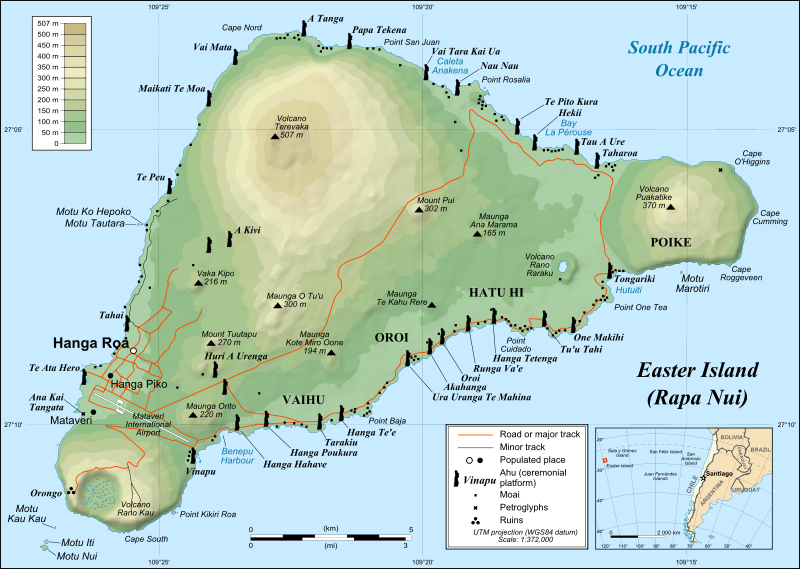
Found this on wiki.
Found this too: Link
Haven't read it yet.
As for the giants - apparently there were two different types of people living on the island at one stage; the long-ears and the short-ears. The short-ears had a revolution and exterminated the long-ears. The long-ears were supposed to be bigger than the short-ears.
I'm sorry - I can't remember the title of the book I got this out of. I think it might have been Thor Heyerdahl's book “Aku-Aku: The Secret of Easter Island". I'm not sure though since I borrowed that book from the library and don't have it on hand.
PS. My apologies if I repeated anything already mentioned. More pages got added as I was typing.

What i find interesting isn't the size or weight of the statue but the hands position.
What i see is a Mudra.
edit on 4-7-2012 by D1ss1dent because: (no reason given)
great article in nat geo this month on how they were moved
the theory is they were "walked" with 3 teams of rope crews
makes sense if you read it
article here
the theory is they were "walked" with 3 teams of rope crews
makes sense if you read it
article here
Originally posted by Wolfenz
Originally posted by Bonkrh
reply to post by Wolfenz
My guess is that it has been there for much longer then we think. Some of the pics show the different levels of sediment perfectly so its not all just one kind of soil.
It may have been there for a LOng LOng Time
Im not sure where the Location of THIS!! particular Statue the Op has Posted It would be helpful if we knew
on Easter Island
also the Hard Erosion on some of the Statues
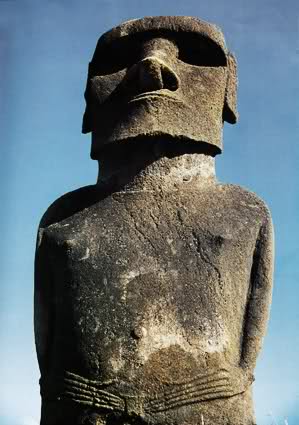
what get me is those LONG Fingers! Why long Fingers, Long Torso Big Head ! Neanderthal Forehead Wide Noses Small Skinny Arms
now i see what these Statues are Grasping a Little Box as it looks
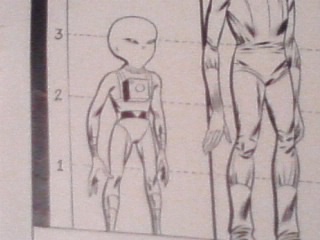
it reminds me of the Old Tale of Alien Grays clinging on to a Cube ( Box) from a Crash , Roswell? when they were Injured and close to Near death ..
Also I have a Comic that shows that Cube type box on their Chest from back inside cover a 1967 Comic
Flying Saucers Comics
a Mystery is to what the Little Cube is !
edit on 23-10-2011 by Wolfenz because: (no reason given)edit on 23-10-2011 by Wolfenz because: fixing typos

This is a great post. I was just rediscovering these photos again. You see that little box in other ancient and lost civilisations too.
This is a very interesting thread. The one thing I'm curious about is whether or not the newer Moai built within the interior perimeter have the
same characteristics as the older Moai located along the outer perimeter (near the ocean). Were these newer ones built from the chest up to mimic the
older ones that were already buried by 20 to 30 feet, or did they include the exact same hand gesture detail at the bottom?
After reading about all these megalithic sites I just feel that the discovery and carbon dating of Gebekli Tepe changed everything. If Gobekli Tepe was dated to about 4 or 5 thousand years ago (instead of 11 or 12 thousand) then any similar construction could've been attributed to that time period as well. However, as others have mentioned, when I look at the similarities between the hand gestures and carvings between Gobekli and the Moai statues, the similarities are staggering. I get the same feeling when looking at the "H" symbols in Gobekli Tepe vd. Puma Punku or all the large stone work across the world without any mortar used. At some point we have to stop giving credit to various cultures that sprang up over the past 500 to 3000 years but miraculously never passed on their stone building knowledge to anyone else, and dismiss the idea that an ancient world civilization did exist at some point.
After reading about all these megalithic sites I just feel that the discovery and carbon dating of Gebekli Tepe changed everything. If Gobekli Tepe was dated to about 4 or 5 thousand years ago (instead of 11 or 12 thousand) then any similar construction could've been attributed to that time period as well. However, as others have mentioned, when I look at the similarities between the hand gestures and carvings between Gobekli and the Moai statues, the similarities are staggering. I get the same feeling when looking at the "H" symbols in Gobekli Tepe vd. Puma Punku or all the large stone work across the world without any mortar used. At some point we have to stop giving credit to various cultures that sprang up over the past 500 to 3000 years but miraculously never passed on their stone building knowledge to anyone else, and dismiss the idea that an ancient world civilization did exist at some point.
The statues are grossly cylindrical.
The easiest way to move a cylinder is to roll it.
I'm guess that rather than aliens or jean grey, they were rolled on their side into position and then raised up.
If that is the case, it'd be logical to assume that a small pit would have been dug at the base of the statue in order to make the process of vertical orientation easier.
Assuming the soil wasn't very firm, and the original pit wasn't reinforced, then the sinking process could have been accelerated.
This is further effected by the small footprint of the base which increases the pounds per square inch excreted by the statue on the ground.
That is what I think, not that it really matters much.
*note* that by rolling a supine moai, the principals of leverage are very easy to use.
The easiest way to move a cylinder is to roll it.
I'm guess that rather than aliens or jean grey, they were rolled on their side into position and then raised up.
If that is the case, it'd be logical to assume that a small pit would have been dug at the base of the statue in order to make the process of vertical orientation easier.
Assuming the soil wasn't very firm, and the original pit wasn't reinforced, then the sinking process could have been accelerated.
This is further effected by the small footprint of the base which increases the pounds per square inch excreted by the statue on the ground.
That is what I think, not that it really matters much.
*note* that by rolling a supine moai, the principals of leverage are very easy to use.
edit on 1111112222 by teachtaire because: (no reason
given)
Also, rolling a supine Moai only uses wood for the leverage, no logs need be used except to excert leverage. The stress fractures on "broken" moai
due to leverage and uneven distribution of pressure would be different than that of fractures due to impact.
erm, I think that by rolling a moai on itself, weight is also distributed more evenly, and irregularities on topography and inherent in the stone itself would be the source of most problems.
erm, I think that by rolling a moai on itself, weight is also distributed more evenly, and irregularities on topography and inherent in the stone itself would be the source of most problems.
reply to post by truthermantwo
Heat fractures could be used to grossly shape the stone prior to finishing.
No giants need be involved.
simplest solution and all that.
I think a bunch of people on an island with nothing to do but make statues to fight the boredom would have enough time to think of the most efficient way to do things....
Heat fractures could be used to grossly shape the stone prior to finishing.
No giants need be involved.
simplest solution and all that.
I think a bunch of people on an island with nothing to do but make statues to fight the boredom would have enough time to think of the most efficient way to do things....
My bad, I forgot this is ATS:
Thor came down with is mighty hammer and hewed the stone asunder.
It took him 5,000,000,0000 years to make the statues, because he got into a massive battle with space aliens.
Then, the space aliens being vanquished by a man in a flying suit of iron, Thor finished his work.
When he realized he had no way to move the statues without breaking them with his super-human strength, he tied his testicles around the statues and dragged them into position.
after another 5,000,000 years passed the ocean rose and fell, causing the statues to sink into the soil.
My bad, those other ideas I had were wildly inappropriate and retarded.
Thor came down with is mighty hammer and hewed the stone asunder.
It took him 5,000,000,0000 years to make the statues, because he got into a massive battle with space aliens.
Then, the space aliens being vanquished by a man in a flying suit of iron, Thor finished his work.
When he realized he had no way to move the statues without breaking them with his super-human strength, he tied his testicles around the statues and dragged them into position.
after another 5,000,000 years passed the ocean rose and fell, causing the statues to sink into the soil.
My bad, those other ideas I had were wildly inappropriate and retarded.
new topics
-
BIDEN Admin Begins Planning For January 2025 Transition to a New President - Today is 4.26.2024.
2024 Elections: 1 hours ago -
Big Storms
Fragile Earth: 3 hours ago -
Where should Trump hold his next rally
2024 Elections: 6 hours ago -
Shocking Number of Voters are Open to Committing Election Fraud
US Political Madness: 6 hours ago -
Gov Kristi Noem Shot and Killed "Less Than Worthless Dog" and a 'Smelly Goat
2024 Elections: 7 hours ago -
Falkville Robot-Man
Aliens and UFOs: 7 hours ago -
James O’Keefe: I have evidence that exposes the CIA, and it’s on camera.
Whistle Blowers and Leaked Documents: 8 hours ago -
Australian PM says the quiet part out loud - "free speech is a threat to democratic dicourse"...?!
New World Order: 9 hours ago -
Ireland VS Globalists
Social Issues and Civil Unrest: 9 hours ago -
Biden "Happy To Debate Trump"
2024 Elections: 10 hours ago
top topics
-
Australian PM says the quiet part out loud - "free speech is a threat to democratic dicourse"...?!
New World Order: 9 hours ago, 14 flags -
James O’Keefe: I have evidence that exposes the CIA, and it’s on camera.
Whistle Blowers and Leaked Documents: 8 hours ago, 14 flags -
Blast from the past: ATS Review Podcast, 2006: With All Three Amigos
Member PODcasts: 12 hours ago, 13 flags -
Biden "Happy To Debate Trump"
2024 Elections: 10 hours ago, 12 flags -
Mike Pinder The Moody Blues R.I.P.
Music: 12 hours ago, 8 flags -
What is the white pill?
Philosophy and Metaphysics: 11 hours ago, 6 flags -
Shocking Number of Voters are Open to Committing Election Fraud
US Political Madness: 6 hours ago, 6 flags -
RAAF airbase in Roswell, New Mexico is on fire
Aliens and UFOs: 10 hours ago, 5 flags -
Ireland VS Globalists
Social Issues and Civil Unrest: 9 hours ago, 5 flags -
Where should Trump hold his next rally
2024 Elections: 6 hours ago, 5 flags
active topics
-
Gov Kristi Noem Shot and Killed "Less Than Worthless Dog" and a 'Smelly Goat
2024 Elections • 54 • : ForReal -
BIDEN Admin Begins Planning For January 2025 Transition to a New President - Today is 4.26.2024.
2024 Elections • 9 • : AwakeNotWoke -
RAAF airbase in Roswell, New Mexico is on fire
Aliens and UFOs • 10 • : Ophiuchus1 -
Big Storms
Fragile Earth • 13 • : AwakeNotWoke -
SHORT STORY WRITERS CONTEST -- April 2024 -- TIME -- TIME2024
Short Stories • 26 • : Encia22 -
Biden "Happy To Debate Trump"
2024 Elections • 50 • : Lumenari -
Falkville Robot-Man
Aliens and UFOs • 9 • : CosmicFocus -
ALERT - U.S. President JOE BIDEN Examined and Found NOT OF SOUND MIND.
2024 Elections • 65 • : SchrodingersRat -
James O’Keefe: I have evidence that exposes the CIA, and it’s on camera.
Whistle Blowers and Leaked Documents • 13 • : theatreboy -
Where should Trump hold his next rally
2024 Elections • 21 • : Dandandat3