It looks like you're using an Ad Blocker.
Please white-list or disable AboveTopSecret.com in your ad-blocking tool.
Thank you.
Some features of ATS will be disabled while you continue to use an ad-blocker.

Paranormal photos: separate the wheat from the chaff.
page: 1share:
This article is the result of a long process of gathering information, personal experimentation, and observation of paranormal phenomena depicted in
some photographs.
Although a certain proportion of these photographs remains unexplained, the majority shows a natural or artificial phenomenon, captured under specific conditions and might therefore appears strange and have a ghostly aspect.
Whenever possible, I will explain every time how technically these phenomena occur, that are often called "false positive".
A- Objects between camera lens and photographed subject
Many objects, both from natural and artificial origin, and combined with either inadequate or unintentional camera setting , may take appearances making them completely unrecognizable.
In most cases, the operator does not see the object(s) that is (are) the source of this confusion because they is (are) either too small and / or far away (orbs, ...) or too fleeting (rods, ...).
It is also noteworthy that almost all these photographs are taken at night with flash, underlining the role of its use in the creation of these artifacts that otherwise would not have been visible (mists, spider webs, .. .)
1- Camera strap
Yes, you read it right! Camera strap is one of the most common cause of "Vortex creation" confusion!
Accidentally left very close in front of the camera lens, the strap appeared as white spiral 'shafts of light' when illuminated by the camera flash.
Almost all camera straps are tightly woven together using a nylon fabric of sorts. So how in the hell do people not notice a camera strap in front of the lens?
Quite simply, given the conditions in which most of these photos are captured (aka the dark), most people are focused on what is going on past the camera, not what is happening with the camera themselves
There are plenty of examples around the net:
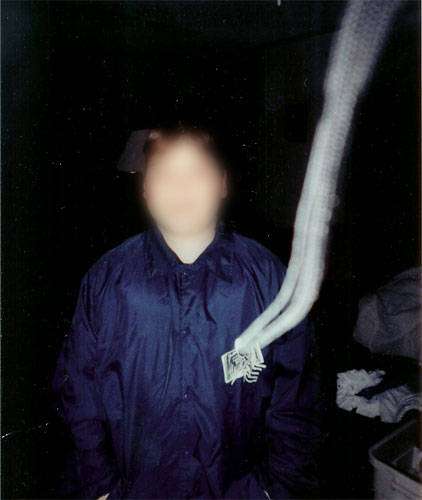
Photo Credit
2- Hair
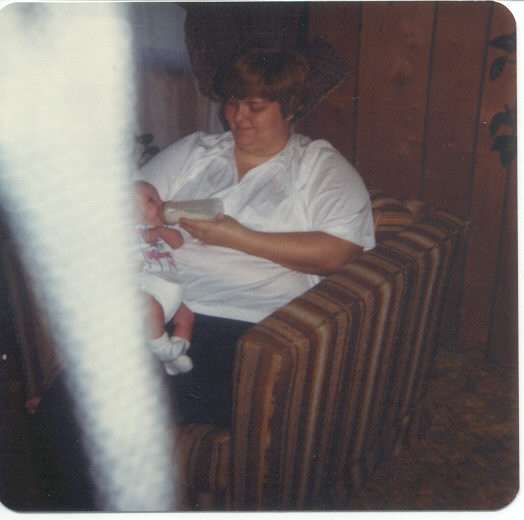
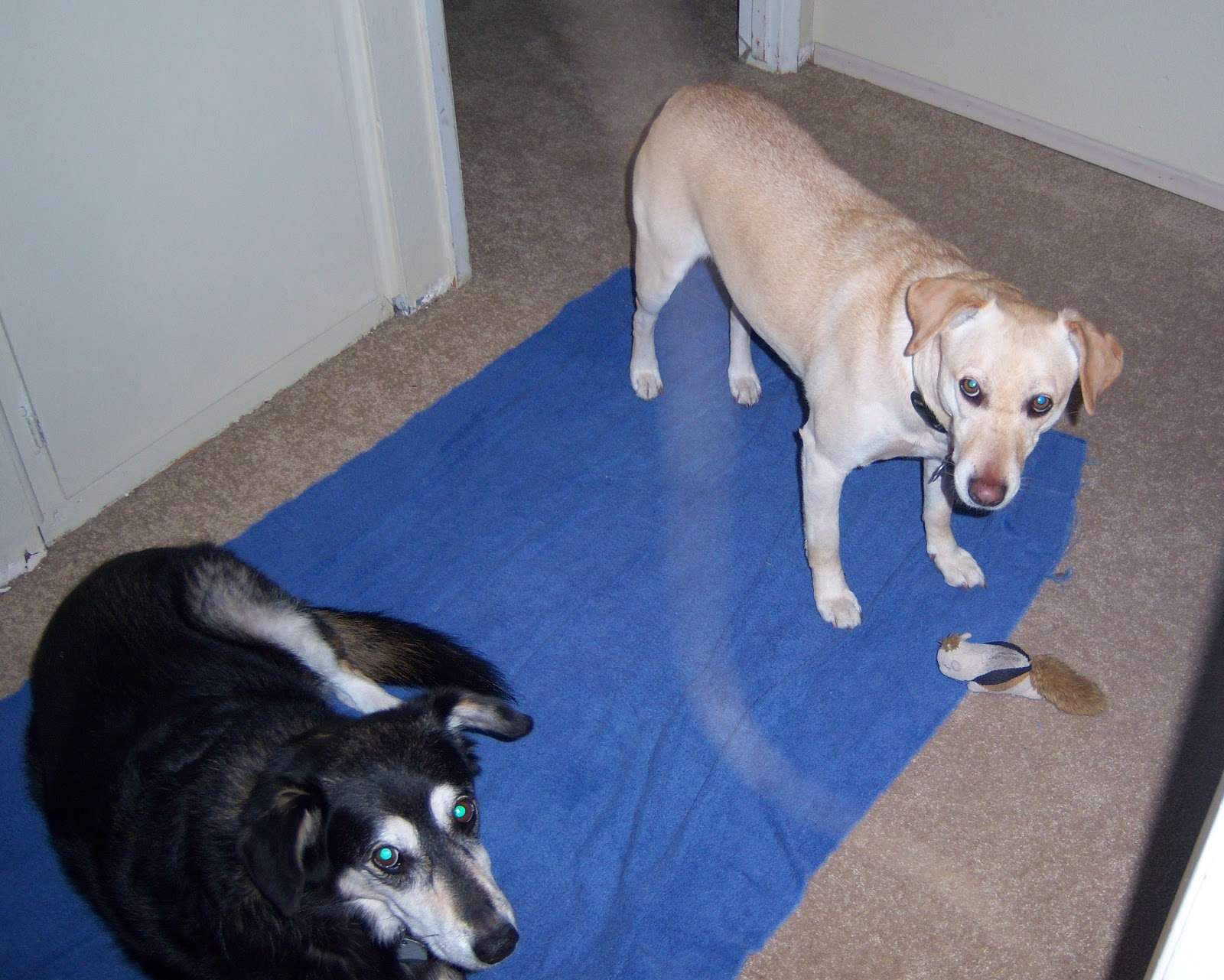
Another common source for "Vortex" is hair.
Hair contributes to a great number of anomalies that are floating around the paranormal field. Surprisingly, many people still refuse to accept that hair was the culprit. Hair will often appear translucent and may even seem brighter and fade out and disappear on each end.
This will depend on the angle of the hair in correspondence to the cameras flash.

Photos credits
3- Mist, smoke, steam and condensation
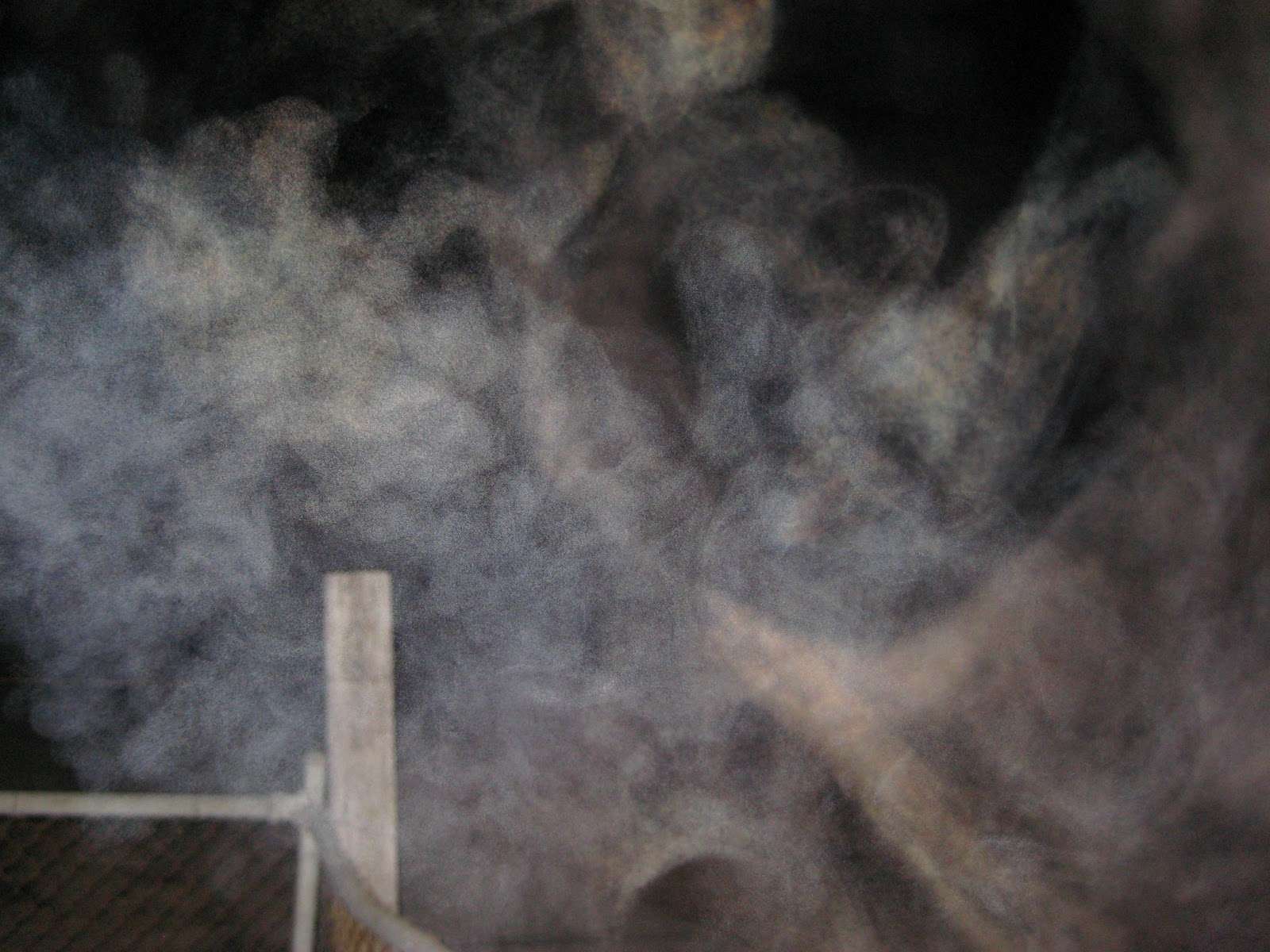
Mists (some people think they resemble ectoplasm) are common on anomalous photographs. Such mists have, like orbs, become much more common since the advent of digital cameras.
Like orbs, their cause is not usually noticed at the time the photograph is taken. Many such photos are taken in allegedly haunted places.
The origin of the mists is probably mostly the photographer's breath on a cold night. It is generally night because the mists need a dark background to show up well (and not be seen by the photographer) and cold for obvious reasons.
A small number of cases may be caused by the photographer smoking and then forgetting about it!
The reason why the mists are on the photo but not seen at the time is that they are in the 'orb zone', where the flash produces intense, if brief, illumination.
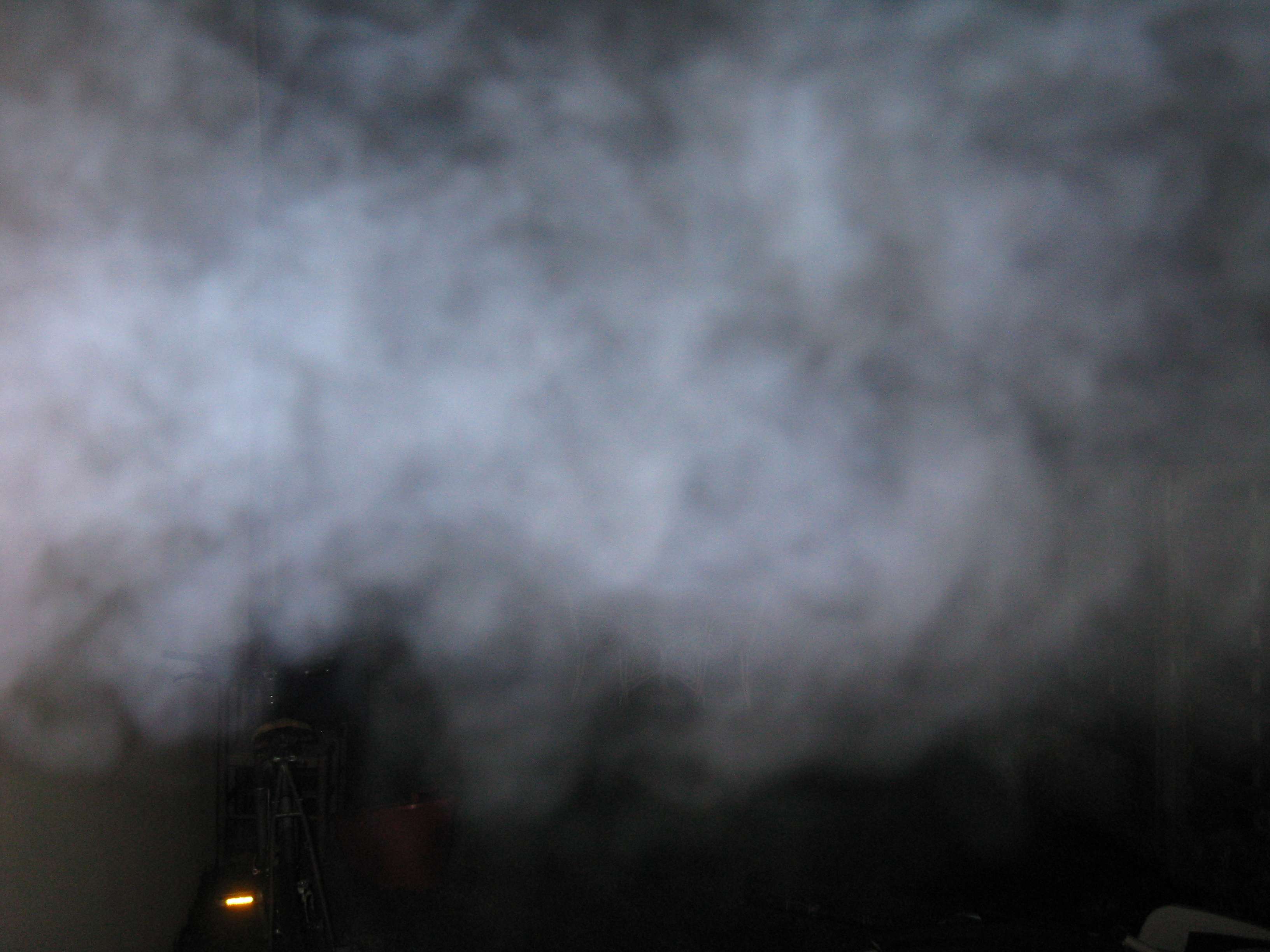
Mists are the most common cause of pareidolia in "paranormal" occurrences; their aspect is open to many interpretations:
4- Bugs, moths, flies...
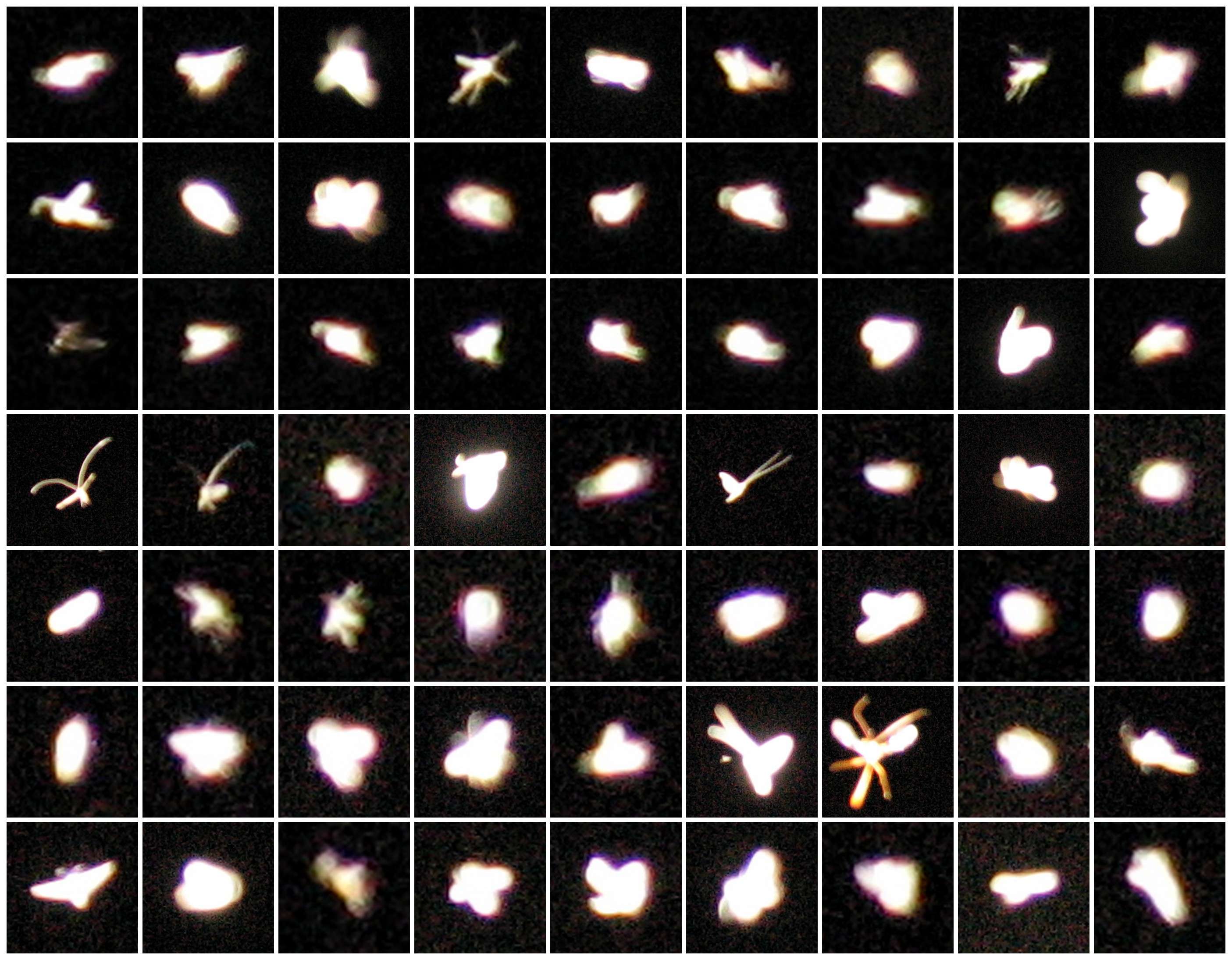
Bugs are a variable that cannot always be discounted. They are also extremely difficult to see in the dark, if you can see them at all. Flashlights and other sources of illumination attract these nighttime flying insects.
Round insect orbs are rare. Insect orbs are also very brilliantly white frequently overexposing the image. There extreme brilliancy is due to the insect’s relative large physical size as compared to dust or lint.
This larger size provides more area to reflect the light from the flash to the camera lens. There images are typically smaller then other orb types due to the fact that further out insects will show up in the picture.
5- Spiders webs...
Spiders webs collect water droplets on knots in the silk spindle or in single strand in a damp or foggy atmosphere. Then, especially in the morning, bright pearl-like water drops hang on thin spider silk after a fog.
At night, the camera is not able to properly focused in such thin thread, thus the odd aspect we can see in the examples below, when the flash fire. Sometimes, there's only a few water droplets and the rest of the spider web cannot be seen by the camera eye...

6- Rods
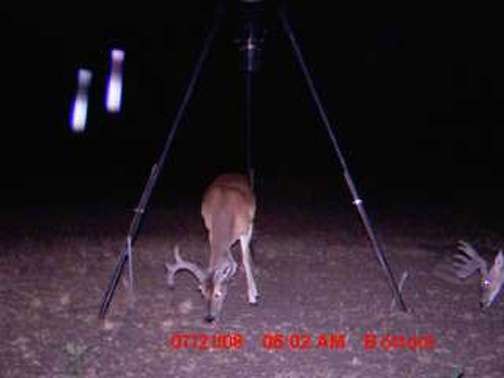
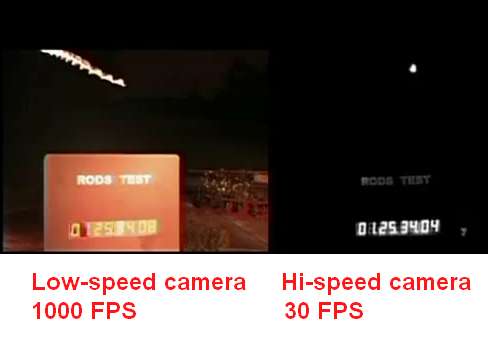
Rods are nowadays a well-known phenomenon that is fully explained and widely admit as a phenomenon involving both a flying insect and specific settings of the camera.
The experiment below explain in a very understandable way how it works:
Although a certain proportion of these photographs remains unexplained, the majority shows a natural or artificial phenomenon, captured under specific conditions and might therefore appears strange and have a ghostly aspect.
Whenever possible, I will explain every time how technically these phenomena occur, that are often called "false positive".
A- Objects between camera lens and photographed subject
Many objects, both from natural and artificial origin, and combined with either inadequate or unintentional camera setting , may take appearances making them completely unrecognizable.
In most cases, the operator does not see the object(s) that is (are) the source of this confusion because they is (are) either too small and / or far away (orbs, ...) or too fleeting (rods, ...).
It is also noteworthy that almost all these photographs are taken at night with flash, underlining the role of its use in the creation of these artifacts that otherwise would not have been visible (mists, spider webs, .. .)
1- Camera strap
Yes, you read it right! Camera strap is one of the most common cause of "Vortex creation" confusion!
Accidentally left very close in front of the camera lens, the strap appeared as white spiral 'shafts of light' when illuminated by the camera flash.
Almost all camera straps are tightly woven together using a nylon fabric of sorts. So how in the hell do people not notice a camera strap in front of the lens?
Quite simply, given the conditions in which most of these photos are captured (aka the dark), most people are focused on what is going on past the camera, not what is happening with the camera themselves
There are plenty of examples around the net:
Photo Credit
2- Hair
Another common source for "Vortex" is hair.
Hair contributes to a great number of anomalies that are floating around the paranormal field. Surprisingly, many people still refuse to accept that hair was the culprit. Hair will often appear translucent and may even seem brighter and fade out and disappear on each end.
This will depend on the angle of the hair in correspondence to the cameras flash.
Photos credits
3- Mist, smoke, steam and condensation
Mists (some people think they resemble ectoplasm) are common on anomalous photographs. Such mists have, like orbs, become much more common since the advent of digital cameras.
Like orbs, their cause is not usually noticed at the time the photograph is taken. Many such photos are taken in allegedly haunted places.
The origin of the mists is probably mostly the photographer's breath on a cold night. It is generally night because the mists need a dark background to show up well (and not be seen by the photographer) and cold for obvious reasons.
A small number of cases may be caused by the photographer smoking and then forgetting about it!
The reason why the mists are on the photo but not seen at the time is that they are in the 'orb zone', where the flash produces intense, if brief, illumination.
Mists are the most common cause of pareidolia in "paranormal" occurrences; their aspect is open to many interpretations:
4- Bugs, moths, flies...
Bugs are a variable that cannot always be discounted. They are also extremely difficult to see in the dark, if you can see them at all. Flashlights and other sources of illumination attract these nighttime flying insects.
Round insect orbs are rare. Insect orbs are also very brilliantly white frequently overexposing the image. There extreme brilliancy is due to the insect’s relative large physical size as compared to dust or lint.
This larger size provides more area to reflect the light from the flash to the camera lens. There images are typically smaller then other orb types due to the fact that further out insects will show up in the picture.
5- Spiders webs...
Spiders webs collect water droplets on knots in the silk spindle or in single strand in a damp or foggy atmosphere. Then, especially in the morning, bright pearl-like water drops hang on thin spider silk after a fog.
At night, the camera is not able to properly focused in such thin thread, thus the odd aspect we can see in the examples below, when the flash fire. Sometimes, there's only a few water droplets and the rest of the spider web cannot be seen by the camera eye...
6- Rods
Rods are nowadays a well-known phenomenon that is fully explained and widely admit as a phenomenon involving both a flying insect and specific settings of the camera.
The experiment below explain in a very understandable way how it works:
edit on 19-5-2012 by elevenaugust because: spelling
7- Orbs
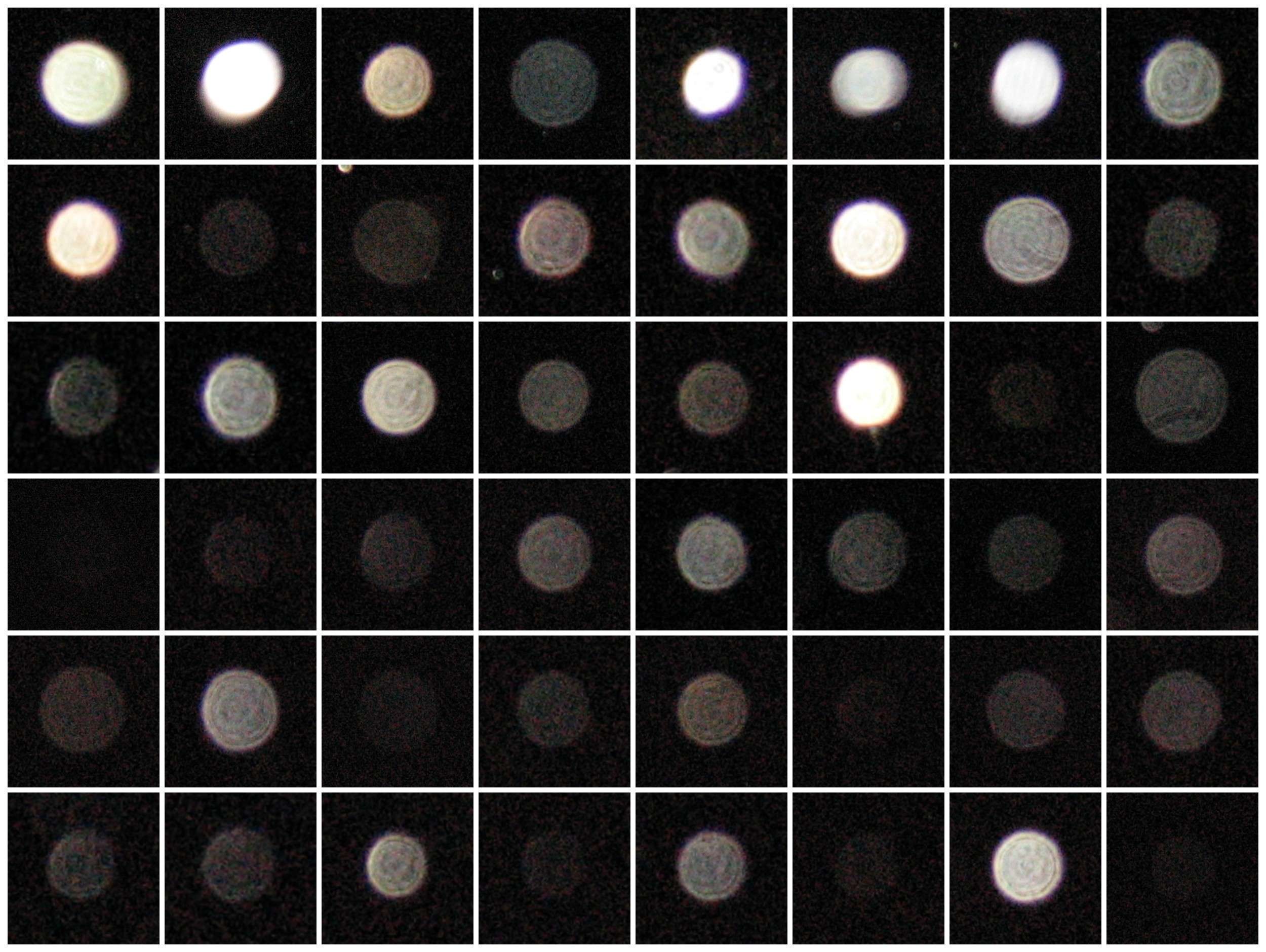
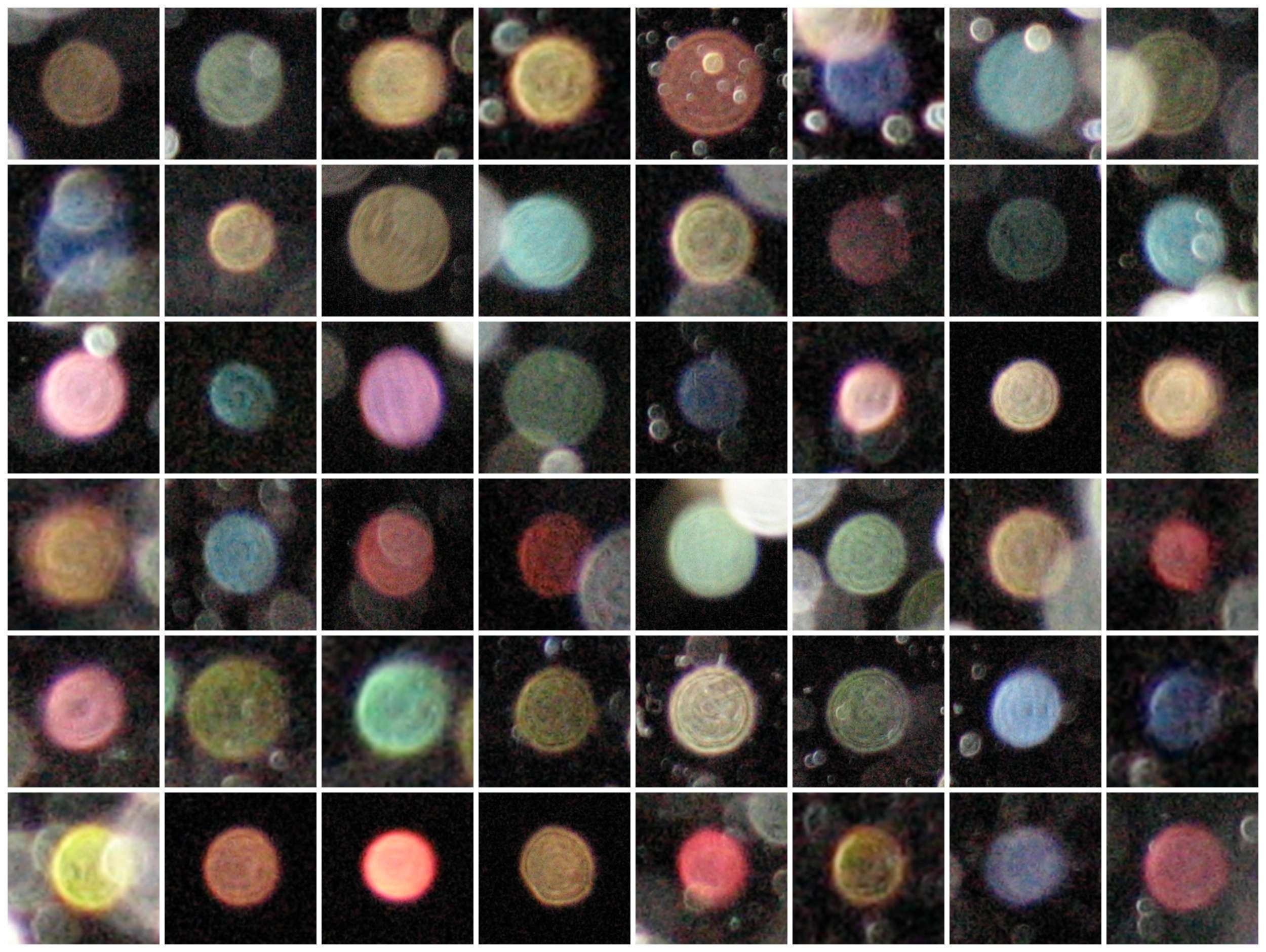
Like Rods, Orbs are now fully explained and widely admit to be only unfocused dust illuminated by the camera flash.
There is a huge amount of variety of orbs, including colored, moving, partials, etc... I'll not detailled here how each of them are created, however you'll find thorough explanations here with lots of examples here as well.
The "orb zone"
When an object is too close to a lens to be in focus, it looks fuzzy. However, it becomes fuzzy in a quite specific way. It turns into a series of overlapping circular blobs of light called 'circles of confusion'.
These can appear quite sharp (see top photo) but they are actually a representation of a single tiny point (a highlight) on the complete object (which, overall, then looks fuzzy and out of focus).
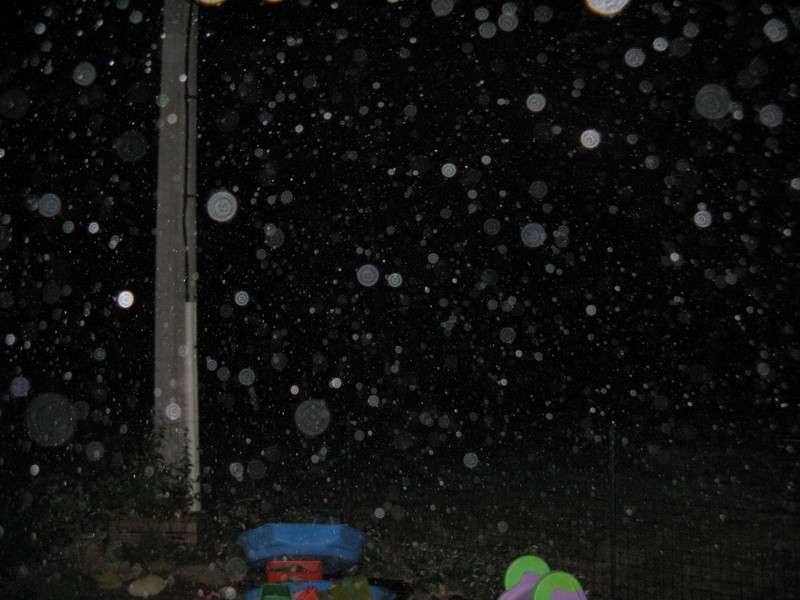
You can often see this 'orbing' effect in pictures where there is a portion (particularly in the foreground) that is badly out of focus.
Very small objects, like dust particles or small water droplets, produce just a single circle of confusion (or orb). This effect can occur anywhere but is often only noticed when it occurs at somewhere significant, like a haunted house.
Source
Photos credits
B- Camera tricks
1- Double exposure
To create a ghost effect, place the subject in front of a background that is of average brightness. Take an exposure.
Then move the subject out of the way and expose again, maintaining the registration of the image with that of the first exposure. The will give a ghost-like appearance to the subject because the background is visible through the subject.
Note that this method does not work with dark backgrounds because the second exposure will not be bright enough to be seen through the subject and the subject will look very normal, unless it moves between the two shoots, the result being then to have twice the subject in different posture:
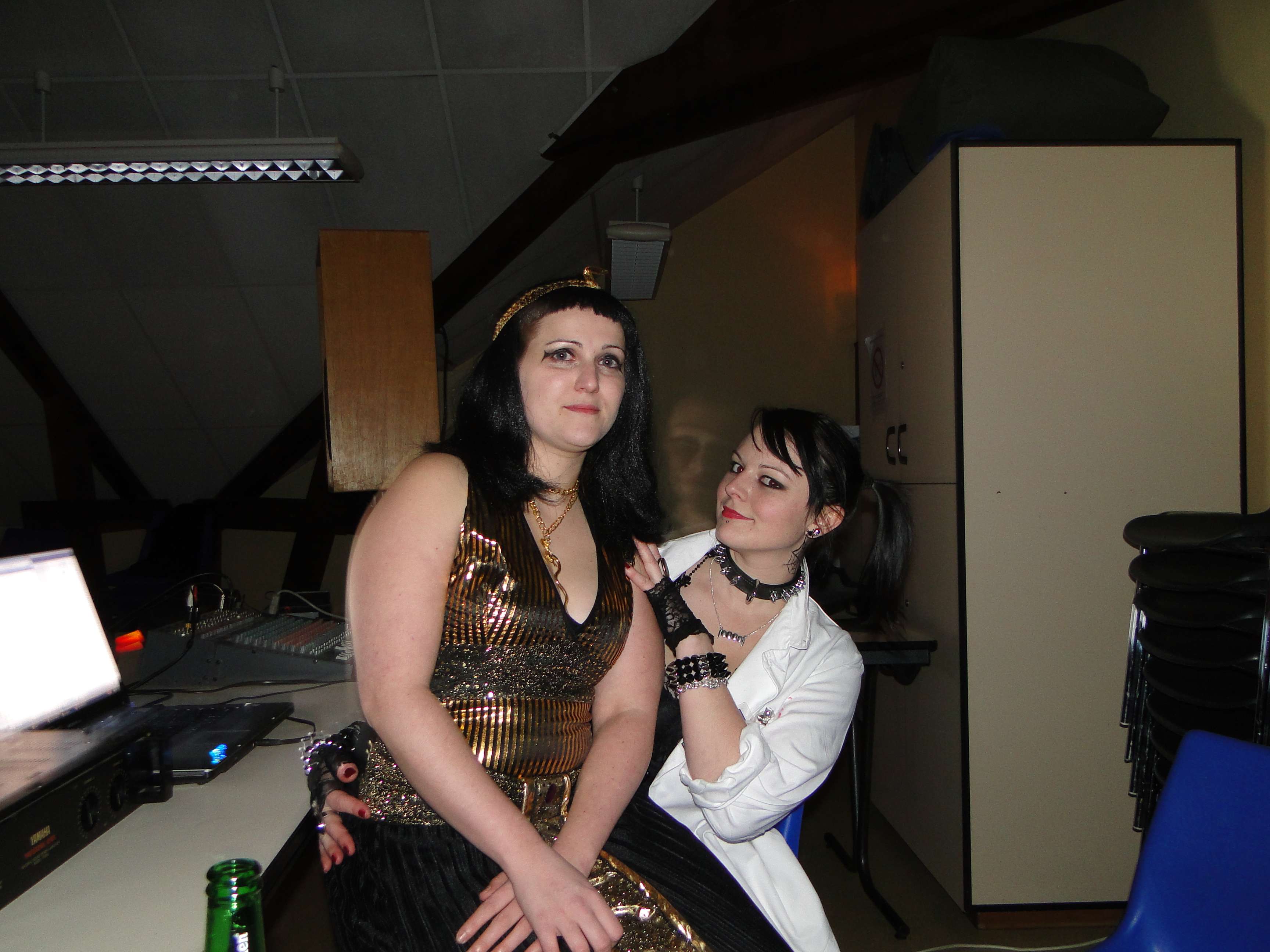
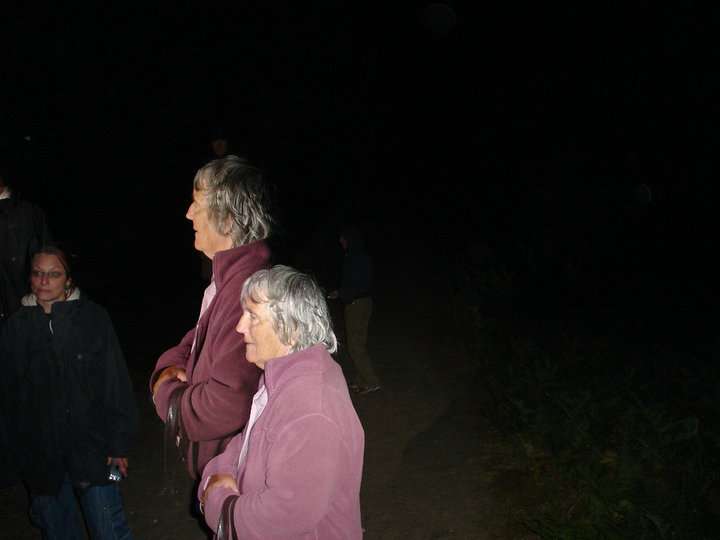
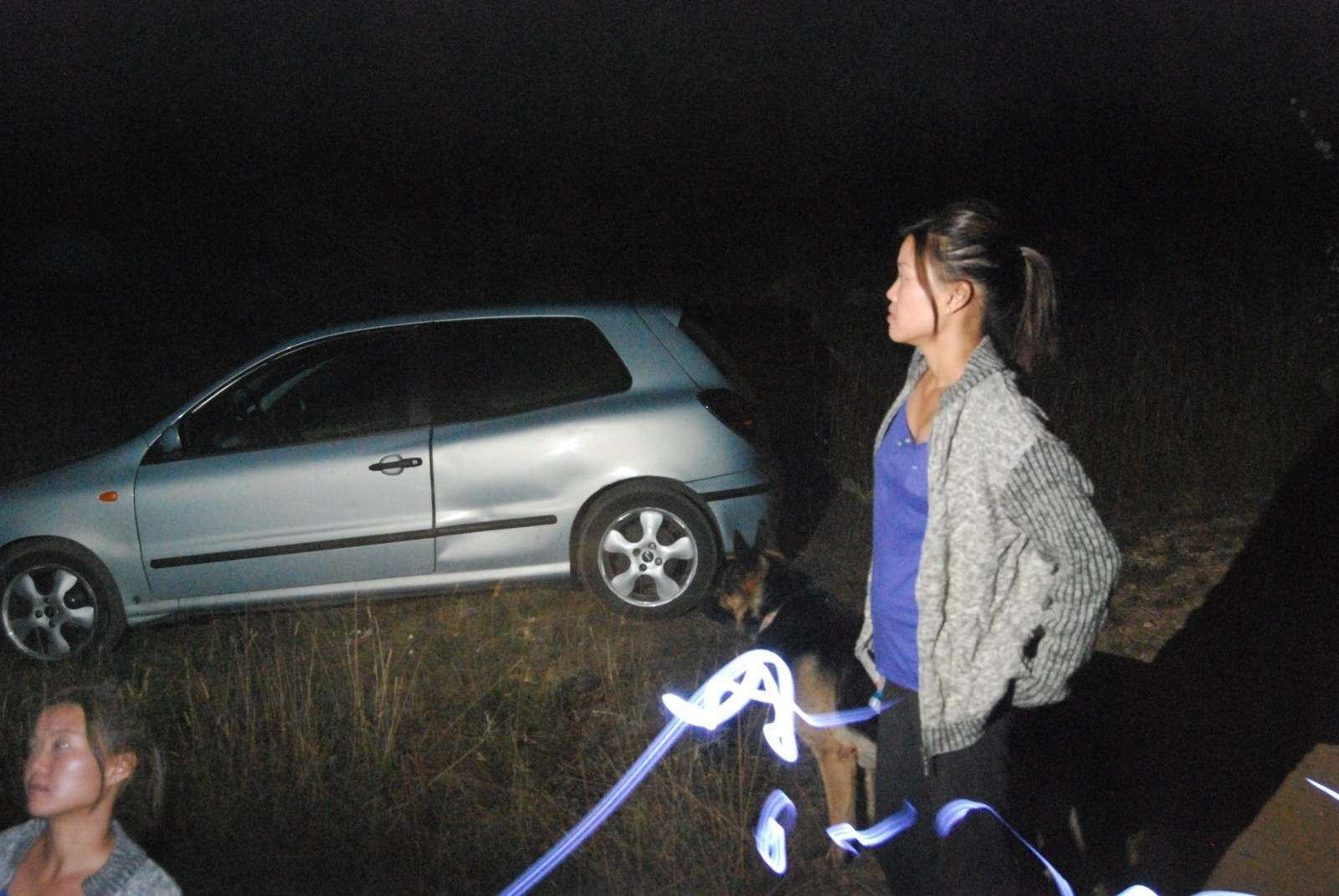
Note that in the above picture, there are two combined results (the woman that appears twice and the blue light streak) of both the double exposure and the camera that moved between the two exposure
Like Rods, Orbs are now fully explained and widely admit to be only unfocused dust illuminated by the camera flash.
There is a huge amount of variety of orbs, including colored, moving, partials, etc... I'll not detailled here how each of them are created, however you'll find thorough explanations here with lots of examples here as well.
The "orb zone"
When an object is too close to a lens to be in focus, it looks fuzzy. However, it becomes fuzzy in a quite specific way. It turns into a series of overlapping circular blobs of light called 'circles of confusion'.
These can appear quite sharp (see top photo) but they are actually a representation of a single tiny point (a highlight) on the complete object (which, overall, then looks fuzzy and out of focus).
You can often see this 'orbing' effect in pictures where there is a portion (particularly in the foreground) that is badly out of focus.
Very small objects, like dust particles or small water droplets, produce just a single circle of confusion (or orb). This effect can occur anywhere but is often only noticed when it occurs at somewhere significant, like a haunted house.
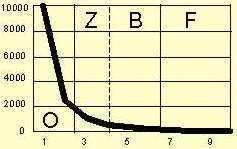
Digital cameras have lenses with a much greater depth of field than film cameras. This means that the nearest point to the camera that is in focus is a lot closer. It also brings the 'just out of focus' area ('orb zone') closer as well.
The 'orb zone' is so close that it is intensely illuminated by the flash. The intensity of the flash increases according to an inverse square law with decreasing distance.
Indeed, if the subject of your photograph is at a distance of 5m, a particle of dust at 5cm from the camera receives approximately 10,000 times greater light intensity!
This creates an 'orb zone' in digital cameras where the light intensity is sufficient to illuminate the faint out-of-focus bits of dust, which appear as circles of confusion (or 'orbs').
The graph shows flash illumination diminishing with distance (to right).
O = too out of focus to be visible even with flash
Z = (orb zone) out of focus but visible due to high flash intensity
B = out of focus but invisible because flash not intense enough
F = in focus and visible
In a film camera, all the zones move further out and the 'orb zone' generally vanishes because there is insufficient flash intensity at the increased distance.
As digital cameras get larger CCDs (not just megapixels but physically), their lenses get decreasing depth of field. This means that the problems of orbs and strange mists should gradually vanish. No more spoiled pictures!
Source
Photos credits
B- Camera tricks
1- Double exposure
To create a ghost effect, place the subject in front of a background that is of average brightness. Take an exposure.
Then move the subject out of the way and expose again, maintaining the registration of the image with that of the first exposure. The will give a ghost-like appearance to the subject because the background is visible through the subject.
Note that this method does not work with dark backgrounds because the second exposure will not be bright enough to be seen through the subject and the subject will look very normal, unless it moves between the two shoots, the result being then to have twice the subject in different posture:
Note that in the above picture, there are two combined results (the woman that appears twice and the blue light streak) of both the double exposure and the camera that moved between the two exposure
edit on 19-5-2012 by elevenaugust because: (no reason given)
edit on
19-5-2012 by elevenaugust because: (no reason given)
2- Light trails
Source

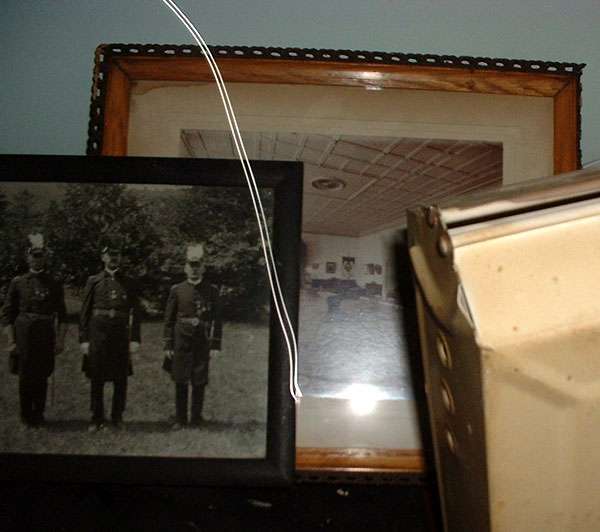
Interestingly, there are some examples where you can see that the light trail is made of short dotted lines.
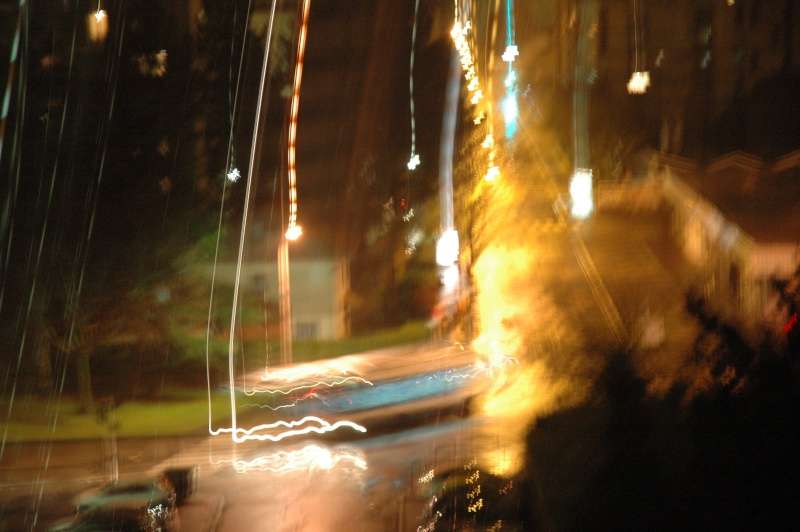
The above photo is a bus passing with its headlights on on the street.
The lights of the bus are incandescent bulbs with a tungsten filament, powered by alternating current, and heated to 3000°C. It does not have time to cool down to show the slightest flicker when switching repetitive current alternative to 0V. In fact, the trails are continuous and captured by the camera lens as it.
Street lights use discharge lamps with sodium vapor (yellow / orange) or mercury vapor (white / blue) which are produced in electric arcs in the middle of a gas, which ionizes and produces the light. This is not a continuous process. These discharges are at high frequency to produce an illusion of continuity.
It's the same principle in the movies. I suspect this frequency to be of 50Hz, that of the electric current distribution in Europe (In UK, I think it is 60Hz).
This phenomenon is usually invisible to the naked eye, but not for the cameras ...
C- Mirrors/reflections
Beware of the mirrors when taking a photo! They are often the cause of unwanted reflections...
ATS related threads:
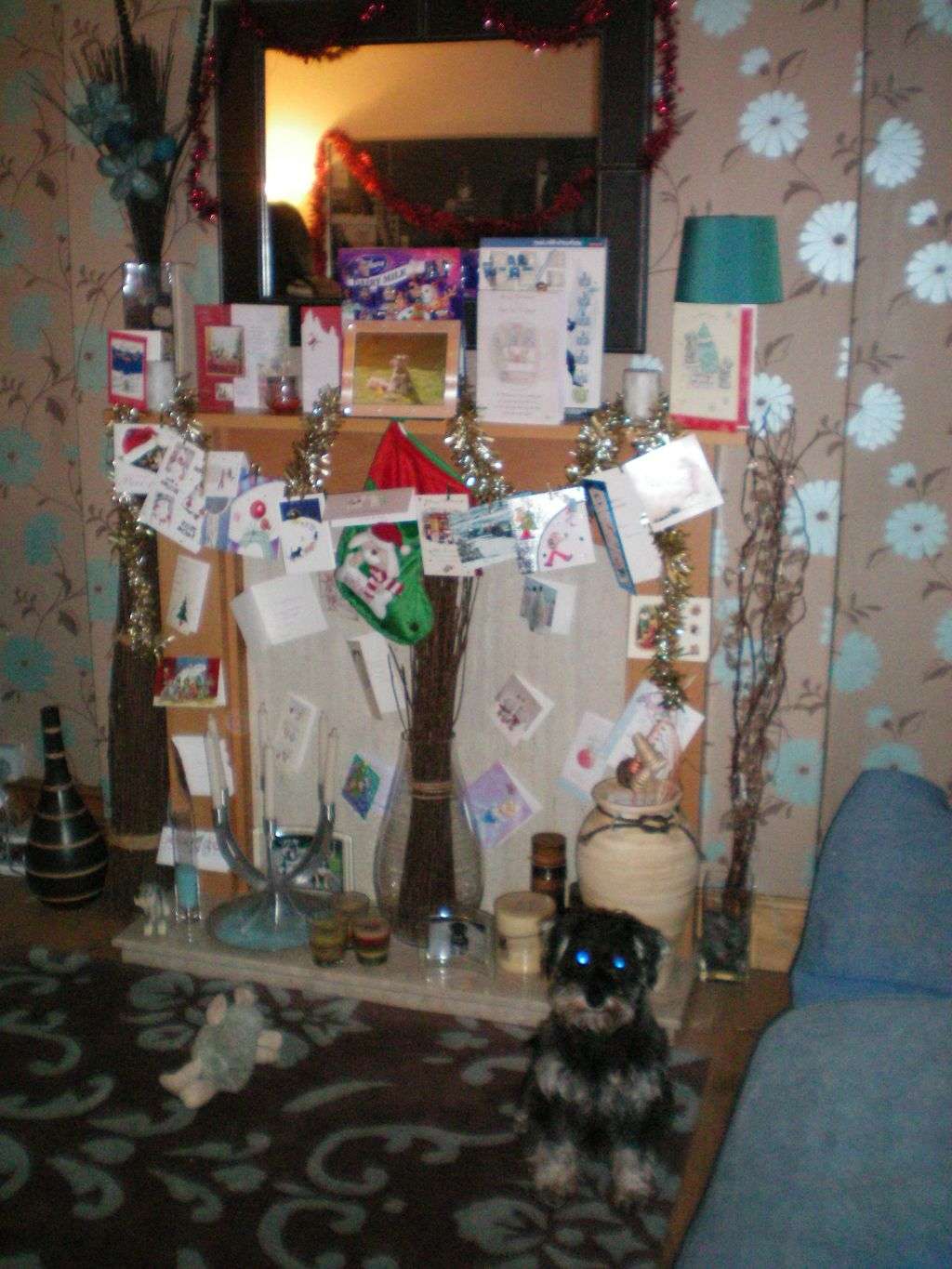
Please help me identitfy object in mirror

Ghost picture needs analysis
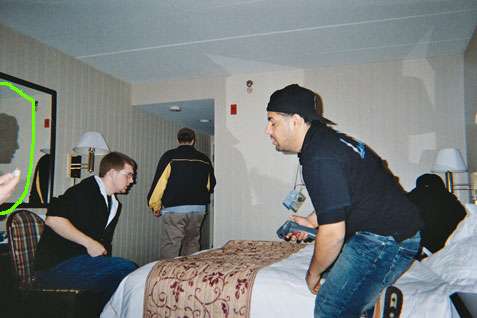
Another example with a shadow reflection on the mirror:
Source
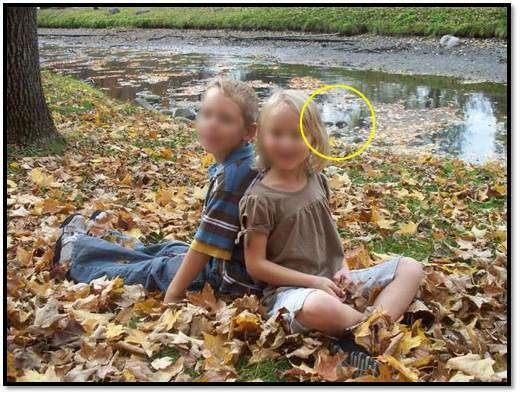
D- Pareidolia
Pareidolia refers to the human tendency to see faces and other patterns in noise.
It can be for fun, like seeing patterns in clouds, but sometimes people start thinking that the things they are seeing are really there.
It applies for many paranormal photos, like for example:
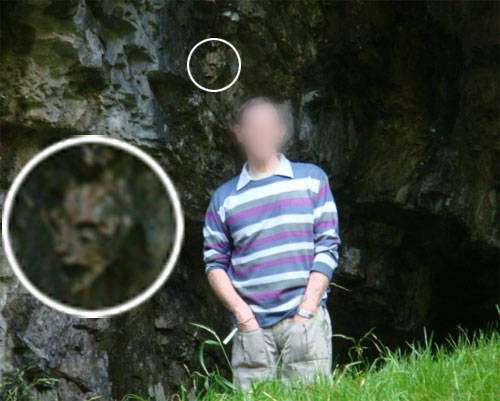
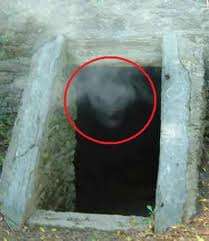
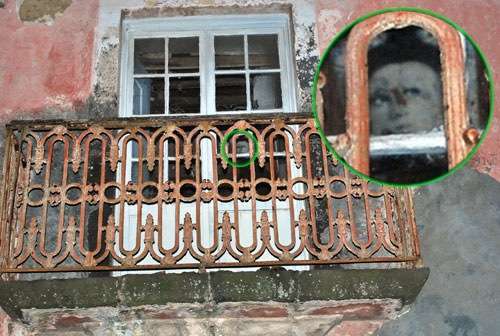
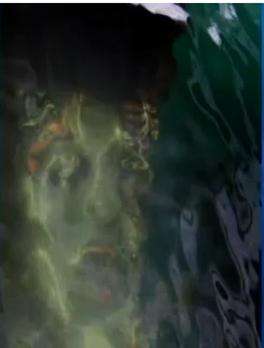
E- Fakes
Unfortunately, some people have the need to deceive others. There are many ways to create fakes and, as this is not the purpose here, I'll not expose how paranormal fakes can be created.
This is more than ever true since technology help forgers:
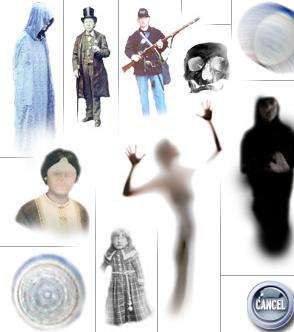
Iphone app
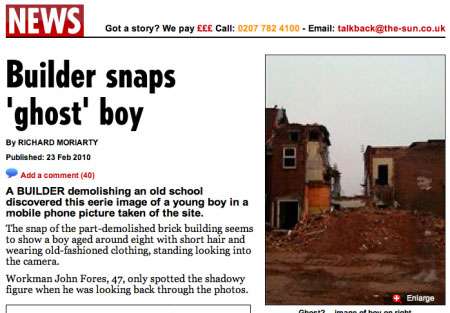
I'll content myself to show such examples, taken from ATS threads:

Ghost caught on camera Exclusive Pics *HOAX* sorry,
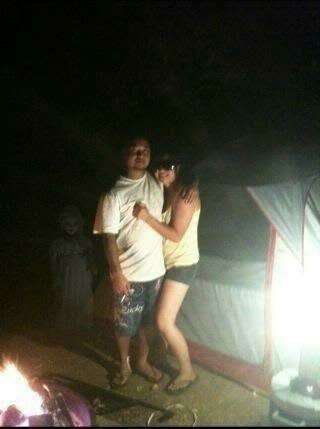
Creepy ghost pic, what is the deal with this?

[HOAX] grudge ghost in my house? its pure evil
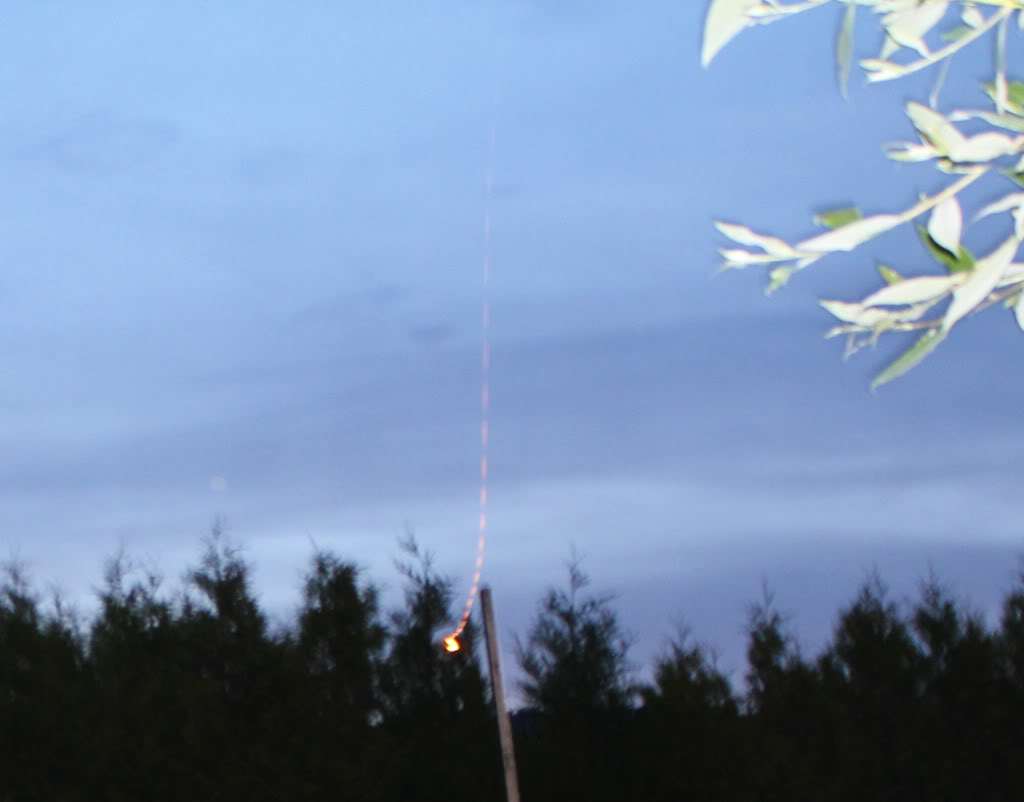
A light trail is seen to emerge from a light source (though the light source could be off the side of the frame).
It happens when you take a flash photograph of a dark scene which includes a light source (such as a torch) while moving the camera. The flash freezes the dark background but the light source leaves a trail because the camera is moving and the shutter is still open.
While the flash typically takes thousandths of a second, the shutter may stay open for hundredths, or even tenths, of a second. The long relatively long shutter exposure is known as the 'flash synchronization shutter speed'. Your camera manual may explain how to adjust it.
Source
Interestingly, there are some examples where you can see that the light trail is made of short dotted lines.
The above photo is a bus passing with its headlights on on the street.
The lights of the bus are incandescent bulbs with a tungsten filament, powered by alternating current, and heated to 3000°C. It does not have time to cool down to show the slightest flicker when switching repetitive current alternative to 0V. In fact, the trails are continuous and captured by the camera lens as it.
Street lights use discharge lamps with sodium vapor (yellow / orange) or mercury vapor (white / blue) which are produced in electric arcs in the middle of a gas, which ionizes and produces the light. This is not a continuous process. These discharges are at high frequency to produce an illusion of continuity.
It's the same principle in the movies. I suspect this frequency to be of 50Hz, that of the electric current distribution in Europe (In UK, I think it is 60Hz).
This phenomenon is usually invisible to the naked eye, but not for the cameras ...
C- Mirrors/reflections
Beware of the mirrors when taking a photo! They are often the cause of unwanted reflections...
ATS related threads:
Please help me identitfy object in mirror
Ghost picture needs analysis
Another example with a shadow reflection on the mirror:
Source
This picture would seem to show a shadow figure in the mirror.
But it's just the reflection of LIPI Lead Investigator Moshin Marghoob (on the bed).
D- Pareidolia
Pareidolia refers to the human tendency to see faces and other patterns in noise.
It can be for fun, like seeing patterns in clouds, but sometimes people start thinking that the things they are seeing are really there.
It applies for many paranormal photos, like for example:
E- Fakes
Unfortunately, some people have the need to deceive others. There are many ways to create fakes and, as this is not the purpose here, I'll not expose how paranormal fakes can be created.
This is more than ever true since technology help forgers:
Iphone app
I'll content myself to show such examples, taken from ATS threads:
Ghost caught on camera Exclusive Pics *HOAX* sorry,
Creepy ghost pic, what is the deal with this?
[HOAX] grudge ghost in my house? its pure evil
edit on 19-5-2012 by
elevenaugust because: spelling (again!)
Extremely well done. I'd applaud you if I could.
I think this thread should be a sticky.
I think this thread should be a sticky.
reply to post by elevenaugust
It's amazing what a camera can pick up and you've done an excellent job of explaining that here.
I commend you for all the hard work you put into your posts.
Keep it up
*star and flag*
It's amazing what a camera can pick up and you've done an excellent job of explaining that here.
I commend you for all the hard work you put into your posts.
Keep it up
*star and flag*
S&F great thread!!! Thanks for taking the time to put it together.
It was an awesome read and well thought out.
It was an awesome read and well thought out.
edit on 19-5-2012 by pez1975 because: (no reason given)
reply to post by icepack
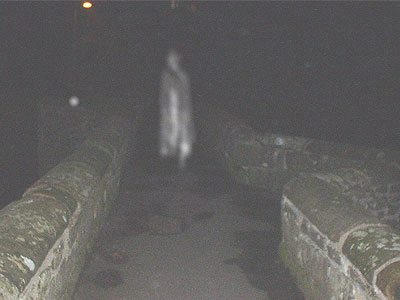
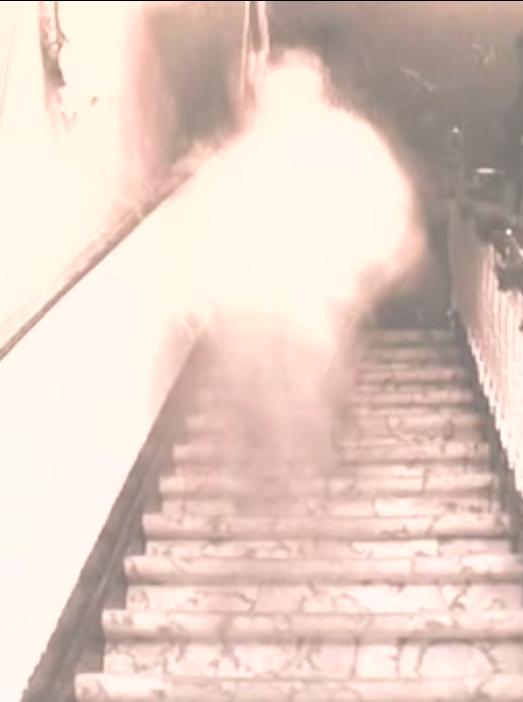
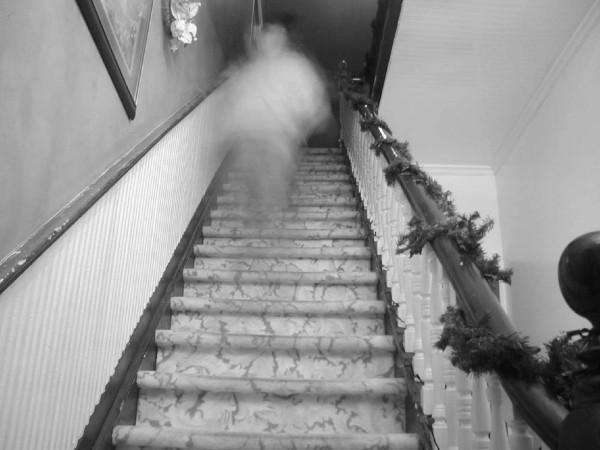
Don't know about the first... Any background information?
The second one is taken from these two ATS threads:
Photo's of Spirits Captured in UK Tunnels,
Strange photo that a friend took, yeah it def looks like a "ghost"
I would guess a mixture of mists capture and pareidolia.
The third one was taken at the Pride House and is very impressive. Looks also like mist, but with what looks like a human shape.... hard to tell, and frankly I don't know!!
I guess that the original came from here
Don't know about the first... Any background information?
The second one is taken from these two ATS threads:
Photo's of Spirits Captured in UK Tunnels,
Strange photo that a friend took, yeah it def looks like a "ghost"
I would guess a mixture of mists capture and pareidolia.
The third one was taken at the Pride House and is very impressive. Looks also like mist, but with what looks like a human shape.... hard to tell, and frankly I don't know!!
I guess that the original came from here
reply to post by elevenaugust
i found this about the first one: www.bbc.co.uk...
thanks for the other links.
i found this about the first one: www.bbc.co.uk...
thanks for the other links.
reply to post by elevenaugust
Woaw,
I did not know alot of these things. This explains alooot woaw thanks.
What are your thoughts on this photo: www.holylove.org... what is the cause behind it?
Woaw,
I did not know alot of these things. This explains alooot woaw thanks.
What are your thoughts on this photo: www.holylove.org... what is the cause behind it?
Nice thread!
I will probably use it for good reference if I get/see any weird photos.
Good job!
I will probably use it for good reference if I get/see any weird photos.
Good job!
reply to post by 0thetrooth0
My camera will take pictures like that if I have my flash off or some other weird setting on my camera, I am not sure which one it is, auto focus and flash off or something like that. I have actually had some weird photos that way, but knew it was cause my settings were screwed up so deleted them.
My camera will take pictures like that if I have my flash off or some other weird setting on my camera, I am not sure which one it is, auto focus and flash off or something like that. I have actually had some weird photos that way, but knew it was cause my settings were screwed up so deleted them.
Originally posted by 0thetrooth0
What are your thoughts on this photo: www.holylove.org... what is the cause behind it?
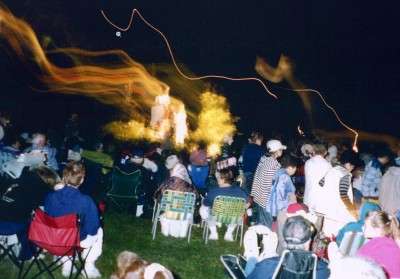
Well, you surely noticed that all the trails have the same pattern. In fact, like I explained above, it happens when you take a flash photograph of a dark scene which includes a light source while moving the camera. The flash freezes the dark background for less than a second but the light source leaves a trail because the camera is moving and the shutter is still open for a longer time...
While the flash typically takes thousandths of a second, the shutter may stay open for hundredths, or even tenths, of a second.
edit on 19-5-2012 by elevenaugust because: (no reason given)
Hi OthetroothO This might help explain your pic
Originally posted by elevenaugust
2- Light trails
A light trail is seen to emerge from a light source (though the light source could be off the side of the frame).
It happens when you take a flash photograph of a dark scene which includes a light source (such as a torch) while moving the camera. The flash freezes the dark background but the light source leaves a trail because the camera is moving and the shutter is still open.
While the flash typically takes thousandths of a second, the shutter may stay open for hundredths, or even tenths, of a second. The long relatively long shutter exposure is known as the 'flash synchronization shutter speed'. Your camera manual may explain how to adjust it.
Source
Interestingly, there are some examples where you can see that the light trail is made of short dotted lines.
The above photo is a bus passing with its headlights on on the street.
The lights of the bus are incandescent bulbs with a tungsten filament, powered by alternating current, and heated to 3000°C. It does not have time to cool down to show the slightest flicker when switching repetitive current alternative to 0V. In fact, the trails are continuous and captured by the camera lens as it.
Street lights use discharge lamps with sodium vapor (yellow / orange) or mercury vapor (white / blue) which are produced in electric arcs in the middle of a gas, which ionizes and produces the light. This is not a continuous process. These discharges are at high frequency to produce an illusion of continuity.
It's the same principle in the movies. I suspect this frequency to be of 50Hz, that of the electric current distribution in Europe (In UK, I think it is 60Hz)
So Sorry OP you beat me to itedit on 19-5-2012 by BuggingWicked because: op beat meedit on 19-5-2012 by BuggingWicked because: justedit on 19-5-2012 by BuggingWicked because: just
reply to post by elevenaugust
The third one was taken at the Pride House
well a quick guess is its Robin Hood,,
Sherwood Forest nearby?.
Me.
The third one was taken at the Pride House
well a quick guess is its Robin Hood,,
Sherwood Forest nearby?.
Me.
Some of those are incredibly weird, yet some of those people should really clean their camera.
here's how you separate the wheat from the chaff..
you cut it up into lyttel pieces and sort it out.
but why does wheat and chaff have to be different things? aren't they the product of each other?
the only thing "paranormal" here is your interpretation of "normal".
you cut it up into lyttel pieces and sort it out.
but why does wheat and chaff have to be different things? aren't they the product of each other?
the only thing "paranormal" here is your interpretation of "normal".
edit on 19/5/12 by mzungu because: (no reason given)
Thank you for your research, must have taken some time. I never believed in stuff like this anyway, good to see a rational explanation for the most
crazy things.
S+F
S+F
reply to post by elevenaugust
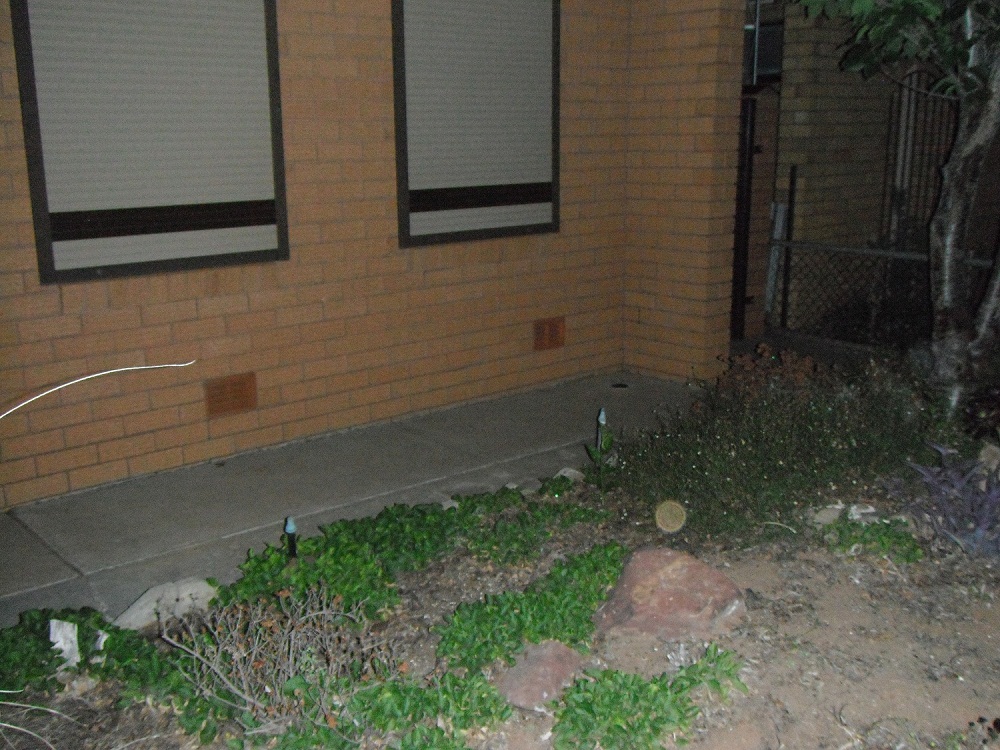
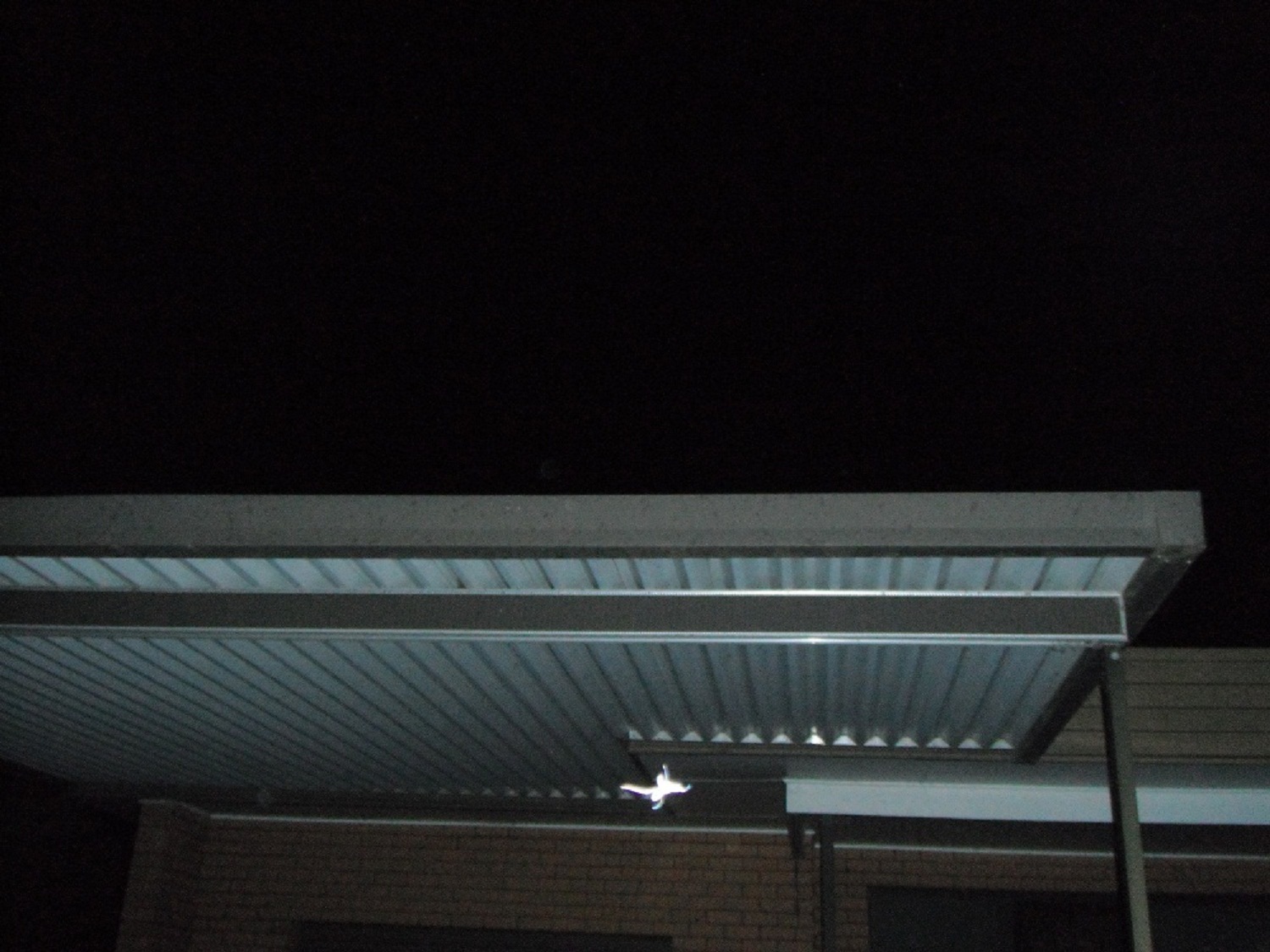
Fabulous thread - thank you. You have put a lot of effort and time into compiling a very professional assignment - good for you. I have hundreds of photographs and will share three with you. The ones I share are interesting to say the least. Your thoughts as well as anyone else reading this - most appreciated.
[img]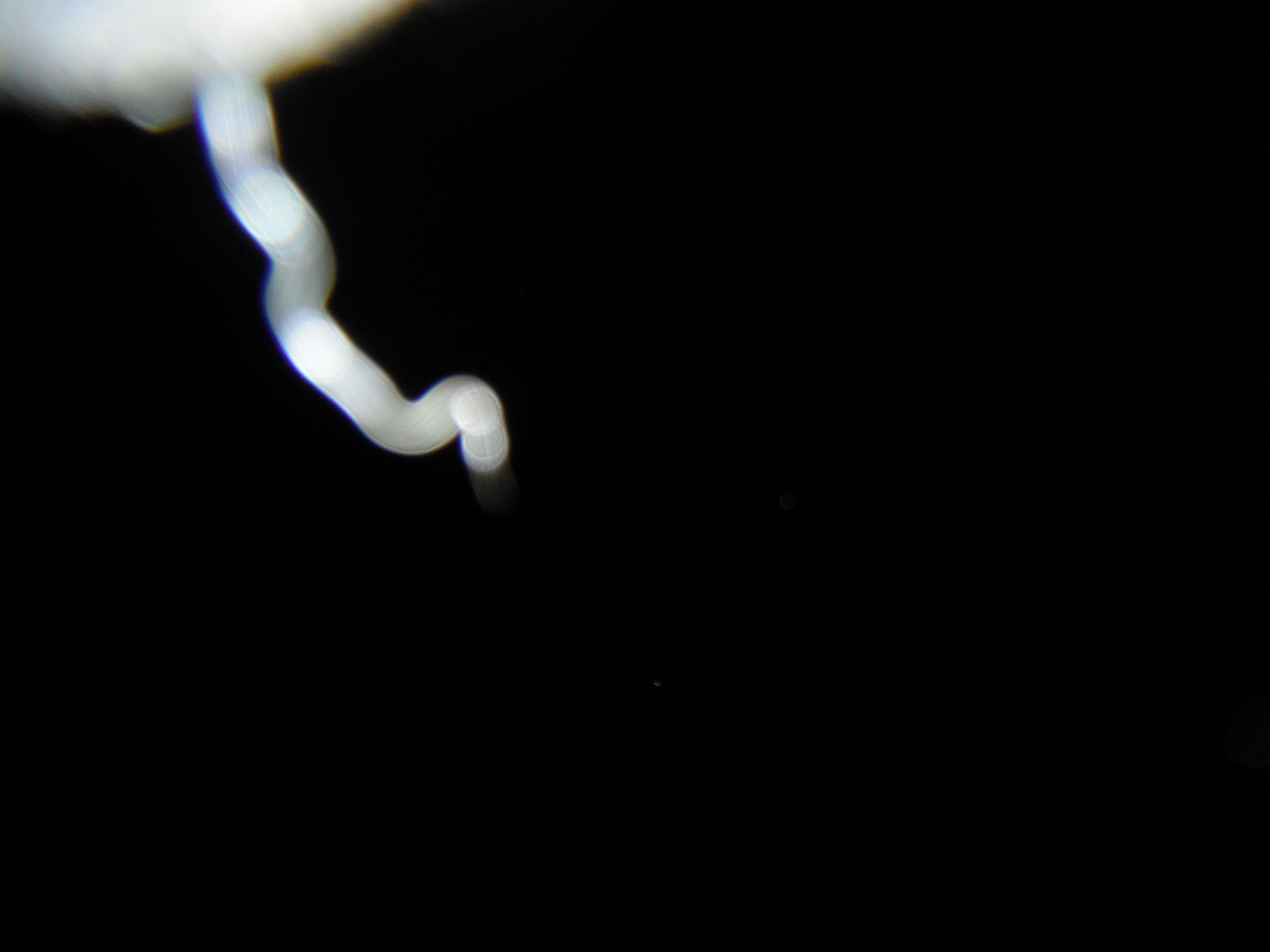
Much Peace...
Fabulous thread - thank you. You have put a lot of effort and time into compiling a very professional assignment - good for you. I have hundreds of photographs and will share three with you. The ones I share are interesting to say the least. Your thoughts as well as anyone else reading this - most appreciated.
[img]
Much Peace...
new topics
-
Big Storms
Fragile Earth: 14 minutes ago -
Where should Trump hold his next rally
2024 Elections: 2 hours ago -
Shocking Number of Voters are Open to Committing Election Fraud
US Political Madness: 3 hours ago -
Gov Kristi Noem Shot and Killed "Less Than Worthless Dog" and a 'Smelly Goat
2024 Elections: 4 hours ago -
Falkville Robot-Man
Aliens and UFOs: 4 hours ago -
James O’Keefe: I have evidence that exposes the CIA, and it’s on camera.
Whistle Blowers and Leaked Documents: 5 hours ago -
Australian PM says the quiet part out loud - "free speech is a threat to democratic dicourse"...?!
New World Order: 6 hours ago -
Ireland VS Globalists
Social Issues and Civil Unrest: 6 hours ago -
Biden "Happy To Debate Trump"
2024 Elections: 7 hours ago -
RAAF airbase in Roswell, New Mexico is on fire
Aliens and UFOs: 7 hours ago
top topics
-
A Warning to America: 25 Ways the US is Being Destroyed
New World Order: 17 hours ago, 21 flags -
Blast from the past: ATS Review Podcast, 2006: With All Three Amigos
Member PODcasts: 9 hours ago, 13 flags -
James O’Keefe: I have evidence that exposes the CIA, and it’s on camera.
Whistle Blowers and Leaked Documents: 5 hours ago, 12 flags -
Australian PM says the quiet part out loud - "free speech is a threat to democratic dicourse"...?!
New World Order: 6 hours ago, 12 flags -
Biden "Happy To Debate Trump"
2024 Elections: 7 hours ago, 11 flags -
Mike Pinder The Moody Blues R.I.P.
Music: 9 hours ago, 8 flags -
What is the white pill?
Philosophy and Metaphysics: 8 hours ago, 6 flags -
Shocking Number of Voters are Open to Committing Election Fraud
US Political Madness: 3 hours ago, 5 flags -
Ireland VS Globalists
Social Issues and Civil Unrest: 6 hours ago, 5 flags -
RAAF airbase in Roswell, New Mexico is on fire
Aliens and UFOs: 7 hours ago, 5 flags
active topics
-
Big Storms
Fragile Earth • 2 • : xuenchen -
Massachusetts Drag Queen Leads Young Kids in Free Palestine Chant
Social Issues and Civil Unrest • 21 • : ToneD -
Biden "Happy To Debate Trump"
2024 Elections • 49 • : TheMisguidedAngel -
Candidate TRUMP Now Has Crazy Judge JUAN MERCHAN After Him - The Stormy Daniels Hush-Money Case.
Political Conspiracies • 816 • : xuenchen -
Where should Trump hold his next rally
2024 Elections • 13 • : Edumakated -
Shocking Number of Voters are Open to Committing Election Fraud
US Political Madness • 6 • : marg6043 -
University of Texas Instantly Shuts Down Anti Israel Protests
Education and Media • 312 • : marg6043 -
Gov Kristi Noem Shot and Killed "Less Than Worthless Dog" and a 'Smelly Goat
2024 Elections • 30 • : TheMisguidedAngel -
President BIDEN's FBI Raided Donald Trump's Florida Home for OBAMA-NORTH KOREA Documents.
Political Conspiracies • 36 • : BingoMcGoof -
ALERT - U.S. President JOE BIDEN Examined and Found NOT OF SOUND MIND.
2024 Elections • 64 • : WeMustCare