It looks like you're using an Ad Blocker.
Please white-list or disable AboveTopSecret.com in your ad-blocking tool.
Thank you.
Some features of ATS will be disabled while you continue to use an ad-blocker.

The Stone Circles of Ireland: Ardgroom, Carrigagulla, Dromoughy and Drombohilly
page: 117
share:
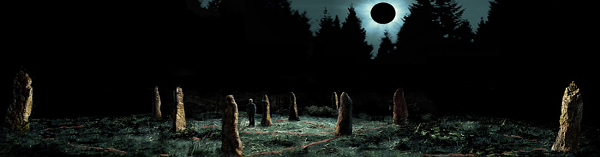
Hello ATS and Happy St. Patrick's Day 2013.
Please join me on brief tour of some of Ireland's unique megaliths.
*Heart-breaking melody along with stunning images, many of megaliths...*
The Axial-Stone Circles of Cork and Kerry, Ireland
Axial-Stone Circles (ASCs) are considered unique to the region that roughly incorporates both counties Cork and Kerry in Ireland and are sometimes called Kenmare-type circles. But to understand what an axial-stone circle is, we have to know what a recumbent-stone circle is.
A feature that is found in common amongst stone circles in Brittany, Britain, Scotland, Ireland and Wales, is that most of these circles include what seems to be the center-piece of the circle, which is known as the recumbent stone. The recumbent stone lies on its side, sort of like an alter, and in most stone circles, the tallest encircling upright stones flank either side of the recumbent stone. This common configuration of stones is commonly referred to as a Recumbent-Stone Circle (RSC).
Easter Aquhorthies which is in Aberdeenshire, Scotland, is an excellent example of a RSC:
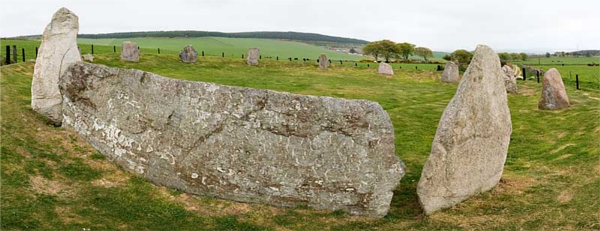
The stone circles in Cork and Kerry, on the other hand, are referred to as Axial Stone Circles, they have recumbent stones, too, but there is a marked difference. In these stone circles, the encircling stones are always placed in pairs which surround an axis created by a line drawn straight through the portal stones, through the center of the circle, and straight through the recumbent stone; and the recumbent stone, in an ASC, always faces south-southwest. No one knows why.
The standing stones, along with the recumbent stone, also always form an uneven number and become taller as they progress in height towards the portal stones, rather than taller as they get to the recumbent stone, which is the case with RSCs.
ASCs and RSCs both have in common that each can have an 'outlying' stone. In relatively recent Irish legend and lore, it was told that the groups of big rocks were once pagan dancers that dared to defy God and had danced on Sunday, and that God had turned them to stone as they circled in their dance, including the 'piper', who can be found lying outside the stone circle. Some of these circles have 'pipers'.
All of the ASCs shown here are considered to have been under active construction during the Neolithic era; sometime in the 3rd millennium, BC.
This map helps to show County Cork in relation to County Kerry, they both encompass the far south-southwester coastal regions of Ireland
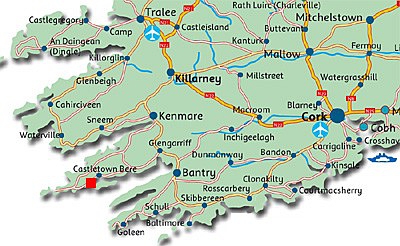
County Cork
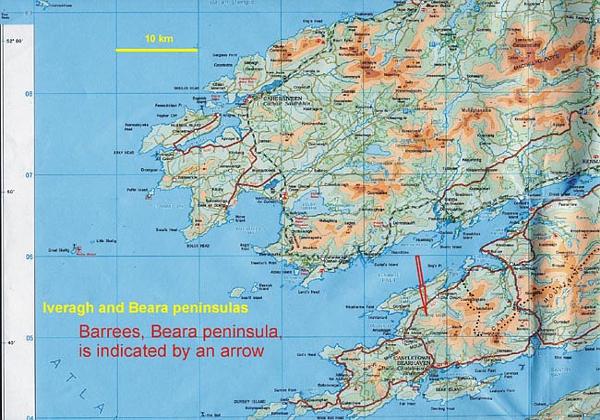
Ardgroom
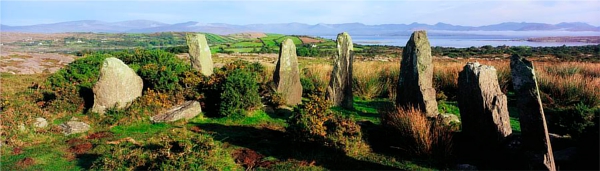
At the edge of a peninsula in southern Ireland, at the foot of the sacred hill called, Skellig, and overlooking the Kenmare river, is the stone circle called “Canfea”, or, Ardgroom.
9 stones of 11 still stand, and Ardgroom is also known for its huge outlying piper-stone which nears 9 feet in height. The stones of Ardmour form a 23 foot in diameter circle, with some as small as under 1 foot and the taller coming in at just under 6 feet.
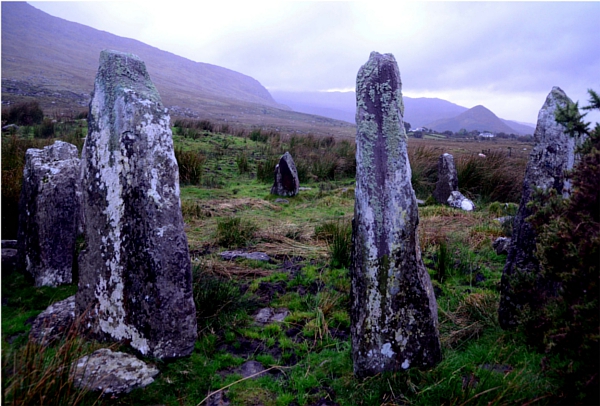
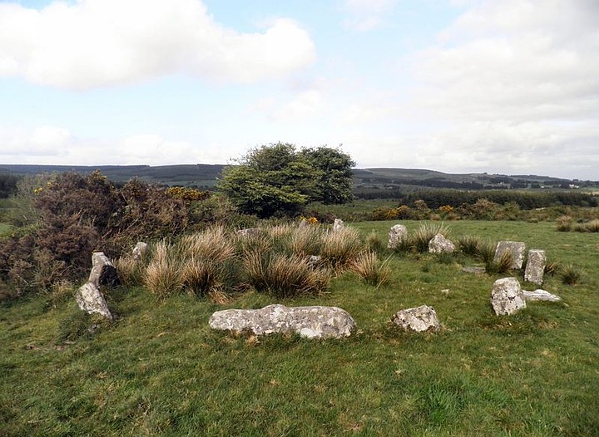
Carrigagulla
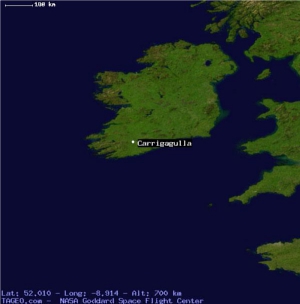
Tucked in to the shady verdant lea of the Boggerah mountains is what is considered to be one of the region’s most exemplary ASCs.
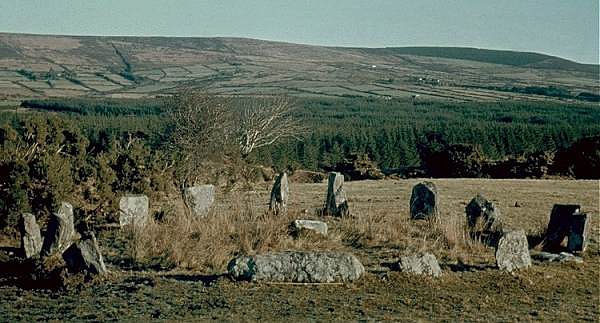
Carrigagulla has beautiful, straight portal stones, and a naturally beveled axial-stone. It has 16 stones left standing with one that has been misplaced and is said to have been included in a fence construction on a nearby farm.
Carrigagulla was thought to have been built by the fairies, not all are, but you might agree that this one may have been, as the stones come in at less than 3 feet at the highest. This stone circle is almost 29 feet in diameter.
County Kerry
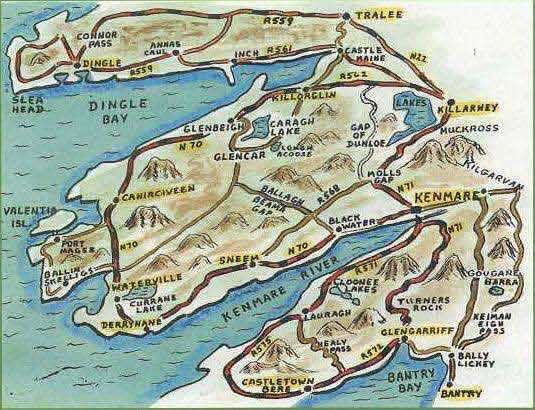
All of the ASCs featured in this thread are very near the Kenmare River:
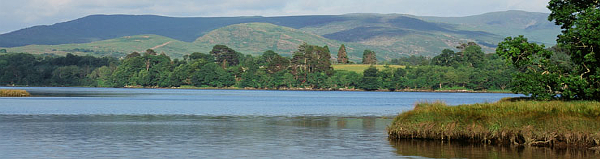
Dromoughy (Dromroe)
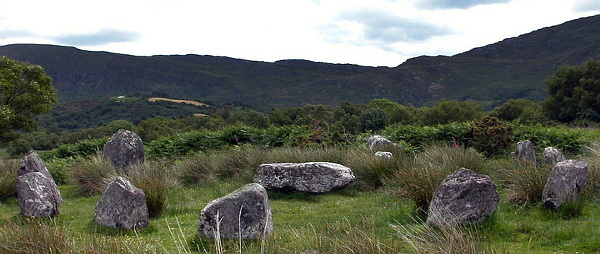
If you would like to get lost on the Irish moorland and get eaten by a werewolf, setting out to find Dromoughy circle is probably a great place to start. This circle is notoriously hard to find, and reaching it is said to require quite a climb.
The 13 stones range in height from 3 feet to 6 feet, becoming shorter as the they get to the axial-stone, making Dromoughy, a prime example of a Cork-Kerry ASC. The circle includes a large central 'burial' stone, and oddly, the 'piper' in this ensemble lies within the circle to the southeast.
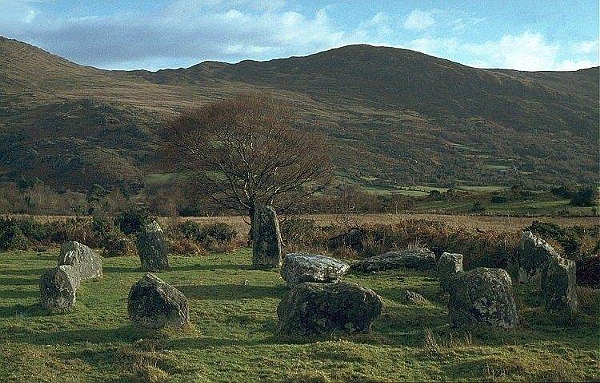
Drombohilly
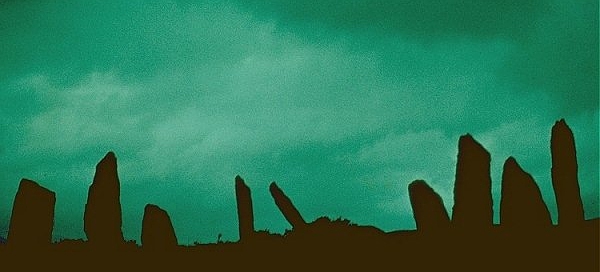
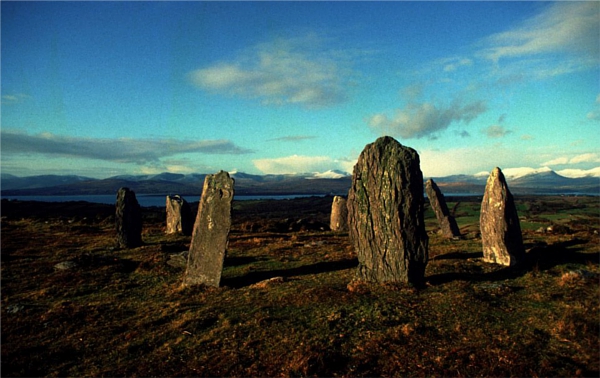
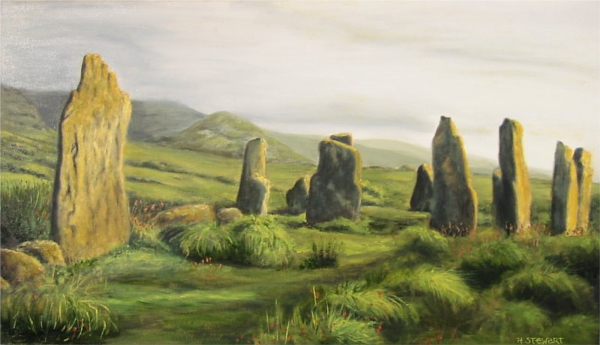
As an admirer of these stone circles from afar, Drombohilly is my favourite to look at. I love its tilted portal stone and the narrowness of the knife-like stones that make up the circle. I felt a connection with it the first time I saw Julian Cope's images of it.
It is said to lie high up on a ridge, and that although it can be seen clearly from below, that it is deceptively hard to reach. It sits on a ridge that drops off steeply on either side, and its axial stone is backed by a mountain called Knockanouganish. Drombohilly has 9 of its stones left and forms a 26 foot in diameter circle with 6 foot portal stones.
Awesomeness incarnate.
May the road rise up to meet you, ATS.
Éirinn go Brách
Cool stuff.
Any idea on the construction dates of these spots?
ETA: Oops I missed this part:
Love this sort of stuff.
Any idea on the construction dates of these spots?
ETA: Oops I missed this part:
All of the ASCs shown here are considered to have been under active construction during the Neolithic era; sometime in the 3rd millennium, BC.
Love this sort of stuff.
edit on 3/17/2013 by Chamberf=6 because: (no reason given)
reply to post by Bybyots
Have some Guiness on me.
Hell I would recommend that for any day, though.
Have some Guiness on me.
Hell I would recommend that for any day, though.
edit on 3/17/2013 by Chamberf=6 because: (no reason given)
happy st paddys day and thanks for the thread on something i didn't know much about!
Hey Bybyots....how is that pronounced even?
After doing this thread, you must have formed some kind of opinion or conclusion on what you yourself think that these stone circles were. Why so prominent in that area? Curious to know what you think.
After doing this thread, you must have formed some kind of opinion or conclusion on what you yourself think that these stone circles were. Why so prominent in that area? Curious to know what you think.
Originally posted by BreathOfFreshAir
Hey Bybyots....how is that pronounced even?
After doing this thread, you must have formed some kind of opinion or conclusion on what you yourself think that these stone circles were. Why so prominent in that area? Curious to know what you think.
Hello,
Bybyots is pronounced "Bib-ee-ahts", thanks for asking.
My opinion changes quite a bit, it revolves around essentially the same stuff, but it shifts, so it has not really been possible for me to come to any conclusion about the stone circles.
Sometimes I think that they may have served a sort of 'multi-purpose' function, kind of like some churches do these days. Maybe the structure itself and the way it was configured was what was important and the activities that took place there varied. Possibly the subtle changes in arrangement of the Cork-Kerry circles (ASCs) reflect a similar subtle change in Druidic 'theurgy' that related to the region, I just don't know.
It is interesting that the ASCs show up in Cork and Kerry 1000 years after the RSCs, so the ASCs might be seen as a progression on some religious theme. I also find it interesting that several circles in the area near the coast were completely buried, and in many of the circles, there are centimeters of stone hidden beneath what we see.
Thanks for coming by to post.
reply to post by Chamberf=6
I'm really happy that you liked the thread, I fund the stone circles and megaliths from all over the world irresistible, too.
I wish that I was able to get very, very accurate on that, but the dates often vary between researchers and I just tried to get a ballpark 'date'. I know, it's lame, but dating the damned things is really tough.
Thanks for coming by,
I'm really happy that you liked the thread, I fund the stone circles and megaliths from all over the world irresistible, too.
Any idea on the construction dates of these spots?
I wish that I was able to get very, very accurate on that, but the dates often vary between researchers and I just tried to get a ballpark 'date'. I know, it's lame, but dating the damned things is really tough.
Thanks for coming by,
Awesome! I love stone circles too
Here is one on Mars photographed by Spirit rover.
After all this is ATS
You can see that it is quite visable from a distance, I think its big.
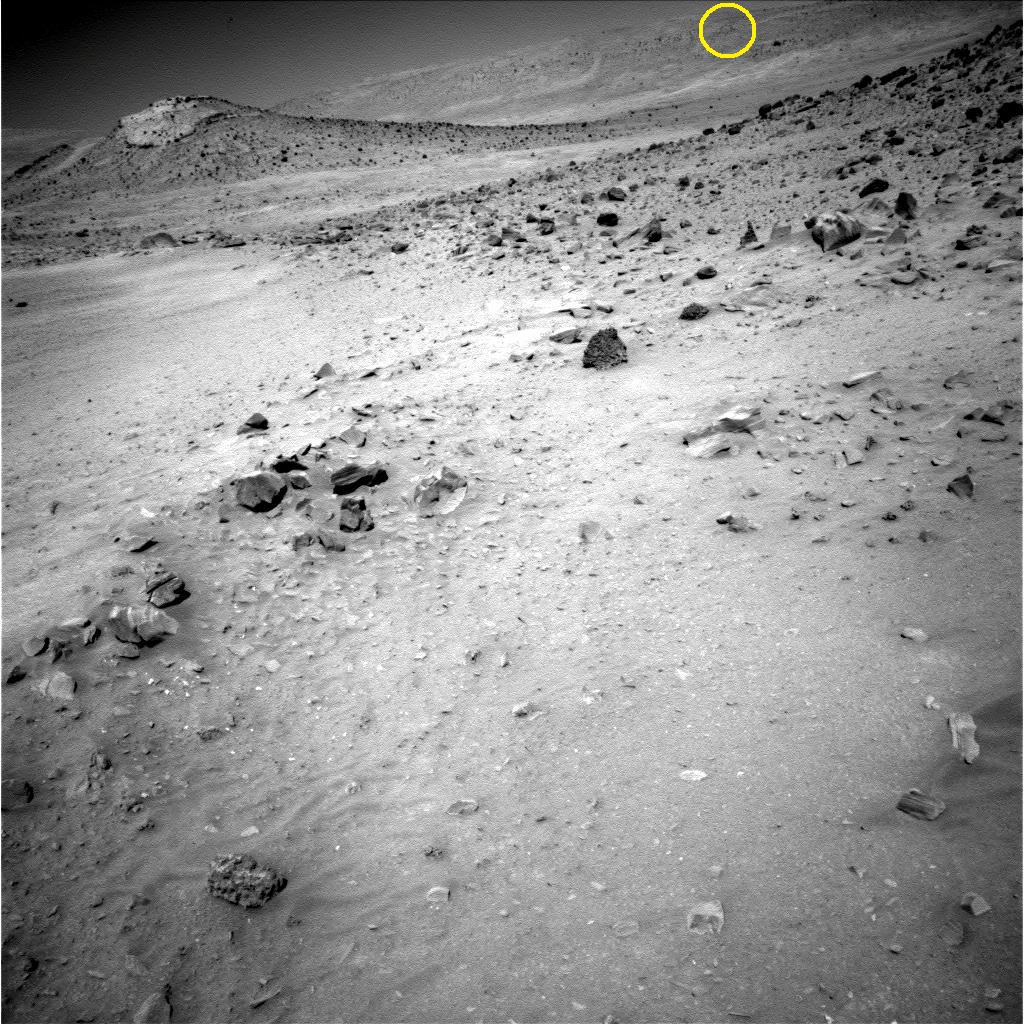
The stones are evenly spaced apart with a centeral stone
and two flanking stones at 4 o'clock and 8 o'clock postitions
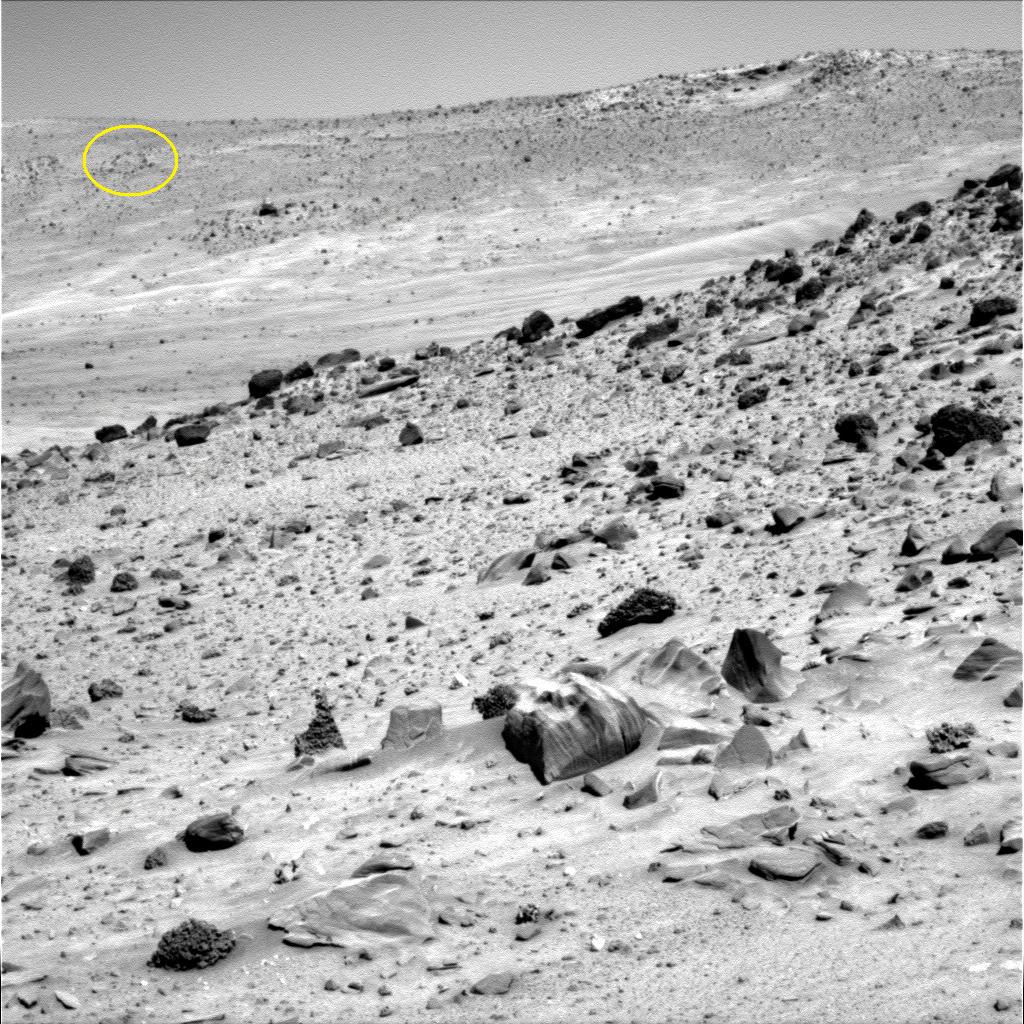
Zoomed from the 2nd pic.
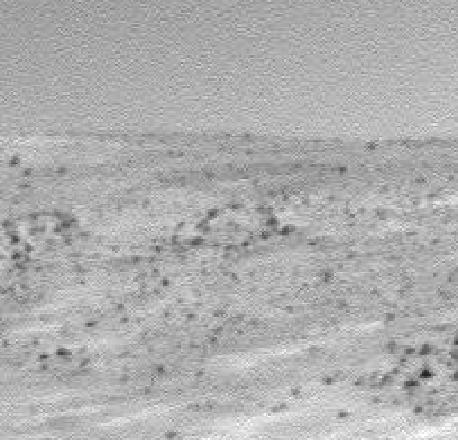
Too much green beer?.....Maybe, maybe not
Here is one on Mars photographed by Spirit rover.
After all this is ATS
You can see that it is quite visable from a distance, I think its big.
The stones are evenly spaced apart with a centeral stone
and two flanking stones at 4 o'clock and 8 o'clock postitions
Zoomed from the 2nd pic.
Too much green beer?.....Maybe, maybe not
great thread, and hopefully this is a good time for a bump to get a few more readers!
i'm gonna skim a few old books re some of this - i'm not so familiar with ASC's (i've only explored the Boyne Valley in Ireland) but have a fair bit of info on RSCs.. lots of food for thought and further reading here, may be back in a few days when i've had time to look a couple of things up, nice work!
i'm gonna skim a few old books re some of this - i'm not so familiar with ASC's (i've only explored the Boyne Valley in Ireland) but have a fair bit of info on RSCs.. lots of food for thought and further reading here, may be back in a few days when i've had time to look a couple of things up, nice work!
great thread Bybyots! very well presented. i'm intrigued by the fact there is a vast more amount of dolmens/stone circles in the south west of the
country in comparison to the rest. depending on their period i was always suspicious as to why the portal tombs were isolated to the west in pre
history and gradually moving east, and never really took off down the south, in contrast to stone circles which are all over the country but mainly in
the south west, it is interesting in my opinion.!
reply to post by Bybyots
Nice thread Bib-ee-ahts!
Those darn ancients and their crypto-stones and monuments. Why can't they have put a dedication plaque? 'This is so and so and is dedicated to *.*.' Even to any star any dot any directory would suffice.
I find myself counting stones and placing directions, thinking of diameters and trying to correlate to some kind of solstice calendar? Altar, church? I just don't know and I wish I did.
3 ft.? Those are giants of fairies..
Food for thought. Thanks for bringing it to us.
Those darn ancients and their crypto-stones and monuments. Why can't they have put a dedication plaque? 'This is so and so and is dedicated to *.*.' Even to any star any dot any directory would suffice.
I find myself counting stones and placing directions, thinking of diameters and trying to correlate to some kind of solstice calendar? Altar, church? I just don't know and I wish I did.
3 ft.? Those are giants of fairies..
Food for thought. Thanks for bringing it to us.
edit on 18-3-2013 by ElleLachyme because: OCD grammar
reply to post by Bybyots
Lovely!
I love megalithic Ireland, ive been to Newgrange, The Hill Of Tara and Loughcrew. Great Places cant wait to visit more in the summer.
Lovely!
I love megalithic Ireland, ive been to Newgrange, The Hill Of Tara and Loughcrew. Great Places cant wait to visit more in the summer.
reply to post by ElleLachyme
True story.
Those are giants of fairies..
True story.
edit on 18-3-2013 by Bybyots because: .
reply to post by skalla
Skalla,
You made my day. See you at the Equinox party!
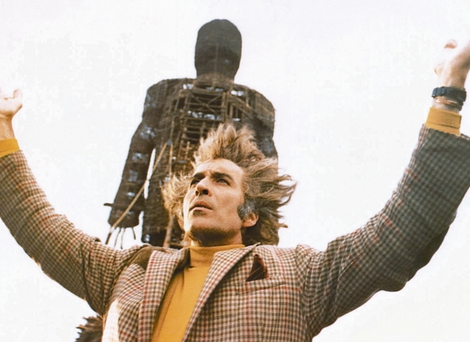
yours,
Lord Summerisle.
Skalla,
You made my day. See you at the Equinox party!
yours,
Lord Summerisle.
reply to post by Bybyots
haha! i was pretty sure i had made a good call, though i nearly gave you the long black hair and make up, in the end i opted for the unhinged wild haired dancing one..... however i cant promise you a nood Britt Eklund banging on your wall, apologies
i still cant find the info i was on about above, it's only from one of three books, regarding the RSCs in scotland and their alignments etc - i may have to return to that later in the week or month, but at least you'll get a bump from it.
haha! i was pretty sure i had made a good call, though i nearly gave you the long black hair and make up, in the end i opted for the unhinged wild haired dancing one..... however i cant promise you a nood Britt Eklund banging on your wall, apologies
i still cant find the info i was on about above, it's only from one of three books, regarding the RSCs in scotland and their alignments etc - i may have to return to that later in the week or month, but at least you'll get a bump from it.
Just wondering....do you think that those stone structures are in any way related to the mounds in North America?
Also, are most of the stone structures made from granite? quartz?
You know, Jesus made a reference to the properties that rocks have....
The triumphant entry into Jerusalem where the people were waving palms(whole other story of its own)...
Said that if the people had not cried out His praises...the ROCKS would have....
Also, are most of the stone structures made from granite? quartz?
You know, Jesus made a reference to the properties that rocks have....
The triumphant entry into Jerusalem where the people were waving palms(whole other story of its own)...
Said that if the people had not cried out His praises...the ROCKS would have....
new topics
-
Fake Aurora's produced by HAARP
Science & Technology: 44 minutes ago -
15.6 Percent of US Population Now Foreign Born - 51.6 Million
Social Issues and Civil Unrest: 1 hours ago -
Deadbots - AI Deepfakes that Simulate Dead People Risks Haunting Relatives
Science & Technology: 1 hours ago
top topics
-
DEI is dead at UNC!
US Political Madness: 16 hours ago, 18 flags -
How much did Doctors get bribed
Diseases and Pandemics: 12 hours ago, 13 flags -
Frances Scott Key Bridge Demolition To Free Dali Scheduled For 5PM Eastern Standard Time.
Other Current Events: 16 hours ago, 4 flags -
US Defense (DIA) Officer Maj. Harrison M. resigned in protest of killing Palestinian civilians
Politicians & People: 16 hours ago, 3 flags -
"I Want Mercy Not Sacrifice"
Conspiracies in Religions: 16 hours ago, 2 flags -
Deadbots - AI Deepfakes that Simulate Dead People Risks Haunting Relatives
Science & Technology: 1 hours ago, 1 flags -
15.6 Percent of US Population Now Foreign Born - 51.6 Million
Social Issues and Civil Unrest: 1 hours ago, 1 flags -
Fake Aurora's produced by HAARP
Science & Technology: 44 minutes ago, 0 flags
active topics
-
Fake Aurora's produced by HAARP
Science & Technology • 8 • : network dude -
US Defense (DIA) Officer Maj. Harrison M. resigned in protest of killing Palestinian civilians
Politicians & People • 26 • : FlyersFan -
Christianity superior to other faiths for very specific reasons. Awaken to true FREEDOM..!!
Conspiracies in Religions • 52 • : Kurokage -
15.6 Percent of US Population Now Foreign Born - 51.6 Million
Social Issues and Civil Unrest • 2 • : DerBeobachter2 -
Bibi’s Dilemma
Middle East Issues • 316 • : Xtrozero -
Deadbots - AI Deepfakes that Simulate Dead People Risks Haunting Relatives
Science & Technology • 5 • : andy06shake -
How much did Doctors get bribed
Diseases and Pandemics • 13 • : network dude -
A Better Choice I Think
2024 Elections • 32 • : FlyersFan -
Jean Michel and Brian May Live from Bratislava
General Chit Chat • 6 • : Cymru -
Gaza Genocide Real or Propaganda
Middle East Issues • 263 • : Mwawa
17