It looks like you're using an Ad Blocker.
Please white-list or disable AboveTopSecret.com in your ad-blocking tool.
Thank you.
Some features of ATS will be disabled while you continue to use an ad-blocker.

Amazing 3D animations of Nebula and Galaxies!! Wow!
page: 16
share:
To create these incredible 3D animations, J-P Metsavainio, a Finnish astronomical photographer, used scientific data:
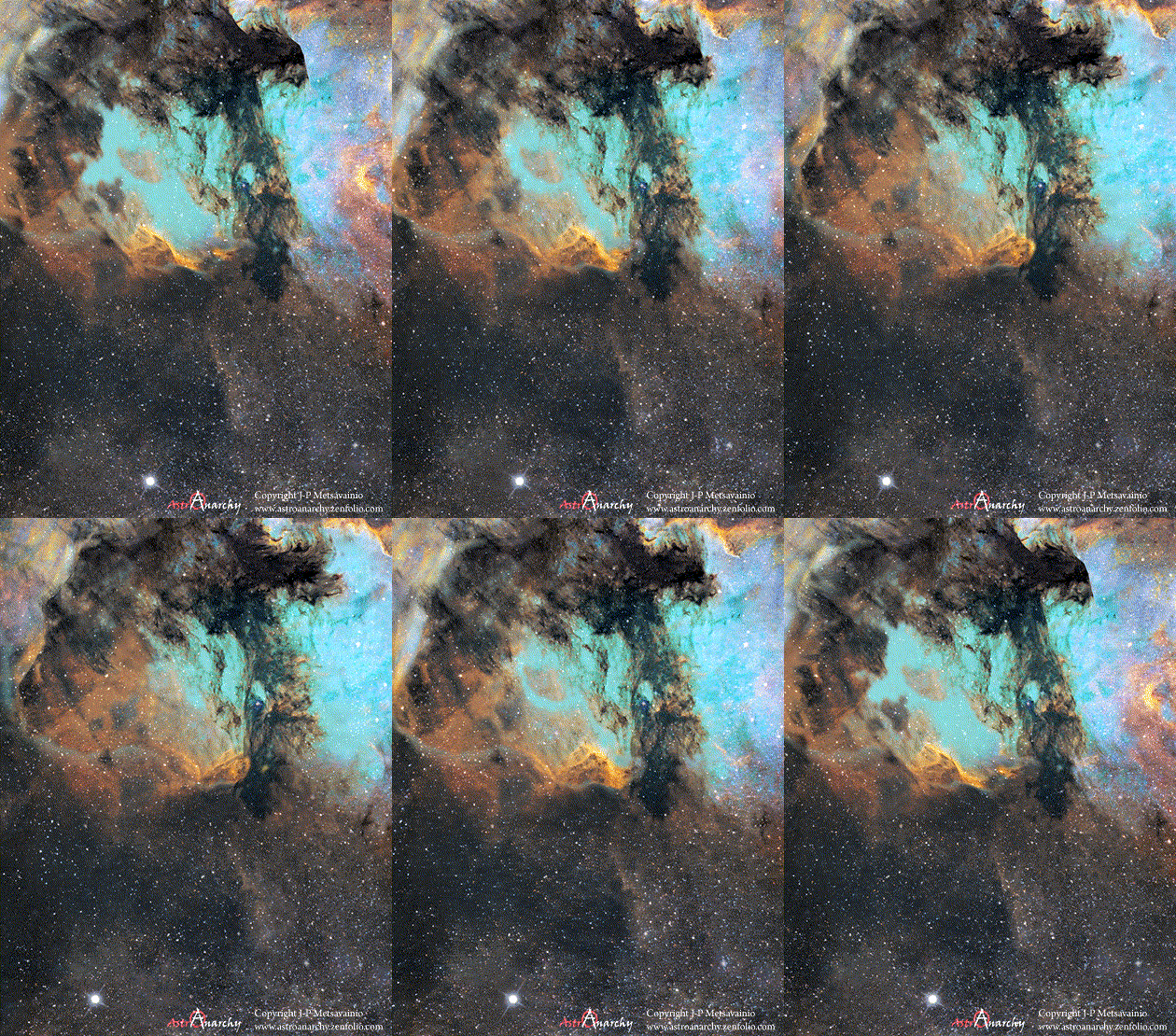
Pelican Nebula in Cygnus

globular cluster NGC 6752
Check out all the other animations here. It really gives a real depth to the Universe as we know it.
Credits J-P Metsävainio (Oulu, Finland)
Since the Weather doesn't support new images, I'm publishing some experimental work here.
I have tested a new method to publish my 3D-images as a form of Lenticular prints.
For this technique to work, I need series of images from different angles, in this case 24 images are needed.
Lenticular printing is actually an old technique but in past few years it has become much more sophisticated.
The results can be stunning visually, image plane disappears and object floats in and outside of the frame.
Since astronomical objects are too far away, no real parallax can be imaged. Doe to that, I have developed a method to turn my images to various 3D-formats. My work flow is based on scientific data from the object, distance and the source of ionization are usually known. The different types of the nebulae has typical structures, pillar like formations must point to the source of ionization, the radiation pressure forms kind of hollow area, inside of the nebula, around newly born stars, dark nebulae must be at front of the emission ones to show, etc... rest of the missing information is then replaced with an artistic vision.
The whole process is pretty much like sculpting!
Pelican Nebula in Cygnus
globular cluster NGC 6752
Check out all the other animations here. It really gives a real depth to the Universe as we know it.
Credits J-P Metsävainio (Oulu, Finland)
edit on 19-11-2012 by elevenaugust because: (no reason given)
Really cool, but did you read the first line on the site:
Thanks for the link.
I am genuinely inspired to create something similar with the large collection of Hi Res space images I have collected through the years.
S&F for sharing this.
COPYRIGHT, PLEASE NOTE All the material on this website is copyrighted to J-P Metsavainio, if not otherwise stated. Any content on this website may not be reproduced without the author’s permission.
Thanks for the link.
I am genuinely inspired to create something similar with the large collection of Hi Res space images I have collected through the years.
S&F for sharing this.
fascinating, i am amazed how far we have gone with images...can't imagine what the future will bring for us.
i thought i was trippin for a minuite then
im that tired i was struggling to tell if the pics were moving or if it was my mind playing tricks on me
time for bed
i will check back tommorow when im more with it!
im that tired i was struggling to tell if the pics were moving or if it was my mind playing tricks on me
time for bed
i will check back tommorow when im more with it!
new topics
-
Mike Pinder The Moody Blues R.I.P.
Music: 12 minutes ago -
Putin, Russia and the Great Architects of the Universe
ATS Skunk Works: 3 hours ago -
A Warning to America: 25 Ways the US is Being Destroyed
New World Order: 7 hours ago
top topics
-
President BIDEN's FBI Raided Donald Trump's Florida Home for OBAMA-NORTH KOREA Documents.
Political Conspiracies: 13 hours ago, 31 flags -
A Warning to America: 25 Ways the US is Being Destroyed
New World Order: 7 hours ago, 13 flags -
Is AI Better Than the Hollywood Elite?
Movies: 15 hours ago, 4 flags -
Maestro Benedetto
Literature: 15 hours ago, 1 flags -
Putin, Russia and the Great Architects of the Universe
ATS Skunk Works: 3 hours ago, 1 flags -
Mike Pinder The Moody Blues R.I.P.
Music: 12 minutes ago, 1 flags
6