It looks like you're using an Ad Blocker.
Please white-list or disable AboveTopSecret.com in your ad-blocking tool.
Thank you.
Some features of ATS will be disabled while you continue to use an ad-blocker.

The stunning beauty of the Mineral Radiolarians Skeletons
page: 1share:
Radiolarians are holoplanktonic protozoa, a form of plankton found throughout the worlds oceans.
One of the most interesting aspects of these organisms is that they possess a skeleton composed of amorphous silica. Their skeletons take on a diverse
set of forms from ornate geodesic-like polyhedral lattices, spike encrusted spheres, to other complex geometric designs...
Let's take a closer look at some beautiful pictures of these Radiolarians Skeletons...
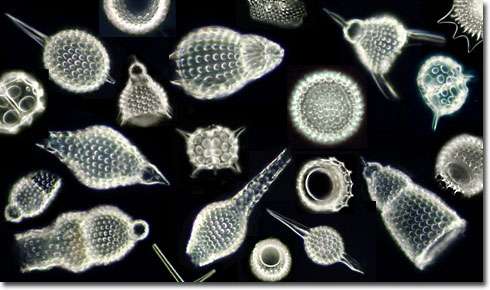
Mixed Radiolarians in Darkfield Illumination
Source
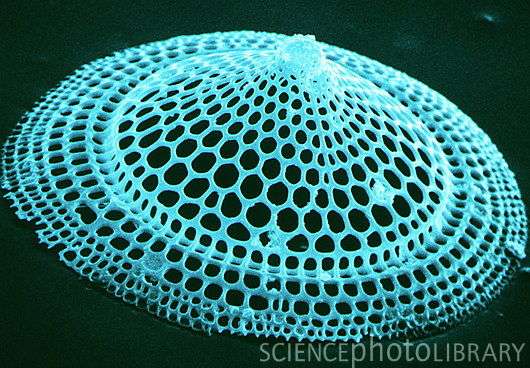
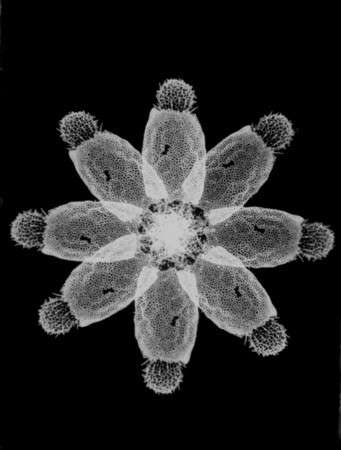
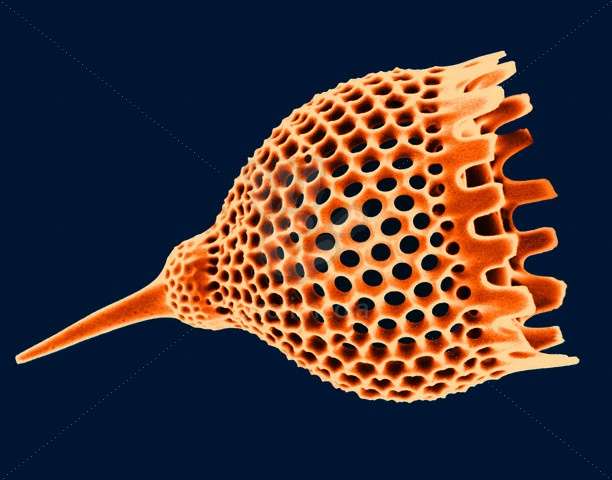
Coloured SEM of a radiolarian, Cecryphalium sp.
Source
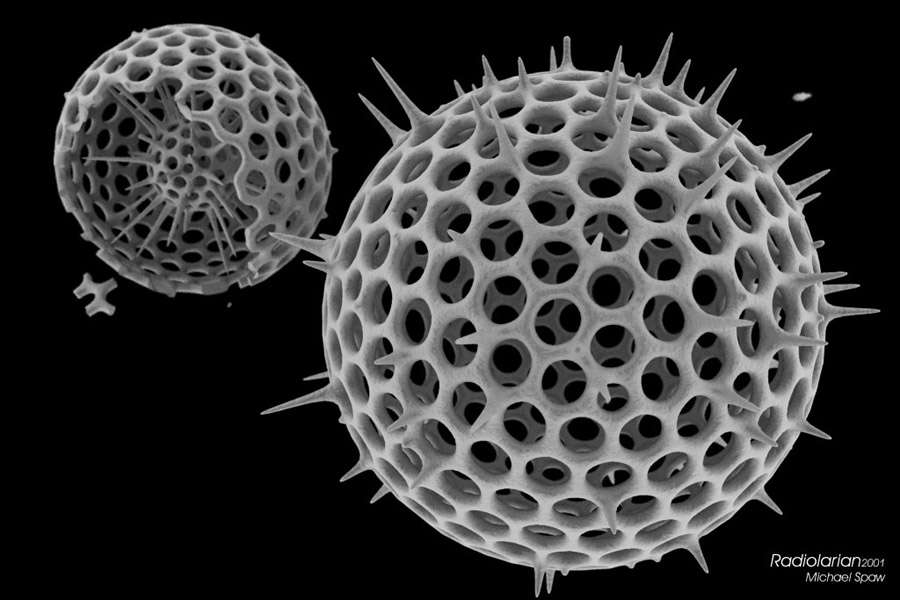
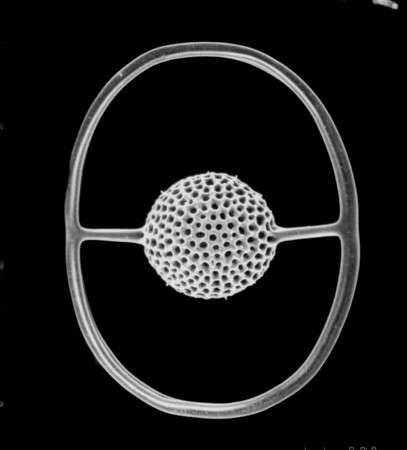
Replication of the SEM (scanning electron Microscope) look of a Radiolarian
Source
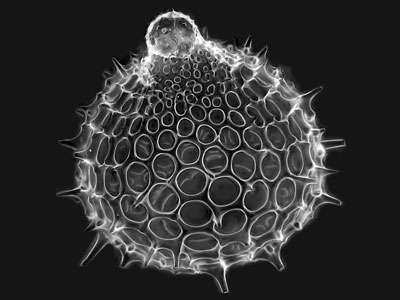
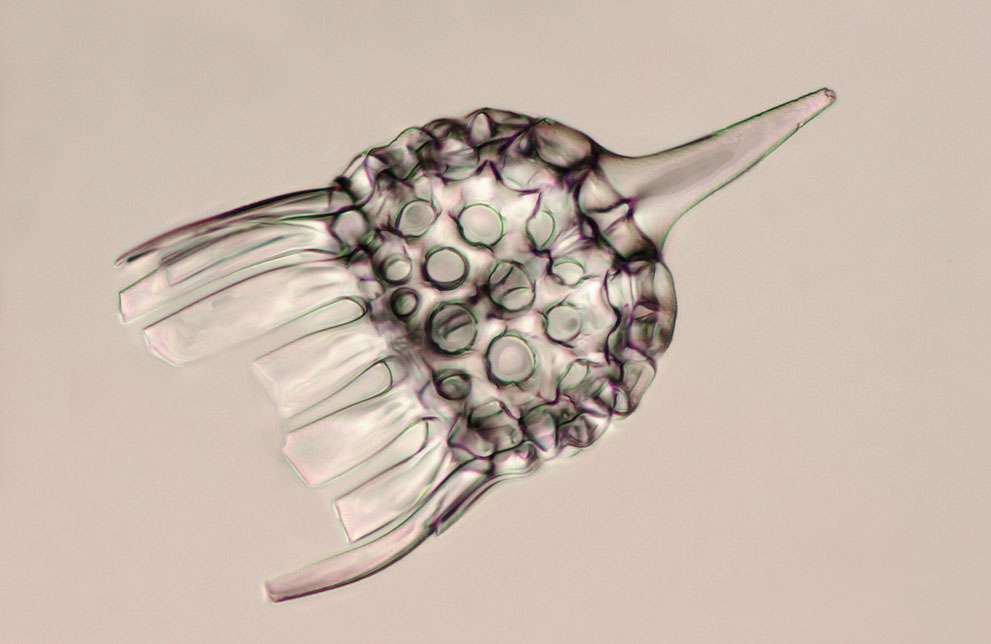
Christopher B. Jackson - Berne, Switzerland - Specimen: Radiolarian skeleton. Radiolarians are single-cell protozoa with intricate mineral skeletons. Technique: Brightfield imaging, extended depth of field
Source
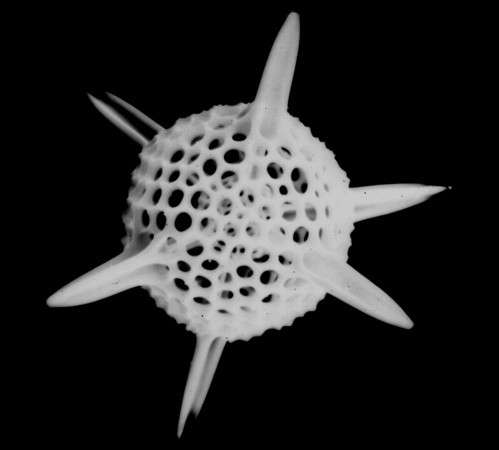
Photomicrograph of radiolarians taken at X1500 by using a scanning electron microscope.
Source
German biologist, naturalist, philosopher, physician, professor and artist Ernst Haeckel (1834-1919) focus for many years was an intricate, single-celled organism known as a Radiolarian. In his initial work with them, he found, named and depicted over 150 diverse species. He would go on to document thousands more...
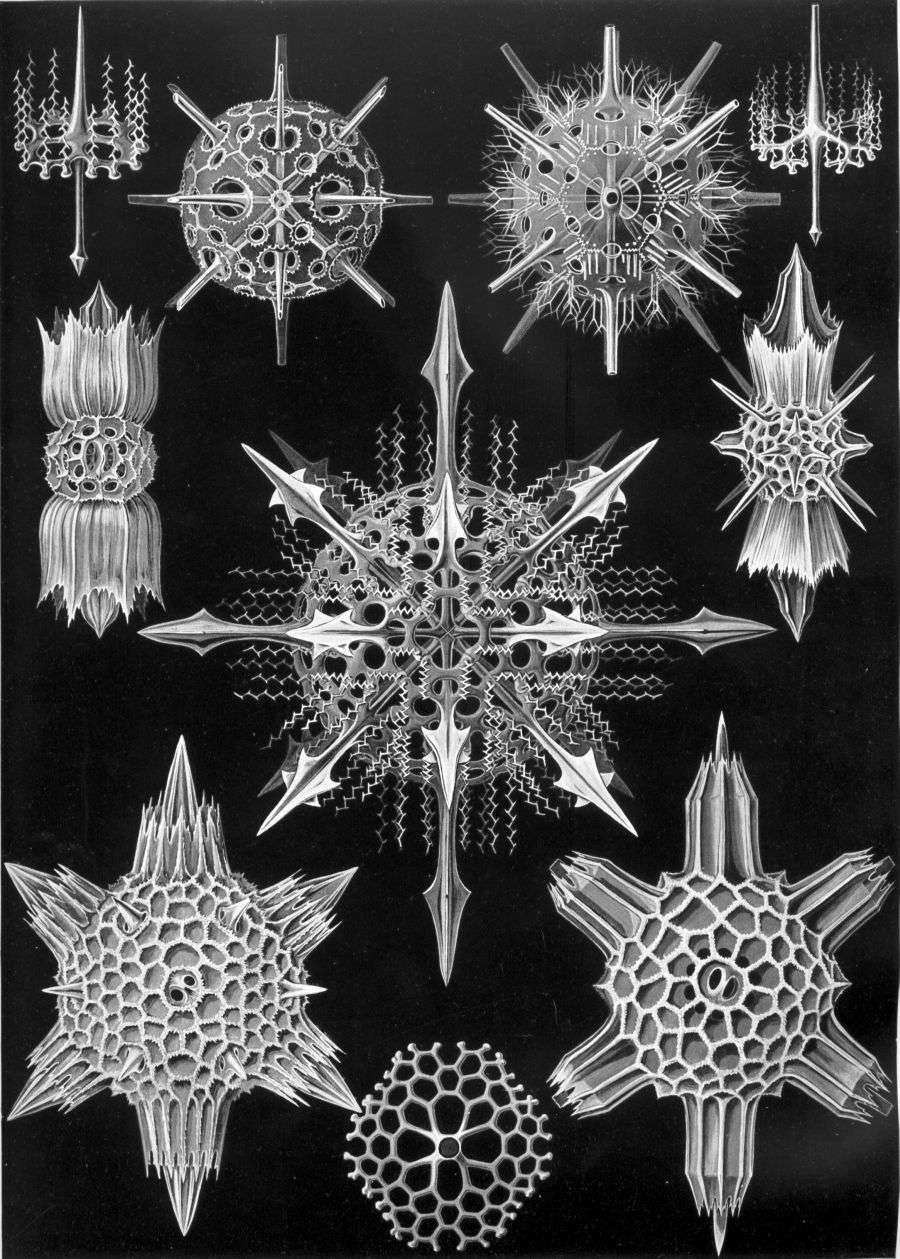
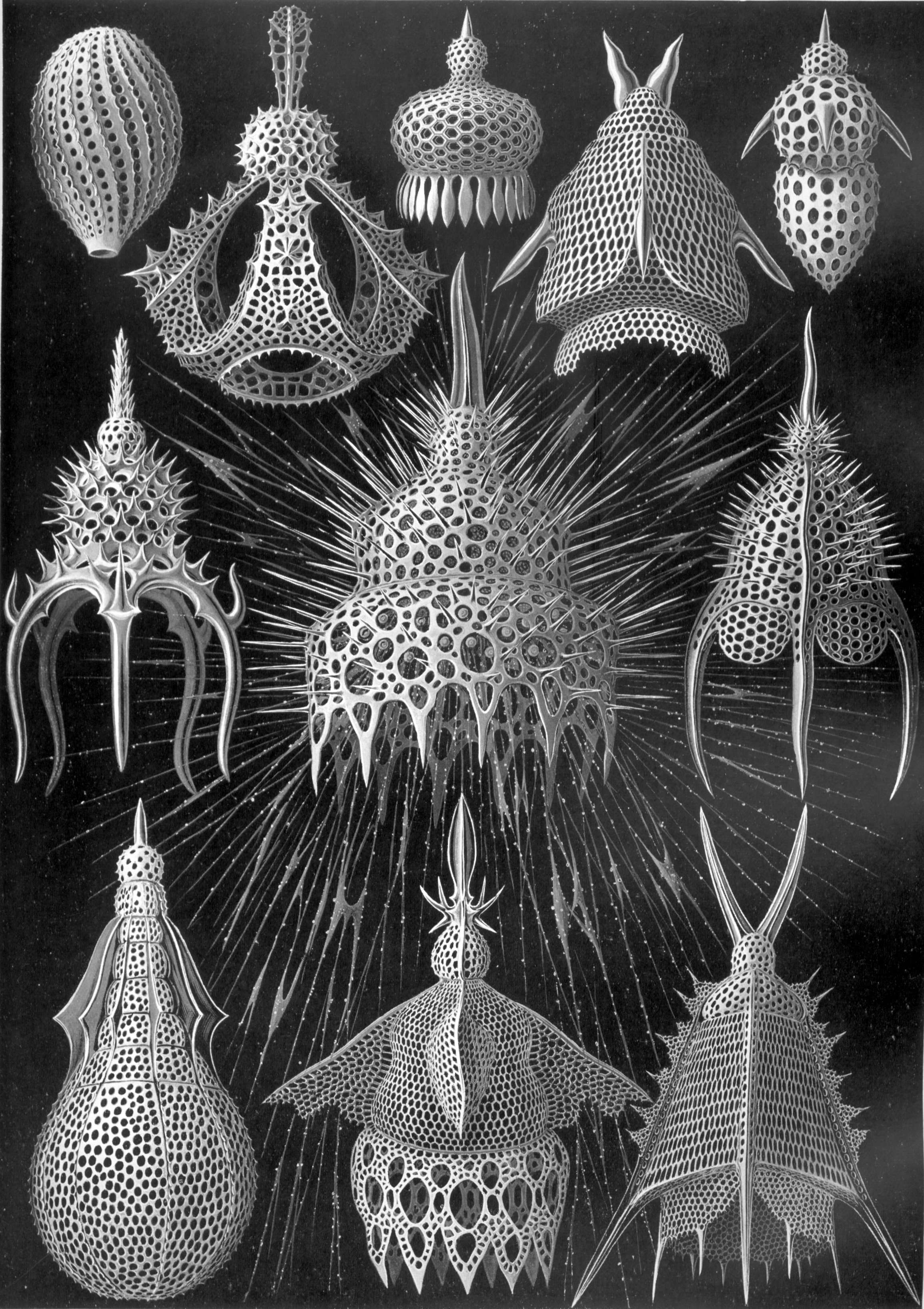
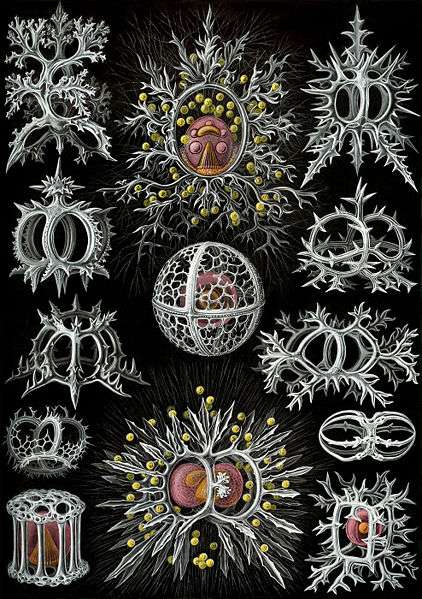


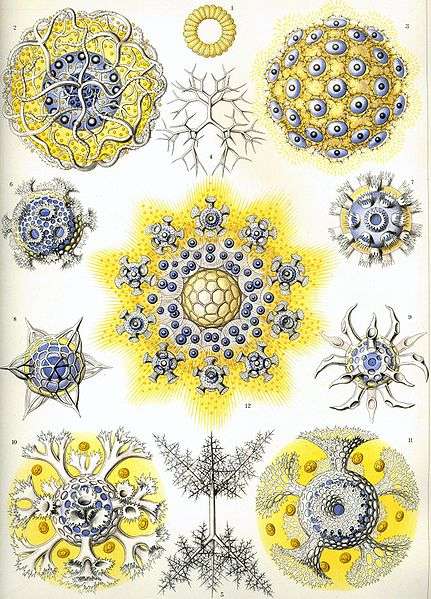
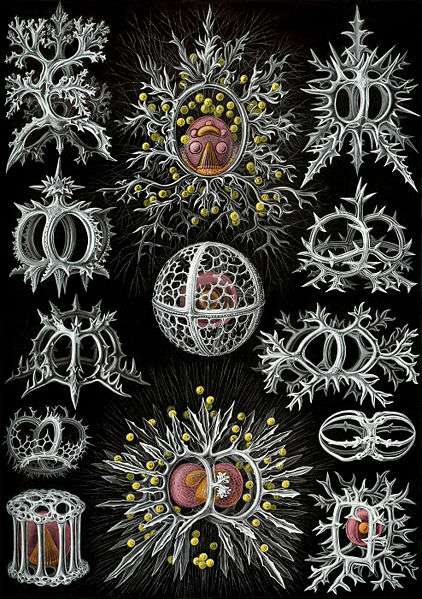
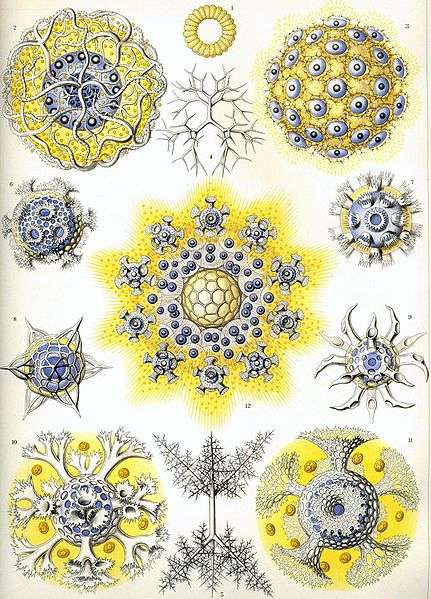
Check out all the high-res 35 plates of Haeckel's drawings here
Let's take a closer look at some beautiful pictures of these Radiolarians Skeletons...
Mixed Radiolarians in Darkfield Illumination
Source
Coloured SEM of a radiolarian, Cecryphalium sp.
Source
Replication of the SEM (scanning electron Microscope) look of a Radiolarian
Source
Christopher B. Jackson - Berne, Switzerland - Specimen: Radiolarian skeleton. Radiolarians are single-cell protozoa with intricate mineral skeletons. Technique: Brightfield imaging, extended depth of field
Source
Photomicrograph of radiolarians taken at X1500 by using a scanning electron microscope.
Source
German biologist, naturalist, philosopher, physician, professor and artist Ernst Haeckel (1834-1919) focus for many years was an intricate, single-celled organism known as a Radiolarian. In his initial work with them, he found, named and depicted over 150 diverse species. He would go on to document thousands more...
These are the 35 copper plates that accompanied Ernst Haeckel's Radiolaria book from 1862.
This volume has kindly been provided by Prof. Dr. Peter von Sengbusch (Institut für allgemeine Botanik, Hamburg, Germany).
The 35 plates were scanned by Kurt Stüber using a Hewlett Packard ScanJet 6100C flat bed scanner. Earch plate was scanned twice: 1. using 100 dpi resolution and 2. using 300 dpi resolution, since 100 dpi did not reproduce all the fine details of the engravings. The size of the 100 dpi scans is about 3 MByte (uncompressed) or about 500 to 700 KByte (compressed). The 300 dpi scans range at about 27 MByte (uncompressed) or 4 MByte (compressed).
Hint: Use the 100 dpi scans for viewing in your browser. The 300 dpi scans are so big, that they probably will not been displayed by your browser. Better download them into your computer and user Photoshop or any other image manipulation program to display or print them.
Check out all the high-res 35 plates of Haeckel's drawings here
edit on
21-7-2012 by elevenaugust because: Well, I have some problem to upload all the photos, so....
reply to post by elevenaugust
Really beautiful!
Reminds me of the architect Antoni Gaudi and his work.

Gaudi Wiki
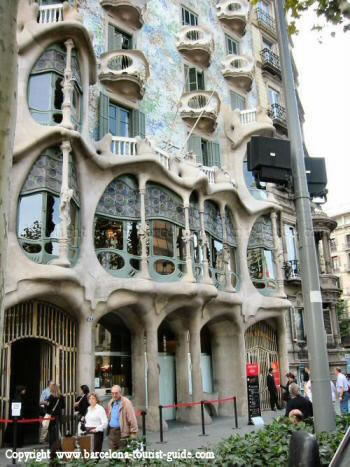
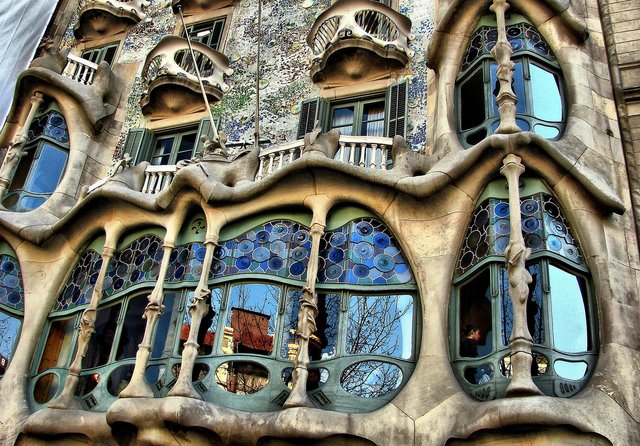
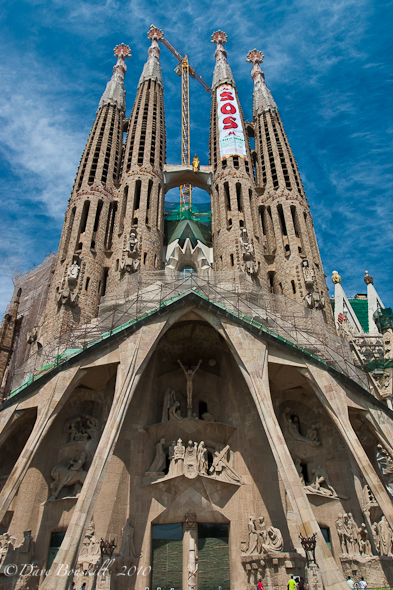
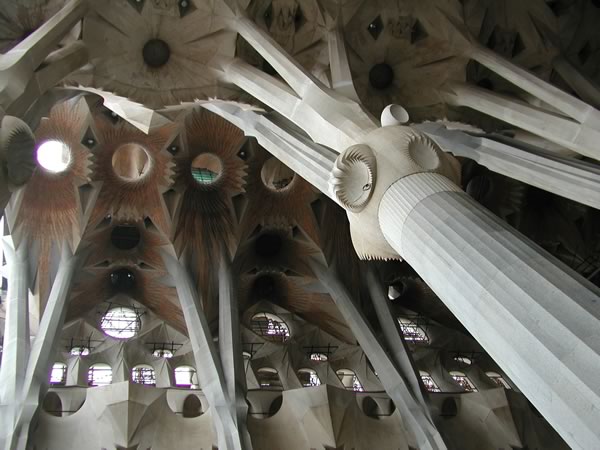
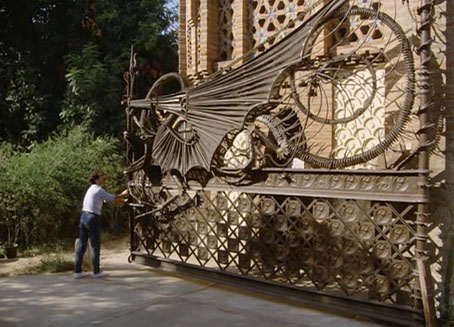
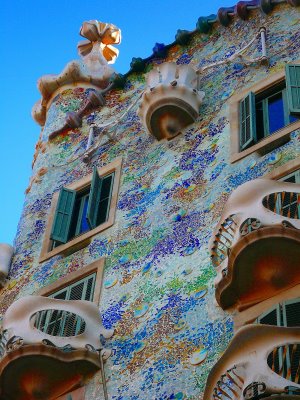
I would have to say that it is a strongly similar pattern in the constructions.
Pretty obvious where Gaudi got his inspiration from.
Btw Elevenaugust I hope you do not feel that I am hijacking your thread with all the Gaudi info?
Really beautiful!
Reminds me of the architect Antoni Gaudi and his work.
Gaudi Wiki
I would have to say that it is a strongly similar pattern in the constructions.
Pretty obvious where Gaudi got his inspiration from.
Btw Elevenaugust I hope you do not feel that I am hijacking your thread with all the Gaudi info?
edit on 21-7-2012 by LiberalSceptic because: (no reason given)
Originally posted by LiberalSceptic
Btw Elevenaugust I hope you do not feel that I am hijacking your thread with all the Gaudi info?
edit on 21-7-2012 by LiberalSceptic because: (no reason given)
Of course not!
Very impressive and original architecture!
Some more Radiolarians:
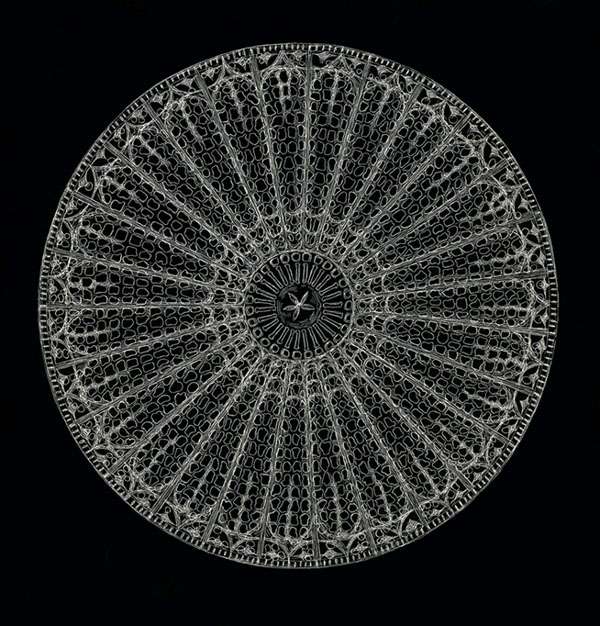
They are beautiful! I especially appreciate this one as it reminds me of the Earth and her magnetic field.
Edit: OK I think the one above me is my favorite. So impressive!
Thank you for sharing this.
Edit: OK I think the one above me is my favorite. So impressive!
Thank you for sharing this.
edit on 21-7-2012 by Kevinquisitor because: (no reason given)
beautiful images. thank you for posting.
Gives me hope. Even if we do mess up there will always be something to take over our role in evolution.
by the way, on the first picture, in the bottom right, is that a Dalek.
LOL
Gives me hope. Even if we do mess up there will always be something to take over our role in evolution.
by the way, on the first picture, in the bottom right, is that a Dalek.
LOL
Originally posted by Kevinquisitor
They are beautiful! I especially appreciate this one as it reminds me of the Earth and her magnetic field.
Edit: OK I think the one above me is my favorite. So impressive!
Thank you for sharing this.edit on 21-7-2012 by Kevinquisitor because: (no reason given)
I have to agree, on of my favorites as well.
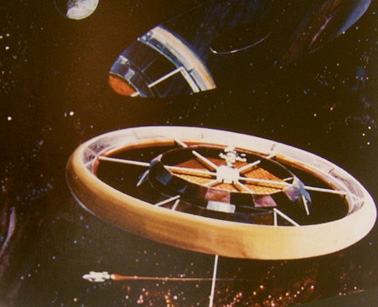
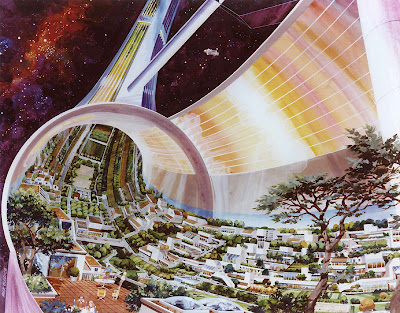
That one reminds me of the early NASA Stanford Torus and that Space Age poster from 1959
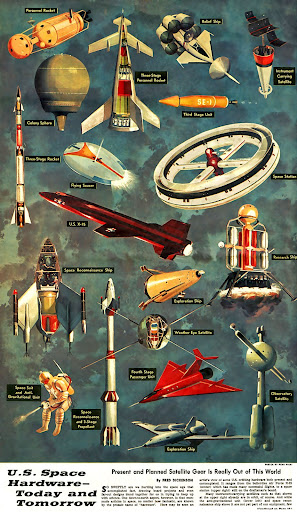
reply to post by murch
Ha ha you might be right about that.
Seems that most of our cool design and Sci-fi has something to do with this
Ha ha you might be right about that.
Seems that most of our cool design and Sci-fi has something to do with this
edit on 21-7-2012 by LiberalSceptic because: (no reason
given)
Sacred Geometry at it's finest......absolutely stunning and amazing photos. The thread was already inspirational, but how cool that sceptic would
make the "leap" and think of and share some more amazing photos....I wonder if this was an inspiration for this architect ?
I'm really quite moved by this thread......wish I could find the words right now....lol....perhaps they will come to me...for now I'm just in awe......
I'm really quite moved by this thread......wish I could find the words right now....lol....perhaps they will come to me...for now I'm just in awe......
reply to post by LiberalSceptic
A bit off topic
That looks exactly like what the Citadel in Mass Effect 3 was based off of.
I wonder if we'll ever have cities like that.
A bit off topic
That looks exactly like what the Citadel in Mass Effect 3 was based off of.
I wonder if we'll ever have cities like that.
reply to post by MountainLaurel
I absolutely think Gaudi was inspired by this.
As Elevenaugust wrote in the first info about the Radiolarian Skeletons, Ernst Haeckel (1834-1919) depicted more than 150 species.
Gaudi lived between 1852-1926, so I am sure that he must have read the books and seen the illustrations made by Mr Haeckel.
I absolutely think Gaudi was inspired by this.
As Elevenaugust wrote in the first info about the Radiolarian Skeletons, Ernst Haeckel (1834-1919) depicted more than 150 species.
Gaudi lived between 1852-1926, so I am sure that he must have read the books and seen the illustrations made by Mr Haeckel.
edit on 21-7-2012
by LiberalSceptic because: butterfingers
reply to post by Kevinquisitor
I am absolutely 100% sure that we will. Perhaps even not that far away.
I am absolutely 100% sure that we will. Perhaps even not that far away.
Originally posted by LiberalSceptic
reply to post by MountainLaurel
I absolutely think Gaudi was inspired by this.
As Elevenaugust wrote in the first info about the Radiolarian Skeletons, Ernst Haeckel (1834-1919) depicted more than 150 species.
Gaudi lived between 1852-1926, so I am sure that he must have read the books and seen the illustrations made by Mr Haeckel.edit on 21-7-2012 by LiberalSceptic because: butterfingers
These patterns are in every thing not just diolarian skeletons.
The 5 platonic solids.
Originally posted by elevenaugust
Originally posted by LiberalSceptic
Btw Elevenaugust I hope you do not feel that I am hijacking your thread with all the Gaudi info?
edit on 21-7-2012 by LiberalSceptic because: (no reason given)
Of course not!
Very impressive and original architecture!
Some more Radiolarians:
The church knows more then what they are leading on.
www.scenicreflections.com...
edit on 21-7-2012 by Infi8nity because: (no reason given)
Never seen anything like these little guys before!
I'd love to replicate one of these 'skeletons' out of acylics at about the size of a large fruit bowl...
And use it as a fruit bowl!
Would be a great talking piece! Thanks EA, another wonderful thread! (I bet you were always the guy to get his school projects done first! )
I'd love to replicate one of these 'skeletons' out of acylics at about the size of a large fruit bowl...
And use it as a fruit bowl!
Would be a great talking piece! Thanks EA, another wonderful thread! (I bet you were always the guy to get his school projects done first! )
Absolutely beautiful, another fantastic product of creation that Darwinist's would call merely a fluke of nature.
Thank you so much for posting something so very beautiful on a day otherwise marred with ugliness and sorrow. I love the drawings that were posted as
well. Its amazing how fractal geometry can work on such a tiny scale. Again, thank you for this.
Amazing to see that the World has even more beautiful offerings that we can't even view with our silly, useless human eyes...
Thank you,
SNF
Peace
Thank you,
SNF
Peace
reply to post by elevenaugust
reminds me of sound frequencies
different ones have a different shape...some of which resemble the pics you posted.
reminds me of sound frequencies
different ones have a different shape...some of which resemble the pics you posted.
Don't see how someone couldn't see all those pics and not say intelligent design. Truly beautiful and stunning.
reply to post by elevenaugust
Those are absolutely stunning! Thanks for posting those OP. I'm truly blown away and no idea such things existed.
An additional thought, man can create what he may believe to be a novel design but in fact, chances are he/she is unknowingly only copying what has already been designed in nature.
Those are absolutely stunning! Thanks for posting those OP. I'm truly blown away and no idea such things existed.
An additional thought, man can create what he may believe to be a novel design but in fact, chances are he/she is unknowingly only copying what has already been designed in nature.
edit on 7/21/2012 by BLKMJK because: Additional thought
new topics
-
President BIDEN's FBI Raided Donald Trump's Florida Home for OBAMA-NORTH KOREA Documents.
Political Conspiracies: 2 hours ago -
Maestro Benedetto
Literature: 3 hours ago -
Is AI Better Than the Hollywood Elite?
Movies: 4 hours ago -
Las Vegas UFO Spotting Teen Traumatized by Demon Creature in Backyard
Aliens and UFOs: 7 hours ago -
2024 Pigeon Forge Rod Run - On the Strip (Video made for you)
Automotive Discussion: 8 hours ago -
Gaza Terrorists Attack US Humanitarian Pier During Construction
Middle East Issues: 8 hours ago -
The functionality of boldening and italics is clunky and no post char limit warning?
ATS Freshman's Forum: 9 hours ago -
Meadows, Giuliani Among 11 Indicted in Arizona in Latest 2020 Election Subversion Case
Mainstream News: 10 hours ago -
Massachusetts Drag Queen Leads Young Kids in Free Palestine Chant
Social Issues and Civil Unrest: 10 hours ago
top topics
-
President BIDEN's FBI Raided Donald Trump's Florida Home for OBAMA-NORTH KOREA Documents.
Political Conspiracies: 2 hours ago, 23 flags -
Krystalnacht on today's most elite Universities?
Social Issues and Civil Unrest: 13 hours ago, 9 flags -
University of Texas Instantly Shuts Down Anti Israel Protests
Education and Media: 16 hours ago, 8 flags -
Weinstein's conviction overturned
Mainstream News: 12 hours ago, 8 flags -
Supreme Court Oral Arguments 4.25.2024 - Are PRESIDENTS IMMUNE From Later Being Prosecuted.
Above Politics: 13 hours ago, 8 flags -
Massachusetts Drag Queen Leads Young Kids in Free Palestine Chant
Social Issues and Civil Unrest: 10 hours ago, 7 flags -
Gaza Terrorists Attack US Humanitarian Pier During Construction
Middle East Issues: 8 hours ago, 7 flags -
Las Vegas UFO Spotting Teen Traumatized by Demon Creature in Backyard
Aliens and UFOs: 7 hours ago, 6 flags -
Meadows, Giuliani Among 11 Indicted in Arizona in Latest 2020 Election Subversion Case
Mainstream News: 10 hours ago, 5 flags -
2024 Pigeon Forge Rod Run - On the Strip (Video made for you)
Automotive Discussion: 8 hours ago, 4 flags
active topics
-
President BIDEN's FBI Raided Donald Trump's Florida Home for OBAMA-NORTH KOREA Documents.
Political Conspiracies • 8 • : WeMustCare -
-@TH3WH17ERABB17- -Q- ---TIME TO SHOW THE WORLD--- -Part- --44--
Dissecting Disinformation • 685 • : RelSciHistItSufi -
SETI chief says US has no evidence for alien technology. 'And we never have'
Aliens and UFOs • 74 • : Justoneman -
Starburst galaxy M82 - Webb Vs Hubble
Space Exploration • 6 • : Arbitrageur -
University of Texas Instantly Shuts Down Anti Israel Protests
Education and Media • 264 • : stelth2 -
Chris Christie Wishes Death Upon Trump and Ramaswamy
Politicians & People • 22 • : stelth2 -
VirginOfGrand says hello
Introductions • 9 • : TheMichiganSwampBuck -
Las Vegas UFO Spotting Teen Traumatized by Demon Creature in Backyard
Aliens and UFOs • 10 • : pianopraze -
Supreme Court Oral Arguments 4.25.2024 - Are PRESIDENTS IMMUNE From Later Being Prosecuted.
Above Politics • 84 • : Daughter2v2 -
Is AI Better Than the Hollywood Elite?
Movies • 12 • : rickymouse