It looks like you're using an Ad Blocker.
Please white-list or disable AboveTopSecret.com in your ad-blocking tool.
Thank you.
Some features of ATS will be disabled while you continue to use an ad-blocker.

Objective evidence matters!!
page: 1share:
I post this in the Origins section...but the following goes for pretty much everything on ATS. I just can't spam it everywhere
So after having reached 10k stars I realized something...I have to debunk the same arguments over and over and over and over again, and that's how I get stars. It's kinda stupid and feels like running into a wall over and over again. Every single day I hear statements like that:
- Carbon dating isn't working and scientists can't determine the age of something.
- People can live inside whales (yes tooth, that one's your creation!!)
- The earth is only 6k years old.
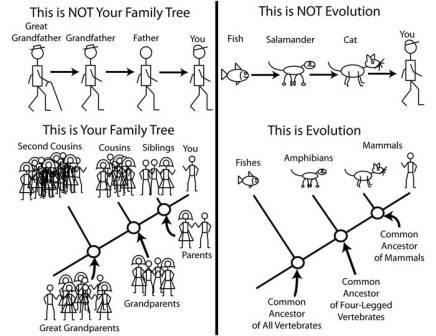
- Evolution is "just a theory".
- Scientists never found million year old DNA.
And the list goes on...
Now, it's ok if people simply don't know any better. There's tons of stuff I don't know about either. Ask me anything about nuclear physics for example and all you'll get is a blank stare. So I will NEVER hold it against someone if he simply doesn't know.
Having said that, I get REALLY ANNOYED if people are too lazy to fact check their posts. Just because something fits your preconceived notion or belief doesn't mean it's automatically correct. For crying out loud people, if you make a statement like "the earth is only 6k years old" it would take you less than 5min of research to figure out that's complete and utter nonsense.
The problem is, how do you figure out if something is nonsense or the truth?
Here are a few tips to avoid posting stuff that's comically wrong:
1) Avoid confirmation bias
For those who don't know, confirmation bias is when you agree with something simply because it "fits" your preconceived belief. You are basically looking for an answer that confirms your belief...even at the expense of the validity and correctness of that answer.
An example of that is going to "the creation research institute" when trying to learn about evolution...or science in general. Sources like that are blatantly biased and demonstrably twisting the facts (or omitting facts) to support their belief.
If you have a heart attack, you go see a doctor...not our car mechanic! So if you want to learn about something like evolution, you go read stuff from people who have actually studied the subject...SCIENTISTS. And not just any scientist either, scientists who work in fields related to evolution. A cosmologist for example is NOT the right person to ask about evolution.
Keep an open mind, seek evidence to the contrary for every opinion (especially ones you believe), and don't treat your research like a crusade.
2) Google & Co.
Google is like a massive library, a great research tool! Having said that, Google is basically a directory...just because something on Google doesn't mean it's a good source.
Tips:
a) Blogs are mostly crap! They are OPINION peaces and NOT proper scientific sources.
b) Check how credible a source is. Something published by Harvard University for example is A LOT more credible than something from www.evolutiondebunked.com
c) Whenever possible, find something written by people who work in fields that are related to your subject.
d) Peer reviewed stuff is ALWAYS better than non-reviewed stuff. There are sites like Proquest and Emerald that host peer reviewed scientific articles...but they're mostly not free. However, if you search around a bit, you can often find great sites hosting scientific articles. For astronomy/cosmology, this one is great for example.
e) Sites that source their articles (aka listing where their claims have been proven) are always better. People bitch about Wikipedia, but if you check, most of the claims on there are sourced and the links are at the bottom of articles.
f) Google Scholar is your friend. It features THOUSANDS of peer reviewed articles.
3) Critical thinking is key
Basically, question EVERYTHING...no matter whether your like the claim or not. Here are a few tips that help:
a) Anecdotal evidence: Basically, this is worthless and you shouldn't treat it as "fact". As an example, let's say a friend of yours buys and iPhone and then tells you it's "#" a few months later because the connection keeps cutting off and the voices of callers sound weird. So you end up NOT buying an iPhone based on that anecdotal evidence even if a lot of consumer reports rate it highly. Proper consumer tests should rate higher than your mate's OPINION.
b) Check people's credentials!! Just because they CLAIM to be experts doesn't mean they are, or that their motives are good. For example, a scientist saying oil spills are no biggie should be questioned harshly...often if you read up on their CV you realize they work for the oil industry. That's just one example, but there are plenty others where psychologists for example promote stuff they have NO CLUE about. An example of that is Lloyd Pye, who promotes his starchild skull hypothesis claiming it's an alien half-breed. That's alright...but he doesn't have a degree allowing him to make any statements regarding it in the first place, and every time an independent group of scientists studied it, they came to the conclusion that he's FOS. They have the degrees and knowledge to make claims, he doesn't!
c) The more credible people come to the same conclusion, the higher the chances that's where the truth lies. In the case of evolution, 99% of scientists working in fields related to the theory agree it's a sound theory. An even better example is that of the past 50 scientists who got a Nobel price related to natural sciences, 47 REQUIRE THE THEORY to come up with their own conclusions in the first place!!
To sum it up: PLEASE be a sceptic instead of a blind ignorant sheep!!
And a few pics related to all this:
Or if you're lazy and need a video:
So after having reached 10k stars I realized something...I have to debunk the same arguments over and over and over and over again, and that's how I get stars. It's kinda stupid and feels like running into a wall over and over again. Every single day I hear statements like that:
- Carbon dating isn't working and scientists can't determine the age of something.
- People can live inside whales (yes tooth, that one's your creation!!)
- The earth is only 6k years old.
- Evolution is "just a theory".
- Scientists never found million year old DNA.
And the list goes on...
Now, it's ok if people simply don't know any better. There's tons of stuff I don't know about either. Ask me anything about nuclear physics for example and all you'll get is a blank stare. So I will NEVER hold it against someone if he simply doesn't know.
Having said that, I get REALLY ANNOYED if people are too lazy to fact check their posts. Just because something fits your preconceived notion or belief doesn't mean it's automatically correct. For crying out loud people, if you make a statement like "the earth is only 6k years old" it would take you less than 5min of research to figure out that's complete and utter nonsense.
The problem is, how do you figure out if something is nonsense or the truth?
Here are a few tips to avoid posting stuff that's comically wrong:
1) Avoid confirmation bias
For those who don't know, confirmation bias is when you agree with something simply because it "fits" your preconceived belief. You are basically looking for an answer that confirms your belief...even at the expense of the validity and correctness of that answer.
An example of that is going to "the creation research institute" when trying to learn about evolution...or science in general. Sources like that are blatantly biased and demonstrably twisting the facts (or omitting facts) to support their belief.
If you have a heart attack, you go see a doctor...not our car mechanic! So if you want to learn about something like evolution, you go read stuff from people who have actually studied the subject...SCIENTISTS. And not just any scientist either, scientists who work in fields related to evolution. A cosmologist for example is NOT the right person to ask about evolution.
Keep an open mind, seek evidence to the contrary for every opinion (especially ones you believe), and don't treat your research like a crusade.
2) Google & Co.
Google is like a massive library, a great research tool! Having said that, Google is basically a directory...just because something on Google doesn't mean it's a good source.
Tips:
a) Blogs are mostly crap! They are OPINION peaces and NOT proper scientific sources.
b) Check how credible a source is. Something published by Harvard University for example is A LOT more credible than something from www.evolutiondebunked.com
c) Whenever possible, find something written by people who work in fields that are related to your subject.
d) Peer reviewed stuff is ALWAYS better than non-reviewed stuff. There are sites like Proquest and Emerald that host peer reviewed scientific articles...but they're mostly not free. However, if you search around a bit, you can often find great sites hosting scientific articles. For astronomy/cosmology, this one is great for example.
e) Sites that source their articles (aka listing where their claims have been proven) are always better. People bitch about Wikipedia, but if you check, most of the claims on there are sourced and the links are at the bottom of articles.
f) Google Scholar is your friend. It features THOUSANDS of peer reviewed articles.
3) Critical thinking is key
Basically, question EVERYTHING...no matter whether your like the claim or not. Here are a few tips that help:
a) Anecdotal evidence: Basically, this is worthless and you shouldn't treat it as "fact". As an example, let's say a friend of yours buys and iPhone and then tells you it's "#" a few months later because the connection keeps cutting off and the voices of callers sound weird. So you end up NOT buying an iPhone based on that anecdotal evidence even if a lot of consumer reports rate it highly. Proper consumer tests should rate higher than your mate's OPINION.
b) Check people's credentials!! Just because they CLAIM to be experts doesn't mean they are, or that their motives are good. For example, a scientist saying oil spills are no biggie should be questioned harshly...often if you read up on their CV you realize they work for the oil industry. That's just one example, but there are plenty others where psychologists for example promote stuff they have NO CLUE about. An example of that is Lloyd Pye, who promotes his starchild skull hypothesis claiming it's an alien half-breed. That's alright...but he doesn't have a degree allowing him to make any statements regarding it in the first place, and every time an independent group of scientists studied it, they came to the conclusion that he's FOS. They have the degrees and knowledge to make claims, he doesn't!
c) The more credible people come to the same conclusion, the higher the chances that's where the truth lies. In the case of evolution, 99% of scientists working in fields related to the theory agree it's a sound theory. An even better example is that of the past 50 scientists who got a Nobel price related to natural sciences, 47 REQUIRE THE THEORY to come up with their own conclusions in the first place!!
To sum it up: PLEASE be a sceptic instead of a blind ignorant sheep!!
And a few pics related to all this:
Or if you're lazy and need a video:
edit on 21-6-2012 by MrXYZ because: (no reason given)
Agreed, its like those people who read ONE book on a subject and think they know it all.
Get lots of sources, and make sure they dont all lead back to the same original source.
Get lots of sources, and make sure they dont all lead back to the same original source.
Ah yes. Good ol' objective evidence. The one thing that creationists can never muster up no matter how many times people ask it. They just go on
and on about a subject they haven't even read the basics about, and act like they understand it better than scientists do. They heard it from
somebody who shares the same belief system as them, so they take it as fact and blatantly disregard anything that disagrees with their preconceived
notions of reality. People need to stop attacking science. If you feel that strongly about evolution, then become a scientist and run experiments
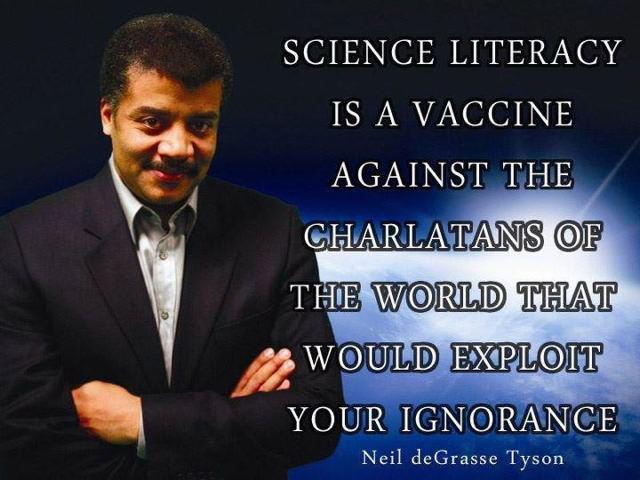
for yourself. Anybody can do it... but first you have to be scientifically literate. Tyson is dead on in that video.
Peer reviewed stuff is ALWAYS better than non-reviewed stuff...
Well, not always...
Science has received an increasingly tainted name because of recent high profile cases of alleged scientific misconduct. Once considered the results of work stress or a temporary mental health problem, scientific misconduct is increasingly being reported and proved to be a repeat offence. How should scientific misconduct be handled—is it a criminal offence and subject to national or international law? Similarly plagiarism is an ever-increasing concern whether at the level of the student or a university president. Are the existing laws tough enough? These issues, with appropriate examples, are dealt with in this review.
www.ncbi.nlm.nih.gov...
Media coverage of these events has suggested that high-profile journals encourage scientific fraud by cutting corners in peer review or by overruling referees to publish newsworthy results. Although it is understandable to conclude that, by accepting a paper, a journal's editors confer their authority to the findings and that, therefore, a portion of the responsibility for the work shifts from the author to the editor, we do not agree that the peer review system can or should detect deliberate fraud.
www.nature.com...
Over the past 12 years, anesthesiologist Scott Reuben revolutionized the way physicians provide pain relief to patients undergoing orthopedic surgery for everything from torn ligaments to worn-out hips. Now, the profession is in shambles after an investigation revealed that at least 21 of Reuben's papers were pure fiction, and that the pain drugs he touted in them may have slowed postoperative healing.
www.scientificamerican.com...
All sources, reviewed or not, should be considered when looking for the truth of a matter. Because one never knows when a little gem might come out of an otherwise BS article and/or author.
It's my belief that a good skeptic will give anything a fair hearing, and look for facts to prove or disprove equally afterward.
Good thread Mr. XYZ
reply to post by Klassified
There are always exceptions, and for the most part such misconduct is exposed, hence the articles above are highly reputable magazines or online publications exposing hoaxes. 100% integrity is nowhere found in any human institution, but peer-reviewed journals are without a doubt the most credible sources of information.
There are always exceptions, and for the most part such misconduct is exposed, hence the articles above are highly reputable magazines or online publications exposing hoaxes. 100% integrity is nowhere found in any human institution, but peer-reviewed journals are without a doubt the most credible sources of information.
reply to post by MrXYZ
great post
You left out the number one annoying phrase
- It's just a theory.
I would also add that many things explained by evolution can be confirmed by personal observation in your own backyard. The relationships between insects and plants. How a pond shapes the life within it and how everything is interdependent on everything else. The greatest lesson we can learn from evolution is that we are not the only special form of life on this planet. All life is special and all forms of life on this earth are related.
Well done on the 10K stars. With this post you should be well on the way to 11K
You left out the number one annoying phrase
- It's just a theory.
I would also add that many things explained by evolution can be confirmed by personal observation in your own backyard. The relationships between insects and plants. How a pond shapes the life within it and how everything is interdependent on everything else. The greatest lesson we can learn from evolution is that we are not the only special form of life on this planet. All life is special and all forms of life on this earth are related.
Well done on the 10K stars. With this post you should be well on the way to 11K
Originally posted by uva3021
reply to post by Klassified
There are always exceptions, and for the most part such misconduct is exposed, hence the articles above are highly reputable magazines or online publications exposing hoaxes. 100% integrity is nowhere found in any human institution, but peer-reviewed journals are without a doubt the most credible sources of information.
And hence my point. What about those cases that haven't been exposed? Which ones are they, so I don't read those, or believe them? No one knows, because they haven't been "exposed". Where there's smoke, there's usually fire. If we know about 25 cases of peer-review fraud, the likelihood is, there are hundreds we don't know about. Peer-review is another name for consensus science in too many cases.
My post however, was not to slander scientists. Our modern sciences are a valuable asset to the world we live in. My point is that all sources should be considered equally until enough evidence is in to reach a verdict in ones own mind. A skeptic isn't looking for "confirmation bias", a skeptic wants the truth, whether it suits them or doesn't.
By only putting trust or faith in the established scientific paradigm, we create a box no one is allowed to think outside of. Yet, not only have scientists been wrong plenty in the past, they also rewrite theory as new evidence is allowed to come to light.
To me, opposing views to that box should be equally considered until such time as evidence against them overwhelms them. Giving an established academic institution with too many government and corporate interests, carte blanche to tell us what is and what isn't, is akin to trusting a man just because he's an ordained minister.
The established sciences should be questioned just as much as we question "Sucha Fail", and held to a higher standard.
No. All sources should not be treated equally. I agree one should read or attempt to understand both sides of an argument thoroughly and then arrive at an opinion. But if one source is from the harvard genetics department, and the other is "ih8evolution.com", or "thecreationblog.wordpress.biz," these sources should not be treated equally. There is no valid argument against the evolutionary synthesis of differential reproduction.
Originally posted by Klassified
My point is that all sources should be considered equally until enough evidence is in to reach a verdict in ones own mind.
Now there are minor disagreements or challenges to certain claims within the evolutionary framework, such as the reason for the horns of a horned beetle, but these disagreements not of any importance outside the particular field of study that addresses arthropod adornments.
edit on
21-6-2012 by uva3021 because: (no reason given)
edit on 21-6-2012 by uva3021 because: (no reason given)
reply to post by MrXYZ
Great thread MrXYZ, not sure what if anything I could add to it. Long time ago when I was a creationist my biggest issue was that I never actually LOOKED into Evolution. Everything I knew about evolution in my teens I'd either glanced over in school or been spoon-fed by creationist websites and other sources. If other creationists are anything like I was as a kid then they are likely not interested in objectivity, they've already decided that what HAS to be objectively true (God creating life) and/or had it decided for them (by indoctrination) and they can only look at their side as evidence and the other side as lies to be ignored.
Great thread MrXYZ, not sure what if anything I could add to it. Long time ago when I was a creationist my biggest issue was that I never actually LOOKED into Evolution. Everything I knew about evolution in my teens I'd either glanced over in school or been spoon-fed by creationist websites and other sources. If other creationists are anything like I was as a kid then they are likely not interested in objectivity, they've already decided that what HAS to be objectively true (God creating life) and/or had it decided for them (by indoctrination) and they can only look at their side as evidence and the other side as lies to be ignored.
Originally posted by Klassified
To me, opposing views to that box should be equally considered until such time as evidence against them overwhelms them.
Some views can be eliminated from the get go, e.g. unscientific, untestable and unfalsifiable views that make no useful predictions such as "god did it".
Good thread btw, anyone want to write up a terminology hit list covering scientific facts, hypotheses, laws and theories? Saves the usual contributors from constantly correcting basic terminology abuse.
edit on 21-6-2012 by john_bmth because: (no reason given)
reply to post by uva3021
Then what you're telling me is that "ih8evolution.com", or "thecreationblog.wordpress.biz," cannot have a valid stance because they are biased. But our academia can have a valid stance, even though they also can have bias, as well as a conflict of interest, depending on who is funding their research.
Are you telling me you have done all the tests and experiments yourself? And you know this to be fact? Or are you telling me you have read the peer-reviewed papers, and believe them to be truth?
Bottom line. All I'm trying to say here, is that we live in an age of big government and corporate interest in what is presented to the public in media, and in print. This creates a problem for all scientists, honest or not. Because it creates a conflict of interest. As well, the sciences have been elevated in our time to near a religious institution, complete with Cardinals, Bishops, Priests, and zealots.
We need to value our sciences and academia, not elevate them to the realm of spirituality and faith.
Then what you're telling me is that "ih8evolution.com", or "thecreationblog.wordpress.biz," cannot have a valid stance because they are biased. But our academia can have a valid stance, even though they also can have bias, as well as a conflict of interest, depending on who is funding their research.
There is no valid argument against the evolutionary synthesis of differential reproduction.
Are you telling me you have done all the tests and experiments yourself? And you know this to be fact? Or are you telling me you have read the peer-reviewed papers, and believe them to be truth?
Bottom line. All I'm trying to say here, is that we live in an age of big government and corporate interest in what is presented to the public in media, and in print. This creates a problem for all scientists, honest or not. Because it creates a conflict of interest. As well, the sciences have been elevated in our time to near a religious institution, complete with Cardinals, Bishops, Priests, and zealots.
We need to value our sciences and academia, not elevate them to the realm of spirituality and faith.
Originally posted by Klassified
reply to post by uva3021
Then what you're telling me is that "ih8evolution.com", or "thecreationblog.wordpress.biz," cannot have a valid stance because they are biased. But our academia can have a valid stance, even though they also can have bias, as well as a conflict of interest, depending on who is funding their research.
No, they are not equal. Saying that aspects of academia may have a conflict of interest does not somehow discredit all of academia, nor does it mean that jimscreationistblog.org are suddenly elevated to equal footing because of your allegations.
Bottom line. All I'm trying to say here, is that we live in an age of big government and corporate interest in what is presented to the public in media, and in print. This creates a problem for all scientists, honest or not. Because it creates a conflict of interest.
Again, you are making broad, sweeping statements about conflicts of interest that may occur (you have yet to cite any examples, btw. Not that citing examples would in any way tarnish the entire scientific community). You are speculating, that is all. Where humans are involved, there is always room for self interest but that doesn't exonerate biased and unscientific sources such as websites and blogs. These are not in any shape or form on equal footing as solid science published in, say, a reputable journal.
Furthermore, you're setting up a false dichotomy because even if all of science was somehow a grand conspiracy, that doesn't in any way mean that creationist websites and blogs suddenly become legitimate sources. The (completely hypothetical) failings of one does not validate the other.
edit on 21-6-2012 by john_bmth because: (no reason given)
reply to post by john_bmth
I have no interest in discrediting any of our academia, let alone all. You are completely misrepresenting me, and becoming defensive. They aren't allegations, they are documented, and there are many more instances. This doesn't discredit our scientists and academia, it tells us they are human just like we are, and just as prone to the same mistakes and character flaws the rest of us are. And therefore, should be scrutinized as any other biased or non-biased source of information.
We would do well to remember, few among us are able to run all experiments, and collect all data needed to substantiate many of the scientific ideas we hold as "fact" today.
As to equality. The moment we throw out ANY source due to prejudice or bias, we have become subjective, and not objective. And from that point forward, our research is tainted.
My aim here is not to offend, but to try and add a little perspective and balance to an otherwise lopsided debate in many instances.
I have no interest in discrediting any of our academia, let alone all. You are completely misrepresenting me, and becoming defensive. They aren't allegations, they are documented, and there are many more instances. This doesn't discredit our scientists and academia, it tells us they are human just like we are, and just as prone to the same mistakes and character flaws the rest of us are. And therefore, should be scrutinized as any other biased or non-biased source of information.
We would do well to remember, few among us are able to run all experiments, and collect all data needed to substantiate many of the scientific ideas we hold as "fact" today.
As to equality. The moment we throw out ANY source due to prejudice or bias, we have become subjective, and not objective. And from that point forward, our research is tainted.
My aim here is not to offend, but to try and add a little perspective and balance to an otherwise lopsided debate in many instances.
reply to post by MrXYZ
You see the problem is in the dynamic 'set up', screaming 'confirmation bias'...believing what you read, from any source (whether it fits your criteria of peer reviewed, reputable, leaders in the field, open-minded research [that's a good one lol])...is that, believing these sources sets up a kind of reverse comfirmation bias...it magically becomes 'fact'...(until this 'fact' gets modified or overturned by the same fraternity who called it a fact in the first place)...
Don't get me wrong...I 'believe' science to a certain point...but, Subjectively speaking, there are things which science calls 'fact' which they have niether the equipment nor the open-mindedness to make determination upon...and usually they 'fit' questionable phenomena into thier own version of confirmation bias...based on the results of testing with equipment (or tests) unable to measure 'questionable' phenomena...if scientists/researchers, and the majority of the population were unable to see the color red...how ostracised and 'wrong' do you think you'd feel, if you could see the color red?
akushla
You see the problem is in the dynamic 'set up', screaming 'confirmation bias'...believing what you read, from any source (whether it fits your criteria of peer reviewed, reputable, leaders in the field, open-minded research [that's a good one lol])...is that, believing these sources sets up a kind of reverse comfirmation bias...it magically becomes 'fact'...(until this 'fact' gets modified or overturned by the same fraternity who called it a fact in the first place)...
Don't get me wrong...I 'believe' science to a certain point...but, Subjectively speaking, there are things which science calls 'fact' which they have niether the equipment nor the open-mindedness to make determination upon...and usually they 'fit' questionable phenomena into thier own version of confirmation bias...based on the results of testing with equipment (or tests) unable to measure 'questionable' phenomena...if scientists/researchers, and the majority of the population were unable to see the color red...how ostracised and 'wrong' do you think you'd feel, if you could see the color red?
akushla
reply to post by Klassified
Nowhere did I imply that I have or even need to do every experiment known to man to confirm the modern evolutionary synthesis. But there is no valid argument against the modern evolutionary synthesis. If there is then that person who proposes a thesis published in a peer-reviewed journal will win the noble prize, regardless of whether or not one millionth of one percent of peer-reviewed papers are found to misappropriate their dataset.
Peer-reviewed journals are the ones exposing academic papers to be fraudulent. They police themselves. I doubt "creationistismrox.com" will retract or make a statement suggesting "ih8evolution.com" is using suspicious methods to reach their conclusions.
Nowhere did I imply that I have or even need to do every experiment known to man to confirm the modern evolutionary synthesis. But there is no valid argument against the modern evolutionary synthesis. If there is then that person who proposes a thesis published in a peer-reviewed journal will win the noble prize, regardless of whether or not one millionth of one percent of peer-reviewed papers are found to misappropriate their dataset.
Peer-reviewed journals are the ones exposing academic papers to be fraudulent. They police themselves. I doubt "creationistismrox.com" will retract or make a statement suggesting "ih8evolution.com" is using suspicious methods to reach their conclusions.
reply to post by Klassified
What government agencies or big corporations concern themselves with the inter-gender disparities in spine length of thorny-headed intestinal parasites? Such papers comprise 99% of peer-reviewed publications.
What government agencies or big corporations concern themselves with the inter-gender disparities in spine length of thorny-headed intestinal parasites? Such papers comprise 99% of peer-reviewed publications.
reply to post by uva3021
I believe we have run our course, and have reached an impasse. I have enjoyed our exchange, because I always feel like I learn something from opposing views to my own, whether I realize it at the time or not.
I believe we have run our course, and have reached an impasse. I have enjoyed our exchange, because I always feel like I learn something from opposing views to my own, whether I realize it at the time or not.
reply to post by Klassified
Very good, sir. I, as well, appreciate your input and maybe in the future your words will breed some change, however slight it may or may not
be, in the way I view things of such manner. I look forward to further discussions with your person.
Until next time...
Until next time...
reply to post by MrXYZ
This is a great thread that I believe everyone should read.
This is the Internet. We live in an age where anyone can publish anything online and claim it is reputable if they get enough Internet traffic.
In my opinion there needs to be a seal created by an independent fact checking source for reputable websites to place on their website if they plan on being cited in any sort of debate.
I believe this page also goes hand in hand with this page on logical fallacies.
S&F
EDIT: I would really like if you added the definition of skepticism juxtaposed with the definition of denialism.
This is a great thread that I believe everyone should read.
This is the Internet. We live in an age where anyone can publish anything online and claim it is reputable if they get enough Internet traffic.
In my opinion there needs to be a seal created by an independent fact checking source for reputable websites to place on their website if they plan on being cited in any sort of debate.
I believe this page also goes hand in hand with this page on logical fallacies.
S&F
edit on 6/22/2012 by Anonymous404 because: grammar and redundancy
EDIT: I would really like if you added the definition of skepticism juxtaposed with the definition of denialism.
edit on 6/22/2012 by
Anonymous404 because: added info
new topics
-
This is adorable you guys!
General Chit Chat: 9 minutes ago -
Reprehensible Behavior
US Political Madness: 52 minutes ago -
Defending the need for adherence to Old Testament commandments under the new covenant of Christ
Conspiracies in Religions: 1 hours ago -
Those Drones over NJ and elsewhere
Aliens and UFOs: 6 hours ago -
South Korean coup was an attempt to start WW3
World War Three: 6 hours ago -
Archer aviation and the NJ drones
Aircraft Projects: 6 hours ago
top topics
-
Only two Navy destroyers currently operational as fleet size hits record low
Military Projects: 17 hours ago, 12 flags -
Those Drones over NJ and elsewhere
Aliens and UFOs: 6 hours ago, 7 flags -
South Korean coup was an attempt to start WW3
World War Three: 6 hours ago, 6 flags -
Reprehensible Behavior
US Political Madness: 52 minutes ago, 6 flags -
Archer aviation and the NJ drones
Aircraft Projects: 6 hours ago, 5 flags -
Defending the need for adherence to Old Testament commandments under the new covenant of Christ
Conspiracies in Religions: 1 hours ago, 2 flags -
This is adorable you guys!
General Chit Chat: 9 minutes ago, 1 flags
active topics
-
-@TH3WH17ERABB17- -Q- ---TIME TO SHOW THE WORLD--- -Part- --44--
Dissecting Disinformation • 3704 • : Thoughtful3 -
Reprehensible Behavior
US Political Madness • 5 • : nugget1 -
This is adorable you guys!
General Chit Chat • 0 • : Shoshanna -
George Stephanopoulos and ABC agree to pay $15 million to settle Trump defamation suit
Mainstream News • 14 • : Brotherman -
More Bad News for Labour and Rachel Reeves Stole Christmas from Working Families
Regional Politics • 8 • : gortex -
Defending the need for adherence to Old Testament commandments under the new covenant of Christ
Conspiracies in Religions • 2 • : BeyondKnowledge3 -
Rant. I am sick of people saying the police are revenue raising.
Rant • 11 • : DAVID64 -
They Know
Aliens and UFOs • 96 • : alldaylong -
One out of every 20 Canadians Dies by Euthanasia
Medical Issues & Conspiracies • 26 • : Xtrozero -
Something better
Dissecting Disinformation • 27 • : chr0naut