It looks like you're using an Ad Blocker.
Please white-list or disable AboveTopSecret.com in your ad-blocking tool.
Thank you.
Some features of ATS will be disabled while you continue to use an ad-blocker.

Round 1: Tuning Spork vs The Vagabond: Not So Prophetic Dreams
page: 19
share:
The topic for this debate is “Dream Manipulation From An External Source Can Be Successfully Used In Behavioral Modification Therapies.”
Tuning Spork will be arguing the pro position and will open the debate.
The Vagabond will argue the con position.
Each debater will have one opening statement each. This will be followed by 3 alternating replies each. There will then be one closing statement each and no rebuttal.
There is a 10,000 character limit. Excess characters will be deleted prior to judging.
Editing is strictly forbidden. For reasons of time, mod edits should not be expected except in critical situations.
Opening and closing statements must not contain any images and must have no more than 3 references.
Excluding both the opening and closing statements, only two images and no more than 5 references can be included for each post. Each individual post may contain up to 10 sentences of external source material, totaled from all external sources.
Links to multiple pages within a single domain count as 1 reference but there is a maximum of 3 individual links per reference, then further links from that domain count as a new reference. Excess quotes and excess links will be removed before judging.
Videos are not permitted. This includes all youtube links and other multi-media video sources.
The Socratic Debate Rule is in effect. Each debater may ask up to 5 questions in each post, except for in closing statements- no questions are permitted in closing statements. These questions should be clearly labeled as "Question 1, Question 2, etc.
When asked a question, a debater must give a straight forward answer in his next post. Explanations and qualifications to an answer are acceptable, but must be preceded by a direct answer.
This Is The Time Limit Policy
Each debate must post within 24 hours of the timestamp on the last post. If your opponent is late, you may post immediately without waiting for an announcement of turn forfeiture. If you are late, you may post late, unless your opponent has already posted.
Each debater is entitled to one extension of 24 hours. The request should be posted in this thread and is automatically granted- the 24 hour extension begins at the expiration of the previous deadline, not at the time of the extension request.
In the unlikely event that tardiness results in simultaneous posting by both debaters, the late post will be deleted unless it appears in its proper order in the thread.
Judging will be done by a panel of anonymous judges. After each debate is completed it will be locked and the judges will begin making their decision. One of the debate forum moderators will then make a final post announcing the winner.
[edit on 18-2-2009 by MemoryShock]
Tuning Spork will be arguing the pro position and will open the debate.
The Vagabond will argue the con position.
Each debater will have one opening statement each. This will be followed by 3 alternating replies each. There will then be one closing statement each and no rebuttal.
There is a 10,000 character limit. Excess characters will be deleted prior to judging.
Editing is strictly forbidden. For reasons of time, mod edits should not be expected except in critical situations.
Opening and closing statements must not contain any images and must have no more than 3 references.
Excluding both the opening and closing statements, only two images and no more than 5 references can be included for each post. Each individual post may contain up to 10 sentences of external source material, totaled from all external sources.
Links to multiple pages within a single domain count as 1 reference but there is a maximum of 3 individual links per reference, then further links from that domain count as a new reference. Excess quotes and excess links will be removed before judging.
Videos are not permitted. This includes all youtube links and other multi-media video sources.
The Socratic Debate Rule is in effect. Each debater may ask up to 5 questions in each post, except for in closing statements- no questions are permitted in closing statements. These questions should be clearly labeled as "Question 1, Question 2, etc.
When asked a question, a debater must give a straight forward answer in his next post. Explanations and qualifications to an answer are acceptable, but must be preceded by a direct answer.
This Is The Time Limit Policy
Each debate must post within 24 hours of the timestamp on the last post. If your opponent is late, you may post immediately without waiting for an announcement of turn forfeiture. If you are late, you may post late, unless your opponent has already posted.
Each debater is entitled to one extension of 24 hours. The request should be posted in this thread and is automatically granted- the 24 hour extension begins at the expiration of the previous deadline, not at the time of the extension request.
In the unlikely event that tardiness results in simultaneous posting by both debaters, the late post will be deleted unless it appears in its proper order in the thread.
Judging will be done by a panel of anonymous judges. After each debate is completed it will be locked and the judges will begin making their decision. One of the debate forum moderators will then make a final post announcing the winner.
[edit on 18-2-2009 by MemoryShock]
Tuning Spork will be replacing Mike Singh whom has forfeited his position due to no show.
Tuning Spork will have 24 hours from the time stamp of this post to make his opening statement.
Tuning Spork will have 24 hours from the time stamp of this post to make his opening statement.
Howdy, sports fans. Welcome to Round 1 of the first full-blown ATS Debate Tournament of 2009. I hope this post finds you well. And if not, here's
to a speedy recovery.
The topic for this debate is: Resolved: That "Dream Manipulation From An External Source Can Be Successfully Used In Behavioral Modification Therapies.” I will be arguing in favor of the resolution, and Vagabond will oppose.
............
OPENING STATEMENT
It was a dark and stormy night. The Boeing 757's fuselage rumbled like a hungry belly as it pierced it's way through the swollen troposphere. Seated next to me, Sinead O'Connor intently twisted her Rubik's Cube. Just three yellow squares remaining to be changed to red and victory was hers. Vladimir Lenin lay in state in the center aisle, to all outward appearances still dead save for the fist that had clenched at some point during his 85 year absence.
Seated mid-cabin, I thought to lean forward and outstretch my arms so as to wear the wings as my sleeves. The towering rocky spires of the Chilean coast passed quietly below as I hang glided through the cool and refreshing salty air.
How did I get there? And what was the fate of that Cube? I didn't ask those questions at the time. Nor did I wonder about them after I'd awoken. Bizarre events can happen to us as we sleep while, at the time, seem like no big deal.
So a water moccasin told me that Mount St. Helens would erupt if I didn't fold with three kings. These things happen.
The supposedly unalert interior of a dreaming brain is, indeed, a very dark and stormy place.
Let us accept as fact that our dreams are manifestations of our unresolved questions, turmoils and desires, and that there is a causal relationship between a troubled mind and its resultant dreaming. The well accepted causality of that relationship -- time's arrow, if you will -- runs from the conscious to the sub-conscious. That is to say that the "waking life" creates, influences and is, hopefully, resolved by the "dreaming life".
But let us also acknowledge that, in some cases, the dreaming life can influence the waking life to a substantial degree and it is with these cases that we are concerned in this debate.
What is up for debate is the likelihood -- nay, certitude -- that these irresolutions can be resolved with the aid of a modern, even cutting-edge, understanding of how, through therapeutic means, sub-conscious dreaming can influence conscious behavior.
So, the questions that we will ask and answer in this debate are these three:
1. Can dreams be influenced and manipulated by sensory stimuli, such as sound, from an external source?
2. Can the dreams of the dreamer be understood, in real time, by an external observer?
3. Can an external observer, then, apply sensory stimuli from an external source to influence and manipulate the dreams of the dreamer?
I will, in the course of this debate, show that the answer to all three of the above questions is: YES.
I look forward to a lively debate.
The topic for this debate is: Resolved: That "Dream Manipulation From An External Source Can Be Successfully Used In Behavioral Modification Therapies.” I will be arguing in favor of the resolution, and Vagabond will oppose.
............
OPENING STATEMENT
It was a dark and stormy night. The Boeing 757's fuselage rumbled like a hungry belly as it pierced it's way through the swollen troposphere. Seated next to me, Sinead O'Connor intently twisted her Rubik's Cube. Just three yellow squares remaining to be changed to red and victory was hers. Vladimir Lenin lay in state in the center aisle, to all outward appearances still dead save for the fist that had clenched at some point during his 85 year absence.
Seated mid-cabin, I thought to lean forward and outstretch my arms so as to wear the wings as my sleeves. The towering rocky spires of the Chilean coast passed quietly below as I hang glided through the cool and refreshing salty air.
How did I get there? And what was the fate of that Cube? I didn't ask those questions at the time. Nor did I wonder about them after I'd awoken. Bizarre events can happen to us as we sleep while, at the time, seem like no big deal.
So a water moccasin told me that Mount St. Helens would erupt if I didn't fold with three kings. These things happen.
The supposedly unalert interior of a dreaming brain is, indeed, a very dark and stormy place.
Let us accept as fact that our dreams are manifestations of our unresolved questions, turmoils and desires, and that there is a causal relationship between a troubled mind and its resultant dreaming. The well accepted causality of that relationship -- time's arrow, if you will -- runs from the conscious to the sub-conscious. That is to say that the "waking life" creates, influences and is, hopefully, resolved by the "dreaming life".
But let us also acknowledge that, in some cases, the dreaming life can influence the waking life to a substantial degree and it is with these cases that we are concerned in this debate.
What is up for debate is the likelihood -- nay, certitude -- that these irresolutions can be resolved with the aid of a modern, even cutting-edge, understanding of how, through therapeutic means, sub-conscious dreaming can influence conscious behavior.
So, the questions that we will ask and answer in this debate are these three:
1. Can dreams be influenced and manipulated by sensory stimuli, such as sound, from an external source?
2. Can the dreams of the dreamer be understood, in real time, by an external observer?
3. Can an external observer, then, apply sensory stimuli from an external source to influence and manipulate the dreams of the dreamer?
I will, in the course of this debate, show that the answer to all three of the above questions is: YES.
I look forward to a lively debate.
I would like to thank everyone who has come together for what is the biggest and perhaps the most promising debate tournament in "Fight Club"
history, especially my opponent who so quickly stepped in for Mike Singh.
The Fine Print
By reading this debate you agree not to attempt to resolve any psychological issues which might be revealed by my dreams. You may however assist my opponent with his water moccasin dream, which sounds quite unhealthy.
About the topic
We are not debating whether or not dreams hold any significance or power. They do, and as I present how the proposition before us falls outside the limits of dreams, I will also explain their true significance and power.
The question before us though is whether or not a force outside of yourself can independently direct your dreams in a meaningful way, in order to change learned behaviors.
My Position
I contend that it is not possible for an external source to manipulate a person's dreams for the purpose of behavior modification.
My reasons can be summed up very simply.
1. The parts of the brain that behavior modification needs to target are all either inactive or at a lower level of function in the dreaming state.
2. Dreams are primarily shaped by factors that cannot be manipulated externally.
Reason 1:: Brain function during the dream state is not designed to support learning, including the acquisition of learned behaviors; in fact it is designed to RESTRICT learning.
Thus during dreams sensory/motor coordination cannot be trained, responses to stimulus cannot be conditioned for the waking life because stimuli are processed differently, and desired behavior patterns cannot be practiced because the part of the brain used for directing behavior is offline and you are basically on auto-pilot, giving only instinctive responses to your imagined environment.
This pattern of brain function during dreaming is advantageous, and in fact necessary, because dreams are not real. If the brain develops real behavior patterns based on imagined situations, they will not be appropriate to real life. This will result in behaviors which do not accomplish the intended goal, sometimes even with fatal results. In other words, succeptibility to behavior modification in the dreaming state is naturally selected against.
For example: When our primitive ancestors dreamed of hunting, their imagination could not possibly create a realistic representation of their prey's hearing or sense of smell, and thus in their dreams they are not forced to learn to stay downwind of the prey or to develop a light, quiet step. Thus developing behavior only while awake and not while dreaming is an advantage which, among other things, can keep you from starving to death.
Reason 2:: The situational details of a dream are shaped primarily by the structure of the brain itself, which cannot be remotely altered. In fact, at present it cannot even be interfaced with for passive reading, much less active manipulation.
During a dream, the activity of the secondary areas of sensory centers generate imagined stimuli based on existing knowledge and reactions are driven largely by emotion. So dreams are limited by our experiences, our attitudes, and the patterns by which the dreaming mind chooses to access those.
We cannot presently locate a given piece of information within the brain in order to selectively trigger it or even to know when it is triggered naturally. Therefore we cannot remotely introduce specific characters, settings, situations etc into a dream for the dreamer, nor can we ascertain the content of a dream in progress, which means that we cannot coordinate stimuli with the dream to achieve detailed control of the dream environment. This isolates the dream from most influences.
So as my opponent has said:
And that brings us to...
The True Meaning and Power of Dreams
With my second reason as with my first, there is a very good reason why the most sophisticated and depended-upon organ in the human body functions the way it does.
When we dream, we reduce our receptiveness to real stimuli, enhance our receptiveness to remembered and imagined ones, and we quiet that little voice (in the dorsolateral prefrontal cortex) that is always trying to walk you through a solution to your problems. Dreaming is not the time for solving problems. It is the time for asking a question that waking life usually requires us to repress: "How do I feel?".
If you're anything like me, you wake up somewhat reluctantly and spend a few minutes dreading the day. You may even have to "convince yourself" to go through with the day, battling the temptation to call in sick or to fake your own death and move to Cabo. What you may not realize is that this goes hand in hand with your dreams.
Once your day is started, feelings often have to take a back seat, and they always have. Whether you're climbing out of your cave to go hunt and gather, or driving into the office to make 600 sales calls in a row, you've got things that must be done if you want to survive, and when it's time to do them you just have to suck it up and focus on finishing the job, because that's what it takes to put food on the table. But you can only do that for so long before you start to develop some issues. Ask any postal worker.
But for those first few minutes when you awaken from your dream feeling very in touch with your life, you have a choice. This is the time for a caveman to decide that he's gonna spend the day migrating to somewhere where the animals are slower and less elusive. Or for the more modernized person- to call in sick and go pick up a copy of the classifieds.
Dreams offer vital insights that help us remain emotionally stable, not for behavior modification. The waking life is for that.
Influenced yes, manipulated no. As I have explained, detailed control is impossible, although random effects can be achieved.
No. It is possible to make limited arrangements in this respect, however the problems I have explained still ruin it.
No.
The Fine Print
By reading this debate you agree not to attempt to resolve any psychological issues which might be revealed by my dreams. You may however assist my opponent with his water moccasin dream, which sounds quite unhealthy.
About the topic
Dream Manipulation From An External Source Can Be Successfully Used In Behavioral Modification Therapies
We are not debating whether or not dreams hold any significance or power. They do, and as I present how the proposition before us falls outside the limits of dreams, I will also explain their true significance and power.
The question before us though is whether or not a force outside of yourself can independently direct your dreams in a meaningful way, in order to change learned behaviors.
My Position
I contend that it is not possible for an external source to manipulate a person's dreams for the purpose of behavior modification.
My reasons can be summed up very simply.
1. The parts of the brain that behavior modification needs to target are all either inactive or at a lower level of function in the dreaming state.
2. Dreams are primarily shaped by factors that cannot be manipulated externally.
Reason 1:: Brain function during the dream state is not designed to support learning, including the acquisition of learned behaviors; in fact it is designed to RESTRICT learning.
- During sleep, the primary sensory centers of the brain are less active- most activity takes place in the secondary areas which are used for
imagination and recall of sensory stimulus.
- Time is also distorted- seemingly long dreams may occur in shorter spans of time.
- Neuro-transmitters which control motion are also highly reduced in order to achieve sleep paralysis (the reason you can have a dream about leaving
your apartment and walking out into the street without actually waking up standing in traffic).
Most importantly however:
- The dorsolateral prefrontal cortex (DL-PFC) is deactivated, which severely impairs memory, cognition, and executive function, all of which are important to the development of learned behavior.
Thus during dreams sensory/motor coordination cannot be trained, responses to stimulus cannot be conditioned for the waking life because stimuli are processed differently, and desired behavior patterns cannot be practiced because the part of the brain used for directing behavior is offline and you are basically on auto-pilot, giving only instinctive responses to your imagined environment.
This pattern of brain function during dreaming is advantageous, and in fact necessary, because dreams are not real. If the brain develops real behavior patterns based on imagined situations, they will not be appropriate to real life. This will result in behaviors which do not accomplish the intended goal, sometimes even with fatal results. In other words, succeptibility to behavior modification in the dreaming state is naturally selected against.
For example: When our primitive ancestors dreamed of hunting, their imagination could not possibly create a realistic representation of their prey's hearing or sense of smell, and thus in their dreams they are not forced to learn to stay downwind of the prey or to develop a light, quiet step. Thus developing behavior only while awake and not while dreaming is an advantage which, among other things, can keep you from starving to death.
Reason 2:: The situational details of a dream are shaped primarily by the structure of the brain itself, which cannot be remotely altered. In fact, at present it cannot even be interfaced with for passive reading, much less active manipulation.
During a dream, the activity of the secondary areas of sensory centers generate imagined stimuli based on existing knowledge and reactions are driven largely by emotion. So dreams are limited by our experiences, our attitudes, and the patterns by which the dreaming mind chooses to access those.
We cannot presently locate a given piece of information within the brain in order to selectively trigger it or even to know when it is triggered naturally. Therefore we cannot remotely introduce specific characters, settings, situations etc into a dream for the dreamer, nor can we ascertain the content of a dream in progress, which means that we cannot coordinate stimuli with the dream to achieve detailed control of the dream environment. This isolates the dream from most influences.
So as my opponent has said:
our dreams are manifestations of our unresolved questions, turmoils and desires, and that there is a causal relationship between a troubled mind and its resultant dreaming. The well accepted causality of that relationship -- time's arrow, if you will -- runs from the conscious to the sub-conscious.
And that brings us to...
The True Meaning and Power of Dreams
With my second reason as with my first, there is a very good reason why the most sophisticated and depended-upon organ in the human body functions the way it does.
When we dream, we reduce our receptiveness to real stimuli, enhance our receptiveness to remembered and imagined ones, and we quiet that little voice (in the dorsolateral prefrontal cortex) that is always trying to walk you through a solution to your problems. Dreaming is not the time for solving problems. It is the time for asking a question that waking life usually requires us to repress: "How do I feel?".
If you're anything like me, you wake up somewhat reluctantly and spend a few minutes dreading the day. You may even have to "convince yourself" to go through with the day, battling the temptation to call in sick or to fake your own death and move to Cabo. What you may not realize is that this goes hand in hand with your dreams.
Once your day is started, feelings often have to take a back seat, and they always have. Whether you're climbing out of your cave to go hunt and gather, or driving into the office to make 600 sales calls in a row, you've got things that must be done if you want to survive, and when it's time to do them you just have to suck it up and focus on finishing the job, because that's what it takes to put food on the table. But you can only do that for so long before you start to develop some issues. Ask any postal worker.
But for those first few minutes when you awaken from your dream feeling very in touch with your life, you have a choice. This is the time for a caveman to decide that he's gonna spend the day migrating to somewhere where the animals are slower and less elusive. Or for the more modernized person- to call in sick and go pick up a copy of the classifieds.
Dreams offer vital insights that help us remain emotionally stable, not for behavior modification. The waking life is for that.
1. Can dreams be influenced and manipulated by sensory stimuli, such as sound, from an external source?
Influenced yes, manipulated no. As I have explained, detailed control is impossible, although random effects can be achieved.
2. Can the dreams of the dreamer be understood, in real time, by an external observer?
No. It is possible to make limited arrangements in this respect, however the problems I have explained still ruin it.
3. Can an external observer, then, apply sensory stimuli from an external source to influence and manipulate the dreams of the dreamer?
No.
I would first like to emphasize that the words “Dream Manipulation From An External Source Can Be Successfully Used In Behavioral Modification
Therapies”, do not neccessarily mean that it can be done today, or even by the end of the next decade, but that it can be done, much in the
same way that someone in 1961 would have said that going to the moon by the end of the decade "can be done". The apparatus wasn't designed
or built yet, but the component knowledge was there just waiting to be creatively aggregated.
Now I will respond to the important points that my esteemed opponent raised in his opening statement, since they happen to aid beautifully in the presentation of the evidence I'd already intended for this installment.
Response to Reason #1:
Yes, the primary sensory centers are less active, but they are active. You may sleep through uninteresting stimuli such as a television program, a fly walking across your hand, or even the morning alarm clock, while more threatening stimuli such as the smell of smoke or the sound of someone in the room may immediately awaken you.
But just because a stimulus fails to interupt sleep does not mean that it goes unnoticed. A pleasant odor, for example, can lead to pleasant dreams and unpleasant odors to unpleasant dreams, even if that specific odor is not remembered as being incorporated into the dream.
news.nationalgeographic.com...
I think we all know from experience, however, how ambient sounds, including spoken language, can infiltrate our dreams. For example, about 18 years ago now (holy cow, has it been that long?) I was at a club in New Haven, CT for their weekly open-mike night. A fella named Bob Cunningham performed a version of "Mama's Little Baby Loves Shortnin' Bread" that he'd said came to him in a dream. It was an amusing little ditty.
After he'd finished the song, a gentleman sitting at a table just in front of the stage asked Bob if he'd dreamt that song on Wednesday evening. Bob said that he had. The guy at the table told him that he'd seen a comedian on Johnny Carson play that same version of the song on Wednesday. Bob could only conclude that he'd fallen asleep on the sofa with The Tonight Show playing in the background.
So, even though the primary sensory centers of the brain are less active during sleep, they are quite definately active and ready to incorporate external stimuli into a dream.
Actually, that's not true. Studies have shown that dream time runs at about the same rate as real time, although there can be a compression of certain events. For instance, a walk down the street that may, in waking time, take three minutes, can be compressed into a few seconds in the dream. But, in that event, there are also only a few seconds worth of experience of that walk, and the overall experience is still in real time.
In a study done on lucid dreaming some years back, a subject was tasked with attempting to communicate to his observers that he was having a lucid dream. The signal was a complicated movement of his eyes such as, say, up, down, left, up, right, down. After he had been in REM sleep for a time, he had successfully signaled to observers that he was having a lucid dream.
This was considered further evidence that our eye movements in REM correspond to where we are looking in our dream, and that we dream in real time.
True, but not germane to the topic at hand.
www.sleepwarrior.com...
That theta waves are associated with both REM sleep and hypnosis strongly suggests that a dream state is, in fact, fertile ground for learned behavior. Memory, cognition and executive function are all present during dreaming, although to what degree may vary from person to person, from night to night, and even from dream to dream.
Lucid dreams, for example, include very hightened degrees of cognition and executive function as well as, of course, memory, and are often associated with alpha waves which are also associated hypnosis.
Response to Reason #2
The situational details of a dream are created by associations of neurons. There are billions and billions of neurons in the brain and each neuron is connected to about 10,000 others. The associating neurons that create a dream fire in the same way that they fire when they create everything from waking thought to autonomic activity. They, therefore, can be infuenced and manipulated by sensory input from external sources during dream time in exactly the same way that they can be manipulated during waking time, although it is more akin to sentient subliminal manipulation than to manipulation of conscious thought.
Fact, also, is that at the present time the brain CAN be interfaced with for passive reading. A scientist named Yukiyasu Kamitani in Kyoto, Japan has led a team that can "read your mind" using MRI scans.
www.newscientist.com...
This is a fascinating new development in our ability to directly access someone's thoughts, be they awake or asleep. When the equipment is available to reveal to a therapist, in real time, what a dreamer is dreaming, then infiltrating and manipulating that dream is possible.
And what of the true power of dreams?
Carey Morewedge of Carnegie Mellon University has done several studies of how dreams influence our behavior.
www.usnews.com...
Reasonably or not, the psychological impact of dreams on waking behavior is indisputable.
So, to quickly review my three original questions:
Yes. External stimuli can be incorporated into a dream and, thereby, direct its progress.
Yes. Although the technology is not in place yet, but it is being developed.
Yes.
Now I will respond to the important points that my esteemed opponent raised in his opening statement, since they happen to aid beautifully in the presentation of the evidence I'd already intended for this installment.
Response to Reason #1:
During sleep, the primary sensory centers of the brain are less active- most activity takes place in the secondary areas which are used for imagination and recall of sensory stimulus.
Yes, the primary sensory centers are less active, but they are active. You may sleep through uninteresting stimuli such as a television program, a fly walking across your hand, or even the morning alarm clock, while more threatening stimuli such as the smell of smoke or the sound of someone in the room may immediately awaken you.
But just because a stimulus fails to interupt sleep does not mean that it goes unnoticed. A pleasant odor, for example, can lead to pleasant dreams and unpleasant odors to unpleasant dreams, even if that specific odor is not remembered as being incorporated into the dream.
news.nationalgeographic.com...
I think we all know from experience, however, how ambient sounds, including spoken language, can infiltrate our dreams. For example, about 18 years ago now (holy cow, has it been that long?) I was at a club in New Haven, CT for their weekly open-mike night. A fella named Bob Cunningham performed a version of "Mama's Little Baby Loves Shortnin' Bread" that he'd said came to him in a dream. It was an amusing little ditty.
After he'd finished the song, a gentleman sitting at a table just in front of the stage asked Bob if he'd dreamt that song on Wednesday evening. Bob said that he had. The guy at the table told him that he'd seen a comedian on Johnny Carson play that same version of the song on Wednesday. Bob could only conclude that he'd fallen asleep on the sofa with The Tonight Show playing in the background.
So, even though the primary sensory centers of the brain are less active during sleep, they are quite definately active and ready to incorporate external stimuli into a dream.
Time is also distorted- seemingly long dreams may occur in shorter spans of time.
Actually, that's not true. Studies have shown that dream time runs at about the same rate as real time, although there can be a compression of certain events. For instance, a walk down the street that may, in waking time, take three minutes, can be compressed into a few seconds in the dream. But, in that event, there are also only a few seconds worth of experience of that walk, and the overall experience is still in real time.
In a study done on lucid dreaming some years back, a subject was tasked with attempting to communicate to his observers that he was having a lucid dream. The signal was a complicated movement of his eyes such as, say, up, down, left, up, right, down. After he had been in REM sleep for a time, he had successfully signaled to observers that he was having a lucid dream.
This was considered further evidence that our eye movements in REM correspond to where we are looking in our dream, and that we dream in real time.
Neuro-transmitters which control motion are also highly reduced in order to achieve sleep paralysis (the reason you can have a dream about leaving your apartment and walking out into the street without actually waking up standing in traffic).
True, but not germane to the topic at hand.
Most importantly however:
The dorsolateral prefrontal cortex (DL-PFC) is deactivated, which severely impairs memory, cognition, and executive function, all of which are important to the development of learned behavior.
www.sleepwarrior.com...
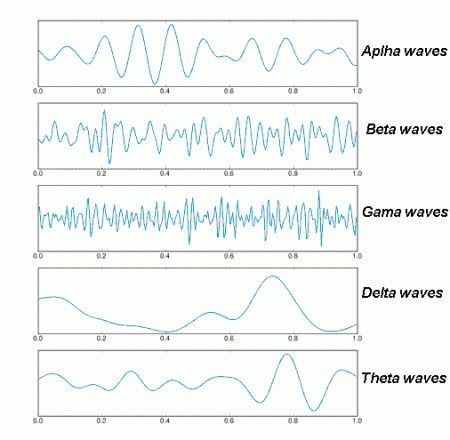
Theta brainwaves are associated with dreaming and REM-stage sleep and sometimes light sleep. This is where brain activity pulses anywhere from 4 to 7 times per second.
But theta also occurs several times throughout the day.
If you’ve ever “zoned out” while driving or otherwise went on mental “auto pilot”, that means you entered theta.
Likewise, if you’ve ever gotten into the “flow” while jogging, that’s also theta. Deep meditation is another example.
Theta can be used for creative flow states, where ideas seem to come effortlessly. Theta is also exploited in hypnosis as well as several accelerated learning programs.
That theta waves are associated with both REM sleep and hypnosis strongly suggests that a dream state is, in fact, fertile ground for learned behavior. Memory, cognition and executive function are all present during dreaming, although to what degree may vary from person to person, from night to night, and even from dream to dream.
Lucid dreams, for example, include very hightened degrees of cognition and executive function as well as, of course, memory, and are often associated with alpha waves which are also associated hypnosis.
Response to Reason #2
The situational details of a dream are shaped primarily by the structure of the brain itself, which cannot be remotely altered. In fact, at present it cannot even be interfaced with for passive reading, much less active manipulation.
The situational details of a dream are created by associations of neurons. There are billions and billions of neurons in the brain and each neuron is connected to about 10,000 others. The associating neurons that create a dream fire in the same way that they fire when they create everything from waking thought to autonomic activity. They, therefore, can be infuenced and manipulated by sensory input from external sources during dream time in exactly the same way that they can be manipulated during waking time, although it is more akin to sentient subliminal manipulation than to manipulation of conscious thought.
Fact, also, is that at the present time the brain CAN be interfaced with for passive reading. A scientist named Yukiyasu Kamitani in Kyoto, Japan has led a team that can "read your mind" using MRI scans.
www.newscientist.com...
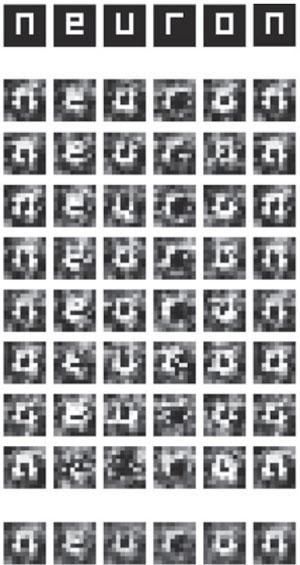
Brain scanning can now extract information directly from the brain: the subject read the word "neuron" at the top, and software working with the brain scan images reconstructed the word
...............
As fMRI technology improves, Kamitani adds that an image could potentially be split into many more pixels, producing much higher quality images, and even colour images.
The next step is to find out if it is possible to image things that people are thinking of - as well as what they are looking at - Haynes says it may be possible to "make a videotape of a dream".
This is a fascinating new development in our ability to directly access someone's thoughts, be they awake or asleep. When the equipment is available to reveal to a therapist, in real time, what a dreamer is dreaming, then infiltrating and manipulating that dream is possible.
And what of the true power of dreams?
Carey Morewedge of Carnegie Mellon University has done several studies of how dreams influence our behavior.
www.usnews.com...
In another study, Morewedge and his colleagues wanted to explore how dreams might influence people's waking behavior. A total of 182 commuters at a Boston train station were asked to imagine that one of four possible scenarios had happened the night before a scheduled airline trip:
The national threat level was raised to orange, indicating a high risk of terrorist attack;
they consciously thought about their plane crashing;
they dreamed about a plane crash;
or a real plane crash occurred on the route they planned to take.
A dream of a plane crash was more likely to affect travel plans than either thinking about a crash or a government warning, and the dream of a plane crash produced a similar level of anxiety as did an actual crash, Morewedge found.
Reasonably or not, the psychological impact of dreams on waking behavior is indisputable.
So, to quickly review my three original questions:
1. Can dreams be influenced and manipulated by sensory stimuli, such as sound, from an external source?
Yes. External stimuli can be incorporated into a dream and, thereby, direct its progress.
2. Can the dreams of the dreamer be understood, in real time, by an external observer?
Yes. Although the technology is not in place yet, but it is being developed.
3. Can an external observer, then, apply sensory stimuli from an external source to influence and manipulate the dreams of the dreamer?
Yes.
I'll be using my 24 hour extension for this post- reading a bit too slow tonight.
Defense of Reason 1: Brain function during the dream state is not designed to support learning
On Lucid Dreaming
Lucid dreams are internally controlled, not externally controlled
As my opponent points out, the practice of Lucid Dreaming does allow for memory, cognition, and increased executive function in dreams. This is possible because the Dorsolateral Prefrontal Cortex (DL-PFC), which plays a vital role in those functions, is not deactivated as it is during normal dreaming.
This is irrelevant however, beacause an external source cannot manipulate your dreams while your DL-PFC is active. Without the DL-PFC shut down, as it is during normal dreaming, the dreamer is aware that the experience is not real, has much stronger control over the course of the dream, and can make reasonable judgements. In other words, during a lucid dream, you are no longer dealing just with the subconscious. A lucid dreamer is internally manipulating the dream and an external source cannot override this.
Lucid Dreaming and Hypnosis
The above may not ring true immediately. As my opponent has mentioned, hypnosis and lucid dreaming are characterized by similar brainwave patterns, and therefore the mind of a lucid dreamer should be similiar to that of a subject under hypnosis.
But this point only reinforces what I have said about lucid dreams. The mind of the lucid dreamer and hypnosis subject are similar; they are similiarly conscious and similiarly in control, because there is more to hypnosis than what we all learned at the county fair.
Dr. Theodore Barber, who has been credited by some for bringing hypnosis into the realm of mainstream psychology, disputed the very existence of a hypnotic state, and attributed its function to the expectations of the subject. Behavioral hypnotherapy rarely resorts to direct suggestion of symptom removal anymore, and now employs a much more cognitive, socratic approach. In other words, hypnosis is essentially a placebo- a mood setter for a conscious dialogue between an individual who wants to change and a therapist; The subject chooses to internally manipulate his experience.
Hynosis
How's that for an obituary? Barber must have really been committed to his support for my position.
Timescales in Dreams
It should also be noted that the eye-movement experiments performed by Stephen LaBerge which my opponent mentioned without linking us to were performed in a lucid-dreaming state and are not necessarily representative of the more relevant "normal" dream state (see 3rd paragraph under scientific history in the Lucid Dreaming link I presented).
Normal dreams, even if the experience might seem to last an hour or more to the dreamer, normally only last between 5 and 15 minutes. Last but not least, as documented under the heading "perception of time" in that article on lucid dreaming, please note that while time can pass normally in a lucid dream, in a later recreation of the experiments my opponent referred to, it was shown that physical activities can actually take longer in a dream (knee bends took 44% longer to be completed in a lucid dream). This means that even lucid dreams cannot provide accurate practice for waking life.
So there go lucid dreaming, hypnosis, and the brainwave evidence linking them- a proper understanding of those states reveals that the manipulation ultimately has to be internal rather than external.
Bothering strangers at the bus station isn't dream research
Please also note that the bus station study did not actually measure the actual effects of dreams on people who had dreamed them, but only asked people to speculate on what the effect would be. Next time a pollster bugs you, answer carefully- my opponent might end up quoting you.
Defense of Reason 2: Dreams are shaped by factors which cannot be externally manipulated
Stimuli are distorted during sleep
This is precisely correct. And alas, you cannot remotely rearrange a person's neurons.
In the waking life you can trigger them very precisely with stimuli, and thus a seemless experience can be created through stimulation of the senses.
But as I have already mentioned, the areas of your brain which actually detect stimuli are less active during sleep and those used for memory and imagination are much more active. This creates a severe distortion of stimuli which partially randomizes the effects of stimuli on the dreamer's consciousness, making it impossible to dictate the dreamer's experience.
Stimuli do not necessarily enter dreams directly
My opponent's own source is clear on this point
The effect was extremely general and chiefly emotional. No specific details were caused to manifest in the dreams. All they really proved is that pleasant stimuli mean a pleasant mood and generally positive thoughts, while unpleasant ones mean stress and generally negative thoughts.
There is an evolutionary pressure on the brain not to be too accepting of stimuli during sleep
Of course the functions of something as complex as the brain are rarely arbitrary- there's a good reason why the incorporation of external stimuli into dreams should be limited. When you hear something coming to eat you in your sleep, you should wake up and escape from the predator, not have a dream about trying to escape from the predator. Your brain keeps monitoring your senses just enough that you can be startled awake; it does not make the same detailed recognitions and associations that it does when you are awake.
Additionally, if sensory information were primarily shaping dreams, maintaining a consistent sleeping environment would cause dreams to become stagnant and repetitive, preventing them from addressing the issues of the waking life that the dreamer really needs to be confronting.
In addition to being unable to "write" a dream, we are unable even to "read" a dream.
While an experiment has shown that fMRI, which has several relevant disadvantages can identify simple black and white images (in poor detail and quality) while an individual is actually looking at them, there is no evidence that they can read dreams.
My opponent's own source clearly says that it is not currently known if this technique will work for images that are only being imagined.
My opponent began his last post with what appeared to be a claim that as of yet undeveloped technologies could be a catchall for his position, but clearly the burden of proof is with my opponent to prove that such technologies are possible. His source says that the experiments which would produce such proof have not been done yet. We cannot simply assume that the "next step" is a step that can actually be made though. There is strong reason to believe that it cannot be.
On Lucid Dreaming
Lucid dreams are internally controlled, not externally controlled
As my opponent points out, the practice of Lucid Dreaming does allow for memory, cognition, and increased executive function in dreams. This is possible because the Dorsolateral Prefrontal Cortex (DL-PFC), which plays a vital role in those functions, is not deactivated as it is during normal dreaming.
This is irrelevant however, beacause an external source cannot manipulate your dreams while your DL-PFC is active. Without the DL-PFC shut down, as it is during normal dreaming, the dreamer is aware that the experience is not real, has much stronger control over the course of the dream, and can make reasonable judgements. In other words, during a lucid dream, you are no longer dealing just with the subconscious. A lucid dreamer is internally manipulating the dream and an external source cannot override this.
Lucid Dreaming and Hypnosis
The above may not ring true immediately. As my opponent has mentioned, hypnosis and lucid dreaming are characterized by similar brainwave patterns, and therefore the mind of a lucid dreamer should be similiar to that of a subject under hypnosis.
But this point only reinforces what I have said about lucid dreams. The mind of the lucid dreamer and hypnosis subject are similar; they are similiarly conscious and similiarly in control, because there is more to hypnosis than what we all learned at the county fair.
Dr. Theodore Barber, who has been credited by some for bringing hypnosis into the realm of mainstream psychology, disputed the very existence of a hypnotic state, and attributed its function to the expectations of the subject. Behavioral hypnotherapy rarely resorts to direct suggestion of symptom removal anymore, and now employs a much more cognitive, socratic approach. In other words, hypnosis is essentially a placebo- a mood setter for a conscious dialogue between an individual who wants to change and a therapist; The subject chooses to internally manipulate his experience.
Hynosis
Barber argued that responses to hypnotic suggestions were mediated to a large extent by a "positive cognitive set" consisting of positive expectations, attitudes, and motivation.
Barber et al., noted that similar factors appeared to mediate the response both to hypnotism and to cognitive-behavioral therapy (CBT)
Comparisons between hypnotized and non-hypnotized subjects suggest that if "hypnotic trance" does exist it probably only accounts for a very small proportion of the effects normally attributed to hypnotic suggestion, most of which can be replicated without the use of a hypnotic induction technique.
Theodore X. Barber, a psychologist who became a leading critic of hypnosis after his scientific studies concluded that the power of suggestion often worked nearly as well, died on Sept. 10 at a hospital in Framingham, Mass.
How's that for an obituary? Barber must have really been committed to his support for my position.
Timescales in Dreams
It should also be noted that the eye-movement experiments performed by Stephen LaBerge which my opponent mentioned without linking us to were performed in a lucid-dreaming state and are not necessarily representative of the more relevant "normal" dream state (see 3rd paragraph under scientific history in the Lucid Dreaming link I presented).
Normal dreams, even if the experience might seem to last an hour or more to the dreamer, normally only last between 5 and 15 minutes. Last but not least, as documented under the heading "perception of time" in that article on lucid dreaming, please note that while time can pass normally in a lucid dream, in a later recreation of the experiments my opponent referred to, it was shown that physical activities can actually take longer in a dream (knee bends took 44% longer to be completed in a lucid dream). This means that even lucid dreams cannot provide accurate practice for waking life.
So there go lucid dreaming, hypnosis, and the brainwave evidence linking them- a proper understanding of those states reveals that the manipulation ultimately has to be internal rather than external.
Bothering strangers at the bus station isn't dream research
Please also note that the bus station study did not actually measure the actual effects of dreams on people who had dreamed them, but only asked people to speculate on what the effect would be. Next time a pollster bugs you, answer carefully- my opponent might end up quoting you.
Defense of Reason 2: Dreams are shaped by factors which cannot be externally manipulated
Stimuli are distorted during sleep
The situational details of a dream are created by associations of neurons.
This is precisely correct. And alas, you cannot remotely rearrange a person's neurons.
In the waking life you can trigger them very precisely with stimuli, and thus a seemless experience can be created through stimulation of the senses.
But as I have already mentioned, the areas of your brain which actually detect stimuli are less active during sleep and those used for memory and imagination are much more active. This creates a severe distortion of stimuli which partially randomizes the effects of stimuli on the dreamer's consciousness, making it impossible to dictate the dreamer's experience.
Stimuli do not necessarily enter dreams directly
My opponent's own source is clear on this point
The different scents were not incorporated literally into a person's dreams, said study author Boris Stuck of the University Hospital Mannheim in Germany.
"There was hardly any kind of a dream dealing with smelling and tasting," he said.
Rather, the pleasant odor appeared to affect the subjects' emotional ratings of their dreams.
The effect was extremely general and chiefly emotional. No specific details were caused to manifest in the dreams. All they really proved is that pleasant stimuli mean a pleasant mood and generally positive thoughts, while unpleasant ones mean stress and generally negative thoughts.
There is an evolutionary pressure on the brain not to be too accepting of stimuli during sleep
Of course the functions of something as complex as the brain are rarely arbitrary- there's a good reason why the incorporation of external stimuli into dreams should be limited. When you hear something coming to eat you in your sleep, you should wake up and escape from the predator, not have a dream about trying to escape from the predator. Your brain keeps monitoring your senses just enough that you can be startled awake; it does not make the same detailed recognitions and associations that it does when you are awake.
Additionally, if sensory information were primarily shaping dreams, maintaining a consistent sleeping environment would cause dreams to become stagnant and repetitive, preventing them from addressing the issues of the waking life that the dreamer really needs to be confronting.
In addition to being unable to "write" a dream, we are unable even to "read" a dream.
While an experiment has shown that fMRI, which has several relevant disadvantages can identify simple black and white images (in poor detail and quality) while an individual is actually looking at them, there is no evidence that they can read dreams.
My opponent's own source clearly says that it is not currently known if this technique will work for images that are only being imagined.
The next step is to find out if it is possible to image things that people are thinking of - as well as what they are looking at
My opponent began his last post with what appeared to be a claim that as of yet undeveloped technologies could be a catchall for his position, but clearly the burden of proof is with my opponent to prove that such technologies are possible. His source says that the experiments which would produce such proof have not been done yet. We cannot simply assume that the "next step" is a step that can actually be made though. There is strong reason to believe that it cannot be.
- fMRI images display input to an area of the brain much more strongly than output. Therefore the ability to detect an image that is being
viewed does not imply the ability to detect an image that is only being imagined.
- fMRI has a temporal resolution of several seconds, so even if imagined images could be read, they would be a series of still shots several seconds
apart and received only after the image has come and gone for the dreamer. (and even if the technique could be applied to other senses, this would
make hearing what the dreamer is hearing pretty much out of the question).
- fMRI measures bloodflow, which lags behind electrical signals, creating a lag between the dream and the observation.
- bloodflow can be affected by non-neural factors, obviously including emotions such as fear. This means that when you leave the calm lab and enter a
turbulent dream, your fMRI gets even harder to read.
- fMRI has a poor signal to noise ratio, and must be averaged with repeated imagings to achieve clear pictures. That's fine if you have exactly the same dream again and again, but otherwise, it's a problem.
Many moons ago (in fact, it was a couple of Jupiters ago) I locked my keys in the car. Luckily, it was an older car and I had a friend who knew how
to open a car door lock using a wire coat hanger. I vowed then never to leave the house with only one set of car keys. From that day forward, every
time I bought a new car that came with one set of keys, my first drive as the new owner was to a local hardware store and have a second set of keys
made.
Then, about three years ago, I'd just bought a car from my cousin -- a Chevy hatchback -- and I hadn't made a second set of keys yet. It had snowed during the night so I started the engine, turned up the heat and defrosters, grabbed my trusty ice scraper and exited the car. Out of pure habit, as I shut the door behind me, I locked it.
So there was my car: locked, with the keys inside and the engine running.
As I muttered, repeatedly, "may fortune favor the foolish", I was able to swing open the rear side window and stretch my coat-less, skinny arm in far enough to reach the door's lock. All was well. But how could I, so unthinkingly, lock the door behind me when I knew that I did not have a second key?
Because so much of our daily moment-to-moment behavior is not governed by our brains' higher executive functions but, rather, by entrenched motor and emotional habits.
While the dorsal lateral prefrontal cortex is often (but not always) de-activated during normal sleep, this does not mean that we are completely without the cognitive attributes that the DL-PFC furnishes so well. The brain is de-activated at the onset of sleep, and re-activated to usher in the dream time. But...
Now, before my opponent, once again, alleges that my own sources support his argument, let's remember what we are debating here. The question at hand is whether or not external stimuli, in a therapeutic setting, can initiate sustainable neural pathways that can be effective in shaping waking behavior. The character of the waking behavior at issue is not born of executive function, it is born of established neural associations put in place by emotional or intellectual trauma.
We are discussing "learned behavior", in this context, as that behavior which is learned through experience and/or repetition, not intellectual study. At first, learning how to drive, for example, requires executive function; that is to say, goal-directed behavior. But once it has been learned, driving becomes, well, like riding a bicycle. I need my DL-PFC to be wide-awake if I am to choose the right or left fork in the road. (Instinct alone wont help me to decide the correct turn, no matter how much I tell her I know where I'm going.) But I can slam on the brakes quite instinctively when that Canadian goose darts out in front of me.
When dealing with waking behavior that is not the product of executive functioning (e.g. most of it), we are dealing with learned responses to familiar situations -- however profound or superficial that familiarity may be. Much like the "muscle memory" that allows an experienced driver to slam on the brakes in an emergency, repetition and/or trauma can both establish and alter an emotional and/or psychological predilection for self-destructive behavior.
Since the therapy that we are discussing focuses on learned emotional and psychological responses to newly encountered situations, a fully activated, wide-awake DL-PFC is not required because emotional and psychological habits are, by definition, not executive functions.
Emotion and the psyche are not only active during dream time, but can be active to a heightened degree as compared to waking time. Emotions such as anger and fear can be quite powerful during dreams. Rationality as we experience a dream -- while often not "executive" in the stricted sense -- is obviously present, as well.
That the sort of learned behavior that would be deemed worthy of therapeutic attention is emotional in nature is no surprise. Nor is it irrational to propose a therapy for such behavior that would involve dream manipulation, when the neural architecture that prompts our memories is exposed to heightened emotional domination. The only question remaining is: Can it be done?
While my opponent has offered specific rebuttals to specific postulates, they all rely on the fact or fallacy of the crux of his refutation, which is expressed with this paragraph:
The behavioral modifications that therapy would seek are not sensory/motor coordinations such as the "muscle memory" of slamming on the brakes. They are, rather, emotional and psychological responses to new circustances; responses such as phobias, resentments and other sociopathologies. The same neural avenues that guide our waking behavior are traveled during our dreaming behavior. The difference between the two is the degree of control that we can excercise over how we travel them.
But a stunted executive functioning effects only the habitual responses that we, firstly, are aware of and that we, secondly, are actually able to control. And, as I've stated previously, the behaviors we are concerned with -- the ones that are deemed worthy of therapeutic attention -- are those that have proven to be elusive to executive control.
This type of dream therapy is, in no way, intended to be presented as a "quick fix" to behavioral problems which waking therapies have failed to solve. No surgical "personality transplant" is expected nor promised. What it does offer, however, is a way to access and influence the memory pathways that govern psycho-emotional responses to everyday situations, and to access them in a way that is effective not in spite of the lack of keen executive functioning present, but precisely because it circumvents the obstructions to the deeper psyche that executive functioning all to often erect.
Some -- my opponent included, I'm sure -- may conclude that the pursuit of this methodology is fruitless because dreams very often occur exclusively in the areas of the brain that support only short-term memory. How can neural pathways, predisposed by a lifetime of experience, be effectively influenced by dreams whose memory doesn't even survive the morning alarm? The story of "the birds of Tribecca", next installment.
Then, about three years ago, I'd just bought a car from my cousin -- a Chevy hatchback -- and I hadn't made a second set of keys yet. It had snowed during the night so I started the engine, turned up the heat and defrosters, grabbed my trusty ice scraper and exited the car. Out of pure habit, as I shut the door behind me, I locked it.
So there was my car: locked, with the keys inside and the engine running.
As I muttered, repeatedly, "may fortune favor the foolish", I was able to swing open the rear side window and stretch my coat-less, skinny arm in far enough to reach the door's lock. All was well. But how could I, so unthinkingly, lock the door behind me when I knew that I did not have a second key?
Because so much of our daily moment-to-moment behavior is not governed by our brains' higher executive functions but, rather, by entrenched motor and emotional habits.
While the dorsal lateral prefrontal cortex is often (but not always) de-activated during normal sleep, this does not mean that we are completely without the cognitive attributes that the DL-PFC furnishes so well. The brain is de-activated at the onset of sleep, and re-activated to usher in the dream time. But...
It is selectively re-activated.
That is, it has been re-activated in a way that allows it to deal with internal sensations as opposed to external sensations.
So only part of the brain wakes up and it seems to be even more active than it is during waking. As some areas are becoming re-activated some are becoming de-activated.
More specifically:
The dorsal lateral pre-frontal cortex becomes de-activated when we are dreaming. This is the part of the brain responsible for decisions or volition. This is also the rational part of the brain, however there are other areas of the brain that deal with rationality so we don’t loose all rational thinking when we dream.
www.realmeaningofdreams.com...
Now, before my opponent, once again, alleges that my own sources support his argument, let's remember what we are debating here. The question at hand is whether or not external stimuli, in a therapeutic setting, can initiate sustainable neural pathways that can be effective in shaping waking behavior. The character of the waking behavior at issue is not born of executive function, it is born of established neural associations put in place by emotional or intellectual trauma.
We are discussing "learned behavior", in this context, as that behavior which is learned through experience and/or repetition, not intellectual study. At first, learning how to drive, for example, requires executive function; that is to say, goal-directed behavior. But once it has been learned, driving becomes, well, like riding a bicycle. I need my DL-PFC to be wide-awake if I am to choose the right or left fork in the road. (Instinct alone wont help me to decide the correct turn, no matter how much I tell her I know where I'm going.) But I can slam on the brakes quite instinctively when that Canadian goose darts out in front of me.
When dealing with waking behavior that is not the product of executive functioning (e.g. most of it), we are dealing with learned responses to familiar situations -- however profound or superficial that familiarity may be. Much like the "muscle memory" that allows an experienced driver to slam on the brakes in an emergency, repetition and/or trauma can both establish and alter an emotional and/or psychological predilection for self-destructive behavior.
Since the therapy that we are discussing focuses on learned emotional and psychological responses to newly encountered situations, a fully activated, wide-awake DL-PFC is not required because emotional and psychological habits are, by definition, not executive functions.
Emotion and the psyche are not only active during dream time, but can be active to a heightened degree as compared to waking time. Emotions such as anger and fear can be quite powerful during dreams. Rationality as we experience a dream -- while often not "executive" in the stricted sense -- is obviously present, as well.
New research into dreams and the brain from a computerized imaging technique called PET (positron emission tomography) in the mid-1990s showed that Rapid Eye Movement dreaming begins in the limbic region of the brain...the most ancient part, which controls emotions.
So if the emotional region of the brain is highly active during dreaming this goes a long way in explaining why our dreams have such high emotional content.
(Same citation as above.)
That the sort of learned behavior that would be deemed worthy of therapeutic attention is emotional in nature is no surprise. Nor is it irrational to propose a therapy for such behavior that would involve dream manipulation, when the neural architecture that prompts our memories is exposed to heightened emotional domination. The only question remaining is: Can it be done?
While my opponent has offered specific rebuttals to specific postulates, they all rely on the fact or fallacy of the crux of his refutation, which is expressed with this paragraph:
Thus during dreams sensory/motor coordination cannot be trained, responses to stimulus cannot be conditioned for the waking life because stimuli are processed differently, and desired behavior patterns cannot be practiced because the part of the brain used for directing behavior is offline and you are basically on auto-pilot, giving only instinctive responses to your imagined environment.
The behavioral modifications that therapy would seek are not sensory/motor coordinations such as the "muscle memory" of slamming on the brakes. They are, rather, emotional and psychological responses to new circustances; responses such as phobias, resentments and other sociopathologies. The same neural avenues that guide our waking behavior are traveled during our dreaming behavior. The difference between the two is the degree of control that we can excercise over how we travel them.
But a stunted executive functioning effects only the habitual responses that we, firstly, are aware of and that we, secondly, are actually able to control. And, as I've stated previously, the behaviors we are concerned with -- the ones that are deemed worthy of therapeutic attention -- are those that have proven to be elusive to executive control.
This type of dream therapy is, in no way, intended to be presented as a "quick fix" to behavioral problems which waking therapies have failed to solve. No surgical "personality transplant" is expected nor promised. What it does offer, however, is a way to access and influence the memory pathways that govern psycho-emotional responses to everyday situations, and to access them in a way that is effective not in spite of the lack of keen executive functioning present, but precisely because it circumvents the obstructions to the deeper psyche that executive functioning all to often erect.
Some -- my opponent included, I'm sure -- may conclude that the pursuit of this methodology is fruitless because dreams very often occur exclusively in the areas of the brain that support only short-term memory. How can neural pathways, predisposed by a lifetime of experience, be effectively influenced by dreams whose memory doesn't even survive the morning alarm? The story of "the birds of Tribecca", next installment.
Since The Vagabond and I got a late start and it's been 26 hours since my previous installment, in the interests of moving the debate along I'll go
ahead and post a very brief installment.
Emotional and psychological trauma can do strange things with our memories. (I don't have a link to this story, so I am relying on my memory, ironically.) In the aftermath of 9-11, a child psychologist had asked a certain child, who had witnessed the burning of the World Trade Center towers, what she remembered most about that morning. "The birds," she replied. "The birds? What birds?", asked the doctor. "The birds that flew from the towers," she replied.
Birds are common creatures, so it is interesting that the child would refer to them as the most memorable aspect of an event that involved the burning of two enormous office buildings. Somewhere in her mind she knows that they were not birds but people, and that they were not flying but falling. Yet, in her recall of that day, they were very memorable and very ordinary birds.
One possible application of the type of dream reading and manipulation that we are discussing is the access it may give to areas of the brain and, thus, the psyche from whence dreams normally arise. Repressed details of traumatic experiences can be brought into the light and dealt with directly. Understanding the root of one's neuroses is a large step toward undoing their negative effects.
Short-term memory is short-term because it fails to encode itself in the neural pathways that guide our everyday behaviors and responses to stimuli. You may walk by a shop window one morning and notice that last night's winning daily lottery numbers were 5-2-7. If these numbers mean nothing to you, you will probably forget them within minutes. But if your birthday happens to May 27th, you will probably remember those winning numbers at least until dinner time.
What will turn a possible short-term memory into a long-term memory is how it changes us emotionally at the time. While some sources, as I've pointed out, claim that dreams occur in a part of the brain that supports only short-term memory, we all know from experience, I trust, that some dreams can be very memorable indeed, especially if they occur shortly before we are awoken. Since the neural pathways that we travel during dream time are largely the same pathways traveled during waking time, powerful dreams can encode those pathways in the same way that waking experiences do.
Emotional and psychological trauma can do strange things with our memories. (I don't have a link to this story, so I am relying on my memory, ironically.) In the aftermath of 9-11, a child psychologist had asked a certain child, who had witnessed the burning of the World Trade Center towers, what she remembered most about that morning. "The birds," she replied. "The birds? What birds?", asked the doctor. "The birds that flew from the towers," she replied.
Birds are common creatures, so it is interesting that the child would refer to them as the most memorable aspect of an event that involved the burning of two enormous office buildings. Somewhere in her mind she knows that they were not birds but people, and that they were not flying but falling. Yet, in her recall of that day, they were very memorable and very ordinary birds.
One possible application of the type of dream reading and manipulation that we are discussing is the access it may give to areas of the brain and, thus, the psyche from whence dreams normally arise. Repressed details of traumatic experiences can be brought into the light and dealt with directly. Understanding the root of one's neuroses is a large step toward undoing their negative effects.
Short-term memory is short-term because it fails to encode itself in the neural pathways that guide our everyday behaviors and responses to stimuli. You may walk by a shop window one morning and notice that last night's winning daily lottery numbers were 5-2-7. If these numbers mean nothing to you, you will probably forget them within minutes. But if your birthday happens to May 27th, you will probably remember those winning numbers at least until dinner time.
What will turn a possible short-term memory into a long-term memory is how it changes us emotionally at the time. While some sources, as I've pointed out, claim that dreams occur in a part of the brain that supports only short-term memory, we all know from experience, I trust, that some dreams can be very memorable indeed, especially if they occur shortly before we are awoken. Since the neural pathways that we travel during dream time are largely the same pathways traveled during waking time, powerful dreams can encode those pathways in the same way that waking experiences do.
My apologies for the missed post. I wish I had a good alien abduction story, but in truth I just mistakenly thought I had more time than I did to
sober up before posting.
First and foremost, I would like to point out that evidence that cannot be presented for examination is no evidence. If my opponent cannot document any facts whatsoever about the girl who remembered seeing people as birds on 9/11, what good is it? I sympathize for my opponent, who has been asked to prove something that just isn't true and thus is being constantly stabbed in the back by his own sources, but that's all the more reason that we cannot accept hearsay. Who knows what relevant facts my opponent's DL-PFC might have discarded as irrelevant when he heard that story in the past?
Rebuttal
I have established and at this point stand unchallenged on the fact that lucid dreaming, like hypnosis, is an internally controlled experience.
This narrows the topic to normal, non-lucid dreams. As we have established, consciously controlled behavior cannot be trained during such dreams because of the deactivation of the DL-PFC (which, as mentioned at the link provided in my first post, is interconnected with the various other parts of the brain which contribute to rational thinking, and functions cooperatively with them, so without it, they aren't much good. This is clearly shown by the IMMENSE gap between lucid and non-lucid dream experiences).
My opponent suggests that normal non-lucid dreams become memorable if they are emotionally significant enough, even though by his own admission the parts of the brain responsible for such dreams do not support long-term memory and thus such dreams do not prompt the development of neural pathways.
We've all had memorable dreams, no doubt, and they do usually seem to happen before you wake up.
In my experience they are almost invariably about being late for work, and are usually followed by waking up with sun pouring through the window and realizing that I really am late for work.
So does my opponent know better than the very experts that he has relied on for his information? Are these dreams the key? Or does his own observation that memorable dreams are most common before waking suggest that they are remembered because you are in the process of waking up and activity in your DL-PFC is increasing again, meaning that the dream either becomes lucid is or interrupted by becoming awake? The later clearly makes more sense. Thus such dreams are no help to my opponent's case, as the dremer 1. Has internal control of the experience, and 2. Has a conscious understanding of the experience and thus will not be blindly subconsciously compelled by it, rather it will be subject to the same conscious behavior patterns which hve previously led the subject into maladaptive behavior despite "knowing better".
Meanwhile, back in the realm of more releavant, non-lucid dreams, my opponent's argument on emotional pressure is irrelevant because the subject is not creating new long-term associations and memories.
So here we are, each side has but one post remaining now in this debate, and so far all of the evidence says that dreams cannot be shaped because stimuli don't translate directly into the dream. My opponent's own sources told us that, and in two posts since he has not challenged that fact.
We have a nice little argument going on whether or not your dreams are even relevant to your behavior, but the only person (including our sources) suggesting that memories and associations are built there is my opponent.
And on top of that, we can see that there are valid biological reasons which my opponent cannot challenge which create pressure on the brain to be resistant to such things, which suggests that as we learn more about the brain and develop new technologies to support such study, we will only be further amazed by the stable organization of the brain, which has thus far proven secure against the kind of manipulation my opponent suggests.
Dreams are precursors to change, not engines of change
Dreams are meant to compliment the waking life, not override it, and the waking life was intended to be governed by our choices. As I have explained before, dreams put us in touch with our feelings and provide an occasion for change, but not the change themselves. It is the awakened mind, and our conscious control of our real experiences, which actually cause change.
Lest we forget, that's how psychology became interested in dreams- they were understood to be analytical tools long before anyone had the idea of using them to rewire a person's behavioral patterns. Even before such a discipline as psychology existed, it was understood that normal dreams could be analyzed and reveal prompts for conscious, internally controlled change in the waking life, and this is preseved in many traditions of religion and mysticism.
A second, contrasting use of dreams also developed long ago. The West, concerned with the waking world and the material preferred to analyze non-lucid dreams for meaning in the real world.
But one sect of Buddhists, seeing the waking world as just another dream state and thus having less fixation on the material, were drawn towards lucid dreaming, practiced in the context of Dream Yoga and the attendant ability to have internally controlled mental and spiritual exercise in sleep as in waking life.
Both approaches accept, as psychotherapy generally accepts, that individuals who do not embrace and participate in changing themselves will not change. Change occurs in lucid moments, and these moments are internally dominated. Normal, non-lucid dreams, even if they could be hijacked with external stimuli, are not useful vectors for change.
If your parents told you once they told you a thousand times, YOU are responsible for your behavior. Whatever support you receive from professionals, ultimately you must modify your behavior. There is not an audio tape, or a lightshow, or a special computer that is going to come into your dreams and make you the person you want to be.
Edit to fix link.
[edit on 25-2-2009 by MemoryShock]
First and foremost, I would like to point out that evidence that cannot be presented for examination is no evidence. If my opponent cannot document any facts whatsoever about the girl who remembered seeing people as birds on 9/11, what good is it? I sympathize for my opponent, who has been asked to prove something that just isn't true and thus is being constantly stabbed in the back by his own sources, but that's all the more reason that we cannot accept hearsay. Who knows what relevant facts my opponent's DL-PFC might have discarded as irrelevant when he heard that story in the past?
Rebuttal
I have established and at this point stand unchallenged on the fact that lucid dreaming, like hypnosis, is an internally controlled experience.
This narrows the topic to normal, non-lucid dreams. As we have established, consciously controlled behavior cannot be trained during such dreams because of the deactivation of the DL-PFC (which, as mentioned at the link provided in my first post, is interconnected with the various other parts of the brain which contribute to rational thinking, and functions cooperatively with them, so without it, they aren't much good. This is clearly shown by the IMMENSE gap between lucid and non-lucid dream experiences).
My opponent suggests that normal non-lucid dreams become memorable if they are emotionally significant enough, even though by his own admission the parts of the brain responsible for such dreams do not support long-term memory and thus such dreams do not prompt the development of neural pathways.
(emphasis mine)
While some sources, as I've pointed out, claim that dreams occur in a part of the brain that supports only short-term memory, we all know from experience, I trust, that some dreams can be very memorable indeed, especially if they occur shortly before we are awoken.
We've all had memorable dreams, no doubt, and they do usually seem to happen before you wake up.
In my experience they are almost invariably about being late for work, and are usually followed by waking up with sun pouring through the window and realizing that I really am late for work.
So does my opponent know better than the very experts that he has relied on for his information? Are these dreams the key? Or does his own observation that memorable dreams are most common before waking suggest that they are remembered because you are in the process of waking up and activity in your DL-PFC is increasing again, meaning that the dream either becomes lucid is or interrupted by becoming awake? The later clearly makes more sense. Thus such dreams are no help to my opponent's case, as the dremer 1. Has internal control of the experience, and 2. Has a conscious understanding of the experience and thus will not be blindly subconsciously compelled by it, rather it will be subject to the same conscious behavior patterns which hve previously led the subject into maladaptive behavior despite "knowing better".
Meanwhile, back in the realm of more releavant, non-lucid dreams, my opponent's argument on emotional pressure is irrelevant because the subject is not creating new long-term associations and memories.
So here we are, each side has but one post remaining now in this debate, and so far all of the evidence says that dreams cannot be shaped because stimuli don't translate directly into the dream. My opponent's own sources told us that, and in two posts since he has not challenged that fact.
We have a nice little argument going on whether or not your dreams are even relevant to your behavior, but the only person (including our sources) suggesting that memories and associations are built there is my opponent.
And on top of that, we can see that there are valid biological reasons which my opponent cannot challenge which create pressure on the brain to be resistant to such things, which suggests that as we learn more about the brain and develop new technologies to support such study, we will only be further amazed by the stable organization of the brain, which has thus far proven secure against the kind of manipulation my opponent suggests.
Dreams are precursors to change, not engines of change
Dreams are meant to compliment the waking life, not override it, and the waking life was intended to be governed by our choices. As I have explained before, dreams put us in touch with our feelings and provide an occasion for change, but not the change themselves. It is the awakened mind, and our conscious control of our real experiences, which actually cause change.
Lest we forget, that's how psychology became interested in dreams- they were understood to be analytical tools long before anyone had the idea of using them to rewire a person's behavioral patterns. Even before such a discipline as psychology existed, it was understood that normal dreams could be analyzed and reveal prompts for conscious, internally controlled change in the waking life, and this is preseved in many traditions of religion and mysticism.
A second, contrasting use of dreams also developed long ago. The West, concerned with the waking world and the material preferred to analyze non-lucid dreams for meaning in the real world.
But one sect of Buddhists, seeing the waking world as just another dream state and thus having less fixation on the material, were drawn towards lucid dreaming, practiced in the context of Dream Yoga and the attendant ability to have internally controlled mental and spiritual exercise in sleep as in waking life.
Both approaches accept, as psychotherapy generally accepts, that individuals who do not embrace and participate in changing themselves will not change. Change occurs in lucid moments, and these moments are internally dominated. Normal, non-lucid dreams, even if they could be hijacked with external stimuli, are not useful vectors for change.
If your parents told you once they told you a thousand times, YOU are responsible for your behavior. Whatever support you receive from professionals, ultimately you must modify your behavior. There is not an audio tape, or a lightshow, or a special computer that is going to come into your dreams and make you the person you want to be.
Edit to fix link.
[edit on 25-2-2009 by MemoryShock]
As my opponent has not posted, I stand on my previous post as my closing and await the decision of the judges.
This debate is re-opened for closing arguments in light of the following:
If you change your date format to "r" in MemCenter, you will see that The Vagabond posted at Wed, 25 Feb 2009 21:25:06 PST, and the previous post timestamp was Tue, 24 Feb 2009 21:25:32. So he posted 26 seconds early.
CLOSING ARGUMENT
In my opening statement I asked the three questions that are relevant to the postulate that my esteemed opponent and I are debating. In the main body of this presentation I have answered, as promise, we have seen that the answers to all three of those questions are in the affirmative. Now let us review.
1. Can dreams be influenced and manipulated by sensory stimuli, such as sound, from an external source?
Yes, of course. We've all, I expect, dosed off and experienced an alarm and/or ambient sounds and spoken language becoming intertwined into the narrative of our dreams. I've related the specific anecdotal example of Bob Cunningham "writing" a version of Shortnin' Bread in a dream only to be told that he'd actually heard that version, while dozing, as it was broadcast on The Tonight Show with Johnny Carson.
2. Can the dreams of the dreamer be understood, in real time, by an external observer?
I've shown how the research of Yukiyasu Kamitani, et al, has led to the development of technology that can view the thoughts of his subjects as they occur, and the increasing possibility that dreams can actually be "videotaped", like a movie on a television screen, in the not too distant future. Such tools show remarkable promise for the future of therapy through dream manipulation.
3. Can an external observer, then, apply sensory stimuli from an external source to influence and manipulate the dreams of the dreamer?
This is simply a matter of applying the results of the requisite research to develop methodologies that are safe and effective at the manipulation of dreams. The foundations for the development of such methods are well in place, dispite my opponents assertions to the contrary.
The lasting impact of dreams -- their memorability, if you will -- being associated with their proximity to waking up is not a trivial aspect. It is of major significance because we are discuss dream reading and manipulation that would occur in a clinical setting, where the subject is not neccessarily tucked in for the night but, rather, undergoing a scheduled weekly treatment program. The hightened memory acuity, emotional state and executive functioning of the subject shown to be present in that circumstance is key, not incidental, to the effectiveness of the therapy.
My opponent would have us believe that dreams are but a sideshow to reality; that they have been inconsequential in the development of the psyche and, therefore, shall forever be inconsequential in the forging of our behavior. But the hypothesis that the relationship between the conscious and the subconscious mind is a one-way street is just that; a hypothesis.
The person who has already decided that the dreams can never play a role in the perpetual re-encoding of the neurological landscape that defines who we are, and how we behave on life's large stage, will not be the person who discovers how to do it. I've shown that it can be done if we want it to be done, and the first step toward realizing that goal is to accept that charge. Otherwise dreams will be forever disconnected from "reality", and a significant percentage of the life that we experience is but a dream.
In my opening statement I asked the three questions that are relevant to the postulate that my esteemed opponent and I are debating. In the main body of this presentation I have answered, as promise, we have seen that the answers to all three of those questions are in the affirmative. Now let us review.
1. Can dreams be influenced and manipulated by sensory stimuli, such as sound, from an external source?
Yes, of course. We've all, I expect, dosed off and experienced an alarm and/or ambient sounds and spoken language becoming intertwined into the narrative of our dreams. I've related the specific anecdotal example of Bob Cunningham "writing" a version of Shortnin' Bread in a dream only to be told that he'd actually heard that version, while dozing, as it was broadcast on The Tonight Show with Johnny Carson.
2. Can the dreams of the dreamer be understood, in real time, by an external observer?
I've shown how the research of Yukiyasu Kamitani, et al, has led to the development of technology that can view the thoughts of his subjects as they occur, and the increasing possibility that dreams can actually be "videotaped", like a movie on a television screen, in the not too distant future. Such tools show remarkable promise for the future of therapy through dream manipulation.
3. Can an external observer, then, apply sensory stimuli from an external source to influence and manipulate the dreams of the dreamer?
This is simply a matter of applying the results of the requisite research to develop methodologies that are safe and effective at the manipulation of dreams. The foundations for the development of such methods are well in place, dispite my opponents assertions to the contrary.
My opponent suggests that normal non-lucid dreams become memorable if they are emotionally significant enough, even though by his own admission the parts of the brain responsible for such dreams do not support long-term memory and thus such dreams do not prompt the development of neural pathways.
While some sources, as I've pointed out, claim that dreams occur in a part of the brain that supports only short-term memory, we all know from experience, I trust, that some dreams can be very memorable indeed, especially if they occur shortly before we are awoken.
(emphasis mine)
We've all had memorable dreams, no doubt, and they do usually seem to happen before you wake up.
The lasting impact of dreams -- their memorability, if you will -- being associated with their proximity to waking up is not a trivial aspect. It is of major significance because we are discuss dream reading and manipulation that would occur in a clinical setting, where the subject is not neccessarily tucked in for the night but, rather, undergoing a scheduled weekly treatment program. The hightened memory acuity, emotional state and executive functioning of the subject shown to be present in that circumstance is key, not incidental, to the effectiveness of the therapy.
My opponent would have us believe that dreams are but a sideshow to reality; that they have been inconsequential in the development of the psyche and, therefore, shall forever be inconsequential in the forging of our behavior. But the hypothesis that the relationship between the conscious and the subconscious mind is a one-way street is just that; a hypothesis.
The person who has already decided that the dreams can never play a role in the perpetual re-encoding of the neurological landscape that defines who we are, and how we behave on life's large stage, will not be the person who discovers how to do it. I've shown that it can be done if we want it to be done, and the first step toward realizing that goal is to accept that charge. Otherwise dreams will be forever disconnected from "reality", and a significant percentage of the life that we experience is but a dream.
The Vagabond wins by split decision in what was a very difficult decision by the judges and will advance to the Second Round.
The Judges Comments:
The Judges Comments:
Winner is- Tuning Spork
Opening;
Tuning Spork- Comes into the debate with a very imaginative opening statement.
Vagabond-Comes out fighting. Lays out a very well organized opening statement, and begins case building right away. Vagabond has the edge in opening, but does not offer any outside support for his claims aside from one definition.
Round One;
Tuning Spork- opens by drawing a distinction in regard to the topic. That he need not prove we currently are able to modify behavior by using dreams, only that it can be done, someday. He/she introduces evidence that indicates that external odors can influence the emotional tone of a dream. This bit of information takes advantage of one of Vagabonds assertions in his opening, that dreams are was of dealing with feelings. He/she also takes a very hard jab at another of Vagabonds assertions, that that we cannot passively read minds, much less interface with them. Both are direct hits against Vagabonds opening argument. He/she does need to make more of a case for the data, especially in the case of the national geographic link, paraphrasing in more detail if nothing else.
Vagabond- begins by trying to undo the damage done to his assertions in his opening by saying this;
The above may not ring true immediately. As my opponent has mentioned, hypnosis and lucid dreaming are characterized by similar brainwave patterns, and therefore the mind of a lucid dreamer should be similiar to that of a subject under hypnosis.
But this point only reinforces what I have said about lucid dreams. The mind of the lucid dreamer and hypnosis subject are similar; they are similiarly conscious and similiarly in control, because there is more to hypnosis than what we all learned at the county fair.
However, that is not what Tuning Spork stated. Tuning Spork did bring up lucid dreaming, but the comparison was between REM sleep and hypnosis, not lucid dreaming and hypnosis.
That theta waves are associated with both REM sleep and hypnosis strongly suggests that a dream state is, in fact, fertile ground for learned behavior.
The fact that he isnt actually arguing against Tuning Sporks case makes Barber's testimony about hypnosis a bit less of a slam dunk than Vagabond seems to think it is.
So there go lucid dreaming, hypnosis, and the brainwave evidence linking them- a proper understanding of those states reveals that the manipulation ultimately has to be internal rather than external.
He is also quite critical of TS not linking to a source for a claim he made, but Vagabond himself is not supporting all of his claims,
But as I have already mentioned, the areas of your brain which actually detect stimuli are less active during sleep and those used for memory and imagination are much more active.
he did mention it. What he didnt do was support it. In terms of debate this is similar to proving Bigfoot's existence simply because you say so. This of course does not mean he is wrong, only that a reader has nothing but his word that he is not.
Another fascinating assertion from his opening is restated;
There is an evolutionary pressure on the brain not to be too accepting of stimuli during sleep
But again, no support for it in either post.
Round Two;
Tuning Spork makes no mention of the fact that The Vagabond is arguing against something not his/her own argument in relation to the lucid dreaming-hypnosis question. Failing to do so does not mean that it is not noted, but it is a weakness in his style that he/she is not adamant about defending his/her own position clearly. And while he/she says this;
While my opponent has offered specific rebuttals to specific postulates, they all rely on the fact or fallacy of the crux of his refutation, which is expressed with this paragraph:
He/she makes no mention of the lack of support, and by doing so accepts Vagabonds word into evidence without said support.
Vagabond- missing post.
Round three-
Tuning Spork- does not take full advantage of their opponents missing post to case build further. There is a little mention of possible application of the behavior modification and dreams, but really no gain is made in terms of countering TV or in furthering their position.
The Vagabond- begins with what this judge considers a slightly ironic observation;
First and foremost, I would like to point out that evidence that cannot be presented for examination is no evidence. If my opponent cannot document any facts whatsoever about the girl who remembered seeing people as birds on 9/11, what good is it?
Considering how little outside support he is providing. However, his opponent is not calling any attention to that fact, nor disputing TV's word as evidence. TV is not cutting TS the same slack. Which is a good debate pointer for TS.
In fact, TV then goes on to point out that he is also unchallenged on the lucid dreaming hypnosis assertion. Also true. Due to TS laxity in defending her/his position adequately.
Closing- Tuning Spork restates and summarizes case.
Vagabond- declines to close.
Summary- This was a difficult case to judge. The Vagabond brought little support to his argument and acted as his own expert. Which he may well be, but in written debate, without his credentials in hand, we have no way of knowing that. Tuning Spork, on the other hand, did present supporting evidence, but offered no defense against The Vagabonds attack against his/her evidence, and never questioned the validity of the Vagabond acting as his own expert. Normally, this would prove fatal. However, in this case, the Vagabond missed a post, (which did not cost him much as his opponent made ill use of the advantage, but then declined to close. Leaving Tuning Sporks summary unchallenged as well.
This leaves this judge in a very awkward position. Who to decide for, the well supported case with no defense? Or the case poorly supported with no challenge? Had the Vagabond posted a closing, he surely would have won. He was doing a masterful job of debating, even without the outside support as TS never questioned it. That would not be successful against a debater of his own caliber, however. Because there was no challenge of Tuning Sporks closing summary, I am going to let that tip the balance ever so slightly in TS's favor.
Tuning Spork wins.
A fascinating debate, thank you. Sorry if it is long, but I was into it.
The question can dreams be manipulated for behavior modifications is presented with two very different ideas behind it. One, that dreams are used by us to learn and process information, and one that says learning is restricted during the dreaming state. Whether or not dreams can be manipulated remotely and for a purpose, is what needs to be shown, not primarily whether or not we learn during dream states. Could we do this in the future based on the information provided is primarily how I will judge this debate.
Tuning Spork makes a hefty claim, “our dreams are manifestations of our unresolved questions, turmoils and desires, and that there is a causal relationship between a troubled mind and its resultant dreaming.” and that waking life creates instances to be resolved by the dreaming life.
The Vagabond also makes a hefty claim, “That dreams are designed to restrict learning.” He suggests dreams can be influenced but not manipulated. Tuning Spork offered a source that suggests just that. That smells can influence dreams. The limbic system, governs emotion and behavior. But introducing smells did not change the behavior in the dream, just the emotional rating of the dream. One woman actually had a “smell” dream in test but she was in the control group.
The Vagabond’s Reason #1 why it can’t be done boiled down to me to mean this:
He stated:
“If the brain develops real behavior patterns based on imagined situations, they will not be appropriate to real life. This will result in behaviors which do not accomplish the intended goal, sometimes even with fatal results. In other words, susceptibility to behavior modification in the dreaming state is naturally selected against.”
He claims dreaming is designed to restrict learning, via sleep paralysis, time distortions (although I didn’t get a sense of why nor what dreaming in real time effects), and an inactive working memory (specifically).
That dreaming uses the lessor brain functions involved in cognition.
That sensory and motor coordination cannot be trained during sleep paralysis and information cannot be processed in “normal”/conscious ways. Tuning Spork stated sleep paralysis was not germane to the topic. I think it is.
I agree with this reason. “Normal” cognitive/motor/sensory functions are impaired during sleep. However, some functions ......are active and ready to incorporate external stimuli into a dream, as Tuning Spork states, but could they be manipulated for behavior modification.....
Reason #2
He states:
“...we cannot remotely introduce specific characters, settings, situations etc into a dream for the dreamer, nor can we ascertain the content of a dream in progress, which means that we cannot coordinate stimuli with the dream to achieve detailed control of the dream environment.”
I also agree with this reason. The brain is just not that well understood, nor do we have the technology for such behavior modification. Let alone an understanding of how dreams function and for what purpose. We have technology to understand brain PATTERNS of ACTIVITY. But we don’t know how they work.
The Vagabond offers us an answer. “Dreams offer vital insights that help us remain emotionally stable, not for behavior modification. The waking life is for that.”
This says that learning may well be occurring in the brain, but at an emotional level.
Tuning Spork gave a source that actually reinforces this position "This indirect effect may offer a clue to processes of dream formation, i.e., that emotion is the first step in a dream's representation of an important external event"
They still need clues how dreams are formed.
Tuning Sporks source on brainwaves says
“Different brainwave frequencies have been shown to correspond to different “states of mind”. Brainwave frequency seems to correspond to a spectrum of subjective experience.”
This is a very broad lack of understanding in my opinion.
Theta states and hypnosis are interesting points but Tuning Spork didn’t elaborate on these. The Vagabond approached both lucid dreaming and hypnosis and I feel negated any attempt by Tuning Spork to use them as points.
He did say that neurons can be influenced and manipulated by sensory input from external sources during dream time in exactly the same way that they can be manipulated during waking time, although it is more akin to sentient subliminal manipulation than to manipulation of conscious thought.”
The study on future possibilities to create images of what a person is thinking in dreams is fascinating to say the least. If possible at all.
The research suggests....it may be possible to "make a videotape of a dream". But it doesn’t suggest actually causing the dream to be made. A very important distinction to this debate. But is interesting in that being able to read dreams could potentially provide understanding of mental processes in waking life. There I believe behavior modification therapy could take place.
Tuning Sporks sources said
“an overwhelming majority of the students endorsed the theory that dreams reveal hidden truths about themselves and the world”. If this is true it may be disadvantageous to try to alter them and manipulate them in the first place.
The Vagabond makes this statement “When you hear something coming to eat you in your sleep, you should wake up and escape from the predator, not have a dream about trying to escape from the predator.” I think this is an important point in why trying to alter dreams with stimuli is not natural.
Tuning Spork said emotional and psychological habits are, by definition, not executive functions. And I am assuming he believes we can alter emotional habits via dream manipulation. He even cites the limbic system as the originator of the emotional states, which is known to be the most primitive, ancient, and instinctual processor of emotions. It is not executively driven like other parts of the brain. In fact, to mess with the limbic system functions would be extremely dangerous. He said to influence the memory pathways that govern psycho-emotional responses to everyday situations. That is not what the limbic system does. It is automatic emotional responses for life and death situations. Fight or flight, survival instinct, etc. Those emotional reactions should be left alone in my opinion and every neural pathway they touch.
Well, I could go on and on.... This debate I hand to The Vagabond.
Vagabond by a tiny amount, although both presentations are VERY weak, there's little research and while the fictional examples are entertaining, in a very short argument they weak it.
I can see why this one gave ya trouble.
new topics
-
BIDEN Admin Begins Planning For January 2025 Transition to a New President - Today is 4.26.2024.
2024 Elections: 55 minutes ago -
Big Storms
Fragile Earth: 2 hours ago -
Where should Trump hold his next rally
2024 Elections: 5 hours ago -
Shocking Number of Voters are Open to Committing Election Fraud
US Political Madness: 5 hours ago -
Gov Kristi Noem Shot and Killed "Less Than Worthless Dog" and a 'Smelly Goat
2024 Elections: 6 hours ago -
Falkville Robot-Man
Aliens and UFOs: 6 hours ago -
James O’Keefe: I have evidence that exposes the CIA, and it’s on camera.
Whistle Blowers and Leaked Documents: 7 hours ago -
Australian PM says the quiet part out loud - "free speech is a threat to democratic dicourse"...?!
New World Order: 8 hours ago -
Ireland VS Globalists
Social Issues and Civil Unrest: 8 hours ago -
Biden "Happy To Debate Trump"
2024 Elections: 9 hours ago
top topics
-
James O’Keefe: I have evidence that exposes the CIA, and it’s on camera.
Whistle Blowers and Leaked Documents: 7 hours ago, 14 flags -
Blast from the past: ATS Review Podcast, 2006: With All Three Amigos
Member PODcasts: 11 hours ago, 13 flags -
Australian PM says the quiet part out loud - "free speech is a threat to democratic dicourse"...?!
New World Order: 8 hours ago, 12 flags -
Biden "Happy To Debate Trump"
2024 Elections: 9 hours ago, 12 flags -
Mike Pinder The Moody Blues R.I.P.
Music: 11 hours ago, 8 flags -
What is the white pill?
Philosophy and Metaphysics: 10 hours ago, 6 flags -
Shocking Number of Voters are Open to Committing Election Fraud
US Political Madness: 5 hours ago, 6 flags -
RAAF airbase in Roswell, New Mexico is on fire
Aliens and UFOs: 9 hours ago, 5 flags -
Ireland VS Globalists
Social Issues and Civil Unrest: 8 hours ago, 5 flags -
Where should Trump hold his next rally
2024 Elections: 5 hours ago, 5 flags
active topics
-
James O’Keefe: I have evidence that exposes the CIA, and it’s on camera.
Whistle Blowers and Leaked Documents • 12 • : pianopraze -
Australian PM says the quiet part out loud - "free speech is a threat to democratic dicourse"...?!
New World Order • 6 • : Scratchpost -
"We're All Hamas" Heard at Columbia University Protests
Social Issues and Civil Unrest • 297 • : TheWoker -
BIDEN Admin Begins Planning For January 2025 Transition to a New President - Today is 4.26.2024.
2024 Elections • 5 • : AwakeNotWoke -
Where should Trump hold his next rally
2024 Elections • 18 • : TheMisguidedAngel -
Krystalnacht on today's most elite Universities?
Social Issues and Civil Unrest • 15 • : marg6043 -
-@TH3WH17ERABB17- -Q- ---TIME TO SHOW THE WORLD--- -Part- --44--
Dissecting Disinformation • 702 • : Crazierfox -
Putin, Russia and the Great Architects of the Universe
ATS Skunk Works • 28 • : lostgirl -
Gov Kristi Noem Shot and Killed "Less Than Worthless Dog" and a 'Smelly Goat
2024 Elections • 40 • : AwakeNotWoke -
University of Texas Instantly Shuts Down Anti Israel Protests
Education and Media • 313 • : cherokeetroy
9