It looks like you're using an Ad Blocker.
Please white-list or disable AboveTopSecret.com in your ad-blocking tool.
Thank you.
Some features of ATS will be disabled while you continue to use an ad-blocker.

Challenge Match: peacejet vs americandingbat: Manned Mission To Titan?
page: 18
share:
The topic for this debate is: "Mankind Should Undertake A Manned Mission To Titan"
peacejet will be arguing the pro position and will open the debate.
americandingbat will argue the con position.
Each debater will have one opening statement each. This will be followed by 2 alternating replies each. There will then be one closing statement each and no rebuttal.
There is a 10,000 character limit per post.
Any character count in excess of 10,000 will be deleted prior to the judging process.
Editing is strictly forbidden. For reasons of time, mod edits should not be expected except in critical situations.
Opening and closing statements must not contain any images and must have no more than 3 references.
Excluding both the opening and closing statements, only two images and no more than 5 references can be included for each post. Each individual post may contain up to 10 sentences of external source material, totaled from all external sources.
Links to multiple pages within a single domain count as 1 reference but there is a maximum of 3 individual links per reference, then further links from that domain count as a new reference. Excess quotes and excess links will be removed before judging.
The Socratic Debate Rule is in effect. Each debater may ask up to 5 questions in each post, except for in closing statements- no questions are permitted in closing statements. These questions should be clearly labeled as "Question 1, Question 2, etc.
When asked a question, a debater must give a straight forward answer in his next post. Explanations and qualifications to an answer are acceptable, but must be preceded by a direct answer.
This Is The Time Limit Policy:
Each debater must post within 24 hours of the timestamp on the last post. If your opponent is late, you may post immediately without waiting for an announcement of turn forfeiture. If you are late, you may post late, unless your opponent has already posted.
Each debater is entitled to one extension of 24 hours. The request should be posted in this thread and is automatically granted- the 24 hour extension begins at the expiration of the previous deadline, not at the time of the extension request.
In the unlikely event that tardiness results in simultaneous posting by both debaters, the late post will be deleted unless it appears in its proper order in the thread.
Judging will be done by a panel of anonymous judges. After each debate is completed it will be locked and the judges will begin making their decision. One of the debate forum moderators will then make a final post announcing the winner.
There is only one ranking point on the line in this debate.
peacejet will be arguing the pro position and will open the debate.
americandingbat will argue the con position.
Each debater will have one opening statement each. This will be followed by 2 alternating replies each. There will then be one closing statement each and no rebuttal.
There is a 10,000 character limit per post.
Any character count in excess of 10,000 will be deleted prior to the judging process.
Editing is strictly forbidden. For reasons of time, mod edits should not be expected except in critical situations.
Opening and closing statements must not contain any images and must have no more than 3 references.
Excluding both the opening and closing statements, only two images and no more than 5 references can be included for each post. Each individual post may contain up to 10 sentences of external source material, totaled from all external sources.
Links to multiple pages within a single domain count as 1 reference but there is a maximum of 3 individual links per reference, then further links from that domain count as a new reference. Excess quotes and excess links will be removed before judging.
The Socratic Debate Rule is in effect. Each debater may ask up to 5 questions in each post, except for in closing statements- no questions are permitted in closing statements. These questions should be clearly labeled as "Question 1, Question 2, etc.
When asked a question, a debater must give a straight forward answer in his next post. Explanations and qualifications to an answer are acceptable, but must be preceded by a direct answer.
This Is The Time Limit Policy:
Each debater must post within 24 hours of the timestamp on the last post. If your opponent is late, you may post immediately without waiting for an announcement of turn forfeiture. If you are late, you may post late, unless your opponent has already posted.
Each debater is entitled to one extension of 24 hours. The request should be posted in this thread and is automatically granted- the 24 hour extension begins at the expiration of the previous deadline, not at the time of the extension request.
In the unlikely event that tardiness results in simultaneous posting by both debaters, the late post will be deleted unless it appears in its proper order in the thread.
Judging will be done by a panel of anonymous judges. After each debate is completed it will be locked and the judges will begin making their decision. One of the debate forum moderators will then make a final post announcing the winner.
There is only one ranking point on the line in this debate.
Firstly, I would like to thank americandingbat for being my opponent. And also Memory Shock, for setting up this debate.
The title for the debate is “Manned Mission to Titan?”. Before proceeding further, Ill first tell, what makes Titan an interesting moon of not only Saturn, but also the entire solar system.
About Saturn and its moons-
Saturn is the second largest planet in our solar system and a gas giant like Jupiter, and its immense size makes its gravity so huge, and hence resulting in the formation of the ring system, which are supposed the derbies of many moon’s which was shattered due to gravity of Saturn and resulting in each of the distinct ring patterns of Saturn. And also, Saturn’s density is so less that, it can float on water. From this, it can be understood that Saturn is an interesting planet.
And not only is the planet interesting, but its moon’s are also, strange and intriguing, each has its own characteristic feature. There are so far 52 moons catalogued by NASA. And the moons are as strange they can get.
APOD link
The above APOD link has a post of seven moons of Saturn. And just a quick glance will reveal that they are the most amazing objects we have come across in the history of astronomy and as you can see, Titan tops the list. So, we will see what makes Titan unique.
Titan-
Titan’s composition is 98.4% nitrogen and 1.6% methane and other trace gases. And the very word methane makes us want to look into it more, as we know from the quest of “Are we alone?” that methane is generally associated with micro-organisms, and so, we want to be there.
But before, we can send a man there; we need to know about the conditions of titan in detail, and also, we must know whether it would be useful to send a man?, so that, all proceeds well without a hitch. And so we sent Huygens along with Cassini.. And what did we find there?
So, Titan can be assumed to be in the early stages of life. So, we know it is interesting and worth sending astronauts.
And, just because we sent probes there, doesn’t mean that we know everything about it. We must know first hand about the conditions, for in the future, we reach a situation that we have to leave earth, for example, when our sun becomes a red giant and the earth is too hot to sustain life! And we cannot make a search for ideal planet/moon then. So, now that we know that Titan has the capacity to support life, we send some astronauts first, and look.
Source-wikipedia
Apart from these, it also comes down to the technological challenge factor. It would test the skill of engineering to the core, and if we overcome that, we grow more capable. Weren’t the mars rovers, Spirit and Opportunity considered impossible and would fail, but to everyone’s surprise, they are operating well past their 90 sol life time and into their fifth year on mars?
And another thing is the excitement and the records achieved in the process. When man stepped on the moon, it was big leap in human space flight history because, “We were on the moon”. Didn’t Neil Armstrong say,”That’s one small step for man, but a giant leap in mankind”. And so when we place our foot on the soil of titan, we will create the record of landing on the moon of an outer solar system planet which is another giant leap. A big feat, and a standing testament to what we can achieve united.
So, I would say that manned mission to titan should be our first priority.
The title for the debate is “Manned Mission to Titan?”. Before proceeding further, Ill first tell, what makes Titan an interesting moon of not only Saturn, but also the entire solar system.
About Saturn and its moons-
Saturn is the second largest planet in our solar system and a gas giant like Jupiter, and its immense size makes its gravity so huge, and hence resulting in the formation of the ring system, which are supposed the derbies of many moon’s which was shattered due to gravity of Saturn and resulting in each of the distinct ring patterns of Saturn. And also, Saturn’s density is so less that, it can float on water. From this, it can be understood that Saturn is an interesting planet.
And not only is the planet interesting, but its moon’s are also, strange and intriguing, each has its own characteristic feature. There are so far 52 moons catalogued by NASA. And the moons are as strange they can get.
APOD link
The above APOD link has a post of seven moons of Saturn. And just a quick glance will reveal that they are the most amazing objects we have come across in the history of astronomy and as you can see, Titan tops the list. So, we will see what makes Titan unique.
Titan-
Titan’s composition is 98.4% nitrogen and 1.6% methane and other trace gases. And the very word methane makes us want to look into it more, as we know from the quest of “Are we alone?” that methane is generally associated with micro-organisms, and so, we want to be there.
But before, we can send a man there; we need to know about the conditions of titan in detail, and also, we must know whether it would be useful to send a man?, so that, all proceeds well without a hitch. And so we sent Huygens along with Cassini.. And what did we find there?
All of these experiments have led to the suggestion that enough organic material exists on Titan to start a chemical evolution analogous to what is thought to have started life on Earth. While the analogy assumes the presence of liquid water for longer periods than is currently observable, several theories suggest that liquid water from an impact could be preserved under a frozen isolation layer.
Scientists believe that the atmosphere of early Earth was similar in composition to the current atmosphere on Titan.
So, Titan can be assumed to be in the early stages of life. So, we know it is interesting and worth sending astronauts.
And, just because we sent probes there, doesn’t mean that we know everything about it. We must know first hand about the conditions, for in the future, we reach a situation that we have to leave earth, for example, when our sun becomes a red giant and the earth is too hot to sustain life! And we cannot make a search for ideal planet/moon then. So, now that we know that Titan has the capacity to support life, we send some astronauts first, and look.
Conditions on Titan could become far more habitable in the future. Six billion years from now, as the Sun becomes a red giant, surface temperatures could rise to ~200K, high enough for stable oceans of water/ammonia mixture to exist on the surface. As the Sun's ultraviolet output decreases, the haze in Titan's upper atmosphere will deplete, lessening the anti-greenhouse effect on the surface and enabling the greenhouse created by atmospheric methane to play a far greater role. These conditions together could create an environment agreeable to exotic forms of life, and will subsist for several hundred million years, long enough for at least primitive life to form.
Source-wikipedia
Apart from these, it also comes down to the technological challenge factor. It would test the skill of engineering to the core, and if we overcome that, we grow more capable. Weren’t the mars rovers, Spirit and Opportunity considered impossible and would fail, but to everyone’s surprise, they are operating well past their 90 sol life time and into their fifth year on mars?
And another thing is the excitement and the records achieved in the process. When man stepped on the moon, it was big leap in human space flight history because, “We were on the moon”. Didn’t Neil Armstrong say,”That’s one small step for man, but a giant leap in mankind”. And so when we place our foot on the soil of titan, we will create the record of landing on the moon of an outer solar system planet which is another giant leap. A big feat, and a standing testament to what we can achieve united.
So, I would say that manned mission to titan should be our first priority.
Thank you peacejet, for agreeing to this fight, thank you judges for the attention you will give our arguments, and thank you ATS readers for being
the openminded and curious people you are.
This will be a somewhat shorter debate than usual, and we are covering a topic with repercussions for humankind that cannot be overstated, so I will only be able to give an overview of some issues that will be raised. I will not be arguing that humans should never set foot on Titan, but suggesting some of the reasons that the day for that has not yet arrived.
My opponent has introduced Titan, and has described some of the features that make it particularly interesting to scientists and indeed to all humankind. I have no argument with that – indeed, I agree that we should continue to study this most interesting of Saturn’s satellites.
But it is quite a leap from scientific interest to human spaceflight and exploration. The challenges posed are technological, political, economic, and perhaps most of all, ethical. It will be my job in this debate to introduce many of these aspects, and my opponent’s responsibility to convince you that despite the obstacles we are ready to focus on sending humans to an as-yet-untouched environment.
The topic we have been assigned for this debate is "Mankind Should Undertake A Manned Mission To Titan".
The second half of that seems quite straightforward to me: I don’t anticipate any disagreement on what a “manned mission to Titan” would consist of. To make sure of this I will say that I would consider any planned procedure that results in the physical presence of one or more human beings on the surface of the moon of Saturn known as Titan to be a “manned mission to Titan.”
But the first half of the statement is problematic. Who exactly is “mankind”? And what does “undertaking” such a mission mean?
The first question I will simply pose as a Socratic Question to my opponent:
SQ1: Who should be in charge of the proposed manned mission to Titan?
For the second question, I will simply say that I do not consider any research done with a view to a future manned mission to Titan as part of that undertaking. In other words, research done in human spaceflight that does not land on Titan but might have implications for how best to design a mission to Titan will not be included, nor will unmanned probes or other means of obtaining information about the conditions and composition of Titan.
My esteemed opponent has brought up the morale boost that space exploration gets from sending humans into new territory, and indeed that is a powerful argument.
However, it cuts both ways. The boost to the U.S. space program given by Neil Armstrong’s famous quote was immense, and inspirational to this day.
My opponent is too young to remember the day America (and perhaps the world) watched as the first civilian in space exploded just a minute after liftoff. A testament to the significance of that event is that I, not a follower of space exploration news, can still recall the name Christa McAuliffe twenty-two years after a teacher walked into my classroom to announce the tragedy.
Source1
The effect on the public perception of manned space flight was immediate and long-lasting, as can be seen by the fact that the program was canceled and as far as I’ve been able to find, no civilian was included in a manned space flight until 15 years later Dennis Tito spent roughly $20 million of his own money to be included on a Russian mission to the Space Station. Source2
Since that time several civilians have been in space, but always in self-financed or private enterprises – the public has remained unwilling to send one of its own.
Now I presume my opponent is not advocating a civilian mission to Titan (though that question will have to be addressed), so the reluctance to send another civilian into danger may seem unimportant to the issue at hand.
But I raise it to shed light on the serious damage to the reputation of a space agency that an unsuccessful human mission could have. Until we are confident as to what we are sending our astronauts into, we should not risk the backlash of a public horrified by premature action.
The next point I raise is the question of finance. Any space exploration is expensive, but manned space exploration is far more expensive than unmanned. At this time, with the world markets in chaos, can we afford to pour untold billions into sending a man to Titan when a robot would do?
Perhaps my opponent will bring up the possibility of having the mission financed by the private sector – and indeed since the 1986 Challenger disaster that has been the trend for manned space exploration. But this brings us back to my first Socratic Question, so I will ask my second:
SQ2: Do you anticipate that the agency responsible for the financial backing of such an undertaking would do so disinterestedly, or in the interest of establishing its own power base in space?
My third objection to a manned mission to Titan is ethical and environmental. Space debris is a growing problem in the area of space that surrounds our own planet, as the worn-out technology of decades of space exploitation piles up without a plan to remove it.
On Earth, more waste piles up – both common waste in landfills and toxic waste ranging from chemical slurries to radioactive byproducts. Again, we have no viable plan to mitigate the situation.
Some have even suggested using outer space to dispose of our debris. While this may become a real and valuable possibility, we are not yet at the point where we can implement such a thing. As long as Titan remains an object of scientific scrutiny only, it remains unpolluted by anything except the occasional “suicide probe” that hits its surface. If humans were to land there, they would inevitably bring along the debris that follows in our wake wherever we go. Moreover, there would be a growing tendency to claim rights to Titan – whether those rights are for mining and removing material from the planet or for using it to dispose of our superfluous waste.
Until we have found a means of truly disposing of our own waste, I strongly believe that taking the step into manned exploration of other worlds is environmentally unethical.
My third Socratic Question for my opponent is:
SQ: Do you dispute that mankind’s record as custodian and protector of the areas in which we travel is extremely poor?
As yet, we know little about the conditions of Titan, we have never sent man outside of Earth’s orbit, and we wreak destruction wherever we venture.
As “mankind” we kill millions of our fellow humans every year, and continue to rape our own planet despite our knowledge that we may one day find ourselves on an uninhabitable rock through our own fault.
We simply are not ready or responsible enough to take on manned exploration of another world
This will be a somewhat shorter debate than usual, and we are covering a topic with repercussions for humankind that cannot be overstated, so I will only be able to give an overview of some issues that will be raised. I will not be arguing that humans should never set foot on Titan, but suggesting some of the reasons that the day for that has not yet arrived.
My opponent has introduced Titan, and has described some of the features that make it particularly interesting to scientists and indeed to all humankind. I have no argument with that – indeed, I agree that we should continue to study this most interesting of Saturn’s satellites.
But it is quite a leap from scientific interest to human spaceflight and exploration. The challenges posed are technological, political, economic, and perhaps most of all, ethical. It will be my job in this debate to introduce many of these aspects, and my opponent’s responsibility to convince you that despite the obstacles we are ready to focus on sending humans to an as-yet-untouched environment.
The topic we have been assigned for this debate is "Mankind Should Undertake A Manned Mission To Titan".
The second half of that seems quite straightforward to me: I don’t anticipate any disagreement on what a “manned mission to Titan” would consist of. To make sure of this I will say that I would consider any planned procedure that results in the physical presence of one or more human beings on the surface of the moon of Saturn known as Titan to be a “manned mission to Titan.”
But the first half of the statement is problematic. Who exactly is “mankind”? And what does “undertaking” such a mission mean?
The first question I will simply pose as a Socratic Question to my opponent:
SQ1: Who should be in charge of the proposed manned mission to Titan?
For the second question, I will simply say that I do not consider any research done with a view to a future manned mission to Titan as part of that undertaking. In other words, research done in human spaceflight that does not land on Titan but might have implications for how best to design a mission to Titan will not be included, nor will unmanned probes or other means of obtaining information about the conditions and composition of Titan.
My esteemed opponent has brought up the morale boost that space exploration gets from sending humans into new territory, and indeed that is a powerful argument.
However, it cuts both ways. The boost to the U.S. space program given by Neil Armstrong’s famous quote was immense, and inspirational to this day.
My opponent is too young to remember the day America (and perhaps the world) watched as the first civilian in space exploded just a minute after liftoff. A testament to the significance of that event is that I, not a follower of space exploration news, can still recall the name Christa McAuliffe twenty-two years after a teacher walked into my classroom to announce the tragedy.
Source1
The effect on the public perception of manned space flight was immediate and long-lasting, as can be seen by the fact that the program was canceled and as far as I’ve been able to find, no civilian was included in a manned space flight until 15 years later Dennis Tito spent roughly $20 million of his own money to be included on a Russian mission to the Space Station. Source2
Since that time several civilians have been in space, but always in self-financed or private enterprises – the public has remained unwilling to send one of its own.
Now I presume my opponent is not advocating a civilian mission to Titan (though that question will have to be addressed), so the reluctance to send another civilian into danger may seem unimportant to the issue at hand.
But I raise it to shed light on the serious damage to the reputation of a space agency that an unsuccessful human mission could have. Until we are confident as to what we are sending our astronauts into, we should not risk the backlash of a public horrified by premature action.
The next point I raise is the question of finance. Any space exploration is expensive, but manned space exploration is far more expensive than unmanned. At this time, with the world markets in chaos, can we afford to pour untold billions into sending a man to Titan when a robot would do?
Perhaps my opponent will bring up the possibility of having the mission financed by the private sector – and indeed since the 1986 Challenger disaster that has been the trend for manned space exploration. But this brings us back to my first Socratic Question, so I will ask my second:
SQ2: Do you anticipate that the agency responsible for the financial backing of such an undertaking would do so disinterestedly, or in the interest of establishing its own power base in space?
My third objection to a manned mission to Titan is ethical and environmental. Space debris is a growing problem in the area of space that surrounds our own planet, as the worn-out technology of decades of space exploitation piles up without a plan to remove it.
On Earth, more waste piles up – both common waste in landfills and toxic waste ranging from chemical slurries to radioactive byproducts. Again, we have no viable plan to mitigate the situation.
Some have even suggested using outer space to dispose of our debris. While this may become a real and valuable possibility, we are not yet at the point where we can implement such a thing. As long as Titan remains an object of scientific scrutiny only, it remains unpolluted by anything except the occasional “suicide probe” that hits its surface. If humans were to land there, they would inevitably bring along the debris that follows in our wake wherever we go. Moreover, there would be a growing tendency to claim rights to Titan – whether those rights are for mining and removing material from the planet or for using it to dispose of our superfluous waste.
Until we have found a means of truly disposing of our own waste, I strongly believe that taking the step into manned exploration of other worlds is environmentally unethical.
My third Socratic Question for my opponent is:
SQ: Do you dispute that mankind’s record as custodian and protector of the areas in which we travel is extremely poor?
As yet, we know little about the conditions of Titan, we have never sent man outside of Earth’s orbit, and we wreak destruction wherever we venture.
As “mankind” we kill millions of our fellow humans every year, and continue to rape our own planet despite our knowledge that we may one day find ourselves on an uninhabitable rock through our own fault.
We simply are not ready or responsible enough to take on manned exploration of another world
I will not be arguing that humans should never set foot on Titan, but suggesting some of the reasons that the day for that has not yet arrived.
I would say, the time has arrived and this is the golden age of space exploration. We are taking the steps back to the moon and we will go beyond that. I will show how the glorious time, has arrived for us to make the next big leap since Apollo missons.
It will be my job in this debate to introduce many of these aspects, and my opponent’s responsibility to convince you that despite the obstacles we are ready to focus on sending humans to an as-yet-untouched environment.
Yes, I can convince you that we are ready to send humans to unknown environments. I will explain that while answering the third Socratic question.
But the first half of the statement is problematic. Who exactly is “mankind”? And what does “undertaking” such a mission mean?
“Who are we?” is the single question for which everyone wants an answer. “Undertaking” in this sense means “who accepts the challenge”.
SQ1: Who should be in charge of the proposed manned mission to Titan?
This is a very good question. In my opinion, I would say that the nation’s government should authorize the respective space agency and allow collaboration with other nation’s space agencies for a joint mission. And this will not only help in this space exploration, but will also pave the way for a good relationship between nations.
I would just like to quote an example of how USA and Russia, which were bitter enemies from the world wars and well into the cold war; developed a good relationship, when the famous ‘handshake’ occurred by the joint docking of Apollo and Soyuz spacecraft in orbit. And we are seeing the good outcome of it even today as the ISS. And this will automatically answer the political challenge.
Handshake In Space
My opponent is too young to remember the day America (and perhaps the world) watched as the first civilian in space exploded just a minute after liftoff. A testament to the significance of that event is that I, not a follower of space exploration news, can still recall the name Christa McAuliffe twenty-two years after a teacher walked into my classroom to announce the tragedy.
“To err is human”. In this world, nothing is perfectly safe. Right from the cars to airplanes that we see around us, there is a possibility of accidents to occur.
They sacrificed their lives to make space travel safer. They will be remembered as long as this endeavor for space exploration continues. But one thing must be noted here. Every day we come across news about many accidents, but even after two and half decades you still remember it. Why? Because they made space travel a lot safer.
After the Challenger incident, NASA made sure, that the shuttle does not launch when outside of the safe operating zone. After Columbia incident, NASA made RPM(Rotational Pitch Maneuver) compulsory for all missions to evaluate the health of heat absorbing ceramic tiles under the shuttle and carbon-carbon wing leading edge panel. And you are seeing it today as successful shuttle missions.
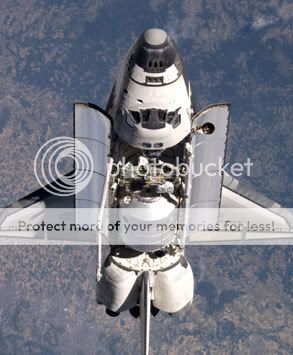
Image of RPM being performed by shuttle Discovery 600 ft below the station to allow the ISS resident crew to take long distance, hi-res images of the under belly before docking, during STS-121/Return to flight mission.(Image Courtesy-NASA/Human Space Flight Department)
Authorization to construct the fifth Space Shuttle orbiter as a replacement for Challenger was granted by Congress on August 1, 1987. Endeavour (OV-105) first arrived at KSC's Shuttle Landing Facility May 7,1991, atop NASA's new Shuttle Carrier Aircraft (NASA 911). The space agency's newest orbiter began flight operations in 1992 on mission STS-49, the Intelsat VI repair mission.
Endeavour(OV-105)
And space shuttles were not grounded for 15 years. They launched again in 1990, and successfully deployed hubble and many other satellites.
SQ2: Do you anticipate that the agency responsible for the financial backing of such an undertaking would do so disinterestedly, or in the interest of establishing its own power base in space?
Two possible situations can arise of this.
Situation 1- The Government funds the mission entirely-
Though this will cause a big head ache in terms of securing funding in this time of economic crisis, there is also a good side in this. More workforces will be needed for manufacturing the space craft. This will lead to job opportunities, and directly help in the recovery of the economy
Situation 2- A Public-Private undertaking-
This will result in revenue inflow to the space agency and the government and it can be used for the development of the economy.
So, as you can see, either way, the nation benefits from it. And moreover, it will be the pride of a nation to be first in anything. In my opinion, the pride of a nation is based on the science and technological advancement of the nation. A notable example is the “Race to Space” and “Race to Moon” of the cold war era.
Until we have found a means of truly disposing of our own waste, I strongly believe that taking the step into manned exploration of other worlds is environmentally unethical.
Ill refer to the Russian made Progress Vehicle here. It is a one time use vehicle of the Russian Space agency, without a re-entry shield, and all the trash of the ISS burns up in the atmosphere and all trash is burned up without a trace over the Pacific. And I can see that it can be easily implemented.
SQ: Do you dispute that mankind’s record as custodian and protector of the areas in which we travel is extremely poor?
It is clearly visible around us, you can see it. This question needs no explaining. We cut down trees, we pollute waters, we pump greenhouse gases into the atmosphere. And lots more that come under a different topic of climate change. So, I would say that our record is poor.
As “mankind” we kill millions of our fellow humans every year, and continue to rape our own planet despite our knowledge that we may one day find ourselves on an uninhabitable rock through our own fault.
That is why we should send a man to Titan and set the foundation for future human settlement. We have almost crossed the point of no return to save the earth.
First Response
With all due respect to my colleague, and without delving too far into my personal psychology, I must insist that this is not why I remember the disastrous launch of the space shuttle Challenger. I remember it for proving to the nation that NASA is willing to put public relations before personal safety, and I remember it for the backlash against spending on the space program that followed. Until this debate, I had never heard of “rotational pitch maneuver”.
The Challenger liftoff was supposed to represent an exciting milestone for the space program – the symbolism of sending a civilian (a woman no less!) for a ride and research opportunity in the space shuttle was that it promised a future of public participation in space exploration.
The reality crushed that dream to the extent that every civilian in space since Christa McAuliffe (who didn’t make it there) has had to finance his trip by himself. Forget about public access to space – NASA’s premature mission, and focus on meeting the expectations they had raised, killed that dream. And with NASA’s premature action we saw a definitive shift in the financing of space programs into the private sector. In short, as the dream of public access to space died, the reality of elite-controlled dominance of space travel was realized.
A quick, rather unimportant clarification: my opponent’s response included an apparent correction to a point I made in my opening. He wrote “And space shuttles were not grounded for 15 years.” I would like to make it clear that I never stated that space shuttles were grounded for 15 years, or that manned space travel stopped following the Challenger disaster, but that no civilian was included in a mission until 2001.
In fact, there are other possibilities: a purely private undertaking, a purely military “black budget” undertaking, an undertaking by a research institute. All have their drawbacks. My opponent suggests that in any case, undertaking a manned mission to Titan in the current economic situation would stimulate the economy by providing jobs. He has, however, offered no evidence that such a mission would create more jobs than undertaking an unmanned mission to Titan would, or than undertaking another space project altogether.
I will rephrase my previous Socratic Question and pose it as my first for this reply:
SQ1: If a private company took a major role in financing a manned mission to Titan, do you think they would do so only for the benefit of humankind, or because they believed that they would obtain some benefit related to control of or access to future development there?
I am often accused of being naïve with regard to human nature, of having too much faith in the fundamental goodness of mankind. But my opponent obviously has me beat in that area.
Since I live in the United States of America, and my opponent lives in India, I will assume that those are the nations he is discussing.
But those are not the only nations with space programs, and as we have seen private enterprise may also play a role.
As an example of supposed harmony between adversaries that can be brought about through collaborative space projects, my opponent describes the “handshake in space” of 1975. There are several problems with this. The first is that this handshake occurred after, and owed much of its symbolic weight to, years of promotion of the “space race” between the U.S. and the U.S.S.R. as the major frontier of the cold war.
There is no similar condition now. Perhaps my opponent will correct me, but it is my understanding that the U.S. and European Union collaborative space efforts have far outstripped any other nations’ achievements in the last decade at least. Détente falls flat if there has been no real fight for supremacy.
The second problem I see with this vision is that the current geopolitical landscape is far more convoluted and complex than it was at the height of the Cold War. It is no longer the Communists versus the Democrats; alliances are shiftier, depending on access to resources, religious and cultural developments, and economic dependencies.
I think the most realistic candidate to join the already-cooperating U.S./E.U./private coalition – it’s likely “opponent” to be reconciled through joint space ventures – would be China.
Yet China is currently also the largest holder of U.S. securities – they own more of our debt than anyone else. I am no economics expert, but it seems likely to me that a major expenditure such as a manned mission to Titan would be financed at least in part by issuing further debt.
So would we borrow money from China in order to have a joint space venture with China? Exactly how vulnerable would that make us?
These are only a couple of issues that come to mind regarding the politics of manned space exploration, but I will leave the topic for now with another Socratic Question:
SQ2: Do you agree that global political alliances are less well-defined and more complex than they were in the late 1960s and early 1970s?
I have to admit that this sounded very good when I first read it. Imagine, we could just send all our trash into a low, unstable orbit and let it “burn up without a trace” on reentry into Earth’s atmosphere.
Then I realized: nothing burns without a trace. There may be no, or very little, solid remaining, but surely all that matter goes somewhere? And that somewhere, is probably into a gaseous state to join our atmosphere, right?
In other words, instead of burning our trash on Earth so that the toxic fumes can make their way up through the layers of atmosphere, we’ll just let it burn out there where it can join and react with the protective bubble the Earth requires to sustain life more directly.
Now, I’m sure that the trash produced by the inhabitants of the ISS is quite minimal, and adds almost no pollution to the atmosphere. But that was true of the first coal-burning factory also. It does not seem to me like a means of getting rid of waste that we want to rely on too heavily.
Indeed. It is very hard to argue that point. We make a mess wherever we go.
There is hope though, I would argue, in the fact that we have started to become aware of this, that we have started to admit that our wasteful ways are unsustainable and that we must not continue to pursue technology and comfort at the cost of the environment. Already the ban on chlorofluorocarbons has begun to take effect, and the hole in the ozone over the Antarctic has begun to heal.
Perhaps even in the next fifty years, we will make great strides in caring for the space we inhabit.
SQ3: Do you have hope that we as a species will improve our environmental impact in the near future?
And that is why we must not act too soon and risk bringing to Titan the problems that may drive us from Earth.
Thus far, this response has been concerned with rebutting and clarifying earlier points.
Before I turn it over to my opponent, I will share one fact about Titan that I have only recently come to appreciate.
On its brutal and inhospitable surface are lakes of liquid hydrocarbons, mainly ethane and methane. Fuel.

An artist’s rendition of the view of Saturn from above the cloud cover of Titan.
Copyright Mark A. Garlick and available at the Cassini Imaging Central Laboratory for Operations web site.
“To err is human”. In this world, nothing is perfectly safe. Right from the cars to airplanes that we see around us, there is a possibility of accidents to occur.
They sacrificed their lives to make space travel safer. They will be remembered as long as this endeavor for space exploration continues. But one thing must be noted here. Every day we come across news about many accidents, but even after two and half decades you still remember it. Why? Because they made space travel a lot safer.
With all due respect to my colleague, and without delving too far into my personal psychology, I must insist that this is not why I remember the disastrous launch of the space shuttle Challenger. I remember it for proving to the nation that NASA is willing to put public relations before personal safety, and I remember it for the backlash against spending on the space program that followed. Until this debate, I had never heard of “rotational pitch maneuver”.
The Challenger liftoff was supposed to represent an exciting milestone for the space program – the symbolism of sending a civilian (a woman no less!) for a ride and research opportunity in the space shuttle was that it promised a future of public participation in space exploration.
The reality crushed that dream to the extent that every civilian in space since Christa McAuliffe (who didn’t make it there) has had to finance his trip by himself. Forget about public access to space – NASA’s premature mission, and focus on meeting the expectations they had raised, killed that dream. And with NASA’s premature action we saw a definitive shift in the financing of space programs into the private sector. In short, as the dream of public access to space died, the reality of elite-controlled dominance of space travel was realized.
A quick, rather unimportant clarification: my opponent’s response included an apparent correction to a point I made in my opening. He wrote “And space shuttles were not grounded for 15 years.” I would like to make it clear that I never stated that space shuttles were grounded for 15 years, or that manned space travel stopped following the Challenger disaster, but that no civilian was included in a mission until 2001.
SQ2: Do you anticipate that the agency responsible for the financial backing of such an undertaking would do so disinterestedly, or in the interest of establishing its own power base in space?
Two possible situations can arise of this.
Situation 1- The Government funds the mission entirely-
Situation 2- A Public-Private undertaking-
In fact, there are other possibilities: a purely private undertaking, a purely military “black budget” undertaking, an undertaking by a research institute. All have their drawbacks. My opponent suggests that in any case, undertaking a manned mission to Titan in the current economic situation would stimulate the economy by providing jobs. He has, however, offered no evidence that such a mission would create more jobs than undertaking an unmanned mission to Titan would, or than undertaking another space project altogether.
I will rephrase my previous Socratic Question and pose it as my first for this reply:
SQ1: If a private company took a major role in financing a manned mission to Titan, do you think they would do so only for the benefit of humankind, or because they believed that they would obtain some benefit related to control of or access to future development there?
In my opinion, I would say that the nation’s government should authorize the respective space agency and allow collaboration with other nation’s space agencies for a joint mission. And this will not only help in this space exploration, but will also pave the way for a good relationship between nations.
I am often accused of being naïve with regard to human nature, of having too much faith in the fundamental goodness of mankind. But my opponent obviously has me beat in that area.
Since I live in the United States of America, and my opponent lives in India, I will assume that those are the nations he is discussing.
But those are not the only nations with space programs, and as we have seen private enterprise may also play a role.
As an example of supposed harmony between adversaries that can be brought about through collaborative space projects, my opponent describes the “handshake in space” of 1975. There are several problems with this. The first is that this handshake occurred after, and owed much of its symbolic weight to, years of promotion of the “space race” between the U.S. and the U.S.S.R. as the major frontier of the cold war.
There is no similar condition now. Perhaps my opponent will correct me, but it is my understanding that the U.S. and European Union collaborative space efforts have far outstripped any other nations’ achievements in the last decade at least. Détente falls flat if there has been no real fight for supremacy.
The second problem I see with this vision is that the current geopolitical landscape is far more convoluted and complex than it was at the height of the Cold War. It is no longer the Communists versus the Democrats; alliances are shiftier, depending on access to resources, religious and cultural developments, and economic dependencies.
I think the most realistic candidate to join the already-cooperating U.S./E.U./private coalition – it’s likely “opponent” to be reconciled through joint space ventures – would be China.
Yet China is currently also the largest holder of U.S. securities – they own more of our debt than anyone else. I am no economics expert, but it seems likely to me that a major expenditure such as a manned mission to Titan would be financed at least in part by issuing further debt.
So would we borrow money from China in order to have a joint space venture with China? Exactly how vulnerable would that make us?
These are only a couple of issues that come to mind regarding the politics of manned space exploration, but I will leave the topic for now with another Socratic Question:
SQ2: Do you agree that global political alliances are less well-defined and more complex than they were in the late 1960s and early 1970s?
Ill refer to the Russian made Progress Vehicle here. It is a one time use vehicle of the Russian Space agency, without a re-entry shield, and all the trash of the ISS burns up in the atmosphere and all trash is burned up without a trace over the Pacific. And I can see that it can be easily implemented.
I have to admit that this sounded very good when I first read it. Imagine, we could just send all our trash into a low, unstable orbit and let it “burn up without a trace” on reentry into Earth’s atmosphere.
Then I realized: nothing burns without a trace. There may be no, or very little, solid remaining, but surely all that matter goes somewhere? And that somewhere, is probably into a gaseous state to join our atmosphere, right?
In other words, instead of burning our trash on Earth so that the toxic fumes can make their way up through the layers of atmosphere, we’ll just let it burn out there where it can join and react with the protective bubble the Earth requires to sustain life more directly.
Now, I’m sure that the trash produced by the inhabitants of the ISS is quite minimal, and adds almost no pollution to the atmosphere. But that was true of the first coal-burning factory also. It does not seem to me like a means of getting rid of waste that we want to rely on too heavily.
We cut down trees, we pollute waters, we pump greenhouse gases into the atmosphere. And lots more that come under a different topic of climate change. So, I would say that our record is poor.
Indeed. It is very hard to argue that point. We make a mess wherever we go.
There is hope though, I would argue, in the fact that we have started to become aware of this, that we have started to admit that our wasteful ways are unsustainable and that we must not continue to pursue technology and comfort at the cost of the environment. Already the ban on chlorofluorocarbons has begun to take effect, and the hole in the ozone over the Antarctic has begun to heal.
Perhaps even in the next fifty years, we will make great strides in caring for the space we inhabit.
SQ3: Do you have hope that we as a species will improve our environmental impact in the near future?
That is why we should send a man to Titan and set the foundation for future human settlement. We have almost crossed the point of no return to save the earth. (my emphasis)
And that is why we must not act too soon and risk bringing to Titan the problems that may drive us from Earth.
Thus far, this response has been concerned with rebutting and clarifying earlier points.
Before I turn it over to my opponent, I will share one fact about Titan that I have only recently come to appreciate.
On its brutal and inhospitable surface are lakes of liquid hydrocarbons, mainly ethane and methane. Fuel.
An artist’s rendition of the view of Saturn from above the cloud cover of Titan.
Copyright Mark A. Garlick and available at the Cassini Imaging Central Laboratory for Operations web site.
I remember it for proving to the nation that NASA is willing to put public relations before personal safety, and I remember it for the backlash against spending on the space program that followed.
I would think that this accusing here is unfair. During that accident, the shuttle were only a few years old, and NASA had been testing the shuttle for any problems, with each mission, and it seems to be a combination of bad luck and timing. And Ill make this clear, NASA grounded future missions at that time, to evaluate and rectify this problem and change the procedures followed during launch. And as I mentioned earlier, after Columbia accident shuttle flights were grounded until RPM procedure were introduced. NASA cares about the safety of astronauts, and that is why they undergo intense training. I am sure that many who watch the launch and landing will testify how launch or landing is delayed if the conditions are not right.
Until this debate, I had never heard of “rotational pitch maneuver”.
More information regarding this,
The flip, done on every shuttle mission, allows a full photographic survey of the shuttle heat shield to be taken by the station crew. This image from that survey shows much of the underside of the Atlantis from the nose toward the aft.


Source- RPM
The reality crushed that dream to the extent that every civilian in space since Christa McAuliffe (who didn’t make it there) has had to finance his trip by himself.
but that no civilian was included in a mission until 2001
I think that my opponent is confusing civilian astronauts (who don’t pay money to go to space, and they are a part of the astronaut corps) and civilians (rich business men and women who pay millions of dollars to go to space)
First let’s see the selection procedure of astronauts. NASA invites applications for the post of astronauts, and there is no restriction on who can apply provided they satisfy the eligibility criteria , and civilians and those in the armed forces apply. Then the applicants undergo a rigorous selection process where their body fitness is measured. And generally those in the armed forces get through easily because they have been trained in the necessary skills required for the astronaut posts, and only a few civilians past through( I am sure that anyone in the marines, navy, air force, army or any branch in the military, will approve what I mentioned )
And hence you see less civilian astronauts.
Coming to civilian side, these are rich business men who pay millions of dollars and have their body fit, and literally buy their seats on the space craft. And you might have observed that a majority of the civilian tourists fly aboard the Russian Soyuz alone. And why is it so? Because American space shuttles operate on a tight schedule, and the Columbia accident sent the schedule of the construction of ISS haywire and with the retirement of the space shuttle in 2010 adding another woe and to add to the woes is the delay of the Hubble servicing mission, which is further adding pressure. And there is a backlog of missions and hence civilian tourists find it difficult to get a seat onboard. But Russia has an extra seat on the Soyuz, and so offered a fifteen day trip to space. But that too is set to get difficult as the ISS crew capacity is set to increase to six from the current three.
Shuttle missions by year
The reality crushed that dream to the extent that every civilian in space since Christa McAuliffe
Firstly, she was not considered as a civilian astronaut. She was a educator astronaut, she was a school teacher, and NASA selected educator astronauts to motivate future generations to take up science. A quick glance through her bio will make it clear. And her back up Barbara Morgan recently flew onboard STS-118 as educator astronaut.
Bio Data of Christa Mc auliffe-
Christia McAuliffe
Bio Data of Barbara Morgan-
Barbara Morgan
Some civilian astronauts(women astronauts, since my opponent is placing more focus on women astronauts)-
Janet.L.Kavanadi
Joan Higginbothams
So, I think that I have made it clear why there are less civilian astronauts in the astronaut group. Regarding the number of flights they make. Astronauts with a defense background tend to get more missions because of their prior experience in challenging situations.
------------------------------------------------------------------------------------------------------------
SQ1: If a private company took a major role in financing a manned mission to Titan, do you think they would do so only for the benefit of humankind, or because they believed that they would obtain some benefit related to control of or access to future development there?
A little example would go well here. Consider that NASA proposes a mission, to build the spacecraft, a company say, Lockheed Martin gets the contract. The project is still under the control of NASA, they can terminate it any time they think of. So, the answer would be that, the company will also benefit, mankind will also benefit.
------------------------------------------------------------------------------------------------------------
SQ2: Do you agree that global political alliances are less well-defined and more complex than they were in the late 1960s and early 1970s?
In my opinion, political alliances are well defined with treaties and agreements signed between various countries. And though the complexity is high, many nations still maintain a good relationship with other nations with a exception of some, which have internal crisis, affecting its relationship with other nations. And I would say that this involves deep politics. And I would like to not involve political stuff in this good topic.
I don’t know much about the politics involved here. But I don’t know why funding must be received from china. Every year, there is a budget allotted to NASA. And the budget from other less useful fields could be transferred to NASA.
------------------------------------------------------------------------------------------------------------
Then I realized: nothing burns without a trace. There may be no, or very little, solid remaining, but surely all that matter goes somewhere?
To make the point clear the spacecraft is designed to burn without a trace in the atmosphere. And only wastes like orange peels and that kind of organic stuff is burned up. Other waste is brought back to the earth by shuttle missions and disposed off safely.
------------------------------------------------------------------------------------------------------------
SQ3: Do you have hope that we as a species will improve our environmental impact in the near future?
The answer is plain and simply ”No”, take a look around us, the increasing consumption of energy. Though there are amazing green innovations going on. The pace is not in sync with the needs. And on Titan since the initial settlers will be minimum, we will be able to keep a watch on the environment. And even further down the line, we will keep a watch as we remind ourselves of how the earth has become hostile due to our actions.
------------------------------------------------------------------------------------------------------------
On its brutal and inhospitable surface are lakes of liquid hydrocarbons, mainly ethane and methane. Fuel.
You know what? That is why we are going there. We can supply fuel to earth if needed or once we establish settlement there, we can use that fuel instead of carrying all the fuel from here.
An example that I would like to mention here, is how there is an ambitious plan to extract iron and lead from mercury, which is easier to extract there since the proximity to the sun has melted and blown away other metals and gases.
------------------------------------------------------------------------------------------------------------
Socratic Question-
1.Why do you say that we should send a civilian first to Titan and not civilian or other astronauts?
I would like to start by thanking my opponent for his clarification of the terms that apply to different sorts of space travelers – I had been using
them incorrectly. I was using the term “civilian astronaut” to refer to people who are not astronauts by career, instead of to career astronauts
who were not members of the military. This mistake may have caused some confusion to my opponent and to readers and judges – my apologies. I hope
the confusion can be overcome.
I will start by addressing my opponent’s Socratic Question:
I do not think that we should send a civilian to Titan (or any other space destination) before sending career astronauts, whether they be military or civilian. I have respect for our astronaut corps, and believe that in such a dangerous and unpredictable situation the best candidates would be those who have dedicated their entire life to the preparation. I would like to see non-career astronauts included in more missions, and in early (not first, but maybe second or third) missions to planets and moons that are as yet untouched.
My point in the matter of non-career astronauts being excluded from space between Christa McAuliffe in 1986 and Barbara Morgan in 2007* was to point out the ramifications of a disastrous mission. After the Challenger disaster, the shuttle program was grounded for two years, and the goal of opening space to “normal people” (non-astronauts) was put on hold for over 20 years.
*Again I must apologize for the misstatement that there had been no educator-astronaut since the Challenger disaster. Nevertheless I think that a gap of 21 years until the public was ready to send another of its own into space remains a convincing support of my case.
I think I have never read a statement I agree with more. Wouldn’t we all love to take the politics out of space exploration, or any scientific endeavor with implications for the future of mankind?
Sadly, this is not the way of the world. It has been my unpleasant responsibility in this debate to be the pessimist, the voice that breaks into the beautiful excitement of youth and discovery with the crushing weight of financial and political responsibility.
I wish this were not the case. But I see space as a frontier that we can still protect, unlike the many frontiers here on Earth where we have rushed in blindly, bringing war, destruction, and disease along with us. This requires us to be conservative, however, to go more slowly than we might want. If manned exploration of Titan had no significance other than for pure knowledge, I would say go for it.
But even my opponent pointed out the political implications of space programs in his example of the famous handshake. While that had positive, peaceful and cooperative, political implications, such is not always the case.
Again, I agree. Maybe we could reroute the money we spent to ensure that the financial industry got its year-end bonuses. I think you’d find many supporters of that idea on ATS.
But this is not politically feasible. NASA fights for every cent of its budget already, from my understanding.
As for why funding must be received from China – it doesn’t necessarily have to be, if we can find another source willing to loan us more money. I was simply trying imagine where we could get the money for an unprecedented manned flight to Titan, and China was the only source that came to mind.
Since my original concern was that we are being overwhelmed by our own trash here on Earth, it is hardly a comfort to hear that most of the waste generated in the space station is brought here as well.
So, having exploited our own rock for everything we could get out of it, we are now looking to neighboring rocks where it may be easier to steal the substances we believe we are entitled to.
Are we not satisfied with the war and misery that go along with hydrocarbon resources here on Earth? Must we open up a whole new “Middle East” situation on a moon 840 million miles away?
This attitude that views untouched moons and planets largely as resources to be exploited is precisely why it is so important to be extremely careful in opening up these new frontiers to human exploration or colonization.
So far the concerns I have raised have been political, economic, and ethical. And these are in my estimation the strongest reason not to open new frontiers to manned space travel as yet.
The question remains, what should be done in the meantime? Am I asking for all space exploration to be put on hold until the human race has evolved into a responsible caretaker of its environment?
Absolutely not.
There is still so much that we can learn about human space travel while staying within the bounds already established: the earth’s orbit and its moon.
And technological advances mean that there is still much information that can be gathered by robotic missions.
How much do we know already about Titan? Well, during the course of this very debate new information has been released by NASA: it seems that Titan has a cycle of evaporation and precipitation much like ours on Earth, only with liquid ethane and methane instead of water.
New Lakes Materialise On Saturn
Since Cassini arrived in Saturn’s orbit in 2004, Titan has been tilted with respect to its orbital plane, with the tilt slowly decreasing towards equinox. In other words, we have so far only seen one season on Titan: it is the equivalent of having studied the Earth in the springtime and having no idea what to expect in the fall and winter.
There is still so much to learn from the Cassini mission, and no doubt more that could be learned with a new probe tailored to Titan based on the information obtained by Cassini.
And Titan is not the only interesting celestial body. If we decide that we should send a manned mission to Titan, we are ruling out many other missions that could be undertaken instead. Because of the huge additional expenditure required for a manned mission, I think it will be more productive to continue to rely on the robotic missions that have been so successful in exploring our solar system in the past decade or so.
I will start by addressing my opponent’s Socratic Question:
Socratic Question-
1.Why do you say that we should send a civilian first to Titan and not civilian or other astronauts?
I do not think that we should send a civilian to Titan (or any other space destination) before sending career astronauts, whether they be military or civilian. I have respect for our astronaut corps, and believe that in such a dangerous and unpredictable situation the best candidates would be those who have dedicated their entire life to the preparation. I would like to see non-career astronauts included in more missions, and in early (not first, but maybe second or third) missions to planets and moons that are as yet untouched.
My point in the matter of non-career astronauts being excluded from space between Christa McAuliffe in 1986 and Barbara Morgan in 2007* was to point out the ramifications of a disastrous mission. After the Challenger disaster, the shuttle program was grounded for two years, and the goal of opening space to “normal people” (non-astronauts) was put on hold for over 20 years.
*Again I must apologize for the misstatement that there had been no educator-astronaut since the Challenger disaster. Nevertheless I think that a gap of 21 years until the public was ready to send another of its own into space remains a convincing support of my case.
And I would like to not involve political stuff in this good topic.
I think I have never read a statement I agree with more. Wouldn’t we all love to take the politics out of space exploration, or any scientific endeavor with implications for the future of mankind?
Sadly, this is not the way of the world. It has been my unpleasant responsibility in this debate to be the pessimist, the voice that breaks into the beautiful excitement of youth and discovery with the crushing weight of financial and political responsibility.
I wish this were not the case. But I see space as a frontier that we can still protect, unlike the many frontiers here on Earth where we have rushed in blindly, bringing war, destruction, and disease along with us. This requires us to be conservative, however, to go more slowly than we might want. If manned exploration of Titan had no significance other than for pure knowledge, I would say go for it.
But even my opponent pointed out the political implications of space programs in his example of the famous handshake. While that had positive, peaceful and cooperative, political implications, such is not always the case.
But I don’t know why funding must be received from china. Every year, there is a budget allotted to NASA. And the budget from other less useful fields could be transferred to NASA.
Again, I agree. Maybe we could reroute the money we spent to ensure that the financial industry got its year-end bonuses. I think you’d find many supporters of that idea on ATS.
But this is not politically feasible. NASA fights for every cent of its budget already, from my understanding.
As for why funding must be received from China – it doesn’t necessarily have to be, if we can find another source willing to loan us more money. I was simply trying imagine where we could get the money for an unprecedented manned flight to Titan, and China was the only source that came to mind.
Then I realized: nothing burns without a trace. There may be no, or very little, solid remaining, but surely all that matter goes somewhere?
To make the point clear the spacecraft is designed to burn without a trace in the atmosphere. And only wastes like orange peels and that kind of organic stuff is burned up. Other waste is brought back to the earth by shuttle missions and disposed off safely.
Since my original concern was that we are being overwhelmed by our own trash here on Earth, it is hardly a comfort to hear that most of the waste generated in the space station is brought here as well.
On its brutal and inhospitable surface are lakes of liquid hydrocarbons, mainly ethane and methane. Fuel.
You know what? That is why we are going there. We can supply fuel to earth if needed or once we establish settlement there, we can use that fuel instead of carrying all the fuel from here.
An example that I would like to mention here, is how there is an ambitious plan to extract iron and lead from mercury, which is easier to extract there since the proximity to the sun has melted and blown away other metals and gases.
So, having exploited our own rock for everything we could get out of it, we are now looking to neighboring rocks where it may be easier to steal the substances we believe we are entitled to.
Are we not satisfied with the war and misery that go along with hydrocarbon resources here on Earth? Must we open up a whole new “Middle East” situation on a moon 840 million miles away?
This attitude that views untouched moons and planets largely as resources to be exploited is precisely why it is so important to be extremely careful in opening up these new frontiers to human exploration or colonization.
So far the concerns I have raised have been political, economic, and ethical. And these are in my estimation the strongest reason not to open new frontiers to manned space travel as yet.
The question remains, what should be done in the meantime? Am I asking for all space exploration to be put on hold until the human race has evolved into a responsible caretaker of its environment?
Absolutely not.
There is still so much that we can learn about human space travel while staying within the bounds already established: the earth’s orbit and its moon.
And technological advances mean that there is still much information that can be gathered by robotic missions.
How much do we know already about Titan? Well, during the course of this very debate new information has been released by NASA: it seems that Titan has a cycle of evaporation and precipitation much like ours on Earth, only with liquid ethane and methane instead of water.
New Lakes Materialise On Saturn
But the depth of the presumed lakes is unclear. Their patchy appearance may mean they are more like shallow marshes, Turtle says.
It is also unclear how long these lakes might last. Titan's south pole is darkening as the moon approaches equinox in August 2009, and the team does not expect to get another opportunity to observe the area to see if some or all of the liquid in the new lakes has evaporated.
Since Cassini arrived in Saturn’s orbit in 2004, Titan has been tilted with respect to its orbital plane, with the tilt slowly decreasing towards equinox. In other words, we have so far only seen one season on Titan: it is the equivalent of having studied the Earth in the springtime and having no idea what to expect in the fall and winter.
There is still so much to learn from the Cassini mission, and no doubt more that could be learned with a new probe tailored to Titan based on the information obtained by Cassini.
And Titan is not the only interesting celestial body. If we decide that we should send a manned mission to Titan, we are ruling out many other missions that could be undertaken instead. Because of the huge additional expenditure required for a manned mission, I think it will be more productive to continue to rely on the robotic missions that have been so successful in exploring our solar system in the past decade or so.
Closing statement-
I had mentioned in my earlier rebuttal itself that the backlog of missions after challenger had taken a lot of time to clear, and the complex missions like the launch of Hubble, its servicing mission to fix the optics and the launch of Chandra telescope demanded highly skilled astronauts, and a quick glance through the bios of the astronauts who flew these missions will reveal that they are veteran astronauts, needed for the daunting tasks.
My opponent doesn’t realize that all except the organic wastes, all other trash are recycled for future use.
Once outside the atmosphere and in the vaccum of space, no country has the right of ownership of space as mentioned by the “International Space Law”. So, if a joint mission is carried out, the participating nations can use the resources they can get. But they cannot claim rights of the entire resources.
Space law
Scientist’s have already calculated how the seasons would be in Titan. Otherwise, they would not have the idea of sending a man in the first place. And moreover, new generation space suits provide ultimate protection against the vagaries of weather without compensating the mobility of the astronaut. I am sure that any veteran astronaut reading this will agree how space suits have come a long way from bulky monsters in Gemini and Apollo mission to the present skinned space suit(Currently under final stages of testing and will be introduced in the Orion missions)
Though probes are useful in learning more about Titan, going there will prove our technological capability. It will prove for once that NASA does not waste public money. It bridges the gap between us and the region outside the atmosphere, and we will be one step closer to colonize the universe. And also, man has the quest for adventure, and this will be another adventure, and restricting ourselves to moon and mars, would be a de-gradation of our adventure skills, and will waste the knowledge we acquired over a span of thousands of years, and prevent us to evolve further as a species.
------------------------------------------------------------------------------------------------------------
My opponent speaks as though technology has not evolved yet to be capable of sending a man to Titan. I know that there are many challenges involved, and we can conduct a safe mission from the current implemented unmanned missions.
I will explain the factors involved and how they can be overcome.
1. Time-
This is a crucial factor and the time spent to and fro is the most deciding factor in planning missions. It generally takes six months to go to mars and fifteen to twenty years to reach planets in the outer solar system. But technology has developed to enable us go to planets faster. I would like to quote New Horizons mission to Pluto and Kuiper Belt. It was launched in 2006 and it is the fastest man made object in the solar system. And it has already crossed Saturn getting a gravity assist from Mars and Jupiter.
It uses a commonly available fuel.
And for power, as in all missions beyond mars it uses a RTG since solar energy I weak to produce power through solar panels. RTG is well insulated and so, there is no problem of radiation exposure.
Since image’s cannot be posted in the closing statement. Ill provide a link which gives the current location of New Horizons.
Current position of New Horizons
New Horizons-Main Website
So, we can reduce traveling time by more than half.
2. Health-
Various health factors include how the astronauts body is affected by the microgravity/freefall conditions of space, radiation from deep space, and psychological factors.
As far as microgravity conditions are concerned, artificial gravity is the only way this can be overcome, and for that there is a option of rotating the space craft with the required angular momentum so that the centrifugal force provides artificial gravity. The challenge of rotation of the space craft has been solved with the technology used in WMAP satellite which rotates in orbit at L2 point.
Link-WMAP
Regarding radiation from space, all manned space craft including the ISS have multiple layers of cover to prevent all dangerous radiation from entering the craft with the exception of a few neutrinos now and then which the astronauts see as flashes of light in their eyes when they are sleeping.
Regarding psychological factors, astronauts tend to be lonely in space, and this causes hostility to other crew members who are unknown till the mission was proposed. That is why there is a plan of sending couple astronauts into space. ESA had also invited applications from couples for the recent astronaut batch, and this batch would be involved in long distance space flights.
Other miscellaneous factors-
1.Food- Since astronauts cannot carry all the food required as it will increase lift-off weight, and will need a lot of fuel, astronauts will have to grow food in the space craft itself. And wheat plants have been grown on a small scale on the ISS and proved that growing plants and hence food grains in space is possible.
Link-Video about growing plants in space
2.Water- Water cannot be taken in large quantities, so all water has to be recycled, and it is already demonstrated on ISS that water can be re cycled and re used.
Link-Recycling of water aboard the space station
3. Waste Disposal- A small space craft can be used to send the waste materials on a regular basis back to earth burning up in the atmosphere.
------------------------------------------------------------------------------------------------------------
Thus I have mentioned how manned mission to Titan is possible and technology is available even today. I would like to thank my opponent for the wonderful debate, which made me utilize all knowledge I had gained since my childhood days. And I just leave it to the judge’s to evaluate my performance, and I hope for the best.
Thanking you,
Peacejet.
I think that a gap of 21 years until the public was ready to send another of its own into space remains a convincing support of my case.
I had mentioned in my earlier rebuttal itself that the backlog of missions after challenger had taken a lot of time to clear, and the complex missions like the launch of Hubble, its servicing mission to fix the optics and the launch of Chandra telescope demanded highly skilled astronauts, and a quick glance through the bios of the astronauts who flew these missions will reveal that they are veteran astronauts, needed for the daunting tasks.
Since my original concern was that we are being overwhelmed by our own trash here on Earth, it is hardly a comfort to hear that most of the waste generated in the space station is brought here as well
My opponent doesn’t realize that all except the organic wastes, all other trash are recycled for future use.
Are we not satisfied with the war and misery that go along with hydrocarbon resources here on Earth? Must we open up a whole new “Middle East” situation on a moon 840 million miles away?
Once outside the atmosphere and in the vaccum of space, no country has the right of ownership of space as mentioned by the “International Space Law”. So, if a joint mission is carried out, the participating nations can use the resources they can get. But they cannot claim rights of the entire resources.
Space law
In other words, we have so far only seen one season on Titan: it is the equivalent of having studied the Earth in the springtime and having no idea what to expect in the fall and winter.
Scientist’s have already calculated how the seasons would be in Titan. Otherwise, they would not have the idea of sending a man in the first place. And moreover, new generation space suits provide ultimate protection against the vagaries of weather without compensating the mobility of the astronaut. I am sure that any veteran astronaut reading this will agree how space suits have come a long way from bulky monsters in Gemini and Apollo mission to the present skinned space suit(Currently under final stages of testing and will be introduced in the Orion missions)
There is still so much to learn from the Cassini mission, and no doubt more that could be learned with a new probe tailored to Titan based on the information obtained by Cassini.
Though probes are useful in learning more about Titan, going there will prove our technological capability. It will prove for once that NASA does not waste public money. It bridges the gap between us and the region outside the atmosphere, and we will be one step closer to colonize the universe. And also, man has the quest for adventure, and this will be another adventure, and restricting ourselves to moon and mars, would be a de-gradation of our adventure skills, and will waste the knowledge we acquired over a span of thousands of years, and prevent us to evolve further as a species.
------------------------------------------------------------------------------------------------------------
My opponent speaks as though technology has not evolved yet to be capable of sending a man to Titan. I know that there are many challenges involved, and we can conduct a safe mission from the current implemented unmanned missions.
I will explain the factors involved and how they can be overcome.
1. Time-
This is a crucial factor and the time spent to and fro is the most deciding factor in planning missions. It generally takes six months to go to mars and fifteen to twenty years to reach planets in the outer solar system. But technology has developed to enable us go to planets faster. I would like to quote New Horizons mission to Pluto and Kuiper Belt. It was launched in 2006 and it is the fastest man made object in the solar system. And it has already crossed Saturn getting a gravity assist from Mars and Jupiter.
New Horizons was launched on 19 January 2006 directly into an Earth-and-solar-escape trajectory. It had an Earth-relative velocity of about 16.26 kilometer per second or 58,536 kilometer per hour (10.1 mps or 36,360 mph) after its last engine shut down, making it the fastest spacecraft and man-made object launched/created, to date. It flew by Jupiter on 28 February 2007 at 5:43:40 UTC and Saturn's orbit on 8 June 2008 at 10:00:00 UTC. It will arrive at Pluto on 14 July 2015 then continue into the Kuiper belt.
It uses a commonly available fuel.
New Horizons has both spin-stabilized (cruise) and three-axis stabilized (science) modes, controlled entirely with hydrazine monopropellant.
And for power, as in all missions beyond mars it uses a RTG since solar energy I weak to produce power through solar panels. RTG is well insulated and so, there is no problem of radiation exposure.
Since image’s cannot be posted in the closing statement. Ill provide a link which gives the current location of New Horizons.
Current position of New Horizons
New Horizons-Main Website
So, we can reduce traveling time by more than half.
2. Health-
Various health factors include how the astronauts body is affected by the microgravity/freefall conditions of space, radiation from deep space, and psychological factors.
As far as microgravity conditions are concerned, artificial gravity is the only way this can be overcome, and for that there is a option of rotating the space craft with the required angular momentum so that the centrifugal force provides artificial gravity. The challenge of rotation of the space craft has been solved with the technology used in WMAP satellite which rotates in orbit at L2 point.
Link-WMAP
Regarding radiation from space, all manned space craft including the ISS have multiple layers of cover to prevent all dangerous radiation from entering the craft with the exception of a few neutrinos now and then which the astronauts see as flashes of light in their eyes when they are sleeping.
Regarding psychological factors, astronauts tend to be lonely in space, and this causes hostility to other crew members who are unknown till the mission was proposed. That is why there is a plan of sending couple astronauts into space. ESA had also invited applications from couples for the recent astronaut batch, and this batch would be involved in long distance space flights.
Other miscellaneous factors-
1.Food- Since astronauts cannot carry all the food required as it will increase lift-off weight, and will need a lot of fuel, astronauts will have to grow food in the space craft itself. And wheat plants have been grown on a small scale on the ISS and proved that growing plants and hence food grains in space is possible.
Link-Video about growing plants in space
2.Water- Water cannot be taken in large quantities, so all water has to be recycled, and it is already demonstrated on ISS that water can be re cycled and re used.
Link-Recycling of water aboard the space station
3. Waste Disposal- A small space craft can be used to send the waste materials on a regular basis back to earth burning up in the atmosphere.
------------------------------------------------------------------------------------------------------------
Thus I have mentioned how manned mission to Titan is possible and technology is available even today. I would like to thank my opponent for the wonderful debate, which made me utilize all knowledge I had gained since my childhood days. And I just leave it to the judge’s to evaluate my performance, and I hope for the best.
Thanking you,
Peacejet.
I will keep my closing statement brief, as I think enough material has already been introduced in the course of this debate. I would like to thank my
opponent peacejet for this experience – I have learned a lot through the course of this debate, not least that the idea of space exploration retains
its appeal and excitement to this day. If he has failed to convince me that we are ready for manned space exploration beyond the Earth’s orbit, he
has convinced me that there is no shortage of bright, eager scientists working to get us there. I sincerely hope that it will happen in his
lifetime.
I would also like to thank the judges and readers for their attention, and for bearing with me as I struggle with some of the technical details and specific vocabulary required in this debate.
The weight of this debate lay with my opponent. He had the responsibility to prove that we should send a manned mission to Titan – that we are ready technologically, politically, financially, ecologically, and ethically to take that step.
He reminds us that there is international space law in place to ensure responsible and fair use of resources from outer space. Let us see what his source has to say about space law:
Space Law
This is the opening to the Wikipedia entry on space law: lawyers do not agree on what outer space is. Not a reassuring way to begin.
As for the current state of international space law and treaties:
The Outer Space Treaty was signed in 1967 – the Committee on the Peaceful Uses of Outer Space (a UN committee) has been unable to agree on a new treaty.
And the future of international space treaties?
I question whether space law is in fact equipped to respond to the new situations that would be presented by sending humans to land on new planets or moons, let alone by the colonization that my opponent seems to believe should be an imminent goal.
Now is simply not the time to begin sending manned missions to Titan.
As my opponent has said, we may find ourselves in the position of needing to leave the Earth. For that very reason it is essential that we not send the earthly problems of the moment ahead of us.
Technologically we may possibly be up to the challenge – I will bow to my opponent’s superior knowledge on that count.
But the political and financial situation now is such that we must be extremely careful in how we proceed. Already many are concerned about the control that private corporations have over our government here on Earth – do we wish to rely on them to be the financiers of the first human mission to Titan?
Ethically and legally there is still a great deal to be worked out before we will be ready to take such a step. With international treaties hung up on matters of resource exploitation and territorial claims, how can we in good conscience proceed?
And from the scientific standpoint, a manned mission to Titan would be far more expensive than further robotic explorations. The Cassini mission, the Huygens probe, the Mars rover – these are the success stories of recent years, and the images and data received from these sources have done much to draw public interest back to space programs. My opponent believes that we should send men to Titan, but does not address the question of what must be foregone in doing so.
Because a manned expedition is so much more expensive than a robotic mission, so it is very important that we choose our mission wisely. We have not seen evidence that Titan is a better destination than Jupiter’s moon Europa, for example. It will be of more benefit in the long run to continue with the successful use of robotic exploration over a wider field rather than to commit ourselves to a single more dangerous and more expensive undertaking.
In the interest of a better future for humanity in space, we must be patient.
I would also like to thank the judges and readers for their attention, and for bearing with me as I struggle with some of the technical details and specific vocabulary required in this debate.
The weight of this debate lay with my opponent. He had the responsibility to prove that we should send a manned mission to Titan – that we are ready technologically, politically, financially, ecologically, and ethically to take that step.
He reminds us that there is international space law in place to ensure responsible and fair use of resources from outer space. Let us see what his source has to say about space law:
Space law is an area of the law that encompasses national and international law governing activities in outer space. International lawyers have been unable to agree on a uniform definition of the term "outer space,"
Space Law
This is the opening to the Wikipedia entry on space law: lawyers do not agree on what outer space is. Not a reassuring way to begin.
As for the current state of international space law and treaties:
The Outer Space Treaty is the most widely-adopted treaty, with 98 parties. The Rescue Agreement, the Liability Convention and the Registration Convention all elaborate on provisions of the Outer Space Treaty. U.N. delegates apparently intended that the Moon Treaty serve as a new comprehensive treaty which would supersede or supplement the Outer Space Treaty, most notably by elaborating upon the Outer Space Treaty's provisions regarding resource appropriation and prohibition of territorial sovereignty. The Moon Treaty has only 12 parties, and many consider it to be a failed treaty due to its limited acceptance.
The Outer Space Treaty was signed in 1967 – the Committee on the Peaceful Uses of Outer Space (a UN committee) has been unable to agree on a new treaty.
And the future of international space treaties?
Many space faring nations seem to believe that discussing a new space agreement or amendment of the Outer Space Treaty would be futile and time consuming, because entrenched differences regarding resource appropriation, property rights and other issues relating to commercial activity make consensus unlikely.
I question whether space law is in fact equipped to respond to the new situations that would be presented by sending humans to land on new planets or moons, let alone by the colonization that my opponent seems to believe should be an imminent goal.
Now is simply not the time to begin sending manned missions to Titan.
As my opponent has said, we may find ourselves in the position of needing to leave the Earth. For that very reason it is essential that we not send the earthly problems of the moment ahead of us.
Technologically we may possibly be up to the challenge – I will bow to my opponent’s superior knowledge on that count.
But the political and financial situation now is such that we must be extremely careful in how we proceed. Already many are concerned about the control that private corporations have over our government here on Earth – do we wish to rely on them to be the financiers of the first human mission to Titan?
Ethically and legally there is still a great deal to be worked out before we will be ready to take such a step. With international treaties hung up on matters of resource exploitation and territorial claims, how can we in good conscience proceed?
And from the scientific standpoint, a manned mission to Titan would be far more expensive than further robotic explorations. The Cassini mission, the Huygens probe, the Mars rover – these are the success stories of recent years, and the images and data received from these sources have done much to draw public interest back to space programs. My opponent believes that we should send men to Titan, but does not address the question of what must be foregone in doing so.
Because a manned expedition is so much more expensive than a robotic mission, so it is very important that we choose our mission wisely. We have not seen evidence that Titan is a better destination than Jupiter’s moon Europa, for example. It will be of more benefit in the long run to continue with the successful use of robotic exploration over a wider field rather than to commit ourselves to a single more dangerous and more expensive undertaking.
In the interest of a better future for humanity in space, we must be patient.
Results are in!
Congratulations to both Fighters for a very informative debate...
americandingbat has won by majority decision. The judges comments:
Congratulations to both Fighters for a very informative debate...
americandingbat has won by majority decision. The judges comments:
First, I'd like to thank both peacejet and americandingbat for their standing up to the huge task of debating this topic. I must confess that I found myself wanting to side with both of you throughout the course of the debate, but because there can be only one winner, I had to make a decision... But before we get there, the points..
Peacejet,
While I so hope that you retain this unbridled desire to see humans evolve, I must admit that things aren't nearly as idealistic as you make them sound. I too long for a day when man will be able to just say, "hey lets go over to that planet right there", and have the support of all nations involved. Unfortunately, that's just an unreasonable thing to hope for, as everyone has their own ideas of what is and is not important.
You present evidence that indeed shows that we MAY have the capability to make an attempt at long-term space flight, but it's been untested. Besides, wouldn't it be in our best interests to get the kinks in the system worked out before we fly our back ends out into the cosmos, and get the space equivalent of a flat tire? I just think that more planning is needed in the technology phase...
As for the financial ends, there remain certain obstacles that need to be broken down before we can truly trust any nation to be behind us in this endeavor.
Politically, we're at odds with China and Russia, which makes things exceedingly difficult when it comes to getting into space. India is a great partner in this, but they aren't yet as well-equipped as Russia or China is to get people into orbit.
Americandingbat,
You make a convincing argument, and it's one that I find hard to deny. You sir, are the realist to peacejet's unbridled ideology. The only thing that I really took issue with was the fact that you made it seem like the whole plan was totally fruitless, as there was no hope at all in humanity. You made it seem as though we'll not be able to go out into the cosmos for some time because we cannot get past our own greed and self-interest. While this observation may be just my wishing for it not to be true, it still seemed to me that that was the angle being played here.
In any event, my scoring is as follows:
peacejet gets 1.5 points for making a convincing argument, that with a little planning, wouldn't be too far out there (pun intended ). Clear points overall, and shows a desire to be involved in the actual implementation of said points.
americandingbat gets 2 points, and the victory for pointing out the true nature of the way things are right now, as well as illustrating how it's going to take more than just technology to get us onto another world. True, the technology DOES indeed exist to get us there, but we can't get away from all of the political and economic squabbling to get to the planning phases of such a huge endeavor.
Many kudos to BOTH members, as this was one of the more enjoyable debates that I've had the distinct pleasure in reading.
Good for the both of you!!!
peacejet vs americandingbat
A very good effort by both parties, especially peacejet for his first debate.
From the outset, I was surprised the pj let adb define the topic, which benefited her most. The topic was vague enough to not have any set timeline introduced but pj capitulated to the immediateness of the need for this mission right away. His side would have been a lot stronger had he pushed for the timeline to be more open, as the debate title left that possibility on the table. She also claimed the ground on other areas of testing and other types of exploration missions and excluded them from the debate, with nary a comment from pj on this.
Right from the start it was obvious that adb lacked knowledge about the subject and admitted as much several times through out the debate. The surprising thing was that this lack of knowledge base really went unchalleneged. Pj did make a few corrections to her points but he let the mistakes basically go unpunished. He needs to be more aggresive in his rebuttals.
As far as the debate topic, pj did a fantastic job of bringing his side to the table. The information was very reader friendly and the links were succinct and to the point. He did the better job of outlining the facts he wanted to present. He gave to much ground though. he seemed in agreement with adb on almost every negative point she raised, especially about our stewardship of our own planet.
He also wasted time on reiterating points already won. In a shortened format such as this one, that kind of character count can't be wasted.
If pj had used his closing as his first reply and built from there, this would have been an easy win for him, as he possessed the greater knowledge of the subject and had ample chances to tear down adb's side with her mistakes.
Unfortunately, it was presented as his close. It was his best post of the debate. He should look at that as an example of where to start, not where to finish.
I think peacejet has a bright future as a debater but this time round, the win goes to americandingbat. He just needs to be a little more aggressive, especially with opponents mistakes and don't give away the parameters of the debate so easily. Fight to shape the topic to what you need it to be, not what your opponent needs it to be.
Good luck to both fighters in the tourney. I look forward to reading your fights.
Thanks to the judges for their comments. To Judge #1: my outlook on humanity's future in space is actually a bit less bleak than it may have seemed
in this debate. I do think it's too early for a manned mission to Titan now; but I also believe that we will see that in our lifetimes.
PJ, little bro, it was a blast debating you. You do have a bright future ahead of you in the Debate Forum
PJ, little bro, it was a blast debating you. You do have a bright future ahead of you in the Debate Forum
new topics
-
Ireland VS Globalists
Social Issues and Civil Unrest: 29 minutes ago -
Biden "Happy To Debate Trump"
Mainstream News: 1 hours ago -
RAAF airbase in Roswell, New Mexico is on fire
Aliens and UFOs: 1 hours ago -
What is the white pill?
Philosophy and Metaphysics: 2 hours ago -
Mike Pinder The Moody Blues R.I.P.
Music: 3 hours ago -
Putin, Russia and the Great Architects of the Universe
ATS Skunk Works: 6 hours ago -
A Warning to America: 25 Ways the US is Being Destroyed
New World Order: 10 hours ago
top topics
-
President BIDEN's FBI Raided Donald Trump's Florida Home for OBAMA-NORTH KOREA Documents.
Political Conspiracies: 16 hours ago, 35 flags -
A Warning to America: 25 Ways the US is Being Destroyed
New World Order: 10 hours ago, 18 flags -
Mike Pinder The Moody Blues R.I.P.
Music: 3 hours ago, 7 flags -
What is the white pill?
Philosophy and Metaphysics: 2 hours ago, 5 flags -
Biden "Happy To Debate Trump"
Mainstream News: 1 hours ago, 5 flags -
RAAF airbase in Roswell, New Mexico is on fire
Aliens and UFOs: 1 hours ago, 4 flags -
Putin, Russia and the Great Architects of the Universe
ATS Skunk Works: 6 hours ago, 2 flags -
Ireland VS Globalists
Social Issues and Civil Unrest: 29 minutes ago, 2 flags
active topics
-
Biden "Happy To Debate Trump"
Mainstream News • 17 • : RazorV66 -
Putin, Russia and the Great Architects of the Universe
ATS Skunk Works • 22 • : SchrodingersRat -
Candidate TRUMP Now Has Crazy Judge JUAN MERCHAN After Him - The Stormy Daniels Hush-Money Case.
Political Conspiracies • 793 • : matafuchs -
University of Texas Instantly Shuts Down Anti Israel Protests
Education and Media • 279 • : cherokeetroy -
Is AI Better Than the Hollywood Elite?
Movies • 22 • : 5thHead -
King Charles 111 Diagnosed with Cancer
Mainstream News • 324 • : Oldcarpy2 -
Ireland VS Globalists
Social Issues and Civil Unrest • 2 • : TimBurr -
President Biden is Angry at A.G. Merrick Garland for Not Being Loyal to the Biden Family.
Above Politics • 20 • : WeMustCare -
RAAF airbase in Roswell, New Mexico is on fire
Aliens and UFOs • 4 • : gortex -
New whistleblower Jason Sands speaks on Twitter Spaces last night.
Aliens and UFOs • 75 • : baablacksheep1
8