It looks like you're using an Ad Blocker.
Please white-list or disable AboveTopSecret.com in your ad-blocking tool.
Thank you.
Some features of ATS will be disabled while you continue to use an ad-blocker.

Challenge Match: Heike vs Skyfloating: "A Horse Is A Horse Of Course, But A Bicycle?"
page: 16
share:
The topic for this debate is “Horses Are Far Superior To Bicycles”
Heike will be arguing the pro position and will open the debate.
Skyfloating will argue the con position.
Each debater will have one opening statement each. This will be followed by 3 alternating replies each. There will then be one closing statement each and no rebuttal.
There is a 10,000 character limit per post.
Any character count in excess of 10,000 will be deleted prior to the judging process.
Editing is strictly forbidden. For reasons of time, mod edits should not be expected except in critical situations.
Opening and closing statements must not contain any images and must have no more than 3 references.
Excluding both the opening and closing statements, only two images and no more than 5 references can be included for each post. Each individual post may contain up to 10 sentences of external source material, totaled from all external sources.
Links to multiple pages within a single domain count as 1 reference but there is a maximum of 3 individual links per reference, then further links from that domain count as a new reference. Excess quotes and excess links will be removed before judging.
The Socratic Debate Rule is in effect. Each debater may ask up to 5 questions in each post, except for in closing statements- no questions are permitted in closing statements. These questions should be clearly labeled as "Question 1, Question 2, etc.
When asked a question, a debater must give a straight forward answer in his next post. Explanations and qualifications to an answer are acceptable, but must be preceded by a direct answer.
This Is The Time Limit Policy:
Each debate must post within 24 hours of the timestamp on the last post. If your opponent is late, you may post immediately without waiting for an announcement of turn forfeiture. If you are late, you may post late, unless your opponent has already posted.
Each debater is entitled to one extension of 24 hours. The request should be posted in this thread and is automatically granted- the 24 hour extension begins at the expiration of the previous deadline, not at the time of the extension request.
In the unlikely event that tardiness results in simultaneous posting by both debaters, the late post will be deleted unless it appears in its proper order in the thread.
Judging will be done by a panel of anonymous judges. After each debate is completed it will be locked and the judges will begin making their decision. One of the debate forum moderators will then make a final post announcing the winner.
Heike will be arguing the pro position and will open the debate.
Skyfloating will argue the con position.
Each debater will have one opening statement each. This will be followed by 3 alternating replies each. There will then be one closing statement each and no rebuttal.
There is a 10,000 character limit per post.
Any character count in excess of 10,000 will be deleted prior to the judging process.
Editing is strictly forbidden. For reasons of time, mod edits should not be expected except in critical situations.
Opening and closing statements must not contain any images and must have no more than 3 references.
Excluding both the opening and closing statements, only two images and no more than 5 references can be included for each post. Each individual post may contain up to 10 sentences of external source material, totaled from all external sources.
Links to multiple pages within a single domain count as 1 reference but there is a maximum of 3 individual links per reference, then further links from that domain count as a new reference. Excess quotes and excess links will be removed before judging.
The Socratic Debate Rule is in effect. Each debater may ask up to 5 questions in each post, except for in closing statements- no questions are permitted in closing statements. These questions should be clearly labeled as "Question 1, Question 2, etc.
When asked a question, a debater must give a straight forward answer in his next post. Explanations and qualifications to an answer are acceptable, but must be preceded by a direct answer.
This Is The Time Limit Policy:
Each debate must post within 24 hours of the timestamp on the last post. If your opponent is late, you may post immediately without waiting for an announcement of turn forfeiture. If you are late, you may post late, unless your opponent has already posted.
Each debater is entitled to one extension of 24 hours. The request should be posted in this thread and is automatically granted- the 24 hour extension begins at the expiration of the previous deadline, not at the time of the extension request.
In the unlikely event that tardiness results in simultaneous posting by both debaters, the late post will be deleted unless it appears in its proper order in the thread.
Judging will be done by a panel of anonymous judges. After each debate is completed it will be locked and the judges will begin making their decision. One of the debate forum moderators will then make a final post announcing the winner.
Thank you, Skyfloating, for agreeing to this debate. Thank you, semperfortis, for setting it up, and thank you readers and judges for your attention.
I am delighted to have an excuse to unashamedly expound upon the virtues of my first and most enduring love, the horse.
Horses Are Far Superior To Bicycles
When I was three years old, my grandfather took me out into the country, to a place where a friend of his had an old pony out to pasture, one that his children had outgrown. The pony approached us eagerly for a few carrots, and my grandfather put me on his back. For what seemed like forever, that good-natured old pony carried me around the pasture, and when I would lose my balance he would stop and wait for me to get myself resettled. I fell head over heels in love with soft brown eyes, a shaggy mane, and four sturdy hooves that afternoon, and few things in my life have ever matched the feeling of having a thinking, feeling, living being willingly carry me - and care for me - for no reason other than we asked, and perhaps for the promise of a few more carrots.
Horses were first domesticated between 4500 and 2500 B.C. Initially they provided transportation, milk, meat, and hide for humans, and served as a draft and pack animal. The first horse training book was written in 1360 B. C. For hundreds of years, the horse has been our partner, helper, companion, livestock, sentinel, therapist, and even food, and has been bred and redesigned to suit many different purposes and needs.
A horse is by nature a prey animal, not a predator, and thus they are not inclined to be aggressive. A threatened and cornered horse can, of course, hurt a human, but they’d rather run away. Once the horse learns that humans are not a threat, even though they look and act like a predator, he tends to be curious about humans and quickly learns to respond to human requests in return for affection and treats.
The simplest use of a horse is for transportation. A horse and rider in good condition can cover 50 or more miles in a day, or a horse can pull a cart or buggy about 25 miles in a day. Horses can travel over nearly any terrain that a human can, and can cross water. They are steady, reliable, eco-friendly transportation, and often they protect themselves and their rider from danger with their superior senses. A horse will not willingly walk into danger, and he is aware of the snake in the grass or the muddy bog underneath what appears to be shallow water when his rider is not. A horse can get around in snow or on ice when other forms of transportation fail, and can pull a sleigh, sled, or even a boat as readily as a wheeled wagon or carriage.
Horses are also used as companion animals, for physical therapy and psychotherapy, and for many types of work such as working cattle, farming, law enforcement, taxicabs, and delivering beer to thirsty humans. Horses also provide us the opportunity to engage in many hobbies and sports, such as polo, racing, steeplechase, fox hunting, team penning, barrel racing, trail and endurance riding, reining, and more. No other common domestic animal is as versatile or as useful as the horse.
My horse is a good-natured and gentle companion, and a friend who is always glad to see me and enjoys the time we spend together. On her back I go places and experience things that would not be a part of my life if she weren’t. On bad days she is the reason I make myself get out of bed, and on good days she is always something to look forward to. She improves my physical health as well, because every day, no matter what the weather, I must get out and take care of her, providing at least some of the daily exercise my body needs. Training her teaches discipline, self-discipline, and patience. In order to master her I must first master myself, because horses are emotional mirrors. If I lose my temper or become impatient, it will be reflected in her attitude and our session will not go well. She bolsters my self-esteem and self-confidence; she outweighs me by half a ton and yet I can control her with hand signals and verbal commands. She trusts me enough to do things for me that are uncomfortable and unnatural for a horse, and willingly places her feet (and thus to her mind her life because a horse can’t run on three legs) in my hands. I have friends I would never have met if not for her, and have been places I could only have seen from her back. Riding her strengthens my legs and helps my balance, and gives me a unique perspective on the world. I own a very nice - and very expensive - bicycle that I used to ride often for exercise, and although I still can’t quite bring myself to part with it, it’s hanging on hooks in the barn and I haven’t touched it in over a year. My horse roams my pasture and lives in my heart, and I don’t like to think about going even one day without touching her.
As Winston Churchill once said, “There is something about the outside of a horse that is good for the inside of a man.” (or a woman!)
Horses Are Far Superior To Bicycles
When I was three years old, my grandfather took me out into the country, to a place where a friend of his had an old pony out to pasture, one that his children had outgrown. The pony approached us eagerly for a few carrots, and my grandfather put me on his back. For what seemed like forever, that good-natured old pony carried me around the pasture, and when I would lose my balance he would stop and wait for me to get myself resettled. I fell head over heels in love with soft brown eyes, a shaggy mane, and four sturdy hooves that afternoon, and few things in my life have ever matched the feeling of having a thinking, feeling, living being willingly carry me - and care for me - for no reason other than we asked, and perhaps for the promise of a few more carrots.
Horses were first domesticated between 4500 and 2500 B.C. Initially they provided transportation, milk, meat, and hide for humans, and served as a draft and pack animal. The first horse training book was written in 1360 B. C. For hundreds of years, the horse has been our partner, helper, companion, livestock, sentinel, therapist, and even food, and has been bred and redesigned to suit many different purposes and needs.
A horse is by nature a prey animal, not a predator, and thus they are not inclined to be aggressive. A threatened and cornered horse can, of course, hurt a human, but they’d rather run away. Once the horse learns that humans are not a threat, even though they look and act like a predator, he tends to be curious about humans and quickly learns to respond to human requests in return for affection and treats.
The simplest use of a horse is for transportation. A horse and rider in good condition can cover 50 or more miles in a day, or a horse can pull a cart or buggy about 25 miles in a day. Horses can travel over nearly any terrain that a human can, and can cross water. They are steady, reliable, eco-friendly transportation, and often they protect themselves and their rider from danger with their superior senses. A horse will not willingly walk into danger, and he is aware of the snake in the grass or the muddy bog underneath what appears to be shallow water when his rider is not. A horse can get around in snow or on ice when other forms of transportation fail, and can pull a sleigh, sled, or even a boat as readily as a wheeled wagon or carriage.
Horses are also used as companion animals, for physical therapy and psychotherapy, and for many types of work such as working cattle, farming, law enforcement, taxicabs, and delivering beer to thirsty humans. Horses also provide us the opportunity to engage in many hobbies and sports, such as polo, racing, steeplechase, fox hunting, team penning, barrel racing, trail and endurance riding, reining, and more. No other common domestic animal is as versatile or as useful as the horse.
My horse is a good-natured and gentle companion, and a friend who is always glad to see me and enjoys the time we spend together. On her back I go places and experience things that would not be a part of my life if she weren’t. On bad days she is the reason I make myself get out of bed, and on good days she is always something to look forward to. She improves my physical health as well, because every day, no matter what the weather, I must get out and take care of her, providing at least some of the daily exercise my body needs. Training her teaches discipline, self-discipline, and patience. In order to master her I must first master myself, because horses are emotional mirrors. If I lose my temper or become impatient, it will be reflected in her attitude and our session will not go well. She bolsters my self-esteem and self-confidence; she outweighs me by half a ton and yet I can control her with hand signals and verbal commands. She trusts me enough to do things for me that are uncomfortable and unnatural for a horse, and willingly places her feet (and thus to her mind her life because a horse can’t run on three legs) in my hands. I have friends I would never have met if not for her, and have been places I could only have seen from her back. Riding her strengthens my legs and helps my balance, and gives me a unique perspective on the world. I own a very nice - and very expensive - bicycle that I used to ride often for exercise, and although I still can’t quite bring myself to part with it, it’s hanging on hooks in the barn and I haven’t touched it in over a year. My horse roams my pasture and lives in my heart, and I don’t like to think about going even one day without touching her.
As Winston Churchill once said, “There is something about the outside of a horse that is good for the inside of a man.” (or a woman!)
Why its better to ride a bike than a horse
Thanks for the opportunity of Debate Heike. Good Luck!
The horse is a sentient lifeform. Heike has shown us the extent to which horses can feel and think and are sensitive to their environment. As an advocate of liberty I have always felt an aversion towards the enslavement of other lifeforms. The more sentient they are, the stronger the pain I feel at their enslavement.
I would therefore never ride on other lifeforms without their express consent. (The only lifeform I would ride on, consent given, are women). I understand that the long tradition of horse riding makes it seem like its a normal thing to do, but I ask you, dear reader, to remain open for a new perspective...a more modern, a more liberty-oriented perspective: How would you feel if some superior ET-race would use your body to ride on and travel to places?
The modern, non-barbarian means of traveling are cars, ships, planes, trains, rollerskates, balloons, motorbikes, bicycles.
I prefer the bicycle to a horse because the bicycle gets me the body-exercise and movement required to have a healthy and athletic body - much more than sitting on a horse would do.
I prefer the bicycle because it need not be tended to, cared for, fed, kept in costly stables. My mountainbike does not crap on the road either.
Instead of traumatizing a horse at Rodeo, get a BMX with which you can do stuff just as wild.
Instead of traumatizing a horse at Polo or Horse Racing, get a racing bike with which you can do stuff just as sporty.
Horses cost much more time and money than bicycles without being of much practical use. They are a relic of yesteryear and not really hip at all anymore.
Socratic Questions:
1. Why do horse riders feel the need to exert control and dominance over other lifeforms?
2. Does bicycle riding exercise more muscles than sitting on a horse?
3. Is the maintenance of horses more costly than that of a bicycle?
4. Which is a better means to ride through the city: Horse or Bicycle?
5. What would you feel more comfortable with: Abusing a Bike or Abusing a Horse?
Thanks for the opportunity of Debate Heike. Good Luck!
The horse is a sentient lifeform. Heike has shown us the extent to which horses can feel and think and are sensitive to their environment. As an advocate of liberty I have always felt an aversion towards the enslavement of other lifeforms. The more sentient they are, the stronger the pain I feel at their enslavement.
I would therefore never ride on other lifeforms without their express consent. (The only lifeform I would ride on, consent given, are women). I understand that the long tradition of horse riding makes it seem like its a normal thing to do, but I ask you, dear reader, to remain open for a new perspective...a more modern, a more liberty-oriented perspective: How would you feel if some superior ET-race would use your body to ride on and travel to places?
The modern, non-barbarian means of traveling are cars, ships, planes, trains, rollerskates, balloons, motorbikes, bicycles.
I prefer the bicycle to a horse because the bicycle gets me the body-exercise and movement required to have a healthy and athletic body - much more than sitting on a horse would do.
I prefer the bicycle because it need not be tended to, cared for, fed, kept in costly stables. My mountainbike does not crap on the road either.
Instead of traumatizing a horse at Rodeo, get a BMX with which you can do stuff just as wild.
Instead of traumatizing a horse at Polo or Horse Racing, get a racing bike with which you can do stuff just as sporty.
Horses cost much more time and money than bicycles without being of much practical use. They are a relic of yesteryear and not really hip at all anymore.
Socratic Questions:
1. Why do horse riders feel the need to exert control and dominance over other lifeforms?
2. Does bicycle riding exercise more muscles than sitting on a horse?
3. Is the maintenance of horses more costly than that of a bicycle?
4. Which is a better means to ride through the city: Horse or Bicycle?
5. What would you feel more comfortable with: Abusing a Bike or Abusing a Horse?
My opponent would have you believe that my horse - and other horses - are slaves. He would like for you to picture a free, wild mustang running the
plains and compare that to the forced labor our equine companions must endure at the hands of their masters. The truth, as I am about to explain, is
somewhat different.
Domestication changes animals, and more so the longer it continues. Think of our domestic dogs. Hundreds of years ago they were predators, able to survive temperature extremes and inclement weather without shelter, hunt their own food, find water, and fight off other predators. People still dump their dogs in the country because they think the dog can still do this; the sad fact is the great majority of them die because they are adapted to our homes and to getting their food and water from dishes.
Hundreds of years of domestication and selective breeding have also changed the horse. The only breed of horse which still exists without major changes is the Arabian. The rest of the breeds have been created and designed for various types of partnerships with humans, not for survival in the wild.
The wild horse is free to hunt for food, especially in Winter. My horse gets fed grain twice a day and provided good hay all the time. The wild horse is free to travel miles in search of water, and sometimes die for lack of water. My horse has a constant and convenient supply of fresh clean water with the ice chopped out of it for her if it’s that cold. The wild horse is free to be hunted by predators and suffers the elements when it rains, snows, sleets, or hails. My horse is protected from predators and sheltered from the elements. Wild horses are free to suffer and sometimes die of disease, parasites, or injury. My horse receives vaccinations to protect her from disease, medications to keep her free of parasites, and if she is injured she will receive medical care. She gets brushed and groomed, her feet cleaned regularly and carefully trimmed and maintained by a good farrier. In return for all of this care and the ease of her life, she is asked to carry me now and then. Additionally, most horses do not have an arduous schedule. How would you like to have to do your job only a couple of hours a few times a week, and not have to work when it's too cold, too hot, or the weather is poor? I think if I could ask my horse, she’d choose to keep the deal she has.
Furthermore, as I previously pointed out, she outweighs me by half a ton. She can run faster than I can and could kill me with a single kick if she felt like it. Do you really think I can force her to do anything? Training a horse is not so much teaching it to do what ever you want as it is getting the horse to understand what you want. As any good horse trainer will tell you, if the horse doesn’t do what you ask it’s usually because it doesn’t understand what you want. Slaves usually have to do what the master wants, every day and any day. With very rare exceptions such as events or planned group rides, I check my horse’s willingness to work at the beginning of every session; if she’s having a bad day or doesn’t want to work, she gets the day off. Normally she looks forward to our activities together, as evidenced by the fact that she will be waiting for me if I am "late."
My opponent would also like for you to believe that horses are “traumatized” by the various activities we do with them. Nothing could be further from the truth. A good cow horse gets excited and eager when it’s time to go to work; race horses want to run and much of the desire to win is found in their own competitive spirit. Most horse owners try different things with a horse to find out what the horse enjoys doing, partly because the horse will be more successful and easy to work with if it likes what it’s doing, and partly because we want the horse to be happy, too.
Socratic Questions:
1. Why do horse riders feel the need to exert control and dominance over other lifeforms?
Since I don’t have time to go out and get a poll, I can answer this only from my own perspective. I love my horse and our partnership is valuable to me and a source of joy and happiness in my life. I cater to her needs nearly as much as she caters to my wants, and I don’t perceive it as dominance over her.
2. Does bicycle riding exercise more muscles than sitting on a horse?
Yes. However, the horse provides - in fact demands - daily exercise that a bicycle does not provide. On hot days or cold days or rainy days you may choose not to ride; I must get out and take care of my horse every day, no matter what. Furthermore, the idea that riding a horse is “just sitting there” is a common misconception. After an hour or two of riding, my leg muscles and arm muscles let me know I’ve been exercising them.
3. Is the maintenance of horses more costly than that of a bicycle?
Yes. However, there is only one thing you can do with a bicycle. Ride it. A bicycle provides none of the companionship and has none of the other abilities that a horse does.
4. Which is a better means to ride through the city: Horse or Bicycle?
Ask a mounted patrolman in the city why he isn’t on a bicycle! Seriously though, in a city environment obviously a bicycle is better, but then you can’t really have a horse in the city so it’s a moot point. If you live where you CAN have a horse, then a horse is better.
5. What would you feel more comfortable with: Abusing a Bike or Abusing a Horse?
A bicycle. But that’s not exactly germane to the topic, is it? Whether or not a horse can be abused doesn’t have anything to do with the advantages of owning a horse.
Now let’s get away from my opponent’s distractions and misdirections and talk about some of the benefits of having a horse.
Emotional and Social Benefits
Mood improvement, relaxation, stress reduction (studies have shown decrease in blood pressure and stress hormones when working with horses), social interaction (with the horse and with other “horse people”), and therapeutic effects similar to psychotherapy.
Physical Benefits
Walking, feeding, grooming, mucking, tacking, and riding horses are all physical activities that provide exercise, and some provide benefits similar to weight lifting. Walking out to the barn or pasture and feeding the horse(s), grooming, watering, and mucking are activities that must be done daily, ensuring that the horse owner gets some physical exercise every day. Horseback riding has also been shown to be good physical therapy for people with certain physical disabilities or problems.
Character/Life Benefits
Socratic Questions:
1) Can you bestow affection on your bicycle and have it returned?
2) Will your bicycle help take care of itself and you while you are riding it?
3) Does owning a bicycle provide daily physical benefits for the whole body (not just the legs while riding) as a horse does?
4) Can your bicycle be used for anything other than riding, as a horse can?
Domestication changes animals, and more so the longer it continues. Think of our domestic dogs. Hundreds of years ago they were predators, able to survive temperature extremes and inclement weather without shelter, hunt their own food, find water, and fight off other predators. People still dump their dogs in the country because they think the dog can still do this; the sad fact is the great majority of them die because they are adapted to our homes and to getting their food and water from dishes.
Hundreds of years of domestication and selective breeding have also changed the horse. The only breed of horse which still exists without major changes is the Arabian. The rest of the breeds have been created and designed for various types of partnerships with humans, not for survival in the wild.
The wild horse is free to hunt for food, especially in Winter. My horse gets fed grain twice a day and provided good hay all the time. The wild horse is free to travel miles in search of water, and sometimes die for lack of water. My horse has a constant and convenient supply of fresh clean water with the ice chopped out of it for her if it’s that cold. The wild horse is free to be hunted by predators and suffers the elements when it rains, snows, sleets, or hails. My horse is protected from predators and sheltered from the elements. Wild horses are free to suffer and sometimes die of disease, parasites, or injury. My horse receives vaccinations to protect her from disease, medications to keep her free of parasites, and if she is injured she will receive medical care. She gets brushed and groomed, her feet cleaned regularly and carefully trimmed and maintained by a good farrier. In return for all of this care and the ease of her life, she is asked to carry me now and then. Additionally, most horses do not have an arduous schedule. How would you like to have to do your job only a couple of hours a few times a week, and not have to work when it's too cold, too hot, or the weather is poor? I think if I could ask my horse, she’d choose to keep the deal she has.
Furthermore, as I previously pointed out, she outweighs me by half a ton. She can run faster than I can and could kill me with a single kick if she felt like it. Do you really think I can force her to do anything? Training a horse is not so much teaching it to do what ever you want as it is getting the horse to understand what you want. As any good horse trainer will tell you, if the horse doesn’t do what you ask it’s usually because it doesn’t understand what you want. Slaves usually have to do what the master wants, every day and any day. With very rare exceptions such as events or planned group rides, I check my horse’s willingness to work at the beginning of every session; if she’s having a bad day or doesn’t want to work, she gets the day off. Normally she looks forward to our activities together, as evidenced by the fact that she will be waiting for me if I am "late."
My opponent would also like for you to believe that horses are “traumatized” by the various activities we do with them. Nothing could be further from the truth. A good cow horse gets excited and eager when it’s time to go to work; race horses want to run and much of the desire to win is found in their own competitive spirit. Most horse owners try different things with a horse to find out what the horse enjoys doing, partly because the horse will be more successful and easy to work with if it likes what it’s doing, and partly because we want the horse to be happy, too.
Socratic Questions:
1. Why do horse riders feel the need to exert control and dominance over other lifeforms?
Since I don’t have time to go out and get a poll, I can answer this only from my own perspective. I love my horse and our partnership is valuable to me and a source of joy and happiness in my life. I cater to her needs nearly as much as she caters to my wants, and I don’t perceive it as dominance over her.
2. Does bicycle riding exercise more muscles than sitting on a horse?
Yes. However, the horse provides - in fact demands - daily exercise that a bicycle does not provide. On hot days or cold days or rainy days you may choose not to ride; I must get out and take care of my horse every day, no matter what. Furthermore, the idea that riding a horse is “just sitting there” is a common misconception. After an hour or two of riding, my leg muscles and arm muscles let me know I’ve been exercising them.
3. Is the maintenance of horses more costly than that of a bicycle?
Yes. However, there is only one thing you can do with a bicycle. Ride it. A bicycle provides none of the companionship and has none of the other abilities that a horse does.
4. Which is a better means to ride through the city: Horse or Bicycle?
Ask a mounted patrolman in the city why he isn’t on a bicycle! Seriously though, in a city environment obviously a bicycle is better, but then you can’t really have a horse in the city so it’s a moot point. If you live where you CAN have a horse, then a horse is better.
5. What would you feel more comfortable with: Abusing a Bike or Abusing a Horse?
A bicycle. But that’s not exactly germane to the topic, is it? Whether or not a horse can be abused doesn’t have anything to do with the advantages of owning a horse.
Now let’s get away from my opponent’s distractions and misdirections and talk about some of the benefits of having a horse.
Emotional and Social Benefits
Mood improvement, relaxation, stress reduction (studies have shown decrease in blood pressure and stress hormones when working with horses), social interaction (with the horse and with other “horse people”), and therapeutic effects similar to psychotherapy.
Physical Benefits
Walking, feeding, grooming, mucking, tacking, and riding horses are all physical activities that provide exercise, and some provide benefits similar to weight lifting. Walking out to the barn or pasture and feeding the horse(s), grooming, watering, and mucking are activities that must be done daily, ensuring that the horse owner gets some physical exercise every day. Horseback riding has also been shown to be good physical therapy for people with certain physical disabilities or problems.
Character/Life Benefits
Source
Recent (2005-2006) surveys conducted by both the American Youth Horse Council and Penn State University have found that equine activities develop life skills such as decision making, communicating, problem solving, goal setting and empathy. In the AYHC Study, a significant positive relationship was found between total horsemanship skills development and life skills development.
Socratic Questions:
1) Can you bestow affection on your bicycle and have it returned?
2) Will your bicycle help take care of itself and you while you are riding it?
3) Does owning a bicycle provide daily physical benefits for the whole body (not just the legs while riding) as a horse does?
4) Can your bicycle be used for anything other than riding, as a horse can?
Fun with Bikes & Companionship to Horses
"A running horse needs no spurs"
Reading my opponents posts I will admit I am touched at her love to Horses. Heike clearly makes a strong case for the possibility of companionship to Horses, for a relationship of lifeforms in mutual respect of each other. Ive heard of similar close friendships being built to dogs. It therefore becomes even more important that we stop using them as a means of transportation and entertainment or physically injure them with spurs and instead use cars and bikes.
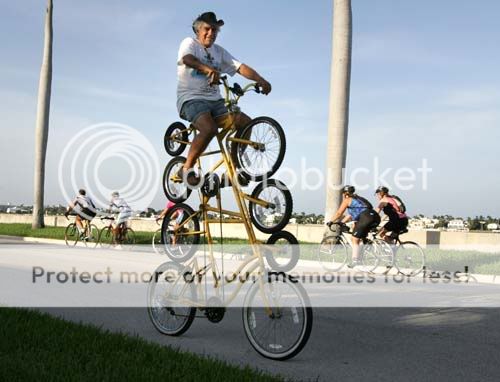
The feely-touchy air of Heikes posts will not distract us from the fact that in a broad and objective sense, riding horses (and slapping them in the face so that they begin to ride) is indeed enslavement. For sports, entertainment, transportation, travel, fun, bikes are better. .
The images in this post show some of the fun one can have with bikes - without having to abuse another lifeform.
My opponents questions and my answers:
Yes, I can bestow affection on my bicycle. When I was a child I even talked to mine. Does it return my affection? My mind as a child would like to have dreamed so. But nowdays I dont require my means of transportation to bestow affection on me. I just need it to get me from point A to point B.
No. I can take care of myself just fine, without controlling other sentient beings.
Yes, a bike exercises the whole body, not just the legs. Your statement is untrue. Compare the average weight of a bike-rider and a horse-rider. I did see that video of you horse-riding btw
Rebuttal of my opponents main points
In one section Heike refers to psychological benefits of having a horse. Arrogantly enough she makes no mention of whether these "psychological benefits" are mutual. What "psychological benefits" does a horse derive from being kicked by spurs and whipped in the face?
In another section Heike makes a huge list of things she does for a horse...from removing parasites to providing fresh water...thereby proving my point of how time and money consuming the whole ordeal is.
Equestrianismis not a "relationship", it is enslavement:
Please also take note that my opponent as already admitted that bikes train more muscles, bikes are easier to maintain, bikes are better to abuse and bikes are better to get through town with. And as for travel in the countryside: We have Mountainbikes.

Socratic Questions to my Opponent:
1. Do you, dear horse-rider, have an athletic body?
2. What means are employed to have a horse start running or change direction?
3. Are you saying that because we have made horses dependent on us (domesticated them), we have the right to physically injure them?
4. Would you agree that causing physical harm (such as hitting, slapping, injuring him) to your spouse is not really "love"?
5. How much would you say owning a horse costs, including all apparel, food, etc.?
"A running horse needs no spurs"
Reading my opponents posts I will admit I am touched at her love to Horses. Heike clearly makes a strong case for the possibility of companionship to Horses, for a relationship of lifeforms in mutual respect of each other. Ive heard of similar close friendships being built to dogs. It therefore becomes even more important that we stop using them as a means of transportation and entertainment or physically injure them with spurs and instead use cars and bikes.
The feely-touchy air of Heikes posts will not distract us from the fact that in a broad and objective sense, riding horses (and slapping them in the face so that they begin to ride) is indeed enslavement. For sports, entertainment, transportation, travel, fun, bikes are better. .
The images in this post show some of the fun one can have with bikes - without having to abuse another lifeform.
My opponents questions and my answers:
1) Can you bestow affection on your bicycle and have it returned?
Yes, I can bestow affection on my bicycle. When I was a child I even talked to mine. Does it return my affection? My mind as a child would like to have dreamed so. But nowdays I dont require my means of transportation to bestow affection on me. I just need it to get me from point A to point B.
2) Will your bicycle help take care of itself and you while you are riding it?
No. I can take care of myself just fine, without controlling other sentient beings.
3) Does owning a bicycle provide daily physical benefits for the whole body (not just the legs while riding) as a horse does?
Yes, a bike exercises the whole body, not just the legs. Your statement is untrue. Compare the average weight of a bike-rider and a horse-rider. I did see that video of you horse-riding btw
Yes. The uses are: Sports. Entertainment. Fun. Transportation.
4) Can your bicycle be used for anything other than riding, as a horse can?
Rebuttal of my opponents main points
In one section Heike refers to psychological benefits of having a horse. Arrogantly enough she makes no mention of whether these "psychological benefits" are mutual. What "psychological benefits" does a horse derive from being kicked by spurs and whipped in the face?
In another section Heike makes a huge list of things she does for a horse...from removing parasites to providing fresh water...thereby proving my point of how time and money consuming the whole ordeal is.
Equestrianismis not a "relationship", it is enslavement:
Horses are trained and ridden for practical working purposes such as in police work or for controlling herd animals on a ranch. They are also used in competitive sports including, but not limited to dressage, endurance riding, eventing, reining, show jumping, tent pegging, vaulting, polo, horse racing, driving, and rodeo.
Please also take note that my opponent as already admitted that bikes train more muscles, bikes are easier to maintain, bikes are better to abuse and bikes are better to get through town with. And as for travel in the countryside: We have Mountainbikes.
Socratic Questions to my Opponent:
1. Do you, dear horse-rider, have an athletic body?
2. What means are employed to have a horse start running or change direction?
3. Are you saying that because we have made horses dependent on us (domesticated them), we have the right to physically injure them?
4. Would you agree that causing physical harm (such as hitting, slapping, injuring him) to your spouse is not really "love"?
5. How much would you say owning a horse costs, including all apparel, food, etc.?
My opponent, having duly noted my love of horses in general and my love for my horse in particular, is taking advantage of my emotional attachment to
attempt to divert me into an angry defense of the human treatment of horses.
However, instead I will simply make the following points:
1. The topic says “Horses Are Far Superior To Bicycles.” Superior from whose point of view? Obviously, since two humans are debating and the readers and judges are all (presumably) human, the topic is whether a horse is superior to a bicycle from a human point of view, not the horse’s point of view.
2. The only relevant comparison between horses and bicycles is as a means of transportation, recreation, relaxation, and exercise. These are not moral issues, nor ethical ones. The hypothetical target of this debate is a human who needs these things and is deciding whether to get a horse or a bicycle. I will prove to you that, if this person has that choice, a horse is a far superior choice. How other people treat their horses has no relevance to the issue. An individual’s relationship with their horse, and the positivity or negativity of the experience of having a horse, will be dependent on how they choose to treat it and interact with it, and has nothing to do with general ethical concerns about the domestication and treatment of horses or the uses to which they are put.
Or, more simply, I refuse to be baited and dragged off topic by the heart.
I suggest to you that if you ONLY needed transportation to get you from point A to point B, you wouldn’t be considering either a horse or a bicycle, you’d be deciding on some form of motorized transportation. Other reasons for choosing to ride a bicycle - relaxation and recreation - are enhanced and enriched by the relationship between human and horse, and this is something a bicycle can not do.
Most adults might give a similar answer. The fact remains, however, that the horse’s senses are superior to ours. A horse will detect a potential danger, such as unsafe ground, a bear or wildcat, and other hazards when a human, no matter how intelligent or mature, can not. Off the top of my head I can recall reading about several incidents where bicycle riders were injured or killed by wild animals. That sort of thing seldom happens to people riding horses.
You said “yes,” but the rest of your answer says no. A bicycle can’t pull a plow or a carriage, herd livestock, nor do any of the other things horses can do. In short, the only thing it can do is be ridden.
I submit that few people have the physical condition and skills to ride a mountain bike through wilderness terrain. (I certainly couldn't do it.) The great majority of people, however, CAN ride a horse, and will derive far more pleasure and relaxation from doing so than from trying to train for mountain biking.
My opponent's Socratic Questions:
1. Do you, dear horse-rider, have an athletic body?
Nope. Due to physical (medical) issues, I’ve been overweight most of my life, and I was just as overweight when I rode a bicycle for exercise as I am now. And in any case, whether one rides a bicycle or a horse, it’s still quite possible to eat too much.
2. What means are employed to have a horse start running or change direction?
The most common “go” cues are a verbal signal such as “giddyup” or a clucking sound, or squeezing one’s legs around the horse. Changing direction is accomplished by reining. Most horses are taught to neck rein, which means you simply allow the rein on the opposite side from the direction you want to go to touch the horse’s neck.
3. Are you saying that because we have made horses dependent on us (domesticated them), we have the right to physically injure them?
No. I have never physically injured my horse and don’t intend to ever do so.
4. Would you agree that causing physical harm (such as hitting, slapping, injuring him) to your spouse is not really "love"?
Yes. And this has anything to do with the topic how? I don’t hit, slap, or injure my horse either. In fact, I don’t even own a whip or a pair of spurs.
5. How much would you say owning a horse costs, including all apparel, food, etc.?
Much depends on whether one has the facilities and pasture to maintain a horse. For someone who has a couple of acres of pasture, I’d say approximately $45 - $55 a month for feed and hay in the wintertime, and approx. $20 - $30 a month for feed from when the grass starts to grow in the Spring until it begins to die in the Fall. I spend another $40 every other month for the farrier and about $300 once a year for veterinary care (shots, Coggins test, etc.). Saddles are expensive ($200 & up), but they are generally a one-time expense; most of the rest of the needed “tack” such as halters, lead ropes, etc. and grooming tools can be purchased inexpensively and last for years. If you want to be able to take your horse places (nice, but not necessary), you’ll need a trailer but that also is a one-time expense. You’ll need a pair of riding boots, which should last years and cost no more than a good pair of tennis shoes. No other “apparel” is required; I mostly ride in jeans and a t-shirt. My up-front costs when I first got my horse were about $1600.00; comparable to the cost of a good bicycle. (Yes, I know you can get a bike much cheaper, but you get what you pay for; top-of-the-line bikes can run thousands of dollars).
Once again, if someone does not have the facilities or land to keep a horse, then getting a horse probably wouldn’t be one of the choices under consideration, so it’s a moot point.
Here are a few things you might not know about horseback riding:
As an exercise, horseback riding uses the following muscle groups: the deep postural muscles of the trunk and pelvis, the adductor muscles of the thighs, the quadriceps, hamstrings, and glutes as well as the leg, back, stomach, and shoulder muscles, and the arms when cueing the horse.
Riding at walk provides most of the same benefits as walking, and riding at a faster pace (trot, canter, gallop, etc.) is considered to be cardiovascular exercise.
Horseback riding can improve muscle strength, coordination, balance, reflexes, and joint range of motion as well as self-confidence, self-discipline, emotional control, patience, and willingness to take risks.
(from the same source as above)
Other physical tasks associated with horse ownership or caring for a horse, such as mucking out, saddling and unsaddling, and carrying feed and hay, are weight-bearing exercise and help to increase bone density, muscle strength, and prevent osteoporosis.
Another aspect of horse ownership is what the horse teaches the human.
My horse, through her reactions, has taught me to moderate my voice better than any human teacher.
Thanks to my horse, I am more aware of my gestures and body movements, and what they communicate to others.
As I have taught my horse to understand what I want from her, she has taught me her language, and taught me to be more aware of, and better understand, the unspoken communications of other animals and my fellow humans.
My horse has taught me about courage and perseverance. I have fallen off, and I have gotten back on and finished what we started anyway. I have failed, and tried again until I succeeded.
I’ve ridden a bicycle, off and on, since I was about eight years old. I’ve owned a horse for the past two years. In those two years I’ve learned and experienced more, and had more sheer pleasure and fun, than I ever had in all those years of riding a bicycle.
However, instead I will simply make the following points:
1. The topic says “Horses Are Far Superior To Bicycles.” Superior from whose point of view? Obviously, since two humans are debating and the readers and judges are all (presumably) human, the topic is whether a horse is superior to a bicycle from a human point of view, not the horse’s point of view.
2. The only relevant comparison between horses and bicycles is as a means of transportation, recreation, relaxation, and exercise. These are not moral issues, nor ethical ones. The hypothetical target of this debate is a human who needs these things and is deciding whether to get a horse or a bicycle. I will prove to you that, if this person has that choice, a horse is a far superior choice. How other people treat their horses has no relevance to the issue. An individual’s relationship with their horse, and the positivity or negativity of the experience of having a horse, will be dependent on how they choose to treat it and interact with it, and has nothing to do with general ethical concerns about the domestication and treatment of horses or the uses to which they are put.
Or, more simply, I refuse to be baited and dragged off topic by the heart.
I dont require my means of transportation to bestow affection on me. I just need it to get me from point A to point B.
I suggest to you that if you ONLY needed transportation to get you from point A to point B, you wouldn’t be considering either a horse or a bicycle, you’d be deciding on some form of motorized transportation. Other reasons for choosing to ride a bicycle - relaxation and recreation - are enhanced and enriched by the relationship between human and horse, and this is something a bicycle can not do.
No. I can take care of myself just fine
Most adults might give a similar answer. The fact remains, however, that the horse’s senses are superior to ours. A horse will detect a potential danger, such as unsafe ground, a bear or wildcat, and other hazards when a human, no matter how intelligent or mature, can not. Off the top of my head I can recall reading about several incidents where bicycle riders were injured or killed by wild animals. That sort of thing seldom happens to people riding horses.
4) Can your bicycle be used for anything other than riding, as a horse can?
Yes. The uses are: Sports. Entertainment. Fun. Transportation.
You said “yes,” but the rest of your answer says no. A bicycle can’t pull a plow or a carriage, herd livestock, nor do any of the other things horses can do. In short, the only thing it can do is be ridden.
And as for travel in the countryside: We have Mountainbikes.
I submit that few people have the physical condition and skills to ride a mountain bike through wilderness terrain. (I certainly couldn't do it.) The great majority of people, however, CAN ride a horse, and will derive far more pleasure and relaxation from doing so than from trying to train for mountain biking.
My opponent's Socratic Questions:
1. Do you, dear horse-rider, have an athletic body?
Nope. Due to physical (medical) issues, I’ve been overweight most of my life, and I was just as overweight when I rode a bicycle for exercise as I am now. And in any case, whether one rides a bicycle or a horse, it’s still quite possible to eat too much.
2. What means are employed to have a horse start running or change direction?
The most common “go” cues are a verbal signal such as “giddyup” or a clucking sound, or squeezing one’s legs around the horse. Changing direction is accomplished by reining. Most horses are taught to neck rein, which means you simply allow the rein on the opposite side from the direction you want to go to touch the horse’s neck.
3. Are you saying that because we have made horses dependent on us (domesticated them), we have the right to physically injure them?
No. I have never physically injured my horse and don’t intend to ever do so.
4. Would you agree that causing physical harm (such as hitting, slapping, injuring him) to your spouse is not really "love"?
Yes. And this has anything to do with the topic how? I don’t hit, slap, or injure my horse either. In fact, I don’t even own a whip or a pair of spurs.
5. How much would you say owning a horse costs, including all apparel, food, etc.?
Much depends on whether one has the facilities and pasture to maintain a horse. For someone who has a couple of acres of pasture, I’d say approximately $45 - $55 a month for feed and hay in the wintertime, and approx. $20 - $30 a month for feed from when the grass starts to grow in the Spring until it begins to die in the Fall. I spend another $40 every other month for the farrier and about $300 once a year for veterinary care (shots, Coggins test, etc.). Saddles are expensive ($200 & up), but they are generally a one-time expense; most of the rest of the needed “tack” such as halters, lead ropes, etc. and grooming tools can be purchased inexpensively and last for years. If you want to be able to take your horse places (nice, but not necessary), you’ll need a trailer but that also is a one-time expense. You’ll need a pair of riding boots, which should last years and cost no more than a good pair of tennis shoes. No other “apparel” is required; I mostly ride in jeans and a t-shirt. My up-front costs when I first got my horse were about $1600.00; comparable to the cost of a good bicycle. (Yes, I know you can get a bike much cheaper, but you get what you pay for; top-of-the-line bikes can run thousands of dollars).
Once again, if someone does not have the facilities or land to keep a horse, then getting a horse probably wouldn’t be one of the choices under consideration, so it’s a moot point.
Here are a few things you might not know about horseback riding:
Source
the total calories used per hour by a 150 pound person during horse riding were similar to those used during jogging (6mph) and cycling (9mph) (315-480 calories per hour).
As an exercise, horseback riding uses the following muscle groups: the deep postural muscles of the trunk and pelvis, the adductor muscles of the thighs, the quadriceps, hamstrings, and glutes as well as the leg, back, stomach, and shoulder muscles, and the arms when cueing the horse.
Riding at walk provides most of the same benefits as walking, and riding at a faster pace (trot, canter, gallop, etc.) is considered to be cardiovascular exercise.
Horseback riding can improve muscle strength, coordination, balance, reflexes, and joint range of motion as well as self-confidence, self-discipline, emotional control, patience, and willingness to take risks.
(from the same source as above)
To conclude, horse riding is a wonderful form of exercise, which stimulates the cardiovascular system as well as all the body systems. Although riding is a strenuous exercise, it is perceived as enjoyment, therefore the rider has increased tolerance and motivation to lengthen the period of exercise."(excerpt from article by Lisa McFarlane, Senior 11 Physiotherapist, British Horse Society)
Other physical tasks associated with horse ownership or caring for a horse, such as mucking out, saddling and unsaddling, and carrying feed and hay, are weight-bearing exercise and help to increase bone density, muscle strength, and prevent osteoporosis.
Another aspect of horse ownership is what the horse teaches the human.
My horse, through her reactions, has taught me to moderate my voice better than any human teacher.
Thanks to my horse, I am more aware of my gestures and body movements, and what they communicate to others.
As I have taught my horse to understand what I want from her, she has taught me her language, and taught me to be more aware of, and better understand, the unspoken communications of other animals and my fellow humans.
My horse has taught me about courage and perseverance. I have fallen off, and I have gotten back on and finished what we started anyway. I have failed, and tried again until I succeeded.
I’ve ridden a bicycle, off and on, since I was about eight years old. I’ve owned a horse for the past two years. In those two years I’ve learned and experienced more, and had more sheer pleasure and fun, than I ever had in all those years of riding a bicycle.
More fun with Bikes and more Compassion with Horses
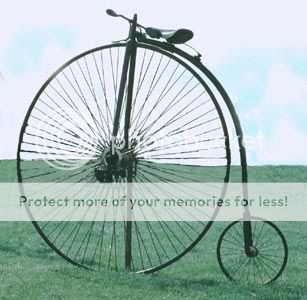
Lets start out with responses.
While I dont think a horses point of view is that bikes are superior......it should be obvious that I am human and hold the point of view that a horse is a sentient lifeform and not an object one "uses".
Well thank you very much. Even if we look at transportation only (it doesnt say that in the debate title, but if we do), then bicycles are better because they are less costly, less time-consuming, provide more exercise, need less maintenance, and can be used for traveling in more diverse environments (cities, mountains, roads, etc.).
If this has no bearing on the debate, as you claim, why do you keep bringing emotional factors up? I didnt start with the emotional factors, you did.
Indeed. Treating a lifeform who's senses are superior to ours as a slave is even worse.
Several? I dont recall a single one.
I think in this 21st Century of ours, more people ride bikes than horses. Why might that be? The answer is simple: Bikes are - everything considered - more convenient.
I have yet to see someone who rides bicycles as a professional sports who is overweight. But I have seen plenty of professional horse riders who are overweight. Thats the point Im making.
From what I`ve observed this is more of a slapping than touching.
You personally may not, but there are plenty who do.
As the readers and judges will note, the accumulated costs of owning a horse are in no way comparable to owning a bike.
An even more extensive list of bike-ridings health and sports benefits here:
Cycling and your Health
Which is all well and good (so you dont want to keep it with transportation-only afterall) if we also factor in the psychological effects a human has on a horse.
Still widespread and difficult to eliminate. So much for ethics among horseriders. Maybe this is why my opponent is quick to say:
When debating horse vs. bicycle I would think we have to take all aspects of horse riding into consideration, no?
It is not my intention to play with my opponents feelings. In fact, I do believe in her ethical integrity and her good treatment of her horse.
But the debate topic is not "Bicycles vs. Heikes Horse" it is "Bicycles vs. Horses" in general.
And, looking at it from a birds-eye-view we can see that the majority of modern society has chosen to stop riding horses and has gone to using easier, cheaper, faster and more ethical means of travel.
I`d like to repeat a statement Heike made which pretty much sums up whats wrong with horse-riding:
Remember our analogy of the "superior" ET-race that is domesticating and riding us? How would you feel if they said "The human point of view does not matter"?
SQ 1: Why do so many more people ride a bike than a horse?
SQ 2: What do we need horse-carriages for nowadays?
SQ 3: Is it possible to build a relationship to a horse without riding it?
SQ 4: Is a horse needed, nowadays, for travel?
SQ 5: If a horse is not needed for travel, why use it anyway for that purpose?
Lets start out with responses.
the topic is whether a horse is superior to a bicycle from a human point of view, not the horse’s point of view.
While I dont think a horses point of view is that bikes are superior......it should be obvious that I am human and hold the point of view that a horse is a sentient lifeform and not an object one "uses".
2. The only relevant comparison between horses and bicycles is as a means of transportation, recreation, relaxation, and exercise. These are not moral issues, nor ethical ones.
Well thank you very much. Even if we look at transportation only (it doesnt say that in the debate title, but if we do), then bicycles are better because they are less costly, less time-consuming, provide more exercise, need less maintenance, and can be used for traveling in more diverse environments (cities, mountains, roads, etc.).
An individual’s relationship with their horse, and the positivity or negativity of the experience
If this has no bearing on the debate, as you claim, why do you keep bringing emotional factors up? I didnt start with the emotional factors, you did.
The fact remains, however, that the horse’s senses are superior to ours
Indeed. Treating a lifeform who's senses are superior to ours as a slave is even worse.
Off the top of my head I can recall reading about several incidents where bicycle riders were injured or killed by wild animals
Several? I dont recall a single one.
The great majority of people, however, CAN ride a horse
I think in this 21st Century of ours, more people ride bikes than horses. Why might that be? The answer is simple: Bikes are - everything considered - more convenient.
whether one rides a bicycle or a horse, it’s still quite possible to eat too much
I have yet to see someone who rides bicycles as a professional sports who is overweight. But I have seen plenty of professional horse riders who are overweight. Thats the point Im making.
hich means you simply allow the rein on the opposite side from the direction you want to go to touch the horse’s neck.
From what I`ve observed this is more of a slapping than touching.
In fact, I don’t even own a whip or a pair of spurs.
You personally may not, but there are plenty who do.
comparable to the cost of a good bicycle
As the readers and judges will note, the accumulated costs of owning a horse are in no way comparable to owning a bike.
As an exercise, horseback riding uses the following muscle groups
An even more extensive list of bike-ridings health and sports benefits here:
Cycling and your Health
Another aspect of horse ownership is what the horse teaches the human.
Which is all well and good (so you dont want to keep it with transportation-only afterall) if we also factor in the psychological effects a human has on a horse.
Some behaviors and activities are widely condemned as abusive by people within the horse industry, even if not illegal as a matter of public law
organizations that sanction various events spend a great deal of money testing horses for illegal drugs. Some specific training or showing practices are so widely condemned that they have been made illegal at the national level and violations can incur criminal penalties. The most well-known is soring, a practice of applying a caustic ointment just above the hooves of a Tennessee Walking Horse to make it pick up its feet higher.
However, in spite of a federal law...
the practice is still widespread and difficult to eliminate
Still widespread and difficult to eliminate. So much for ethics among horseriders. Maybe this is why my opponent is quick to say:
These are not moral issues, nor ethical ones.
When debating horse vs. bicycle I would think we have to take all aspects of horse riding into consideration, no?
It is not my intention to play with my opponents feelings. In fact, I do believe in her ethical integrity and her good treatment of her horse.
But the debate topic is not "Bicycles vs. Heikes Horse" it is "Bicycles vs. Horses" in general.
And, looking at it from a birds-eye-view we can see that the majority of modern society has chosen to stop riding horses and has gone to using easier, cheaper, faster and more ethical means of travel.
I`d like to repeat a statement Heike made which pretty much sums up whats wrong with horse-riding:
the topic is whether a horse is superior to a bicycle from a human point of view, not the horse’s point of view.
Remember our analogy of the "superior" ET-race that is domesticating and riding us? How would you feel if they said "The human point of view does not matter"?
SQ 1: Why do so many more people ride a bike than a horse?
SQ 2: What do we need horse-carriages for nowadays?
SQ 3: Is it possible to build a relationship to a horse without riding it?
SQ 4: Is a horse needed, nowadays, for travel?
SQ 5: If a horse is not needed for travel, why use it anyway for that purpose?
Well thank you very much. Even if we look at transportation only
I didn’t say transportation only. I said transportation, recreation, relaxation, and exercise. As I have pointed out before, if we were looking at transportation ONLY we wouldn’t be considering either a horse or a bicycle, we’d be considering something with a motor that protects one from the weather and perhaps provides a bit of comfort.
A survey done in 2003 found that only 5 percent of bicycle riders use their bicycle primarily for transportation. 41 percent use them for exercise and health, and 37% use them for recreation. Source For recreation and relaxation, the psychological and emotional factors are certainly relevant.
If this has no bearing on the debate, as you claim, why do you keep bringing emotional factors up? I didnt start with the emotional factors, you did.
How other people treat their horses has no bearing on my (or any individual’s) experience of having a horse. Some people fight pit bulls. Does that change the fact that my pit bull is a beloved and pampered house pet who tries to be a 70 lb. lap dog? No. I know that other people mistreat pit bulls, but that does not affect my relationship with my dog, nor does if affect my experience of owning a pit bull. So, allow me to clarify. My treatment of my horse, and the relationship between us, has everything to do with the horse-owning or horse-riding experience. What other people do with their horses has no relevance.
Several? I dont recall a single one.
July 24, 2007 - cyclist killed by black bear in Calgary.
Jun, 2008 - cyclist injured in collision with black bear in Boulder, CO
May 15, 2006 - A black bear chased down and mauled a cyclist in Alberta
Jan 9, 2004 - A mountain lion attacked cyclists in California; one was critically injured
The same animal is believed to have killed another man who was found next to his bike.
I could go on, but that’s several and I don’t want to waste any more word count on a point that’s already been made.
more people ride bikes than horses. Why might that be?
Why might that be? Oh, how about .. more people live in or near cities and towns in areas where they are not allowed to keep a horse? Whether or not any particular individual is able to have something, or can afford it, has little if any bearing on the superiority of it. If a person is unable to afford a BMW, that doesn’t change the fact that it’s a better (superior) car to the one they can afford. If you have to ride a motor scooter instead of an ATV because ATV’s aren’t street legal, that doesn’t change the fact that the ATV is a superior vehicle (safer, easier to ride, more fun, etc.)
I have yet to see someone who rides bicycles as a professional sports who is overweight. But I have seen plenty of professional horse riders who are overweight. Thats the point Im making.
I must have missed the detour sign that took us into professional sports. Anyway, I find it far more likely that this is because someone who is overweight is physically able to participate in equestrian sports, whereas someone who is overweight would find it very difficult to participate in cycling sports. Yet another reason the horse is superior - one doesn’t have to be in great physical condition to ride one.
From what I`ve observed this is more of a slapping than touching.
Okay, let’s inject a bit of reality into this aspect of the discussion. Aside from posturing and body language and some “verbal” communications, horses communicate with each other by kicking and biting. A “boss” mare will assert her will over the rest of the herd with teeth and hooves, and this is normal. A lead mare who is unable (or unwilling) to physically assert her leadership in this way will not long remain lead mare. Even foals (baby horses) will kick and bite their playmates, and will “communicate” with their human friends in the same manner until they are taught that this form of communication is unacceptable to humans.
A horse who expects to be taught what behaviors are desirable or unacceptable by other horses with kicks and bites that bring blood and leave marks is hardly “injured” by the slap of a rein or a tap with a training stick. It is not abuse to communicate with a horse in the manner which he expects and understands, and the occasional slap or tap breeds respect, not fear. Furthermore, spurs are correctly used as a communication aid; they get the horse’s attention and cause him to focus on the cue rather than hurting him.
You cannot keep any kind of animal (or raise a child) without discipline. Tapping a horse with a rubber-tipped training stick, or even smacking him lightly on the rump with a lead rope, is no more “abuse” than disciplining a child or smacking a puppy with a newspaper. Horses don’t understand English, and the only way to communicate with a horse which hasn’t yet learned verbal cues is by touching him. Horse hide is pretty tough, and to claim that physical cues are injury or abuse is a serious misrepresentation of the facts.
the accumulated costs of owning a horse are in no way comparable to owning a bike.
That rather depends on the bike, doesn’t it? Sure, you can get a cheap bike from Walmart, but how long will it last and how often will it give you trouble? A quick google search revealed that quality commuting and touring bikes are priced from $1,000 - $3,000. Many bikes are in the mid range, costing a bit more or less than $2,000. Once again my opponent is misrepresenting the facts.
And, let’s relate this back to an earlier point. If you can’t afford a horse, then you’ll have to make do with something else - a bicycle, an ATV, a scooter, or a home gym if you’re looking for exercise. That doesn’t change the fact that the horse is superior to a bicycle any more than you not being able to afford an expensive top quality car changes the fact that it’s a better car than the one you can afford.
Now on to my opponent’s latest detour - horse abuse. Yes, people abuse horses. People also abuse dogs, cats, children, and their spouses. Does this influence one’s decision whether to have a dog, or a child, or a spouse? No. Is it possible to have a dog, child, spouse, or horse and NOT abuse it? Yes. So then, why is it that the bad choices that other people make are supposed to influence my decision on whether or not to get a horse?
When debating horse vs. bicycle I would think we have to take all aspects of horse riding into consideration, no?
Sure. That’s pretty much what I’ve been trying to do. But again, how do other people’s actions and poor decisions become part of my (or any individual’s) experience of horseback riding? Does riding or owning a horse require me to watch other people abusing horses? No. Am I somehow required to mistreat my own horse in order to become part of the horse riding or horse owning community? No. Am I required to feel bad about the way some people treat their horses in order to own or ride one? Again, no! No more than I am required to allow the fact that some people mistreat their dogs or children to taint my own experience of having a dog or a child.
the majority of modern society has chosen to stop riding horses
Have they really? Or have they simply lost the choice? The majority of modern society lives in a city or town, in an apartment or townhouse or condo, or suburban home with zoning restrictions. They don’t have horses because they can’t have horses, not because they choose not to have horses.
Remember our analogy of the "superior" ET-race that is domesticating and riding us? How would you feel if they said "The human point of view does not matter"?
I remember. But you appear to have forgotten my point that most horses are far better off in their partnerships with humans than so-called “free” (wild) horses. They iive longer, are healthier, are not required to spend all of their awake time hunting for food and water, and they are sheltered and cared for. Humans can build their own shelters, grow or buy their own food, and put on their own clothing to keep themselves warm or dry. Horses can do none of these things for themselves. Yes, they survive in the wild, but it’s a daily struggle for survival, not joyous and leisurely freedom.
SQ 1: Why do so many more people ride a bike than a horse?
Answered above. Many people can’t have a horse because of where they live.
SQ 2: What do we need horse-carriages for nowadays?
Fun, recreation, relaxation, and novelty.
SQ 3: Is it possible to build a relationship to a horse without riding it?
Yes. In fact a considerable number of horses are “companion animals” to people who can not ride; also there are unsound horses which serve as companion animals. This is also the basis for EAGALA and other methods of equine-assisted psychotherapy.
SQ 4: Is a horse needed, nowadays, for travel?
Nope. Neither is a bicycle.
SQ 5: If a horse is not needed for travel, why use it anyway for that purpose?
For fun, recreation, relaxation, exercise, and the sheer joy and pleasure of the partnership with the horse.
My opponent continues to dance around the central issue, taking us on detour after detour away from the simple truth: Owning and riding a horse has many more benefits than owning and riding a bicycle.
After a few weeks, riding a bicycle for exercise and relaxation often becomes as tedious and boring as many other forms of exercise. Day after day, it’s the same old thing. One’s relationship with a horse, however, is dynamic and ever-changing. The basics of riding a horse can be learned in an afternoon, but becoming a good rider - and a good partner to your horse - can take a lifetime. A lifetime of pleasure, excitement, satisfaction, and better health.
Concise Point-for-Point Rebuttal
Throughout her last post Heike says:
Exactly. Bikes are good. And much easier to have than horses.
***But it does have bearing on this Debate*** This debate does not concern your personal private life but horses in general. In Debating "Horses vs. Bicycles" we hope to gain on overview of ALL its aspects, not only of those of your private life.
So we are in a Debate entitled "Horses are far superior to bicycles" and you're conclusion is: "What other people do with horses has no relevance"? Debate-Judges please take note.
I was hoping you would post that.
More evidence for my side. More evidence that shows us, animals should not be abused as means of transportation or personal entertainment.
And why are they not allowed to keep a horse? Would it have something to do with the hazards you just listed? And also with the fact that its better to have a bike for recreation and transportation and exercise?
I think the definitive answer to this is: Yes!
This not being a debate about your private life, sports also factors into horse-riding and bike-riding.
Ah yes...circular reasoning rears its head at least once a debate. I say: "With bikes you loose more weight than with horses" and Heike says: "Good! Because one doesnt have to be in great physical condition to ride a horse!". The truth is: You dont have to be in great physical condition to ride a bike either. Its just that a bike gets you into a better physical condition more quickly and efficiently.
SQ 1: Considering two of the great problems of the U.S.A: Obesity and The Financial Crisis...who the hell would prefer a horse to a bike?????
I have a more modern interpretation on how to treat other lifeforms. The mere act of riding another lifeform is already questionable...not to mention the stuff you call "physical cues".
Misrepresenting facts? My own mountain bike, bought 6 years ago, cost $800. Been two repairs once for $50 Dollars. Thats a cost of 850 for 6 years. Not much different with the bikes of my friends, neighbours or any other peoples bikes.
Who is misrepresenting the facts here?
Given the choice of a horse or a bicycle there are many considerations to factor in:
1. What is less time consuming?
2. What is more cost-effective?
3. What is easier to handle?
4. What is more modern?
5. What provides more exercise?
In all counts the bicycle wins.
And they abuse bikes. But when they abuse bikes no lifeform is adversely affected.
...the reason for this being that humans have domesticated horses and taken ownership of most of the land. Its ironic isnt it. First the human makes the horse unable to be free and then he stands there and grins: "See? Horses are better off with us".
Again, I can envision 100 Million other ways to have fun or own a novelty than enslaving other lifeforms.
I like that. Rather than pitting bikes against horses for entertainment or travel, have horses serve an entirely different purpose: Animals we can build a relationship to.
Really? I thought I was debating how bicycles are preferable to horses.
Nope. If you want to save yourself a huge mess, daily labor, money, time and also want to remain respectful toward other lifeforms, get yourself a bike for recreation, entertainment, riding.
Then do something else. Get a dog for example. Thats an animal you dont have to ride on and use spikey boot spurs on to derive pleasure. Besides: Those people who are really into exercise know its only tedious in the beginning. Once adrenalin kicks in, it becomes a type of pleasure that transcends time and space.
The rush you get from real exercise (a type of body-work that cannot be accomplished with a horse, but can be with a bike!) far surpasses any messing around with saddles. In this context, an article from "Mens Health":
Adrenaline Rush
Conclusion: None of your arguments...be they recreation, sports or travel...show how horses are better to have than bikes.
SQ 1: How are horses cheaper than bikes?
SQ2: How are horses less time-consuming than bikes?
SQ3: How is horse-riding more sportive than biking?
SQ4: Why prefer a horse to, lets say, a dog?
SQ5: How is my arguing for bikes a "detour" of the debate?
Throughout her last post Heike says:
A survey done in 2003 found that only 5 percent of bicycle riders use their bicycle primarily for transportation. 41 percent use them for exercise and health, and 37% use them for recreation. Source For recreation and relaxation, the psychological and emotional factors are certainly relevant.
Exactly. Bikes are good. And much easier to have than horses.
How other people treat their horses has no bearing on my (or any individual’s) experience of having a horse
***But it does have bearing on this Debate*** This debate does not concern your personal private life but horses in general. In Debating "Horses vs. Bicycles" we hope to gain on overview of ALL its aspects, not only of those of your private life.
What other people do with their horses has no relevance.
So we are in a Debate entitled "Horses are far superior to bicycles" and you're conclusion is: "What other people do with horses has no relevance"? Debate-Judges please take note.
July 24, 2007 - cyclist killed by black bear in Calgary.
Jun, 2008 - cyclist injured in collision with black bear in Boulder, CO
May 15, 2006 - A black bear chased down and mauled a cyclist in Alberta
Jan 9, 2004 - A mountain lion attacked cyclists in California; one was critically injured
The same animal is believed to have killed another man who was found next to his bike.
I was hoping you would post that.
More evidence for my side. More evidence that shows us, animals should not be abused as means of transportation or personal entertainment.
more people live in or near cities and towns in areas where they are not allowed to keep a horse?
And why are they not allowed to keep a horse? Would it have something to do with the hazards you just listed? And also with the fact that its better to have a bike for recreation and transportation and exercise?
I think the definitive answer to this is: Yes!
I must have missed the detour sign that took us into professional sports.
This not being a debate about your private life, sports also factors into horse-riding and bike-riding.
Yet another reason the horse is superior - one doesn’t have to be in great physical condition to ride one.
Ah yes...circular reasoning rears its head at least once a debate. I say: "With bikes you loose more weight than with horses" and Heike says: "Good! Because one doesnt have to be in great physical condition to ride a horse!". The truth is: You dont have to be in great physical condition to ride a bike either. Its just that a bike gets you into a better physical condition more quickly and efficiently.
SQ 1: Considering two of the great problems of the U.S.A: Obesity and The Financial Crisis...who the hell would prefer a horse to a bike?????
to claim that physical cues are injury or abuse is a serious misrepresentation of the facts.
I have a more modern interpretation on how to treat other lifeforms. The mere act of riding another lifeform is already questionable...not to mention the stuff you call "physical cues".
Many bikes are in the mid range, costing a bit more or less than $2,000. Once again my opponent is misrepresenting the facts.
Misrepresenting facts? My own mountain bike, bought 6 years ago, cost $800. Been two repairs once for $50 Dollars. Thats a cost of 850 for 6 years. Not much different with the bikes of my friends, neighbours or any other peoples bikes.
Who is misrepresenting the facts here?
That doesn’t change the fact that the horse is superior to a bicycle any more than you not being able to afford an expensive top quality car changes the fact that it’s a better car than the one you can afford.
Given the choice of a horse or a bicycle there are many considerations to factor in:
1. What is less time consuming?
2. What is more cost-effective?
3. What is easier to handle?
4. What is more modern?
5. What provides more exercise?
In all counts the bicycle wins.
Yes, people abuse horses
And they abuse bikes. But when they abuse bikes no lifeform is adversely affected.
most horses are far better off in their partnerships with humans than so-called “free” (wild) horses.
...the reason for this being that humans have domesticated horses and taken ownership of most of the land. Its ironic isnt it. First the human makes the horse unable to be free and then he stands there and grins: "See? Horses are better off with us".
What do we need horse-carriages for nowadays? Fun, recreation, relaxation, and novelty.
Again, I can envision 100 Million other ways to have fun or own a novelty than enslaving other lifeforms.
his is also the basis for EAGALA and other methods of equine-assisted psychotherapy.
I like that. Rather than pitting bikes against horses for entertainment or travel, have horses serve an entirely different purpose: Animals we can build a relationship to.
My opponent continues to dance around the central issue, taking us on detour after detour
Really? I thought I was debating how bicycles are preferable to horses.
Owning and riding a horse has many more benefits than owning and riding a bicycle.
Nope. If you want to save yourself a huge mess, daily labor, money, time and also want to remain respectful toward other lifeforms, get yourself a bike for recreation, entertainment, riding.
After a few weeks, riding a bicycle for exercise and relaxation often becomes as tedious and boring as many other forms of exercise.
Then do something else. Get a dog for example. Thats an animal you dont have to ride on and use spikey boot spurs on to derive pleasure. Besides: Those people who are really into exercise know its only tedious in the beginning. Once adrenalin kicks in, it becomes a type of pleasure that transcends time and space.
The rush you get from real exercise (a type of body-work that cannot be accomplished with a horse, but can be with a bike!) far surpasses any messing around with saddles. In this context, an article from "Mens Health":
Adrenaline Rush
You, barreling straight down a double-black-diamond ski run at 40 miles per hour. On a mountain bike. You might say it's stupid. Or crazy. Or stupid crazy. We call it genius.
Put the science of stress-busting to practical use and you can change your life
Conclusion: None of your arguments...be they recreation, sports or travel...show how horses are better to have than bikes.
SQ 1: How are horses cheaper than bikes?
SQ2: How are horses less time-consuming than bikes?
SQ3: How is horse-riding more sportive than biking?
SQ4: Why prefer a horse to, lets say, a dog?
SQ5: How is my arguing for bikes a "detour" of the debate?
Exactly. Bikes are good. And much easier to have than horses.
You seem to have missed the point here. Which was that bikes are NOT mostly used for transportation.
***But it does have bearing on this Debate*** This debate does not concern your personal private life but horses in general. In Debating "Horses vs. Bicycles" we hope to gain on overview of ALL its aspects
In spite of your impressive use of multiple asterisks and notices to the judges, you’re wrong. Horseback riding confers many more benefits upon the human than bicycle riding, and the treatment of horses other than the one a person owns or is riding by other humans has no bearing upon that.
Hypothetical person Jane Doe owns and rides a horse. How, exactly, does the overall treatment and usage of horses in general impact her personal experience with her horse? Answer: It doesn’t. Whatever may be happening to other horses in other places, it will have no effect upon her personally, or upon her horse. Nor are we discussing “my private life,” but the individual experience of any horse owner/rider.
evidence that shows us, animals should not be abused as means of transportation or personal entertainment.
Wrong again. The cyclists weren’t trying to ride the bears, you know. This is evidence that horseback riding is safer than bicycle riding, especially in wilderness areas.
And why are they not allowed to keep a horse?
Ummm .. because livestock in general are not allowed in cities and towns, perhaps? They can’t have pigs, goats, cows, or chickens either. It has nothing to do with horses in particular.
This not being a debate about your private life, sports also factors into horse-riding and bike-riding.
Professional sports is an entirely different venue, and subject. Shall we go into comparing the opportunities for competitive sports with horses as opposed to bicycles? You should be glad I don’t have time for that, as horse shows, rodeos, barrel racing, team penning, jumping, reining, endurance riding, and other equestrian sports and events far outnumber opportunities for cyclists.
You dont have to be in great physical condition to ride a bike either. Its just that a bike gets you into a better physical condition more quickly and efficiently.
You haven’t proved that. I’ve shown that calories expended and muscles used in horseback riding can be quite comparable to bicycle riding when riding a faster gait. However, a person with severe physical disabilities, much less simply being “out of shape,” can begin to ride a horse at a walk. A person who is out of shape or has any physical weakness (such as a bad knee or shoulder, for example) will find it difficult and painful to spend enough time and energy riding a bicycle to gain any significant benefit from it. In fact, my own doctor currently discourages me from bicycle riding due to a bad knee but encourages me to ride my horse. Another friend is unable to ride a bike due to a back problem, but her doctor says that horseback riding on the other hand is “good therapy” for her back.
SQ 1: Considering two of the great problems of the U.S.A: Obesity and The Financial Crisis...who the hell would prefer a horse to a bike?????
Apparently, the people who own the 9,500,000 horses which are estimated to be in the United States as of 2006. Source And, of course, me!
not to mention the stuff you call "physical cues".
The stuff horse trainers, horse owners, and horse riders - most of whom love their horses dearly and treat them better than some people treat their own children - call physical cues. You don’t understand this, so you condemn it. This is contempt prior to investigation, not evidence that horses are mistreated.
...the reason for this being that humans have domesticated horses and taken ownership of most of the land. Its ironic isnt it. First the human makes the horse unable to be free and then he stands there and grins: "See? Horses are better off with us".
Wrong AGAIN. Before there were humans, horses had to travel miles daily to hunt for food and water and sometimes suffered for lack of either or both, and suffered from disease, parasites, injury, exposure to the elements, and attacks by predators. A horse in the care of a human does not have to deal with any of these things. Its life is primarily one of safety, comfort, convenience, and ease.
I like that. Rather than pitting bikes against horses for entertainment or travel, have horses serve an entirely different purpose: Animals we can build a relationship to.
Wasn’t it YOU who said that we should be looking at all aspects of horse ownership? It is, of course, true that you can’t have an emotional relationship with a bicycle so you’d prefer to discount that aspect, but it is part of of the experience of having a horse.
You, barreling straight down a double-black-diamond ski run at 40 miles per hour. On a mountain bike. You might say it's stupid. Or crazy. Or stupid crazy.
I’d call it stupid and crazy. I’d also call it impossible for me to do, although I can ride a horse.
Put the science of stress-busting to practical use and you can change your life
Yes, indeed! Let’s talk about stress-busting. The very act of touching a horse can lower blood pressure and reduce stress hormones. Continued interaction and having a relationship with a horse is a fantastic stress-buster, and you don’t have to act crazy or stupid to accomplish it.
SQ 1: How are horses cheaper than bikes?
They aren’t. I never said they were. You get more, you pay more.
SQ2: How are horses less time-consuming than bikes?
They aren’t. Spending time with your horse is one of the benefits of having one.
SQ3: How is horse-riding more sportive than biking?
After looking up sportive in the dictionary, I still don’t understand the question. I can say that horseback riding uses many of the same muscles as bicycle riding, provides a similar level of exercise, and is more enjoyable than bicycle riding and therefore encourages one to spend more time doing it.
SQ4: Why prefer a horse to, lets say, a dog?
I love dogs too. I have both. They serve different purposes in my life. What does it have to do with horses being better than bicycles?
SQ5: How is my arguing for bikes a "detour" of the debate?
In my opinion, you weren’t arguing for bikes. You were bringing up all sorts of extraneous issues about horses instead of explaining how bikes are supposedly better than horses. Besides, I don't have to answer this one because it's actually SQ #6 (you had two #1's in your post) and you're only allowed 5.
In closing, let’s review the benefits of owning and riding a bicycle, and then the benefits of owning and riding a horse.
Benefits of Bicycles
1. Good cardiovascular exercise (when you ride it).
2. Relaxing
3. Recreational (i. e. fun)
4. Increases balance
5. Stress reduction
6. Evironmentally friendly
Benefits of horses
1. Good cardiovascular exercise (when you ride it)
2. Provides some physical exercise daily whether you ride it or not.
3. Provides the benefits of weight-bearing exercise while caring for the horse.
4. Relaxing
5. Recreational (i. e. fun)
5. Increases balance
6. Increases coordination
7. Increases reflexes
8. Stress reduction
9 . Increases communications skills and self-awareness
10. Increases self-confidence
11. Helps develop patience, impulse control, and emotional self-control
12. Improves overall mood and attitude
13. Improves social and life skills
14. Environmentally friendly (in addition to not harming the environment, horses provide organic fertilizer for your garden - try getting THAT from a bicycle! )
Here we clearly see that horses have every benefit that a bicycle does, and have more than twice the number of overall benefits that a bicycle does.
Add to this the fact that many people who can’t ride a bicycle or don’t enjoy riding a bicycle can, and will, ride a horse if given the opportunity. Add also the more intangible and less quantifiable benefits of having a horse, such as the pride of accomplishment when you’ve successfully taught your horse something new, the joy and and the quiet and deep contentment of the relationship itself, the satisfaction, gratification, and pride of having an animal who seriously outweighs you and is more powerful than you are doing what you ask because it wants to please you, and the times your horse will make you laugh out loud with its antics or cleverness. And we can still add more - horse ownership gives you a ticket to trail rides, riding clubs, equestrian camping, roundup clubs, riding in parades, and other events and social groups that revolve around horses.
If you are able to have a horse, it will improve, enhance and enrich not only your physical health but your emotional and mental health, and your life in general, far more than a bicycle can.
the treatment of horses other than the one a person owns or is riding by other humans has no bearing upon that.
But it does have bearing on this debate which is about whether to choose horse or bike. To deny that is just a waste of valuable debate-space.
horseback riding is safer than bicycle riding
Is it? List of horse accidents Only a small sample:
Roy Kinnear (1934-1988), British character actor, bled to death due to a broken pelvis sustained by a horse fall
Christopher Reeve (1952-2004), actor, paralyzed in 1995 from the neck down following a fall from his horse while riding cross-country in a 3-day event.
Maureen Connolly (1934-1969), tennis star, career ended in 1954 by injuries suffered in a collision between her horse and a truck
Cole Albert Porter (June 9, 1891 – October 15, 1964)
American composer and songwriter. In a 1937, a riding accident his legs were crushed leaving him in chronic pain, largely crippled. His right leg was amputated in 1958 as a result of the injury.
This is not the first time in the debate my opponent has posted false information while accusing me of being "wrong".
Professional sports is an entirely different venue
I don’t have time for that
You dont have time for that? Fine. Then my argumentation in this respect also goes unchallenged.
The stuff horse trainers, horse owners, and horse riders call physical cues.
...and the stuff onlookers who are not involved in 18th century custom call violence.
Benefits of horses
12. Improves overall mood and attitude
6. Increases coordination
7. Increases reflexes
I would like to put it on the record here that these points Heike listed as benefits of riding horses are not on the list of riding bikes...although the same could easily be said of bikes. How does riding my mountain bike not train my coordination and reflexes? How does a fresh air bike ride not improve my overall mood?
I can understand my opponent wanting to win this debate, but that should be possible by fair means, right?
9 . Increases communications skills and self-awareness
13. Improves social and life skills
10. Increases self-confidence
And you're not exaggerating just a bit here? Next thing you'll say is that a horse is the solution to all the worlds ills. And besides: Couldnt these three points have been easily summarized as one?
horse ownership gives you a ticket to trail rides, riding clubs, equestrian camping, roundup clubs, riding in parades, and other events and social groups that revolve around horses.
Like there are no bike clubs, bike tracks, bike races, biking events, bike parades and other social groups revolving around biking?
Again you use points that could also be made for biking. This is why the argumentaion of "horses are far superior to bikes" has failed.
If I were to argue the "horse-side" I wouldnt even bring up stuff that can also be said of bikes.
_________________________________
In closing lets look at my pro and con list.
Emotions/Psychology
The Horse obviously wins this one. 1-0 for the horse.
Exercise
The Bike undeniably wins this one. 1-1
Travel
100 years ago the horse would have won this one.
But with the Urbanization of Society, its 1-2 for the horse.
Time-efficiency
Obviously goes to the bike. 1-3
Social Networking
Can be done with a horse or a bike. But I'll be objective and give the benefit of the doubt to the horse. 2-3.
Cost-efficiency
Goes to the bike - despite my opponents denial of this simple calculation.
2-4.
The rights of lifeforms
Obviously a bike cant be hurt. 2-5 for the bike.
Recreation & Fun
This is a tie, depending on preference. Still 2-5
Durability / Lifespan
The expected lifespan of a horse is 20-30 years. Source
Since the parts of a bike can be repaired and exchanged indefinately, this one goes to the bike. 2-6.
Maintanance
Bikes don't eat, sleep, digest, get tired or get sick. 2-7
General Safety
As shown both come with dangers. Tie. Still 2-7.
Control
The ability to control, steer, direct goes to the bike.
Horses are not as predictable. 2-8.
I could go on, but this should be more than enough to show that horses are not FAR superior to bikes, as per debate title. How could they be at a 2-8 end result? If anything, a bike is the better choice, especially in our times.
I thank Heike, the Forum Moderators, the Readers and Starrers, the Debate Judges and the FightClubPub for these wonderful debate opportunities.
We have a Winner Folks!!!!!!
Next:
[edit on 1/19/2009 by semperfortis]
Heike/Skyfloating
First I would like to say congrats to both fighters. It was a great read.
Heike started very well. Detailed opening with lots of personal experience added. I felt that she clearly took the first round, SF's opening lacked a little although he did frame his side well. The one issue I kept coming back to was Heike's attempt to make the debate more personal. I thought she started out with this idea well and SF early attempts at directing it way from this weren't strong to start. I actually found this to be the deciding factor, based on the strength of the argument's.
I was torn between Heike's hands on knowledge of horses and SF's broader issue of animal cruelty as it pertains to horses. They also both rebutted well. SF lost a couple of marks for forgetting the link to his external material. Tracking it down though, it was an interesting read.
I went back to the debate title and re read it. Then read the debate again with just that in mind, no strength of arguments, no point/counter point as I had already would have called it a draw if that was the case. After this exercise, I would have to say that SF did the better job of sticking to the title of the debate. Had it read "Owning a horse is better than owning a bicycle" Heike would have won hands down but in the general broad sense in which the question implies, SF had the better argument.
If Heike had taken the time to elaborate on the financial gains possible from owning horses as compared to bikes, I think the debate may have went the other way. It was that close.
Decision: Skyfloating
Thank you Heike and Skyfloating for a wonderful debate!! I want you both to know that this was a very difficult one to judge! Both of you present arguments that are convincing, and you both debate with passion. These qualities make for a very close debate. With that said...
Heike,
You have an unbridled passion for horses, pardon the pun!! It's reflected in your argument. That being the case, you present an argument based on your own experiences, and a very strong one, I might add. It seems, however, that you took some of Skyfloating's comments a bit personally, when he was just trying to make a point for his argument. This being said, you remained strong, and continued to provide a very reasonable argument for the rest of the debate.
A couple of things that stand out in your argument that I'd like to comment on are:
1) You said, "What other people do with horses has no relevance."
In the case of this debate, the actions of others with their horses most definitely has relevance with whether or not the horse is better than the bike. As can be attested to by many a horse-owner, the way a horse is treated is reflected back onto the owner by the horse. You yourself say this later on in the debate. So, how can your quoted statement above be rectified?
2) You call riding a bike going down a hill both stupid and crazy. While I know that Skyfloating used these words prior to your using them, I'm still left to wonder why you would think such a thing. Some people derive pleasure from other things, and still for others, it takes more than riding a horse to get their adrenaline moving. I think this comment hurt you a little.
Overall, on a scale of 1 to 10, I'd give your argument a 7. Very well-thought out, well-presented, and very informed. The few weak points above lower the score a little, but we can't be perfect, can we?
Skyfloating:
Your argument was very interesting and informative. You make a very strong case for bikes being superior to horses, and you provide good sources to back up your argument. This being said...
Your argument supports the claim that bikes are superior to horses, but there are a few areas that horses have a HUGE advantage over bikes, and you seem to just glaze over those as if they don't have any relevance.
With this quote:
Rather than pitting bikes against horses for entertainment or travel, have horses serve an entirely different purpose: animals we can build a relationship to.
you seem to acknowledge that the horse does better than a bike in this case. This substantiates what Heike says...right??
Next, I'm not sure if the above quote was a serious statement though, because at the beginning of your opening post, you say that the only thing you'd willingly ride would be a woman, should she be willing. In the opinion of this judge, that was a poor opening. It seemed slightly unprofessional, but I didn't mark anything off for this one. Just something to remember for the future.
Throughout this debate, your stance has been one of not subjugating "sentient creatures", yet you ask Heike why she doesn't just get a dog instead of a horse. This doesn't make sense, as your entire argument revolves around the freedom of animals. How can we accept the enslavement of the dog, yet not that of the horse, under your argument? Why would subjugating one be any better or worse than the other? Some things to think about.
Overall, your argument makes one want to go out and buy a bike, knowing that it is cheaper and more efficient than any other form of transportation. While these statements are all true, sometimes a horse is preferable, because their perception IS better than that of the human, and that's something that even science accepts.
A well-researched topic, well-presented, and well-rebutted gets you a 5 from me, followed by another point for the added relevant humor. All of this for a total of 6.
You make a convincing argument, but I'm afraid that Heike has you on this one by a nose.
In true horse-race style, this debate was a photo finish!!
GREAT JOB to BOTH sides!!!
Next:
[edit on 1/19/2009 by semperfortis]
Continued:
Skyfloating by a Split Decision!!!!
Congratulations to both Fighters!!!
Heike -vs- Skyfloating “Horses Are Far Superior To Bicycles”
Judgment; Skyfloating wins.
Opening arguments;
Both debaters here open with emotional appeal and opinion. The topic “Horses Are Far Superior To Bicycles” is incredibly broad, and does not lend itself well to debate as it stands. For example, could horses be superior intellectually to bicycles and inferior as means of getting around a city? Strategically, I would have expected one or both debaters to attempt to define the debate in opening, but neither did. Appeal to emotion can be a valid and useful tool in winning an argument, IF it is introduced strategically within the context of a clearly defined structure. Alone, it is a risky approach at best.
Round One;
Heike continues much in the same vein. It does induce warm sentiment when reading it, but as a reader I am still lost as to how to evaluate the "superior/inferior" question. Clearly Heike is assuming that we are considering the question as he/she is, and that it goes without explanation. His/her answers to Skyfloatings questions illustrate the problem nicely. Heike agrees that in a city a bicycle is better, but assumes that we are not considering that. Heike also dismisses the question about abuse as "not germane to the topic" but at this point ANYTHING regarding horses or bicycles is "germane to the topic" to steal a phrase. Heike still has no desire to define the subject. Heike is assuming what he/she feels is self evident and that there could be no room for debate. Which is a really bad assumption in a debate. So far, Heike is actually saying that horses are both superior and inferior depending on the context. Unfortunately, we still have no context.
Skyfloating begins to define the topic,
But nowdays I dont require my means of transportation to bestow affection on me. I just need it to get me from point A to point B.
Unfortunately, Skyfloating does not really continue to narrow the topic, which would have been a very good move strategically.
Skyfloating mistakes his/her own answer to Heike's question as Heike's agreement in regard to exercise;
Please also take note that my opponent as already admitted that bikes train more muscles, bikes are easier to maintain, bikes are better to abuse and bikes are better to get through town with.
Heike agreed to no such thing as yet, though Heike did agree to the abuse, travel in cities, and maintenance issue. Skyfloating closes with questions that at least offer him/her the possibility of continuing to tighten up the debate.
Round two;
Heike finally becomes aware of a need to define the topic. However, where Skyfloating offered very narrow one, (transportation) Heike insists it be more broad;
2. The only relevant comparison between horses and bicycles is as a means of transportation, recreation, relaxation, and exercise.
Even the phrasing indicates that Heike assumes that there really IS only one way to view the topic. His or hers. We will just have to see if Skyfloating lets than one fly.
Skyfloating kinda sorta does let it fly. He/she does bring us back to the transportation issue, but does also entertain the other notions, and the issue of the horses feelings are by now a continuing part of Skyfloatings argument. Both debaters are by now aware that the topic is too poorly defined, but neither seems to know how to deal with that effectively. Skyfloating is so far ahead in building a case that this issue is about transportation primarily. Heike is not yet firmly guiding us to an opposing definition, nor making a strong argument that in terms of transportation alone horses are superior.
Skyfloating also brings in the argument that more people in fact do own bicycles than horses which is a very good point. He/she does leave out a link to some external information on horses though, which did not allow the reader to verify the information for themselves.
Round three;
BOTH debaters engaged in a rather challenging bout of "fractional quoting" where they took very small portions of an earlier reply by their opponent, (often not even the complete sentence) and then rebutted it. It was a very frustrating round to judge as it is not easy to refer back to portions of sentences in a long post. It required endless re-reading or skimming of the entire post to locate the context which should have been provided by the debater in the first place.
Heike again attempts to reassert his/her broader definition. It is much less desirable to define the topic this late in the game. For the whole of the debate thus far, we have had in effect two arguments running, one, "are horses and overall a more pleasurable thing for a human to own than a bike" and two, "bicycles are cheaper transportation and they do not care if you use them." Since the debaters are not arguing the same topic, nor does the topic itself give instruction this is rather two running monologues rather than a dialog or argument.
Skyfloating[/b[ is making a better attempt to actually maintain an argument, rather than an exposition, but really this round was not helpful to either debater in terms of case building, and persuasion in any logical fashion.
Closing;
Unfortunately, the closing arguments are not conclusive, but they are instead the crashing together of two very different debate topics. Both parties lay out a list of benefits and drawbacks, but, even these are not very helpful in judging.
Conclusion;
Beginning with an ill defined position, neither party really moved to assert a definition early on. Heike assumed one, and he/she maintained that position throughout, however he/she never stated a position. Skyfloating did eventually state a position, but then entertained Heike's position as well. Both conceded to the others position, Heike conceded the superiority of bicycles in some instances, (cities, etc.) Skyfloating acknowledged the superiority of horses in others, (affection, etc.) There was really poor CASE building on both sides. Heike was a very good story teller, Skyfloating provided information on many aspects, but neither brought a quality case to the table.
As a judge, this is challenging. As this is debate, I am going to have to award in favor of Skyfloating. Of the two his/hers looked the most like a case and the least like a biography. In addition, the one point that both did seem to agree upon, (that humans were the judge of "superiority") best supported his view. More people do in fact own bicycles than horses and in this case I am going to let the majority rule.
Judgment; Skyfloating wins.
Skyfloating by a Split Decision!!!!
Congratulations to both Fighters!!!
Who are these judges that take so much time to analyze a debate? I continue to be amazed by that.
This was very difficult Heike. Good job
This was very difficult Heike. Good job
Thanks, Sky, and congratulations.
I'll go back and re-read these judgments several times; this was from the beginning expected to be a learning debate for me, and I think I have learned a lot from it and will continue to learn as I re-read. I'm pleased (and a bit surprised) to have gotten even one judge to swing my way.
Thank you very much, judges. Your time and in-depth analyses are much appreciated!
I do agree now that the topic needed to be more narrowly defined. Living in a rural area 25 miles from work, neither a bicycle nor a horse would actually work for me as transportation, so I didn't really consider that angle seriously until Sky brought it in.
And to the judge who asked about the "what other people do with their horses doesn't matter," here's my explanation FWIW:
Having worked with "troubled" children off and on much of my life, and being an abuse survivor myself, I am well aware of the extent of child abuse. However, I don't know of anyone who factors this into their decision whether or not to have a child. What sense does this make; "I won't have a child because some people abuse their children." If a person has no intention of abusing their own child, what difference does it make? One person not having a child won't have any impact on other children being abused.
The same argument applies to a horse. One person owning or not owning a horse will have no impact on horse abuse overall. In fact, me buying a horse and treating it well at least ensures there is one horse that WON'T be abused. I know there are people out there who mistreat horses, dogs, cats, children, their spouses, etc. I don't see how any of it should ( or does) affect my personal relationships with the animals and people in my own life.
Actually, I feel that I can - and do - make a difference by owning a horse and helping to educate others. I don't use spurs or a whip, and physically discipline my horse only when it is a response to her physically threatening me (kick, bite, etc.). I have a fairly stubborn, strong-willed horse and I - a novice - manage to handle and control her without mistreating her. So, by example and education, I help other horses to be treated better.
And, in regards to the 'stupid and crazy' comment, I need to think about my poor handling of it. What I should have said is that for someone like ME - over 50, clumsy, overweight, etc. - it would be stupid and crazy. I'd just end up hurting or killing myself. Obviously there are people who can successfully do it and enjoy doing it, but there are many more people like me who can't. However, those of us who aren't sufficiently coordinated or "in shape" enough to do that sort of thing can still easily ride a horse. I need to think about how I could have said what I really mean - that horseback riding can be done by nearly anyone, as opposed to mountain biking which can be successfully done by a relatively small portion of the population.
Again, thanks very much for the feedback. I appreciate the opportunity to learn and improve.
I'll go back and re-read these judgments several times; this was from the beginning expected to be a learning debate for me, and I think I have learned a lot from it and will continue to learn as I re-read. I'm pleased (and a bit surprised) to have gotten even one judge to swing my way.
Thank you very much, judges. Your time and in-depth analyses are much appreciated!
I do agree now that the topic needed to be more narrowly defined. Living in a rural area 25 miles from work, neither a bicycle nor a horse would actually work for me as transportation, so I didn't really consider that angle seriously until Sky brought it in.
And to the judge who asked about the "what other people do with their horses doesn't matter," here's my explanation FWIW:
Having worked with "troubled" children off and on much of my life, and being an abuse survivor myself, I am well aware of the extent of child abuse. However, I don't know of anyone who factors this into their decision whether or not to have a child. What sense does this make; "I won't have a child because some people abuse their children." If a person has no intention of abusing their own child, what difference does it make? One person not having a child won't have any impact on other children being abused.
The same argument applies to a horse. One person owning or not owning a horse will have no impact on horse abuse overall. In fact, me buying a horse and treating it well at least ensures there is one horse that WON'T be abused. I know there are people out there who mistreat horses, dogs, cats, children, their spouses, etc. I don't see how any of it should ( or does) affect my personal relationships with the animals and people in my own life.
Actually, I feel that I can - and do - make a difference by owning a horse and helping to educate others. I don't use spurs or a whip, and physically discipline my horse only when it is a response to her physically threatening me (kick, bite, etc.). I have a fairly stubborn, strong-willed horse and I - a novice - manage to handle and control her without mistreating her. So, by example and education, I help other horses to be treated better.
And, in regards to the 'stupid and crazy' comment, I need to think about my poor handling of it. What I should have said is that for someone like ME - over 50, clumsy, overweight, etc. - it would be stupid and crazy. I'd just end up hurting or killing myself. Obviously there are people who can successfully do it and enjoy doing it, but there are many more people like me who can't. However, those of us who aren't sufficiently coordinated or "in shape" enough to do that sort of thing can still easily ride a horse. I need to think about how I could have said what I really mean - that horseback riding can be done by nearly anyone, as opposed to mountain biking which can be successfully done by a relatively small portion of the population.
Again, thanks very much for the feedback. I appreciate the opportunity to learn and improve.
new topics
-
President BIDEN's FBI Raided Donald Trump's Florida Home for OBAMA-NORTH KOREA Documents.
Political Conspiracies: 3 minutes ago -
Maestro Benedetto
Literature: 1 hours ago -
Is AI Better Than the Hollywood Elite?
Movies: 1 hours ago -
Las Vegas UFO Spotting Teen Traumatized by Demon Creature in Backyard
Aliens and UFOs: 5 hours ago -
2024 Pigeon Forge Rod Run - On the Strip (Video made for you)
Automotive Discussion: 6 hours ago -
Gaza Terrorists Attack US Humanitarian Pier During Construction
Middle East Issues: 6 hours ago -
The functionality of boldening and italics is clunky and no post char limit warning?
ATS Freshman's Forum: 7 hours ago -
Meadows, Giuliani Among 11 Indicted in Arizona in Latest 2020 Election Subversion Case
Mainstream News: 8 hours ago -
Massachusetts Drag Queen Leads Young Kids in Free Palestine Chant
Social Issues and Civil Unrest: 8 hours ago -
Weinstein's conviction overturned
Mainstream News: 9 hours ago
top topics
-
Krystalnacht on today's most elite Universities?
Social Issues and Civil Unrest: 11 hours ago, 9 flags -
Supreme Court Oral Arguments 4.25.2024 - Are PRESIDENTS IMMUNE From Later Being Prosecuted.
Above Politics: 11 hours ago, 8 flags -
University of Texas Instantly Shuts Down Anti Israel Protests
Education and Media: 14 hours ago, 7 flags -
Weinstein's conviction overturned
Mainstream News: 9 hours ago, 7 flags -
Gaza Terrorists Attack US Humanitarian Pier During Construction
Middle East Issues: 6 hours ago, 7 flags -
Massachusetts Drag Queen Leads Young Kids in Free Palestine Chant
Social Issues and Civil Unrest: 8 hours ago, 6 flags -
Meadows, Giuliani Among 11 Indicted in Arizona in Latest 2020 Election Subversion Case
Mainstream News: 8 hours ago, 5 flags -
Las Vegas UFO Spotting Teen Traumatized by Demon Creature in Backyard
Aliens and UFOs: 5 hours ago, 4 flags -
President BIDEN's FBI Raided Donald Trump's Florida Home for OBAMA-NORTH KOREA Documents.
Political Conspiracies: 3 minutes ago, 3 flags -
2024 Pigeon Forge Rod Run - On the Strip (Video made for you)
Automotive Discussion: 6 hours ago, 2 flags
active topics
-
President BIDEN's FBI Raided Donald Trump's Florida Home for OBAMA-NORTH KOREA Documents.
Political Conspiracies • 0 • : WeMustCare -
God's Righteousness is Greater than Our Wrath
Religion, Faith, And Theology • 31 • : glend -
University of Texas Instantly Shuts Down Anti Israel Protests
Education and Media • 232 • : marg6043 -
Post A Funny (T&C Friendly) Pic Part IV: The LOL awakens!
General Chit Chat • 7135 • : underpass61 -
Nearly 70% Of Americans Want Talks To End War In Ukraine
Political Issues • 94 • : Scratchpost -
VP's Secret Service agent brawls with other agents at Andrews
Mainstream News • 62 • : ByeByeAmericanPie -
SETI chief says US has no evidence for alien technology. 'And we never have'
Aliens and UFOs • 72 • : yuppa -
My Poor Avocado Plant.
General Chit Chat • 77 • : JonnyC555 -
New whistleblower Jason Sands speaks on Twitter Spaces last night.
Aliens and UFOs • 61 • : Ophiuchus1 -
Is AI Better Than the Hollywood Elite?
Movies • 2 • : 5thHead
6