It looks like you're using an Ad Blocker.
Please white-list or disable AboveTopSecret.com in your ad-blocking tool.
Thank you.
Some features of ATS will be disabled while you continue to use an ad-blocker.

Holiday Skirmish: Oscitate vs Americandingbat: Fake Trees Are More Green And Festive Than Real Ones?
page: 111
share:
The topic for this debate is “Madison Avenue: “Artificial Christmas Trees Are More In Line To The Holiday Spirit Than Real Pine Trees.”
Oscitate will be arguing the pro position and will open the debate.
Americandingbat will argue the con position.
Each debater will have one opening statement each. This will be followed by 3 alternating replies each. There will then be one closing statement each and no rebuttal.
There is a 10,000 character limit per post.
Any character count in excess of 10,000 will be deleted prior to the judging process.
Editing is strictly forbidden. For reasons of time, mod edits should not be expected except in critical situations.
Opening and closing statements must not contain any images and must have no more than 3 references.
Excluding both the opening and closing statements, only two images and no more than 5 references can be included for each post. Each individual post may contain up to 10 sentences of external source material, totaled from all external sources.
Links to multiple pages within a single domain count as 1 reference but there is a maximum of 3 individual links per reference, then further links from that domain count as a new reference. Excess quotes and excess links will be removed before judging.
The Socratic Debate Rule is in effect. Each debater may ask up to 5 questions in each post, except for in closing statements- no questions are permitted in closing statements. These questions should be clearly labeled as "Question 1, Question 2, etc.
When asked a question, a debater must give a straight forward answer in his next post. Explanations and qualifications to an answer are acceptable, but must be preceded by a direct answer.
This Is The Time Limit Policy:
Each debate must post within 24 hours of the timestamp on the last post. If your opponent is late, you may post immediately without waiting for an announcement of turn forfeiture. If you are late, you may post late, unless your opponent has already posted.
Each debater is entitled to one extension of 24 hours. The request should be posted in this thread and is automatically granted- the 24 hour extension begins at the expiration of the previous deadline, not at the time of the extension request.
In the unlikely event that tardiness results in simultaneous posting by both debaters, the late post will be deleted unless it appears in its proper order in the thread.
Judging will be done by a panel of anonymous judges. After each debate is completed it will be locked and the judges will begin making their decision. One of the debate forum moderators will then make a final post announcing the winner.
[edit on 12-12-2008 by MemoryShock]
Oscitate will be arguing the pro position and will open the debate.
Americandingbat will argue the con position.
Each debater will have one opening statement each. This will be followed by 3 alternating replies each. There will then be one closing statement each and no rebuttal.
There is a 10,000 character limit per post.
Any character count in excess of 10,000 will be deleted prior to the judging process.
Editing is strictly forbidden. For reasons of time, mod edits should not be expected except in critical situations.
Opening and closing statements must not contain any images and must have no more than 3 references.
Excluding both the opening and closing statements, only two images and no more than 5 references can be included for each post. Each individual post may contain up to 10 sentences of external source material, totaled from all external sources.
Links to multiple pages within a single domain count as 1 reference but there is a maximum of 3 individual links per reference, then further links from that domain count as a new reference. Excess quotes and excess links will be removed before judging.
The Socratic Debate Rule is in effect. Each debater may ask up to 5 questions in each post, except for in closing statements- no questions are permitted in closing statements. These questions should be clearly labeled as "Question 1, Question 2, etc.
When asked a question, a debater must give a straight forward answer in his next post. Explanations and qualifications to an answer are acceptable, but must be preceded by a direct answer.
This Is The Time Limit Policy:
Each debate must post within 24 hours of the timestamp on the last post. If your opponent is late, you may post immediately without waiting for an announcement of turn forfeiture. If you are late, you may post late, unless your opponent has already posted.
Each debater is entitled to one extension of 24 hours. The request should be posted in this thread and is automatically granted- the 24 hour extension begins at the expiration of the previous deadline, not at the time of the extension request.
In the unlikely event that tardiness results in simultaneous posting by both debaters, the late post will be deleted unless it appears in its proper order in the thread.
Judging will be done by a panel of anonymous judges. After each debate is completed it will be locked and the judges will begin making their decision. One of the debate forum moderators will then make a final post announcing the winner.
[edit on 12-12-2008 by MemoryShock]
Ho Ho Ho, and a merry Christmas to all. I salute my esteemed opponent Americandingbat as I don my white and red bobble hat.
---------------------------------------------------------------------------------------
I will be arguing that “Artificial Christmas Trees are More In Line To The Holiday Spirit Than Real Pine Trees". And I intend to bury my opponent's arguments under a cascade of innocent-looking, yet ice-packed snow balls of logic.
Christmas, by it's own definition is the date which marks the birth of Jesus Christ. Bearing this in mind, my opponent will rather gruesomely advocate cutting up a perfectly healthy tree so that the entire family can watch it wither and die at their leisure.
A cruel juxtaposition of meanings. Certainly not one that supports the "spirit" and "generosity" of Christmas. Make no mistake, the Christmas spirit involves lots of elements, including Christmas trees, but discriminating against a certain branch (pun intended) of display styles is not a point in contention. Fake trees have been proudly placed at the forefront of many banquets, and have integrated and witnessed the Christmas spirit blossom with flying colors.
Fake trees are also irrefutably a valid and cunning representation of our modern-day materialism. Would my opponent dare argue that Santa does not have pagan origins? A testament to the adaptation of society through time. The advent of fake trees are a logical extension and a fitting symbol of our cultural progression. By this token, a family that hosts a once splendid and healthy tree, it's life force sapped and its ambitions shattered; is a sickly symbol of all that is negative about our species. Principally, our lust to dominate and ultimately destroy nature.
And I will have no part in it because I careabout mother nature.
I welcome this opportunity to finally voice my heartfelt opinion in defense of fake trees. Too long have they been subjugated, repressed and shunned. Merely because they had the ill-fortune of being a little lighter in shade and a little more bristly. Too long have I witnessed the slavery and mass murder of innocent Pine trees.
For my part, I will support Christmas, by adorning my fake tree with all manner of sparkling objects. Confident that nobody is suffering in the process. Confident that the presence of a fake tree will in no way diminish the spirit of another jolly Christmas with my loved ones.
Socratic Questions;
1. Do you enjoy watching things die?
2. Where is it stated that a Christmas tree must be made of pine?
3. Has Santa ever complained? Why not?
---------------------------------------------------------------------------------------
I will be arguing that “Artificial Christmas Trees are More In Line To The Holiday Spirit Than Real Pine Trees". And I intend to bury my opponent's arguments under a cascade of innocent-looking, yet ice-packed snow balls of logic.
Christmas, by it's own definition is the date which marks the birth of Jesus Christ. Bearing this in mind, my opponent will rather gruesomely advocate cutting up a perfectly healthy tree so that the entire family can watch it wither and die at their leisure.
A cruel juxtaposition of meanings. Certainly not one that supports the "spirit" and "generosity" of Christmas. Make no mistake, the Christmas spirit involves lots of elements, including Christmas trees, but discriminating against a certain branch (pun intended) of display styles is not a point in contention. Fake trees have been proudly placed at the forefront of many banquets, and have integrated and witnessed the Christmas spirit blossom with flying colors.
Fake trees are also irrefutably a valid and cunning representation of our modern-day materialism. Would my opponent dare argue that Santa does not have pagan origins? A testament to the adaptation of society through time. The advent of fake trees are a logical extension and a fitting symbol of our cultural progression. By this token, a family that hosts a once splendid and healthy tree, it's life force sapped and its ambitions shattered; is a sickly symbol of all that is negative about our species. Principally, our lust to dominate and ultimately destroy nature.
And I will have no part in it because I careabout mother nature.
I welcome this opportunity to finally voice my heartfelt opinion in defense of fake trees. Too long have they been subjugated, repressed and shunned. Merely because they had the ill-fortune of being a little lighter in shade and a little more bristly. Too long have I witnessed the slavery and mass murder of innocent Pine trees.
For my part, I will support Christmas, by adorning my fake tree with all manner of sparkling objects. Confident that nobody is suffering in the process. Confident that the presence of a fake tree will in no way diminish the spirit of another jolly Christmas with my loved ones.
Socratic Questions;
1. Do you enjoy watching things die?
2. Where is it stated that a Christmas tree must be made of pine?
3. Has Santa ever complained? Why not?
Many thanks to the moderators of the Debate Forum for making these Holiday Skirmishes happen, to the readers and judges, and to my esteemed opponent
Oscitate.
Happy Holidays to all!
___________________________________________
The topic of this debate is “Artificial Christmas Trees Are More In Line To The Holiday Spirit Than Real Pine Trees,” and I will be arguing the con position. In order to prove my case, I need only demonstrate that pine trees are at least as redolent of holiday spirit as artificial trees. Over the course of the debate, however, I will take this argument much further, asserting that pine trees are in fact more in line with the holiday spirit than their PVC brethren.
___________________________________________
My opponent has asked me to respond to three Socratic Questions in this opening post, so I will begin with my answers:
“1. Do you enjoy watching things die?”
Not usually.
“2. Where is it stated that a Christmas tree must be made of pine?”
I don’t know of any source that states that a Christmas tree must be made of pine. Most authorities agree that fir is perfectly acceptable. Indeed, many people argue that the shorter, stiffer needles of a nice fir tree make this a better choice for hanging ornaments.
And The Art of Manliness even considers cypress to be a legitimate choice.
They are also very clear on what is not acceptable:
“3. Has Santa ever complained? Why not?”
He has never complained to me, but I have no idea what he talks about with Mrs. Claus, or what he mumbles about as he mucks out the reindeers’ stalls.
___________________________________________
Opening Statement
During the holiday season, adults relive the traditions of their childhoods, and children learn the traditions they will carry with them. One result of this is that sentimentality is accepted where it would usually be derided. I hope you will bear with me if I get a little overly sentimental in this debate – it is easy to do when the topic is as evocative as the real Christmas tree.
___________________________________________
Perhaps the first thing that comes to mind when thinking about Christmas trees is the smell of fresh-cut evergreen. To many, this is the quintessential smell of Christmas.
I associate other smells with Christmas trees as well: the smells of chocolate and peppermint.
When I was a child, a good friend of my mother’s retired, and she and her husband bought a farm in southern Vermont. It had until fairly recently been a Christmas tree farm, but they had no interest in continuing to grow trees as a business. Instead of harvesting and selling the remaining trees, they invited their friends to come up to the farm at any time in December and cut their own beautiful fresh tree for free.
So for several years, my family took the trip up from New Haven to visit with my mother’s friend and to cut our tree. The memories of these trips have stayed with me through the years as among those most representative of the true spirit of Christmas.
We would spend a couple of hours trudging through the snow in the now-overgrown Christmas tree plot, searching for the perfect tree. In typical family fashion, we each would find our own favorite only to have it rejected by someone else. Finally, we would come to The One – the tree that was most symmetrical, full but not too full to leave space for ornaments, with a well-centered top to hold the star. My father would cut it down and we would drag it back up through the woods to where we had left the car.
Thoroughly chilled, we all trooped inside the old farmhouse to where my mother’s friend had a big pot of hot chocolate prepared for us, and candy canes to melt into it.
To me, this is what Christmas is: coming in from the chilling (if invigorating) winter day and gathering friends and family in a warm kitchen to catch up on each other’s stories and drink hot chocolate with peppermint.
_____________________________________________
I have other Christmas tree picking stories, from years both before and after the Vermont tree years: the parking lot tree vendor who let my mother, my sister and I wait in his RV while my father tied the tree onto the car, inspiring me to pester my parents for years about why we didn’t live in an RV (it seemed so appealing with its little built-in kitchenette). Or the later family tradition, from the years when I was in college and couldn’t make it home until a couple days before Christmas, when we developed a family ritual of scouring the Christmas tree lots for the best tree still available on Christmas Eve.
As I browsed through strangers’ blogs today, I was struck by how many people post about the tree picking traditions that they are developing or continuing. Whether people get their trees from cut-your-own farms, farmer’s markets, or parking-lot stands, finding the perfect Christmas tree is a ritual which retains its simple charm among the garish lights and blaring Muzak carols which often threaten to drown out the Holiday Spirit.
_____________________________________________
Socratic Questions:
1. What one word best sums up the spirit of Christmas to your mind?
2. Do you associate the scent of evergreens with Christmas?
3. Do you think the purchase of a plastic Christmas tree is as conducive to tradition-building as the hunt for the perfect real tree?
Happy Holidays to all!
___________________________________________
The topic of this debate is “Artificial Christmas Trees Are More In Line To The Holiday Spirit Than Real Pine Trees,” and I will be arguing the con position. In order to prove my case, I need only demonstrate that pine trees are at least as redolent of holiday spirit as artificial trees. Over the course of the debate, however, I will take this argument much further, asserting that pine trees are in fact more in line with the holiday spirit than their PVC brethren.
___________________________________________
My opponent has asked me to respond to three Socratic Questions in this opening post, so I will begin with my answers:
“1. Do you enjoy watching things die?”
Not usually.
“2. Where is it stated that a Christmas tree must be made of pine?”
I don’t know of any source that states that a Christmas tree must be made of pine. Most authorities agree that fir is perfectly acceptable. Indeed, many people argue that the shorter, stiffer needles of a nice fir tree make this a better choice for hanging ornaments.
And The Art of Manliness even considers cypress to be a legitimate choice.
They are also very clear on what is not acceptable:
1. Never, ever, buy a plastic tree. This is the cardinal rule of Christmas trees. It’s non-negotiable.
“3. Has Santa ever complained? Why not?”
He has never complained to me, but I have no idea what he talks about with Mrs. Claus, or what he mumbles about as he mucks out the reindeers’ stalls.
___________________________________________
Opening Statement
During the holiday season, adults relive the traditions of their childhoods, and children learn the traditions they will carry with them. One result of this is that sentimentality is accepted where it would usually be derided. I hope you will bear with me if I get a little overly sentimental in this debate – it is easy to do when the topic is as evocative as the real Christmas tree.
___________________________________________
Perhaps the first thing that comes to mind when thinking about Christmas trees is the smell of fresh-cut evergreen. To many, this is the quintessential smell of Christmas.
I associate other smells with Christmas trees as well: the smells of chocolate and peppermint.
When I was a child, a good friend of my mother’s retired, and she and her husband bought a farm in southern Vermont. It had until fairly recently been a Christmas tree farm, but they had no interest in continuing to grow trees as a business. Instead of harvesting and selling the remaining trees, they invited their friends to come up to the farm at any time in December and cut their own beautiful fresh tree for free.
So for several years, my family took the trip up from New Haven to visit with my mother’s friend and to cut our tree. The memories of these trips have stayed with me through the years as among those most representative of the true spirit of Christmas.
We would spend a couple of hours trudging through the snow in the now-overgrown Christmas tree plot, searching for the perfect tree. In typical family fashion, we each would find our own favorite only to have it rejected by someone else. Finally, we would come to The One – the tree that was most symmetrical, full but not too full to leave space for ornaments, with a well-centered top to hold the star. My father would cut it down and we would drag it back up through the woods to where we had left the car.
Thoroughly chilled, we all trooped inside the old farmhouse to where my mother’s friend had a big pot of hot chocolate prepared for us, and candy canes to melt into it.
To me, this is what Christmas is: coming in from the chilling (if invigorating) winter day and gathering friends and family in a warm kitchen to catch up on each other’s stories and drink hot chocolate with peppermint.
_____________________________________________
I have other Christmas tree picking stories, from years both before and after the Vermont tree years: the parking lot tree vendor who let my mother, my sister and I wait in his RV while my father tied the tree onto the car, inspiring me to pester my parents for years about why we didn’t live in an RV (it seemed so appealing with its little built-in kitchenette). Or the later family tradition, from the years when I was in college and couldn’t make it home until a couple days before Christmas, when we developed a family ritual of scouring the Christmas tree lots for the best tree still available on Christmas Eve.
As I browsed through strangers’ blogs today, I was struck by how many people post about the tree picking traditions that they are developing or continuing. Whether people get their trees from cut-your-own farms, farmer’s markets, or parking-lot stands, finding the perfect Christmas tree is a ritual which retains its simple charm among the garish lights and blaring Muzak carols which often threaten to drown out the Holiday Spirit.
_____________________________________________
Socratic Questions:
1. What one word best sums up the spirit of Christmas to your mind?
2. Do you associate the scent of evergreens with Christmas?
3. Do you think the purchase of a plastic Christmas tree is as conducive to tradition-building as the hunt for the perfect real tree?
Full Rebutt... RIGHT
ADB'S CHRISTMAS PRESENT TO HUMANITY
I applaud my opponent's heartfelt tale, and for a time I did weep. I felt consternation and sorrow, anger and pity. For "The One" deserved to live, despite being unarmed and triumphant until the very end, he was cut down mercilessly by small beings with bright red boots and green mittens screaming, "ooooh".
Perhaps Americandingbat forgets what the actions of her family would one day lead to. By choosing the "most symmetrical", along with other gifts of successful evolution, they are directly contributing to the weakening of Pine tree genetic makeup. Perhaps my opponent would like to venture that in the future she would like to see families around the world celebrating Christmas with deformed Christmas trees.

And who knows? Perhaps they will no longer be genetically equipped to deal with the winter and their species will die out altogether.
Fake trees on the other hand have no genes at all, and are the perfect buffer for the short-sightedness of holiday enthusiasts and children with hatchets.
ON THE FIRST DAY OF CHRISTMAS MY TRUE LOVE GAVE TO ME...
If you had bought a fake tree at your local Chinese outlet, you would enjoy a healthy Christmas. And of course, being able to sing silly songs is in the Christmas spirit. But if you develop a full-house of caries, you would not wish to sing because in doing so you would display the ruin that is your mouth. The spirit of Christmas at risk.
To all the children reading this debate: Following ADB's example may be hazardous for your health. Keep warm. Stay safe.
Answer to Socratic Questions:
The phrase must often muttered when opening presents, "ah".
Sadly, due to an accident involving an ash try, a tabloid and a small rodent, I lost my olfactory senses during puberty and have no recollection of what an Evergreen smells like.
Yes. And thank you for asking. As your childhood memento highlighted, the real spirit was that of family union, and you recall with fondness how you beat each other senseless in choosing your ill-fated tree-hero. The same spirit is often found when perusing a limited selection of Fake trees, particularly because of black Friday madness. It is a test of strength (physically) for the family which inevitably creates stronger care-bonding.
My Socratic questions
1. Are you advocating arming children with hatchets in a stressful situation?
2. Do you think Tiny Tim could carry a fully grown Pine-tree from the forest into his home? (He has no family, a wooden leg, and no car)

3. If and when you speak with Tiny Tim face to face, would you tell him that his fake tree is inferior and he's shredding the family spirit?
ADB'S CHRISTMAS PRESENT TO HUMANITY
I applaud my opponent's heartfelt tale, and for a time I did weep. I felt consternation and sorrow, anger and pity. For "The One" deserved to live, despite being unarmed and triumphant until the very end, he was cut down mercilessly by small beings with bright red boots and green mittens screaming, "ooooh".
Perhaps Americandingbat forgets what the actions of her family would one day lead to. By choosing the "most symmetrical", along with other gifts of successful evolution, they are directly contributing to the weakening of Pine tree genetic makeup. Perhaps my opponent would like to venture that in the future she would like to see families around the world celebrating Christmas with deformed Christmas trees.
And who knows? Perhaps they will no longer be genetically equipped to deal with the winter and their species will die out altogether.
Fake trees on the other hand have no genes at all, and are the perfect buffer for the short-sightedness of holiday enthusiasts and children with hatchets.
ON THE FIRST DAY OF CHRISTMAS MY TRUE LOVE GAVE TO ME...
Thoroughly chilled, we all trooped inside the old farmhouse to where my mother’s friend had a big pot of hot chocolate prepared for us, and candy canes to melt into it.
- A fever
- Diabetes
- Caries
- Mud on the sofa
If you had bought a fake tree at your local Chinese outlet, you would enjoy a healthy Christmas. And of course, being able to sing silly songs is in the Christmas spirit. But if you develop a full-house of caries, you would not wish to sing because in doing so you would display the ruin that is your mouth. The spirit of Christmas at risk.
To all the children reading this debate: Following ADB's example may be hazardous for your health. Keep warm. Stay safe.
Answer to Socratic Questions:
1. What one word best sums up the spirit of Christmas to your mind?
The phrase must often muttered when opening presents, "ah".
2. Do you associate the scent of evergreens with Christmas?
Sadly, due to an accident involving an ash try, a tabloid and a small rodent, I lost my olfactory senses during puberty and have no recollection of what an Evergreen smells like.
3. Do you think the purchase of a plastic Christmas tree is as conducive to tradition-building as the hunt for the perfect real tree?
Yes. And thank you for asking. As your childhood memento highlighted, the real spirit was that of family union, and you recall with fondness how you beat each other senseless in choosing your ill-fated tree-hero. The same spirit is often found when perusing a limited selection of Fake trees, particularly because of black Friday madness. It is a test of strength (physically) for the family which inevitably creates stronger care-bonding.
My Socratic questions
1. Are you advocating arming children with hatchets in a stressful situation?
2. Do you think Tiny Tim could carry a fully grown Pine-tree from the forest into his home? (He has no family, a wooden leg, and no car)
3. If and when you speak with Tiny Tim face to face, would you tell him that his fake tree is inferior and he's shredding the family spirit?
My apologies to Oscitate and to readers. I'm going to have to take (belatedly) my 24-hour extension. I will have my next post ready sometime later
tonight.
“1. Are you advocating arming children with hatchets in a stressful situation?”
It might help alleviate global overpopulation, but that’s really another debate altogether isn’t it? I do not advocate arming children.
“2. Do you think Tiny Tim could carry a fully grown Pine-tree from the forest into his home? (He has no family, a wooden leg, and no car)”
I’m sorry to hear of the demise of the rest of the Cratchit family; I thought for sure they would outlive little Timmy. I certainly hope that a neighbor will step in to help, since the boy clearly cannot carry a tree by himself.
“3. If and when you speak with Tiny Tim face to face, would you tell him that his fake tree is inferior and he's shredding the family spirit?”
I think the damage done to Tiny Tim’s family spirit probably has more to do with the sudden and unexpected loss of mother, father, and siblings than his inferior holiday decorations. But to answer your question, no I am not in the habit of confronting total strangers with their atrocious taste and environmental faux pas.
____________________________________________
This debate has taken a quite unexpected turn. I have begun to uncover a nefarious plot, which may endanger not just our planet, but the entire Solar System. The details remain unclear, but it is certain that the artificial Christmas Tree industry is involved.
I was going to address my opponent’s apparent ignorance about the Spirit of Christmas as it pertains to scraggly trees. As most of us are aware, should The One, when brought home and put into its stand, prove to be less symmetric, full, and beautiful than it seemed to be in the forest or parking lot, all that is required is a security blanket and a little love:
I was going to express my concern for the children crawling about under my opponent’s PVC tree to get those all-important gifts, afraid that he might not be aware that many artificial trees (especially if they have been used for several years in an attempt to make a petrochemical product eco-friendly) will shed lead-containing dust.
I was going to ask how he thinks his beloved Mother Earth feels about the runoff from the Chinese factories that produce the vast majority of the world’s artificial Christmas trees.
I was going to question in what manner turning a blind eye to the suffering political prisoners who construct our fake Christmas trees in these Chinese work camps reflects the “Holiday Spirit.”
I was, in fact, going to ask him in the Spirit of which Holiday does he find plastic trees?
But I was led on a tangent by my opponent’s most perceptive remarks regarding dental hygiene and the challenge to tooth enamel posed by hot chocolate and peppermint candy canes.
I was ready to retort that he clearly had a low opinion of my parents if he didn’t think that they were fully capable of insisting that my sister and I brush our teeth rigorously for several minutes per calorie of sweet consumed.
Then it dawned on me … Christmas is not just about the presents, it’s about the chocolate. And the taffy, the peppermint sticks, the cookies.
I even knew of families who traditionally received brand-new toothbrushes in their stockings in anticipation of the sugar binge to come.
As the saying goes, qui bono?
I have only begun to perceive the outlines of this most heinous conspiracy, so in time-honored ATS tradition, I will only provide the briefest glimpse of evidence in this teaser post while stringing along potential believers and (hopefully) gathering a full flock of naysayers demanding proof:
It might help alleviate global overpopulation, but that’s really another debate altogether isn’t it? I do not advocate arming children.
“2. Do you think Tiny Tim could carry a fully grown Pine-tree from the forest into his home? (He has no family, a wooden leg, and no car)”
I’m sorry to hear of the demise of the rest of the Cratchit family; I thought for sure they would outlive little Timmy. I certainly hope that a neighbor will step in to help, since the boy clearly cannot carry a tree by himself.
“3. If and when you speak with Tiny Tim face to face, would you tell him that his fake tree is inferior and he's shredding the family spirit?”
I think the damage done to Tiny Tim’s family spirit probably has more to do with the sudden and unexpected loss of mother, father, and siblings than his inferior holiday decorations. But to answer your question, no I am not in the habit of confronting total strangers with their atrocious taste and environmental faux pas.
____________________________________________
This debate has taken a quite unexpected turn. I have begun to uncover a nefarious plot, which may endanger not just our planet, but the entire Solar System. The details remain unclear, but it is certain that the artificial Christmas Tree industry is involved.
I was going to address my opponent’s apparent ignorance about the Spirit of Christmas as it pertains to scraggly trees. As most of us are aware, should The One, when brought home and put into its stand, prove to be less symmetric, full, and beautiful than it seemed to be in the forest or parking lot, all that is required is a security blanket and a little love:
I was going to express my concern for the children crawling about under my opponent’s PVC tree to get those all-important gifts, afraid that he might not be aware that many artificial trees (especially if they have been used for several years in an attempt to make a petrochemical product eco-friendly) will shed lead-containing dust.
I was going to ask how he thinks his beloved Mother Earth feels about the runoff from the Chinese factories that produce the vast majority of the world’s artificial Christmas trees.
I was going to question in what manner turning a blind eye to the suffering political prisoners who construct our fake Christmas trees in these Chinese work camps reflects the “Holiday Spirit.”
I was, in fact, going to ask him in the Spirit of which Holiday does he find plastic trees?
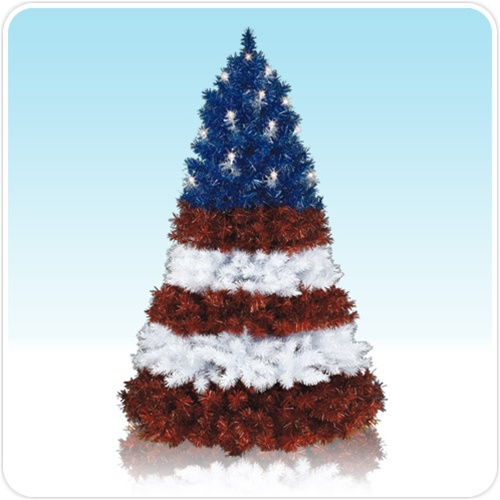
But I was led on a tangent by my opponent’s most perceptive remarks regarding dental hygiene and the challenge to tooth enamel posed by hot chocolate and peppermint candy canes.
I was ready to retort that he clearly had a low opinion of my parents if he didn’t think that they were fully capable of insisting that my sister and I brush our teeth rigorously for several minutes per calorie of sweet consumed.
Then it dawned on me … Christmas is not just about the presents, it’s about the chocolate. And the taffy, the peppermint sticks, the cookies.
I even knew of families who traditionally received brand-new toothbrushes in their stockings in anticipation of the sugar binge to come.
As the saying goes, qui bono?
I have only begun to perceive the outlines of this most heinous conspiracy, so in time-honored ATS tradition, I will only provide the briefest glimpse of evidence in this teaser post while stringing along potential believers and (hopefully) gathering a full flock of naysayers demanding proof:
I'm going to have to use my extension. Life is being a bit of a scrooge at the moment, sorry fellas!
Not so! Not so!
My opponent walks amongst the reeds of this electronic forum like a male peacock in may. I protest the below-the-belt tactics employed in such a flagrant and abusive manner. For we all know that merely mentioning the term "conspiracy" is bound to attract a chorus of head-nodding and the donning of the tin foils.
And yet I too can show our beloved readers how easy it is to conjure a theory. The end result will prove, in no uncertain terms, that ultimately we can make no distinction at all between trees during Christmas, or anything else for that matter. (Nonetheless!)
A Conspiracy Christmas
And from nothing came very, very small particles, as far as we know these particles, strings or whathaveyous make up everything around us. Essentially, we're all recycled matter, or as the very best of our scientific community likes to say: Star stuff.
See what I did there?
The answer is obvious. Fake trees ultimately are as real as pine. There can be no distinction, the only distinction is in the limited intelligence of the human race. Now... ONWARDS.
An unexpected treasure -- tips from Christmas Buddha.
[align=center][Exterior - Snowy forest - day][/align]
(Oscitate hovers a few inches about the ground, his legs are crossed and his palms uplifted. He is smiling benignly, and love radiates outwards in slow golden tides of light)
Welcome friends. Look about you, take a deep breath and be at ease. I am now going to talk about the Christmas spirit and the excellent opportunity for tradition, family and unity that fake trees give us.
Let us take your average Pine tree. Once you have planted that mutilated carcass in the corner of your living room, you then must adorn the tree with an amount of shiny things which runs disproportionately to the dignity and life expectancy of the tree in question. The entire operation can be quite easily take no longer than an hour.
It could be better! MUCH better! Breathe!
The ceremony of a fake tree is more correctly termed a rite of passage. Not only must you repeat the aforementioned steps. But you gain more precious family time with two new steps!
1) Arranging branches according to their color codes!
2) Plugging in the branches!
The result is more quality time with your family in the greatest of Christmas spirits. You can thank me later.
PVC = Pretty Vibrant Christmas
As the saying goes:
Semper ubi sububi in caput tuum.
Mother earth approves of this message.
My opponent walks amongst the reeds of this electronic forum like a male peacock in may. I protest the below-the-belt tactics employed in such a flagrant and abusive manner. For we all know that merely mentioning the term "conspiracy" is bound to attract a chorus of head-nodding and the donning of the tin foils.
And yet I too can show our beloved readers how easy it is to conjure a theory. The end result will prove, in no uncertain terms, that ultimately we can make no distinction at all between trees during Christmas, or anything else for that matter. (Nonetheless!)
A Conspiracy Christmas
In the beginning there was nothing, and it exploded.
Terry Pratchett, (on the big bang theory)
And from nothing came very, very small particles, as far as we know these particles, strings or whathaveyous make up everything around us. Essentially, we're all recycled matter, or as the very best of our scientific community likes to say: Star stuff.
See what I did there?
The answer is obvious. Fake trees ultimately are as real as pine. There can be no distinction, the only distinction is in the limited intelligence of the human race. Now... ONWARDS.
An unexpected treasure -- tips from Christmas Buddha.
[align=center][Exterior - Snowy forest - day][/align]
(Oscitate hovers a few inches about the ground, his legs are crossed and his palms uplifted. He is smiling benignly, and love radiates outwards in slow golden tides of light)
Welcome friends. Look about you, take a deep breath and be at ease. I am now going to talk about the Christmas spirit and the excellent opportunity for tradition, family and unity that fake trees give us.
Let us take your average Pine tree. Once you have planted that mutilated carcass in the corner of your living room, you then must adorn the tree with an amount of shiny things which runs disproportionately to the dignity and life expectancy of the tree in question. The entire operation can be quite easily take no longer than an hour.
It could be better! MUCH better! Breathe!
The ceremony of a fake tree is more correctly termed a rite of passage. Not only must you repeat the aforementioned steps. But you gain more precious family time with two new steps!
1) Arranging branches according to their color codes!
2) Plugging in the branches!
The result is more quality time with your family in the greatest of Christmas spirits. You can thank me later.
PVC = Pretty Vibrant Christmas
As the saying goes:
Semper ubi sububi in caput tuum.
Mother earth approves of this message.
Rebuttal:
Wise words indeed. Perhaps a ski cap or paper bag would be equally effective in concealing one’s identity during the shameful process of buying a PVC tree, but why take chances? Underwear on one’s head is a known quantity. Stick with that.
Since my Latin Quotations approved by Animal House is still packed in a box from my most recent move, I have no recourse but to quote that most well-known phrase among schoolchildren who still learn Latin:
And I ponder the power of Caesar, the decline of teaching Latin in schools, and the non-appearance of the Galactic Federation of Light. Could it be that this phrase has been handed down from generation to generation for a purpose? That Latin is no longer taught because that purpose is upon us? And that the GFL cancelled its scheduled appearance, disappointing Blossom Goodchild and millions of other fans, because no one had yet seen the connection?
Next time you see an alien, try telling them that all of France can be divided in three parts.
Rebuttal Two:
Are you then conceding the debate? For surely if we can make no distinction between trees during Christmas, fake trees cannot be found to be more in line with the holiday spirit than real trees.
I will nevertheless forge ahead in my exposure of the imminent danger to our solar system.
I Continue To Reveal the Shocking Conspiracy
While the origins of the natural Christmas tree are shrouded in the mysteries of time and genetics, the origins of the artificial Christmas tree are well known.
The first artificial trees were made of feathers in Germany in the 1890’s, but the true progenitor of today’s PVC wonders was invented in America:
So once again in our exploration of all things Christmassy we run into those unlikely villains, the brushmakers.
First sugary treats to drive the sale of toothbrushes, now a strange conflation of toilet-bowl brush with holiday icon. It is at this point that the plot became most difficult for me to follow, for I could not immediately understand what a toilet brush company would gain by producing tacky home decorating items.
Could it be that all the way back in 1930 those cunning managers at the Addis Brush Company foresaw the advent of Artificial Toilet Cleaning products?
Such a possibility is fully consistent with the possibility that technologically advanced extraterrestrial species have been in contact with our planet, at least at the time of Julius Caesar when they transmitted certain useful knowledge to us to be repeated into perpetuity.
Fearful that the market for toilet bowl brushes might shrink in the future, the brush companies moved into new territory: creating giant toilet brushes to be worshipped as the year turns:
My research has led me to the shocking realization of how effective this tactic has been. As reported by the BBC – who never lie – confusion over the difference between a tree and a toilet brush is spreading:
(3)
Where will this lead?
Stay tuned for my next post.
As the saying goes:
Semper ubi sububi in caput tuum.
Wise words indeed. Perhaps a ski cap or paper bag would be equally effective in concealing one’s identity during the shameful process of buying a PVC tree, but why take chances? Underwear on one’s head is a known quantity. Stick with that.
Since my Latin Quotations approved by Animal House is still packed in a box from my most recent move, I have no recourse but to quote that most well-known phrase among schoolchildren who still learn Latin:
GALLIA est omnis divisa in partes tres.
And I ponder the power of Caesar, the decline of teaching Latin in schools, and the non-appearance of the Galactic Federation of Light. Could it be that this phrase has been handed down from generation to generation for a purpose? That Latin is no longer taught because that purpose is upon us? And that the GFL cancelled its scheduled appearance, disappointing Blossom Goodchild and millions of other fans, because no one had yet seen the connection?
Next time you see an alien, try telling them that all of France can be divided in three parts.
Rebuttal Two:
And yet I too can show our beloved readers how easy it is to conjure a theory. The end result will prove, in no uncertain terms, that ultimately we can make no distinction at all between trees during Christmas, or anything else for that matter.
Are you then conceding the debate? For surely if we can make no distinction between trees during Christmas, fake trees cannot be found to be more in line with the holiday spirit than real trees.
I will nevertheless forge ahead in my exposure of the imminent danger to our solar system.
I Continue To Reveal the Shocking Conspiracy
While the origins of the natural Christmas tree are shrouded in the mysteries of time and genetics, the origins of the artificial Christmas tree are well known.
The first artificial trees were made of feathers in Germany in the 1890’s, but the true progenitor of today’s PVC wonders was invented in America:
(1)
In 1930 the U.S.-based Addis Brush Company created the first artificial Christmas tree made from brush bristles. The company used the same machinery that it used to manufacture toilet brushes. The trees were made from the same animal-hair bristles used in the brushes, save they were dyed green.
So once again in our exploration of all things Christmassy we run into those unlikely villains, the brushmakers.
First sugary treats to drive the sale of toothbrushes, now a strange conflation of toilet-bowl brush with holiday icon. It is at this point that the plot became most difficult for me to follow, for I could not immediately understand what a toilet brush company would gain by producing tacky home decorating items.
Could it be that all the way back in 1930 those cunning managers at the Addis Brush Company foresaw the advent of Artificial Toilet Cleaning products?
(2)
In a report on toilet flappers for the California Urban Water Conservation Council, John Koeller, P.E. wrote, In the early 1990s, a change in the dominant consumer method of "bowl cleaning" or "sanitizing" occurred. Whereas previously, consumers had been using in-bowl cleaners that hung on the side of the bowl and dispensed chemical(s) directly into the bowl as the toilet was flushed, in the early 1990s, the chemical manufacturers began to successfully market a more "convenient" product to achieve the same goal. This product was the in-tank drop-in tablet that slowly dissolved in the tank water. Consumers dropped the tablet in the tank water and were no longer required to touch the bowl. This type of product is now manufactured by several firms and now dominates the market for bowl cleaners.
Such a possibility is fully consistent with the possibility that technologically advanced extraterrestrial species have been in contact with our planet, at least at the time of Julius Caesar when they transmitted certain useful knowledge to us to be repeated into perpetuity.
Fearful that the market for toilet bowl brushes might shrink in the future, the brush companies moved into new territory: creating giant toilet brushes to be worshipped as the year turns:
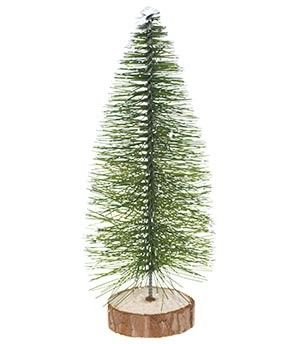
My research has led me to the shocking realization of how effective this tactic has been. As reported by the BBC – who never lie – confusion over the difference between a tree and a toilet brush is spreading:
(3)
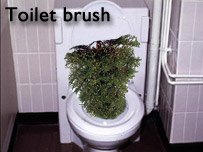
Where will this lead?
Stay tuned for my next post.
Concede The Debate Madam? Humbug
My opponent would stuff my mouth with wooden spoons and then convince the audience that I was choking on my own lies. Neigh, my esteemed adversary. The point was that it is implausible to concoct a wild, while rather satisfying theory on why extra-terrestrial toilet brushes are all the rage these days.
Christmas Buddha does not concede. He brings the pain.
I will magnanimously ignore my opponent's toilet-fetish and proceed with my argument, lest I be drawn into the oubliette my opponent would like you to believe is the Christmassy spirit.
The Hypocrisy Of The Real Pine Crowd Knows No End
Allow me to expand on the topic of hypocrisy.
We've all seen Christmas films, even my opponent has. There's nothing more Christmassy than a good Christmas film. It is the hallmark of our consumer society. Cheap carol cd's, sung by terrible Rick Astley impersonators. The tale of scrooge, the plight of Rudolph's nose. Orange-light's avatar, overweight geese and of course mall Santas.

Question: What do all these things have in common?
Answer: Once we concede that they form an integral part of our festivities and spirit. We must realize that...
wait for it...
Yes, that's right.
They're ALL fake* (*mall Santas are fake, not Santa himself of course)
On the one hand (the mittened one) my opponent would have you believe that the core of Christmas is authenticity. On the other (the one with frostbite) she ignores the fact that fake symbols are the staple of her own Christmas. There is nothing wrong with being fake, ADB. After all, there'd be no Christmas without it.
According to famous German mathematician Paul Gustav Heinrich Bachmann (June 22, 1837 – March 31, 1920). The following formula applies to this process to make it more understandable.
(i) Christmas = Mall Santa + Film + Song + PVC tree
(ii) Christmas
----------------------------------------- = 0
(Mall Santa + Film + Song + PVC tree)
(iii) If the value of these fake items were 0, then inevitably Christmas would also equal 0.
iv) Value of PVC in house must be > 1 for Christmas to have value.
He was posthumously awarded the Elven Christmas prize for his contributions to the Christmas spirit.
Are you then conceding the debate? For surely if we can make no distinction between trees during Christmas, fake trees cannot be found to be more in line with the holiday spirit than real trees.
My opponent would stuff my mouth with wooden spoons and then convince the audience that I was choking on my own lies. Neigh, my esteemed adversary. The point was that it is implausible to concoct a wild, while rather satisfying theory on why extra-terrestrial toilet brushes are all the rage these days.
Christmas Buddha does not concede. He brings the pain.
I will magnanimously ignore my opponent's toilet-fetish and proceed with my argument, lest I be drawn into the oubliette my opponent would like you to believe is the Christmassy spirit.
The Hypocrisy Of The Real Pine Crowd Knows No End
Allow me to expand on the topic of hypocrisy.
We've all seen Christmas films, even my opponent has. There's nothing more Christmassy than a good Christmas film. It is the hallmark of our consumer society. Cheap carol cd's, sung by terrible Rick Astley impersonators. The tale of scrooge, the plight of Rudolph's nose. Orange-light's avatar, overweight geese and of course mall Santas.
Question: What do all these things have in common?
Answer: Once we concede that they form an integral part of our festivities and spirit. We must realize that...
wait for it...
Yes, that's right.
They're ALL fake* (*mall Santas are fake, not Santa himself of course)
On the one hand (the mittened one) my opponent would have you believe that the core of Christmas is authenticity. On the other (the one with frostbite) she ignores the fact that fake symbols are the staple of her own Christmas. There is nothing wrong with being fake, ADB. After all, there'd be no Christmas without it.
According to famous German mathematician Paul Gustav Heinrich Bachmann (June 22, 1837 – March 31, 1920). The following formula applies to this process to make it more understandable.
(i) Christmas = Mall Santa + Film + Song + PVC tree
(ii) Christmas
----------------------------------------- = 0
(Mall Santa + Film + Song + PVC tree)
(iii) If the value of these fake items were 0, then inevitably Christmas would also equal 0.
iv) Value of PVC in house must be > 1 for Christmas to have value.
He was posthumously awarded the Elven Christmas prize for his contributions to the Christmas spirit.
Rebuttal One
I would like to point two things out to the judges of this debate. While it has historically been true that proper use of the word “oubliette” during the course of the debate is rewarded with a win, nowhere in Fight Club rules does it state that this tradition must be followed.
Moreover, I believe that a usage fee is due to Mr. Ian McLean for the initial use of said word in the course of a debate, and I have been unable to confirm whether this fee has been paid. Until confirmation is made, I would recommend that the word be struck from the record.
Rebuttal Two
I am afraid that my opponent has misunderstood or misconstrued Herr Bachmann’s brilliant mathematical work on the necessity of a real tree to ensure that Christmas have meaning.
The correct conclusion to draw is not that PVCTree > 0 (which is obviously false, since PVCTree is fake and contains no worth in itself) but rather that in order to maintain ChristmasSpirit > 0 we must encourage the use of the real tree, which brings to the equation genuine positive value.
______________________________________________________________
I reveal the full horror of the Brushmaker Conspiracy
I will be presenting most of today’s argument in graphical form, for clarity’s sake.
In the two images I have prepared with accompanying text, I think you will see beyond a doubt that the confusion between pine trees and toilet brushes encouraged by the brushmaker/PVC treemakers has led to a veritable blight across the American landscape, and even the world.
To begin with, let us think about the giant green toilet brush introduced by the Addis Company for Americans to worship around at their most beloved holiday.
What is the logical outcome of this introduction?
Perhaps you too have noticed this strange and undeniably evil phenomenon in recent years?
All images from the flickr pool Cell Towers Being Passed Off As Trees except for North Carolina image which is from The Attack of the 160’ Toilet Brush.
As an aesthetic problem, this is serious enough. But brave souls have discovered what those toilet brush trees are actually camouflaging. In describing his role, Don Croft has said:
Don Croft
And with this link to a well-known area of conspiracy theory I will end this post.
In my closing statement I will recapitulate the main points of the centuries-long plot I have uncovered, and address the issue (as though it weren’t obvious already) of why supporting these villains by purchasing PVC evergreens is simply not in line with the holiday spirit.
I will magnanimously ignore my opponent's toilet-fetish and proceed with my argument, lest I be drawn into the oubliette my opponent would like you to believe is the Christmassy spirit.
I would like to point two things out to the judges of this debate. While it has historically been true that proper use of the word “oubliette” during the course of the debate is rewarded with a win, nowhere in Fight Club rules does it state that this tradition must be followed.
Moreover, I believe that a usage fee is due to Mr. Ian McLean for the initial use of said word in the course of a debate, and I have been unable to confirm whether this fee has been paid. Until confirmation is made, I would recommend that the word be struck from the record.
Rebuttal Two
(i) Christmas = Mall Santa + Film + Song + PVC tree
(ii) Christmas
----------------------------------------- = 0
(Mall Santa + Film + Song + PVC tree)
(iii) If the value of these fake items were 0, then inevitably Christmas would also equal 0.
iv) Value of PVC in house must be > 1 for Christmas to have value.
I am afraid that my opponent has misunderstood or misconstrued Herr Bachmann’s brilliant mathematical work on the necessity of a real tree to ensure that Christmas have meaning.
The correct conclusion to draw is not that PVCTree > 0 (which is obviously false, since PVCTree is fake and contains no worth in itself) but rather that in order to maintain ChristmasSpirit > 0 we must encourage the use of the real tree, which brings to the equation genuine positive value.
______________________________________________________________
I reveal the full horror of the Brushmaker Conspiracy
I will be presenting most of today’s argument in graphical form, for clarity’s sake.
In the two images I have prepared with accompanying text, I think you will see beyond a doubt that the confusion between pine trees and toilet brushes encouraged by the brushmaker/PVC treemakers has led to a veritable blight across the American landscape, and even the world.
To begin with, let us think about the giant green toilet brush introduced by the Addis Company for Americans to worship around at their most beloved holiday.
What is the logical outcome of this introduction?
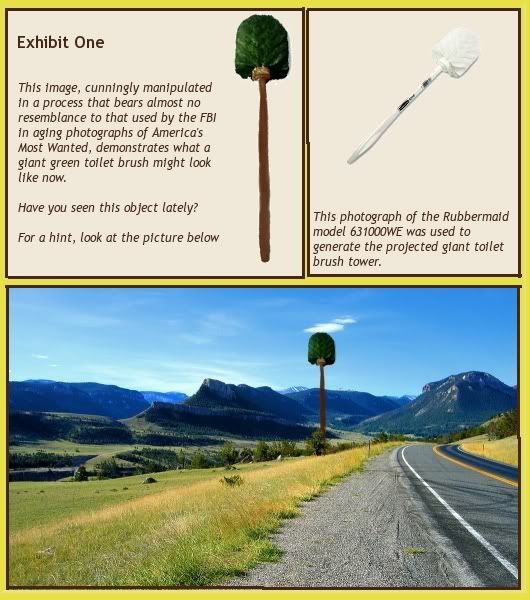
Perhaps you too have noticed this strange and undeniably evil phenomenon in recent years?
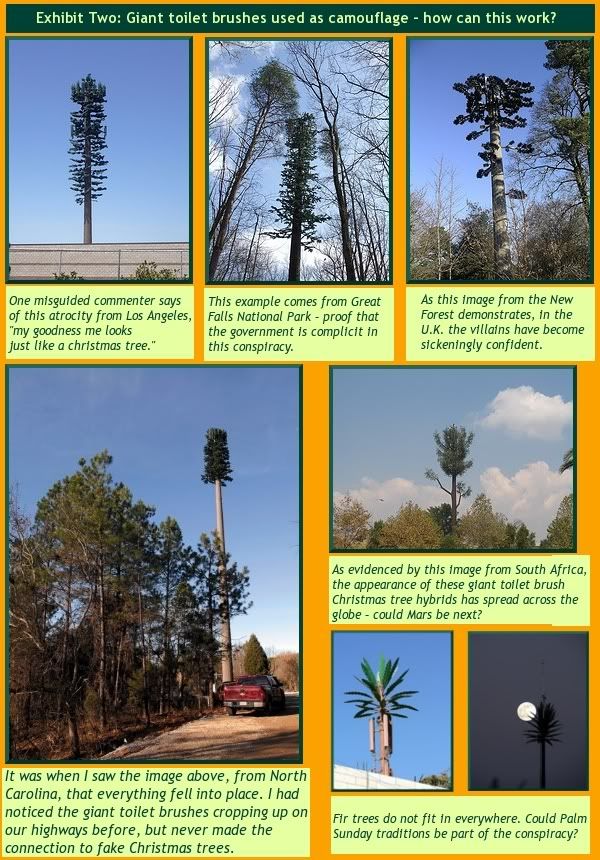
All images from the flickr pool Cell Towers Being Passed Off As Trees except for North Carolina image which is from The Attack of the 160’ Toilet Brush.
As an aesthetic problem, this is serious enough. But brave souls have discovered what those toilet brush trees are actually camouflaging. In describing his role, Don Croft has said:
I sort of campaign to help genuinely inquisitive people get past the falsely promoted idea that the towers are for cellphones, by the way. They’re simply not; they’re for destroying the atmosphere and for making everyone sick. They’re also used to target individuals in the population in conjunction with GPS.
Don Croft
And with this link to a well-known area of conspiracy theory I will end this post.
In my closing statement I will recapitulate the main points of the centuries-long plot I have uncovered, and address the issue (as though it weren’t obvious already) of why supporting these villains by purchasing PVC evergreens is simply not in line with the holiday spirit.
There Will Be Blood
It is clear that a person who campaigns for the Christmas spirit, my opponent has quite clearly strayed from the path of generosity, love, support and peace. From the onset, my opponent caved a path of violence. From the decapitation and kidnapping of innocent trees, to a froth-inducing reaction to the buildup of what are seemingly huge, inverted Christmassy toilet brushes.
Not even the Christmas Buddha's appearance was strong enough to instill peace upon the soul of an afflicted ADB. And try as I might, I cannot help feel that if it was up to her, she would drown the world in blood by declaring a Fatwa against fake trees. Quintessentially Christmassy I'm sure. But I digress...
Let us not look at what divides us, let us instead focus on that which we have in common. While it is agreed that fake trees are more in line with the Christmas spirit for aforementioned reasons, I urge you to lower your weapon and hug a PVC tree because it is clear that it is a phobia of yours which is leading you to the precipice of delusion.
This was once your Christmas spirit:

No longer. I liberate you. And in the true spirit of Christmas, PVC trees forgive you, because they are the embodiment of the spirit we contend (bear in mind that in your conspiracy the trees were never armed and while conspicuous, certainly, afforded no threat). Allow me also to add, that these poor trees are camouflaging in order to escape the righteous violence of the "Pro Pine" movement.
Frosty Is Fake! And A Pox On You All For Supporting Him!
I then talked about the hypocrisy displayed throughout the debate. Consider the following famous Christmas Song:
O, Frosty the snowman
Was alive as he could be,
And the children say he could laugh
And play just the same as you and me.
Thumpety thump thump,
Thumpety thump thump,
Look at Frosty go.
Thumpety thump thump,
Thumpety thump thump,
Over the hills of snow.
Now imagine the children singing, and grandparents singing along as well. Will it be you who tells them that this particular song is taboo in your household, merely because a mound of snow with a carrot on it is fake.

The truth is that we worship the representation of ideals. Christmas itself being a symbol. A fake tree is precisely that, not a ill-begotten reminder of the isolation, undignified and murderous aspects of life, like a real tree. But a representation, lovingly crafted by Chinese sweat-shop workers. Let us not forget that the jobs created by the PVC industry also help to alleviate poverty and provide valuable liquidity in the present economic crunch. Will it be you who bars the factor doors? Will it be you who forecloses their homes, as darkness creeps in and the cold bites the bones?
I believe you are better than this, you know you are. Don't let me down. Don't let us down. Don't let the Christmas spirit down.
It is clear that a person who campaigns for the Christmas spirit, my opponent has quite clearly strayed from the path of generosity, love, support and peace. From the onset, my opponent caved a path of violence. From the decapitation and kidnapping of innocent trees, to a froth-inducing reaction to the buildup of what are seemingly huge, inverted Christmassy toilet brushes.
Not even the Christmas Buddha's appearance was strong enough to instill peace upon the soul of an afflicted ADB. And try as I might, I cannot help feel that if it was up to her, she would drown the world in blood by declaring a Fatwa against fake trees. Quintessentially Christmassy I'm sure. But I digress...
Let us not look at what divides us, let us instead focus on that which we have in common. While it is agreed that fake trees are more in line with the Christmas spirit for aforementioned reasons, I urge you to lower your weapon and hug a PVC tree because it is clear that it is a phobia of yours which is leading you to the precipice of delusion.
This was once your Christmas spirit:
No longer. I liberate you. And in the true spirit of Christmas, PVC trees forgive you, because they are the embodiment of the spirit we contend (bear in mind that in your conspiracy the trees were never armed and while conspicuous, certainly, afforded no threat). Allow me also to add, that these poor trees are camouflaging in order to escape the righteous violence of the "Pro Pine" movement.
Frosty Is Fake! And A Pox On You All For Supporting Him!
I then talked about the hypocrisy displayed throughout the debate. Consider the following famous Christmas Song:
O, Frosty the snowman
Was alive as he could be,
And the children say he could laugh
And play just the same as you and me.
Thumpety thump thump,
Thumpety thump thump,
Look at Frosty go.
Thumpety thump thump,
Thumpety thump thump,
Over the hills of snow.
Now imagine the children singing, and grandparents singing along as well. Will it be you who tells them that this particular song is taboo in your household, merely because a mound of snow with a carrot on it is fake.
The truth is that we worship the representation of ideals. Christmas itself being a symbol. A fake tree is precisely that, not a ill-begotten reminder of the isolation, undignified and murderous aspects of life, like a real tree. But a representation, lovingly crafted by Chinese sweat-shop workers. Let us not forget that the jobs created by the PVC industry also help to alleviate poverty and provide valuable liquidity in the present economic crunch. Will it be you who bars the factor doors? Will it be you who forecloses their homes, as darkness creeps in and the cold bites the bones?
I believe you are better than this, you know you are. Don't let me down. Don't let us down. Don't let the Christmas spirit down.
Final Rebuttal:
A lot of information has been introduced in the course of this debate, and I’m afraid it’s not over yet. My opponent and I have each used information both factual and speculative in our arguments, and there is a place for each. Before I return to the realm of speculative conspiracy theory, I would like to quickly summarize the debate topic and the main facts that have been introduced.
Again, my opponent was given the task of proving to you that artificial trees are not just equal to real trees in their holiday spirit, but are more in line with the holiday spirit than are real trees.
Throughout this debate, he has relied on portraying me as a heartless tree-killer, with no empathy for the living beings that I would have cut down and brought into people’s homes.
This would certainly be a valid argument if we were discussing humans, or perhaps if we were discussing animals. He did not, however, raise any objections to the holiday tradition of eating lots of roast meat, so I am left to speculate that he has no compunction about the death of animals, only of trees.
Whatever it is that my opponent finds “morbid” about chopping down trees, he presented no supporting evidence for this position. But this is a position that raises numerous objections, even to a vegetarian: is it morbid to pick an apple? To pull up a carrot? To eat a sunflower seed?
He has made the assumption that trees are not only sentient beings, but are sentient beings who share humanity’s morbid and dysfunctional terror of death. This is an assertion that would have had more weight had he offered some sort of argument to support it.
The next point my opponent tries to use in support of his untenable position is that he will celebrate his holiday around a polyvinylchloride tree because he “loves Mother Nature.”
Again, the argument is very close to absurd on its face. There is nothing beneficial to Mother Nature about shipping large petroleum-based products from labor camps in China to the parlors of the American heartland, where they will shed their lead dust for a few years until a new color or needle type comes into style, whereupon they will join their fellow plastics in eternal life in the landfills of the world. (Or, if they came to New York instead of Wisconsin, in the eternal garbage barge ride until a locality is found that will accept our trash).
At two points in this debate my opponent has truly undercut his own position in a most baffling way. The first of these was the exciting appearance of the Christmas Buddha, who came to explain to us that all matter is one, and thus we cannot differentiate between trees. Since the burden of showing a difference was on my opponent in this debate, I can only presume that the goodwill and peace of mind generated by the Buddha’s appearance reassured him that there is no difference between winning and losing.
The next time was when he (accidentally?) misrepresented Herr Bachmann’s mathematics. As I showed in the next post (which went without refutation), Herr Bachmann proved not that PVCTree has any value, but that the continuing tradition of using real trees in our celebrations is of the utmost importance in maintaining a positive HolidaySpirit.
In his closing statement he returns again to ad hominem attacks, accusing me of a violent temperament and warning (in a clear appeal to anti-Islamic sentiment – which I am confident the judges are not susceptible to) that he thinks I am on the brink of calling for a Jihad against the PVC trees, which he assures me have nevertheless forgiven me for my hatred.
Now, if it was unclear how he came to the conclusion that real trees are sentient beings, how much more unclear is his assertion of the sentience of the PVC tree!
Finally, we come to this paragraph:
Job loss is indeed a concern in the current economic difficulties, but not generally among political and religious prisoners of the Chinese government. I suspect that they would not object to being laid off from prison.
So we are left with this: we worship symbols.
And indeed, the pine (or fir, cedar, or cypress) tree that has played such a large role in the celebration of the winter solstice in the West over the last two hundred years is just that: a symbol. A PVC tree is not the symbol itself, but a cheap imitation of the symbol.
Think if you will of the difference between a movie in a movie theater and a cheap bootlegged version of the same imported from China.
___________________________________________________________
Closing Argument
I began this debate by relating episodes of my childhood. Sappy, yes – so are evergreens. Real ones, that is. Fake ones are free of sap and anything else redolent of life, with the occasional exception of Asian longhorned beetles which make their habitat in the dead wood of the central pole of fake trees.
My opponent would have you believe that a fake tree provides as much or more family togetherness as a real one, citing the Black Friday shopping nightmare and the process of labeling and placing branches.
Yet Black Friday has become a blood sport, and the exciting news among the fake tree enthusiasts is the introduction of the “pull-up” tree which takes no longer than five minutes to assemble, including dragging the box out of the garage or basement.
Holiday Spirit? Hardly.
I have given clear examples of the spirit of Christmas in real trees, both in my own stories and in that of Charlie Brown, a young man from the twentieth century who learned about the Spirit of Christmas thanks to a wisp of a tree and his thumb-sucking friend’s security blanket.
Also in the realm of facts that I have presented are the link between the toilet brush companies and the first modern-style fake trees, the importance of sugar to the season, the importance of toothbrushes to sugar-consuming Americans (we of the perfect white teeth), and the recent rash of giant toilet brushes marching across the continents.
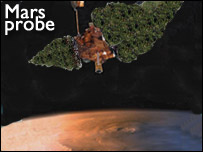
Moreover, I provided photographic evidence of the confusion occurring in some minds between Christmas trees and toilet brushes, and of the impending arrival of a spacecraft carrying two clearly artificial Christmas trees on the planet Mars. Finally, I have cited an expert on the “death towers” being camouflaged by the upturned giant toilet brushes, who makes it clear that their spread is a sign of NoGoodThings ahead.
Circumstantial evidence I have not had the time or space to introduce includes the interactions between Julius Caesar and the Druids of Gaul (as immortalized in Caesar’s The Gallic Wars), who were a secret-bearing sect in charge of the worship of Woden, the god involved in the Great Hunt (traditionally associated with the nights of Yuletide) and who was hung from a tree for eight days, a sword through his side, before he returned to the world triumphant.
Sound familiar? That’s right, Caesar met up with the high priests of the ancient god who is said to have contributed to the mythology of Christmas, and the Christmas tree is considered by many to be a symbol of the Yggdrasil – the tree on which Woden hung.
Now, in this millennial world, the decline of teaching Latin in schools means that for perhaps the first time since that fateful meeting, Caesar’s words, “All Gaul is divided into three parts,” will not be taught to every student.
Is it mere coincidence that this should occur just as the brushmaker’s fake Christmas tree/toilet bowl brush conspiracy has reached the stage where Death Towers are erected throughout the landscape?
I think not. And whether you are convinced as to the reality of this conspiracy in whole or in part, I am confident that you can see that:
Artificial trees are less in line with the spirit of family togetherness, “ah”, and singing silly songs that we call the Holiday Spirit.
A lot of information has been introduced in the course of this debate, and I’m afraid it’s not over yet. My opponent and I have each used information both factual and speculative in our arguments, and there is a place for each. Before I return to the realm of speculative conspiracy theory, I would like to quickly summarize the debate topic and the main facts that have been introduced.
Again, my opponent was given the task of proving to you that artificial trees are not just equal to real trees in their holiday spirit, but are more in line with the holiday spirit than are real trees.
Throughout this debate, he has relied on portraying me as a heartless tree-killer, with no empathy for the living beings that I would have cut down and brought into people’s homes.
This would certainly be a valid argument if we were discussing humans, or perhaps if we were discussing animals. He did not, however, raise any objections to the holiday tradition of eating lots of roast meat, so I am left to speculate that he has no compunction about the death of animals, only of trees.
Whatever it is that my opponent finds “morbid” about chopping down trees, he presented no supporting evidence for this position. But this is a position that raises numerous objections, even to a vegetarian: is it morbid to pick an apple? To pull up a carrot? To eat a sunflower seed?
He has made the assumption that trees are not only sentient beings, but are sentient beings who share humanity’s morbid and dysfunctional terror of death. This is an assertion that would have had more weight had he offered some sort of argument to support it.
The next point my opponent tries to use in support of his untenable position is that he will celebrate his holiday around a polyvinylchloride tree because he “loves Mother Nature.”
Again, the argument is very close to absurd on its face. There is nothing beneficial to Mother Nature about shipping large petroleum-based products from labor camps in China to the parlors of the American heartland, where they will shed their lead dust for a few years until a new color or needle type comes into style, whereupon they will join their fellow plastics in eternal life in the landfills of the world. (Or, if they came to New York instead of Wisconsin, in the eternal garbage barge ride until a locality is found that will accept our trash).
At two points in this debate my opponent has truly undercut his own position in a most baffling way. The first of these was the exciting appearance of the Christmas Buddha, who came to explain to us that all matter is one, and thus we cannot differentiate between trees. Since the burden of showing a difference was on my opponent in this debate, I can only presume that the goodwill and peace of mind generated by the Buddha’s appearance reassured him that there is no difference between winning and losing.
The next time was when he (accidentally?) misrepresented Herr Bachmann’s mathematics. As I showed in the next post (which went without refutation), Herr Bachmann proved not that PVCTree has any value, but that the continuing tradition of using real trees in our celebrations is of the utmost importance in maintaining a positive HolidaySpirit.
In his closing statement he returns again to ad hominem attacks, accusing me of a violent temperament and warning (in a clear appeal to anti-Islamic sentiment – which I am confident the judges are not susceptible to) that he thinks I am on the brink of calling for a Jihad against the PVC trees, which he assures me have nevertheless forgiven me for my hatred.
Now, if it was unclear how he came to the conclusion that real trees are sentient beings, how much more unclear is his assertion of the sentience of the PVC tree!
Finally, we come to this paragraph:
The truth is that we worship the representation of ideals. Christmas itself being a symbol. A fake tree is precisely that, not a ill-begotten reminder of the isolation, undignified and murderous aspects of life, like a real tree. But a representation, lovingly crafted by Chinese sweat-shop workers. Let us not forget that the jobs created by the PVC industry also help to alleviate poverty and provide valuable liquidity in the present economic crunch.
Job loss is indeed a concern in the current economic difficulties, but not generally among political and religious prisoners of the Chinese government. I suspect that they would not object to being laid off from prison.
So we are left with this: we worship symbols.
And indeed, the pine (or fir, cedar, or cypress) tree that has played such a large role in the celebration of the winter solstice in the West over the last two hundred years is just that: a symbol. A PVC tree is not the symbol itself, but a cheap imitation of the symbol.
Think if you will of the difference between a movie in a movie theater and a cheap bootlegged version of the same imported from China.
___________________________________________________________
Closing Argument
I began this debate by relating episodes of my childhood. Sappy, yes – so are evergreens. Real ones, that is. Fake ones are free of sap and anything else redolent of life, with the occasional exception of Asian longhorned beetles which make their habitat in the dead wood of the central pole of fake trees.
My opponent would have you believe that a fake tree provides as much or more family togetherness as a real one, citing the Black Friday shopping nightmare and the process of labeling and placing branches.
Yet Black Friday has become a blood sport, and the exciting news among the fake tree enthusiasts is the introduction of the “pull-up” tree which takes no longer than five minutes to assemble, including dragging the box out of the garage or basement.
Holiday Spirit? Hardly.
I have given clear examples of the spirit of Christmas in real trees, both in my own stories and in that of Charlie Brown, a young man from the twentieth century who learned about the Spirit of Christmas thanks to a wisp of a tree and his thumb-sucking friend’s security blanket.
Also in the realm of facts that I have presented are the link between the toilet brush companies and the first modern-style fake trees, the importance of sugar to the season, the importance of toothbrushes to sugar-consuming Americans (we of the perfect white teeth), and the recent rash of giant toilet brushes marching across the continents.
Moreover, I provided photographic evidence of the confusion occurring in some minds between Christmas trees and toilet brushes, and of the impending arrival of a spacecraft carrying two clearly artificial Christmas trees on the planet Mars. Finally, I have cited an expert on the “death towers” being camouflaged by the upturned giant toilet brushes, who makes it clear that their spread is a sign of NoGoodThings ahead.
Circumstantial evidence I have not had the time or space to introduce includes the interactions between Julius Caesar and the Druids of Gaul (as immortalized in Caesar’s The Gallic Wars), who were a secret-bearing sect in charge of the worship of Woden, the god involved in the Great Hunt (traditionally associated with the nights of Yuletide) and who was hung from a tree for eight days, a sword through his side, before he returned to the world triumphant.
Sound familiar? That’s right, Caesar met up with the high priests of the ancient god who is said to have contributed to the mythology of Christmas, and the Christmas tree is considered by many to be a symbol of the Yggdrasil – the tree on which Woden hung.
Now, in this millennial world, the decline of teaching Latin in schools means that for perhaps the first time since that fateful meeting, Caesar’s words, “All Gaul is divided into three parts,” will not be taught to every student.
Is it mere coincidence that this should occur just as the brushmaker’s fake Christmas tree/toilet bowl brush conspiracy has reached the stage where Death Towers are erected throughout the landscape?
I think not. And whether you are convinced as to the reality of this conspiracy in whole or in part, I am confident that you can see that:
Artificial trees are less in line with the spirit of family togetherness, “ah”, and singing silly songs that we call the Holiday Spirit.
The judges tallies are in...congratulations to both Fighters.
Americandingbat is the winner...but again, well done to the both of you...this was really an enjoyable read...
I judge the winner of this debate to be Oscicate as he was able to argue his (imo more difficult side) with humor almost poetic lightness. While Americandingbat was able to compose her rebuttals with love and care, she seemed to be in the reactive and trailing-behind more than not. Though I still dont believe in having artificial Christmas trees, it was Oscitate who set the tone of the debate from start to finish.
First of all, sincere congratulations to both fighters. I hope you had as much fun debating that as I/we had reading it. I laughed out loud several times and really enjoyed the debate. Great job making it fun and entertaining for me - and hopefully for all of us.
I’ve summarized the major points made by each fighter:
Oscitate:
birth vs. death
representation of materialism
tree genetics
negative consequences of tree-choosing ritual
spirit of family unity
they’re all real (all matter is the same)
quality time setting up fake tree
questionable use of “oubliette”
Christmas is fake
mathematics
americandingbat:
tree-choosing experiences
proper treatment of scraggly trees
dangers of fake trees
environmental damages of fake tree manufacture
human suffering associated with making fake trees
rebuttal to “all matter is the same” (great!!)
fake trees from toilet brushes
refutation of use of “oubliette”
rebuttal of mathematic theory
toilet brush conspiracy
trees aren’t sentient
fake tree= cheap imitation symbol
Therefore, americandingbat wins by two “points.”
Actually, though, I wish I could give a win to both of you. In my opinion this debate was a win for all of us who had the pleasure of reading it.
Sorry I'm so late with an answer.
For Oscitate v Americandingbat:
ADB won this debate on two points mainly.
First, a very solid presentation of the merits of selecting, preparing, and keeping a real tree. Arguments for the different merits of a fake tree from Oscitate seemed far less sincere and didn't resonate all that well.
Second, toilet brushes. The semi-serious conspiracy angle used to work up to the toilet brush revelation was risky, but the "punchline" completely justified it. It looked like ADB was letting having fun get in the way of winning the debate, I wondered where it was going, and bam, out of nowhere come toilet brushes. It was a perfectly smooth move from absurdity to relevance and it made the point stick. Then oscitate just wrote it off and let it stand.
If Oscitate could have forced the issue of killing trees better and the pagan origins of Christmas it might have made a difference, but Oscitate actually undermined that briefly late in the debate by reducing trees to stardust, taking away the noble distinction that organic chemical compounds are afforded over inorganic ones which is generally presumed by organic brains and thus making them no more worthy of preservation.
Americandingbat is the winner...but again, well done to the both of you...this was really an enjoyable read...
new topics
-
Kirkpatrick vs Fugal - Skinwalker ranch briefing.
Aliens and UFOs: 32 minutes ago -
Lemon-aid and lime-aid
General Chit Chat: 1 hours ago -
Multipal Solar Storms Coming Our Way This Weekend
Fragile Earth: 1 hours ago -
US food sources declining becoming non edible .
Social Issues and Civil Unrest: 3 hours ago -
Journalism Against Judaism
Middle East Issues: 9 hours ago
top topics
-
Bibi’s Dilemma
Middle East Issues: 13 hours ago, 11 flags -
Proof of Cleptocracy
US Political Madness: 17 hours ago, 10 flags -
Journalism Against Judaism
Middle East Issues: 9 hours ago, 4 flags -
US food sources declining becoming non edible .
Social Issues and Civil Unrest: 3 hours ago, 4 flags -
Multipal Solar Storms Coming Our Way This Weekend
Fragile Earth: 1 hours ago, 4 flags -
Lemon-aid and lime-aid
General Chit Chat: 1 hours ago, 2 flags -
Kirkpatrick vs Fugal - Skinwalker ranch briefing.
Aliens and UFOs: 32 minutes ago, 0 flags
active topics
-
Lemon-aid and lime-aid
General Chit Chat • 6 • : randomtangentsrme -
Multipal Solar Storms Coming Our Way This Weekend
Fragile Earth • 8 • : rickymouse -
Ooooh...it worked!!
Members • 25 • : LandofEnchantment -
Candidate TRUMP Now Has Crazy Judge JUAN MERCHAN After Him - The Stormy Daniels Hush-Money Case.
Political Conspiracies • 1452 • : CarlLaFong -
Israeli strikes on southern Gaza city of Rafah kill 22, mostly children, as US advances aid package
Middle East Issues • 204 • : KrustyKrab -
Kirkpatrick vs Fugal - Skinwalker ranch briefing.
Aliens and UFOs • 0 • : pianopraze -
US food sources declining becoming non edible .
Social Issues and Civil Unrest • 17 • : rickymouse -
Judge Postpones Trump Classified Docs Trial INDEFINITELY
US Political Madness • 169 • : chr0naut -
Boy Scouts to be renamed next year
Other Current Events • 186 • : GENERAL EYES -
Social Security projected to cut benefits in 2035 barring a fix
Global Meltdown • 47 • : BernnieJGato
11