It looks like you're using an Ad Blocker.
Please white-list or disable AboveTopSecret.com in your ad-blocking tool.
Thank you.
Some features of ATS will be disabled while you continue to use an ad-blocker.

Moors in European Coat Of Arms
page: 4share:
There's so much un related Bla Bla Bla in this thread.
Is it just me or did everybody miss the fact that a vast majority the heralds and standards with moorish heads are just those heads.
In the reconquista it was quite fashionable for noble families to use the image of the heads of moors on their family crest to show just that, they took the heads of moors.
And honestly its Islam as a whole that should get the credit for preserving classical knowledge, not just the moorish western expression of Islamic expansion.
Is it just me or did everybody miss the fact that a vast majority the heralds and standards with moorish heads are just those heads.
In the reconquista it was quite fashionable for noble families to use the image of the heads of moors on their family crest to show just that, they took the heads of moors.
And honestly its Islam as a whole that should get the credit for preserving classical knowledge, not just the moorish western expression of Islamic expansion.
Originally posted by punkinworks10
Originally posted by JohnnyCanuck
First off, there is a story that the Black Irish derive from Spanish sailors who swam ashore during the Spanish Armada.
I was always under the impression that the "Black Irish" were survivors of the defeated Spanish armada as well.
But I have very recently read an article that traced the term as a reference to the pre Celtic inhabitants of Ireland. They were marginalized by the Celtic people into what was almost an "untouchables" caste.
I wish I had book marked that article , it was fascinating.
I would say the black Irish are an expression of an archaic population within the islands.
Almost forgot about Gaius Cornelius Tacitus a senetor and historian during Julius Caesar's invasion of Britian reported on the Silures:When the problems with the Brigantes had been settled, the Romans turned their attention to the Silures, whom Tacitus calls "a naturally fierce people", and of whose origins he opines: "The dark complexion of the Silures, their usually curly hair, and the fact that Spain is the opposite shore to them, are an evidence that Iberians of a former date crossed over and occupied these parts."
www.ancientworlds.net...
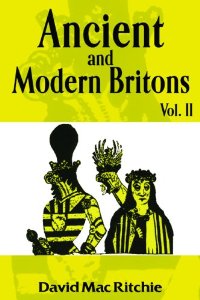
Now that is what David Mc Ritchie a Scots man was referring to in vol II of his book Ancient and Modern Britons
Again alot of what so-called Afrocentrist wrote about hardly originated with them another man they gleened information from is Godfrey Higgins.an archaeologist and Freemason who wrote Anacalypsis.
Off-course those works are dated as they are over a 100yrs old so the critique should lay there.
edit on 21-2-2013 by Spider879 because: (no reason given)
Originally posted by punkinworks10
There's so much un related Bla Bla Bla in this thread.
Is it just me or did everybody miss the fact that a vast majority the heralds and standards with moorish heads are just those heads.
In the reconquista it was quite fashionable for noble families to use the image of the heads of moors on their family crest to show just that, they took the heads of moors.
And honestly its Islam as a whole that should get the credit for preserving classical knowledge, not just the moorish western expression of Islamic expansion.
No that's why I said each coat of arms have to be looked at in context as they were used for different purpose,some of a religious nature pls go here
www.pbs.org...
SIGILLUM SECRETUM (Secret Seal) On the image of the Blackamoor in European Heraldry (a preliminary proposal for an iconographical study) by Mario de Valdes y Cocom
others like you said and I and Astyana pointed out came from fighting the Moors but others are conversos who switched sides and started familes in Europe.
edit on 21-2-2013 by Spider879 because: (no reason given)
reply to post by Spider879
I have been wrong before and I will be wrong again, Spider, but in this case I believe I am right.
Farris's book is justly famous, especially among art lovers. And his thesis—that black American culture is derived at least in part from identifiable roots in sub-Saharan Africa—is hardly controversial. But none of the five cultures Farris mentions could boast achievements on a par with those of the civilisations of the Old World which were there predecessors and contemporaries. To call these African cultures civilisations is kind—and even legitimate, provided your definition of 'civilisation' is loose enough to accommodate them. Mine, I'm sorry to say, is not.
By the way, anyone who mistakes you for ThePharaoh obviously doesn't get the nuances of personal literary style. Yours and his are poles apart.
I have been wrong before and I will be wrong again, Spider, but in this case I believe I am right.
Farris's book is justly famous, especially among art lovers. And his thesis—that black American culture is derived at least in part from identifiable roots in sub-Saharan Africa—is hardly controversial. But none of the five cultures Farris mentions could boast achievements on a par with those of the civilisations of the Old World which were there predecessors and contemporaries. To call these African cultures civilisations is kind—and even legitimate, provided your definition of 'civilisation' is loose enough to accommodate them. Mine, I'm sorry to say, is not.
By the way, anyone who mistakes you for ThePharaoh obviously doesn't get the nuances of personal literary style. Yours and his are poles apart.
edit on 21/2/13 by Astyanax because: of ThePharaoh
Nice thread OP. Nicely put together with a lot of good information and history that many people are unaware of, forget, or would like to deny.
There were too many whiny posts from oversensitive boys/girls who can't fathom a view not entirely euro-centric on the first page; people making too many uncalled for and absolutely ignorant sarcastic remarks for me to continue through that garbage. And they were getting starred like they had something valuable or intelligent to say. I had to skip the rest of the pages. So many people can't come to terms with their inner hatred and self perception of inferiority that would allow them to just proudly proclaim themselves as the no credit giving soft-racists that they really are.
Nobody better dare offer history and information that in any way puts into perspective/minimizes the glory of the little-boy-crazy greeks or the great mighty romans or the white conquering spaniards who graciously tamed the wild people they came across in the lands they raped and pillaged. In threads like these, you get lots of weak indirect comments made at you and when you return with some truth and logic, they prove themselves to be as dim as they initially showed. They're never worth the time. There are a lot of lies in our history books and falsities in the impressions that they give. In threads like these lie a bunch of cranky arthritic believers that everything of importance and all the greatness we know of today is the proud result of their swelled up ancestors.
There were too many whiny posts from oversensitive boys/girls who can't fathom a view not entirely euro-centric on the first page; people making too many uncalled for and absolutely ignorant sarcastic remarks for me to continue through that garbage. And they were getting starred like they had something valuable or intelligent to say. I had to skip the rest of the pages. So many people can't come to terms with their inner hatred and self perception of inferiority that would allow them to just proudly proclaim themselves as the no credit giving soft-racists that they really are.
Nobody better dare offer history and information that in any way puts into perspective/minimizes the glory of the little-boy-crazy greeks or the great mighty romans or the white conquering spaniards who graciously tamed the wild people they came across in the lands they raped and pillaged. In threads like these, you get lots of weak indirect comments made at you and when you return with some truth and logic, they prove themselves to be as dim as they initially showed. They're never worth the time. There are a lot of lies in our history books and falsities in the impressions that they give. In threads like these lie a bunch of cranky arthritic believers that everything of importance and all the greatness we know of today is the proud result of their swelled up ancestors.
Originally posted by Astyanax
reply to post by Spider879
I have been wrong before and I will be wrong again, Spider, but in this case I believe I am right.
Farris's book is justly famous, especially among art lovers. And his thesis—that black American culture is derived at least in part from identifiable roots in sub-Saharan Africa—is hardly controversial. But none of the five cultures Farris mentions could boast achievements on a par with those of the civilisations of the Old World which were there predecessors and contemporaries. To call these African cultures civilisations is kind—and even legitimate, provided your definition of 'civilisation' is loose enough to accommodate them. Mine, I'm sorry to say, is not.
By the way, anyone who mistakes you for ThePharaoh obviously doesn't get the nuances of personal literary style. Yours and his are poles apart.
edit on 21/2/13 by Astyanax because: of ThePharaoh
What is your definition of civilization,some would claimed it have to include writing,others states craft and complex bureaucracies art and a reflective class.
reply to post by LizardSlicks
Thank you, my aim is to bring to light what is hidden some folks don't like their world view upset so comfortable they are in it they wear it like a warm blanket on a cold winter's night.
And again while I know many who may approach use of information that have been provided as an in your face protest and bragging point, I am not that guy,for personally I had nothing to do with what any of my ancestors did or did not do so no point in bragging but to get a better understand of the past the hidden stuff must be bought to light so we can move forward.
Thank you, my aim is to bring to light what is hidden some folks don't like their world view upset so comfortable they are in it they wear it like a warm blanket on a cold winter's night.
And again while I know many who may approach use of information that have been provided as an in your face protest and bragging point, I am not that guy,for personally I had nothing to do with what any of my ancestors did or did not do so no point in bragging but to get a better understand of the past the hidden stuff must be bought to light so we can move forward.
edit on 21-2-2013 by Spider879 because: (no reason given)
reply to post by Astyanax
there are plenty of reasons to think that pre-iron age britons were of noticably darker complexion, besides the many literary references (be they old english talk of swarthy/swart/svart, ie: dark skinned people; or dark figures alluded to, though fairly clearly imo in old irish works.. iirc too artifacts have been excavated in ireland that at least show trade links with north africa)..
when i say dark skinned btw, i would like to make the distinction that i do not mean "recently ethnic africans", i'm just challenging the pasty-white ancient brits idea that has little real evidence, besides the incoming iron-age "celts". recent work shows ancient briton's heritage is traced to the near/middle east:
en.wikipedia.org...
also, considering that you had never heard of Ile Ife before, it's unsurprising that you underplay it so much - but they had cities, hierarchy and a quite remarkable material culture - quite clearly a civilisation in my book. besides this it can be regarded as the cultural home of a huge cultural group (the yoruba).....there is a rich and fascinating history and material culture just waiting for you to dig deeper
there are plenty of reasons to think that pre-iron age britons were of noticably darker complexion, besides the many literary references (be they old english talk of swarthy/swart/svart, ie: dark skinned people; or dark figures alluded to, though fairly clearly imo in old irish works.. iirc too artifacts have been excavated in ireland that at least show trade links with north africa)..
when i say dark skinned btw, i would like to make the distinction that i do not mean "recently ethnic africans", i'm just challenging the pasty-white ancient brits idea that has little real evidence, besides the incoming iron-age "celts". recent work shows ancient briton's heritage is traced to the near/middle east:
In 2007, Bryan Sykes produced an analysis of 6000 samples from the OGAP project in his book Blood of the Isles.[3] Later, Stephen Oppenheimer in his 2006 book The Origins of the British used the data from Weale et al. (2002), Capelli et al. (2003) and Rosser et al. (2000) for Europe. In opposition to Neolithic origin theories, which remain strong, Sykes and Oppenheimer argued for significant immigration from Iberia into Britain and Ireland. Much of this argument was based upon Y DNA evidence, however by 2010 several major Y DNA studies presented more complete data, showing that the oldest-surviving male lineages had mostly migrated to Britain from the Balkans, and ultimately from the Middle East, not from Iberia.[4][5][6] In a new twist, from a recently published [2012] and highly enlarged whole-genome mitochondrial database, the authors were able to conclude that the most archaic mtDNA lineages came from a Middle Eastern migration into Europe during the Late Glacial period, ~19–12 thousand years and not as late as the Neolithic as was previously proposed
en.wikipedia.org...
also, considering that you had never heard of Ile Ife before, it's unsurprising that you underplay it so much - but they had cities, hierarchy and a quite remarkable material culture - quite clearly a civilisation in my book. besides this it can be regarded as the cultural home of a huge cultural group (the yoruba).....there is a rich and fascinating history and material culture just waiting for you to dig deeper
Originally posted by Spider879
I don't know if we had clashed before you seemed to project your own Eurocentric bias on others.
Funny for you to make such a statement, the same person who tried to convince people here that the Moors were exclusively a black African peoples when most of the images we have of them portrayed them as Middle Eastern/Arab. Do you give the black African portion ie the black moors a greater weighting then their more numerous Middle Eastern brothers?
Anyone who concludes that Europe was civilized by black African moors is confused in my opinion. I could equally claim that it was the Middle Eastern Moors who civilized portions of Africa, which would probably be closer to the mark ie Mali and its Moorish mosque, Afro-centrists will absolutely hate that thought!
In Britain the ancient architecture has a distinctive christian style, had the moors in general been the driving force behind civilizing the British essentially we would have domes and not steeples, actually not a single mosque dating from that time in the UK.
edit on 21-2-2013 by LUXUS
because: (no reason given)
Originally posted by LUXUS
Originally posted by Spider879
I don't know if we had clashed before you seemed to project your own Eurocentric bias on others.
Funny for you to make such a statement, the same person who tried to convince people here that the Moors were exclusively a black African peoples when most of the images we have of them portrayed them as Middle Eastern/Arab. Do you give the black African portion ie the black moors a greater weighting then their more numerous Middle Eastern brothers?
Anyone who concludes that Europe was civilized by black African moors is confused in my opinion. I could equally claim that it was the Middle Eastern Moors who civilized portions of Africa, which would probably be closer to the mark ie Mali and its Moorish mosque, Afro-centrists will absolutely hate that thought!
In Britain the ancient architecture has a distinctive christian style, had the moors in general been the driving force behind civilizing the British essentially we would have domes and not steeples, actually not a single mosque dating from that time in the UK.edit on 21-2-2013 by LUXUS because: (no reason given)
And if you really read my post you would know I said no such thing,but the origin of the term Moor pre-dates the Islamic era and it meant black sometimes interchangeable with Niger and Ethiops.
Spider879
Page1
It's not as simple as Black and White for while all Blacks were Moors all Moors weren't actually Black given that they mixed with Europeans which is kind of the point of this thread,for one thing Moor meant Black in all European languages,if they wanted to describe someone among them that is not so dark they simply called them twanny Moors,or if there were Whites who lived with the Moors adopted their religion and customs then they called those white Moors,the equivalent of calling some white youths today wiggers if they are deep into hiphop culture.. Mod ( if that word is an offense I'll remove it) but going back even before the Islamic conquest we have this from the Romans talking about Moors like the below
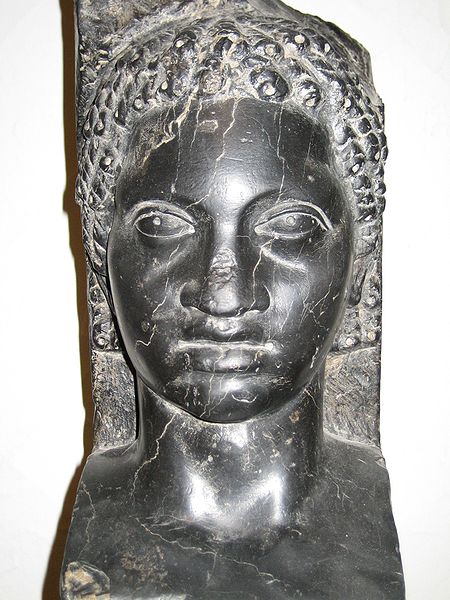
Pre-Islamic Moor of the Roman era
edit on 21-2-2013 by Spider879 because: (no reason given)
Originally posted by LUXUS
In Britain the ancient architecture has a distinctive christian style, had the moors in general been the driving force behind civilizing the British essentially we would have domes and not steeples, actually not a single mosque dating from that time in the UK.edit on 21-2-2013 by LUXUS because: (no reason given)
the op is in no way suggesting that moors were the driving force, rather their presence and involvement is being highlighted for those who are not yet aware of it...
and i find your suggestion that ancient british architecture is "christian" in style to be curious, not least because christianity is not exactly ancient. i'll have to assume that by ancient you actually mean dark ages/medieval which is quite different.
anglo-saxon churches were initially timber constructions and without towers (hence no steeple) - i believe towers did not make an appearance untill the normans, and spires (thereby making steeples) came in as a development of that. so for arguments sake we could suggest that steeples are no more than 800 years old - hardly ancient.
and without Irish monks in the north west, and islam in the south, europe's dark age would have been much longer and darker. the lack of mosques in medieval britain is irrelevant.
reply to post by skalla
I Have info on the origin of steeples and it involves Osiris penis but that's really for another thread.
anglo-saxon churches were initially timber constructions and without towers (hence no steeple) - i believe towers did not make an appearance untill the normans, and spires (thereby making steeples) came in as a development of that. so for arguments sake we could suggest that steeples are no more than 800 years old - hardly ancient. and without Irish monks in the north west, and islam in the south, europe's dark age would have been much longer and darker. the lack of mosques in medieval britain is irrelevant.
I Have info on the origin of steeples and it involves Osiris penis but that's really for another thread.
reply to post by Spider879
besides the fact that humans like building tall stuff, it sounds like an interesting thread... just remember to be careful of the pictures you use for reference
besides the fact that humans like building tall stuff, it sounds like an interesting thread... just remember to be careful of the pictures you use for reference
Originally posted by Spider879
reply to post by skalla
I Have info on the origin of steeples and it involves Osiris penis but that's really for another thread.
Really so now our steeples come from Africa too haha you might want to research the round towers of Ireland first and the fact that conical stones such as the Lia Fáil on the hill of Tarah have been worshiped since extrema antiquity much in the same way the ancient Greeks did the omphalos.
It's not as simple as Black and White for while all Blacks were Moors all Moors weren't actually Black given that they mixed with Europeans
Exactly as I stated you are trying assert that the moors were back. You account for the moors who don't look quite like black Africans as being the result of race mixing between the black moors and European....not true they were middle eastern as anyone can tell by their images. They are also the ones who converted Africans to Islam ie Mali
reply to post by skalla
In that context the Moors are hardly ancient either, though we have architecture that dates back to that period that does not look in anyway Islamic, thats my point.
In that context the Moors are hardly ancient either, though we have architecture that dates back to that period that does not look in anyway Islamic, thats my point.
reply to post by Spider879
'Civilisation' is a hard word to define. Etymologically, it means 'citification'. That's actually not a bad definition in a way, because it implies some of the other attributes of civilisation. But those other attributes are probably more important than mere living in cities. To complicate matters, not all civilisations tick all the boxes.
Let's look at the list you provide above. Bureaucracy implies literacy, for it cannot exist without written records. And bureaucracy is important, because it implies not just a central authority but also one that functions according to established procedures. And when you have that, you have a state whose continuity is not dependent on a particular ruler or dynasty—they come and go, but the state endures. Some of the attributes of a civilised state are the rule of law (the more uniform and impersonal in application and interpretation the more civilised) and a practical state monopoly on violence that allows people to go about their business without constantly having to fear attacks on themselves, their families and their property. So my definition would include these things.
Civilised societies also apply bureaucratic management to the business of warfare. Civilised states have armies of trained men that fight and are supplied in well-organised ways, as opposed to the guerrilla raids and roundhouse melées of barbarian warfare.
And yes, civilisation also implies the existence what you call a 'reflective class'. The culture should generate sufficient economic surplus to free a large number of people from the burden of producing their own sustenance, allowing them the gift of leisure. People at leisure need diversions—thus a civilised community is identifiable by its art, philosophy (or at least theology), sports and games, manners and etiquette, its medicine and above all by its science. The more refined and advanced these are, the more economic surplus and leisure they imply—over time as well as at any given instant of history. So the refinement of these things is one measure of how civilised a community is. Another measure is the number of people who have the leisure to enjoy and participate in these diversions—the more broadly leisure is enjoyed, the more civilised the community.
Perhaps the most important definition of all is personal. The civilised man or woman views himself as a functioning unit in a vast, complex web of interconnected institutions and processes that work in predictable ways. He can see the picture, see how it evolved, and look forward to its continuance. He has a sense of history and a sense of civic geography. His life is not wholly exposed to the vicissitudes of nature and the whims of tyrants. He can predict accurately what he will be doing in a year, five years or ten years from now, or at least has good reason to believe he can. That, to me, civilisation.
Whether or not the various cultures of prehistoric sub-Saharan Africa conform to my definition, and whether the definition itself is legitimate, are matters I leave to your opinion. Obviously, I already have mine.
Allow me to add one thing more. Human civilisation evolved independently, as far as we know, in a mere handful of places—Mesopotamia, Egypt, the Indus Valley, China, South America and probably Crete. From these centres it was diffused across the rest of the world, and through trade its fruits could be enjoyed even by those who had yet to attain it. One need give no credit to the Greeks or Romans for being civilised; the business had already been invented for them by others. But what one should give them credit for—enormous credit—is the degree of refinement to which they brought it, in their different ways. Western civilisation consists largely in the elaboration and dissemination of their achievements.
We've come a long way from Moors' heads on coats of arms, haven't we?
What is your definition of civilization, some would claimed it have to include writing, others states craft and complex bureaucracies art and a reflective class.
'Civilisation' is a hard word to define. Etymologically, it means 'citification'. That's actually not a bad definition in a way, because it implies some of the other attributes of civilisation. But those other attributes are probably more important than mere living in cities. To complicate matters, not all civilisations tick all the boxes.
Let's look at the list you provide above. Bureaucracy implies literacy, for it cannot exist without written records. And bureaucracy is important, because it implies not just a central authority but also one that functions according to established procedures. And when you have that, you have a state whose continuity is not dependent on a particular ruler or dynasty—they come and go, but the state endures. Some of the attributes of a civilised state are the rule of law (the more uniform and impersonal in application and interpretation the more civilised) and a practical state monopoly on violence that allows people to go about their business without constantly having to fear attacks on themselves, their families and their property. So my definition would include these things.
Civilised societies also apply bureaucratic management to the business of warfare. Civilised states have armies of trained men that fight and are supplied in well-organised ways, as opposed to the guerrilla raids and roundhouse melées of barbarian warfare.
And yes, civilisation also implies the existence what you call a 'reflective class'. The culture should generate sufficient economic surplus to free a large number of people from the burden of producing their own sustenance, allowing them the gift of leisure. People at leisure need diversions—thus a civilised community is identifiable by its art, philosophy (or at least theology), sports and games, manners and etiquette, its medicine and above all by its science. The more refined and advanced these are, the more economic surplus and leisure they imply—over time as well as at any given instant of history. So the refinement of these things is one measure of how civilised a community is. Another measure is the number of people who have the leisure to enjoy and participate in these diversions—the more broadly leisure is enjoyed, the more civilised the community.
Perhaps the most important definition of all is personal. The civilised man or woman views himself as a functioning unit in a vast, complex web of interconnected institutions and processes that work in predictable ways. He can see the picture, see how it evolved, and look forward to its continuance. He has a sense of history and a sense of civic geography. His life is not wholly exposed to the vicissitudes of nature and the whims of tyrants. He can predict accurately what he will be doing in a year, five years or ten years from now, or at least has good reason to believe he can. That, to me, civilisation.
Whether or not the various cultures of prehistoric sub-Saharan Africa conform to my definition, and whether the definition itself is legitimate, are matters I leave to your opinion. Obviously, I already have mine.
Allow me to add one thing more. Human civilisation evolved independently, as far as we know, in a mere handful of places—Mesopotamia, Egypt, the Indus Valley, China, South America and probably Crete. From these centres it was diffused across the rest of the world, and through trade its fruits could be enjoyed even by those who had yet to attain it. One need give no credit to the Greeks or Romans for being civilised; the business had already been invented for them by others. But what one should give them credit for—enormous credit—is the degree of refinement to which they brought it, in their different ways. Western civilisation consists largely in the elaboration and dissemination of their achievements.
We've come a long way from Moors' heads on coats of arms, haven't we?
edit on 21/2/13 by Astyanax because: of (im)personality.
reply to post by skalla
Literary references? We are talking about a time long before writing existed in the British Isles; by the most charitable interpretation, the literature you're talking about can be no older than the fifth century AD at best. In fact, most Celtic literature wasn't actually written down until the Middle Ages. Some of it codifies oral traditions that are much older, but do how accurate do you really think the reportage could be after hundreds of years of oral transmission?
As for the artefacts of which you speak, the means of their conveyance is well known; they were brought to Britain by Phoenician tin-traders. Some of them were based in North Africa, for example at Carthage; but the Phoenicians were far from dark-skinned. Essentially, they were from the same stock as other peoples of the Eastern Mediterranean.
The paragraph you quote contains no great surprises with respect to the origins of the early population of Britain, and gives absolutely no support to the claim that some of them came from Africa. Except, of course, that we all came from Africa... originally.
As for the eminence of Yoruba and other African cultures, and whether they can be called civilised or not, my reply to Spider above lays my views out clearly. Perhaps you feel your special knowledge of the subject entitles you to deem me ignorant, but it seems to me that it could equally well imply bias and special pleading on your own part. If you would like to support your argument with a few references that actually prove me wrong, your case would be a good deal stronger.
there are plenty of reasons to think that pre-iron age britons were of noticably darker complexion, besides the many literary references... iirc too artifacts have been excavated in ireland that at least show trade links with north africa.
Literary references? We are talking about a time long before writing existed in the British Isles; by the most charitable interpretation, the literature you're talking about can be no older than the fifth century AD at best. In fact, most Celtic literature wasn't actually written down until the Middle Ages. Some of it codifies oral traditions that are much older, but do how accurate do you really think the reportage could be after hundreds of years of oral transmission?
As for the artefacts of which you speak, the means of their conveyance is well known; they were brought to Britain by Phoenician tin-traders. Some of them were based in North Africa, for example at Carthage; but the Phoenicians were far from dark-skinned. Essentially, they were from the same stock as other peoples of the Eastern Mediterranean.
The paragraph you quote contains no great surprises with respect to the origins of the early population of Britain, and gives absolutely no support to the claim that some of them came from Africa. Except, of course, that we all came from Africa... originally.
As for the eminence of Yoruba and other African cultures, and whether they can be called civilised or not, my reply to Spider above lays my views out clearly. Perhaps you feel your special knowledge of the subject entitles you to deem me ignorant, but it seems to me that it could equally well imply bias and special pleading on your own part. If you would like to support your argument with a few references that actually prove me wrong, your case would be a good deal stronger.
edit on 21/2/13 by Astyanax because: of a stronger case.
reply to post by Astyanax
Well the Yorubas other forest civilizations met most of those conditions,with the exception of writing however they had what is called a griot actually a numbers of griots that served different functions something like a specialized lawyer or doctor whose sole purpose in life is to commit to memory the laws and traditions of the land and deeds of the the royals,they also employed memory devices something akin to what was found in early Kemet before true writing, will make a post on Africa writing system soon enough,btw the Inca had something similar. and yes I never had a problem real or imagine with your post you are an intellectually honest person so far and that's all one can ask for..conversation is the spice of life.
Well the Yorubas other forest civilizations met most of those conditions,with the exception of writing however they had what is called a griot actually a numbers of griots that served different functions something like a specialized lawyer or doctor whose sole purpose in life is to commit to memory the laws and traditions of the land and deeds of the the royals,they also employed memory devices something akin to what was found in early Kemet before true writing, will make a post on Africa writing system soon enough,btw the Inca had something similar. and yes I never had a problem real or imagine with your post you are an intellectually honest person so far and that's all one can ask for..conversation is the spice of life.
edit on 21-2-2013 by Spider879 because: (no reason given)
reply to post by LUXUS
Okay I see you have a problem with reading comprehension ,or you are trying to attribute things to me that I never said on purpose I don't know which but it doesn't boad well.
And yes the Malians and others gained from their contacts with Arabs what of it, but their institutions ie system of state craft remained intact,as a matter of fact it is the hall mark of any great society to learn from others and the sahelian complexes were just that.
Exactly as I stated you are trying assert that the moors were back. You account for the moors who don't look quite like black Africans as being the result of race mixing between the black moors and European....not true they were middle eastern as anyone can tell by their images. They are also the ones who converted Africans to Islam ie Mali
Okay I see you have a problem with reading comprehension ,or you are trying to attribute things to me that I never said on purpose I don't know which but it doesn't boad well.
And yes the Malians and others gained from their contacts with Arabs what of it, but their institutions ie system of state craft remained intact,as a matter of fact it is the hall mark of any great society to learn from others and the sahelian complexes were just that.
edit on 21-2-2013 by
Spider879 because: (no reason given)
Oh shush racistards. You are spoiling what could be an interesting discussion. And for the record anyone who wants to know of the ethnicity of the
Moors need only do a wikipedia search of them
.
What is up with people? This isnt the 1940s.
.
What is up with people? This isnt the 1940s.
new topics
-
University of Texas Instantly Shuts Down Anti Israel Protests
Education and Media: 24 minutes ago -
Any one suspicious of fever promotions events, major investor Goldman Sachs card only.
The Gray Area: 2 hours ago -
God's Righteousness is Greater than Our Wrath
Religion, Faith, And Theology: 7 hours ago -
Electrical tricks for saving money
Education and Media: 10 hours ago -
VP's Secret Service agent brawls with other agents at Andrews
Mainstream News: 11 hours ago
top topics
-
VP's Secret Service agent brawls with other agents at Andrews
Mainstream News: 11 hours ago, 9 flags -
Cats Used as Live Bait to Train Ferocious Pitbulls in Illegal NYC Dogfighting
Social Issues and Civil Unrest: 15 hours ago, 8 flags -
Nearly 70% Of Americans Want Talks To End War In Ukraine
Political Issues: 12 hours ago, 4 flags -
Electrical tricks for saving money
Education and Media: 10 hours ago, 4 flags -
Sunak spinning the sickness figures
Other Current Events: 12 hours ago, 3 flags -
Late Night with the Devil - a really good unusual modern horror film.
Movies: 14 hours ago, 2 flags -
Any one suspicious of fever promotions events, major investor Goldman Sachs card only.
The Gray Area: 2 hours ago, 2 flags -
The Good News According to Jesus - Episode 1
Religion, Faith, And Theology: 17 hours ago, 1 flags -
God's Righteousness is Greater than Our Wrath
Religion, Faith, And Theology: 7 hours ago, 0 flags -
University of Texas Instantly Shuts Down Anti Israel Protests
Education and Media: 24 minutes ago, 0 flags
active topics
-
Russia Ukraine Update Thread - part 3
World War Three • 5730 • : Arbitrageur -
Nearly 70% Of Americans Want Talks To End War In Ukraine
Political Issues • 28 • : andy06shake -
VP's Secret Service agent brawls with other agents at Andrews
Mainstream News • 43 • : Hakaiju -
Everest-sized ‘Devil comet’ Pons-Brooks Visible Now
Space Exploration • 17 • : Compendium -
Nakedeye Mother of Dragons Comet Is Here!
Space Exploration • 5 • : Compendium -
HORRIBLE !! Russian Soldier Drinking Own Urine To Survive In Battle
World War Three • 38 • : BernnieJGato -
God's Righteousness is Greater than Our Wrath
Religion, Faith, And Theology • 24 • : randomuser2034 -
15 Unhealthiest Sodas On The Market
Health & Wellness • 43 • : JPRCrastney -
University of Texas Instantly Shuts Down Anti Israel Protests
Education and Media • 0 • : FlyersFan -
Sunak spinning the sickness figures
Other Current Events • 9 • : Ohanka