It looks like you're using an Ad Blocker.
Please white-list or disable AboveTopSecret.com in your ad-blocking tool.
Thank you.
Some features of ATS will be disabled while you continue to use an ad-blocker.

Hubble's Latest Mind-Blowing Cosmic Pictures
page: 1share:
Greetings, ATS!
Found these incredible pictures and wanted to share. The beauty of space astounds me. Enjoy!
From Discovery News
Light from a galaxy 10 billion light years away
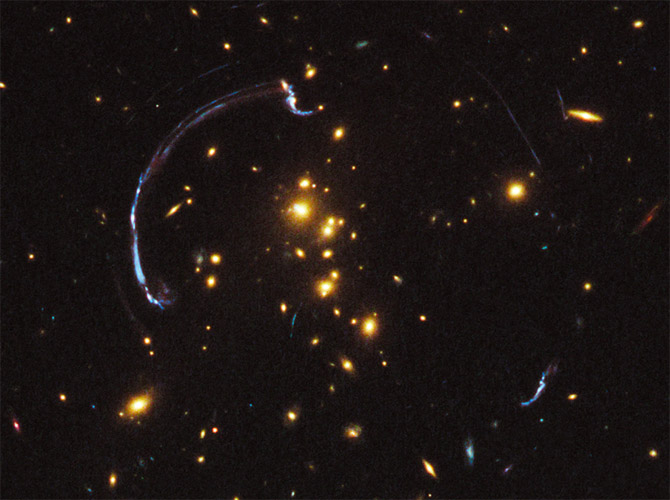
30 Dorados, inside the Tarantula Nebula
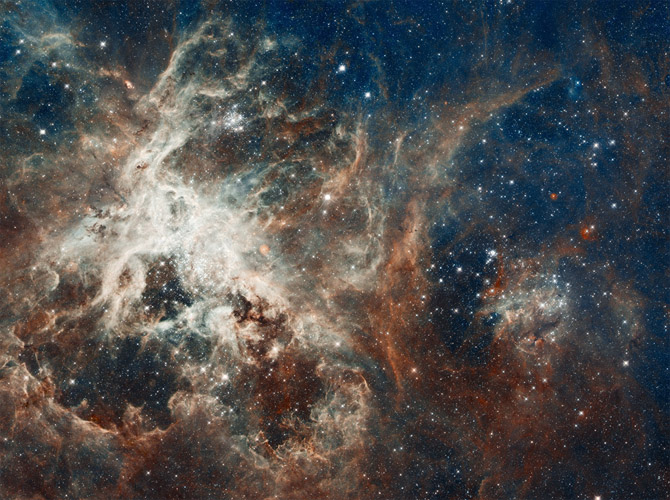
Two galaxies overlapping
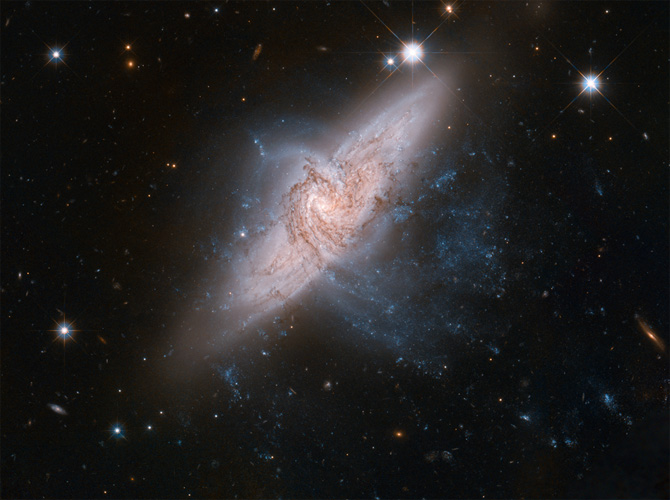
Black hole emitting light
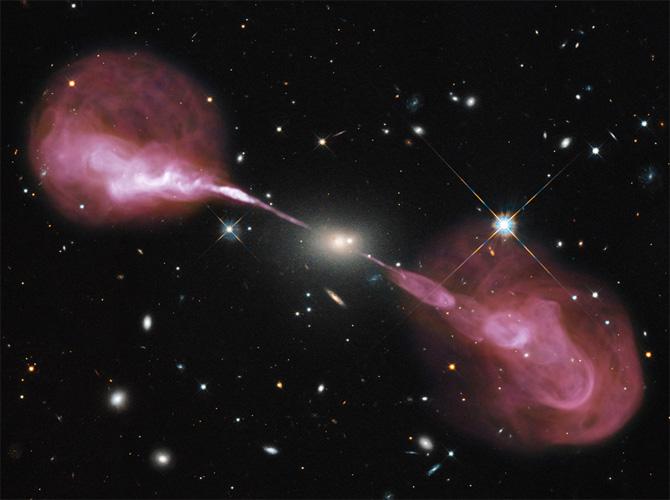
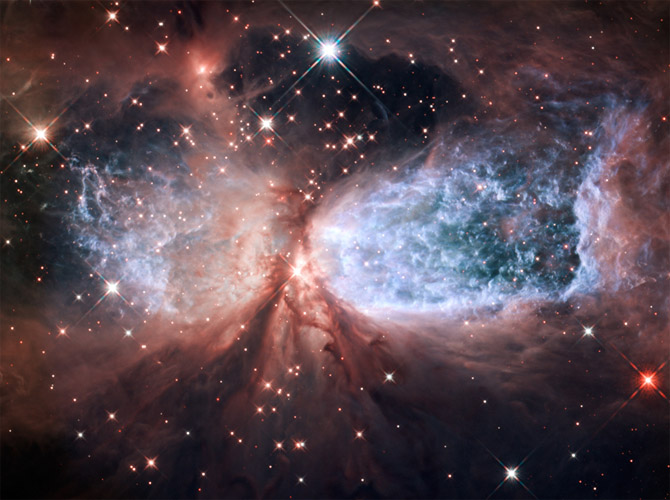
Stellar nursery
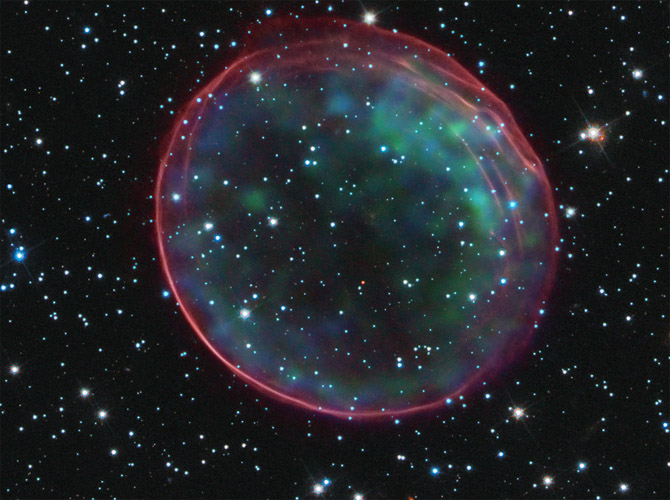
The remnants of a supernova
Found these incredible pictures and wanted to share. The beauty of space astounds me. Enjoy!
From Discovery News
Light from a galaxy 10 billion light years away
30 Dorados, inside the Tarantula Nebula
Two galaxies overlapping
Black hole emitting light
Stellar nursery
The remnants of a supernova
The universe is just fantastic! thank you so much for posting.
reply to post by smyleegrl
why dont they look into our OWN galaxy and its surrounding "earth like" planets?
i say this is BS
why dont they look into our OWN galaxy and its surrounding "earth like" planets?
i say this is BS
reply to post by k1k1to
Huh?
What is BS about this? I am confused as to why you are annoyed by this?
Huh?
What is BS about this? I am confused as to why you are annoyed by this?
Originally posted by k1k1to
reply to post by smyleegrl
why dont they look into our OWN galaxy and its surrounding "earth like" planets?
i say this is BS
Well please explain further as you seem to be in the KNOW what Earth like planets and were are they
All that space, all the potential different life forms that roam this universe - Yet we're divided by such trivial, inferior things on such a small
planet, which is merely a small spec in a vast ocean.
Makes me smile when I look at pictures like this, the wonders are endless. Its a shame I'm confined to this small little rock we're people fight over the basics of human life.
Thank you OP
Makes me smile when I look at pictures like this, the wonders are endless. Its a shame I'm confined to this small little rock we're people fight over the basics of human life.
Thank you OP
reply to post by k1k1to
The vast majority of our own galaxy is hidden from us in visible wavelengths because of all the interstellar dust.
Take a trip into the countryside on a clear night, well away from city lights and look up. Thats our galaxy.
The vast majority of our own galaxy is hidden from us in visible wavelengths because of all the interstellar dust.
Take a trip into the countryside on a clear night, well away from city lights and look up. Thats our galaxy.
Originally posted by smyleegrl
reply to post by k1k1to
You don't believe these are real images?
At one point in my life i did...
not anymore i dont want to get into details because sometimes there is just no convincing people who have already made up their mind about something they believe to be true. if this inspires people then, hey so be it.
Originally posted by wmd_2008
Originally posted by k1k1to
reply to post by smyleegrl
why dont they look into our OWN galaxy and its surrounding "earth like" planets?
i say this is BS
Well please explain further as you seem to be in the KNOW what Earth like planets and were are they
well the fact that you are even intrigued even a little bit about my comment shows that deep down you know something isn't right.
i'll re-state my last comment in a more understandable way.
the pictures are fake.
and if they are real...why dont they use the technology to peer into our own galaxy and its many earth like planets that it contains? In order to understand what i just said you need to forget everything you have ever been taught in school or by "historians" or "officials" on what our galaxy and universe is really like. .
the truth is so out of this world, and so complicated, that our mere mortal human mind cannot comprehend it, and to try and comprehend it would send you into sheer madness.
sometimes i like to just "fit in" with the rest of us and "get lost" in the confusion and distractions because i fear that i will descend into madness.
we humans cant handle the truth, we dont deserve it, we cant understand it, and it saddens me because knowledge is what we long for...but at the end of the day a "super human" mind is required in order to dissect and take in everything tat is truly happening around us...it frustrates me
edit
on 29-1-2013 by k1k1to because: (no reason given)
edit on 29-1-2013 by k1k1to because: (no reason given)
Cool pictures.
Originally posted by smyleegrl
Black hole emitting light
But if the black hole is giving off light, it's not really black anymore, is it?
So a black hole is really only black if there's no material falling into the event horizon to create radiation.
Who says they aren't?
Originally posted by k1k1to
why dont they use the technology to peer into our own galaxy and its many earth like planets that it contains?
Astronome rs have discovered hundreds of planets orbiting other stars, but only a few have been seen in photographs
Astronomers have discovered more than 850 planets orbiting other stars. These exoplanets are found using a variety of techniques, but most are indirect—we see the effect of the planet on its host star, but we don’t see the planet itself.
However, a very few handful have actually been directly detected—small sparks of light visible next to the brilliant spotlights of their stars. On this page are pictures all the exoplanets we’ve been able to see so far, including other solar systems, and some planets caught in motion as they orbit their parent stars.
Edit to add:
To show the difficulty of finding Earth like planets, here is a picture of Earth taken from the edge of our own solar system, it's only about 0.12 pixel so we can't even see it:
en.wikipedia.org...:Solar_System_Portrait_-_View_of_the_Sun,_Earth_and_Venus.jpg

When it's this hard to see Earth even in our own solar system, you should get some idea how hard it might be to see it from a distant solar system.
In the photograph, Earth lies in the center of one of the scattered light rays resulting from taking the image with a small angle between the Sun and the Earth. Earth takes up less than a single pixel (only 0.12 pixel in size as referred to by NASA).
edit on 29-1-2013 by Arbitrageur because: clarification
Originally posted by Arbitrageur
Who says they aren't?
Originally posted by k1k1to
why dont they use the technology to peer into our own galaxy and its many earth like planets that it contains?
Astronome rs have discovered hundreds of planets orbiting other stars, but only a few have been seen in photographs
Astronomers have discovered more than 850 planets orbiting other stars. These exoplanets are found using a variety of techniques, but most are indirect—we see the effect of the planet on its host star, but we don’t see the planet itself.
However, a very few handful have actually been directly detected—small sparks of light visible next to the brilliant spotlights of their stars. On this page are pictures all the exoplanets we’ve been able to see so far, including other solar systems, and some planets caught in motion as they orbit their parent stars.
I dont want to offend you, but do you realize who FAR the images portrayed on this post are??? you're telling me that they cant look into 2-10-20-100 light years from us?? really? all they have are little "blips" and fuzzy images of different light waves and spectrum that they happen to photograph? right now with the technology available they can see the land masses of different planets just a couple of light years from us.
its ok though, i dont want to upset anyone or argue ...those are very pretty computer generated images.
reply to post by k1k1to
I'm not offended. Maybe they could see more if the planet wasn't so close to a bright star, but that's basically one of the main problems...the star is so bright relative to the planet, that we can see the star but not the planet. If there was some way to block just the light from the star, and only see the light from the planet, I'm pretty sure we would be able to see more...but we don't know how to do that.
I'm not offended. Maybe they could see more if the planet wasn't so close to a bright star, but that's basically one of the main problems...the star is so bright relative to the planet, that we can see the star but not the planet. If there was some way to block just the light from the star, and only see the light from the planet, I'm pretty sure we would be able to see more...but we don't know how to do that.
Originally posted by Arbitrageur
Originally posted by k1k1to
]When it's this hard to see Earth even in our own solar system, you should get some idea how hard it might be to see it from a distant solar system.
edit on 29-1-2013 by Arbitrageur because: clarification
this just reinforces my response
reply to post by smyleegrl
Love pics like this!! 10 billion light years, imagine what we can't see that's there.
Way off topic, but my wife glanced over my shoulder and asked, "Why does she call herself Smelly Girl?"
Told her what it really said. Still laughing.
Love pics like this!! 10 billion light years, imagine what we can't see that's there.
Way off topic, but my wife glanced over my shoulder and asked, "Why does she call herself Smelly Girl?"
Told her what it really said. Still laughing.
reply to post by Arbitrageur
you seem like the type of person that is interested in astronomy and space exploration...
if only you knew the truth you would have a smile from ear to ear for weeks, you would leap in the air with joy, you would drive all over town yelling out your car window and honking your horn...
but its far more sinister than that. its not good. humans genetically and physically are not BUILT to handle so much information.
but some of us are surprising them, but they have a lot of fall back plans, and it is a mind war, one of the biggest fall back plans they have is psychosis...the brain cant handle it...it shatters and fractures..some of us who get close to the truth end up shattering..some of us..like me... purposely dive back in the distractions because we realize that we cant win because its beyond us.
together ..unified we can figure this out, imagine the human race like a school of fish all synchronized mentally, kind of like in the movie avatar and the "tree of knowledge"...but this synchronicity will never happen, there are too many loose wire..i.e "asleep" people..in order to get started.
you seem like the type of person that is interested in astronomy and space exploration...
if only you knew the truth you would have a smile from ear to ear for weeks, you would leap in the air with joy, you would drive all over town yelling out your car window and honking your horn...
but its far more sinister than that. its not good. humans genetically and physically are not BUILT to handle so much information.
but some of us are surprising them, but they have a lot of fall back plans, and it is a mind war, one of the biggest fall back plans they have is psychosis...the brain cant handle it...it shatters and fractures..some of us who get close to the truth end up shattering..some of us..like me... purposely dive back in the distractions because we realize that we cant win because its beyond us.
together ..unified we can figure this out, imagine the human race like a school of fish all synchronized mentally, kind of like in the movie avatar and the "tree of knowledge"...but this synchronicity will never happen, there are too many loose wire..i.e "asleep" people..in order to get started.
new topics
-
Las Vegas UFO Spotting Teen Traumatized by Demon Creature in Backyard
Aliens and UFOs: 56 minutes ago -
2024 Pigeon Forge Rod Run - On the Strip (Video made for you)
Automotive Discussion: 1 hours ago -
Gaza Terrorists Attack US Humanitarian Pier During Construction
Middle East Issues: 2 hours ago -
The functionality of boldening and italics is clunky and no post char limit warning?
ATS Freshman's Forum: 3 hours ago -
Meadows, Giuliani Among 11 Indicted in Arizona in Latest 2020 Election Subversion Case
Mainstream News: 3 hours ago -
Massachusetts Drag Queen Leads Young Kids in Free Palestine Chant
Social Issues and Civil Unrest: 4 hours ago -
Weinstein's conviction overturned
Mainstream News: 5 hours ago -
Supreme Court Oral Arguments 4.25.2024 - Are PRESIDENTS IMMUNE From Later Being Prosecuted.
Above Politics: 6 hours ago -
Krystalnacht on today's most elite Universities?
Social Issues and Civil Unrest: 7 hours ago -
Chris Christie Wishes Death Upon Trump and Ramaswamy
Politicians & People: 7 hours ago
top topics
-
Krystalnacht on today's most elite Universities?
Social Issues and Civil Unrest: 7 hours ago, 8 flags -
Weinstein's conviction overturned
Mainstream News: 5 hours ago, 6 flags -
University of Texas Instantly Shuts Down Anti Israel Protests
Education and Media: 9 hours ago, 6 flags -
Supreme Court Oral Arguments 4.25.2024 - Are PRESIDENTS IMMUNE From Later Being Prosecuted.
Above Politics: 6 hours ago, 5 flags -
Massachusetts Drag Queen Leads Young Kids in Free Palestine Chant
Social Issues and Civil Unrest: 4 hours ago, 4 flags -
Meadows, Giuliani Among 11 Indicted in Arizona in Latest 2020 Election Subversion Case
Mainstream News: 3 hours ago, 4 flags -
Chris Christie Wishes Death Upon Trump and Ramaswamy
Politicians & People: 7 hours ago, 2 flags -
Any one suspicious of fever promotions events, major investor Goldman Sachs card only.
The Gray Area: 11 hours ago, 2 flags -
Gaza Terrorists Attack US Humanitarian Pier During Construction
Middle East Issues: 2 hours ago, 2 flags -
2024 Pigeon Forge Rod Run - On the Strip (Video made for you)
Automotive Discussion: 1 hours ago, 1 flags
active topics
-
University of Texas Instantly Shuts Down Anti Israel Protests
Education and Media • 192 • : DBCowboy -
Candidate TRUMP Now Has Crazy Judge JUAN MERCHAN After Him - The Stormy Daniels Hush-Money Case.
Political Conspiracies • 788 • : Threadbarer -
2024 Pigeon Forge Rod Run - On the Strip (Video made for you)
Automotive Discussion • 6 • : TheInvisibleRedneck -
Supreme Court Oral Arguments 4.25.2024 - Are PRESIDENTS IMMUNE From Later Being Prosecuted.
Above Politics • 63 • : Annee -
Las Vegas UFO Spotting Teen Traumatized by Demon Creature in Backyard
Aliens and UFOs • 5 • : FlyersFan -
Thousands Of Young Ukrainian Men Trying To Flee The Country To Avoid Conscription And The War
Other Current Events • 139 • : Consvoli -
Is there a hole at the North Pole?
ATS Skunk Works • 39 • : Athetos -
The functionality of boldening and italics is clunky and no post char limit warning?
ATS Freshman's Forum • 11 • : JonnyC555 -
Nearly 70% Of Americans Want Talks To End War In Ukraine
Political Issues • 89 • : Xtrozero -
Gaza Terrorists Attack US Humanitarian Pier During Construction
Middle East Issues • 19 • : Consvoli