It looks like you're using an Ad Blocker.
Please white-list or disable AboveTopSecret.com in your ad-blocking tool.
Thank you.
Some features of ATS will be disabled while you continue to use an ad-blocker.

What really happened to the Pharaohs
page: 2share:
@What really happened to the Pharaohs
They were overtaken by the ENLILITES and New Pharaoic influences began... Which went from Egypt to Greeka to Roma...
Perhaps they began to STRAY from the ORIGINAL influences of LORD ENKI or the ENKITE teachings thru greed and power and fell victim to LORD ENLIL influences as they weakened. As others have, thinks of Moses and the flood Enkites and Enlilites war(s) so Enlilites perhaps won last WAR and have current influence over EA*RTH.
So ARE there some modern men who follow Pharaohs data and try to relate to it genetically in order to REGAIN POWER OVER EA*RTH and rule? Or is the agenda to TEACH ALL MEN the ancient ways of the teaching of LORD ENKI to Strengthen the entire HERD?
And if it not to teach all how would ENKI(s) upon return view these power seekers manipulators ... Are they for the SPECIES of man or falling victim to some race related agenda w/o acknowledging the Serpentaz connection OVER them. Careful now "see"
transmitted.
LOVE LIGHT ETERNIA*******
They were overtaken by the ENLILITES and New Pharaoic influences began... Which went from Egypt to Greeka to Roma...
Perhaps they began to STRAY from the ORIGINAL influences of LORD ENKI or the ENKITE teachings thru greed and power and fell victim to LORD ENLIL influences as they weakened. As others have, thinks of Moses and the flood Enkites and Enlilites war(s) so Enlilites perhaps won last WAR and have current influence over EA*RTH.
So ARE there some modern men who follow Pharaohs data and try to relate to it genetically in order to REGAIN POWER OVER EA*RTH and rule? Or is the agenda to TEACH ALL MEN the ancient ways of the teaching of LORD ENKI to Strengthen the entire HERD?
And if it not to teach all how would ENKI(s) upon return view these power seekers manipulators ... Are they for the SPECIES of man or falling victim to some race related agenda w/o acknowledging the Serpentaz connection OVER them. Careful now "see"
transmitted.
LOVE LIGHT ETERNIA*******
edit on 1/10/13 by Ophiuchus 13 because: (no reason given)
More recent
[color=gold]
Inanna can be considered the most prominent female deity in ancient Mesopotamia.[1] As early as the Uruk period (ca. 4000–3100 BC), Inanna was associated with the city of Uruk. The famous Uruk Vase (found in a deposit of cult objects of the Uruk III period) depicts a row of naked men carrying various objects, bowls, vessels, and baskets of farm produce, and bringing sheep and goats, to a female figure facing the ruler. This figure was ornately dressed for a divine marriage, and attended by a servant. The female figure holds the symbol of the two twisted reeds of the doorpost, signifying Inanna behind her, while the male figure holds a box and stack of bowls, the later cuneiform sign signifying En, or high priest of the temple. Especially in the Uruk period, the symbol of a ring-headed doorpost is associated with Inanna.[1]
Seal impressions from the Jemdet Nasr period (ca. 3100–2900 BC) show a fixed sequence of city symbols including those of Ur, Larsa, Zabalam, Urum, Arina, and probably Kesh. It is likely that this list reflects the report of contributions to Inanna at Uruk from cities supporting her cult. A large number of similar sealings were found from the slightly later Early Dynastic I phase at Ur, in a slightly different order, combined with the rosette symbol of Inanna, that were definitely used for this purpose. They had been used to lock storerooms to preserve materials set aside for her cult.[2] Inanna's primary temple of worship was the Eanna, located in Uruk (c.f. Worship).
Etymology
Inanna's name derives from Queen of Heaven (Sumerian: nin-anna). The Cuneiform sign of Inanna (Cuneiform: 𒈹); however, is not a ligature of the signs lady (Sumerian: nin; Cuniform: 𒊩𒌆 SAL.TUG2) and sky (Sumerian: an; Cuneiform: 𒀭 AN).[3] These difficulties have led some early Assyriologists to suggest that originally Inanna may have been a Proto-Euphratean goddess, possibly related to the Hurrian mother goddess Hannahannah, accepted only latterly into the Sumerian pantheon, an idea supported by her youthfulness, and that, unlike the other Sumerian divinities, at first she had no sphere of responsibilities [4] The view that there was a Proto-Euphratean substrate language in Southern Iraq before Sumerian is not widely accepted by modern Assyriologists.[5]
[color=gold]Marduk (Sumerian spelling in Akkadian: AMAR.UTU 𒀫𒌓 "solar calf"; perhaps from MERI.DUG; Biblical Hebrew מְרֹדַךְ Merodach; Greek Μαρδοχαῖος,[1] Mardochaios) was the Babylonian name of a late-generation god from ancient Mesopotamia and patron deity of the city of Babylon, who, when Babylon became the political center of the Euphrates valley in the time of Hammurabi (18th century BCE), started to slowly rise to the position of the head of the Babylonian pantheon, a position he fully acquired by the second half of the second millennium BCE.
According to The Encyclopedia of Religion, the name Marduk was probably pronounced Marutuk. The etymology of the name Marduk is conjectured as derived from amar-Utu ("bull calf of the sun god Utu"). The origin of Marduk's name may reflect an earlier genealogy, or have had cultural ties to the ancient city of Sippar (whose god was Utu, the sun god), dating back to the third millennium BCE.[2]
In the perfected system of astrology, the planet Jupiter was associated with Marduk by the Hammurabi period.[3]
[color=gold]
Inanna can be considered the most prominent female deity in ancient Mesopotamia.[1] As early as the Uruk period (ca. 4000–3100 BC), Inanna was associated with the city of Uruk. The famous Uruk Vase (found in a deposit of cult objects of the Uruk III period) depicts a row of naked men carrying various objects, bowls, vessels, and baskets of farm produce, and bringing sheep and goats, to a female figure facing the ruler. This figure was ornately dressed for a divine marriage, and attended by a servant. The female figure holds the symbol of the two twisted reeds of the doorpost, signifying Inanna behind her, while the male figure holds a box and stack of bowls, the later cuneiform sign signifying En, or high priest of the temple. Especially in the Uruk period, the symbol of a ring-headed doorpost is associated with Inanna.[1]
Seal impressions from the Jemdet Nasr period (ca. 3100–2900 BC) show a fixed sequence of city symbols including those of Ur, Larsa, Zabalam, Urum, Arina, and probably Kesh. It is likely that this list reflects the report of contributions to Inanna at Uruk from cities supporting her cult. A large number of similar sealings were found from the slightly later Early Dynastic I phase at Ur, in a slightly different order, combined with the rosette symbol of Inanna, that were definitely used for this purpose. They had been used to lock storerooms to preserve materials set aside for her cult.[2] Inanna's primary temple of worship was the Eanna, located in Uruk (c.f. Worship).
Etymology
Inanna's name derives from Queen of Heaven (Sumerian: nin-anna). The Cuneiform sign of Inanna (Cuneiform: 𒈹); however, is not a ligature of the signs lady (Sumerian: nin; Cuniform: 𒊩𒌆 SAL.TUG2) and sky (Sumerian: an; Cuneiform: 𒀭 AN).[3] These difficulties have led some early Assyriologists to suggest that originally Inanna may have been a Proto-Euphratean goddess, possibly related to the Hurrian mother goddess Hannahannah, accepted only latterly into the Sumerian pantheon, an idea supported by her youthfulness, and that, unlike the other Sumerian divinities, at first she had no sphere of responsibilities [4] The view that there was a Proto-Euphratean substrate language in Southern Iraq before Sumerian is not widely accepted by modern Assyriologists.[5]
[color=gold]Marduk (Sumerian spelling in Akkadian: AMAR.UTU 𒀫𒌓 "solar calf"; perhaps from MERI.DUG; Biblical Hebrew מְרֹדַךְ Merodach; Greek Μαρδοχαῖος,[1] Mardochaios) was the Babylonian name of a late-generation god from ancient Mesopotamia and patron deity of the city of Babylon, who, when Babylon became the political center of the Euphrates valley in the time of Hammurabi (18th century BCE), started to slowly rise to the position of the head of the Babylonian pantheon, a position he fully acquired by the second half of the second millennium BCE.
According to The Encyclopedia of Religion, the name Marduk was probably pronounced Marutuk. The etymology of the name Marduk is conjectured as derived from amar-Utu ("bull calf of the sun god Utu"). The origin of Marduk's name may reflect an earlier genealogy, or have had cultural ties to the ancient city of Sippar (whose god was Utu, the sun god), dating back to the third millennium BCE.[2]
In the perfected system of astrology, the planet Jupiter was associated with Marduk by the Hammurabi period.[3]
edit on 1/10/13 by Ophiuchus 13 because: (no reason given)
reply to post by Lazarus Short
Buried where exactly?
They were turned into mummies, and buried, except for the Pharaoh of the exodus, who was drowned and lost.
Buried where exactly?
reply to Originally posted by phinubian
taking of great answers...this one is perfect
peace
taking of great answers...this one is perfect
It is unfortunate that the history propagated in most western education will mostly concentrate on the Greco Roman period of Cleopatra, which that was at the end of Egypt, after at least 30 dynasties of indigenous Egyptians ruled before that.
peace
Originally posted by bluemirage5
What happened to ancient Egypt? Islam invaded!
tut tut
the roman empire and the catholics.....thats what happpened to egypt
they plundered the country
Originally posted by thePharaoh
no the pharaoh didnt drown...he watched his army drown
Actually, there's almost no evidence of the Hebrews being in Egypt before the time of the Greeks and Romans. Egyptians didn't keep a lot of slaves -- too expensive.
also in the 18th/19th dynastys....a cult was kicked out and was threaeting the royal line....
Not quite. The royal line changed hands several times -- the "cult" was Ahkenaten who took over the temples of the other gods and said there was only one god (which gave HIM all the treasure of all the gods' temples.) After his death, the "official religion" reverted to what it had been. Tutankhamen succeeds him after a bit, and then Horemheb (not related) takes over.
Originally posted by Ophiuchus 13
@What really happened to the Pharaohs
They were overtaken by the ENLILITES and New Pharaoic influences began... Which went from Egypt to Greeka to Roma...
Perhaps they began to STRAY from the ORIGINAL influences of LORD ENKI or the ENKITE teachings thru greed and power and fell victim to LORD ENLIL influences as they weakened. As others have, thinks of Moses and the flood Enkites and Enlilites war(s) so Enlilites perhaps won last WAR and have current influence over EA*RTH.
Actually, their original deities were Horus, Bast, and Hathor. Isis becomes more like Inanna much later in their history. Enki's cult is very different than Egyptian deity cults.en.wikipedia.org...
Originally posted by Byrd
Actually, there's almost no evidence of the Hebrews being in Egypt before the time of the Greeks and Romans. Egyptians didn't keep a lot of slaves -- too expensive.
there was evidence of hykosis from turkey/canaan
there was evidence of ME arabs
not only was akhenatens cult removed...so where the foreigners....over the next 200 years
by Ay, horemheb
by ramsees and seti
ramsees2...dealt with them
but when he died....and merenptah passed....the foreigners were back in egypt
ramsees 3 was killed
up intill the end of TIP....
untill the south rose again.....with the "nubians"
the south kicked out foreigners with narmer
nub-amun
tuthmosis
Ay
ramsees
taharaq
and many many more...throughout the course of AE....
there is a current nubian village called Abu-hor...father of horus - in aswan
peace
Originally posted by thePharaoh
Originally posted by Byrd
Actually, there's almost no evidence of the Hebrews being in Egypt before the time of the Greeks and Romans. Egyptians didn't keep a lot of slaves -- too expensive.
there was evidence of hykosis from turkey/canaan
Right... Middle Kingdom era.
there was evidence of ME arabs
After the Middle Kingdom, yes.
not only was akhenatens cult removed...so where the foreigners....over the next 200 years
Actually, no. The "foreigners" are actually client kings -- rulers and visitors from cities and nation-states that Egypt conquered. There's a lot of trade going on with other nation states during this time (and sending princesses to become minor wives to the pharaohs, among other interactions.)
But no wholesale "get out of Egypt" movement, no. And the pharaohs who conquered other lands simply captured them and didn't enslave whole populations and drag them back to Egypt.
Originally posted by obscurepanda
There weren't Hebrew slaves in Egypt (and by this I mean there is literally nothing to suggest there have ever been other than the Bible)...
Not trying to rain on your parade, but y'all do promote the denial of ignorance.
Actually the Book of Jasher, which is an entirely independent source than the Bible, reiterates that the Israelites were slaves in Egypt (except the tribe of Levi), and even explains the why and how. Your "misguided" David Rohl masses evidence for that too. How do you think I "promote the denial of ignorance" when I merely express an opinion which goes against your grain?
BTW, I have some problems with Rohl too, but they do not fall under this particular thread. I rarely swallow an author's ideas in total.
I checked the library in alexandria, but all I found was ashes
dang
dang
Originally posted by Byrd
Actually, there's almost no evidence of the Hebrews being in Egypt before the time of the Greeks and Romans. Egyptians didn't keep a lot of slaves -- too expensive.
Back to the Book of Jasher - the Egyptians hired the Israelites (again, except for the tribe of Levi, who saw through the scam) to work on some civil engineering projects. The Egyptians gradually left the worksites, and the wages of the Israelites were gradually withheld, so that in time, the Israelites became slaves, at very little cost to the crown. They did this because they were afraid of the Israelite freemen. Even the Bible does not delve into the why and how.
It was destroyed by a flood.....of Nubians from the south, both that and the plagues.

reply to post by rkingpin
Using the Bible as a reliable source of history is a very dangerous practice! There are plenty of historical works over Egypt, that are verifiable out there.
Using the Bible as a reliable source of history is a very dangerous practice! There are plenty of historical works over Egypt, that are verifiable out there.
reply to post by thePharaoh
We are not here to listen to an afrocentric Egypt history lesson from an afrocentric, there are websites for that type of pseudohistorical trash where you can play make believe with other afrocentrisc who want to claim that the ancient Egyptians are actually subSaharans. The ancient egyptians were and still today are not Nubian/ kush-ites. The ancient egyptians were very careful to insure they never depicted themselves in art as being similar to those from kush.
How many forts did the egyptians build in the south to keep the Nubian/kush-ites out????
These are your kush-ite/Nubians, clearly not Egyptians
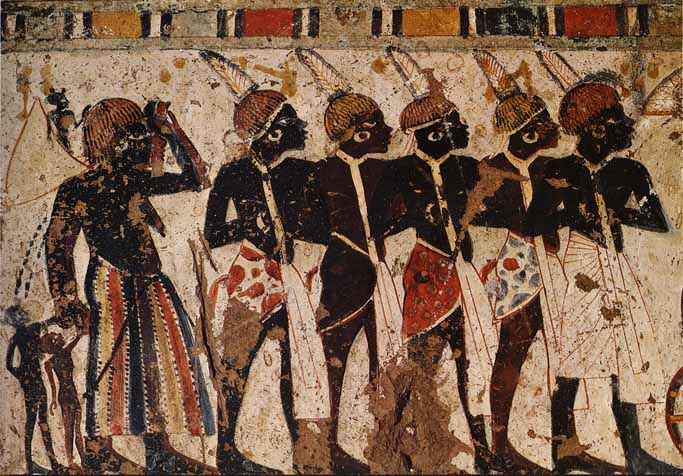
We are not here to listen to an afrocentric Egypt history lesson from an afrocentric, there are websites for that type of pseudohistorical trash where you can play make believe with other afrocentrisc who want to claim that the ancient Egyptians are actually subSaharans. The ancient egyptians were and still today are not Nubian/ kush-ites. The ancient egyptians were very careful to insure they never depicted themselves in art as being similar to those from kush.
How many forts did the egyptians build in the south to keep the Nubian/kush-ites out????
These are your kush-ite/Nubians, clearly not Egyptians
edit on 13-1-2013 by LUXUS because: (no reason given)
reply to post by LUXUS
PHARAOHS NEVER USED THE TERM NUBIAN
AND WHY THE HELL DID THEY DELETE MY MESSAGE AND LEAVE YOUR RACIST RANTS UP
A FLOOD OF NUBIANS AND PLAGUE???????????????????????????????????????????????????????
BLACK IMAGES DOES NOT MEAN NUBIAN
THERES THE
LAND OF PUNT
LAND OF KUSH
AND THE NILE PROVONCES KHEMET
THEBANS ARE NUBIAN
KU#ES ARE NUBIAN
LAND OF PUNTG ARE NUBIAN
THE NILE PROVINCES ARE NUBIAN
the pharaohs never labeled black people nubian...the greco romans did
NUB MEANS GOLD......WHY CALL A BLACK PERSON GOLD???????????
19TH CENTURY RACIST RETARDED REMARKS
and the mod that wiped mine and left his....good work...now we know each other
peace
PHARAOHS NEVER USED THE TERM NUBIAN
AND WHY THE HELL DID THEY DELETE MY MESSAGE AND LEAVE YOUR RACIST RANTS UP
A FLOOD OF NUBIANS AND PLAGUE???????????????????????????????????????????????????????
BLACK IMAGES DOES NOT MEAN NUBIAN
THERES THE
LAND OF PUNT
LAND OF KUSH
AND THE NILE PROVONCES KHEMET
THEBANS ARE NUBIAN
KU#ES ARE NUBIAN
LAND OF PUNTG ARE NUBIAN
THE NILE PROVINCES ARE NUBIAN
the pharaohs never labeled black people nubian...the greco romans did
NUB MEANS GOLD......WHY CALL A BLACK PERSON GOLD???????????
19TH CENTURY RACIST RETARDED REMARKS
and the mod that wiped mine and left his....good work...now we know each other
peace
Originally posted by LUXUS
How many forts did the egyptians build in the south to keep the Nubian/kush-ites out????
These are your kush-ite/Nubians, clearly not Egyptians
[
THESE ARE FROM THE LAND OF PUNT
ie MODERN KENYA, UGANDA. SOMALIA
these are not thebans
also thebans and ku#es are different...BUT TODAY BOTH ARE LABELED NUBIANS. also kenya uganda and somalia are labeled as nubian....racists like yourself done the labeling
its like saying...new york isnt american...because the rest are blacker lololol
one land ..many tribes...all called today NUBIAN
get it?
erm..narmer came from the south. [begining]
AY came from the south. [middle]
and taharq came from the south. [end]
this racist crap has to stop
the romans killed and enslaved them.....then they suffered for 2000 years ...forced them as far south as possible untill they built the aswan dam, which flooded the lands of the remaining pharaoh desendants...
and now people like you are pointing at a brown guy and calling him caucasion...then pointing at an african, probably from punt...in chains...and calling him nubian lololol
edit on 13-1-2013 by thePharaoh because: (no reason given)
reply to post by thePharaoh
Really! so its racist to disagree with your view of history, how would modern day Egyptians feel about you trying to change the racial characteristics of their ancestors in order so that you may feel you have some connection to those achievements.
See the problem is that these images are often accompanied with hieroglyphics which explain the images (kinda like a story book) and they are identified as being from kush (what people today call Nubia). Mainstream Egyptology agree that the images are Kush-ites, you want us to believe they got it wrong and you are correct???
Really! so its racist to disagree with your view of history, how would modern day Egyptians feel about you trying to change the racial characteristics of their ancestors in order so that you may feel you have some connection to those achievements.
See the problem is that these images are often accompanied with hieroglyphics which explain the images (kinda like a story book) and they are identified as being from kush (what people today call Nubia). Mainstream Egyptology agree that the images are Kush-ites, you want us to believe they got it wrong and you are correct???
Agree: The Ancient Egyptians were on the low-end of the totem pole when it came to being a slave-owning empire. They had ample workforce from the
Inundation Season.
Disagree: The reason the Ancient Egyptians were most likely NOT sub-Saharan and therefore truly 'African' is the cosmopolitan blending that occured frequently due to their geographic location. Middle Easterners, although darker than caucasian, are not black. There was also bleeding in of the coastal Mediterranean populations, whether from North Africa or Southern Europe. A melting pot, I daresay. Which could be a cause for a generally lighter tone of skin than is found south of Ancient Kemet.
For the record, as far as my understanding allows, Kush/Nubia is NOT synonymous with Punt/Somalia. Kush was gold, Punt was spices and incense.
Lastly, did I read that correctly in that there is somehow a racial.. THING.. about the construction of the Aswan Dam? Really? Just sayin..
Cheers!
Disagree: The reason the Ancient Egyptians were most likely NOT sub-Saharan and therefore truly 'African' is the cosmopolitan blending that occured frequently due to their geographic location. Middle Easterners, although darker than caucasian, are not black. There was also bleeding in of the coastal Mediterranean populations, whether from North Africa or Southern Europe. A melting pot, I daresay. Which could be a cause for a generally lighter tone of skin than is found south of Ancient Kemet.
For the record, as far as my understanding allows, Kush/Nubia is NOT synonymous with Punt/Somalia. Kush was gold, Punt was spices and incense.
Lastly, did I read that correctly in that there is somehow a racial.. THING.. about the construction of the Aswan Dam? Really? Just sayin..
Cheers!
new topics
-
Two Serious Crimes Committed by President JOE BIDEN that are Easy to Impeach Him For.
US Political Madness: 16 minutes ago -
911 emergency lines are DOWN across multiple states
Breaking Alternative News: 16 minutes ago -
Former NYT Reporter Attacks Scientists For Misleading Him Over COVID Lab-Leak Theory
Education and Media: 2 hours ago -
Why did Phizer team with nanobot maker
Medical Issues & Conspiracies: 2 hours ago -
Pro Hamas protesters at Columbia claim hit with chemical spray
World War Three: 3 hours ago -
Elites disapearing
Political Conspiracies: 5 hours ago -
A Personal Cigar UFO/UAP Video footage I have held onto and will release it here and now.
Aliens and UFOs: 5 hours ago -
Go Woke, Go Broke--Forbes Confirms Disney Has Lost Money On Star Wars
Movies: 7 hours ago -
Freddie Mercury
Paranormal Studies: 7 hours ago -
Nirvana - Immigrant Song
Music: 11 hours ago
top topics
-
British TV Presenter Refuses To Use Guest's Preferred Pronouns
Education and Media: 12 hours ago, 17 flags -
Go Woke, Go Broke--Forbes Confirms Disney Has Lost Money On Star Wars
Movies: 7 hours ago, 12 flags -
Pro Hamas protesters at Columbia claim hit with chemical spray
World War Three: 3 hours ago, 10 flags -
Trump To Hold Dinner with President of Poland At Trump Tower Tonight
2024 Elections: 15 hours ago, 8 flags -
Tucker Carlson interviews Christian pastor from Bethlehem.
Middle East Issues: 14 hours ago, 7 flags -
Freddie Mercury
Paranormal Studies: 7 hours ago, 7 flags -
Elites disapearing
Political Conspiracies: 5 hours ago, 7 flags -
A Personal Cigar UFO/UAP Video footage I have held onto and will release it here and now.
Aliens and UFOs: 5 hours ago, 5 flags -
Nirvana - Immigrant Song
Music: 11 hours ago, 4 flags -
Why did Phizer team with nanobot maker
Medical Issues & Conspiracies: 2 hours ago, 3 flags
active topics
-
Go Woke, Go Broke--Forbes Confirms Disney Has Lost Money On Star Wars
Movies • 15 • : 5thHead -
AARO/Dr Kirkpatrick-Caught Lying in UAP report.
Aliens and UFOs • 23 • : Arbitrageur -
-@TH3WH17ERABB17- -Q- ---TIME TO SHOW THE WORLD--- -Part- --44--
Dissecting Disinformation • 515 • : TheGoondockSaint -
Two Serious Crimes Committed by President JOE BIDEN that are Easy to Impeach Him For.
US Political Madness • 0 • : WeMustCare -
911 emergency lines are DOWN across multiple states
Breaking Alternative News • 0 • : TheGoondockSaint -
Pro Hamas protesters at Columbia claim hit with chemical spray
World War Three • 10 • : KrustyKrab -
Elites disapearing
Political Conspiracies • 16 • : annonentity -
Israel ufo shoot down drones?
Aliens and UFOs • 25 • : introufo2 -
Why did Phizer team with nanobot maker
Medical Issues & Conspiracies • 3 • : Unknownparadox -
Terrifying Encounters With The Black Eyed Kids
Paranormal Studies • 43 • : TheMichiganSwampBuck