It looks like you're using an Ad Blocker.
Please white-list or disable AboveTopSecret.com in your ad-blocking tool.
Thank you.
Some features of ATS will be disabled while you continue to use an ad-blocker.

Norse Mythology part 5: Santa Claus is a rip off!
page: 1share:
In this thread I will attempt to show how the modern day Santa Claus is a rip off from an old supreme pagan Viking god
Odin/Woden and that Christmas really is an old pagan tradition. It will mostly be a
bunch of copy/paste to prove a few points and to keep the length of the thread to a readable size.
To give this thread any kind of credibility I guess I have to show that Odin is older than Jesus.
This is a claim that is tough to prove, because of the lack of written history from the Scandinavian bronze-age. There are depictions with links to some of the gods later known as the Viking gods of the northern pantheon in various cave paintings. Some of these depictions link to gods like the mother goddess (Frey), a male warrior with a double-bladed axe/hammer (Thor), the one handed god wielding a spear (Tyr) and the, bearded one eyed spear-wielding god of war (Odin). The problem about these cave carvings is they are not very detailed and may be interpretated in different ways. The Sun cross is one of the symbols of Odin.
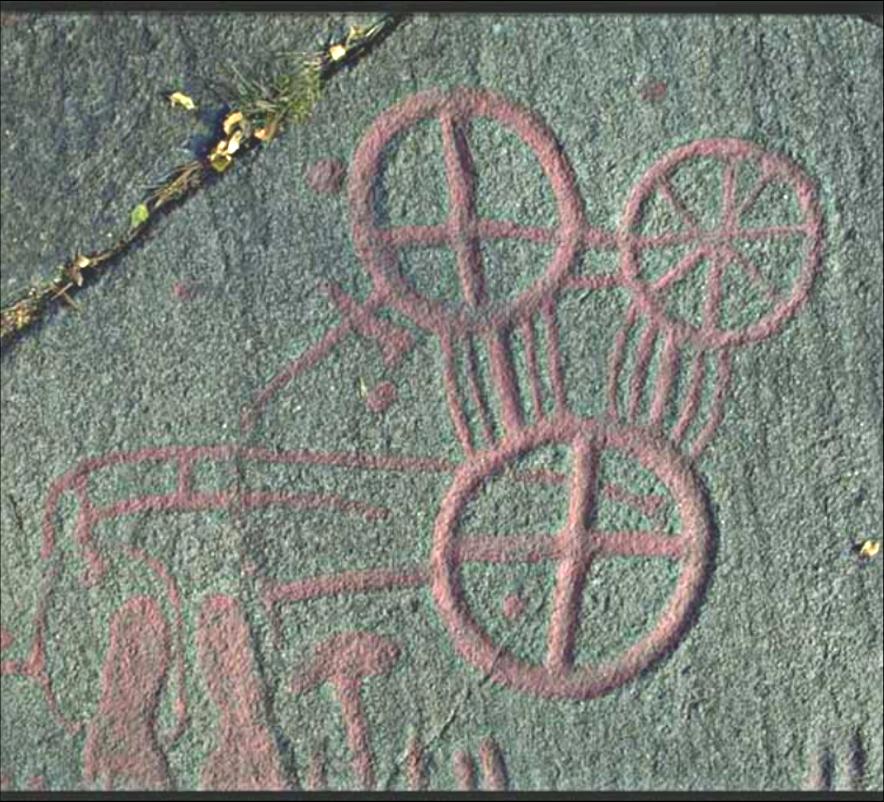
Here is an example of a cave carving (”helleristning”) where you see multiple sun crosses, this one is from approximate 1000BC.

And here is another sun cross from around 800-500BC.
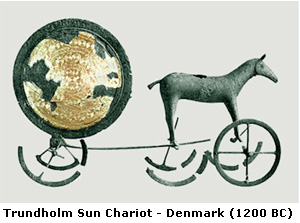
A famous example of an old Sun wheel, is the Trundholm sun chariot from the Danish bronze age it’s dated from 1800 – 1650 BC.
Since this thread aint about the age of the pagan gods, but about Christmas I'll leave the rest of the documentation to you. In Part 2 I will attempt to show some of the links between Christmas/Yule/Jul and the ravengod.
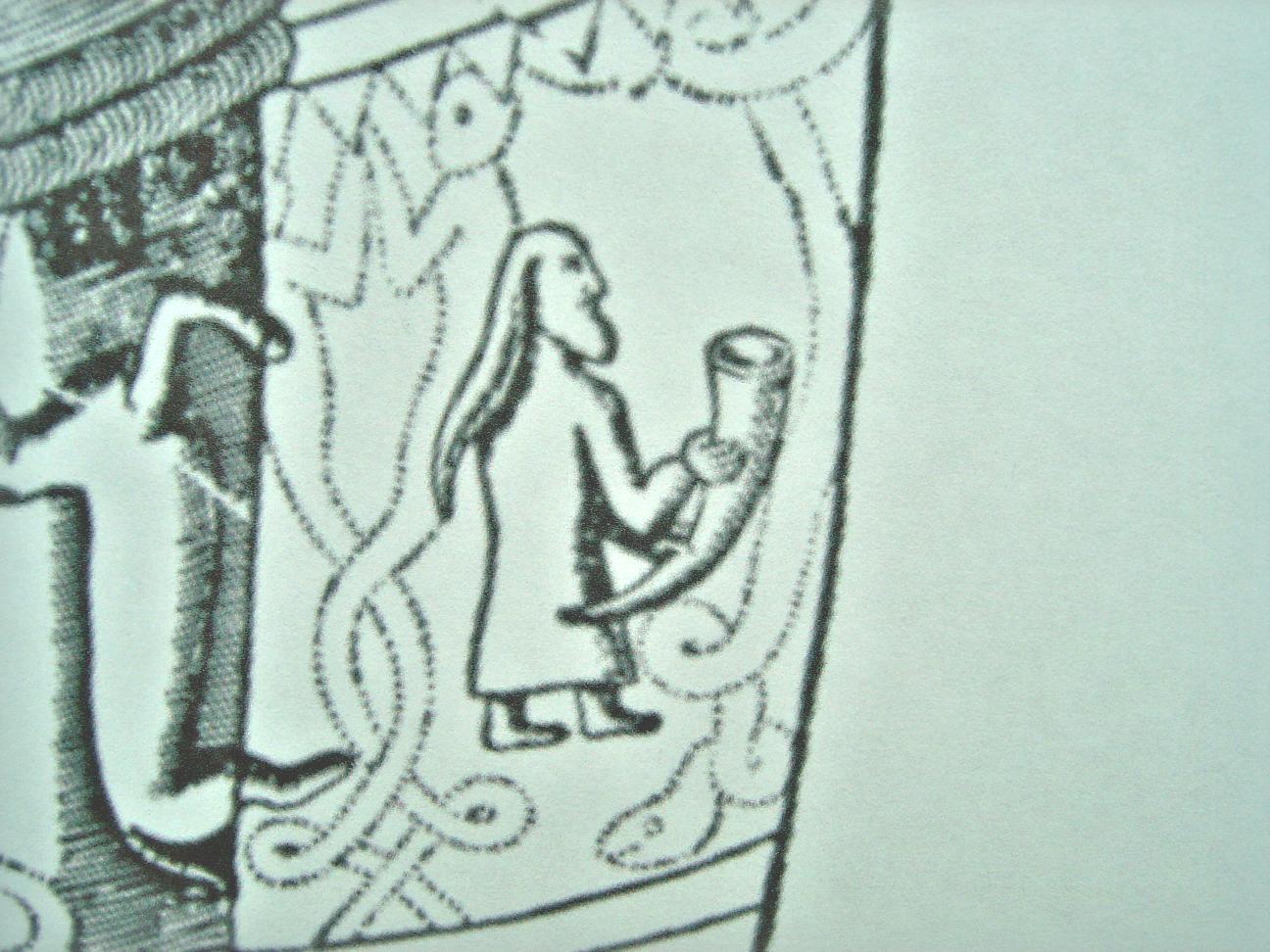
The oldest surviving depiction of Jolnir (Santa Claus) is from Gallehus – Denmark and made around 400 AD. It shows the Shaman Odin with a long beard and one of the golden horns.
Part 1: First things first
To give this thread any kind of credibility I guess I have to show that Odin is older than Jesus.
This is a claim that is tough to prove, because of the lack of written history from the Scandinavian bronze-age. There are depictions with links to some of the gods later known as the Viking gods of the northern pantheon in various cave paintings. Some of these depictions link to gods like the mother goddess (Frey), a male warrior with a double-bladed axe/hammer (Thor), the one handed god wielding a spear (Tyr) and the, bearded one eyed spear-wielding god of war (Odin). The problem about these cave carvings is they are not very detailed and may be interpretated in different ways. The Sun cross is one of the symbols of Odin.
Here is an example of a cave carving (”helleristning”) where you see multiple sun crosses, this one is from approximate 1000BC.
And here is another sun cross from around 800-500BC.
The Pagan celebration of Winter Solstice (also known as Yule) is one of the oldest winter celebrations in the world.
The Norsemen of Northern Europe saw the sun as a wheel that changed the seasons. It was from the word for this wheel, houl, that the word yule is thought to have come. At mid-winter the Norsemen lit bonfires, told stories and drank sweet ale. bbc.co.uk
A famous example of an old Sun wheel, is the Trundholm sun chariot from the Danish bronze age it’s dated from 1800 – 1650 BC.
Since this thread aint about the age of the pagan gods, but about Christmas I'll leave the rest of the documentation to you. In Part 2 I will attempt to show some of the links between Christmas/Yule/Jul and the ravengod.
Part 2: Jölnir is the original Santa
The oldest surviving depiction of Jolnir (Santa Claus) is from Gallehus – Denmark and made around 400 AD. It shows the Shaman Odin with a long beard and one of the golden horns.
Through the ages and around the world, the man of eternal spirit has been known by many names. Sinterklaas, Father Christmas, Kris Kringle, Saint Nicholas, Pere Noel, Grandfather Frost and the Jolly Old Elf are just some of those names. But today in America we recognize the man in the Red Suit and jolly appearance as Santa Claus.
Even in ancient times, cultures had personalities who would bring joy and gifts to deserving people. In Nordic countries, stories were told of Jolnir. The Celts had Cornunos and Germanic people had Vodin, who was pulled in his golden chariot by his giant steeds, Thunder and Lightening (Donder and Blitzen). jinglebelljunction.com
In Northern Europe, Winter festivities were once considered to be a Feast of the Dead, complete with ceremonies full of spirits, devils, and the haunting presence of the Norse god, Odin, and his night riders. One particularly durable Solstice festival was "Jol" (also known as "Jule" and pronounced "Yule"), a feast celebrated throughout Northern Europe and particularly in Scandinavia to honor Jolnir, another name for Odin. Since Odin was the god of intoxicating drink and ecstasy, as well as the god of death, Yule customs varied greatly from region to region. Thehistoryofchristmas.com
edit on 6-12-2012 by Mimir because: (no reason given)
Numerous parallels have been drawn between Santa Claus and the figure of Odin, a major god amongst the Germanic peoples prior to their Christianization. Since many of these elements are unrelated to Christianity, there are theories regarding the pagan origins of various customs of the holiday stemming from areas where the Germanic peoples were Christianized and retained elements of their indigenous traditions, surviving in various forms into modern depictions of Santa Claus.
Odin was sometimes recorded, at the native Germanic holiday of Yule, which was celebrated at the same time of year as Christmas now is, as leading a great hunting party through the sky. Two books from Iceland, the Poetic Edda, compiled in the 13th century from earlier sources, and the Prose Edda, written in the 13th century by Snorri Sturluson, describe Odin as riding an eight-legged horse named Sleipnir that could leap great distances, giving rise to comparisons to Santa Claus's reindeer.[15] Further, Odin was referred to by many names in Skaldic poetry, some of which describe his appearance or functions. These include Síðgrani, Síðskeggr, Langbarðr, (all meaning "long beard") and Jólnir ("Yule figure").
According to some traditions, children would place their boots, filled with carrots, straw, or sugar, near the chimney for Odin's flying horse, Sleipnir, to eat. Odin Wiki
Yule, the winter solstice holiday, can still be seen in many of our modern Christmas practices today. But we are interested in one such tradition, the "face" of this time of year. Odin was the harbinger of the spirit of Yule, one of his names is Jölnir (Yule bringer) as Santa Claus is for children on Christmas Eve.
There are many similarities between these characteristic figures. Their "look" may be one of the most glaring. Both Odin and Saint Nicholas are known for their beards, the Norse god even has many names in reference to his facial hair. Each wears a hat and carries a spear/staff, which has become iconic of both. They have servants who carry bags to catch up naughty children. Both Odin and Saint Nicholas are known for riding white horses which fly through the air (although Sleipnir, Odin's mount is more commonly depicted as grey).
Now, as some may know Odin was the god of wisdom, magic, poetry, prophesy, war, battle and victory. He is said to have created the very runes the Norse used for writing. The Zwarte Pieten give children letters made out of candy which is reminiscent of Odin's runes. As god of arts and poetry, he'd likely appreciate the children singing songs and making poems during Saint Nicholas' celebration.
Also, according to Phyllis Siefker, children would place their boots which were filled with carrots, straw or sugar near the chimney for Sleipnir to eat. Odin showed his appreciation for this simple act by replacing his horse’s food with gifts or candy.
We can see some of Odin's influence in today's Santa as well. As some may know, during Yule Odin leads the Wild Hunt. According to the Poetic Edda and Prose Edda, he flies through the sky with the help of his eight-legged horse, Sleipnir who could leap great distances. Does this not bring childhood memories of Santa flying through the sky with his eight reindeer? AncientWorlds.net
There are many similarities between Christmas and the pagan winter feast as you as you see, my conclusion to all these snip’s is the same as I put out in the beginning of the thread. Santa is a rip off caricature of the Viking god Odin and Christmas is the remnants of an old pagan tradition. If you still don’t believe me after reading these similarities or you still don’t believe the Viking gods and pagan gods of Scandinavia was the same I suggest you do some field-research and share your findings.
Conclusion: Santa still is a myth, but of other origin than most people acknowledge. He is not the fat slug that only works one day a year like modern day portray him, but the one-eyed pagan raven god of war Odin – the allfather.
Norse Mythology part 1, part 2, part 3 and part 4
Poetic Edda (wiki)
Prose Edda (wiki)
Wild Hunt (wiki)
Yule (wiki)
edit on 6-12-2012 by Mimir because: (no reason given)
reply to post by Mimir
I suppose back in the day it would have been actual sacrificial victims hanging from the tree of Odin rather than Christmas decorations, but perhaps this is some sort of spiritual progress on our part rather than a 'rip off', though when i heard the authorities in Brussels had banned the civic tree in the City centre i fondly imagined a return to the old ways...
I suppose back in the day it would have been actual sacrificial victims hanging from the tree of Odin rather than Christmas decorations, but perhaps this is some sort of spiritual progress on our part rather than a 'rip off', though when i heard the authorities in Brussels had banned the civic tree in the City centre i fondly imagined a return to the old ways...
reply to post by Kantzveldt
That is quiet possible, "christmas- trees" is common in scandinavia.
Odin did the selfsacrifice by hanging after observing how Hel had cheated death and become a true immortal at her hanging. Just as sun returns and the days become longer at winter solstice, Hel and Odin returned from their "deaths".....Odin and the sunchariot can be linked
That is quiet possible, "christmas- trees" is common in scandinavia.
Odin did the selfsacrifice by hanging after observing how Hel had cheated death and become a true immortal at her hanging. Just as sun returns and the days become longer at winter solstice, Hel and Odin returned from their "deaths".....Odin and the sunchariot can be linked
reply to post by Kantzveldt
Theres a bit about the hanging in part 3 of this "serie". I got that from a scholar of Norse Mythology, she refer a lot to the edda's. Here is her video of the hanging without my comment, she mention Hel in the last part of the video.
GermanicReligion.com
Theres a bit about the hanging in part 3 of this "serie". I got that from a scholar of Norse Mythology, she refer a lot to the edda's. Here is her video of the hanging without my comment, she mention Hel in the last part of the video.
GermanicReligion.com
edit on 6-12-2012 by Mimir because: (no reason given)
reply to post by Mimir
Yes i think she's deriving the example that Odin followed from that of Gullveig
I recall the first battle in the world.
There they stabbed Gullveig with spears,
and burned her in Har’s hall.
Thrice she was burned, thrice she was born.
It happened often, and yet she lives.
www.heathengods.com...
Yes i think she's deriving the example that Odin followed from that of Gullveig
I recall the first battle in the world.
There they stabbed Gullveig with spears,
and burned her in Har’s hall.
Thrice she was burned, thrice she was born.
It happened often, and yet she lives.
www.heathengods.com...
From what I know, Santa Claus is a kinda rip off from Sinterklaas/Sint-Nicolaas, dutch colonist brought this to the US, later on Coca-Cola basicly
made Santa Claus big with advertisment, using many ideas from Sinterklaas.
But sure Sinterklaas has many similarities with Odin, like they both ride on a horse. (Sinterklaas rides on the roofs of houses to bring presents to the childeren) and so on.
But sure Sinterklaas has many similarities with Odin, like they both ride on a horse. (Sinterklaas rides on the roofs of houses to bring presents to the childeren) and so on.
reply to post by Mimir
How can it be a rip off, when newly christianized Nordic and Germanic peoples incorporated THIER winter solstice festival of yule, into THEIR new winter festival ,The mass of Christ,. Just as the Romans incorporated aspects Saturnalia, The festival of Saturn, such as gift giving , saturnalia was held from Dec.17 to Dec. 23.
The pagan Hebrews , those hebrews that did not accept the covenant of Moses and continued to worship Baal and other old gods,,would have a winter solstice festival centered around a fresh cut cedar tree.
If anything the germanic people ripped off St Nicholas when they co-opted the gift giving tradition and morphed St Nicholas into sinterklaas, and replaced the image of orthodox bishop with that of the Odin derived imagery.
You also forgot to mention Krampus and the Yule goat.
How can it be a rip off, when newly christianized Nordic and Germanic peoples incorporated THIER winter solstice festival of yule, into THEIR new winter festival ,The mass of Christ,. Just as the Romans incorporated aspects Saturnalia, The festival of Saturn, such as gift giving , saturnalia was held from Dec.17 to Dec. 23.
The pagan Hebrews , those hebrews that did not accept the covenant of Moses and continued to worship Baal and other old gods,,would have a winter solstice festival centered around a fresh cut cedar tree.
If anything the germanic people ripped off St Nicholas when they co-opted the gift giving tradition and morphed St Nicholas into sinterklaas, and replaced the image of orthodox bishop with that of the Odin derived imagery.
You also forgot to mention Krampus and the Yule goat.
reply to post by punkinworks10
Well i will agree as far as the traditions have been merged.
St. Nicolas 270 - 320 AD was morphed into sinterklaas...but again The myth's about Odin is way older than that...so who is a plagiate of who ??
The bulk gift giving is a modern perversion of the original stories as far as i know, maybe to resemble the gifts from the wise men to Jesus, it wasent a part of the Norse mythologies. But the carrot/sugercane in a stocking which would be replaced by a present is, so there is some link to presentgiving.
They feasted and drank for days...we still do that...
Its still called Jul in Denmark (prenounced almost same way as Yule, but yes....we celebrate the christian version)
One Myth says Odin has the magic Goat (Heidrun) that every day fills a pitcher with the poetic mead.
About Krampus I dont know, maybe its just another disguise for Odin, he only gave presents to the kids that had been "good enough" to share some food for Sleipner.....but its most likely a newer idea - dunno.
Well i will agree as far as the traditions have been merged.
St. Nicolas 270 - 320 AD was morphed into sinterklaas...but again The myth's about Odin is way older than that...so who is a plagiate of who ??
The bulk gift giving is a modern perversion of the original stories as far as i know, maybe to resemble the gifts from the wise men to Jesus, it wasent a part of the Norse mythologies. But the carrot/sugercane in a stocking which would be replaced by a present is, so there is some link to presentgiving.
They feasted and drank for days...we still do that...
Its still called Jul in Denmark (prenounced almost same way as Yule, but yes....we celebrate the christian version)
One Myth says Odin has the magic Goat (Heidrun) that every day fills a pitcher with the poetic mead.
About Krampus I dont know, maybe its just another disguise for Odin, he only gave presents to the kids that had been "good enough" to share some food for Sleipner.....but its most likely a newer idea - dunno.
edit on 7-12-2012 by Mimir because: (no reason given)
S&F.
Love anything asatru / northern european historically.
Interesting idea, I'll have to do some research of my own before giving an informed opinion. I just elbowed my roommate in the side and said 'See, my Scandinavian heritage gets you a ton of crap every year. And this site ISNT just about UFO's and alien conspiracy!' (He sees me surfing ATS a lot and I get the eye-roll response).
Norse mythos.
Love anything asatru / northern european historically.
Interesting idea, I'll have to do some research of my own before giving an informed opinion. I just elbowed my roommate in the side and said 'See, my Scandinavian heritage gets you a ton of crap every year. And this site ISNT just about UFO's and alien conspiracy!' (He sees me surfing ATS a lot and I get the eye-roll response).
Norse mythos.
There is a LOT MORE to Santa than Odin.
Why Do Santa's Reindeer Fly?
In reality, the 2 things that are prohibited, the one neutralizes the other. And they're coded in all the religious paintings. You see the sun and the spokes, you see a mushroom. You see them in Buddha temples and on his head as well.
The other thing is represented as a fig, (yes there is a fig tree in the bible that had to be destroyed, because it was a male) and a fern. Also the moon, Sirius, and dogs, all lead to that. The sun and the moon. The sun has spokes.
It also relates to the Vaticans big pinecone.
The Trees of LIfe, by Michael Tsarion, inexpensive on kindle really really goes into depth on these associations. Even though there are signs about him that seem occultish, the info is extremely good and you can decode religous artwork in a nano second after that.
Such as:
Baby Bacchus. OH THIS IS A GOOD EXAMPLE OF WHAT THE REINDEER TALE FROM SANTA MEANS. The Unicorns horn purifies the toxins.
www.steveonsteins.com...
(baby is naked in this classic piece of art so some people should not click but just research
Guido Reni (1575–1642)
images.nationalgeographic.com...
pinecone headed buddha
Even this:
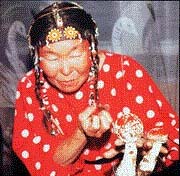
The reindeer Shaman:
sphotos-a.xx.fbcdn.net...
This RANT by Alex Jones is 100% on the mark, but he's covering for them. They didn't just do this since ww2, its been ancient knowledge stolen from the grass roots people.
Of course cheating to open the pineal doesnt really create the Ben Ben bird/phoenix/US eagle of ascension. Its always a frequency match.
That explains why for thousands of years they didn't meet with Angels or Ets but more Bigger Predators than they are, who have manipulated the human race through them. Solomon's Temple for example.
Even Isaiah revealed them in chapter 28 telling them they had met with the dead, and created overburdening laws and rules, and instead of being examples and helping the students of the earth school seem to be intent on failing everyone, (how many times do you have to plant a field to get the crop off?) He knew what they were meeting with.
And why.
Mystery schools long in existence.
Alex Jones, '___' and the Clockwork Elves
I forgot to include it. He is obscurring that this was a bit longer in the history than since ww2, but since the last big age/era, before atlantis even, this is about those in power now, toppling the grass roots awareness and equality, often denoted as mother, and women being respected, sophia was the tree of life, matrix is a womb, this all refers to equality, serving others, overcoming violence, war and inequality.
The red haired mummies, and they egyptian pharoahs, who had caucasion dna. This is all about past era and the deliberate destruction of grass roots knowledge and rewriting history to maintain power for the Egyptian Atonists who are ruling this world.
I highly recommend the book, the Trees of Life.
www.burlingtonnews.net...
Links on the side to the red haired and fair haired mummies throughout the world.
Why Do Santa's Reindeer Fly?
In reality, the 2 things that are prohibited, the one neutralizes the other. And they're coded in all the religious paintings. You see the sun and the spokes, you see a mushroom. You see them in Buddha temples and on his head as well.
The other thing is represented as a fig, (yes there is a fig tree in the bible that had to be destroyed, because it was a male) and a fern. Also the moon, Sirius, and dogs, all lead to that. The sun and the moon. The sun has spokes.
It also relates to the Vaticans big pinecone.
The Trees of LIfe, by Michael Tsarion, inexpensive on kindle really really goes into depth on these associations. Even though there are signs about him that seem occultish, the info is extremely good and you can decode religous artwork in a nano second after that.
Such as:
Baby Bacchus. OH THIS IS A GOOD EXAMPLE OF WHAT THE REINDEER TALE FROM SANTA MEANS. The Unicorns horn purifies the toxins.
www.steveonsteins.com...
(baby is naked in this classic piece of art so some people should not click but just research
Guido Reni (1575–1642)
images.nationalgeographic.com...
pinecone headed buddha
Even this:
The reindeer Shaman:
sphotos-a.xx.fbcdn.net...
This RANT by Alex Jones is 100% on the mark, but he's covering for them. They didn't just do this since ww2, its been ancient knowledge stolen from the grass roots people.
Of course cheating to open the pineal doesnt really create the Ben Ben bird/phoenix/US eagle of ascension. Its always a frequency match.
That explains why for thousands of years they didn't meet with Angels or Ets but more Bigger Predators than they are, who have manipulated the human race through them. Solomon's Temple for example.
Even Isaiah revealed them in chapter 28 telling them they had met with the dead, and created overburdening laws and rules, and instead of being examples and helping the students of the earth school seem to be intent on failing everyone, (how many times do you have to plant a field to get the crop off?) He knew what they were meeting with.
And why.
Mystery schools long in existence.
Alex Jones, '___' and the Clockwork Elves
I forgot to include it. He is obscurring that this was a bit longer in the history than since ww2, but since the last big age/era, before atlantis even, this is about those in power now, toppling the grass roots awareness and equality, often denoted as mother, and women being respected, sophia was the tree of life, matrix is a womb, this all refers to equality, serving others, overcoming violence, war and inequality.
The red haired mummies, and they egyptian pharoahs, who had caucasion dna. This is all about past era and the deliberate destruction of grass roots knowledge and rewriting history to maintain power for the Egyptian Atonists who are ruling this world.
I highly recommend the book, the Trees of Life.
www.burlingtonnews.net...
Links on the side to the red haired and fair haired mummies throughout the world.
edit on 7-12-2012 by Unity_99 because: (no reason given)
A few things, it's one thing to quote Sturluson, but it's also important to point out that Iceland, traditionally, has never had a Santa Claus type
figure: Gryla and the Yule Lads are the dominant seasonal figures, which is surprising given the fact that much of what is thought about Odin comes
from Iceland - so why didn't the Odin as Santa thing develop there?
It's not enough to just compare Sleipnir with reindeer as has been done. It's a massive stretch to connect them just because both deer and horses jump (or in the story where Sleipnir flies). The actual function of Sleipnir is completely missed in this, as is the role of Odin as psychopomp. Sleipnir represents the journey to an otherworld, or an underworld; Sleipnir is ridden to Hel by both Odin and Hermoðr.
Where is the link between Christmas and the Wild Hunt? I've heard it be tied to Winter not specifically to Christmas or Yule. Even Odin isn't a constant here as the Wild Hunt has many regional variations beyond Odin/Woden/Wodan/&c and they're not always obvious analogues either.
Also, in Britain, which has a history of both Angle/Saxon/Jute/Frisian and Danish/Norwegian/Swedish religious and mythological imput, Santa Claus is a relatively new concept, instead we have Father Christmas whose merry persona has always been far, far removed from the notions of 'fury' and various battle-related terms &c. I'd venture that the same goes for Santa Claus too.
As for the Vodin and Donder and Blitzen, this is something I've not come across before and can't find any real reference to other than the link you gave. I'd genuinely like to see the naming of the reindeer predate Clement Clarke Moore. For what it's worth Vodin is Slavic, rather than Germanic, and if you're going for a Pan Indo European argument, then why stop here? Everything is connected to everything at this level and Odin becomes a "rip off" off a dozen things, as does a lot of northern religion/mythology.
Regarding the runes and chocolate treats, that's a massive stretch: you could argue that any act involving/invoking writing works on the same lines which makes it so general that it's a bit of a nonsense. They're just chocolate letters and not actually runes. Also, where does Black Peter fit in with Odin? That's actually the significant part here. If Black Peter is giving these to people, then surely the analogue would be with Rig/Heimdallr who passes on the knowledge of runes to mankind, and not Odin?
I think few people would dispute that Christmas owes a lot to non-Christian traditions (it's hardly middle-eastern in feel) but, sorry, some of this is such a leap it's bizarre.
It's not enough to just compare Sleipnir with reindeer as has been done. It's a massive stretch to connect them just because both deer and horses jump (or in the story where Sleipnir flies). The actual function of Sleipnir is completely missed in this, as is the role of Odin as psychopomp. Sleipnir represents the journey to an otherworld, or an underworld; Sleipnir is ridden to Hel by both Odin and Hermoðr.
Where is the link between Christmas and the Wild Hunt? I've heard it be tied to Winter not specifically to Christmas or Yule. Even Odin isn't a constant here as the Wild Hunt has many regional variations beyond Odin/Woden/Wodan/&c and they're not always obvious analogues either.
Also, in Britain, which has a history of both Angle/Saxon/Jute/Frisian and Danish/Norwegian/Swedish religious and mythological imput, Santa Claus is a relatively new concept, instead we have Father Christmas whose merry persona has always been far, far removed from the notions of 'fury' and various battle-related terms &c. I'd venture that the same goes for Santa Claus too.
As for the Vodin and Donder and Blitzen, this is something I've not come across before and can't find any real reference to other than the link you gave. I'd genuinely like to see the naming of the reindeer predate Clement Clarke Moore. For what it's worth Vodin is Slavic, rather than Germanic, and if you're going for a Pan Indo European argument, then why stop here? Everything is connected to everything at this level and Odin becomes a "rip off" off a dozen things, as does a lot of northern religion/mythology.
Regarding the runes and chocolate treats, that's a massive stretch: you could argue that any act involving/invoking writing works on the same lines which makes it so general that it's a bit of a nonsense. They're just chocolate letters and not actually runes. Also, where does Black Peter fit in with Odin? That's actually the significant part here. If Black Peter is giving these to people, then surely the analogue would be with Rig/Heimdallr who passes on the knowledge of runes to mankind, and not Odin?
I think few people would dispute that Christmas owes a lot to non-Christian traditions (it's hardly middle-eastern in feel) but, sorry, some of this is such a leap it's bizarre.
reply to post by Merriman Weir
I agree with you that comparing santas 8 reindeers with Sleipnir is a stretch, but think about it. There is 8 reindeers, Sleipnir got 8 legs. Only one of the reindeer (Rudolph got a rednose), Sleipnir is often portraid as a white steed (albinos got red'ish noses)....I know still a bit far off, but who knows how the original stories has been twisted. That brings me back to my original problem ,there is almost no written texts documenting our traditions, most is from the edda's, where I can find atleast 2 references to Jölnir (master of Yule/Odin).
Eilífr Goðrúnarson writes in "Þórsdrápa" (Thors song, vers 12:5-8),
þá er funhristis fasta
flóðrifs Danir stóðu
knáttu Jólnis ættir
útvés fyrir lúta
Translates to something like this:
The Danes of the northern shelters
Fell to their knees before them (the warriors of next line)
When the Kindren of Jölnir
stood their ground.
Snorre shows that Jölnir is seen as a high shaman in the later norse traditions in Skáldskaparmál, 68. Goðaheiti
Jólna sumbl
enn vér gátum2,
stillis lof,
sem steina brú”.
Translates to something like this:
Jölnirs mead
was consumed by the people
embrased in honor
like a bridge of stone. (whatever that means - bridges was seen as connections between worlds, maybe there is a link here)
You might be able to find other refferences to Jolnir in the Edda's, but im not aware of such. And i have to repeat myself, the Eddas was written hundreds if not thousands of years after these beliefs were at their highest. It would be so much easyer if the vikings had written down everything like the Sumerians.
Odin was a high shaman, so I dont see any conflicts in the winter solestice also being a shamanistic ritual.
The chocolate/runes...dunno, written language wasent really used back then and may have been seen as magical so even if its a far stretch it may not be totally off.
And yes you can find similarities to other systems of beliefs too, like the Indian firegod Agni that was wearing red clothings and demanded sacrifices at winter solestice. It is also easy to keep asking questions that cant be answered simply because there is no written records and much will be guessing and probing. If you feel like you can prove Santa myths are older than Odin feel free to educate me.
I agree with you that comparing santas 8 reindeers with Sleipnir is a stretch, but think about it. There is 8 reindeers, Sleipnir got 8 legs. Only one of the reindeer (Rudolph got a rednose), Sleipnir is often portraid as a white steed (albinos got red'ish noses)....I know still a bit far off, but who knows how the original stories has been twisted. That brings me back to my original problem ,there is almost no written texts documenting our traditions, most is from the edda's, where I can find atleast 2 references to Jölnir (master of Yule/Odin).
Eilífr Goðrúnarson writes in "Þórsdrápa" (Thors song, vers 12:5-8),
þá er funhristis fasta
flóðrifs Danir stóðu
knáttu Jólnis ættir
útvés fyrir lúta
Translates to something like this:
The Danes of the northern shelters
Fell to their knees before them (the warriors of next line)
When the Kindren of Jölnir
stood their ground.
Snorre shows that Jölnir is seen as a high shaman in the later norse traditions in Skáldskaparmál, 68. Goðaheiti
Jólna sumbl
enn vér gátum2,
stillis lof,
sem steina brú”.
Translates to something like this:
Jölnirs mead
was consumed by the people
embrased in honor
like a bridge of stone. (whatever that means - bridges was seen as connections between worlds, maybe there is a link here)
You might be able to find other refferences to Jolnir in the Edda's, but im not aware of such. And i have to repeat myself, the Eddas was written hundreds if not thousands of years after these beliefs were at their highest. It would be so much easyer if the vikings had written down everything like the Sumerians.
Odin was a high shaman, so I dont see any conflicts in the winter solestice also being a shamanistic ritual.
The chocolate/runes...dunno, written language wasent really used back then and may have been seen as magical so even if its a far stretch it may not be totally off.
And yes you can find similarities to other systems of beliefs too, like the Indian firegod Agni that was wearing red clothings and demanded sacrifices at winter solestice. It is also easy to keep asking questions that cant be answered simply because there is no written records and much will be guessing and probing. If you feel like you can prove Santa myths are older than Odin feel free to educate me.
edit on 7-12-2012 by Mimir because: (no reason given)
Originally posted by Mimir
reply to post by Merriman Weir
I agree with you that comparing santas 8 reindeers with Sleipnir is a stretch, but think about it. There is 8 reindeers, Sleipnir got 8 legs. Only one of the reindeer (Rudolph got a rednose), Sleipnir is often portraid as a white steed (albinos got red'ish noses)....I know still a bit far off, but who knows how the original stories has been twisted. That brings me back to my original problem ,there is almost no written texts documenting our traditions, most is from the edda's, where I can find atleast 2 references to Jölnir (master of Yule/Odin).
But if you really need to have a Santa/sleigh/animals analogue within the mythology/religion, there's a much better fit. Thor and his chariot driven by Tanngrisnir and Tanngnjostr fits better than trying to shoehorn this Santa = Odin idea. It's bizarre that people will ignore a better 'fit' just because it's not the Odin 'fit'.
You might be able to find other refferences to Jolnir in the Edda's, but im not aware of such. And i have to repeat myself, the Eddas was written hundreds if not thousands of years after these beliefs were at their highest.
And, if we're going to be completely honest here, much of what is written in the Eddas was either very young in tradition or Sturluson fabricated much of it. Also, I'm not sure of any idea of a 'golden age' of belief. Most of what we know is an amalgamation of many local beliefs spread over time. There was no real unified belief in any of this and much of it developed over time. It's relatively easy to see how the roles and relationships of Odin/Valhalla/Valkyries develop over time, for example. The development of the Wodenaz complex is another. What too many pass off as Asatru/Odinic/Heathen beliefs is the sum total of what anyone, anywhere at any time might have believed if it was all rolled-up into one. And yet, that's not how it actually happened as any objective academic look shows (whether it's archaeological, linguistic or whatever).
Odin was a high shaman, so I dont see any conflicts in the winter solestice also being a shamanistic ritual.
Linking Odin with shamanistic rituals is one thing, and most people accept there's a link there, but then trying to pass this off as where Christmas comes from is another.
The chocolate/runes...dunno, written language wasent really used back then and may have been seen as magical so even if its a far stretch it may not be totally off.
What? I'm not sure what you're saying here. A couple of points: written language across Europe predates runic writing. In the tradition Black Peter gives children chocolate letters, not Santa (that's supposedly Odin). Even it was Santa (that's supposedly Odin), why? It doesn't follow any real tradition or story in Eddas etc. If anyone was going to give children chocolate letters, it would be Heimdallr as he was was the one that gave mankind runes/writing. The point you've presented here doesn't make sense either within the Black Peter tradition, northern lore, or even the history of writing within Europe.
And yes you can find similarities to other systems of beliefs too, like the Indian firegod Agni that was wearing red clothings and demanded sacrifices at winter solestice. It is also easy to keep asking questions that cant be answered simply because there is no written records and much will be guessing and probing. If you feel like you can prove Santa myths are older than Odin feel free to educate me.
That's not my argument. My argument is as above: much of the Odin = Santa argument is flimsy to say the least, at least if the points presented above are the basis of the argument, especially when two of the points better fit with other figures within Northern religion/mythology.
edit on
8-12-2012 by Merriman Weir because: .
I think a lot of this simply relates to the idea of winter solstice, Yule and Christmas happening at the same time of year. That's very different
from what you're claiming though as the individual points you've made don't really stand-up to scrutiny as I've pointed out.
A couple of things I didn't comment on earlier. One thing that's always bothered me about Yule = Odin, despite Jolnir link, is why a Julbok? This is definitely a Scandinavian Christmas thing with pre-conversion roots, and yet it's definitely a Thor thing.
One thing I didn't mention earlier is the Odin Wheel thing. For years I've seen these linked to Woden but I've never really seen any real basis or proof of it, the same thing seems to get repeated, uncritically, again and again - and I'd really like to see some real academic work on it. There's nothing that really links Woden/Odin to this concept despite how often you see this connection. Even in the Eddas, Odin isn't linked or equated to the Sun. There the sun is actually a very attractive young woman (who has an equally attractive brother called 'Moon'). In a fit of jealousy, the Aesir place the siblings in the sky where they become what we now see as the sun and the moon. It's obviously some creation myth, but it's clear that Odin is not the sun here. It's even backed up linguistically as, unlike other mythologies, in northern traditions, the Sun is female and the Moon is male.
A couple of things I didn't comment on earlier. One thing that's always bothered me about Yule = Odin, despite Jolnir link, is why a Julbok? This is definitely a Scandinavian Christmas thing with pre-conversion roots, and yet it's definitely a Thor thing.
One thing I didn't mention earlier is the Odin Wheel thing. For years I've seen these linked to Woden but I've never really seen any real basis or proof of it, the same thing seems to get repeated, uncritically, again and again - and I'd really like to see some real academic work on it. There's nothing that really links Woden/Odin to this concept despite how often you see this connection. Even in the Eddas, Odin isn't linked or equated to the Sun. There the sun is actually a very attractive young woman (who has an equally attractive brother called 'Moon'). In a fit of jealousy, the Aesir place the siblings in the sky where they become what we now see as the sun and the moon. It's obviously some creation myth, but it's clear that Odin is not the sun here. It's even backed up linguistically as, unlike other mythologies, in northern traditions, the Sun is female and the Moon is male.
reply to post by Merriman Weir
Again i dont deny there is some holes in the theory.
Yes Thors goat-chariot would fit better as santa's sleigh, but I dont think Yule is about Thor. One Myth says Odin has the magic Goat (Heidrun) that every day fills a pitcher with the poetic mead, that is more likely your "goat-link".
The note about shamanism, was an answer to Unity_99, but i can expand a little and add that some viking groups used mushrooms before berzerkergang, which was violent pillaging/looting (war). Since Odin both is a god of war and a shaman maybe this helps explaining the mushroom-shaman.
But it was not used in Scandinavia and i doubt it was widespread in the germanic and slavic tribes too.
Possible, but Odin discovered and shared the knowledge about the runes among the gods.
Its a suggestion not a point. Black Piet may just as well be a "new invention", i dont know.
That is because there is no surviving evidence, but it is still widely accepted. I never claimed Odin is the sun, I claimed he is behind the original story that spawned the santa myths.
True, and I did not say Odin was responsible for the sun's movement all I do is point out that the suncross is one of the symbols of Odin. They celebrated Yule not Odin at the winter solestice. That Santa may be Odin is another matter, you are mixing the two in an attemp to debunk something that cant be proven or disaproven as far as i see it.
You could claim that without historical evidence theres no proff making it a hoax, but in that case you can sack all religions of all times as stories for children.
Again i dont deny there is some holes in the theory.
Yes Thors goat-chariot would fit better as santa's sleigh, but I dont think Yule is about Thor. One Myth says Odin has the magic Goat (Heidrun) that every day fills a pitcher with the poetic mead, that is more likely your "goat-link".
The note about shamanism, was an answer to Unity_99, but i can expand a little and add that some viking groups used mushrooms before berzerkergang, which was violent pillaging/looting (war). Since Odin both is a god of war and a shaman maybe this helps explaining the mushroom-shaman.
What? I'm not sure what you're saying here. A couple of points: written language across Europe predates runic writing.
But it was not used in Scandinavia and i doubt it was widespread in the germanic and slavic tribes too.
If anyone was going to give children chocolate letters, it would be Heimdallr as he was was the one that gave mankind runes/writing.
Possible, but Odin discovered and shared the knowledge about the runes among the gods.
The point you've presented here doesn't make sense either within the Black Peter tradition, northern lore, or even the history of writing within Europe.
Its a suggestion not a point. Black Piet may just as well be a "new invention", i dont know.
One thing I didn't mention earlier is the Odin Wheel thing. For years I've seen these linked to Woden but I've never really seen any real basis or proof of it, the same thing seems to get repeated, uncritically, again and again - and I'd really like to see some real academic work on it.
That is because there is no surviving evidence, but it is still widely accepted. I never claimed Odin is the sun, I claimed he is behind the original story that spawned the santa myths.
There the sun is actually a very attractive young woman (who has an equally attractive brother called 'Moon'). In a fit of jealousy, the Aesir place the siblings in the sky where they become what we now see as the sun and the moon.
True, and I did not say Odin was responsible for the sun's movement all I do is point out that the suncross is one of the symbols of Odin. They celebrated Yule not Odin at the winter solestice. That Santa may be Odin is another matter, you are mixing the two in an attemp to debunk something that cant be proven or disaproven as far as i see it.
You could claim that without historical evidence theres no proff making it a hoax, but in that case you can sack all religions of all times as stories for children.
edit on 8-12-2012 by Mimir because: (no reason given)
Originally posted by Mimir
reply to post by Merriman Weir
Again i dont deny there is some holes in the theory.
No offence but there's more holes than actual substance.
Yes Thors goat-chariot would fit better as santa's sleigh, but I dont think Yule is about Thor. One Myth says Odin has the magic Goat (Heidrun) that every day fills a pitcher with the poetic mead, that is more likely your "goat-link".
Good point, and no, Yule isn't about Thor as such, but it's the Santa sleigh thing I'm more concerned about as it doesn't tie very well to well to the argument about Sleipnir, which is one of the things that is being used to prop-up the idea of Odin = Santa.
The note about shamanism, was an answer to Unity_99, but i can expand a little and add that some viking groups used mushrooms before berzerkergang, which was violent pillaging/looting (war). Since Odin both is a god of war and a shaman maybe this helps explaining the mushroom-shaman.
Yes, but anyone with a passing interest in any of this knows this though, surely? Even the idiots who think berserkers are 'cool' know this.
But it was not used in Scandinavia and i doubt it was widespread in the germanic and slavic tribes too.
It wasn't widespread and that's why they adapted already existing writing systems to their own ends and created runes (unless you take the Lay of Rig literally, of course). A Black Peter and Odin connection doesn't really make sense, sorry.
Possible, but Odin discovered and shared the knowledge about the runes among the gods.
Yeah, but Black Peter isn't sharing this amongst gods, he's sharing it with human children. Heimdallr shares this knowledge with humans. The actual function here makes more sense than the point you make. Function is everything, the rest is just window-dressing.
Its a suggestion not a point. Black Piet may just as well be a "new invention", i dont know.
But you're the one that raised the Black Peter link in the first place with the chocolate treats. Surely whether Black Peter is a new invention is pretty important to what you're claiming here? Where's the tradition that Odin performed this kind of role before Black Peter supposedly hijacked it?
That is because there is no surviving evidence, but it is still widely accepted.
If there's no 'surviving' evidence, then there's no evidence. And if there's no evidence, there's no reason to believe it or to keep on perpetuating it.
I never claimed Odin is the sun, I claimed he is behind the original story that spawned the santa myths.
No, but you started the thread with sun wheels/crosses. In fact, 1/2 your 1st post was about sun crosses and equating them with Odin/Woden. Where's the relevance here, if not to Christmas or Santa, where is the relationship between these wheels and Odin? Do we really have one, other than on Asatru sites that are more fluff than research? I'm flicking through some of my books like Simek, Ellis Davidson &c, and I'm not seeing anything. Sun wheels exist in other cultures related to other gods in other cultures that have other functions/roles: the Celtic analogue of Thor is connected to the sun wheel, for instance. Also, whilst the Trundholm sun chariot is great, I'm not really sure what the relevance is at all to Odin/Woden. Sun worship existed in all cultures, but in Germanic cultures, this has always been linked to either Sol or Sunna. The role of Odin doesn't really make any sense at all in a sun worship context.
True, and I did not say Odin was responsible for the sun's movement all I do is point out that the suncross is one of the symbols of Odin.
And as I keep pointing out, the evidence to back the idea that the sun wheel/cross is symbol of Odin is pretty thin on the ground. Everyone says it is, but based on what, exactly?
They celebrated Yule not Odin at the winter solestice. That Santa may be Odin is another matter,
You're the one that is proffering the connection between Yule and Odin. You're the one that posted the Lay of Thor that mentions Jolnir, another name for Odin &c.
you are mixing the two in an attemp to debunk something that cant be proven or disaproven as far as i see it.
When your argument comes down to 'you can't prove or disprove something' it's not much of an argument.
You could claim that without historical evidence theres no proff making it a hoax, but in that case you can sack all religions of all times as stories for children.
Without historical evidence to back up any of this up, they might as well be 'stories for children' as there is no reason to believe any of it. It's one thing to want to believe what ancestors might have believed but another to have no real idea what they actually believed.
Every year growing up my mother would make a cake for easter and remind me that Ostara is what "easter" is really about, not Jesus. Every year while
putting up our yule count down calender she would remind me this is about the winter solstice, not Jesus. Christianity, like many religions, is just
bits and pieces stolen from other faiths. Other faiths that stole bits and pieces from more religions. Religion is so pointless. What is so
comfortable about "knowing" what happens after you die?
new topics
-
This is our Story
General Entertainment: 1 hours ago -
President BIDEN Vows to Make Americans Pay More Federal Taxes in 2025 - Political Suicide.
2024 Elections: 3 hours ago -
Ode to Artemis
General Chit Chat: 4 hours ago -
Ditching physical money
History: 7 hours ago -
One Flame Throwing Robot Dog for Christmas Please!
Weaponry: 8 hours ago -
Don't take advantage of people just because it seems easy it will backfire
Rant: 8 hours ago -
VirginOfGrand says hello
Introductions: 9 hours ago -
Should Biden Replace Harris With AOC On the 2024 Democrat Ticket?
2024 Elections: 9 hours ago
top topics
-
University student disciplined after saying veganism is wrong and gender fluidity is stupid
Education and Media: 12 hours ago, 12 flags -
Police clash with St George’s Day protesters at central London rally
Social Issues and Civil Unrest: 15 hours ago, 9 flags -
President BIDEN Vows to Make Americans Pay More Federal Taxes in 2025 - Political Suicide.
2024 Elections: 3 hours ago, 8 flags -
TLDR post about ATS and why I love it and hope we all stay together somewhere
General Chit Chat: 16 hours ago, 7 flags -
Should Biden Replace Harris With AOC On the 2024 Democrat Ticket?
2024 Elections: 9 hours ago, 6 flags -
Don't take advantage of people just because it seems easy it will backfire
Rant: 8 hours ago, 4 flags -
One Flame Throwing Robot Dog for Christmas Please!
Weaponry: 8 hours ago, 4 flags -
God lived as a Devil Dog.
Short Stories: 13 hours ago, 3 flags -
Ditching physical money
History: 7 hours ago, 3 flags -
VirginOfGrand says hello
Introductions: 9 hours ago, 2 flags
active topics
-
Who guards the guards
US Political Madness • 5 • : 19Bones79 -
One Flame Throwing Robot Dog for Christmas Please!
Weaponry • 6 • : BeTheGoddess2 -
Police clash with St George’s Day protesters at central London rally
Social Issues and Civil Unrest • 37 • : SprocketUK -
New whistleblower Jason Sands speaks on Twitter Spaces last night.
Aliens and UFOs • 48 • : baablacksheep1 -
Russia Ukraine Update Thread - part 3
World War Three • 5718 • : Freeborn -
Hate makes for strange bedfellows
US Political Madness • 40 • : 19Bones79 -
Lawsuit Seeks to ‘Ban the Jab’ in Florida
Diseases and Pandemics • 29 • : Cre8chaos79 -
TLDR post about ATS and why I love it and hope we all stay together somewhere
General Chit Chat • 8 • : Cre8chaos79 -
This is our Story
General Entertainment • 0 • : BrotherKinsMan -
British TV Presenter Refuses To Use Guest's Preferred Pronouns
Education and Media • 126 • : Asher47