It looks like you're using an Ad Blocker.
Please white-list or disable AboveTopSecret.com in your ad-blocking tool.
Thank you.
Some features of ATS will be disabled while you continue to use an ad-blocker.

Drone Warfare: Unethical, Indiscriminate and Fiscally Retarded
page: 1share:
Hey, ATS.
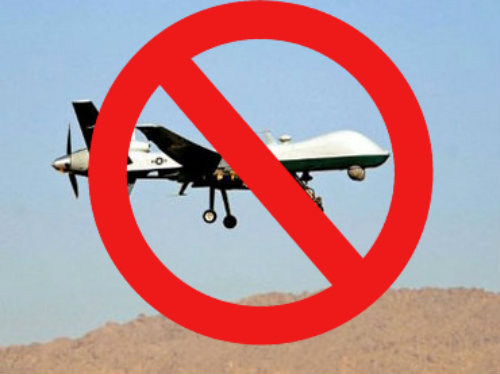
We've been fed a line since the mid-2000's that unmanned drones are the solution to the brutish dilemmas of war. We've been told that deploying drones ensures not only that fewer of our guys have to die, but also that civilian casulaties can be a thing of the past. We are given the illusion that no one but the Bad Guys are going to be hurt.
War for profit (as opposed to defense) became pretty unpopular in the seventies when the American public was allowed to see the realities of warfare in the comfort of their own homes: maimed and dead Americans, devastated civilian populations, and a perpetual drain on the taxpayer.
Since then, the trend has been to insulate the public from the bloodshed, but even that approach lost steam at the beginning of the 2nd Gulf War. The American public was pissed, and was pretty vocal in our anger. Fortunately for those who make a killing off...uh... killing, drone tech finally became viable. Not cheap or less bloody, but viable.
And so we were told a nice, soothing story to allay our guilt and outrage over illegitimate war: the robots will fight for us, no one has to get their hands dirty, and the robots will ensure that only the right people die.
It's time to dismantle this pleasant myth.
Drone Warfare is Mind-Blowingly Expensive
I hope ya'll took some Dramamine, because these figures might make you sick.
Teal Group's 2012 market study estimates that UAV spending will almost double over the next decade from current worldwide UAV expenditures of $6.6 billion annually to $11.4 billion, totaling just over $89 billion in the next ten years.
"The UAV market will continue to be strong despite cuts in defense spending," said Philip Finnegan, Teal Group's director of corporate analysis and an author of the study. "UAVs have proved their value in Iraq, Afghanistan and Pakistan and will continue to be a high priority for militaries in the United States and worldwide."
"The Teal Group study predicts that the US will account for 62% of the worldwide RDT&E spending on UAV technology over the next decade, and 55% of the procurement," said Teal Group senior analyst Steve Zaloga, another author of the 574-page study.
tealgroup.com... market-profile-and-forecast
And the cost of operating these things? Truly appalling:
"Various media reports cite a per-unit cost from $4 million to $5 million. They are quite incorrect," Wheeler wrote on Tuesday in the second part of his five-part series. Using the example of the MQ-9 Reaper drone, which entered service in 2007, he estimated the true cost of the aircraft at a stunning $120.8 million dollars.
www.huffingtonpost.com...
Wait a second, aren't we in a freaking depression here? WTF? Oh, but there's more. Because, see, the taxpayer isn't the only one underwriting the drone industry. Or at least, not for long, as we are attempting to hawk this tech to other nations.
Even if Washington isn’t directly selling drones to foreign governments via Foreign Military Sales, one way or another, drone technology is already being exported.
On Monday, the US embassy-based Office of Security and Cooperation in Iraq (OSCI) announced “Iraq's Navy has purchased U.S. drones to protect the country's oil platforms in the south, from where most of Iraq's oil is shipped."
However, the OSCI was not forthcoming about the number or type of UAVs provided to Baghdad.
Several companies have in fact already been granted the right to sell drone-related equipment by the State Department, including L-3 Communications, Dream Hammer, and Broadcast Microwave systems...
Despite an expected 25 per cent bump in domestic sales from $35 to $40 million for next year, Vanguard’s CEO Michael Buscher says the future is abroad.
“I don’t see the domestic market as being such a boom,” said Buscher. “Our bread and butter is still going to be overseas foreign military sales,” the daily quotes him as saying.
rt.com...
Well, that's just great. I'm glad our tax dollars are being funnelled to fund tech that will eventually (of course) be deployed against us.
For more on the fiscal costs of drone warfare, I highly recommend the following series of articles by Winslow Wheeler:
nation.time.com...
And this article, for a facepalm moment:
www.gizmodo.com.au...
But the cost would perhaps be excuseable, if the drones delivered on their promise of accuracy and lessened bloodshed. But guess what, gentle reader?
Continued...
edit on 27-9-2012 by Eidolon23 because: ...
Drones Kill the Wrong People All the Freaking Time
And that's a problem, and not just for the obvious reasons. Since a high civilian casulaty count undermines all the community building efforts the military has invested in, we may as well be shooting ourselves in the nuts when it comes to addressing the social factors that lead to extremism. If you didn't take your anti-nausea meds before, you'll definitely want to pop a couple now.
TBIJ reports that from June 2004 through mid-September 2012, available data indicate that drone strikes killed 2,562-3,325 people in Pakistan, of whom 474-881 were civilians, including 176 children.[3] TBIJ reports that these strikes also injured an additional 1,228-1,362 individuals. Where media accounts do report civilian casualties, rarely is any information provided about the victims or the communities they leave behind. This report includes the harrowing narratives of many survivors, witnesses, and family members who provided evidence of civilian injuries and deaths in drone strikes to our research team. It also presents detailed accounts of three separate strikes, for which there is evidence of civilian deaths and injuries, including a March 2011 strike on a meeting of tribal elders that killed some 40 individuals...
The strikes have certainly killed alleged combatants and disrupted armed actor networks. However, serious concerns about the efficacy and counter-productive nature of drone strikes have been raised. The number of “high-level” targets killed as a percentage of total casualties is extremely low—estimated at just 2%.[4] Furthermore, evidence suggests that US strikes have facilitated recruitment to violent non-state armed groups, and motivated further violent attacks. As the New York Times has reported, “drones have replaced Guantánamo as the recruiting tool of choice for militants.”[5] Drone strikes have also soured many Pakistanis on cooperation with the US and undermined US-Pakistani relations. One major study shows that 74% of Pakistanis now consider the US an enemy.[6]
livingunderdrones.org...
Leaving dead and grieving civilians aside for a moment, it must be pointed out that when selecting strike targets, we're only as accurate as our intel. Which, according to some, ain't all that accruate at all.
In both Yemen and Pakistan, the CIA is allowed to launch a strike based on the target’s “signature” — that is, whether he appears to look and act like a terrorist. As senior U.S. officials have repeatedly confirmed, intelligence analysts don’t even have to know the target’s name, let alone whether he’s planning to attack the U.S. In some cases, merely being a military-aged male at the wrong place at the wrong time is enough to justify your death.
“What I found most striking was his claim that legitimate targets are a ‘threat that is serious and not speculative,’ and engaged in ‘some operational plot against the United States,’ That is simply not true,” emails the Council on Foreign Relations’ Micah Zenko, who has tracked the drone war as closely as any outside analyst. “The claim that the 3,000+ people killed in roughly 375 nonbattlefield targeted killings were all engaged in actual operational plots against the U.S. defies any understanding of the scope of what America has been doing for the past ten years.”
www.wired.com...
edit on 27-9-2012 by Eidolon23 because: ...
Okay, so they're ridiculously expensive, and if our goal is to quash exteremism abroad, woefully counterproductive. But there's more:
Drone use entials the Violation of airspace treaties, crapping on the Constituion, and wholesale rape of a wide range of human rights.
As far as ethical murkiness is concerned, this journalist nailed it:
What about the future of Drone Warfare, where a human with a joystick is removed from the equation altogether? Well, folks, it's looking pretty dim.
America? It's time to shut it down. Just say no to the Drone.
Drones are Neither Ethical Nor Legal
Drone use entials the Violation of airspace treaties, crapping on the Constituion, and wholesale rape of a wide range of human rights.
A third point — that an American citizen is given the “protections of the Constitution” before he’s approved for unmanned killing — is dubious. Yes, there is a process that the White House uses to vet proposed drone targets. Several government officials review a suspected terrorist’s dossier before an attack on that person is okayed. This is an internal review by presidential aides, not subject to any kind of independent authority, and obviously not one in which a target’s representatives can contest the case. It’s enough to condemn someone to death. The Obama administration has argued that this is the same as the “due process of law” guaranteed in the Bill of Rights.
Legal scholars have found the argument flimsy — with no coherent standard of evidence that amounts to an instant death sentence, and no limits to where that sentence can be carried out. in a January Google Hangout — one of the few other times Obama has even mentioned the drone campaign — he said that targeting decisions were not managed by “a bunch of folks in a room somewhere just making decisions.” Actually, it appears to be something rather close to that.
www.wired.com...
As the Wall Street Journal reported Wednesday, it's not clear whether Pakistan has consented to the U.S. actions in their airspace, which also raises the question of whether the U.S. has legal authority to act there.
Similar concerns have emerged in Yemen.
www.huffingtonpost.com...
As far as ethical murkiness is concerned, this journalist nailed it:
The enormous expansion of drone operations has been a success in the narrowest sense of killing some bad guys. But it has come at an enormous cost: to our reputation, to our morals, to our relationship and status with countries we need to work with to contain and defuse terrorism, and in the lives of the many innocent people we've killed through either sloppiness or ignorance. Rather than asking the difficult questions of whether the success of the drone program has been worth it, though, President Obama has chosen instead to amplify its operations and thus claim victory in killing bad guys, even while he distances himself from the knowledge and personal responsibility for who these dead people are and what crimes they may have committed.
It is an absolute scandal. We owe ourselves better questions and more accountability of the drones we use to wantonly kill people around the planet.
www.theatlantic.com...
What about the future of Drone Warfare, where a human with a joystick is removed from the equation altogether? Well, folks, it's looking pretty dim.
America? It's time to shut it down. Just say no to the Drone.
edit on 27-9-2012 by Eidolon23 because: ...
reply to post by Eidolon23
How much do you think we spend on our military? Those numbers all seemed normal to me.
Drones are the future even if against your liking. I've decided that I can't stop them anyway at this point..
It's just like "Earth 2150" and "Moon Project" computer games...
America turns into the robotic force.. Then there is the Eurasian dynasty... They highly develop EMP to take out our COMPUTER controlled troops..
This IS happening. Tell me.. Should we buy a bunch more B-2 bombers for 2 billion each?? Or continue the F-35 program that is supposed to cost 1.3 trillion??
Oh and war kills people..
PEACE is the only answer.
That is ALL.
How much do you think we spend on our military? Those numbers all seemed normal to me.
Drones are the future even if against your liking. I've decided that I can't stop them anyway at this point..
It's just like "Earth 2150" and "Moon Project" computer games...
America turns into the robotic force.. Then there is the Eurasian dynasty... They highly develop EMP to take out our COMPUTER controlled troops..
This IS happening. Tell me.. Should we buy a bunch more B-2 bombers for 2 billion each?? Or continue the F-35 program that is supposed to cost 1.3 trillion??
Oh and war kills people..
PEACE is the only answer.
That is ALL.
edit on 9/27/2012 by Dustytoad because: (no reason given)
For better, or worse, drones likely are here to stay...
Why I've always wondered about - if they are really just targeting 1 guy at time why in the world use a big missile? You'd think they would work on a sniper drone.
Why I've always wondered about - if they are really just targeting 1 guy at time why in the world use a big missile? You'd think they would work on a sniper drone.
What's with the "Drones are here to stay" rhetoric? If they're expensive, ineffective and unethical, why should they not be shelved? And who is going
to have them shelved if not the people (us) who fund their production?
But I take your point, guys.
A good historical paralell is what occurred when firearms were introduced to Japan. For a few decades, they were quite popular. However, on a small island nation with scarce resources, having a device that turned killing into a simple yes or no proposition was not what you might call an innovation.
If our stated goals, namely global stability and a reduction in extremism, are our true goals, then drones are a step in the wrong direction- in every possible sense.
But I take your point, guys.
A good historical paralell is what occurred when firearms were introduced to Japan. For a few decades, they were quite popular. However, on a small island nation with scarce resources, having a device that turned killing into a simple yes or no proposition was not what you might call an innovation.
Eradication of Firearms in Japan
The Japanese shoguns had the unusual distinction of being perhaps the only major rulers ever to eradicate firearms. In 1587, the shogun declared that all non-samurai were required to hand over weapons—both guns and swords—to the government, which had announced it was going to use the metal in the construction of an enormous statue of Buddha. All gunsmiths were ordered to take their workshops to the city of Nagahama, where the shogun could keep an eye on them and make sure they didn't make weapons. [Source: "History of Warfare" by John Keegan, Vintage Books]
The Japanese recognized the inherit instability that firearms created and they were able to get rid of them because Japan was an island country that focused on maintaining internal order and it was not threatened by any invaders. By 1706 the entire gun production of Japan was 35 large matchlocks, and only a handful of Japanese knew how to make firearms. The shoguns kept their country virtually free of firearms until Perry arrived in 1853.
factsanddetails.com...
If our stated goals, namely global stability and a reduction in extremism, are our true goals, then drones are a step in the wrong direction- in every possible sense.
edit on 27-9-2012 by Eidolon23 because: (no reason given)
Drones are as much black psyop as they are killing machine. Drones have no honor. Drones are an indication of the psychological pulse of those in
charge. Drones are a bonanza for the Military-Industrial-Complex. Drones are an evil concept. Drones are for pussies. Drones are already in operation
over America. Drones will produce serious blowback from the rest of the world one day.
One look around the electronics section of Walmart ought to tell us that the Chinese--should they ever get in that frame of mind--could produce 'em a heck of a lot cheaper and a heck of a lot more of 'em. Think about it.
This thread was needed. Kudos for that. But Drones really piss me off. I'm gonna have to sing some happy songs or do some breathing exercises to find some balance. I have things to do today that require me to not be scowling and look scary...I don't know if I can pull it off now. Thanks a lot, Eidy.
One look around the electronics section of Walmart ought to tell us that the Chinese--should they ever get in that frame of mind--could produce 'em a heck of a lot cheaper and a heck of a lot more of 'em. Think about it.
This thread was needed. Kudos for that. But Drones really piss me off. I'm gonna have to sing some happy songs or do some breathing exercises to find some balance. I have things to do today that require me to not be scowling and look scary...I don't know if I can pull it off now. Thanks a lot, Eidy.
edit on 27-9-2012 by The GUT because: (no reason given)
Interesting read and many valid points made.
I only have one issue and that's with this paragraph.
Extremism has been around much longer than Drones. The present POTUS has more than quadrupled drone strikes over that last and all indications are for more not less use. I'll agree drone strikes are exasperating some forms of extremism but again, extremism has a very long history.
My two pennies.
S & F
I only have one issue and that's with this paragraph.
And that's a problem, and not just for the obvious reasons. Since a high civilian casulaty count undermines all the community building efforts the military has invested in, we may as well be shooting ourselves in the nuts when it comes to addressing the social factors that lead to extremism
Extremism has been around much longer than Drones. The present POTUS has more than quadrupled drone strikes over that last and all indications are for more not less use. I'll agree drone strikes are exasperating some forms of extremism but again, extremism has a very long history.
My two pennies.
S & F
Originally posted by SLAYER69
I'll agree drone strikes are exasperating some forms of extremism but again, extremism has a very long history.
Yeah, extremism sucks. But so does blowback. And let's face it; a lot of what we're dealing with is blowback.
The psychological advantage of having high-tech impersonal killing machines will simmer in the minds of those that already hate us. It's one thing to be outnumbered and yet be able to engage your enemy. It's a whole other ballgame to have your warrior-spirit "short-sheeted" by having to deal with an impersonal killing machine.
The hatred will be exponential. They're not, Drones that is, imo, worth it. It's a moot point anyway. The die has been rolled over the great Strategy board game. Too bad for all us pawns. History, however, always has the last say so. Where will it all end?
Originally posted by The GUT
Drones are as much black psyop as they are killing machine.
Well, yeah, I wonder about this. As has been pointed out with the TSA pornoscanners and "enhanced interrogation techniques", they are ineffective and they make the US look really, really bad.
So, is that the point? Do we blow all the credit we gained with our fellow nations after our handling of the WWII reconstruction effort, reverse our hard-earned reputation as protectors of the oppressed, and generally make ourselves look like amoral bullies in the hopes of detering would-be attackers?
It appears to be having the opposite effect, and maybe that's the whole point. Set ourselves up with an opponent who can keep throwing bodies at us to justify military expenditures.
reply to post by SLAYER69
Absolutely. However, the central causes of extremism have a lot more to do with poverty and inequality than they do with religion. Or, I should say, unscrupulous leaders wouldn't be in a position to use religion as a means to mobilize a disenfranchised population if the social conditions that are favorable to moderation were encouraged.
Extremism has been around much longer than Drones. The present POTUS has more than quadrupled drone strikes over that last and all indications are for more not less use. I'll agree drone strikes are exasperating some forms of extremism but again, extremism has a very long history.
Absolutely. However, the central causes of extremism have a lot more to do with poverty and inequality than they do with religion. Or, I should say, unscrupulous leaders wouldn't be in a position to use religion as a means to mobilize a disenfranchised population if the social conditions that are favorable to moderation were encouraged.
edit on 27-9-2012 by Eidolon23 because: (no reason given)
Originally posted by The GUT
Yeah, extremism sucks. But so does blowback. And let's face it; a lot of what we're dealing with is blowback.
Blowback goes both ways, no?
One upsmanship. We have extremist blowing themselves up and the other guy retaliates.
The psychological advantage of having high-tech impersonal killing machines will simmer in the minds of those that already hate us. It's one thing to be outnumbered and yet be able to engage your enemy. It's a whole other ballgame to have your warrior-spirit "short-sheeted" by having to deal with an impersonal killing machine.
I agree but the same thing could be argued about an ICBMs. Those are not just impersonal but cause a much wider amount of permanent indiscriminate damage. Bringing up China earlier? What makes one think they [Or the Russians for that matter] are not working on their own right as we speak?
Machines fighting Machines will be the future unfortunately. Just wait until they have individual robots roaming the battlefields on foot.
The hatred will be exponential. They're not, Drones that is, imo, worth it. It's a moot point anyway. The die has been rolled over the great Strategy board game. Too bad for all us pawns. History, however, always has the last say so. Where will it all end?
When Tanks, the Belt feed Machine gun and Battleships were first introduced that was considered at the time such horrible weapons that Warfare would become obsolete. Then later the same thing was said about the jet fighter and Nukes.
Meanwhile the world is still a scary and dangerous place. It's not just an Islamic world vs the US issue. This technology is here to stay and will increase planet wide.
reply to post by SLAYER69
Well, S69, we both know that this new Arms race is just going to turn into a pissing match on the Third World.
The world as a whole became safer in an unprecedented way in the wake of WWI in the sense that the odds of your average Joe Global Citizen tgetting blown apart in a conflict between two nations was brought down by an astronmical percentage. And it's probably not even due to the Nukes- it's mostly due to the fact that, say, China gets bombed, the global economy goes tits up. Ditto for Russia, and the US.
So to frame US drone production as a sad inevitibility is BS of the first water. JMOHO.
Well, S69, we both know that this new Arms race is just going to turn into a pissing match on the Third World.
The world as a whole became safer in an unprecedented way in the wake of WWI in the sense that the odds of your average Joe Global Citizen tgetting blown apart in a conflict between two nations was brought down by an astronmical percentage. And it's probably not even due to the Nukes- it's mostly due to the fact that, say, China gets bombed, the global economy goes tits up. Ditto for Russia, and the US.
So to frame US drone production as a sad inevitibility is BS of the first water. JMOHO.
Originally posted by Eidolon23
Absolutely. However, the central causes of extremism have a lot more to do with poverty and inequality than they do with religion. Or, I should say, unscrupulous leaders wouldn't be in a position to use religion as a means to mobilize a disenfranchised population if the social conditions that are favorable to moderation were encouraged.
What's the saying?
One man's extremist is another man's freedom fighter? Wouldn't that all depend on the cause and circumstance? Syria has had issues going back decades before the present situation with the Muslim brotherhood. Iran has been dealing with their own indigenous Iranian mujahedin. Never mind that the Taliban took over an entire country. The Saudis, the UAE as well have been dealing with extremists. It's also not just a US/West issue either. India and China have been dealing with an increase in extremism.
Many of those groups are viewed by their own country and others as extremists. Yet, those groups feel they are fighting for a righteous cause. Does poverty and inequality play a part in the feeling among those groups who are apposed to the Governments in Question?
No, I'm not denying the US has played it's part and have created one hell of a mess but it's not the sole cause. Many Sunnis see Shiites as extremists and visa versa....
reply to post by SLAYER69
Yeah, that's all pretty accurate, but I'd say that empowering the moderate majority in the countries whom are having problems with extremism through sound economic and social polices would rectify that problem more quickly and effectively than indefinite drone strikes.
See, if you harken back to the Princeton study, you should find a figure that may give you pause:
Due to the drone strikes, 74% of Pakistanis regard the US as an enemy combatant. We aren't rectifying anything, we're just giving extremists a better focal point.
Yeah, that's all pretty accurate, but I'd say that empowering the moderate majority in the countries whom are having problems with extremism through sound economic and social polices would rectify that problem more quickly and effectively than indefinite drone strikes.
See, if you harken back to the Princeton study, you should find a figure that may give you pause:
Due to the drone strikes, 74% of Pakistanis regard the US as an enemy combatant. We aren't rectifying anything, we're just giving extremists a better focal point.
edit on 27-9-2012 by Eidolon23 because: ...
Actually, our discussion here is outmoded and irrelevant. Globalism is on the table and in the hearts of the decision makers. Does anyone disagree?
Don't get me wrong: It sounds good on paper, but...
Don't get me wrong: It sounds good on paper, but...
Before drones there were cruise missles before cruise missles, there were planes dropping bombs.
Think now the evolution of modern technology has saved more lives than they have taken that is a true fact.
Imagine the fire bombing of Tokyo or the bombings of Dresden that was indsicriminate retarded bombing in a not too distant future from now some thing else will replace drones.
It is ok to not like it, but the history of warfare is no different that it was 10,000 years ago.
Think now the evolution of modern technology has saved more lives than they have taken that is a true fact.
Imagine the fire bombing of Tokyo or the bombings of Dresden that was indsicriminate retarded bombing in a not too distant future from now some thing else will replace drones.
It is ok to not like it, but the history of warfare is no different that it was 10,000 years ago.
Originally posted by Eidolon23
Due to the drone strikes, 74% of Pakistanis regard the US as an enemy combatant. We aren't rectifying anything, we're just giving extremists a better focal point.
Conversely the US/West have viewed the Pakistani ISI as the root cause of many issues in Afghanistan. Pakistan has played both sides of the fence against the middle here and have been the victims of their own covert support and activities with certain groups.
All sides have created a situation in which they have been burned by their own participation.
The drones good, bad or indifferent are a natural extension. Personally I think they are a bit cowardly but then again so is the guy who brainwashes a youthful naive believer into blowing himself and school girls up in some obscure village.
Originally posted by Eidolon23
Well, yeah, I wonder about this. As has been pointed out with the TSA pornoscanners and "enhanced interrogation techniques", they are ineffective and they make the US look really, really bad.
So, is that the point? Do we blow all the credit we gained with our fellow nations after our handling of the WWII reconstruction effort, reverse our hard-earned reputation as protectors of the oppressed, and generally make ourselves look like amoral bullies in the hopes of detering would-be attackers?
It appears to be having the opposite effect, and maybe that's the whole point. Set ourselves up with an opponent who can keep throwing bodies at us to justify military expenditures.
Something happened to us when we shook hands with the Nazis and absorbed the Project Paperclip scientists and Dulles made the deal with Gen. Reinhard Ghelen for a foothold in Europe.
We were infected with an incurable virus that replicated in the petri dish of paranoia and fear of the Soviets.
Then we started suffering from our other incurable disease: The atrocities of the Federal Reserve. The truth is we prop up the petrodollar or our economy collapses. We aren't heroes anymore. If we were truly concerned about human rights we'd have been balls-out against N. Korea years ago.
Wait for it, you can move on after the coughing fit:
I loathe the extremists but the truth is, the blowback onus is on us. Can we help the middle-east at all now? Doubtful. Not in any meaningful way. Unless one believes WW III will clean the slate for something better.
Highly politicized speech is b.s. rhetoric. Someone once said: "Man is unequal to his rhetoric." Man-oh-man was that hep-cat right.
edit on 27-9-2012 by The GUT because: (no reason given)
Hello folks,
I am catching up and really trying to carefully digest some of these posts.
I would like to make a comment about extremism, since that seems to be coming up a lot, and in fact is where this thread is at for the moment.
Aside from the fact that it frustrates me that people have a natural inclination, that comes from someplace, I couldn't tell you where, to use rhetoric to blow right by another perfectly good opportunity to just agree that this drone # is really bad. I mean what are we told since we are little kids? "Make a list of pros and cons, now compare both sides, the one more heavily weighted is likely the key to making the right decision".
So I just wanted to add for the moment that extremists, these days, are not just some resident social artifact of whatever given country.
Extremists are deployed, nowadays, like any other weapons system. That is what you are seeing in 'The Movie' and the mechanical reaction to it by 'extremists'. A perfect example of 5th gradient warfare.
The whole thing is a weapons system.
THAT, is why we need to enter in to a NEW dialogue regarding this matter.
We are not going to be able to rely on the wisdom gained from either our grandfather's wars or our father's wars to make complete sense of this.
Back soon.
X.
I am catching up and really trying to carefully digest some of these posts.
I would like to make a comment about extremism, since that seems to be coming up a lot, and in fact is where this thread is at for the moment.
Aside from the fact that it frustrates me that people have a natural inclination, that comes from someplace, I couldn't tell you where, to use rhetoric to blow right by another perfectly good opportunity to just agree that this drone # is really bad. I mean what are we told since we are little kids? "Make a list of pros and cons, now compare both sides, the one more heavily weighted is likely the key to making the right decision".
So I just wanted to add for the moment that extremists, these days, are not just some resident social artifact of whatever given country.
Extremists are deployed, nowadays, like any other weapons system. That is what you are seeing in 'The Movie' and the mechanical reaction to it by 'extremists'. A perfect example of 5th gradient warfare.
The whole thing is a weapons system.
THAT, is why we need to enter in to a NEW dialogue regarding this matter.
We are not going to be able to rely on the wisdom gained from either our grandfather's wars or our father's wars to make complete sense of this.
Back soon.
X.
new topics
-
Former NYT Reporter Attacks Scientists For Misleading Him Over COVID Lab-Leak Theory
Education and Media: 11 minutes ago -
Why did Phizer team with nanobot maker
Medical Issues & Conspiracies: 26 minutes ago -
Pro Hamas protesters at Columbia claim hit with chemical spray
World War Three: 46 minutes ago -
Elites disapearing
Political Conspiracies: 2 hours ago -
A Personal Cigar UFO/UAP Video footage I have held onto and will release it here and now.
Aliens and UFOs: 3 hours ago -
Go Woke, Go Broke--Forbes Confirms Disney Has Lost Money On Star Wars
Movies: 4 hours ago -
Freddie Mercury
Paranormal Studies: 5 hours ago -
Nirvana - Immigrant Song
Music: 9 hours ago -
British TV Presenter Refuses To Use Guest's Preferred Pronouns
Education and Media: 10 hours ago
top topics
-
British TV Presenter Refuses To Use Guest's Preferred Pronouns
Education and Media: 10 hours ago, 16 flags -
Go Woke, Go Broke--Forbes Confirms Disney Has Lost Money On Star Wars
Movies: 4 hours ago, 12 flags -
Trump To Hold Dinner with President of Poland At Trump Tower Tonight
2024 Elections: 13 hours ago, 8 flags -
Tucker Carlson interviews Christian pastor from Bethlehem.
Middle East Issues: 12 hours ago, 7 flags -
Pro Hamas protesters at Columbia claim hit with chemical spray
World War Three: 46 minutes ago, 7 flags -
Elites disapearing
Political Conspiracies: 2 hours ago, 7 flags -
A family from Kansas with six children moved to the Moscow region
Other Current Events: 16 hours ago, 6 flags -
Freddie Mercury
Paranormal Studies: 5 hours ago, 6 flags -
A Personal Cigar UFO/UAP Video footage I have held onto and will release it here and now.
Aliens and UFOs: 3 hours ago, 5 flags -
Nirvana - Immigrant Song
Music: 9 hours ago, 4 flags
active topics
-
Trump To Hold Dinner with President of Poland At Trump Tower Tonight
2024 Elections • 31 • : DBCowboy -
Gold and silver prices....woo hoo
History • 75 • : SchrodingersRat -
-@TH3WH17ERABB17- -Q- ---TIME TO SHOW THE WORLD--- -Part- --44--
Dissecting Disinformation • 512 • : cherokeetroy -
A Personal Cigar UFO/UAP Video footage I have held onto and will release it here and now.
Aliens and UFOs • 9 • : Ophiuchus1 -
Former NYT Reporter Attacks Scientists For Misleading Him Over COVID Lab-Leak Theory
Education and Media • 0 • : Consvoli -
Terrifying Encounters With The Black Eyed Kids
Paranormal Studies • 42 • : daskakik -
Elites disapearing
Political Conspiracies • 12 • : Degradation33 -
Candidate TRUMP Now Has Crazy Judge JUAN MERCHAN After Him - The Stormy Daniels Hush-Money Case.
Political Conspiracies • 318 • : matafuchs -
The Shed 26
General Chit Chat • 836 • : MRTrismegistus -
British TV Presenter Refuses To Use Guest's Preferred Pronouns
Education and Media • 44 • : ImagoDei