It looks like you're using an Ad Blocker.
Please white-list or disable AboveTopSecret.com in your ad-blocking tool.
Thank you.
Some features of ATS will be disabled while you continue to use an ad-blocker.

The Avro Arrow resurfacing?
page: 1share:
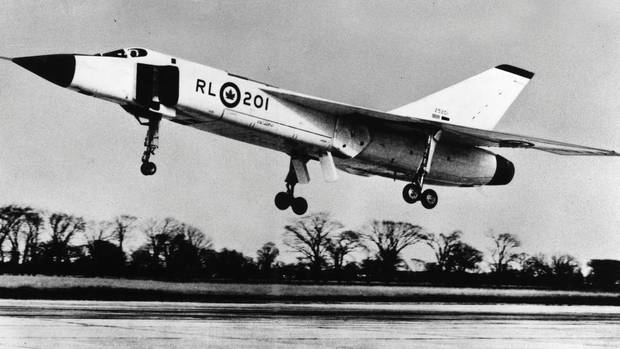
It’s hard to imagine a 53-year-old plane could outperform Lockheed Martin’s costly new F-35 fighter-bomber, but those behind a new CF-105 say their jet would pack a 21st-century punch.
Mr. MacKenzie said the proposal he’s put before the Harper government is for a made-in-Canada plane that could fly twice as fast as the F-35 and up to 20,000 feet higher. It would feature an updated Mark III engine and its range would be two to three times that of the F-35.
The former soldier, an unpaid supporter of the project, has run the pitch by Defence Minister Peter MacKay, senior defence officials as well as the Prime Minister’s Office and Julian Fantino when he was associate defence minister in charge of procurement.
www.theglobeandmail.com...
I've always loved the Arrow and was a little more than ticked off that the plane was scrapped, thinking we'd sold out not only on a great airframe, but also on the people that designed and built it.
Now, we have an interesting 'made in Canada' option to the F35 fiasco.
Let the games begin!
cool. I can't wait for the TSR 2 to be brought back from the dead.
Bring it on.
Bring it on.
reply to post by masqua
Would the "new" CF105 be a true multi role type,capable of the mission profiles that the F35 has been designed to undertake?
The original CF105 was,primarily,mooted as a point interceptor,much like the RAF's Lightning which did evolve, in a limited manner,into a ground attack aircraft.
It would be interesting to see what the CF 105 could achieve given the 21st century treatment,perhaps our(UK)government should do the same with TSR-2!
Would the "new" CF105 be a true multi role type,capable of the mission profiles that the F35 has been designed to undertake?
The original CF105 was,primarily,mooted as a point interceptor,much like the RAF's Lightning which did evolve, in a limited manner,into a ground attack aircraft.
It would be interesting to see what the CF 105 could achieve given the 21st century treatment,perhaps our(UK)government should do the same with TSR-2!
Rgardless of the F-35 decision, I think they should still bring back an up to date version of the Arrow.
That would be way to cool!
That would be way to cool!
reply to post by nake13
The capabilities of Arrow v0.2 are a question mark as of today, but the basic design is not 'stealth in any way at all. This should be a first step in the re-design.
Overall, I'm for the idea of Bombardier getting involved, which should silence the seperatists in Quebec for about 30 years. It's a win-win for Canadian jobs.
Lewis MacKenzie always was a colourful Major General and, to know he's backing this, makes it all the more interesting.
The capabilities of Arrow v0.2 are a question mark as of today, but the basic design is not 'stealth in any way at all. This should be a first step in the re-design.
Overall, I'm for the idea of Bombardier getting involved, which should silence the seperatists in Quebec for about 30 years. It's a win-win for Canadian jobs.
Lewis MacKenzie always was a colourful Major General and, to know he's backing this, makes it all the more interesting.
edit on 10/9/12 by
masqua because: (no reason given)
reply to post by masqua
Correct me if I'm wrong here but weren't most Western jets of the "Delta wing - Century" series very fast with high altitude capabilities meant to engage Russian bombers as far out over the North pole as fast as possible hence their higher altitude capabilities and higher speeds?
Also, was it ever in production and have Vertical take off and landing capability?
ETA :Linky
Correct me if I'm wrong here but weren't most Western jets of the "Delta wing - Century" series very fast with high altitude capabilities meant to engage Russian bombers as far out over the North pole as fast as possible hence their higher altitude capabilities and higher speeds?
Also, was it ever in production and have Vertical take off and landing capability?
ETA :Linky
Background
In the post-Second World War period, the Soviet Union began developing a capable fleet of long-range bombers with the ability to deliver nuclear weapons across North America and Europe. The main threat was principally from high-speed, high-altitude bombing runs launched from the Soviet Union traveling over the Arctic against military bases, built-up and industrial centres in Canada and the United States. To counter this threat, Western countries strenuously engaged in the development of interceptors that could engage and destroy these bombers before they reached their targets
edit on 10-9-2012 by SLAYER69 because: (no reason given)
Originally posted by SLAYER69
Correct me if I'm wrong here but weren't most Western jets of the "Delta wing - Century" series very fast with high altitude capabilities meant to engage Russian bombers as far out over the North pole as fast as possible hence their higher altitude capabilities and higher speeds?
Yes. The Arrow was specifically designed to cover the vast territories of the Canadian arctic and beyond, which would be a desirable advantage over the F35 design.
Also, was it ever in production and have Vertical take off and landing capability?
Not to my knowledge. This does not mean it can't be added to the re-design.
Specs
edit on 10/9/12 by masqua because: (no reason given)
Actually, it was never fitted with the origonal engines specified,and with those in place it certainly would be a SHORT takeoff.....!
This is a good idea but sadly its going to require a new airframe entirely to produce the capabilities people will want to hang on it.....
I supremely doubt well make this leap.....too much of Harper s heads up the POTUS arse.....
This is a good idea but sadly its going to require a new airframe entirely to produce the capabilities people will want to hang on it.....
I supremely doubt well make this leap.....too much of Harper s heads up the POTUS arse.....
The plan has been rejected (rather quickly, imo) by the federal goverment, pointing fingers at, you guessed it, stealth technology.
I doubt this will be the end of the story, though, as politicians and pundits alike begin flaying the hasty denial by Julian Fantino, minister in charge.
Gotta love democracy, where feet meet public fire. Canadians love the Arrow story and this will not fade any time soon.
At MacKenzie's insistence, National Defence looked at the plan.
But it was firmly rejected when Julian Fantino, at the time the minister in charge of the fighter jet replacement program, wrote back to say the proposal "does not satisfactorily address these mandatory requirements."
One of those requirements, mentioned three times in the June 29 letter to MacKenzie, is stealth capabilities -- a quality the F-35 is purported to have, but that many experts have questioned.
During an NDP-led roundtable on the F-35 procurement process last month, Winslow Wheeler, a U.S. national security expert and former defence analyst in Washington, said the stealth capabilities of the F-35 are limited.
"The hoopla is stealth," he said. "But what stealth really means is that against some radars, at some angles, you are detectable at shorter ranges. And what that means, is that against some radars, at some angels, you are detectable at any range as soon as you come over the radar horizon."
Read it on Global News: Global News | Feds reject bid to revive Avro Arrow
www.globalnews.ca...
I doubt this will be the end of the story, though, as politicians and pundits alike begin flaying the hasty denial by Julian Fantino, minister in charge.
Gotta love democracy, where feet meet public fire. Canadians love the Arrow story and this will not fade any time soon.
reply to post by masqua
Every single Canadian high school students was pissed off when Avro was discussed in history class. It being scrapped marked the end of Canadian aeronautics and as well a self-established Canadian made machinery.
To tell the truth, Canada is too nice and people took advantage of that. Then and Now.
Every single Canadian high school students was pissed off when Avro was discussed in history class. It being scrapped marked the end of Canadian aeronautics and as well a self-established Canadian made machinery.
To tell the truth, Canada is too nice and people took advantage of that. Then and Now.
reply to post by luciddream
I agree with you.
You forgot to mention the stream of aero-engineering experts who, directly as a result of Dief's decision, headed to Florida and NASA to enjoy the surge of interest in the space program. Whether that was intended or not is something to consider.
It would be interesting to look at which Canadian was responsible for what breakthroughs.
I agree with you.
You forgot to mention the stream of aero-engineering experts who, directly as a result of Dief's decision, headed to Florida and NASA to enjoy the surge of interest in the space program. Whether that was intended or not is something to consider.
It would be interesting to look at which Canadian was responsible for what breakthroughs.
With newer, stronger engines and updated avionics, I think there are several retired aircraft out there that could easily outperform the F-35. Let's
look at the Lightning's stats:
F-35 Lightning II
- Max Takeoff Weight: 70,000 lbs
- Max Speed: 1,200 mph (Mach 1.67)
- Service Ceiling: 60,000 ft (Theoretically. It's only been tested to 43,000 ft)
- Rate of Climb: Unknown
- (1) 20mm cannon w/ 180 rounds
- (6) external hardpoints
- (2) internal bays w/ 2 pylons each
Now let's look at some of the decommissioned competitors:
F-4 Phantom II
- Max Takeoff Weight: 61,795 lbs
- Max Speed: 1,472 mph (Mach 2.23)
- Service Ceiling: 60,000 ft
- Rate of Climb: 41,300 ft/min
- (9) external hardpoints
A slightly lower maximum weight, but capable of faster speeds and with a fully tested service ceiling. And no stealth capability.
F-14 Tomcat
- Max Takeoff Weight: 74,350 lbs
- Max Speed: 1,544 mph (Mach 2.34)
- Service Ceiling: 50,000 ft
- Rate of Climb: 45,000 ft/min
- (1) 20mm cannon w/ 675 rounds
- (10) external hardpoints
A higher takeoff weight, higher max speed. But lower service ceiling and no stealth capability.
F-111 Aardvark
- Max Takeoff Weight: 100,000 lbs
- Max Speed: 1,650 mph (Mach 2.5)
- Service Ceiling: 66,000 ft
- Climb Rate: 25,890 ft/min
- (1) internal bay w/ 2 pylons
- (8) external hardpoints
The F-111 outperforms the F-35 in every way except for stealth capability and maneuverability.
F-35 Lightning II
- Max Takeoff Weight: 70,000 lbs
- Max Speed: 1,200 mph (Mach 1.67)
- Service Ceiling: 60,000 ft (Theoretically. It's only been tested to 43,000 ft)
- Rate of Climb: Unknown
- (1) 20mm cannon w/ 180 rounds
- (6) external hardpoints
- (2) internal bays w/ 2 pylons each
Now let's look at some of the decommissioned competitors:
F-4 Phantom II
- Max Takeoff Weight: 61,795 lbs
- Max Speed: 1,472 mph (Mach 2.23)
- Service Ceiling: 60,000 ft
- Rate of Climb: 41,300 ft/min
- (9) external hardpoints
A slightly lower maximum weight, but capable of faster speeds and with a fully tested service ceiling. And no stealth capability.
F-14 Tomcat
- Max Takeoff Weight: 74,350 lbs
- Max Speed: 1,544 mph (Mach 2.34)
- Service Ceiling: 50,000 ft
- Rate of Climb: 45,000 ft/min
- (1) 20mm cannon w/ 675 rounds
- (10) external hardpoints
A higher takeoff weight, higher max speed. But lower service ceiling and no stealth capability.
F-111 Aardvark
- Max Takeoff Weight: 100,000 lbs
- Max Speed: 1,650 mph (Mach 2.5)
- Service Ceiling: 66,000 ft
- Climb Rate: 25,890 ft/min
- (1) internal bay w/ 2 pylons
- (8) external hardpoints
The F-111 outperforms the F-35 in every way except for stealth capability and maneuverability.
Originally posted by allenidaho
With newer, stronger engines and updated avionics, I think there are several retired aircraft out there that could easily outperform the F-35. Let's look at the Lightning's stats:
F-35 Lightning II
- Max Takeoff Weight: 70,000 lbs
- Max Speed: 1,200 mph (Mach 1.67)
- Service Ceiling: 60,000 ft (Theoretically. It's only been tested to 43,000 ft)
- Rate of Climb: Unknown
- (1) 20mm cannon w/ 180 rounds
- (6) external hardpoints
- (2) internal bays w/ 2 pylons each
Now let's look at some of the decommissioned competitors:
F-4 Phantom II
- Max Takeoff Weight: 61,795 lbs
- Max Speed: 1,472 mph (Mach 2.23)
- Service Ceiling: 60,000 ft
- Rate of Climb: 41,300 ft/min
- (9) external hardpoints
A slightly lower maximum weight, but capable of faster speeds and with a fully tested service ceiling. And no stealth capability.
F-14 Tomcat
- Max Takeoff Weight: 74,350 lbs
- Max Speed: 1,544 mph (Mach 2.34)
- Service Ceiling: 50,000 ft
- Rate of Climb: 45,000 ft/min
- (1) 20mm cannon w/ 675 rounds
- (10) external hardpoints
A higher takeoff weight, higher max speed. But lower service ceiling and no stealth capability.
F-111 Aardvark
- Max Takeoff Weight: 100,000 lbs
- Max Speed: 1,650 mph (Mach 2.5)
- Service Ceiling: 66,000 ft
- Climb Rate: 25,890 ft/min
- (1) internal bay w/ 2 pylons
- (8) external hardpoints
The F-111 outperforms the F-35 in every way except for stealth capability and maneuverability.
There are some very capable aircraft in that list,however,why "regenerate" a design from an earlier generation or two,when,despite it's teething troubles,the F-35 has been designed from the outset to embrace the mission profiles that ALL the above mentioned aircraft could perform? plus you state that the F-111 outperforms the F-35 in every way apart from stealth and maneuverability, with it's stealth and hovering/thrust vectoring capabilities,the F-35 surely does outperform the F-111? as outright speed and weapons carrying capability does not neccesarily equate to the optimum platform for certain mission profiles.
.
edit on 11-9-2012 by nake13 because: .
Disclaimer: I love the Avro Arrow. I had the wonderful opportunity to work as a restorer in the museum housed in what originally was the place where
the Arrow was built in Toronto. I also dislike the F-35 as an aircraft, and believe that the Canadian plan to purchase them is full of holes large
enough to sail an aircraft carrier through. I don't think it will do the job that the RCAF will likely need them for, and I think there are aircraft
in the world far more suited to what we need. All that being said, I will be very frank about this plan to bring the Arrow back.
The Arrow was a wonderful airframe in its time. It had some truly revolutionary ideas in it to combat some of the enormous challenges that it faced. To a great degree it succeeded in these challenges. The problem it faced at the time was that it was at the trailing edge of the era where nations would use nuclear bombers, and the defense strategy rested on stopping them. Countries were moving forward into the era of guided, nuclear missiles which stood on the shoulders of the space race technologies. As missiles came in, interceptors became obsolete. As a result there is no modern niche which interceptors fit into. Interception has become a secondary mission profile for recent aircraft, and those airframes which were designed for interception in the Cold War have largely been converted to other roles (such as the MiG-31 which seems to be moving into reconnaissance and engagement of high-value airborne assets). If we commission even an improved-capability Arrow it will still be built for a purpose that doesn't really have a place in modern warfare. Effectively, this is going to hamstring it if you try and put it into roles it was never designed for, but which are required in the formula for effective combat.
The other problem is the difficulty of engineering modern techniques into an old airframe. The fact is that the Arrow and its systems were designed with a particular time frame in mind. Available materials, known techniques, and design methods. Half a century of improvements in aerospace are not something you can just stick onto an airplane like a drop tank. The inside of the poor aircraft would have to be completely torn out and redesigned with completely new techniques. Furthermore, I hate to rain on more parades, but the outside of the aircraft would not look the same. Advances in wing design, intake design, and aerodynamics in general would mean that the whole exterior. For those keeping a running tally, that's approximately the entire aircraft that would need a redesign. Let's not even mention the amount of things that would have to go into making sure that the aircraft gets a decrease in RCS.
The third, and potentially most important, of the issues is the who. Who will do the design? Who will build all of the parts? Who will pay for it all? The answers to these questions are not nearly as obvious as they may seem. For the purposes of making an all-Canadian aircraft our choices are few. We have Bombardier and Pratt and Whitney Canada as our aerospace presence. Unfortunately, neither of these companies is prepared or really qualified to head up such a program. Defense aircraft require specific parts which, themselves, require specific design. None of the companies we have in Canada are prepared to undertake designs like that (Bombardier and P&WC doing civil aerospace designs). The cost to get them the appropriate facilities and personnel to do so would make whoever paid for B-2 bombers break into tears.
Do I want to see a flying Avro Arrow? Yes. Do I think it could happen someday? Yes. Do I think the Arrow has a place in modern air combat? Not really. Sorry guys.
The Arrow was a wonderful airframe in its time. It had some truly revolutionary ideas in it to combat some of the enormous challenges that it faced. To a great degree it succeeded in these challenges. The problem it faced at the time was that it was at the trailing edge of the era where nations would use nuclear bombers, and the defense strategy rested on stopping them. Countries were moving forward into the era of guided, nuclear missiles which stood on the shoulders of the space race technologies. As missiles came in, interceptors became obsolete. As a result there is no modern niche which interceptors fit into. Interception has become a secondary mission profile for recent aircraft, and those airframes which were designed for interception in the Cold War have largely been converted to other roles (such as the MiG-31 which seems to be moving into reconnaissance and engagement of high-value airborne assets). If we commission even an improved-capability Arrow it will still be built for a purpose that doesn't really have a place in modern warfare. Effectively, this is going to hamstring it if you try and put it into roles it was never designed for, but which are required in the formula for effective combat.
The other problem is the difficulty of engineering modern techniques into an old airframe. The fact is that the Arrow and its systems were designed with a particular time frame in mind. Available materials, known techniques, and design methods. Half a century of improvements in aerospace are not something you can just stick onto an airplane like a drop tank. The inside of the poor aircraft would have to be completely torn out and redesigned with completely new techniques. Furthermore, I hate to rain on more parades, but the outside of the aircraft would not look the same. Advances in wing design, intake design, and aerodynamics in general would mean that the whole exterior. For those keeping a running tally, that's approximately the entire aircraft that would need a redesign. Let's not even mention the amount of things that would have to go into making sure that the aircraft gets a decrease in RCS.
The third, and potentially most important, of the issues is the who. Who will do the design? Who will build all of the parts? Who will pay for it all? The answers to these questions are not nearly as obvious as they may seem. For the purposes of making an all-Canadian aircraft our choices are few. We have Bombardier and Pratt and Whitney Canada as our aerospace presence. Unfortunately, neither of these companies is prepared or really qualified to head up such a program. Defense aircraft require specific parts which, themselves, require specific design. None of the companies we have in Canada are prepared to undertake designs like that (Bombardier and P&WC doing civil aerospace designs). The cost to get them the appropriate facilities and personnel to do so would make whoever paid for B-2 bombers break into tears.
Do I want to see a flying Avro Arrow? Yes. Do I think it could happen someday? Yes. Do I think the Arrow has a place in modern air combat? Not really. Sorry guys.
Even with the boondoggle that the F-35 program is, I can't imagine anyone in the defence world could seriously consider reviving a fifty year old
design for use in today's environment. I do hope that this is a public means of shaming the Canadian government, industry and people, with the
purpose of reminding us that Canada was once a proud and capable leader in the field of aeronautics. Perhaps this is just a not so subtle way of
saying "Hey, we can do this ourselves and do it better too!" It's time Canada started doing things for itself once more.
Just a thought, but why are we assuming that they would be using the Arrow as prototyped originally?
Some of the technical designers on that project were well known for designing things well beyond the means of the materials available.
We have no idea how far they went on the drawing board.
The people that made the proposal, that have access to the archives, do.
Just something to think about.
Some of the technical designers on that project were well known for designing things well beyond the means of the materials available.
We have no idea how far they went on the drawing board.
The people that made the proposal, that have access to the archives, do.
Just something to think about.
edit on 11-9-2012 by peck420 because: (no reason given)
Loved when I saw that news yesterday.. but I figure it's pretty unlikely. The Arrow could have been a genuinely revolutionary aircraft, if it were
only given a chance. Updated and configured for today's needs, it could be every bit as revolutionary as it could have been when it was conceived.
Originally posted by masqua
reply to post by luciddream
I agree with you.
You forgot to mention the stream of aero-engineering experts who, directly as a result of Dief's decision, headed to Florida and NASA to enjoy the surge of interest in the space program. Whether that was intended or not is something to consider.
It would be interesting to look at which Canadian was responsible for what breakthroughs.
I just wonder if the Canadian government under Diefenbaker were coerced into their decision by the US,it certainly appears that Britain's defence review of the same era was driven by US "insistance" that TSR-2 was dropped in favour of the F-111K,which turned out to be a white elephant anyway,but it did give the US time to develop a "lead" in aerosoace technology,if only our respective governments at the time had had the balls to stand up to what amounts to US blackmail,it may well be the likes of AVRO,BAC etc at the forefront today.
PS if it hadn't been for Dennis Bancroft at Miles aircraft in the UK developing the all flying tail,the Bell X1 would not have broken the sound barrier in 1947,unsurprisingly the supersonic aircraft that he and his team were working on ( slated to fly in 1946,taking off under it's own power ,not carried by a B-29) was cancelled and the research "given" to the US government.
Some of that old technology is awesome. We have strayed far from practicability with all this new expensive technology. It takes the fun out of
flying. I flew a Cessna and a Cherokee when I took flying training and the simplicity of the planes was great. The pilots nowadays rely too much on
technology and technology can be unreliable. It's like buying a car with all sorts of fancy crap on it, the more crap on it the more that can go
wrong. I don't know what direction we are going in. I think it is the wrong direction. There is no computer out there that can reason like an
intelligent man with common sense. I trust in the pilots more than the technology.
edit on 12-9-2012 by rickymouse because: (no reason
given)
new topics
-
Supreme Court Oral Arguments Today 4.25.2024 - Are PRESIDENTS IMMUNE From Later Being Prosecuted.
Above Politics: 2 minutes ago -
Krystalnacht on today's most elite Universities?
Social Issues and Civil Unrest: 11 minutes ago -
Chris Christie Wishes Death Upon Trump and Ramaswamy
Politicians & People: 38 minutes ago -
University of Texas Instantly Shuts Down Anti Israel Protests
Education and Media: 2 hours ago -
Any one suspicious of fever promotions events, major investor Goldman Sachs card only.
The Gray Area: 4 hours ago -
God's Righteousness is Greater than Our Wrath
Religion, Faith, And Theology: 9 hours ago
top topics
-
VP's Secret Service agent brawls with other agents at Andrews
Mainstream News: 13 hours ago, 10 flags -
Cats Used as Live Bait to Train Ferocious Pitbulls in Illegal NYC Dogfighting
Social Issues and Civil Unrest: 17 hours ago, 8 flags -
Nearly 70% Of Americans Want Talks To End War In Ukraine
Political Issues: 14 hours ago, 5 flags -
Sunak spinning the sickness figures
Other Current Events: 14 hours ago, 5 flags -
Electrical tricks for saving money
Education and Media: 12 hours ago, 4 flags -
Late Night with the Devil - a really good unusual modern horror film.
Movies: 16 hours ago, 3 flags -
Krystalnacht on today's most elite Universities?
Social Issues and Civil Unrest: 11 minutes ago, 2 flags -
Any one suspicious of fever promotions events, major investor Goldman Sachs card only.
The Gray Area: 4 hours ago, 2 flags -
University of Texas Instantly Shuts Down Anti Israel Protests
Education and Media: 2 hours ago, 1 flags -
Chris Christie Wishes Death Upon Trump and Ramaswamy
Politicians & People: 38 minutes ago, 0 flags
active topics
-
"We're All Hamas" Heard at Columbia University Protests
Social Issues and Civil Unrest • 281 • : marg6043 -
University of Texas Instantly Shuts Down Anti Israel Protests
Education and Media • 31 • : FlyersFan -
I Guess Cloud Seeding Works
Fragile Earth • 42 • : WaESN -
Supreme Court Oral Arguments Today 4.25.2024 - Are PRESIDENTS IMMUNE From Later Being Prosecuted.
Above Politics • 0 • : WeMustCare -
D.C. Court of Appeals made a horrible ruling against Trump
US Political Madness • 320 • : WeMustCare -
Krystalnacht on today's most elite Universities?
Social Issues and Civil Unrest • 1 • : FlyersFan -
New whistleblower Jason Sands speaks on Twitter Spaces last night.
Aliens and UFOs • 58 • : Ophiuchus1 -
SETI chief says US has no evidence for alien technology. 'And we never have'
Aliens and UFOs • 63 • : andy06shake -
Nearly 70% Of Americans Want Talks To End War In Ukraine
Political Issues • 61 • : YourFaceAgain -
Chris Christie Wishes Death Upon Trump and Ramaswamy
Politicians & People • 3 • : ImagoDei