It looks like you're using an Ad Blocker.
Please white-list or disable AboveTopSecret.com in your ad-blocking tool.
Thank you.
Some features of ATS will be disabled while you continue to use an ad-blocker.

BP oil spill toxins from Gulf of Mexico found in eggs of pelicans nesting in Minnesota - IMPORTANT!
page: 1share:
Source<
br />
So now the effects of this disaster are spreading out through the migration of birds.. And bringing with it potentials for causing:
I think we all knew that the easy-peasy fix it solution, Corexit, was going to have lasting long term effects. It was untested and now you barely hear of anything about the gulf issue except tose damn commercials with people talking about how safe and clean it is down there.. ugh. poor sheeple!
here some threads related:
State officials shut down shrimping in Gulf amid scientists finding deformities and ‘horrifying cr
The fishermen have never seen anything like this..." Gulf seafood deformities alarm scientists
Toxicologist: Corexit Destroys Basic Biological Structure Of Life *Video*,
Thoughts?!
Nearly 80 percent of collected samples contained Corexit, a chemical dispersant used to break up oil spills. Both the petroleum compounds and Corexit are dangerous in small doses, capable of causing cancer, endocrine disruption, and birth defects.
Researchers for the Department of Natural Resources have found evidence of petroleum compounds and the chemical used to clean up the 2010 BP oil spill in eggs of pelicans nesting in Minnesota.
Petroleum compounds were present in 90 percent of the first batch of eggs tested. Nearly 80 percent of collected samples contained Corexit, a chemical dispersant used to break up oil spills. Both the petroleum compounds and Corexit are dangerous in small doses, capable of causing cancer, endocrine disruption, and birth defects.
So now the effects of this disaster are spreading out through the migration of birds.. And bringing with it potentials for causing:
among other horrible diseases and side effects
cancer, endocrine disruption, and birth defects.
I think we all knew that the easy-peasy fix it solution, Corexit, was going to have lasting long term effects. It was untested and now you barely hear of anything about the gulf issue except tose damn commercials with people talking about how safe and clean it is down there.. ugh. poor sheeple!
here some threads related:
State officials shut down shrimping in Gulf amid scientists finding deformities and ‘horrifying cr
The fishermen have never seen anything like this..." Gulf seafood deformities alarm scientists
Toxicologist: Corexit Destroys Basic Biological Structure Of Life *Video*,
Thoughts?!
Do you have anymore sources on this? I am from the Gulf Coast and have not heard about this.
reply to post by GuidedKill
Another Article :
www.thisdishisvegetarian.com... ollutants-found-in-eggs.html
And another,
minnesota.publicradio.org...
They are almost all the same but may give you some better resources if you want to delve into it
Another Article :
www.thisdishisvegetarian.com... ollutants-found-in-eggs.html
And another,
minnesota.publicradio.org...
They are almost all the same but may give you some better resources if you want to delve into it
edit on 5/31/2012 by Nspekta because: (no
reason given)
They knew it, they dumped it payed some fines, now they'll wash there hands of it and be done with it. Truly disgracefull what the american
government and BP have done to the ocean down there. But for it now to have worked it's way north through the migratory birds. Seems like we'll
never be done with the Deep water Horizen disaster, and the full scale will only play out as the future goes on, to just how big the scope of the
damage was...
SaneThinking
SaneThinking
Originally posted by Nspekta
reply to post by GuidedKill
Another Article :
www.thisdishisvegetarian.com... ollutants-found-in-eggs.html
And another,
minnesota.publicradio.org...
They are almost all the same but may give you some better resources if you want to delve into itedit on 5/31/2012 by Nspekta because: (no reason given)
Thank you, I had done some digging and pretty much found the same article over and over.
reply to post by Nspekta
Snf and thanks for sharing some updated info on the mess made. I still wonder what effects the oil/coritex is having on the atmosphere. The birds spend a lot of time in the air so maybe its a clue of how dirty the atmosphere is becomming.
Snf and thanks for sharing some updated info on the mess made. I still wonder what effects the oil/coritex is having on the atmosphere. The birds spend a lot of time in the air so maybe its a clue of how dirty the atmosphere is becomming.
Lots of factual and good material here:
www.floridaoilspilllaw.com...
The BP Gulf disaster is not over. Not by a long shot.
www.floridaoilspilllaw.com...
The BP Gulf disaster is not over. Not by a long shot.
This is absolutely disgusting. S+F OP.
I've lived in MN all my life and didn't even know pelicans migrated up here from the gulf. I don't think I've ever seen one in my life up here. This BP Deepwater Horizon mess is just going to keep getting worse and spreading farther. I knew it was bad but never thought it would actually show up in my back yard so to speak.
I've lived in MN all my life and didn't even know pelicans migrated up here from the gulf. I don't think I've ever seen one in my life up here. This BP Deepwater Horizon mess is just going to keep getting worse and spreading farther. I knew it was bad but never thought it would actually show up in my back yard so to speak.
I get sick to death of BP (which became British Petrolium for the first time in 15 years) getting the blame for this. Yes BP paid the contractors to
work this rig but the Contractors were American companies (Halliburton and Transocean) Operated by American citizens. Stop blaming the Brits.
If it was allowed here I would do a one liner but since it is not I am typing away here to get to my point of view on all of this crap posted.
BASTARDS
Regards, Iwinder
S&F
BASTARDS
Regards, Iwinder
S&F
edit on 31-5-2012 by Iwinder because: (no reason given)
edit on 31-5-2012 by Iwinder because: Thought I better not post this
Originally posted by thov420
This is absolutely disgusting. S+F OP.
I've lived in MN all my life and didn't even know pelicans migrated up here from the gulf. I don't think I've ever seen one in my life up here. This BP Deepwater Horizon mess is just going to keep getting worse and spreading farther. I knew it was bad but never thought it would actually show up in my back yard so to speak.
This is obviously not completely accurate, but it shows that if a pelican can travel from say, new orleans to minneapolis, here is the range that other pelicans may have flown, in other words, where these chemicals may also be within the states:
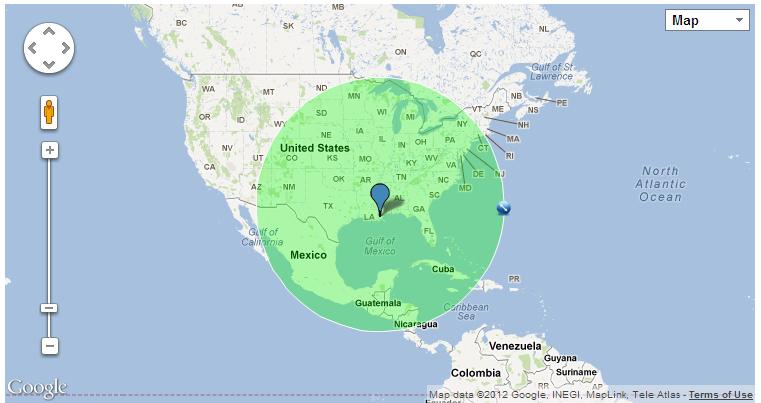
Not to mention any other migrating birds that winter in the gulf
edit on 5/31/2012 by Nspekta because: after thought
Well its seems they have killed off ,,another species.
one of the "stand ins,,,
for "the Winged Saraphim"
u know Ark Legend.
Goobye Bye Pellican..
90%,,infected,,,
10% natural enviromental/predator,,damage,,
Goodbye,,u will be missed.
one of the "stand ins,,,
for "the Winged Saraphim"
u know Ark Legend.
Goobye Bye Pellican..
90%,,infected,,,
10% natural enviromental/predator,,damage,,
Goodbye,,u will be missed.
edit on 31-5-2012 by BobAthome because: (no reason given)
F&S for the OP, This is sickening, just sickening. And just who will hold BP accountable for this type of long term poisoning?
Furthermore, if you think this is limited to pelicans, you have another think coming. Much of the Corexit and the petroleum products it dispersed, evaporated into the atmosphere just to be carried downwind and redeposited elsewhere with the rain.
I'm sure this is just the beginning of some very bad long term effects that we have yet to realize.
Drill baby drill, Yeah right!
Furthermore, if you think this is limited to pelicans, you have another think coming. Much of the Corexit and the petroleum products it dispersed, evaporated into the atmosphere just to be carried downwind and redeposited elsewhere with the rain.
I'm sure this is just the beginning of some very bad long term effects that we have yet to realize.
Drill baby drill, Yeah right!
reply to post by Nspekta
i know rational reaction is frowned upon in these sorts of doom-monger threads
but - how about looking past the chicken-little headlines and asking questions , like :
1 - what was the sample size ?
2 - how were the sampled eggs selected
3 - were the sampled eggs ` live ` or ` stillborn `
4 - was the testing destructive or non destructive
5 - what was the adult pelican mortality rate in minnesota for the years :
2010 , 2011 , 2012
and most important - how did this statistically compare to the aggregate mortality for the decade 1990 to 2000
6 - what was the pelican chick mortality rate in minnesota for the years :
2010 , 2011 , 2012
and most important - how did this statistically compare to the aggregate mortality for the decade 1990 to 2000
7 - what was the actuall ppb value for the tested chemicals in the egg
8 - what was the ratio of live births to stillborn eggs in minnesota for the years :
2010 , 2011 , 2012
and most important - how did this statistically compare to the aggregate ratio for the decade 1990 to 2000
thse 8 questions are just the tip of the iceberg - but the answers will put the entire story in context
i cannot find a online summary of the results of this testing - just the fear mongering reaction to what t allegedly means - all hype , no facts
but hey - i have come to expect this
i know rational reaction is frowned upon in these sorts of doom-monger threads
but - how about looking past the chicken-little headlines and asking questions , like :
1 - what was the sample size ?
2 - how were the sampled eggs selected
3 - were the sampled eggs ` live ` or ` stillborn `
4 - was the testing destructive or non destructive
5 - what was the adult pelican mortality rate in minnesota for the years :
2010 , 2011 , 2012
and most important - how did this statistically compare to the aggregate mortality for the decade 1990 to 2000
6 - what was the pelican chick mortality rate in minnesota for the years :
2010 , 2011 , 2012
and most important - how did this statistically compare to the aggregate mortality for the decade 1990 to 2000
7 - what was the actuall ppb value for the tested chemicals in the egg
8 - what was the ratio of live births to stillborn eggs in minnesota for the years :
2010 , 2011 , 2012
and most important - how did this statistically compare to the aggregate ratio for the decade 1990 to 2000
thse 8 questions are just the tip of the iceberg - but the answers will put the entire story in context
i cannot find a online summary of the results of this testing - just the fear mongering reaction to what t allegedly means - all hype , no facts
but hey - i have come to expect this
edit on 1-6-2012 by ignorant_ape because: editted to add another question
edit on
1-6-2012 by ignorant_ape because: (no reason given)
reply to post by ignorant_ape
I think you may have left out some of the most important questions of all, like;
1.) How many dead birds are we willing to view as acceptable?
2.) How many birth defects are we willing to view as acceptable?
3.) Which industries are less important than oil, thereby deeming them as expendable in the quest thereof? (Commercial fishing, shrimping, oystering, tourism, etc...)
4.) Unless it affects me personally, do I really care?
You can look for and probably find as many reasons as you want to declare these recent test results as being less than accurate, but the truth of the matter is; If the chemicals from the oil spill are showing up in these pelicans, then eventually they're going to show up in every other species, including people, that fed on seafood from the contaminated region as well. At least in trace amounts and according to the experts in the field, that's all it takes to have devastating effects.
The real question is; How much are we willing to accept?
I think you may have left out some of the most important questions of all, like;
1.) How many dead birds are we willing to view as acceptable?
2.) How many birth defects are we willing to view as acceptable?
3.) Which industries are less important than oil, thereby deeming them as expendable in the quest thereof? (Commercial fishing, shrimping, oystering, tourism, etc...)
4.) Unless it affects me personally, do I really care?
You can look for and probably find as many reasons as you want to declare these recent test results as being less than accurate, but the truth of the matter is; If the chemicals from the oil spill are showing up in these pelicans, then eventually they're going to show up in every other species, including people, that fed on seafood from the contaminated region as well. At least in trace amounts and according to the experts in the field, that's all it takes to have devastating effects.
The real question is; How much are we willing to accept?
Originally posted by ignorant_ape
reply to post by Nspekta
i know rational reaction is frowned upon in these sorts of doom-monger threads
but - how about looking past the chicken-little headlines and asking questions , like :
1 - what was the sample size ?
2 - how were the sampled eggs selected
3 - were the sampled eggs ` live ` or ` stillborn `
4 - was the testing destructive or non destructive
5 - what was the adult pelican mortality rate in minnesota for the years :
2010 , 2011 , 2012
and most important - how did this statistically compare to the aggregate mortality for the decade 1990 to 2000
6 - what was the pelican chick mortality rate in minnesota for the years :
2010 , 2011 , 2012
and most important - how did this statistically compare to the aggregate mortality for the decade 1990 to 2000
7 - what was the actuall ppb value for the tested chemicals in the egg
8 - what was the ratio of live births to stillborn eggs in minnesota for the years :
2010 , 2011 , 2012
and most important - how did this statistically compare to the aggregate ratio for the decade 1990 to 2000
thse 8 questions are just the tip of the iceberg - but the answers will put the entire story in context
i cannot find a online summary of the results of this testing - just the fear mongering reaction to what t allegedly means - all hype , no facts
but hey - i have come to expect thisedit on 1-6-2012 by ignorant_ape because: editted to add another questionedit on 1-6-2012 by ignorant_ape because: (no reason given)
Well since ALL the news stories don;t have this info, and to cheer you up, I did look all over for the actual scientific data, but alas, none to be found. SO, since it interests you AND since you obviously have questions of the validity of the science please review the following links:
Mark Clark - Click to get his full BIO including emails and Phone numbers that he can be reached at. Maybe he will provide you the info or let you know when/where he will be publishing it
Here is another link to another article describing his findings
and another
I think its great that you question the science, as there are no stupid questions and the way to deny ignorance is to ask questions and research yourself. so good on you.
**ADDED* I have personally sent him an Email asking where/when we can take a look at his findings. I will let you know when/if I hear from him****
Thank you!
edit on 6/1/2012 by Nspekta because: (no reason given)
reply to post by Nspekta
That picture just brings the whole issue to rest. That is a huge area, I'd guess what 70% of the US lives within that range? Not to mention all of Mexico and Guatemala and the surrounding countries. Mind-boggling.
I hope you get a response from the researcher as that would definitely give this story even more weight.
That picture just brings the whole issue to rest. That is a huge area, I'd guess what 70% of the US lives within that range? Not to mention all of Mexico and Guatemala and the surrounding countries. Mind-boggling.
I hope you get a response from the researcher as that would definitely give this story even more weight.
edit on 6/1/12 by thov420 because: (no
reason given)
new topics
-
God's Righteousness is Greater than Our Wrath
Religion, Faith, And Theology: 1 hours ago -
Electrical tricks for saving money
Education and Media: 4 hours ago -
VP's Secret Service agent brawls with other agents at Andrews
Mainstream News: 5 hours ago -
Sunak spinning the sickness figures
Other Current Events: 6 hours ago -
Nearly 70% Of Americans Want Talks To End War In Ukraine
Political Issues: 6 hours ago -
Late Night with the Devil - a really good unusual modern horror film.
Movies: 8 hours ago -
Cats Used as Live Bait to Train Ferocious Pitbulls in Illegal NYC Dogfighting
Social Issues and Civil Unrest: 9 hours ago -
The Good News According to Jesus - Episode 1
Religion, Faith, And Theology: 11 hours ago
top topics
-
Florida man's trip overseas ends in shock over $143,000 T-Mobile phone bill
Social Issues and Civil Unrest: 16 hours ago, 8 flags -
Cats Used as Live Bait to Train Ferocious Pitbulls in Illegal NYC Dogfighting
Social Issues and Civil Unrest: 9 hours ago, 8 flags -
VP's Secret Service agent brawls with other agents at Andrews
Mainstream News: 5 hours ago, 8 flags -
Bobiverse
Fantasy & Science Fiction: 16 hours ago, 3 flags -
HORRIBLE !! Russian Soldier Drinking Own Urine To Survive In Battle
World War Three: 13 hours ago, 3 flags -
Electrical tricks for saving money
Education and Media: 4 hours ago, 3 flags -
Nearly 70% Of Americans Want Talks To End War In Ukraine
Political Issues: 6 hours ago, 3 flags -
Sunak spinning the sickness figures
Other Current Events: 6 hours ago, 3 flags -
Late Night with the Devil - a really good unusual modern horror film.
Movies: 8 hours ago, 2 flags -
The Good News According to Jesus - Episode 1
Religion, Faith, And Theology: 11 hours ago, 1 flags
active topics
-
DONALD J. TRUMP - 2024 Candidate for President - His Communications to Americans and the World.
2024 Elections • 514 • : WeMustCare -
VP's Secret Service agent brawls with other agents at Andrews
Mainstream News • 36 • : SchrodingersRat -
The Acronym Game .. Pt.3
General Chit Chat • 7744 • : bally001 -
Truth Social goes public, be careful not to lose your money
Mainstream News • 128 • : Astyanax -
New whistleblower Jason Sands speaks on Twitter Spaces last night.
Aliens and UFOs • 53 • : pianopraze -
Sunak spinning the sickness figures
Other Current Events • 5 • : glen200376 -
SETI chief says US has no evidence for alien technology. 'And we never have'
Aliens and UFOs • 44 • : MikeDeGrasseTyson -
HORRIBLE !! Russian Soldier Drinking Own Urine To Survive In Battle
World War Three • 31 • : budzprime69 -
How ageing is" immune deficiency"
Medical Issues & Conspiracies • 33 • : rickymouse -
The Reality of the Laser
Military Projects • 46 • : Zaphod58