It looks like you're using an Ad Blocker.
Please white-list or disable AboveTopSecret.com in your ad-blocking tool.
Thank you.
Some features of ATS will be disabled while you continue to use an ad-blocker.

Updates - Answers from an Alien from Andromeda
page: 33share:
Originally posted by PlanetXisHERE
reply to post by InhaleExhale
Given the poor English it is sometimes difficult for me to fathom what he is saying - so this is just my interpretation which may be limited by different perspectives.
He is saying, don't worry about the magnetic pole shift, the geographic pole shift will be more substantial. Do you understand the reasoning and precursors behind a geographic shift?
No I dont. Could you explain how its remotely probable?
Do you understand what a geographical pole shift means?
I dont think you do as it seems you believe this would be survivable. This is why I think that you think what you post isnt fear mongering.
If a geographical pole shift was to occur, today with all the negativity and war and so on would seem like heaven compared to a geographic shift.
Our focus should be on probable reality not a possible reality that has a probability of almost 0.
reply to post by InhaleExhale
Sure, there is much evidence for it:
Here is one article on geographic pole shifts, there are many if you look:
Article: Evidence for past geographic pole shifts
Sure, there is much evidence for it:
A shift in “geographic” poles is another commonly discussed concept throughout the scientific world. This is the theory that an internal or external force acts upon Earth to reposition the arctic poles anywhere from their current position by a few degree up to 180 degrees.
Virtually every ancient culture has left information that tells us they were well aware of the 12 constellations (The Zodiac) that encircle Earth. At the present moment, these constellations circle Earth in an elliptical orbit that crosses the equator at an angle of 23 degrees. Ancient cultures describe a time when these constellations circled the Earth directly around the equator. From this information, we can conclude that the poles have shifted 23 degrees from the time these ancient astronomers recorded those observations.
Other examples include the well publicized Beresovka mammoth that was found frozen in the Siberian ice with grass still in its mouth and stomach. This means the mammoth was actually grazing in a field as the weather become so cold that everything froze almost instantly. You can’t even write this off as a freak storm that came through in a once-in-a-lifetime event because the mammoth wasn’t simply frozen, but also buried in the ice from that moment until it was recently discovered by man. Whatever caused the mammoth to freeze didn’t just come and go, but came and stayed from that moment until recent times.
Here is one article on geographic pole shifts, there are many if you look:
Article: Evidence for past geographic pole shifts
reply to post by PlanetXisHERE
Really? The constellations orbit the Earth? An elliptical orbit no less. Really good source you've got there.
www.timelinetothefuture.com...
At the present moment, these constellations circle Earth in an elliptical orbit that crosses the equator at an angle of 23 degrees.
Really? The constellations orbit the Earth? An elliptical orbit no less. Really good source you've got there.
www.timelinetothefuture.com...
edit on 10/11/2012 by Phage because: (no reason given)
Well I think the Constellation of Cancer is being spoken of quite strongly.
unveilingtheapocalypse.blogspot.co.uk...
The whole thing is very interesting.
www.abovetopsecret.com...
Return to Antikythera - 2000 Year Old Computer
Not by accident was the antikythera found, as it was how they studied allignments and constellations to.
And there is alot of clues in the Bible, it contains codes and clues.
unveilingtheapocalypse.blogspot.co.uk...
Unveiling the Apocalypse
beyondthestarsastrology.wordpress.com...
Catastrophe and a lineup of planets in Cancer
Now I don't know if this means a cycle, that began with 2000, where there were allignements, and even if cycles all are Lions, upgrades or with cosmic intervention, or enough people waking up, perhaps they're lambs instead.
I think there is a lot of work done to hijack our consciousness and co-creational thoughscape abilities via media and movies, so this isn't to me, a glimpse at doom and catastrophe.
It's just a continued search for the truth they bury and hide, and a kind of heads up, in trying to decipher some of what the elite and hybrids mismanaging this planet may have in their heads, and a push to waking up ourselves and overcoming this earth and their mismanagement even.
unveilingtheapocalypse.blogspot.co.uk...
Berossus... affirms that the whole issue is brought about by the course of the planets. So positive is he that he assigns a definite date both for the conflagration and the deluge. All that the earth inherits will, he assures us, be consigned to flame when the planets, which now move in different orbits, all assemble in Cancer, so arranged in one row that a straight line may pass through their spheres. When the same gathering takes place in Capricorn, then we are in danger of the deluge.
(Berossus Babylonica, cited in Seneca, Naturales Quaestiones, 3. 28 7-3. 29)
So a planetary alignment would surely also be considered an important celestial herald for the writers of the Bible.
The combined textual evidence presented above thus suggests that the seven stars held in the hand of Jesus - which represent the keys of the bottomless pit described in chapters 9 and 20 of the Apocalypse, are in fact an alignment of the seven classical planets. So the theory I present in the book - that the seven heads of the Dragon described as being part of the "great sign seen in heaven" in Rev 12 represent the alignment of planets on 5th May 2000, appears to have a wealth of supporting evidence. The only way we can identify it as such, is by the close proximity of this event to the appearance of the other astronomical and geophysical phenomena described at the opening of the sixth seal in Rev 6 - an earthquake, solar and lunar eclipses and a meteor shower, all occurring at the turn of the millennium, and accompanied by the "blood, fire and columns of smoke" mentioned in the Book of Joel - which corresponds to the events of 9/11 (see the earlier post The Two Towers and the Sixth Seal). Signs which both Joel (and by extension Acts) associates with the arrival of the Second Pentecost towards the end of the world - an event which occurs at the end-time defeat of Satan:
The whole thing is very interesting.
www.abovetopsecret.com...
Return to Antikythera - 2000 Year Old Computer
Not by accident was the antikythera found, as it was how they studied allignments and constellations to.
And there is alot of clues in the Bible, it contains codes and clues.
unveilingtheapocalypse.blogspot.co.uk...
Unveiling the Apocalypse
beyondthestarsastrology.wordpress.com...
Catastrophe and a lineup of planets in Cancer
Now I don't know if this means a cycle, that began with 2000, where there were allignements, and even if cycles all are Lions, upgrades or with cosmic intervention, or enough people waking up, perhaps they're lambs instead.
I think there is a lot of work done to hijack our consciousness and co-creational thoughscape abilities via media and movies, so this isn't to me, a glimpse at doom and catastrophe.
It's just a continued search for the truth they bury and hide, and a kind of heads up, in trying to decipher some of what the elite and hybrids mismanaging this planet may have in their heads, and a push to waking up ourselves and overcoming this earth and their mismanagement even.
reply to post by PlanetXisHERE
The mammoths will not help you with pole shifting. Many have said that because they had food in their mouths or stomach that they must have been "quick" or "flash" frozen. The problem with that idea is that even if the earth were to quickly shift on it's poles and place said poor mammoth square in the middle of the physical north or south pole, would not result in a "quick" or "flash" frozen mammoth. Scientist have investigated this and found that it's not possible to "quick" or "flash" freeze meat the size of a mammoth. Here is a thread on it here on ATS, posted back in June 2004:
www.abovetopsecret.com...
From the thread:
If you want to "quick" or "flash" freeze a mammoth, you're going to have to do one of two things:
Drop it into a vat of liquid gases such as liquid nitrogen.
or
You're going to have to come up with some way for the air temps to suddenly drop to below -150 deg ( ala "Day After Tomorrow").
A physical pole shift won't do that I'm afraid. The air will move with the crust. Temps are controlled by the air and the surface (in this case land), and both will need to loose that heat. Loosing that heat takes time. Quite a bit of time. So I'm sorry. Even a pole shift will not flash freeze a mammoth.
What it could do, if it was rapid enough is: cause mile high tsunamis, and even though the air will move with the crust, it won't move as fast, so there will be a relative wind. How fast? Not sure, but I think it will exceed hurricane force winds, and may even exceed F5 tornado wind speeds (over 300 MPH).
The Zodiac: very big face palm here. I'm sorry but your article you linked to is another fine example of someone reading a source, and actually NOT understanding what they are reading......:rolling my eyes:
Fist, here is a link about the Zodiac. Take a good, long read about it....and see how they explain things like:
Equatorial Coordinate System (which btw, does not mean things are sitting at the equator
), Tropical Zodiac and Ecliptic Coordinate System.
Zodiac
Last from your post:
No, I'm afraid that is not what is "commonly" discussed.
What is "commonly" discussed is True Polar Wander
You can even find it mentioned in this wiki article on: Pole Shift Hypothesis
The mammoths will not help you with pole shifting. Many have said that because they had food in their mouths or stomach that they must have been "quick" or "flash" frozen. The problem with that idea is that even if the earth were to quickly shift on it's poles and place said poor mammoth square in the middle of the physical north or south pole, would not result in a "quick" or "flash" frozen mammoth. Scientist have investigated this and found that it's not possible to "quick" or "flash" freeze meat the size of a mammoth. Here is a thread on it here on ATS, posted back in June 2004:
www.abovetopsecret.com...
From the thread:
To get to the bottom of the mystery scientists consulted experts in the deep freeze butchery industry. However instead of clearing things up they made them much more troublesome. Basically they said it was not possible to deep freeze a creature the size of a mammoth in the relative moderate temps of the arctic. Basically if meat is frozen slowly at freezing temp crystals form in the cells of the flesh bursting the cells and dehydrating the meat. The butchers concluded no such process could have produced the deep frozen mammoth meat. To satisfactorily freeze a side of beef takes 30 minutes at -40 degrees Fahrenheit. To deep freeze a huge living warm blooded mammoth, insulated in thick fur, they estimated that temperatures below -150 degrees would be required. Temperatures so low have never been recorded in nature, not even in the artic.
If you want to "quick" or "flash" freeze a mammoth, you're going to have to do one of two things:
Drop it into a vat of liquid gases such as liquid nitrogen.
or
You're going to have to come up with some way for the air temps to suddenly drop to below -150 deg ( ala "Day After Tomorrow").
A physical pole shift won't do that I'm afraid. The air will move with the crust. Temps are controlled by the air and the surface (in this case land), and both will need to loose that heat. Loosing that heat takes time. Quite a bit of time. So I'm sorry. Even a pole shift will not flash freeze a mammoth.
What it could do, if it was rapid enough is: cause mile high tsunamis, and even though the air will move with the crust, it won't move as fast, so there will be a relative wind. How fast? Not sure, but I think it will exceed hurricane force winds, and may even exceed F5 tornado wind speeds (over 300 MPH).
The Zodiac: very big face palm here. I'm sorry but your article you linked to is another fine example of someone reading a source, and actually NOT understanding what they are reading......:rolling my eyes:
Fist, here is a link about the Zodiac. Take a good, long read about it....and see how they explain things like:
Equatorial Coordinate System (which btw, does not mean things are sitting at the equator
), Tropical Zodiac and Ecliptic Coordinate System.
Zodiac
Last from your post:
A shift in “geographic” poles is another commonly discussed concept throughout the scientific world. This is the theory that an internal or external force acts upon Earth to reposition the arctic poles anywhere from their current position by a few degree up to 180 degrees
No, I'm afraid that is not what is "commonly" discussed.
What is "commonly" discussed is True Polar Wander
You can even find it mentioned in this wiki article on: Pole Shift Hypothesis
True polar wander, or the motion of the solid Earth with respect to a fixed spin axis that causes the spin axis to lie over a new geographic position, does occur. This is because of changes in mass distribution throughout the Earth that modify its moment of inertia tensor. The Earth consistently readjusts its orientation with respect to its spin axis such that its spin axis is parallel to the axis about which it has its greatest moment of inertia.[4] This readjustment is very slow. In 2001, historical evidence for true polar wander was found in paleomagnetic data from granitic rocks from across North America. The data from these rocks conflict with the hypothesis of a cataclysmic true polar wander event. This evidence indicated that the geographical poles have not deviated by more than about 5° over the last 130 million years.[20] More rapid past possible occurrences of true polar wander have been measured: from 790 to 810 million years ago, true polar wander of approximately 55° may have occurred twice.[4]
Originally posted by PlanetXisHERE
reply to post by InhaleExhale
Sure, there is much evidence for it:
Why is it that you seem to use evidence of possibility and evidence of probability interchangeably? They arent and you should seriously understand this before attempting to elicit positive responses from the audience.
That's us, by the way.
Originally posted by PlanetXisHERE
A shift in “geographic” poles
Ok I'm going to clear something up for the lesser informed amongst us who you may be trying to constantly perpetuate your fear-mongering fraud. In the real scientific community, your so-called "geographic" pole shifts don't even exist. They are referred to using their referential names to eliminate any ambiguity....those would be either axial poles or geomagnetic poles. Those too, for future reference, are not interchangeable.
Originally posted by PlanetXisHERE
Virtually every ancient culture has left information that tells us
Perhaps that's why they are ancient cultures and no longer relevant.
Originally posted by PlanetXisHERE
they were well aware of the 12 constellations (The Zodiac) that encircle Earth. At the present moment, these constellations circle Earth in an elliptical orbit
All I can do here is LOL. That, and say "oh".
Originally posted by PlanetXisHERE
Other examples include the well publicized Beresovka mammoth that was found frozen in the Siberian ice with grass still in its mouth and stomach.
Certainly, some freak of nature that induced an instant freeze is one explanation. Hard to conjure up the atmospheric conditions to ARRIVE at, yet, I will acquiesce that it MAY have happened.
What IS more plausible though, is that while eating, it simply died of natural causes, a heart attack, some inherent condition that caused it to simply drop dead. And with luck being what it was, this happened maybe an hour or hours before a vicious storm. Then one storm on top of another compounding that mammoths preservation in it's state.
reply to post by sam_inc
Thanks for updating this, I haven't in a while. Will watch it now and be back soon to make some comments.
I found it interesting in one of Mythi's videos in January this year, he predicted that we would see a lot of fireball activity over the next month, and he was right as we saw that one day in February with the Russian daytime meteor and a bunch of meteors in other countries as well on the same day, I forget all the countries but I think it was South Africa, Cuba, Spain and Australia as well as Russia.
Thanks for updating this, I haven't in a while. Will watch it now and be back soon to make some comments.
I found it interesting in one of Mythi's videos in January this year, he predicted that we would see a lot of fireball activity over the next month, and he was right as we saw that one day in February with the Russian daytime meteor and a bunch of meteors in other countries as well on the same day, I forget all the countries but I think it was South Africa, Cuba, Spain and Australia as well as Russia.
reply to post by PlanetXisHERE
Prepare yourself! I was running a little fear when i watched this video.
Prepare yourself! I was running a little fear when i watched this video.
reply to post by sam_inc
Yah this one has a few of my friends and family buzzing. It`s definitely a heads up eye opener, here`s hoping the Pleadians can get things under control hey!
Yah this one has a few of my friends and family buzzing. It`s definitely a heads up eye opener, here`s hoping the Pleadians can get things under control hey!
reply to post by CottonwoodStormy
what really is a eye opener is that the same information is coming multiple sources
what really is a eye opener is that the same information is coming multiple sources
Originally posted by sam_inc
reply to post by PlanetXisHERE
Prepare yourself! I was running a little fear when i watched this video.
I have been open-minded yet not a blind believer (not saying anyone else is) in this video series; some of Mythi's predictions have been bang-on, like his prediction made in January of this year that we would see unprecedented daytime fireballs in February - true. Coincidence? Seems like a stretch.
But also, he was big on the Dec 21 2012 date - obviously a dud. Big on Nibiru - haven't seen it yet, he says its been diverted. OK. How about this big 5% expansion of the planet? Mentions it only a bit, like in video 98, but not in 99. Talks much about the elites plans for depopulation - we really haven't seen any evidence of that yet, apart from what has always existed in poverty stricken regions of the planet.
I don't like messages that put you into fear - that is such an obvious method of control. And there is much of that in this message. I don't like messages that have you rely on someone other than yourself to be saved from tough situations - as Mythi often repeats his space friends will help out some.
So even though this video series is interesting and entertaining, I'm still sitting on the fence as to whether it is true, or just some guy from Brazil having fun with us, or some kind of PTB weird media experiment. Who knows. I'm mentally, physically and spiritually prepared for dire times, IMO nothing else matters if you are prepared in those ways.
I'm in fear because I don't know what to do. i cant imagine myself reacting to these possible events that would occur. it feels like a freaking movie,
and i dont know if its thiss stuff is real or not. I don't know! (no reason given)
edit on 16-4-2013 by sam_inc because: (no reason
given)
reply to post by sam_inc
ATS has a good survival forum, here are some good threads:
www.abovetopsecret.com...
Everything you need to know:
survival blog
Another great resource:
total survival
Don't get overwhelmed, start with the basics:
1. A place to bugout to and a way to get there if roads are impassable or gas unobtainable, this is assuming normal services down more than a couple of weeks, which is what most survivalist/preppers are getting ready for, a one or two week outage is unlikely to turn into a true survival situation, but can happen.
2. A safe way to obtain water and a way to purify it, distilling is the best option.
3. A few months or more of food, and seeds and a way to grow more.
4. Way to start fires.
5. First aid supplies and training.
6. Knowledge of what wild plants, leaves, roots, stems, flowers, insects etc you can eat.
etc etc prioritize.
ATS has a good survival forum, here are some good threads:
www.abovetopsecret.com...
Everything you need to know:
survival blog
Another great resource:
total survival
Don't get overwhelmed, start with the basics:
1. A place to bugout to and a way to get there if roads are impassable or gas unobtainable, this is assuming normal services down more than a couple of weeks, which is what most survivalist/preppers are getting ready for, a one or two week outage is unlikely to turn into a true survival situation, but can happen.
2. A safe way to obtain water and a way to purify it, distilling is the best option.
3. A few months or more of food, and seeds and a way to grow more.
4. Way to start fires.
5. First aid supplies and training.
6. Knowledge of what wild plants, leaves, roots, stems, flowers, insects etc you can eat.
etc etc prioritize.
reply to post by sam_inc
Don't be afraid, that is what these dark powers in the world want. Don't let them have it. The survival points are good but also have faith and hope in humanity for there is still goodness in the world.
Don't be afraid, that is what these dark powers in the world want. Don't let them have it. The survival points are good but also have faith and hope in humanity for there is still goodness in the world.
reply to post by sam_inc
I am sorry, but I have to ask...
Do you really believe this?
A planetary body near the sun that doesn't have an effect on the inner planets?
Let's start there, and then we can get into the rest of the info in the video.
I am intereated how something can be near our sun and people such as amateur sun watchers do not see it, how does that happen?
You do understand that we get pictures such as these from amateur astronomers...
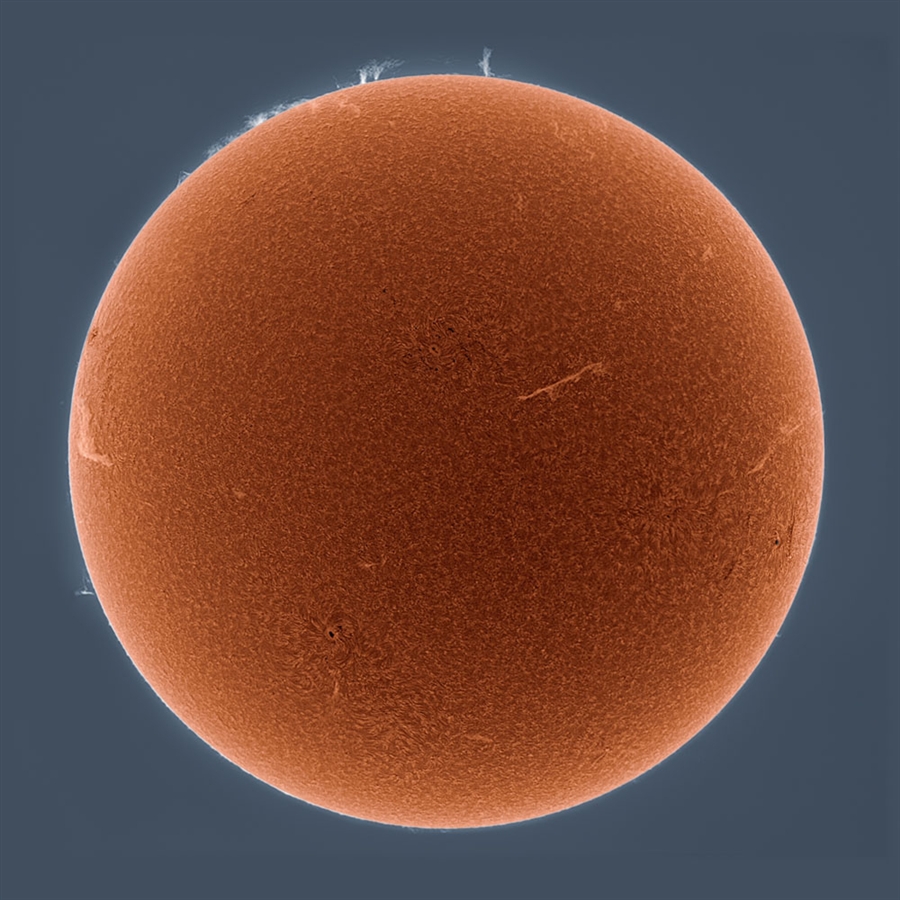
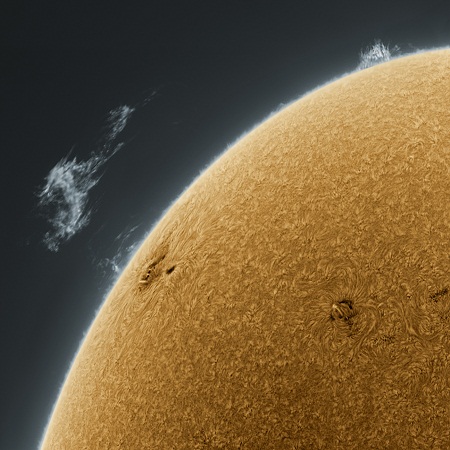
Also the closest planetary body near the sun is Mercury.
Please explain how this planetary object is near our sun has no effect on our inner planets?
In fact here is something that will help explain why there can't be a planetary body other than Mercury that has no effect on the inner planets.
scienceline.ucsb.edu...
I am sorry, but I have to ask...
Do you really believe this?
A planetary body near the sun that doesn't have an effect on the inner planets?
Let's start there, and then we can get into the rest of the info in the video.
I am intereated how something can be near our sun and people such as amateur sun watchers do not see it, how does that happen?
You do understand that we get pictures such as these from amateur astronomers...
Also the closest planetary body near the sun is Mercury.
Please explain how this planetary object is near our sun has no effect on our inner planets?
In fact here is something that will help explain why there can't be a planetary body other than Mercury that has no effect on the inner planets.
scienceline.ucsb.edu...
edit on 30-6-2013 by tsurfer2000h because: (no reason given)
reply to post by sam_inc
Well you can start by not watching those silly youtube videos and believing they are real...
I'm in fear because I don't know what to do.
Well you can start by not watching those silly youtube videos and believing they are real...
reply to post by sam_inc
Thanks Sam for the update. I'm started to doubt the veracity of this message, there is much fear in this one, and something is brought up that has not been talked about before, and the story and predictions keep changing with no explantions. It is starting to seem like vapid doom/fear mongering, and we all know people in fear are easily controlled. If this keeps up I will ask the mods to close this thread.
Peace.
Thanks Sam for the update. I'm started to doubt the veracity of this message, there is much fear in this one, and something is brought up that has not been talked about before, and the story and predictions keep changing with no explantions. It is starting to seem like vapid doom/fear mongering, and we all know people in fear are easily controlled. If this keeps up I will ask the mods to close this thread.
Peace.
reply to post by PlanetXisHERE
That's not a prediction but a fact.
When I say The sun will rise tomorrow morning I am not predicting but pointing out fact.
he predicted that we would see a lot of fireball activity over the next month,
That's not a prediction but a fact.
When I say The sun will rise tomorrow morning I am not predicting but pointing out fact.