It looks like you're using an Ad Blocker.
Please white-list or disable AboveTopSecret.com in your ad-blocking tool.
Thank you.
Some features of ATS will be disabled while you continue to use an ad-blocker.

The US Military Wants To 'Microchip' Troops
page: 3share:
Originally posted by ProudBird
reply to post by burntheships
On the fictional creation called "Star Trek" the communicators were used as a way to locate crew members, and served to rescue them when they were in danger.
Even in an episode of the "Original Series" they suggested the use of "sub-cutaneous transponders"....that served the same purpose.
How many times has a soldier been out in the field, and lost, and needing rescue? Any sort of ability to locate that person would seem to be a very, very good idea.
They can do this without forcing us to be chipped!
And the globalist who want/forcing this are NOT the nice society you see on Star Trek...
Originally posted by rebellender
reply to post by burntheships
BTS they been chipping for years
Here and there sure in the public sector.I know Prince Charles has one right?
I was not aware however that they were chipping the various ranks in the MIC, are they?
There are many different types of chips, I suppose some are superior?
I wonder, how long before they want everyone to take a chip?
2015? Do we have that long?
edit on 6-5-2012 by burntheships because: (no reason given)
Originally posted by burntheships
reply to post by beezzer
I need to go find that, and add it in here. You know what else Beez,
Obamacare is not going to be optional, is it?
And remember that there are provisions for the IRS to come after
us if we dont pay. Wow, they are really making a hard run at it this time.
No. Ultimately, it won't be.
All the IRS would need to do is dial up our chips. But hey, look at all these missing kid stories! Have your kid chipped for their safety!
reply to post by burntheships
i am not or ever was Prince Charles but I was an E-5 in the Infantry....the unit saw years in Iraq and Afghan
i am not or ever was Prince Charles but I was an E-5 in the Infantry....the unit saw years in Iraq and Afghan
Originally posted by ProudBird
How many times has a soldier been out in the field, and lost, and needing rescue? Any sort of ability to locate that person would seem to be a very, very good idea.
Not so fast!
Where does a nanochip implant come into play?
I mean, there are removable thin chips that can be applied like a bandaid if that
is needed, thinking that the soldier would be stripped of his fatigues.
I mean, there are dozens of ways to do this without a chip?
I do not understand why so many people are scared of these chips. People need to embrace technology not be scared of it. Alot of people think anything
technological is the devil. Or they say oh no its the mark of the beast. People need to stop fighting technology and accept it because becoming more
technologically advanced is where the human race is going.
Alot of people think every new thing is a conspiracy and its bound to be used for EVIL purposes. Its simple the human race will never advance further in our evolution until we can come together as one human race. Stop all these dang wars and hatred. Come together and live in harmony with each other and the earth. But that will probably never happen because humans, not just the GOV., but humans are greedy and corrupt..
I think these chips are a good idea. There is so many uses for these chips. If everyone was made to have them, the crime rate for one would drop 50%. Who wants to commit a crime when you know they can find you wherever you are. If you have nothing to hide or you are not doing anything illegal then I do not see why anyone would be against these chips.
Humans need to be controlled to a certain extent sometimes and told what to do because look at this world now, its pathetic and I am ashamed to be even be called a human.
I forgot to add another reason why I am for these chips. I have had Vit. D def. for over 10 years and I did not know until recently . I kept going to the DR because I was having alot of pain in my joints and bones and my DR did not know anything until finally he did a Vit D check and found out my Vit. D levels were at critical levels. So needless to say my body was at critical levels for years and years and it messed up my bones and joints, Now I live in pain everyday and I cant do alot of things, or play with my son, like alot of physical things with him. Its very hard to explain to my 7 year old that I have a problem and I am very sorry I cant go outside with him cause I am not feeling well, its one of the hardest things to do, I just thank the creators that he does understand..
My problem could have been detected as soon as it happened if I had a chip inplanted that monitored all vitamin levels. So I am all for new technology that can help the human race, not all things are bad.
Alot of people think every new thing is a conspiracy and its bound to be used for EVIL purposes. Its simple the human race will never advance further in our evolution until we can come together as one human race. Stop all these dang wars and hatred. Come together and live in harmony with each other and the earth. But that will probably never happen because humans, not just the GOV., but humans are greedy and corrupt..
I think these chips are a good idea. There is so many uses for these chips. If everyone was made to have them, the crime rate for one would drop 50%. Who wants to commit a crime when you know they can find you wherever you are. If you have nothing to hide or you are not doing anything illegal then I do not see why anyone would be against these chips.
Humans need to be controlled to a certain extent sometimes and told what to do because look at this world now, its pathetic and I am ashamed to be even be called a human.
I forgot to add another reason why I am for these chips. I have had Vit. D def. for over 10 years and I did not know until recently . I kept going to the DR because I was having alot of pain in my joints and bones and my DR did not know anything until finally he did a Vit D check and found out my Vit. D levels were at critical levels. So needless to say my body was at critical levels for years and years and it messed up my bones and joints, Now I live in pain everyday and I cant do alot of things, or play with my son, like alot of physical things with him. Its very hard to explain to my 7 year old that I have a problem and I am very sorry I cant go outside with him cause I am not feeling well, its one of the hardest things to do, I just thank the creators that he does understand..
My problem could have been detected as soon as it happened if I had a chip inplanted that monitored all vitamin levels. So I am all for new technology that can help the human race, not all things are bad.
edit on 6-5-2012 by apoc36 because: I forgot to add a valid reason as to why I am for the
these chips
reply to post by burntheships
Minor problem with the verichip. It causes cancer.
Verichip cancers
And the problem using a verichip as a radio signal source is that you are pumping radio energy out of the chip while it is directly in contact with living cells. It jangles the DNA. Presto chango instant cancer cell.
This is probably the #1 reason you all are not microchipped already.
They are lying to you about the safety of these things.
Also you were warned about this you know.
Revelation 13
16 And he causeth all, both small and great, rich and poor, free and bond, to receive a mark in their right hand, or in their foreheads:
17 And that no man might buy or sell, save he that had the mark, or the name of the beast, or the number of his name.
18 Here is wisdom. Let him that hath understanding count the number of the beast: for it is the number of a man; and his number is Six hundred threescore and six.
Minor problem with the verichip. It causes cancer.
Verichip cancers
Katherine Albrecht, who founded Consumers Against Supermarket Privacy Invasion and Numbering (CASPIAN), wants the microchipping of humans to end, so she has been pushing these types of studies into the public eye. Her efforts succeeded when the Associated Press released a story in September 2007 indicating that manufacturers of microchips for humans dismissed (or were irresponsibly unaware of) studies that show microchips might lead to cancer. When the story broke, the companies' shares sharply fell
And the problem using a verichip as a radio signal source is that you are pumping radio energy out of the chip while it is directly in contact with living cells. It jangles the DNA. Presto chango instant cancer cell.
This is probably the #1 reason you all are not microchipped already.
One 2001 study revealed that 1 percent of the rats tested developed these tumors on their bodies near the place where the microchip was implanted
They are lying to you about the safety of these things.
Also you were warned about this you know.
Revelation 13
16 And he causeth all, both small and great, rich and poor, free and bond, to receive a mark in their right hand, or in their foreheads:
17 And that no man might buy or sell, save he that had the mark, or the name of the beast, or the number of his name.
18 Here is wisdom. Let him that hath understanding count the number of the beast: for it is the number of a man; and his number is Six hundred threescore and six.
edit on 6-5-2012 by ntech because: (no reason given)
reply to post by pianopraze
I agree with you! My first thought when I learned about the RFID was the Flu Shot. Is there any way to detect these implants inside the human body?
I agree with you! My first thought when I learned about the RFID was the Flu Shot. Is there any way to detect these implants inside the human body?
Originally posted by apoc36
I do not understand why so many people are scared of these chips. People need to embrace technology not be scared of it.
This can all be done without putting a chip in the body.
See this:
www.biotechdaily.com...
No need to add the chip to the body, its a ruse.
reply to post by burntheships
Yes, this also is an idea:
Still....if this technology is to move forward, then there will, undoubtedly, by alternate means to disable it. Much as an electro-magnet can wipe magnetic recording tape.....some sort of tiny 'EMP' device could destroy an implanted chip, for example.
No matter what is 'invented', there will always be a way to circumvent, if needed.....invention is the mother of necessity.
Yes, this also is an idea:
I mean, there are removable thin chips that can be applied like a bandaid if that
is needed, thinking that the soldier would be stripped of his fatigues.
Still....if this technology is to move forward, then there will, undoubtedly, by alternate means to disable it. Much as an electro-magnet can wipe magnetic recording tape.....some sort of tiny 'EMP' device could destroy an implanted chip, for example.
No matter what is 'invented', there will always be a way to circumvent, if needed.....invention is the mother of necessity.
Originally posted by apoc36
I do not understand why so many people are scared of these chips. People need to embrace technology not be scared of it. Alot of people think anything technological is the devil. Or they say oh no its the mark of the beast. People need to stop fighting technology and accept it because becoming more technologically advanced is where the human race is going.
Alot of people think every new thing is a conspiracy and its bound to be used for EVIL purposes. Its simple the human race will never advance further in our evolution until we can come together as one human race. Stop all these dang wars and hatred. Come together and live in harmony with each other and the earth. But that will probably never happen because humans, not just the GOV., but humans are greedy and corrupt..
I think these chips are a good idea. There is so many uses for these chips. If everyone was made to have them, the crime rate for one would drop 50%. Who wants to commit a crime when you know they can find you wherever you are. If you have nothing to hide or you are not doing anything illegal then I do not see why anyone would be against these chips.
Humans need to be controlled to a certain extent sometimes and told what to do because look at this world now, its pathetic and I am ashamed to be even be called a human.
Oh aren't you just a little gem!
Privacy, freedom, individuality don't rank high with you, do they.
reply to post by apoc36
thats your opinion, and a very very dangerous one,,,wait till you get some life under your belt.
sure hope you cant vote for years!!!!
Humans need to be controlled to a certain extent sometimes and told what to do because look at this world now, its pathetic and I am ashamed to be even be called a human.
thats your opinion, and a very very dangerous one,,,wait till you get some life under your belt.
sure hope you cant vote for years!!!!
Originally posted by ProudBird
some sort of tiny 'EMP' device could destroy an implanted chip, for example.
Possibly. I think Zorgon addressed that earlier.
However, I would assume that for instance a tatoo, with invisible ink
like they use on cattle is safe from an EMP.
Somewhere between the two.....
edit on 6-5-2012 by burntheships because: (no reason given)
Originally posted by Apollo7
reply to post by burntheships
Would it be possible for these chips to actually program a human?
If I may, um no.
But it's a good question because there will have to be a large social-engineering program to get everyone on board.
reply to post by beezzer
Your right they do not rank very high with me. Most humans are absolutely horrible and need to be controlled to a certain extent. We will never move on with evolution with our current state of things and the way we do things now. Its time to make a change, all humans to make a change for the better and if you do not want to change for the better then those humans are the ones that need to be forced to make those changes because basically they cannot logically think for themselves.
Your right they do not rank very high with me. Most humans are absolutely horrible and need to be controlled to a certain extent. We will never move on with evolution with our current state of things and the way we do things now. Its time to make a change, all humans to make a change for the better and if you do not want to change for the better then those humans are the ones that need to be forced to make those changes because basically they cannot logically think for themselves.
reply to post by sarra1833
Meh. It really depends upon the person. If someone orders me to do something that will invariably lead to unnecessary harm - they get told where to put that order. If I have two conflicting commands - I go with the people who make sense, and take the entry into my record that I disobeyed a verbal order from someone a thousand miles away (yay for being under three competing chains of command with six different opinions on who is actually in charge of you).
I've learned to be quiet and let the chain of command chase after the Good Idea Fairy - but the fact is that; in disobeying this kind of order - someone is going to have to be convinced it is a good idea to forcibly apprehend me. That is going to be difficult to do - though it won't be hard to convince PSD to cease paying me... but I would probably be derelict by that point, anyway.
That said... I'm really not too concerned about these micro sensors. The body is not a very friendly environment. Corrosive compounds and the filtration systems we have would likely make those sensors usable for a matter of days. I would be surprised if they could last longer than a week.
Which means that their use would be largely tactical as opposed to strategic. You would inject yourself with these sensors when combat was imminent and/or in areas where exposure to various immune hazards was substantially higher (such boot camp - where you have a bunch of people from geographically separated populations from across the entire continent all coming into one confined space - likely the greatest challenge for their immune system since birth).
The other reality is that no one needs to be tracked with these sensors. That device you purchased voluntarily - your phone - is more than capable of doing that. So are various credit/debit cards. The fear over "chipping" people is a little bit of a closed-minded fear. People already voluntarily submit to tracking methods for both their real and virtual persona.
In all ironic honesty - I have always been the hardest to find while in the military. Interestingly enough - the military has no idea where most of its people are - and goes to great efforts to compensate for its inefficiency. Even more fun is when they pull me on random orders and I don't even know where the hell I am (and my trusty smart phone's GPS has difficulty figuring out that the closest dominoes is on the other side of the razor-wire fence, and is therefor unavailable for delivery service).
Just like right now - the server nodes I'm connecting to this site through are logging my IP address and, possibly, my MAC address. They don't necessarily archive the entire data packet sequence - but it's logged that I've made requests to the server. If I were to, say, post information that was classified to such a degree that it drew scrutiny - network specialists could find out exactly what all this computer has been up to by pulling up server logs - and any anonymity I may enjoy as "one number among a billion" will rapidly evaporate.
It's resource intensive to do that - but it can be done if the target warrants the effort.
So, I take concerns over "microchipping" with a little grain of salt. If the fears surrounding microchips were founded on reality - it would have been expressed in the networks we already have established.
Sad fact is, those in the Military know to NEVER refuse anything that they're told to do else they're threatened with the UMCJ (or whatever the acronym is) and all sorts of articles and chapters and rank/pay loss, jail, etc.
Meh. It really depends upon the person. If someone orders me to do something that will invariably lead to unnecessary harm - they get told where to put that order. If I have two conflicting commands - I go with the people who make sense, and take the entry into my record that I disobeyed a verbal order from someone a thousand miles away (yay for being under three competing chains of command with six different opinions on who is actually in charge of you).
I've learned to be quiet and let the chain of command chase after the Good Idea Fairy - but the fact is that; in disobeying this kind of order - someone is going to have to be convinced it is a good idea to forcibly apprehend me. That is going to be difficult to do - though it won't be hard to convince PSD to cease paying me... but I would probably be derelict by that point, anyway.
That said... I'm really not too concerned about these micro sensors. The body is not a very friendly environment. Corrosive compounds and the filtration systems we have would likely make those sensors usable for a matter of days. I would be surprised if they could last longer than a week.
Which means that their use would be largely tactical as opposed to strategic. You would inject yourself with these sensors when combat was imminent and/or in areas where exposure to various immune hazards was substantially higher (such boot camp - where you have a bunch of people from geographically separated populations from across the entire continent all coming into one confined space - likely the greatest challenge for their immune system since birth).
The other reality is that no one needs to be tracked with these sensors. That device you purchased voluntarily - your phone - is more than capable of doing that. So are various credit/debit cards. The fear over "chipping" people is a little bit of a closed-minded fear. People already voluntarily submit to tracking methods for both their real and virtual persona.
In all ironic honesty - I have always been the hardest to find while in the military. Interestingly enough - the military has no idea where most of its people are - and goes to great efforts to compensate for its inefficiency. Even more fun is when they pull me on random orders and I don't even know where the hell I am (and my trusty smart phone's GPS has difficulty figuring out that the closest dominoes is on the other side of the razor-wire fence, and is therefor unavailable for delivery service).
Just like right now - the server nodes I'm connecting to this site through are logging my IP address and, possibly, my MAC address. They don't necessarily archive the entire data packet sequence - but it's logged that I've made requests to the server. If I were to, say, post information that was classified to such a degree that it drew scrutiny - network specialists could find out exactly what all this computer has been up to by pulling up server logs - and any anonymity I may enjoy as "one number among a billion" will rapidly evaporate.
It's resource intensive to do that - but it can be done if the target warrants the effort.
So, I take concerns over "microchipping" with a little grain of salt. If the fears surrounding microchips were founded on reality - it would have been expressed in the networks we already have established.
Originally posted by beezzer
Originally posted by apoc36
I think these chips are a good idea. There is so many uses for these chips. If everyone was made to have them, the crime rate for one would drop 50%.
Humans need to be controlled to a certain extent sometimes and told what to do because look at this world now, its pathetic and I am ashamed to be even be called a human.
Oh aren't you just a little gem!
Privacy, freedom, individuality don't rank high with you, do they.
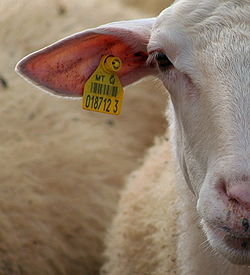
Some people just won't mind being chipped...
How does that phrase go?
Just like sheep...
... to the slaughter
edit on 6-5-2012 by pianopraze because: formating
reply to post by rebellender
Yes your right that is my opinion, I do have plenty of life under my belt, I am 36 years old . You also do not have to worry about me voting because I never will. You are very naive to think your vote actually counts when it comes to electing a president . It does not make a difference who you vote for the Gov. is going to make sure whomever they want in office will be.
Thats so cute you think your vote actually counts.
Yes your right that is my opinion, I do have plenty of life under my belt, I am 36 years old . You also do not have to worry about me voting because I never will. You are very naive to think your vote actually counts when it comes to electing a president . It does not make a difference who you vote for the Gov. is going to make sure whomever they want in office will be.
Thats so cute you think your vote actually counts.
Originally posted by apoc36
reply to post by beezzer
Your right they do not rank very high with me. Most humans are absolutely horrible and need to be controlled to a certain extent. We will never move on with evolution with our current state of things and the way we do things now. Its time to make a change, all humans to make a change for the better and if you do not want to change for the better then those humans are the ones that need to be forced to make those changes because basically they cannot logically think for themselves.
Well, you're certainly entitled to your opinion.
I just hope that folks like you stay in the minority.
(no offense)
new topics
-
Las Vegas UFO Spotting Teen Traumatized by Demon Creature in Backyard
Aliens and UFOs: 2 hours ago -
2024 Pigeon Forge Rod Run - On the Strip (Video made for you)
Automotive Discussion: 3 hours ago -
Gaza Terrorists Attack US Humanitarian Pier During Construction
Middle East Issues: 4 hours ago -
The functionality of boldening and italics is clunky and no post char limit warning?
ATS Freshman's Forum: 5 hours ago -
Meadows, Giuliani Among 11 Indicted in Arizona in Latest 2020 Election Subversion Case
Mainstream News: 5 hours ago -
Massachusetts Drag Queen Leads Young Kids in Free Palestine Chant
Social Issues and Civil Unrest: 6 hours ago -
Weinstein's conviction overturned
Mainstream News: 7 hours ago -
Supreme Court Oral Arguments 4.25.2024 - Are PRESIDENTS IMMUNE From Later Being Prosecuted.
Above Politics: 8 hours ago -
Krystalnacht on today's most elite Universities?
Social Issues and Civil Unrest: 8 hours ago -
Chris Christie Wishes Death Upon Trump and Ramaswamy
Politicians & People: 9 hours ago
top topics
-
Krystalnacht on today's most elite Universities?
Social Issues and Civil Unrest: 8 hours ago, 9 flags -
Supreme Court Oral Arguments 4.25.2024 - Are PRESIDENTS IMMUNE From Later Being Prosecuted.
Above Politics: 8 hours ago, 8 flags -
Weinstein's conviction overturned
Mainstream News: 7 hours ago, 7 flags -
University of Texas Instantly Shuts Down Anti Israel Protests
Education and Media: 11 hours ago, 6 flags -
Gaza Terrorists Attack US Humanitarian Pier During Construction
Middle East Issues: 4 hours ago, 5 flags -
Meadows, Giuliani Among 11 Indicted in Arizona in Latest 2020 Election Subversion Case
Mainstream News: 5 hours ago, 5 flags -
Massachusetts Drag Queen Leads Young Kids in Free Palestine Chant
Social Issues and Civil Unrest: 6 hours ago, 4 flags -
Las Vegas UFO Spotting Teen Traumatized by Demon Creature in Backyard
Aliens and UFOs: 2 hours ago, 3 flags -
Chris Christie Wishes Death Upon Trump and Ramaswamy
Politicians & People: 9 hours ago, 2 flags -
2024 Pigeon Forge Rod Run - On the Strip (Video made for you)
Automotive Discussion: 3 hours ago, 2 flags
active topics
-
Supreme Court Oral Arguments 4.25.2024 - Are PRESIDENTS IMMUNE From Later Being Prosecuted.
Above Politics • 77 • : MetalThunder -
The Acronym Game .. Pt.3
General Chit Chat • 7750 • : bally001 -
-@TH3WH17ERABB17- -Q- ---TIME TO SHOW THE WORLD--- -Part- --44--
Dissecting Disinformation • 681 • : MetalThunder -
Chris Christie Wishes Death Upon Trump and Ramaswamy
Politicians & People • 20 • : chr0naut -
Las Vegas UFO Spotting Teen Traumatized by Demon Creature in Backyard
Aliens and UFOs • 7 • : rickymouse -
Meadows, Giuliani Among 11 Indicted in Arizona in Latest 2020 Election Subversion Case
Mainstream News • 10 • : chr0naut -
University student disciplined after saying veganism is wrong and gender fluidity is stupid
Education and Media • 50 • : watchitburn -
VP's Secret Service agent brawls with other agents at Andrews
Mainstream News • 55 • : CarlLaFong -
Cats Used as Live Bait to Train Ferocious Pitbulls in Illegal NYC Dogfighting
Social Issues and Civil Unrest • 23 • : Ravenwatcher -
Is there a hole at the North Pole?
ATS Skunk Works • 40 • : Oldcarpy2