It looks like you're using an Ad Blocker.
Please white-list or disable AboveTopSecret.com in your ad-blocking tool.
Thank you.
Some features of ATS will be disabled while you continue to use an ad-blocker.

“If you’ve done nothing wrong you have nothing to worry about.”
page: 1share:
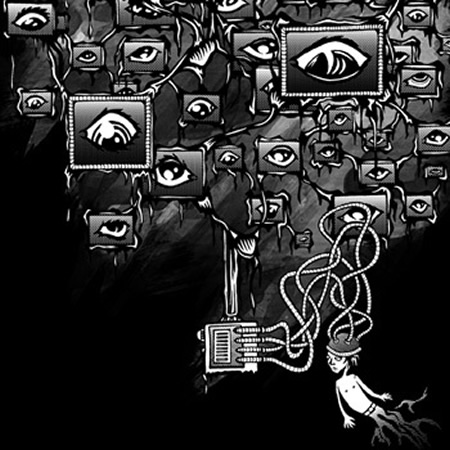
Like many ATSers, I have deep concerns about the emergence of surveillance technology and the threat to privacy posed by such technology, as well as mass phenomena like Facebook and intrusive searches by the police, the TSA, and others. Yet it seems a substantial number of people (on ATS and elsewhere) have no problem with such things, and even go out of their way to argue heatedly in their favor. The general line of such arguments usually boils down to: “If you’ve done nothing wrong you have nothing to worry about.”
In this thread, hopefully I will convince you that you do have something to worry about due to the erosion of privacy and civil liberties, on both the governmental and private-business fronts, even if you live the unblemished life of a saint.
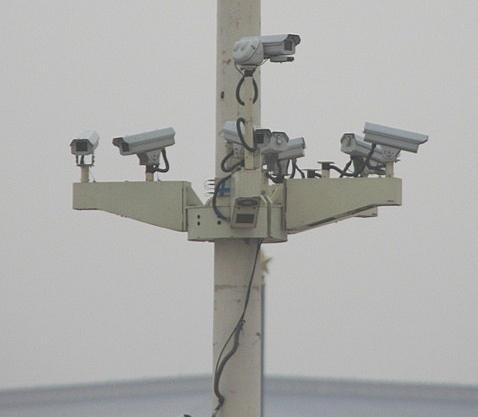
I believe there may be some cases where the “if you’ve done nothing wrong you have nothing to worry about” reasoning is justified. But in most cases, it is not. To be clear, in this thread I’m focusing on the following:
- Surveillance, through cameras and other means in public, cell phones, and online. This includes data-mining, databases that store your personal
information, and the like.
- Intrusive searches by officials such as the TSA in America, “alphabet agencies,” and over-zealous policemen. (I do NOT criticize the very
existence of these institutions, let it be known, and I have respect for the fine men and women who do their jobs they way they should.)
- The challenges to privacy presented by social-networking systems like Facebook, services that deal with vast amounts of info like Google, online
advertising protocols, data-mining for corporate reasons and advertising, and private-information-related issues.

The following is why I think that these phenomena should give even those who “have done nothing wrong” cause to worry. If you disagree, I ask that you at least read the list first before jumping to reply with something that is already covered. Thanks for your patience.
- ”You have nothing to worry about if you’ve done nothing wrong” sounds good on paper, but who defines what is “right” and what is
“wrong”? A look at history – any history – shows how open to debate these concepts really are, and how truly easy it is to do wrong when
trying with all your heart to do right.
- Even if you trust the people in power now (both government and business), who knows what will come later ? Once these privacy-eroding systems are
in place, they are very difficult to remove. You might trust the current government, or Google/Facebook as currently construed, but can you be so sure
you will trust the same forces in ten or twenty years? By then it will be too late to remove these systems without massive struggle. Again, look to
history – mankind’s track record is not encouraging and it shows us that good governance (both corporate and national) tends to be the exception
rather than the rule.
- Mistakes are often made, even by those with the best intentions. The system can grind up innocent people in all sorts of ways. The more power you
give to the system to do this, the more you increase the chance that mistakes will happen with increased frequency and severity.
- Malicious individuals exist within every organization. Even if you trust the government and big business as a whole, do you trust every individual
working for them that handles your private info? The potential for abuse, stalking, blackmail, harassment, and other bad stuff exists and is real.
- The “right to be forgotten:” We all do dumb things. I certainly have. But as they say, “the internet never forgets.” Information that
exists in “the cloud” is difficult if not impossible to erase. Facebook never forgets and deletion is difficult – not only deletion of your own
material, but material other people make about you. People who do something stupid online may be haunted by it for the rest of their life. We all
chuckle at Youtube clips of people doing dumb things, but should those people have to wear their mistakes around their necks like a millstone for the
rest of their life? A teenager making a stupid Youtube clip may find it hard to get a job ten or twenty years later. I say this is not fair.
- Humiliation comes with lack of privacy and embarrassing rituals that can take place in the name of security. When a TSA worker gropes your
genitals, forces you to strip, and tells you to bend over and cough, it is already a form of humiliation. We can observe similar behaviors used to
assert dominance and superiority in the pecking order in our fellow primates, as well as other mammals, suggesting something deep and possibly
hardwired into the human psyche.
- The right to present different faces to different people at different times: This is an issue specifically regarding Facebook, Google, and social
networks. Do you not act differently to your boss, your mother, your significant other, and your best buddy? Do you not show these people different
faces and different sides of yourself? Do you really want your boss to be able to access information meant for your drinking pals? Until now, humans
have enjoyed the flexibility to present themselves in different ways at different times. This flexibility is not “deceit;” on the contrary, it is
an ancient human tool for survival, and a kind of natural right. When you give it up, you are giving up power to the info-managers like Facebook, and
your life becomes like a poker game with transparent cards.
- The right to shape your own narrative by yourself: This is connected to the point above, but slightly different. When you talk to somebody or write
them a letter, you are telling your own story the way you want to. But when you surrender this function to Facebook, you are giving them the power to
“define you” in multiple ways. I’d like to do that for myself, not outsource it to Zuckerberg and friends with their "timeline" that makes my
whole life available at a glace to anyone, thank you very much.
- Don’t you simply want to be left alone sometimes? Not to be bothered by your boss, your “friends,” advertisers, or your government when you
relax in the evening in front of a roaring fire? I know I do, and it has nothing at all to do with doing anything that needs to be hidden. Think of
“stage fright.” We feel stage fright (or milder versions of uptight-ness) when we know we are being watched. We behave differently when the eye is
on us – no matter whose eye it is. It is psychologically stressful to have this feeling going all the time, twenty-four hours a day.
- “If you don’t like it don’t use it” – This is another criticism made when people complain about Facebook or technology like smartphones.
It is a fair point to make in many cases, but the truth is that when technology sets in, those that refuse to adapt get left behind. Often these tools
are required for any decent job out there. And already friends look at me funny when they learn I’m not on Facebook. Even if, like me, you
stubbornly refuse to use social networks, you can't control what other people who DO use them say and write about you. It’s easier to say “just
opt out” than it is to actually do it. Never mind the issue of what the government does with such tech and systems – something that we cannot opt
out of at all.
In an earlier era none of this would have had to be said at all. To me, it’s a sad comment on society that so many choose not to see what seems so obvious. If you agree with me, I encourage you to stand up against the “If you’ve done nothing wrong you have nothing to worry about” attitude wherever it manifests, both on ATS and in the wider world.
Thanks for reading and consdering.

edit on 4/10/2012 by silent thunder because: (no reason given)
It doesn't matter if you are guilty if no one (not even you) knows where you went
and it would take an act of congress to find you, IF they even knew who you were.
and it would take an act of congress to find you, IF they even knew who you were.
Mistakes are often made, even by those with the best intention. The system can grind up innocent people in all sorts of ways. The more power you give to the system to do this, the more you increase the chance that mistakes will happen with increased frequency and severity.
I think this is the most relevant point out of many relevant points.
edit on 10-4-2012 by Nite_wing because: (no reason given)
I agree with what you've said and i'd like to comment on this new technology that scans people and whoever is nervous or anxious etc. are deemed
suspicious. They used it at the Superbowl. But what if being constantly watched is making them nervous and now if your nervous in public that deems
you suspicious.
The argument that if you've done nothing wrong you've got nothing to worry about is the worst argument for eroding our civil liberties I've heard..
it always disgusts me ..
Originally posted by MrSandman
I agree with what you've said and i'd like to comment on this new technology that scans people and whoever is nervous or anxious etc. are deemed suspicious. They used it at the Superbowl. But what if being constantly watched is making them nervous and now if your nervous in public that deems you suspicious.
You're right.. many people get anxious with law enforcement or security even around because you never know if you've been mistaken for someone else, if they are looking at someone standing next to you, if they are just giving a brooding look or something else... heck I always get nervous when a cop is driving by me because I think maybe I'm going to forget some mundane traffic rule, my speedometer is inaccurate or I have a signal out.. and who wants to deal with that?
Originally posted by miniatus
The argument that if you've done nothing wrong you've got nothing to worry about is the worst argument for eroding our civil liberties I've heard.. it always disgusts me ..
Well the thing about it now is the way that have structured the laws everybody is guilty of something. Heck, that aside you don't even have to be guilty, they just have to think you might be guilty sooner or later.
reply to post by silent thunder
And "mistakes" are often made intentionally for the convenience of the true offender !!
Malicious individuals can and will manipulate for the advantage of any cover up or agenda.
Remember it's always for your protection as well as ours
Mistakes are often made, even by those with the best intentions. The system can grind up innocent people in all sorts of ways. The more power you give to the system to do this, the more you increase the chance that mistakes will happen with increased frequency and severity.
Malicious individuals exist within every organization. Even if you trust the government and big business as a whole, do you trust every individual working for them that handles your private info? The potential for abuse, stalking, blackmail, harassment, and other bad stuff exists and is real.
And "mistakes" are often made intentionally for the convenience of the true offender !!
Malicious individuals can and will manipulate for the advantage of any cover up or agenda.
Remember it's always for your protection as well as ours
You've covered all the salient points, so there's not much to say except that I agree with you.
I was a kid in the '50s (I can remember looking forward to new episodes of "Leave it to Beaver," for crying out loud!). The question of one's right to privacy hardly even existed then. By which I mean that no one questioned another's wish to be left alone. If someone were a known "hermit," they were left to their own business unviolated. Now the government pokes their nose into every aspect of our existence; the concept of "reasonable expectation of privacy" is as dead as Eisenhower.
We can resist--those of us who care to. But I see fewer and fewer who even care to; particularly the young generations. They may live to regret their indescreet tweets and their Facebook faux pas. But it'll be too late....
I was a kid in the '50s (I can remember looking forward to new episodes of "Leave it to Beaver," for crying out loud!). The question of one's right to privacy hardly even existed then. By which I mean that no one questioned another's wish to be left alone. If someone were a known "hermit," they were left to their own business unviolated. Now the government pokes their nose into every aspect of our existence; the concept of "reasonable expectation of privacy" is as dead as Eisenhower.
We can resist--those of us who care to. But I see fewer and fewer who even care to; particularly the young generations. They may live to regret their indescreet tweets and their Facebook faux pas. But it'll be too late....
another reason it doesn't matter if you are not guilty
if the cop arresting you is
if the cop arresting you is
Do you know that no where in the constitution does it say that you have a right to privacy?
reply to post by nixie_nox
So what?
This doesn't have to be a constitutional issue, and not everyone here is an American. The issue effects eveyone on planet earth, not only Americans. And even for us Americans, there are many issues and problems that need to be addressed by society that have nothing whatsoever to do with the constitution.
The constitution doesn't say anything about drunk driving, to pick one example, but its still something illegal and generally recognized as bad for society.
.
So what?
This doesn't have to be a constitutional issue, and not everyone here is an American. The issue effects eveyone on planet earth, not only Americans. And even for us Americans, there are many issues and problems that need to be addressed by society that have nothing whatsoever to do with the constitution.
The constitution doesn't say anything about drunk driving, to pick one example, but its still something illegal and generally recognized as bad for society.
.
edit on 4/10/2012 by silent thunder because: (no reason given)
Excellent thread OP and agree completely. One of things I think is most ironic about the people that usually utter that ignorant statement; “if
you’ve done nothing wrong you have nothing to worry about” is that they are usually good old boy republicans, who are christian, and usually
believe in revelation and that one day some kind of antichrist figure will rise up and start oppressing christians. Which in itself is one of the most
wild things about it to me, they seem like they should be the first ones speaking out against such systems rather then supporting them. Seems like
such an ideological disconnect.
And no I don't think all Christians believe in that statement or all that utter it are christian, just saying most of the people I have heard use that argument are usually republican Christians.
Anyway excellent thread and flag for you.
Really, what about the fourth amendment? I would say that pretty much is an amendment protecting the safety security and privacy of you, your home and your possessions.....Have you even read the constitution?
Sounds like the founding fathers were saying if someone wants to look in your bags, clothing and house; thus violating your privacy, they better have probable cause and a warrant.
And actually they did that because the king and his officers used to routinely harass colonists, entering there homes and looking through their stuff and violating their privacy any time they wanted.
**Addition**
Furthermore, it's a technological issue and I would say that cameras and other new devices are an extension of the eyes and hands of the government and if the eyes and hands of the government are bound by probable cause and a warrant, then so should their technological eyes and hands be bound in like fashion. I would say that if the founding fathers foresaw the current technology, I wager they would probably agree with me.
And no I don't think all Christians believe in that statement or all that utter it are christian, just saying most of the people I have heard use that argument are usually republican Christians.
Anyway excellent thread and flag for you.
reply posted on 10-4-2012 @ 09:12 PM by nixie_nox
Do you know that no where in the constitution does it say that you have a right to privacy?
Really, what about the fourth amendment? I would say that pretty much is an amendment protecting the safety security and privacy of you, your home and your possessions.....Have you even read the constitution?
The Fourth Amendment to the United States Constitution provides that: The right of the people to be secure in their persons, houses, papers, and effects, against unreasonable searches and seizures, shall not be violated, and Warrants shall not be issued, but upon probable cause, supported by Oath or affirmation, and particularly describing the place to be searched, and the persons or things to be seized.
Sounds like the founding fathers were saying if someone wants to look in your bags, clothing and house; thus violating your privacy, they better have probable cause and a warrant.
And actually they did that because the king and his officers used to routinely harass colonists, entering there homes and looking through their stuff and violating their privacy any time they wanted.
**Addition**
Furthermore, it's a technological issue and I would say that cameras and other new devices are an extension of the eyes and hands of the government and if the eyes and hands of the government are bound by probable cause and a warrant, then so should their technological eyes and hands be bound in like fashion. I would say that if the founding fathers foresaw the current technology, I wager they would probably agree with me.
edit on 10-4-2012 by prisoneronashipoffools because: quote fix
edit on 10-4-2012 by prisoneronashipoffools because:
additop
I'll make two completely different points on this topic. With regard to the collection of information on the basic level the problem with this is
context. In our court system one is guilty in until they prove the are innocent. In a criminal trial, if one gets there (most plea bargain which is
the true design) a DA gets to take whatever "evidence" they feel fits the case they wish to make and choose the way it is presented. They put the
information in their own context, not the context of the entirety of one's experience. The DA then gets to go first. First impression is EVERYTHING
and once the jury has imprinted on the official story, the accused must then go back and wipe out the imprint and "convince" a jury that the truth
is different then the context laid out by the DA. All people are guilty of something, at all times, in fact, those reading this are probably
committing dozens if not hundreds of crimes right now, but in context is doesn't add up to much: out of context I'm sure we could make the case for
many "innocent" people to get the death penalty.
Context: Say I decided I wanted to show my son how dangerous symbols can be when misinterpreted. So I draw a swastika on several pieces of paper, but in the original form which is the reverse of the Nazi usage first, then the Nazi version. I show him the before and the after and toss the drawing in a drawer. I also recently realized I had glaucoma, I know what it is, my father had it, and wasn't in need of a doctor to tell me what it is, so I got a small prescription for some pot to help with the pressure. Lastly, there have been several violent crimes in the area, for my son's safety and my own, I decided to buy a gun for protection. All of that is reasonable. EXCEPT, in court. I am a neo-nazi, gun nut whose on drugs around his son. Context is everything and collecting things to make a new story out of a buffet of parts chosen from one's life is the problem here. People, institutions can't be trusted with even the most basic of information, and the populace at large are, by and large, judgmental to the point of being foolish - and too easily manipulated to be trusted. Even this post could be taken out of context in a trial by a DA by shouting "he doesn't even have a son!" I am sure the story I told made some cringe and for no reason at all as it is just an illustration.
Now, the second point. The real reason for all of the information collection is NOT to put people in jail. They have no problem with this already, the US is the best at incarcerating people in the world and there are few places that need more help with this issue. It is not to sell you soap either, as there are a handful of companies that sell most of the products we buy and those products are simply different labels on the same stuff, so a leg up for most companies is marginal at best and hardly worth the effort in the long run. Though companies are being told to collect and to perpetuate the idea that this is the reason.
The actual reason for collection is your consciousness. Those in charge, the hidden hand, the all seeing eyes are taking this information and tracking the consciousness of the population. They are tracking the collective and the individual in order to change what they do to keep the masses enslaved. The process is elaborate and incomprehensible to all but them. For them this is about keeping us here, trapped, and unaware by creating distractions that will guide our consciousness expression to a place they are comfortable - a cat and mouse game if you will.
As you can see, on the whole the collection is bad no matter which way you look at it.
Context: Say I decided I wanted to show my son how dangerous symbols can be when misinterpreted. So I draw a swastika on several pieces of paper, but in the original form which is the reverse of the Nazi usage first, then the Nazi version. I show him the before and the after and toss the drawing in a drawer. I also recently realized I had glaucoma, I know what it is, my father had it, and wasn't in need of a doctor to tell me what it is, so I got a small prescription for some pot to help with the pressure. Lastly, there have been several violent crimes in the area, for my son's safety and my own, I decided to buy a gun for protection. All of that is reasonable. EXCEPT, in court. I am a neo-nazi, gun nut whose on drugs around his son. Context is everything and collecting things to make a new story out of a buffet of parts chosen from one's life is the problem here. People, institutions can't be trusted with even the most basic of information, and the populace at large are, by and large, judgmental to the point of being foolish - and too easily manipulated to be trusted. Even this post could be taken out of context in a trial by a DA by shouting "he doesn't even have a son!" I am sure the story I told made some cringe and for no reason at all as it is just an illustration.
Now, the second point. The real reason for all of the information collection is NOT to put people in jail. They have no problem with this already, the US is the best at incarcerating people in the world and there are few places that need more help with this issue. It is not to sell you soap either, as there are a handful of companies that sell most of the products we buy and those products are simply different labels on the same stuff, so a leg up for most companies is marginal at best and hardly worth the effort in the long run. Though companies are being told to collect and to perpetuate the idea that this is the reason.
The actual reason for collection is your consciousness. Those in charge, the hidden hand, the all seeing eyes are taking this information and tracking the consciousness of the population. They are tracking the collective and the individual in order to change what they do to keep the masses enslaved. The process is elaborate and incomprehensible to all but them. For them this is about keeping us here, trapped, and unaware by creating distractions that will guide our consciousness expression to a place they are comfortable - a cat and mouse game if you will.
As you can see, on the whole the collection is bad no matter which way you look at it.
Great Post OP.
I would like to add that not only are most people extremely naive they also forget that most of those involved in surveillance are convicted criminals, pedophiles, perverts, Psychopaths.
Having said ALL this I know people are not going to heed the warning from your post.
They just don't get the fact that while there may be criminals in jail there are just as many among TPTB running the planet.
I would like to add that not only are most people extremely naive they also forget that most of those involved in surveillance are convicted criminals, pedophiles, perverts, Psychopaths.
Having said ALL this I know people are not going to heed the warning from your post.
They just don't get the fact that while there may be criminals in jail there are just as many among TPTB running the planet.
Originally posted by miniatus
The argument that if you've done nothing wrong you've got nothing to worry about is the worst argument for eroding our civil liberties I've heard.. it always disgusts me ..
This statement should be embalmed somewhere for all of us to see! Right next to, "Never talk to the cops!" Words to live by my friend! Those that would rob us of our freedoms are the same who want us believing notions like the one you mentioned above.
Originally posted by nixie_nox
Do you know that no where in the constitution does it say that you have a right to privacy?
In cases like this it's well to keep in mind Article IX of the Bill of Rights:
"The enumeration in the Constitution, of certain rights, shall not be construed to deny or disparage others retained by the people."
An important point to remember is that the Constitution is not a "prescription" of rights, nor a "grant" of rights. It enumerates the natural rights of human beings, and Article IX is a reminder to those who would oppress us that our rights are not limited to those contained in that document, and that "The People" are not to be denied rights they may see fit to claim later, simply because they are not contained therein....
edit on
4/10/2012 by Ex_CT2 because: (no reason given)
Originally posted by silent thunder
reply to post by nixie_nox
So what?
This doesn't have to be a constitutional issue, and not everyone here is an American. The issue effects eveyone on planet earth, not only Americans. And even for us Americans, there are many issues and problems that need to be addressed by society that have nothing whatsoever to do with the constitution.
The constitution doesn't say anything about drunk driving, to pick one example, but its still something illegal and generally recognized as bad for society.
.edit on 4/10/2012 by silent thunder because: (no reason given)
Right. it's not covered in the Constitution of the US. Least we not forget;
The U. S. Constitution contains no express right to privacy. The Bill of Rights, however, reflects the concern of James Madison and other framers for protecting specific aspects of privacy,
The Bill of Rights
Piracy of;
The 1st Amendment: of belief
The 3rd Amendment: your home against demands to be used to house soldiers
The 4th Amendment: the person and possessions as against unreasonable searches
The 5th Amendment: against self-incrimination/ protection of personal information
As well as;
The Ninth Amendment : states"enumeration of certain rights" "shall not be construed to deny or disparage other rights retained by the people."
The meaning of the Ninth Amendment is elusive, but some persons (including Justice Goldberg in his Griswold concurrence) have interpreted the Ninth Amendment as justification for broadly reading the Bill of Rights to protect privacy in ways not specifically provided in the first eight amendments.
Source
Originally posted by nixie_nox
Do you know that no where in the constitution does it say that you have a right to privacy?
Look up the Fourth Amendment. See what you find.
The simple fact is the governments/people in control don't trust any of the general public. Doesn't matter if you have or haven't done anything
wrong. It's all just words written on some document to prove to the public that 'look we've written it into law, if you've done nothing wrong you
don't need to worry, we got your back, we're protecting you from the terrorists, trust us'. In actual fact the governments and security forces of
various countries are INCREASING their monitoring abilities. They don't care what the law says! Their above that! They really want watch you!? They
really want to get you!? THEY WILL NO MATTER WHAT THE LAW SAYS! You can't fight control and command structures like that.
But...
You can make their lives difficult. For instance I have built into 2 of my hoodies and one rain jacket 6 small high powered infrared LED's at the top of the hood and a small battery pack and switch in the back of the hood. The effect is on cctv the infra red LED's dazzle the camera completely obscuring your face. Because they are infrared they don't even look switched on to normal people looking at you and they are very small so not really noticeable. Why do I do this? Call it 'civil disobedience' I have nothing to hide but I do object to my image being collected on hundreds of camera's every day. You can build the same into any hat or headgear.
But...
You can make their lives difficult. For instance I have built into 2 of my hoodies and one rain jacket 6 small high powered infrared LED's at the top of the hood and a small battery pack and switch in the back of the hood. The effect is on cctv the infra red LED's dazzle the camera completely obscuring your face. Because they are infrared they don't even look switched on to normal people looking at you and they are very small so not really noticeable. Why do I do this? Call it 'civil disobedience' I have nothing to hide but I do object to my image being collected on hundreds of camera's every day. You can build the same into any hat or headgear.
new topics
-
George Knapp AMA on DI
Area 51 and other Facilities: 5 hours ago -
Not Aliens but a Nazi Occult Inspired and then Science Rendered Design.
Aliens and UFOs: 5 hours ago -
Louisiana Lawmakers Seek to Limit Public Access to Government Records
Political Issues: 7 hours ago -
The Tories may be wiped out after the Election - Serves them Right
Regional Politics: 9 hours ago -
So I saw about 30 UFOs in formation last night.
Aliens and UFOs: 11 hours ago
top topics
-
BREAKING: O’Keefe Media Uncovers who is really running the White House
US Political Madness: 12 hours ago, 24 flags -
George Knapp AMA on DI
Area 51 and other Facilities: 5 hours ago, 19 flags -
Biden--My Uncle Was Eaten By Cannibals
US Political Madness: 13 hours ago, 18 flags -
Louisiana Lawmakers Seek to Limit Public Access to Government Records
Political Issues: 7 hours ago, 7 flags -
"We're All Hamas" Heard at Columbia University Protests
Social Issues and Civil Unrest: 13 hours ago, 7 flags -
Russian intelligence officer: explosions at defense factories in the USA and Wales may be sabotage
Weaponry: 17 hours ago, 6 flags -
So I saw about 30 UFOs in formation last night.
Aliens and UFOs: 11 hours ago, 5 flags -
The Tories may be wiped out after the Election - Serves them Right
Regional Politics: 9 hours ago, 3 flags -
Not Aliens but a Nazi Occult Inspired and then Science Rendered Design.
Aliens and UFOs: 5 hours ago, 3 flags -
Do we live in a simulation similar to The Matrix 1999?
ATS Skunk Works: 12 hours ago, 3 flags
active topics
-
"We're All Hamas" Heard at Columbia University Protests
Social Issues and Civil Unrest • 127 • : marg6043 -
Two Serious Crimes Committed by President JOE BIDEN that are Easy to Impeach Him For.
US Political Madness • 16 • : WeMustCare -
911 emergency lines are DOWN across multiple states
Breaking Alternative News • 6 • : nugget1 -
BREAKING: O’Keefe Media Uncovers who is really running the White House
US Political Madness • 12 • : Kaiju666 -
Biden--My Uncle Was Eaten By Cannibals
US Political Madness • 46 • : CarlLaFong -
Do we live in a simulation similar to The Matrix 1999?
ATS Skunk Works • 21 • : ByeByeAmericanPie -
Not Aliens but a Nazi Occult Inspired and then Science Rendered Design.
Aliens and UFOs • 8 • : theatreboy -
I Guess Cloud Seeding Works
Fragile Earth • 25 • : Degradation33 -
-@TH3WH17ERABB17- -Q- ---TIME TO SHOW THE WORLD--- -Part- --44--
Dissecting Disinformation • 534 • : cherokeetroy -
The US Supreme Court Appears to Side With the January 6th 2021 Capitol Protestors.
Political Conspiracies • 48 • : hoobah