It looks like you're using an Ad Blocker.
Please white-list or disable AboveTopSecret.com in your ad-blocking tool.
Thank you.
Some features of ATS will be disabled while you continue to use an ad-blocker.

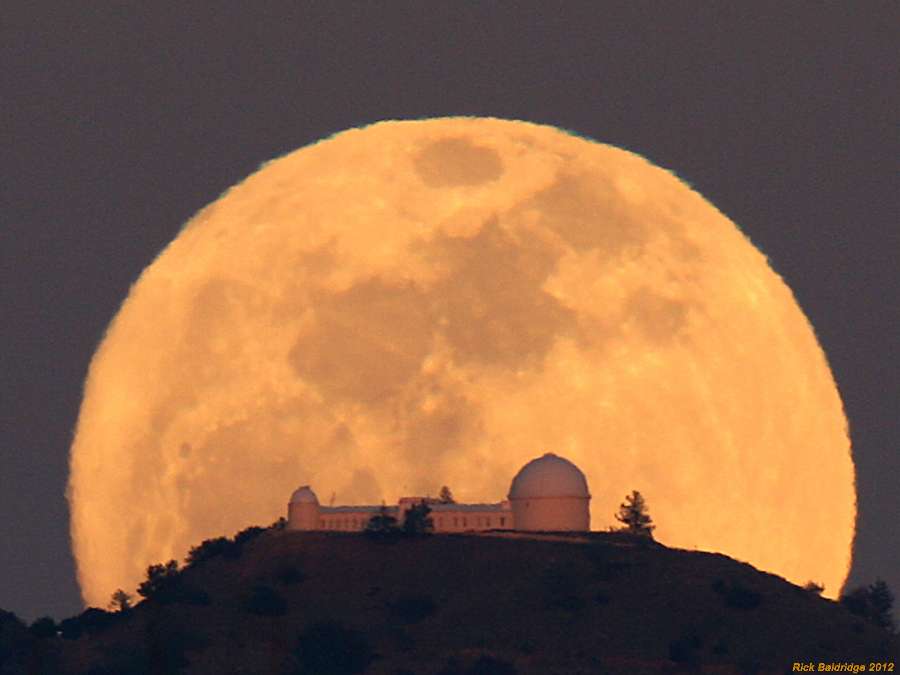
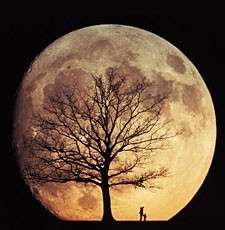
Moon Illusion: Full Moon rose behind Mount Hamilton, east of San Jose, California
page: 1share:
As viewed from a well chosen location at sunset, the lunar disk frames historic Lick Observatory perched on the mountain's 4,200 foot summit. Both observatory and Moon echo the warm color of sunlight (moonlight is reflected sunlight) filtered by a long path through the atmosphere. Substantial atmospheric refraction contributes the Moon's ragged, green rim. Of course, the March Full Moon is also known as the Full Worm Moon. In the telescopic photo, Lick's 40 inch Nickel Telescope dome is on the left. The large dome on the right houses Lick's Great 36 inch Refractor.
APOD
Now it raise up an interesting question: "Why the moon is bigger at the horizon?"
The Moon illusion is an optical illusion in which the Moon appears larger near the horizon than it does while higher up in the sky. This optical illusion also occurs with the sun and star constellations. It has been known since ancient times, and recorded by numerous different cultures. The explanation of this illusion is still debated.
A popular belief, stretching back at least to Aristotle in the 4th century B.C., holds that the Moon appears larger near the horizon due to a real magnification effect caused by the Earth's atmosphere. This is not true: although the atmosphere does change the perceived color of the Moon, it does not magnify or enlarge it.
In fact, the Moon appears about 1.5% smaller when it is near the horizon than when it is high in the sky, because it is farther away by up to one Earth radius and also because of atmospheric refraction, which makes the image of the Moon slightly smaller in the vertical axis
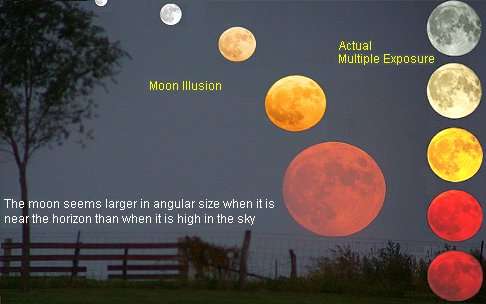
A simple way of demonstrating that the effect is an illusion is to hold a small object (say, 1/4 inch wide) at arm's length (25 inches) with one eye closed, positioning it next to the seemingly large Moon. When the Moon is higher in the sky, positioning the same object near the Moon reveals that there is no change in size.
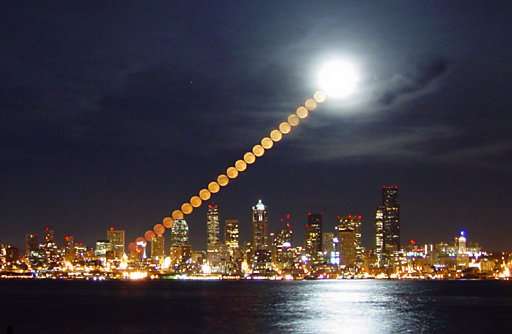
A time-lapse sequence of the moon rising over Seattle. To the camera, the moon appears to be the same size no matter what its location on the sky
Possible explanations:
1- Ponzo Illusion:
Some researchers believe that the Moon Illusion is Ponzo's Illusion, with trees and houses playing the role of Ponzo's converging lines. Foreground objects trick your brain into thinking the moon is bigger than it really is.
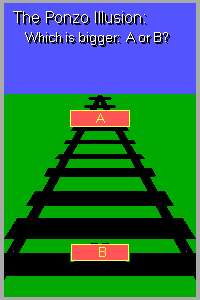
How does this explain the moon illusion? Well, in our minds we see the sky as a flattened dome. It appears closer over our heads than near the horizon. This image is reinforced by objects such as clouds, birds and airplanes which move across the sky at a uniform height and are indeed closer when they are overhead and farther away when at the horizon.
The moon, of course, is beyond the sky and so far away that, unlike clouds, planes and birds, it does not really change size based on being overhead or near the horizon. Still, our minds tend to think of the moon as a flattened disc stuck on the dome of the sky. That's how the Ponzo effect comes into play. Our mind will reach the conclusion that because the moon is near the horizon it must be far away, but since its size doesn't seem to decrease, it must be much larger than it is when it is overhead (when we think of it as being closer), and we see it that way.
But there's a problem: Airline pilots flying at very high altitudes sometimes experience the Moon Illusion without any objects in the foreground. What tricks their eyes?
2- "Flattened sky" model
Maybe it's the shape of the sky. Humans perceive the sky as a flattened dome, with the zenith nearby and the horizon far away. It makes sense; birds flying overhead are closer than birds on the horizon. When the moon is near the horizon, your brain, trained by watching birds (and clouds and airplanes), miscalculates the moon's true distance and size.
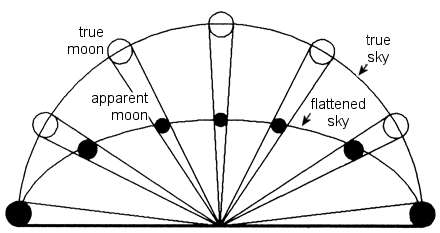
3- Ebbinghaus illusion
Historically, the best-known alternative to the "apparent distance" theory has been a "relative size" theory. This states that the perceived size of an object depends not only on its retinal size, but also on the size of objects in its immediate visual environment. In the case of the Moon illusion, objects in the vicinity of the horizon moon (that is, objects on or near the horizon) exhibit a fine detail that makes the Moon appear larger, while the zenith moon is surrounded by large expanses of empty sky that make it appear smaller

The effect is illustrated by the classic Ebbinghaus illusion shown above. The lower central circle surrounded by small circles might represent the horizon moon accompanied by objects of smaller visual extent, while the upper central circle represents the zenith moon surrounded by expanses of sky of larger visual extent. Although both central circles are actually the same size, many people think the lower one looks larger.
4- The Angular Size Contrast Theory
The "size" of an object in our view can be measured either as angular size (the angle that it subtends [is in opposition to] at the eye, corresponding to the proportion of the field of vision that it occupies) or physical size (its real size measured in, say, metres).
As far as human perception is concerned, these two concepts are quite distinct. For example, if two small, identical, and familiar objects are placed at distances of five and ten metres respectively, then the more distant object subtends approximately half the angle of the nearer object, but we do not normally perceive that it is half the size. Conversely, if the more distant object did subtend the same angle as the nearer object then we would normally perceive it to be twice as big.
A central question pertaining to the Moon illusion, therefore, is whether the horizon moon appears larger because its perceived angular size seems greater, or because its perceived physical size seems greater, or some combination of both. There is currently no firm consensus on this point.
-------------------------------------------------------------------------------
Now, according to Don McCready, Professor Emeritus at the Psychology Department, University of Wisconsin-Whitewater that wrote in 2004 the "The moon illusion explained, none of the above theories are able to fully explain the whole phenomenon.
The explanation is based on a pair of illusions known as oculomotor macropsia and oculomotor micropsia. Oculomotor macropsia causes objects to appear to have a larger angular size when we perceive them to be far away based on distance cues. Oculomotor micropsia makes objects seem to have a smaller angular size when they are close to us based on distance clues.
The moon overhead gives us few cues to its distance, so our eyes assume the object is a distance of one or two meters (even though we intellectually know it is very far away) and oculomotor micropsia sets in making it look smaller than we would normally perceive it. When the moon is at the horizon, objects on the horizon such as buildings and trees give us distance clues that the moon is very far away. This causes oculomotor macropsia and we perceive it as being larger than it would normally appear.
Why do oculomotor micropsia and macropsia exist? Apparently to make it easier and faster for us to turn our heads and find an object close to our faces. Because our eyes are on the front of our heads and our heads pivot near the back of our skull, there can be quite a difference between the visual angle we see an object to the left or right and the actual angle we need to turn our necks to put it square in front of our eyes. The closer the object, the bigger the difference. Micropsia helps us instinctively make the right amount of turn when it is important to find an object quickly because it is close and might be a threat to us. Because micropsia exists for close objects, macropsia, the opposite, occurs for far objects. The misperception of macropsia, seeing objects too large, is acceptable for far objects because they do not present an immediate threat to us and we can take our time turning our necks to find them.
Sources:
- Wikipedia: the Moon Illusion
- NASA Science News: Summer Moon Illusion
- Experiment in Perception: The Ponzo Illusion and the Moon.
- Finally! Why the Moon Looks Big at the Horizon and Smaller When Higher Up
edit on 10-3-2012 by elevenaugust because: (no reason given)
how is it that you can photograph the moon illusion yet on a timelapse video it shows no change in size.
reply to post by Dinoman
Yes and how is it that the illusion appears on a photo if it is an illusion?
Very interesting OP, I never really thought about this phenomenon.
The fact that there is no satisfactory explanation makes it extra weird.
Yes and how is it that the illusion appears on a photo if it is an illusion?
Very interesting OP, I never really thought about this phenomenon.
The fact that there is no satisfactory explanation makes it extra weird.
Thanks wasn't aware there was so many theories. Seems strange that our indisputable science has not solved this yet.
Peace
Peace
reply to post by Dinoman
Those photographs are taken with a zoom lens. If he had taken the shot with a normal lens, it would have looked small like the time-lapse.
Those photographs are taken with a zoom lens. If he had taken the shot with a normal lens, it would have looked small like the time-lapse.
reply to post by nobody you know
That´s what I was thinking, so I don´t know why these pics are included in this thread, since the big size of the moon in those pics is the result of the lens, and not the moon illusion.
OP?
That´s what I was thinking, so I don´t know why these pics are included in this thread, since the big size of the moon in those pics is the result of the lens, and not the moon illusion.
OP?
Originally posted by bastardo
reply to post by nobody you know
That´s what I was thinking, so I don´t know why these pics are included in this thread, since the big size of the moon in those pics is the result of the lens, and not the moon illusion.
OP?
Hello!
Well, that just for trying to illustrate the "illusion" that, by definition, can't be captured in photos.
Not fully accurate, I concede it, but nonetheless beautiful, don't you think so?
Great OP. Very interesting to read. I remember about 12 years ago, my mother and I experienced the moon illusion. It was definitely fun to watch.
There is an interesting trick you can do with this moon illusion also..
Say there is a moon that is bigger than should be in the sky.. You can bend over and look between your legs upside down at the moon and it will look normal size.. Supposedly it is because our brains don't recognize the moon in the upside down way so it makes it look normal sized to us..
I have tried this a few times and it seems to work without fail.. Pretty interesting because when you come back up and look at the moon its big again...
Say there is a moon that is bigger than should be in the sky.. You can bend over and look between your legs upside down at the moon and it will look normal size.. Supposedly it is because our brains don't recognize the moon in the upside down way so it makes it look normal sized to us..
I have tried this a few times and it seems to work without fail.. Pretty interesting because when you come back up and look at the moon its big again...
Forgot to add that this illusion works with the setting or rising sun as well....
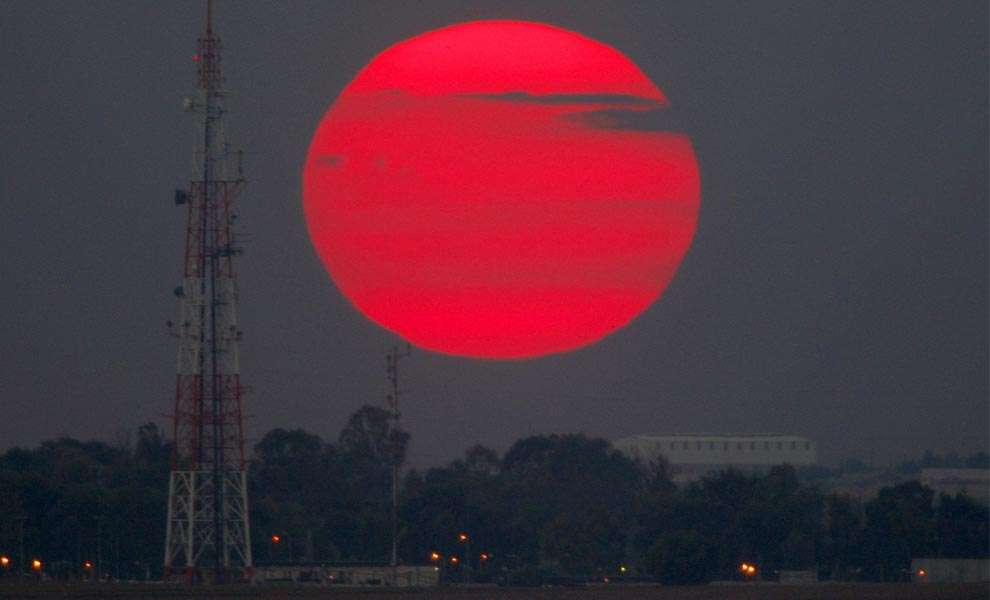
The sun sets on the Israel-Gaza border January 4, 2009. (REUTERS/Yannis Behrakis)
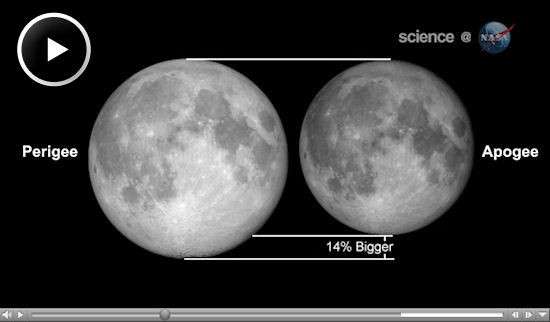
And, to be the most possible accurate, in fact, there's a possibility that the moon could be bigger, it's when it is at its perigee (14% bigger than at its apogee)
The sun sets on the Israel-Gaza border January 4, 2009. (REUTERS/Yannis Behrakis)
And, to be the most possible accurate, in fact, there's a possibility that the moon could be bigger, it's when it is at its perigee (14% bigger than at its apogee)
reply to post by elevenaugust
Yes definately cool pics, but a little confusing in the context of the thread.
Yes definately cool pics, but a little confusing in the context of the thread.
Upon seeing the first image, my only word was WOW... That is a really wonderful picture. I've seen the moon on the horizon only a few times, and
each time it's just amazing and eerie.
Star for you!
Star for you!
I've always wondered how this effect happened and always wanted to see it myself. lol Never knew it was disputed topic!
Although I have a hard time imagining it would be a lens effect... Although I don't know enough about cameras.
Unless this is only observable with a lens. We've been observing the moon for EVER and we still don't KNOW how this happens??
Str and flg.
Although I have a hard time imagining it would be a lens effect... Although I don't know enough about cameras.
Unless this is only observable with a lens. We've been observing the moon for EVER and we still don't KNOW how this happens??
Str and flg.
time ago, i have a dream, the moon falling to the earth, and crushing us, when i saw the first picture i inmediatly remember the dream, that brings
fear!
for those who likes watching the moon and the sky at night, try to buy a telescope, with some zooms, you can see the moon perfectly!
Thanks for the info!
for those who likes watching the moon and the sky at night, try to buy a telescope, with some zooms, you can see the moon perfectly!
Thanks for the info!
reply to post by elevenaugust
Did you happen to see the moon around 3 or 4 last night
it seemed rather low in the southern horizon then at 1 or 2 am
But that may just be the angle
Also there where some stars in Orion that I don't remember seeing before or at least not that clearly ever their where a number of bright objects that lack the twinkle of a star but where not the major planets which a particular luminous as of late I know mars is close and Jupiter look very bright but being right by Venus which is as radiant as any evening star I have see even the sunsets seem to glow more then springs passed
as if there where a city over the hills to the west of Tino and Saratoga
but that could be due to the extra water staying in the atomsphere hence no or little rain
And no nice green hills this year.
Did you happen to see the moon around 3 or 4 last night
it seemed rather low in the southern horizon then at 1 or 2 am
But that may just be the angle
Also there where some stars in Orion that I don't remember seeing before or at least not that clearly ever their where a number of bright objects that lack the twinkle of a star but where not the major planets which a particular luminous as of late I know mars is close and Jupiter look very bright but being right by Venus which is as radiant as any evening star I have see even the sunsets seem to glow more then springs passed
as if there where a city over the hills to the west of Tino and Saratoga
but that could be due to the extra water staying in the atomsphere hence no or little rain
And no nice green hills this year.
reply to post by elevenaugust
Amazing thread!
The time lapse clearly shows it's in our heads, I think. We can see each moon, giving our brain a relative frame of reference, therefore it appears the same size at horizon and zenith.
When viewing only one moon in a picture, we only have the same frame of reference, in regards to the relative size between the earth and moon, as we always have in real life.
Maybe.
Amazing thread!
The time lapse clearly shows it's in our heads, I think. We can see each moon, giving our brain a relative frame of reference, therefore it appears the same size at horizon and zenith.
When viewing only one moon in a picture, we only have the same frame of reference, in regards to the relative size between the earth and moon, as we always have in real life.
Maybe.
new topics
-
Trump To Hold Dinner with President of Poland At Trump Tower Tonight
2024 Elections: 16 minutes ago -
A family from Kansas with six children moved to the Moscow region
Other Current Events: 3 hours ago -
Revolution in advertising: the Russians launched a unique satellite
Science & Technology: 5 hours ago -
Echo & The Bunnymen - The Killing Moon!
Music: 8 hours ago -
I Guess Cloud Seeding Works
Fragile Earth: 10 hours ago -
Canadian Forces bow out and loose interest in UFO’s
Aliens and UFOs: 11 hours ago
top topics
-
The US Supreme Court Appears to Side With the January 6th 2021 Capitol Protestors.
Political Conspiracies: 14 hours ago, 21 flags -
That which the "news" never talks about; Truth about election fraud
Mainstream News: 15 hours ago, 15 flags -
I Guess Cloud Seeding Works
Fragile Earth: 10 hours ago, 10 flags -
Biden doesnt want the votes of "Death to America" chanters
US Political Madness: 15 hours ago, 9 flags -
Canadian Forces bow out and loose interest in UFO’s
Aliens and UFOs: 11 hours ago, 6 flags -
Revolution in advertising: the Russians launched a unique satellite
Science & Technology: 5 hours ago, 3 flags -
A family from Kansas with six children moved to the Moscow region
Other Current Events: 3 hours ago, 2 flags -
Echo & The Bunnymen - The Killing Moon!
Music: 8 hours ago, 1 flags -
Horizon Post office scandal
Regional Politics: 16 hours ago, 1 flags -
Trump To Hold Dinner with President of Poland At Trump Tower Tonight
2024 Elections: 16 minutes ago, 0 flags
active topics
-
It has begun... Iran begins attack on Israel, launches tons of drones towards the country
World War Three • 814 • : YourFaceAgain -
Biden doesnt want the votes of "Death to America" chanters
US Political Madness • 14 • : JAY1980 -
Abortions in first 12 weeks should be legalised in Germany, commission says
Medical Issues & Conspiracies • 22 • : Consvoli -
Running Through Idiot Protestors Who Block The Road
Rant • 83 • : chiefsmom -
A family from Kansas with six children moved to the Moscow region
Other Current Events • 26 • : Kurokage -
Echo & The Bunnymen - The Killing Moon!
Music • 5 • : JJproductions -
End of cash coming to uk soon
Political Issues • 141 • : andy06shake -
Fossils in Greece Suggest Human Ancestors Evolved in Europe, Not Africa
Origins and Creationism • 52 • : Consvoli -
Joe Biden and Donald Trump are both traitors
2024 Elections • 47 • : YourFaceAgain -
Revolution in advertising: the Russians launched a unique satellite
Science & Technology • 36 • : Greazel