It looks like you're using an Ad Blocker.
Please white-list or disable AboveTopSecret.com in your ad-blocking tool.
Thank you.
Some features of ATS will be disabled while you continue to use an ad-blocker.

The Space Shuttle Buran & Yuri Gagarin
page: 14
share:
As Ive tried to search for this Pic/Photo on ATS and Failed to find it I have Posted this From the Russian Federal Space Agency in the Yuri
Gagarin Section of Unknown dated Photos of Yuri Gagarin that was donated to the Russian Federal Space Agency as ive have not seen this Picture
before
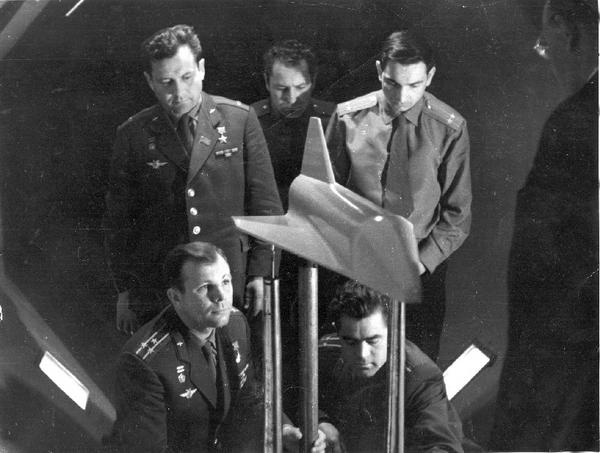
the pic is from here ( Below) Im not sure how long this will last on the front page .. and if its not there just type what list is below on the search section of the site in the right upper corner
50 Years of the First Human Space Mission to be Celebrated on April 12, 2011
www.federalspace.ru...
The Pic Above Shows Yuri Gagarin and what looks like is what is similar to the Space Shuttle Buran
or the an American Space Shuttle , as it doe not look like your typical Fighter plane Especially if you look at the Wings to the Cut off at the End
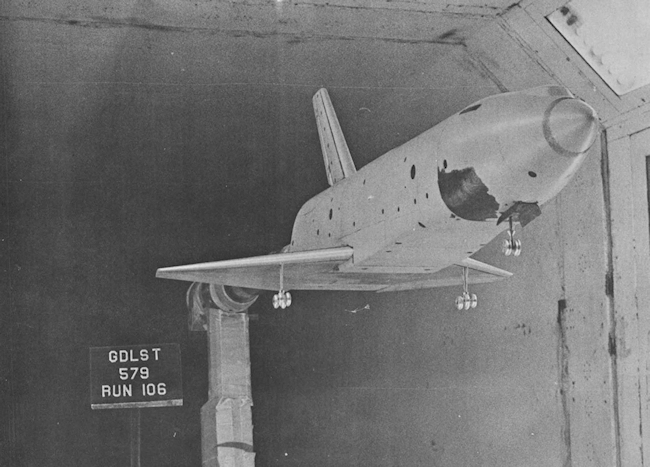
I not sure if this Model that has the Resemblance of a Space Shuttle that is in a Wind Tunnel test or not
but it does look like it is The Picture can be anywhere from after 1961 to 1968 as Ive Heard the Buran Soviet Space Shuttle wasn't even heard of until 1974 and Now as ATS Members Slayer96 & Zorgan have said The Burans are Allover the Place !! in Russia
Buran program
en.wikipedia.org...
That a BIG WTF!!! to me ! yet there a Wind Tunnel with a Model that looks like a Buran aka Space Shuttle with Yuri Gagarin in it .. as the Photo must be around Between 1962 to 1968 as Gagarin Died in a Mig 15 Plane and there a Whole Conspiracy on his so called Accidental Death ...
So Who Copied Who ? Who was First!! ? With the Space Shuttle ? as Some say that the Soviets made the Buran to Compete with the American Space Shuttle ...
Ahh Hell my Eyes must be deceiving me ! its all my Imagination Right ! it just looks like a Space Shuttle
it Actually a Plane !! Right ?? or its just Fat Fighter plane !
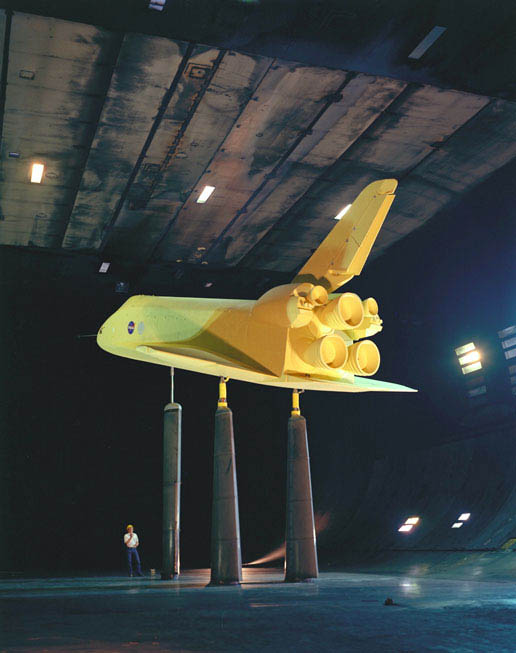
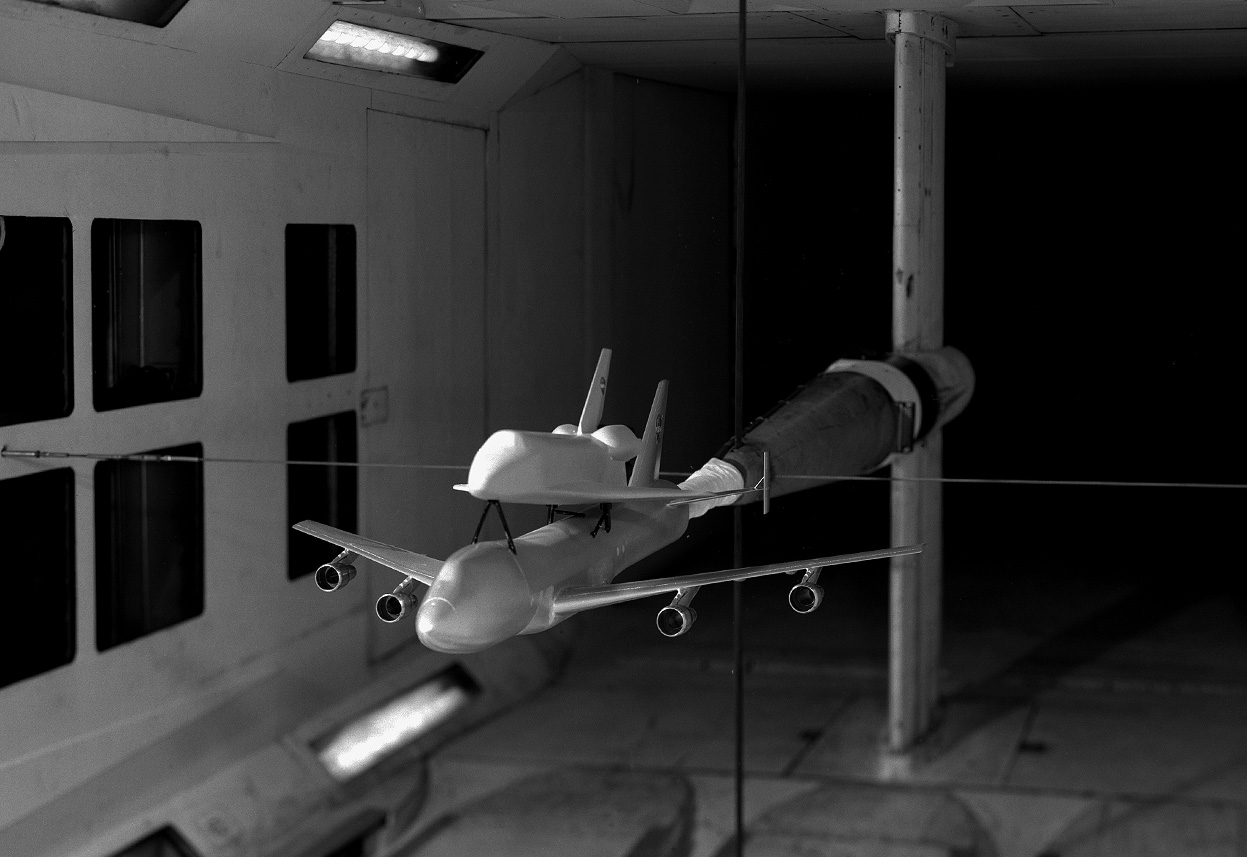
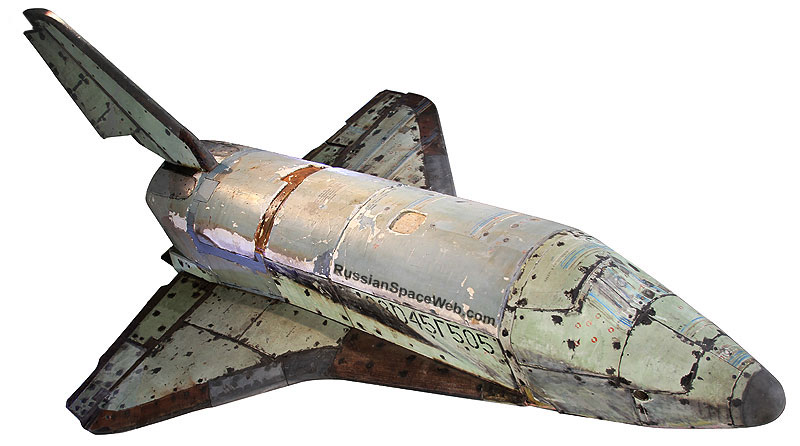
The Buran Model
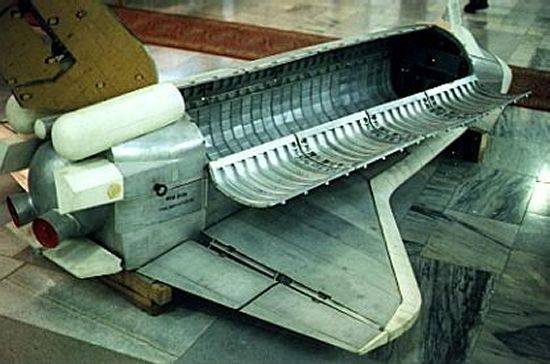
BOR sub-scale aerodynamic model of Buran
russianspaceweb.com
www.russianspaceweb.com...
Early Space Shuttles in Wind Tunnels
up-ship.com...
According to NASA !!! ?? for the American Side ...
When did the Space Shuttle begin? At what Point was it Created?
An American Thinking of a Design ..
Space Shuttle design process
en.wikipedia.org...
Tho the Soviets Already had a Space Shuttle like Craft in a Wind Tunnel before 1969
more less beyond the drawing board .
DID the Americans Have One too ? before 1968 a Model in a Wind Tunnel ?
Now if anyone has any information of this Pic or Thoughts of what this Craft in the USSR Wind Tunnel might be
Please POST WE Members would Like to Know
Roscosmos PAO ____________________________ Some Additions to Gagarin’s Image These photos for Gagarin’s section of Roscosmos web depict Yury Gagarin in his common life, together with the other famous cosmonauts. Sent by Valentina Mikhno, who had got them from her uncle, these photos can serve as some addition to the image of the first cosmonaut.
the pic is from here ( Below) Im not sure how long this will last on the front page .. and if its not there just type what list is below on the search section of the site in the right upper corner
50 Years of the First Human Space Mission to be Celebrated on April 12, 2011
www.federalspace.ru...
The Pic Above Shows Yuri Gagarin and what looks like is what is similar to the Space Shuttle Buran
or the an American Space Shuttle , as it doe not look like your typical Fighter plane Especially if you look at the Wings to the Cut off at the End
I not sure if this Model that has the Resemblance of a Space Shuttle that is in a Wind Tunnel test or not
but it does look like it is The Picture can be anywhere from after 1961 to 1968 as Ive Heard the Buran Soviet Space Shuttle wasn't even heard of until 1974 and Now as ATS Members Slayer96 & Zorgan have said The Burans are Allover the Place !! in Russia
Buran program
en.wikipedia.org...
The Buran (Russian: Бура́н, IPA: [bʊˈran], Snowstorm or Blizzard) program was a Soviet and later Russian reusable spacecraft project that began in 1974 at TsAGI and was formally suspended in 1993.[1] It was a response to the United States Space Shuttle program.[2] The project was the largest and the most expensive in the history of Soviet space exploration.[1] Development work included sending the BOR-5 on multiple sub-orbital test flights, and atmospheric flights of the OK-GLI. Buran completed one unmanned orbital spaceflight in 1988 before its cancellation in 1993.[1]
That a BIG WTF!!! to me ! yet there a Wind Tunnel with a Model that looks like a Buran aka Space Shuttle with Yuri Gagarin in it .. as the Photo must be around Between 1962 to 1968 as Gagarin Died in a Mig 15 Plane and there a Whole Conspiracy on his so called Accidental Death ...
So Who Copied Who ? Who was First!! ? With the Space Shuttle ? as Some say that the Soviets made the Buran to Compete with the American Space Shuttle ...
Ahh Hell my Eyes must be deceiving me ! its all my Imagination Right ! it just looks like a Space Shuttle
it Actually a Plane !! Right ?? or its just Fat Fighter plane !
The Buran Model
BOR sub-scale aerodynamic model of Buran
Above: The actual BOR-5 No. 505 space plane, which survived a scorching heat of hypersonic reentry into the Earth atmosphere in 1988, followed by almost two decades of neglect. It is a question which was more damaging.
russianspaceweb.com
www.russianspaceweb.com...
Early Space Shuttles in Wind Tunnels
up-ship.com...
According to NASA !!! ?? for the American Side ...
When did the Space Shuttle begin? At what Point was it Created?
It could have been in March 1966, when a NASA planning team developed a statement of work for a "Reusable Ground Launch Vehicle Concept and Development Planning Study." Or it could have been at an Apollo applications conference held at the Manned Spacecraft Center (later the Lyndon B. Johnson Space Center) in Houston on October 27, 1966, when leaders of the Marshall Space Flight Center and the Manned Spacecraft Center agreed to pursue independent studies of a shuttle system along the lines of a March 1966 statement of work. Or most certainly a point of inception would be January 23, 1969, when George E. Mueller, NASA's Associate Administrator for Manned Space Flight, approved contract negotiations for initial shuttle design work .3 Or it could have been even much earlier.
An American Thinking of a Design ..
Space Shuttle design process
en.wikipedia.org...
Even before the Apollo moon landing in 1969, in October 1968, NASA began early studies of space shuttle designs. The early studies were denoted "Phase A", and in June 1970, "Phase B", which were more detailed and specific. The primary intended use of the space shuttle was supporting the future space station. This function would dictate most of the shuttle's features. The U.S. Air Force was also interested in using the shuttle, and NASA welcomed their participation and influence to ensure political and financial support for the shuttle program. Initially, many potential shuttle designs were proposed during the 1960s, and they varied widely. Many were exceedingly complex. An attempt to re-simplify was made in the form of the "DC-3" by Maxime Faget, who had designed the Mercury capsule among other vehicles. The DC-3 was a small craft with a 20,000-pound (9 metric ton) payload, a four-man capacity, and limited aerodynamic maneuverability. At a minimum, the DC-3 provided a baseline "workable" (but not significantly advanced) system by which other systems could be compared for price-performance compromises.
Tho the Soviets Already had a Space Shuttle like Craft in a Wind Tunnel before 1969
more less beyond the drawing board .
DID the Americans Have One too ? before 1968 a Model in a Wind Tunnel ?
Now if anyone has any information of this Pic or Thoughts of what this Craft in the USSR Wind Tunnel might be
Please POST WE Members would Like to Know
edit on 1-1-2012 by Wolfenz because: (no reason given)
Before 1969
Way After
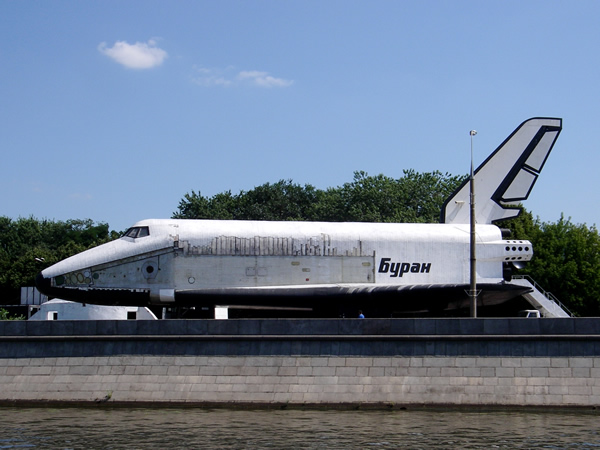
? well still on the Fence ! the mind must be playing tricks
Way After
? well still on the Fence ! the mind must be playing tricks
edit on 1-1-2012 by Wolfenz because: (no reason given)
I'd be interested to know the year this photo was taken. The US had shuttle designs in the early 1960's with Lockheed's Star Clipper, the North
American Aviation DC-3 and the ILRV.
Also notice the wing design in the photo compared to the Buran and the nasa space shuttle.
Good find, thanks for sharing.
Also notice the wing design in the photo compared to the Buran and the nasa space shuttle.
Good find, thanks for sharing.
This is just an opinion, but the model in the Gagarin picture resembles the NASA shuttle more than the first Soviet shuttle. I am basing this solely
on the design of the physical characteristics, ie the tail-fin, wings, etc. The nose bothers me a bit, but all in all I really have zero clue as to
whether we are getting the entire truth in the matter. We could be...Or not.
Originally posted by METACOMET
I'd be interested to know the year this photo was taken. The US had shuttle designs in the early 1960's with Lockheed's Star Clipper, the North American Aviation DC-3 and the ILRV.
Also notice the wing design in the photo compared to the Buran and the nasa space shuttle.
Good find, thanks for sharing.
Ive Notice more like a Delta wing in a way my first thought and the thought of the Early design...
as the wing on the Buran's and the American Shuttles are flared out towards the back
what gets me is the enlarge fuselage capacity let alone the Front Nose of this Model not your average Fighter Plane or Bomber design more like it was made for a friction Reentry than Speed ... or a Design of a Soviet version a Cargo/Airbus with a delta wing
Gagarin could be there for Either a Space Craft or Military Craft as he did flew Prototypes
that Test Pilot Kind of thing ...
I would love to know the Year ...
reply to post by Wolfenz
Gonna do a Zorgon here..
Have a look at this puppy:
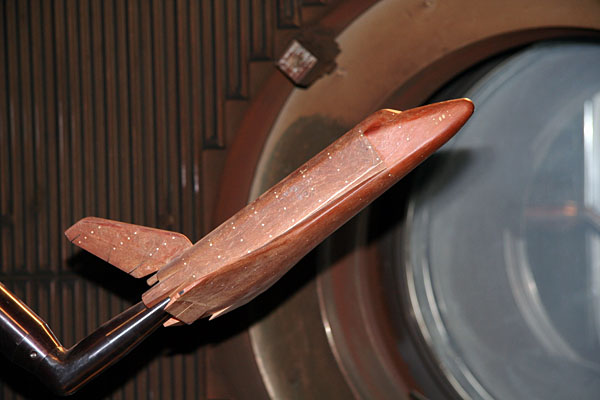
As for your pic, it isn't Buran, but it is a "prototype" shuttle, as is the one above,
This is Buran:
No dates yet!
Gonna do a Zorgon here..
Have a look at this puppy:

As for your pic, it isn't Buran, but it is a "prototype" shuttle, as is the one above,
This is Buran:
No dates yet!
Originally posted by JiggyPotamus
This is just an opinion, but the model in the Gagarin picture resembles the NASA shuttle more than the first Soviet shuttle. I am basing this solely on the design of the physical characteristics, ie the tail-fin, wings, etc. The nose bothers me a bit, but all in all I really have zero clue as to whether we are getting the entire truth in the matter. We could be...Or not.
That what i thought when i first noticed it then it was ifffy for me seeing a full Delta Wing design
I doubt we ever would have the truth about this Picture as this Picture was donated from a Personal Collection of his Daughter Valentina tho im surprised the Russian Federal Space Agency has Posted this ! Picture
if it is a exact Design of a Reentry Space craft Vehicle planned for Use for a Space Station !
welll a Space Station did come around in 71 the Salyut and a Permanent for 10 years the Mir Space Station
Salyut 1971 Mir 1986
Tho from the Stories ive been reading that the Burnan was going to be used as a military Counterpart !
for having a Payload of Nukes!! ??? instead of civilian Use ?
The Soviet government asked the Russian TsNIIMash (ЦНИИМАШ, Central Institute of Machine-building, a major player in defense analysis) for an expert opinion. Institute director, Yuri Mozzhorin, recalls that for a long time the institute could not envisage a civilian payload large enough to require a vehicle of that capacity. Based on this, as well as on US profitability analyses of that time, which showed that the Space Shuttle would be economically efficient only with a large number of launches (one every week or so), Mozzhorin concluded that the vehicle had a military purpose, although he was unable to say exactly what. The Soviet program was further boosted after Defense Minister Ustinov received a report from analysts showing that, at least in theory, the Space Shuttle could be used to deploy nuclear bombs over Soviet territory. Chertok recounts that Ustinov was so worried by the possibility that he made the Soviet response program a top priority.
Officially, the Buran spacecraft was designed for the delivery to orbit and return to Earth of spacecraft, cosmonauts, and supplies. Both Chertok and Gleb Lozino-Lozinskiy suggest that from the beginning, the program was military in nature; however, the exact military capabilities, or intended capabilities, of the Buran program remain classified. Commenting on the discontinuation of the program in his interview to New Scientist, Russian cosmonaut Oleg Kotov confirms their accounts:
“ We had no civilian tasks for Buran and the military ones were no longer needed. It was originally designed as a military system for weapon delivery, maybe even nuclear weapons. The American shuttle also has military uses.
Originally posted by Chadwickus
reply to post by Wolfenz
Gonna do a Zorgon here..
Have a look at this puppy:
As for your pic, it isn't Buran, but it is a "prototype" shuttle, as is the one above,
This is Buran:
No dates yet!
as for the first pic above
more like
the Xb 20 Dynosuar
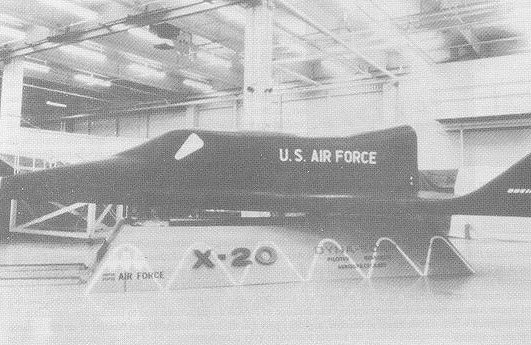
or the HL 20
HL20
HL-20 lifting body The "luxury" crew rescue vehicle option was the Langley Research Center's $2-billion HL-20 which was loosely based on a Soviet spaceplane design
www.astronautix.com...
or The Soviet Bor 4
www.astronautix.com...
and for your 2nd pic a Complete finished touches of the wind tunnel model of the Buran
Thanks for the info and that you think its a Prototype of a Shuttle
do you know if there any Prototypes of a Space Shuttle on the American Side in the early to late 60s ?
that looks like a Close resemblance of a Shuttle we know of today ! ?
Anyone ?
edit on 1-1-2012 by Wolfenz because: (no reason given)
edit on 1-1-2012 by Wolfenz because: (no reason
given)
edit on 1-1-2012 by Wolfenz because: (no reason given)
I remember watching
Buck Rogers in the 25th Century (TV series) when it first came on 1979-1981
it was my first exposure of a Space Shuttle in 1979 !!
well a Slight difference then the Actual thing !
the ranger 3
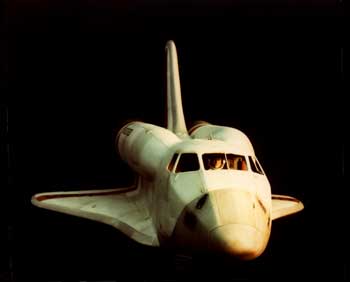
Side View of a Model of Ranger 3
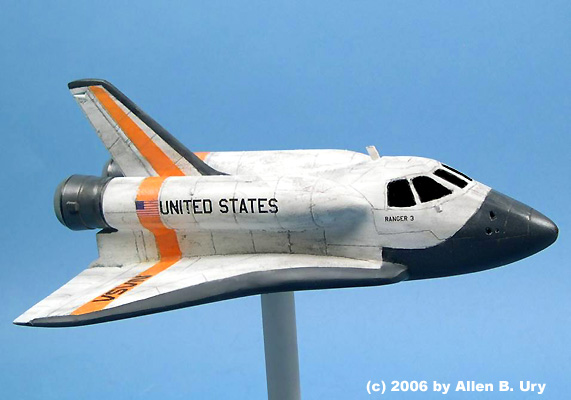
Ranger 3 Model
www.fantastic-plastic.com...
Buck Rogers in the 25th Century Theme - Version 2
Buck Rogers in the 25th Century (TV series)
en.wikipedia.org...
after the Tv series of Buck Rodgers has ended in 1981
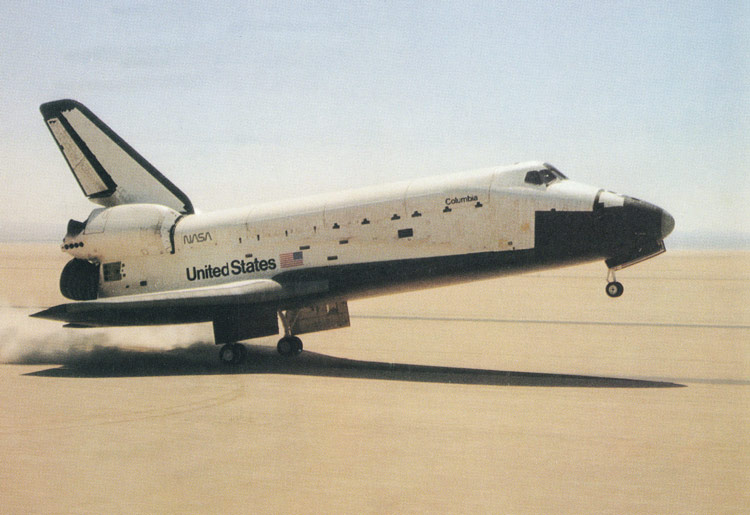
Just a Little remembrance... when i was young and fascinated!
Buck Rogers in the 25th Century (TV series) when it first came on 1979-1981
it was my first exposure of a Space Shuttle in 1979 !!
well a Slight difference then the Actual thing !
the ranger 3
Side View of a Model of Ranger 3
Based on the classic comic strip and movie serials from the 1930s, ABC-TV's "Buck Rogers in the 25th Century" was a light-hearted sci-fi adventure series that followed the adventures of American astronaut William "Buck" Rogers who was accidentally frozen in cryogenic sleep in 1987, only to be revived 500 years in the future where he joined forces with humanity's remnants to battle various alien antagonists. Roger's original "ride" was the Ranger 3, "the last of America's Deep Space Probes," a "compact" version of the American Space Shuttle then in development.
Ranger 3 Model
www.fantastic-plastic.com...
Buck Rogers in the 25th Century Theme - Version 2
Buck Rogers in the 25th Century (TV series)
en.wikipedia.org...
after the Tv series of Buck Rodgers has ended in 1981
On the morning of April 14, 1981, the space shuttle Columbia approached NASA's Dryden Flight Research Center, Edwards Air Force Base, Calif. With astronauts John Young and Bob Crippen at the controls, the maiden flight of the world's first reusable space vehicle was headed for touchdown, wrapping up the boldest test flight in history.
Just a Little remembrance... when i was young and fascinated!
edit on 1-1-2012 by Wolfenz because: (no reason given)
edit
on 1-1-2012 by Wolfenz because: add wiki of buck rodgers in the 25th century tv series
reply to post by Wolfenz
No doubt there are many prototypes.
A re-usable spacecraft has been on the cards for the Soviets and USA for a long time, although the original intention was for a large capacity bomber, long range bomber.
The similarities between the two shuttles is due to both countries ultimately working together in some aspects of design as well. Not only that, the delta wing design is the most maneuverable upon re-entry.
No doubt there are many prototypes.
A re-usable spacecraft has been on the cards for the Soviets and USA for a long time, although the original intention was for a large capacity bomber, long range bomber.
The similarities between the two shuttles is due to both countries ultimately working together in some aspects of design as well. Not only that, the delta wing design is the most maneuverable upon re-entry.
Originally posted by Chadwickus
reply to post by Wolfenz
No doubt there are many prototypes.
A re-usable spacecraft has been on the cards for the Soviets and USA for a long time, although the original intention was for a large capacity bomber, long range bomber.
The similarities between the two shuttles is due to both countries ultimately working together in some aspects of design as well. Not only that, the delta wing design is the most maneuverable upon re-entry.
The Fuselage of Both Soviet and American Shuttle were from Aspects of the DC 3 Capacity and Payload!
Speaking of capacity as i posted above the claimed reason that the Soviet Made the Buran was the Fear of Americans using the Shuttle to Carry Nukes in the Payload and dropping them over the Soviet Air Space
The Same Fear of the XB 70 Valkyrie ! Mach 3 Bomber ! in the Prototype Stage but never made it to Production Line ! They Made the Mach 2.8 Mig 25 Foxbat to Intercept the XB70 They Actually put it into Production! they also made the Foxbat Mig 25 E.M.P. Resistant !! with Vacuum Tubes!! to stay in the Air Intercepting the XB 70 bomber !
North American XB-70 Valkyrie
en.wikipedia.org...
Mikoyan-Gurevich MiG-25 AKA Foxbat
en.wikipedia.org...
if they were working together during the Space Race !! it makes you think ! about the similarity of the Shuttle design ! in the Early stages of the 60s ! even with a Space Station from Soyuz and Apollo AKA Apollo (18)Connection test During the Cold War!! if you think in that Depth !! and Having a Plaque on the Moon with Cosmonauts and Astronauts that sacrificed them selves in the Space Race How COLD was the ColdWar!!
For the Delta Wing an excellent Design for Ride and Glide !
edit on 1-1-2012 by Wolfenz because: (no reason given)
edit on
1-1-2012 by Wolfenz because: (no reason given)
new topics
-
Are you ready for the return of Jesus Christ? Have you been cleansed by His blood?
Religion, Faith, And Theology: 1 hours ago -
Chronological time line of open source information
History: 2 hours ago -
A man of the people
Diseases and Pandemics: 3 hours ago -
Ramblings on DNA, blood, and Spirit.
Philosophy and Metaphysics: 4 hours ago -
4 plans of US elites to defeat Russia
New World Order: 5 hours ago -
Thousands Of Young Ukrainian Men Trying To Flee The Country To Avoid Conscription And The War
Other Current Events: 9 hours ago -
12 jurors selected in Trump criminal trial
US Political Madness: 11 hours ago
top topics
-
Israeli Missile Strikes in Iran, Explosions in Syria + Iraq
World War Three: 12 hours ago, 17 flags -
Iran launches Retalliation Strike 4.18.24
World War Three: 12 hours ago, 6 flags -
Thousands Of Young Ukrainian Men Trying To Flee The Country To Avoid Conscription And The War
Other Current Events: 9 hours ago, 6 flags -
12 jurors selected in Trump criminal trial
US Political Madness: 11 hours ago, 4 flags -
4 plans of US elites to defeat Russia
New World Order: 5 hours ago, 2 flags -
A man of the people
Diseases and Pandemics: 3 hours ago, 2 flags -
Chronological time line of open source information
History: 2 hours ago, 2 flags -
Ramblings on DNA, blood, and Spirit.
Philosophy and Metaphysics: 4 hours ago, 1 flags -
Are you ready for the return of Jesus Christ? Have you been cleansed by His blood?
Religion, Faith, And Theology: 1 hours ago, 0 flags
active topics
-
Fossils in Greece Suggest Human Ancestors Evolved in Europe, Not Africa
Origins and Creationism • 66 • : Consvoli -
Academia Has Become a Cancer in American Society
Education and Media • 7 • : iaylyan -
BREAKING: O’Keefe Media Uncovers who is really running the White House
US Political Madness • 17 • : pianopraze -
Russian intelligence officer: explosions at defense factories in the USA and Wales may be sabotage
Weaponry • 171 • : Oldcarpy2 -
So I saw about 30 UFOs in formation last night.
Aliens and UFOs • 32 • : Arbitrageur -
Israeli Missile Strikes in Iran, Explosions in Syria + Iraq
World War Three • 64 • : FlyersFan -
Are you ready for the return of Jesus Christ? Have you been cleansed by His blood?
Religion, Faith, And Theology • 6 • : mysterioustranger -
Two Serious Crimes Committed by President JOE BIDEN that are Easy to Impeach Him For.
US Political Madness • 17 • : TheSemiskepticII -
12 jurors selected in Trump criminal trial
US Political Madness • 33 • : Myhandle -
Biden--My Uncle Was Eaten By Cannibals
US Political Madness • 49 • : iaylyan
4