It looks like you're using an Ad Blocker.
Please white-list or disable AboveTopSecret.com in your ad-blocking tool.
Thank you.
Some features of ATS will be disabled while you continue to use an ad-blocker.

Blindsided by Change
page: 2share:
reply to post by hooper
99% of the world population, and maybe 90% of the American and Continental population. Probably you, back then.
In 1900 60% of the US population lived in rural areas
www.census.gov...
www.ci.green-bay.wi.us...
Not all city dwellers had indoor plumbing
www.pbs.org...
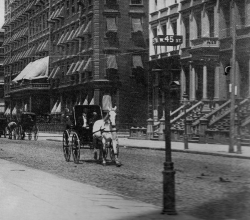
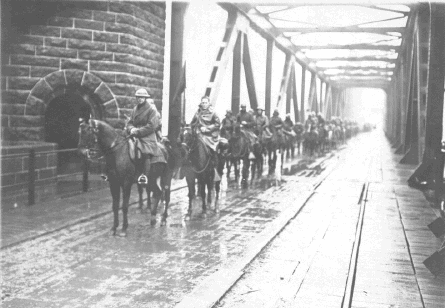
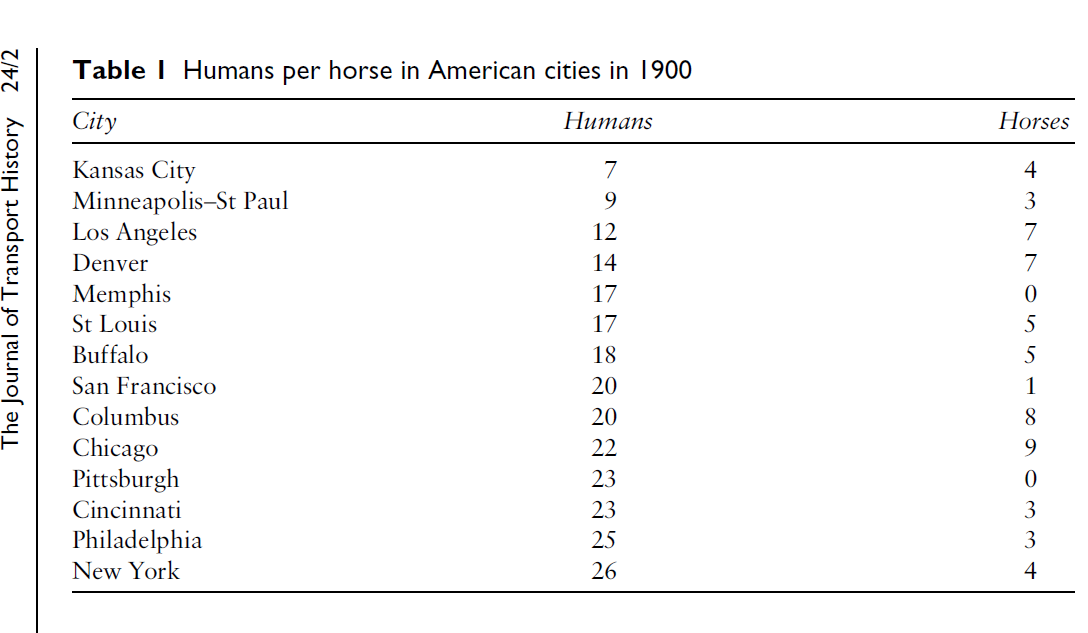
Horses were still default transportation and were the primary source of military transportation throughout World War One.
New York City 1900
www.squidoo.com...
Crossing the Rhine 1918
www.landscaper.net...
www.manchesteruniversitypress.co.uk...
www.digitalhistory.uh.edu...
The last cholera epidemic in the United States wasn't until 1911.
secure.wikimedia.org...
For most people, the changes started about 1900 give or take 20 years.
99% of the world population, and maybe 90% of the American and Continental population. Probably you, back then.
In 1900 60% of the US population lived in rural areas
www.census.gov...
By 1900 most American homes had been fitted with indoor plumbing, however most rural areas still had no such luxuery. Those without plumbing used the outhouse by day and the chamber pot by night. The next morning they threw the contents of the chamber pot out the window or back door. They had no idea that living next to stewing sewage would lead to diseases such as Cholera and Typhoid. They drank water from wells that were next to the sewage they produced and often died in the process.
www.ci.green-bay.wi.us...
Not all city dwellers had indoor plumbing
Many rural and urban American homes still did not have running water at the turn of the 20th century. Rural families without indoor plumbing obtained their water from rain barrels and windmill-pumped underground wells, while city dwellers got water from water-hauling tank wagons, street hydrants, and public water mains. The lack of running water in the home meant that chamber pots and outhouses were the primary collectors of human waste.
www.pbs.org...
Horses were still default transportation and were the primary source of military transportation throughout World War One.
New York City 1900
www.squidoo.com...
Crossing the Rhine 1918
www.landscaper.net...
www.manchesteruniversitypress.co.uk...
In 1900, more Americans died from tuberculosis than from cancer. Each day millions of horses deposited some 25 pounds of manure and urine on city streets.
www.digitalhistory.uh.edu...
The last cholera epidemic in the United States wasn't until 1911.
The sixth cholera pandemic was a major outbreak of cholera from the years 1899 to 1923. It killed more than 800,000 in India then erupted in the Middle East, northern Africa, Russia and Eastern Europe.[1]
The last outbreak in the United States was in 1910-1911 when the steamship Moltke brought infected people to New York City. Vigilant health authorities isolated the infected on Swinburne Island. Eleven people died, including a health care worker at Swinburne Island
secure.wikimedia.org...
For most people, the changes started about 1900 give or take 20 years.
Originally posted by hooper
reply to post by Semicollegiate
Airplanes: from the very first to supersonic to orbital space
The first successful flight was in 1903. They had been working on the idea for years prior to the 20th century. In fact it would not have been possible without the ICE and that was 19th century.
Radio: from morse code to satellite High Defenition TV and cell phones
Hardly, the foundation for radio was in telephone and telegraph. Both 19th century.
Nuclear Technology
Early part of the 20th century.
Sanatized Cities with clean water
Major cities in the west had sanitary systems and clean drinking water long before the 20th century. Hell, the Romans had it!
Food Distribution to every region
Huh?
Propaganda, advertizing and public education
All of this predates the 20th century. By a long shot. The Anceint Greeks had public education.
Titanic opaque beaurocracies
Don't really know what that means but government "beaurocacy" is as old as civilization.
Silent perpetual balistic missle submarines
I don't know what a perpetual missile is, but submarines are 19th century.
Biotechnology that can make new forms of life
Well, mankind has been using our understanding of nature for a long time. Look up "mule".
TELEVISION! And the realisation of its potential to mass-deceive, especially in the latter
half of the 20th century. We were sold a movie on 9/11 and we all bought it as real.
But that 9/11 was a completely faked and contrived disaster script with fake video, witness testimony
and victims is now a certainty.
www.septemberclues.info
www.cluesforum.info
We were duped. All you need to do is look around you now, to know that.
And if we don't get it? Bollocks! We deserve what we do get!
reply to post by Semicollegiate
I see you are just another who has fallen to the "charms" of "Dr." Judy Wood, and her delusions. They are utter nonsense, and a critical bit of thinking will reveal why. (Hint: The other buildings!! The 18 survivors who were still alive after the collapse!! Etc).
Anyway, as to the "calculations" about the final debris pile?? A building is really a lot of empty space. Even the WTC Towers were.
Look at the Aladdin Hotel demolition, and count the floors .... then the result.
I see you are just another who has fallen to the "charms" of "Dr." Judy Wood, and her delusions. They are utter nonsense, and a critical bit of thinking will reveal why. (Hint: The other buildings!! The 18 survivors who were still alive after the collapse!! Etc).
Anyway, as to the "calculations" about the final debris pile?? A building is really a lot of empty space. Even the WTC Towers were.
Look at the Aladdin Hotel demolition, and count the floors .... then the result.
reply to post by ProudBird
www.controlled-demolition.com...
I don't know if the Tower was the highest part of the hotel, but the link above says the debris pile was 30ft high for 21 stories.
110 / 21 = 5.238 WTC towers were 5.238 times taller that the Aladdin
so the rubble pile should be approximately 5.238 times higher than the Aladdin
5.238 x 30 ft = 157 foot tall rubble pile for each WTC1 and WTC2
The WTC rubble pile was maybe a tenth of that.
the next link has a comparision effect
s.telegraph.co.uk...
The seventh picture down has a view of the rubble pile. Courtlandt Subway Station
Just after 7:30 PM, CDI detonated 232.5 lb. of explosives in 863 different locations, in four (4) levels of the 21-level Aladdin Hotel Tower. The initiation and implosion sequence detonated over a 17 second period, with structural motion starting at the southwest corner of the structure, approximately 9.5 seconds into the program, allowing over 50 million lb. of masonry to settle gently to the ground. Vibration readings were well within allowable limits. The debris pile averaged 30 ft. in height, 10 ft. lower than originally projected by CDI.
www.controlled-demolition.com...
I don't know if the Tower was the highest part of the hotel, but the link above says the debris pile was 30ft high for 21 stories.
110 / 21 = 5.238 WTC towers were 5.238 times taller that the Aladdin
so the rubble pile should be approximately 5.238 times higher than the Aladdin
5.238 x 30 ft = 157 foot tall rubble pile for each WTC1 and WTC2
The WTC rubble pile was maybe a tenth of that.
the next link has a comparision effect
s.telegraph.co.uk...
The seventh picture down has a view of the rubble pile. Courtlandt Subway Station
reply to post by Semicollegiate
Well, you must remember that the towers were mostly empty space between the core columns and the exterior panels. Also, the fact that the rubble was not imploded nicely into the footprint, it was spread all over the Trade Center complex, making for a much smaller pile (by height). That's not even taking into account the rubble that filled the basement areas under and between the towers.
Well, you must remember that the towers were mostly empty space between the core columns and the exterior panels. Also, the fact that the rubble was not imploded nicely into the footprint, it was spread all over the Trade Center complex, making for a much smaller pile (by height). That's not even taking into account the rubble that filled the basement areas under and between the towers.
Originally posted by pshea38
Originally posted by hooper
reply to post by Semicollegiate
Airplanes: from the very first to supersonic to orbital space
The first successful flight was in 1903. They had been working on the idea for years prior to the 20th century. In fact it would not have been possible without the ICE and that was 19th century.
Radio: from morse code to satellite High Defenition TV and cell phones
Hardly, the foundation for radio was in telephone and telegraph. Both 19th century.
Nuclear Technology
Early part of the 20th century.
Sanatized Cities with clean water
Major cities in the west had sanitary systems and clean drinking water long before the 20th century. Hell, the Romans had it!
Food Distribution to every region
Huh?
Propaganda, advertizing and public education
All of this predates the 20th century. By a long shot. The Anceint Greeks had public education.
Titanic opaque beaurocracies
Don't really know what that means but government "beaurocacy" is as old as civilization.
Silent perpetual balistic missle submarines
I don't know what a perpetual missile is, but submarines are 19th century.
Biotechnology that can make new forms of life
Well, mankind has been using our understanding of nature for a long time. Look up "mule".
TELEVISION! And the realisation of its potential to mass-deceive, especially in the latter
half of the 20th century. We were sold a movie on 9/11 and we all bought it as real.
But that 9/11 was a completely faked and contrived disaster script with fake video, witness testimony
and victims is now a certainty.
www.septemberclues.info
www.cluesforum.info
We were duped. All you need to do is look around you now, to know that.
And if we don't get it? Bollocks! We deserve what we do get!
Yes that's like what I meant. Basic stuff about our lives have changed. I suspect many of our old common sense perpectives wont hold true anymore.
reply to post by Varemia
That empty space was accounted for by subtracting 10' of airspace per floor.
In a controlled demolition all of the mass of the building is planned to fall into the footprint of the building. This leaves a pile of rubble in the shape of a box, or a cake
The rubble from the towers fell more chaotically. When something falls off of a shelf and hits the floor it tends to make a pile in the shape of a cone or mound, roughly a pyramid. Probabaly there would be a high point on the pile somewhere and the top surface of the debris would slope down to ground level from there.
The volume of the debris pile in a controlled demolition (box shaped)
wtc footprint x height (262 ft)
The same volume would be present in a pyramid debris pile
Volume of a pyramid = Area of the base x height x 1/3
Using this diagram as the approximate size of the foot print
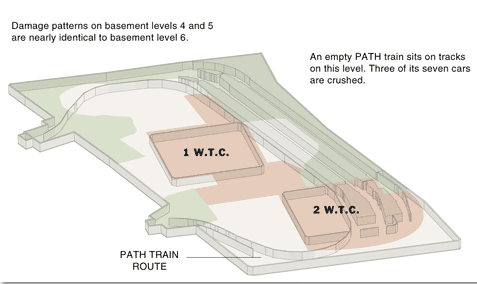
The colors in the diagram signify
red-brown -- collasped heavy damage
olive -green -- intact or mostly intact
light gray -- not inspected or undetermined
Wtc1 debris had an area about twice the standing wtc1 footprint and WTC2 was maybe 1.5 times the area of wtc2 standing footprint.
wtc1 x 262ft = 2wtc1 x 1/3 x pile height
divide by wtc1
262 ft = 2/3 pile height (with pyramid shape)
Disguarding the 1/3 to approximate the difference between a pyramid and the real shape of a random pile still leaves a rubble pile of 25 stories. Sutracting 7 stories in height becasue some debris went to the bottom of the 7 storie basement, leaves 18 stories of rubble above ground.
I'm not saying this is an exact number at all, it is an order of magnitude approximation.
Howerver 18 stories compared to 2 stories is like the difference between 20 mpg and 200 mpg, The two numbers can't be acheived by the same situation, or mechanism.
That empty space was accounted for by subtracting 10' of airspace per floor.
In a controlled demolition all of the mass of the building is planned to fall into the footprint of the building. This leaves a pile of rubble in the shape of a box, or a cake
The rubble from the towers fell more chaotically. When something falls off of a shelf and hits the floor it tends to make a pile in the shape of a cone or mound, roughly a pyramid. Probabaly there would be a high point on the pile somewhere and the top surface of the debris would slope down to ground level from there.
The volume of the debris pile in a controlled demolition (box shaped)
wtc footprint x height (262 ft)
The same volume would be present in a pyramid debris pile
Volume of a pyramid = Area of the base x height x 1/3
Using this diagram as the approximate size of the foot print
The colors in the diagram signify
red-brown -- collasped heavy damage
olive -green -- intact or mostly intact
light gray -- not inspected or undetermined
Wtc1 debris had an area about twice the standing wtc1 footprint and WTC2 was maybe 1.5 times the area of wtc2 standing footprint.
wtc1 x 262ft = 2wtc1 x 1/3 x pile height
divide by wtc1
262 ft = 2/3 pile height (with pyramid shape)
Disguarding the 1/3 to approximate the difference between a pyramid and the real shape of a random pile still leaves a rubble pile of 25 stories. Sutracting 7 stories in height becasue some debris went to the bottom of the 7 storie basement, leaves 18 stories of rubble above ground.
I'm not saying this is an exact number at all, it is an order of magnitude approximation.
Howerver 18 stories compared to 2 stories is like the difference between 20 mpg and 200 mpg, The two numbers can't be acheived by the same situation, or mechanism.
reply to post by Semicollegiate
In the other thread an image that illustrates how much empty space there actually is between the 4 inch floors.
As you can see, is almost all empty space. You arbitrarily chosen value of 10 feet has no basis in reality.
In the other thread an image that illustrates how much empty space there actually is between the 4 inch floors.
As you can see, is almost all empty space. You arbitrarily chosen value of 10 feet has no basis in reality.
reply to post by -PLB-
That does look empty. No units of measure on it.
I see that 10ft is too small, floor to floor height was 12'
1368 - (110 * (12 - .333) = 84 ft
exacly perfect fit. into the smallest possible volume. reality.
That does look empty. No units of measure on it.
I see that 10ft is too small, floor to floor height was 12'
1368 - (110 * (12 - .333) = 84 ft
exacly perfect fit. into the smallest possible volume. reality.
new topics
-
God's Righteousness is Greater than Our Wrath
Religion, Faith, And Theology: 1 hours ago -
Electrical tricks for saving money
Education and Media: 4 hours ago -
VP's Secret Service agent brawls with other agents at Andrews
Mainstream News: 5 hours ago -
Sunak spinning the sickness figures
Other Current Events: 6 hours ago -
Nearly 70% Of Americans Want Talks To End War In Ukraine
Political Issues: 6 hours ago -
Late Night with the Devil - a really good unusual modern horror film.
Movies: 8 hours ago -
Cats Used as Live Bait to Train Ferocious Pitbulls in Illegal NYC Dogfighting
Social Issues and Civil Unrest: 9 hours ago -
The Good News According to Jesus - Episode 1
Religion, Faith, And Theology: 11 hours ago
top topics
-
Florida man's trip overseas ends in shock over $143,000 T-Mobile phone bill
Social Issues and Civil Unrest: 16 hours ago, 8 flags -
Cats Used as Live Bait to Train Ferocious Pitbulls in Illegal NYC Dogfighting
Social Issues and Civil Unrest: 9 hours ago, 8 flags -
VP's Secret Service agent brawls with other agents at Andrews
Mainstream News: 5 hours ago, 8 flags -
Bobiverse
Fantasy & Science Fiction: 16 hours ago, 3 flags -
HORRIBLE !! Russian Soldier Drinking Own Urine To Survive In Battle
World War Three: 13 hours ago, 3 flags -
Electrical tricks for saving money
Education and Media: 4 hours ago, 3 flags -
Nearly 70% Of Americans Want Talks To End War In Ukraine
Political Issues: 6 hours ago, 3 flags -
Sunak spinning the sickness figures
Other Current Events: 6 hours ago, 3 flags -
Late Night with the Devil - a really good unusual modern horror film.
Movies: 8 hours ago, 2 flags -
The Good News According to Jesus - Episode 1
Religion, Faith, And Theology: 11 hours ago, 1 flags
active topics
-
Electrical tricks for saving money
Education and Media • 4 • : Lumenari -
Cats Used as Live Bait to Train Ferocious Pitbulls in Illegal NYC Dogfighting
Social Issues and Civil Unrest • 19 • : WeMustCare -
VP's Secret Service agent brawls with other agents at Andrews
Mainstream News • 38 • : SchrodingersRat -
New whistleblower Jason Sands speaks on Twitter Spaces last night.
Aliens and UFOs • 54 • : Ophiuchus1 -
DONALD J. TRUMP - 2024 Candidate for President - His Communications to Americans and the World.
2024 Elections • 514 • : WeMustCare -
The Acronym Game .. Pt.3
General Chit Chat • 7744 • : bally001 -
Truth Social goes public, be careful not to lose your money
Mainstream News • 128 • : Astyanax -
Sunak spinning the sickness figures
Other Current Events • 5 • : glen200376 -
SETI chief says US has no evidence for alien technology. 'And we never have'
Aliens and UFOs • 44 • : MikeDeGrasseTyson -
HORRIBLE !! Russian Soldier Drinking Own Urine To Survive In Battle
World War Three • 31 • : budzprime69