It looks like you're using an Ad Blocker.
Please white-list or disable AboveTopSecret.com in your ad-blocking tool.
Thank you.
Some features of ATS will be disabled while you continue to use an ad-blocker.

DARPA's In Ur Brainz, Hacking Ur Storiez.
page: 1share:
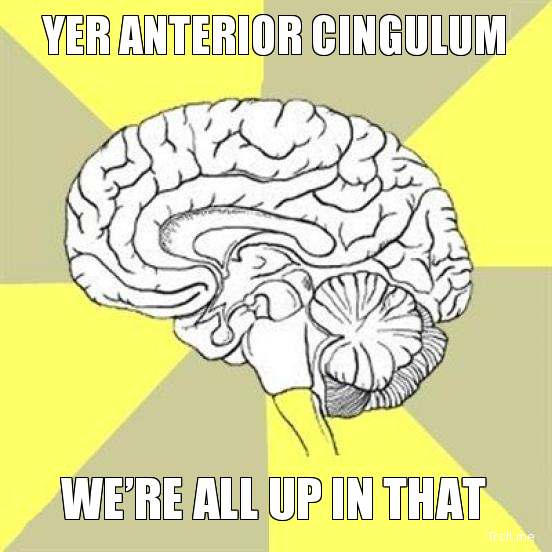
What makes us human? It's not the tools, it's not the language. It's the stories.
I do not agree with pretty much anything else this guy has ever written. But I like what Alasdair MacIntyre had to say about Humans and their stories:
Children, only animals live entirely in the Here and Now. Only nature knows neither memory nor history. But man -- let me offer you a definition -- is the story-telling animal. Whereever he goes he wants to leave behind not a chaotic wake, not an empty space, but the comforting marker -- buoys and trail-signs of stories. He has to go on telling stories, he has to keep making them up. As long as there's a story , it's all right. Even in his last moments, it's said, in the split second of a fatal fall -- or when he's about to drown -- he sees, passing rapidly before him, the story of his life. (p.63)
Now, that's awfully flowery, but the neurobiologists are exploring the idea that not only are we hard-wired to process and order input by narrative structuring; but also that it comprises a set of functions unique to our species. We tell stories, therefore we think. Or rather, we may be unable to separate cognition from narrative; story-telling is inextricably meshed with the wet-wiring.
From here:
The psychology of narrativity (Daniel Morrow, Rolf Zwaan) has reached interesting results over the past 20 years, and now neuroscience is weighing in with corroborative research: It would appear that we don’t just tell stories to make sense of ourselves, we actually adopt the stories of others as though we were the protagonist. Brain-scanning research published in 2009 seems to confirm this. When a team led by Jeffrey Zacks of Washington University in St Louis, Missouri, ran functional magnetic resonance imaging (fMRI) scans on people reading a story or watching a movie, they found that the same brain regions that are active in real-life situations fire up when a fictitious character encounters an equivalent situation.
And furthermore, our brains like it: Stories can also manipulate how you feel, as anyone who has watched a horror movie or read a Charles Dickens novel will confirm. But what makes us empathise so strongly with fictional characters? Paul Zak from Claremont Graduate University, California, thinks the key is oxytocin, a hormone produced during feel-good encounters such as breastfeeding and sex.
Hold up. Stories are addicitve?
WIlliam Casebeer thinks so. And considering he's heading up the various narrative networks
projects for DARPA, I guess our government thinks so, too.
We could free fall into speculation as to how that could be leveraged (the OG opiate of the masses), but can more constructively look into stuff we have actual documentation on. I gotta say, after reading his PhD thesis, I think this research could be in much worse hands than Dr. Casebeer's. He emphasizes a highly integrated cross-disciplinary approach to understanding how narrative (as opposed to force) can be employed to shift and shape culture. Here are some choice excerpts:
Given that the process of democratization consists in large part of changing how political society functions in a given sovereign area, it is not a stretch to argue that this initiative, and aspects of it which have made their way into both the U.S. National Security Strategy andCounter-Terrorism Strategy, are at their core calls for the use of force to change the nature of cultures elsewhere....
...Using Gustav Freytag’s concept of the Freytag triangle, which leads to an exploration of how stories can influence such politically important concepts as identity, and how they can especially be used by terrorist organizations and groups for purposes ranging from recruitment of new members to the shoring up of stakeholder support.
ed note: Conversely, you can leverage narrative to undermine stakeholder support: Control the narrative, and you can %&^% with the enemy's cash flow.
The conclusion is cautiously hopeful: while we can’t expect military force to be useful in many culture-change related circumstances, we can also see how force can usefully shape the environment so as to make some types of socially transmitted behavior more likely than others. Understanding when the shift is possible and when it can only be influenced, and at least in the case of stories how culture and force interact to produce some changes rather than others, is critically important if we are to retain the moral high-ground (ed note: you might think this an empty concession, but his other work indicates that this guy intends more than lip service to morality) when it comes to the appropriate application of military power.
Disecting Mother Goose
How do security concerns and cultural narrative intersect? Well, there was originally a report available which is cited in most of the articles I found on the subject, but, alas. It is gone, and no cache remains:
duckduckgo.com...
But here's what I cobbled together from various sources, and it's dyn-o-mite.
From here:
Stories exert a powerful influence on human thoughts and behavior. They consolidate memory, shape emotions, cue heuristics and biases in judgment, influence in-group/out-group distinctions, and may affect the fundamental contents of personal identity. It comes as no surprise that these influences make stories highly relevant to vexing security challenges such as radicalization, violent social mobilization, insurgency and terrorism, and conflict prevention and resolution.
Therefore, understanding the role stories play in a security context is a matter of great import and some urgency," DARPA stated. "Ascertaining exactly what function stories enact, and by what mechanisms they do so, is a necessity if we are to effectively analyze the security phenomena shaped by stories. Doing this in a scientifically respectable manner requires a working theory of narratives, an understanding of what role narratives play in security contexts, and examination of how to best analyze stories-decomposing them and their psychological impact systematically."
Continued...
edit on 7-11-2011 by mistermonculous because: (no reason given)
Continued from last post.
An algorithmic analysis of all our Stories is in the pipeline, which both thrills and creeps me the feck out.
So, what's the specific mandate in simple, bullet point format?
From here:
How to create a story, how to spin it to the lowest common denominator, how to use that story to sell one group to another.
Let's go ahead and usher the neurobiologists back into this thread.
From here:
Huh, what now? *Picturing a remote MRI device*
Oh wait, they're probably just talking about data mining.
Probably.
There's more to explore, so anyone who's inclined should visit these links:
www.modernmythology.net...
www.newscientist.com...
www.wired.com...://www.guardian.co.uk/world/2003/oct/09/usa.politics
dollarsanddragons.blogspot.com...
I'll let the good Doctor Gonzo take us out:
"Myths and legends die hard in America. We love them for the extra dimension they provide, the illusion of near-infinite possibility to erase the narrow confines of most men's reality. Weird heroes and mould-breaking champions exist as living proof to those who need it that the tyranny of ''the rat race'' is not yet final.”
For example, all of the text in the World Wide Web will become available for automating the monitoring and analysis of technological and political activities of nations; plans, rhetoric, and activities of transnational organizations; and scientific discovery within various disciplines, DARPA stated. As digitized text from library books becomes available, new avenues of cultural awareness and historical research will be enabled. With truly general techniques for effectively handling the incompatibilities between natural language and the language of formal inference, a system could, in principal, be constructed that maps between natural and formal languages in any subject domain, DARPA said.
An algorithmic analysis of all our Stories is in the pipeline, which both thrills and creeps me the feck out.
So, what's the specific mandate in simple, bullet point format?
From here:
*Shape how people think about complex topics and can influence beliefs;
*Reduce the complexity of meaning associated with a topic by capturing or expressing patterns;
*Show uncovered inferred meanings and worldviews of particular groups or individuals: Characterization of disparities in social issues and contrasting political goals; exposure of inclusion and exclusion of social and political groups and understanding of psychological problems and conflicts.
How to create a story, how to spin it to the lowest common denominator, how to use that story to sell one group to another.
Let's go ahead and usher the neurobiologists back into this thread.
From here:
In the first 18-month phase of the program, the Pentagon wants researchers to study how stories infiltrate social networks and alter our brain circuits. One of the stipulated research goals: to “explore the function narratives serve in the process of political radicalization and how they can influence a person or group’s choice of means (such as indiscriminate violence) to achieve political ends.”
DARPA is even calling for devices that detect the influence of stories in unseen ways: “Efforts that rely solely on standoff/non-invasive/non-detectable sensors are highly encouraged.”
Huh, what now? *Picturing a remote MRI device*
Oh wait, they're probably just talking about data mining.
Probably.
There's more to explore, so anyone who's inclined should visit these links:
www.modernmythology.net...
www.newscientist.com...
www.wired.com...://www.guardian.co.uk/world/2003/oct/09/usa.politics
dollarsanddragons.blogspot.com...
I'll let the good Doctor Gonzo take us out:
"Myths and legends die hard in America. We love them for the extra dimension they provide, the illusion of near-infinite possibility to erase the narrow confines of most men's reality. Weird heroes and mould-breaking champions exist as living proof to those who need it that the tyranny of ''the rat race'' is not yet final.”
Very interesting post,
I have to go through once more and seek some other related information that I might be able to share here.
I have to go through once more and seek some other related information that I might be able to share here.
reply to post by no special characters
Thanks, I'd be much obliged.
There seem to be a lot of uncached dead ends down this line of inquiry, even though most material pertaining to the subject is very recently published.
Thanks, I'd be much obliged.
There seem to be a lot of uncached dead ends down this line of inquiry, even though most material pertaining to the subject is very recently published.
Ya burnt, the FEDS.
See, the advertising industry has been leveraging our Stories against us since the early 2000's. I think product placement came before the narrative commercial? The first takes an end-run around our frontal lobe; the second approach also dodges our fore-brain, but only after illicting an affective response.
Anyways, here ya go.
Madison Avenue beats DARPA to the punch.
From here:
Forget boundaries, cohorts are the future. Organizational, cultural, regional, and national boundaries will disappear, replaced by on-line cohorts based upon attitudes and interests being the glue that binds people into future marketplaces. Ads will increasingly be targeted to these future virtual groups making online targeted marketing as the most effective mechanism. The explosive growth of weblogs are the tip of what is to come."
The security and the commercial applications for this stuff mirror each other quite closely. Both seek to artificially dissolve boundaries between ingoups/outgroups by shaping narrative. But all cultural distinctions will be absorbed and reconciled in the Blogosphere? Hoo boy.
I'll believe that when I see it.
edit on 7-11-2011 by mistermonculous because: (no reason given)
A bedtime bump.
Touching back on this quote:
"It would appear that we don’t just tell stories to make sense of ourselves, we actually adopt the stories of others as though we were the protagonist."
Apply the above to the purported use of Fairy Tales and Disney films in MK programming.
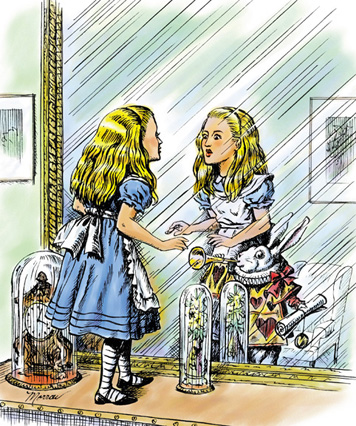
Accepting the bulk of publicly available info on MKUltra to be largely balderdash and bunkum, I find myself bemused by the observation that CT culture beat the ad industry to the punch by ten years, give or take. Funnier still, is that an approach to the manipulation of narrative was fleshed out in a fictional account of a state-sponsored project 20 years before the government actually got around to looking into it.
Touching back on this quote:
"It would appear that we don’t just tell stories to make sense of ourselves, we actually adopt the stories of others as though we were the protagonist."
Apply the above to the purported use of Fairy Tales and Disney films in MK programming.
Accepting the bulk of publicly available info on MKUltra to be largely balderdash and bunkum, I find myself bemused by the observation that CT culture beat the ad industry to the punch by ten years, give or take. Funnier still, is that an approach to the manipulation of narrative was fleshed out in a fictional account of a state-sponsored project 20 years before the government actually got around to looking into it.
edit on 7-11-2011 by
mistermonculous because: (no reason given)
The meme is hilarious.
You can see them trying this right now.
What I think that they are actually doing is finding their audience and honing it hard and thinking they are brilliant.
What they don't seem to realize is that what they are finding is that a large portion of the population has some amount of an identity disorder, or a borderline personality disorder. Lack of an identity and marketing being willing to provide you one works out well as a symbiotic relationship. But it is also a self-feeding trap.
It will be nice of them to clear the field, making it easier for those of us who have identities of our own. It'll be easier to find each other and plot against them. Or mess with them.
And I was just reading the one post above as that's where I came in on. Further up, I see people have already realized this.
My work has a program where they are trying to teach the "story-telling" skill to leads and executives.
You can see them trying this right now.
What I think that they are actually doing is finding their audience and honing it hard and thinking they are brilliant.
What they don't seem to realize is that what they are finding is that a large portion of the population has some amount of an identity disorder, or a borderline personality disorder. Lack of an identity and marketing being willing to provide you one works out well as a symbiotic relationship. But it is also a self-feeding trap.
It will be nice of them to clear the field, making it easier for those of us who have identities of our own. It'll be easier to find each other and plot against them. Or mess with them.
And I was just reading the one post above as that's where I came in on. Further up, I see people have already realized this.
My work has a program where they are trying to teach the "story-telling" skill to leads and executives.
edit on 2011/11/7 by Aeons because:
(no reason given)
reply to post by Aeons
What's getting me is that the ability to fine tune a story for an ultra-specialized target group creates a new niche profession. "OK, we need to find a story that any Esquimaux Episcopalian Vegan Conservative Wind-Surfer making Six Figures can identify with. Aaaaand go!"
Every group gets its own special little story; the members identifying with what is being sold in an intimate, gut-level way.
It's kind of incredible.
What's getting me is that the ability to fine tune a story for an ultra-specialized target group creates a new niche profession. "OK, we need to find a story that any Esquimaux Episcopalian Vegan Conservative Wind-Surfer making Six Figures can identify with. Aaaaand go!"
Every group gets its own special little story; the members identifying with what is being sold in an intimate, gut-level way.
It's kind of incredible.
edit on 7-11-2011 by mistermonculous because: fffft.
reply to post by mistermonculous
But I wonder how many people can be good at selling to many types of specialized groups without coming off as lacking some integrity. How many people can you be? This is where I suspect it might fall down a bit. You have to pay people piece meal because you don't need them all that often. Or you go mill, and the integrity of their message rings a bit hollow in various groups.
How long until you just start training the smart people to see your bs everywhere? Then you lose them? Then those people start pulling off other members of the herd that are nice and penned up neatly?
It provides a case of escalation, where eventually a certain number of people start becoming immunized or learn to recognize and control the process. Like me.
Even when I react doesn't mean that I don't recognize it.
Embrace it, and then let it go. Or embrace it and learn to ride the beast.
Bene Gesserit Litany Against Fear
I must not fear.
Fear is the mind-killer.
Fear is the little-death that brings total obliteration.
I will face my fear.
I will permit it to pass over me and through me.
And when it has gone past I will turn the inner eye to see its path.
Where the fear has gone there will be nothing.
Only I will remain.
The interesting thing will be to find how long it'll take for the smart ones in the herd to learn to pass along immunity to their children or other people.
But I wonder how many people can be good at selling to many types of specialized groups without coming off as lacking some integrity. How many people can you be? This is where I suspect it might fall down a bit. You have to pay people piece meal because you don't need them all that often. Or you go mill, and the integrity of their message rings a bit hollow in various groups.
How long until you just start training the smart people to see your bs everywhere? Then you lose them? Then those people start pulling off other members of the herd that are nice and penned up neatly?
It provides a case of escalation, where eventually a certain number of people start becoming immunized or learn to recognize and control the process. Like me.
Even when I react doesn't mean that I don't recognize it.
Embrace it, and then let it go. Or embrace it and learn to ride the beast.
Bene Gesserit Litany Against Fear
I must not fear.
Fear is the mind-killer.
Fear is the little-death that brings total obliteration.
I will face my fear.
I will permit it to pass over me and through me.
And when it has gone past I will turn the inner eye to see its path.
Where the fear has gone there will be nothing.
Only I will remain.
The interesting thing will be to find how long it'll take for the smart ones in the herd to learn to pass along immunity to their children or other people.
edit on 2011/11/7 by Aeons because: (no reason given)
Scientist love people who have vivid imaginations. Why? Because scientist are ruled by logic. Imagination is the source of almost everything we have,
logic helps bring about what our imaginations conjure. When organizations try to control what we think society fails, history is a witness to how many
civilizations have FAILED because logic wanted to control imagination. Who or what is the source of Imagination? I could tell you what I believe
however that would only corrupt what you believe. (If only only a little bit).
Let your imaginations run wild or in other words: Keep your feet on the ground and your head in the stars and when anyone tries to steal your imagination drop the stars on their heads. They will never understand, they never have.
Let your imaginations run wild or in other words: Keep your feet on the ground and your head in the stars and when anyone tries to steal your imagination drop the stars on their heads. They will never understand, they never have.
reply to post by Aeons
I'd imagine that an "immunity" would begin to manifest pretty darn skippy.
Particularly if the niche profession I mentioned above consists of stuff we can delegate to bots. It doesn't take a human to apply a mad-lib style algorithm to a template and commence spamming the target group.
It does, however, sacrifice authenticity and staying power in favor of cost efficiency.
Hey, incidentally, is anyone else bothered by the fact that the tech development on this front is skewed entirely toward the needs of security and advertising? It seems like there are far more important and interesting applications.
Oh, speaking of delightful story mash-ups:
goodnightdune.com...
I'd imagine that an "immunity" would begin to manifest pretty darn skippy.
Particularly if the niche profession I mentioned above consists of stuff we can delegate to bots. It doesn't take a human to apply a mad-lib style algorithm to a template and commence spamming the target group.
It does, however, sacrifice authenticity and staying power in favor of cost efficiency.
Hey, incidentally, is anyone else bothered by the fact that the tech development on this front is skewed entirely toward the needs of security and advertising? It seems like there are far more important and interesting applications.
Oh, speaking of delightful story mash-ups:
goodnightdune.com...
edit on 7-11-2011 by mistermonculous because: (no reason given)
Originally posted by Mr. D
Imagination is the source of almost everything we have, logic helps bring about what our imaginations conjure.
Hey, you guys ever notice that Science Fiction seems to drive actual haaaaahd science?
Arthur C. Clarke represent.
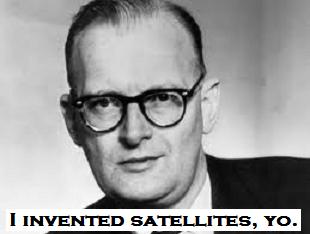
I love this chart.
edit on 7-11-2011 by mistermonculous because: ahem.
The bots suck so far. They need to contain them to stupider groups in my opinion. That might make them last longer.
I bet people will start just having their eyes gloss over them.
I'd like to see them turn that quantum computer on, give it some self-writing logic and algorithms, and set it loose on the Internet.
Maybe they could convince it to be a million different people with a million different stories.
I bet people will start just having their eyes gloss over them.
I'd like to see them turn that quantum computer on, give it some self-writing logic and algorithms, and set it loose on the Internet.
Maybe they could convince it to be a million different people with a million different stories.
Throughout mans history he has always been able to take solace in that one little corner of his existence: his mind. No matter what slavery chained
him, his mind was always his.
The most sinister thing about this is that it seeks to steal that one last oasis of individuality, of privacy. That one place that was always been untouchable. Our thoughts.
The most sinister thing about this is that it seeks to steal that one last oasis of individuality, of privacy. That one place that was always been untouchable. Our thoughts.
reply to post by bigfatfurrytexan
Yeah, I've been trying to bring some levity to the subject, because that's immediately where I went with this too.
That they're going right for what makes us human; and if I didn't laugh, I might never stop crying.
Yeah, I've been trying to bring some levity to the subject, because that's immediately where I went with this too.
That they're going right for what makes us human; and if I didn't laugh, I might never stop crying.
edit on 7-11-2011 by mistermonculous
because: (no reason given)
Originally posted by mistermonculous
Hey, incidentally, is anyone else bothered by the fact that the tech development on this front is skewed entirely toward the needs of security and advertising? It seems like there are far more important and interesting applications.
Yes I am.
All about the control. What you eat, what you wipe up with, how you poop, how you vote, where you go, who your friends are...... its sad really. Even in creating "freedom" the organizations doing it are willing to do just about anything to force and control what that freedom is and how you take it.
Nothing but control all the damn time about everything.
Most of human ingenuity is about control, or trying to figure out how to get away from it.
The answer that comes up to this is then "we cooperate about everything!" But I really don't want to. I only want to cooperate when I want to about what I want to. Sometimes I want to compete.
Our heritages have made us into different things. Some of us are settlers, some of us are wanderers. I want to say, we could all decide to do work on some great project like getting to a new planet! But then I think that there are more settlers than wanderers, and the settlers see no reason to do it. I have no interest in cooperating in a system that makes sure that we'll never do anything but be subsistence farmers. Competing interests for resources and brain power. Maybe I can convince all the settlers that they can get rid of all of us if they cooperate for a couple of hundred years.
Now I wonder if the haves and have-nots of technology will make us distinctly into different things. Those of us who can rewire ourselves for technology, and the people who can't. That should be interesting.
reply to post by mistermonculous
You mean the early 1900s, surely, or even the mid-1800s.
The news you bring doesn’t trouble me in the least. It is just another an effort to raise the strike-rate of advertising and propaganda through the use of science. It is very primitive, and the nature of what is being studied – how the mind works, how and what stories affect it, how and why they do so – is so fraught with complexity and fuzzy variables that there isn’t enough time or computing power in the universe to deal with them all. The quarry is about as elusive as a contact lens in a swimming pool.
I spent about a quarter-century in the international advertising industry. For the first three or four years I believed all the theoretical guff in communications and psychology they taught me, though I noticed the veterans of the industry didn’t seem to take the stuff very seriously at all. Meanwhile, I’d been making my own investigations, based on my day job and the scientific education I am lucky enough to have received. I soon discovered that the ‘psychology’ of communications was mostly shaky theorizing, and most of ‘science’ concerning advertising and mass communications was pure mumbo-jumbo. The situation may have improved a little since then, but from what former colleagues tell me, I doubt it.
I came to believe (and still do) that what makes advertising and propaganda work is the same thing that makes any story work: empathy on the part of the author, plus a talent for telling stories people enjoy hearing, reading or watching.
I left the business early in the last decade with a firm conviction that over a century of communications, market and consumer research, costing heaven knows how many millions of dollars, had failed even to produce insight in depth about, let alone reproduce the effectiveness of, works of persuasion being churned out in their thousands daily by highly talented storytellers all over the world. The irony is that some of the best of these people work in ad agency creative departments.
What you describe is just the latest attempt by unimaginative left-brained clods to set the black art of communications and persuasion on a firm scientific basis. As always, they’re bringing into play the fashionable tools of the age – in this case, the MRI scanner and gargantuan number-crunching. As always, they will fail.
The grail they seek is not at all hard to find, for the right people. For the wrong ones, it cannot be winkled out by simple-minded technocratic means, nor, indeed, by any means. The secret of how to produce stories that affect their hearers lies in two common but unreliable human faculties: empathy and creative talent. No doubt studying such phenomena as how mirror neurons work and how the brain shapes and causally connects discrete events into a narrative will help us understand, in a klutzy, by-the-numbers way that misses the whole point, how stories work their magic on us. But it will never help us tell more persuasive stories. People with storytelling talent don’t need such help, and no amount of scientific insight or technical assistance will ever help the untalented. The golden key to successful advertising, propaganda, cultural warfare, etc., will remain what it always has been: find the right thing to say and get the right people to say it for you.
DARPA may be investing in this, and Dr. Casebeer may have a scintillating academic record, but the whole field is nothing but witch-doctoring and pseudoscience none the less. I don’t see it changing any time soon, either.
At least one of the bloggers you link to in your OP agrees with me:
In other words, they’ll never equal the persuasive power of talent.
The advertising industry has been leveraging our Stories against us since the early 2000's
You mean the early 1900s, surely, or even the mid-1800s.
The news you bring doesn’t trouble me in the least. It is just another an effort to raise the strike-rate of advertising and propaganda through the use of science. It is very primitive, and the nature of what is being studied – how the mind works, how and what stories affect it, how and why they do so – is so fraught with complexity and fuzzy variables that there isn’t enough time or computing power in the universe to deal with them all. The quarry is about as elusive as a contact lens in a swimming pool.
I spent about a quarter-century in the international advertising industry. For the first three or four years I believed all the theoretical guff in communications and psychology they taught me, though I noticed the veterans of the industry didn’t seem to take the stuff very seriously at all. Meanwhile, I’d been making my own investigations, based on my day job and the scientific education I am lucky enough to have received. I soon discovered that the ‘psychology’ of communications was mostly shaky theorizing, and most of ‘science’ concerning advertising and mass communications was pure mumbo-jumbo. The situation may have improved a little since then, but from what former colleagues tell me, I doubt it.
I came to believe (and still do) that what makes advertising and propaganda work is the same thing that makes any story work: empathy on the part of the author, plus a talent for telling stories people enjoy hearing, reading or watching.
I left the business early in the last decade with a firm conviction that over a century of communications, market and consumer research, costing heaven knows how many millions of dollars, had failed even to produce insight in depth about, let alone reproduce the effectiveness of, works of persuasion being churned out in their thousands daily by highly talented storytellers all over the world. The irony is that some of the best of these people work in ad agency creative departments.
What you describe is just the latest attempt by unimaginative left-brained clods to set the black art of communications and persuasion on a firm scientific basis. As always, they’re bringing into play the fashionable tools of the age – in this case, the MRI scanner and gargantuan number-crunching. As always, they will fail.
The grail they seek is not at all hard to find, for the right people. For the wrong ones, it cannot be winkled out by simple-minded technocratic means, nor, indeed, by any means. The secret of how to produce stories that affect their hearers lies in two common but unreliable human faculties: empathy and creative talent. No doubt studying such phenomena as how mirror neurons work and how the brain shapes and causally connects discrete events into a narrative will help us understand, in a klutzy, by-the-numbers way that misses the whole point, how stories work their magic on us. But it will never help us tell more persuasive stories. People with storytelling talent don’t need such help, and no amount of scientific insight or technical assistance will ever help the untalented. The golden key to successful advertising, propaganda, cultural warfare, etc., will remain what it always has been: find the right thing to say and get the right people to say it for you.
DARPA may be investing in this, and Dr. Casebeer may have a scintillating academic record, but the whole field is nothing but witch-doctoring and pseudoscience none the less. I don’t see it changing any time soon, either.
At least one of the bloggers you link to in your OP agrees with me:
So what’s new here? What secrets of the narrative art will be unveiled in this quantitative analysis?
Nothing much, other than what was once an art-form will suffer yet another reduction into a somewhat less effective means for moving markets, and manipulating populations. And that, in the end, is really the goal...
What a hustler is able to do every day on the streets to grab a few bucks for a beer, or a hit of heroin, and what poets and prostyletizers have been banking on for millennium, it’s doubtful DARPA will be able to add anything new with an MRI or EKG strapped to the head of some already desensitized citizen, or college kid looking for a couple of extra dollars to pay rent.
modernmyth ology.net
In other words, they’ll never equal the persuasive power of talent.
edit on 8/11/11 by Astyanax because: of poor communications
reply to post by Aeons
Almost no time at all in this internetworkified age. And judging by your use of the word ‘meme’ in an earlier post, I am sure you already know this.
The imaginatively challenged, such as Dr. Beercase and his DARPA colleagues, will always be at the butt-end of the learning curve. How they must hate talented people, to plot such a revenge as this!
The interesting thing will be to find how long it'll take for the smart ones in the herd to learn to pass along immunity to their children or other people.
Almost no time at all in this internetworkified age. And judging by your use of the word ‘meme’ in an earlier post, I am sure you already know this.
The imaginatively challenged, such as Dr. Beercase and his DARPA colleagues, will always be at the butt-end of the learning curve. How they must hate talented people, to plot such a revenge as this!
reply to post by mistermonculous
Yes, all the time. I often tell people we are living in the world I imagined as a boy. Or, more accurately, the one Sir Arthur and others like him imagined.
Speaking of which, it is quite astonishing how much influence SF writers like Larry Niven, Jerry Pourneille, the late Robert Heinlein and certain others (all seasoned Republican voters, of course) have with the US military-industrial complex. I understand Clarke actually fell out with many of his American brethren over their efforts to rope him in to support some of their favourite war babies, such as SDI (or ‘Star Wars’ as it is scientifictionally better known).
Hey, you guys ever notice that Science Fiction seems to drive actual haaaaahd science?
Yes, all the time. I often tell people we are living in the world I imagined as a boy. Or, more accurately, the one Sir Arthur and others like him imagined.
Speaking of which, it is quite astonishing how much influence SF writers like Larry Niven, Jerry Pourneille, the late Robert Heinlein and certain others (all seasoned Republican voters, of course) have with the US military-industrial complex. I understand Clarke actually fell out with many of his American brethren over their efforts to rope him in to support some of their favourite war babies, such as SDI (or ‘Star Wars’ as it is scientifictionally better known).
Oh criminey Batman! Man the hoses!
www.abovetopsecret.com...
Page 2 introduces the "other" antagonist DARPA
We need a bailout emoticon!
www.abovetopsecret.com...
Page 2 introduces the "other" antagonist DARPA
We need a bailout emoticon!
new topics
-
Las Vegas UFO Spotting Teen Traumatized by Demon Creature in Backyard
Aliens and UFOs: 2 hours ago -
2024 Pigeon Forge Rod Run - On the Strip (Video made for you)
Automotive Discussion: 3 hours ago -
Gaza Terrorists Attack US Humanitarian Pier During Construction
Middle East Issues: 3 hours ago -
The functionality of boldening and italics is clunky and no post char limit warning?
ATS Freshman's Forum: 4 hours ago -
Meadows, Giuliani Among 11 Indicted in Arizona in Latest 2020 Election Subversion Case
Mainstream News: 5 hours ago -
Massachusetts Drag Queen Leads Young Kids in Free Palestine Chant
Social Issues and Civil Unrest: 5 hours ago -
Weinstein's conviction overturned
Mainstream News: 6 hours ago -
Supreme Court Oral Arguments 4.25.2024 - Are PRESIDENTS IMMUNE From Later Being Prosecuted.
Above Politics: 8 hours ago -
Krystalnacht on today's most elite Universities?
Social Issues and Civil Unrest: 8 hours ago -
Chris Christie Wishes Death Upon Trump and Ramaswamy
Politicians & People: 8 hours ago
top topics
-
Krystalnacht on today's most elite Universities?
Social Issues and Civil Unrest: 8 hours ago, 9 flags -
Weinstein's conviction overturned
Mainstream News: 6 hours ago, 7 flags -
Supreme Court Oral Arguments 4.25.2024 - Are PRESIDENTS IMMUNE From Later Being Prosecuted.
Above Politics: 8 hours ago, 7 flags -
University of Texas Instantly Shuts Down Anti Israel Protests
Education and Media: 11 hours ago, 6 flags -
Massachusetts Drag Queen Leads Young Kids in Free Palestine Chant
Social Issues and Civil Unrest: 5 hours ago, 4 flags -
Meadows, Giuliani Among 11 Indicted in Arizona in Latest 2020 Election Subversion Case
Mainstream News: 5 hours ago, 4 flags -
Gaza Terrorists Attack US Humanitarian Pier During Construction
Middle East Issues: 3 hours ago, 3 flags -
Chris Christie Wishes Death Upon Trump and Ramaswamy
Politicians & People: 8 hours ago, 2 flags -
Any one suspicious of fever promotions events, major investor Goldman Sachs card only.
The Gray Area: 13 hours ago, 2 flags -
2024 Pigeon Forge Rod Run - On the Strip (Video made for you)
Automotive Discussion: 3 hours ago, 1 flags
active topics
-
Meadows, Giuliani Among 11 Indicted in Arizona in Latest 2020 Election Subversion Case
Mainstream News • 10 • : chr0naut -
Supreme Court Oral Arguments 4.25.2024 - Are PRESIDENTS IMMUNE From Later Being Prosecuted.
Above Politics • 75 • : Vermilion -
University student disciplined after saying veganism is wrong and gender fluidity is stupid
Education and Media • 50 • : watchitburn -
VP's Secret Service agent brawls with other agents at Andrews
Mainstream News • 55 • : CarlLaFong -
Cats Used as Live Bait to Train Ferocious Pitbulls in Illegal NYC Dogfighting
Social Issues and Civil Unrest • 23 • : Ravenwatcher -
-@TH3WH17ERABB17- -Q- ---TIME TO SHOW THE WORLD--- -Part- --44--
Dissecting Disinformation • 680 • : 777Vader -
Is there a hole at the North Pole?
ATS Skunk Works • 40 • : Oldcarpy2 -
Fossils in Greece Suggest Human Ancestors Evolved in Europe, Not Africa
Origins and Creationism • 89 • : whereislogic -
University of Texas Instantly Shuts Down Anti Israel Protests
Education and Media • 197 • : NorthOS -
Candidate TRUMP Now Has Crazy Judge JUAN MERCHAN After Him - The Stormy Daniels Hush-Money Case.
Political Conspiracies • 790 • : Oldcarpy2