It looks like you're using an Ad Blocker.
Please white-list or disable AboveTopSecret.com in your ad-blocking tool.
Thank you.
Some features of ATS will be disabled while you continue to use an ad-blocker.

One Mega Watt E-Cat Cold Fusion Device Test Successful!
page: 37share:
Originally posted by yampa
Triacs allow RMS power and voltage control - you can mess with the waveform produced by the power supply. You can certainly apply PWM to a triac.
No, no, you can't. Once you switch it on, it's on. There's no turning it off. You can't PWM with one whatsoever, in the proper sense. The only "PWM" you can do is delay where in the incoming AC waveform you switch the triac on, and that's old fashioned phase control. You can't control voltage either. TRIACS can't be modulated like a transistor or FET, you fire them and they're on. That's it. No level control at all. And once on, the only way to turn it off is to wait for the current to fall to the critical level.
Who is to say that knowing the right way to switch the output doesn't facilitate a reaction? Perhaps he is switching to create some kind of harmonic? Or maybe wants a deliberately noisy signal, so switches it at random?
Me. I'm the one to say it. The output of a TRIAC is on, and once on, it's on until the current through it falls to near zero. There's no special way to do it. It's fired, or it isn't.
eta: and what you get out of it when you're phase controlling with AC isn't a sine wave - diddling the firing point in the phase gives you control over RMS power, but it's not a nice sine wave anymore, it's pretty nasty looking. Fine for a motor or an incandescent light, not so good for other things...
etaa: and the waveform you get is textbook typical for phase control using a TRIAC on AC. You can't make secret new waveforms with it.
edit on
22-5-2013 by Bedlam because: (no reason given)
You can modulate the signal with a triac (plus other components) if you synchronize to zero crossing. I guess that isn't true PWM waveform generation
though.
Rossi's experiment had a three phase input originally, and we don't know the frequency of the input PSU. I think you could create some interesting signals with a high frequency, three phase AC controlled by triacs?
We don't have details of what is in the control box and we have no idea which signals/waveforms are and aren't useful for facilitating unknown reactions.
Apparently the later version no longer uses triacs or three phase output:
Rossi's experiment had a three phase input originally, and we don't know the frequency of the input PSU. I think you could create some interesting signals with a high frequency, three phase AC controlled by triacs?
We don't have details of what is in the control box and we have no idea which signals/waveforms are and aren't useful for facilitating unknown reactions.
Apparently the later version no longer uses triacs or three phase output:
The E-Cat HT2's power supply departs from that of the device used in December in that it is
no longer three -phase, but single-phase: the TRIAC power supply has been replaced by a control
circuit having three -phase power input and single-phase output, mounted within a box, the
contents of which were not available for inspection, in as much as they are part of the
industrial trade secret. But the main difference between the E-Cat HT2 and the previous model
lies in the control system, which allows the device to work in self -sustaining mode, i.e. to
remain operative and active, while powered off, for much longer periods of time with respect to
those during which power is switched on. During the test experiment we observed that, after an
initial phase lasting about two hours, in which power fed to the resistor coils was gradually
increased up to operating regime, an ON/OFF phase was reached.
In the ON/OFF phase, the resistor coils were powered up and powered down by the control system at
regular intervals of about two minutes for the ON state and four minutes for the OFF state. This
operating mode was kept more or less unchanged for all the remaining hours of the test.
edit on 23-5-2013 by yampa because: (no reason given)
Originally posted by yampa
You can modulate the signal with a triac (plus other components) if you synchronize to zero crossing. I guess that isn't true PWM waveform generation though.
Nah, what you have then is jelly bean phase control. It's not up to "secret waveforms", unless classic TRIAC phase control is secret.
Rossi's experiment had a three phase input originally, and we don't know the frequency of the input PSU. I think you could create some interesting signals with a high frequency, three phase AC controlled by triacs?
If you're handling the power upstream to the extent that you're supplying 'high frequency three phase AC', you don't need the TRIACs, just make it what you want. That's the issue I have with humming in 'TRIACs' as a magic bean here, it sounds sciency but it's not what you'd use in this case. eta: TRIACs aren't really that good with high frequencies either, you've got a really big volume you have to sweep clean of charge carriers before they turn off, the higher powered the TRIAC the more sluggish they are.
We don't have details of what is in the control box and we have no idea which signals/waveforms are and aren't useful for facilitating unknown reactions.
What I'm saying is that if he needed weird waveforms or signals, he could not have gotten them with a TRIAC, and I see his invoking them here as a sort of pseudo-sciencey smoke screen of cool terms. If you tell me with a straight face you are making 'industrial secret waveforms' with TRIACs, you are a liar, they are not suitable for that purpose.
edit on 23-5-2013 by Bedlam because: (no reason given)
Headline from article
Phys.org article here
From the article:
Phys.org is a mainstream physics news source, this is starting to look like the Rossi Report is being accepted by more reliable sources.
Tests find Rossi's E-Cat has an energy density at least 10 times higher than any conventional energy source
Phys.org article here
From the article:
According to the researcher's conservative measurements and calculations, the E-Cat HT and E-Cat HT2 have energy densities of 680,000 Wh/kg and 61,000,000 Wh/kg, respectively. Even with a "blind" evaluation that probably underestimates the energy production significantly, the researchers still get a value that is an order of magnitude higher than all other conventional energy sources. Considering that gasoline has an energy density of 12,000 Wh/kg, these values are extraordinary and would blow all other energy technologies out of the water. Read more at: phys.org...
Phys.org is a mainstream physics news source, this is starting to look like the Rossi Report is being accepted by more reliable sources.
Originally posted by Bedlam
What I'm saying is that if he needed weird waveforms or signals, he could not have gotten them with a TRIAC, and I see his invoking them here as a sort of pseudo-sciencey smoke screen of cool terms. If you tell me with a straight face you are making 'industrial secret waveforms' with TRIACs, you are a liar, they are not suitable for that purpose.
I think this is your own bias about what constitutes 'weird waveforms' showing. I don't see Rossi invoking anything about secret waveforms - I see the author of the papers summarising the resistor heater control system as a secret. You can fit the idea of 'waveform' to several levels of signal control here and we don't know what the authors of the paper meant by this.
It is my own interpretation that he is using the power control to raise the complexity of the emission from the resistor coils. I can think of a few different ways to use triacs to influence the charge emission from those heater coils.
I think your ideas about what triacs can and can't be used for are deliberately limited because you are not genuinely thinking about nickel powder + hydrogen heat engines.
Originally posted by RING0
Headline from articleTests find Rossi's E-Cat has an energy density at least 10 times higher than any conventional energy source
Phys.org article here
From the article:
According to the researcher's conservative measurements and calculations, the E-Cat HT and E-Cat HT2 have energy densities of 680,000 Wh/kg and 61,000,000 Wh/kg, respectively. Even with a "blind" evaluation that probably underestimates the energy production significantly, the researchers still get a value that is an order of magnitude higher than all other conventional energy sources. Considering that gasoline has an energy density of 12,000 Wh/kg, these values are extraordinary and would blow all other energy technologies out of the water. Read more at: phys.org...
Phys.org is a mainstream physics news source, this is starting to look like the Rossi Report is being accepted by more reliable sources.
wow - phys.org has a very wide readership. I wonder if this will get people interested in research into nickel hydrogen heat engines?
reply to post by RING0
Which means there is zero evidence this is not a scam. I have a car that runs on fairy dust. You can test it and see it works, just no looking under the hood.
Somewhat frustratingly, the seven scientists were not allowed to look inside the steel cylinder that houses the fuel
Which means there is zero evidence this is not a scam. I have a car that runs on fairy dust. You can test it and see it works, just no looking under the hood.
reply to post by OccamsRazor04
And does your fairy dust engined car perform at least 10 times as better as any other known car, including formula 1 racing cars? By comparison, this is what has been tested.
And does your fairy dust engined car perform at least 10 times as better as any other known car, including formula 1 racing cars? By comparison, this is what has been tested.
edit on 2013-5-26 by Esdoze because: (no reason given)
Originally posted by yampa
I think this is your own bias about what constitutes 'weird waveforms' showing. I don't see Rossi invoking anything about secret waveforms - I see the author of the papers summarising the resistor heater control system as a secret. You can fit the idea of 'waveform' to several levels of signal control here and we don't know what the authors of the paper meant by this.
Wasn't this you?
I'm interested in this:
They were fed by a TRIAC power regulator device which interrupted each phase periodically, >>>in order to modulate power input with an industrial trade secret waveformI did wonder how Rossi was applying a complexity raising signal (I thought some kind of RF inside) - it seems he is modulating the electrical field to influence the reaction.
Originally posted by Arken
Is this a Breakthrough? Seems so! The final 28 october (surprise) test on the E-cat of One Mega Watt in self-looped mode, works. The test was at the half power but: 470 kilowatt hour per hour of completely free energy, free of fuel is a breakthrough? Yes, I think this is a breakthrough.
We are on the verge of a revolution in energy production and no one can stop it.
So... almost two years later, how's that 'revolution in any production' working out for you? I sure as hell don't see any free energy generators around the place.
Where are they all?
Originally posted by Bedlam
Originally posted by yampa
I think this is your own bias about what constitutes 'weird waveforms' showing. I don't see Rossi invoking anything about secret waveforms - I see the author of the papers summarising the resistor heater control system as a secret. You can fit the idea of 'waveform' to several levels of signal control here and we don't know what the authors of the paper meant by this.
Wasn't this you?
I'm interested in this:
They were fed by a TRIAC power regulator device which interrupted each phase periodically, >>>in order to modulate power input with an industrial trade secret waveformI did wonder how Rossi was applying a complexity raising signal (I thought some kind of RF inside) - it seems he is modulating the electrical field to influence the reaction.
Originally posted by yampa
I'm interested in this:
They were fed by a TRIAC power regulator device which interrupted each phase periodically, >>>in order to modulate power input with an industrial trade secret waveformI did wonder how Rossi was applying a complexity raising signal (I thought some kind of RF inside) - it seems he is modulating the electrical field to influence the reaction.
Originally posted by Esdoze
reply to post by OccamsRazor04
And does your fairy dust engined car perform at least 10 times as better as any other known car, including formula 1 racing cars? By comparison, this is what has been tested.edit on 2013-5-26 by Esdoze because: (no reason given)
No, that is not what was tested. That is the result based on information provided to them. Based on what they were TOLD was under the hood, it performed well.
My Ferrari you can test has a 2 cylinder engine and runs on 1 ounce of fairy dust. Trust me.
Originally posted by Bedlam
Originally posted by yampa
I'm interested in this:
They were fed by a TRIAC power regulator device which interrupted each phase periodically, >>>in order to modulate power input with an industrial trade secret waveformI did wonder how Rossi was applying a complexity raising signal (I thought some kind of RF inside) - it seems he is modulating the electrical field to influence the reaction.
i am deeply suspicious of all this " secret wave form " hand waving , which when combined with the previously alledged " secret sause " [ a
undisclosed extra chemical in the Ni / H reactor vessel ] stink of obsfucation and only serve to
but i digress - my main issue with this new [ and it is a new embellishment ] "secret wave form " is that in light of all previous [ and continuted ] claims that a heating element is used to bring the reactor to the temp at which the " secret reaction " will start
then why is the " secret wave form " applied to the input of the heater element [ simply a resistor ] ???????????
a heating elelemet gets hot [ well DUH ] - but thats its job - and it does it most efficiently with constant power - switching off the input means the heater is not heating
so what is the " secret wave form " actually doing ??????????
its making the heater inefficient
now if the " secret wave form " was actuall required to provide an RF feild in the reactor vessel - then using the "heating pad" [ rossis ownterminology ]
is not the best solution - a SEPERATE unit should be generating the feild / RF source
just my opinion
and a last jab - when [ if ever ] are we going to see any evidence / results from the alledged working unit that was allegedly sold ???
if there is a working unit - in service - all these mickey mouse "tests " are irrelevant
but 3 years on - the dog and pony show is still ongoing
but i digress - my main issue with this new [ and it is a new embellishment ] "secret wave form " is that in light of all previous [ and continuted ] claims that a heating element is used to bring the reactor to the temp at which the " secret reaction " will start
then why is the " secret wave form " applied to the input of the heater element [ simply a resistor ] ???????????
a heating elelemet gets hot [ well DUH ] - but thats its job - and it does it most efficiently with constant power - switching off the input means the heater is not heating
so what is the " secret wave form " actually doing ??????????
its making the heater inefficient
now if the " secret wave form " was actuall required to provide an RF feild in the reactor vessel - then using the "heating pad" [ rossis ownterminology ]
is not the best solution - a SEPERATE unit should be generating the feild / RF source
just my opinion
and a last jab - when [ if ever ] are we going to see any evidence / results from the alledged working unit that was allegedly sold ???
if there is a working unit - in service - all these mickey mouse "tests " are irrelevant
but 3 years on - the dog and pony show is still ongoing
reply to post by yampa
if bedlam doesn - then the authour has used the term " waveform " incorrectly - a pretty grevious error for an alledged " scientific paper "
the term " wave form " is pretty well defined and clear in the mind of all real scientists and engineers :
here :
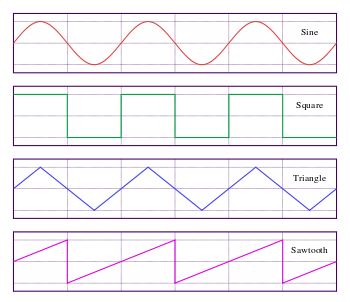
is the 4 basic wave forms
a straight line on a osciliscope is not a waveform - pretty much anything else is - simples
so either bedlam is correct - or the author is a - an idiot , b lying
bottom line - if its not a wave form as bedlam represents it - its pseudo scientific word salad
B) you don't know what the author of the paper meant by 'waveform'
if bedlam doesn - then the authour has used the term " waveform " incorrectly - a pretty grevious error for an alledged " scientific paper "
the term " wave form " is pretty well defined and clear in the mind of all real scientists and engineers :
here :
is the 4 basic wave forms
a straight line on a osciliscope is not a waveform - pretty much anything else is - simples
so either bedlam is correct - or the author is a - an idiot , b lying
bottom line - if its not a wave form as bedlam represents it - its pseudo scientific word salad
Originally posted by ignorant_ape
i am deeply suspicious of all this " secret wave form " hand waving , which when combined with the previously alledged " secret sause " [ a undisclosed extra chemical in the Ni / H reactor vessel ] stink of obsfucation and only serve to
but i digress - my main issue with this new [ and it is a new embellishment ] "secret wave form " is that in light of all previous [ and continuted ] claims that a heating element is used to bring the reactor to the temp at which the " secret reaction " will start
then why is the " secret wave form " applied to the input of the heater element [ simply a resistor ] ???????????
a heating elelemet gets hot [ well DUH ] - but thats its job - and it does it most efficiently with constant power - switching off the input means the heater is not heating
so what is the " secret wave form " actually doing ??????????
its making the heater inefficient
now if the " secret wave form " was actuall required to provide an RF feild in the reactor vessel - then using the "heating pad" [ rossis ownterminology ]
is not the best solution - a SEPERATE unit should be generating the feild / RF source
just my opinion
and a last jab - when [ if ever ] are we going to see any evidence / results from the alledged working unit that was allegedly sold ???
if there is a working unit - in service - all these mickey mouse "tests " are irrelevant
but 3 years on - the dog and pony show is still ongoing
I think these are good points. But waveform really could just mean 'knowing the right time to turn on and off' - it could be that there are critical timings which need to be obeyed. Maybe it is a high-maintenance fire?
You could also observe that a 'heating coil' might not simply be radiating heat. Coils also strongly radiate electrical charge. Charge can be switched far more quickly than heat, and different coil morphologies can provide selective emission of strongly focussed EM forces. Thyristors are often used in induction control systems. Iron oxide powder might help your reaction there..
We don't know enough about the input or the coils to say. None of this is fantasy engineering though, there are plausible interactions here.
As for Rossi, I agree, he doesn't seem to be a reliable source for proof about the validity of nickel hydrogen heat engines. I won't be handing over any cash just yet.
Originally posted by ignorant_ape
bottom line - if its not a wave form as bedlam represents it - its pseudo scientific word salad
I think you should read more scientific and technical literature if you think waveform isn't used in a 1000 different ways in professional texts.
reply to post by yampa
ok - bearing in mind that we are discussing an aledged " waveform " created by the manipulation of an electic current [ so limit answers to physics / electrial engineering examples ]
please show just one example that refutes the definition of waveform used by bedlam and i ,or shows waveform being used to describe a totally different principle
ok - bearing in mind that we are discussing an aledged " waveform " created by the manipulation of an electic current [ so limit answers to physics / electrial engineering examples ]
please show just one example that refutes the definition of waveform used by bedlam and i ,or shows waveform being used to describe a totally different principle
new topics
-
Israel attacking Iran again.
Middle East Issues: 59 minutes ago -
Michigan school district cancels lesson on gender identity and pronouns after backlash
Education and Media: 1 hours ago -
When an Angel gets his or her wings
Religion, Faith, And Theology: 1 hours ago -
Comparing the theology of Paul and Hebrews
Religion, Faith, And Theology: 2 hours ago -
Pentagon acknowledges secret UFO project, the Kona Blue program | Vargas Reports
Aliens and UFOs: 3 hours ago -
Boston Dynamics say Farewell to Atlas
Science & Technology: 3 hours ago -
I hate dreaming
Rant: 4 hours ago -
Man sets himself on fire outside Donald Trump trial
Mainstream News: 6 hours ago -
Biden says little kids flip him the bird all the time.
Politicians & People: 6 hours ago -
The Democrats Take Control the House - Look what happened while you were sleeping
US Political Madness: 7 hours ago
top topics
-
The Democrats Take Control the House - Look what happened while you were sleeping
US Political Madness: 7 hours ago, 17 flags -
In an Historic First, In N Out Burger Permanently Closes a Location
Mainstream News: 9 hours ago, 14 flags -
A man of the people
Medical Issues & Conspiracies: 14 hours ago, 10 flags -
Biden says little kids flip him the bird all the time.
Politicians & People: 6 hours ago, 8 flags -
Man sets himself on fire outside Donald Trump trial
Mainstream News: 6 hours ago, 7 flags -
Pentagon acknowledges secret UFO project, the Kona Blue program | Vargas Reports
Aliens and UFOs: 3 hours ago, 5 flags -
4 plans of US elites to defeat Russia
New World Order: 16 hours ago, 4 flags -
Sheetz facing racial discrimination lawsuit for considering criminal history in hiring
Social Issues and Civil Unrest: 7 hours ago, 3 flags -
Boston Dynamics say Farewell to Atlas
Science & Technology: 3 hours ago, 3 flags -
Are you ready for the return of Jesus Christ? Have you been cleansed by His blood?
Religion, Faith, And Theology: 11 hours ago, 3 flags
active topics
-
The Acronym Game .. Pt.3
General Chit Chat • 7733 • : CCoburn -
A man of the people
Medical Issues & Conspiracies • 11 • : chr0naut -
Post A Funny (T&C Friendly) Pic Part IV: The LOL awakens!
General Chit Chat • 7128 • : baddmove -
Michigan school district cancels lesson on gender identity and pronouns after backlash
Education and Media • 5 • : MetalThunder -
Thousands Of Young Ukrainian Men Trying To Flee The Country To Avoid Conscription And The War
Other Current Events • 52 • : TheMisguidedAngel -
-@TH3WH17ERABB17- -Q- ---TIME TO SHOW THE WORLD--- -Part- --44--
Dissecting Disinformation • 547 • : 777Vader -
Israel attacking Iran again.
Middle East Issues • 14 • : Solvedit -
The Democrats Take Control the House - Look what happened while you were sleeping
US Political Madness • 64 • : KrustyKrab -
Candidate TRUMP Now Has Crazy Judge JUAN MERCHAN After Him - The Stormy Daniels Hush-Money Case.
Political Conspiracies • 403 • : Threadbarer -
Cat Movies
Movies • 19 • : 5thHead