It looks like you're using an Ad Blocker.
Please white-list or disable AboveTopSecret.com in your ad-blocking tool.
Thank you.
Some features of ATS will be disabled while you continue to use an ad-blocker.

Outside energy had to be introduced for the twin towers to collapse the way they did
page: 86share:
reply to post by snowcrash911
1) For the bow in theory to work, the trusses are required not to fail.
2) Failure of truss components does not automatically mean failure (as in collapse) of the whole truss.
Bottom line is, the fact the trussed did not collapse means that the bowing inward theory is plausible. Had the trusses collapsed before they could exert any inward force, the theory would be very unlikely. All the rest is just a semantics game.
1) For the bow in theory to work, the trusses are required not to fail.
2) Failure of truss components does not automatically mean failure (as in collapse) of the whole truss.
Bottom line is, the fact the trussed did not collapse means that the bowing inward theory is plausible. Had the trusses collapsed before they could exert any inward force, the theory would be very unlikely. All the rest is just a semantics game.
edit on 23-12-2011 by -PLB- because: (no
reason given)
reply to post by ANOK
So did you figure out yet how sagging trusses can exert an inward force on the columns? Or is that simple concept still confusing you?
So did you figure out yet how sagging trusses can exert an inward force on the columns? Or is that simple concept still confusing you?
Originally posted by -PLB-
reply to post by snowcrash911
1) For the bow in theory to work, the trusses are required not to fail.
2) Failure of truss components does not automatically mean failure (as in collapse) of the whole truss.
Bottom line is, the fact the trussed did not collapse means that the bowing inward theory is plausible. Had the trusses collapsed before they could exert any inward force, the theory would be very unlikely. All the rest is just a semantics game.
It's not a game to me when people deliberately revise the original intrinsic meaning of words or claim semantic ownership of jargon in order to get away with deceit or misinformation. Not when no planers do it, truthers or debunkers do it. It's a matter of principle.
As for the truss-pull-perimeter-to-failure theory... I agree it's possible, and plausible. However, I think something else was pulling the perimeter through the floor trusses: the core.
edit on 23-12-2011 by snowcrash911 because: (no reason given)
reply to post by snowcrash911
Its not often someone proposes an alternative theory. How did the core columns move in your theory?
Its not often someone proposes an alternative theory. How did the core columns move in your theory?
Originally posted by esdad71
reply to post by psikeyhackr
THen how did it collapse? We are pages in so # or get off the pot. What was the outside energy source??? That is the point of the OP. I say no, so there is nothing to prove. They came down. End of story.
Spit it out....
It didn't collapse. It was destroyed. Something destroyed 90 stories of supports. Why doesn't everyone want to know the distributions of steel and concrete in those 90 stories so even the conservation of momentum can be properly analyzed. The potential energy cannot even be properly estimated without that info.
So why can't a collapsing model be built if that is what happened? But where has any engineering school even announced trying? They have only had TEN YEARS!
psik
Originally posted by peck420
Originally posted by Kester
After the dust had cleared some parts of the outer wall could be seen still standing and had to be cut apart and demolished during the clean up operation. My question is, if these enormous towers fell down in a gravitational collapse why didn't they land on the lower parts of the wall? Surely these walls couldn't possibly survive the enormous weight responsible for the destruction of the buildings? Due to the design I would expect the upper parts to descend vertically and crush the lower parts. What am I missing here?
The usual culprit is other debris.
Basically, the debris that has fallen can act as support to structures that have not yet fallen, making them incredibly strong for a short period.
Take 6 tooth picks and make a single 'wall' (2 horizontal (top and bottom) and 4 vertical (equally spaced).
Try to stand it up. It will be very difficult.
Take a pile of sugar and place the 'wall' into the sugar deep enough that you can provide a flat base on top.
Add weight.
You now have a wall that could not stand by itself easily capable of handling loads far exceeding it's design capabilities.
Now repeat very fast and you have what happens to the lower assembly of many buildings that collapse without design.
You can note that in controlled demolitions, they will specifically try to avoid this by blowing out key points prior to and during the collapse.
Thank you for taking the time to explain. My sugar and toothpick model performs as stated when motionless. However when the 'churning mass' credited with reducing the buildings and contents to the state preserved on the Fresh Kills landfill is replicated by pouring the sugar..... Well let's put it this way, I wouldn't trust my life on the structural integrity of those toothpicks.
In most controlled demolitions much of the debris is found in large chunks which would have the potential to interfere with the collapse of lower segments of the structure. I'm not sure the comparison is accurate. We must remember of course the WTC Disaster was a gravitational collapse and not an explosive event in which some materials were blasted outwards rather than descending in the direction gravity dictates.
I am aware through experience that demolition can be a lot harder than anticipated. Forgive me for sounding illogical but I have personally seen part of a building refusing to fall as if the memory of standing there for so long was keeping it up. The wall of the pentagon stubbornly refused to fall in spite of the damage caused by that large, rapidly moving jet. It stood for some time, the roofline dipping and obviously about to fall, allowing some fairly clear photographs of the hole that large plane passed through. April Gallup escaped with her injured child through that hole. Her account is freely available on the internet.
My own view is an equation incorporating the average size of the WTC remains and the recorded time the destruction took will answer once and for all this question of outside energy. The 40 acres of debris on the Fresh Kills landfill is a central part of that equation. wtcfamiliesforproperburial have knowledge relating to the 'fines'. The fines are the human and building remains under 1/4 inch which were recovered then bulldozed over the rest of the debris.
Originally posted by -PLB-
reply to post by snowcrash911
Its not often someone proposes an alternative theory. How did the core columns move in your theory?
It's a work in progress, and it's not my work. I don't want to say much about it yet, I might misrepresent it.
Of course, this theory is not non-falsifiable.
Originally posted by Kester
Thank you for taking the time to explain. My sugar and toothpick model performs as stated when motionless. However when the 'churning mass' credited with reducing the buildings and contents to the state preserved on the Fresh Kills landfill is replicated by pouring the sugar..... Well let's put it this way, I wouldn't trust my life on the structural integrity of those toothpicks.
Lol, neither would I. Keep in mind that the sugar example is a very simplistic way of teaching this to students (where I tried it). With respect to the WTC, you would have to factor in the specific strengths of the structure, it's shape (the component profile, not the building shape), the spacing between primary structure/support structure, fall patterns, etc. All the while trying to guess what the non building components would be doing. We would be talking a very large number of different debris profiles, potential profiles, compaction rates, crush rates, deflections...oiy, I think I just got a headache thinking about it.
I would dare say that it would be almost impossible to predict with any more accuracy than "there may be some structure remaining after".
In most controlled demolitions much of the debris is found in large chunks which would have the potential to interfere with the collapse of lower segments of the structure. I'm not sure the comparison is accurate. We must remember of course the WTC Disaster was a gravitational collapse and not an explosive event in which some materials were blasted outwards rather than descending in the direction gravity dictates.
Absolutely. We also have to remember that different construction styles will give different demolition results. For the type of construction that the WTC used, I'm actually shocked that there wasn't much larger debris pieces, especially from the zone directly around the impact locations. May just be my lack of faith in certain modular construction types though.
I am aware through experience that demolition can be a lot harder than anticipated. Forgive me for sounding illogical but I have personally seen part of a building refusing to fall as if the memory of standing there for so long was keeping it up. The wall of the pentagon stubbornly refused to fall in spite of the damage caused by that large, rapidly moving jet. It stood for some time, the roofline dipping and obviously about to fall, allowing some fairly clear photographs of the hole that large plane passed through. April Gallup escaped with her injured child through that hole. Her account is freely available on the internet.
My own view is an equation incorporating the average size of the WTC remains and the recorded time the destruction took will answer once and for all this question of outside energy. The 40 acres of debris on the Fresh Kills landfill is a central part of that equation. wtcfamiliesforproperburial have knowledge relating to the 'fines'. The fines are the human and building remains under 1/4 inch which were recovered then bulldozed over the rest of the debris.
Well put.
I showed the bolded part to one of my engineers and his response was, "the first thing we learn to anticipate is that it will not turn out exactly as anticipated" (his first engineering post was with a demo company).
Lol, I thought it was humorous that two different persons with direct demolition experience (having witnessed live, etc.) would have almost the exact same thoughts on the subject.
Originally posted by psikeyhackr
Originally posted by esdad71
reply to post by psikeyhackr
THen how did it collapse? We are pages in so # or get off the pot. What was the outside energy source??? That is the point of the OP. I say no, so there is nothing to prove. They came down. End of story.
Spit it out....
It didn't collapse. It was destroyed. Something destroyed 90 stories of supports. Why doesn't everyone want to know the distributions of steel and concrete in those 90 stories so even the conservation of momentum can be properly analyzed. The potential energy cannot even be properly estimated without that info.
So why can't a collapsing model be built if that is what happened? But where has any engineering school even announced trying? They have only had TEN YEARS!
psik
What is something?
You can find the distributions. They even showed it on Nat Geo for the Anniversary. I already told you that. Everything had been estimated but you do not believe those that present such information. If that is the case, it is up to you to provide something different but you will not even share the theory on what "SOMETHING" is to cause the collapse.
What destroyed it. This thread cannot move forward until you answer that otherwise you have nothing as well as the OP and it should be closed.
Originally posted by esdad71
Originally posted by psikeyhackr
Originally posted by esdad71
reply to post by psikeyhackr
THen how did it collapse? We are pages in so # or get off the pot. What was the outside energy source??? That is the point of the OP. I say no, so there is nothing to prove. They came down. End of story.
Spit it out....
It didn't collapse. It was destroyed. Something destroyed 90 stories of supports. Why doesn't everyone want to know the distributions of steel and concrete in those 90 stories so even the conservation of momentum can be properly analyzed. The potential energy cannot even be properly estimated without that info.
So why can't a collapsing model be built if that is what happened? But where has any engineering school even announced trying? They have only had TEN YEARS!
psik
What is something?
You can find the distributions. They even showed it on Nat Geo for the Anniversary. I already told you that. Everything had been estimated but you do not believe those that present such information. If that is the case, it is up to you to provide something different but you will not even share the theory on what "SOMETHING" is to cause the collapse.
What destroyed it. This thread cannot move forward until you answer that otherwise you have nothing as well as the OP and it should be closed.
You can claim the Nat Geo has whatever you want. Gregory Urich's data is probably the best I have seen and his distribution for the perimeter panels to the top does not match an engineering magazine from 1970.
You can insist that I claim to know what I don't know all you want but I am not going to do it. If you don't like it though sh!t. That is the whole problem with this TEN YEAR FARCE. People believing crap based on totally inadequate data like the nation that put men on the Moon can't supply accurate info on skyscrapers. Like steel strong enough to support 29 stories can weaken in less than an hour and then no one explains how the bottom of those 29 stories moved horizontally 20 feet in a couple of seconds when the building only moved 15 inches when the plane impacted.
psik
Originally posted by -PLB-
reply to post by ANOK
So did you figure out yet how sagging trusses can exert an inward force on the columns? Or is that simple concept still confusing you?
I know it's not possible, I am waiting for your explanation.
It's you who fails to understand the concept of steel expanding when it heats up. If the trusses sagged it's because they could not push out the columns, so how can they put a pulling force on them when they sagged? They can't. Any 'pulling force' would just cause the truss to sag more. Think about it, lightweight truss heated to the point it is malleable, pulling on columns, that are attached to other columns, much more massive then itself that are not heated up to the same extent? Do you have any common sense?
Unless you can physically show this possibility, shouldn't be too hard eh? And I don't mean computer simulations.
And again even IF the truss did pull in columns it doesn't mean that would cause complete failure of the building. You have a lot more to explain than something NIST made up. Their hypothesis has never been successfully tested, yet you all claim it to be fact. From extremely flimsy evidence, and government claims.
edit on 12/23/2011 by ANOK because: typo
Originally posted by esdad71
reply to post by psikeyhackr
THen how did it collapse? We are pages in so # or get off the pot. What was the outside energy source???
That's the big question isn't it, what was that outside energy?
No one knows esdad, we can only speculate. But not knowing what it was, doesn't mean we don't what it wasn't.
It's a process of elimination, can fire heat up thousand of tons of steel enough in an hour to cause steel failure? No. Can sagging trusses put a pulling force on columns? No. So we have to assume another energy was acting on the towers to cause the events we see. That is what a new investigation would hopefully discover.
That is the point of the OP. I say no, so there is nothing to prove. They came down. End of story.
Wow what incredible logic you use. You can't explain how it just came down, so the OS must be true?
edit on 12/23/2011 by ANOK because: typo
reply to post by ANOK
Long ago, didn't I post several publications about this subject where they did real life experiments that showed an inward pull force? And weren't these publication easily found by using simple terms like "sagging" "trusses" "fire" in Google? Aaah yes, that was the case. But then you chose to ignore that, since you ignore anything that conflicts with your shallow world view. And here we are, you still being completely confused about the simplest concepts, thinking potential energy pushes up, or attached top section don't have potential energy.
Long ago, didn't I post several publications about this subject where they did real life experiments that showed an inward pull force? And weren't these publication easily found by using simple terms like "sagging" "trusses" "fire" in Google? Aaah yes, that was the case. But then you chose to ignore that, since you ignore anything that conflicts with your shallow world view. And here we are, you still being completely confused about the simplest concepts, thinking potential energy pushes up, or attached top section don't have potential energy.
What is the outside force? If you do not have a theory, why are you here?
Originally posted by ANOK
Originally posted by esdad71
reply to post by psikeyhackr
THen how did it collapse? We are pages in so # or get off the pot. What was the outside energy source???
That's the big question isn't it, what was that outside energy?
No one knows esdad, we can only speculate. But not knowing what it was, doesn't mean we don't what it wasn't.
It's a process of elimination, can fire heat up thousand of tons of steel enough in an hour to cause steel failure? No. Can sagging trusses put a pulling force on columns? No. So we have to assume another energy was acting on the towers to cause the events we see. That is what a new investigation would hopefully discover.
That is the point of the OP. I say no, so there is nothing to prove. They came down. End of story.
Wow what incredible logic you use. You can't explain how it just came down, so the OS must be true?
Exactly! No one has to PROVE that normal airliners and resulting fires could result in the complete destruction of the towers in LESS THAN TWO HOURS based on ACCURATE DATA ABOUT THE BUILDINGS. Everyone is just supposed to BELIEVE on the basis of having seen airliners hit the towers and their resulting COMPLETE destruction.
I can only conclude that lots of people are too emotionally upset about the POSSIBILITY that airliners could not do it because it opens a HUGE CAN OF WORMS that would smell really bad. So accepting the OS and hating Arab terrorists just makes life a lot simpler.
Even for people with PhDs in physics who should at least have their curiosities aroused by such a phenomenal event. So what if it is Isaac Neton's birthday. He ain't nobody!
psik
reply to post by psikeyhackr
Here is two pictures.
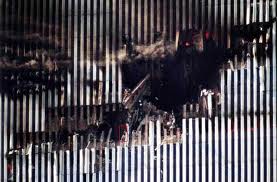
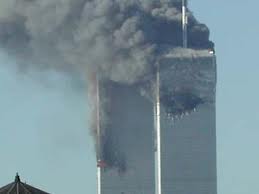
I can only conclude that people are neglecting the amount of damage an airliner can cause to a vertical structure.
Just look at the damage for a while
Merry Christmas everybody
I can only conclude that lots of people are too emotionally upset about the POSSIBILITY that airliners could not do it because it opens a HUGE CAN OF WORMS that would smell really bad. So accepting the OS and hating Arab terrorists just makes life a lot simpler.
Here is two pictures.
I can only conclude that people are neglecting the amount of damage an airliner can cause to a vertical structure.
Just look at the damage for a while
Merry Christmas everybody
Originally posted by liejunkie01
reply to post by psikeyhackr
I can only conclude that lots of people are too emotionally upset about the POSSIBILITY that airliners could not do it because it opens a HUGE CAN OF WORMS that would smell really bad. So accepting the OS and hating Arab terrorists just makes life a lot simpler.
Here is two pictures.
I can only conclude that people are neglecting the amount of damage an airliner can cause to a vertical structure.
Just look at the damage for a while
Merry Christmas everybody
Oh WOW! He can show us a picture of one side of the building. It had FOUR. He can't show how much damage there was to the core. So since the core supported 50% of the weight one side of the exterior is only 12.5 of the total support. And since the buildings are constructed to hold more than double their weight that damage could not start a collapse.
So this is also a perception issue, possibly from seeing too many explosions in movies.
And it still does not explain how the top of the north tower could destroy everything below in less than 25 seconds. So this is an issue for the physicists. Why haven't they asked about the distribution of steel regardless of what caused the destruction?
Happy Newton's Birthday physicists.
I suppose after TEN YEARS there is another aspect to the problem.
Some people would have to admit they have been stupid for a long time.
So build a physical model that can completely collapse. The Laws of Physics do not care about anybodies ego.
psik
edit on 24-12-2011 by psikeyhackr because: an addition
Originally posted by liejunkie01
Just look at the damage for a while
Maybe you should take your own advise, and look for awhile at all the building that is not damaged.
Also take note of where the damage is, compared to where the damage isn't.
Merry Crassmass....
new topics
-
Thousands Of Young Ukrainian Men Trying To Flee The Country To Avoid Conscription And The War
Other Current Events: 2 hours ago -
12 jurors selected in Trump criminal trial
US Political Madness: 4 hours ago -
Iran launches Retalliation Strike 4.18.24
World War Three: 4 hours ago -
Israeli Missile Strikes in Iran, Explosions in Syria + Iraq
World War Three: 5 hours ago -
George Knapp AMA on DI
Area 51 and other Facilities: 11 hours ago -
Not Aliens but a Nazi Occult Inspired and then Science Rendered Design.
Aliens and UFOs: 11 hours ago
top topics
-
George Knapp AMA on DI
Area 51 and other Facilities: 11 hours ago, 25 flags -
Israeli Missile Strikes in Iran, Explosions in Syria + Iraq
World War Three: 5 hours ago, 14 flags -
Louisiana Lawmakers Seek to Limit Public Access to Government Records
Political Issues: 13 hours ago, 7 flags -
So I saw about 30 UFOs in formation last night.
Aliens and UFOs: 16 hours ago, 6 flags -
Iran launches Retalliation Strike 4.18.24
World War Three: 4 hours ago, 6 flags -
Do we live in a simulation similar to The Matrix 1999?
ATS Skunk Works: 17 hours ago, 5 flags -
Not Aliens but a Nazi Occult Inspired and then Science Rendered Design.
Aliens and UFOs: 11 hours ago, 5 flags -
12 jurors selected in Trump criminal trial
US Political Madness: 4 hours ago, 4 flags -
The Tories may be wiped out after the Election - Serves them Right
Regional Politics: 14 hours ago, 3 flags -
Thousands Of Young Ukrainian Men Trying To Flee The Country To Avoid Conscription And The War
Other Current Events: 2 hours ago, 2 flags
active topics
-
Do we live in a simulation similar to The Matrix 1999?
ATS Skunk Works • 22 • : SchrodingersRat -
Iran launches Retalliation Strike 4.18.24
World War Three • 15 • : semperfortis -
Russia Ukraine Update Thread - part 3
World War Three • 5696 • : Kenzo -
President BIDEN Warned IRAN Not to Attack ISRAEL - Iran Responded with a Military Attack on Israel.
World War Three • 43 • : WeMustCare -
Israeli Missile Strikes in Iran, Explosions in Syria + Iraq
World War Three • 52 • : WeMustCare -
Mandela Effect - It Happened to Me!
The Gray Area • 107 • : inflaymes69 -
Terrifying Encounters With The Black Eyed Kids
Paranormal Studies • 45 • : daskakik -
Not Aliens but a Nazi Occult Inspired and then Science Rendered Design.
Aliens and UFOs • 12 • : BeyondKnowledge3 -
Elites disapearing
Political Conspiracies • 31 • : Degradation33 -
MULTIPLE SKYMASTER MESSAGES GOING OUT
World War Three • 47 • : SchrodingersRat