It looks like you're using an Ad Blocker.
Please white-list or disable AboveTopSecret.com in your ad-blocking tool.
Thank you.
Some features of ATS will be disabled while you continue to use an ad-blocker.

"The sports facilities are the detention/relocation camps..." ?
page: 5share:
reply to post by 1825114
I LOVE how I turn into a troll by asking for actual evidence that this will happen. Must everyone buy into the conspiracies on this website? You have offered proof of military exercises and NOTHING MORE. Oh no, the black helicopters are out to get me!
You call me a troll, but I don't insult you, when I could call you obviously paranoid. Get a life, if you think everything is so wonderful outside the US, leave the US and find out. You might be surprised what you find.
I LOVE how I turn into a troll by asking for actual evidence that this will happen. Must everyone buy into the conspiracies on this website? You have offered proof of military exercises and NOTHING MORE. Oh no, the black helicopters are out to get me!
You call me a troll, but I don't insult you, when I could call you obviously paranoid. Get a life, if you think everything is so wonderful outside the US, leave the US and find out. You might be surprised what you find.
If you think about it, one thing they could be used for, is if there's ever a some kind of 100% serious epidemic/plague, and we NEED quarantine
zones...
The logistics are all there in a ton of places pointed out so far...
and now I'm going to have the last few seconds of this song stuck in my head for the rest of the night...
The logistics are all there in a ton of places pointed out so far...
and now I'm going to have the last few seconds of this song stuck in my head for the rest of the night...
edit on 15-12-2011 by 1825114 because: (no reason given)


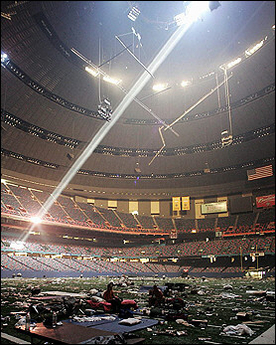


img384.imageshack.us...
img466.imageshack.us...
www.nerdylorrin.net...
www.bostonherald.com...
www.theage.com.au...
August 31 2005
From WWL-TV's wwltv.com:
"4:21 P.M. - WWL-TV Reporter quotes officials as saying there may now be 60,000 people in the Superdome and that more people are still being urged to go there."
Official spokesmen are now denying the numerous reports this morning from National Guardsmen and others that New Orleans is under martial law. But that is exactly what New Orleans and southeast Louisiana are under as the governor demands the entire city be evacuated...
Numerous media reports indicate that refugees are not allowed to leave the Superdome. The Superdome is now a prison. Tens of thousands of Americans, trapped in a 21st-century FEMA concentration camp.
"Martial Law Can Happen New Orleans Got Iraqed "
Originally posted by ProphecyPhD
Yankee Stadium (the old one and the newly built one) is located on 161st street a mere 5 minute walk from Criminal AND Supreme court.
You learn something new everyday.
We all heard about what happened in the stadium during Hurricane Katrina.
Originally posted by 1825114
Originally posted by timidgal
There is only one major highway leading to the area (all roads lead to the Major Deegan which is a horribly congested and dilapidated highway) and it would be virtually impossible to get mass droves of people into the area in a quick and efficient manner under the auspices of an emergency. Come to think of it, they would have the same problem with most of the major NY sports arenas (unless they shuffled everyone out to NJ).
What if people aren't driving themselves there, but are instead being brought in by bus, train or on watercraft?
What about a martial law situation, where civilians aren't allowed to drive/be on the roads?
What about the river it's sitting on and the ~7 railroad lines touching either side of the complex? There is an MTA station connected to the parking lot, which I'm assuming does transport massive amounts of people relatively efficiently.
edit on 15-12-2011 by 1825114 because: (no reason given)
13,000 troops to be deployed at olympics.
With Typhhon planes, ground to air missiles.
Those pole vaulters must be getting real good?
www.bbc.co.uk...
With Typhhon planes, ground to air missiles.
Those pole vaulters must be getting real good?
www.bbc.co.uk...
watching "camp fema" right now, and it points out some pertinent stuff and part of it shows how they've streamlined the process of setting up
camps, an example being that they can lay out hundreds of yards of razor wire in minutes.
army.mil document talks about setting up prison camps on military bases...
armypubs.army.mil...
www.freedomfiles.org...
as of a two years ago there were at least 24 of the converted/convertable bases...
Also, check out pier 57 in new york city.
It's an old bus station/warehouse that was used as an 'impromptu' prison facility during the 2004 rnc demonstrations.
It's talked about/shown for a few minutes starting around 7:20 in this video. Don't whine about it being an alex jones video, nobody cares what your opinion is on the guy, just look at what he's covering...
And it's not just alex pontificating or theorizing, it's an acknowledged fact that the place was used as such:
en.wikipedia.org...
Maybe not a FEMA camp, but definitely a prison camp, and it and similar facilities could definitely be used in the same way again in the future...
army.mil document talks about setting up prison camps on military bases...
armypubs.army.mil...
www.freedomfiles.org...
This new regulation dated 9 December 1997
- Provides Army policy and guidance for establishing civilian inmate labor
programs and civilian prison camps on Army installations.
- Discusses sources of Federal and State civilian inmate labor.
Summary.
This regulation provides guidance for establishing and managing civilian inmate labor programs on Army installations. It provides guidance on establishing prison camps on Army installations. It addresses record keeping and reporting incidents related to the Civilian Inmate Labor Program and/or prison camp administration.
Applicability.
This regulation applies to the Active Army, the Army National Guard of the United States, and the U.S.
Army Reserve unless otherwise stated. During mobilization, the Assistant Chief of Staff for Installation Management may modify chapters and policies contained in this regulation.
Chapter 3
Establishing Civilian Inmate Prison Camps on Army Installations, page 8
Policy statement • 3–1, page 8
Negotiating with correctional systems representatives to establish prison camps • 3–2, page 8
Governing criteria civilian inmate prison camps • 3–3, page 8
Governing provisions for operating civilian inmate prison camps on Army installations • 3–4, page 9
Procedures for establishing a civilian inmate prison camp on Army installations • 3–5, page 9
Interservice, interagency, or interdepartmental support agreements • 3–6, page 10
1–1. Purpose
This regulation provides Army policy and guidance for establishing civilian inmate labor programs and civilian prison camps on Army installations. Sources of civilian inmate labor are limited to on– and off–post Federal corrections facilities, State and/or local corrections facilities operating from on–post prison camps pursuant to leases under Section 2667, Title 10, United States Code (10 USC 2667), and off–post State corrections facilities participating in the demonstration project authorized under Section 1065, Public Law (PL) 103–337. Otherwise, State and/or local inmate labor from off–post corrections facilities is currently excluded from this program.
(1) Monitor media coverage on installation civilian inmate labor programs and civilian inmate prison camps on Army installations.
as of a two years ago there were at least 24 of the converted/convertable bases...
Also, check out pier 57 in new york city.
It's an old bus station/warehouse that was used as an 'impromptu' prison facility during the 2004 rnc demonstrations.
It's talked about/shown for a few minutes starting around 7:20 in this video. Don't whine about it being an alex jones video, nobody cares what your opinion is on the guy, just look at what he's covering...
And it's not just alex pontificating or theorizing, it's an acknowledged fact that the place was used as such:
en.wikipedia.org...
Police tactics and Pier 57
Concerns have been raised about police tactics in arresting nonviolent protesters with many apparently innocent people being swept up in mass arrests.
Guantanamo on the Hudson was a term coined during the Republican National Convention by a lawyer who, amongst 1000 other people, was detained in a facility by the New York City Police, in such conditions that he said that the city had created its "own little Guantanamo on the Hudson" (an allusion to the tortures reported in prisoners camps in Guantanamo).
The City police closed a street adjoining Union Square where protesters were marching, arresting protesters and bystanders alike. People were required to show identification cards or face arrest; the arrested people were not immediately informed of charges against them.
The facility was the then-recently closed Hudson Pier Depot at Pier 57 on the Hudson River in Manhattan, a three-story, block-long pier that has been converted into a temporary holding facility, though unfit for detention of prisoners. Arrested protesters have complained about extremely poor conditions describing it as overcrowded, dirty, and contaminated with oil and asbestos. People reported having suffered from smell, bad ventilation, and even chemical burns and rashes.
Numerous troubling cases were reported, notably:
- A 15-year-old diabetic girl on her way to a movie was arrested.[42]
- A former vice president of Morgan Stanley was arrested while riding her bicycle.[42]
- A 16-year-old protestor was lost to her mother for two days, even though her mother knew about and supported her daughter's participation.[43]
- Small pens were used to contain "30 to 40 people" at once.
- Many people were detained longer than 24 hours on relatively trivial charges. One was a 23-year-old Montreal student arrested for disorderly conduct and released three days later. "He says he spent a total of 57 hours between the pier and Central Booking, during which time he says he was moved 14 times and repeatedly handcuffed and shackled to other protesters as young as 15."
The City reportedly refused to release the prisoners until a judge threatened to fine it for every extra hour every prisoner would spend in prison. The victims of the arrests have filed lawsuits against the City of New York.
One of the most prominent personalities arrested was Eric Corley "Emmanuel Goldstein", an important advocate of public rights and independent media, and editor of 2600: The Hacker Quarterly. The complete report of 2600 is available at www.2600.com...
Several cases have since gone to court, and it has come out that the charges of resisting arrest in those cases were completely fabricated. Video evidence was shown of defendants complying peaceably with police demands. Many of the cases have since been summarily dismissed. Some of them, as of 2011, however, remain open and are expected to proceed to trial.
The New York Times has reported on two occasions that the police videotaped and infiltrated protests, as well as acting as agents provocateurs during the protests.
In addition, the New York Times reported that prior to the protests, NYPD officers traveled as far away as Europe and spied on people there who planned to protest at the RNC.
Maybe not a FEMA camp, but definitely a prison camp, and it and similar facilities could definitely be used in the same way again in the future...
Originally posted by 1825114
watching "camp fema" right now, and it points out some pertinent stuff...
just reached a part where they interview a japanese man who was in a WWII US concentration camp, and he talks about how they were rounded up like cattle, and shipped by bus to "assembly centers."
He says "They didn't have the facilities to house 120,000 persons, so they took over racetracks, fairgrounds, places like that..."
Which is exactly what I've been saying. Here are two examples I've already pointed out of exactly that...
Originally posted by 1825114
Qualcomm Stadium also has a railway through their parking lot maps.google.com... 32.781128,-117.119601
I understand what public transportation is, but the russian/european railways of last century had other purposes as well.
And it has been used as a disaster recovery/relocation facility in the past.
I don't have time to look around for correctional facilities/military outposts in such a heavily populated area right now, but there are these videos of some guys talking about their negative experiences using the stadium as a relocation camp when they were evacuated for wildfires.
They get re-relocated to del mar fairgrounds ( 32.97724,-117.261114 ) which is a huge fenced area containing fenced racetracks and a bunch of housing units(?) with water ways/ocean on 2/3 sides and railroad in back...
language warning
Emergency evacuations? What the media won't tell you!
Imagine this....in the span of 8 days you are surrounded by fire, evacuated from a place you call home and placed in a shelter (Qualcomm Stadium) where you are afraid, disoriented but at least feel safe from the fires and are being fed. Then you find out -- only 3-4 days later (still in shock and disbelief from losing your home) that you will actually be booted out of Qualcomm Stadium so the football game can take place on Sunday (it is our understanding that the head of the NFL called Mayor Sanders and told him the game would take place in San Diego and relocating it to Houston was NOT an option -- we do not know if Sanders gave any push back to this demand).
Now you are shuttled off to the Del Mar Fairgrounds for shelter...only to be booted out of there within a couple of days. The evacuees were given around 24 hours notice to get out of Del Mar fairgrounds after barely just arriving. When one of our reporters asked an American Red Cross worker where the evacuees would go next she stated she did not know but they would "probably be taken to other shelters or something".
"Other shelters or something" ? This is happening in less than 24 hours and if the Red Cross does not know who does? This worker was also asked what items the evacuees needed at this time. Her response was "I don't know you would have to go back and ask them" . When the reporter went back to ask them there were bold signs stating "Donations at this location were no longer needed". She went up to the evacuees and asked if this was true.
Many told her, in fact, it was not as they needed clothes, strollers, baby items...they were rattling off lists of things needed and stated the signs were put up because they were making them leave the next day at 12:30PM so they did not want to have to deal with excess donations. These items that were donated and still there would be hauled off by Goodwill the next day.
It is a shame when people give freely, only to find their donations are being abused by the actual organizations who solicited the help in the first place. When did we start treating people like cattle to be shuttled off to one uncaring place after another? Where was the media once the clowns and entertainment went away and only the ugly truth of the brutal impacting events lay bare for all to see.
Is it not surprising that there was much frustration among evacuees regarding the American Red Cross and FEMA. This video series only shares the raw feelings and beliefs of San Diego County Fire evacuees as recorded by the reporters. Although it is believed among most of the evacuees that, once again, the Red Cross and FEMA dropped the ball during a National Disaster there were some words of praise given to the everyday volunteers who had not yet become desensitized by the system. It is our belief that many join such organizations to help their fellow man and they volunteer because they have a true calling to help others. However, like many organizations, the bureaucracy and desensitization of those at the top impede the good intentions of the volunteers at the bottom.
and
Originally posted by 1825114
Watch this video...
That facility is at -41.142952,175.047913 maps.google.com...
Right down Alexander Rd (west/left) is Trentham Military Camp, and directly connected to that is Rimutaka Prison
They're bordering a giant fenced-in racecourse, Trentham Racecourse, the other side of which is bordered by railroad tracks
among others...
edit on 14-1-2012 by 1825114 because: (no reason given)
Why do you think they used racetracks, and what are their equivalent today?
Basic search from wikipedia...
Basic search from wikipedia...
List of camps
There were three types of camps. Civilian Assembly Centers were temporary camps, frequently located at horse tracks, where the Nisei were sent as they were removed from their communities. Eventually, most were sent to Relocation Centers, also known as internment camps. Detention camps housed Nikkei considered to be disruptive or of special interest to the government.
...
Civilian Assembly Centers
Arcadia, California (Santa Anita Racetrack, stables)
Fresno, California (Big Fresno Fairgrounds, racetrack, stables)
Marysville / Arboga, California (migrant workers' camp)
Mayer, Arizona (Civilian Conservation Corps camp)
Merced, California (county fairgrounds)
Owens Valley, California
Parker Dam, Arizona
Pinedale, California (Pinedale Assembly Center, warehouses)
Pomona, California (Los Angeles County Fairgrounds, racetrack, stables)
Portland, Oregon (Pacific International Livestock Exposition, including 3,800 housed in the main pavilion building)
Puyallup, Washington (fairgrounds racetrack stables, Informally known as "Camp Harmony")
Sacramento, California / (Site of Present-Day Walerga Park) (migrant workers' camp)
Salinas, California (fairgrounds, racetrack, stables)
San Bruno, California (Tanforan racetrack, stables)
Stockton, California (San Joaquin County Fairgrounds, racetrack, stables)
Tulare, California (fairgrounds, racetrack, stables)
Turlock, California (Stanislaus County Fairgrounds)
Woodland, California
...
en.wikipedia.org...
edit on 15-1-2012 by 1825114 because: (no reason
given)

stadiums used as prison camps in chile in the early 70s...
en.wikipedia.org...
www.drclas.harvard.edu...
en.wikipedia.org...
www.drclas.harvard.edu...
The Estadio Nacional Julio Martínez Prádanos is the national stadium of Chile... It is the largest stadium in Chile with an official capacity of 47,000, and is part of a 62 ha sporting complex...
The stadium became infamous after its use as a prison camp by the military regime following the 1973 Chilean coup d'état....
After the [US-backed] coup d'état of September 11, 1973 that ousted President Salvador Allende, the stadium began to be used as a detention facility and torture camp. An article in Harvard Review of Latin America reported that "there were over eighty detention centers in Santiago alone" and gave details of the National Stadium and others.
Over 40,000 people spent time in the compound during the junta regime. Twelve thousand detainees were interned between September 11 and November 7. The field and gallery were used to hold men, while women were held in the swimming pool changing rooms and associated buildings. Locker rooms and corridors were all used as prison facilities while interrogations were carried out in the velodrome. The Red Cross estimated that 7,000 prisoners occupied the stadium at one point, of whom about 300 were foreigners. According to the testimonies of survivors collected by the humanitarian group, detainees were tortured and threatened with death by shooting. Some were shot on the premises and then taken to unknown locations for execution.
...
It is sometimes mistakenly believed that Chilean folk singer and political activist Víctor Jara was murdered at Estadio Nacional. He was actually murdered at the formerly called Estadio Chile (another stadium), which was renamed in his honor in 2003.
The use of the stadium during the coup d'état is depicted in the 2002 documentary film Estadio Nacional, directed and produced by Carmen Luz Parot. It is also important to note the 1982 film "Missing" by Greek filmmaker Costa-Gavras, depicting the September 11, 1973 US Government led coup d'état and execution of American journalists Charles Horman and Frank Teruggi at the Estadio Nacional de Chile...
Clandestine Detention Centers in Mexico
somewhat related thread from the other day...
Mexican Murder Training Camps Are Very Real
Dec 14 2011
Sanjuana Martínez
“There were a lot of people, around a thousand people, mostly men, mostly young. They tortured, raped, killed. They did whatever they wanted to whomever. Day after day. I served them for months. Then, a day like any other, they let me go with a warning: don't say anything or we'll kill you and your family.”
622 (zapateando.wordpress.com)
This statement comes from a survivor of a clandestine detention center run by the Mexican Army in a certain border state. For obvious reasons, the person's identity will remain anonymous.
Another testimony: “It was like a sports center, a gymnasium. We were all blindfolded, but when they beat me, the blindfold moved and I could see...
...And finally: “They came into the houses in the middle of the night. They took them to the Motel California in Miguel Alemán, Tamaulipas. That's where they had set up a barracks for the Marines. The ones they let go say they were torturing in that place and they saw how people would die,” assures a relative of a missing person from Sabinas Hidalgo, Nuevo León.
These testimonies and others confirm the suspicions that clandestine detention centers are operating in Mexico. We don't know how many, but we can determine who is operating them—organized crime and the Mexican Army and Marines...
...Where do the people detained without a warrant by the Army and the Marines end up? Apparently, in a clandestine detention camp. They install them wherever; in a sports center like in San Nicolás de los Garza, Nuevo León; in a rodeo ring like in Hidalgo, Coahuila; or in a transitory motel like in Miguel Alemán, Tamaulipas...
somewhat related thread from the other day...
Mexican Murder Training Camps Are Very Real
edit on 24-1-2012 by 1825114
because: (no reason given)
one more wikipedia tidbit...
and some more "vintage" stadium/prison camp stuff...
www.mansell.com...
I don't know what to file this under, the article is more about the downfall of a baseball team/club/scene, talking about a near-empty stadium, but obviously this part stuck out to me...
pitchersandpoets.com...
Snarky, sarcastic blog that doesn't draw the conclusion that I'm pointing out, but I can't accept that there isn't some hidden motive here...
Concentration Camp Stadium Fund
...Military Units to Aid Production were forced labor concentration camps established by Fidel Castro's communist rule.
They were a way to eliminate alleged "bourgeois" and "counter-revolutionary" values in the Cuban population. First, people were thrown into overcrowded cells at police stations and later taken to secret police facilities, movie houses, stadiums, warehouses, and similar locations. They were photographed, fingerprinted and forced to sign a confession declaring themselves the "scum of society" in exchange for their temporary release until they were summoned to the concentration camps
and some more "vintage" stadium/prison camp stuff...
www.mansell.com...
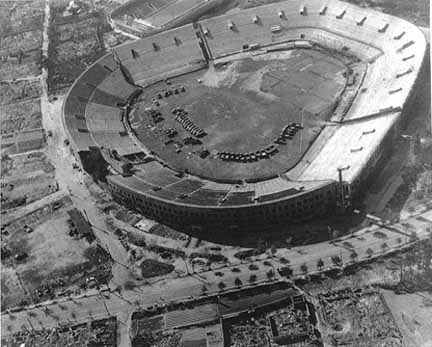
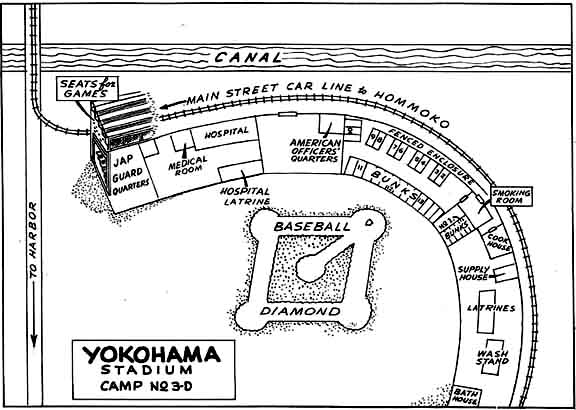
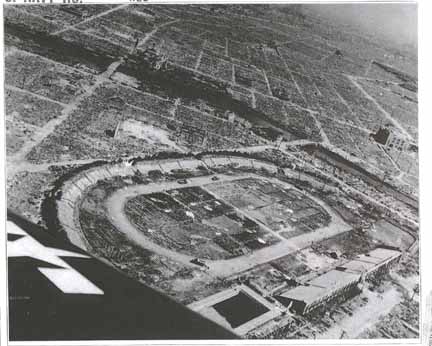
Baseball stadium, fully enclosed. Barracks were under the stands.
This was a detachment prison camp #3 from the main Tokyo camp command in the Japanese list of camps. Correctly identified as Tokyo #3, D3, "Nagaoka Shi, Yokohama Baseball Stadium, Niigata Ken [Prefecture], Hokuetsu." The company served by prisoner slaves was ZOSHU.
Source: RG 331, Box 1321, SCAP- Legal Files, Misc. Manila
Photstat image reversed for this web site. Identified as Camp No 3-D. Hand written notation: "Chikko Camp" [This notation is in error - Chikko was main camp in Osaka]
This is the Itchioka (Ichioka) Hospital Camp
Note that at bottom center of picture appears to be a partially filled swimming pool, west of the stands. River is one block east of stadium.
This is identified by Garth Dunn and Ralph Baggert as the first camp in Osaka. Guam men were sent from here to Osaka #1 (Chikko), Osaka #2 (Umeda) and Hirohata. It was later used again by the Japanese to serve as a hospital for POWs.
Note that adjacent to the stadium stands is a smaller rectangular stadium that enclosed a swimming pool.
I don't know what to file this under, the article is more about the downfall of a baseball team/club/scene, talking about a near-empty stadium, but obviously this part stuck out to me...
pitchersandpoets.com...
...Inside was quiet. “Safeco-esque,” I thought. We sat directly beneath a security camera. There were so many security personnel around that I kept on perking up, thinking incidents were occurring in the area near our seats. But nothing was happening. The beefed up security presence and the thinned out attendance combine to give Dodger Stadium the feel of an empty prison camp where hollow-eyed inmates find slivers of hope in balks by opposing pitchers and chant out MVP for Matt Kemp as if he’s all they have left to cling to...
Snarky, sarcastic blog that doesn't draw the conclusion that I'm pointing out, but I can't accept that there isn't some hidden motive here...
Concentration Camp Stadium Fund
December 12, 2011
Starving prisoners of Gaza need 5 new sports facilities. Food, shelter, clothing, medicine, hospitals, not so much….
hpmonitor.blogspot.com...
ww2, france
www.jewishgen.org...
This place apparently gets confused with the above, but it still functioned as a detention camp, by definition...
ww2, germany
germany, 1930s
Concentration camps for Serbs on the territory of Bosnia and Herzegovina: [far from a complete list, just using stadium examples]
there are more from those and many other places, in any era you could place a sports facility, but I feel like I'm posting too much as it is, so here's one last thing for now that kind of gave me the creeps...
Multimillion-pound plans for a major sports village at the site of a former prisoner of war camp in Bridgend have cleared a planning hurdle.
www.jewishgen.org...
During the nights of July 16th and July 17th, 1942 an incident occurred now called "La Rafle du Vel' d'Hiv" (The Great Raid of the 'Vel d'Hiv') - The Velodrome d'Hiver was a stadium in Paris designed for bike races. (The French destroyed the stadium after the war). This police operation had been organized after several discussions between the government of Petain and the Nazi occupation administration. The code name of this operation was "Vent printanier" (Spring Wind) and all the arrests were made by the French police under the control of French police officials. Originally, only the Jews who were older than age 16 had to be arrested. It is under the proposal of the Prime Minister Laval that all the children were arrested.
More than 12800 (3031 men, 5802 women and 4051 children aged between 2 and 12) were transferred to the Velodrome d'Hiver.
This place apparently gets confused with the above, but it still functioned as a detention camp, by definition...
French tennis officials have increasingly found themselves in the rare position of having to defend the legacy and honor of one of the most admired sporting complexes in the world.
At the very least, the Roland Garros tennis stadium is acknowledged to have been a makeshift home for political prisoners and suspected dissidents during World War II. At worst, the revered home of the French Open near Paris is said to have been a holding facility for French Jews before they were moved eastward to the Nazi concentration camps. The question regarding what exactly happened at the stadium during World War II has quietly made its rounds in recent years across various media and Internet outlets...
...Although no clear historical record exists regarding actions at the tennis stadium complex directed specifically toward Jews, it is known that the site did house political prisoners of both the French government in 1939 and the collaborationist Vichy regime after the country's fall to Germany. This fact is acknowledged by the French Tennis Federation, although official federation informational items regarding Roland Garros do not mention the stadium s wartime activity.
"They were German, Austrian and Italian," federation cultural director Jean Christophe Piffaut said of the prisoners held at the stadium. "France at this time was terrified to be spied on by the enemies. As soon as the French authorities had verified the reality of the activities of the people that were in this curious camp, they let them free."
The most famous account of the use of the stadium as a makeshift prison was detailed in an autobiography by Arthur Koestler, a Jewish-German journalist and ardent communist who found his way to Paris after a stint in Jerusalem. "At Roland Garros, we called ourselves the cave dwellers, about 600 of us who lived beneath the stairways of the stadium," he wrote. "Few of us knew anything about tennis, but when we were allowed to take our walk in the stadium, we could see the names Borotra and Brugnon on the scoreboard."
...
ww2, germany
3000 prisoners of the ancillary concentration camp of the Polte ordnance factory are temporarily imprisoned at the stadium “Neue Welt” [New World] when Magdeburg becomes the target of an artillery attack. Two grenades explode in the overcrowded stadium. The panic-stricken prisoners attempt to flee and they are stopped in their tracks when SS men start firing their machine guns.
germany, 1930s
Euro 2008 Finals Venue Hides a Sinister Past
When the fans of the German and Spanish teams throng into Vienna's Ernst Happel Stadium on Sunday to watch the Euro 2008 finals they will be hoping to enjoy a day of thrilling sport in Austria's most historic stadium. Many may not realize, however, that this history spans back to the 1930s when the stadium served as a Nazi barracks and then as a prison where Jews were held before being deported to concentration camps.
The dark chapter in the stadium's history began in 1934, three years after it was completed and christened the Prater Stadium...
--------------------------------------------
www.ushmm.org...
On April 4, 1933, Amtshauptmann Döbeln ordered the formation of a labor camp in a community and sports center located at Öderanstrasse in Hainichen, Sachsen...
...Despite the nomenclature, Hainichen was an early concentration camp for leftist detainees. Its population fluctuated from an initial 50 prisoners to 144 by April 12, then to nearly three hundred before its dissolution on June 13, 1933.
Hainichen prisoners were divided into three arrest categories. These categories depended upon the degree of suspected involvement with leftist political parties. They ranged from non-members, who were supposed to be immediately released, party members, who faced detention for an indefinite period, to party officials, who were considered to be the most serious cases.
Concentration camps for Serbs on the territory of Bosnia and Herzegovina: [far from a complete list, just using stadium examples]
-Bihac (“Jedinstvo” football stadium) approx. 900 Serbs
-Orasje (football stadium) – approx. 100 Serbs
-Ilidza ("Famos" football stadium; interrogation is conducted by Pero Sutalo from Vinkovac, Samir Lokvancic and Haris Ciko) - approx. 800 Serbs, mainly women and children
-Tuzla ("Tusanj" stadium) - approx. 4,000 Serbs
-Sarajevo: ("Kosevo" stadium, "Zetra" center, Sarajevo railway station, women's prison, "Mladen Stojanovic" students' center, "25. maj" nursery in Svrakino seIo, the "Sipad" warehouse, "Pofalici" reformatory)
...
there are more from those and many other places, in any era you could place a sports facility, but I feel like I'm posting too much as it is, so here's one last thing for now that kind of gave me the creeps...
Multimillion-pound plans for a major sports village at the site of a former prisoner of war camp in Bridgend have cleared a planning hurdle.
24 June 2011
...Proposals Include;
15,000 seat rugby league stadium
5,000 seat rugby union stadium
2,000 seat football stadium
Indoor tennis centre, plus 10 outdoor courts
Multi purpose sports hall
...
...The 100-page council report included 26-pages of correspondence - mainly from individual objectors and groups, including residents who call themselves Island Farm Campaign For Action.
They listed worries over volume of traffic and question the need for three stadia...

edit on 24-1-2012 by 1825114 because: (no reason
given)
From the secretive police/special forces tactical drills going on in LA right now, they're straight out saying they'll be using stadiums for
police/special forces/tactical missions
LAPD And Special Forces Conduct Military Maneuvers In The Skies Above Downtown LA
I pointed out some stuff about the boston exercises on page 4 if anyone's actually reading this...
LAPD And Special Forces Conduct Military Maneuvers In The Skies Above Downtown LA
January 25, 2012
LOS ANGELES (CBS) — The Los Angeles Police Department teamed with military special operation forces Wednesday evening to conduct multi-agency tactical exercises in the skies above downtown LA.
Many questioned what was going on Wednesday night as a Black Hawk helicopter and four OH-6 choppers – or “Little Birds” – flew over the city, at one point hovering just above the US Bank building downtown and later flying low over the Staples Center as the Lakers played inside.
Someone could be seen sitting inside an open chopper with his legs hanging off the side.
Sky9 spotted the Black Hawk in the dark, making what appeared to be a drop off at a park before quickly ascending back into the air.
Throughout the exercise, the five rotorcrafts were staged at Dodgers Stadium.
The LAPD said the purpose of the training was in part to ensure the military’s ability to operate in urban environments.
Chief Warrant Officer David Duran was a U.S. Army aviator for 12 years. He now flies Blackhawk helicopters for the National Guard in California. Duran says what KCAL9 saw Wednesday night could be a dry run for a future mission...
...Similar exercises have been seen in Miami and Boston.
I pointed out some stuff about the boston exercises on page 4 if anyone's actually reading this...
Speaking of which..
My old reserve unit, 5/14 Marines HQ battery, was literally in the shadow of Dodger Stadium... and a stones toss from the LAPD academy.
Relocated to Long Beach after an earthquake tho..
My old reserve unit, 5/14 Marines HQ battery, was literally in the shadow of Dodger Stadium... and a stones toss from the LAPD academy.
Relocated to Long Beach after an earthquake tho..
Work starts on $51 million mock city in Perry that will be used to
train first responders
I wonder if it will have any kind of perimeter fence/barrier, or if it'll be open like a regular city?
Perry disaster training site features 9th Ward replica that can be flooded
Work is under way on what might be one of the most unique construction projects ever done in Middle Georgia.
For years, the whisper of the wind around vacant buildings has been about the only thing to be heard at the former Northrop Grumman missile plant in Perry, but on Wednesday it roared with the sound of earth-moving equipment.
Guardian Centers of Georgia is building a 70-acre mock city that will be used to train thousands of emergency personnel and first responders from around the country.
The layout of the city is patterned after the downtown street grid of Seattle. Burkart said the city’s L-shape restricts sight lines and presents challenges to trainees.
It also will feature a neighborhood based on New Orleans’ 9th Ward, which was destroyed in Hurricane Katrina. The mock-up can be flooded or drained as needed for training, he said.
It also will have a high school football stadium, because Burkart said that’s where staging of emergency personnel is most often done when there is a major disaster in a community.
He has been planning the project since he worked in the Hurricane Katrina disaster area in 2005.
“This is a culmination of a long journey,” Burkart said.
Work is expected to take about a year, and when it is operational is expected to employ 100 people full-time. Other jobs will be available for people to play the roles of victims.
As many as 5,000 emergency personnel may be at the site at any given time. There will be some lodging on site and some will stay in local hotels.
...
I wonder if it will have any kind of perimeter fence/barrier, or if it'll be open like a regular city?
edit on 9-2-2012 by 1825114 because: (no
reason given)
so I've got a bit of "proof" for a previous post...
Emergency/relocation drills were being held at the armory these past few days, but I didn't know about them until afterwards, so I don't know the details...
Mock disaster drill tests Fairbanks responders
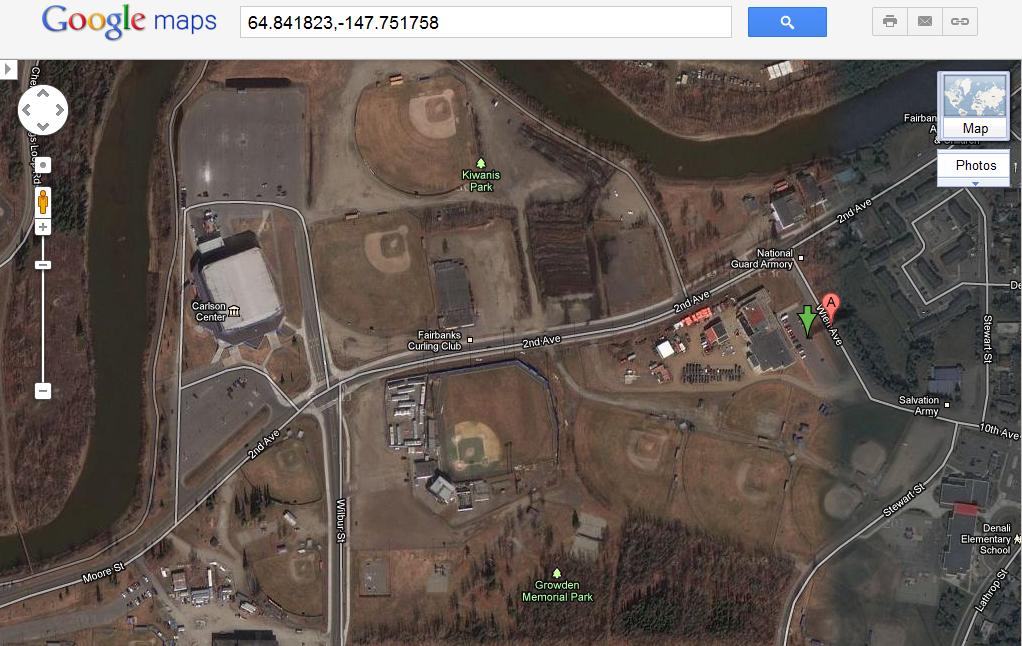
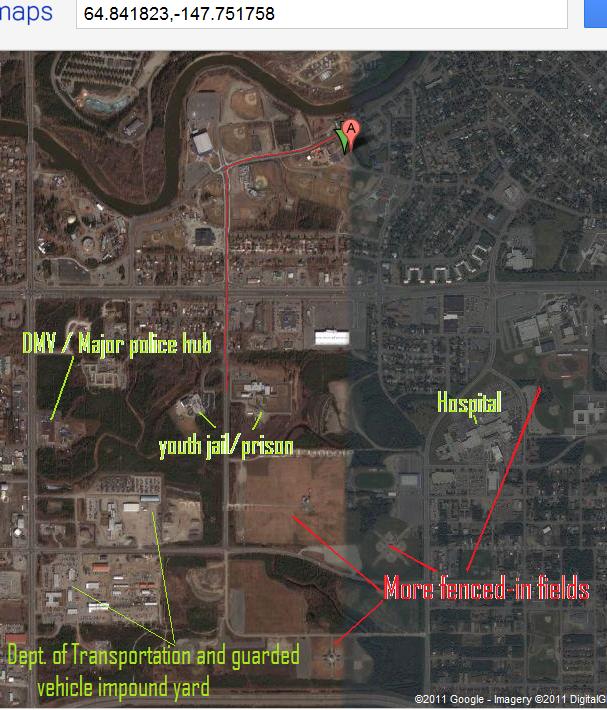
and tonight they're doing a relocation drill at the hockey arena to the left of the hospital in this picture..
Borough, Red Cross emergency shelter test run starts tonight
So I'm not entirely crazy, they ARE using the areas I was suspicious of for evaucuation/relocation purposes.
Going to try to be a part of the exercise tonight, and hopefully get more info...
Originally posted by maybehelpful
Here's MY local sports complex/national guard armory. It's on the right, by the arrow/marker. Those few-dozen dark things in rows are caravans and hummers, and there are a lot more than that there now. What's their purpose?
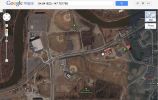
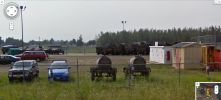
files.abovetopsecret.com...
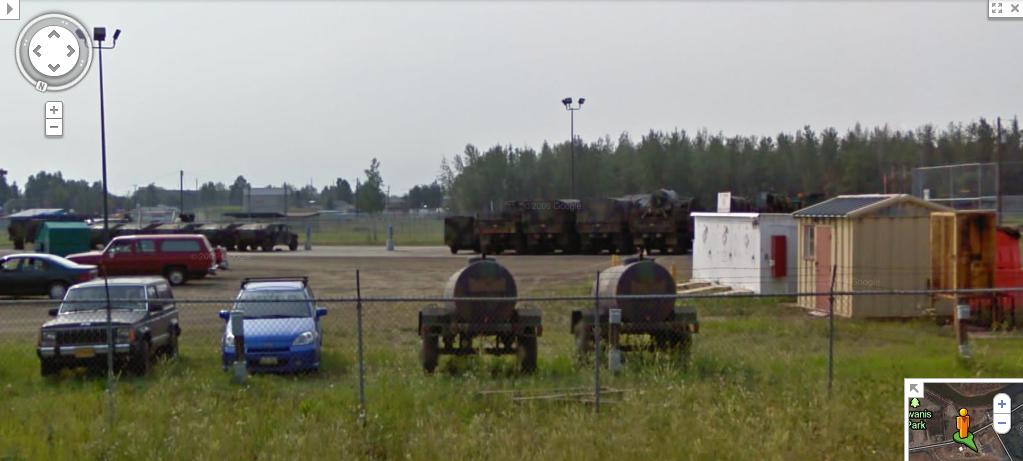
Emergency/relocation drills were being held at the armory these past few days, but I didn't know about them until afterwards, so I don't know the details...
Mock disaster drill tests Fairbanks responders
FAIRBANKS — Fairbanks-area emergency responders participated in a mock disaster Wednesday as part of a statewide exercise that tests various components of a community’s emergency operations plan.
Alaska Shield 2012 Continuity of Operations Plan is designed to test cold weather response, and Wednesday’s disaster scenario was one of several that will be enacted through the week...
“Imagine that we have a tremendous amount of snow, and the temperature has dropped out. Aurora Energy is losing its capability to provide heat, Golden Valley is losing the ability to continue providing electrical, so it’s a cascading effect for this exercise,” Misewicz said.
Wednesday’s scenario took place at the National Guard Armory on Second Avenue
and tonight they're doing a relocation drill at the hockey arena to the left of the hospital in this picture..
Originally posted by maybehelpful
Here it is in relation to the prison, hospital (surrounded on one side by more fenced fields), the DMV (where there are usually more cops than most anywhere else in town), department of transportation, fenced/guarded lot where impounded cars are held, and other fenced fields
files.abovetopsecret.com...
Borough, Red Cross emergency shelter test run starts tonight
FAIRBANKS — Volunteers in Policing is seeking volunteers willing to stay overnight at an emergency shelter as part of the Alaska Shield 2012 disaster-preparedness drills taking place citywide this week.
The Fairbanks North Star Borough and the Red Cross will be working together on the exercise, which is designed to test the community’s emergency operations plans. Evacuees will be given meals, cots and blankets, and will be provided with a stuffed animal “pet” that they will need to check into the temporary animal shelter set up in the same building...
So I'm not entirely crazy, they ARE using the areas I was suspicious of for evaucuation/relocation purposes.
Going to try to be a part of the exercise tonight, and hopefully get more info...
Didn't get to go last night, but my sister was there, so I should still be able to hear more about it.
This article talks about the animal shelter's participation, and describes some procedures they went through using dolls instead of animals, but don't say much about the people. They make it cutesy and nice, but in a real emergency/disaster situation [or a contrived one] there will be harsh elements and strict rules...
Practice makes perfect: Red Cross, animal control run through disaster scenario
I'm glad they're doing it, it's necessary practice, but the police/military infrastructure and the current political climate still make me think...
This article talks about the animal shelter's participation, and describes some procedures they went through using dolls instead of animals, but don't say much about the people. They make it cutesy and nice, but in a real emergency/disaster situation [or a contrived one] there will be harsh elements and strict rules...
Practice makes perfect: Red Cross, animal control run through disaster scenario
Feb 10, 2012
FAIRBANKS — The disaster scenario goes like this: Extreme cold temperature and heavy snow have caused power lines to drop. Aurora Energy, which provides steam heat to much of downtown Fairbanks, has lost its ability to do so, and there are several areas that have not had heat or power for almost 80 hours. Road conditions and severe cold have prevented crews from clearing the roads. It has come to the point that people’s lives are in danger, and the Red Cross has been asked to set up emergency shelter. As if things weren’t bad enough, most of the evacuees have pets and are refusing to leave them at home to freeze to death. What is the Red Cross to do?
It’s just this scenario that was enacted Friday night at the Big Dipper Ice Arena, as more than 100 volunteers showed up to spend the night as “evacuees” for the area-wide disaster preparedness drill Alaska Shield 2012. Fairbanks North Star Borough Animal Control and the Red Cross worked in concert to plan and execute the drill, the first of its kind in Fairbanks.
...
staff and volunteers were prepared to expect anything.
“In disasters things happen, especially with this sort of scenario. There might be an animal that had gotten sick beforehand, or it might have gotten injured from a roof collapsing or something. So we’ll have some of those things built in to the exercise,” Nevill said.
The feline area had several kitties already in cages, each one outfitted with a fluffy blanket, bowl of dry cat food, bowl of water and a shallow cardboard box with a handful of kitty litter in it.
“We also have Cocoa Puffs to use as their, um, poopie for their owners to clean in the morning. That’s their test,” Klimaschesky said.
A color-coded system helped keep track of the sheltered animals. Dogs received blue collars and cats were given pink. Sick animals of either species were given green collars and placed in cages in the isolation room, while those animals deemed aggressive were given red collars and put in the quarantine room.
A large, sad-faced dog was brought into the quarantine room while the News-Miner was leaving. Hoping to get a photo of the dangerous doggie, reporter and photographer popped in, only to be ordered out seconds later by the animal control worker in charge of the room.
“I can’t give you any information and I’m going to ask you to step outside the door. This is my quarantine area — I’m asking the media to step out. We have a Q-dog here,” the man said, pointing his finger emphatically at the door...
I'm glad they're doing it, it's necessary practice, but the police/military infrastructure and the current political climate still make me think...
just came across this
Kino Sports Complex could become prison
Kino Sports Complex could become prison
Apr 20, 2010
It might sound like a screwball idea but it's no joke.
The Kino Sports Complex could become a prison complex.
It's one option of many to solve which could be a prison crisis for Pima County but the idea has legs.
"It appears that's one of the least cost options," says County Supervisor Sharon Bronson.
Pima County is trying to find a way to house another 1,800 prisoners mandated by the state.
Arizona lawmakers have decided one way to balance the state budget it to transfer prisoners out of the Department of Corrections to the counties.
If Proposition 100 fails, that's the 1 cent sales tax, the inmates will be transferred.
The inmates would be in the last year of their sentence and would be sent to the county where they went through the courts system.
That's 1,800 prisoners for Pima County.
"We don't know quite what to do but we want to prepare for the eventuality," says County Administrator Chuck Huckelberry.
Huckelberry has asked several departments for recommendations for a problem which could carry a $200 million price tag.
The first to respond, the Pima County Sheriff's Department with five options.
Besides the baseball fields, the sheriff also suggested renovating the old Spanish Trail Hotel along the freeway. Or using abandoned schools like Wrightstown.
^here it is on maps.google.com... 32.176938,-110.933247
notice the large "detention school" right among the fields
notice the large "detention school" right among the fields
Veterans Stadium, the former home of the Philadelphia Eagles and Philadelphia Phillies known as simply "The Vet," was around until 2003.
It was described as a "concrete prison" by many fans, and its jailhouse and actual courtroom underneath the stadium attests to this.
new topics
-
President BIDEN Vows to Make Americans Pay More Federal Taxes in 2025 - Political Suicide.
2024 Elections: 1 hours ago -
Ode to Artemis
General Chit Chat: 2 hours ago -
Ditching physical money
History: 5 hours ago -
One Flame Throwing Robot Dog for Christmas Please!
Weaponry: 6 hours ago -
Don't take advantage of people just because it seems easy it will backfire
Rant: 6 hours ago -
VirginOfGrand says hello
Introductions: 7 hours ago -
Should Biden Replace Harris With AOC On the 2024 Democrat Ticket?
2024 Elections: 7 hours ago -
University student disciplined after saying veganism is wrong and gender fluidity is stupid
Education and Media: 10 hours ago -
Geddy Lee in Conversation with Alex Lifeson - My Effin’ Life
People: 11 hours ago -
God lived as a Devil Dog.
Short Stories: 11 hours ago
top topics
-
Hate makes for strange bedfellows
US Political Madness: 16 hours ago, 20 flags -
University student disciplined after saying veganism is wrong and gender fluidity is stupid
Education and Media: 10 hours ago, 12 flags -
Police clash with St George’s Day protesters at central London rally
Social Issues and Civil Unrest: 13 hours ago, 9 flags -
President BIDEN Vows to Make Americans Pay More Federal Taxes in 2025 - Political Suicide.
2024 Elections: 1 hours ago, 7 flags -
TLDR post about ATS and why I love it and hope we all stay together somewhere
General Chit Chat: 14 hours ago, 7 flags -
Should Biden Replace Harris With AOC On the 2024 Democrat Ticket?
2024 Elections: 7 hours ago, 6 flags -
Don't take advantage of people just because it seems easy it will backfire
Rant: 6 hours ago, 4 flags -
One Flame Throwing Robot Dog for Christmas Please!
Weaponry: 6 hours ago, 4 flags -
God lived as a Devil Dog.
Short Stories: 11 hours ago, 3 flags -
Ditching physical money
History: 5 hours ago, 3 flags
active topics
-
Why to avoid TikTok
Education and Media • 17 • : mooncake -
The Superstition of Full Moons Filling Hospitals Turns Out To Be True!
Medical Issues & Conspiracies • 22 • : mooncake -
University student disciplined after saying veganism is wrong and gender fluidity is stupid
Education and Media • 23 • : BigDuckEnergy -
President BIDEN Vows to Make Americans Pay More Federal Taxes in 2025 - Political Suicide.
2024 Elections • 3 • : BingoMcGoof -
Russia Ukraine Update Thread - part 3
World War Three • 5717 • : Arbitrageur -
Should Biden Replace Harris With AOC On the 2024 Democrat Ticket?
2024 Elections • 44 • : budzprime69 -
Hundreds of teenagers flood into downtown Chicago, smashing car windows
Other Current Events • 111 • : 777Vader -
British TV Presenter Refuses To Use Guest's Preferred Pronouns
Education and Media • 125 • : Annee -
Who guards the guards
US Political Madness • 4 • : kwaka -
New whistleblower Jason Sands speaks on Twitter Spaces last night.
Aliens and UFOs • 44 • : pianopraze