It looks like you're using an Ad Blocker.
Please white-list or disable AboveTopSecret.com in your ad-blocking tool.
Thank you.
Some features of ATS will be disabled while you continue to use an ad-blocker.

U.S. attends Hiroshima bombing ceremony for first time
page: 2share:
reply to post by airspoon
First off, perhaps you'd care to provide links of these historians and their data ?
Secondly, you do realize if the US had tried to attack Japan via conventional means many many many more civilians in Japan would have died.
If anyone is to blame for the bombs being dropped on Japan it would be Emperor who was the one who refused surrender out of pride and heritage linked to the old samurai code which pretty much every Japanese soldier and citizen followed.
Death = honour
Surrender = Dishonour
Every man in Japan capable of fighting would have defended their nation to the death, a conventional campaign invading Japan would have made the war last years and millions more people both Japanese & Allied would have died
I can't actually believe you're saying it's better millions more die just to avoid the deaths of a fraction of that.
Your logic is severly flawed, and I have to question, is it the deaths of innocents you have something against or the use of nukes ?
First off, perhaps you'd care to provide links of these historians and their data ?
Secondly, you do realize if the US had tried to attack Japan via conventional means many many many more civilians in Japan would have died.
If anyone is to blame for the bombs being dropped on Japan it would be Emperor who was the one who refused surrender out of pride and heritage linked to the old samurai code which pretty much every Japanese soldier and citizen followed.
Death = honour
Surrender = Dishonour
Every man in Japan capable of fighting would have defended their nation to the death, a conventional campaign invading Japan would have made the war last years and millions more people both Japanese & Allied would have died
I can't actually believe you're saying it's better millions more die just to avoid the deaths of a fraction of that.
Your logic is severly flawed, and I have to question, is it the deaths of innocents you have something against or the use of nukes ?
reply to post by Arbitrageur
So, are you saying that it is okay to kill innocent civilians if there is a chance that they may shoot at soldiers? If the police chase a bank robber into the housing projects, would they then be justified in just bombing the entire housing projects? When a riot occurs at a protest, are the police justified in indiscriminately firing into the crowd because the crowd is harboring individuals that could harm the police?
In fact, if the Japanese were so determined to kill American GIs, then why didn't they as troops started to occupy the country?
--airspoon
So, are you saying that it is okay to kill innocent civilians if there is a chance that they may shoot at soldiers? If the police chase a bank robber into the housing projects, would they then be justified in just bombing the entire housing projects? When a riot occurs at a protest, are the police justified in indiscriminately firing into the crowd because the crowd is harboring individuals that could harm the police?
In fact, if the Japanese were so determined to kill American GIs, then why didn't they as troops started to occupy the country?
--airspoon
reply to post by airspoon
It was a war that we were dragged into by the unprovoked attack on Pearl Harbor.
Of the use of the atomic bomb, Truman was quoted:
If you'll notice "unwarranted attack" in the above quote.
Truman's Motivations
The Genzai Bakudan—Japanese Atomic Bomb!!
Japanese Atomic Bomb.
An Invasion Not Found In History Books.
If anything, the Japanese owes us a thank you for dropping the "bomb" on them. They owe us a thank you for bringing the war to a quicker end than wht it wouldv'e been otherwise. The present administration is nothing more than a pathetic display of yellow-backed, spineless, a$$ kissers.
It was war and if anyone is to blame for the Hiroshima and Nagasaki fate, it should be the Japanese military commanders refusal to surrender when they had the chance.
It was a war that we were dragged into by the unprovoked attack on Pearl Harbor.
Of the use of the atomic bomb, Truman was quoted:
“Nobody is more disturbed over the use of atomic bombs than I am but I was greatly disturbed over the unwarranted attack by the Japanese on Pearl Harbor and their murder of our prisoners of war"
If you'll notice "unwarranted attack" in the above quote.
Truman's Motivations
The bomb was manufactured in Konan, Korea, amid the strictest secrecy.
The bomb was an exact duplicate of the U.S. atomic bomb except the firing mechanism on the bomb differed.
The Genzai Bakudan—Japanese Atomic Bomb!!
Japanese Army Intelligence officer revealed that a successful test of the A-bomb occurred
off Konan three days prior to America’s bombing of Hiroshima.
A German submarine named U-234 left Germany in March, 1945 bound for Tokyo. On board was 1,120 pounds of uranium oxide— enough uranium to make two atomic bombs. The sub was forced to land at Portsmouth, New Hampshire after Hitler surrounded in April.
Japanese Atomic Bomb.
In retrospect, the 1 million American men who were to be the casualties of the invasion, were instead lucky enough to survive the war.
Intelligence studies and military estimates made 50 years ago, and not latter-day speculation, clearly indicate that the battle for Japan might well have resulted in the biggest blood-bath in the history of modern warfare.
Far worse would be what might have happened to Japan as a nation and as a culture. When the invasion came, it would have come after several months of fire bombing all of the remaining Japanese cities. The cost in human life that resulted from the two atomic blasts would be small in comparison to the total number of Japanese lives that would have been lost by this aerial devastation.
An Invasion Not Found In History Books.
If anything, the Japanese owes us a thank you for dropping the "bomb" on them. They owe us a thank you for bringing the war to a quicker end than wht it wouldv'e been otherwise. The present administration is nothing more than a pathetic display of yellow-backed, spineless, a$$ kissers.
It was war and if anyone is to blame for the Hiroshima and Nagasaki fate, it should be the Japanese military commanders refusal to surrender when they had the chance.
This is correct.
Originally posted by Discotech
Secondly, you do realize if the US had tried to attack Japan via conventional means many many many more civilians in Japan would have died.
I'm saying every effort should be made to reduce civilian casualties to the minimum possible and I think by dropping the bombs that's exactly what happened, as more civilians would have died had the bombs not been dropped. And if you had watched the video I posted, you'd see they weren't so innocent.
Originally posted by airspoon
reply to post by Arbitrageur
So, are you saying that it is okay to kill innocent civilians if there is a chance that they may shoot at soldiers?
The people were trained to die for the emperor, so once the emperor surrendered, they were no longer required to die for the emperor.
[edit on 6-8-2010 by Arbitrageur]
Originally posted by airspoon
In fact, if the Japanese were so determined to kill American GIs, then why didn't they as troops started to occupy the country?
If you know anything about the Japanese mentality during WWII, they regarded their emperor as a god and when he spoke to them after the surrender, they obey without question.
The Japanese had more respect for their authority and were well disciplined as a society as a whole. If they were ordered to kill themselves than to surrender, they would've done it regardless of their position on whether it was right or wrong.
They were told the war is over and that was that.
[edit on 6/8/10 by Intelearthling]
Even if a nuke was necessary...did they have to specifically target the most densely populated area? Seems rather...psychopathic to me...you guys didn't want to stop a war...you wanted to test a new technology out and cull the Japanese population at the same time...couldn't you have landed one near them first as a warning? You really don't think an explosion of such magnitude would make them think twice about continuing on? Instead, you did the absolute opposite, there was no warning, there was no mercy, there was no remorse...the US committed what is likely the largest terrorist attack that has ever occurred IMO...
Secondly, you do realize if the US had tried to attack Japan via conventional means many many many more civilians in Japan would have died.
Japan certainly does acknowledge their war crimes ,and feel the two tragedies(atomic bombs) were a result of karma. I still don't condone the
horrible killing of innocent people. There were hardly any pictures of these tragedies in the US and I remember going to a museum in Quebec, Canada
and seeing all the horrific photos of burn victims that survived and went on to suffer for years. One was bad enough, but two bombs? I consider the
events one of the most inhumane in earth's history.
reply to post by airspoon
I was about to make a separate thread for this but thinking of putting it up here. Never before seen images of Hiroshima and Nagasaki aftermath
Hiroshima And Nagasaki (PHOTOS): Never Before Seen Images From LIFE.com
Here's one picture other picture are more wide and clear.
I dont know how to link those pics here...if anyone can please do.
I was about to make a separate thread for this but thinking of putting it up here. Never before seen images of Hiroshima and Nagasaki aftermath
Hiroshima And Nagasaki (PHOTOS): Never Before Seen Images From LIFE.com
Here's one picture other picture are more wide and clear.
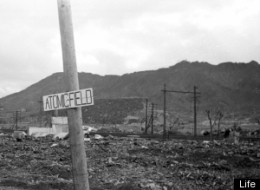
I dont know how to link those pics here...if anyone can please do.
reply to post by Discotech
Your trying to pass of assumptions as facts and that is a very bad idea for serious research. Truth is, you or anyone else doesn't know how many would have died had we invaded. If the Japanese were so hostile to American GIs, then what happened when Americans started to land the Island nation in other places?
The truth is, Japan was ready to call it quits anyway. Over 60 major metropolitan areas had been completely destroyed. Also, the Soviets had made significant advancements in Manchuria and were closing in on Japan. This is addition to the blockade of the Japanese nation by American and allied forces.
Furthermore, the Japanese only had one significant request for surrender and that was for the Japanese people to keep their emperor. The US would not budge on their "unconditional" surrender, which needlessly prolonged the the resistance. This is especially true seeing how after their surrender, the US allowed the emperor to stay anyway.
The two cities were not significant military targets, as civilians outnumbered military personnel over six to one in Hiroshima alone. Add this to the fact that the Us could have just as easily exploded one of these weapons over the sea, with the same persuading effects. Many people argue against this by suggesting that Japan didn't surrender after the first bomb but that argument is null, as the two bombs were far to close together, time-wize, for the first bomb to force a surrender.
In fact, the Japanese were closing in on Japan, through Manchuria and had the Japanese resistance gone much longer, the Japanese would have been forced to surrender to the Soviets, which would have been a political loss to the Americans and wouldn't have sealed America's fate as an atomic super-power.
As far as sources, a good one is this essay, authored by J. Samuel Walker. It's for purchase only but if your interested, I'd highly recommend it.
It's not really a matter of finding historians who subscribe to these view-points, as it is pretty much accepted knowledge. The trick is actually finding an educated historian who would not agree that those conditions were in place. What big picture you make from those conditions is up to the individual, though those conditions were in place.
--airspoon
Your trying to pass of assumptions as facts and that is a very bad idea for serious research. Truth is, you or anyone else doesn't know how many would have died had we invaded. If the Japanese were so hostile to American GIs, then what happened when Americans started to land the Island nation in other places?
The truth is, Japan was ready to call it quits anyway. Over 60 major metropolitan areas had been completely destroyed. Also, the Soviets had made significant advancements in Manchuria and were closing in on Japan. This is addition to the blockade of the Japanese nation by American and allied forces.
Furthermore, the Japanese only had one significant request for surrender and that was for the Japanese people to keep their emperor. The US would not budge on their "unconditional" surrender, which needlessly prolonged the the resistance. This is especially true seeing how after their surrender, the US allowed the emperor to stay anyway.
The two cities were not significant military targets, as civilians outnumbered military personnel over six to one in Hiroshima alone. Add this to the fact that the Us could have just as easily exploded one of these weapons over the sea, with the same persuading effects. Many people argue against this by suggesting that Japan didn't surrender after the first bomb but that argument is null, as the two bombs were far to close together, time-wize, for the first bomb to force a surrender.
In fact, the Japanese were closing in on Japan, through Manchuria and had the Japanese resistance gone much longer, the Japanese would have been forced to surrender to the Soviets, which would have been a political loss to the Americans and wouldn't have sealed America's fate as an atomic super-power.
As far as sources, a good one is this essay, authored by J. Samuel Walker. It's for purchase only but if your interested, I'd highly recommend it.
It's not really a matter of finding historians who subscribe to these view-points, as it is pretty much accepted knowledge. The trick is actually finding an educated historian who would not agree that those conditions were in place. What big picture you make from those conditions is up to the individual, though those conditions were in place.
--airspoon
reply to post by CHA0S
Sigh......
It took 2 bombs before Japan surrendered
TWO
They dropped the first and Japan still refused to surrender so they dropped the second.
It's also worth noting that Nagasaki was not the primary target for the second bomb, Kokura was the target but due to poor visibility the bomber had to drop it on Nagasaki.
www.historylearningsite.co.uk...
I don't agree with the killing of civilians but it was neccesary evil
As for Hiroshima not being important military wise
well...
www.japaneselifestyle.com.au...
Sigh......
It took 2 bombs before Japan surrendered
TWO
They dropped the first and Japan still refused to surrender so they dropped the second.
It's also worth noting that Nagasaki was not the primary target for the second bomb, Kokura was the target but due to poor visibility the bomber had to drop it on Nagasaki.
www.historylearningsite.co.uk...
As Nagasaki had been targeted in the past, people in the city had become blasé when the air raid siren sounded. The same was true on August 9th. The irony was that Nagasaki was well served with good bomb shelters and far fewer people would have been killed or injured if the air raid sirens had been listened to. The surrounding hills had tunnels dug into them which would have been very effective for the people who could have reached them.
I don't agree with the killing of civilians but it was neccesary evil
As for Hiroshima not being important military wise
well...
At the time of its bombing, Hiroshima was a city of considerable military significance. It contained the headquarters of the Fifth Division and Field Marshal Hata's 2nd General Army Headquarters, which commanded the defence of all of southern Japan. The city was a communications centre, a storage point, and an assembly area for troops. It was chosen as a target because it had not suffered damage from previous bombing raids, allowing an ideal environment to measure the damage caused by the atomic bomb. The city was mobilized for "all-out" war, with thousands of conscripted women, children and Koreans working in military offices, military factories and building demolition and with women and children training to resist any invading force.
www.japaneselifestyle.com.au...
reply to post by Intelearthling
Pearl Harbor was not an unprovoked attack. As I have stated earlier in this thread, the US had declared neutrality, though didn't act according to this position. Instead of acting neutral, we continued to supply and arm Japan's enemies. This in of itself is an act of war. Furthermore, the attack on Pearl Harbor was not intended to be a complete blind-side as the Japanese did send out a declaration of war hours before the commencement of the attack, though the US denies ever receiving it. Whether they did or did not receive the declaration of war, Japan did send the declaration, which ultimately shows intent.
Many people argue, and convincingly so, that the US government wanted Japan to attack as an excuse to go to war. At that time, the war in both Asia and Europe was unpopular with the American public. Short of an incident like Pearl Harbor, the American people would never allow their government to enter the war. Of course, Pearl Harbor changed all of that. There is evidence to back up this position, such as the continuously provocation of the Japanese by America supplying Japan's enemies, right out in the open, in spite of our neutral declaration. Also, a radar operator saw the incoming Japanese forces to the island but was ignored by military brass. There is much more evidence that we can even go into detail with, but I'll save that for its own thread, seeing how it is a bit off topic here.
In sum, the attack on Pearl Harbor was anything but unprovoked. We had been provoking Japan for some time leading up to the attack and we weren't even trying to hide it. We were breaking international precedents (maybe even law) of a neutral nation. Japan had every right to declare war on us and they did.
--airspoon
Pearl Harbor was not an unprovoked attack. As I have stated earlier in this thread, the US had declared neutrality, though didn't act according to this position. Instead of acting neutral, we continued to supply and arm Japan's enemies. This in of itself is an act of war. Furthermore, the attack on Pearl Harbor was not intended to be a complete blind-side as the Japanese did send out a declaration of war hours before the commencement of the attack, though the US denies ever receiving it. Whether they did or did not receive the declaration of war, Japan did send the declaration, which ultimately shows intent.
Many people argue, and convincingly so, that the US government wanted Japan to attack as an excuse to go to war. At that time, the war in both Asia and Europe was unpopular with the American public. Short of an incident like Pearl Harbor, the American people would never allow their government to enter the war. Of course, Pearl Harbor changed all of that. There is evidence to back up this position, such as the continuously provocation of the Japanese by America supplying Japan's enemies, right out in the open, in spite of our neutral declaration. Also, a radar operator saw the incoming Japanese forces to the island but was ignored by military brass. There is much more evidence that we can even go into detail with, but I'll save that for its own thread, seeing how it is a bit off topic here.
In sum, the attack on Pearl Harbor was anything but unprovoked. We had been provoking Japan for some time leading up to the attack and we weren't even trying to hide it. We were breaking international precedents (maybe even law) of a neutral nation. Japan had every right to declare war on us and they did.
--airspoon
You know, if you watched the video I posted about the schoolgirls being trained to attack US soldiers on page 1, you also would have noted that about 2m40 seconds in the video they described how the US DID back off the request for the emperor's unconditional surrender and that's what allowed the emperor to remain.
Originally posted by airspoon
Furthermore, the Japanese only had one significant request for surrender and that was for the Japanese people to keep their emperor. The US would not budge on their "unconditional" surrender, which needlessly prolonged the the resistance. This is especially true seeing how after their surrender, the US allowed the emperor to stay anyway.
Can we just calm down here? No one knows what truly would've happened had the US invaded Japan, but it would've been bad.
However Japan called the US's bluff. They stood thinking the US was looking for a reason to back out. The US technically was, they didn't want to send in that many troops to die. The only difference is that the US basically gave Japan a subtle surrender now or else message, but there's one problem.
Japan didn't know what the or else part meant.
However Japan called the US's bluff. They stood thinking the US was looking for a reason to back out. The US technically was, they didn't want to send in that many troops to die. The only difference is that the US basically gave Japan a subtle surrender now or else message, but there's one problem.
Japan didn't know what the or else part meant.
reply to post by airspoon
So what you're saying is that we should've let Japan carry on with their Pacific expansion of their empire without never addressing the atrocities they committed on the civilian populations they encountered with every invasion.
Are you a Japaenese sympathizer in any way?
Don't get me wrong. It's wonderful how the Japanese embraced democracy after the war but to say that we're the bad guys during the second world war is in itself bewildering to me.
[edit on 6/8/10 by Intelearthling]
So what you're saying is that we should've let Japan carry on with their Pacific expansion of their empire without never addressing the atrocities they committed on the civilian populations they encountered with every invasion.
Are you a Japaenese sympathizer in any way?
Don't get me wrong. It's wonderful how the Japanese embraced democracy after the war but to say that we're the bad guys during the second world war is in itself bewildering to me.
[edit on 6/8/10 by Intelearthling]
Originally posted by airspoon
Maybe you should brush up on your history, as many historians make an extremely viable argument that the atoms bombs were not necessary and were only used to ensure an American victory, instead of a joint victory divided between the US and the USSR.
Speculation abounds...
Furthermore, even if the invasion of Japan would have cost America a million lives, it would have been far more justified over only a fraction of civilians lives. Civilian deaths should be avoided at all costs, even the lives of professional soldiers. Never, ever should a professional soldier deliberately target civilians. There is never an excuse for it, ever.
--airspoon
As a military man, you should know that you use any and all advantages that you have at your disposal.
The atom bomb did more than cripple the Japanese, it showed the world that if the war did not come to a swift end soon, that there was new powerful weapon that could destroy entire nations.
The atom bomb had a psychological impact that helped to put an end WW2. It also helped to posture America preeminence over the rest of the world. You cannot fault a nation for looking out for its own interests.
reply to post by airspoon
because at the time there emperor was there GOD and what he said goes so if he says lay down your arms and be nice to the invading Americans its as if the sky split open and Jesus(or take your pick) personally came down and told them not too so that takes care of that one
as far as the apology goes every purple heart that we have given out to troops since then were made solely for the invasion of japan
is killing civilians bad yes but we also have to take into account that at the time killing civilians was Gasp the norm few hundred years before this standard operating procedure was to throw babies off the ramparts(heck the Japanese were throwing there own people off cliffs getting there own people to kill there own family's) when you took an enemy castle kill all the men rape the women and either kill or take there kids into slavery just like in ww2 we carpet bombed strafed civvies had unrestricted submarine warfare now a days we know that thats not right but back then it was the NORM we cant go back in history with hindsight and judge things that happened over 50 years ago with our moral code we have now.
now does this make those events less tragic or there deaths not matter? no but what we need to do is learn from this the only dangerous precedent that came out of those actions was if the math= too many dead Americas nukes are on the table that's the only thing that kinda scares me
ps ya wanna get really mad at some screwed up nonsense i think the firebombing of Dresden would be a much better showcase of allied screw ups
and again sorry to rant with out much structure but the reason we wanted to stop the Russians from starting another second front with japan aside from that Communism nonsense was have you heard about what the Russians did to the German people after ww2 the forced rapes the killings all that shady other side of the curtain nonsense no how many Japanese people would have been killed by the Russians i know its a bit off topic but the lesser of two evils seems to prevail not saying that American hands in that war were clean to say the least but we were doing a whole helluva lot better back then then we do now so that's my two cents
and as mr spock said the needs of the many outweigh the needs of the few
[edit on 6-8-2010 by KilrathiLG]
because at the time there emperor was there GOD and what he said goes so if he says lay down your arms and be nice to the invading Americans its as if the sky split open and Jesus(or take your pick) personally came down and told them not too so that takes care of that one
as far as the apology goes every purple heart that we have given out to troops since then were made solely for the invasion of japan
is killing civilians bad yes but we also have to take into account that at the time killing civilians was Gasp the norm few hundred years before this standard operating procedure was to throw babies off the ramparts(heck the Japanese were throwing there own people off cliffs getting there own people to kill there own family's) when you took an enemy castle kill all the men rape the women and either kill or take there kids into slavery just like in ww2 we carpet bombed strafed civvies had unrestricted submarine warfare now a days we know that thats not right but back then it was the NORM we cant go back in history with hindsight and judge things that happened over 50 years ago with our moral code we have now.
now does this make those events less tragic or there deaths not matter? no but what we need to do is learn from this the only dangerous precedent that came out of those actions was if the math= too many dead Americas nukes are on the table that's the only thing that kinda scares me
ps ya wanna get really mad at some screwed up nonsense i think the firebombing of Dresden would be a much better showcase of allied screw ups
and again sorry to rant with out much structure but the reason we wanted to stop the Russians from starting another second front with japan aside from that Communism nonsense was have you heard about what the Russians did to the German people after ww2 the forced rapes the killings all that shady other side of the curtain nonsense no how many Japanese people would have been killed by the Russians i know its a bit off topic but the lesser of two evils seems to prevail not saying that American hands in that war were clean to say the least but we were doing a whole helluva lot better back then then we do now so that's my two cents
and as mr spock said the needs of the many outweigh the needs of the few
[edit on 6-8-2010 by KilrathiLG]
[Quote]As a military man, you should know that you use any and all advantages that you have at your disposal.
The atom bomb did more than cripple the Japanese, it showed the world that if the war did not come to a swift end soon, that there was new powerful weapon that could destroy entire nations.
The atom bomb had a psychological impact that helped to put an end WW2. It also helped to posture America preeminence over the rest of the world. You cannot fault a nation for looking out for its own interests.[Quote]
It certainly showed Germany who new the super power was. Weren't they racing for time against the US to develope the first atomic bomb?
The atom bomb did more than cripple the Japanese, it showed the world that if the war did not come to a swift end soon, that there was new powerful weapon that could destroy entire nations.
The atom bomb had a psychological impact that helped to put an end WW2. It also helped to posture America preeminence over the rest of the world. You cannot fault a nation for looking out for its own interests.[Quote]
It certainly showed Germany who new the super power was. Weren't they racing for time against the US to develope the first atomic bomb?
Originally posted by CHA0S
Even if a nuke was necessary...did they have to specifically target the most densely populated area?
No and the scietists who worked on the bomb preferred other options:
www.cfo.doe.gov...
A demonstration of the power of the atomic bomb on an isolated location was an option supported by many of the Manhattan Project's scientists, but providing the Japanese warning of a demonstration would allow them to attempt to try to intercept the incoming bomber or even move American prisoners of war to the designated target. Also, the uranium bomb (right) had never been tested. What would the reaction be if the United States warned of a horrible new weapon, only to have it prove a dud, with the wreckage of the weapon itself now in Japanese hands?
So there are a lot of complications to the approach of detonating the bomb in a remote area. If you don't tell anyone about it in advance, nobody will be watching it. If you do tell in advance, they can try to shoot down the plane before it delivers the bomb. And bombs were in short supply, it wasn't like they had extras lying around if a plane got shot down that was trying to drop the bomb.
Originally posted by Onboard2
It certainly showed Germany who new the super power was. Weren't they racing for time against the US to develope the first atomic bomb?
Germany had already been defeated by the time the US dropped the bomb, it certainly showed the world who the new super power was!
new topics
-
This is our Story
General Entertainment: 1 hours ago -
President BIDEN Vows to Make Americans Pay More Federal Taxes in 2025 - Political Suicide.
2024 Elections: 3 hours ago -
Ode to Artemis
General Chit Chat: 4 hours ago -
Ditching physical money
History: 7 hours ago -
One Flame Throwing Robot Dog for Christmas Please!
Weaponry: 7 hours ago -
Don't take advantage of people just because it seems easy it will backfire
Rant: 8 hours ago -
VirginOfGrand says hello
Introductions: 8 hours ago -
Should Biden Replace Harris With AOC On the 2024 Democrat Ticket?
2024 Elections: 9 hours ago
top topics
-
Hate makes for strange bedfellows
US Political Madness: 17 hours ago, 20 flags -
University student disciplined after saying veganism is wrong and gender fluidity is stupid
Education and Media: 12 hours ago, 12 flags -
Police clash with St George’s Day protesters at central London rally
Social Issues and Civil Unrest: 14 hours ago, 9 flags -
President BIDEN Vows to Make Americans Pay More Federal Taxes in 2025 - Political Suicide.
2024 Elections: 3 hours ago, 8 flags -
TLDR post about ATS and why I love it and hope we all stay together somewhere
General Chit Chat: 15 hours ago, 7 flags -
Should Biden Replace Harris With AOC On the 2024 Democrat Ticket?
2024 Elections: 9 hours ago, 6 flags -
Don't take advantage of people just because it seems easy it will backfire
Rant: 8 hours ago, 4 flags -
One Flame Throwing Robot Dog for Christmas Please!
Weaponry: 7 hours ago, 4 flags -
God lived as a Devil Dog.
Short Stories: 13 hours ago, 3 flags -
Ditching physical money
History: 7 hours ago, 3 flags
active topics
-
Who guards the guards
US Political Madness • 5 • : 19Bones79 -
One Flame Throwing Robot Dog for Christmas Please!
Weaponry • 6 • : BeTheGoddess2 -
Police clash with St George’s Day protesters at central London rally
Social Issues and Civil Unrest • 37 • : SprocketUK -
New whistleblower Jason Sands speaks on Twitter Spaces last night.
Aliens and UFOs • 48 • : baablacksheep1 -
Russia Ukraine Update Thread - part 3
World War Three • 5718 • : Freeborn -
Hate makes for strange bedfellows
US Political Madness • 40 • : 19Bones79 -
Lawsuit Seeks to ‘Ban the Jab’ in Florida
Diseases and Pandemics • 29 • : Cre8chaos79 -
TLDR post about ATS and why I love it and hope we all stay together somewhere
General Chit Chat • 8 • : Cre8chaos79 -
This is our Story
General Entertainment • 0 • : BrotherKinsMan -
British TV Presenter Refuses To Use Guest's Preferred Pronouns
Education and Media • 126 • : Asher47