It looks like you're using an Ad Blocker.
Please white-list or disable AboveTopSecret.com in your ad-blocking tool.
Thank you.
Some features of ATS will be disabled while you continue to use an ad-blocker.

Why is there less daylight?
page: 2share:
reply to post by nerbot
Yeah, but I wonder if anyone else and how many other people noticed it. Or if anyone.
Yeah, but I wonder if anyone else and how many other people noticed it. Or if anyone.
Originally posted by Phage
Originally posted by skycopilot
One minute earlier and 2 minutes later or a loss of 3 minutes.
You didn't lose those minutes. They moved to March.
Precession. Drives astrologers nuts.
www.larry.denenberg.com...
www.analemma.com...
Here are two links that explains some major things contributing to the difference in sunset and sunrise times during the year. It's kind of complicated thing really and there are a lot of sites explaining things either wrong or too simple.
About the sun and the OP's subject itself. It might be just something psychological, but last few years the summers have been strange here in Finland as well. The sunlight indeed feels very 'harsh and raw' somehow. It almost feels like the sun rays stings your skin when it's a hot and clear/sunny day. On the other hand, there have been so few sunny days this summer, the weather was like in the UK here in northern Finland this summer. I also somewhat agree with the color thing. The sun seems to be very pale and white, not orange/yellow like I always assumed it to bee. The only time sun really looked yellow to me was a few weeks ago, when I filmed a whole sunrise here at northern Finland.. After the sun was completely up, the reddish hue completely disappeared quickly and the sun was as pale as ever.
Maybe it's because of the missing sun spots and stuff, we'll see how it goes now when the winter is slowly coming. Hopefully I remember to keep my eye on the sun daily.
Some people mentioned precession, and that is definitely one of the causes. There might be other reasons, too, but I suspect that if you were to
average the yearly daylight across the 26000 year precession cycle, you'd find that over time daylight isn't being lost. You are probably right in
that one particular year, such as this year, may have had less daylight by a few minutes than another year in the past, but I'd wager it all averages
out in the end, and in a thousand years, someone like you will be asking why there is MORE daylight :p
reply to post by PilgriMage
I wasn't kidding about the minutes moving to March. Well, not entirely. Check it out. In the 10 year span we were talking about the August day got shorter but the March day got longer.
www.bcca.org...
Because of precession the length of summer days will get shorter and the length of winter days will get longer (within limits, on a cycle of about 25,800) years. Of course, that depends on whether you are in the northern or southern hemisphere.
[edit on 9/4/2009 by Phage]
I wasn't kidding about the minutes moving to March. Well, not entirely. Check it out. In the 10 year span we were talking about the August day got shorter but the March day got longer.
www.bcca.org...
Because of precession the length of summer days will get shorter and the length of winter days will get longer (within limits, on a cycle of about 25,800) years. Of course, that depends on whether you are in the northern or southern hemisphere.
[edit on 9/4/2009 by Phage]
Originally posted by tinfoilman
Now to me it seems that if I'm standing in the sun it's bearing down on me like a directional heat lamp. Like a spotlight or something. Now it feels like it just wants to cook you alive or something.
Yes and sunburns come quicker... many blame the 'hole' in the Ozone.. but that isn't it...
Originally posted by zorgon
Yes and sunburns come quicker... many blame the 'hole' in the Ozone.. but that isn't it...
I have noticed that as well.
Ok, I will bite. Why do YOU think this is?
Originally posted by skycopilot
So a couple of days ago, I found an online almanac and entered in Aug. 30, 2009 and the same date for 1990. I discovered that there is LESS sunlight time today. In fact, there are 3 fewer minutes of sunlight. The sunrise is one minute later and the sunset is 2 minutes earlier.
I suppose that comes from having a basically inaccurate calendar (i.e. the date that we call September 4th this year does not really correspond to so-called September 4th, say, twenty years ago).
This may sound stupid - and I apologise if it is - but shouldn't the actual "amount" of daylight be measured rather by comparing the longest day (and the shortest) of a year with the longest (and the shortest) day of any other given year? Unless I am very much mistaken, they should have the same length, regardless of the date.
reply to post by Vanitas
The calendar correction is made every four years but you are right about the length of the longest and shortest days not changing.
The calendar correction is made every four years but you are right about the length of the longest and shortest days not changing.
reply to post by Phage
I am not sure the correction (by means of the leap day) REALLY offsets the discrepancies in the long run... but that's a long story, and I am not at my most articulate today. ;-)
[edit on 4-9-2009 by Vanitas]
I am not sure the correction (by means of the leap day) REALLY offsets the discrepancies in the long run... but that's a long story, and I am not at my most articulate today. ;-)
[edit on 4-9-2009 by Vanitas]
Originally posted by Paroxysm
Originally posted by zorgon
Yes and sunburns come quicker... many blame the 'hole' in the Ozone.. but that isn't it...
I have noticed that as well.
Ok, I will bite. Why do YOU think this is?
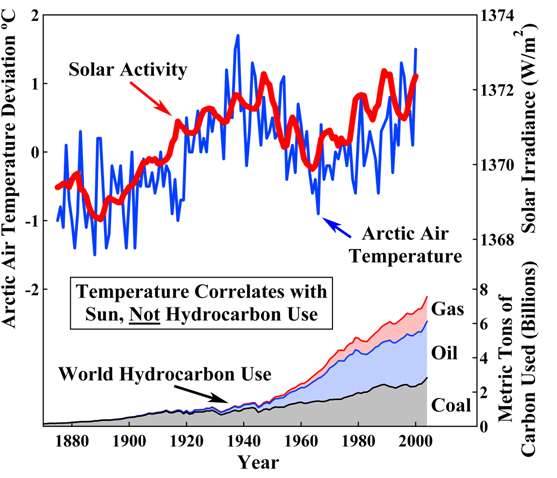
TSI...
Total Solar Irradiance (TSI) is the radiant energy received by the Earth from the sun, over all wavelengths, outside the atmosphere. TSI interaction with the Earth's atmosphere, oceans and landmasses is the biggest factor determining our climate. To put it into perspective, decreases in TSI of 0.2 percent occur during the weeklong passage of large sunspot groups across our side of the sun. These changes are relatively insignificant compared to the sun's total output of energy, yet equivalent to all the energy that mankind uses in a year. According to Willson, small variations, like the one found in this study, if sustained over many decades, could have significant climate effects.
We may be getting less visible wavelengths and more of the other spectral bands. Being out in the field a lot I have noticed a change in amount of light. And up here in the high desert of Nevada the skies are clear...
Solar Trend Could Change Climate
Since the late 1970s, the amount of solar radiation the sun emits, during times of quiet sunspot activity, has increased by nearly .05 percent per decade, according to a NASA funded study.
"This trend is important because, if sustained over many decades, it could cause significant climate change," said Richard Willson, a researcher affiliated with NASA's Goddard Institute for Space Studies and Columbia University's Earth Institute, New York. He is the lead author of the study recently published in Geophysical Research Letters.
www.scienceagogo.com...
NASA Study Finds Increasing Solar Trend That Can Change Climate
www.sciencedaily.com...
DAILY TOTAL SOLAR IRRADIANCE
www.ngdc.noaa.gov...
Egyptian Circa 1000 BC Standard attire yet they were outside in the sun most of the day... just look at any of the old drawings... mostly naked
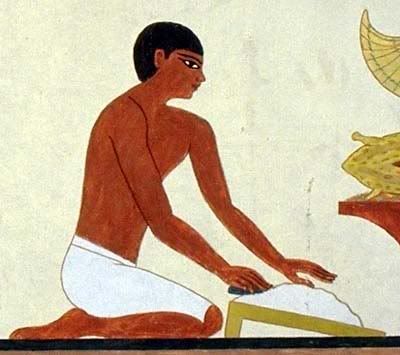
Egyptian in the desert today -- all covered up

I believe it likely that the solar radiation was different back then and you could stay out in the sun a lot longer without burning or drying up
Its a work in progress though... still gathering facts, but it seems NASA is working along the same lines now
reply to post by zorgon
Thanks Zorgon!
I appreciate you taking the time to compose such a detailed response.
Thanks Zorgon!
I appreciate you taking the time to compose such a detailed response.
reply to post by zorgon
Those outfits they wear in the desert for protection. Well if they did wear them back then then logically you would expect to see artwork with both the people wearing them and without.
Like even in a hot region guys don't always have their shirt on you know even today. So, our artwork reflects that. Some pictures and art have shirts and some don't you know.
Anyway, to the point, one piece of art doesn't tell us too much, but what would tell us a whole bunch is IF ALL their pictures are like that. And as far I've seen they are. They always friggin shirtless.
What a person would really want to know is if their attire all of a sudden changed and exactly when they started wearing the new clothes. Just trace it back to that if that can be done and you'd have your answer pretty much.
EDIT: The reason being is because if ALL their artwork is like that, then the simplest logical conclusion of why they didn't wear that new type of clothing is simply that type of clothing was never used back then. If so, you could conclude that's the case simply because it wasn't needed.
If on the other hand what you see is some pictures where they're mostly naked and others where they're mostly covered up for protection then the art would be no different than what we have today. People just like to draw the body you know.
[edit on 4-9-2009 by tinfoilman]
Those outfits they wear in the desert for protection. Well if they did wear them back then then logically you would expect to see artwork with both the people wearing them and without.
Like even in a hot region guys don't always have their shirt on you know even today. So, our artwork reflects that. Some pictures and art have shirts and some don't you know.
Anyway, to the point, one piece of art doesn't tell us too much, but what would tell us a whole bunch is IF ALL their pictures are like that. And as far I've seen they are. They always friggin shirtless.
What a person would really want to know is if their attire all of a sudden changed and exactly when they started wearing the new clothes. Just trace it back to that if that can be done and you'd have your answer pretty much.
EDIT: The reason being is because if ALL their artwork is like that, then the simplest logical conclusion of why they didn't wear that new type of clothing is simply that type of clothing was never used back then. If so, you could conclude that's the case simply because it wasn't needed.
If on the other hand what you see is some pictures where they're mostly naked and others where they're mostly covered up for protection then the art would be no different than what we have today. People just like to draw the body you know.
[edit on 4-9-2009 by tinfoilman]
new topics
-
Any one suspicious of fever promotions events, card only.
The Gray Area: 11 minutes ago -
God's Righteousness is Greater than Our Wrath
Religion, Faith, And Theology: 4 hours ago -
Electrical tricks for saving money
Education and Media: 7 hours ago -
VP's Secret Service agent brawls with other agents at Andrews
Mainstream News: 9 hours ago -
Sunak spinning the sickness figures
Other Current Events: 9 hours ago -
Nearly 70% Of Americans Want Talks To End War In Ukraine
Political Issues: 9 hours ago -
Late Night with the Devil - a really good unusual modern horror film.
Movies: 11 hours ago
top topics
-
VP's Secret Service agent brawls with other agents at Andrews
Mainstream News: 9 hours ago, 9 flags -
Cats Used as Live Bait to Train Ferocious Pitbulls in Illegal NYC Dogfighting
Social Issues and Civil Unrest: 13 hours ago, 8 flags -
Electrical tricks for saving money
Education and Media: 7 hours ago, 4 flags -
HORRIBLE !! Russian Soldier Drinking Own Urine To Survive In Battle
World War Three: 17 hours ago, 3 flags -
Sunak spinning the sickness figures
Other Current Events: 9 hours ago, 3 flags -
Nearly 70% Of Americans Want Talks To End War In Ukraine
Political Issues: 9 hours ago, 3 flags -
Late Night with the Devil - a really good unusual modern horror film.
Movies: 11 hours ago, 2 flags -
The Good News According to Jesus - Episode 1
Religion, Faith, And Theology: 15 hours ago, 1 flags -
Any one suspicious of fever promotions events, card only.
The Gray Area: 11 minutes ago, 1 flags -
God's Righteousness is Greater than Our Wrath
Religion, Faith, And Theology: 4 hours ago, 0 flags
active topics
-
SETI chief says US has no evidence for alien technology. 'And we never have'
Aliens and UFOs • 49 • : Consvoli -
Any one suspicious of fever promotions events, card only.
The Gray Area • 0 • : Cavemannick -
God's Righteousness is Greater than Our Wrath
Religion, Faith, And Theology • 1 • : andy06shake -
Sunak spinning the sickness figures
Other Current Events • 7 • : xWorldxGonexMadx -
HORRIBLE !! Russian Soldier Drinking Own Urine To Survive In Battle
World War Three • 33 • : Degradation33 -
How ageing is" immune deficiency"
Medical Issues & Conspiracies • 34 • : angelchemuel -
Nearly 70% Of Americans Want Talks To End War In Ukraine
Political Issues • 13 • : Freeborn -
Mood Music Part VI
Music • 3101 • : ThatSmellsStrange -
VP's Secret Service agent brawls with other agents at Andrews
Mainstream News • 41 • : ThatSmellsStrange -
New whistleblower Jason Sands speaks on Twitter Spaces last night.
Aliens and UFOs • 55 • : baablacksheep1