It looks like you're using an Ad Blocker.
Please white-list or disable AboveTopSecret.com in your ad-blocking tool.
Thank you.
Some features of ATS will be disabled while you continue to use an ad-blocker.

Can weapons be art?
page: 2share:
Originally posted by jibeho
Originally posted by ProudDominicanAmerican
I Think Anything Designed To End Life Can Neva B Considerd Beutifull , Or Nice To Look At Etc.
If you are so opposed to weapons, why did you join the Navy? The Navy has plenty of goodies designed to end a life and pound an enemy into submission. You just may be ordered to fire such a weapon. Good luck in bootcamp! You'll have a blast.
I Said Weapons Can't Be Beutifull , I Didn't Say I Dnt Like To Use Them LOL
Originally posted by jibeho
Originally posted by ProudDominicanAmerican
I Think Anything Designed To End Life Can Neva B Considerd Beutifull , Or Nice To Look At Etc.
If you are so opposed to weapons, why did you join the Navy? The Navy has plenty of goodies designed to end a life and pound an enemy into submission. You just may be ordered to fire such a weapon. Good luck in bootcamp! You'll have a blast.
I Said Weapons Can't Be Beutifull , I Didn't Say I Dnt Like To Use Them LOL
reply to post by ProudDominicanAmerican
Take a look at the engraving, wood selection and carving detail on a Merkel or Kreighoff double rifle or shotgun and you may change your mind.
www.krieghoff.com...
merkel-usa.com... nYXRpb25JRD0xMDE2OQ==
Take a look at the engraving, wood selection and carving detail on a Merkel or Kreighoff double rifle or shotgun and you may change your mind.
www.krieghoff.com...
merkel-usa.com... nYXRpb25JRD0xMDE2OQ==
As far as I'm concerned, anything made by Kimber is a work of art.[atsimg]http://files.abovetopsecret.com/images/member/d4b998171303.jpg[/atsimg]
Originally posted by thaknobodi
The finest weapon is your own body. martial arts.
Its' not that useful if you're 30m away or sitting in a car though, is it?
Not that it has anything to do with the topic in hand.
Originally posted by soldier8828
reply to post by Dimitri Dzengalshlevi
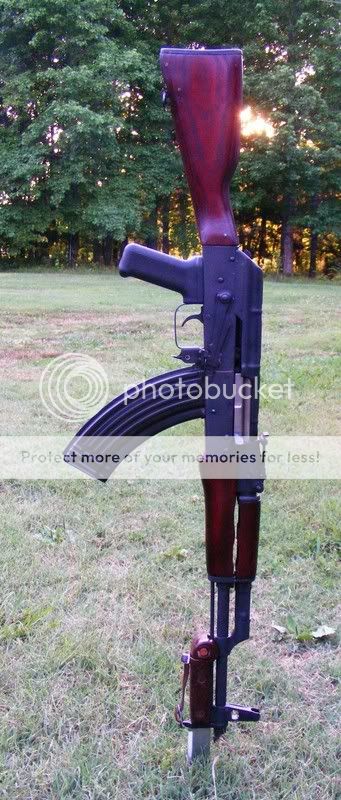
actually i tend to think its a lil more primitive than the M16-A2
is this art?
i98.photobucket.com...
maybe but its more popular, works much better in the real live and anyway- both of them are inspired by the germans, nazi time weapons...
Dont forget the first stone age knives and javelin heads...
In the primitive cultures of today the peoples demanded from the merchants who contacted them the parfume bottles- not for the scent but to make of their bottoms the superbe arrow heads etc...
[edit on 11-8-2009 by ZenOnKwalsky]
In the primitive cultures of today the peoples demanded from the merchants who contacted them the parfume bottles- not for the scent but to make of their bottoms the superbe arrow heads etc...
[edit on 11-8-2009 by ZenOnKwalsky]

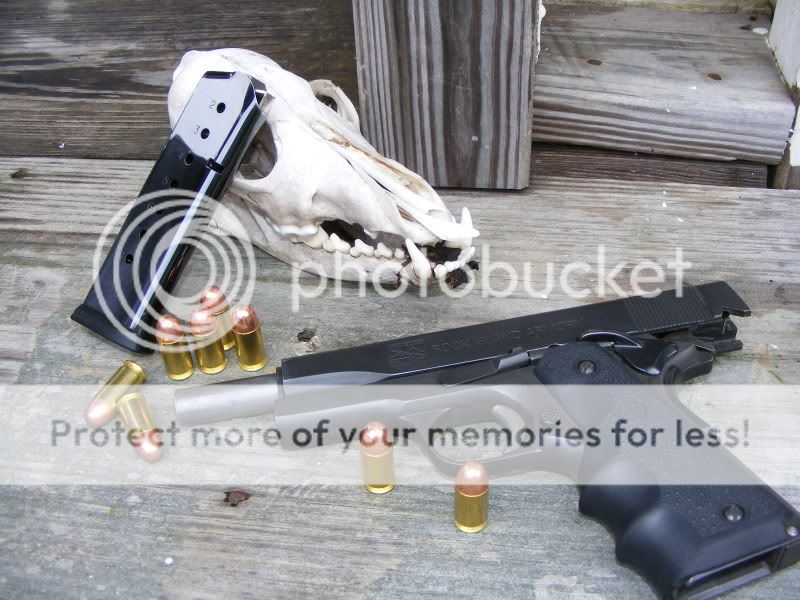
www.centralfloridapawn.com...
When I become an international coc aine kingpin this shall be my weapon of choise..
When I become an international coc aine kingpin this shall be my weapon of choise..
Dont everyone have the ole shotgun lamp by their door?
A friend of mine has an old henery pump .22 "worth a lot of $$"
Hung with stuff from the same era, ie..old oil signs, coca-cola signs, ww1 refill-type lighters, ect..ect...most would never see the gun, and if they did would never think of it still working, it looks like a kids toy to begin with.
I think my .45 LC is art just being put in the turn of the century leather holster, and hung from my banister mirror, resembles the "Gun Smoke" intro...
A friend of mine has an old henery pump .22 "worth a lot of $$"
Hung with stuff from the same era, ie..old oil signs, coca-cola signs, ww1 refill-type lighters, ect..ect...most would never see the gun, and if they did would never think of it still working, it looks like a kids toy to begin with.
I think my .45 LC is art just being put in the turn of the century leather holster, and hung from my banister mirror, resembles the "Gun Smoke" intro...
Bruce Bump is an artist by almost anyone's definition. His work is absolutely exquisite.
www.brucebumpknives.com...
There are many ABS mastersmiths who should be considered artists.
www.brucebumpknives.com...
There are many ABS mastersmiths who should be considered artists.
I dont know about weapons but war is both an art and a science.
Weapons can be made as an art, with original inlays or engraving. And sometimes the craftsmanship involved in their creation is considered an artform.
(Otherwise there may be less stories/myths of legendary swordsmiths or their creations like Excalibur.) Museums that deal with antiquities may even
have a section that just deals with arms and armoury. (If you're into this stuff and ever visit Chicago, you'd really like
this.)
Early artillery and siege weapons were also considered an art, sometime before the science was fully developed. I'm sure Leonardo DaVinci may have some fairly well known examples.
Other weapons that never started with an artistic intent get embellished as an art. Maybe it's a hand-me-down hunting rifle. Somewhere along the line, somebody decides to carve the stock, inlay it, or paint it, or perhaps do some engraving somewhere on the barrel. I'm sure even various modern arms such as AK-47s see this type of treatment amonst the tribal groups that may be carrying them. We also do this too, but usually not with small arms that have to conform to standards so they can be handed off or exchanged quickly. But looking at the big weapons systems? Bomber nose art, roundels and aircraft livery, squadron insignia, ship's insignia, division logos, weapons system logos, and various mission badges... Are those embellishments not artistic?
And sometimes there's the art of fictional weapons, or fictional warfare. Things like steampunk or sci-fi weapons are an art of themselves. And some people make battles as art, in this day of computer games. You may see some oddball machinima involving warfare, or perhaps you might catch an epic video of RTS battle that almost seems in sync with the music like Flail Supreme 2.
(YouTube fails to do it justice compared to the version that was on the SupCom forums, but if that footage is not artisticly directed and composed I'm not sure what is.)
Also propaganda (or psi-ops) is very much an art form, if not a science. If you can create the imagery and symbolism to convince and lead the masses, it's very much capable of being a weapon in its own right despite not being a physical and tangible thing. It's not like very well known history doesn't have accounts of this. Old WWII era films and posters both Axis and Allied, are probably the best known examples. Perhaps best followed by the early cold war rhetoric and chest thumping (some of the direction and editing of nuke footage can be considered quite artistic, with the purpose to inspire fear or awe depending on the audience), with various imagry of the red-scare/iron curtain, Dr. Strangelove, and even made light of with Rocky & Bullwinkle, etc.
The short answer? Yes.
Early artillery and siege weapons were also considered an art, sometime before the science was fully developed. I'm sure Leonardo DaVinci may have some fairly well known examples.
Other weapons that never started with an artistic intent get embellished as an art. Maybe it's a hand-me-down hunting rifle. Somewhere along the line, somebody decides to carve the stock, inlay it, or paint it, or perhaps do some engraving somewhere on the barrel. I'm sure even various modern arms such as AK-47s see this type of treatment amonst the tribal groups that may be carrying them. We also do this too, but usually not with small arms that have to conform to standards so they can be handed off or exchanged quickly. But looking at the big weapons systems? Bomber nose art, roundels and aircraft livery, squadron insignia, ship's insignia, division logos, weapons system logos, and various mission badges... Are those embellishments not artistic?
And sometimes there's the art of fictional weapons, or fictional warfare. Things like steampunk or sci-fi weapons are an art of themselves. And some people make battles as art, in this day of computer games. You may see some oddball machinima involving warfare, or perhaps you might catch an epic video of RTS battle that almost seems in sync with the music like Flail Supreme 2.
(YouTube fails to do it justice compared to the version that was on the SupCom forums, but if that footage is not artisticly directed and composed I'm not sure what is.)
Also propaganda (or psi-ops) is very much an art form, if not a science. If you can create the imagery and symbolism to convince and lead the masses, it's very much capable of being a weapon in its own right despite not being a physical and tangible thing. It's not like very well known history doesn't have accounts of this. Old WWII era films and posters both Axis and Allied, are probably the best known examples. Perhaps best followed by the early cold war rhetoric and chest thumping (some of the direction and editing of nuke footage can be considered quite artistic, with the purpose to inspire fear or awe depending on the audience), with various imagry of the red-scare/iron curtain, Dr. Strangelove, and even made light of with Rocky & Bullwinkle, etc.
The short answer? Yes.
new topics
-
Israel attacking Iran again.
Middle East Issues: 31 minutes ago -
Michigan school district cancels lesson on gender identity and pronouns after backlash
Education and Media: 35 minutes ago -
When an Angel gets his or her wings
Religion, Faith, And Theology: 1 hours ago -
Comparing the theology of Paul and Hebrews
Religion, Faith, And Theology: 2 hours ago -
Pentagon acknowledges secret UFO project, the Kona Blue program | Vargas Reports
Aliens and UFOs: 3 hours ago -
Boston Dynamics say Farewell to Atlas
Science & Technology: 3 hours ago -
I hate dreaming
Rant: 4 hours ago -
Man sets himself on fire outside Donald Trump trial
Mainstream News: 5 hours ago -
Biden says little kids flip him the bird all the time.
Politicians & People: 6 hours ago -
The Democrats Take Control the House - Look what happened while you were sleeping
US Political Madness: 6 hours ago
top topics
-
The Democrats Take Control the House - Look what happened while you were sleeping
US Political Madness: 6 hours ago, 17 flags -
In an Historic First, In N Out Burger Permanently Closes a Location
Mainstream News: 8 hours ago, 14 flags -
Biden says little kids flip him the bird all the time.
Politicians & People: 6 hours ago, 8 flags -
A man of the people
Medical Issues & Conspiracies: 14 hours ago, 8 flags -
Man sets himself on fire outside Donald Trump trial
Mainstream News: 5 hours ago, 7 flags -
Pentagon acknowledges secret UFO project, the Kona Blue program | Vargas Reports
Aliens and UFOs: 3 hours ago, 5 flags -
4 plans of US elites to defeat Russia
New World Order: 15 hours ago, 4 flags -
Sheetz facing racial discrimination lawsuit for considering criminal history in hiring
Social Issues and Civil Unrest: 6 hours ago, 3 flags -
Boston Dynamics say Farewell to Atlas
Science & Technology: 3 hours ago, 3 flags -
Are you ready for the return of Jesus Christ? Have you been cleansed by His blood?
Religion, Faith, And Theology: 11 hours ago, 3 flags
active topics
-
Candidate TRUMP Now Has Crazy Judge JUAN MERCHAN After Him - The Stormy Daniels Hush-Money Case.
Political Conspiracies • 403 • : Threadbarer -
Israel attacking Iran again.
Middle East Issues • 11 • : theatreboy -
Cat Movies
Movies • 19 • : 5thHead -
Man sets himself on fire outside Donald Trump trial
Mainstream News • 33 • : ByeByeAmericanPie -
Pentagon acknowledges secret UFO project, the Kona Blue program | Vargas Reports
Aliens and UFOs • 6 • : Ophiuchus1 -
Israeli Missile Strikes in Iran, Explosions in Syria + Iraq
World War Three • 104 • : CCoburn -
The Acronym Game .. Pt.3
General Chit Chat • 7732 • : RAY1990 -
Michigan school district cancels lesson on gender identity and pronouns after backlash
Education and Media • 3 • : Consvoli -
Are you ready for the return of Jesus Christ? Have you been cleansed by His blood?
Religion, Faith, And Theology • 20 • : RAY1990 -
The Democrats Take Control the House - Look what happened while you were sleeping
US Political Madness • 63 • : NoCorruptionAllowed