It looks like you're using an Ad Blocker.
Please white-list or disable AboveTopSecret.com in your ad-blocking tool.
Thank you.
Some features of ATS will be disabled while you continue to use an ad-blocker.

The Baalbek foundation stones.
page: 1share:
The massive foundation platform of Baal Hadad is like no other structure in the world. It is over 90 metres long and nearly 60 metres wide and stands some 10 metres proud of the underlying rock.
The Trilithon is composed of three stones each measuring 19 metres long x 4.2 metres wide x 3.6 metres broad. Hewn from natural crystalline limestone with a specific gravity of about 2.7, from a quarry 1 km mile away, they weigh 870 tons each.
They have been raised to a height of 10 metres and have been so accurately cut and placed that a razor's edge cannot be placed between them.
They have been laid upon a layer of 19 similar blocks weighing between 350 and 400 tons each.
Why these stones are such an enigma to contemporary scientists, both engineers and archaeologists alike, is that their method of quarrying, transportation and precision placement is beyond the technological ability of any known ancient or modern builders. Various ‘scholars’, uncomfortable with the notion that ancient cultures might have developed knowledge superior to modern science, have decided that the massive Baalbek stones were laboriously dragged from the nearby quarries to the temple site. While carved images in the temples of Egypt and Mesopotamia do indeed give evidence of this method of block transportation - using ropes, wooden rollers and thousands of laborers - the dragged blocks are known to have been only 1/10th the size and weight of the Baalbek stones and to have been moved along flat surfaces with wide movement paths. The route to the site of Baalbek, however, is up hill, over rough and winding terrain, and there is no evidence whatsoever of a flat hauling surface having been created in ancient times.
Quite an impressive feat of engineering - the Baalbek foundation stones shown above are the largest pieces of hewn rock on the face of the Earth.
At the links below it is argued that the foundation stones are far older than previously thought and that Roman architects just simply added to an already existing structure.
The collosal stones (each weighing 800 tonnes) are situated in a wall of the great acropolis of Baalbek in Lebanon and it is said that :
"They are so accurately placed in position and so carefully joined, that it is almost impossible to insert a needle between them.."
Michel Alouf,Former curator of the ruins.
Interesting stuff
Links:
www.vejprty.com...
www.andrewcollins.com...
www.geocities.com...
www.eridu.co.uk...
[edit on 02/10/08 by karl 12]
More:
www.sacredsites.com...
[edit on 02/10/08 by karl 12]
Architects and construction engineers, however, not having any preconceived ideas of ancient history to uphold, will frankly state that there are no known lifting technologies even in current times that could raise and position the Baalbek stones given the amount of working space. The massive stones of the Grand Terrace of Baalbek are simply beyond the engineering abilities of any recognized ancient or contemporary builders.
There are several other matters about the Baalbek stones that further confound archaeologists and conventional theories of prehistoric civilization. There are no legends or folk tales from Roman times that link the Romans with the mammoth stones. There are absolutely no records in any Roman or other literary sources concerning the construction methods or the dates and names of the benefactors, designers, architects, engineers and builders of the Grand Terrace. The megalithic stones of the Trilithon bear no structural or ornamental resemblance to any of the Roman-era constructions above them, such as the previously described Temples of Jupiter, Bacchus or Venus. The limestone rocks of the Trilithon show extensive evidence of wind and sand erosion that is absent from the Roman temples, indicating that the megalithic construction dates from a far earlier age. Finally, the great stones of Baalbek show stylistic similarities to other cyclopean stone walls at verifiably pre-Roman sites such as the Acropolis foundation in Athens, the foundations of Myceneae, Tiryns, Delphi and even megalithic constructions in the ‘new world’ such as Ollyantaytambo in Peru and Tiahuanaco in Bolivia.
www.sacredsites.com...
[edit on 02/10/08 by karl 12]
awesome.. never heard of this..
antigrav/sonic lathing methinks.
-
antigrav/sonic lathing methinks.
-
Originally posted by prevenge
awesome.. never heard of this.
antigrav/sonic lathing methinks.
Prevenge thanks for the reply -I don't know about the techniques employed but I think the foundation stones predated the Romans by quite some time.
As well as difference in building methods,weathering and graffiti,they've also found building stones on top of the foundation megaliths which predate the Romans.
The sheer scale of the stones are shown by the two men in the photograph
below:
These cyclopean stones are certainly not Roman. The square cut Roman stones are heaped on top of them by the Arabs or Crusaders, whoever turned the ruins into a medieval fortress.
Look at how small the two men are compared to the cyclopean stonework, let alone the megaliths upon which they are built:
Stonework:
This wall is made up of many ill-fitted stones, many of them reused from the ruined Roman temple by the Arabs, Crusaders, and Turks when the ruins were used as a fort. Some pieces of the Roman entablature can be seen, as well as slits cut into the rock for firing positions in the wall.
Because all these stones are piled one upon the other, it is clear to see an evolution of stone working. This reveals some of the stones piled upon the megaliths to be even older than Roman. These are also huge stones. Yet despite their size, they are still dwarfed by the megalithic blocks.
www.bibliotecapleyades.net...
Historical:
lavishing great architecture on Baalbek then seems totally out of character for the undeniably selfish Rome, which had at the very same time been stealing historic treasures from other countries, such as the obelisks from Egypt. It makes more sense that Baalbek had something no other place could offer, not even the city of Rome, the heart of the empire.
www.bibliotecapleyades.net...
Graffitti
Dated graffito proves that the Romans could not have built or financed Baalbek
www.lebanonpostcard.com...
Cheers
[edit on 02/10/08 by karl 12]
I too have never heard of these...
I need to look into other subjects not normally on my radar...
I'm sure engineers around the world have postulated on how these were moved from point A to point B - despite the terrain that had to be negotiated and not too mention the gigantic size of these things...
No matter the engineering marvels of that time, just how much equipment and labor can you get into one area..? In order to move just one slab, it would take enormous resources...
If this really was completed by humans, I'm really impressed...
rrmmaag ietd!
[edit on 2/22/2009 by chapter29]
I need to look into other subjects not normally on my radar...
I'm sure engineers around the world have postulated on how these were moved from point A to point B - despite the terrain that had to be negotiated and not too mention the gigantic size of these things...
No matter the engineering marvels of that time, just how much equipment and labor can you get into one area..? In order to move just one slab, it would take enormous resources...
If this really was completed by humans, I'm really impressed...
rrmmaag ietd!
[edit on 2/22/2009 by chapter29]
Yip these are a great marvel i must admit,ive heard of them before.Like the pyramids i dont think there was any super technology etc at work..just man
power and ingenuity but that doesn't take away the fact it must have been one damn big effort! Good thread,star and flag
[edit on 22-2-2009 by Solomons]
[edit on 22-2-2009 by Solomons]
How could history account for these wonders?
Quite simply, through recognizing the existence of giants as "mythology" tells us cross-culturally.
As per Greco-Babylonian tradition, the building of a tower is associated with a tribe of giants or giant (King Nimrod) (Struckenbruck 37) much like Arab tradition tells of the Temples of Baalbek, Lebanon.
These are the giants mentioned in Genesis 6:4 and in the Enoch tradition. These angels came down to the earth and sinned through taking wives for themselves and leaving a progeny of giants (Genesis 6:4; 1 En. 6:2-3).
Stuckenbruck, Loren T. The Book of Giants from Qumran. Texts, translation and commentary / Loren T. Stuckenbruck. – Tübingen: Mohr Siebeck, 1997
Quite simply, through recognizing the existence of giants as "mythology" tells us cross-culturally.
As per Greco-Babylonian tradition, the building of a tower is associated with a tribe of giants or giant (King Nimrod) (Struckenbruck 37) much like Arab tradition tells of the Temples of Baalbek, Lebanon.
These are the giants mentioned in Genesis 6:4 and in the Enoch tradition. These angels came down to the earth and sinned through taking wives for themselves and leaving a progeny of giants (Genesis 6:4; 1 En. 6:2-3).
Stuckenbruck, Loren T. The Book of Giants from Qumran. Texts, translation and commentary / Loren T. Stuckenbruck. – Tübingen: Mohr Siebeck, 1997
Another arrow pointing to the paranormal, and unknown construction techniques. If we couldn't do it now, how many generations of slaves would it
have taken to do it then.
Oh yeah, and the Earth is only 8K years old, according to the bible.
Yeah.......right.
Oh yeah, and the Earth is only 8K years old, according to the bible.
Yeah.......right.
Yes I've heard of these stones before. Good post, S & F.
Their mere existence, both in terms of physical proportions and geographical location, quite literally bashes one over the head with the fact that there are marvels of our planet that a normal person is not knowledgeable of at all. Just one more fact of life that points a rational and logical being to understand that we were either an extremely advanced race in the past, or we are not alone in this universe.
Their mere existence, both in terms of physical proportions and geographical location, quite literally bashes one over the head with the fact that there are marvels of our planet that a normal person is not knowledgeable of at all. Just one more fact of life that points a rational and logical being to understand that we were either an extremely advanced race in the past, or we are not alone in this universe.
It was the Djinn that moved those blocks. The same beings (Djinn) that were commanded by Solomon to build the temple.
Ref: Quran and other sources.
Ref: Quran and other sources.
Good post. One of my favourite "anomalies".
The book I read about them in stated that even the biggest cranes today could get nowhere near lifting something this weight. If true, transportation from the quarry apparently involved technology not available to modern man.
I believe such evidence indicates modern man ought to display a little more humility in his assessment of himself. The ancients may yet have much to teach us...
The book I read about them in stated that even the biggest cranes today could get nowhere near lifting something this weight. If true, transportation from the quarry apparently involved technology not available to modern man.
I believe such evidence indicates modern man ought to display a little more humility in his assessment of himself. The ancients may yet have much to teach us...
I've been interested in this for some time now - my father-in-law's Lebanese, and he told me about visiting the site as a child. If and when he ever
makes the journey back, he said I could tag along. I've included Baalbek in a story I'm writing, so it would be excellent to actually go there.
Anyway, just off the coast of Lebanon the latitude & longitude are 33.33°N 33.33°E (Baalbek is at 34°0′25″N). This is in line with quite a few notable conspiracy oriented locations:
maps.google.com.au... (and zoom out half way)
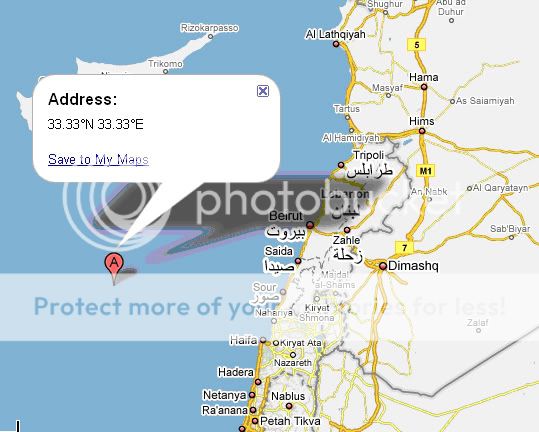
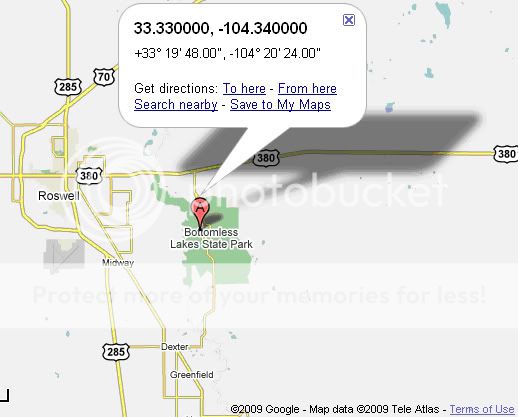
And here are a few locations in line along the same latitude:
Baalbek: 34°0′25″N, 36°12′14″E
Georgia Guidstones: 34°13′55.2″N, 82°53′40.2″W
Sedona AZ: 34.87°N, 111.79°W
[edit on 22/2/09 by Evasius]
Anyway, just off the coast of Lebanon the latitude & longitude are 33.33°N 33.33°E (Baalbek is at 34°0′25″N). This is in line with quite a few notable conspiracy oriented locations:
maps.google.com.au... (and zoom out half way)
33.33 degrees of the great circle of the earth represents 2012 nautical miles.
Mount Hermon in Phoenicia, the first location of extraterrestrial influence with man, lies precisely at 33.33° north 33.33° east ... 2,012 miles from the equator and 2,012 miles from the prime meridian.*
To be completely accurate, the number of nautical miles in 33.33 degrees of the earth is 2012 ".9" This corresponds to the year and date that the ancient Mayans of middle America believed their calendar will end, December 21st, 2012. This is also the year their serpent god and founder of civilization, Quetzalcoatle, will return from heaven.
www.ahrimangate.com...
And here are a few locations in line along the same latitude:
Baalbek: 34°0′25″N, 36°12′14″E
Georgia Guidstones: 34°13′55.2″N, 82°53′40.2″W
Sedona AZ: 34.87°N, 111.79°W
[edit on 22/2/09 by Evasius]
Originally posted by UMayBRite!
Wally Wallington did it...
Here
If a retired carpenter can move a 10,000 lb + machine with just a 2x4 maybe its not so hard!
Problem with that is if you take the stated 870 tonnes the blocks weigh your looking at trying to move something that is over roughly 1.9 million lb's in weight (dont shoot my maths im not an engineer and i only used google to find out how many pounds to a ton)... up hill on rough terrain.
While teh carpenters attempts are admirable, I dont think his ideas would work for alot of the ancient monuments we see around the world. Your average 2x4 would become as flat as a pancake
While I dont mind people attempting to recreate it the 'hard' way we think they did it like, its often funny seeing them saying, 'they did it like this because we managed to do it on a scaled down version, in a controlled area with the least amount of unknowns or unexpected issues cropping up"...
[edit on 22-2-2009 by BigfootNZ]
Steven Quayle, the "Giant"(Genesis6:4) researcher for over 30 years theorize that the "Nephilim" cut, carried, and laid those enormous foundation
stones..These pre-flood dudes were not only huge in stature but insanely strong and very bright beings with three to six times the cranial mass of
modern day humans!
Why not consider this possibility. Could the stones not have been CAST as in the same way or similar to our current brick manufacturing is done. Think
about it, cast them in place. Sand some agg and a binder. Remove the cast and you have a stone that fits perfectly into place cause it was CAST that
way.
Just my 2c
Just my 2c
I remember years ago my dad gave me his bible which had an archeological section at the back where this platform was mentioned. It said no one knew
who created the original platform that so many other cultures had built their temples over.
This has been around for ages so I am a little surprised that people would not have heard of it already... maybe I am getting old after all
This has been around for ages so I am a little surprised that people would not have heard of it already... maybe I am getting old after all
reply to post by karl 12
Maybe they used the some techniques that were employed by the Rapanui people to move the Moai to there locations. Although, many of today's most prominent engineers have only speculated on the techniques used by the Rapanui and never put the theory into practice.
For all we know they may have even used a technique so simple we may have over looked it.
Maybe they used the some techniques that were employed by the Rapanui people to move the Moai to there locations. Although, many of today's most prominent engineers have only speculated on the techniques used by the Rapanui and never put the theory into practice.
For all we know they may have even used a technique so simple we may have over looked it.
reply to post by Anonymous ATS
Good thinking. However in this case some of the gigantic stones still lie in the quarry some distance away!
(Note - this is actually illustrated in photos 2 & 3.)
Keep guessing...
Could the stones not have been CAST as in the same way or similar to our current brick manufacturing is done. Think about it, cast them in place. Sand some agg and a binder. Remove the cast and you have a stone that fits perfectly into place cause it was CAST that way.
Good thinking. However in this case some of the gigantic stones still lie in the quarry some distance away!
(Note - this is actually illustrated in photos 2 & 3.)
Keep guessing...
new topics
-
Russian intelligence officer: explosions at defense factories in the USA and Wales may be sabotage
Weaponry: 34 seconds ago -
African "Newcomers" Tell NYC They Don't Like the Free Food or Shelter They've Been Given
Social Issues and Civil Unrest: 58 minutes ago -
Russia Flooding
Other Current Events: 2 hours ago -
MULTIPLE SKYMASTER MESSAGES GOING OUT
World War Three: 2 hours ago -
Two Serious Crimes Committed by President JOE BIDEN that are Easy to Impeach Him For.
US Political Madness: 3 hours ago -
911 emergency lines are DOWN across multiple states
Breaking Alternative News: 3 hours ago -
Former NYT Reporter Attacks Scientists For Misleading Him Over COVID Lab-Leak Theory
Education and Media: 6 hours ago -
Why did Phizer team with nanobot maker
Medical Issues & Conspiracies: 6 hours ago -
Pro Hamas protesters at Columbia claim hit with chemical spray
World War Three: 6 hours ago -
Elites disapearing
Political Conspiracies: 8 hours ago
top topics
-
British TV Presenter Refuses To Use Guest's Preferred Pronouns
Education and Media: 16 hours ago, 17 flags -
Go Woke, Go Broke--Forbes Confirms Disney Has Lost Money On Star Wars
Movies: 10 hours ago, 13 flags -
Pro Hamas protesters at Columbia claim hit with chemical spray
World War Three: 6 hours ago, 11 flags -
Elites disapearing
Political Conspiracies: 8 hours ago, 8 flags -
Freddie Mercury
Paranormal Studies: 11 hours ago, 7 flags -
Nirvana - Immigrant Song
Music: 15 hours ago, 5 flags -
A Personal Cigar UFO/UAP Video footage I have held onto and will release it here and now.
Aliens and UFOs: 8 hours ago, 5 flags -
Two Serious Crimes Committed by President JOE BIDEN that are Easy to Impeach Him For.
US Political Madness: 3 hours ago, 4 flags -
Why did Phizer team with nanobot maker
Medical Issues & Conspiracies: 6 hours ago, 4 flags -
Former NYT Reporter Attacks Scientists For Misleading Him Over COVID Lab-Leak Theory
Education and Media: 6 hours ago, 3 flags
active topics
-
Running Through Idiot Protestors Who Block The Road
Rant • 107 • : FlyersFan -
Russian intelligence officer: explosions at defense factories in the USA and Wales may be sabotage
Weaponry • 0 • : RussianTroll -
The Acronym Game .. Pt.3
General Chit Chat • 7721 • : F2d5thCavv2 -
Russia Ukraine Update Thread - part 3
World War Three • 5694 • : F2d5thCavv2 -
-@TH3WH17ERABB17- -Q- ---TIME TO SHOW THE WORLD--- -Part- --44--
Dissecting Disinformation • 518 • : Guyfriday -
British TV Presenter Refuses To Use Guest's Preferred Pronouns
Education and Media • 50 • : sine.nomine -
African "Newcomers" Tell NYC They Don't Like the Free Food or Shelter They've Been Given
Social Issues and Civil Unrest • 2 • : ToneD -
MULTIPLE SKYMASTER MESSAGES GOING OUT
World War Three • 12 • : Zaphod58 -
Elites disapearing
Political Conspiracies • 18 • : GENERAL EYES -
Echo & The Bunnymen - The Killing Moon!
Music • 11 • : Freeborn