It looks like you're using an Ad Blocker.
Please white-list or disable AboveTopSecret.com in your ad-blocking tool.
Thank you.
Some features of ATS will be disabled while you continue to use an ad-blocker.

Round 1: antar vs 44soulslayer: Two Be Or Not Two Be?
page: 111
share:
The topic for this debate is “The Works Of William Shakespeare Were Authored By Multiple Persons
antar will be arguing the pro position and will open the debate.
44soulslayer will argue the con position.
Each debater will have one opening statement each. This will be followed by 3 alternating replies each. There will then be one closing statement each and no rebuttal.
There is a 10,000 character limit. Excess characters will be deleted prior to judging.
Editing is strictly forbidden. For reasons of time, mod edits should not be expected except in critical situations.
Opening and closing statements must not contain any images and must have no more than 3 references.
Excluding both the opening and closing statements, only two images and no more than 5 references can be included for each post. Each individual post may contain up to 10 sentences of external source material, totaled from all external sources.
Links to multiple pages within a single domain count as 1 reference but there is a maximum of 3 individual links per reference, then further links from that domain count as a new reference. Excess quotes and excess links will be removed before judging.
Videos are not permitted. This includes all youtube links and other multi-media video sources.
The Socratic Debate Rule is in effect. Each debater may ask up to 5 questions in each post, except for in closing statements- no questions are permitted in closing statements. These questions should be clearly labeled as "Question 1, Question 2, etc.
When asked a question, a debater must give a straight forward answer in his next post. Explanations and qualifications to an answer are acceptable, but must be preceded by a direct answer.
This Is The Time Limit Policy
Each debate must post within 24 hours of the timestamp on the last post. If your opponent is late, you may post immediately without waiting for an announcement of turn forfeiture. If you are late, you may post late, unless your opponent has already posted.
Each debater is entitled to one extension of 24 hours. The request should be posted in this thread and is automatically granted- the 24 hour extension begins at the expiration of the previous deadline, not at the time of the extension request.
In the unlikely event that tardiness results in simultaneous posting by both debaters, the late post will be deleted unless it appears in its proper order in the thread.
Judging will be done by a panel of anonymous judges. After each debate is completed it will be locked and the judges will begin making their decision. One of the debate forum moderators will then make a final post announcing the winner.
antar will be arguing the pro position and will open the debate.
44soulslayer will argue the con position.
Each debater will have one opening statement each. This will be followed by 3 alternating replies each. There will then be one closing statement each and no rebuttal.
There is a 10,000 character limit. Excess characters will be deleted prior to judging.
Editing is strictly forbidden. For reasons of time, mod edits should not be expected except in critical situations.
Opening and closing statements must not contain any images and must have no more than 3 references.
Excluding both the opening and closing statements, only two images and no more than 5 references can be included for each post. Each individual post may contain up to 10 sentences of external source material, totaled from all external sources.
Links to multiple pages within a single domain count as 1 reference but there is a maximum of 3 individual links per reference, then further links from that domain count as a new reference. Excess quotes and excess links will be removed before judging.
Videos are not permitted. This includes all youtube links and other multi-media video sources.
The Socratic Debate Rule is in effect. Each debater may ask up to 5 questions in each post, except for in closing statements- no questions are permitted in closing statements. These questions should be clearly labeled as "Question 1, Question 2, etc.
When asked a question, a debater must give a straight forward answer in his next post. Explanations and qualifications to an answer are acceptable, but must be preceded by a direct answer.
This Is The Time Limit Policy
Each debate must post within 24 hours of the timestamp on the last post. If your opponent is late, you may post immediately without waiting for an announcement of turn forfeiture. If you are late, you may post late, unless your opponent has already posted.
Each debater is entitled to one extension of 24 hours. The request should be posted in this thread and is automatically granted- the 24 hour extension begins at the expiration of the previous deadline, not at the time of the extension request.
In the unlikely event that tardiness results in simultaneous posting by both debaters, the late post will be deleted unless it appears in its proper order in the thread.
Judging will be done by a panel of anonymous judges. After each debate is completed it will be locked and the judges will begin making their decision. One of the debate forum moderators will then make a final post announcing the winner.
It is my distinct honor to be part of this Debate Tournament and would like to thank Memory Shock as well my opponent 44soulslayer for giving me this
opportunity to present evidence which history has neglected or ignored all together when asking the important question:
Did William Shakespeare himself actually write the 37 plays and 157 sonnets credited to his good fortune, or was this a conspiracy to defraud history itself of one of the most respected and coveted titles in the literary world?
If the latter is true, then who does the true and right credit belong to? We will look at the possible answers to that and in doing so perhaps aid in finding the true identity of the actual persona behind the greatest literary genius of the English language.
During this debate I ask that you the reader use your sharpest and most open minded approach to looking at the evidence provided and continue to remain open to a completely different possible outcome than that which history has provided for us regardless of the evidence to the contrary or lack thereof.
From what I have been able to discern from the time spent researching this fantastic claim, there are two schools of thought on the subject and both have strong points and merit, however for myself I will attempt to produce for your examination the Oxfordian theories and viewpoints which clearly veer the argument in favor of other writers and not Shakespeare himself.
This promises to be an engaging debate riddled with intrigue and thought provoking commentaries on both sides.
I now turn the pen over to my opponent 44soulslyer for his opening comments.
Did William Shakespeare himself actually write the 37 plays and 157 sonnets credited to his good fortune, or was this a conspiracy to defraud history itself of one of the most respected and coveted titles in the literary world?
If the latter is true, then who does the true and right credit belong to? We will look at the possible answers to that and in doing so perhaps aid in finding the true identity of the actual persona behind the greatest literary genius of the English language.
During this debate I ask that you the reader use your sharpest and most open minded approach to looking at the evidence provided and continue to remain open to a completely different possible outcome than that which history has provided for us regardless of the evidence to the contrary or lack thereof.
From what I have been able to discern from the time spent researching this fantastic claim, there are two schools of thought on the subject and both have strong points and merit, however for myself I will attempt to produce for your examination the Oxfordian theories and viewpoints which clearly veer the argument in favor of other writers and not Shakespeare himself.
This promises to be an engaging debate riddled with intrigue and thought provoking commentaries on both sides.
I now turn the pen over to my opponent 44soulslyer for his opening comments.
Ladies and gentlemen of ATS, judges and my honourable opponent, I thank you all for the opportunity to engage in this fascinating discussion about the
authorship of Shakespeare’s works.
The issue stands before us
“The Works Of William Shakespeare Were Authored By Multiple Persons”
I aim to show you that the conventional view of the issue is the correct one, and that all of Shakespeare’s works were indeed created by one William Shakespeare aka Shakespeare of Stratford. This shall indubitably be complicated by the fact that ATS readers are accustomed to embracing unconventional views; however I will show you that in this case, there is neither conspiracy nor subversion in place! The origin of Shakespeare’s works shall be proven beyond reasonable doubt to be the quilltip of the great bard himself.
To do this, I will employ three strands of reasoning:
1. Would a bard by any other name be as great? (An examination of the name Shakespeare and the link between Shakespeare of Stratford and William Shakespeare of the London west end)
2. Could a play by any other author be as great? (An examination of Shakespeare’s unique education background, literary style and the inability of others to imitate him).
3. General supporting evidence of Shakespeare’s authorship of “Shakespeare”.
I hope you will join me in the ranks of the Stratfordians, and give Shakespeare his due credit.
I finish my opening with the words of the man himself: all the world's a stage, and all the men and women merely players. They have their exits and their entrances; And one man in his time plays many parts (but many men do not play one part).
The issue stands before us
“The Works Of William Shakespeare Were Authored By Multiple Persons”
I aim to show you that the conventional view of the issue is the correct one, and that all of Shakespeare’s works were indeed created by one William Shakespeare aka Shakespeare of Stratford. This shall indubitably be complicated by the fact that ATS readers are accustomed to embracing unconventional views; however I will show you that in this case, there is neither conspiracy nor subversion in place! The origin of Shakespeare’s works shall be proven beyond reasonable doubt to be the quilltip of the great bard himself.
To do this, I will employ three strands of reasoning:
1. Would a bard by any other name be as great? (An examination of the name Shakespeare and the link between Shakespeare of Stratford and William Shakespeare of the London west end)
2. Could a play by any other author be as great? (An examination of Shakespeare’s unique education background, literary style and the inability of others to imitate him).
3. General supporting evidence of Shakespeare’s authorship of “Shakespeare”.
I hope you will join me in the ranks of the Stratfordians, and give Shakespeare his due credit.
I finish my opening with the words of the man himself: all the world's a stage, and all the men and women merely players. They have their exits and their entrances; And one man in his time plays many parts (but many men do not play one part).
I would like to dive straight into the heart of this debate and discuss what we know about the lack of evidence to support William Shakespeare as
being the true author of 157 sonnets and 37+ plays in question.
When looking into the true authorship of Shakespeare's plays let us first discover what we do know about William Shakespeare the man.
Born: Stratford-Upon-Avon April 26th 1564 (Baptism, as his actual date of birth was lost in poor records keeping , only adding to the mystery of his death and birth date being one and the same)
Died:
Stratford-Upon-Avon April 23rd 1616
Primary years: William was the 3rd child of 8, and the eldest surviving son.
Education: possibly one of the most significant pieces to the controversy in that there are no formal records of his actual schooling, but it is widely accepted William attended public school at Kings New School in Straford only a quarter of a mile from his home.
Married: Age 18 to Anne Hathaway 8 years his senior, who was already pregnant and who gave birth 6 months later to their daughter Susanna and later twins Hamnet and Judith.
The Lost years: After the death of his son at age 11, there are no records of Williams life between 1585-1592, and are often referred to as the lost years.
Emergence in London and his theatrical career: Rumors abound about how he actually got his start, some say he was a schoolteacher, others a mere stable boy for the theaters making his way onto the scene as an actor and playwright himself.
William was to not only become known as a performer but also purchased interests in the acting company called Lord Chamberlains Men, which also owned the Globe Theater and the Black-friars Theaters in London the most prestigious of its time.
At the time of his death however when looking at his will, we begin to see the real possibilities emerge that something was worth the time to investigate. Strong critics challenged even his last will and testament stating that his gifts to fellow actors were inserted between the lines and added in after his death.
Also interesting is how his alleged public works nor his property was mentioned in his last will and testament.
Is it possible that William Shakespeare was simply an acting pawn in the game set up by the higher Noble's as it was not an accepted practice for them to write drama and romance and did often use not only pen names but people as well to hide their Nobility or title?
And believe it or not, this is the largest sum of what we do know about the man. But this is only the beginning of the potential for a conspiracy of monumental proportions.
There are many possibilities to consider when first we think outside the box and begin to direct our focus not on Shakespeare, but on the question if not him, who?
Believe it or not even Queen Elizabeth has been considered! It does make sense in a way because women were just not accepted into the literary world at that time.
Authorship suspects:
Around 150 years after his death, rumors and evidence began to emerge of alternate authorship and continue today in many scholarly circles and have engaged enlightened literary giants past the point of questioning the mainstream acceptance of Shakespeare and the authenticity of his published works. I was amazed when I began to see some of the names on that burdgeoning list, people like Walt Whitman, Robin P. Williams, Calvin Hoffman, George Greenwood, Mark twain, Orson Wells, Charlie Chaplan to name but a few.
Lets now direct our focus on who historians and scholars suggest could have authored the most profound pieces of English literature.
Sir Francis Bacon 1561-1626 Philosopher, statesman, scientist, lawyer, jurist. Known best for his fantasy novel entitled "The New Atlantis" Also for his Baconian theory which identifies the nature of phenomena within scientific experiments. Quite brilliant, yet somehow lacking the ability to convince me of his connection being the true author of Shakespeare.
Christopher Marlow 1564-1593 Elizabethan tragedian, English dramatist, poet. And much the same as Shakespeare with his blank verse which is a type of poetry which has meter but no rhyme. Very similar styles and a good choice, a large following believe he could be the one, my gut says there could be connections, but to keep looking.
William Stanley 1548-1630 I really did not find the connection here other than through his understanding of military action as to how he could have had time to become a possible choice for authorship, however you can decide for yourself by using your favorite search engine.
As I stated above, there were many names brought to the table and for various reasons either because of their understanding of the intricacies of the higher courts and understanding of the aristocratic life styles or military ingenuity, all out of the scope for William Shakespeare's frame of reference. Remember in the 16th century, they had little contact outside their own lives and William being born of low chaste would not have had the information which was so richly imbued throughout the plays and poetry, which does make a strong power point for discovering who is responsible for authorship.
Which leads me to the most probable candidate and my personal choice thus far:
Edward de Vere April 12 1550- June 24 1604 Edward de Vere, 17th Earl of Oxford was an Elizabethan courtier, playwright, poet and sponsor of at least two acting companies, Oxfords Men and Oxfords Boys as well as a company of musicians. Born at Castle Hedingham son of the 16th Earl of Oxford.
We will continue to take a deeper look at what evidence and lack of evidence helps us to make our decisions about this the greatest conspiracy of the literary world. One thing is for certain, no matter what we uncover, the works of Shakespeare will still remain our finest English works of art regardless of who we discover as the author or authors.
Coming up next as well, why and how Edward de Vere has become the number one choice for the authorship and what this means for his ancestors and history itself if proven to be true. Also I will share some interesting sites I have discovered while researching this topic you just might find fact filled and informative.
My Socratic Question #1.
If history discovers that William Shakespeare of Stratford-upon-Avon is not the true author of the works of Shakespeare, how do you suppose it will be amended in the 21st century?
When looking into the true authorship of Shakespeare's plays let us first discover what we do know about William Shakespeare the man.
Born: Stratford-Upon-Avon April 26th 1564 (Baptism, as his actual date of birth was lost in poor records keeping , only adding to the mystery of his death and birth date being one and the same)
Died:
Stratford-Upon-Avon April 23rd 1616
Primary years: William was the 3rd child of 8, and the eldest surviving son.
Education: possibly one of the most significant pieces to the controversy in that there are no formal records of his actual schooling, but it is widely accepted William attended public school at Kings New School in Straford only a quarter of a mile from his home.
Married: Age 18 to Anne Hathaway 8 years his senior, who was already pregnant and who gave birth 6 months later to their daughter Susanna and later twins Hamnet and Judith.
The Lost years: After the death of his son at age 11, there are no records of Williams life between 1585-1592, and are often referred to as the lost years.
Emergence in London and his theatrical career: Rumors abound about how he actually got his start, some say he was a schoolteacher, others a mere stable boy for the theaters making his way onto the scene as an actor and playwright himself.
William was to not only become known as a performer but also purchased interests in the acting company called Lord Chamberlains Men, which also owned the Globe Theater and the Black-friars Theaters in London the most prestigious of its time.
At the time of his death however when looking at his will, we begin to see the real possibilities emerge that something was worth the time to investigate. Strong critics challenged even his last will and testament stating that his gifts to fellow actors were inserted between the lines and added in after his death.
Also interesting is how his alleged public works nor his property was mentioned in his last will and testament.
Is it possible that William Shakespeare was simply an acting pawn in the game set up by the higher Noble's as it was not an accepted practice for them to write drama and romance and did often use not only pen names but people as well to hide their Nobility or title?
And believe it or not, this is the largest sum of what we do know about the man. But this is only the beginning of the potential for a conspiracy of monumental proportions.
There are many possibilities to consider when first we think outside the box and begin to direct our focus not on Shakespeare, but on the question if not him, who?
Believe it or not even Queen Elizabeth has been considered! It does make sense in a way because women were just not accepted into the literary world at that time.
Authorship suspects:
Around 150 years after his death, rumors and evidence began to emerge of alternate authorship and continue today in many scholarly circles and have engaged enlightened literary giants past the point of questioning the mainstream acceptance of Shakespeare and the authenticity of his published works. I was amazed when I began to see some of the names on that burdgeoning list, people like Walt Whitman, Robin P. Williams, Calvin Hoffman, George Greenwood, Mark twain, Orson Wells, Charlie Chaplan to name but a few.
Lets now direct our focus on who historians and scholars suggest could have authored the most profound pieces of English literature.
Sir Francis Bacon 1561-1626 Philosopher, statesman, scientist, lawyer, jurist. Known best for his fantasy novel entitled "The New Atlantis" Also for his Baconian theory which identifies the nature of phenomena within scientific experiments. Quite brilliant, yet somehow lacking the ability to convince me of his connection being the true author of Shakespeare.
Christopher Marlow 1564-1593 Elizabethan tragedian, English dramatist, poet. And much the same as Shakespeare with his blank verse which is a type of poetry which has meter but no rhyme. Very similar styles and a good choice, a large following believe he could be the one, my gut says there could be connections, but to keep looking.
William Stanley 1548-1630 I really did not find the connection here other than through his understanding of military action as to how he could have had time to become a possible choice for authorship, however you can decide for yourself by using your favorite search engine.
As I stated above, there were many names brought to the table and for various reasons either because of their understanding of the intricacies of the higher courts and understanding of the aristocratic life styles or military ingenuity, all out of the scope for William Shakespeare's frame of reference. Remember in the 16th century, they had little contact outside their own lives and William being born of low chaste would not have had the information which was so richly imbued throughout the plays and poetry, which does make a strong power point for discovering who is responsible for authorship.
Which leads me to the most probable candidate and my personal choice thus far:
Edward de Vere April 12 1550- June 24 1604 Edward de Vere, 17th Earl of Oxford was an Elizabethan courtier, playwright, poet and sponsor of at least two acting companies, Oxfords Men and Oxfords Boys as well as a company of musicians. Born at Castle Hedingham son of the 16th Earl of Oxford.
We will continue to take a deeper look at what evidence and lack of evidence helps us to make our decisions about this the greatest conspiracy of the literary world. One thing is for certain, no matter what we uncover, the works of Shakespeare will still remain our finest English works of art regardless of who we discover as the author or authors.
Coming up next as well, why and how Edward de Vere has become the number one choice for the authorship and what this means for his ancestors and history itself if proven to be true. Also I will share some interesting sites I have discovered while researching this topic you just might find fact filled and informative.
My Socratic Question #1.
If history discovers that William Shakespeare of Stratford-upon-Avon is not the true author of the works of Shakespeare, how do you suppose it will be amended in the 21st century?
Answer to Socratic question
1. If Shakespeare of Stratford is conclusively proven to not be the true author of the works of Shakespeare, I presume the rightful author would be given his/ her due credit. However the works of Shakespeare would be no less eloquent, nor less beautiful. It would still be studied, and probably still known as Shakespeare by the common man.
Soulslayer’s Socratic questions to Antar
1. What do other nobles have to gain from publishing their works under Shakespeare’s name?
2. Do you agree that Shakespeare was not of low caste, but rather the son of a rapidly rising nouveau-riche family?
3. If any other author had actually written the works of Shakespeare, why did they continue to do so even after it was evident that they were wildly popular? Why not simply take the spoils for themselves?
Rebuttal Section
I thank my honourable opponent for her introduction of Shakespeare’s life and legacy. Overall, I agree with the facts and the notion that Shakespeare of Stratford is the same person as Shakespeare of London. I will be supplying a more indepth look at this later on.
I will also be looking at Shakespeare’s education independently.
I would now like to address some of the points specifically made by my opponent.
My opponent states
I question the validity of this assertion, and posit that it is no more than conjecture. The executor of the will and a public notary would have been called in to examine the will. Presumably they found no truth in the claims of forgery, and subsequently Shakespeare’s will was executed as he intended.
My opponent also states
Where is the evidence to support this claim? Furthermore, would such a “higher” noble not have taken a stake in the playhouse before? Or are you indeed suggesting that the nobles of Elizabethan Britain were so altruistic that they didn’t care about the proceeds of their plays?! History suggests that the aristocracy of the time were far from uncaring about their wealth and status!
The landed gentry would, if anything, have published their works through one of their servants (thus retaining control of the fruits of their labour). Surely at any rate, the landed gentry would never have all published their works through one man (Shakespeare).
My opponent goes on to list possible authors, ranging from HRH Queen Elizabeth the first through Francis Bacon, Marlow, Stanley and finally De Vere.
A commendable effort at putting forth a list of possible authors, however we must realise that opportunity does not equate to action. Just because all those people had knowledge of the subjects, does not mean that they wrote the works.
Bacon had already published other novels. Why would he choose to publish under the name of William Shakespeare instead of his own?
Marlow was a poet with supposedly similar styles (according to my opponent) to Shakespeare. Why would he choose to publish under the name of William Shakespeare instead of his own?
Stanley has neither the knowledge of the subjects nor the ability to write the flourished prose of Shakespearean plays.
This brings us to the chief pretender and claimant : De Vere. A playwright and poet in his own right, sponsor of two acting companies and a musician to boot. Why would he choose to publish under the name of William Shakespeare instead of his own?
None of the people listed by my opponent have the motive to publish their works through another man. None of the people gain anything by this supposed conspiracy. Some of them don’t even have the subject knowledge and only one other could even claim of rivalling Shakespeare’s literary ability!
My opponent also states:
This is one of the biggest claims, and the biggest stumbling block of the anti-stratfordians and oxfordians. In my second statement, I will show you why this is the case. For the moment, I shall only say that Shakespeare’s background was far from being the low caste and impoverished existence painted by my opponent. Shakespeare was born the son of a member of the landed gentry, and his father later rose to the position of Alderman.
If you would like to read the argument in advance, I suggest reading this essay : shakespeareauthorship.com...
Soulslayer’s first
The biggest issue often brought up by anti-stratfordians is that the Shakespeare of Stratford and the Shakespeare of London are two separate people. This is simply not the case.
How do we know this? Well, through a number of sources.
1. The name “William Shakespeare” appears on the plays and poems that are commonly referred to as the works of Shakespeare. This suggests that Shakespeare wrote Shakespeare.
2. William Shakespeare of Stratford was an actor in the company that performed the plays with the name “William Shakespeare” on them. This seems to be an awfully large coincidence doesn’t it? Or was it rather that Shakespeare wrote and starred in his own plays along with his fellow London thespians.
3. Ahh! I hear ye cry. How do we know that William Shakespeare the actor was the same William Shakespeare of Stratford? Well there is supporting evidence that suggests so:
4. William Shakespeare bought Blackfriar’s Gatehouse in London in 1613. The man responsible for the transaction was a John Hemming, who was acting on behalf of a “William Shakespeare of Stratford upon Avon, Gentleman”. That very same property is also mentioned in Shakespeare’s will.
Summary of first statement
We know that William Shakespeare was born in Stratford upon Avon in 1564. His father was granted a coat of arms and thus he was entitled to use the postnomial “Gentleman”. Shakespeare then moved to London where he acquired stakes in playhouses and performed in them. More importantly, his name appears on all the plays which he also starred in, and were produced in his playhouses.
Barring some massive coincidences such as there being two William Shakespeares, we must conclude that William Shakespeare of Stratford is the same man as William Shakespeare : writer of numerous plays and poems.
We must also consider that Shakespeare’s name appears on each and every play and poem. Thus, unless my honourable opponent can prove that William Shakespeare was used as a funnel for the for the works of a greater man, we must conclude that Shakespeare wrote Shakespeare.
Mod Edit: In Excess Of 10 External Sentences.
[edit on 21-2-2009 by MemoryShock]
1. If Shakespeare of Stratford is conclusively proven to not be the true author of the works of Shakespeare, I presume the rightful author would be given his/ her due credit. However the works of Shakespeare would be no less eloquent, nor less beautiful. It would still be studied, and probably still known as Shakespeare by the common man.
Soulslayer’s Socratic questions to Antar
1. What do other nobles have to gain from publishing their works under Shakespeare’s name?
2. Do you agree that Shakespeare was not of low caste, but rather the son of a rapidly rising nouveau-riche family?
3. If any other author had actually written the works of Shakespeare, why did they continue to do so even after it was evident that they were wildly popular? Why not simply take the spoils for themselves?
Rebuttal Section
I thank my honourable opponent for her introduction of Shakespeare’s life and legacy. Overall, I agree with the facts and the notion that Shakespeare of Stratford is the same person as Shakespeare of London. I will be supplying a more indepth look at this later on.
I will also be looking at Shakespeare’s education independently.
I would now like to address some of the points specifically made by my opponent.
My opponent states
At the time of his death however when looking at his will, we begin to see the real possibilities emerge that something was worth the time to investigate. Strong critics challenged even his last will and testament stating that his gifts to fellow actors were inserted between the lines and added in after his death.
I question the validity of this assertion, and posit that it is no more than conjecture. The executor of the will and a public notary would have been called in to examine the will. Presumably they found no truth in the claims of forgery, and subsequently Shakespeare’s will was executed as he intended.
My opponent also states
Is it possible that William Shakespeare was simply an acting pawn in the game set up by the higher Noble's as it was not an accepted practice for them to write drama and romance and did often use not only pen names but people as well to hide their nobility or title?
Where is the evidence to support this claim? Furthermore, would such a “higher” noble not have taken a stake in the playhouse before? Or are you indeed suggesting that the nobles of Elizabethan Britain were so altruistic that they didn’t care about the proceeds of their plays?! History suggests that the aristocracy of the time were far from uncaring about their wealth and status!
The landed gentry would, if anything, have published their works through one of their servants (thus retaining control of the fruits of their labour). Surely at any rate, the landed gentry would never have all published their works through one man (Shakespeare).
My opponent goes on to list possible authors, ranging from HRH Queen Elizabeth the first through Francis Bacon, Marlow, Stanley and finally De Vere.
A commendable effort at putting forth a list of possible authors, however we must realise that opportunity does not equate to action. Just because all those people had knowledge of the subjects, does not mean that they wrote the works.
Bacon had already published other novels. Why would he choose to publish under the name of William Shakespeare instead of his own?
Marlow was a poet with supposedly similar styles (according to my opponent) to Shakespeare. Why would he choose to publish under the name of William Shakespeare instead of his own?
Stanley has neither the knowledge of the subjects nor the ability to write the flourished prose of Shakespearean plays.
This brings us to the chief pretender and claimant : De Vere. A playwright and poet in his own right, sponsor of two acting companies and a musician to boot. Why would he choose to publish under the name of William Shakespeare instead of his own?
None of the people listed by my opponent have the motive to publish their works through another man. None of the people gain anything by this supposed conspiracy. Some of them don’t even have the subject knowledge and only one other could even claim of rivalling Shakespeare’s literary ability!
My opponent also states:
As I stated above, there were many names brought to the table and for various reasons either because of their understanding of the intricacies of the higher courts and understanding of the aristocratic life styles or military ingenuity, all out of the scope for William Shakespeare's frame of reference. Remember in the 16th century, they had little contact outside their own lives and William being born of low chaste would not have had the information which was so richly imbued throughout the plays and poetry, which does make a strong power point for discovering who is responsible for authorship.
This is one of the biggest claims, and the biggest stumbling block of the anti-stratfordians and oxfordians. In my second statement, I will show you why this is the case. For the moment, I shall only say that Shakespeare’s background was far from being the low caste and impoverished existence painted by my opponent. Shakespeare was born the son of a member of the landed gentry, and his father later rose to the position of Alderman.
If you would like to read the argument in advance, I suggest reading this essay : shakespeareauthorship.com...
Soulslayer’s first
William Shakespeare was born in April, 1564, the oldest son of John Shakespeare. His father, a glover, trader, and landowner, married Mary Arden, the daughter of an affluent landowner of Wilmcote. John Shakespeare was ambitious, and he filled many municipal offices in Stratford including that of burgess, which privileged him to educate his children without charge at the King's New School in Stratford. He rose by election to the position of Alderman in 1565; and in 1568 he was elected Bailiff (equivalent to mayor), and in that year he made an application to the Herald's office for a grant of arms. In his position as Bailiff he was responsible for licensing companies of actors who applied to play in the Guild Hall.
William Shakespeare married Ann Hathaway in November, 1582, and six months later their daughter, Susanna, was born. Two other children were born, the twins Hamnet and Judith, in February, 1585. Sometime after this he joined a troupe of players and made his way to London. As a member of London's leading theater company, the Lord Chamberlain's Company, he wrote plays and eventually became a sharer in the Globe theater. He was so successful that in 1596 he successfully renewed his father's application for a grant of arms, and the following year he bought and restored New Place, the second-largest house in Stratford. He also bought other real estate in Stratford and London. Shakespeare semi-retired from London life some time around 1610. He died 23 April 1616, disposing of his large estate in his will.
The biggest issue often brought up by anti-stratfordians is that the Shakespeare of Stratford and the Shakespeare of London are two separate people. This is simply not the case.
How do we know this? Well, through a number of sources.
1. The name “William Shakespeare” appears on the plays and poems that are commonly referred to as the works of Shakespeare. This suggests that Shakespeare wrote Shakespeare.
2. William Shakespeare of Stratford was an actor in the company that performed the plays with the name “William Shakespeare” on them. This seems to be an awfully large coincidence doesn’t it? Or was it rather that Shakespeare wrote and starred in his own plays along with his fellow London thespians.
3. Ahh! I hear ye cry. How do we know that William Shakespeare the actor was the same William Shakespeare of Stratford? Well there is supporting evidence that suggests so:
In 1602, Peter Brooke, the York Herald, accused Sir William Dethick, the Garter King-of-Arms, of elevating base persons to the gentry.
4. William Shakespeare bought Blackfriar’s Gatehouse in London in 1613. The man responsible for the transaction was a John Hemming, who was acting on behalf of a “William Shakespeare of Stratford upon Avon, Gentleman”. That very same property is also mentioned in Shakespeare’s will.
Summary of first statement
We know that William Shakespeare was born in Stratford upon Avon in 1564. His father was granted a coat of arms and thus he was entitled to use the postnomial “Gentleman”. Shakespeare then moved to London where he acquired stakes in playhouses and performed in them. More importantly, his name appears on all the plays which he also starred in, and were produced in his playhouses.
Barring some massive coincidences such as there being two William Shakespeares, we must conclude that William Shakespeare of Stratford is the same man as William Shakespeare : writer of numerous plays and poems.
We must also consider that Shakespeare’s name appears on each and every play and poem. Thus, unless my honourable opponent can prove that William Shakespeare was used as a funnel for the for the works of a greater man, we must conclude that Shakespeare wrote Shakespeare.
Mod Edit: In Excess Of 10 External Sentences.
[edit on 21-2-2009 by MemoryShock]
I would at this time ask for a 24 hour extention on my next post.
Thank you.
Thank you.
Before we move forward in this most interesting subject of debate, I would like to first acknowledge my opponent's Socratic questions:
It is common knowledge in higher aristocratict circles, there are fundamentally more important agendas than money. It has been widely examined that Shakespeare's plays were a venue for social reform of the age and of immense use as a tool of propaganda. Also they could not risk losing their positions in the confidence of her majesty the Queen, nor devulge that they are responsible for making public the inner workings of the last and final days of the Tudor dynasty.
Furthermore it was perfectly acceptable for a noble to be a poet, yet it was not sociably acceptable to be a playwright. One of the reasons is that the reputation of the theaters were less than aristocratic and the theaters themselves were often in the redlight disctricts of London which were noted for being associated with anarchist mentality and that would be death of reputation in good standing and total loss of confidence amongst their contemporaries.
No, I do not agree that he was not in fact part of a lower caste as was most certain according to any records. As for his father being of the nouveau-riche, again I must adhere to what I have been able to ascertain from public records and not that of well wishing and far reaching hopefuls such as the unsubstantiated Stratforian views. And that his father was in fact a lowly educated man with geographic and social limitations of his simple village. A glove maker, that kept his family illiterate.
This is probably one of the most basic questions to ask when first we begin to discover who in fact wrote the plays, sonnets and poems of our greatest literary masters.
To risk imprisonment for having a go at the aristocrats and royals by a commoner was one thing, but for a nobleman it would be treasonous.
www.shakespeare-oxford.com...
Indeed this is one of the strongest points to be considered, if he had been the prodigy of immense literary background, then why does he lack a proper library? And who was he an understudy to in the early years before he simply appeared at age 30 in London as a learned scholar? And if he proved to be the Bard, then why is it that his signature is that of an intellectual challenged, unable to even spell his name the same twice?
If we take into consideration the busy detail of being a grain owner, and family provider, how did he find time to tutelage under an unknown of which none has ever claimed to know of the Stratford man nor claims of having taught such a man?
The staratfords mans death has many oddities which directly point to the assurity that he was not in fact William Shakespeare the writer. If he were the greatest legend to hail from the small community of only 147 houses, would he not have been as celebrated upon his death as he was in life, yet even his effigy was one that cannot be denied as mundane and riddled with controversy and hidden truths.
The pillow that he rests his hands on today, reminds me not of the memory of a distinguished writer, but of the hidden message it must surely represent of letting sleeping dogs lie. Of putting to rest what wishes not to be discovered.
Not at all in fact for now let me remind you that in Shaksper's will, there is no such entitlements deposed which would have matched that of what you claim, so where are the riches? Remember his last will and testament was filled with the giving of furniture and household items, very common items, and it is even reported that in his offerings he left 'only' his 'second best bed' to his wife.
I personally loved this find, and even though it may not be the defining reason to make the final decission about the man from Stratford as being seperate from Shakespear, it is if true an exciting piece to consider for the final analysis. When investigating the possible truth behind authorship, one name continues to surface above all else... Edward de Vere.
de Vere, Vere meaning 'Truth"
I offer one more piece of evidence toward searching for the answers as to the authenticity of the man we all know as William Shakespeare...
Next we will look deeper into the life of Edward de Vere and how he has become known as the number one suspect in the answer to the question If not William of Stratford, then who?
If you are like many great conspiracy thinkers, then by now you are begining to feel the presence of something undeniably amiss about Shaksper of Stratford, about the great writings of the legendary William Shakespeare himself.
And if this be true, then know you are without a doubt in excellent company with your thoughts and feelings. Here is a partial list of The Honor Roll Of Skeptics: www.shakespeare-oxford....
Mod Edit: In Excess Of 10 Sentences.
[edit on 21-2-2009 by MemoryShock]
1. What do other nobles have to gain from publishing their works under Shakespeare’s name?
It is common knowledge in higher aristocratict circles, there are fundamentally more important agendas than money. It has been widely examined that Shakespeare's plays were a venue for social reform of the age and of immense use as a tool of propaganda. Also they could not risk losing their positions in the confidence of her majesty the Queen, nor devulge that they are responsible for making public the inner workings of the last and final days of the Tudor dynasty.
Furthermore it was perfectly acceptable for a noble to be a poet, yet it was not sociably acceptable to be a playwright. One of the reasons is that the reputation of the theaters were less than aristocratic and the theaters themselves were often in the redlight disctricts of London which were noted for being associated with anarchist mentality and that would be death of reputation in good standing and total loss of confidence amongst their contemporaries.
2. Do you agree that Shakespeare was not of low caste, but rather the son of a rapidly rising nouveau-riche family?
No, I do not agree that he was not in fact part of a lower caste as was most certain according to any records. As for his father being of the nouveau-riche, again I must adhere to what I have been able to ascertain from public records and not that of well wishing and far reaching hopefuls such as the unsubstantiated Stratforian views. And that his father was in fact a lowly educated man with geographic and social limitations of his simple village. A glove maker, that kept his family illiterate.
3. If any other author had actually written the works of Shakespeare, why did they continue to do so even after it was evident that they were wildly popular? Why not simply take the spoils for themselves?
This is probably one of the most basic questions to ask when first we begin to discover who in fact wrote the plays, sonnets and poems of our greatest literary masters.
To risk imprisonment for having a go at the aristocrats and royals by a commoner was one thing, but for a nobleman it would be treasonous.
I question the validity of this assertion, and posit that it is no more than conjecture. The executor of the will and a public notary would have been called in to examine the will. Presumably they found no truth in the claims of forgery, and subsequently Shakespeare’s will was executed as he intended.
- In the Stratford man’s will, noteworthy for its detailed disposition of household furniture, there is no mention of books, library, manuscripts, or of any literary interest. Indeed, the only theatrical connection there appears as an interlined bequest to three actors.The only specimens of William Shakspere’s handwriting to come down to us are six almost illegible signatures, each formed differently from the others, and each from the latter period of his life (none earlier than 1612). Three of these signatures are on his will, one is on a deposition in someone else’s breach of promise case, and two are on property documents. None of these has anything to do with literature. The first syllable, incidentally, in all these signatures is spelled “Shak”, whereas the published plays and poems consistently spell the name “Shake”.
www.shakespeare-oxford.com...
Indeed this is one of the strongest points to be considered, if he had been the prodigy of immense literary background, then why does he lack a proper library? And who was he an understudy to in the early years before he simply appeared at age 30 in London as a learned scholar? And if he proved to be the Bard, then why is it that his signature is that of an intellectual challenged, unable to even spell his name the same twice?
If we take into consideration the busy detail of being a grain owner, and family provider, how did he find time to tutelage under an unknown of which none has ever claimed to know of the Stratford man nor claims of having taught such a man?
The staratfords mans death has many oddities which directly point to the assurity that he was not in fact William Shakespeare the writer. If he were the greatest legend to hail from the small community of only 147 houses, would he not have been as celebrated upon his death as he was in life, yet even his effigy was one that cannot be denied as mundane and riddled with controversy and hidden truths.
The effigy itself is of doubtful authenticity, in today's monument it is a half-length bust of a man with an upturned
moustache and goatee. He holds a large quill pen in one hand and a sheet of paper in the other. For some reason both hands rest on what quite clearly represents a pillow. This effigy, however, is almost certainly not what was originally erected in the church.
An early engraving of it shows a man with a drooping moustache clutching what appears to be a sack of wool or grain, and Will
Shakspere was a grain dealer.
The pillow that he rests his hands on today, reminds me not of the memory of a distinguished writer, but of the hidden message it must surely represent of letting sleeping dogs lie. Of putting to rest what wishes not to be discovered.
The landed gentry would, if anything, have published their works through one of their servants (thus retaining control of the fruits of their labour). Surely at any rate, the landed gentry would never have all published their works through one man (Shakespeare).
Not at all in fact for now let me remind you that in Shaksper's will, there is no such entitlements deposed which would have matched that of what you claim, so where are the riches? Remember his last will and testament was filled with the giving of furniture and household items, very common items, and it is even reported that in his offerings he left 'only' his 'second best bed' to his wife.
This brings us to the chief pretender and claimant : De Vere. A playwright and poet in his own right, sponsor of two acting companies and a musician to boot. Why would he choose to publish under the name of William Shakespeare instead of his own?
I personally loved this find, and even though it may not be the defining reason to make the final decission about the man from Stratford as being seperate from Shakespear, it is if true an exciting piece to consider for the final analysis. When investigating the possible truth behind authorship, one name continues to surface above all else... Edward de Vere.
WITS RECREATION (1640) published this anonymous epigram:
To Mr. William Shake-speare
Shake-speare we must be silent in thy praise,
de Vere, Vere meaning 'Truth"
"Do (Stratfordian biographers) ever seriously ask themselves...
I offer one more piece of evidence toward searching for the answers as to the authenticity of the man we all know as William Shakespeare...
SHIPWRECK IN THE WATERS OF ORTHODOXY...
Next we will look deeper into the life of Edward de Vere and how he has become known as the number one suspect in the answer to the question If not William of Stratford, then who?
If you are like many great conspiracy thinkers, then by now you are begining to feel the presence of something undeniably amiss about Shaksper of Stratford, about the great writings of the legendary William Shakespeare himself.
And if this be true, then know you are without a doubt in excellent company with your thoughts and feelings. Here is a partial list of The Honor Roll Of Skeptics: www.shakespeare-oxford....
Mod Edit: In Excess Of 10 Sentences.
[edit on 21-2-2009 by MemoryShock]
Rebuttal Section
I accept my opponent’s theory that a nobleman would use a “pawn” or subsidiary to publish works of a radical or uproarious nature. However as far as one can see, Shakespeare’s plays contain not uproar nor radical anti-monarchist strains. Shakespeare’s plays and poems deal with personalities, people and the relationships between them. Shakespeare’s near deification of Henry the fifth shows that he was no anti-monarchist.
Could my opponent show me any evidence of anti-establishment views within any of Shakespeare’s works?
My opponent stated
Let us juxtapose this and the previous claim of my opponent with De Vere’s entry in the Encyclopaedia Britannica:
Does this seem to you to be a person who would share anti-monarchist or disestablishmentarian views? To me De Vere seems like the archetypal aristocrat of his day- throwing money into the wind and running to Her Majesty for a bailout; a true “investment banker” of his day, you might say!
Furthermore De Vere’s bio states:
This was not a man who was shy of the theatre or its connotations!
The contention that a noble had to use Shakespeare as a pseudonym or pawn is thus negated by the fact that De Vere was involved in playwriting and theatre production himself, using his own name and status.
There is of course a silver bullet in the case against De Vere, and keen readers may be able to discern what it is (hint: look at the date of De Vere’s death). I shall bring it up later on.
My opponent states
I refute this assertion with utmost gravitas. John Shakespeare was the very definition of nouveau-riche! He was the entrepreneur of his day, and saw many avenues of trade including being a glover, farm owner and most importantly, an alderman. John was married to Mary Arden- a daughter of the local landed gentry! I remind you that the Shakespeare family were gentrified themselves, by the provision of arms. They were far from peasants!
In response to my opponent’s repeated assertion that Shakespeare’s will was forged, I must point out the following:
As to the claims that the bust of Shakespeare represents him as a grain dealer, I shall have to allow the reader to make up their own mind. For the external source that was given by my opponent contains nothing but the personal opinion of another man.
As for Shakespeare’s will not mentioning shares in the Globe or the plays, they are intertwined with the nature of business of the day. Shakespeare considered himself a part owner of the corporation that owned the Globe et al. Thus he wrote plays only be to performed within that theatre for gain. His poems would not have been considered his “property”, as there was no concept of copyright at that time.
If you look at Sir Francis Bacon’s will, Reginal Scot’s will and Richard Hooker’s will, they all have other thing in common with Shakespeare’s will. None of them mention books, manuscripts or literary works
Soulslayer’s Second
In my second post, I will endeavour to show you that Shakespeare, the bard of Avon was a unique character and an unusually naturally gifted wordsmith.
The basis of the Oxfordian claim is that Shakespeare’s plays contain far too much detail about Elizabethan noble life: the etiquette, the power structure and the customs of the upper classes. They use this to discredit the ability of Shakespeare to have any knowledge of the workings of this inner society based on his own lack of social highness.
However, the fundamental assumption that Shakespeare’s plays accurately convey Elizabethan noble life is wrong. Shakespeare was a great pretender in his own right! What he did not know, and what he could not learn from books, he simply made up on the spot!
For example
This suggests that while on the surface it appears that Shakespeare was well versed, in reality they were simply making it up. Dryden’s criticism suggests that Shakespeare was only intimate with the habits of Gentlemen (landed gentry), as opposed to the nobility.
Another assumption made by oxfordians is that Shakespeare’s knowledge of Italy, Latin and Greek and the Law were far too advanced for someone of his educational status. However, the oxfordians fail to take into account the extent to which Elizabethan society was guided by the principle of self learning. A person did not have to have a formal education to be knowledgeable (much the case today!). Shakespeare was familiar with Richard Field, a printer and bookseller. While books were incredibly costly at that time, and certainly unaffordable to the vast majority, Shakespeare’s connection with Field would have allowed him access to a vast swathe of knowledge normally reserved only for the ultra-rich.
en.wikipedia.org...(printer)
Thus an image begins to form of Shakespeare as a talented natural, almost destined to become the revered bard. He used his knowledge of gentry life to base most of his plays, and where he lacked knowledge, he simply made it up. Prose, after all, is still within the realm of imagination.
Further evidence emerges that Shakespeare was a brilliant natural when we consider his propensity to invent things that are beyond his educational reach.
1. Accused
2. Addiction
3. Advertising
4. Amazement
5. Arouse
6. Assassination
7. Bandit
8. Bedroom
9. Beached
10. Blanket
11. Bump
12. Champion
13. Countless
14. Epileptic
15. Fixture
16. Flawed
17. Generous
18. Hint
19. Lonely
20. Mimic
21. Negotiate
22. Obscene
23. Premeditated
24. Rant
25. Summit
26. Torture
27. Varied
28. Worthless
Have you ever used any of those words? All of them were invented by Shakespeare. A formal education, in my opinion, would have stifled the mind of its creativity. Where there was no sufficient descriptive word in his arsenal of vocabulary, Shakespeare forged his own. Would De Vere have shown such counter-traditional thinking? Could Bacon have shown such inventiveness?
The further we look at Shakespeare’s style and character, the more we can feel his presence on the page and upon the stage. Shakespeare was an avant-garde artist, a man who truly revolutionized style. By comparing Shakespearean verse with Oxfordian verse, we can see just how different their styles are.
Oxfordian : He that his mirthe hathe lost
Shakespearean : I have of late, lost all my mirth
Oxfordian : whose hope is vayne
Shakespearean : So that all hope is vain
Oxfordian : Come let him take his place by me
Shakespearean : Arise, and take place by us
Oxfordian : Yet not the wished deathe
Shakespearean : I would not wish them to a fairer death
While Shakespeare’s language is more flourished, his individual words are less so. The meter and structure of the language is fairly universal throughout the poets of that time, however Shakespeare’s uncluttered and yet powerful style is unique (and is not witnessed in works by De Vere).
You can read more about verse form comparisons here : shakespeareauthorship.com...
Summary of second statement
There is no evidence that a noble secretly wrote the works of William Shakespeare. There is no motive for them to, nor is there a likelihood of them doing so. Charges that Shakespeare was not literate enough to include details of noble life are rebuffed with the fact that Shakespeare’s details of noble life in his plays are in fact woefully inaccurate!
What Shakespeare did not know, he learnt from books (such as his knowledge of Italy, the Classics and Law).
What Shakespeare could not learn, he simply invented wholesale. The list of words invented by Shakespeare are numerous, and the sign of a very talented natural writer. A traditional background would have made such inventiveness highly unlikely.
Shakespeare was, above all, a unique, inimitable and naturally talented literary genius.
I accept my opponent’s theory that a nobleman would use a “pawn” or subsidiary to publish works of a radical or uproarious nature. However as far as one can see, Shakespeare’s plays contain not uproar nor radical anti-monarchist strains. Shakespeare’s plays and poems deal with personalities, people and the relationships between them. Shakespeare’s near deification of Henry the fifth shows that he was no anti-monarchist.
Could my opponent show me any evidence of anti-establishment views within any of Shakespeare’s works?
My opponent stated
Furthermore it was perfectly acceptable for a noble to be a poet, yet it was not sociably acceptable to be a playwright.
Let us juxtapose this and the previous claim of my opponent with De Vere’s entry in the Encyclopaedia Britannica:
By the early 1580s his financial position had become very straitened, perhaps chiefly through his lack of financial sense. His younger children were provided for by Burghley, with whom he remained friendly even after Anne’s death (June 1588) and his own remarriage in 1591 or 1592. In 1586 Queen Elizabeth granted him an annuity of £1,000.
Does this seem to you to be a person who would share anti-monarchist or disestablishmentarian views? To me De Vere seems like the archetypal aristocrat of his day- throwing money into the wind and running to Her Majesty for a bailout; a true “investment banker” of his day, you might say!
Furthermore De Vere’s bio states:
Edward de Vere, 17th Earl of Oxford (12 April 1550 – 24 June 1604) was an Elizabethan courtier, playwright, poet, sportsman, patron of numerous writers, and sponsor of at least two acting companies, Oxford's Men and Oxford's Boys
This was not a man who was shy of the theatre or its connotations!
The contention that a noble had to use Shakespeare as a pseudonym or pawn is thus negated by the fact that De Vere was involved in playwriting and theatre production himself, using his own name and status.
There is of course a silver bullet in the case against De Vere, and keen readers may be able to discern what it is (hint: look at the date of De Vere’s death). I shall bring it up later on.
My opponent states
And that his father was in fact a lowly educated man with geographic and social limitations of his simple village. A glove maker that kept his family illiterate
I refute this assertion with utmost gravitas. John Shakespeare was the very definition of nouveau-riche! He was the entrepreneur of his day, and saw many avenues of trade including being a glover, farm owner and most importantly, an alderman. John was married to Mary Arden- a daughter of the local landed gentry! I remind you that the Shakespeare family were gentrified themselves, by the provision of arms. They were far from peasants!
In response to my opponent’s repeated assertion that Shakespeare’s will was forged, I must point out the following:
Shakespeare’s name was also spelled Shakspere, Shaksper and Shake-speare, as spelling in Elizabethan times was not fixed and absolute. See Greg, Walter Wilson, "Old Plays and New Editions," The Library
As to the claims that the bust of Shakespeare represents him as a grain dealer, I shall have to allow the reader to make up their own mind. For the external source that was given by my opponent contains nothing but the personal opinion of another man.

As for Shakespeare’s will not mentioning shares in the Globe or the plays, they are intertwined with the nature of business of the day. Shakespeare considered himself a part owner of the corporation that owned the Globe et al. Thus he wrote plays only be to performed within that theatre for gain. His poems would not have been considered his “property”, as there was no concept of copyright at that time.
If you look at Sir Francis Bacon’s will, Reginal Scot’s will and Richard Hooker’s will, they all have other thing in common with Shakespeare’s will. None of them mention books, manuscripts or literary works
Soulslayer’s Second
In my second post, I will endeavour to show you that Shakespeare, the bard of Avon was a unique character and an unusually naturally gifted wordsmith.
The basis of the Oxfordian claim is that Shakespeare’s plays contain far too much detail about Elizabethan noble life: the etiquette, the power structure and the customs of the upper classes. They use this to discredit the ability of Shakespeare to have any knowledge of the workings of this inner society based on his own lack of social highness.
However, the fundamental assumption that Shakespeare’s plays accurately convey Elizabethan noble life is wrong. Shakespeare was a great pretender in his own right! What he did not know, and what he could not learn from books, he simply made up on the spot!
For example
Unfortunately for the Oxfordians, the idea that Shakespeare was an aristocratic writer, or that he was particularly accurate in his depiction of aristocrats, is unknown before the 19th century. Indeed, critics from the 17th century onward depicted Shakespeare as a "natural" genius, and often criticized what they saw as his lack of court knowledge. For example, one of the earliest explicit mention of Shakespeare's accuracy in that regard is found in the writings of John Dryden, whose "Of Dramatic Poesie" (1668) compared the writings of Beaumont and Fletcher to those of Shakespeare. There, the dramatist and Poet Laureate wrote that "they understood and imitated the conversation of Gentlemen much better." Later, in his "Essay on the Dramatic Poetry of the Last Age" (1673), Dryden wrote: "I cannot find that any of them have been conversant in courts.”
This suggests that while on the surface it appears that Shakespeare was well versed, in reality they were simply making it up. Dryden’s criticism suggests that Shakespeare was only intimate with the habits of Gentlemen (landed gentry), as opposed to the nobility.
Another assumption made by oxfordians is that Shakespeare’s knowledge of Italy, Latin and Greek and the Law were far too advanced for someone of his educational status. However, the oxfordians fail to take into account the extent to which Elizabethan society was guided by the principle of self learning. A person did not have to have a formal education to be knowledgeable (much the case today!). Shakespeare was familiar with Richard Field, a printer and bookseller. While books were incredibly costly at that time, and certainly unaffordable to the vast majority, Shakespeare’s connection with Field would have allowed him access to a vast swathe of knowledge normally reserved only for the ultra-rich.
en.wikipedia.org...(printer)
Thus an image begins to form of Shakespeare as a talented natural, almost destined to become the revered bard. He used his knowledge of gentry life to base most of his plays, and where he lacked knowledge, he simply made it up. Prose, after all, is still within the realm of imagination.
Further evidence emerges that Shakespeare was a brilliant natural when we consider his propensity to invent things that are beyond his educational reach.
1. Accused
2. Addiction
3. Advertising
4. Amazement
5. Arouse
6. Assassination
7. Bandit
8. Bedroom
9. Beached
10. Blanket
11. Bump
12. Champion
13. Countless
14. Epileptic
15. Fixture
16. Flawed
17. Generous
18. Hint
19. Lonely
20. Mimic
21. Negotiate
22. Obscene
23. Premeditated
24. Rant
25. Summit
26. Torture
27. Varied
28. Worthless
Have you ever used any of those words? All of them were invented by Shakespeare. A formal education, in my opinion, would have stifled the mind of its creativity. Where there was no sufficient descriptive word in his arsenal of vocabulary, Shakespeare forged his own. Would De Vere have shown such counter-traditional thinking? Could Bacon have shown such inventiveness?
The further we look at Shakespeare’s style and character, the more we can feel his presence on the page and upon the stage. Shakespeare was an avant-garde artist, a man who truly revolutionized style. By comparing Shakespearean verse with Oxfordian verse, we can see just how different their styles are.
Oxfordian : He that his mirthe hathe lost
Shakespearean : I have of late, lost all my mirth
Oxfordian : whose hope is vayne
Shakespearean : So that all hope is vain
Oxfordian : Come let him take his place by me
Shakespearean : Arise, and take place by us
Oxfordian : Yet not the wished deathe
Shakespearean : I would not wish them to a fairer death
While Shakespeare’s language is more flourished, his individual words are less so. The meter and structure of the language is fairly universal throughout the poets of that time, however Shakespeare’s uncluttered and yet powerful style is unique (and is not witnessed in works by De Vere).
You can read more about verse form comparisons here : shakespeareauthorship.com...
Summary of second statement
There is no evidence that a noble secretly wrote the works of William Shakespeare. There is no motive for them to, nor is there a likelihood of them doing so. Charges that Shakespeare was not literate enough to include details of noble life are rebuffed with the fact that Shakespeare’s details of noble life in his plays are in fact woefully inaccurate!
What Shakespeare did not know, he learnt from books (such as his knowledge of Italy, the Classics and Law).
What Shakespeare could not learn, he simply invented wholesale. The list of words invented by Shakespeare are numerous, and the sign of a very talented natural writer. A traditional background would have made such inventiveness highly unlikely.
Shakespeare was, above all, a unique, inimitable and naturally talented literary genius.
Never before has authorship been the center of the controversy from the conception of any career as it has been with Shakespeare. Never has there
been less contemporary information on the most celebrated character of their time.
I ask you, where are the handwritten notes, manuscripts, letters from well wishers, devoted fans and fellow playwrights and actors, bankers, investors and friends? There are none. There never were any, what there was had only to do with a few mundane squabbles in court over petty matters.
Yet it is human nature to want to jump on the bandwagon and the claim to fame, and what better way once all the people who were possibly responsible were dead.
Orthodoxy asks that we allow the subject to simply be. And perhaps that is what needs to happen for many people, but for those who do not accept blindly what begs for clarity, for those that from the very beginning of Shakespeare's career, up to the present, had and have multitudes of questions and suspicions about the true authorship, will never accept the lack of continuity and evidence at face value.
Once you have looked straight into the face of the ultimate truth, there is no turning back or forgetting what you have seen and discovered. The problem lies in the rewriting of history and everything we have based the most sophisticated English history upon.
The very foundation is at risk of crumbling when we seek to become enlightened to the truths which are most inconvenient.
For a supposedly celebrated figure the only pictures history leaves us of how Shakespeare may looked can be found in pictures of him years after his death and subsequent familiarity within the public domain. I suppose by this time it was a point of money for the artists and people wanted to see a face to the name.
The picture my opponent supplies is a traditional looking bust of what they thought a brilliant man might look like from the period and not an actual account. As matter of fact there were no descriptions what so ever.
But imagine the revenue this new interpretation brought to the village of Stratford and to the church. It also closed the door to the originals which gave no visual indication of Shaksper having been a writer. Very convenient for convenience sake.
I must ask the judges to allow me to produce these sets of pictures not as separate but as one to prove a point about the authorship in question and to the non celebrity status of William Shaksper of Stratford during his life.
www.william-shakespeare.info...
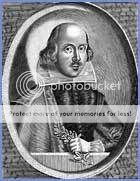
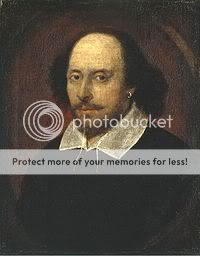
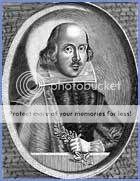
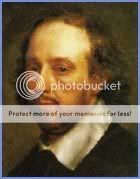
Lets face it one of the greatest needs of humanity is to feel validated and of equal measure and so this why the appeal of a lowly grain farmer becoming one of the most celebrated authors of all time is so darn appealing. The under dog makes big mentality. I would also love to say that this man of little educational background somehow miraculously had the genius to imagine great things from his little corner of the globe and was able to construct plays and sonnets from his limited experience of the vast world which Shakespeare radiates in his famous works, but it is simply not possible.
What is possible is that long after the man died and his fame reached to even the most remote of rural of countrysides, it was an opportunity for revenue to be made.
www.shakespeare-oxford.com...
In my final analysis, I will conclude with evidence which gives reason to believe that in fact Edward de Vere 17th earl of Oxford was the truthful author of Shakespeare's works.
Honor roll of Skeptics:
www.shakespeare-oxford.com...
Clarification of broken link in last post above.
Mod Edit: In Excess Of 10 Sentences And Image.
[edit on 21-2-2009 by MemoryShock]
I ask you, where are the handwritten notes, manuscripts, letters from well wishers, devoted fans and fellow playwrights and actors, bankers, investors and friends? There are none. There never were any, what there was had only to do with a few mundane squabbles in court over petty matters.
Yet it is human nature to want to jump on the bandwagon and the claim to fame, and what better way once all the people who were possibly responsible were dead.
Orthodoxy asks that we allow the subject to simply be. And perhaps that is what needs to happen for many people, but for those who do not accept blindly what begs for clarity, for those that from the very beginning of Shakespeare's career, up to the present, had and have multitudes of questions and suspicions about the true authorship, will never accept the lack of continuity and evidence at face value.
Once you have looked straight into the face of the ultimate truth, there is no turning back or forgetting what you have seen and discovered. The problem lies in the rewriting of history and everything we have based the most sophisticated English history upon.
The very foundation is at risk of crumbling when we seek to become enlightened to the truths which are most inconvenient.
For a supposedly celebrated figure the only pictures history leaves us of how Shakespeare may looked can be found in pictures of him years after his death and subsequent familiarity within the public domain. I suppose by this time it was a point of money for the artists and people wanted to see a face to the name.
The picture my opponent supplies is a traditional looking bust of what they thought a brilliant man might look like from the period and not an actual account. As matter of fact there were no descriptions what so ever.
But imagine the revenue this new interpretation brought to the village of Stratford and to the church. It also closed the door to the originals which gave no visual indication of Shaksper having been a writer. Very convenient for convenience sake.
I must ask the judges to allow me to produce these sets of pictures not as separate but as one to prove a point about the authorship in question and to the non celebrity status of William Shaksper of Stratford during his life.
THE PICTURES OF WILLIAM SHAKESPEARE WHAT DID HE REALLY LOOK LIKE?
As Shakespeare did not come from a noble background no portraits or pictures of the Bard or any members of his family were commissioned. Neither is there any evidence that Shakespeare commissioned his own portrait or pictures in his later prosperous years. There is no evidence
that a portrait or pictures were ever painted of the Bard whilst he was still alive nor is there any written description of his physical appearance. The following images or pictures of William Shakespeare were all apparently crafted after his death. The pictures portrayed of Shakespeare differ dramatically. Additional information regarding pictures of Shakepeare can be found on the section regarding the First Folio
www.william-shakespeare.info...
THE DROESHOUT ENGRAVING PICTURE OF WILLIAM SHAKESPEARE
The copper engraving picture of the Bard by Martin Droeshout was published on the title page of
the First Folio in 1623. The First Folio was produced by Hemminge and Condell fellow actors of the Bard as a dedication to the plays of William Shakespeare. Droeshout was only 15 when Shakespeare died and it is doubtful whether he ever met the Bard.
Lets face it one of the greatest needs of humanity is to feel validated and of equal measure and so this why the appeal of a lowly grain farmer becoming one of the most celebrated authors of all time is so darn appealing. The under dog makes big mentality. I would also love to say that this man of little educational background somehow miraculously had the genius to imagine great things from his little corner of the globe and was able to construct plays and sonnets from his limited experience of the vast world which Shakespeare radiates in his famous works, but it is simply not possible.
What is possible is that long after the man died and his fame reached to even the most remote of rural of countrysides, it was an opportunity for revenue to be made.
www.shakespeare-oxford.com...
In my final analysis, I will conclude with evidence which gives reason to believe that in fact Edward de Vere 17th earl of Oxford was the truthful author of Shakespeare's works.
Honor roll of Skeptics:
www.shakespeare-oxford.com...
Clarification of broken link in last post above.
Mod Edit: In Excess Of 10 Sentences And Image.
[edit on 21-2-2009 by MemoryShock]
Rebuttal Section
I am sure that my opponent’s impassioned pleas to consider an alternative point of view will not be lost upon you readers. However I am equally sure that you will weigh the argument without bias and will reach a conclusion that you are happy with.
My opponent states that there has never been a mystery so pondered as the authorship of Shakespeare. However, I ask you dear reader: Had you ever considered the possibility that Shakespeare did not write Shakespeare? There is a reason that Oxfordian views are so uncommon: they are illogical, and have no basis in fact. They are the natural result of an overactive imagination compounded with few facts. All I ask you to use is Occam’s Razor.
My opponent questions the lack of physical evidence of Shakespeare’s popularity: where were the handwritten notes, pictures etc. A valid question, with an equally valid answer. Indeed, I believe my opponent has almost answered that question herself!
My opponent states
The reason why none of these relics exist is simple: most of Shakespeare’s fans were ordinary people of the time who visited the theatre and were astounded by what they saw. As ordinary people, they were probably not literate enough to produce hand written letters. Moreover they probably wouldn’t have been able to afford the tools to produce these letters- parchment, quills and ink were not household items for the vast majority. There is another reason too, which is that Shakespeare, much like most masters of their art, were not as appreciated in their time.
My opponent also states:
I believe my opponent underestimates the possibility of latent genius amongst ordinary people. Shakespeare was a paradigm shift in literature- a man whose vividity of imagination was matched only by his literary inventiveness. I once again iterate that Shakespeare was not illiterate. While he had no formal education, he was self-taught. There is a massive difference between illiteracy and self-guided learning. Personally I believe the latter is what produces novel thinking, as people are not restricted by the walls of formal learning. It is from novel thinking that genius arises.
I thank my opponent for the numerous pictures of the bard. I am somewhat at a loss as to what they prove! If anything, they show that Shakespeare was a person of note, and worthy of being painted. Any alterations or modifications are highly contentious and thus impossible to verify. Additionally it is quite possible that any modifications were done to reflect the final state of Shakespeare, altering a picture which was painted earlier on in his life (as such facial hair was prone to being changed in keeping with fashion).
Soulslayer’s Third
My opponent claimed that Shakespeare’s death went largely unnoticed, that he lived a lie and died in ignominy. I would like to show you that this is not the case. Below is a poem by William Basse. For Basse it would have served as a cathartic lament for the death of Shakespeare. Basse suggests interring Shakespeare in Westminster Abbey- the resting place of legends. Surely a man who respected Shakespeare so much must have met him in person and found him inspiring!
Here’s another eulogy from the first Folger folio:
My opponent states that aristocratic authorship was frowned upon during Elizabethan reign. I disagree with this, but even if we assume that my opponent’s assertion is correct then we have to consider the superficial nature of that society. Had De Vere been the true poet, everyone would have secretly known, and the death of Shakespeare largely ignored. The fact that eulogies were delivered for Shakespeare listing him as a master of literature is telling in itself.
Why it can’t possibly be De Vere
In my previous posts I spoke of a silver bullet against the Oxfordian claims. It is now time for me to invoke this.
De Veredied in 1604, a full decade ahead of Shakespeare. Between the time of De Vere’s death and Shakespeare’s death, numerous plays were written and performed.
Below we can see the timeline of works related to Shakespeare in the period of 1604-1616. These are works that cannot possibly have been written by De Vere, as he was dead.
How could De Vere, a dead man, have composed any of these works? The answer, as Occam’s Razor would suggest, is simple. De Vere didn’t have anything to do with these works, nor any others. They all come from Shakespeare’s mind and quill.
Additionally there are references and motifs within the plays composed after 1604 which suggest knowledge of current events. The Tempest, for example, was inspired by a massive storm which caused considerable damage. This suggests that the plays were composed and written after 1604, rather than being written before and only published later on.
Summary of third point
Shakespeare was honoured after his death with high praise from those who knew him personally. He did not die in obscurity, but neither was he as appreciated as he is today.
De Vere, the figure held as the true author of Shakespeare, died in 1604- a full 12 years before Shakespeare. Between De Vere’s death and Shakespeare’s, numerous works were composed. The most obvious suggestion, and therefore the most probable one, is that Shakespeare was the author of these works (which included The Tempest).
Mod Edit: In Excess Of 10 Sentences.
[edit on 21-2-2009 by MemoryShock]
I am sure that my opponent’s impassioned pleas to consider an alternative point of view will not be lost upon you readers. However I am equally sure that you will weigh the argument without bias and will reach a conclusion that you are happy with.
My opponent states that there has never been a mystery so pondered as the authorship of Shakespeare. However, I ask you dear reader: Had you ever considered the possibility that Shakespeare did not write Shakespeare? There is a reason that Oxfordian views are so uncommon: they are illogical, and have no basis in fact. They are the natural result of an overactive imagination compounded with few facts. All I ask you to use is Occam’s Razor.
My opponent questions the lack of physical evidence of Shakespeare’s popularity: where were the handwritten notes, pictures etc. A valid question, with an equally valid answer. Indeed, I believe my opponent has almost answered that question herself!
My opponent states
I ask you, where are the handwritten notes, manuscripts, letters from well wishers, devoted fans and fellow playwrights and actors, bankers, investors and friends? There are none. There never were any, what there was had only to do with a few mundane squabbles in court over petty matters.
The reason why none of these relics exist is simple: most of Shakespeare’s fans were ordinary people of the time who visited the theatre and were astounded by what they saw. As ordinary people, they were probably not literate enough to produce hand written letters. Moreover they probably wouldn’t have been able to afford the tools to produce these letters- parchment, quills and ink were not household items for the vast majority. There is another reason too, which is that Shakespeare, much like most masters of their art, were not as appreciated in their time.
My opponent also states:
I would also love to say that this man of little educational background somehow miraculously had the genius to imagine great things from his little corner of the globe and was able to construct plays and sonnets from his limited experience of the vast world which Shakespeare radiates in his famous works, but it is simply not possible.
I believe my opponent underestimates the possibility of latent genius amongst ordinary people. Shakespeare was a paradigm shift in literature- a man whose vividity of imagination was matched only by his literary inventiveness. I once again iterate that Shakespeare was not illiterate. While he had no formal education, he was self-taught. There is a massive difference between illiteracy and self-guided learning. Personally I believe the latter is what produces novel thinking, as people are not restricted by the walls of formal learning. It is from novel thinking that genius arises.
I thank my opponent for the numerous pictures of the bard. I am somewhat at a loss as to what they prove! If anything, they show that Shakespeare was a person of note, and worthy of being painted. Any alterations or modifications are highly contentious and thus impossible to verify. Additionally it is quite possible that any modifications were done to reflect the final state of Shakespeare, altering a picture which was painted earlier on in his life (as such facial hair was prone to being changed in keeping with fashion).
Soulslayer’s Third
My opponent claimed that Shakespeare’s death went largely unnoticed, that he lived a lie and died in ignominy. I would like to show you that this is not the case. Below is a poem by William Basse. For Basse it would have served as a cathartic lament for the death of Shakespeare. Basse suggests interring Shakespeare in Westminster Abbey- the resting place of legends. Surely a man who respected Shakespeare so much must have met him in person and found him inspiring!
Renowned Spenser, lie a thought more nigh
To learned Chaucer, and rare Beaumont lie
A little nearer Spenser to make room
For Shakespeare in your threefold, fourfold tomb.
To lodge all four in one bed make a shift
Until Doomsday, for hardly will a fifth
Betwixt this day and that by fate be slain
For whom your curtains may be drawn again.
If your precedency in death doth bar
A fourth place in your sacred sepulcher,
Under this carved marble of thine own
Sleep rare tragedian Shakespeare, sleep alone,
Thy unmolested peace, unshared cave,
Possess as lord not tenant of thy grave,
That unto us and others it may be
Honor hereafter to be laid by thee.
Here’s another eulogy from the first Folger folio:
Here Shakespeare lies whom none but Death could Shake,
And here shall lie till judgement all awake,
When the last trumpet doth unclose his eyes,
The wittiest poet in the world shall rise.
My opponent states that aristocratic authorship was frowned upon during Elizabethan reign. I disagree with this, but even if we assume that my opponent’s assertion is correct then we have to consider the superficial nature of that society. Had De Vere been the true poet, everyone would have secretly known, and the death of Shakespeare largely ignored. The fact that eulogies were delivered for Shakespeare listing him as a master of literature is telling in itself.
Why it can’t possibly be De Vere
In my previous posts I spoke of a silver bullet against the Oxfordian claims. It is now time for me to invoke this.
De Veredied in 1604, a full decade ahead of Shakespeare. Between the time of De Vere’s death and Shakespeare’s death, numerous plays were written and performed.
Below we can see the timeline of works related to Shakespeare in the period of 1604-1616. These are works that cannot possibly have been written by De Vere, as he was dead.
1605. The Merchant of Venice is performed twice at King James’ Court earning a commendation from the King. King Lear is believed to have been composed in this year and as is Macbeth, the play’s Scottish background and kind portrayal of ancestor Malcolm being intended as a celebration and honoring of King James Scottish ancestry.
1606. Antony And Cleopatra is composed.
1607. Hamlet and Richard III are performed aboard the British ship Dragon off the west coast of Africa at Sierra Leone.
1607-1608. Timon of Athens, Pericles and Coriolanus are composed .
1608. The King’s Men take on a twenty-one year lease of London’s first permanently enclosed theatre, the Blackfriars Theatre in this year.
How could De Vere, a dead man, have composed any of these works? The answer, as Occam’s Razor would suggest, is simple. De Vere didn’t have anything to do with these works, nor any others. They all come from Shakespeare’s mind and quill.
Additionally there are references and motifs within the plays composed after 1604 which suggest knowledge of current events. The Tempest, for example, was inspired by a massive storm which caused considerable damage. This suggests that the plays were composed and written after 1604, rather than being written before and only published later on.
Summary of third point
Shakespeare was honoured after his death with high praise from those who knew him personally. He did not die in obscurity, but neither was he as appreciated as he is today.
De Vere, the figure held as the true author of Shakespeare, died in 1604- a full 12 years before Shakespeare. Between De Vere’s death and Shakespeare’s, numerous works were composed. The most obvious suggestion, and therefore the most probable one, is that Shakespeare was the author of these works (which included The Tempest).
Mod Edit: In Excess Of 10 Sentences.
[edit on 21-2-2009 by MemoryShock]
Again I say to you that the 3 page will of William shaksper of Stratord, was not that of a writer, poet, it was purely a businessman's final
giveaway, and in that time period when education and literacy was on the rise, books were the most precious possessions that could be dispensed, and
yet not a single book, manuscript nor poem was left by the Stratford man. He had none to give. Had he been in possession of a single shred of proof
that he was in fact the famous personality he would have threatened the future to bear witness to his work, to his masterly skilled craft instead of
his bones in his one and only single piece of poetry written which can be viewed upon his grave even today:
Hardley the work of a literary savant.
Face it he went from being a struggling young businessman to leaving behind his family and forcing them into a lifetime of literacy and indebtedness, all part of public record, to a career in London as a struggling actor part owner in the theater, to finally retire and ultimately dying as an unknown unrecognized artist of the academic community as only history would recall out of necessity for clarification of authorship.
Yes all of the eulogies that left words of respect for the playwright and poet were delivered long after the death of Shaksper, none delivered at the time of his death made any suggestions whatsoever to his being a writer.
The de vere connection is well worth reading into as it is completely evident that he had been truly sculpted by the stories written later by shakespeare, uncannily so. From his education and travels to the people he met the dedications by those who in their letters and correspondence both public and private lead the most intelligent of the academic community to question his rightful place in the question of Shakespearean authorship.
The first folio was published in 1623 by the only family members in possession of the manuscripts and plays of the the true author,more than a decade after Shakesper of Stratford returned home for his final and inconsequential years as not a retired academic and sage wise savant of the literary trade but as an indebted businessman who would never in his life be able to clear the charges against him and leave a legacy of respect for his wife and and family.
The first folio like some of the plays and sonnets that were brought forth and widely published after the death of the author de Vere, by non other than his son-in-law and near son-in-law Phillip and William Herbert. The de vere family were the only ones to hold in possession the manuscripts , plays and sonnets of the author William Shakespere.
If even a shadow of doubt has been raised by this debate for you the reader than I urge you to check the links provided below and discover for yourself the multitudes of facts to validate what I in a short period of time have found available like a wellspring of information to discard forever the man from Stratford as a challenge to the authorship question.
And in doing so, we can clear the way towards the discovery of the truth as uncomfortable as it may be for the pages of history.Like discovering the world was not flat, or that the world is not stationary body in the endless sky, we will in time restore the rightful title to the most deserving soul of the literary world.
www.shakespeare-oxford.com...
www.shakespeare-oxford.com...
www.shakespeare-oxford.com...
www.shakespeare-oxford.com... (1995)
www.shakespeare-ohttp...://www.shakespeare-oxford.com/?p=17xford.com/?p=35 (excellent start)
www.shakespeare-ohttp...://www.shakespeare-oxford.com/?p=17xford.com/?p=35
I truly look forward to the revelatory discussion after the end of this debate with any and all interested people in this fascinating subject of debate and discovery of the true authorship of Shakespere's works.
Good friend of Iesus sake forbeare
To digg the dust encloased heare:
Blest be ye man yt spares thes stones
And curst be he yt moves my bones.
William Shaksper of Straford
Hardley the work of a literary savant.
Richard Bentley one time President of Chicago Bar Association and Editor of the American Bar Association journal, wrote in "Shakesper or Shakespesr Cross Examination" American Bar Association 1961:
"Nowhere apart from the words themselves was Shakesper or Shakespeare referred to during his lifetime either as a playwright or poet... No contemporary historian mentions either Shaksper or Shakespeare. We find no exteranl evidence to identify William Shaksper of Stratford or William Shakespeare the actor, as an author. During Shakspers entire life...not one of his contemporaries ever refrerred to him personally as a writer. Shaksper lived unknown as a literay man and died unnoticed."
Face it he went from being a struggling young businessman to leaving behind his family and forcing them into a lifetime of literacy and indebtedness, all part of public record, to a career in London as a struggling actor part owner in the theater, to finally retire and ultimately dying as an unknown unrecognized artist of the academic community as only history would recall out of necessity for clarification of authorship.
Yes all of the eulogies that left words of respect for the playwright and poet were delivered long after the death of Shaksper, none delivered at the time of his death made any suggestions whatsoever to his being a writer.
[Shakespeare] HASN’T ANY HISTORY TO RECORD. There is no way of getting around that deadly fact. And no sane way has yet been discovered to getting around its formidable significance. Its quite plain significance… is, that Shakespeare had no prominence while he lived, and none until he had been dead two or three generations. The Plays enjoyed high fame from the beginning; and if he wrote them it seems a pity the world did not find it out. He ought to have explained that he was the author, and not merely a nom de plume for another man to hide behind. If he had been less intemperately solicitous about his bones, and more solicitous about his Works, it would have been better for his good name, and a kindness to us. The bones were not important. They will moulder away, they will turn to dust, but the Works will endure until the last sun goes down.”
Mark Twain
The de vere connection is well worth reading into as it is completely evident that he had been truly sculpted by the stories written later by shakespeare, uncannily so. From his education and travels to the people he met the dedications by those who in their letters and correspondence both public and private lead the most intelligent of the academic community to question his rightful place in the question of Shakespearean authorship.
Richard Bentley one time President of Chicago Bar Association and Editor of the American Bar Association journal, wrote in "Shakesper or Shakespesr Cross Examination" American Bar Association 1961:
"Nowhere apart from the words themselves was Shakesper or Shakespeare referred to during his lifetime either as a playwright or poet... No contemporary historian mentions either Shaksper or Shakespeare. We find no exteranl evidence to identify William Shaksper of Stratford or William Shakespeare the actor, as an author. During Shakspers entire life...not one of his contemporaries ever referred to him personally as a writer. Shaksper lived unknown as a literary man and died unnoticed."
The first folio was published in 1623 by the only family members in possession of the manuscripts and plays of the the true author,more than a decade after Shakesper of Stratford returned home for his final and inconsequential years as not a retired academic and sage wise savant of the literary trade but as an indebted businessman who would never in his life be able to clear the charges against him and leave a legacy of respect for his wife and and family.
The first folio like some of the plays and sonnets that were brought forth and widely published after the death of the author de Vere, by non other than his son-in-law and near son-in-law Phillip and William Herbert. The de vere family were the only ones to hold in possession the manuscripts , plays and sonnets of the author William Shakespere.
If even a shadow of doubt has been raised by this debate for you the reader than I urge you to check the links provided below and discover for yourself the multitudes of facts to validate what I in a short period of time have found available like a wellspring of information to discard forever the man from Stratford as a challenge to the authorship question.
And in doing so, we can clear the way towards the discovery of the truth as uncomfortable as it may be for the pages of history.Like discovering the world was not flat, or that the world is not stationary body in the endless sky, we will in time restore the rightful title to the most deserving soul of the literary world.
www.shakespeare-oxford.com...
www.shakespeare-oxford.com...
www.shakespeare-oxford.com...
www.shakespeare-oxford.com... (1995)
www.shakespeare-ohttp...://www.shakespeare-oxford.com/?p=17xford.com/?p=35 (excellent start)
www.shakespeare-ohttp...://www.shakespeare-oxford.com/?p=17xford.com/?p=35
I truly look forward to the revelatory discussion after the end of this debate with any and all interested people in this fascinating subject of debate and discovery of the true authorship of Shakespere's works.
Soulslayer's Closing Statement
While there are oddities surrounding the life and death of Shakespeare, they are mere reflections of the low importance paid to the common man in Elizabethan Britain. My opponent has claimed many things about the background of Shakespeare, his supposed total inability to compose anything resembling masterpieces and inaccuracies around his will. These however, pail in comparison to the difficulties when examining other possible authors.
My opponent has not shown how or when De Vere would have written the works of Shakespeare, much less Bacon or even HRH Elizabeth the First. This is not because of a failing by my opponent, but rather because of a total lack of evidence in general. When we compare the availability of evidence for the anti-stratfordian side against the evidence that Shakespeare actually wrote Shakespeare, I believe there can be only one logical conclusion.
In this debate I showed you that Shakespeare was a naturally gifted artist, whose ability could not have been learnt in formal education. His self-taught literacy was a more organic and natural form than the stilted prose of old. I believe I have shown you that Shakespeare was a well known and respected artist even in his time, though his popularity only increased with his death. I believe I have shown you that Shakespeare of London, the great poet and playwright, was the same William Shakespeare of Stratford- son of John Shakespeare. These are the most ready conclusions, and these are the most accurate answers. These are the answers that I concluded upon using the evidence available and some simple logic (Occams Razor).
The bard’s presence, past and present is irrefutable. Whether you enjoy his work or not, Shakespeare has left a legacy in the forms of poetry we read and the words we use to this very day. Shakespeare did not represent the pinnacle of literary ability, but instead a paradigm shift in the manner which literature was used. His plays and poems are canon, his words and metres immortal.
While there are oddities surrounding the life and death of Shakespeare, they are mere reflections of the low importance paid to the common man in Elizabethan Britain. My opponent has claimed many things about the background of Shakespeare, his supposed total inability to compose anything resembling masterpieces and inaccuracies around his will. These however, pail in comparison to the difficulties when examining other possible authors.
My opponent has not shown how or when De Vere would have written the works of Shakespeare, much less Bacon or even HRH Elizabeth the First. This is not because of a failing by my opponent, but rather because of a total lack of evidence in general. When we compare the availability of evidence for the anti-stratfordian side against the evidence that Shakespeare actually wrote Shakespeare, I believe there can be only one logical conclusion.
In this debate I showed you that Shakespeare was a naturally gifted artist, whose ability could not have been learnt in formal education. His self-taught literacy was a more organic and natural form than the stilted prose of old. I believe I have shown you that Shakespeare was a well known and respected artist even in his time, though his popularity only increased with his death. I believe I have shown you that Shakespeare of London, the great poet and playwright, was the same William Shakespeare of Stratford- son of John Shakespeare. These are the most ready conclusions, and these are the most accurate answers. These are the answers that I concluded upon using the evidence available and some simple logic (Occams Razor).
The bard’s presence, past and present is irrefutable. Whether you enjoy his work or not, Shakespeare has left a legacy in the forms of poetry we read and the words we use to this very day. Shakespeare did not represent the pinnacle of literary ability, but instead a paradigm shift in the manner which literature was used. His plays and poems are canon, his words and metres immortal.
44soulslayer has won by majority decision and will advance to the Second Round. The judges comments:
Antar vs. 44soulslayer.
First I'd like to offer a congrats to both fighters. It's a shame someone has to lose but I hope to see both again in the Debate Forum.
Opening comments were a little short on anything to judge. 44 did provide the basis for his argument and stuck to the guideline he set out quite well.
Antar follows with a brief summary of Shakespeare's life and starts to develop what her main argument will be throughout the debate. I thought it kind of strange that she limited herself to just De Veres as the Debate Title was Multiple Persons authored the works. Limiting herself to just one person actually went against the premise she was supposed to be arguing for. This is a point that worked against her throughout this debate as I read it.
44 stuck to the outlines that he provided in his opening for his side. He brought some strong evidence for Shakespeare being the man who wrote the works attributed to him and refuted Antars points well. Whether it was the contention that Shakespeare was a poor, uneducated man or that he had no mention during his life. His mention of his father obtaining a Coat of Arms for the family name also refutes Antars claims of being a poor family.
Unfortunately, Antar stuck to the line of reasoning that only De Veres could have wrote the plays and poems attributed to William Shakespeare, even mentioning that his family held all the works and released them over time posthumously. Another strike against her was that a lot of her links didn't work, at least for me.
Had the debate been titled someone else wrote the works of Shakespeare than antar would have had a much better argument but that wasn't the case. Due to this, I have to award this debate to 44soulslayer.
I was also surprised at the lack of Socratic Questions used in this debate. They can be a powerful tool if employed properly.
Congratulations to 44soulslayer and good luck in the next round.
The winner is; 44soulslayer
Opening statements;
No advantage to either debater,
Round One;
antar- A very informative post, but as the beginning of an argument, not a very well focused one. While antar gave us information that could support his/her argument, he/she also gave us information that was essentially irrelevant to their position. This can be dangerous in debate as you may be giving your opponent information to use against you. Also, by not keeping your own argument tight and lean, you risk losing yourself in your own argument. It also appears the antar is unclear about the topic. It seems antar is presenting evidence for another author of Shakespeare's works, not multiple authors for the works.
44soulslayer- Round one decisively goes to 44soulslayer. Well organized, lean, and he directly addresses antar's argument with rebuttal. 44soulslayer does not however, in this round, pick up on antars apparent deviation from the debate topic.
Round two;
antar- in this round, antar does address the points brought up by 44soulslayer. There is a problem however, with his external sources. The quotes were so short and out of context, (without links to the source) that I was unable to understand how they were evidence. I am sure there was a train of thought there, I simply could not get on the same track with what was presented. This may have been due to the mod edit, but not linking to the sources prevented me from going in and getting the information for myself. Antar also did little case building in this post. He primarily responded to his opponent. Response is important, but you run the risk of letting your opponent seize control of the debate if you do not spend time developing your own argument.
44soulslayer- Definitively wins the second round. No criticisms. Well organized, and breaking his posts into rebuttal and case building is a good strategy. It both helps the readers stay on course, and, even more importantly, it reminds the author to both rebut and case build.
Round three;
antar- in this round antar did little to address the case of his opponent, and little to address his own case. He/she seemed at a loss, and waxed poetic rather than actually continue to present evidence. I think that antar, who does have the more challenging side, arguing against convention, has rather given up.
44soulslayer-another clear win for the third round.
Closing;
antar- in closing, antar seems to have found hope. And sources. However appealing it may be to toss out lots of links in closing and say "here, read for yourself" this is not debate. It is the debaters job to sell us the argument. Not the authors of the debater's source material. It was a good attempt to save the day, but too little and too late.
44soulslayer- closing was a closing, with not much new argument, and none was needed. Brevity is not a bad thing if one has done ones work throughout the debate. And he/she did.
Summary-
Antar just needs to tighten up his/her game. I noticed no huge logical failings, there was some stretching done, but it was a difficult position, and one would expect some stretching would be needed to argue that side of the debate. Perhaps taking a cue from 44slayers technique of organizing ones posts into sections could be a useful tool for future debates to ensure one is covering all the bases. Formulating a game plan early on in the debate also would have helped. Antar seemed a bit at a loss often for what to do or say, and sometimes seemed to be putting out anything just to fill space, such as the first round with the blitz of information and the third round which really didnt add much to his/her argument.
44soulslayer really did an excellent job. Nice tight argument, not a lot of digression. Good sources. Well organized. Good use of language.
Neither debater ever did actually revert to the original topic, which was a matter of a single author vs multiple authors, but instead they seemed to mutually agree to switch the topic to "who is the real author," and the topic change went unchallenged.
I'd like to commend and thank Antar for her great enthusiasm in this debate. I think she did a great job, and I look forward to future debates!
I'd also like to thank MS for organising and officiating, and the judges for taking the time to read the debate.
I'm enjoying this forum more and more every day; its little wonder that most of you old guard only haunt this forum instead of the normal ones!
I'd also like to thank MS for organising and officiating, and the judges for taking the time to read the debate.
I'm enjoying this forum more and more every day; its little wonder that most of you old guard only haunt this forum instead of the normal ones!
Congratulations 44soulslayer for a great debate. It was a pleasure to fight this battle with you and feel the judges made the best decission as you
are one heck of an opponent
I too very much look forward to more debates in the future with you, only next time...
Once you get a little time, lets discuss this debate together here on this thread, Ok?
I too very much look forward to more debates in the future with you, only next time...
Once you get a little time, lets discuss this debate together here on this thread, Ok?
new topics
-
George Knapp AMA on DI
Area 51 and other Facilities: 5 hours ago -
Not Aliens but a Nazi Occult Inspired and then Science Rendered Design.
Aliens and UFOs: 5 hours ago -
Louisiana Lawmakers Seek to Limit Public Access to Government Records
Political Issues: 7 hours ago -
The Tories may be wiped out after the Election - Serves them Right
Regional Politics: 8 hours ago -
So I saw about 30 UFOs in formation last night.
Aliens and UFOs: 10 hours ago -
Do we live in a simulation similar to The Matrix 1999?
ATS Skunk Works: 11 hours ago
top topics
-
BREAKING: O’Keefe Media Uncovers who is really running the White House
US Political Madness: 12 hours ago, 24 flags -
George Knapp AMA on DI
Area 51 and other Facilities: 5 hours ago, 19 flags -
Biden--My Uncle Was Eaten By Cannibals
US Political Madness: 13 hours ago, 18 flags -
Louisiana Lawmakers Seek to Limit Public Access to Government Records
Political Issues: 7 hours ago, 7 flags -
"We're All Hamas" Heard at Columbia University Protests
Social Issues and Civil Unrest: 13 hours ago, 7 flags -
Russian intelligence officer: explosions at defense factories in the USA and Wales may be sabotage
Weaponry: 17 hours ago, 6 flags -
So I saw about 30 UFOs in formation last night.
Aliens and UFOs: 10 hours ago, 5 flags -
The Tories may be wiped out after the Election - Serves them Right
Regional Politics: 8 hours ago, 3 flags -
Not Aliens but a Nazi Occult Inspired and then Science Rendered Design.
Aliens and UFOs: 5 hours ago, 3 flags -
Do we live in a simulation similar to The Matrix 1999?
ATS Skunk Works: 11 hours ago, 3 flags
active topics
-
Not Aliens but a Nazi Occult Inspired and then Science Rendered Design.
Aliens and UFOs • 8 • : theatreboy -
I Guess Cloud Seeding Works
Fragile Earth • 25 • : Degradation33 -
-@TH3WH17ERABB17- -Q- ---TIME TO SHOW THE WORLD--- -Part- --44--
Dissecting Disinformation • 534 • : cherokeetroy -
The US Supreme Court Appears to Side With the January 6th 2021 Capitol Protestors.
Political Conspiracies • 48 • : hoobah -
BREAKING: O’Keefe Media Uncovers who is really running the White House
US Political Madness • 11 • : BingoMcGoof -
Elites disapearing
Political Conspiracies • 28 • : hoobah -
African "Newcomers" Tell NYC They Don't Like the Free Food or Shelter They've Been Given
Social Issues and Civil Unrest • 14 • : GENERAL EYES -
God is watching.
Politicians & People • 28 • : glend -
George Knapp AMA on DI
Area 51 and other Facilities • 19 • : Brotherman -
It has begun... Iran begins attack on Israel, launches tons of drones towards the country
World War Three • 881 • : cherokeetroy
11