It looks like you're using an Ad Blocker.
Please white-list or disable AboveTopSecret.com in your ad-blocking tool.
Thank you.
Some features of ATS will be disabled while you continue to use an ad-blocker.

Dragon Sightings?
page: 1share:
Has anyone seen a dragon?!
I love dragons and I really want to see one! If anyone has any sightings or places to look please give me as much information as possible!
Thnx
I love dragons and I really want to see one! If anyone has any sightings or places to look please give me as much information as possible!
Thnx
you may have been born a bit to late if you live in the US...
here in the US Dragons were called monster birds by the Native Americans... one of the most famous would be the story of the Piasa monster bird near Alton, Illinois.Piasa Monster Bird
here in the US Dragons were called monster birds by the Native Americans... one of the most famous would be the story of the Piasa monster bird near Alton, Illinois.Piasa Monster Bird
Please do a search. We have countless threads on dragons on this board, although with almost no evidence.
My great uncle was a pilot and when he passed the island (I think) Papa New Guina (sp?) he saw a herd of large lizard-like creatures swiveling through
the brush. Also natives on that island describe sightings of a dragon living in the trees. Scientists doubt that it was a real dragon but the fear is
so real. These people were terrified of this animal.
reply to post by flygon227
Flygon, this may come as a disappointment to you (I hope not!), but "dragons" only came "to life" in Marco Polo's (14th century) description of what were almost certainly crocodiles.
Flygon, this may come as a disappointment to you (I hope not!), but "dragons" only came "to life" in Marco Polo's (14th century) description of what were almost certainly crocodiles.
Flygon, this may come as a disappointment to you (I hope not!), but "dragons" only came "to life" in Marco Polo's (14th century) description of
what were almost certainly crocodiles.
That is how stories of dragons started. People seeing crocodiles and komodo dragons for the first time fabled them.
But that doesn't mean people go the stories from living dinosaurs or souropods...
That is how stories of dragons started. People seeing crocodiles and komodo dragons for the first time fabled them.
But that doesn't mean people go the stories from living dinosaurs or souropods...
I think there is a possibility of bigfoot, nessy, mkembe, but dragons seem simply implausible. Why? Well because flying animals don't do much to hide
themselves. Especially GIANT flying animals.
Even the flying dinos didn't last long because it doesn't make evolutionary sense to be large and in the air.
If nessy exists, he is probably massive, but he also has a world of water and caves that people can't possibly explore yet to hide in. He's probably not real, but he seems like a more logical animal to be able to survive in this world.
Even the flying dinos didn't last long because it doesn't make evolutionary sense to be large and in the air.
If nessy exists, he is probably massive, but he also has a world of water and caves that people can't possibly explore yet to hide in. He's probably not real, but he seems like a more logical animal to be able to survive in this world.
Thats not fair santa claus! You can have flying reindeer but we cant have the flying reptile!
It is very unlikely that there arent dragons yet there are still the possibility that there are. If alive dragons would be in a protected and an area where humans have barely been, maybe somewhere in Bourneo or The amazon. Or maybe the alps! There are many possiblities but you probably wont find any in North America as its all colonised to an extent where nothing the size of the creature in description (7-10 meters) could hide. But keep hoping i guess.
Deny Ignorance
Semoro
It is very unlikely that there arent dragons yet there are still the possibility that there are. If alive dragons would be in a protected and an area where humans have barely been, maybe somewhere in Bourneo or The amazon. Or maybe the alps! There are many possiblities but you probably wont find any in North America as its all colonised to an extent where nothing the size of the creature in description (7-10 meters) could hide. But keep hoping i guess.
Deny Ignorance
Semoro
there was a supposed Dragon sighting in china in 2005
www.freerepublic.com...
Its about the only plausible recent sighting of a dragon with a picture that ive heard about anyway.
www.freerepublic.com...
Its about the only plausible recent sighting of a dragon with a picture that ive heard about anyway.
Unfortunatly even i with an open mind can see thats just a good reflection of the cloud. But good post none the less What about sea dragons?
There alot more possible as 3% of the sea floors been found. Try that
Deny Ignorance
Semoro
Deny Ignorance
Semoro
Strange that these guys mistook that shape for an animal. Interesting though.
I think this is one of those intsances in which someone wants to believe that what they saw was something out of the ordinary.
I think this is one of those intsances in which someone wants to believe that what they saw was something out of the ordinary.
Originally posted by Trash can
Strange that these guys mistook that shape for an animal. Interesting though.
I think this is one of those intsances in which someone wants to believe that what they saw was something out of the ordinary.
Dragons are a large part of eastern asian mythology, so its not strange actually. Just take ghosts and the western societies for instance..
I've spotted around....5 Dragons around my town.
Earth and frost dragon's, breathing land and snow, yet no dragons of fire.
the "dragon" is a metaphor for the power which is held within a mountain, a "earth dragon" is a land slide, frost=avalanche and fire=eruption, Ect, Ect.
don't find the dragon kid, ride it. go for a nice long hike (like..days) and reconnect to nature and the elements, you wont regret it .
Earth and frost dragon's, breathing land and snow, yet no dragons of fire.
the "dragon" is a metaphor for the power which is held within a mountain, a "earth dragon" is a land slide, frost=avalanche and fire=eruption, Ect, Ect.
don't find the dragon kid, ride it. go for a nice long hike (like..days) and reconnect to nature and the elements, you wont regret it .
Looking back up at the pictures I think the first one (The really shiny one that looks like a cloud) is some sort of play of the light but the second
one (if you scroll down the page some you can see another one taken from an airplane) looks like it just could be real. I'd love to discover that
dragons truly do exist, those kind of things excite me beyond belief.
Originally posted by flygon227
Has anyone seen a dragon?!
I love dragons and I really want to see one! If anyone has any sightings or places to look please give me as much information as possible!
Thnx
1- get into an Ivy leagus school, excell in biology and physics and genomics
2- patent a ton of idle research applications
3- sell them to huge corps for a fortune
4- set up your own lab, or work for the military
5- direct your own research project in genetic engineering.
6- use existing reptile DNA, succeed at retrieving viable dino bone dna, or synthesize it like craig venter...
7- make Puff a reality.
or smaug.
myself.. i want a Chinese dragon.
you'd have to use eel dna and some lion dna for the beard/mane .. oh and deer dna for the antlers.
um.. what are you waiting for?
i told you how to see one?... get to it!
-
The only real dragon is Puff.I can see back hundreds and thousands of years ago people could have mistaken dinosaur bones as a dragon,since they didnt
have drawings or pictures to knwo what they could have looked like.In Au there is a oversized goanna called the Megalania thats been reported.They saw
it can be 20-30 feet long.
www.mysteriousaustralia.com...
www.mysteriousaustralia.com...
I believe dragons do exist. remember according to people in the past dragons were smart, so they're not going to fly over major cities or anywhere
near civilised humans. they would hide somewhere that hasn't been explored very well or somewhere with little or no humans, remember there are many
places like this on earth. so I will say that it is very possible that they do exist, you've just got to know where to look. Unfortunately there
aren't many places I can say to look for dragons due to the fact that they won't be where they have been in the past. they would have migrated to
somewhere more hidden. also marco polo said the creature he saw had TWO feet not four. so don't give up looking for them. I will update you on where
I think that they might be later.
Sometimes evil must be done for a greater good
Dr4gon
Sometimes evil must be done for a greater good
Dr4gon
reply to post by flygon227
HI there flygon227! welcome to ATS!!
Here is a thread by one of your friends Dragonoligist Zac!!!
www.abovetopsecret.com...
www.abovetopsecret.com...
There is really dragons still hear on earth but only shrunk a little bit:
Bearded Dragons:Agamidae: Pogona Vitticeps
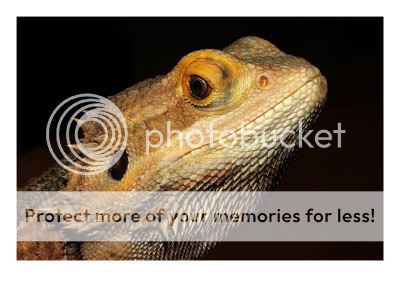
Bearded Dragons are lizards with prominent spines and a triangular head. They also have a spiny jaw pouch that resembles a beard and gives them their name. They are sometimes mistaken for horned toads. Although a baby bearded dragon is small, when fully grown they can reach almost two feet in length (though half of this is tail)!
The famous "beard" is used as a defence mechanism. When threatened, they puff out their jaw pouch revealing the spines. This gives them an impressive appearance that makes many predators think twice. The bearded dragon will then raise itself onto two legs and run away.
Australian Frilled Dragons:Chlamydosaurus Kingii
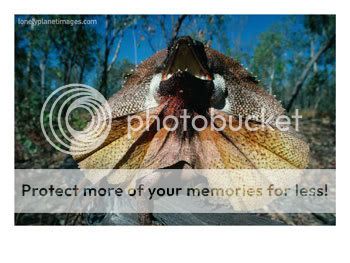
The frilled dragon is an arboreal lizard, meaning that it spends most of its time in trees. Its preferred habitat is woodland and forest. It has excellent camouflage and can be very difficult to see when in a tree. Frilled dragons usually only come down to the ground when they need to forage for food.
The frilled dragon is named after the highly distinctive frill around its neck. This impressive frill consists of large flaps of skin and is opened out as a defence mechanism, to "big itself up". It is also suspected that extending the frill can help the lizard to control its body temperature.
Another distinctive feature of the frilled lizard is that on those occasions when it has to run it does so on its two hind legs.
A fully grown frilled dragon can reach up to 95cm (30 inches) in length. The frill itself can be up to 35cm (14 inches) across. They are mainly carnivorous but will eat some fruit if necesary.
The Komodo Dragon:Varanus Komodoensis
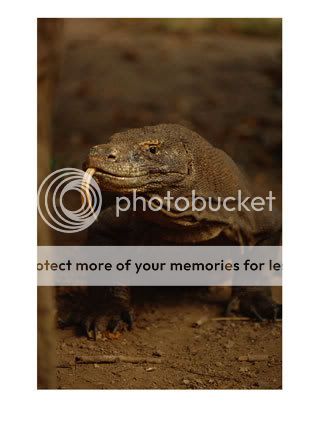
Komodos are part of the awesome monitor lizard family. They can see up to 300 metres and their eyes are better adapted to seeing movement than stationary objects. Komodo dragons were initially thought to be completely deaf, however more recent research has shown that they can hear, albeit in a restricted frequency range.
The Komodo's main hunting sense is that of smell. The lizard samples the air with its tongue then returns the two tongue tips to the mouth where the air is "analysed". A Komodo dragon can sense the smell of carrion up to four kilometres (two and a half miles) away.
Given their size, Komodo dragons are not built for a long chase - however they can sprint at up to 20 kilometres per hour (12 miles per hour) for short periods of time. Their preferred hunting strategy to get food is thus to sit quietly in one spot waiting for something big and tasty to come near.
In fact if the Komodo lizard's prey escapes after it is bitten then it could still become dragon food; the Komodo's bite is toxic to other creatures.
Chinese Water Dragons:Physignathus Cocininus

Chinese water dragons are equally at home up trees and in water. They often bask on branches, if possible a branch over a pool of water. If attacked or startled they will then drop themselves into the water and swim to safety.
The Chinese water dragon will occasionally eat fruit or vegetables however it is normally carniverous. In the wild they like to eat frogs, rodents and small birds.
Like other lizards, Chinese are often sold as pets. If the lizard has been captured in the wild then it is likely to be an adult and may not adjust properly to captivity. Alternatives include buying a young Chinese water dragon or breeding your own.
These days you can own your own little dragon!
HI there flygon227! welcome to ATS!!
Here is a thread by one of your friends Dragonoligist Zac!!!
www.abovetopsecret.com...
www.abovetopsecret.com...
There is really dragons still hear on earth but only shrunk a little bit:
Bearded Dragons:Agamidae: Pogona Vitticeps
Bearded Dragons are lizards with prominent spines and a triangular head. They also have a spiny jaw pouch that resembles a beard and gives them their name. They are sometimes mistaken for horned toads. Although a baby bearded dragon is small, when fully grown they can reach almost two feet in length (though half of this is tail)!
The famous "beard" is used as a defence mechanism. When threatened, they puff out their jaw pouch revealing the spines. This gives them an impressive appearance that makes many predators think twice. The bearded dragon will then raise itself onto two legs and run away.
Australian Frilled Dragons:Chlamydosaurus Kingii
The frilled dragon is an arboreal lizard, meaning that it spends most of its time in trees. Its preferred habitat is woodland and forest. It has excellent camouflage and can be very difficult to see when in a tree. Frilled dragons usually only come down to the ground when they need to forage for food.
The frilled dragon is named after the highly distinctive frill around its neck. This impressive frill consists of large flaps of skin and is opened out as a defence mechanism, to "big itself up". It is also suspected that extending the frill can help the lizard to control its body temperature.
Another distinctive feature of the frilled lizard is that on those occasions when it has to run it does so on its two hind legs.
A fully grown frilled dragon can reach up to 95cm (30 inches) in length. The frill itself can be up to 35cm (14 inches) across. They are mainly carnivorous but will eat some fruit if necesary.
The Komodo Dragon:Varanus Komodoensis
The Komodo Dragon lizard, discovered by the West in 1910, is the world's largest lizard and can grow up to three metres (almost ten feet) in length. Average lifespan is around twenty years. They live on a small number of Indonesian islands, including the eponymous Komodo Island itself.
Their preferred habitat is dry, hot places such as open grassland. They are currently classified as a vulnerable species however they could become endangered.
Komodos are part of the awesome monitor lizard family. They can see up to 300 metres and their eyes are better adapted to seeing movement than stationary objects. Komodo dragons were initially thought to be completely deaf, however more recent research has shown that they can hear, albeit in a restricted frequency range.
The Komodo's main hunting sense is that of smell. The lizard samples the air with its tongue then returns the two tongue tips to the mouth where the air is "analysed". A Komodo dragon can sense the smell of carrion up to four kilometres (two and a half miles) away.
Given their size, Komodo dragons are not built for a long chase - however they can sprint at up to 20 kilometres per hour (12 miles per hour) for short periods of time. Their preferred hunting strategy to get food is thus to sit quietly in one spot waiting for something big and tasty to come near.
In fact if the Komodo lizard's prey escapes after it is bitten then it could still become dragon food; the Komodo's bite is toxic to other creatures.
Chinese Water Dragons:Physignathus Cocininus
Chinese water dragons are equally at home up trees and in water. They often bask on branches, if possible a branch over a pool of water. If attacked or startled they will then drop themselves into the water and swim to safety.
The Chinese water dragon will occasionally eat fruit or vegetables however it is normally carniverous. In the wild they like to eat frogs, rodents and small birds.
Like other lizards, Chinese are often sold as pets. If the lizard has been captured in the wild then it is likely to be an adult and may not adjust properly to captivity. Alternatives include buying a young Chinese water dragon or breeding your own.
These days you can own your own little dragon!
me again. asian lung dragons will be hard to find. they have underwater caves as their home. a few places I think they could be are the Rocky
Mountains in Europe, The Amazon watershed region in America ( it's the largest area of unbroken rainforest) and various other places like this. I'm
trying to find out more specifics and I'll get back to you when I do.
Listen up i have studied and searched 10 years for dragons. I have found possible sines and have heard noises and i belive i have seen one. I have
found bones brought to dinasour labs and they say it is part of wings but nothing like the have ever seen before. Maybe Dragons are real or maybe im
crazy. But nobody belived the idea of dinasours until we found bones maybe dragones were relatives to them but with much longer lifspans and hidden
homes. So no they are not like what you see in eragon that they tlk and # but they are simoular. Just because you cannot see something does not meen
it is not there. I bet most people here have seen or belive in spirits. What makes such a difference in them to dragons!
new topics
-
Former Labour minister Frank Field dies aged 81
People: 2 hours ago -
SETI chief says US has no evidence for alien technology. 'And we never have'
Aliens and UFOs: 3 hours ago -
This is our Story
General Entertainment: 6 hours ago -
President BIDEN Vows to Make Americans Pay More Federal Taxes in 2025 - Political Suicide.
2024 Elections: 8 hours ago -
Ode to Artemis
General Chit Chat: 9 hours ago
top topics
-
University student disciplined after saying veganism is wrong and gender fluidity is stupid
Education and Media: 17 hours ago, 14 flags -
President BIDEN Vows to Make Americans Pay More Federal Taxes in 2025 - Political Suicide.
2024 Elections: 8 hours ago, 12 flags -
Should Biden Replace Harris With AOC On the 2024 Democrat Ticket?
2024 Elections: 14 hours ago, 6 flags -
One Flame Throwing Robot Dog for Christmas Please!
Weaponry: 13 hours ago, 6 flags -
SETI chief says US has no evidence for alien technology. 'And we never have'
Aliens and UFOs: 3 hours ago, 4 flags -
Ditching physical money
History: 12 hours ago, 4 flags -
Don't take advantage of people just because it seems easy it will backfire
Rant: 13 hours ago, 4 flags -
Ode to Artemis
General Chit Chat: 9 hours ago, 3 flags -
Former Labour minister Frank Field dies aged 81
People: 2 hours ago, 3 flags -
This is our Story
General Entertainment: 6 hours ago, 2 flags
active topics
-
President BIDEN Vows to Make Americans Pay More Federal Taxes in 2025 - Political Suicide.
2024 Elections • 20 • : CarlLaFong -
Police clash with St George’s Day protesters at central London rally
Social Issues and Civil Unrest • 41 • : BedevereTheWise -
"We're All Hamas" Heard at Columbia University Protests
Social Issues and Civil Unrest • 268 • : HopeForTheFuture -
Tucker Carlson UFOs are piloted by spiritual entities with bases under the ocean and the ground
Aliens and UFOs • 43 • : Xtrozero -
Thousands Of Young Ukrainian Men Trying To Flee The Country To Avoid Conscription And The War
Other Current Events • 127 • : Consvoli -
University student disciplined after saying veganism is wrong and gender fluidity is stupid
Education and Media • 41 • : BedevereTheWise -
1980s Arcade
General Chit Chat • 25 • : confuzedcitizen -
So this is what Hamas considers 'freedom fighting' ...
War On Terrorism • 241 • : HopeForTheFuture -
Don't take advantage of people just because it seems easy it will backfire
Rant • 6 • : crayzeed -
New whistleblower Jason Sands speaks on Twitter Spaces last night.
Aliens and UFOs • 50 • : baablacksheep1