It looks like you're using an Ad Blocker.
Please white-list or disable AboveTopSecret.com in your ad-blocking tool.
Thank you.
Some features of ATS will be disabled while you continue to use an ad-blocker.

Forbidden Egyptology
page: 81share:
Anyone interested in the topics of channeld information, Edgar Cayce, ARE, Hawass and Lehner, READ Robert Bauvals book ' Secret chambers revisited'.
He actually is a very good researcher and holds good information about all of this and writes about it in this book.
When Hawass was the main figure for field work on the giza plateau in 1977, he permitted drillings at the sphinx area,
( young) Lehner was involved, too. However this was not done in secrecy and till today, NOTHING has come out of this.
There are no secret chambers beneath, just natural bigger cracks, rocks, ground water and ancient water drainage channels.
( However, Lehner's 1969 book for ARE, 'our egyptian heritage' regarding Cayce's ancient egyptian readings is really FUN to read)
Hawass allowed ANY group , esoteric, freemason whatever, which paid him good dollars for ( permitted ) group visits at locations at giza. This has nothing to do with his personal beliefs. No conspiracy here.
Any mayor findings would have been not been possible to hide.
Also he is not the main figure there any more, as he was dismissed some years ago.
Even Cayces son has admitted, as A.R.E's von Auken, have stepped back from Edgar' s 'archeological readings'. Cayce's readings about the Halls of Records of an ' ancient mayan culture', BACK 10,000 YEARS AGO' at Guatemala, have not shown any findings up to date.
Also, I would take ANY 'channeled' information, alleggedly 'alien' or not , seriously but dangerous.
When Hawass was the main figure for field work on the giza plateau in 1977, he permitted drillings at the sphinx area,
( young) Lehner was involved, too. However this was not done in secrecy and till today, NOTHING has come out of this.
There are no secret chambers beneath, just natural bigger cracks, rocks, ground water and ancient water drainage channels.
( However, Lehner's 1969 book for ARE, 'our egyptian heritage' regarding Cayce's ancient egyptian readings is really FUN to read)
Hawass allowed ANY group , esoteric, freemason whatever, which paid him good dollars for ( permitted ) group visits at locations at giza. This has nothing to do with his personal beliefs. No conspiracy here.
Any mayor findings would have been not been possible to hide.
Also he is not the main figure there any more, as he was dismissed some years ago.
Even Cayces son has admitted, as A.R.E's von Auken, have stepped back from Edgar' s 'archeological readings'. Cayce's readings about the Halls of Records of an ' ancient mayan culture', BACK 10,000 YEARS AGO' at Guatemala, have not shown any findings up to date.
Also, I would take ANY 'channeled' information, alleggedly 'alien' or not , seriously but dangerous.
edit on 14-8-2018 by anti72 because: (no reason given)
originally posted by: anti72
When Hawass was the main figure for field work on the giza plateau in 1977, he permitted drillings at the sphinx area,
( young) Lehner was involved, too. However this was not done in secrecy and till today, NOTHING has come out of this.
Hawass was a student in 1977 he graduated in In 1979, Hawass earned a diploma in Egyptology from Cairo University in that year. I highly suspect he was not in charge of the SCA at that time or as it was known then as the Egyptian Antiquities Organisation previously having been the Department of Antiquities.
Hawass became involved decades later sometime in the early 1990's after teaching archaeology in Cairo.
edit on 14/8/18 by Hanslune because: (no reason given)
originally posted by: anti72
( However, Lehner's 1969 book for ARE, 'our egyptian heritage' regarding Cayce's ancient egyptian readings is really FUN to read)
That would have been written while he was a student and before he went to Egypt. He got his PhD in 1991. He wrote the book AFTER he came back from Egypt, but before getting degrees in Egyptology.
Publication date is 1974. en.wikipedia.org...
a reply to: Byrd
right, to my knowledge he was still studying but got involved in A.R.E as this book is an A.R.E release..
he was ' A.R.E.'s man in egypt'..
but Lehner did never argue about that, in several YT videos he speaks about this.
here the book:

cheers
right, to my knowledge he was still studying but got involved in A.R.E as this book is an A.R.E release..
he was ' A.R.E.'s man in egypt'..
but Lehner did never argue about that, in several YT videos he speaks about this.
here the book:

cheers
edit on 15-8-2018 by anti72 because: (no reason given)
a reply to: Hanslune
Bauval writes in his book he studied from '80 to '87 at the University of Pennsylvania, Ph.D. in '87. In '87 he became
director of the giza pyramids and appointed secretary-general of the SCA in 2002 .
Hawass and Lehner did the drillings at the sphinx because A.R.E wanted to find the Hall of Records, which of course was not made public..
they did this with a diesel powered drill..criminals.
these are only excerpts, Bauval writes whole chapters about this..he even got copies of 35mm films of that time when he did his reasearch.
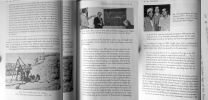
Bauval writes in his book he studied from '80 to '87 at the University of Pennsylvania, Ph.D. in '87. In '87 he became
director of the giza pyramids and appointed secretary-general of the SCA in 2002 .
Hawass and Lehner did the drillings at the sphinx because A.R.E wanted to find the Hall of Records, which of course was not made public..
they did this with a diesel powered drill..criminals.
these are only excerpts, Bauval writes whole chapters about this..he even got copies of 35mm films of that time when he did his reasearch.
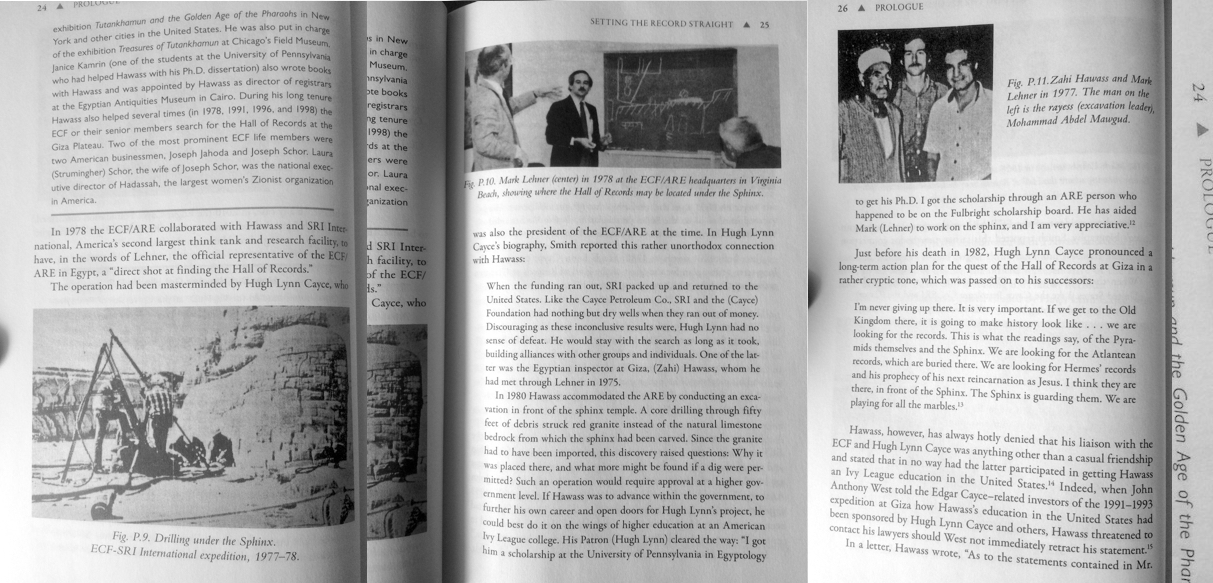
edit on 15-8-2018 by anti72 because: (no reason given)
originally posted by: anti72
a reply to: Hanslune
Bauval writes in his book he studied from '80 to '87 at the University of Pennsylvania, Ph.D. in '87. In '87 he became
director of the giza pyramids and appointed secretary-general of the SCA in 2002 .
Hawass and Lehner did the drillings at the sphinx because A.R.E wanted to find the Hall of Records, which of course was not made public..
they did this with a diesel powered drill..criminals.
What?
Why is using a drill criminal?
originally posted by: anti72
a reply to: Hanslune
using a drill per se not necessarily but drilling directly under a quite fragile, 4500 y old monument consisting of natural limestone, a few meters above the ground water level with a non-scientific diesel powered rock drill, maybe yes.
Okay I've drilled a few holes in my time during archaeological digs. Which brand of rock dill would be 'scientific' and was available at that time? Its kinda hard to not 'damage' limestone rock - if the purpose is to drill a hole into it.
You appear to be mad about something - what exactly is it you are complaining about? Are you acting out because you imagine L. found the 'hall of records' and excavated it in an active tourist site without anyone noting it?
edit on 15/8/18 by Hanslune because: (no reason given)
a reply to: Hanslune
no, Im not mad about this but I think the circumstances Hawass' and Lehners activities with A.R.E directly involved at that time rises many questions at least. The drilling with that big diameter diesel rock drill also seems dangerous because the ground water levels are quite high at the site and the sphinx is cut from porous natural limestone. We see many antique and newer restaurations at the body, it is a national and international treasure and introducing ground water into the body seems not very..'scientific' work..more as it's motives were dubious ..
no, Im not mad about this but I think the circumstances Hawass' and Lehners activities with A.R.E directly involved at that time rises many questions at least. The drilling with that big diameter diesel rock drill also seems dangerous because the ground water levels are quite high at the site and the sphinx is cut from porous natural limestone. We see many antique and newer restaurations at the body, it is a national and international treasure and introducing ground water into the body seems not very..'scientific' work..more as it's motives were dubious ..
edit on 16-8-2018
by anti72 because: (no reason given)
btw, if anyone is interested in some gaming, I did a tomb raider standalone version related to the Halls of Records ..
Located at Giza, Guatemala and Bimini..here you can download it for free..
have fun..
www.trle.net...
Located at Giza, Guatemala and Bimini..here you can download it for free..
have fun..
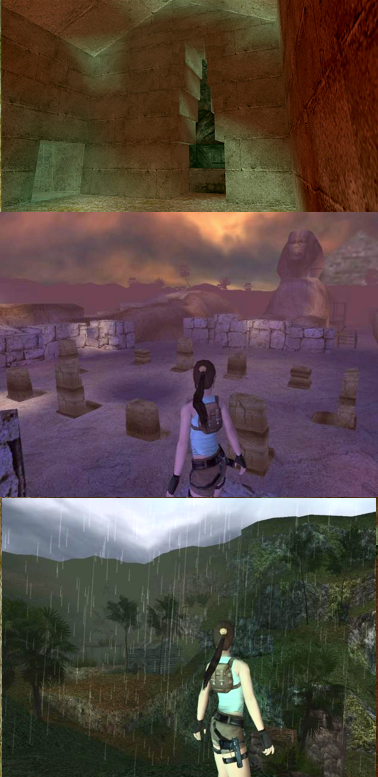
www.trle.net...
edit on 16-8-2018 by anti72 because: (no reason given)
originally posted by: anti72
a reply to: Hanslune
no, Im not mad about this but I think the circumstances Hawass' and Lehners activities with A.R.E directly involved at that time rises many questions at least. The drilling with that big diameter diesel rock drill also seems dangerous because the ground water levels are quite high at the site and the sphinx is cut from porous natural limestone. We see many antique and newer restaurations at the body, it is a national and international treasure and introducing ground water into the body seems not very..'scientific' work..more as it's motives were dubious ..
Drilling couldn't possibly introduce any ground water.
In fact, later studies in the sphinx enclosure involved drilling there in order to establish the depth of groundwater.
You drill down to the groundwater, but the groundwater just sits there. It doesn't rise in your hole and head toward the sphinx.
Harte
well, at least the authorities are concerned about the rising water levels as they did some new drillings in the last years..
www.edustation.me...
transcript part:
www.edustation.me...
transcript part:
I'm Mark Lehner and I am here at the Great Sphinx of Giza on behalf of Dr Zahi Hawass helping him out with drilling we're doing underneath the Sphinx. In our first hole here we will be underneath Sphinx's left paw, the north forepaw of the Sphinx.
And we're doing this to test for ground water, which is risen dramatically in the recent years to where it's possibly posing a threat to the Sphinx and the temples in front of it. Few months ago the press announced that the Sphinx is in danger because of the rising of the water table in front of the Sphinx temple.
So Dr Zahi in collaboration with Cairo University have done a series of holes to test the water and also in some cases, as in front of, to pump the water to lower it and to try to protect the Sphinx. We did the drill now. Eight drillings, goes for about ten meters under the Sphinx. One of them is just underneath the left paw of the Sphinx, and that drill goes underneath the Sphinx. This is the front of the paw, the Roman pavement, here is our first hole, one meter from the paw, 3.20 from the back claw, 2.25-2.90 from the very front of this toe.
Four meters down there you getting a little solution cavities. And look at that – a nice fossil from a limestone, 50 million years old, but maybe that's through the water is going. Look how porous it's getting. And very yellow and clay-like.
See this? Also it's a good chance to test many ideas, many new age ideas about secret passages and hidden chambers under the Sphinx. So with a number of drilled holes have been done since 2008 and now here 2009 we continue, it should be fast for to put to rest all of these theories that some kind of the tunnel or chamber exists under the Sphinx.
All these new age people, they used to fight me with “Give us one permission only to drill in the left paw of the Sphinx” “and to see if anything is hidden or not.” We found nothing. And people can think that the myth of the Sphinx will be finished by this drilling. But I'll always believe that the myth and the mystery of the Sphinx will always continue. Actually, this is, for me, coming back to the Sphinx after thirty years of starting here with Dr Zahi. We started our work together with the Sphinx really in 1978-79, and so here we are thirty years later, still working here, and we haven't aged a bit.
edit on 16-8-2018 by anti72 because: (no reason given)
originally posted by: anti72
well, at least the authorities are concerned about the rising water levels as they did some new drillings in the last years..
www.edustation.me...
transcript part:
I'm Mark Lehner and I am here at the Great Sphinx of Giza on behalf of Dr Zahi Hawass helping him out with drilling we're doing underneath the Sphinx. In our first hole here we will be underneath Sphinx's left paw, the north forepaw of the Sphinx.
And we're doing this to test for ground water, which is risen dramatically in the recent years to where it's possibly posing a threat to the Sphinx and the temples in front of it. Few months ago the press announced that the Sphinx is in danger because of the rising of the water table in front of the Sphinx temple.
So Dr Zahi in collaboration with Cairo University have done a series of holes to test the water and also in some cases, as in front of, to pump the water to lower it and to try to protect the Sphinx. We did the drill now. Eight drillings, goes for about ten meters under the Sphinx. One of them is just underneath the left paw of the Sphinx, and that drill goes underneath the Sphinx. This is the front of the paw, the Roman pavement, here is our first hole, one meter from the paw, 3.20 from the back claw, 2.25-2.90 from the very front of this toe.
Four meters down there you getting a little solution cavities. And look at that – a nice fossil from a limestone, 50 million years old, but maybe that's through the water is going. Look how porous it's getting. And very yellow and clay-like.
See this? Also it's a good chance to test many ideas, many new age ideas about secret passages and hidden chambers under the Sphinx. So with a number of drilled holes have been done since 2008 and now here 2009 we continue, it should be fast for to put to rest all of these theories that some kind of the tunnel or chamber exists under the Sphinx.
All these new age people, they used to fight me with “Give us one permission only to drill in the left paw of the Sphinx” “and to see if anything is hidden or not.” We found nothing. And people can think that the myth of the Sphinx will be finished by this drilling. But I'll always believe that the myth and the mystery of the Sphinx will always continue. Actually, this is, for me, coming back to the Sphinx after thirty years of starting here with Dr Zahi. We started our work together with the Sphinx really in 1978-79, and so here we are thirty years later, still working here, and we haven't aged a bit.
That's right.
Comparing the former groundwater levels to the more recent ones.
They're trying to mitigate the problem.
Harte
new topics
-
Late Night with the Devil - a really good unusual modern horror film.
Movies: 1 hours ago -
Cats Used as Live Bait to Train Ferocious Pitbulls in Illegal NYC Dogfighting
Social Issues and Civil Unrest: 2 hours ago -
The Good News According to Jesus - Episode 1
Religion, Faith, And Theology: 4 hours ago -
HORRIBLE !! Russian Soldier Drinking Own Urine To Survive In Battle
World War Three: 6 hours ago -
Bobiverse
Fantasy & Science Fiction: 9 hours ago -
Florida man's trip overseas ends in shock over $143,000 T-Mobile phone bill
Social Issues and Civil Unrest: 9 hours ago -
Former Labour minister Frank Field dies aged 81
People: 11 hours ago
top topics
-
Florida man's trip overseas ends in shock over $143,000 T-Mobile phone bill
Social Issues and Civil Unrest: 9 hours ago, 8 flags -
SETI chief says US has no evidence for alien technology. 'And we never have'
Aliens and UFOs: 13 hours ago, 7 flags -
Cats Used as Live Bait to Train Ferocious Pitbulls in Illegal NYC Dogfighting
Social Issues and Civil Unrest: 2 hours ago, 7 flags -
This is our Story
General Entertainment: 16 hours ago, 4 flags -
Former Labour minister Frank Field dies aged 81
People: 11 hours ago, 4 flags -
Bobiverse
Fantasy & Science Fiction: 9 hours ago, 3 flags -
HORRIBLE !! Russian Soldier Drinking Own Urine To Survive In Battle
World War Three: 6 hours ago, 2 flags -
Late Night with the Devil - a really good unusual modern horror film.
Movies: 1 hours ago, 2 flags -
The Good News According to Jesus - Episode 1
Religion, Faith, And Theology: 4 hours ago, 0 flags
active topics
-
President BIDEN Vows to Make Americans Pay More Federal Taxes in 2025 - Political Suicide.
2024 Elections • 97 • : DBCowboy -
Thousands Of Young Ukrainian Men Trying To Flee The Country To Avoid Conscription And The War
Other Current Events • 136 • : NorthOS -
Cats Used as Live Bait to Train Ferocious Pitbulls in Illegal NYC Dogfighting
Social Issues and Civil Unrest • 8 • : lordcomac -
British TV Presenter Refuses To Use Guest's Preferred Pronouns
Education and Media • 140 • : Annee -
Florida man's trip overseas ends in shock over $143,000 T-Mobile phone bill
Social Issues and Civil Unrest • 16 • : grey580 -
HORRIBLE !! Russian Soldier Drinking Own Urine To Survive In Battle
World War Three • 22 • : RickyD -
SETI chief says US has no evidence for alien technology. 'And we never have'
Aliens and UFOs • 35 • : Consvoli -
Late Night with the Devil - a really good unusual modern horror film.
Movies • 1 • : DAVID64 -
Ditching physical money
History • 18 • : annonentity -
Lawsuit Seeks to ‘Ban the Jab’ in Florida
Diseases and Pandemics • 32 • : SchrodingersRat